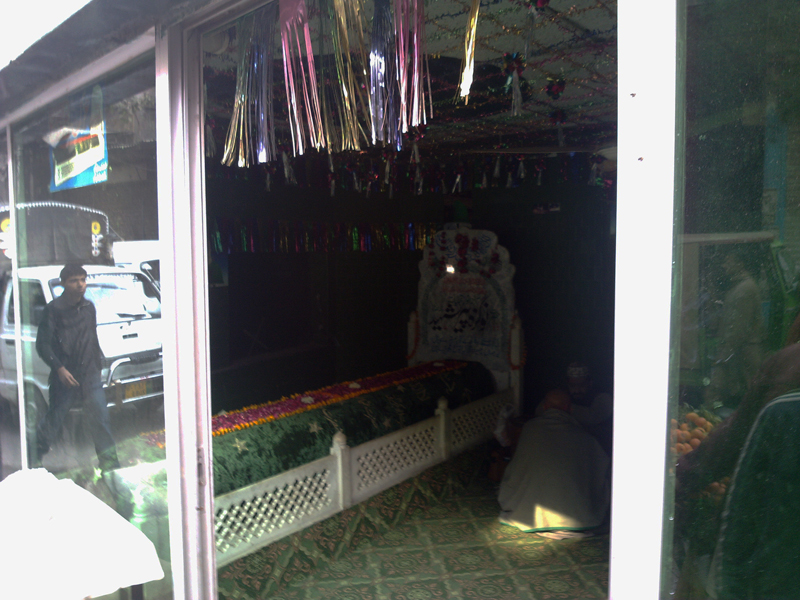
TOTALLY MISSING LOOK THE FIRST MUGHAL ARCHITECTURE, AN OUTCOME OF THE BATTLE OF KHANWA 16TH MARCH, 1527.
The fascination of Mughals with honouring their dead ones is phenomenal, and our region is full of exquisite mausoleums in honour of their beloveds, as well as loyal followers. The mausoleums of Emperors and their wives are phenomenal subjects in their own rights. But ordinary people also received their attention. In this respect very ordinary persons got a grand mausoleum built over their dead bodies. In Humayouns complex we even have a grand one in memory of the hair cutter of the Emperors. Even wet nurses got grand burial places and are robust to this day. But what about the soldiers who lost their lives fighting for the cause of the Mughals.
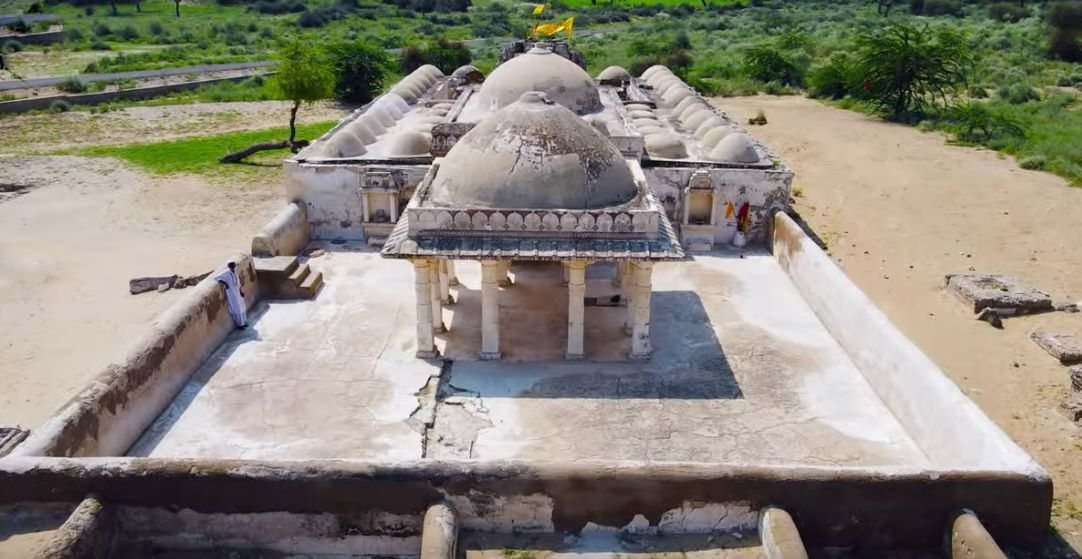
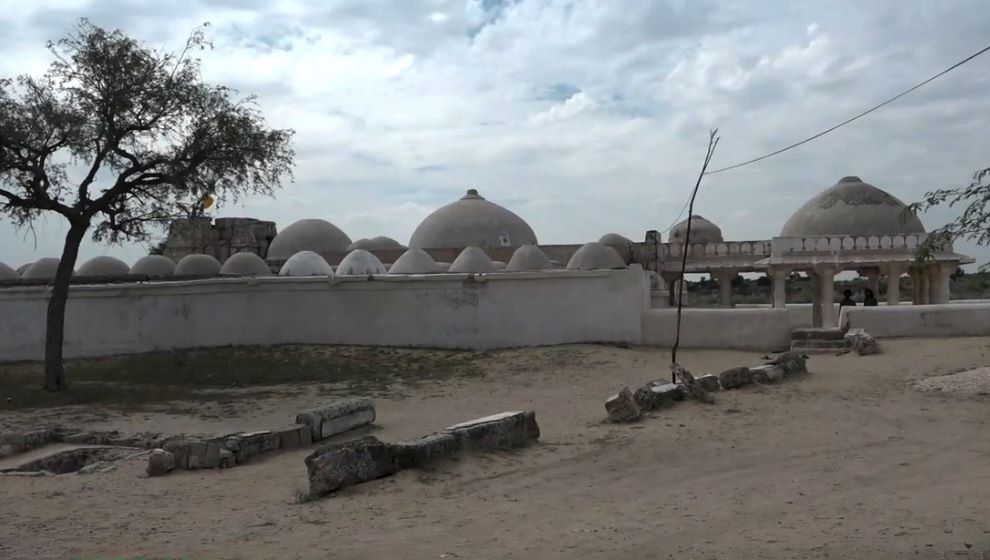
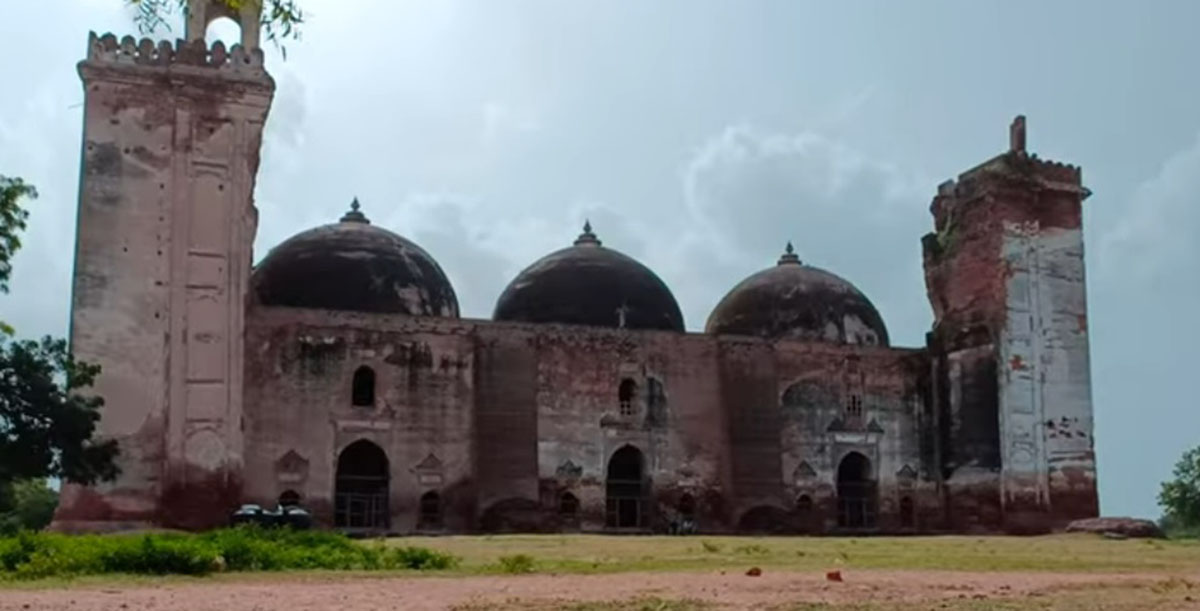
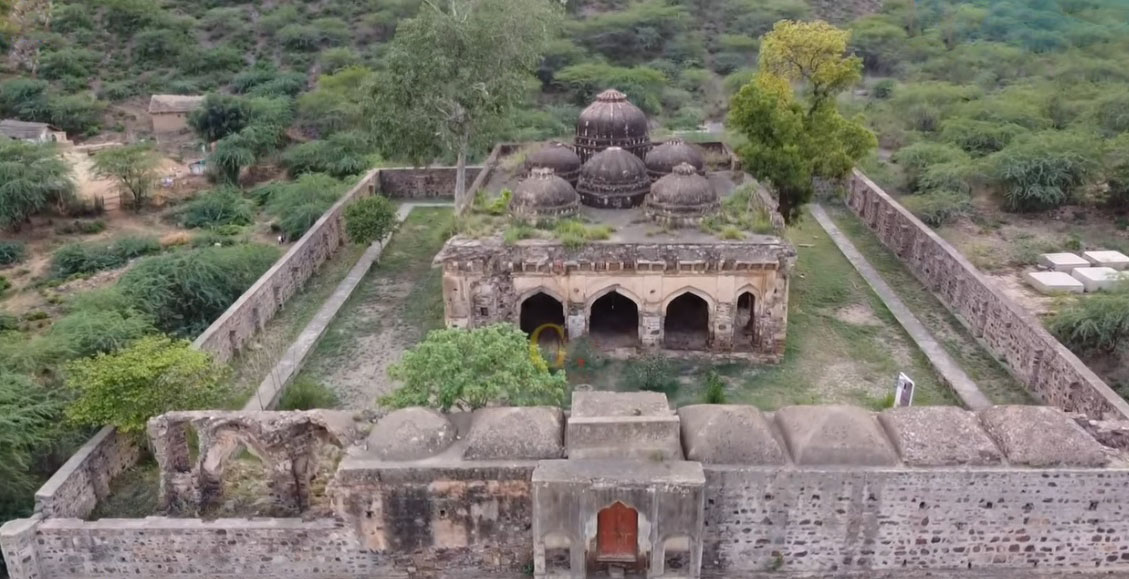
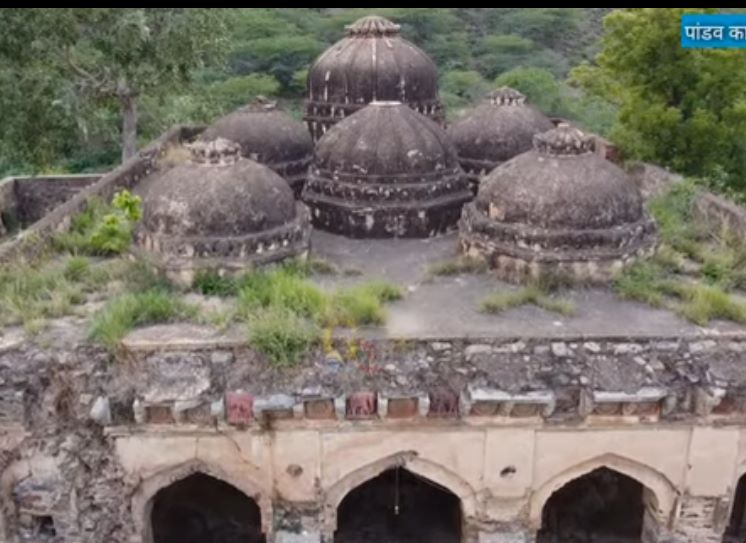
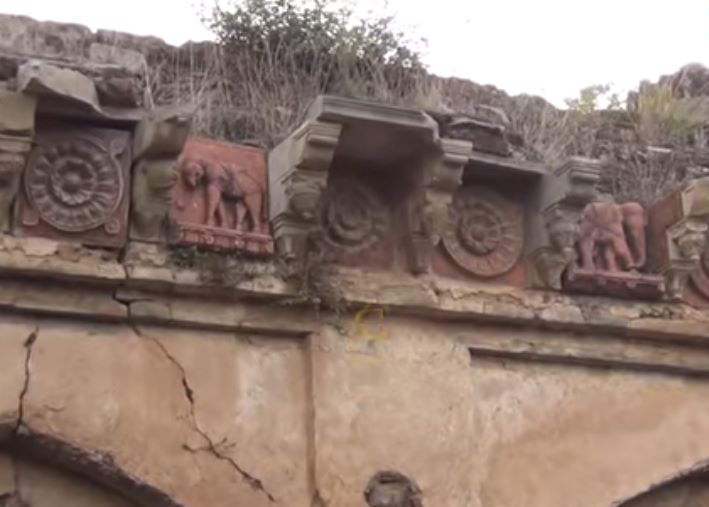
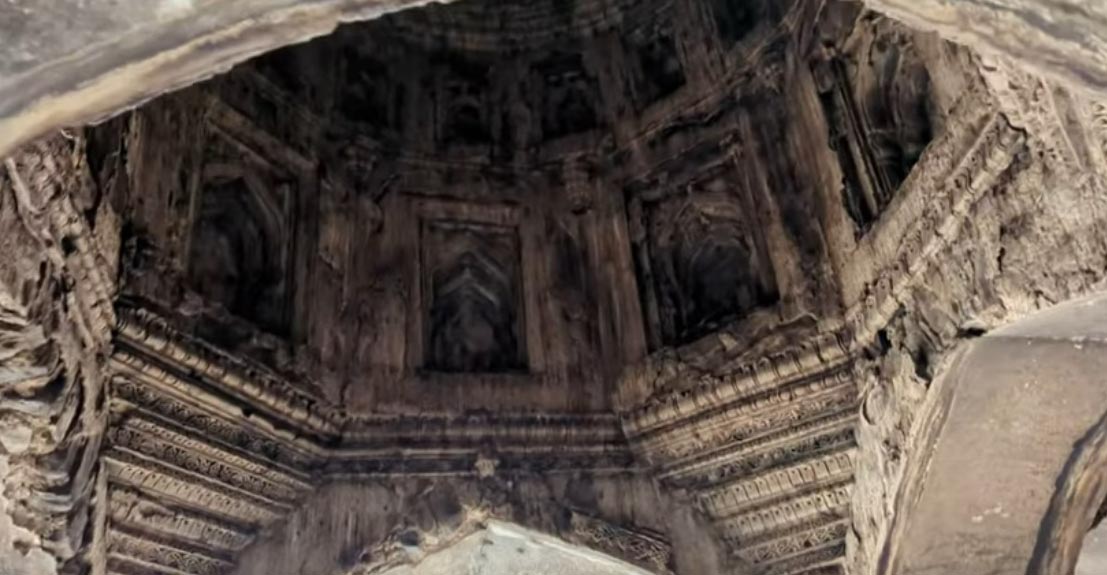
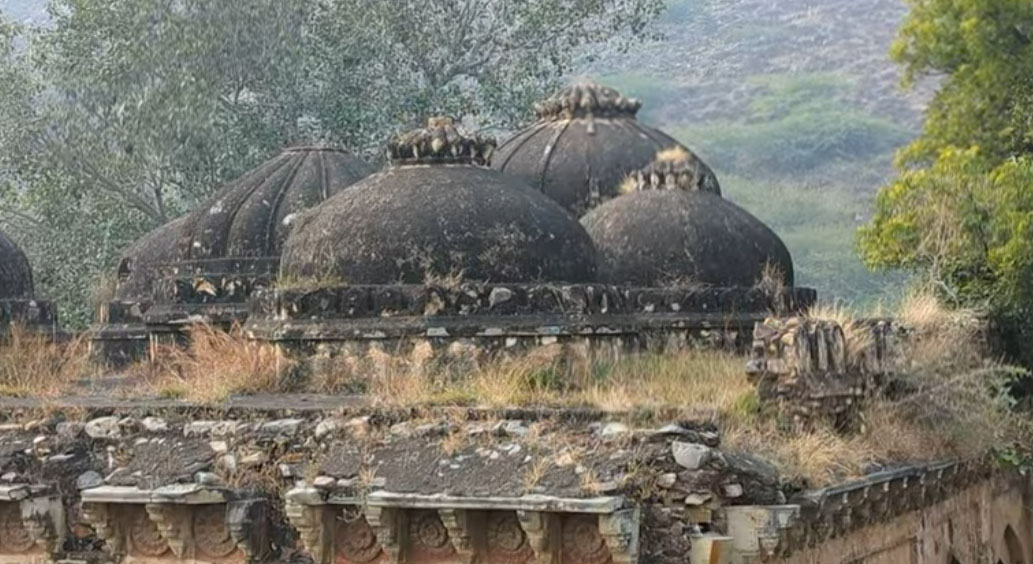
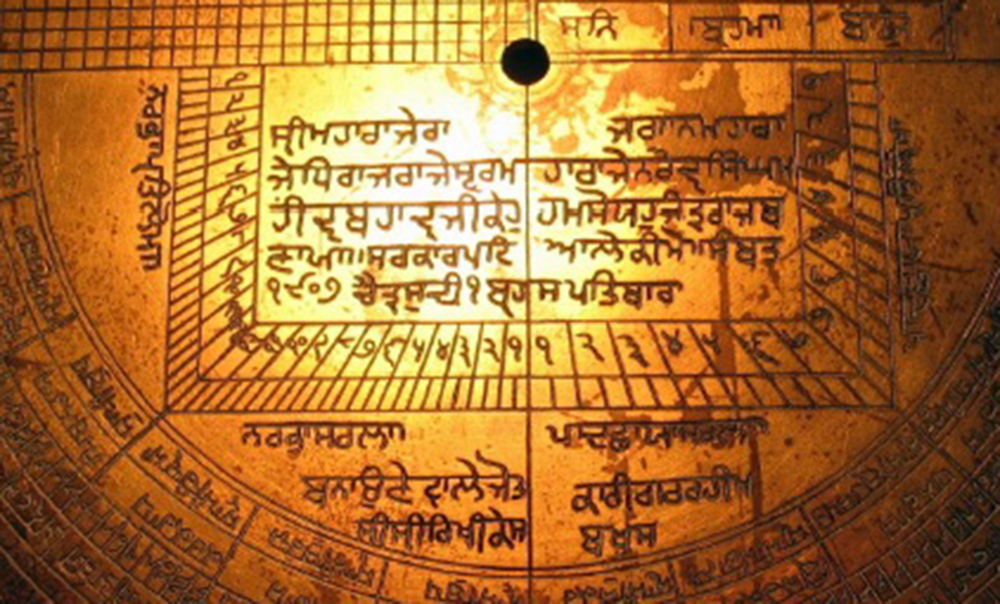
First Mughal ArchitectureDomes over pillarsDomed mausleums BaburiBaburi mausoleums answerDiscarded sarcophagusFight with Rana Sanga
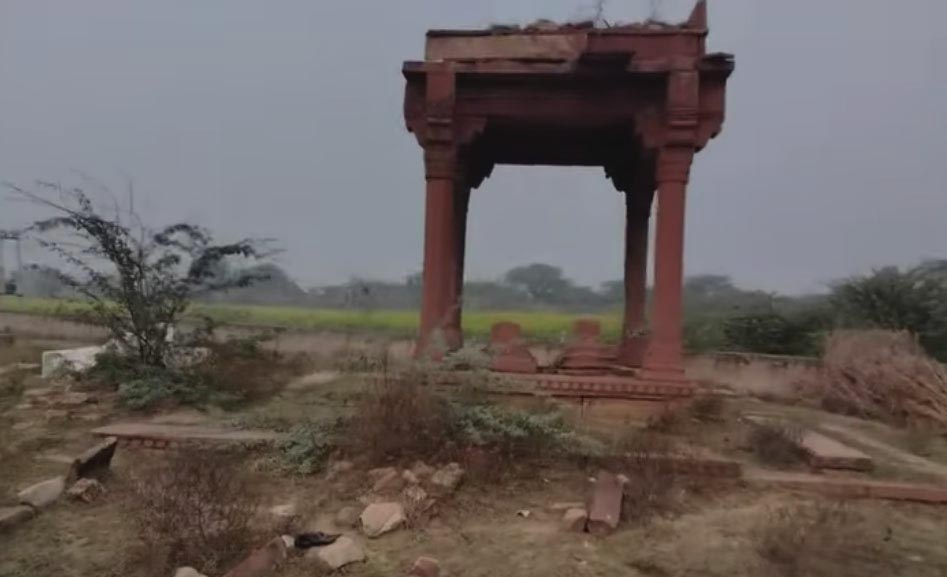
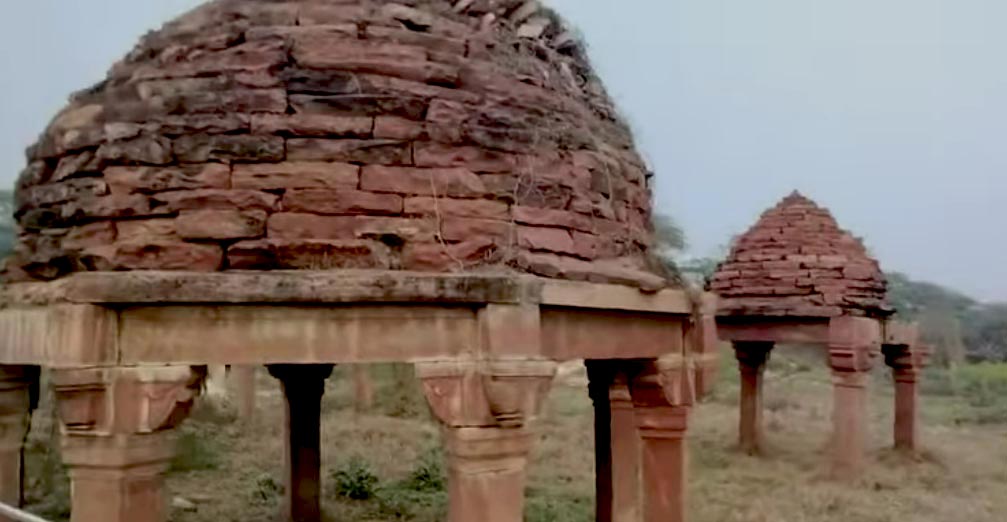
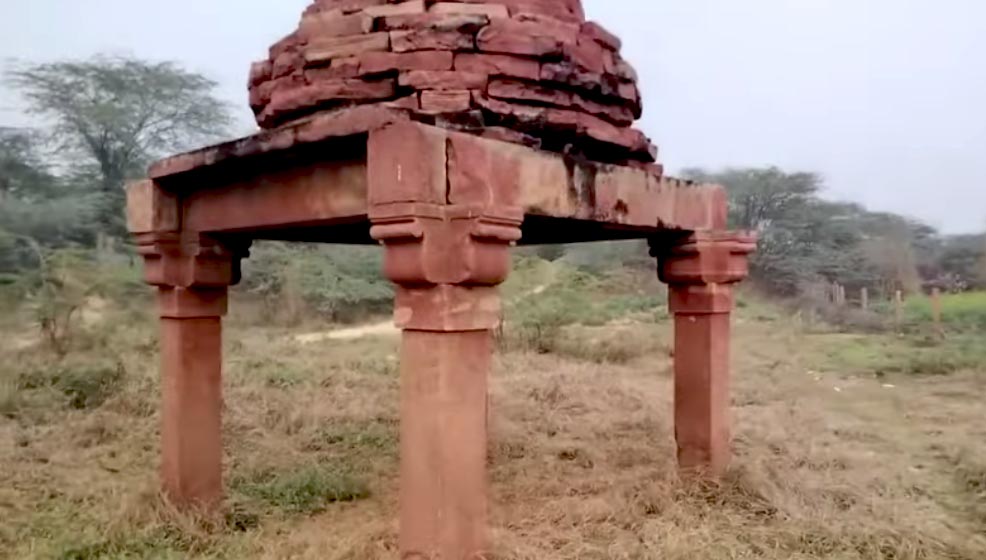
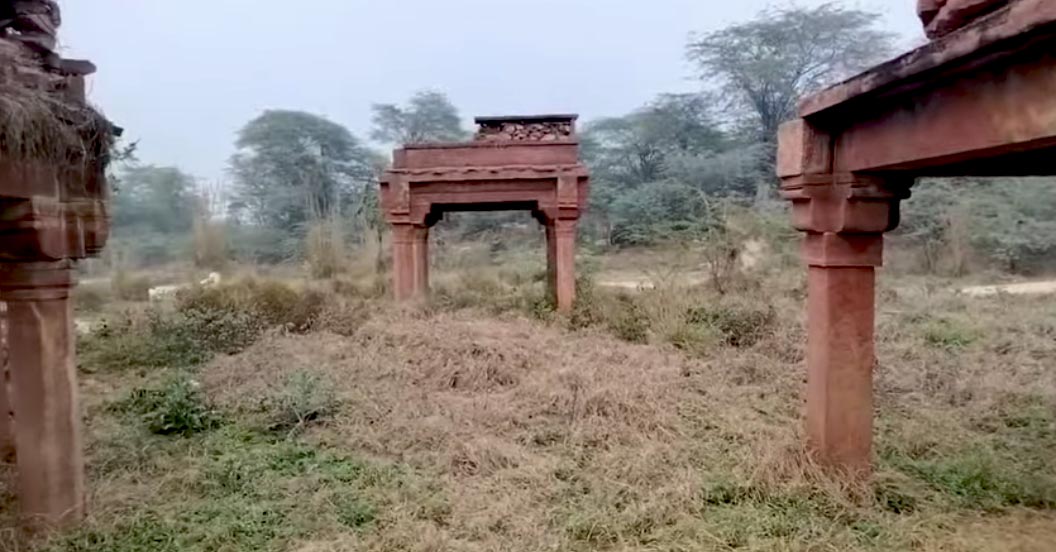
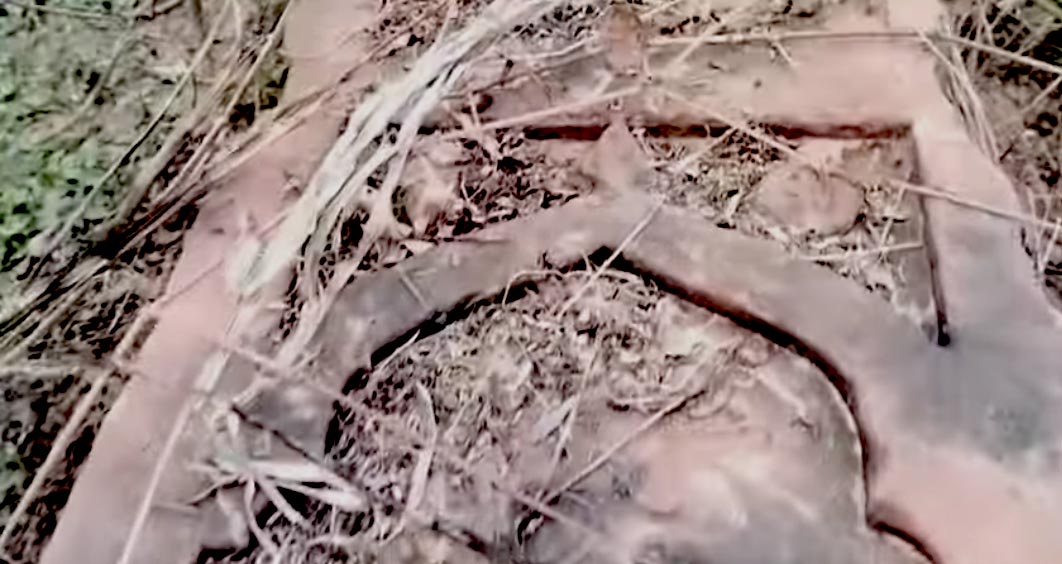
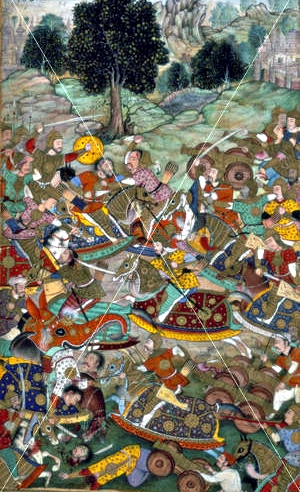
The battle of Babur with Rana Sanga is one clue. Rana Sanga himself invited Babur, on the belief that like Timur, he will come and go away. But Babur decided to stay. The result a grand battle started on 16th March, 1527, and alternate historians present the typical two nation theory rhetoric. Babur’s autobiography say something, modern Hindu historians present their own versions. But ours is not a historical version statement. It is about the earliest form of Mughal Architecture in Mughal Indo-Pakistani region. Notice the rudimentary graves of the warriors of Babur’s army. The built ones must be of Generals who lost their lives.
We do know that two Architects came with Babur. One was Ustad Isa Mimar and the other Ustad Yusuf Mimar. Both were students of the Turkish architect Sinan. They belonged to the city of Herat and later settled in Lahore, to be called Lahoris. At the site of Khanwa no one pays attention. The amazing part is that the battleground is still there with hundreds of graves of the soldiers of Babur’s army. But there are built ones too. Obviously built in a hurry, as revealed by the brick laying of the fallen domes. And many sarcophagi exist too in the Mughal style. Our contention was that being the earliest representation of the Mughal architecture, we must pay respect to it. And learn the evolution of its architecture here.
INFLUENCE OF ISLAMIC ARCHITECTURE ON JAIN MANDIRS; REGION ADDICTED TO WRITING STEREOTYPE FAIRY TALES. (without any documentation)
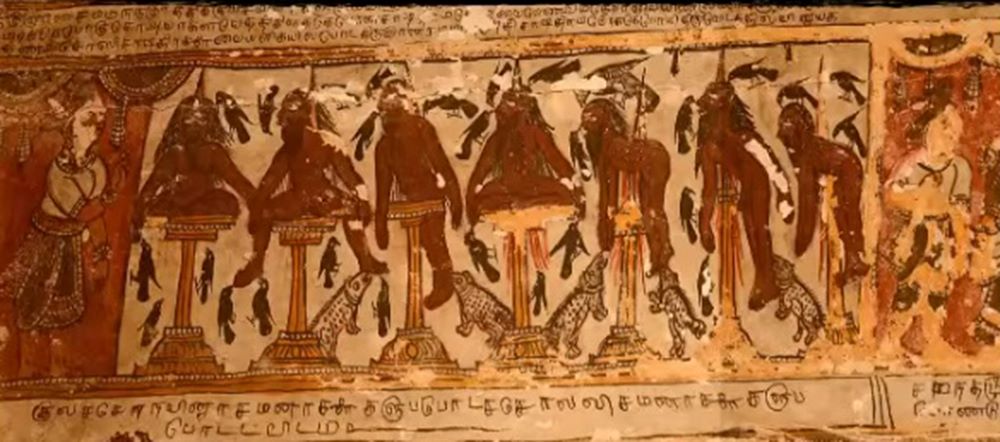
We are born Pakistanis, and not familiar with situations before partition. Obviously, we were told many things by our parents. There were basically three religions here, and all ancient. We can talk of Buddhism, Jainism and Hinduism. Buddhism and Jainism are considered earliest. The picture painted of the three co-existing with each other in peace is a myth. Legends have it of murder of Jains by thousands, and paintings exist of this ruthlessness. Not only that there was massive disruption between the three, but scholars write of thousands of Buddhist and Jain Temples destroyed by the Hindu Kings. A tradition of destruction of temples very much in vogue. Stones extensively used even in those times. No need to chisel new ones when chiseled available. It is a reality the Mandir-obsessed trolls pay no heed to this truth. Inter religious trouble was there.
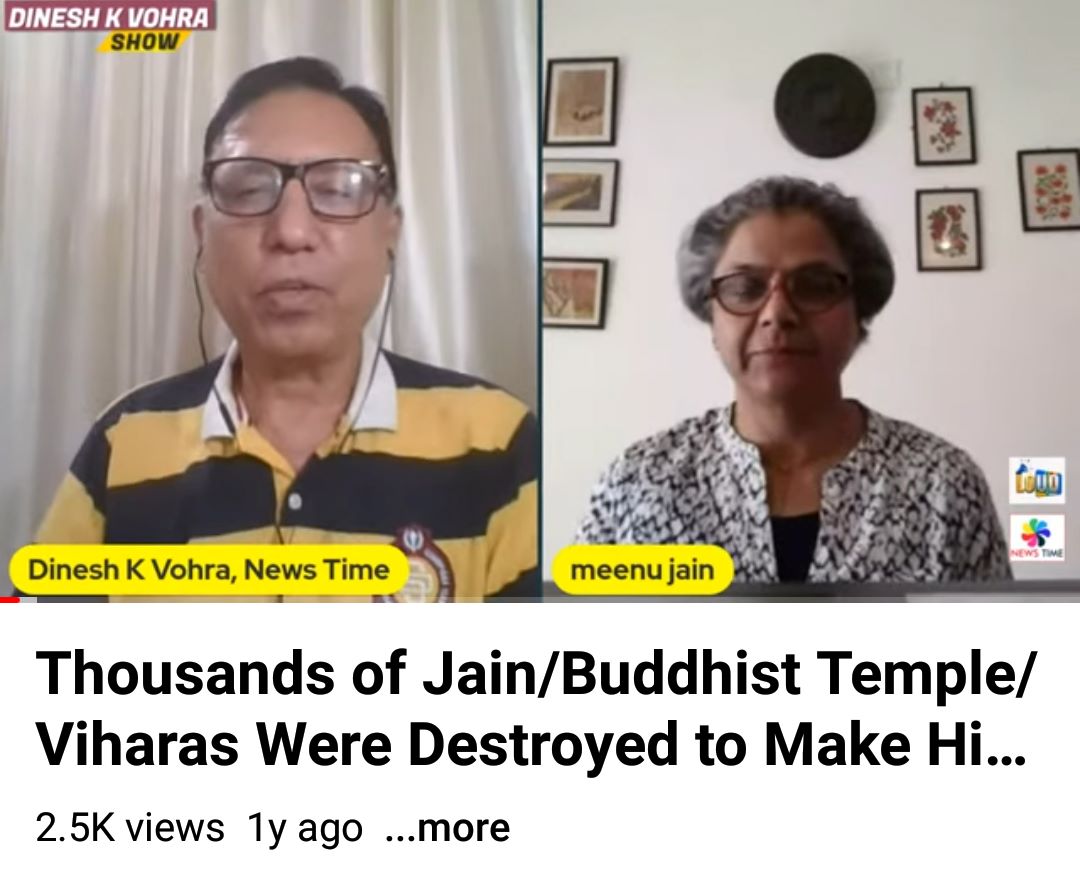
Thousands of Jain/Buddha Temple/Viharas Were Destroyed to Make Hindu Temples, Meenu Jain
The Muslims came into the scene. They had their own way of life, and it was so different from the way of life of other religions here, they could not be amalgamated with their belief in one Allah, and a society based on egalitarianism. Conflict would be a natural consequence. Historian speak of relics from Afghanistan in the Holy Kaaba itself, as the first museum of Islam. (Read “Islamic Art Oleg Grabar”). Records speak of Muslim merchants in some parts of India, arriving by sea for trade. Muhammed bin Qasim dubbed by ignorant as an invader, came to the rescue of Muslim women entrapped by Raja Dahir. People who do not read history, will not know that he was so much loved in Sind, that the Sindhi made a statue of him in the main city to commemorate him. And his son ruled Sind after him.
This is merely a blog, but the subject requires a thesis in itself. Suffice the stereotype starts with Sultan Mahmud of Ghazna. Independent researchers have pointed out that Sultan Mahmud had Hindu generals in his war machinery, and for them, he even built a Mandir in Ghazna itself. Even more strange is the appreciation of the architecture of the Mandirs by the Sultan.
“In Muttra the town was teeming with imposing temples, the glittering spires of which towered above the house tops. The Sultan was so struck with their massive beauty that in a letter of victory, to his Amirs in Ghazna, he gave effusive expression of his appreciation of Hindu Architecture.”
As an act of war for political reasons, he destroyed some of them, but not for religious sake alone.
“The Hindus rejected Islam as their national religion because of the fundamental and irreconcilable differences between Islam and Hinduism. To regard an idol as a helpless piece of stone, instead of a source of life and death, and to believe in one Omnipotent God instead of myriads of deities, one of which could be played off against the other, was diametrically opposed to Hindu way of thinking. The fear naturally was the propagation of the democratic principles of Islam would undoubtedly bring about a social revolution and breakdown of the caste system.”
There are still surviving Jain Temples in our region. Personally, we pass the now the poorly restored Jain temple without any proportions, on a busy road link, and certainly enjoy the ghazal recitation of the Jain singer, Maneel Jain on the internet. But yes, we are told of still existing Jain Temples in Pakistan, and hardly any Jains around. But Mandirs exist in Pakistan and are being restored at great pace. Islam guarantees freedom of religion. Nobody sane can mind that, but the two nations cannot be one, simply for very different ways of life.
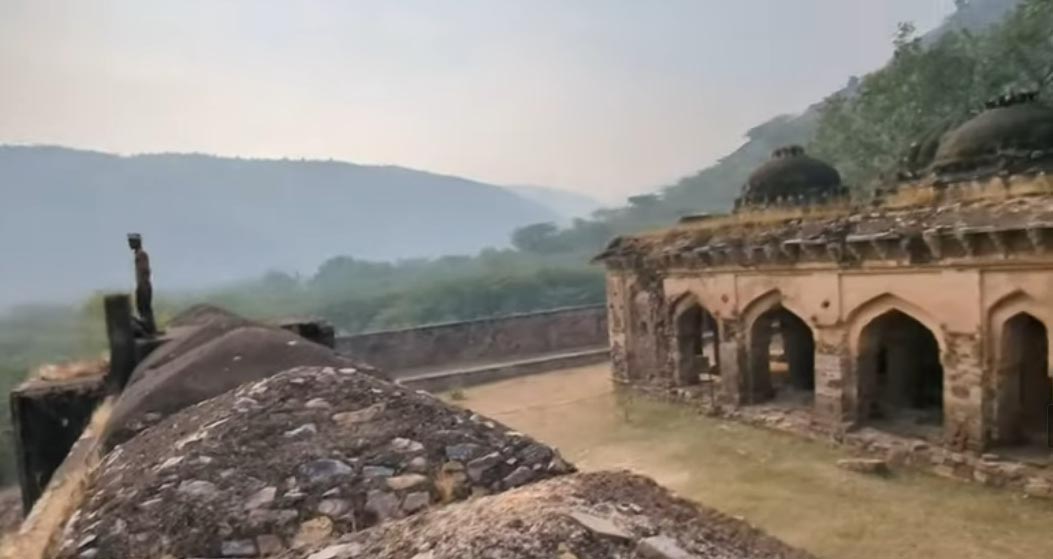
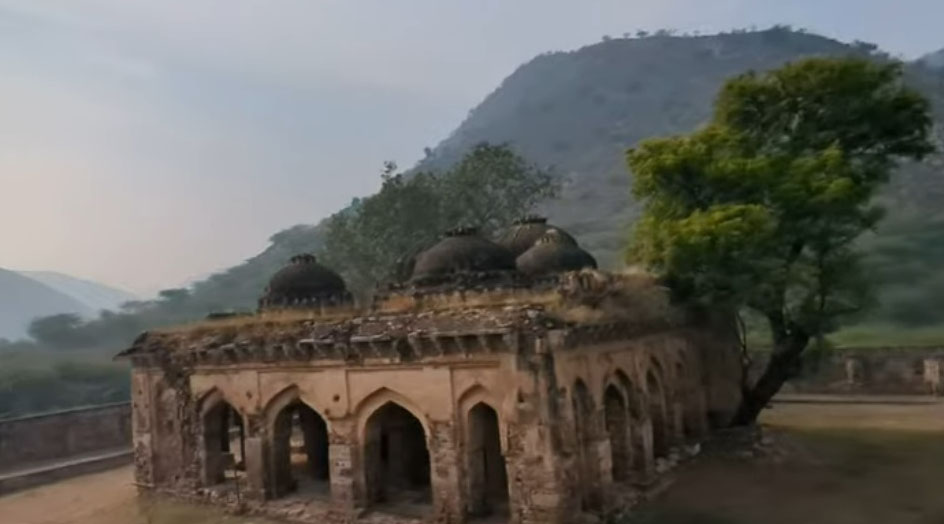
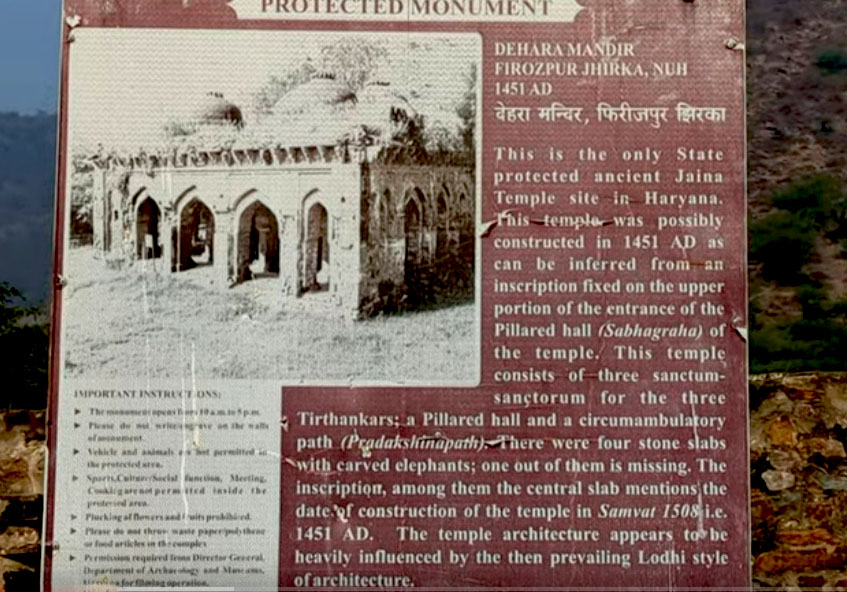
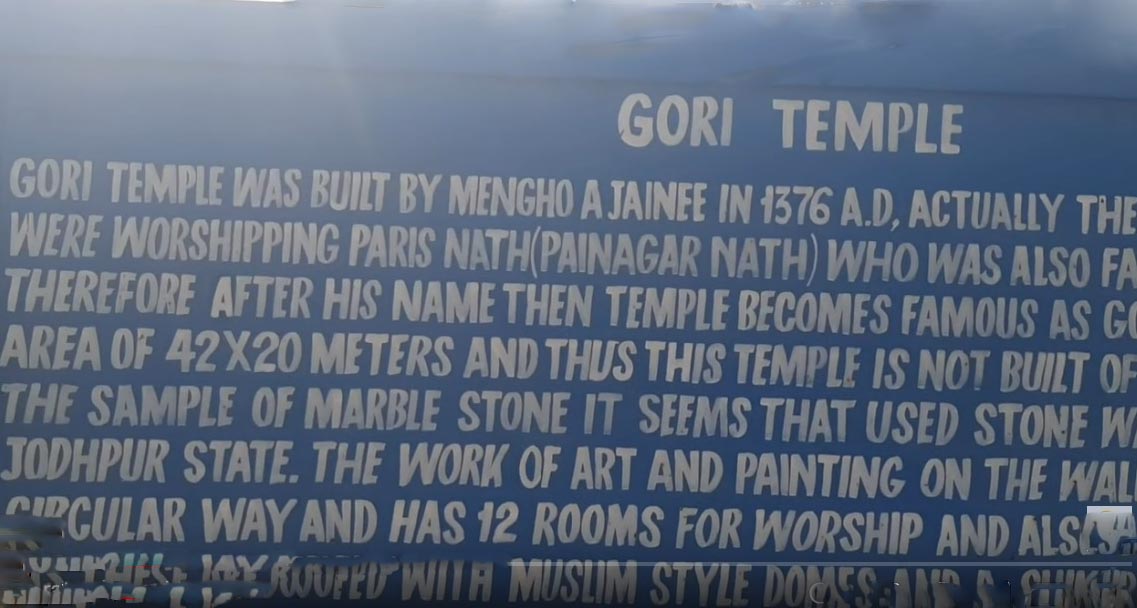
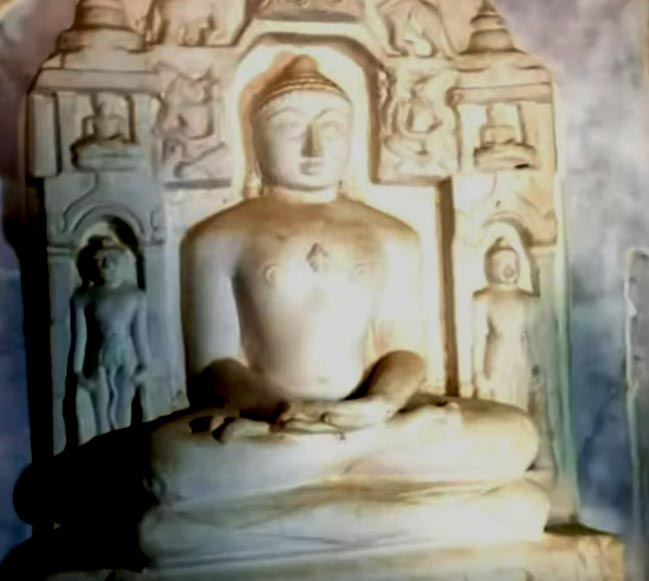
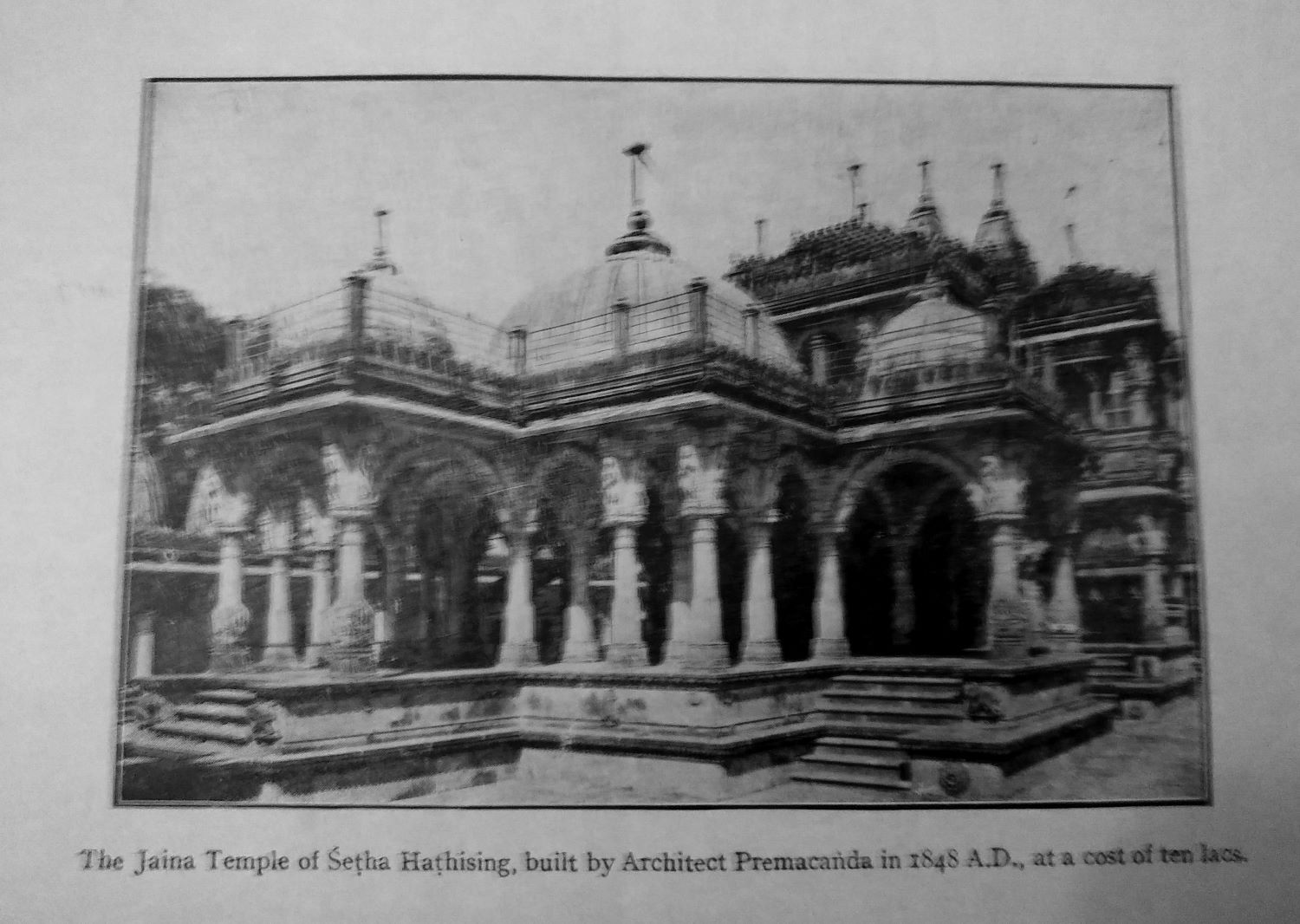
A study of Jain temples shows mixture of inspirations. The famous Gori Mandir in Nagarparkar Sind boasts on its plate as being made with Muslim domes. In any picture that is very clear. Domes exist in other temples too, but the whole structure being Islamic is best represented in the Jain Temple in Haryana, made famous in the Lodhi style, is a structure basically Islamic but with Jain symbolism. The temple had the deity image of Thirthankra. Later it was removed and placed it in the Jaina Temple at Firozpur Jhirka.
Scholars have noted that its direction is the same as a mosque, and reputation is there with people on site that there was a Kalma written on the stairs. But there is a clear statement of an inscription on its main gate, and possibly it has been removed and cannot be traced at this time. But this is sure that it was made in 1451 AD. People confirmed something written on it but are reluctant to share it as can be heard in this video link. Afraid of repercussions by authorities. Makers of same Sultan Bahlul Lodi and wife were of different ways of life. Result same.
Following the reign of the Sayyids, the Afghan Lodi dynasty gained the sultanate. Bahlul Khan Lodi
reigned from (1451–1489) was the nephew and son-in-law of Malik Sultan Shah Lodi, the governor of Sirhind Punjab, in India and succeeded him as the governor of Sirhind during the reign of Sayyid dynasty ruler Muhammed Shah. Tracing the background of Bahlul Khan Lodi on comes up with other details. The reputation is that he had a Hindu wife, but it could very well be a Jain wife.
In his youth, Bahlul was involved in the trading of horses and once sold his finely bred horses to the Sayyid dynasty Sultan Muhammed Shah. As a payment he was granted a pargana and raised to the status of Amir. After the death of Malik Sultan, he became the governor of Sirhind. He was allowed to add Lahore to his charge. So being a Governor of Lahore and having a wife of different religion, it can safely be presumed the reason for this Jain Temple in Haryana, when he ascended the throne of Delhi. A co-production of great dignity. Possibly between a Muslim architect and a Jain iconic expert. The result a production which sways us with its splendour to this day. Certainly, everybody involved here was of broad-minded nature.
Yes co-existence between different ways of life is possible, with mutual respect and according of dignity. Art and architecture best way of bridging gaps. But violence results in violence only. Love begets love.
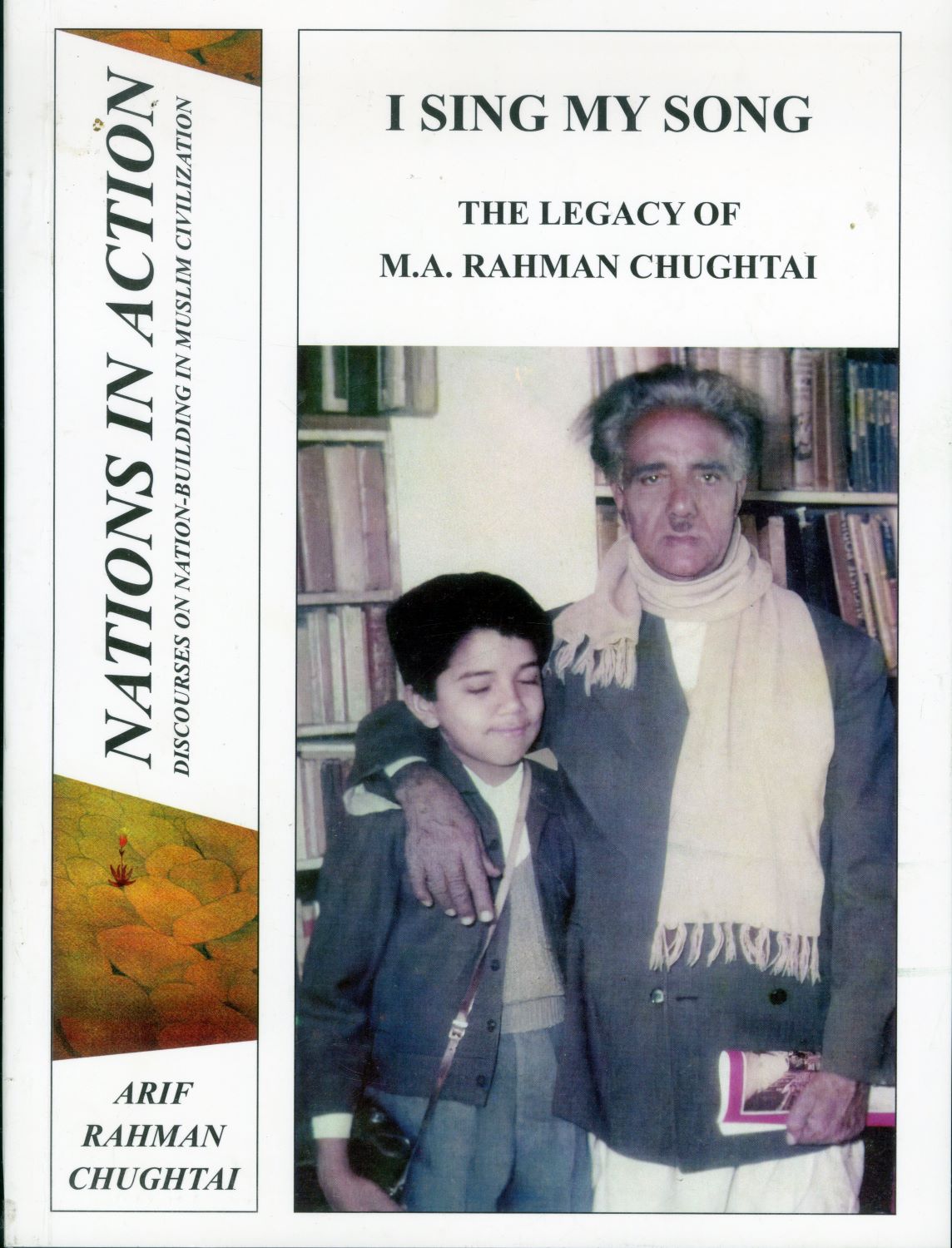
THE FIRST AUTO BIOGRAPHY OF ARIF RAHMAN CHUGHTAI; LIVING EPISODES OF FIRST 25 YEARS IN “I SING MY SONG!”
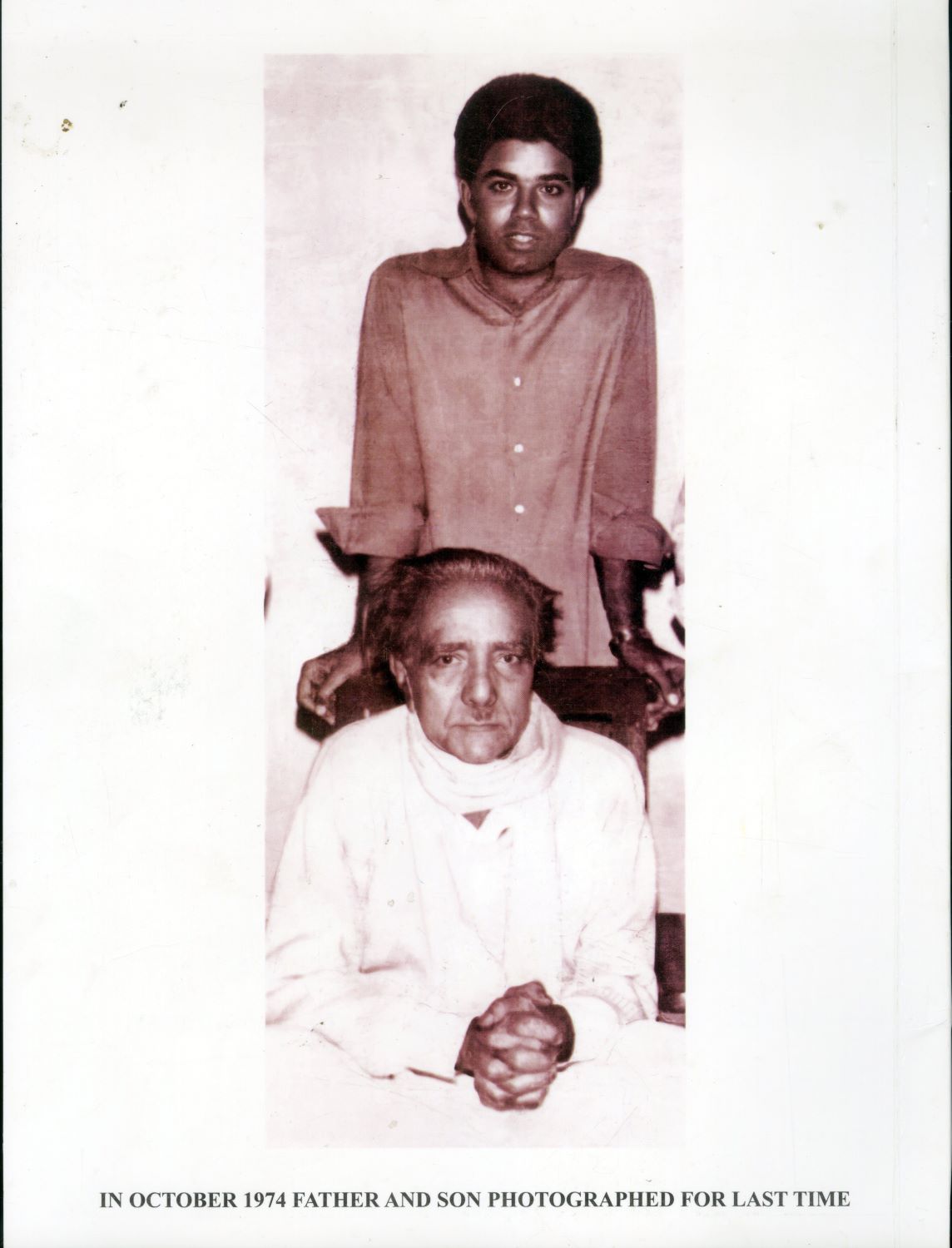
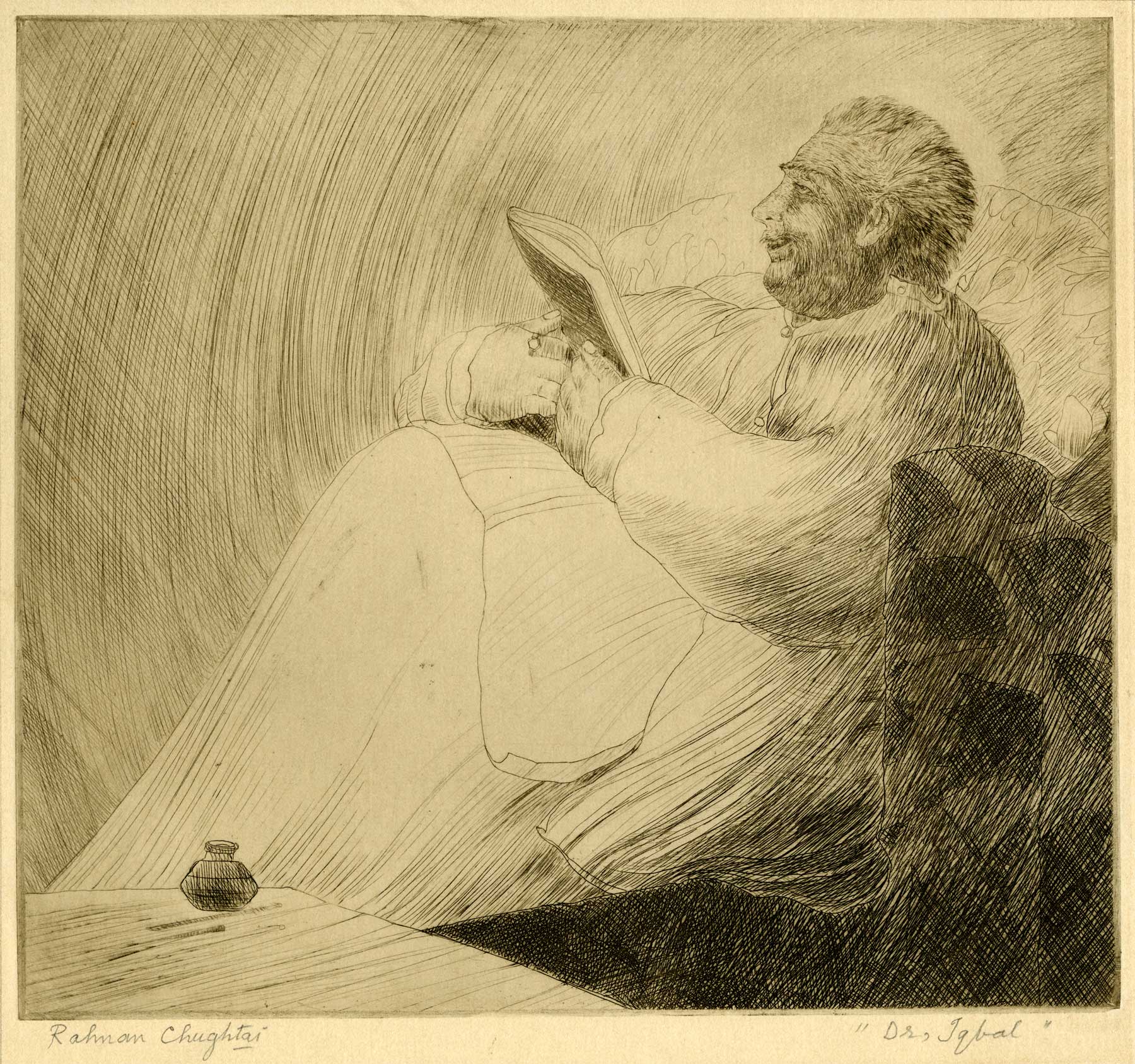
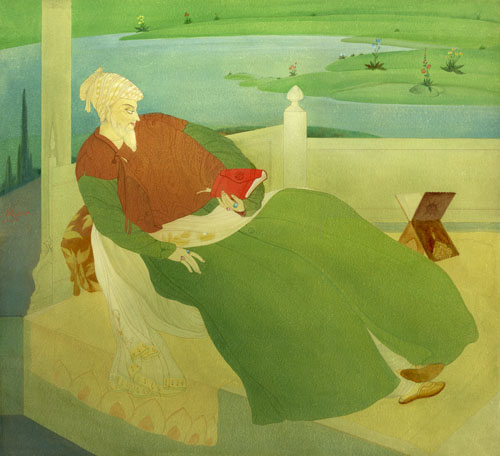
I have written things all my life. Serious prose, romantic poetry and incidents concerning my life. But I restrained myself/. In the world I lived in, humility was the key to life. A long time back someone told me about the saying “Pidray man Sultan Bhoot”. It reflects the philosophy to speak of yourself not speak of your ancestors being Sultan some day. I stuck to it. But this humility drive you in a corner. My father Abdur Rahman Chughtai artist was with Dr Allama Iqbal for nearly twenty years, and except for a few letters and endorsements, there is not a single photograph of them together. All the more sad when Chughtai Sahib actually photographed Dr Iqbal many times, even coloured his black and white photographs with aero spray in colour. The obsequious get their way by putting their face in front of the cameras all the time, the dignified lose history in their humility.
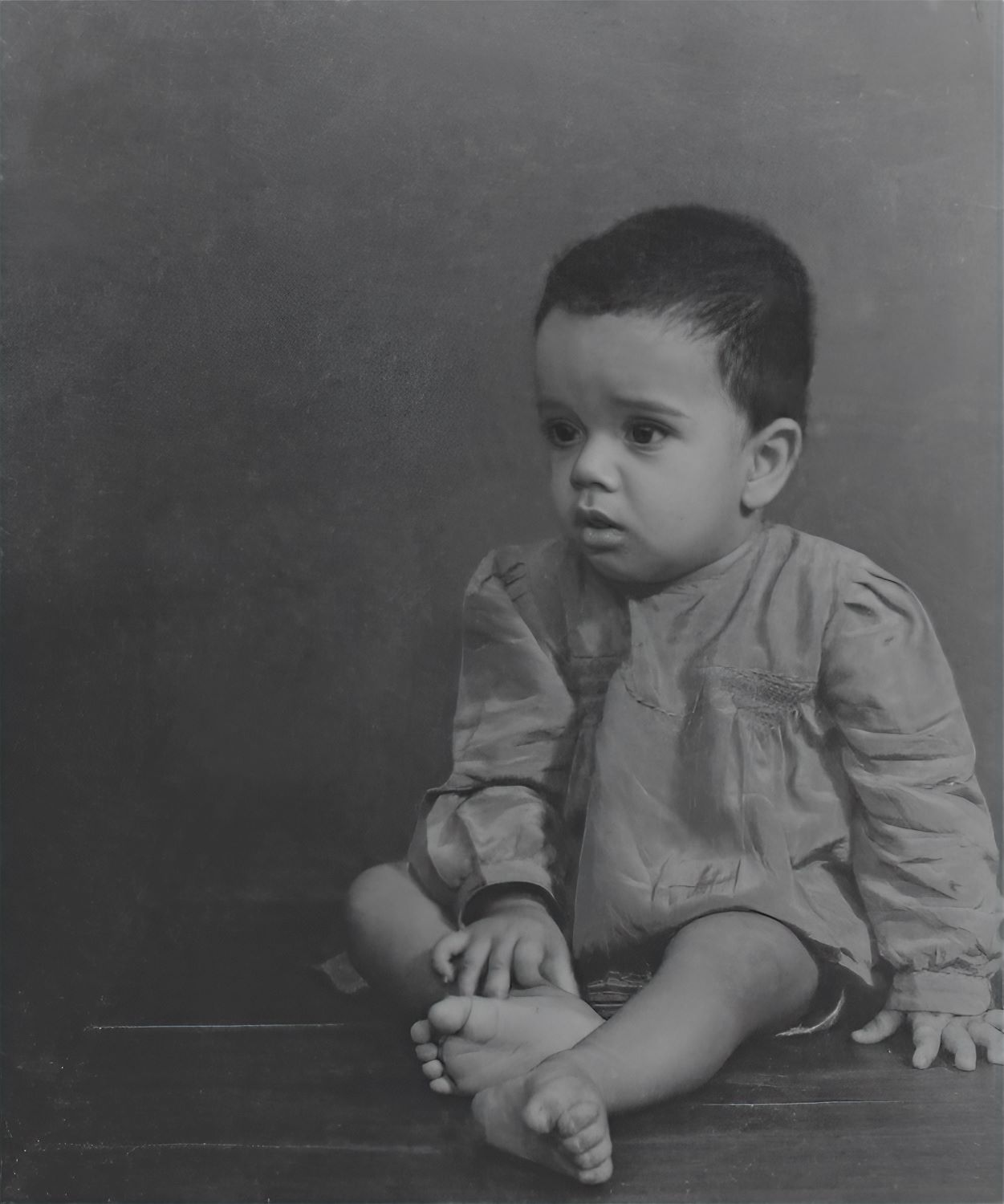
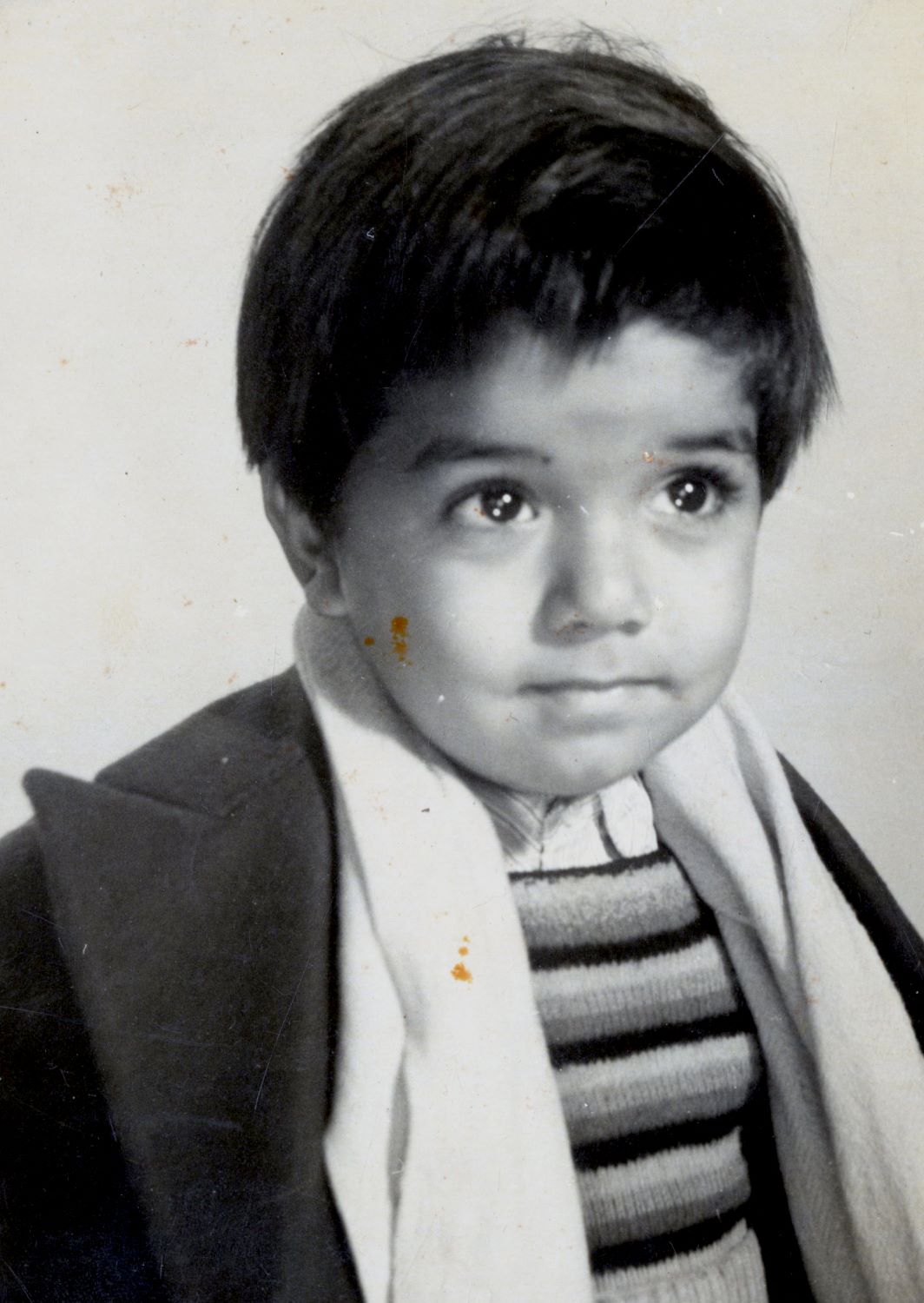
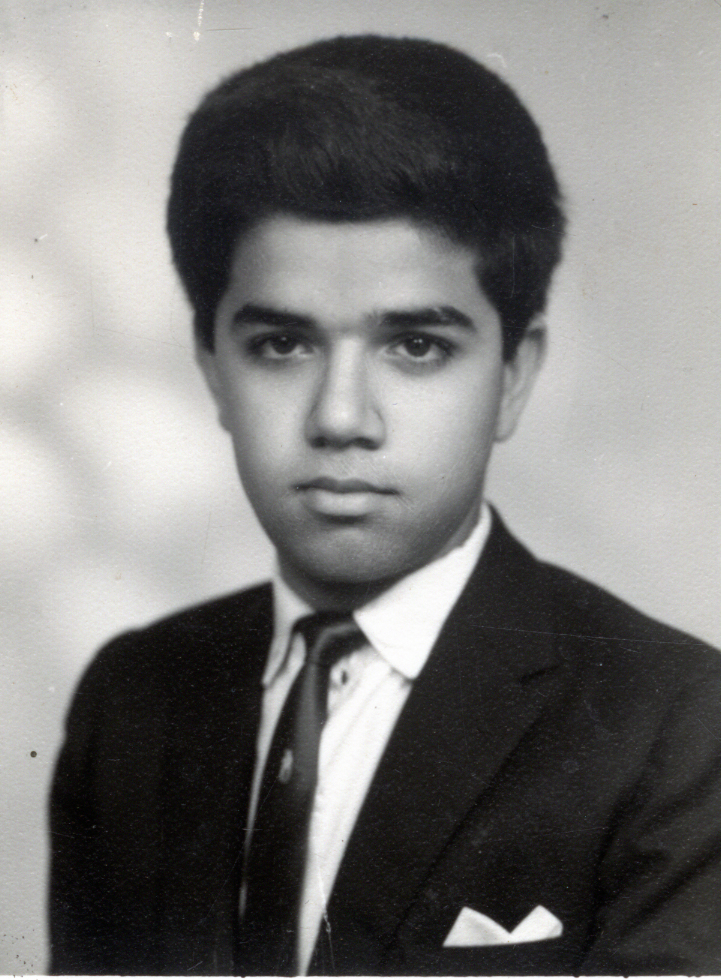
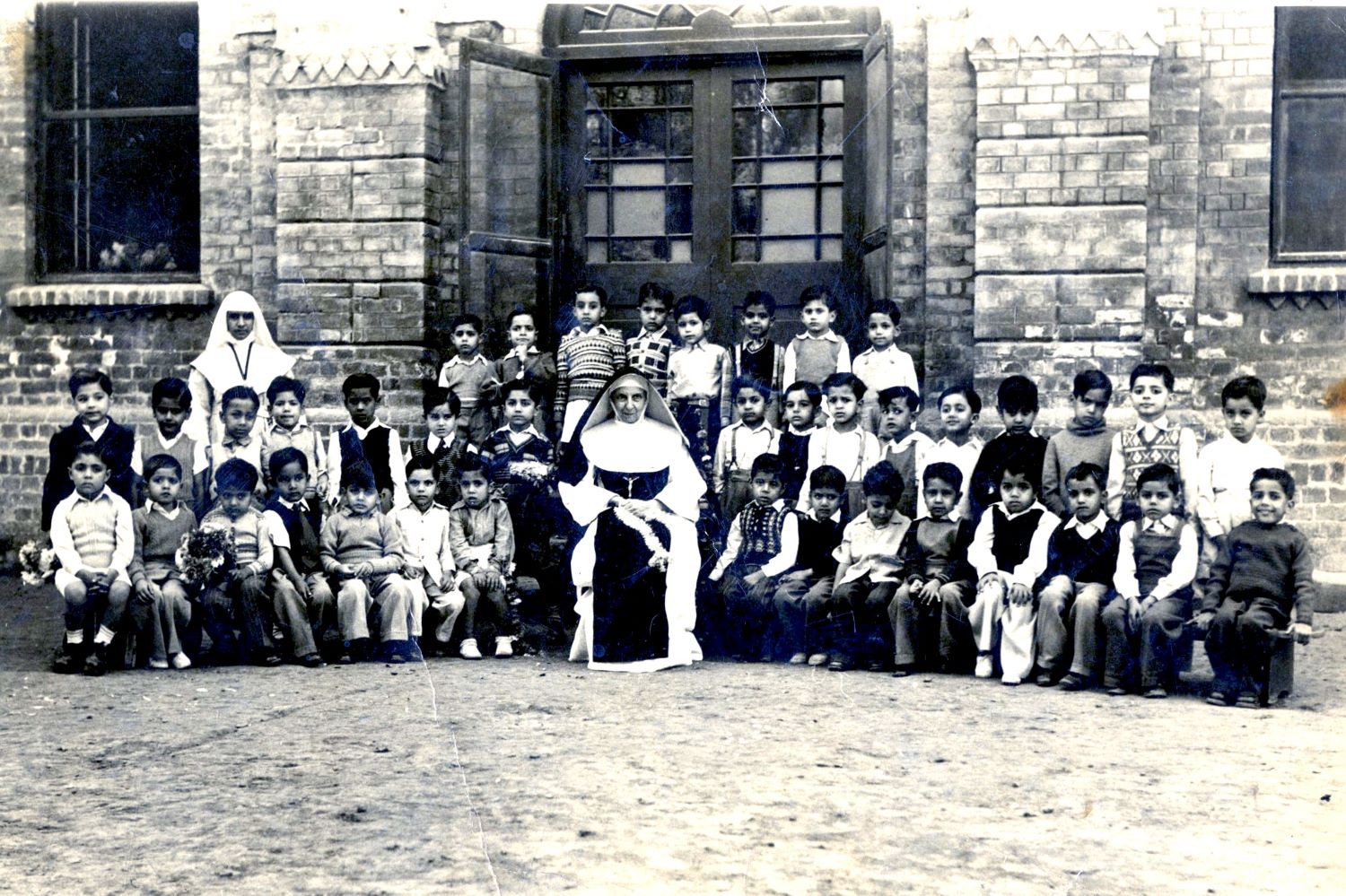
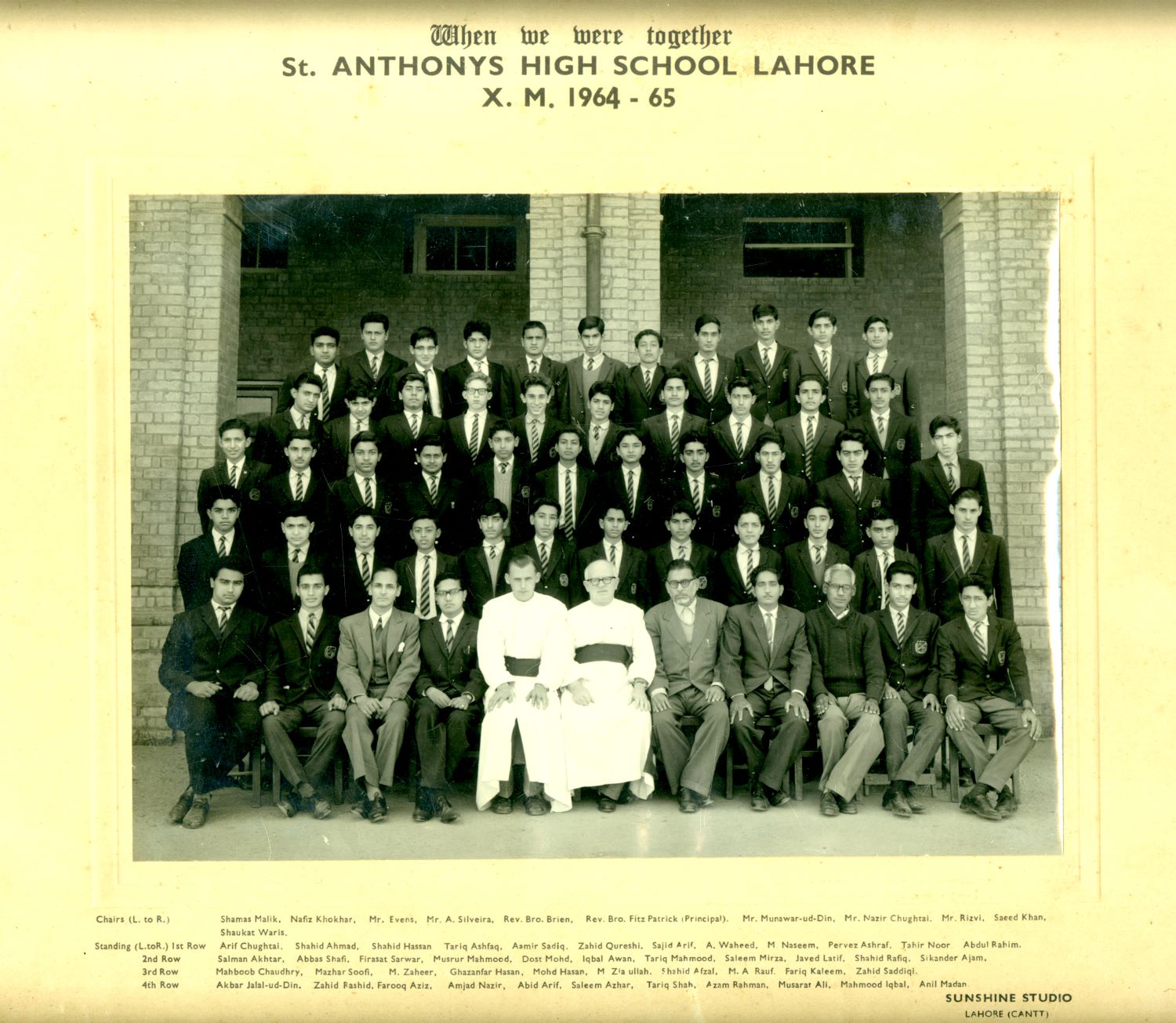
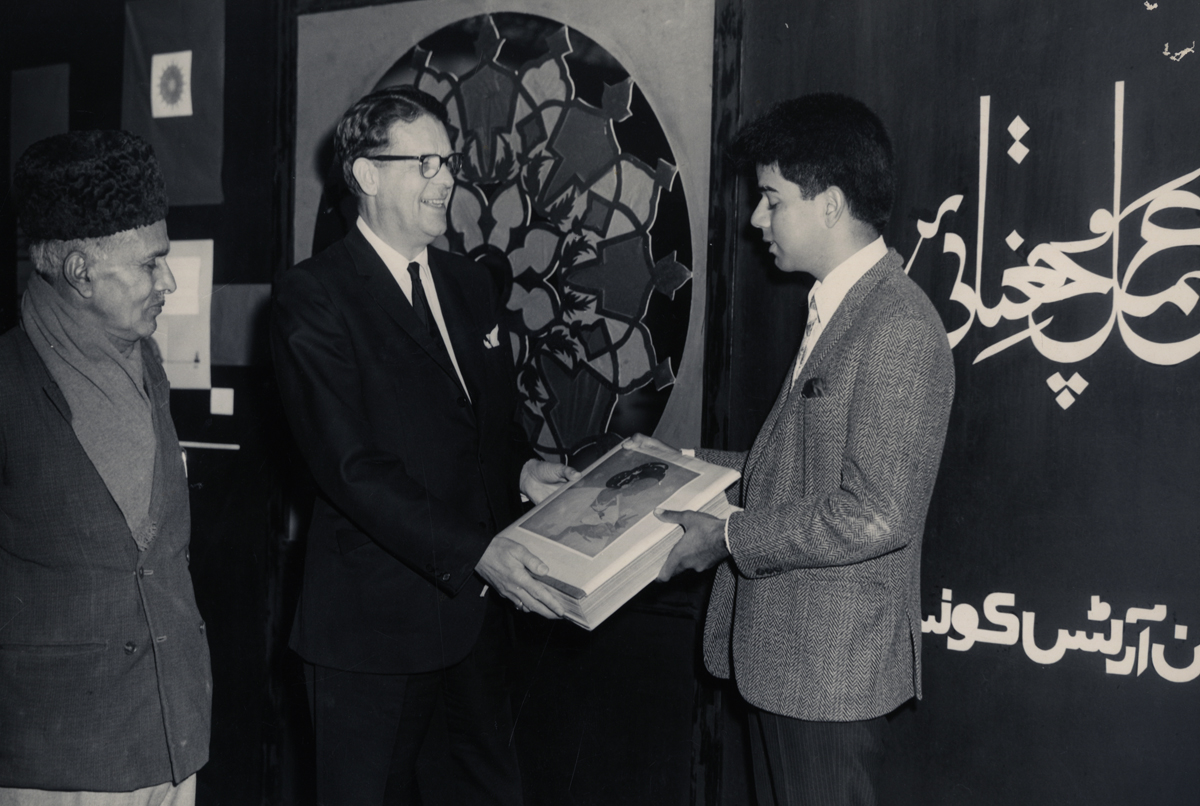
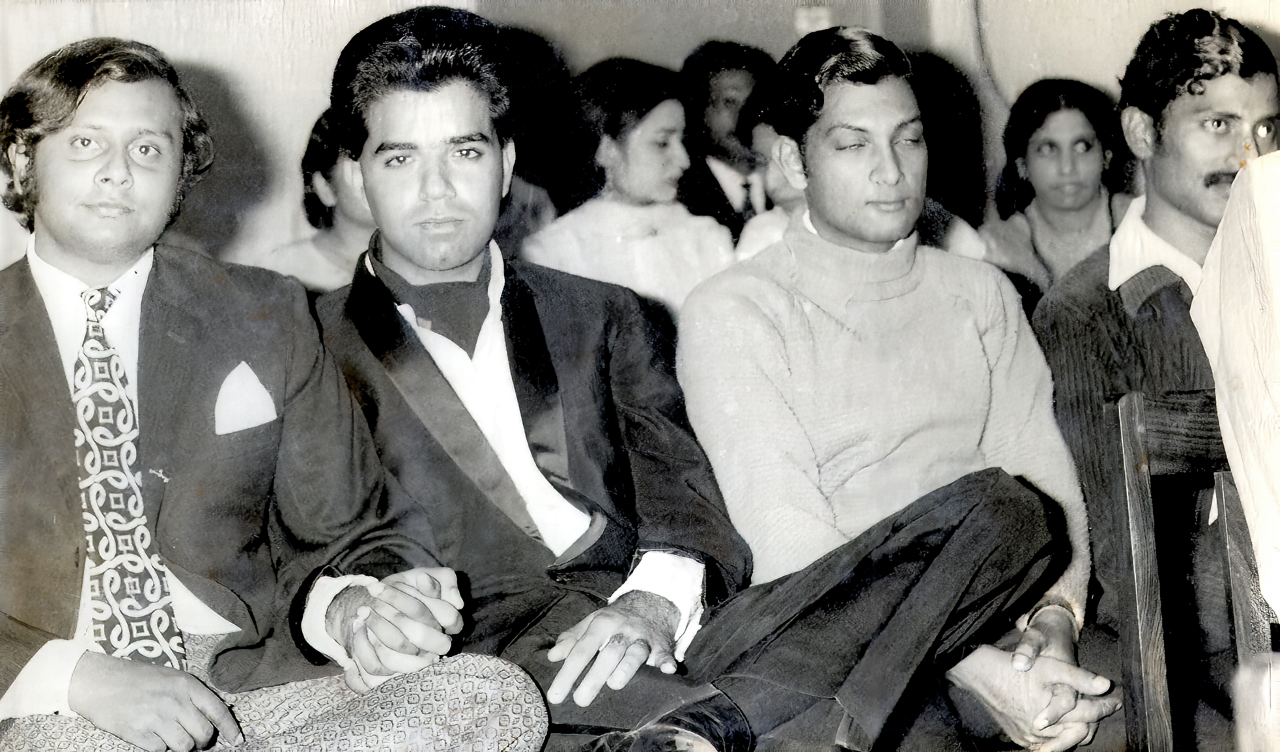
Auto biography frontAuto biography backOne year old ARCBaby in growthARC School graduationSacred Heart School Annual DaySt Anthony High School 1965Benjamin H Oehlert buys AmalUniversity Farewell
I thought my life has always been private. We never even mentioned our father in school, college or university. We were allergic in being caught having to say things like that. We also knew the issues will be generated as people will request meetings and my father would deny same. And we will be red faced in the end. So my life remained private, and famous for being a shy person.
It was high time I wrote something about myself. This PART ONE is about the first twenty five years of my life. Next year it would be the next fifty years of my life. Before I become history, I must write my history myself. And present photographs never seen before outside the house. Enjoy!
QAZI LUTUFULLAH DECIDES TO LEAVE KABUL FOR CITY OF LAHORE; RENOWNED FAMILY OF MUSSAWARS KNOWN AS GUMTI BAZAAR ONES.
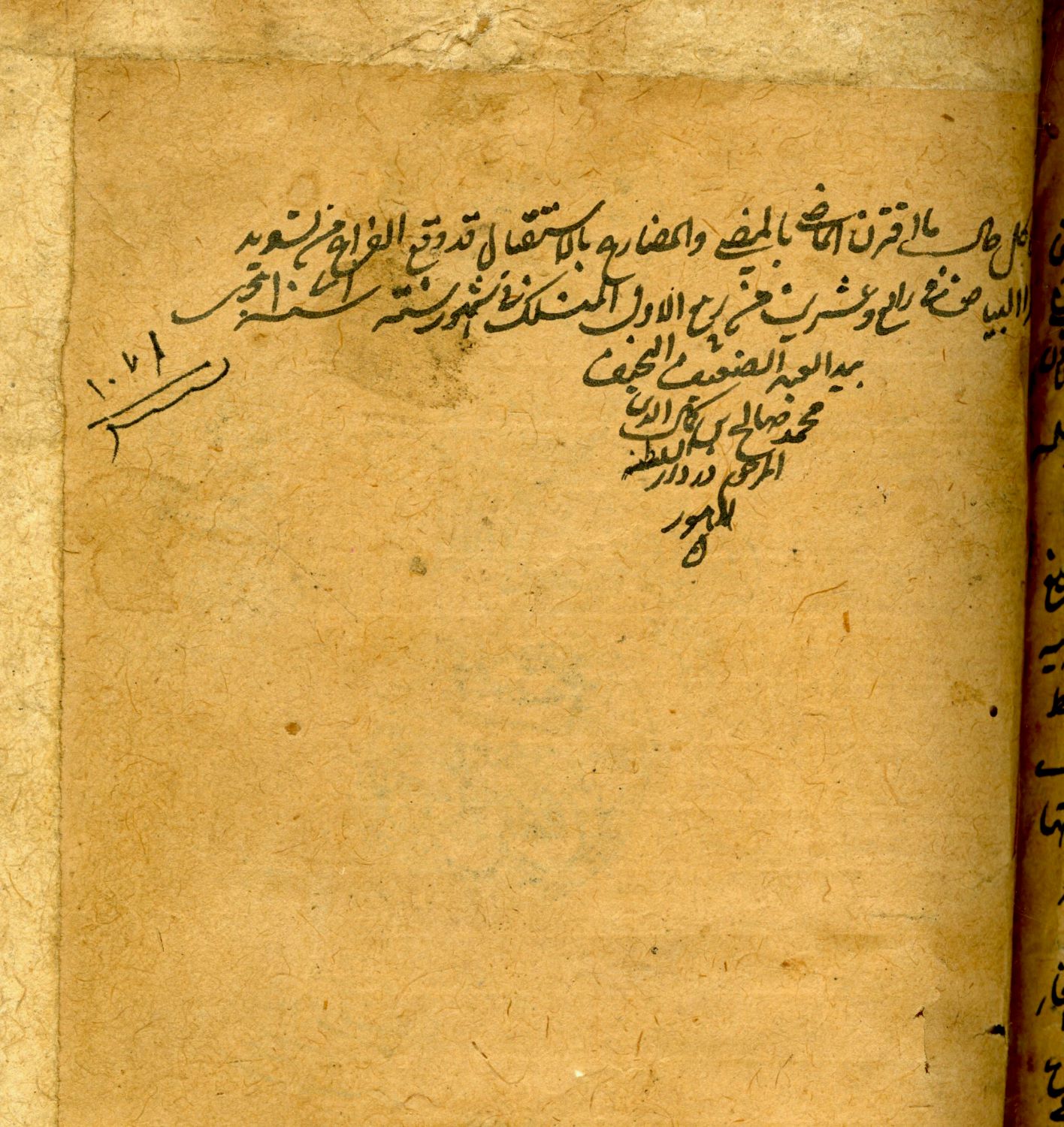
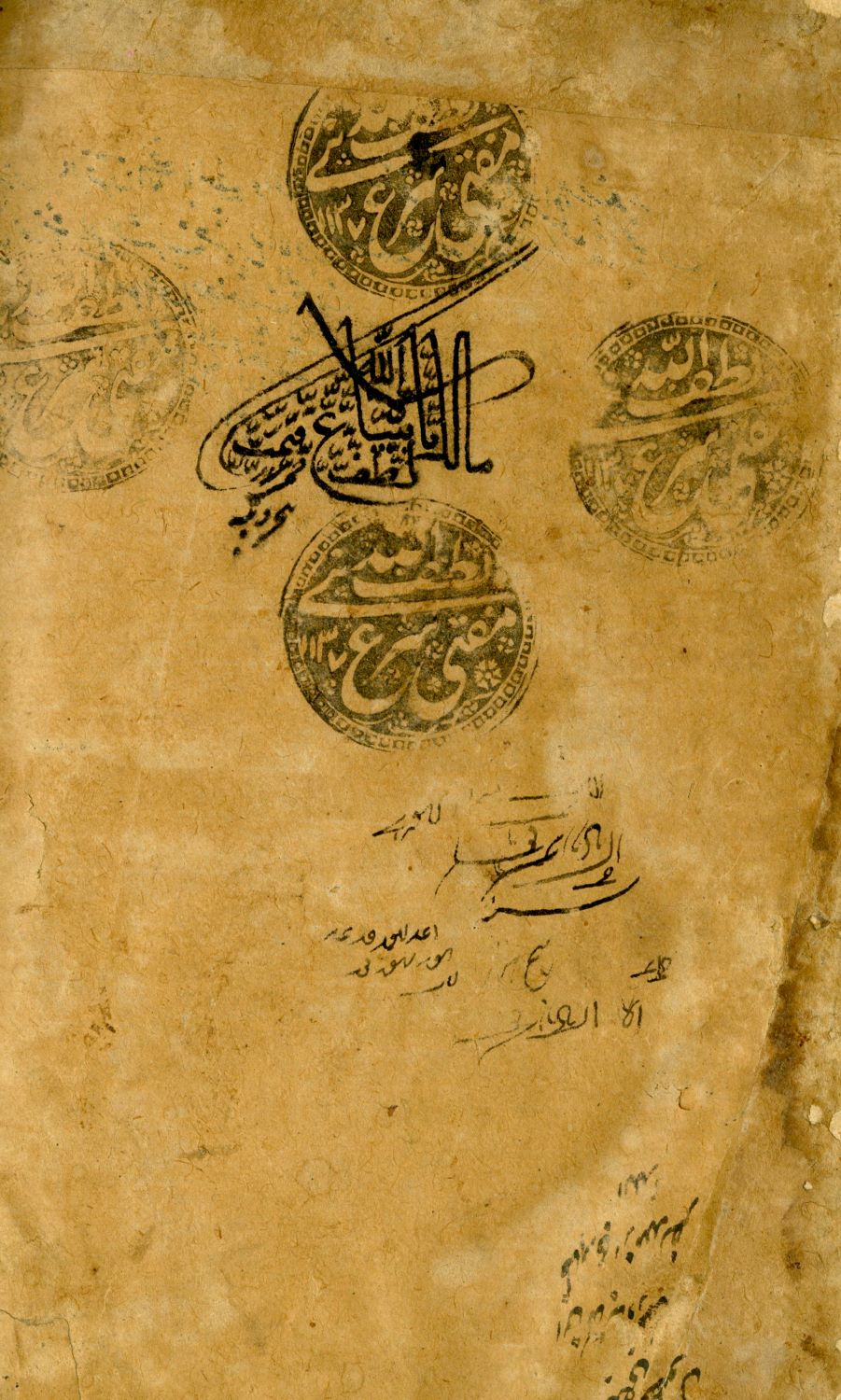
Those were strange times. Many people of talent could think of leaving their city for the well known cultural capital of Lahore. One was Qazi Lutufullah. Obviously his role as a Qazi did not prompt him to leave, it was his other role as a professional painter which made the journey a must for him. A seal as a Mufti in Lahore proves that he was in the city in 1138 A.H. and had bought a Tafseer of a very famous Qazi family of Lahore, Qazi Kamaluddin. That is dated 1071 A.H, by Muhammed Salih. But his personal signature, along with his seals, prove his calligraphic skills in a beautifully designed one. Really beautiful tughra in all cases.
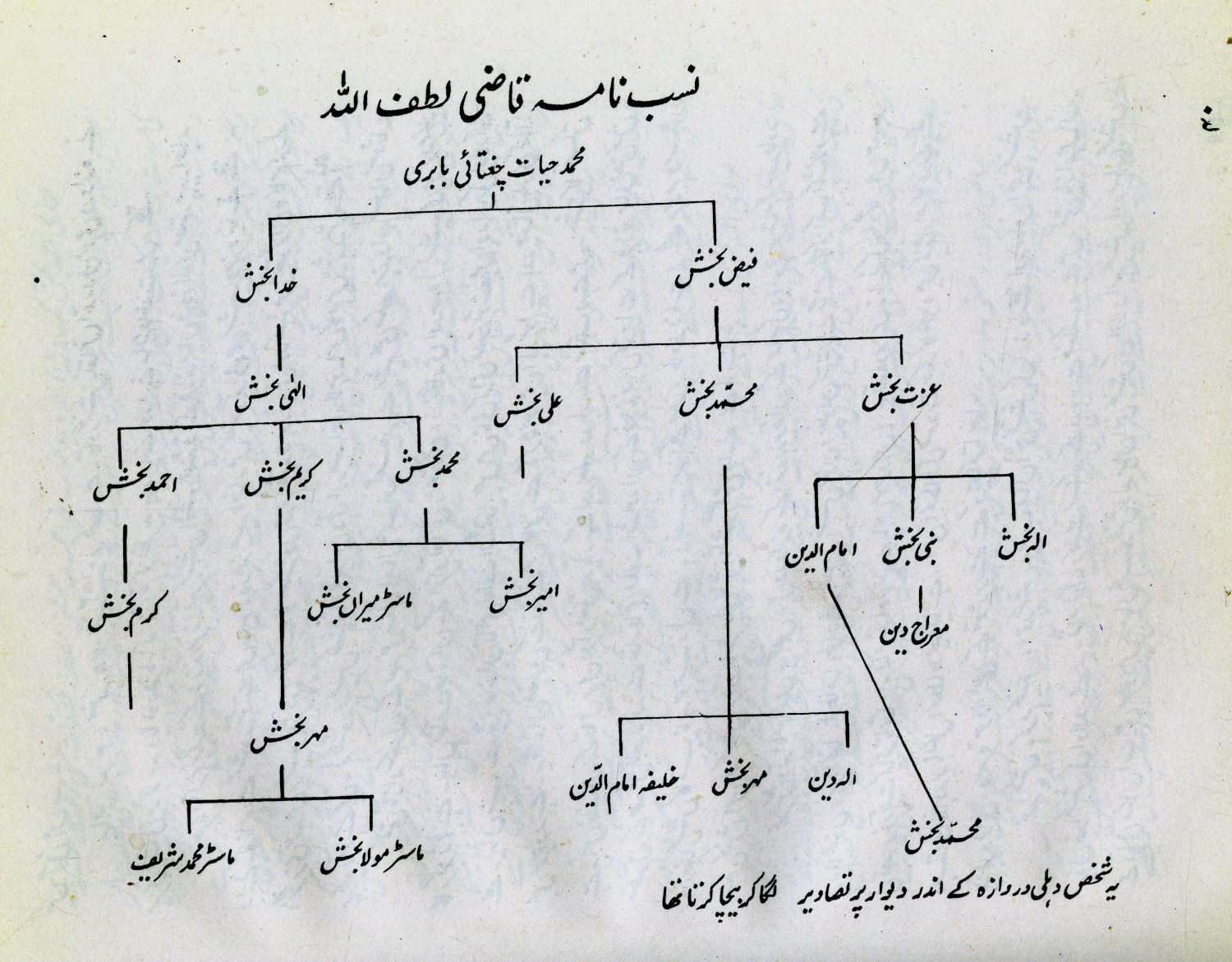
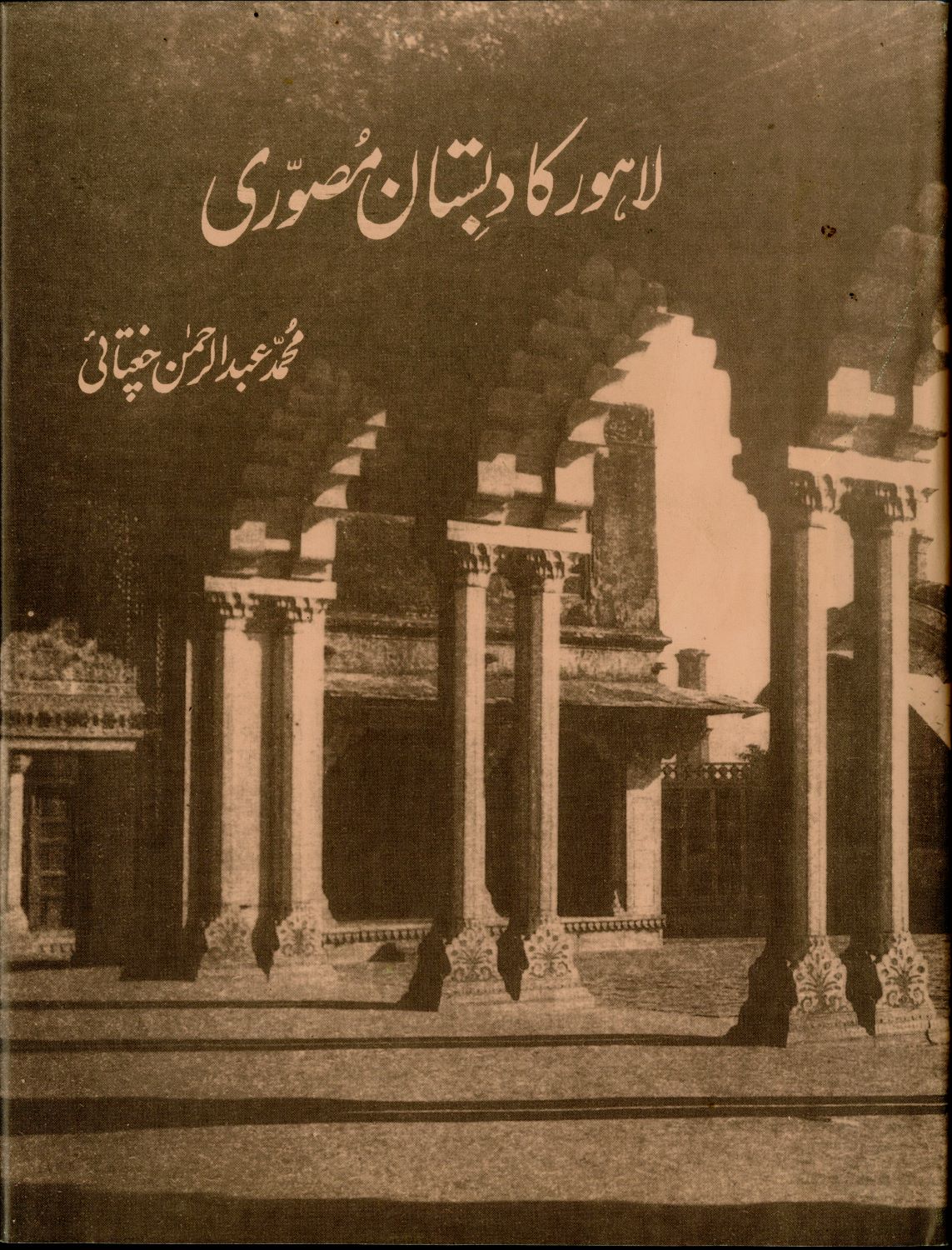
Tafseer Qazis 1071 AH owner Mufti LutufullahQazi as Mufti Lutufullah 1138 LahoreFamily tree Qazi Lutufullah MussawarLahore ke dabistan Mussawari
The family had settled in Lahore and were famously associated with Mochi Darwaza, and the Mohalla known as Gujar Gali. They started their profession from a shop in Gumti Bazaar, and were famous portrait makers. Sikhs used to come to their shop and have their portraits made riding horses and other things. They also used to work for the Englishmen, with portraits jnside the Lahore Fort. One of them was known as King of Delhi, for his resemblance to same King. The artist Abdur Rahman Chughtai has written extensively on this family. Indeed his first wife belonged to the same family, and had also indulged in besides “Moorti” making, into the advance jewelry making known as Bindri ghars. For a number of generation they were the epitome of professional painters of Lahore.
The families still exist in Lahore belonging to the same family. But in these times, with obsession of Mandirs on mind of researchers, no one is concentrating on the real Muslim Culture of Lahore. The artist Chughtai did it, and we do it too. Our aim to prove that from the last 1000 years, Lahore is the cultural capital of the region, and the Muslims made Lahore Lahore, from the days of Sultan Mahmud Ghaznavi, to the times of Abdur Rahman Chughtai himself. We will write more on it soon.
However one thing is documented. That Ayaz Governor of Lahore under Sultan Mahmud, invited 200 craftsmen from Afghanistan into Lahore, to set the tempo of the culture of Lahore. And that was a 1000 years back.
P.S.
The book by Abdur Rahman Chughtai, being “Lahore ke dabistan Musawari” can be had from us free of cost anytime. Be proud of your Muslim heritage!
CULTURAL POLICY OF PAKISTAN THROUGH FOREIGN AGENDAS REPEATED ATTEMPTS TO DIFFUSE OUR IDEOLOGICAL FOOTING
The advent of Pakistan was a shock to those who had to relinquish control over same. The first policy of culture was defined by the British with the release of the book “5000 years of Pakistan” and this agenda stuck like a leech with the bureaucracy who were to muddle our advance into ideological realms. A country which came into being based on Islamic Ideology was being bombarded with different ideas of a long cultural history, starting with the Buddhist Civilization. Amazing it was! Suddenly cultural experts started pouring in with French beards and smoking pipes in their mouth. On one hand 5000 years history charade and on the other getting into the band wagon of the West by meticulously following western narratives of existence. Made a ball of culture and knocked it clean bold. Cultural policy was indeed a Western agenda.
For years nobody took the liberty of putting a cultural policy down on paper and then Prime Minister Zulfiqar Ali Bhutto, recruited a Cultural Adviser Faiz Ahmad Faiz and he inducted a geographical policy for Pakistan. Our culture was to be found within our geography. Faiz simply said that the Taj Mahal may be beautiful but it is not our culture. In simple words “Pak sar zameen shad bad” was considered simply a ‘Sohni Darti”. Culture was to be tailored to that end. The Muslim Umma was a dangerous word for foreign lobbies with agendas of their own.
The zest for devising a new cultural policy for Pakistan is still here and a new group based in Australia is charting out one for us in 2030. It is not known on what basis the same would be. One can read the manifesto and find out. Their announcement is like this:
“Youth Revolution Clan in collaboration with Cultural Infusion Australia is going to Organize “Lahore International Conference on Culture “.
Culture is a set of rules and behavioural patterns we learn with socialization. However, in a globalised (and multicultural) world culture became subject of discussions from various points of views, and its importance is not loosing strength. In the past century, we witnessed many attempts to foster cultural agendas using popular culture where identities were formed in a way to present one nation to other nations in a favourable way, and where audiences were confronted with various messages that are sometimes blurred with first-hand experiences. States indeed invest funding in their cultural policies, and particularly in their cultural policies oriented towards abroad via external cultural institutes, or tourist offers where culture is emphasized as an achievement of a certain nation (most notably, in art and music).
Cultural relations, on the other hand, are centred on creating mutual recognition and understanding, however, many scholars and practitioners expressed criticism calling western countries as imperialists imposing their cultural patterns over less advanced countries just via peaceful means and not through colonialism anymore. On the other hand, culture is often a subject of discussion when minority groups are in stake because minorities find themselves surrounded by different culture, and in a dilemma whether to assimilate or to preserve their culture while still trying to lead average lives. The latter is then subject of criticism from conservatives and the Far Right that insist on integration, an unclear term that sometimes seems more like forced integration.”
We hear a new term coming up with reference to globalization and that is a Post Islamic scenario. Now what does that mean? A situation where Islam is gone. Really! Who subscribe to same? Outsiders yes, but Pakistani Muslims? Unbelievable.
A Pakistani Cultural Expert, Malik Shamas (Retired Curator Lahore Museum) showed me a draft of a cultural policy and it was an amazing draft. I am sure his son teacher Tanveer Hussain would have a copy and it is worthy of being published in any form. It really defines us.
But the direction for cultural policy of Pakistan was given by M.A. Rahman Chughtai at time of partition itself and the manifesto still stands. It was narrated in Urdu, so I am taking the liberty of summarizing that idea in simple words, which was:
“Islamic culture is dynamic with positive energy. In all ways it is timeless, as it grows from the past to the present and takes into account the future too. A time comes when culture stagnates and in an new environment, it jump starts a new existence, based on old, but very much new. This was the case of Islamic conquest of Spain. Confronted with new crafts people who embraced Islam and brought new ideas into the realm. This jump start happened with Muslims in Spain and that is why I propose the name of ALHAMRA for the Pakistan Arts Council. In my view the advent of Pakistan will jump start our culture forward into newer realms. My Art is simply following the same lines. I have relinquished older traditions of miniatures as well as its style as well as its technique, even compositions, and formed a newer school of art that is Chughtai Art, and that too, is actually timeless in spirit. Newer directions on older foundations that is my case for the new cultural policy of Pakistan. “
Anyone or a bunch of stray people cannot devise a cultural policy of Pakistan. Here again in any democratic spirit, the people matter, for culture strengthens them, both in belief as well as implementation. The Cultural policy of Pakistan has to come from within not from without. How can others mean good for you and your Identity? Diffusing your Identity is the only reason for same.
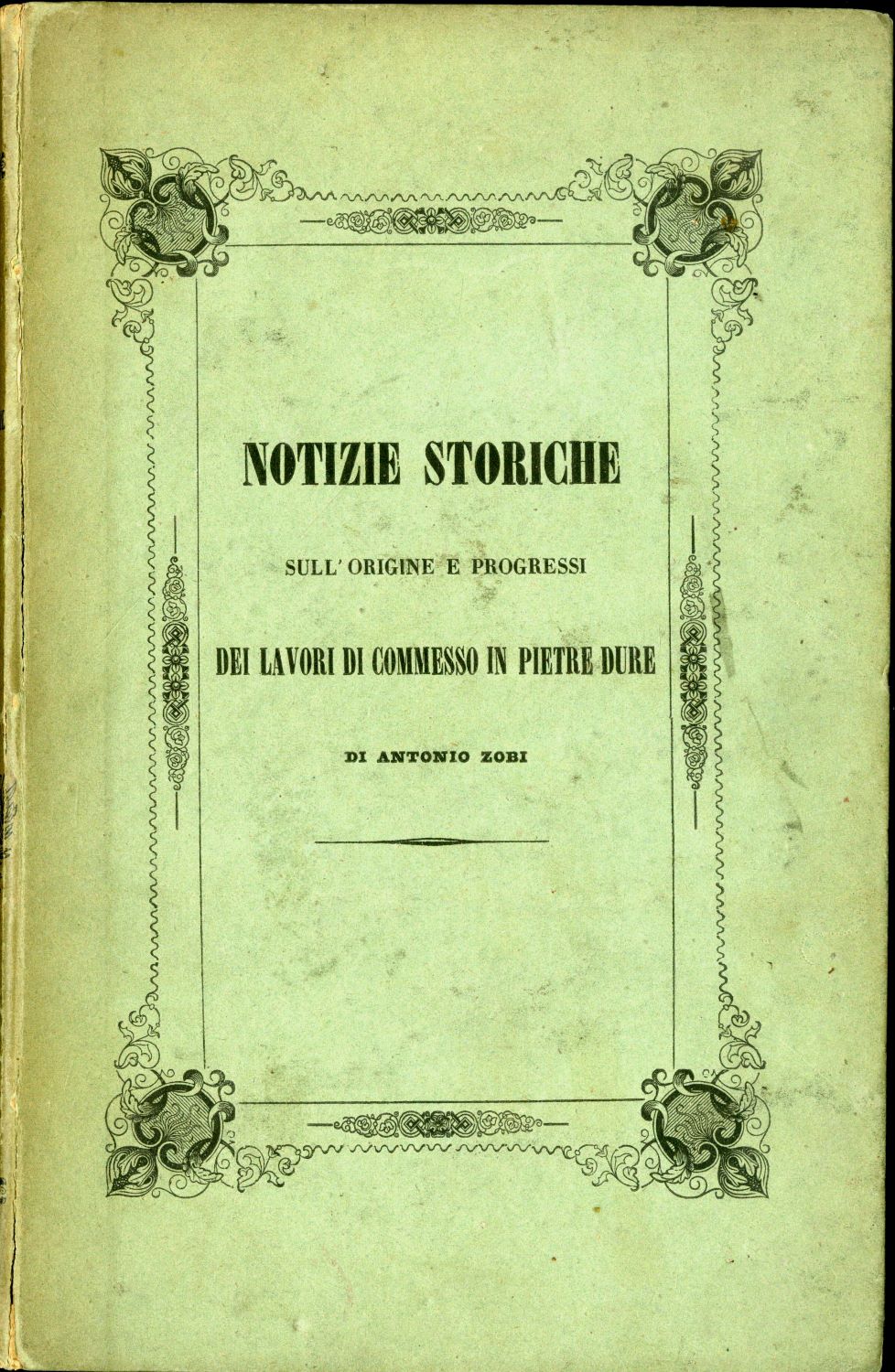
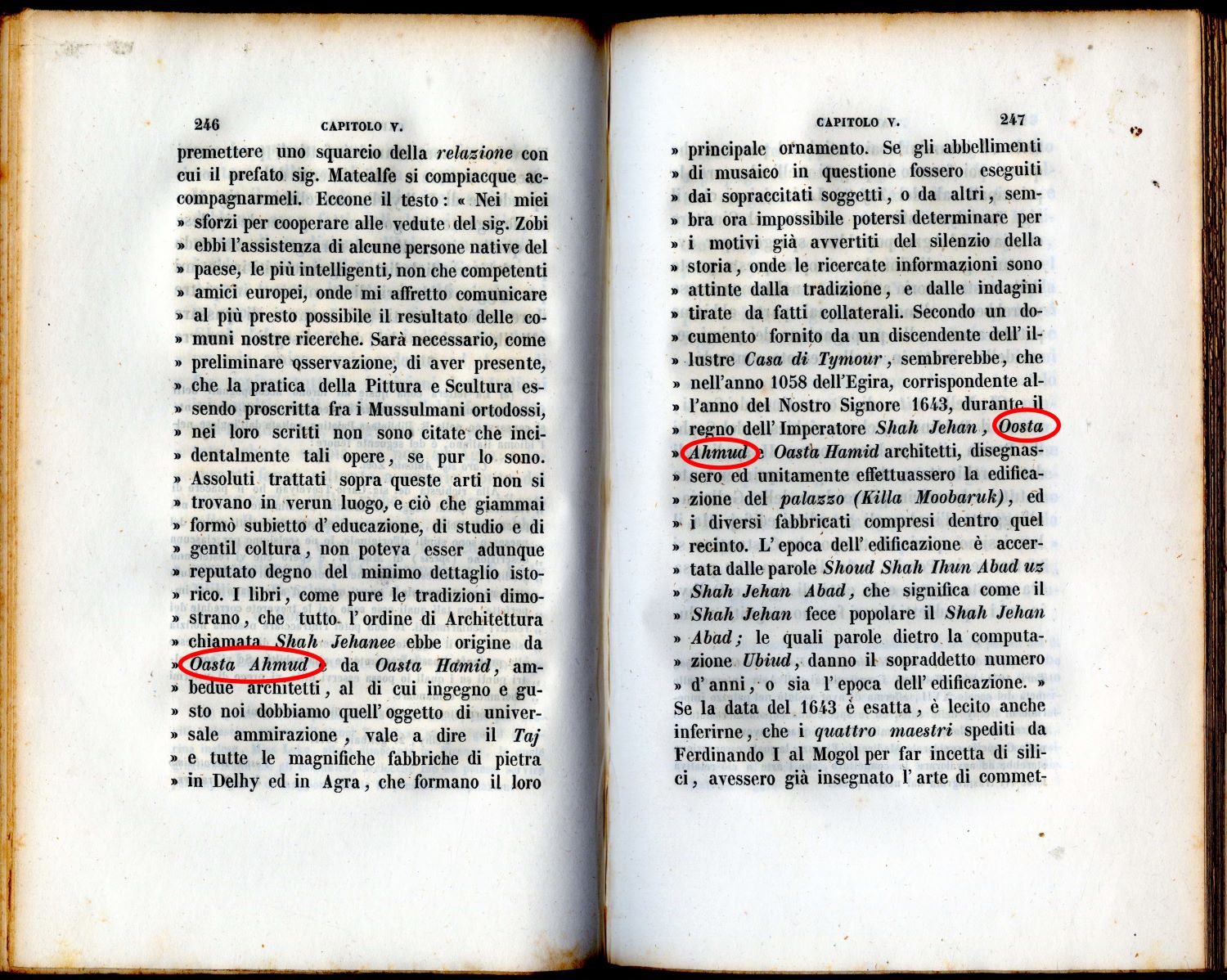
NOTIZIE STORICHE FAMOUS PIETRA DURRE BOOK BY ANTONIO ZOBI; FIRST WEST ADMISSION OF USTAD AHMAD MIMAR WITH TAJ MAHAL 1841.
Somehow or the other, the Mughals created wonders in Art and Architecture, and incited jealousy in other nations. The sickening attitude of extremists Hindus trying to assert it as a Hindu temple, one side. Even the Europeans could not maintain their composure and went into the coma of European influence in Mughal creations. They not only created European architects for Mughal creations, they were reluctant to give any credit to local people. Antonio Zobi inquisitive about things, wrote to the British Resident in Delhi, Charles Metcalfe, for information about things. Letters were exchanged. We have the exact translation done of the information started in 1841 and printed in detail in 1853. Roughly it said two main things:
“Chales Metcalfe reported that archives and traditions report that most of the buildings in Agra of Emperor Shah Jahan, including the Taj Mahal, were the result of the efforts of architects, Ustad Ahmad and Ustad Hamid.”
When this was clearly said in Western circles, European circles and even bureaucrat W.H.Sleeman went on creating legends of Western architects. Jealousy went to the extent that the British destroyed monuments after monuments in the region including Delhi, and even offered the Taj Mahal for auction for its marbles. They even stole the golden pinnacle of the dome of the Taj Mahal (Joseph Taylor 1810s). If Lord Curzon had not come to the rescue, they would have flattened all monuments to the ground.
So the assertion of a British resident to Antonio Zobi is not a joke, and why was it not taken seriously? Giving credit where credit is due, does not happen with jealous people.
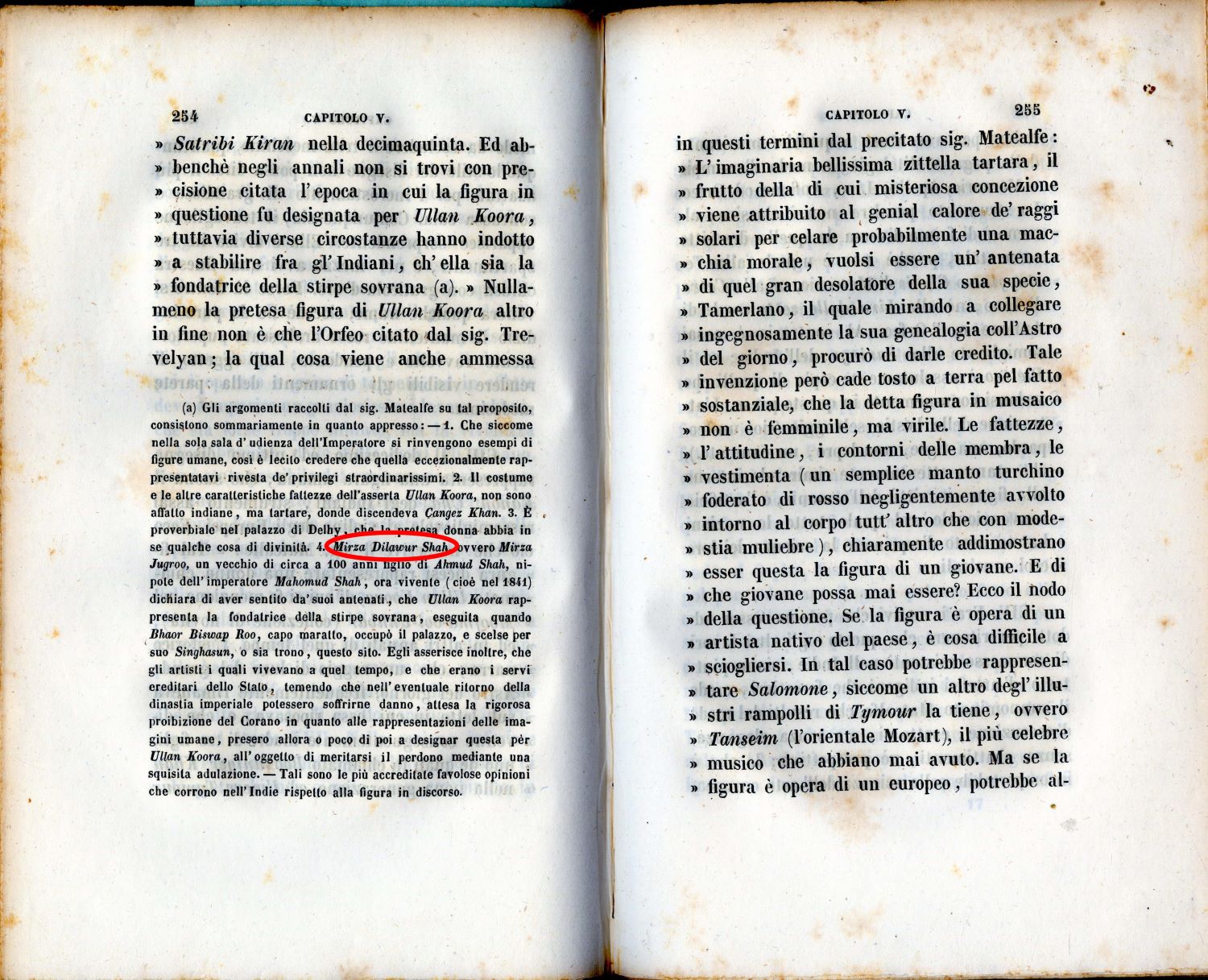
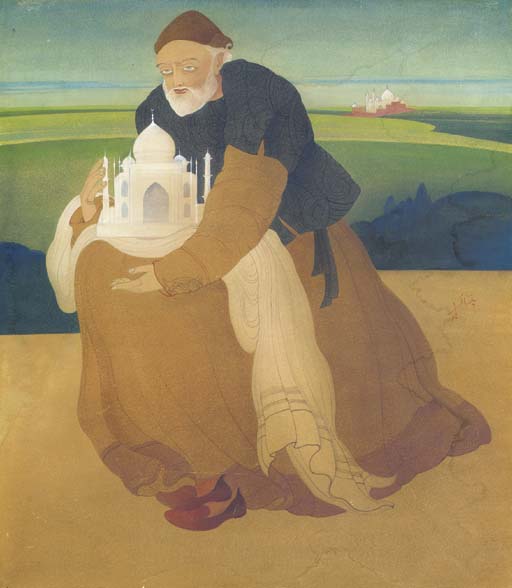
Notizie StoricheZobi statement of Oosta Ahmud-highlightMirza Dilawar Shah and Orpheus Ullan Koora-highlightUstad Ahmad Mimar LahoriUstad Ahmad Mimar
The second important thing mentioned by Mirza Dilawar Shah was that the Italian works behind the Throne of Shah Jahan were not there from the time of the Emperor but were added later in the time of the occupation of the Fort in 1760 by Bhao Biswap Roo, and Sadashiv Rao. These were ready-made floral reliefs exported by Florence to the world, found for sale in many places, and the Mahrattas made them in the background of their Lion Throne. This information is resented by these jealous Europeans. They would ascribe Shah Jahan to be an idiot in getting his works done. Some of the courtiers assigned the name of Ullan Koora to these reliefs. But the man making this Mahratta claim is no ordinary person. He is a direct descendant of the Mughal King himself. Remarks led astray by illusions. These kind of records are simply ignored by these European experts as they do not fulfill their expectations of degrading the achievement of the Mughals. We will handle it in more detail later on.
P.S.
This very important book and its reference about Ustad Ahmad Mimar was available in cheap reprints, but I wanted access to the original one. It was very rare and not available anywhere. Then some avid writer and collector died in Italy and his library was sold. This was there amongst it. I grabbed the chance to buy it immediately. It was even then very expensive, but dealers quoted it at many thousands of dollars. In any case my passion resulted in my getting it at a better price. Our archives became richer!
COLLECTING LOST CREDENTIALS AND TESTIMONIALS; MIAN RAHEEM BAKSH MIMAR IN HISTORY OF LAHORE.
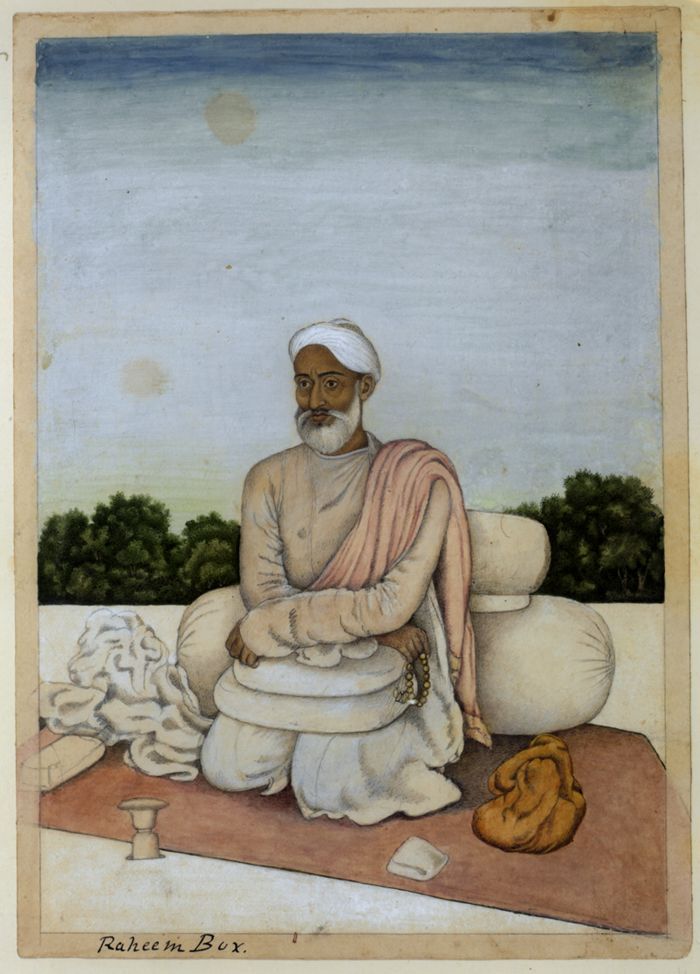
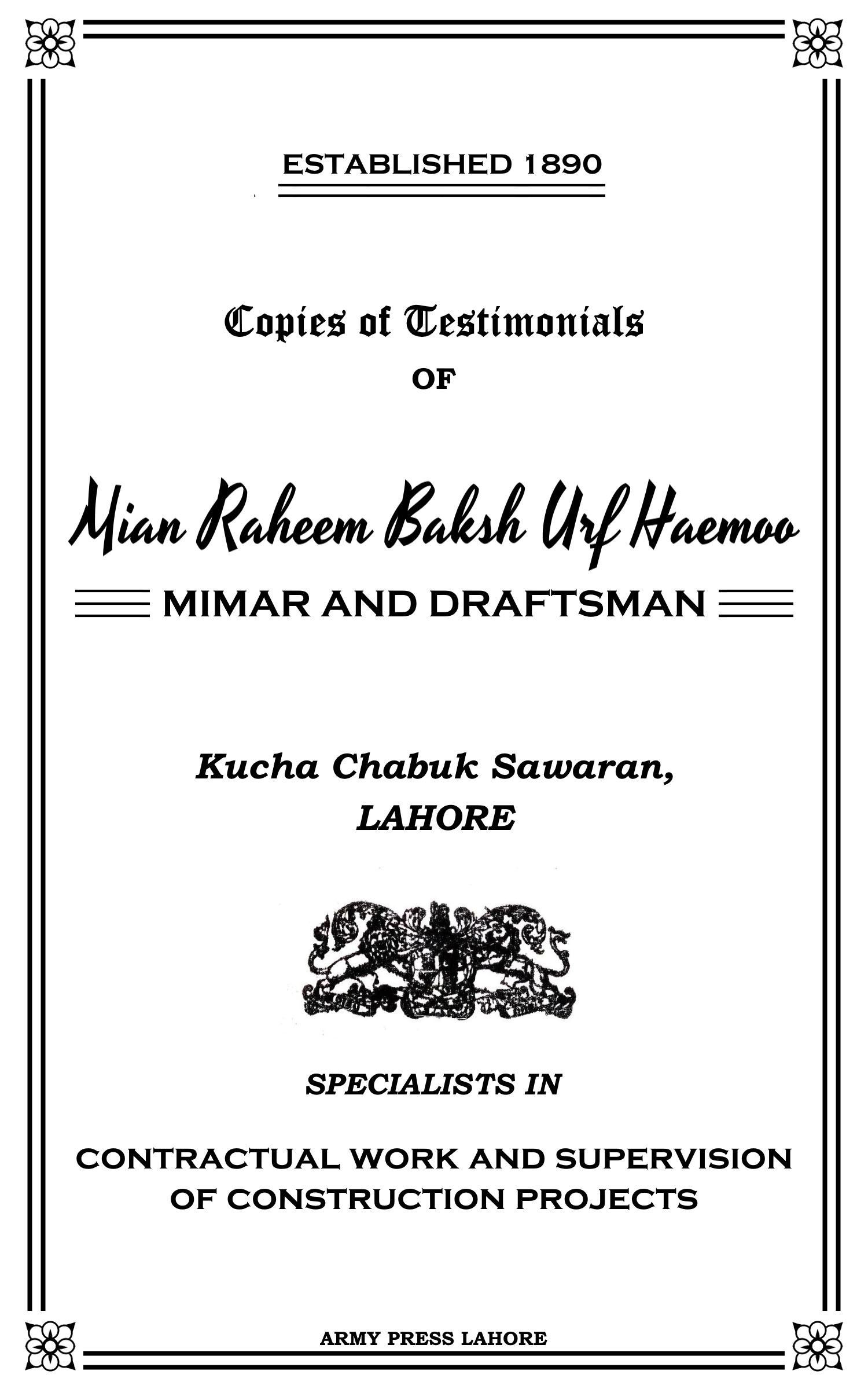
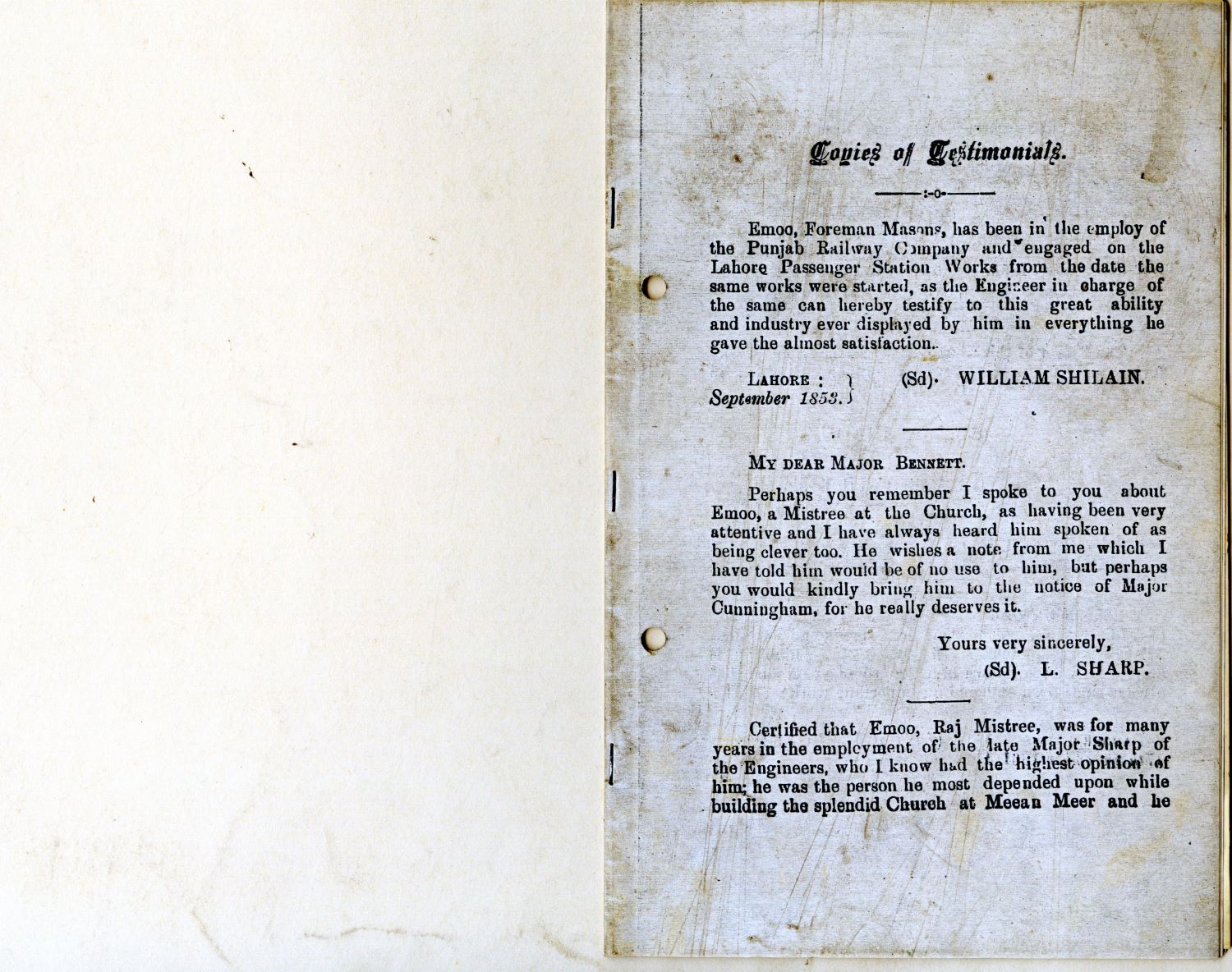
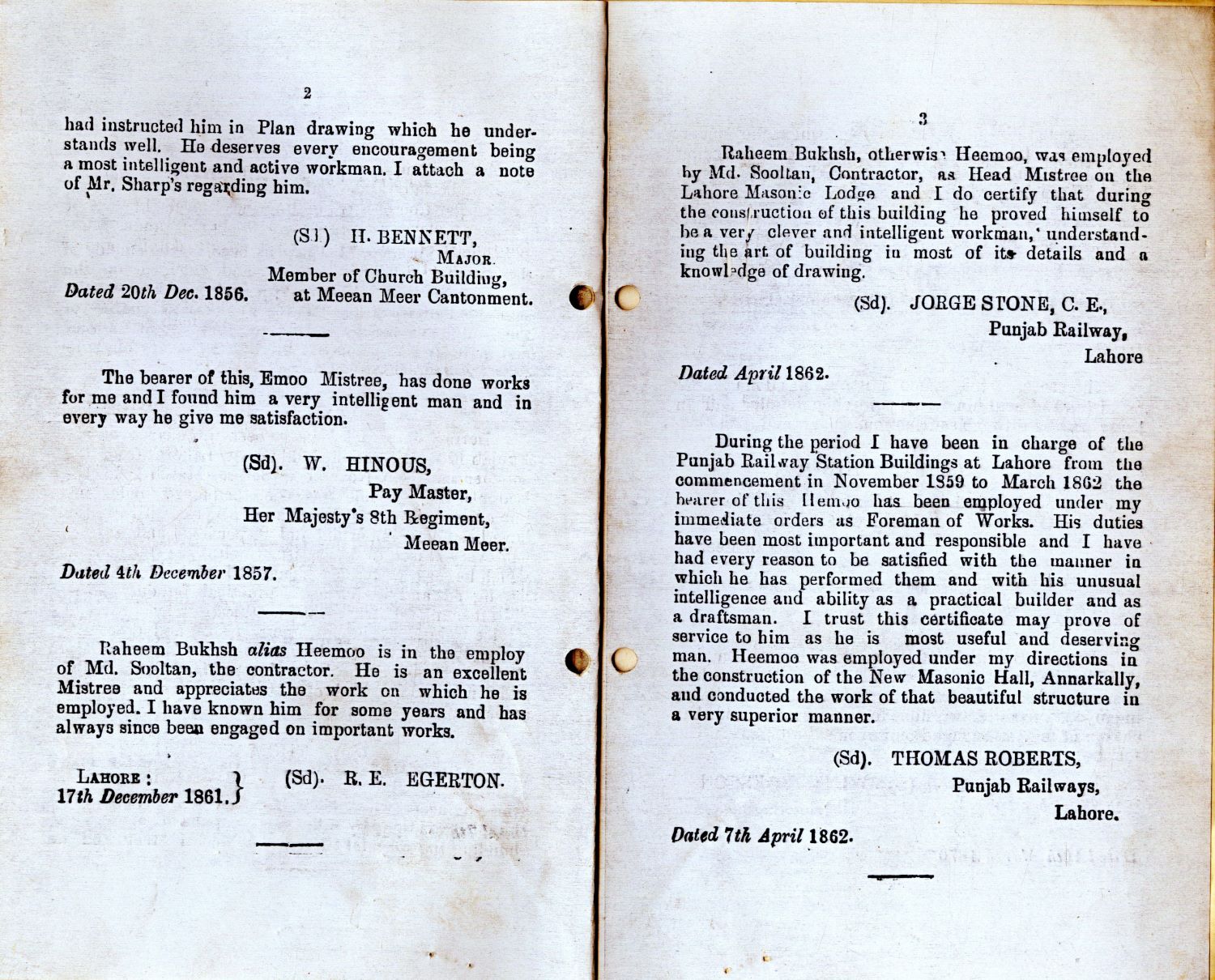
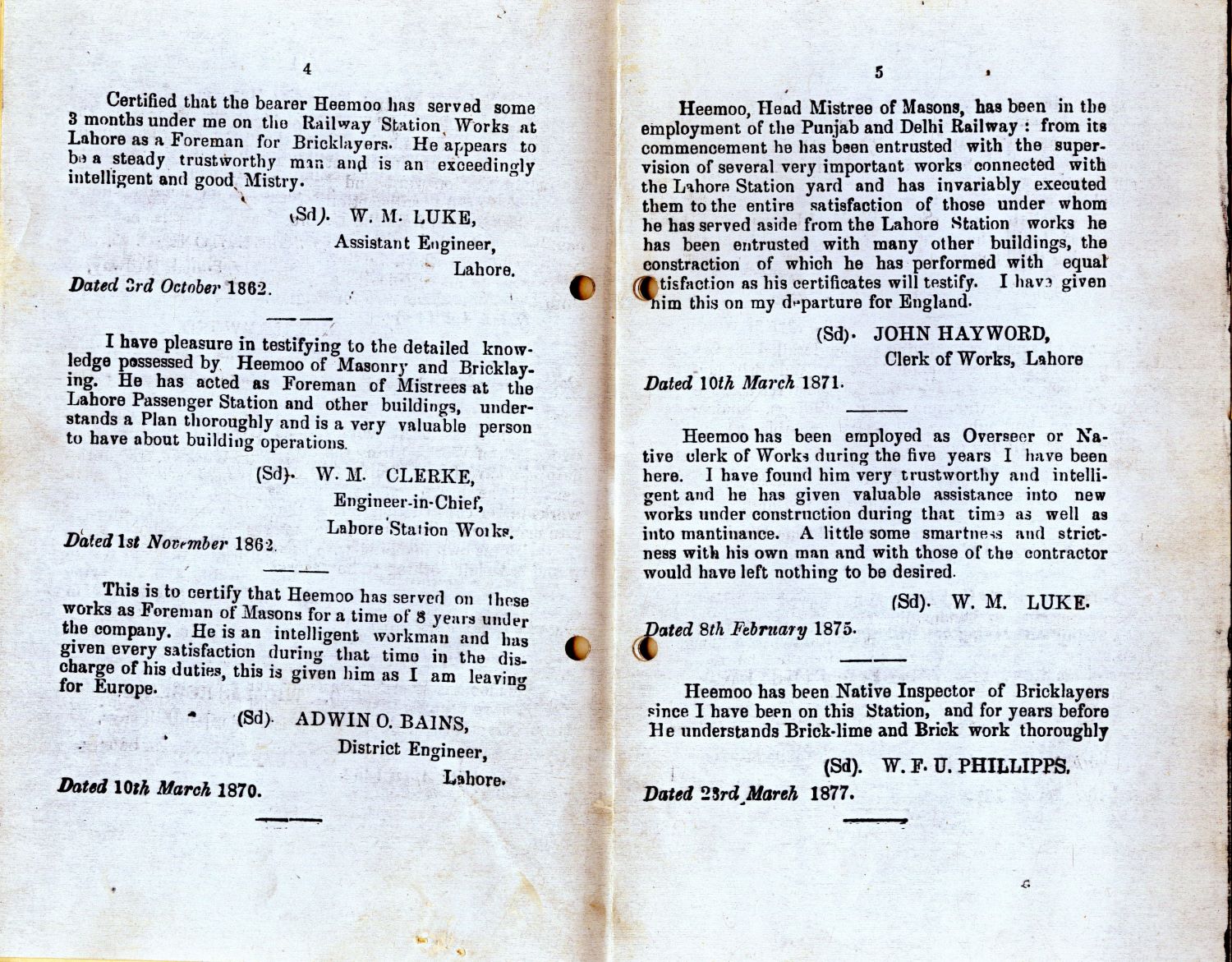
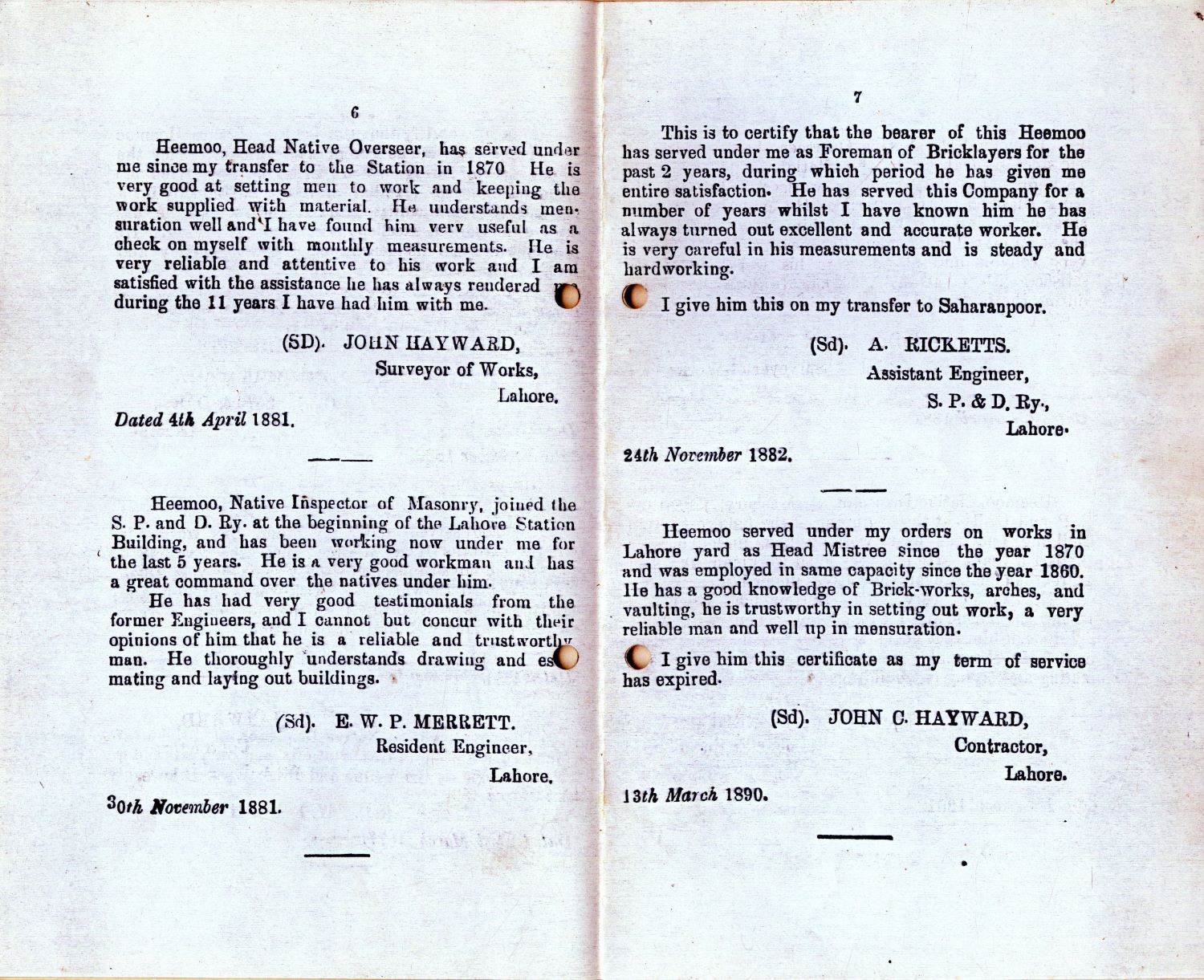
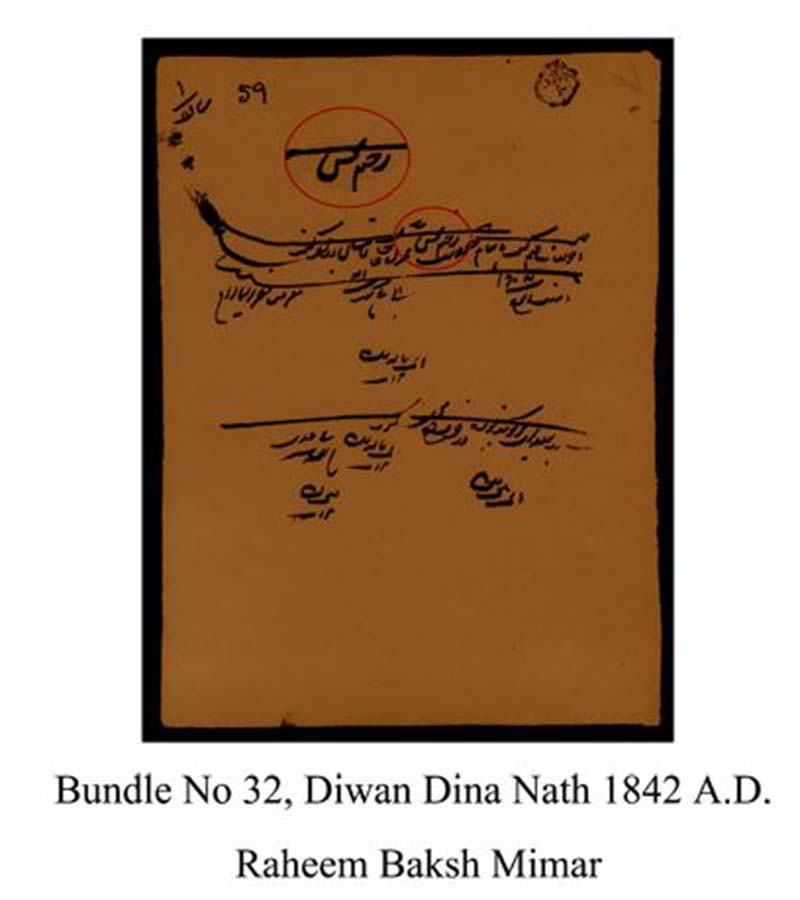
Mian Raheem Baksh Mimar was grandfather of artist M.A. Rahman Chughtai. There are plans to write a detailed account of him. We came across a printed copy of testimonials of a society made in 1890 in Lahore, which printed testimonials of various craftsmen of Lahore. The printing was done by the Army Press in Lahore. Mian Raheem Baksh has a printed set of certificates issued by various British administrators in Lahore. Some of the certificates certify his attachment with the Railway Station Lahore under actual work, the first Freemason Hall, and even with the Punjab Regiment of that era. Worthy of study.
There are other records available related to the Samadhi of Ranjit Singh, actual inscriptions to Katra Abdul Ghafoor, construction papers of Haveli Raja Dina Nath (now in Record Office), and many yet to be discovered with research. Even a lane in Old Lahore named after him. So enjoy the new discovery!
TWO NATION THEORY; IDEAS, NOT BLOOD MAKE REAL RELATIONS; STORY OF DARA SHIKOH AND AURANGZEB ALAMGEER
Take the two names and you will find immediately that people have taken sides. One group will eulogize Dara Shikoh and curse Aurangzeb Alamgeer as a bigot. The other group will curse Dara Shikoh and praise Aurangzeb Alamgeer. And the interesting part is that conclusions of both are not based in any way on the reality but literal media hype generated by vested interests. The father was Emperor Shah Jahan, the mother Arjumand Bano Mumtaz Mahal, and their literally thirteen children. The fourteenth one took the life of the mother. Yes, Dara Shikoh and Aurangzeb Alamgeer are real brothers, with many common interests. Both are expert calligraphers, and yes, both feel that there is more to life than merely being Princes of the Mughal household. Spiritual matters affect both of them. Yes, strangely both calligraphed the Quran, and copies of the Qurans written by them are known to exist. Both are less or more obsessive readers of literature and both composed poetry and books. And both are devout husbands. Yes there are more wives, even mashooqs, but each is attached to one wife in particular. Dara Shikoh to wife Nadira Bano and Aurangzeb Alamgeer to wife Rabia Durrani. And wives of both are housed in mausoleums of their own, which exist to this day.
So how do we analyze both? Contrary to proper beliefs, the reality is very different. Take bravery for instance. When a mad elephant charged the royal enclosure, Aurangzeb only 15, stood his ground, while Dara ran away in fright. When Aurangzeb was sent on war missions, he fought tooth and nail, and brought results for his father. When Dara was sent on a mission to Kandahar, he miserably failed at his task. He hired Hindu magicians (who told him that given the blood of a homosexual boy for magic rituals they could win the war) to do magic rites so that he could become the victor.
Take courtesy for another. Aurangzeb was polite and loving to all, even to the extent that it was resented by father as for a Prince who could mix with courtiers and ordinary people. Dara was rude, arrogant and very callous to others. No one loved him for his rude behavior. He could ridicule the grandest of the courtiers. He never tolerated any alternative point of view.
Take religion and deen as a way of life. Aurangzeb could give his life for Islam and Islamic values. Dara amusingly came up with the thesis that the Holy Quran cannot be understood unless the Hindu sacred books are not studied. The Quran was not complete without the Bhagawat Puranas. Dara left prayers, fasts in ramazan and all other rituals of Islam. He started wearing the Prabhu ring on his hand,worshiping stone gods, even acted and dressed like a Hindu. In a population mostly Hanafi Muslims in Indo-Pakistan region, this was highly resented by people. And he started moving with homosexuals like Sarmad, who walked usually naked in public presence, and people made fun of his antics.
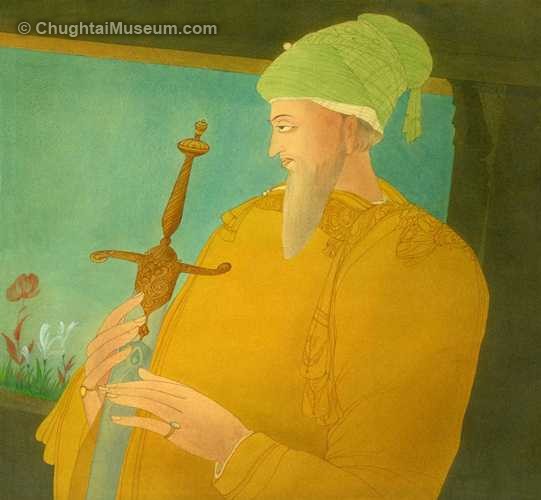
Aurangzeb AlamgeerEmperor AurangzebDara Shikoh with girls
As far as his loyalty was concerned. The day Shah Jahan got sick, Dara openly took command as King and tried to eliminate all his brothers before hand. Aurangzeb resisted till the last. And only stepped forward when there was no other choice. And what a father? Blinded by his love for Dara Shikoh, Shah Jahan went all the way to humiliate Aurangzeb and his way of life. The tyranny reached the extent when Shah Jahan made plans to have his son Aurangzeb killed, and the Prince only escaped the attempt by timely warning from his sister Roshan Ara Begum. One reason for his imprisonment.
Contrary to myths, Aurangzeb tried his best to keep his relation with Hindu subjects cool. He patronized them at court, gave them grants, and did his best for harmony. The temples he is reputed to have destroyed were the ones made by the STATE itself and was a political move to punish the Rajas who had rebelled against the State. Also to set them right for hampering education of Muslim children and interfering in their education. (Read Dr Ifftikhar, Dr Chaghatai, Maulana Shiblee and even Catherine Asher)
Aurangzeb did not murder his brother in any whimsical way. A war was fought and Dara Shikoh lost the war. He was presented before a proper tribunal with judges and they held him guilty of apostasy. And as a result he was sentenced to death. The accounts of Bernier, Manucci and Catrou are figments of their own petty imagination and has nothing to do with the truth. A sad thing to happen in all ways.
Aurangzeb patronized culture in all ways. The kingdom was no longer rich enough to do all things, but even then under him architecture flourished, a musavari khana (artists studio) was working, and contrary to myths the King was even fond of proper music. Miniatures exist in which he can be seen listening to song recitals with his family.
Aurangzeb did the impossible by making Fatwa-Alamgeeri, a modern text by top Muslim scholars of the time to codify Islamic laws. And he implemented the same. Only two persons had introduced the Islamic system. One Hazrat Umar, and the other Aurangzeb Alamgeer. He abolished all foolish royal customs, wore normal dress, and lived an austere life for the benefit of his people. A real dervesh King ahead of his times in all way. No small reason that our National Poet Dr Allama Iqbal had all praise for the Mughal King of the past.
(Excerpts from the forthcoming book on Dara Shikoh)
So is blood thicker than water? Yes, but ideas are thicker than any blood. When two communities lived in a region for more than 1000 years and could not reconcile to each other, then the solution became Pakistan. More on that later!
THE YEAR 1923 IS A VERY HISTORICAL YEAR IN THE HISTORY OF LAHORE FORT – PRESENCE OF ENGLISH GARRISON CAME TO AN END AND START OF THOROUGH RESEARCH FROM THE ARCHAEOLOGICAL SURVEY OF INDIA MR R. HARGREAVES
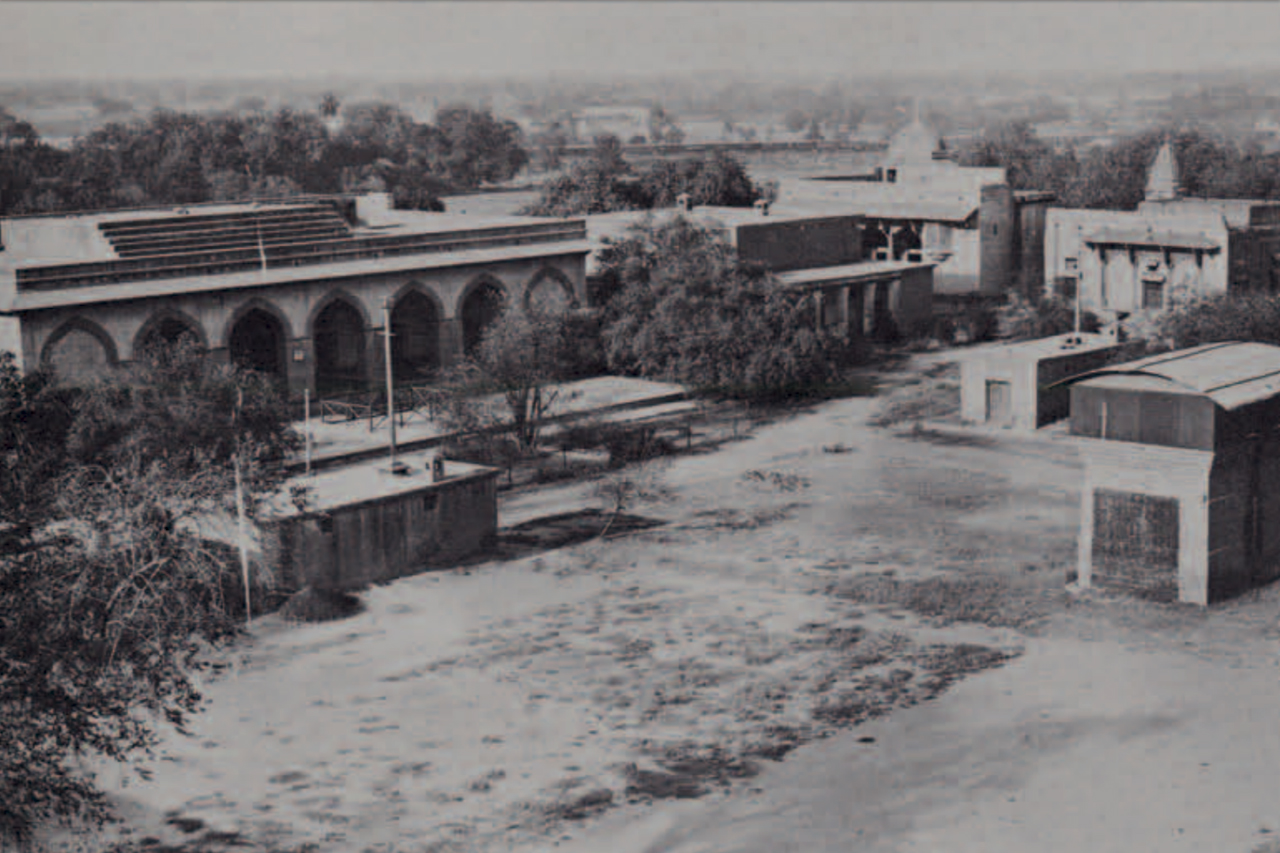
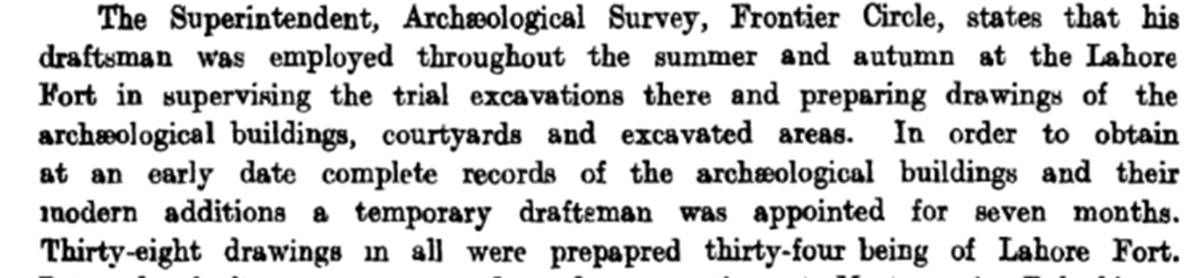
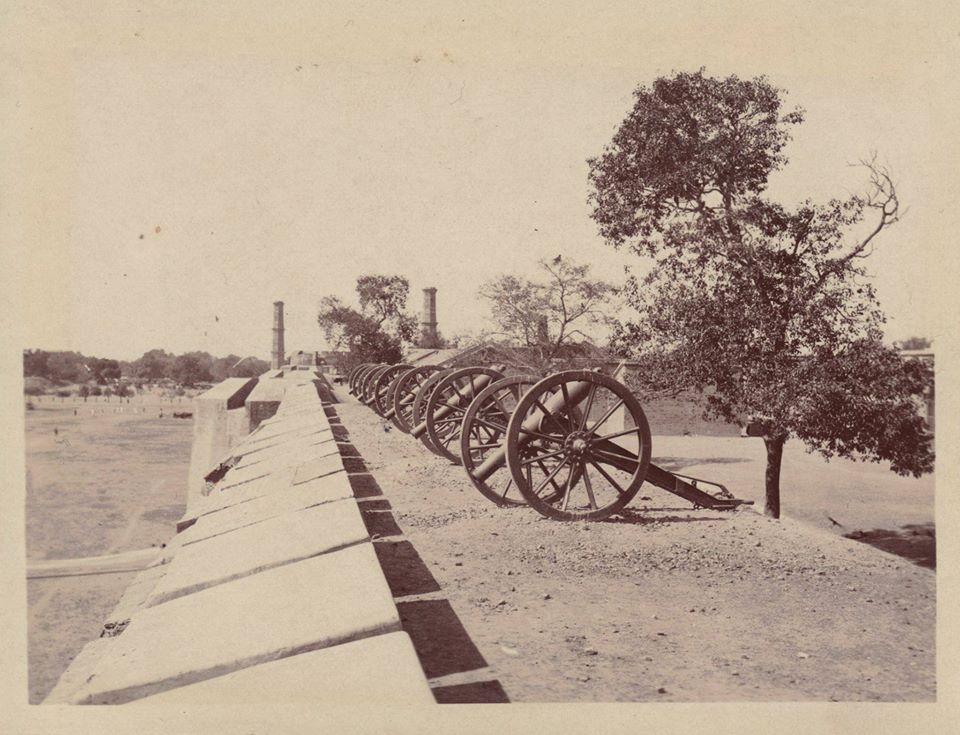
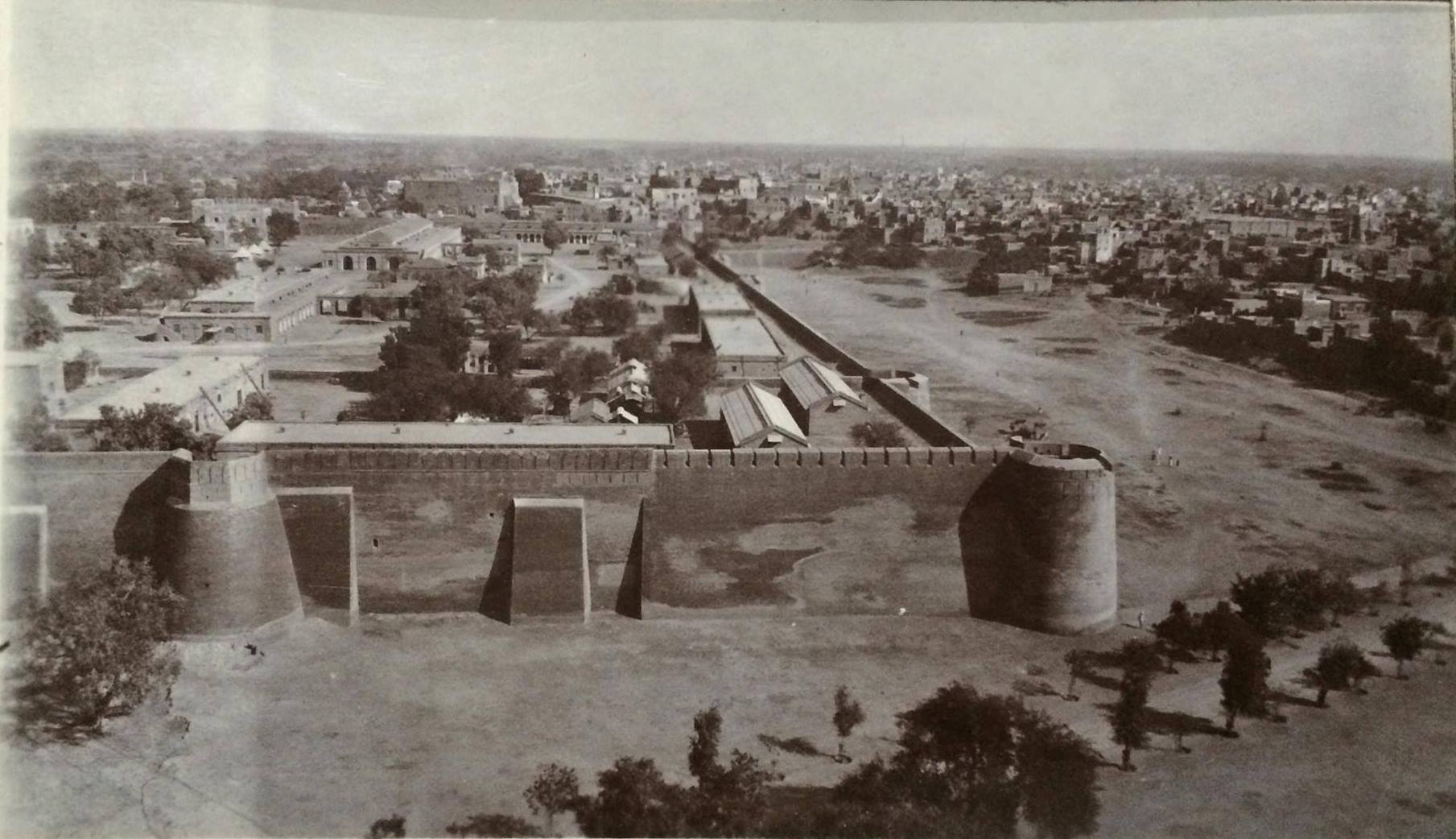
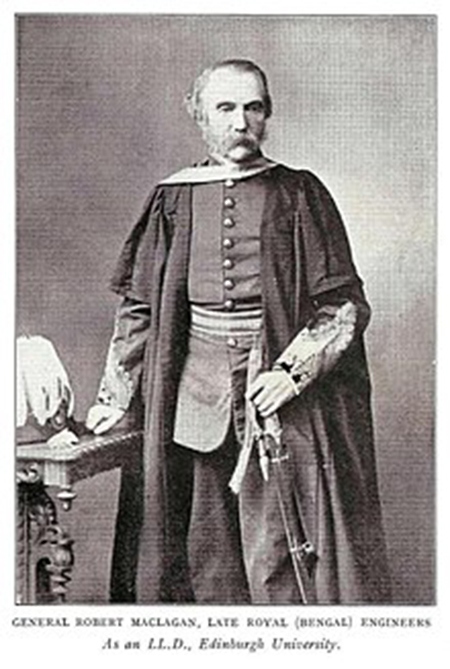
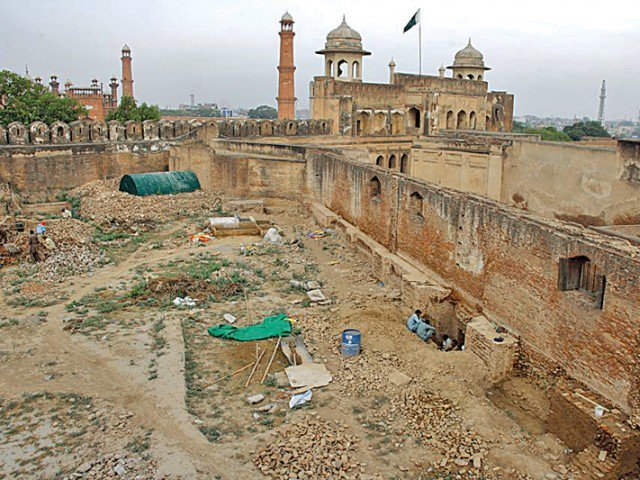
The Hazuri Bagh was full of occupied British Garrison. In fact the father of E.D. Maclagan, the famous English diplomat, was an Army Engineering Officer, sitting in the structure above the Aurangzebi gate, and occupied the floor there in 1846. Captain Maclagan was doing things, sitting at a place a stone throw away from the Mandir of Loh. But imagine the rest. They had master minded the destruction of the Wall surrounding Lahore. And like the Sikhs before them, ruthlessly tore one monument after the other. The Army was stationed outside Lohari Gate, before being shifted to Mian Meer colony. Now imagine the Lahore Fort, full of British Army, with barracks everywhere. Caring no hoot for anything of historical interest. Breaking things whenever required. In fact in 1923 they said no to R. Hargreaves, Superintendent Lahore, of the Archaeological Survey of India. But then orders came and except for a small corner the whole place was given to the department. Which corner is open to research? All this is in the report of 1924, and we studied it properly. The fort was rescued by Lord Curzon and for him, the entrance was diverted from the main gate, and a new entrance made for his inspection. History is studied with such details.
“In 1923, with the abandonment of the fortress by the British garrison, the Archaeological Service of India, began the work of restoring, repairing, and preserving what remained of the ancient structures.”
“Before any decision could be reached as to the layout of the archaeological area, it was necessary to ascertain by trial trenches what ancient remains of the Mughal and Sikh period still existed underground. The operations go down and have revealed the existence of a large tank of unsuspected form, some of the fountains of the Sikh period, ruined hammams and other structures of which drawing have been made, the dismantling of the numerous modern additions to the historical buildings have yet to be undertaken. Th chief item of expenditure has been the six-foot iron railing to be erected around the historical area.”
Lahore Fort 1923Funny structures in Lahore FortFort drawings copyBritish Garrison guns towards LahoreLahore Fort direct path of grave of Nau-GuzzaBritish Garrison and path to Chowk Na-GuzzaGeneral Robert Maclagan Royal EngineersNauguzza-LahoriOldest view of Nauguzza grave
A draftsman copied these excavations in a large number of drawings and these must be in some record office, perhaps the British library itself. Why is 1923 important to us?
The Hindu society Sanatan Dharma Yud Sabha was after the Superintendent Archaeological Survey of India, mainly R. Hargreaves, to excavate the so called Mandir of Loh (only they knew about it), and on 11th December, 1923, the Superintendent with a team of workers went with members of the Sanatan Dharma group to explore this site. It was filled with debris in a deep hollow and for two days, cleaning and digging the area, revelation on 13th December, 1923. And what was discovered were the bones of a GIANT of a person in it. Known as Nau-Guzza in Lahore. And that is a different story, and we will take it up next time. Enjoy solid information, instead of conjectures!
MANIPULATING HISTORICAL RECORDS INTO DIFFERENT VERSIONS; YES, LOH SON OF RAM CHANDAR NO WHERE IN HISTORY OF LAHORE.
Loh-Mandir-hoaxLoh-Mandir-before-restoration
It is very romantic to speak of the twin cities of Lahore and Kasur and link them to perhaps two brothers Loh (actually Lava) and Kasu (actually Kusa), son of the legendary god Ram Chandar of Hindu religion. Certainly, Loh is remembered as the son of Ram Chandar, but little is known of a brother Kasu. This Lahore idea was first floated by a Hindu writer Munshi Sujan Rai perhaps in 1691 AD (the amazing fact is that no old manuscript is known, and when it covers 40 years of Aurangzeb’s reign, all manuscripts have date of death of Aurangzeb too (years later), and the earliest manuscript is dated 1168 AH or 1754 AD and even that has some missing and replaced pages, and even more amazing of the five manuscripts known, not one has his name in it) in Khulasatul Tawareekh, as compared to simple statement of Lahori writer Ahmad Zanjani in Tuhfa Sawaleen in 1043 AD (648 years previous) which ridicules this conjecture. But nowhere was mentioned that his Mandir exist in the Lahore Fort. No mention of same even with Kanhaiya Lal in 1884, and up to the best of my knowledge it was Judge Muhammed Latif in 1892 AD, who narrated the existence of Mandir, and speaks of it being in a deep hollow which is descended by wooden stairs. Or rather ladder if you call it. Not very clear really. Made to mention but no image in his book.
Loh-Mandir-back-nothingOutside-Mandir-Loh
Mian Muhammed Fauq is a well-known historian of our region and has written on Lahore too. Rare to find his books, we come across the in different conditions. But very strangely there is a strange mention in his book on Lahore, related to the Lahore Fort. Let us translate what he has to say in understandable terms:
“Besides the mosques in Lahore Fort, there is a Mandir in the fort, that even today proves the bigheartedness of the Mughals Emperors, This Mandir is in a space with a huge pit in it. It is said that this pit is that of Raja Loh, son of Raja Ram Chandar, who is responsible for making New Lahore. The level is same as the Fort, there is a reason for it that it is very old and Mughals left it intact. In reference to this Mandir, the society Sanatan Dharm Yudah Salba were having letters communication with the Government. So on 11th December, 1923, members of Yud Sahba, and Superintendent of Archaeology went to see the same, and this area was covered with debris, the same area was cleaned from all sides. Cleaning the Mandir or Samadh, and one can see a dilapidated dome (gum band) and under two feet one could see leaves and earth all around. This two feet deep one could see a flower. Its level is same as that of Hazuri Bagh. After cleaning and digging, on 13th December, 1923, there were discovered bones of hands which at present generation comparison, were very large, and the face had very sharp teeth which were also discovered there. After studying them it seems that at that time, humans were much taller and stronger at old days. These bones were taken into possession by Sanatan Dharm as being the bones of Loh, son of Ram Chandar. However, the Department of Archaeology thought that these bones were of pre-Buddhist times of some extra ordinary large person. “
Ahmad Hasan Dani, a world-famous scholar said the same in different terms:
In 1973 the legendary scholar of Pakistan Ahmad Hasan Dani delivered a lecture on “Al-Beruni” in the city of Kabul. Amazing that Kabul is seen as hosting a Pakistani scholar. But Kabul was a city of intellect and arts for a long time. Not surprising that it happened then. Dani Sahib in his erudite way explains everything. His dismisses the so-called connection of Loh son of Ram with Lahore and we attach the paragraph on same. Worthy of being read. But most interesting he isolates different Lahores and capitals and names. And he says that the city was founded near the river IRAWATI (present Ravi), and that is why it was called IRAWATIAWAR. It was later modified with use as RAVAWAR. He says Panini’s grammar tells us that RA and LA are interchangeable grammarian words, and that is why we have the word LAHAWAR, or presently LAHORE itself. Lahore is simply by tradition CITY ON RAVI.
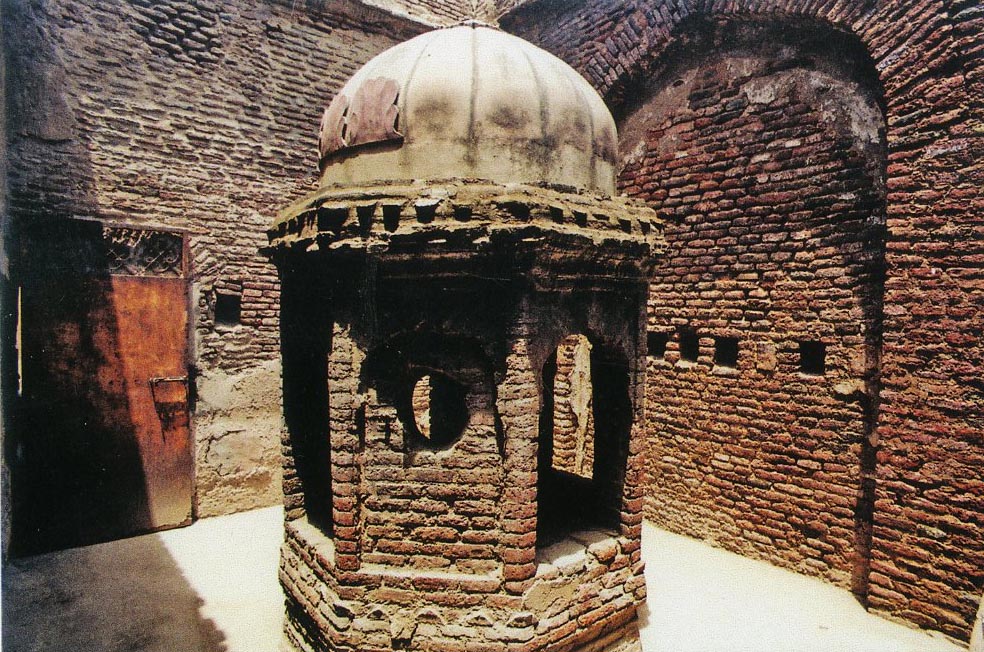
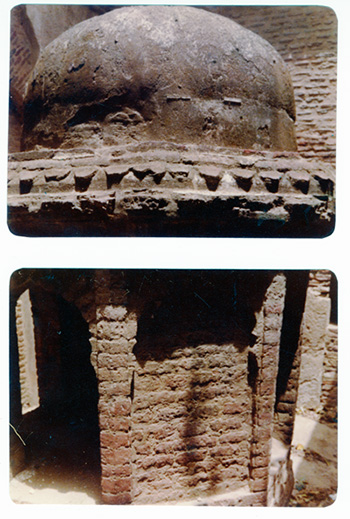
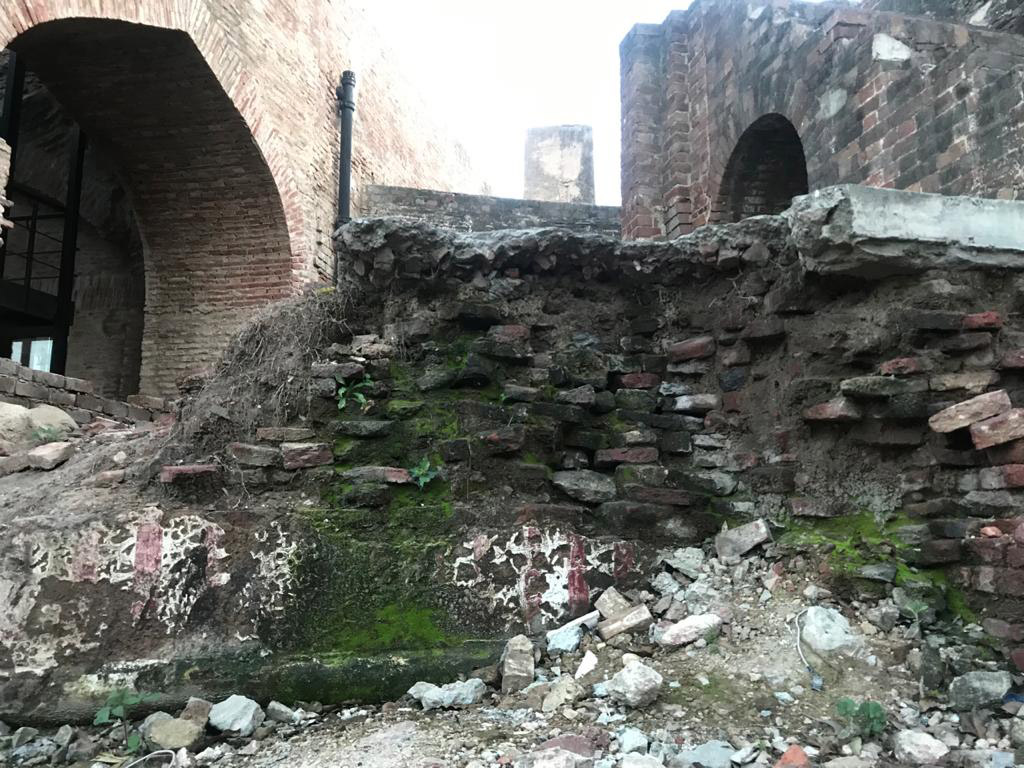
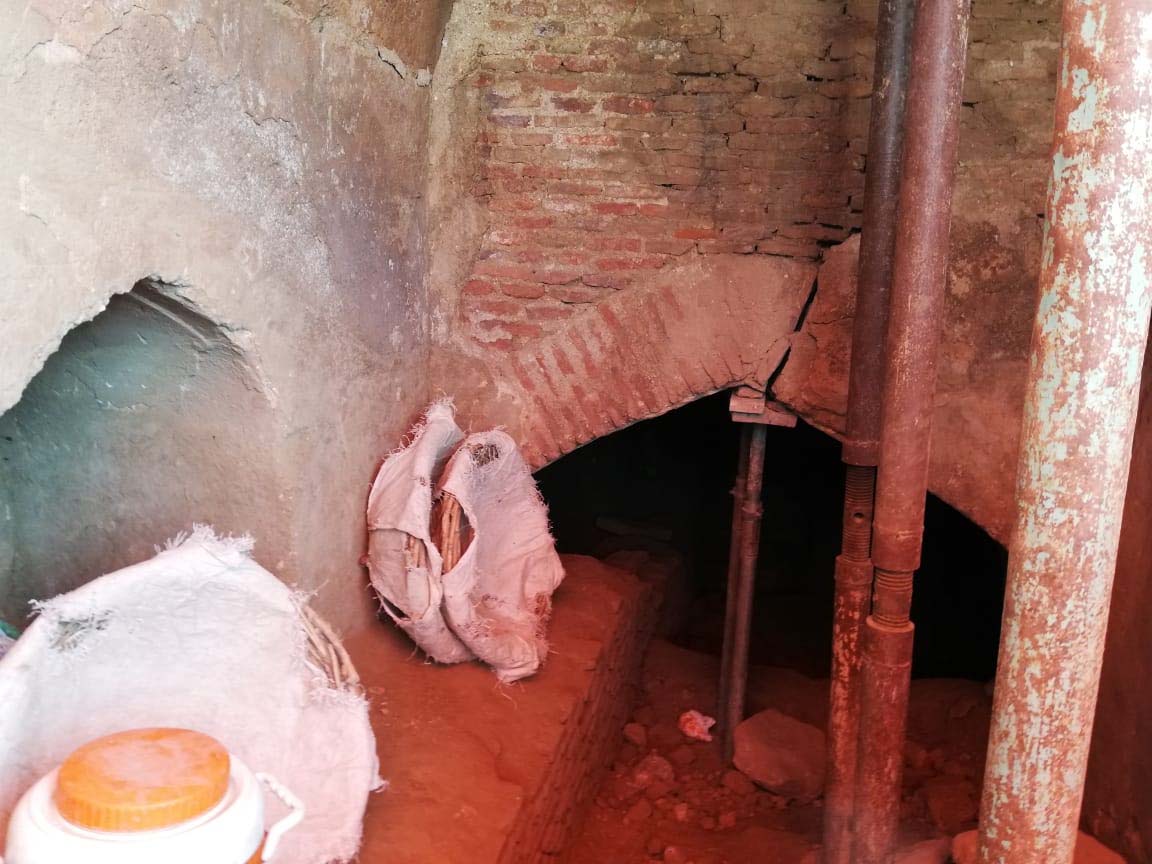
If this had existed in Emperor Jahangir’s time, he would have built a grand mausoleum over it. It was certainly not a prehistoric structure and nor could one call it a Neanderthal grave. It was a combination of Sikh and British architecture for the various bricks used were of Sikh and British period. The Dome was naturally a poor fluted melon dome of the late Sikh period. It was so small in structure with a circular window on opposite end that it actually looked merely like a small well. The depth of the inside was not comprehended, and the inside floor was closed too. No one could enter it nor lit anything over it. No lingam there. It had no match with any Mandir in the world. But it was asserted as Mandir of Loh, thousands of years old. The structure was not even 150 years of age. Everybody wanted to jump to their own conclusions. The pressure of international lobby of Sanatan Dharm, founded by Bhadashi Maraj in Trinidad and Tobago in 1881, was very evidently there. The Hindu lobby was asserting itself.
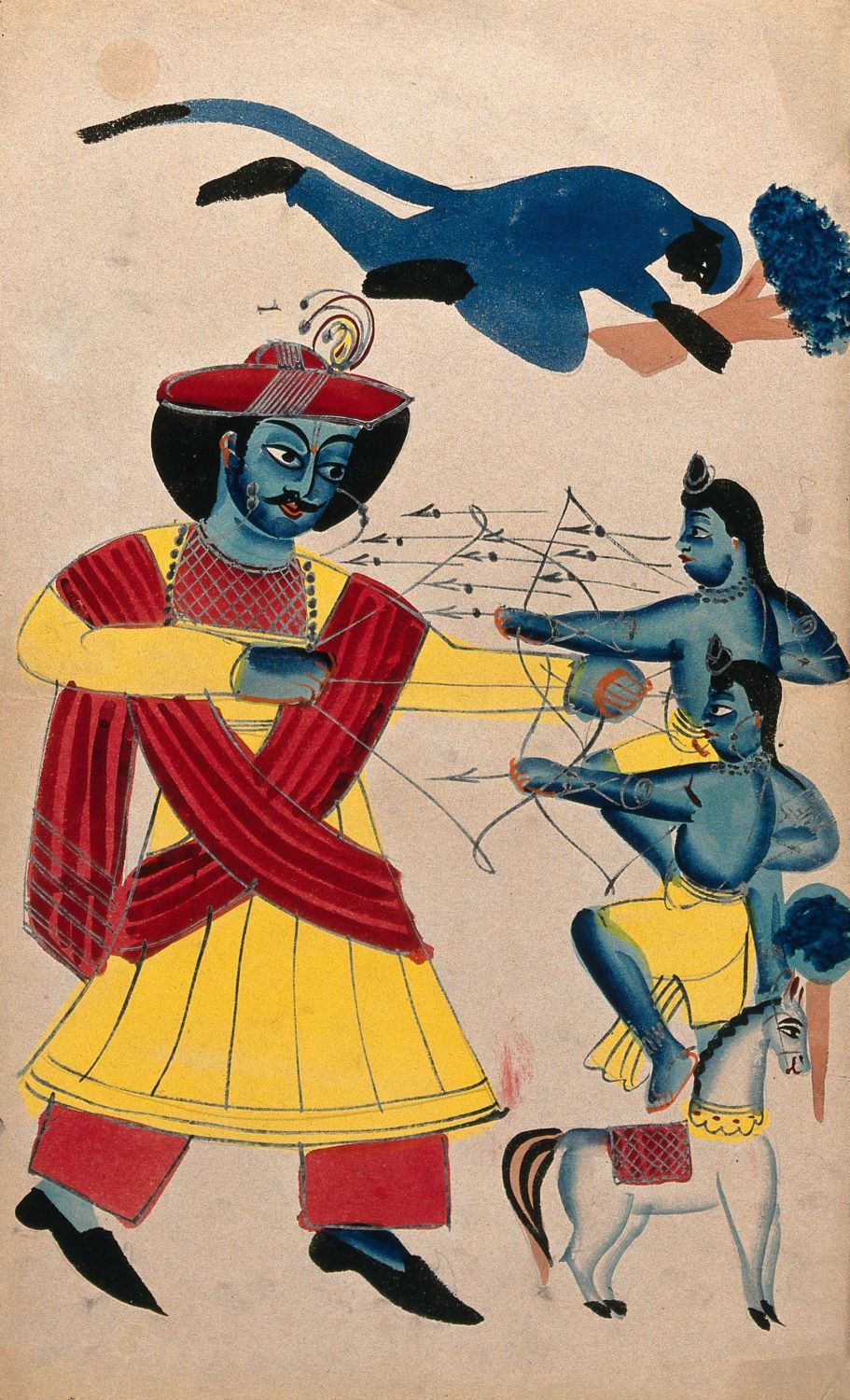
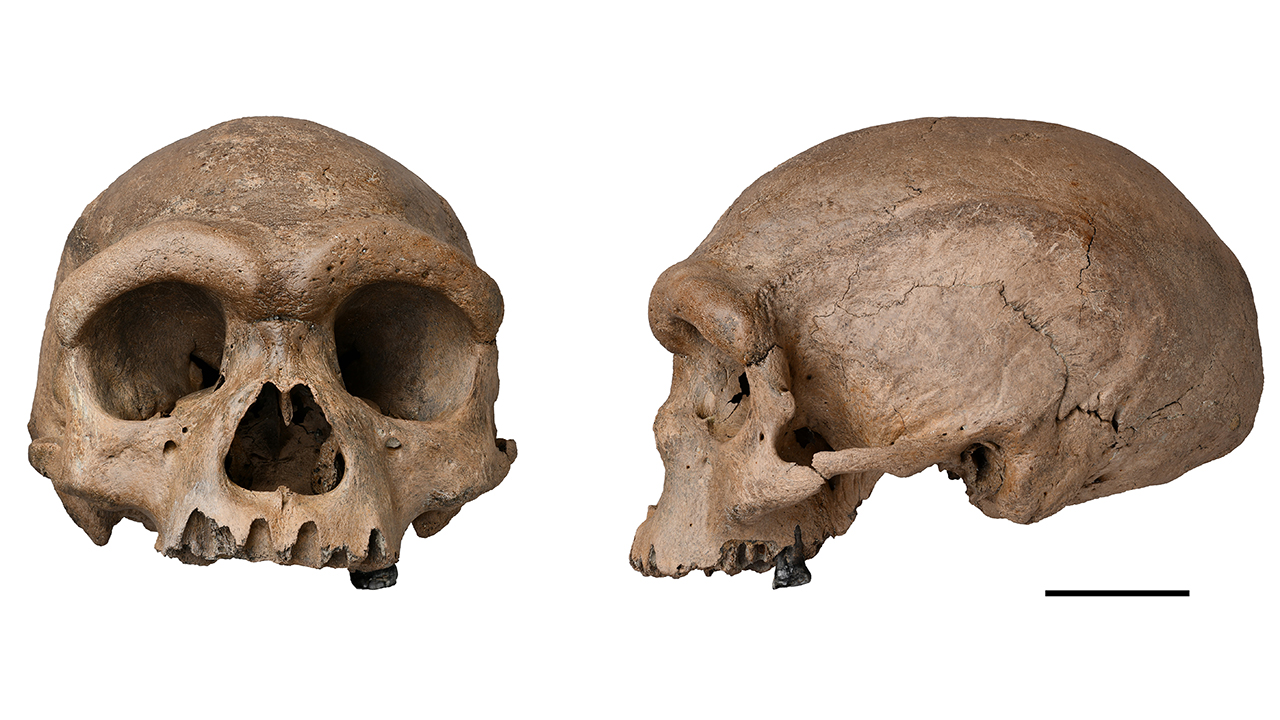
Beneath-Loh-Mandir-Mughal-constructionRam-Chandar-fighting-with-sons-Lava-and-KusaDragon Skull new find
Every day science is discovering missing links in human evolution. Very recently the DRAGON SKULL came out of China, and scientists excited over a new link to human story. One does not know what happened to the bones taken by Hindu lobby, but if there one could trace its DNA and finish once for all this absurd story about LOH and KASU related to Lahore. A silly hypothesis without any proof of any kind. And the amazing part is that these are the two same sons who fought with their father for questioning the fidelity of their mother after return from Shri Lanka. People do not read history, just follow directions of foreign lobbies.