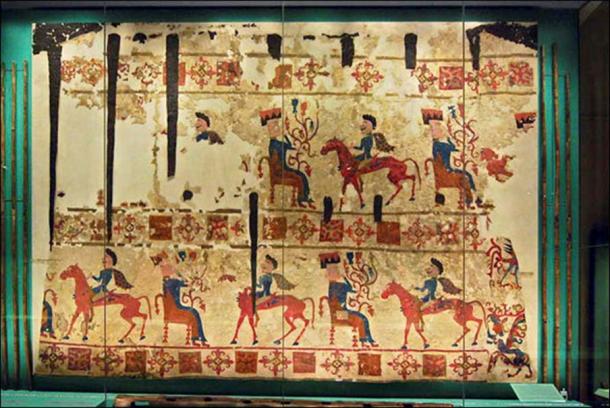
IN TRADITION OF SIBERIAN OLDEST CARPETS
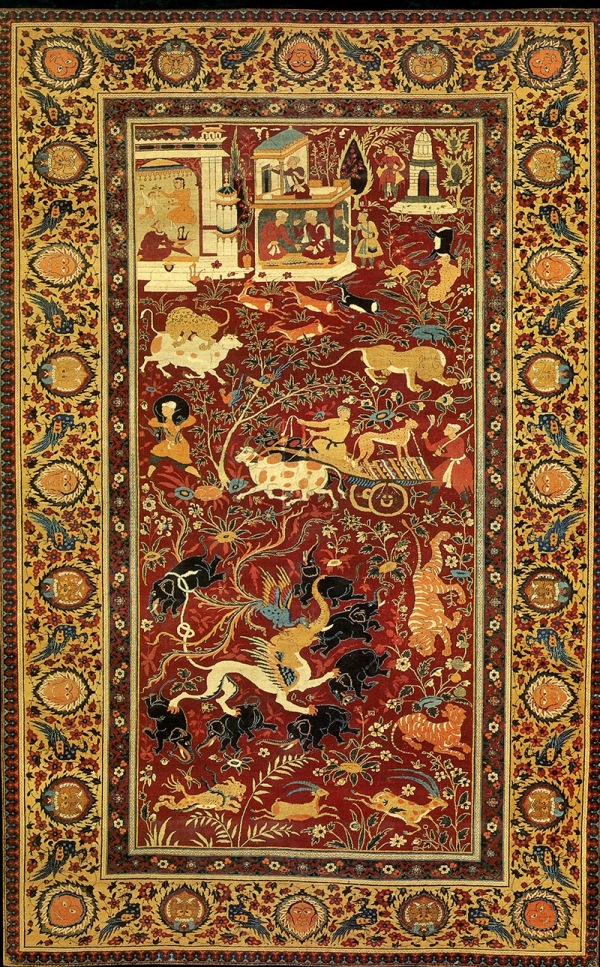
17TH CENTURY CARPETS MADE IN LAHORE
Worlds oldest carpet
A tomb discovered in Siberia unraveled carpets made about 2200 years ago. The oldest carpets in the world. Car[pets were made all over but Mughals were famous for their creations. In some ways different from Persian carpets, in the same was as the miniatures are different between the two areas. Enjoy some of the carpets made in Lahore. It seems Lahore could create delicate carpets in the same spirit as miniatures made in Lahore.
Another oldest carpetLahore Carpet 1590 to 1600
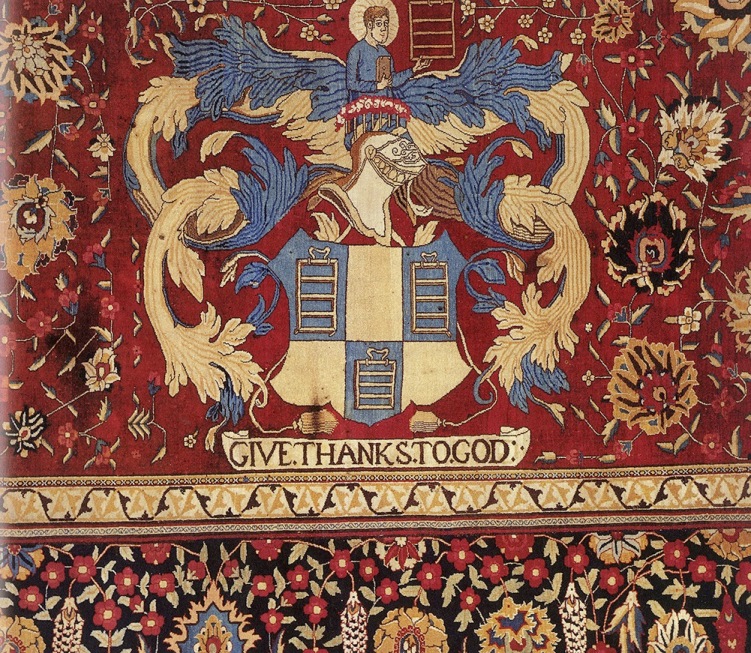
The Girdler Carpet made in Lahore at request of a society in London is an out standing surviving carpet. More can be said about it, and we will do that in another blog. A certified carpet of Lahore made in 1630 to 1632. Amazing!
Lahore Carpet 1610 to 1620Lahori Girdlers Carpet London 1630 to 1632
MOST UNIQUE FIGURINE IN THE WORLD ADDS NEW DIMENSION
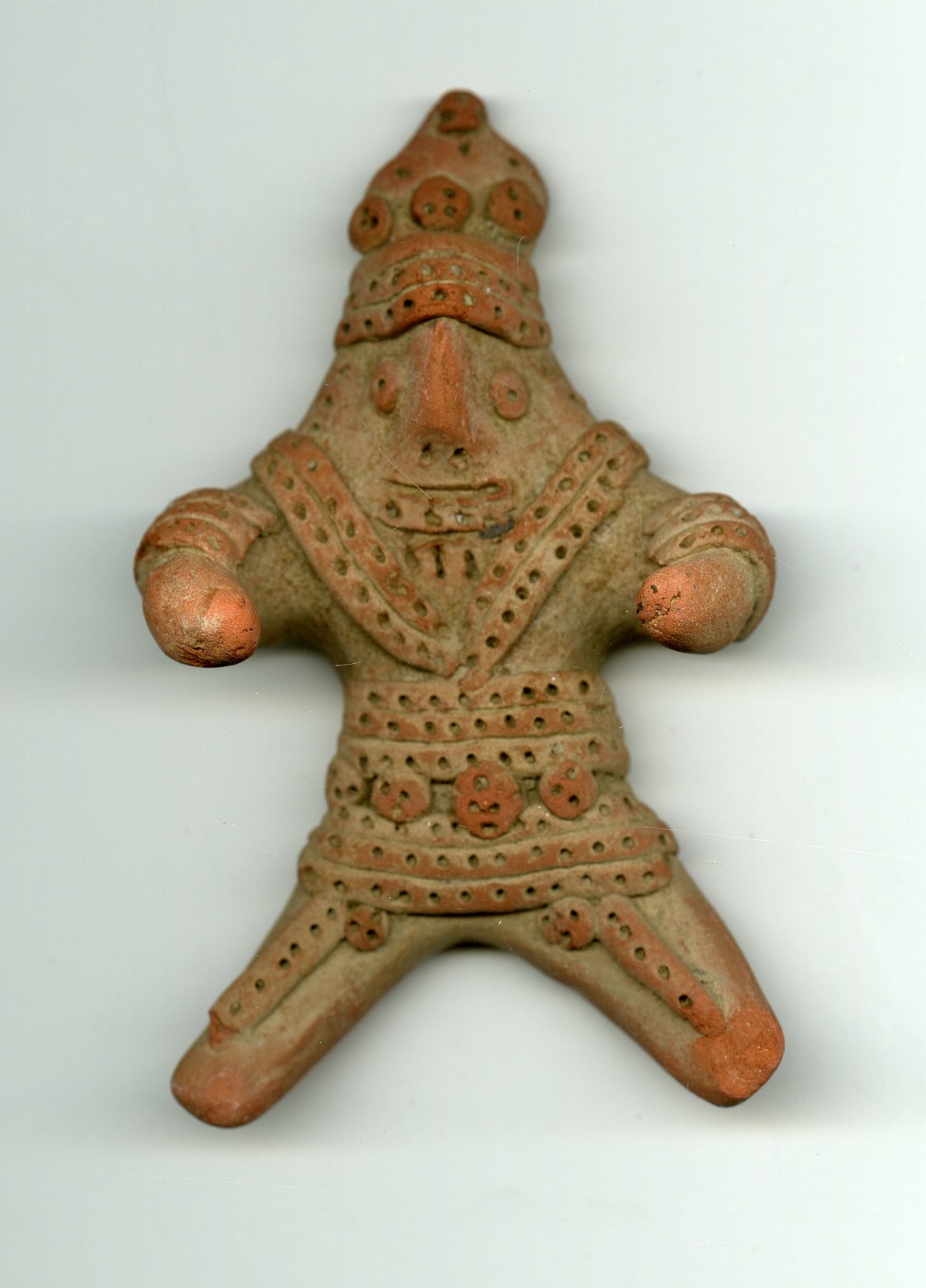
NAGUZZA OF LAHORE SUPPORTS LONG PIGTAILS AND FULL ARMOUR
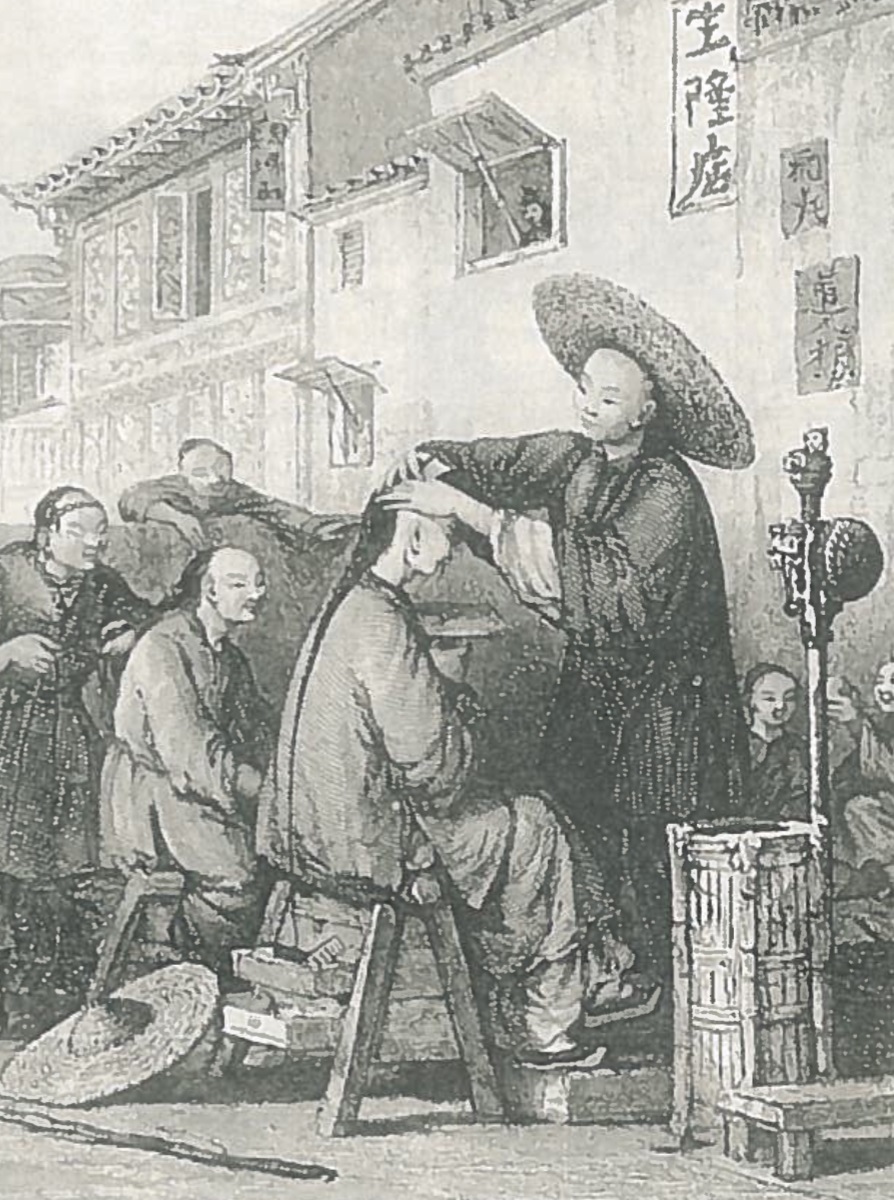
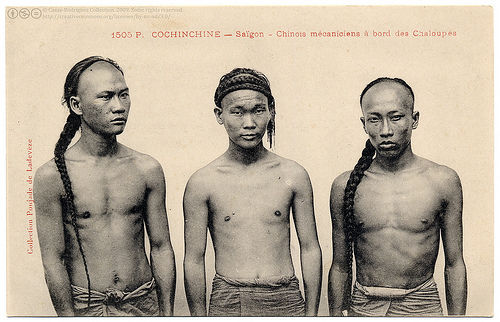
Chinese with pigtails
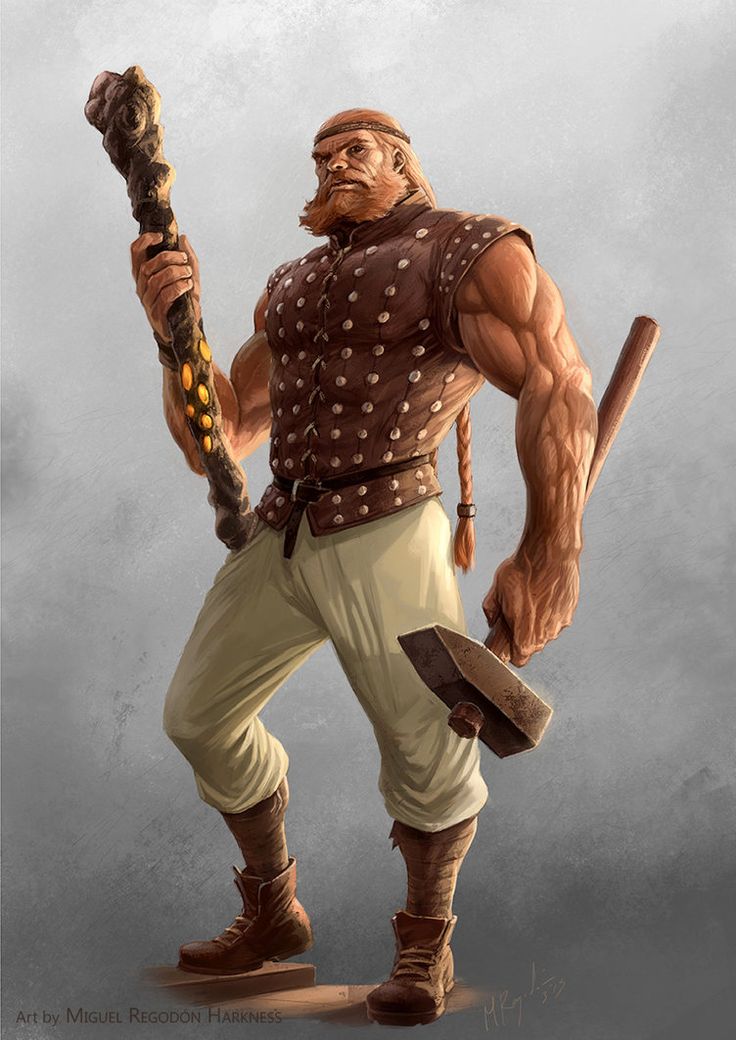
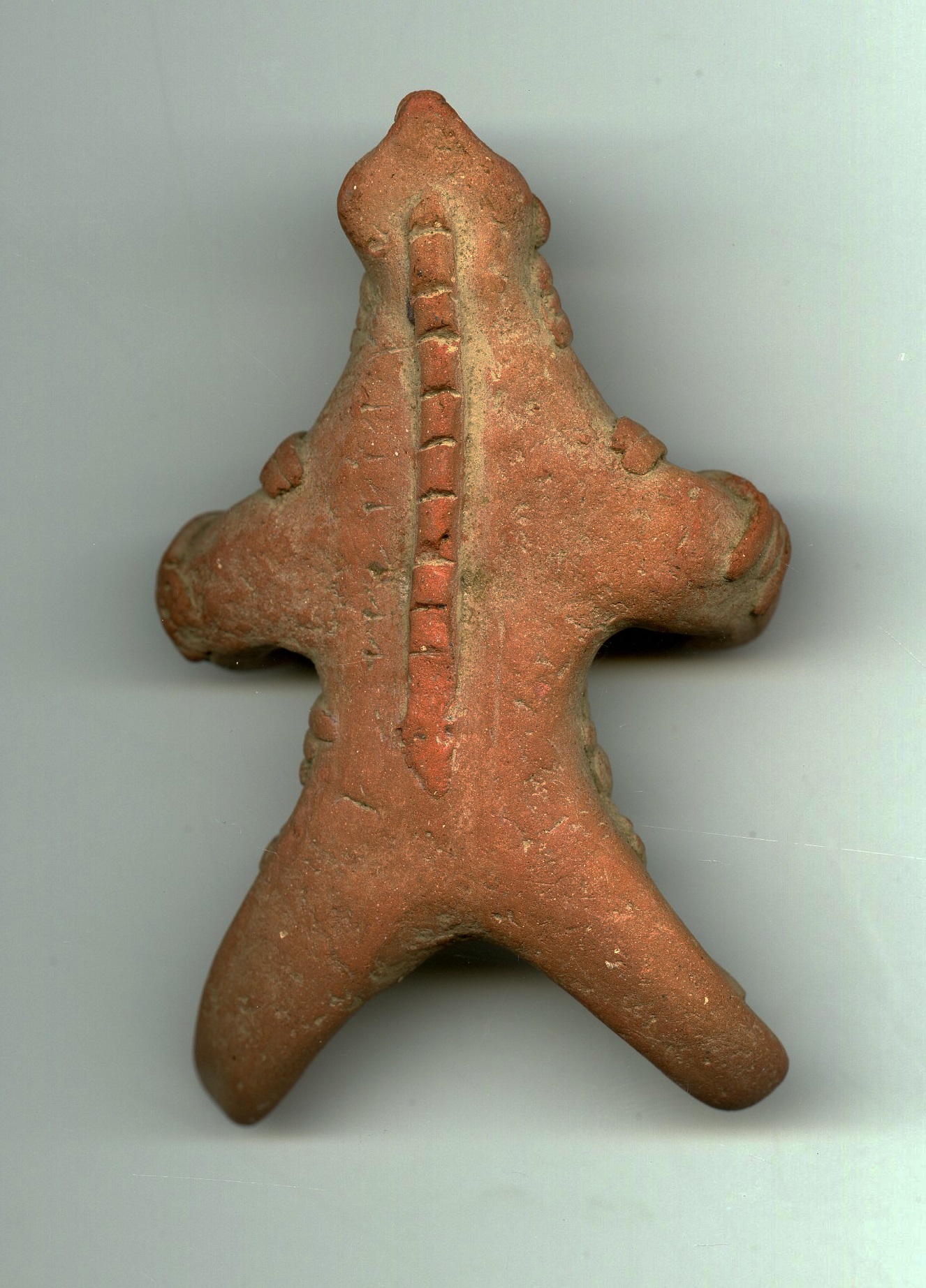
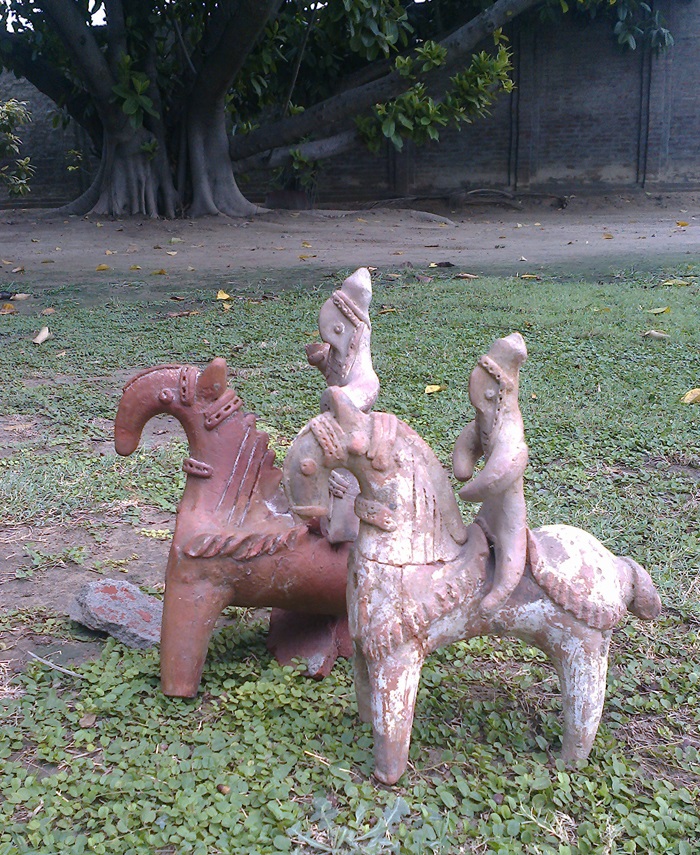
This figurine fascinated us from day one and it fascinates us even today. Found at depth of Lahore from 15 feet to 35 feet, it must have been in continuous production from about 500 to 1500 years. We have published a separate book on same. The shape of the figurine’s arms and legs, we have unraveled as the same were meant to be sitting on matching horses. We do have horses like that too. Obviously they represent Giants which must have been found in Lahore ages ago.
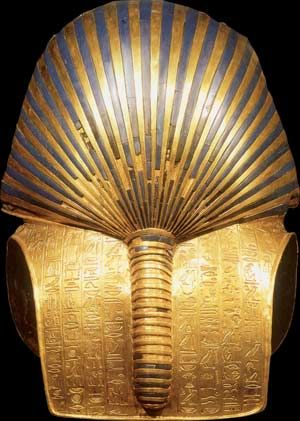
Chinese traditionsGiant with pigtailsPharaohs pigtails
A new dimension we have studied that they are at times represented with long pigtails. The Chinese are famous for them as well as Mongols. But the Egyptians had them too. We feel these are the Giants mentioned in the New Testament, which were kicked out and fled for their lives. We have written about same, till then enjoy a Pig-tailed Naguzza of Lahore!
New Dimmensions of Lahori NaguzzaPigtails of Lahori NaguzzaNaguzzas on rampage
BARKAT ALI KHAN MUHAMMEDAN HALL MOCHI GATE LAHORE
MISTRI MANGA CONTRACTOR ARCHITECT BUILDING IN 1888 AD
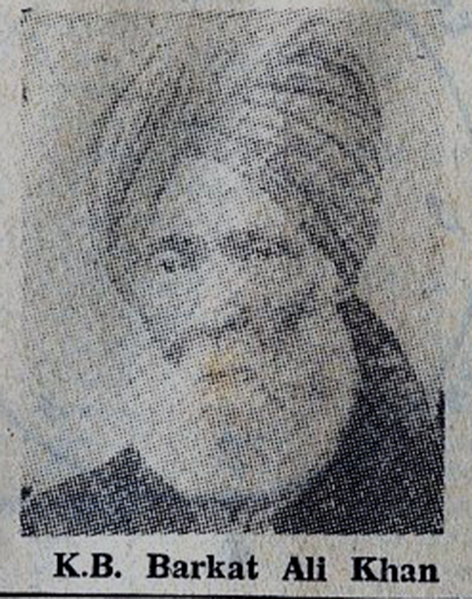
K B Barkat Ali Khan Lahore
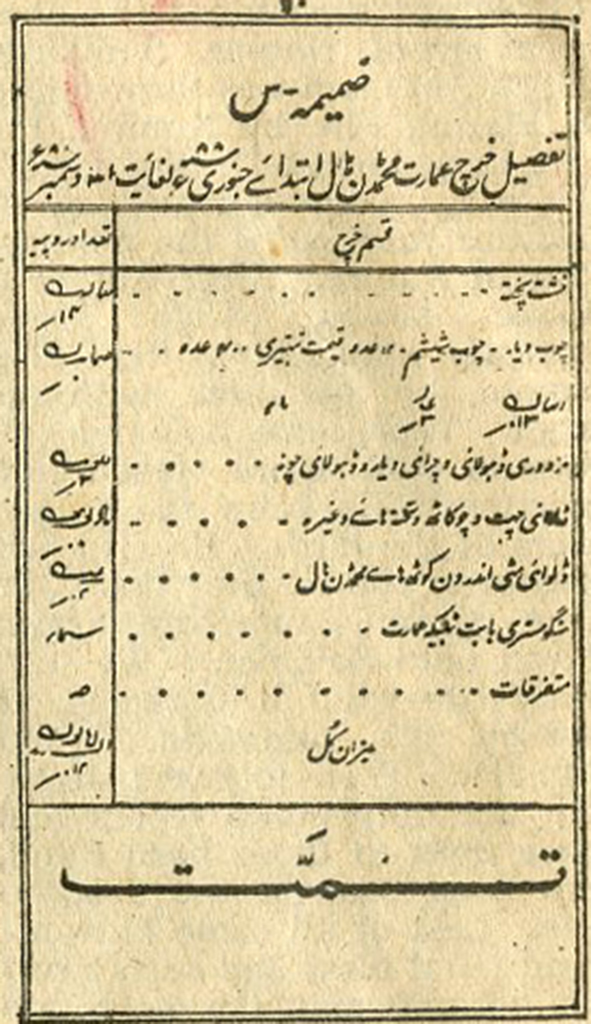
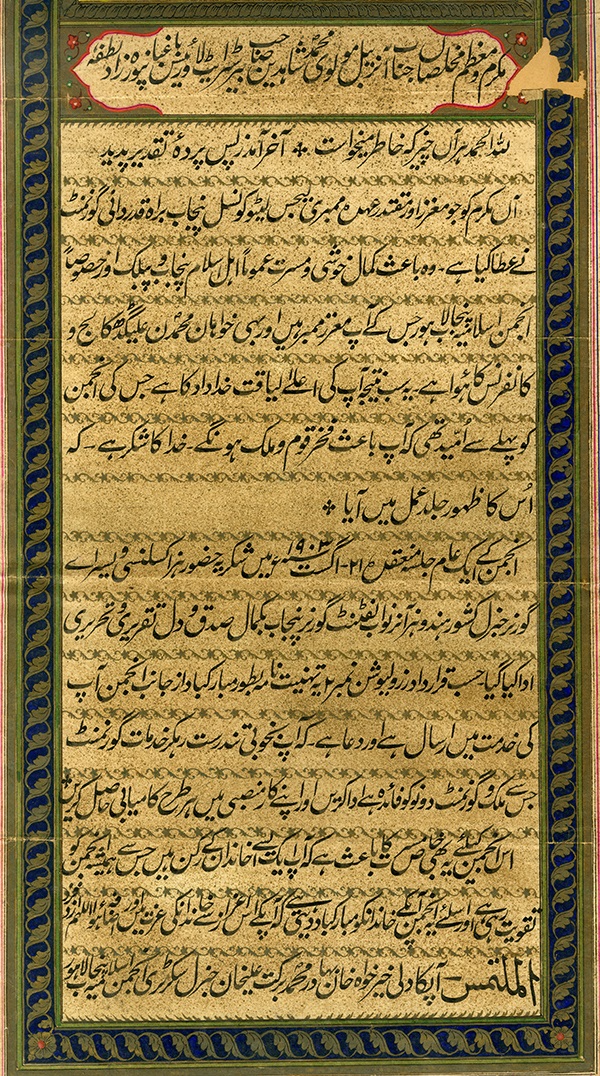
Khan Bahadur Barkat Ali Khan is a famous member of nobility of Lahore. As a tehsildar, he worked on restoring the Badshahi Mosque to its former glory. For the advancement of Muslim community, he offered his services and an Anjuman Islamia was made in Lahore for the said purpose, around 1868. It was in 1887 that Sir Syed Ahmad Khan paid a visit to Lahore and attended a conference at the Anjuman. There was felt a need to build a Hall in Lahore for the promotion of Islamic values. It was in 1888 that the Muhammedan Hall was constructed outside Mochi Darwaza Lahore. It was built for around 1800 Rs and there is a brochure published by the Anjuman highlighting same in 1888.
Manga Mistri Contractor Architect Lahore 1888
The contract for making and constructing same was given to MISTRI MANGA of Lahore. Manga belonged to a famous Mimar family of Lahore with his ancestors responsible for many Mughal buildings in Lahore and Delhi. He was ancestor of M.A. Rahman Chughtai, the artist, too. Obviously the most famous Manga was Mehr Manga of Lahore, who was Chief Gardener of Emperor Shah Jahan and custodian of the Shalimar Gardens Lahore., His descendants were there in the Wazeer Khan Mosque and Chishti records the presence of a certain Kareem Baksh, descendant of Mehr Manga. Mistri Manga was named after Mehr Manga of Lahore.
Letter Barkat Ali Khan 1903
Khan Bahadur Barkat Ali Khan died in 1905, and his funeral was attended by Chughtai family. Mian Kareem Baksh Mimar, father of M.A. Rahman Chughtai was at the Chaleeswan of Barkat Ali Khan. There was close relationship between the two families. Basheer Ali Khan was son of Barkat Ali Khan, and Saadat Ali Khan was grandson of Barkat Ali Khan. As Saadat Ali Khan was childless, the family ended with him. Their house Kothi Barkat Ali Khan remained famous in their life time. Now no one remembers their pivotal role for Islamic mission in Lahore.
Another missing chapter of Lahore which needed to be highlighted and we did that. Enjoy!
AN AMAZING REVELATION OF THE USE OF TERM QUAID-E-AZAM NEVER KNOWN
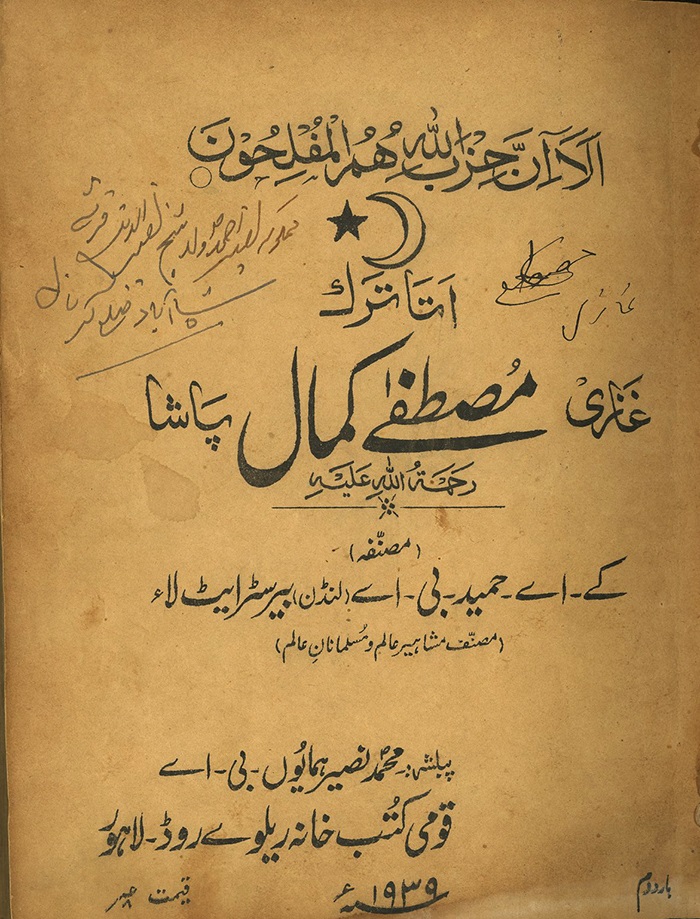
BEFORE MIAN FEROZUDDIN, K.A. HAMEED USED SAME FOR KAMAL ATTATURK PASHA
AND AMAZINGLY THIS WAS ALSO DONE IN LAHORE IN 1938/1939 IN THE SAME SPIRIT
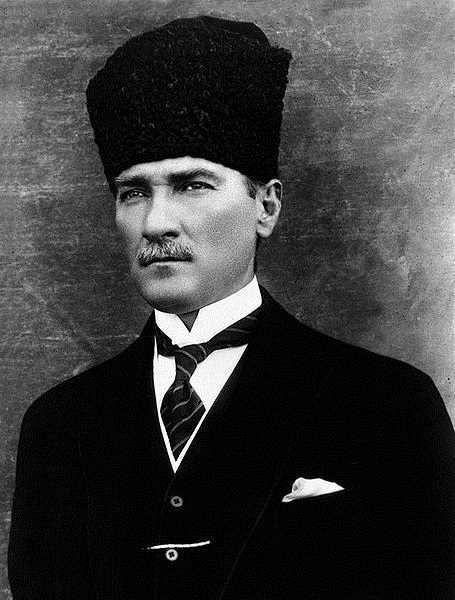
Ghazi Mustafa Kamal Pasha
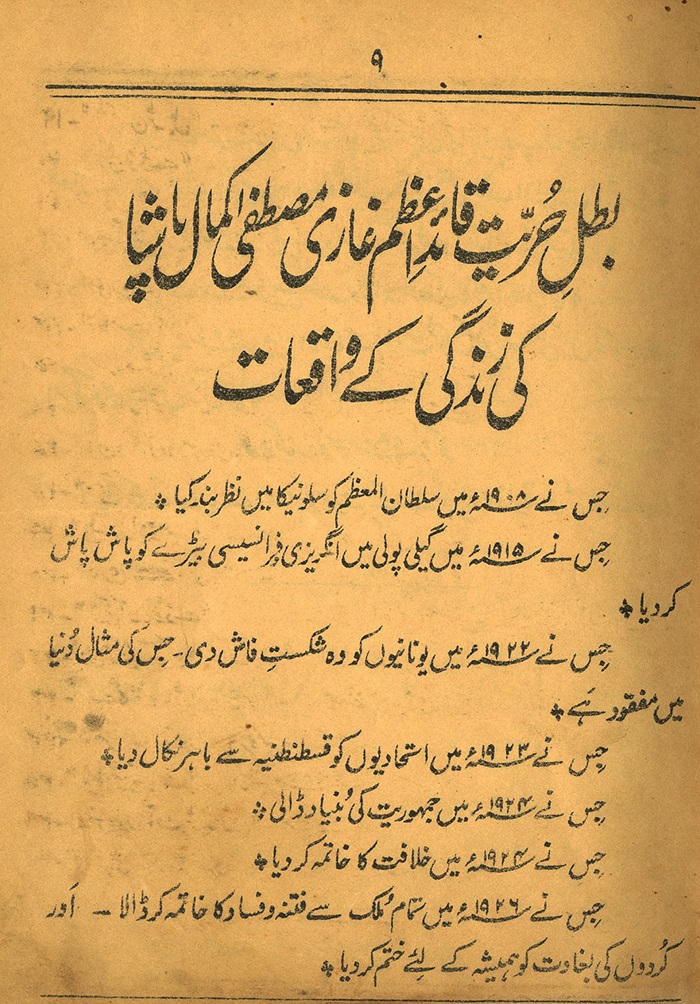
We come across old books all the time. Books inform as nobody else can. A publication in Urdu published in Lahore in 1939 on Kamal Attaturk Pasha (who was himself a hero for the region here), designates the Turk leader as QUAID-E-AZAM, and this designation is by the writer K.A. Hameed. We know of Abdul Hameed a fiction Urdu writer who was born in 1928, and as this book was published in 1939, it cannot be the same K.A. Hameed as mentioned earlier. In fact the author clarified himself as having a B.A from London as well as having a Barrister of Law degree. Well educated man. An author obsessed with Islamic values in progressive light. and looking forward to his icon in Attaturk.
Quaid e Azam Mustafa Kamal Pasha
K.A. Hameed dismisses many myths about Attaturk and writes in detail of him. Worthy of being analyzed in detail. As Attaturk died in 1938, this is a fresh reminder of those days. The New York Times had also written about the death of Attaturk. But K.A. Hameed reveals another clear detail about Attaturk. An assassination plot perfected in India by Mustafa Sagheer of Benaras (not Muradabad), on behalf of British Secret Service for 15 lakh rupees. The plot failed for USSR had warned the Turks about the plot and the man sitting in chair was not Attaturk as shots were fired on him. Mustafa Sagheer was arrested and later hanged on 24th May, 1921, in Ankara, Turkey. But that is another story for another blog. 007s were there all the time, even before Ian Fleming made the same famous in his books.
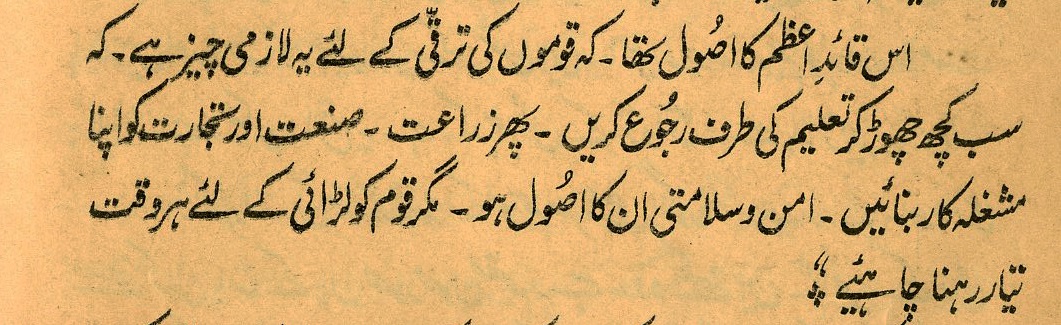
Quaid e Azam Mustafa Kamal belief
Our job is to explore and research. Only more research can bring out more facts and we will continue. Till then reflect on this new knowledge. Enjoy!
A MIGRATION FROM LAHORE AND OTHER PARTS OF INDIA TO AFGHANISTAN
THAT NO ONE EVEN REMEMBERS AND A BIGGEST FIASCO OF ITS OWN TIMES
Migrating compulsions
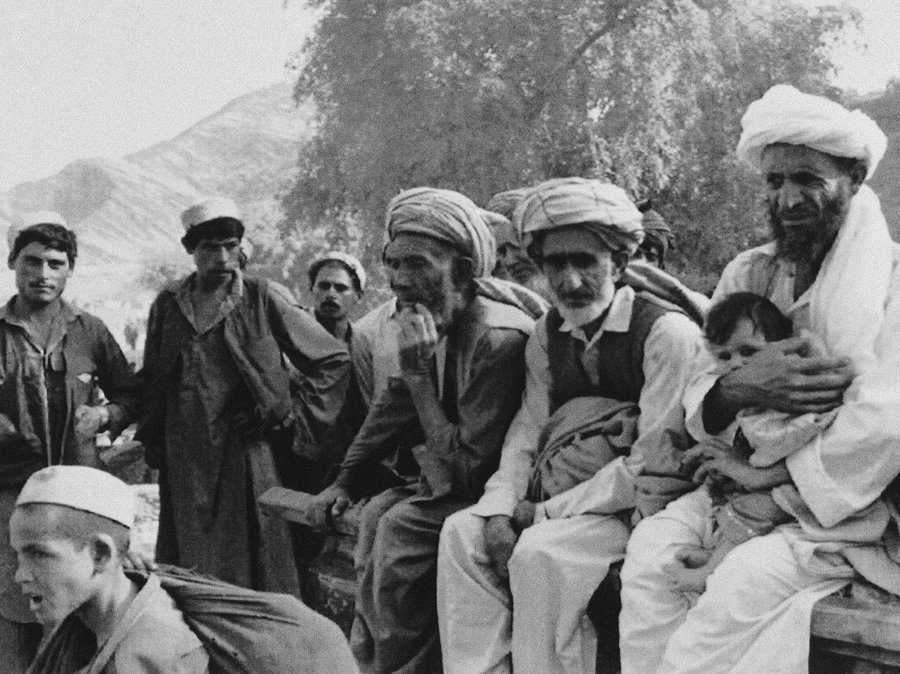
The Khilafat movement in British India had strange effect here. Disgusted with the British break up of the Ottoman Empire, the Muslims were afraid that the custody of the Khana Kaaba would fall in wrong hands. People with such bent of mind decided to leave India. A group of Thirty thousand people sold their properties in India and decided to migrate to Afghanistan. This important decision was made on the first of August, 1920.
Contrary to their expectations, they were not well received. And after much hassle, the border was closed and these thirty thousand people were forced to come back to India. A historian writes:
Migration routine between two countries
August 1, 1920. In addition to the Khilafat issue, Gandhi and Congress added reparations for the Punjab and the independence of India. That summer about 30,000 Muslims sold their property and emigrated to Afghanistan (Some also tried to go to Turkey). They were not well received, and the Afghanistan government closed the border. Most of the impoverished migrants went back to India.
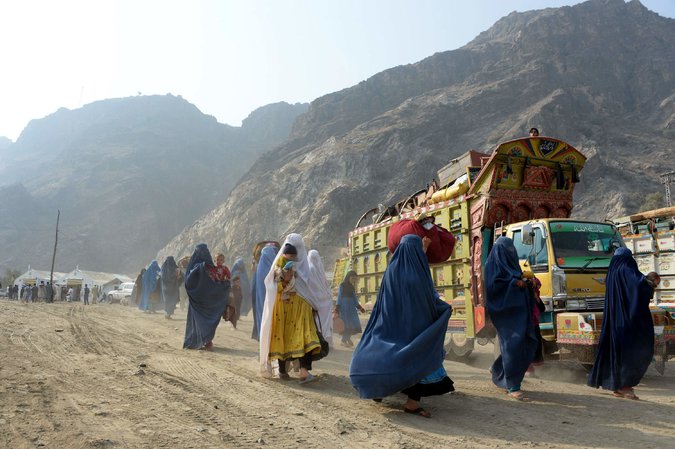
Contrary to that, millions of Afghan emigrated to Pakistan on the Russian invasion of Afghanistan and they can be seen all over Pakistan. These migrants brought a lot of issues like guns and drugs to Pakistan, and an air of smuggling, but there were no regrets. Muslim brotherhood dominated ideas of welcome.
ZAKIA DIL MUHAMMED COMPLAINT ABOUT CALMNESS IN CHUGHTAI ART
AN ART DISCUSSION OF ART CIRCLE AT ALHAMRA JANUARY 14TH 1950
Zakia Dil Muhammed right
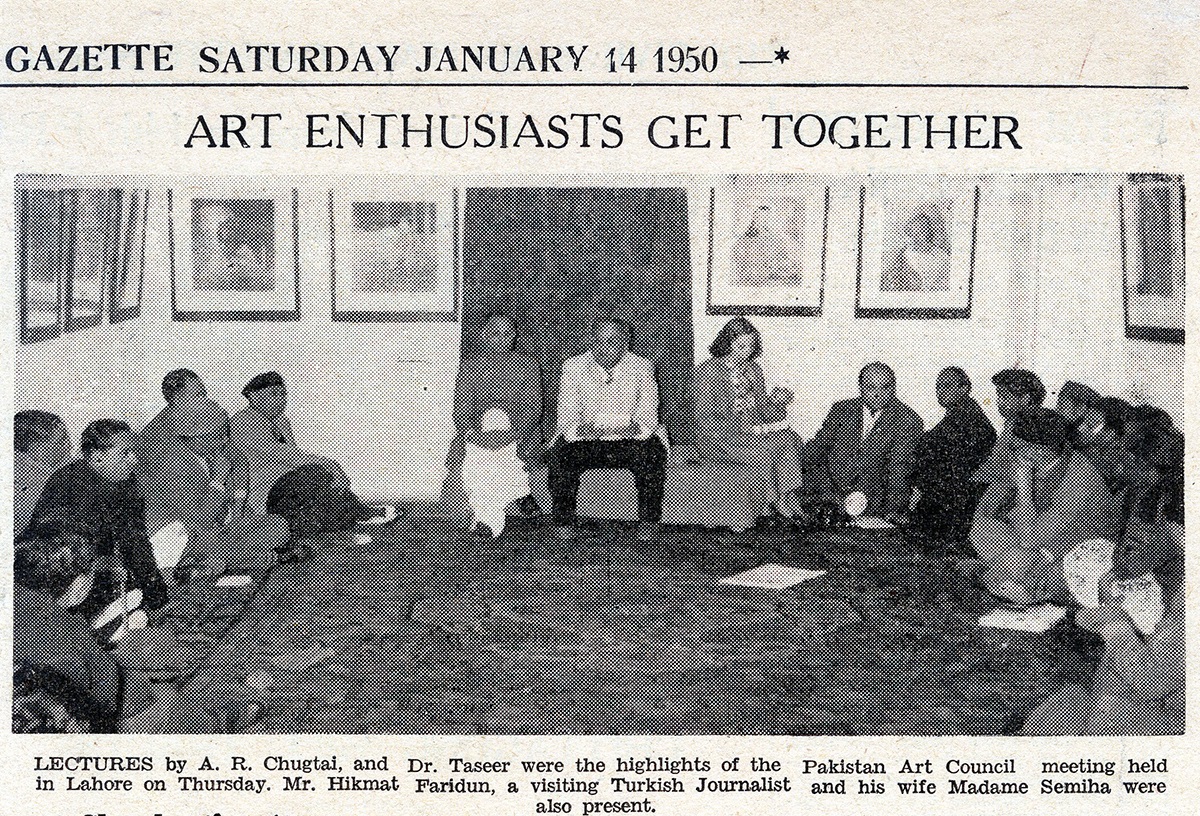
The Chughtai Arts Show at Alhamra on 12th December, 1949, generated a lot of discussion on Art. In a meeting at Alhamra of an Art Circle on 14th January, 1950, Zakia Dil Muhammed presented her point of view. The said lady was daughter of famous mathematician Dil Muhammed, whose text books on Mathematics are phenomenal to this day. Dil Muhammed was a friend of artist M.A. Rahman Chughtai, and part of the intellectual renaissance of that period. He had asked the advice of Chughtai artist on the joining of Art field by Ms Zakia. Chughtai heavily endorsed her as he used to endorse most people.
A lot of people were there, including a couple namely journalists from Turkey. Zakia Dil Muhammed enquired about the calmness in Chughtai Art, although the period of Pakistan was a turbulent one. Why no turbulence in Chughtai Art? Dr Muhammed Din Taseer could not provide a valid answer, as Chughtai himself sat in a corner watching all that was going on. To understand this one has to remember the essential motive of Islamic Art, to restore the unrest and anarchy of the times with fortitude and calmness by projecting hope in the future.
Civil and Military Gazette 1950
The artist Chughtai narrated an event to them. He said in the height of war in Germany, when there was anarchy all around, a German artist made a painting of a beautiful dancer. It won best prize in Germany and was heavily awarded. Why turbulence was not felt? The job of the artist is not to engender anarchy. It is to soothe life. When Sultan Muhammed conquered Constantinople, the first thing he did was to have a portrait made of himself. Instead of the turbulence of battles that had happened, he is shown smelling a rose in calm atmosphere.
I witnessed a music recital in Dacca in East Pakistan, done to honour M.A. Rahman Chughtai. Late after midnight the musicians and sitar were playing and literally most of the people were asleep. I asked the sponsors that was it not time to stop same! The host replied the purpose of the recital was just starting. It had calmed all the people and lulled them to sleep.
Western Art brought along with itself in its influx in Pakistan in its pseudo form the concept of agitation. Rebels rebellion without a cause. More on this in another blog.
END OF RAMAZAN AND SIGHTING OF MOON
EVER CIRCLE OF LIFE BEGINS AND ENDS ANEW
Message of Quran
In the infinite wisdom of Allah, the permanent values of the Quran remain the same. but with changing times, newer and newer issues come up. For that Allah has made the concept of IJTEHAD inherent in Islamic values. The external situations change all the time. Once the Muslims rode Camels, now they run on Land Cruisers. Once they communicated by messengers on fast horseback, now touch phones are there in their pockets. Video chatting going on which was imaginable in those times. But technology changes, the values behind the technology remains the same. Ever since Prophet Moses brought the Ten Commandments, the do’s and do nots of life are there.
End of Ramazan
The month of Ramazan brought out the best in your body’s ability to cope with deprivation. It led to spiritual healing of your self. Now it is Eid. Tine to rejoice, to be happy and to share your happiness with others. Happy Eid from Chughtai Museum!
THE ENDANGERED SPECIES OF ANGELS OF LAHORE
NOT ONE ANGEL LIKE THEM IN ANY PICTORIAL RECORD
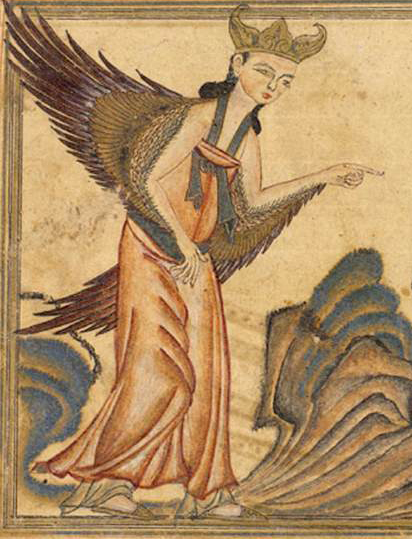
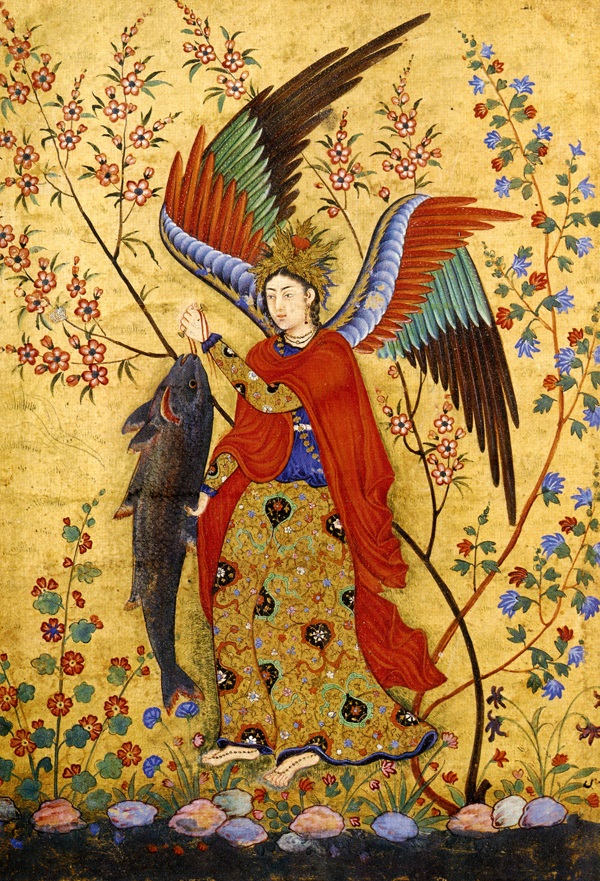
Mughal angels
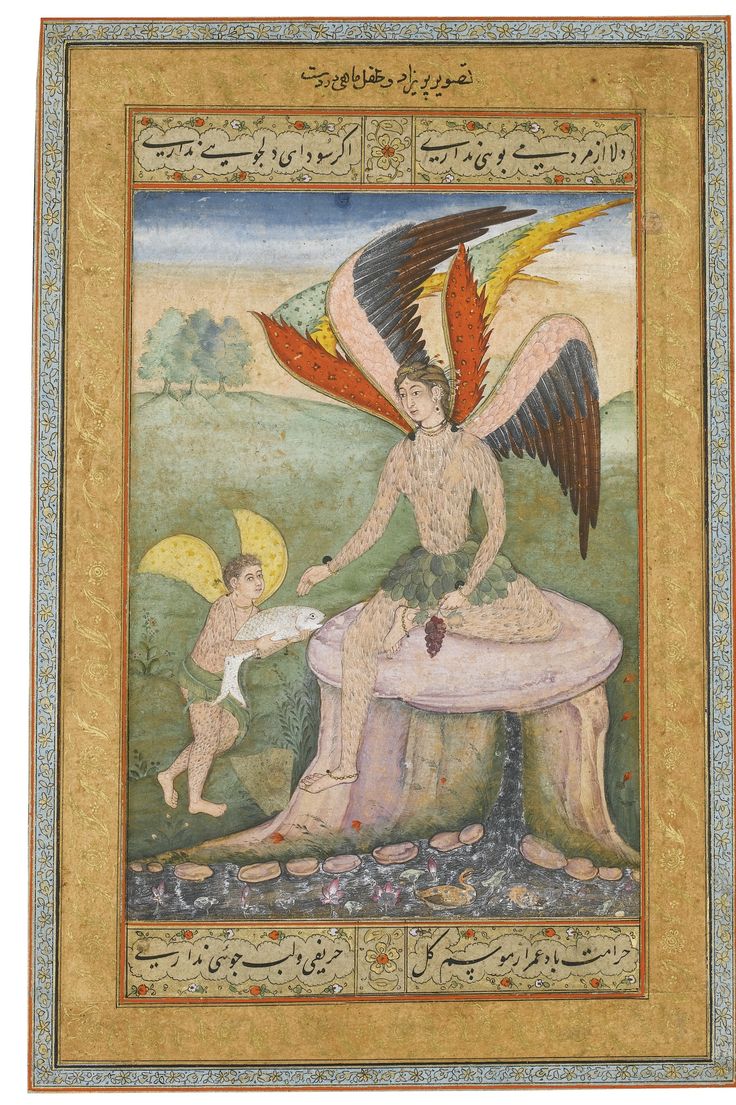
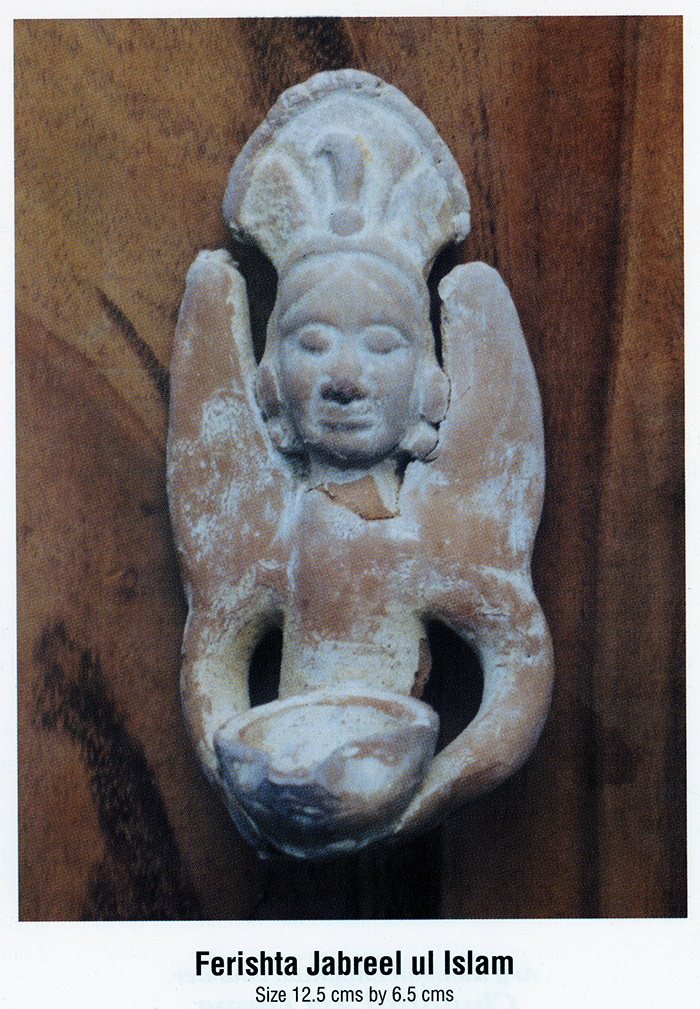
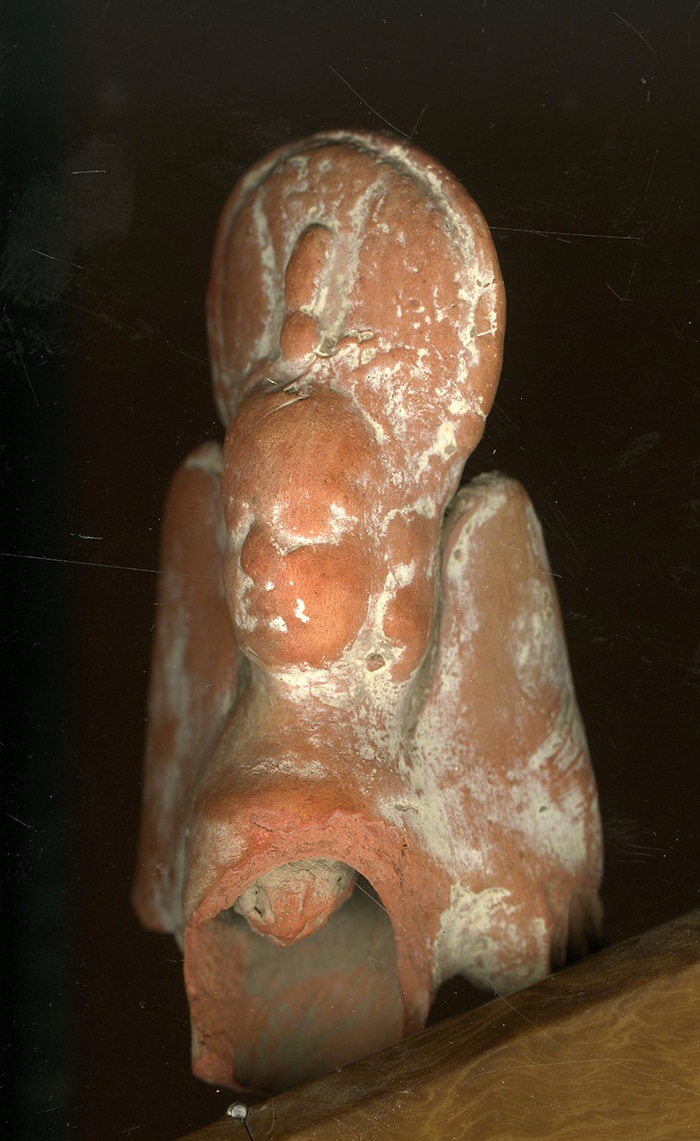
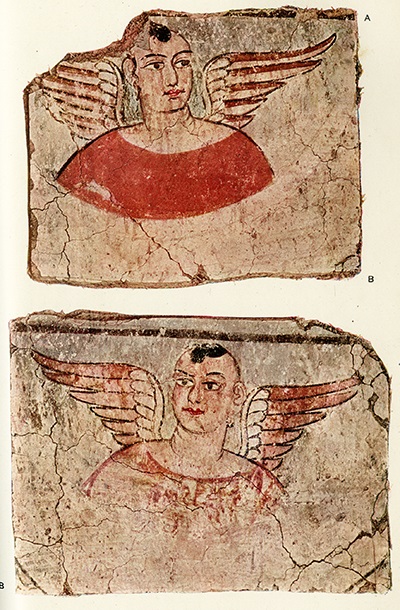
Every one knows about Angels. The Quran calls these as FERISTHAS and specify them as POSITIVE FORCES. No iconic image or description is given to them. The Angels as we understand them in figurative detail starts from the religion of Judaism itself. Yes Zoroastorianism has Angels, but they are more bearded like human faces with animal bodies. Mostly that of Lions. The Jews made them male and female human figures with delicate feathers, with ability to fly the skies and tackle the demonic ones. Angels imagery starts from Judaism, but also moves on to Christianity and Islam. The East had no room for Angels. Hindus as well as Buddhist never believed in angels. So when Angels are discovered in Lahore in form of figurines which culture do they actually reflect. This area a thousand years ago was empty of Christianity in all its forms. Only a Jewish culture could have entered Lahore before the Muslims. From 30 feet layers to 12 feet layers, these angels are unique in many ways. In different forms, clothes, head dresses, the most particular thing about them is that they carry DIVAS in their hands. They are a source of light, and some of these divas are blackened, which means that the divas were actually lit at times. Our probable consideration is that they were used on graves, a form of lightening candles as in modern times.
Tobias and angelGabriel
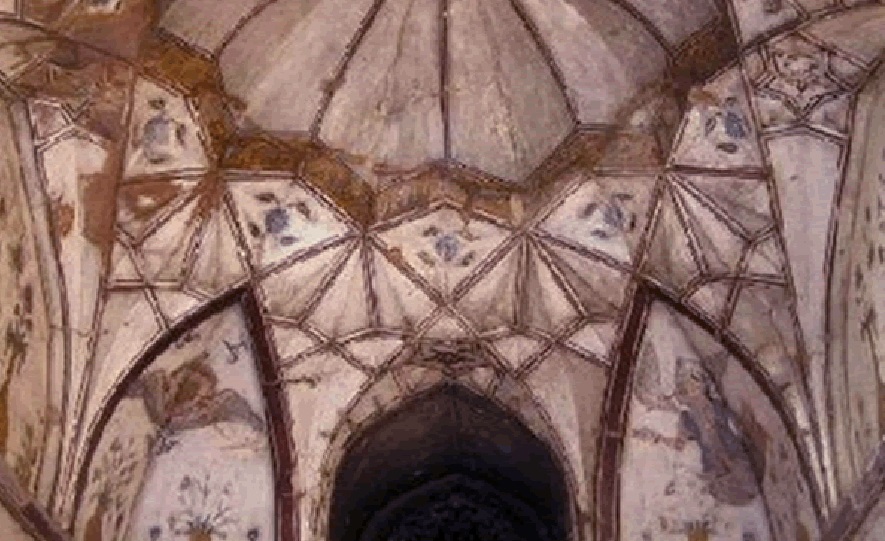
Unlike the Christians, Angels depicted in our Art reveals adult females, beautiful bodies with rainbow colours. No cherubs were ever used. The Lahore Fort, the Serai of Wazeer Khan as well as the Hammam of Wazeer Khan depict beautiful angels. These Angels are also evident in the mausoleums in Khusrau Bagh, Mughal Hindustan.
Ferishta Jabreel iconic Lahori imageLahori Angel holding Noor in his hands
The most ancient of these figurines has a figurative symbol in its head dress, which is Jewish language and means form of light, or NOOR. In all ways it is the ANGEL GABREIL, for the iconic image of Gabreil is that of neither male or female. And we have this figurine which does not denote the gender of the Angel. Later models with time show female figures for angels. The most interesting part is that in history of angels, we have seen not one image of any angel carrying a light in his/her hands. Unique portrayal of Lahore. We share, and we enjoy! And we pray to these Angels to save us from the threat of demolition from the rancid evil of our land and the most corrupt system in history of humankind.
Angels in Khusro MausoleumAngels in Mughal ArtCentral Asian Male Angels
THE VISIT OF SURAT SINGH TO THE MARI OF BABA GURU NANAK
UNIQUE RECORD IN MANUSCRIPT DATED 1055-57 AH 1645-47 AD
A manuscript in verse written by Surat Singh son of Dhuni Chand from 1055 AH, 1645 AD to 1057 AH, 1647 AD in praise of his saint is entitled TAZHKIRA HASU TELI. Hasu Teli was a wheat seller in Lahore in a shop in Chowk Jhaunda inside Lohari Gate, Lahore. He used to weigh the wheat in a dishonest way and after becoming a disciple of Shah Jamal Lahori left his corrupt ways. He stopped selling wheat and embarked on a career of selling oil. To this day a lamp is lighted in his shop by well wishers. His tomb is also in Lahore and described in detail by Judge Muhammed Lateef in his history of Lahore. Surat Singh became a revenue official in Lahore and became a disciple of Hasu Teli and used to contribute to the welfare of his saint’s burial place.
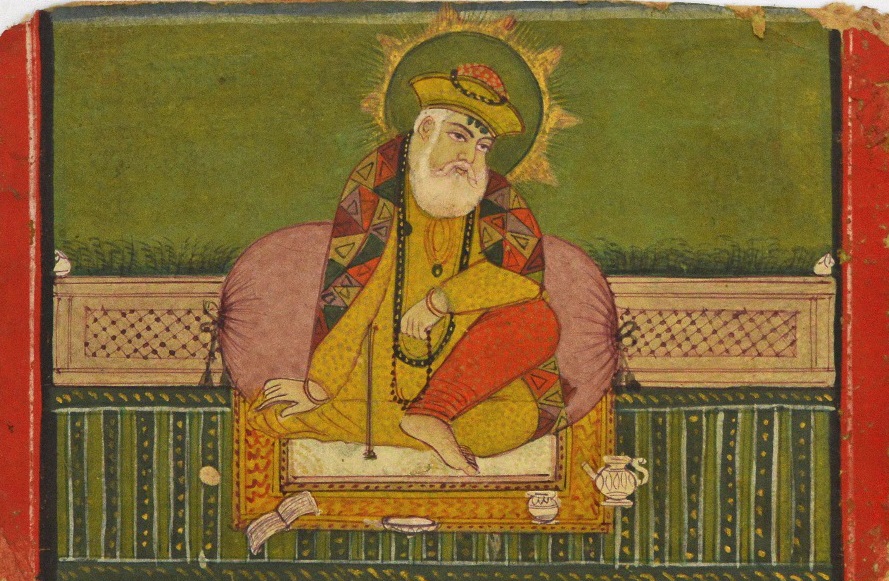
Guru Nanak
One day Surat Singh heard of the Mari of Baba Guru Nanak on the bank of river Ravi in Kartarpur and visited the Mari as reverence from him. Surat Singh relates the legend of Guru Nanak leaving two bodies behind; one for the Muslims to bury and the other for the Hindus to cremate same. This was a consequence of Hindus and Muslims wishing to deal with the dead Guru in their own way. Surat Singh tells us that across the river Ravi, the actual Baba Guru Nanak had already crossed on his own, and met an Afghan soldier and had a meal with him. He asserts that till 1647 AD, the Mari of Baba Guru Nanak existed on the bank of river Ravi in Kartarpur. This is a very rare reference and one of its kind.
Surat Singh also affirms his belief that Guru Nanak and Hasu Teli were in fact one and had changed places. He recounts how he saw Baba Guru Nanak at the mazar. But Hasu Teli came in his dream to tell him not to confuse any identity. In any case the mention is early and unique in Sikh history.
P.S. Researchers are indebted to Professor Rizavi Aligarh University for this research.
TWO GREEDY ENGLISHMEN COME TO INDIA STAR STRUCK
ANTICS BIZARRE OF WILLIAM HAWKINS AND WILLIAM FINCH
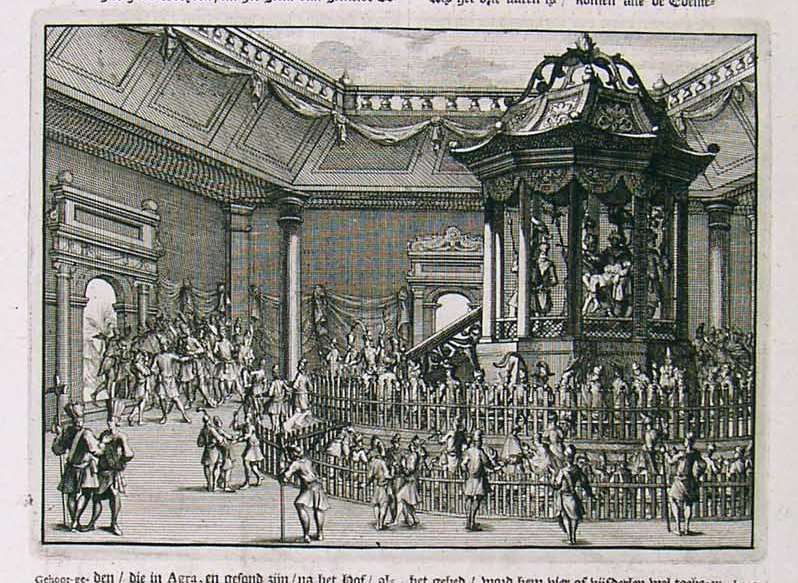
The imagined Mughal Court in William Hawkins
In 1608 AD William Hawkins along with his assistant William Finch reached India through Surat. Father Peniero and the Portuguese immediately confiscated all his goods as well as imprisoned him. When the Portuguese dismissed King James as the King of Fishermen of an Island which had no importance, it prompted William Hawkins to challenge the Father to a duel of death. Never happened. Both Hawkins and Finch through various intrigues reached Agra to the Seat of Emperor Jahangeer. Such dubious things are said that they cannot be believed, or confirmed from different sources. Emperor Jahangeer wrote extensive autobiographical memoirs but did not feel it fit to even mention one encounter with such a missionary or ambassador from abroad. Hawkins claim that Emperor Jahangeer appointed him as a Royal equal to 400 cavalry men, with a salary of 3200 pounds. And yet where thousands of pounds should have been there, Hawkins himself says that he only received 300 pounds and that was not enough to even meet his regular expenditure. He is there when Jahangeer is saying is prayers and could see that the rosary had images of Mary on it. He accepts Jahangeer’s request to convert his three nephews to Christianity and he converts them. He witnesses Jahangeers piercing the cheek of his young Prince, to note whether the Prince would cry or not with blood gushing out from the cheeks. Amazing foolish notions. Unbelievable and yet those people live by these statements as cardinal truths.
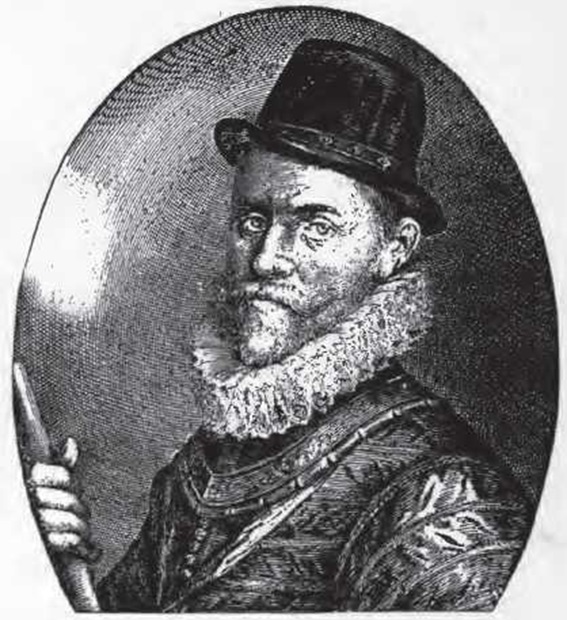
William Hawkins
William Finch is no better. His invention of tales is phenomenal. The originator of so many evil incestuous thoughts, he invents the legend of a dancing girl. Anarkalli is a beautiful concubine in Akbar’s harem, and the King marries her and begets a son Danyal from her self. According to calculations she is more than 45 years old. Prince Saleem is only 30 years of age at that time. A heir to the Mughal Empire can find peace no where except in incestuous thoughts and have an affair with his step-mother, actual mother of his brother. And then he throws caution to the wind and on becoming Emperor, constructs a grand mausoleum on her death place (where she was buried alive standing). Even that society could not have accepted that. And all this time, Finch is trying to sell indigo in Lahore, sitting in some tandoor, refused entrance into any Royal place. Gossips galore and with knack of understanding even the language, jumping to far fetched conclusions. The amazing part is that at the time of the so called incident, King Akbar was not a resident of Lahore, Prince Saleem was elsewhere and there was not even one Shish Mahal in the Lahore Fort. The so called Anarkalli was buried alive in the Lahore Fort and we know that the mausoleum is at a far off place.This is the same moron who saw the Lahore Fort full of images of Jesus Christ and Mary and Jahangeer on the verge of Christianity. In fact he affirms that Jahangeer not only had three of his nephews converted to Christianity, he also stupidly claims that (Nous-billah) Jahangeer used to attack (impossible) the Prophet Muhammed (PBUH) as well as the Al-Quran (Nous-billah a thousand times again) in his court. Curse on this haramzada to indulge in such blasphemy even at that time. A person who may have never entered the Lahore Fort, saw it full of images of the Cross, Jesus Christ and Mary. The interesting part is that he saw it in a pavilion which was made after he had left Lahore, till his death in August, 1613 in Babylon. All his indigo got stolen and he lost his life. So take his invented stories with a grain of salt. So who speaks the truth? These greedy bastards with the filthiest minds in the world. One William Hawkins died on his way back, while William Finch was possibly murdered in Babylon by drinking poisoned water. Sad end to their sad stories.
Why on Earth is our inferiority complex so great that we are willing to believe these garbled conjectures of sick minds? They led the East India Company here, which finally showed its true colour, by understanding the weaknesses here and engendering their divide and rule policy to perfection. How can greedy people tell the truth? Contemporary illustrations show the lack of knowledge of William Hawkins even of the settings of the Mughal Court.