THE STRANGE HISTORY OF AN INSCRIPTION IN MARGALLA; REPRESENTING LOST BUILDING REST HOUSE ON HIGHWAY, WORK OF MUHABBAT KHAN BY LUTUFULLAH AHMAD MUHANDIS.
“A very dangerous area, recognized by authorities, including Emperor Jahangeer as an area of “MAR GALLA”, means that dacoits used to cut the necks of travellers and were in the attention of authorities. Some translate it as “Mar” plundered and “galla” as goods caravan. It was decided by Governor Muhabbat Khan to make this place safe by building a palace type of rest house on this important highway. The Chief architect Ustad Ahmad Mimar was dead by 1649, but his son Lutufullah Muhandis was there, and given the job of construction of same. In time all the construction vanished but high above the mountain, the inscription remained for all to see.
It was noticed by passersby and most importantly by many scholars.The list includes Delmerik in 1871, Rehatsek in 1874, and then Shams ul Ulama Jivanji Jamshidji Modi in 1918. Being a person of some distinction, he had it copied and he printed his version of same. With time various scholars mentioned it and wrote their version of its transliteration. People like Dr Abdullah Chaghatai, Colonel Rasheed, and even Ahmad Nabi Khan. The problem was that various important words were chipped off and led to confusion in its translation. But Ahmad Nabi Khan took the bold step of removing it and placing it in the corridors of Lahore Fort. It was seen there for some years, and then disappeared again. Not traceable at present moment.
Margalla Inscription Pur Ahmad Mimar 1083 AHMargalla Inscription Lutufullah 1083 AHMargalla Inscription in Lahore FortClose up of Margalla stoneUstad Ahmad MimarLutufullah Ahmad
The only issue was the architect. Governor Muhabbat Khan’s name was obvious. The Margalla pass was obvious. The poet who wrote it was named “Mughal” and that was obvious, but not known at present. The architect was challenging, as the named Ustad Ahmad Mimar was not alive in 1083 AH. He had died in 1059 AH. Colonel Rasheed came up with the solution PUR AHMAD MIMAR. It was ascertained that at times the person who wrote his name as that SON OF AHMAD MIMAR was no one else then Lutufullah Ahmad Muhandis, his beloved son. He was in the habit of writing his name like that, particularly where it would be on public display.
Life changes. Time passes. Written things outlive other things. Inscriptions and manuscripts beat the test of time. Who could have understood that the whole monument would disappear and the inscription would remain. It too travelled with time. I always search for it. Perhaps it will be discovered again. But few care. Most people do not care about anything. But history remains!
BIZARRE HISTORY OF CHABUK SAWARS IN REGION; SPREAD OVER IN LAHORE AND SHAHJAHANABAD; AND EVEN HAVING MAZARS IN PLACES LIKE BIJAPUR.
There is a traditional Mohalla Chabuk Sawaran in Lahore. I presumed that it exists only here. A little research unravelled the Chabuk Sawars spread all over Mughal kingdom. Images crept up from far away places. Even families of Chabuk sawars got in touch with me. It was exciting to know so much more about them.
Lahore is a strange city. It has everything historical attached to it. Take the Mohalla Chabuk Sawaran inside the city. Maulvi Ahmad Baksh Yaqdil (18th-19th century), explains the area as:
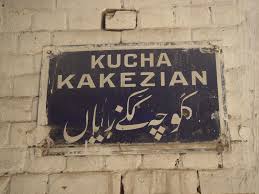
“Diwan khana Faqeer Khana waqia Darul Sultanat Lahore; Mohalla Qazi Saderuddin Marhoom; Haveli Adina Beg Khan; Guzar Chabuk Sawaran, Kakey Zai; Mutasil Kocha Allama Hazrat Muhammd Sharyar Maskoor Lahori; Mutasil Masjid Chinay Wali, mubia Bahadur Shah Alamgeer Badashah; Feil Khana Shahnawaz Khan; Takia Sadoan; Katra Haji Amanullah; Chotta Mufti Baqir, etc.”
What exactly is KOCHA CHABUK SAWARAN? The dictionary defines Kocha as a Galli, guzargah, or piece of land as “Bara” or exhibition centre. We know that the word Chabuk Sawaran is obviously HORSE RIDERS and what had the horse riders in common with this Bara of land. We know there was a market place for horses outside Taxalli Darwaza Lahore, as well a market of horses outside Delhi Darwaza,. But this is inside the city itself. It means an exhibition ground or a stable, enclosure of horses. And with the Mohalla are the few house attached to its exhibition place of horses there. They must be even giving performances of some kind. But the other names are all historical.
Qazi Saderuddin was the Qazi at the time of Emperor Akbar, who rebelled against the religious policies of the Emperor. He was very popular with the people and could not be handled in a drastic way. So Emperor Akbar had him expelled from the city forever. A rebel scholar in all cases.
Allama Shahryar was Imam of the Wazeer Khan Mosque, and he too rebelled against Ahmad Shah Abdalli, and openly insulted the King for his actions. Abdalli said his prayers behind him and could say nothing to him.
Adina Baig Khan was of course for some time Governor of Lahore and part of the conspiracy in the Abdali and the Mughal period of Lahore. A very interesting figure who got married in Lahore to a Syedzadi of this Mohalla and later divorced her for fear of marriage to a Syed family.
There are a few Shahnawaz Khans in the Mughal period. Mufti Baqir was of course a Mufti of Lahore in the times of Emperor Shah Jahan and there is a Chotta Mufti Baqir still named after him in Lahore. Haji Amanullah may be many persons.
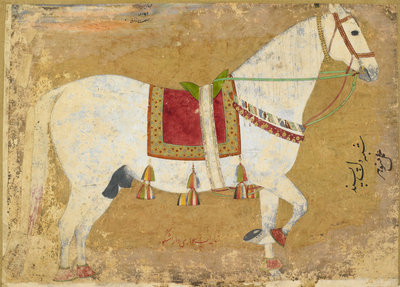
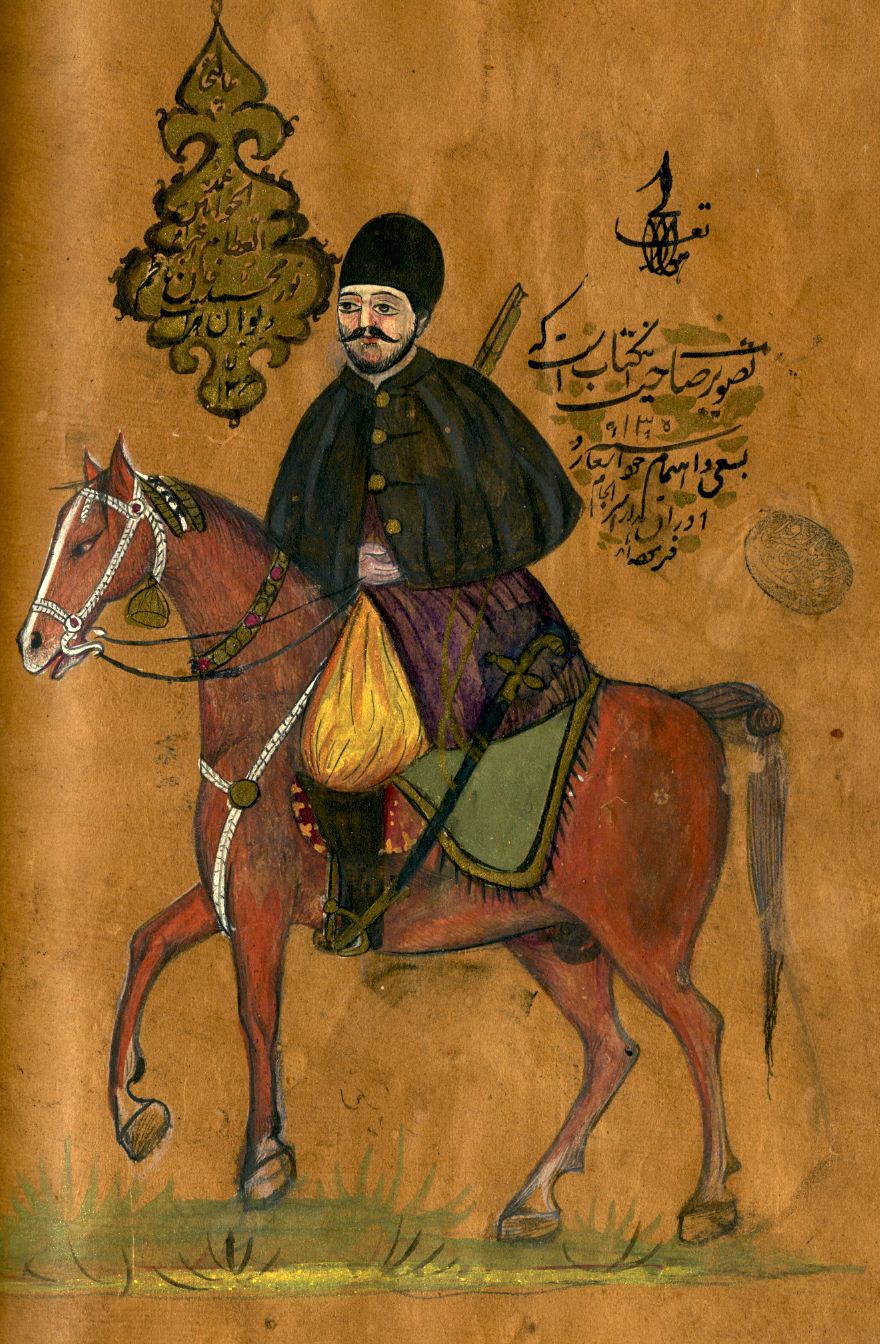
Chabuk Sawaran house LahoreFallen Chabuk Sawaran houseChabuk SawaranDeed house Chabuk Sawaran 1170 AHGali Chabuk Sawar ShahjahanabadMazar Chabuk Sawar BijapurGrave Chabuk SawarKifayat Hussain Chabuk SawarRoti-wali-Tandoor-Chabuk-SawaranFarriers Nalbands of LahoreDil-Pasand horse of Dara ShikohNeighbour hood of Kocha Chabuk SawaranDiwan Nur Khan Herawi Chabuk Sawar Lahore
Masjid Chinay wali is the famous mosque in the Mohalla, now totally destroyed and rebuilt. But very strangely Yaqdil associates it to Bahadur Shah, Shah Alam, son of Aurangzeb Alamgeer. Sadoos were famous for residence in the city area and were responsible for publication houses, publishing old manuscripts in book forms.
In Mughal time the FEIL KHANA meant there was a stable for elephants in this very area. Elephants traversing the Mohalla would be a unique sight under any circumstances.
Yaqdil associates Chabuk Sawaran with ethnic Kakay Zais, but there is much more to it. Documents prove the transfer of some horse dealers from Kanpur in India to this Mohalla in 1855 extra.The names of them are known, and some of them were highly educated and could even write in English. These horse dealers had bought portions of Mian Khan Havelli. Afzal Khan had two wives Noor Jan and Mahbub Jan., He died and these two ladies sold the property.
Recently a group of documents have been discovered which shows us more details of the horse riders. We have a Bakatarabu Begum along with a registrar Abdur Rahman Khan Afghan settled in the city of Kanpur (now in India) in 1855. Then we have references of Qasim Khan son of Munawar Khan Afghan again in Kanpur in 1870. Then we find them shifting to Havelli of Mian Khan and we hear of Afzal Khan and Wazeer Khan Pathans. We hear of Bobo Begum wife of Afzal Khan as well as two other ladies later, Noor Jan and Mahbub Jan, widows of Afzal Khan. Then we hear of Akbar Khan, son of Afzal Khan, who signs himself as a horse dealer in English. Then the haveli is bought by a certain J Rustam, who signs an affidavit of two pages, handwritten completely in English language. That means the horse dealers were educated people. The final transfer is dated around 1915. That is one family of Chabuk Sawars in the Mohalla, and they had a stable and a ground to show off their horse stock and it was called Kocha Chabuk Sawaran. That’s history in full!
Haveli Mian Khan of course is RANG MAHAL or the haveli of Nawab Lutufullah Khan son of Nawab Saad ullah Khan, Prime Minister of Emperor Shah Jahan.
It boggles the mind as to the kind of historical personages surrounding this area. And to top it all the area belonged to a mimar family of Lahore. We have record of Karam uddin Mimar buying this house, and successive generations living here.The last of this was Khan Bahadur Abdur Rahman Chughtai, Mussawar e Mashriq, Artist of the East. who again put this Mohalla on the historical map of Lahore.
The year is 1909, and it is the Mohalla of Chabuk Sawaran. It is probably the house of Mian Kareem Baksh (perhaps portion not bought at that time), but his name is missing, as well as names of other persons of family. The year 1909 means that all the Chughtai brothers were mere children and had nothing to do with this agreement. Some of the names on it are Karam Din, son of Munshi Dil Muhammed (but the year means that it is not Mian Salah’s father), and strangely Karam Din signs his name in English. The other lady Roti maker PEEPO WIDOW OF KALA JEWOR has a thumb impression, as well as Nizam ud din son of Ghulam Rasool. The terms include tenancy of the tandoor, as well as conditions of eviction, when necessary. There are certain points that need to be clarified after study of same. It is an agreement between Peepo, widow of Kala Jewor, and Haji Allah Din, son of Nizamuddin Kake Zai.
THE SECOND VISIT OF M. A. RAHMAN CHUGHTAI TO EUROPE; ACCOMPANIED BY SISTER-IN- LAW, MRS MAHMOODA CHUGHTAI.
The best way to trace the travel of a person is the passport. Although a passport was issued to him on 14th April, 1924, for the Wembley exhibition, but he was not able to avail it for lack of funds. A new passport was issued by Home Secretary Punjab on 10th February 1932, for a period of 5 years. It was renewed on 10th February 1937. The date of his first visit is easily recorded by even the ticket of the Ship he travelled on. As far as Germany is concerned we have a visa stamp on 24th June 1937. A poem in his praise by a German poetess on 27th June 1937. Another date is 3rd July 1937 departure from Germany. He landed back in Bombay on 15th July, 1937. We are able to access his second visit.
In 1932 in his first visit to Europe, he had befriended a German girl, by name of Elza Huiffner. They remained in touch even after he came back to Indo Pakistani region. His second visit apparently boiled down to February/March 1937 to July 1937. He landed back on 15th July, 1937, in Bombay. But this time he was not travelling alone. His brother in law Gulzar Chughtai had requested that he accost his wife Ms Mahmooda, to London. So on ship they were travelling together. The Huiffner sisters knew of his travel plans, and were there at Marseilles port to receive him. They did not know that his sister in law Ms Mahmooda was with him. He introduced her to them as Mrs Chughtai. The Huifner sisters were shocked at the idea that he was now married and disappeared from port. This interesting episode was narrated to me by Mamee Mooda herself in a sitting in Lahore. This event was not in my record, so I thought it best to put it in historical perspective. Why this happened? No one really knows.
MARC around 1937Ms Mahmooda ChughtaiElza Huiffner, Hanna and friend 1934Razia-Sirajuddin-article-Chughtai-Art
Elza Huiffner was contemplating a very serious relation with the artist. Chughtai Sahib was not in a position to make that commitment. He thought it best to evolve this situation in the best interest of all. In short he was not ready to desert Lahore for an easy life in London, or in Berlin. The commitment to National resurgence was ever strong in him. There are people who are averse to Nationalism, but this was not parochial nationalism. This was in the belief that Pakistan was the first step towards the Islamic resurgence of the Iqballian dream. In fact the next year 1938, we see the loss of his guide and friend Dr Allama Iqbal’s death. Serious financial problems were mounting with him, and he was ready to print the first edition of “Chughtai Paintings”. The rest is history. In 1936 at the house of Begum Shahnawaz a small show had been organized, and Razia Sirajuddin wrote its introduction. Now revised, it led to the first edition of his famous book. As she said:
“His paintings are in truth the geometry of beauty. He knows art begins at the point where the thousandth of an inch makes all the difference.”
A FORGOTTEN EPISODE OF LAHORE IN 1845; COW RIOTS ERUPTED AND SILENCED IN 1871.
A concept generated in Lahore in recent times is that there was total harmony between various communities. That Hindus and Muslims were living as long time brothers. It was forgotten that the way of life of both nations were totally different and toleration of each other, did not mean harmony, as contrived today by writers. Obviously some broadminded persons on both sides learnt a certain level of co-existence.There were sects of Sikhs in Lahore, where it was even dangerous to pass by them with any ease. Fear of an unprovoked reaction from them. Yet life existed in its bad and good forms.
In this turmoil extremists reactions started after death of Ranjit Singh in 1839. Not that it was not there in his times, but he could ruthlessly curb it in any way he liked. The KOOKA sect was formed by one Baluk Ram in the year 1845. A carpenter named Ram singh inherited the position. They were interested in going back to the Pristine qualities of their religion. The Sikhs and the Hindus joined hands in this tirade and in 1845 a number of Butcher shops were raided in Lahore and some Butchers put to death. The aim that there should be no display of beef meat at Butchers shop as it was against their principles. The British were in a quandary as to what to do. Full control of Lahore was not in their hands yet. The young puppet Dallip Singh was being groomed for complete takeover. The Cow riots as they were called were becoming more and more destructive.
An ultimatum was issued to the KOOKAS to mend their ways and they kept quiet for some time. But it was a mum before a storm. By 1871 the riots had spread to Amritsar, and a group of 12 Kooka assassins butchered again a group of Muslim Butchers. The British were in no mood to accept the challenge to their authority, and the Kookas were ruthlessly pursued and captured by them. Out of perhaps a following of fifty thousand Kookas, 300 kookas were taken into custody, and quickly executed by the authorities. Everybody believed that it was an excess but that excess unless controlled would have left a scar on the reigning policy of the British. Anybody disturbing the status quo was a risk to their rule.
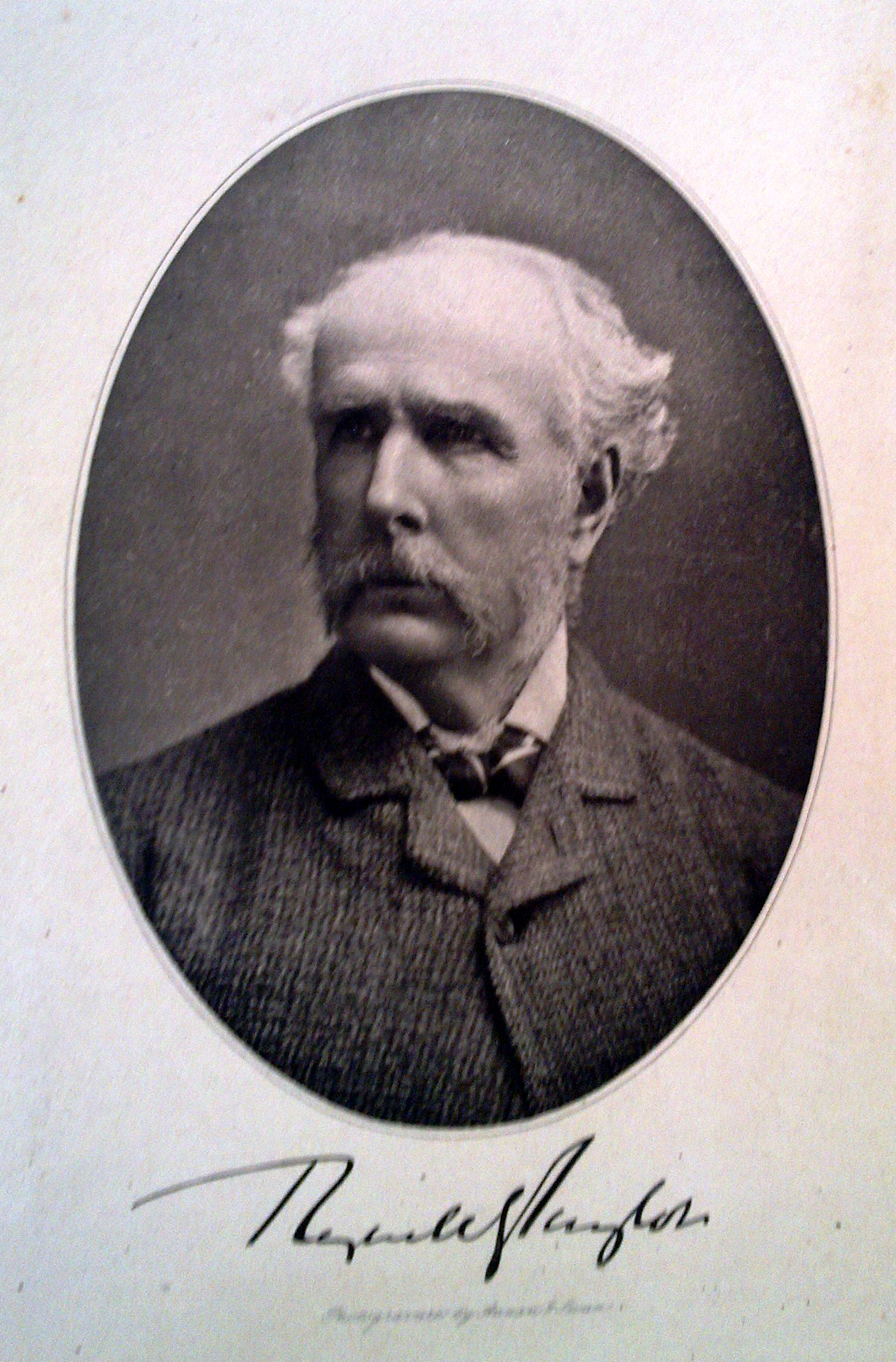
Rennell Taylor ICS Commissioner Amritsar
The people who think that there is no Two nation theory, should wake up to the fact that even in Lahore, there were separate Mohallas of the Hindus and the Muslims, and nobody dared to traverse the domain of others. And this division was always there. The theme of the Hindu mohallas was very different from the Muslim ones. The ‘SHARM’ or ‘HAIYA’ we talk of was alien to the Hindus living here, and strangely it is reported by many people of that time, that literally the Hindu girls were naked from the top and wearing flimsy dresses from the bottom. It was indeed a threat to the culture of the Muslims. And this invasion of the undressed person is something we see in our media today, and forget that it was always so. Sex was one of the ways to reach the Divine reality in that religion. In the Muslim area the approach was totally different. That is why Quaid e Azam gave us the famous saying about the two nation theory, which we repeat all the time. A simple one is:
“We are a nation with our own distinctive culture and civilization, language and literature, art and architecture, names and nomenclature, sense of value and proportion, legal laws and moral codes, customs and calendar, history and traditions, aptitudes and ambitions: in short, we have our own distinctive outlook on life and of life. By all canons of international law, we are a nation.” –
And Quaid e Azam further clarified:
“It is extremely difficult to appreciate why our Hindu friends fail to understand the real nature of Islam and Hinduism. They are not religions in the strict sense of the word, but are, in fact, different and distinct social orders, and it is a dream that the Hindus and Muslims can ever evolve a common nationality, and this misconception of one Indian nation has troubles and will lead India to destruction if we fail to revise our notions in time. The Hindus and Muslims belong to two different religious philosophies, social customs, litterateurs. They neither intermarry nor interdine together and, indeed, they belong to two different civilizations which are based mainly on conflicting ideas and conceptions. Their aspect on life and of life are different. It is quite clear that Hindus and Mussalmans derive their inspiration from different sources of history. They have different epics, different heroes, and different episodes. Very often the hero of one is a foe of the other and, likewise, their victories and defeats overlap. To yoke together two such nations under a single state, one as a numerical minority and the other as a majority, must lead to growing discontent and final destruction of any fabric that may be so built for the government of such a state.”
Butchers-of-LahoreGodhra Riots in Bombay
The riots get repeated and flared up again in 1893:
The “cow killing riots” of 1893 were a series of violent clashes between Hindus and Muslims in British India, fueled by religious tensions surrounding the slaughter of cows, which are considered sacred by Hindus. These riots were a significant event in the history of Hindu-Muslim relations in India and were marked by intense conflict, particularly during the Muslim festival of Eid al-Adha, when animal sacrifice is a common practice.”
The conflict lingers on even today. Solutions hardly possible. And yet India exports it is said of billions of dollars beef every year. Hypocrisy of the worst type. Cows linger over rubbish heapos all over India. Cleaning their front yards required to move forward any time.