

LAST OF THE ARCHITECTS OF MIMAR FAMILY OF LAHORE;
MIAN KAREEM BAKSH FATHER OF M.A. RAHMAN CHUGHTAI.
When environments change, so does expected requirements from cultural people. A new civilization requires adjustments. Mian Salah Mimar remained stuck to his traditional vision of things. His son Mian Raheem Baksh found balance both in traditional and modern atmosphere. Certificates from many English administrators speak of this adjustment. His son Mian Kareem Baksh caught between the flux of cultural movements.
My uncle Dr Abdullah Chaghatai used to say that his father was responsible for building at least hundred mosques in Lahore alone. These were not grand mosques with grand dimensions. But small versions to cater to the issues in Sikh and British times. The time where Azan (nor prayers) was not allowed, so small mosques in individual neighbourhoods. And the end formula was economy of things. One example which my uncle Abdur Raheem told me about was the mosque of Mai Hiran, the wife of a poor mashqee or water carrier. The death of the Mashqee moved his wife in a new directions. She wanted to honour her husband by building a mosque in his memory. Their house and its land was there, and she had Rs 500. She sent for Mian Kareem Baksh and asked him to build a mosque in the memory of her husband for that amount of money. The money would be used for the design, the clearance from the Municipal Corporation, the bricks, the mortar, the doors and everything required for same. Including the labour of Mian Kareem Baksh. A dramatic adjustment from mosques for Emperors and Princesses to a poor lady like Mai Hiran, the beloved wife of a Water carrier. Do not know the present condition, but it still stood when I went to photograph it in 1976. Certainly there was love in its construction, the same love generated in the construction of the Taj Mahal.
My father M.A. Rahman Chughtai used to recall many incidents of his relation with his father. He would normally say that Mian Kareem Baksh used to leave for work early in the morning and would come home late at night. He was in the habit of wearing wooden slippers, and those slippers used to emit a loud clanking noise as he walked into the lane of the house. It was a signal for all three brothers to rush into bed under all circumstances. The father would allow all three brothers to fly kites but after Basant would tear all the ones left over. Other things like fishing, hunting were there too. The ambition of the father was that the son should clear school, and go to Engineering University and get a degree from there. An ambition to make him an architect in the tradition of elders. Mian Kareem Baksh also had the wish that his son would become a Hafizul Quran and he would be very proud if he would lead the recitation of Taraweeh prayers in Ramazan. Interesting that Chughtai Sahib had mastered the learning of at least half the Quran but could not complete the whole Quran. The quest for emphasis on the Quran itself, started from Chabuk Sawaran itself, with the bold reckoning of Abdullah Chakarwati. That influence prevailed on Chughtai Sahib all his life, and hearing of the recitations and lectures of Dr Allama Iqbal, at the Islamia High School Lahore, guided him towards the Quranic insights of Allama Ghulam Ahmad Pervaiz. Indeed the reconstruction of religious thoughts in Islam came very much alive in M.A. Rahman Chughtai.

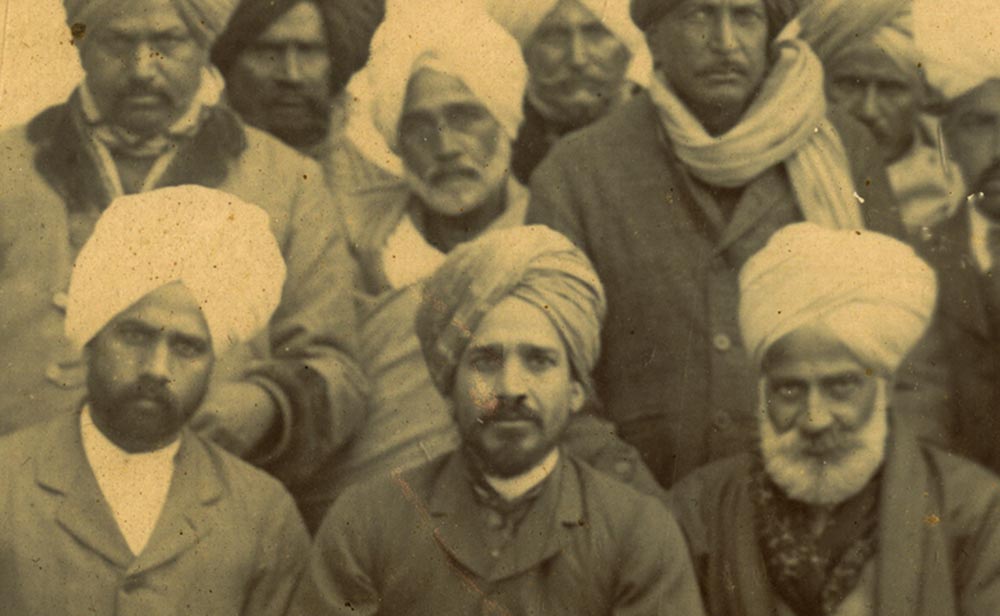


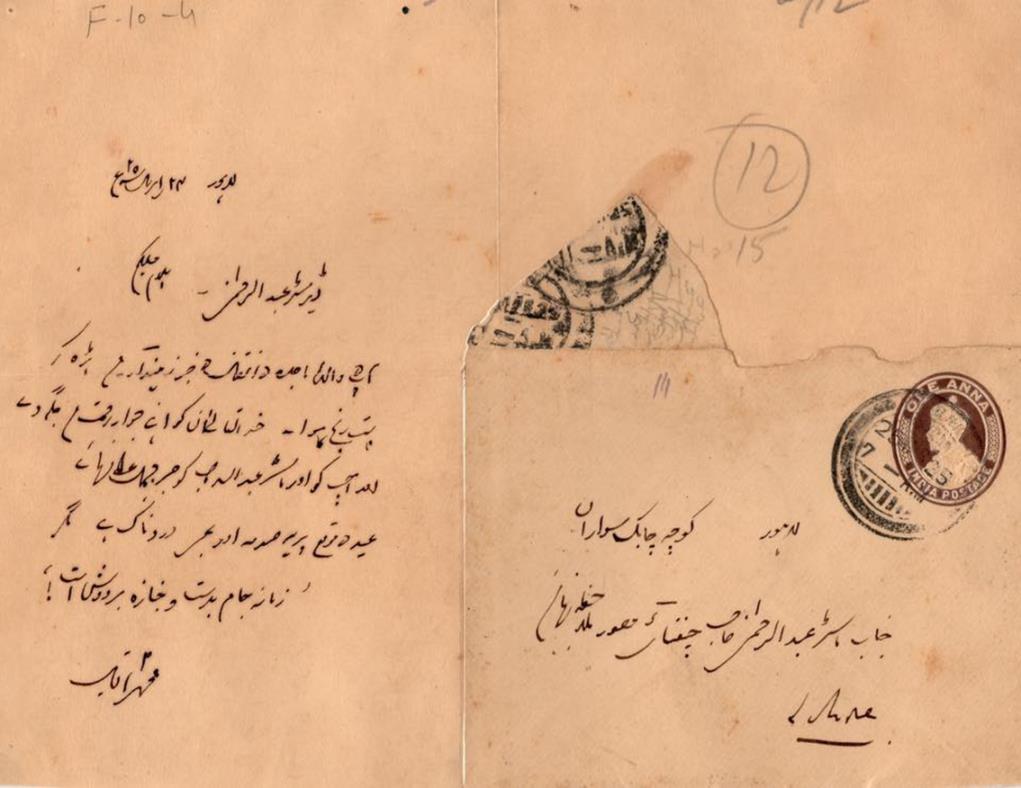

The artistic insight in Chughtai Sahib also came very early. The incident was of his making a crow on the minaret of the small mosque in front of their house, and showing the same to his father Mian Kareem Baksh. A small child’s bold attempt at making an image. The minaret still stands there today, and we will enclose a picture of it. Probably the minaret was work of Mian Kareem Baksh too, as the mosque then was Masjid Mulla Ghaus, now it is Noor Masjid. On his home from school, he would watch a very old artist work on miniatures, in Gumti Bazaar, and it stimulated him towards such aesthetics. Indeed the line and colour maestro was being born under the eyes of Mian Kareem Baksh.
Mian Kareem Baksh died in 1913. And his last work was on the Haveli of Bijri Nath inside Delhi Gate, Lahore. I went there too, as it was in the possession of a relative, Aurangzeb (a great book collector) and was shown remains of a Stone Sundial on the roof. Amazing work for its time. Mian Kareem Baksh is buried in Miani Qabristan with his two wives, Chiragh Bibi and Mehrunnisa. Under Mehrunnisa grave is the grave of Muhammed Hussain, step brother of M.A. Rahman Chughtai. A graduate in those times, and a Royal tutor to the exiled Princes of Afghanistan. Interesting his portion of the house in Chabuk Sawaran still stands there. A blog is in the making for that man too. We have put all this record in the public interest before it is lost forever! Lovers of Chughtai Sahib must keep record intact with them for future reference.
Historical record if not saved goes away. Our nation expert in caring nothing for history while our Hindu neighbours always busy in creating manipulating past grandeur.
Dna plus environment created feat.
A study says 22 generations carry traits.
Bahut acha
A complete record requires years of research. Well done for historical record!
Very hard work behind this post. Congratulations!
You have completed one part of research. More must be coming. Keep at it.
Very nice.
Batch of information in collection by now.