THE OBSESSION OF ISLAMIC RINGS
KING’S ROYALTY AS WELL AS COMMON PEOPLE
Fascination with metal and stone on fingers
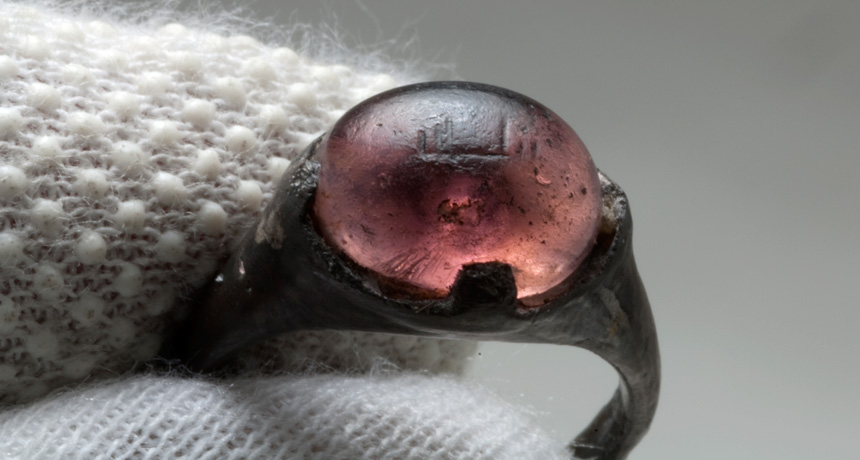
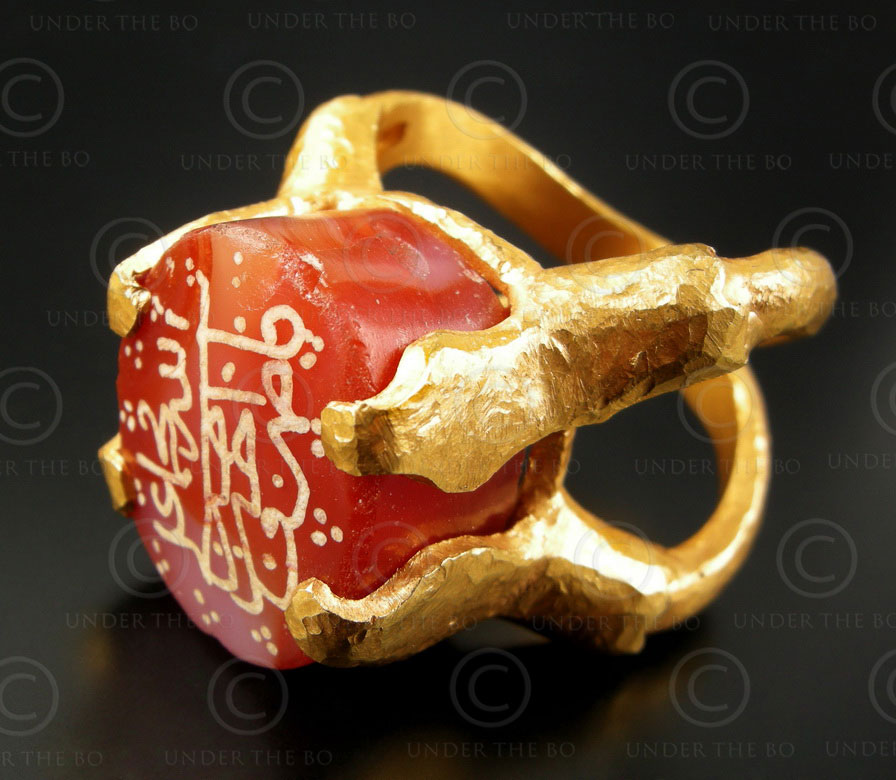
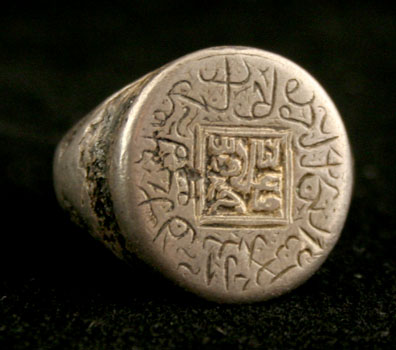
Found in Viking gravesGold ringIslamic gold ringJericho ring
Every representation of people of the past comes with rings around their fingers. Not one or two, but many. Exquisite stones, exclusive metals, as well as fantastic calligraphic inscriptions. All lie in the fascination of rings. It is a wonder that many specimens are saved in the world to present a fascinating imagery of Muslim Culture.
ABANINDARANATH TAGORE AND M. A. RAHMAN CHUGHTAI
THE VERY FIRST COMPARISON OF BOTH PAINTERS
Individual expression of identity
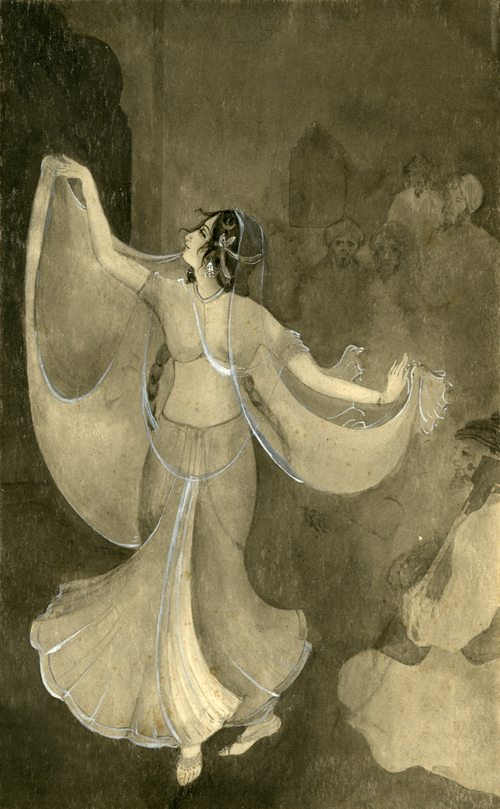
Spring BreezeAbanindranath Tagore 1911
In 1911 Abanindaranath Tagore was the acknowledged Master Painter of India of the Bengal School. His fame was international and his stature in India extra-ordinary. No one even came close to them. Then emerged M.A. Rahman Chughtai from Punjab, India to challenge the position of the Master Painter of India, as a young teenager of Lahore. We can compare works done on the same theme set as a challenge of the times.
There are more works, which can be compared at the start of the career of the artist. Eventually we will post more.
THE MURDER OF FIFTEEN YEAR OLD SHAMSHAD BAI LAHORI
NAWAB NAWAZ KHAN OF DAB KALAN GOT AWAY WITH MURDER
Shamshad Bai Lahori
Nawaz Khan came to Lahore on 28th October, 1941 for medical treatment, and during his stay at Faletti’s hotel, he became acquainted with a 15 year old Lahori call girl, Shamshad Bai. On 6th November, he made her stay in his room all night and gave Rs 1700 extraordinary for her rampant services. He became so infatuated with her, that he took her back to Multan district. In their family mansion, she was accompanied by her pimp brother, Talib Hussain.
Nawaz Khan was drunk to the core and wanted to be amorous to the girl. But his condition was pathetic and the girl made fun of his lack of masculinity. He got so irritated that he took out a pistol from underneath his pillow and shot her dead. It was a case which was started 6 months afterwards. Money poured in from the Nawab to save himself and his influence all over did save him from hanging. A doubt was deliberately created that he did not do it and planned to marry her. Why did he kill her? She laughed at him for his lack of manhood and he could not tolerate that. But he loved her so much that he stayed besides her dead body for ten hours. An incident which rocked Lahore in those days.
THE BIZARRE CREDOS OF MODERN ARTISTS
DOES NUDITY LEADS TO SPIRITUALITY?
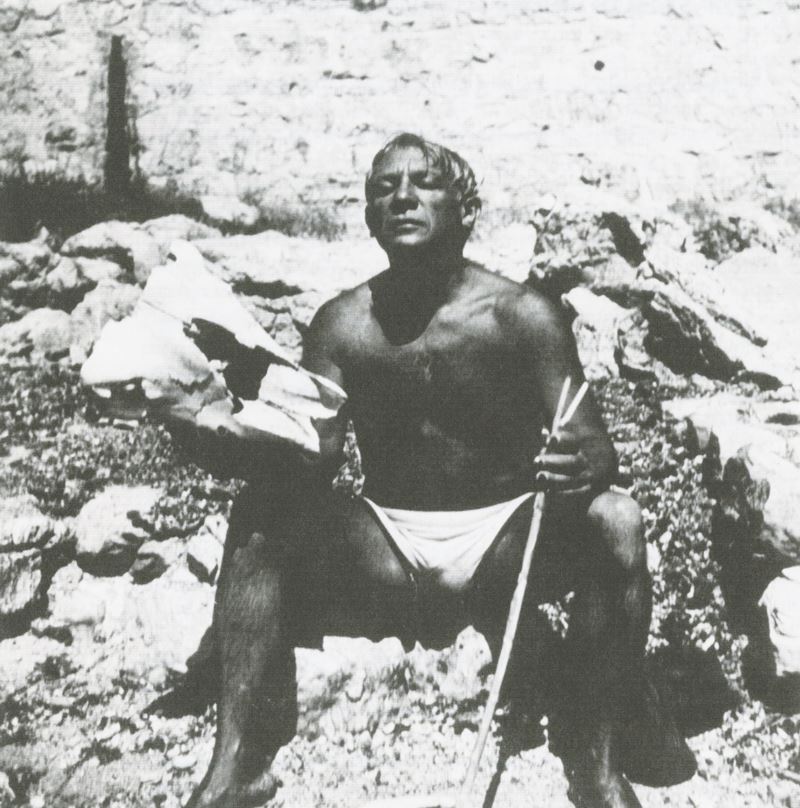
Picasso 1937 Berhoopia
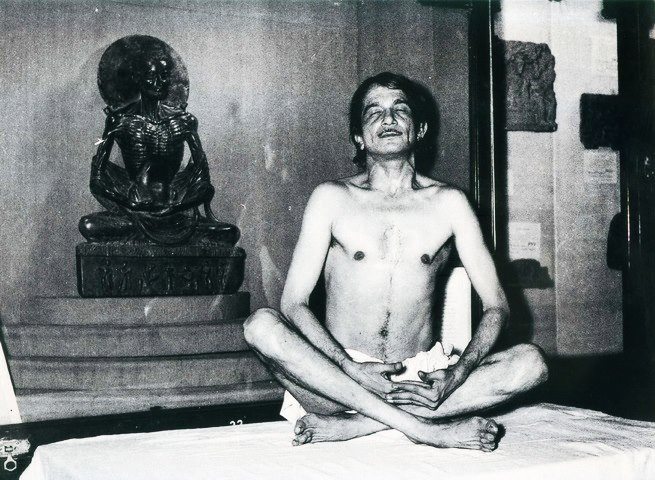
Pablo Picasso posed in the nude in 1937 with a bull head and a forked stick. Sadequain did something like that in the Lahore Museum, in idealizing the starving Buddha at the back in the show case. I think Hinduism believes in eight ways to reach the Al-Mighty. For us normal Muslims, the last communication of Allah was through the Quran and the Quran is now the only way to reach Allah. Rest keep on trying! Self deception is not the answer to anything.
THE ASSASSINATION OF PRIME MINISTER LIAQUAT ALI KHAN
THE START OF A SEQUENCE TO DESTABILIZE THE COUNTRY
A message ever fresh for today
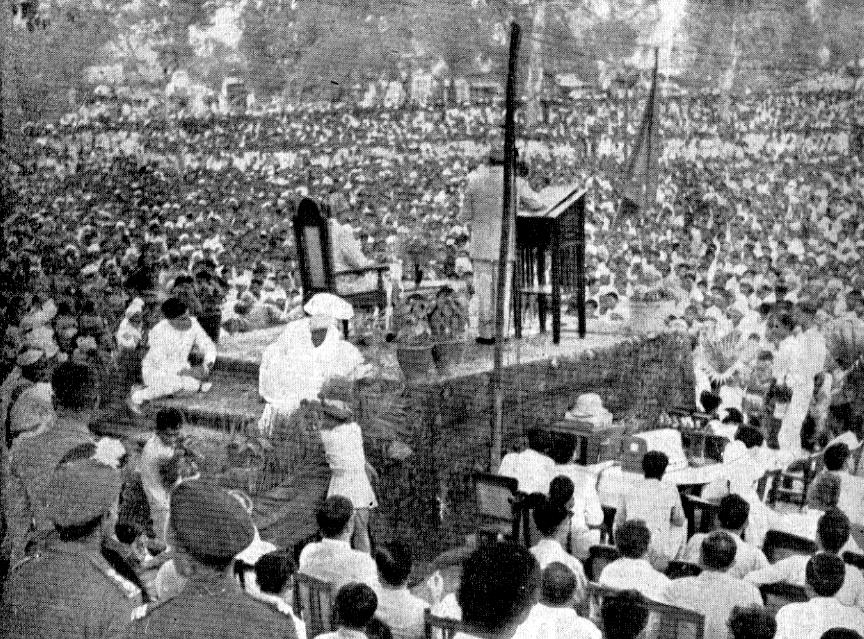
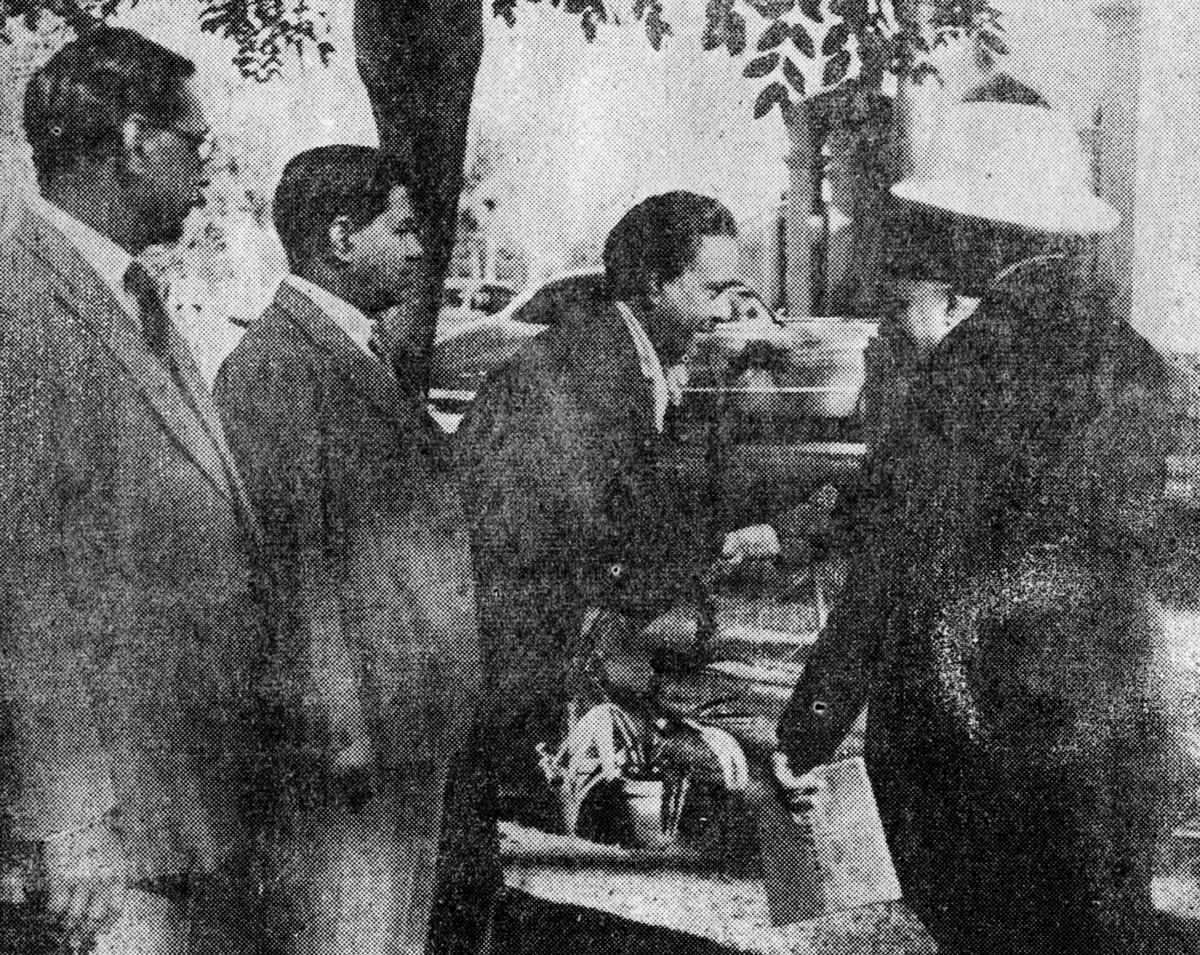
On 16th October, 1951 Pakistan lost its Prime Minister Liaquat Ali Khan, known as the Shaheed-e-Millat. Various point of views. No pictures on Google of the incident. Sharing some from old reports. Reflect!
PATRONAGE OF A RICH HINDU FOR A RISING MUSLIM ARTIST
Strange anecdotes about the millionaire
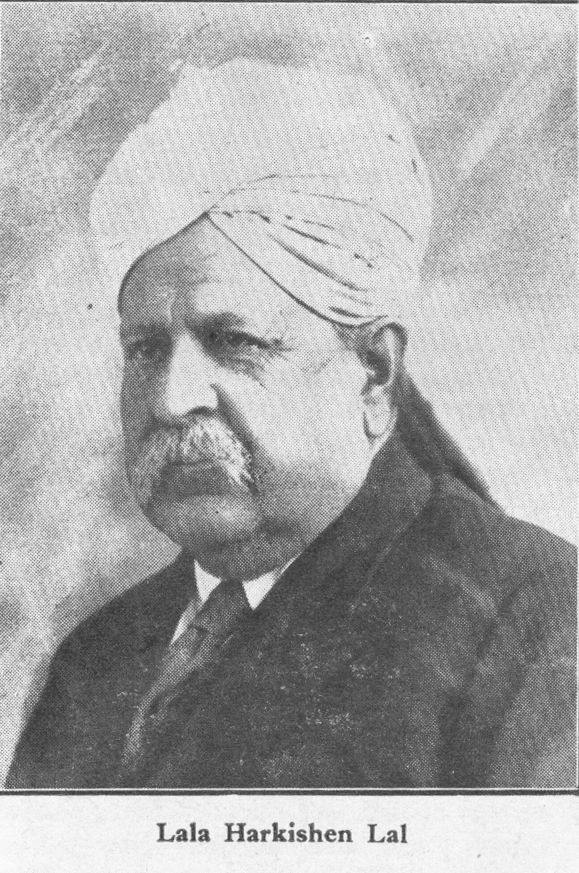
Harkihen Lal Gauba
The project of Murraqqa-e-Chughtai was on the anvil. Thee were not enough finances. It was decided to get the prints printed from Germany and the rest of the book here in Lahore. As money was limited, a small press was bought and the two brothers, M.A. Rahman Chughtai and Abdur Raheem Chughtai decided to do the printing themselves. The press was placed in the Chabuk Sawaran house, but there was no electricity. A power connection was not available. A request was sent to Lala Harkishen Lal Gauba, and his Shahdara Power station. A special concession was made for the artist and a power connection given at the house of the artist. A rare event. The book got printed there, and the LIMITED EDITION coveted in the world, was all done there. Certainly Gauba had a regard for artists.
Khalid Latif (Kanaya Lal) Gauba writes about his father:
MARC cut
“Although Lala Harkishen Lal built a palace, he preferred himself to live simply in a very small room in the top storey, which was a combined bedroom, dressing-room, and semi-office. For the decoration of this room he commissioned an artist to travel through Punjab and paint all the most interesting beggars he could find. Nearly a hundred types were painted and amidst these, he lived and did the best part of his work. Asked to explain what all this meant, he would say that there are two reasons for this:- Firstly, every man shorn of his trappings, is no better than a beggar, secondly, he personally started life in comparative poverty and having these portraits around him, he would never forget from where he began.”
It would be interesting to know the name of that artist of Lahore who made all these beggar studies for him.
Lala Harkishen died in 1937. M.A. Rahman Chughtai got a set of Murraqqa’s work printed in Austria by Max Jaffe of Vienna. The two works were DESERT IN BOOM and SERENADE (FOR A SONG). It was in 1938 that M.A. Rahman Chughtai was back in Lahore. Some how these two works got into the house of Gauba. As Lal Harkishen died in 1937, it is apparent that these two works were bought by Khalid Lateef Gauba. The proof lies in a letter we received from Bombay, from Khalid Lateef Gauba, after the death of M.A. Rahman Chughtai on 17th January, 1975. The letter said:
“I am very sorry to hear about the death of your father (MARC), who in the East had a position and esteem akin to Picasso in the West.”
Thank you Gauba family!
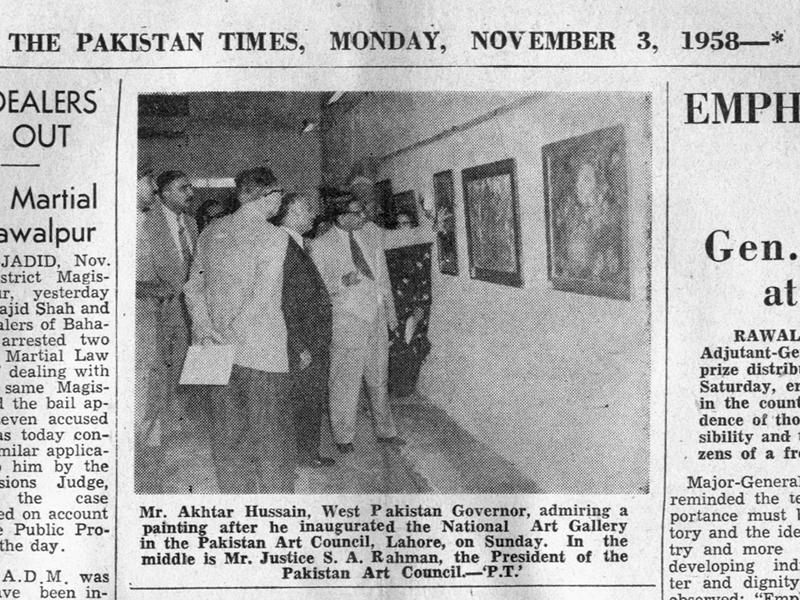
A NATIONAL ART GALLERY IN LAHORE 2ND NOVEMBER 1958
INITIATIVE OF M.A. RAHMAN CHUGHTAI AT ALHAMRA COUNCIL
National Art Gallery Lahore 1958
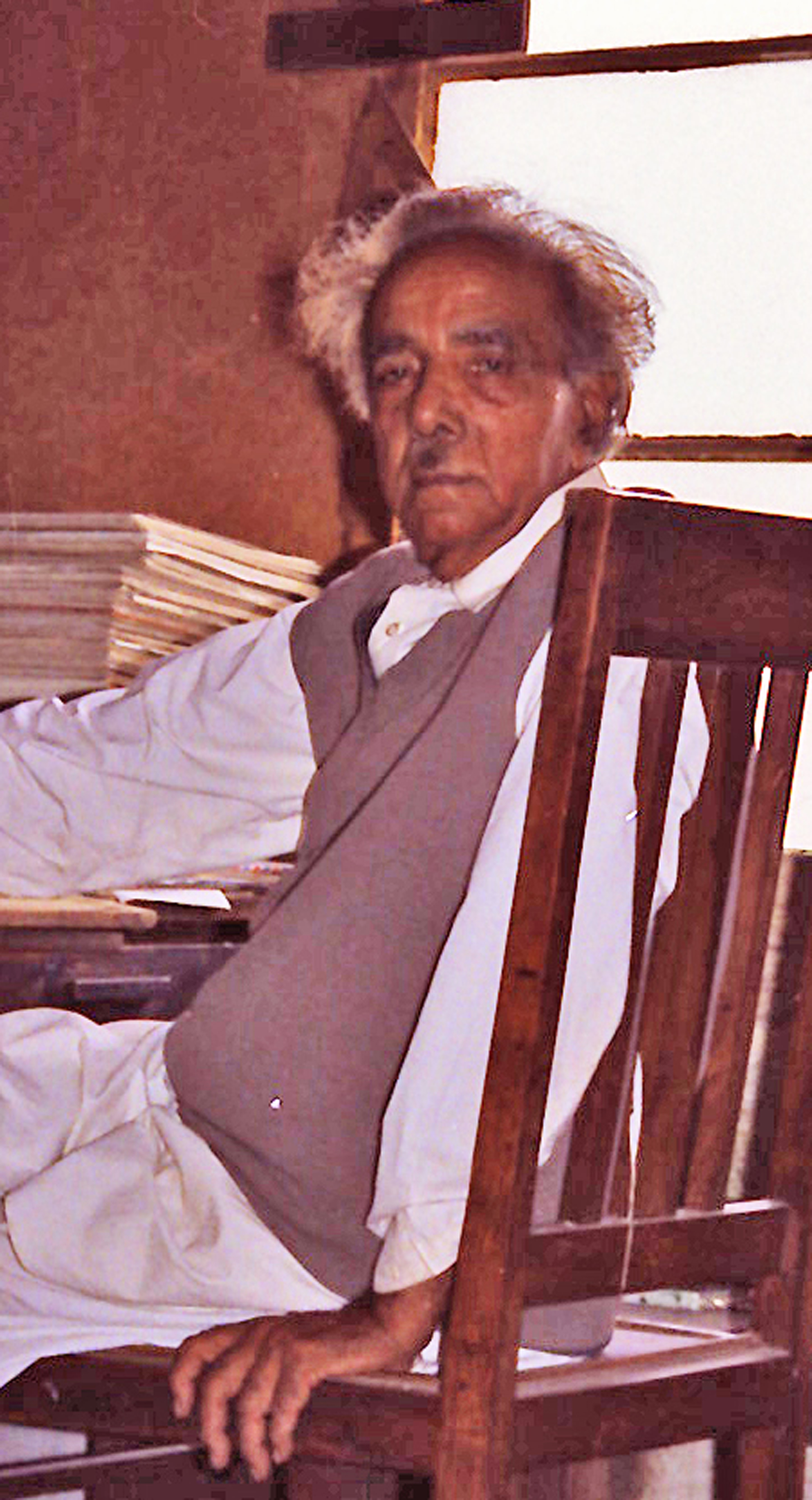
M.A. Rahman Chughtai met Begum Shahnawaz at her home in 1946 and the idea of an institution to promote Muslim Culture was found and resulted in setting up the Alhamra Arts Council in Lahore. Even the name Alhamra was given to the Council by M.A. Rahman Chughtai in the background of Muslim Spain as the harbinger of the Modern Islamic Culture. It was inaugurated with a show of M.A. Rahman Chughtai by Governor General Khawaja Nazimuddin on 10th December, 1949. Other shows followed. There was a need for a permanent display of Pakistani Art at the Lahore Arts Council. The hall of Alhamra was designated as the National Art Gallery and various paintings of various artists were bought by the Council. About ten paintings of Chughtai Sahib were also bought by the Council. Most of them disappeared with time or were subject to neglect. Perhaps only two survived. One was the work PIGEONS which we found hanging in the Chief Ministers House many times and the other the SLAVE GIRL, the first version. The Slave Girl is still at the new Alhamra Art Gallery in Gaddaffi Stadium. Recently a foreign team came here to attempt restorations of such works at the gallery.
M A Rahman Chughtai
The past was so much brighter for Art and Culture in Pakistan. Today democracy has harassed the artist as well as the people of Pakistan and beaten them out of shape. No immediate relief is in sight as everybody is concerned with own self and national developments has been abandoned with sarcasm.
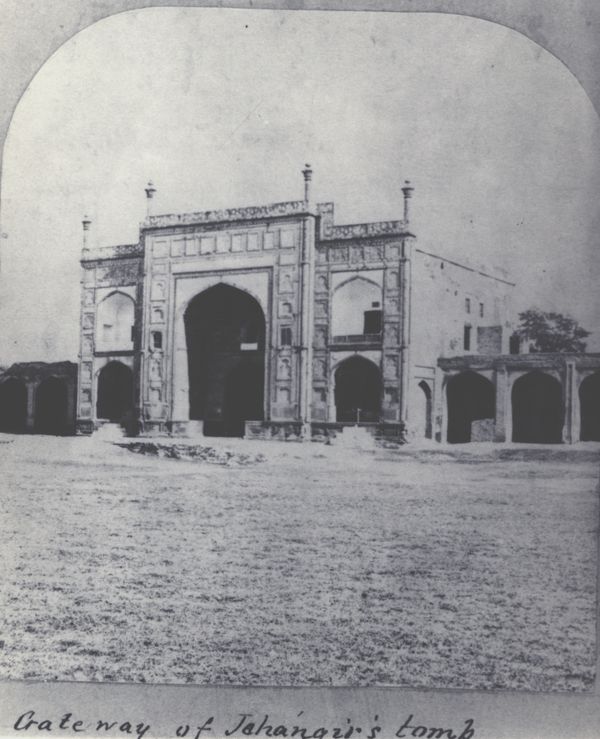
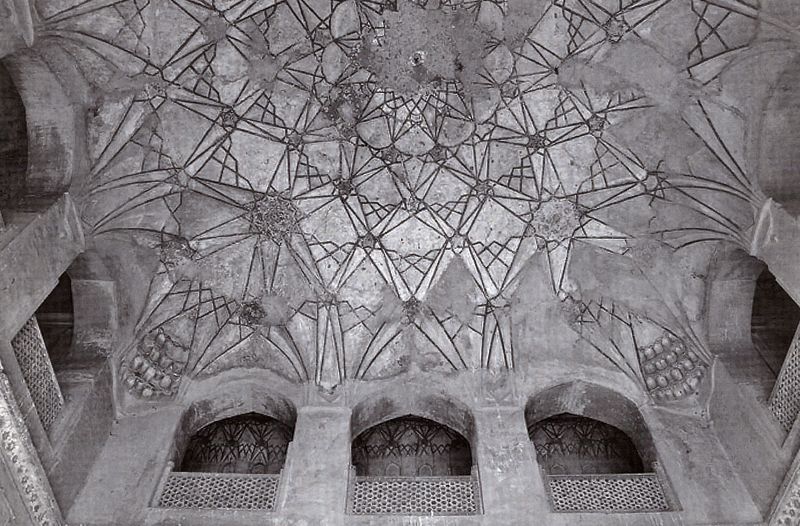
The issue of a pavilion on top of Jahangeer’s mausoleum remain unsolved to this day. Interestingly we have Inayat Khan Muhammed Tahir Ashana talking in full detail of the dome on the mausoleum of Empress Nur Jahan, and which is available to us in the Zafar nama Shah Jahan, abridged from Shahjahan nama. Interestingly the original Badshah namna also carries the detailed description which we have annexed separately. Missing dome on Jahangeers, missing dome on Nur Jahans. But another issue comes up! Was there a dome on the gateway to the Mausoleum of Jahangeer?
Gateway of Jahangeers tomb 1862-1864
The earliest photograph we have is of 1862-64, and it shows us the Gate in more ways than the one which we see today. But there was a publication in 1285 AH or 1867 AD, and it gives us the same gateway but with a dome on it. We can dismiss both as erroneous but we can research on it., Not being research oriented we are least bothered about things of the past.
But what about the missing inscriptions on the Mausoleum? We are told that to pave the way for the mausoleum to be converted into AITCHISON COLLEGE, most of the inscriptions were removed by the British, or for that matter turned over to their back side. Charles Huegel in is travels note that:
Dome inside gateway possibl
“Two rows of black letters inlaid in white marble, over the entrance, contain the name and titles of the emperor, and in many places, the word Allah is inscribed in Persian and Arabic characters.”
Some people even dismiss that evidence. Fool proof evidence is never there. At one point, we have to jump the scrambled things for a conclusion.
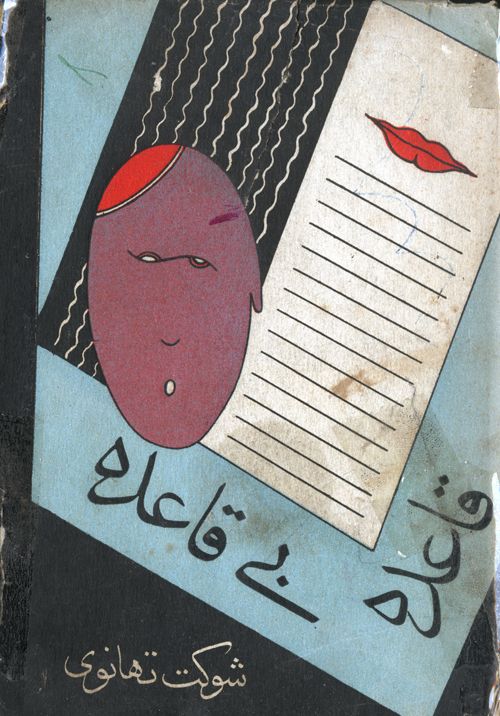
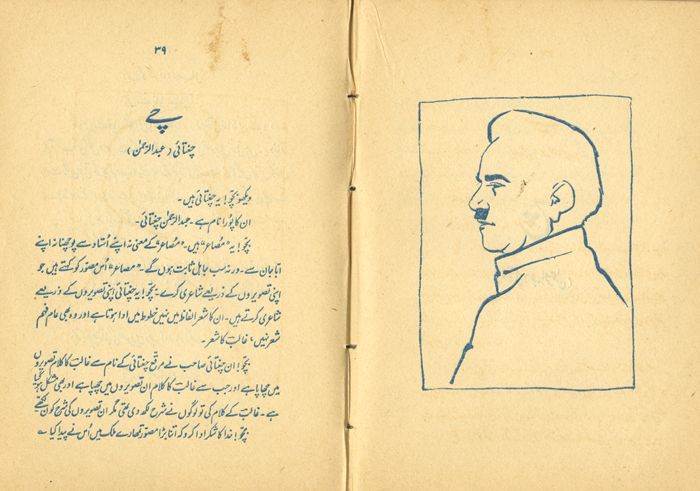
Shaukat Thanvi came to Lahore and became a Lahori by choice. In a book depicting the various leading writers of his time, Thanvi’s pick up M.A. Rahman Chughtai, the artist of his times. Not only did he wrote a penetrating analysis of Chughtai, he also made a caricature of him. In the long forgotten book, we found the same and are sharing it with our viewers. Enjoy!
OUR HISTORIANS USUALLY THINK OF MAQBARA OF NUR JAHAN
AS HAVING NO CLUES TO ORIGINAL STRUCTURE BUT ARE WRONG
Badshah nama1
BADSHAH NAMA OF ABDUL HAMID LAHORI GIVES US THAT VIEW
The absolute truth of various notions of ours is not there. Research about long lost monuments is like working for a needle in a haystack. We have great love and respect for historian Anjum Rahmani, and feel sad that he dissects Dr Abdullah Chaghatai in his latest book on Lahore, at times right, at times with vindictiveness. That is not fair. We can all be wrong at moments. The correct way is to keep on learning.
Badshah nama 2
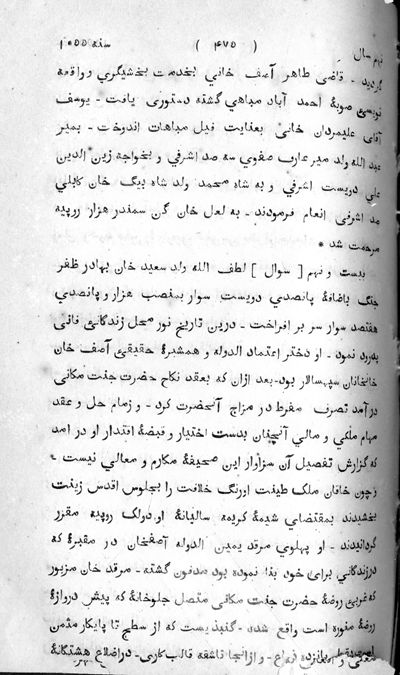
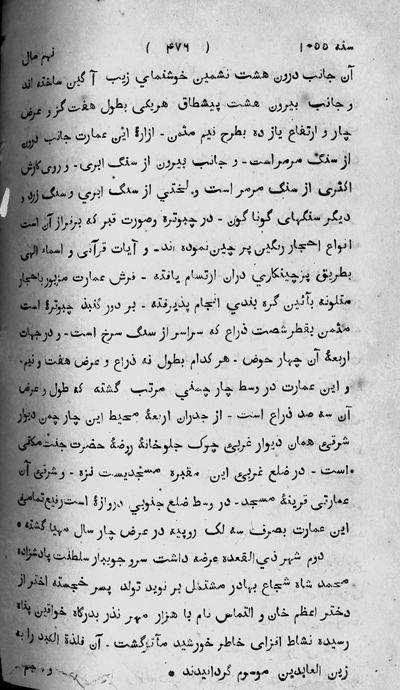
Anjum Rahmani says that there is no reference about the Maqbara of Nur Jahan in contemporary times. We attach here two pages (from the printed book in 1867) from the Bahshah nama of Abdul Hamid Lahori (the official history) and it give us a clear cut description of same. Foregoing the details, three things we find clear in it:
1. There is a reference to a huge DOME on the maqbara.
2. There is a reference to a single grave in the maqbara.
3. The reference is to a mosque which is not there. And it had a jawab balancing mosque structure to same.
It is up to the experts to comment on same. Our job is to present the reference from the book as well as loosely translate same for use of our readers. That is:
“This Maqbara is situated gharb of Rauza Jahangeer. Its DOME is far high above the normal level Its circumference is 15 yards, framework octagonal, with eight nashman and outside eight entrance gateways. Every gate is seven by four and with eleven yards height, in guise of archways. Inside the building there is marble and outside is Sang Abari. Sang marmar and sang zarda and different kinds of precious stones are there. On the high plinth and chabootra, there is the inside building of the grave. The grave is embellished with countless precious stones in parchan kari. Ayats Quranic as well as the names of Allah in parchan kari abound inside. The floor inside the building is embellished with precious stones in gara bandi. The chabootra outside the DOME has a measurement 60 yards and is made of sartappa sang surk. Outside the chabootra on all four sides are fountains and measure 9 by 7.5 yards. This maqbara and Rauza Jahangeer sharqi wall is the same, meaning that the wall of Maqbara Jahangeer and Serai and Maqbara Asif Khan surrounds them. Same wall surrounds Maqbara Nur Jahan which is with Rauza Jahangeer. There is a mosque in the western district and on the east is another mosque which is not a mosque but the jawab of that mosque to balance it. In the janoob of the bagh there is a gate to all this building. Maqbara, and Bagh Nur Jahan were constructed by Nur Jahan in her lifetime at expenditure of three lakh rupees and in four years.”
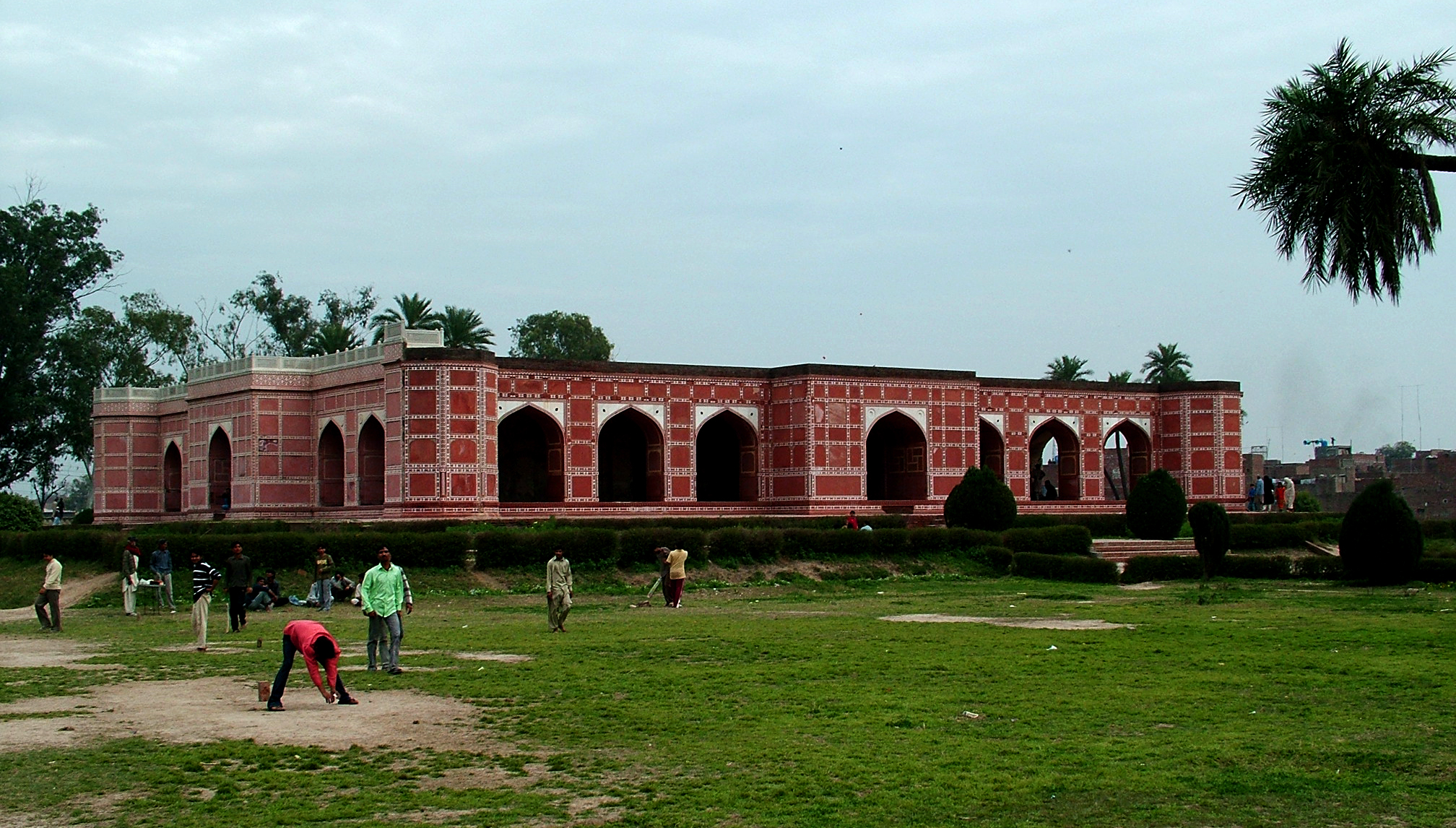
No clues to orginal maqbara of Nur Jahan
The Diwan Masnavi of Nur Jahan was discovered recently. It also mentions a MASJID NAHR WALI in the vicinity of her maqbara. More research is required there. Anjum Rahmani is welcome all the time! Our archives are open to him.