Category Archives: Regular

Regular, uncategorized Posts

SOMETHING HAS HAPPENED, SOMETHING WILL HAPPEN; CAPTURED NEXUS OF CHUGHTAI ART: A MOMENT IN TIME.

SOMETHING HAS HAPPENED, SOMETHING WILL HAPPEN; 
CAPTURED NEXUS OF CHUGHTAI ART: A MOMENT IN TIME.

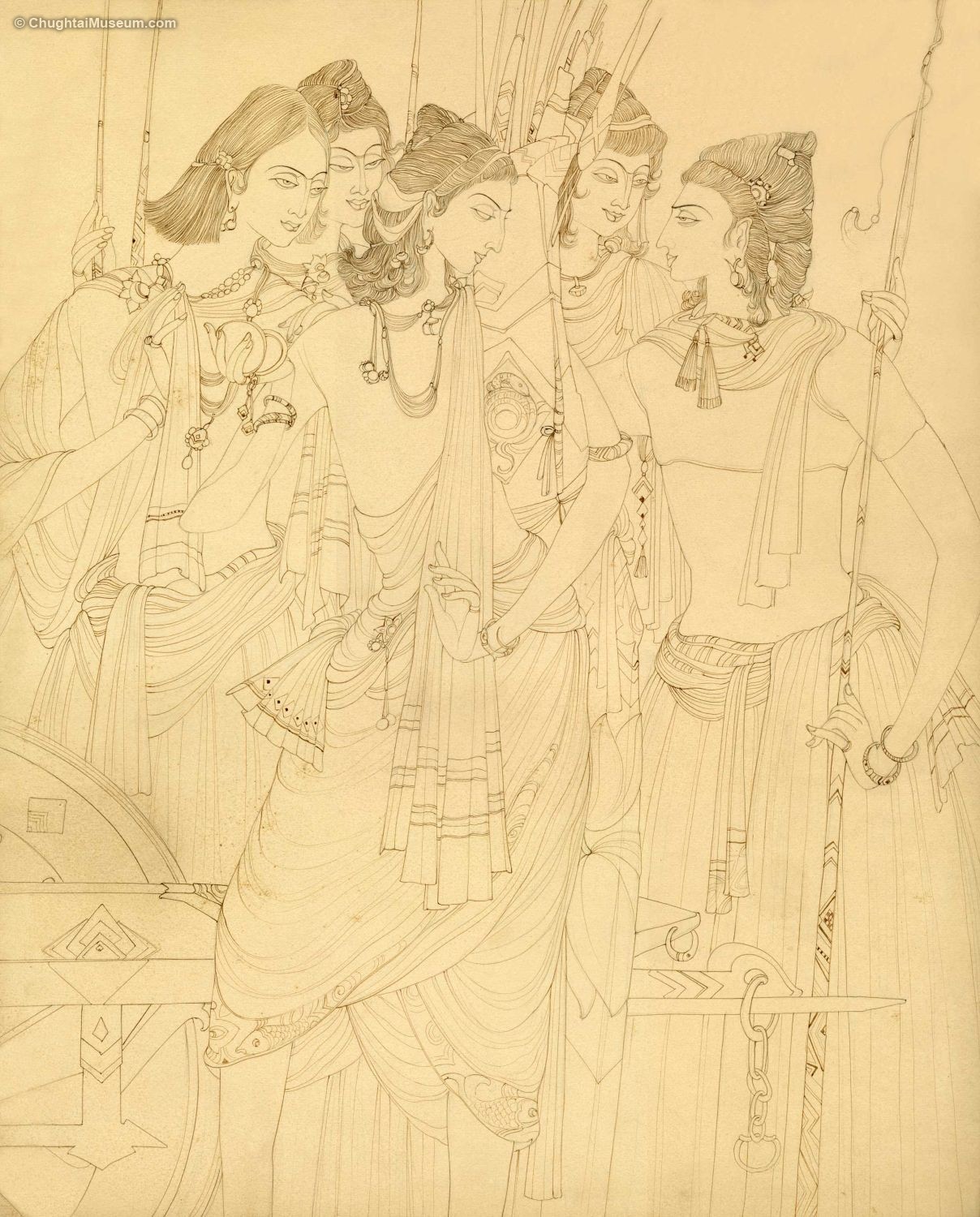
We all know that a painting on  a flat surface is  basically a two dimensional thing, yes it has a length and breath. Artists cannot do much about it, and work in that limitation. But Masters go forward, to introduce a third dimension in it, depth of the work is created, by in-fluxing of images in it of different proportions, to give an air of depth. M.A. Rahman Chughtai is indeed a Master of creating this in-depth illusion, and we find most of his paintings using the background to highlight depth of the worth. One or two figures may be sitting or standing, but then in the background, from near the figures, to far away in horizon, depths are created by use of different size images. Third dimension is always there in Chughtai Art.

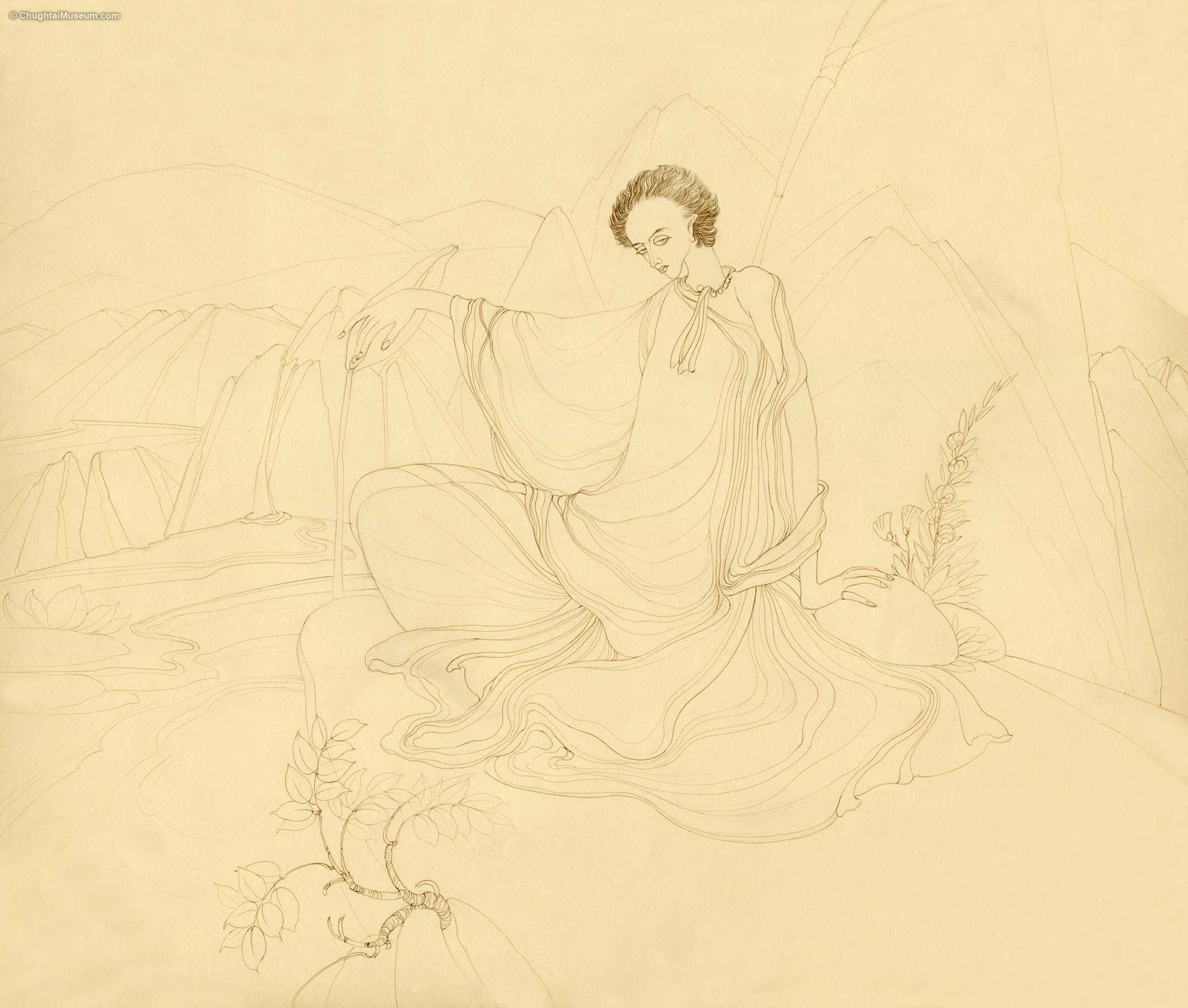
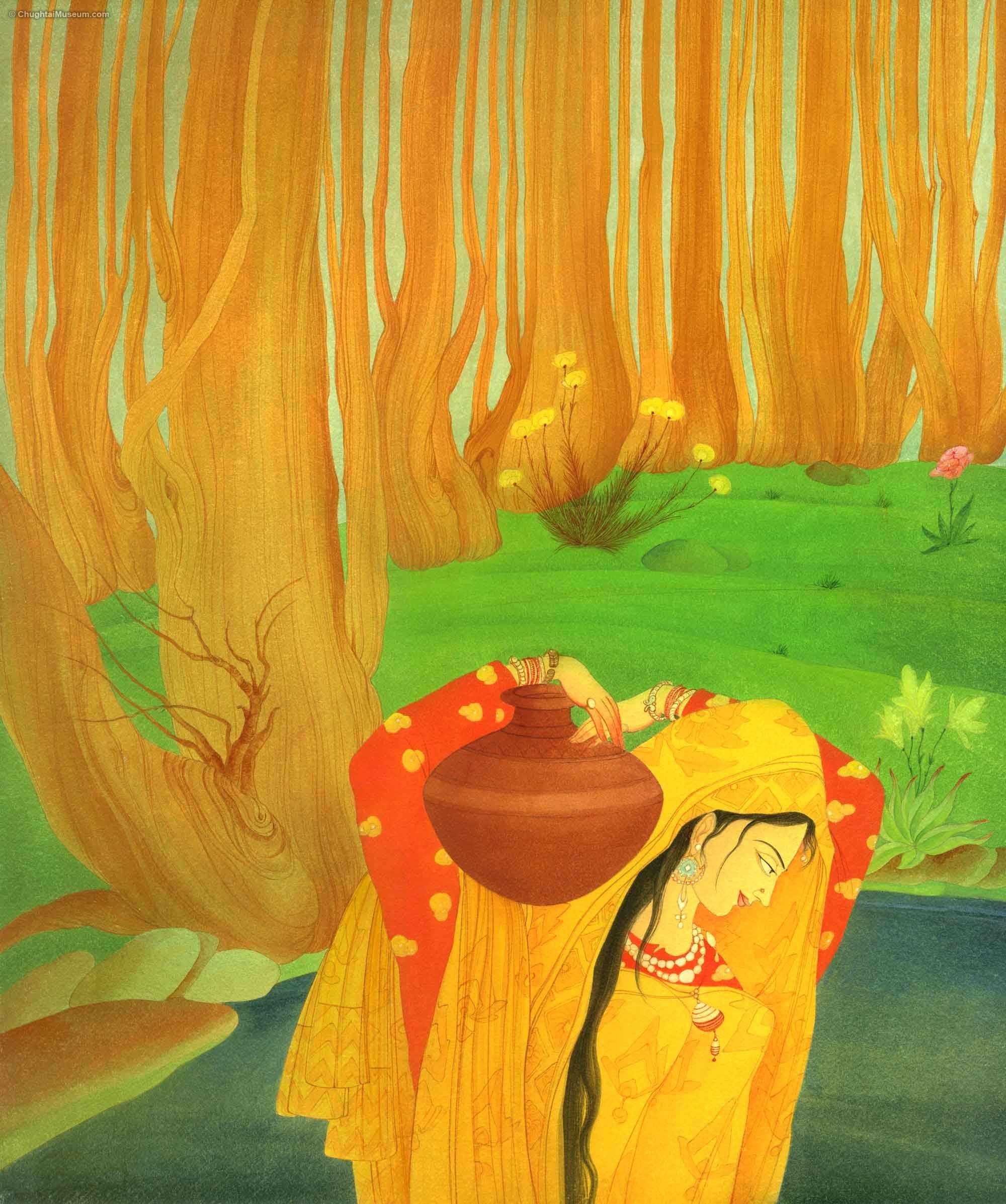
Lotus-for-Love

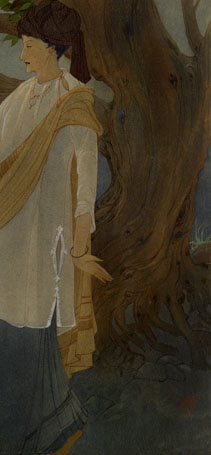
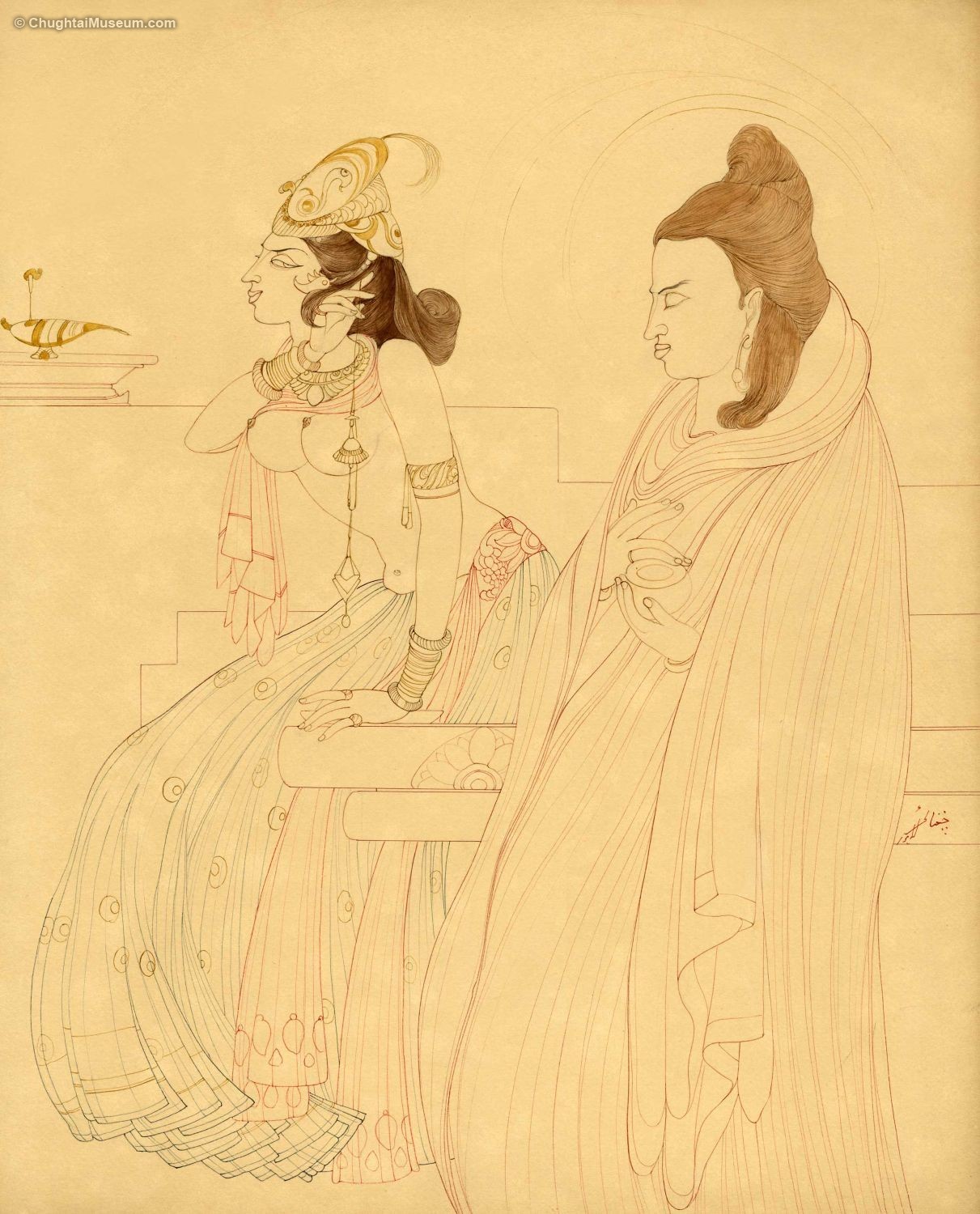
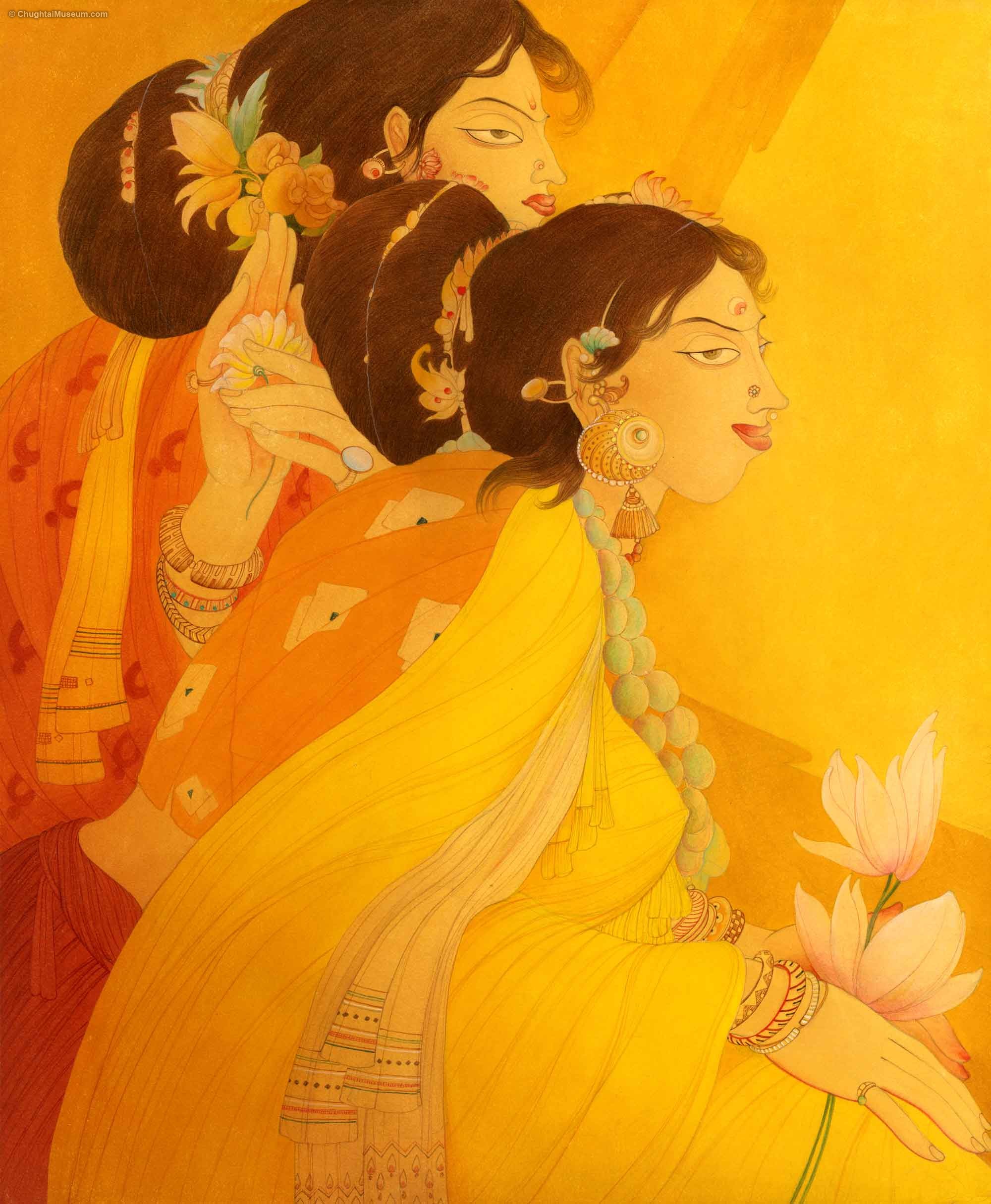
But another very difficult proposition is created with it. On a flat surface, image of a movement is created. It tells us that before that image, something happened, and after that image something else will happen. And that moment in time is captured by the artist and defines the character of his observational undertaking of a moment in time. People without insight may not notice it, but there is movement in Chughtai Art. His eyes not only zoom in and out all the time, but move in other directions too. A dancer’s gown may be moving, a direct impression of a blowing wind, or even a raised hand in act of throwing something, or catching something. Observe the painting of two Hindu girls watching a contest of warriors, and the desire to select one hero, by throwing a lotus on his feet. Two ladies one has made a choice and is throwing same, the other is still thinking of same. Reflect the dimension of this masterpiece and it shows the Master in movement of the moment in time. A remarkable artist in remarkable moves on flat surfaces. A finite move in multi-directional possibilities. Only remarkable eyes can notice this movement.

Whenever a painting was completed, the artist would seek opinion of others on same. If we the family were around, he would ask us. If not, he would even ask the ignorant cleaner lady sweeping the floor nearby. Yeh tasveer kay baray may keya khail hai? She would reply ” Bahut piyari hai Sahib jee“. Of Course it never stopped there. He would invite others to check out his creation, The feedback always enriched him. He listened to others with attention. Gathering data for future creations. One of a kind Ustad in all ways.

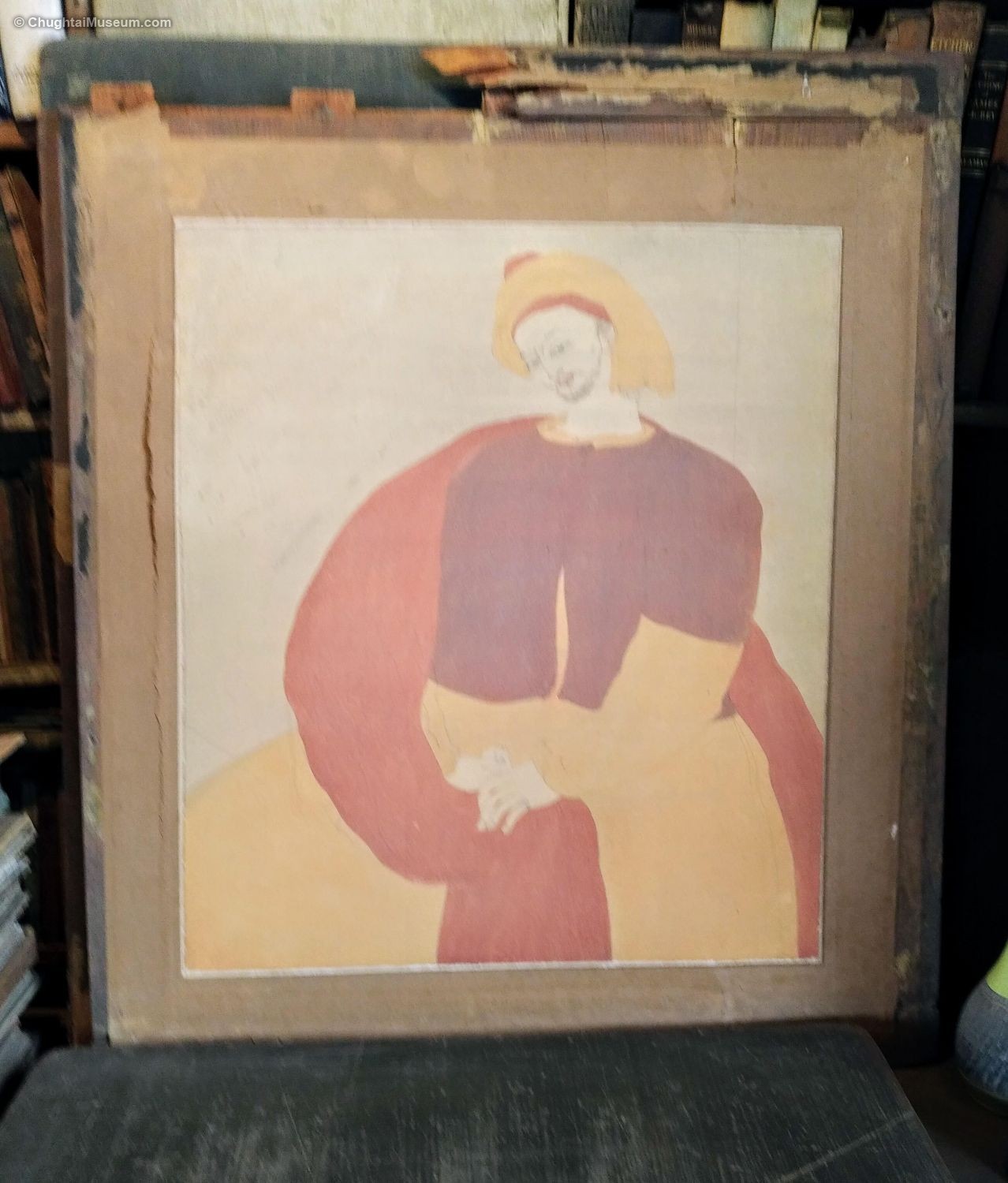
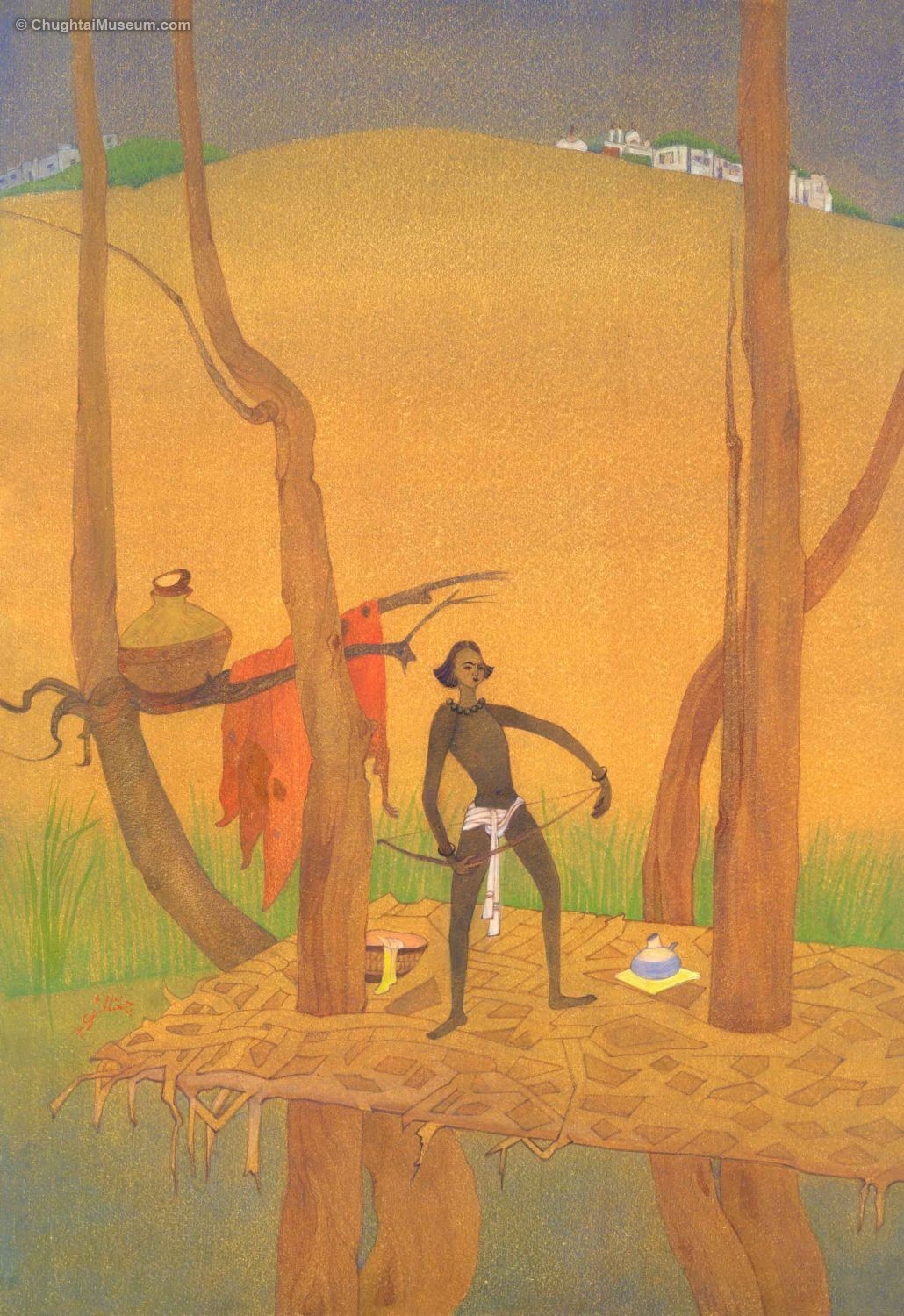
I remember one day my father showed me a painting he had done of a Shepherd. He asked me my opinion. But added that he wanted to tell me the source of his inspiration. Recently a painter had been through the toilet. And there was some spilling on the door wooden frame. While sitting on the desi Turkish toilet, he was observing the trickled drop of a white wash. In his eyes came the shape of a shepherd tending his goats. We have the work with us even today. We will add it for view. 
Chughtai Sahib is famous for his flowing line, but few people know that he was fond of studying the movement of water, as inspiration for his art. He was fond of throwing stones in pool of water or even the river itself. The ripples he would carefully  notice. Not many people will know that Rembrandt made many etchings of people urinating in the streets. Urination was also an inspiration for the artist. In desi (Turkish) toilets of his time, when a person urinated, the flow would reach the floor in front of him. An artist always notices this flow. Once a Canadian artist came to our museum and he too talked of this natural flow and its study of movement. Chughtai Sahib himself told me that he was careful in study of the flow of his urine on the floor, before throwing water on it. It was a pack load of information on flow of natural stream. Who would know it? Not the ignoramus critics of Pakistan, who take pride in worshipping modern Western Art as stooges of the West. Always searching for ideal landscapes with small cut pieces of various magazines. Or verbatim kicking our Ideology with red paint spilled over roofs as signs of our terrorism. Or hovering of black clouds over our entire region. Or a pornographic display behind the gauze of a woman’s burqa. Or Mullahs with faces of pigs, or even thrashing their wives with dandas. All this is a pack load of bullshit on behalf of Western lobbies. Facilities matter, not the country, or its Ideology. Very few artists remained with pride for their heritage, and M.A. Rahman Chughtai was the foremost in them. But this heritage he took forward. Basil Gray wrote about him in 1977, as:

“By his natural gift for colour harmony and for sensitive and lively line assiduously developed, Chughtai was enabled to achieve a personal style which at the same time appeared like a flesh blossom grafted into an old stock, and this at the same time both old and new.”

Of all the critics he enjoyed sharing his art, were Dr Muhammed Din Taseer, Malik Shamas (both close friends), and the indomitable Razia Sirajuddin, a woman of substance, with great insight in his art.

NAQASHIS AND THE BACKGROUNDS IN CHUGHTAI ART; GEOMETRICAL PRECISION OF GADGETS AND TRAINING.

NAQASHIS AND THE BACKGROUNDS IN CHUGHTAI ART;
GEOMETRICAL PRECISION OF GADGETS AND TRAINING.

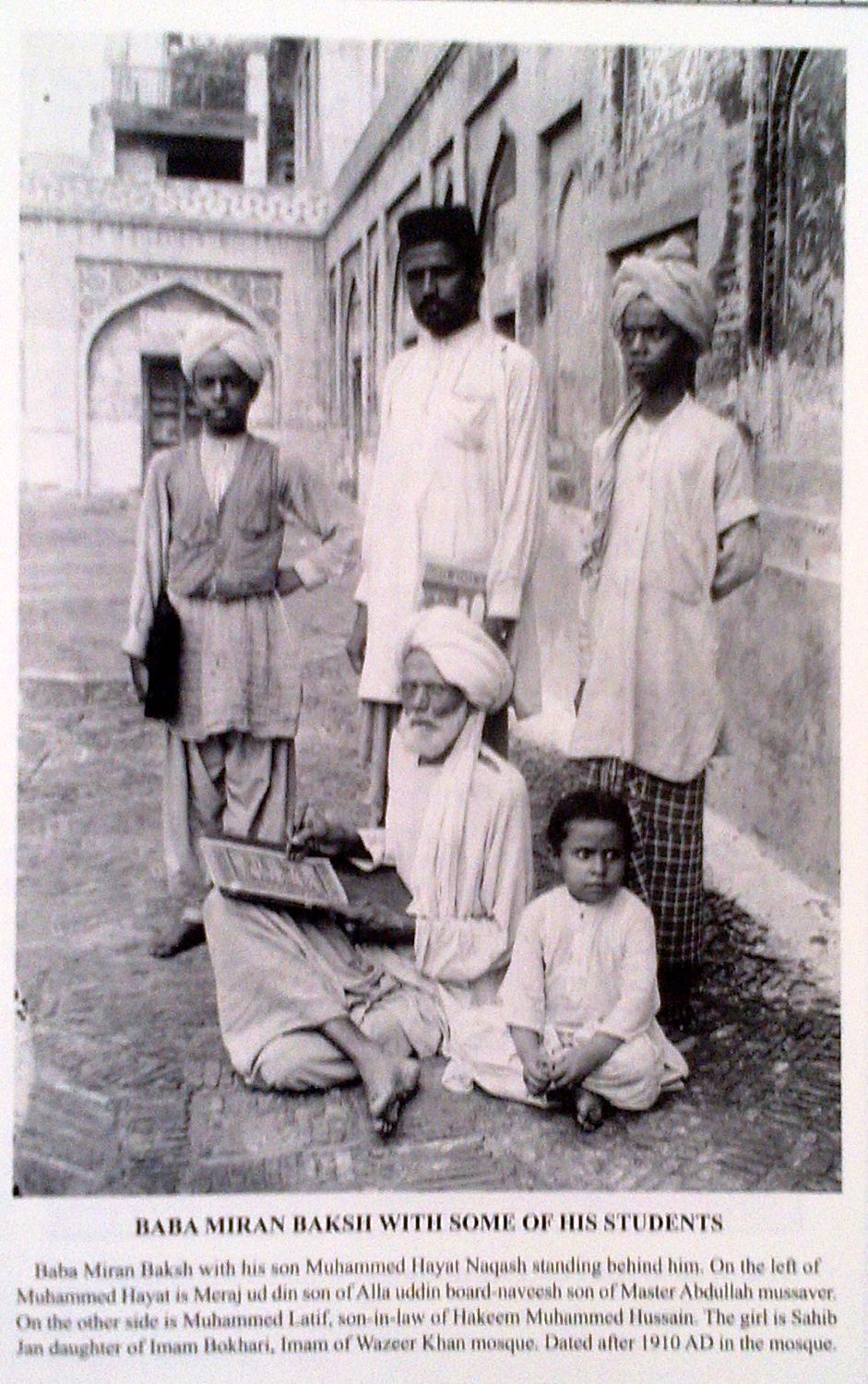
Not many artists are prone to being thorough in their art. In all ways M.A. Rahman Chughtai was a complete artist. His very initial training was Naqashi education from his Uncle (Phopha) Baba Miran Baksh, son of Umar Din Naqash. Besides him his two brothers Abdullah and Abdur Raheem were also students there in the Wazir Khan Mosque Lahore. Son of Baba Miran Baksh, Muhammed Hayat Naqash was also a student there, along with many others. Miran Baksh could never realize the extent to which his student will carve a name in Naqashi, but as he died in 1920, he did see his student progress in the art world.

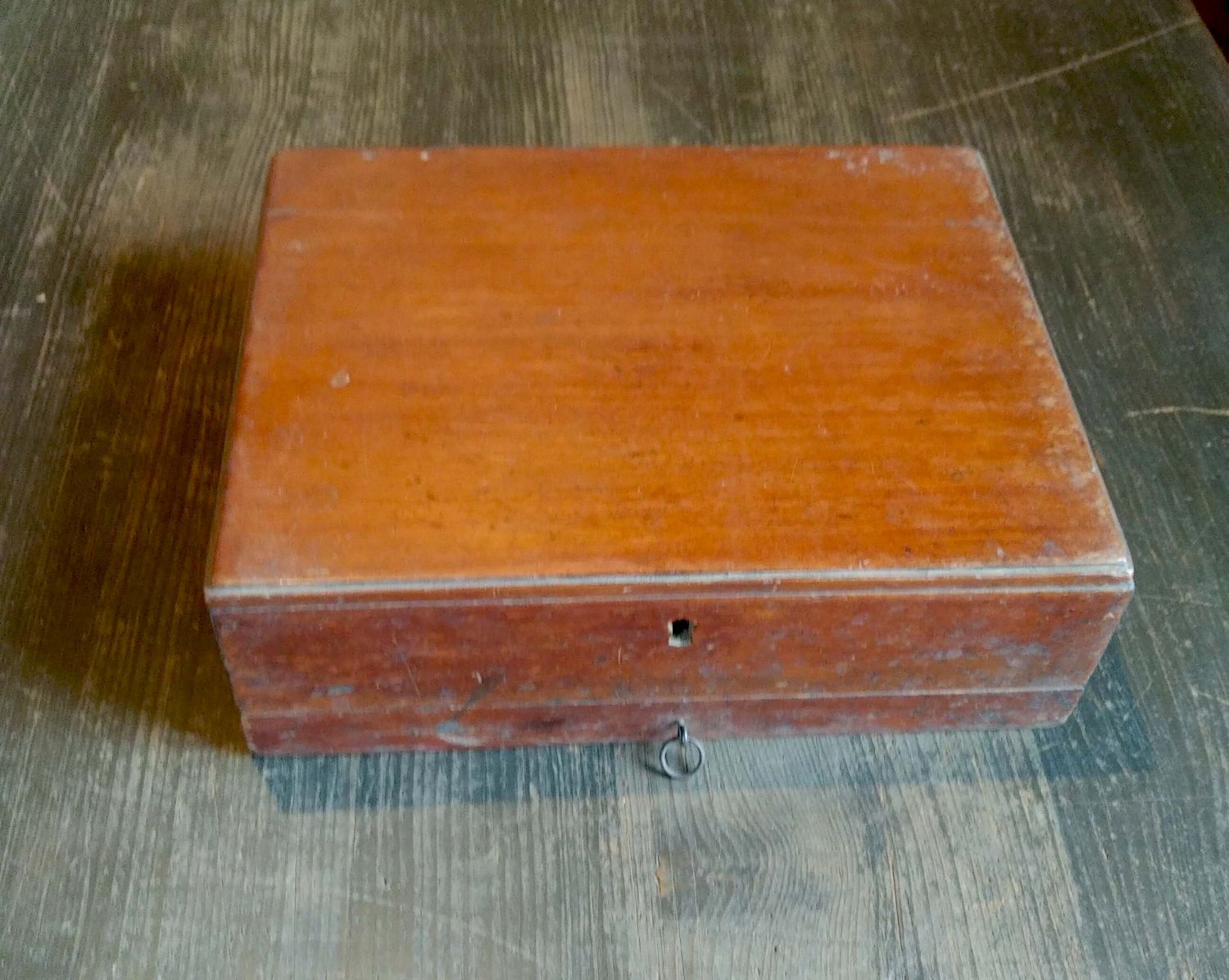
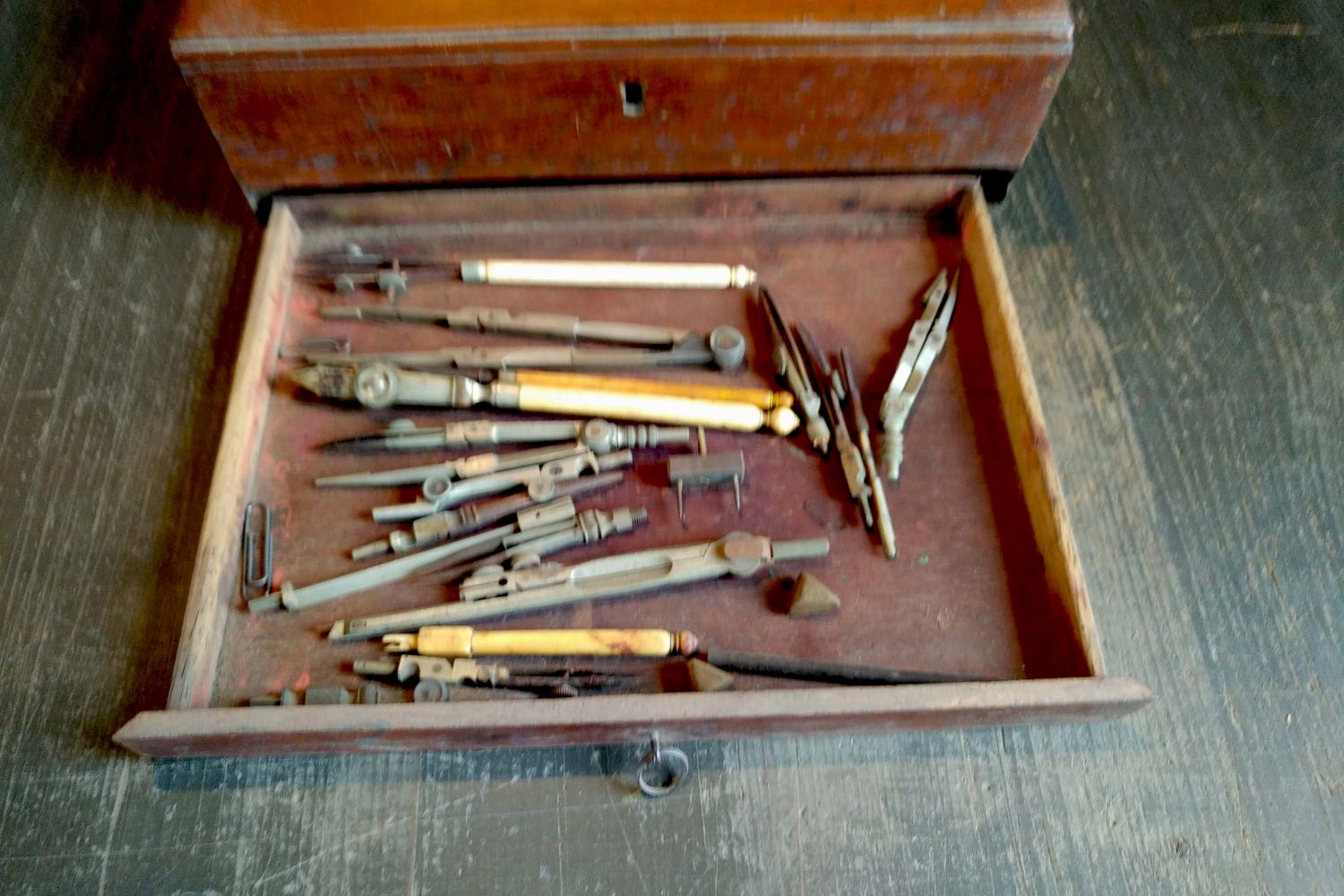
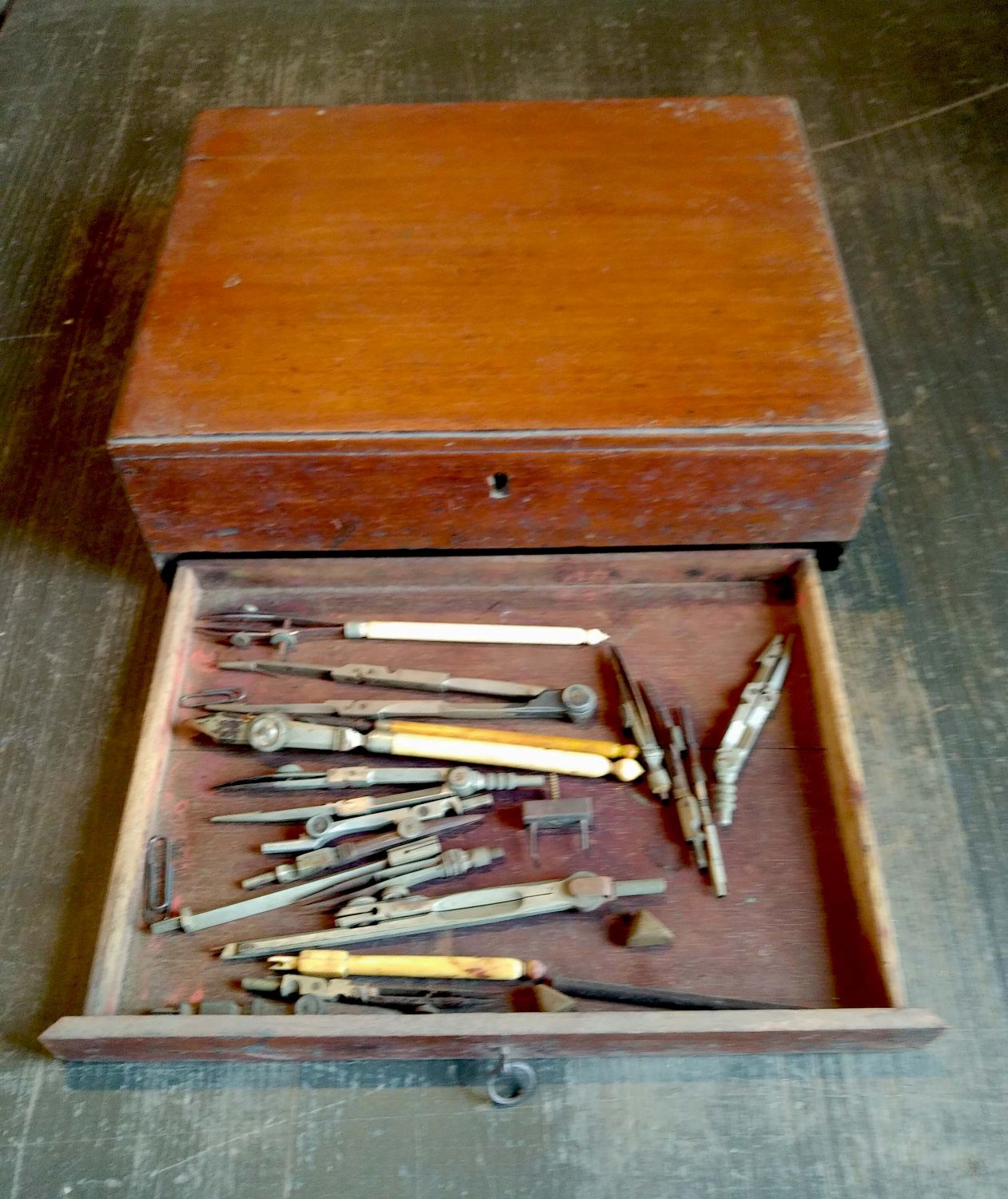
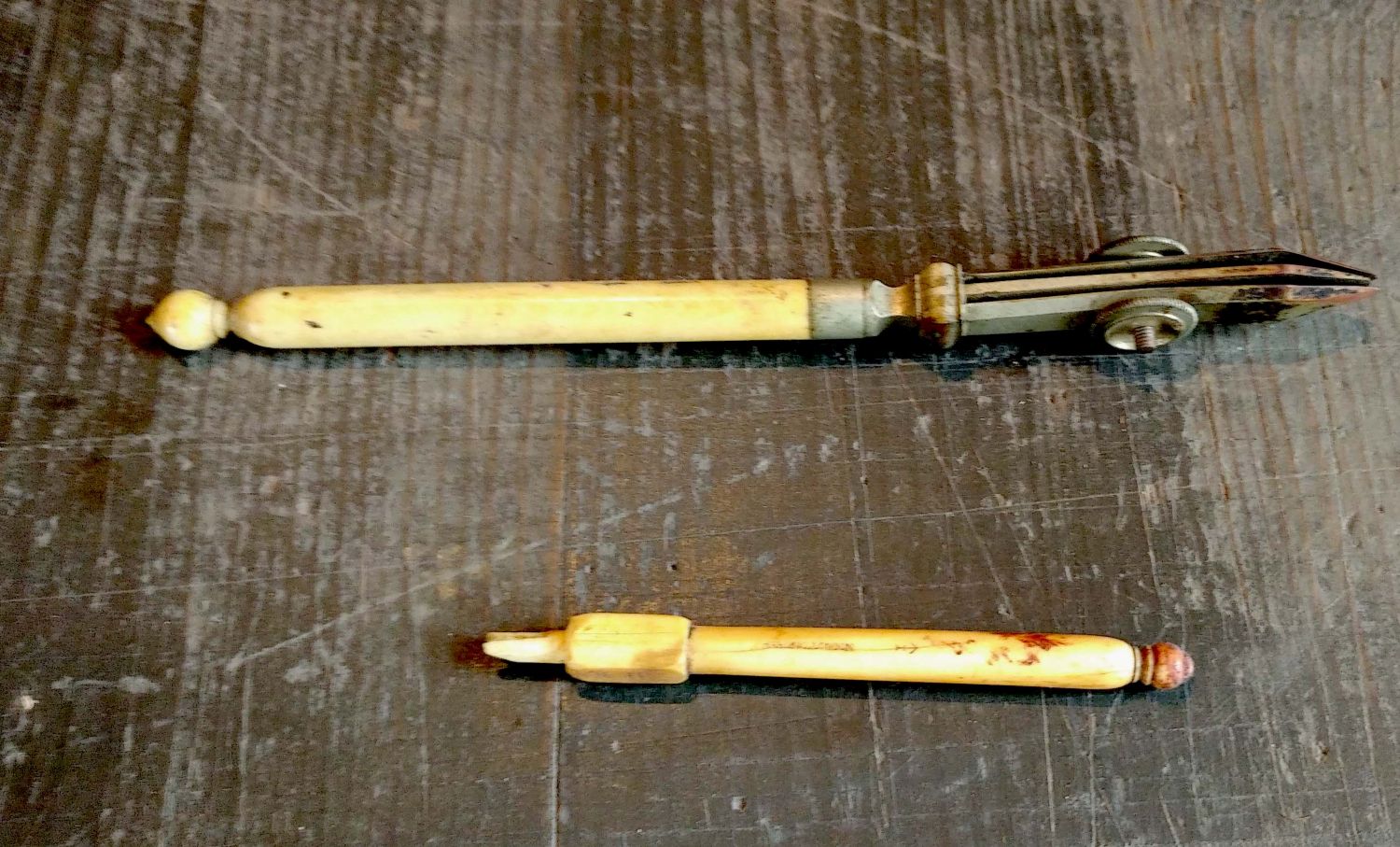
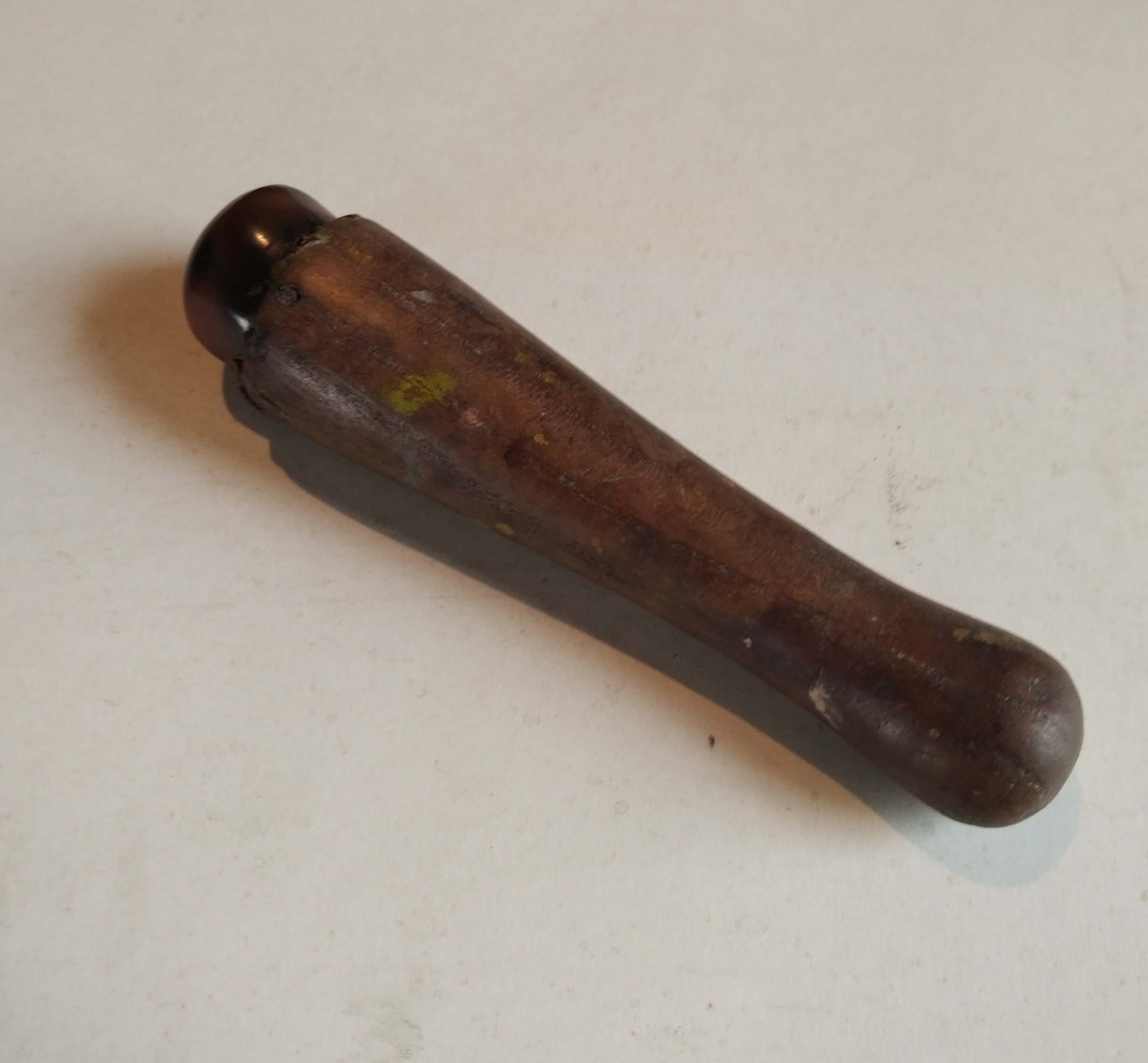
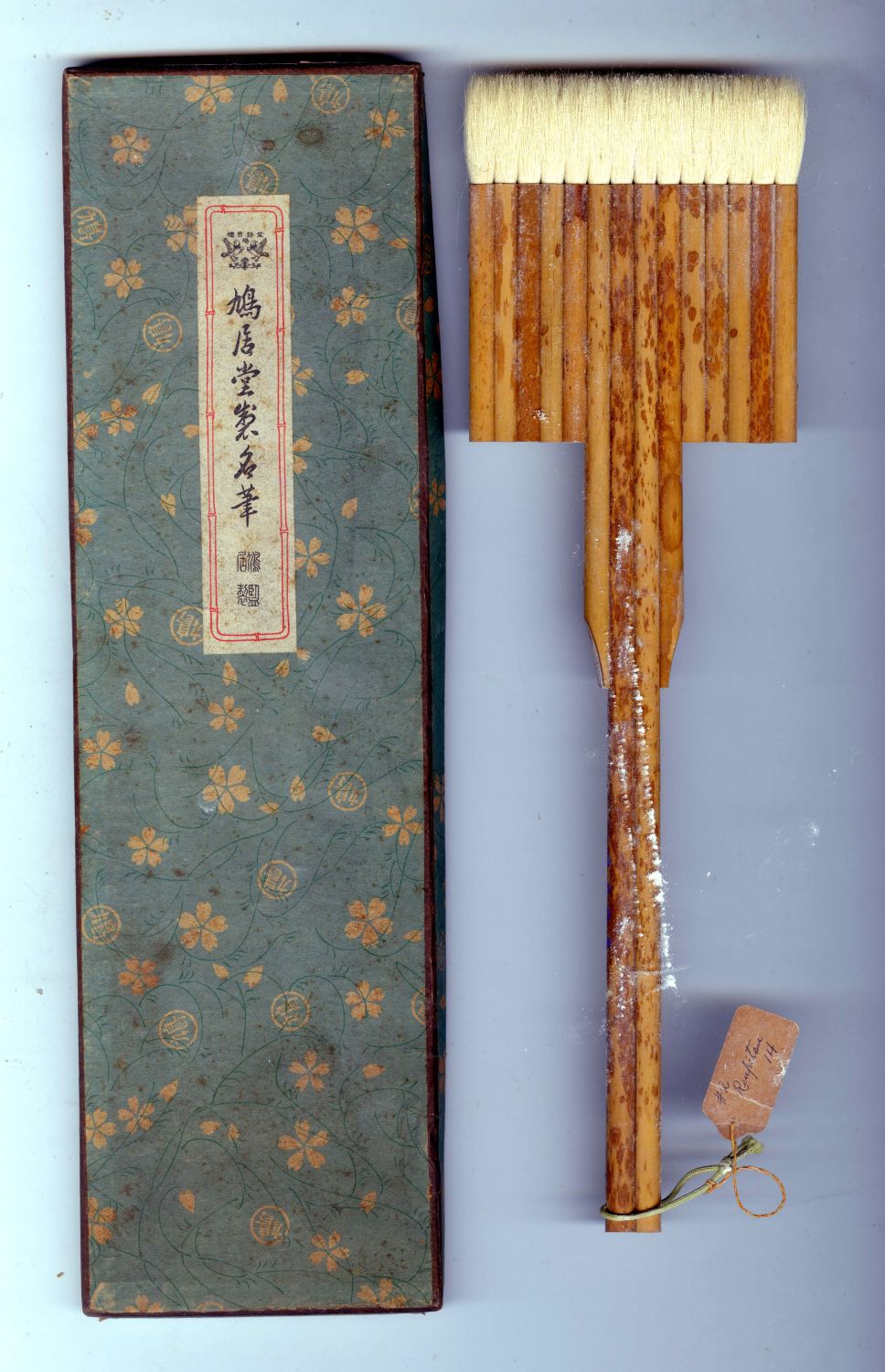
OfCourse Chughtai Sahib did a lot of Naqashi works, but he wanted to add his training in the color paintings itself. To enable that precision in a Wash Color was extremely difficult,  and he required a lot of instruments to make it happen. A first time view of some of them are added to our writing on this blog. And we have given examples from his paintings too. It was strenuous work and at times for routine jobs, he enlisted help of others. But that was merely to repeat the designs he had already started in same. These efforts made great art, even greater in all respects. For inspiration he frequented great Mughal buildings both in Lahore and in Agra, and obviously the Wazir Khan Mosque was a constant reminder of his doings. And for that matter in all ways, he had bought books and engravings of great Naqashi art of the past, as an inspiration for his own work. Even today we find prints of LA ARAB ART in his drawers. But he always added his personal touch to same. 

THE MATERIALS USED IN CHUGHTAI ART WORKS; ENDLESS EXPERIMENT WITH THE BEST OF BEST.

THE MATERIALS USED IN CHUGHTAI ART WORKS;
ENDLESS EXPERIMENT WITH THE BEST OF BEST.

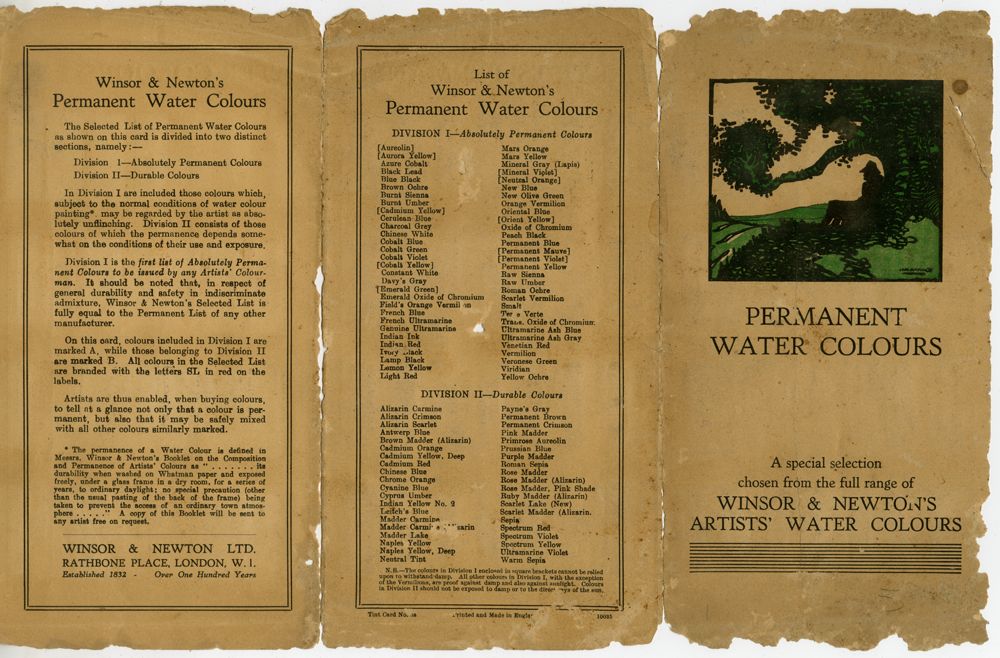
Surely this is a vast and rarely written topic. We held a full exhibition on same. In this age of hurried things, experimentation with  brushes, drawing paper and pigment colours is a rare thing. Even in museums there are no matching data to update with materials used by M.A, Rahman Chughtai. National Museum Karachi could not do it and falsified results, and embarrassed themselves forever. A moronic analyzer who literally knew nothing about pigments.  I asked the British Museum and they said they had no pigment data for same. I referred to a book by a specialist on colours. Tried other sources too. Even Winsor and Newton. A booklet of 1932 explains the colours of Winsor and Newton. Rare print out. I did my best. I can just relate, to understand it needs research and time.

The earliest advice given to Chughtai Sahib was by his mother Chiragh Bibi. A home bound woman told her son to use only clean water for his work. A strange advice for its time indeed. The quest for permanence was in the minds of the artist. Not only the best came under his scrutiny but the need to make it more and more perfect. Take colours for instance. He used Winsor and Newton artists colours (meaning actual stone colours) but never directly single from source. He was in the habit of mixing many colours to attain the colour that was in his imagination. It means that the mixture was so subtle, that maybe he would not be able to repeat it. Then on small pieces of paper, he would put strokes and wait days to see the result for permanency. His colours were so bright and luminous, so his works shine with brightness of life. Keeping in mind that these colours are direct from nature and are not commercial chemical colours. No fading away ever. In fact even if thrown in water, and taken out, the colours remain intact, and once mounted again on board, looks like ironed again.

Chughtai Sahib was working in the Photo litho department at Mayo School of Arts when a pair of Japanese artists came to Lahore. They were selling artists materials. Chughtai Sahib had himself seen Abindaranath Tagore working in his studio in 1919 and saw that the Hindu Master used cloth rags to wash his works. This had no appeal for the artist as with a rag, nothing could be made on a larger scale. And no smoothness could be achieved. The Japanese Wash rushes fascinated the artist and he spent two rupees in buying them.  We still have the very old ones. Later he ordered same from the Master Shop in Kyoto Japan. The box which brought them is still with us. I visited their Tokyo Branch in Japan in 1988 and discussed same with them. They were utterly surprised. I asked them about their brushes. Under Royal banner and command, they told me the brushes used to be made for Master artists working for the Emperor and their shop was more than 400 years old. Made from selected sable hair, under a manual thumb selection of hair, the last professional who used to make them, died 15 years before that. The brushes were now antique material and cost thousands of dollars of the few which were left with them. I bought a small one for comparison with ones we had. All that is in museum record for posterity. So sad no one knows, no one wants to find out. This was floating above the petty values of our pseudo writers.

The pencils used were both German based Staedtler,and USA based Venus, and ranged from 2H to 9H. Usually about 4 H.His works were not of the type that HB pencils could be used. No sharpeners used but actual pocket knives. He would take out a long length of lead by knifing the wooden part and used the pencil in a calligraphic swing. A long line of unbroken drawing. Only hard lead could survive the drawing. If he picks up the pencil before the stretch is complete, it becomes a broken line; under magnification one can see that the line never gets broken. He used the pencil, sharp and long, like a sword in a duel contest.

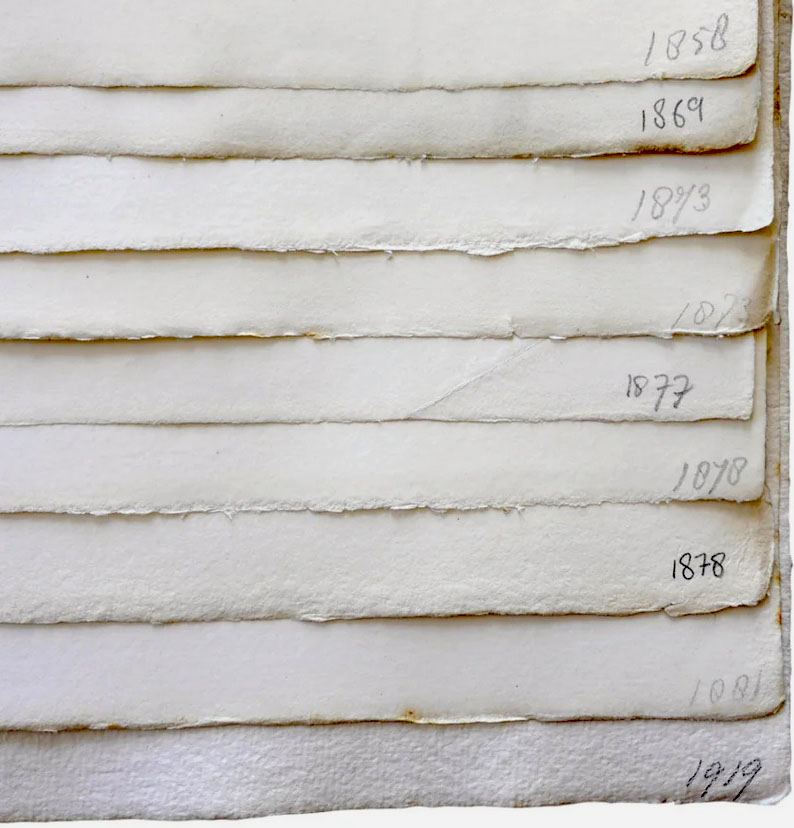
Yes, Chughtai Sahib experimented with drawing papers, but his choice mainly remained J. WHATMAN, a firm which came to England, in guise of TURKEY OLD MILL, in the 18th century. Even the Queen of England used Turkey Old Mill for all her paper needs, even stationery. Many papers carry the watermark and one can see the same in many of Chughtai’s works. The paper used for printmaking was different, like WhitChurch (Laverstoke Mill near Hampshire) mark, paper used for currency notes of the Bank of England (from 1719 to 1963). A research project of its own. The printmaking process is even a more complicated one and will be dealt separate from these writings.

Nowadays a lot of people pose as specialists of Lahore and yet they know hardly little. Same applies to Art. People writing about art do not even know the ABC of its background. A saying goes in our culture, Andoon mein kana raja. It means in group of blind people, one eyed reigns supreme. All they can think are ways to demolish the rivalry of Chughtai Art, long after the death of the artist. In Pakistan few survive the harsh realities of endless competition. Here is an artist who does not go away. No one has been able to undo Kamaluddin Behzad, no one can undo M.A. Rahman Chughtai. All those puerile objections have gone down the drain, along with their writers. Learn about Art. Learn about Chughtai Art. Learn about Abdur Rahman Chughtai. Do not fall into the blind alley of knowing nothing. Rise to a level in which you can view Chughtai Art without remorse of your own failings. Pakistan Forever! Chughtai Art Forever!

ONE LOOKING AT PICTURES IN HISTORICAL PERSPECTIVE; VARIOUS VIEWS OF CHUGHTAI ART IN LOCAL CONDITIONS.

ONE LOOKING AT PICTURES IN HISTORICAL PERSPECTIVE;
VARIOUS VIEWS OF CHUGHTAI ART IN LOCAL CONDITIONS.

In 1977 Basil Gray, Curator of British Museum was our guest here in Lahore. It was not only an entertaining visit but enlightening for me in various ways. Many discussions were held with him. An important aspect of any pictorial art is, who is viewing it, and in which circumstances. I never thought that would be important but I was in store for great revelations.

ART FOR RELIGIOUS SAKE

We could start from pictorial art in caves, anything from a few thousand to thousands of years back. Even twenty thousand years back. There are works on walls, or on ceilings, but who gets to view same? Why viewed at all? Obviously dark conditions,  camp fire lights, or hand held torches? Gifts to evoke gods to  be kind for hunt, or engender motivation in fellow hunters. Or to drive away evil spirits. But the idea never changed. Religious worship. Same applied to enhanced cave art on walls like Ajanta and Ellora. And even still for events. From Cave to Churches. In Churches artists like Michelangelo carried out his magic for delicately placed candles to pray to God for blessing. In all ways Art for religious sake. Never forget that all the West or Hindu traditions carried was Art for Religious sake.

ART FOR ART’S SAKE

On other hands, Muslims started things in different ways. A normal development for more than 200 years and then rigid Mullahs created fancy stories, which overshadowed Quranic convictions, and outlawed pictorial art itself. It was not the Quranic truth but engendered by obstinate Mullahs for centuries.  Once forbidden for them was having photographs taken, now delighted themselves on live TV all the time. The allergic Mullah fell in love with his own image, and even rickshaws on street roads carry a plethora of Mullah faces.

The story of Islam goes further. Umayyads sponsored paintings on walls but were meant for enjoyment of Kings and Queens. Ghaznavis had horse ridden warriors and ministers painted on walls and throne rooms. Even Sultan Masood Ghaznavi sponsored an erotic room works for sexual enjoyment. Threat from father made him destroy the room. But later on the terms led to miniatures for the Kings and the nobility to enjoy volumes on elephant back or on horseback or campfires. Meant for individual viewing. Or few gathered around albums. A new age was meant to come eventually.

Basil Gray told me the concept of paintings hanging on walls in frames is a new phenomena. It is not ages old. And for the first time the pictures were meant to be hung in a gallery or a museum, for view of many. He added Chughtai Art is essentially a development in hanging wall art. To be viewed at a minimum distance, under artificial light conditions. This determines a larger size for the painting and details which will match the exposition circumstances.

The Art of M.A. Rahman Chughtai can be divided as:

1. Watercolour paintings.
2. Pencil sketches.
3. Etchings and Aquatints.
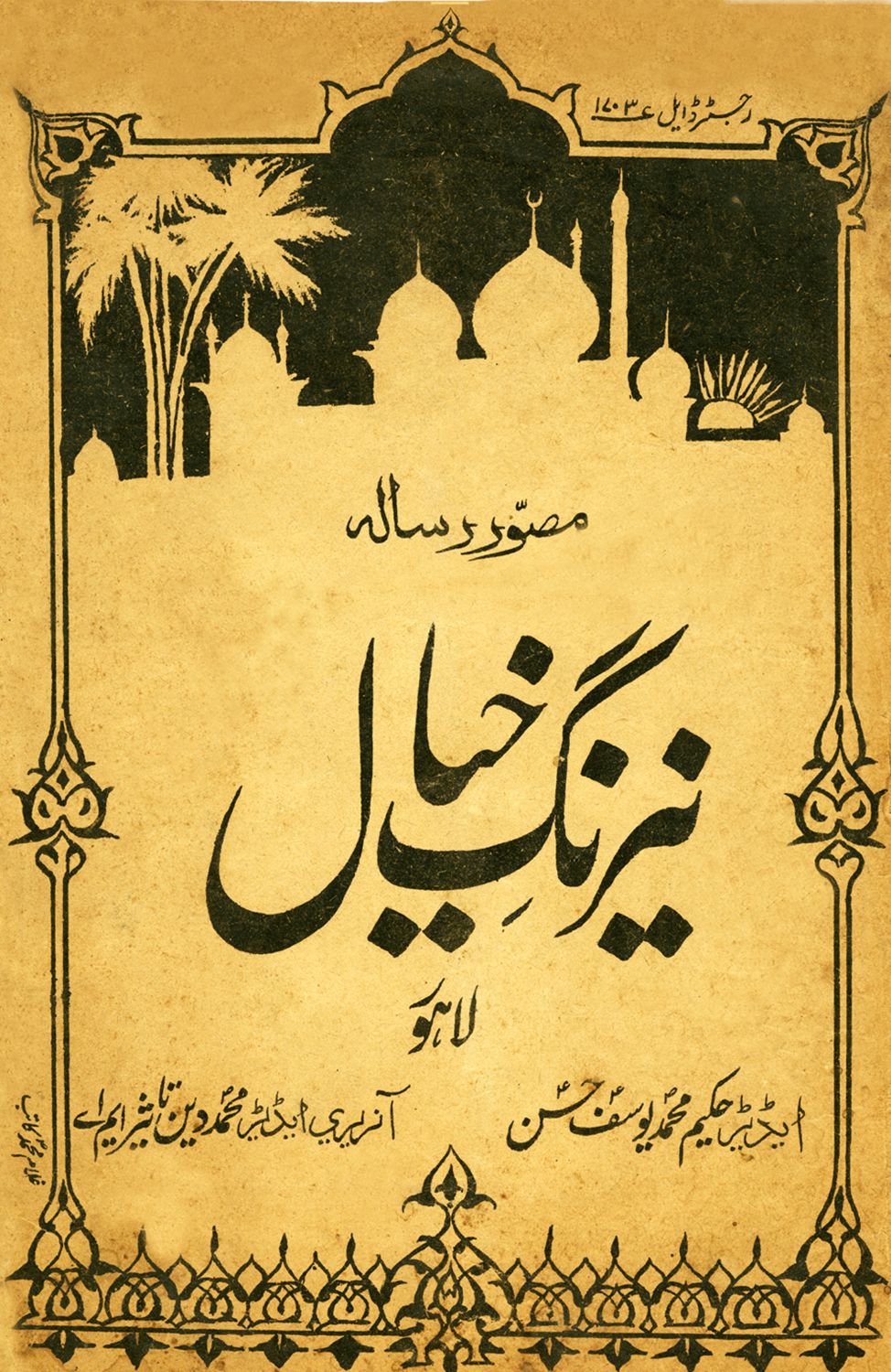
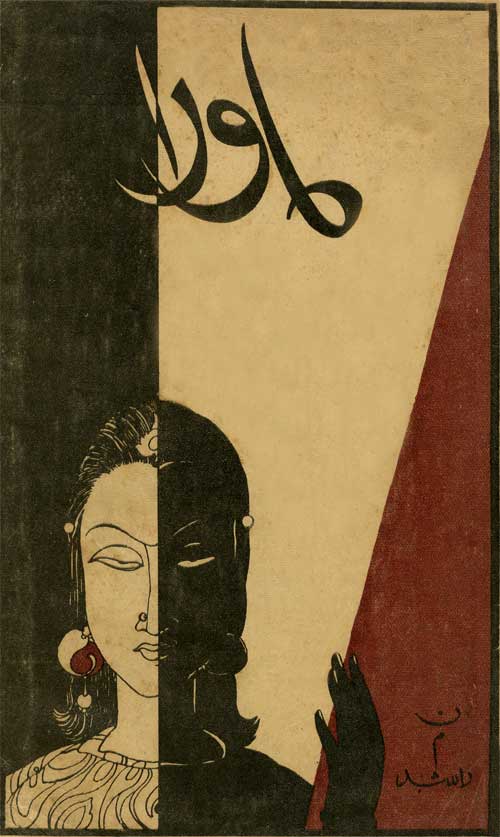
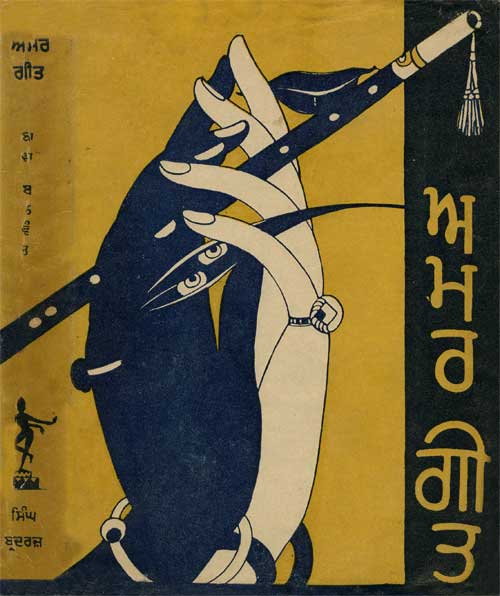
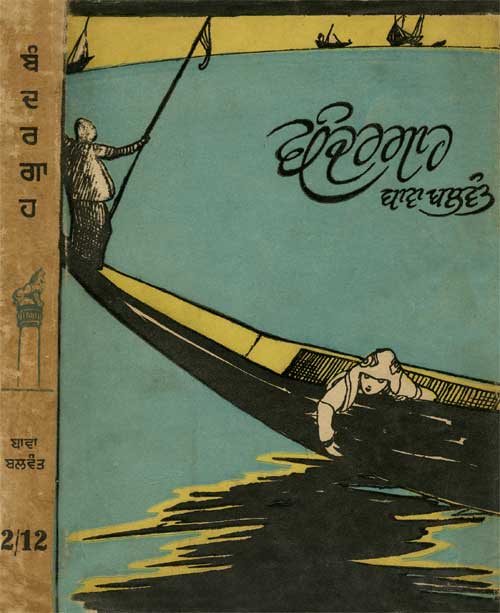
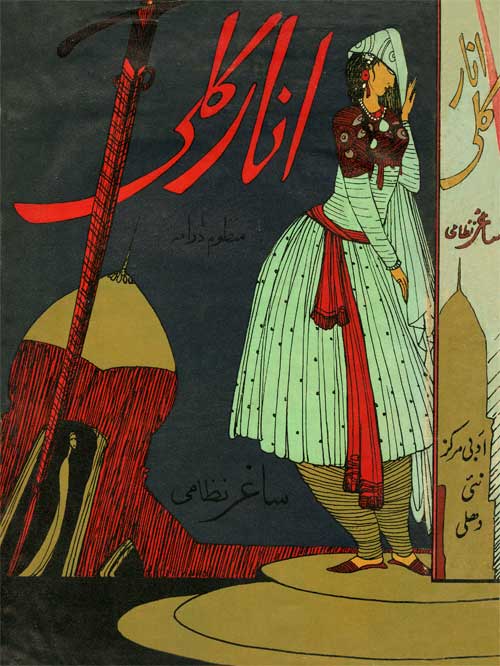
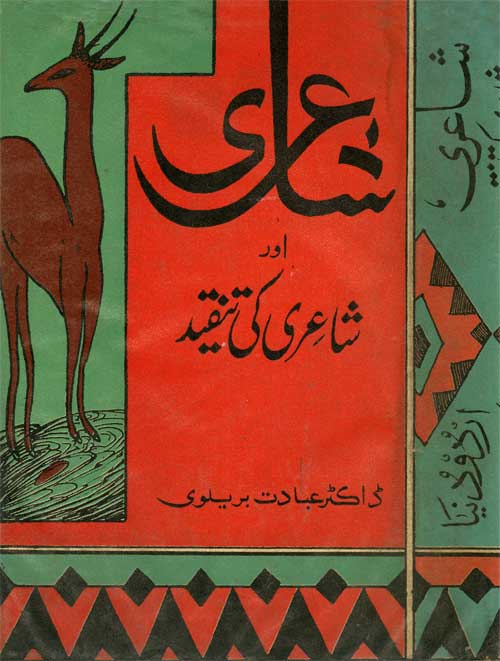
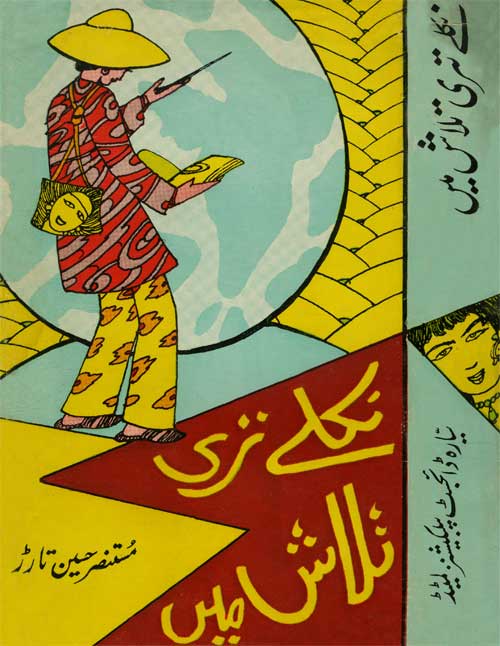
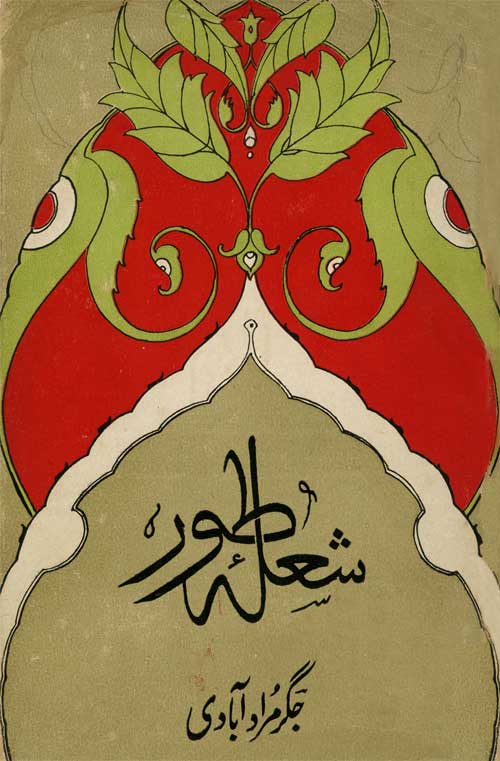
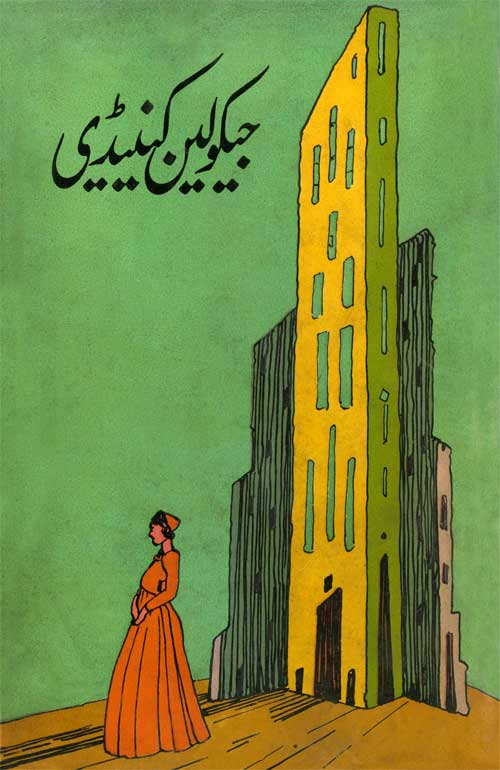
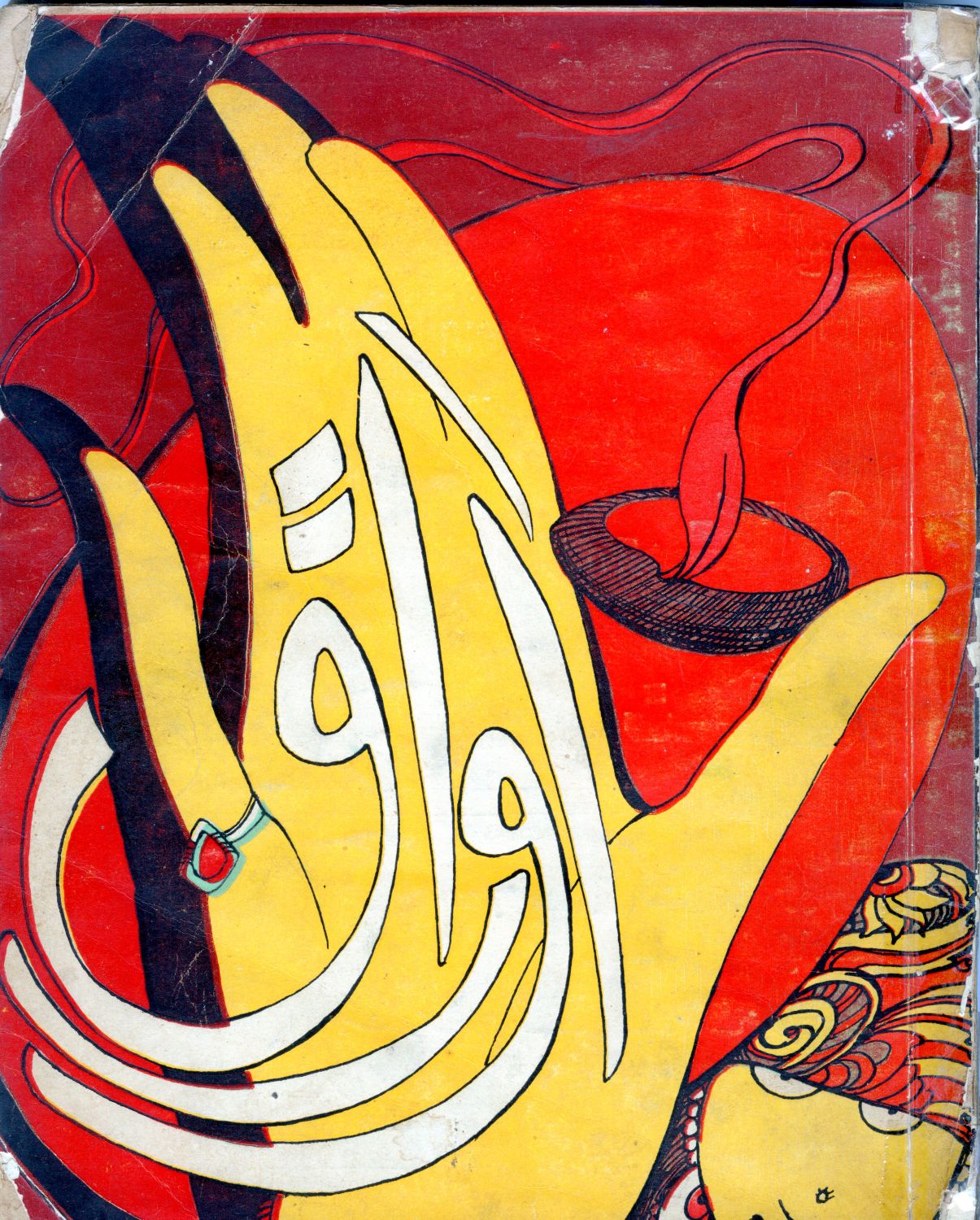
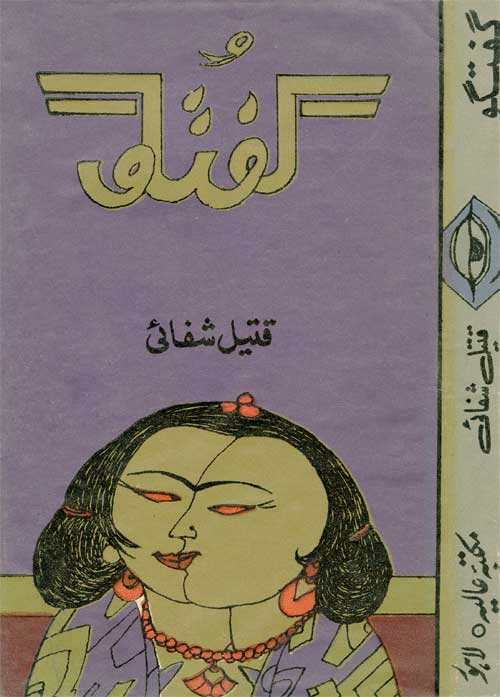
4. Dust covers for books.
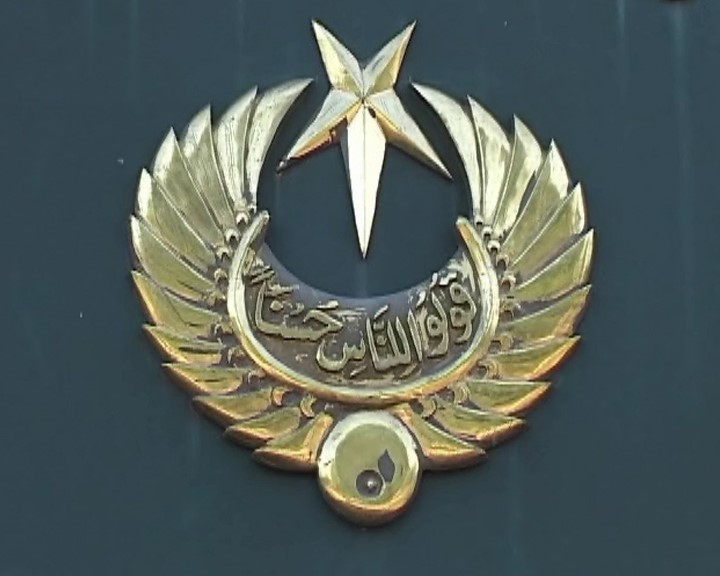
5. Insignias for organizations.

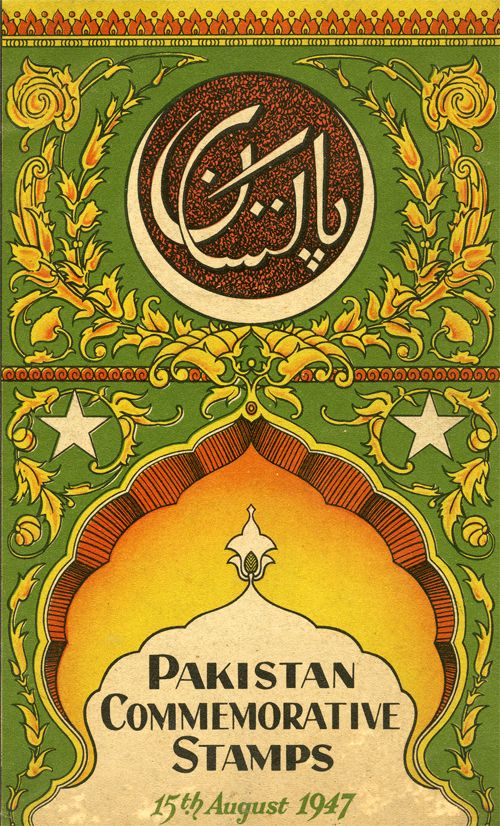
Looking at them requires different perspectives. We have talked of watercolor paintings as a framed hanging art in a museum gallery. Pencil sketches require lesser viewing distance because of the delicacy of the work. Etchings and Aquatints fall into hanging art but their viewing distance is lesser too. Dust covers are books distributed and are a one to one view of the reader. Insignias are spread over the Media like PTV, Radio Pakistan, Alhamra, Pakistan Flower Society, and even aspects of PIA. Art and designs used for cards of various types, are distributed on a much larger scale. An example is given of each. Enjoy them at all levels.

In looking at pictures the light is very important too. In a leading museum abroad, they had to remove Rembrandt for some reasons. They were surprised that each Rembrandt picture changed meaning in different lights. Daylight, artificial light, all mattered. Harry Norman Eccleston told me that they experimented with different bulbs, but the best bulb, least damaging and brilliant, was the simpler household bulb. Full credit to the old one.  We will talk of the materials used in Chughtai Art later. OfCourse that matters too.

Chughtai Art is best viewed in original at a distance of five to six feet. And so if it is framed. Plastic non reflective is not good for it. Glass is best, but genuine quality with no streaks in it. Once Belgium made, now China has caught up with quality. Looking at Chughtai Art is a unique experience, and inevitably the viewer falls in love with the Chughtai World.

A FOURTH CENTURY GUPTA SEAL FROM LAHORE (QUESTION) – MAHARAJA MAHESVARANAGA SON OF NAGA BHATTA – SOLD BY BAHADUR SHAH OF MOCHI GATE LAHORE

A FOURTH CENTURY GUPTA SEAL FROM LAHORE (QUESTION)
MAHARAJA MAHESVARANAGA SON OF NAGA BHATTA
SOLD BY BAHADUR SHAH OF MOCHI GATE LAHORE

The story narrated by J.K. Fleet, recorder of Gupta Inscriptions goes like this. Yes, sixteen hundred years ago, there was Gupta period King by name of Maharaja Mahesvaranaga son of Naga Bhatta. There was a copper seal made by him. It was 1 1/4 inches high, 1/16 inches thick, oval shape of 1 7/8 inches by 1 5/8 inches, with a weight of 2 1/4 ozs, and it was unique in many ways. Obviously it had a cow on it, sitting on a straight line upturned at ends, with a hooded snake (No head to this snake, perhaps a stick of some mythological source) on its lower end and the name of the Raja as we know it. But the strangest part is that it had a CRESCENT on it. A crescent, a rising moon, the sign of Islamic civilization. In Hinduism we have the celebration of AMAVASYA and PURNIMA and I wonder if a coin legend is named after same. But if it was sixteen hundred years old, where did the Islam came from? The 1600 years conjecture is due to paleographical evidence only. That means the evidence of the writing and as it is Sanskrit, the presumed period of that writing. The writing is rather rough and not very calligraphic or beautiful in its flow. I think we can go further than that.

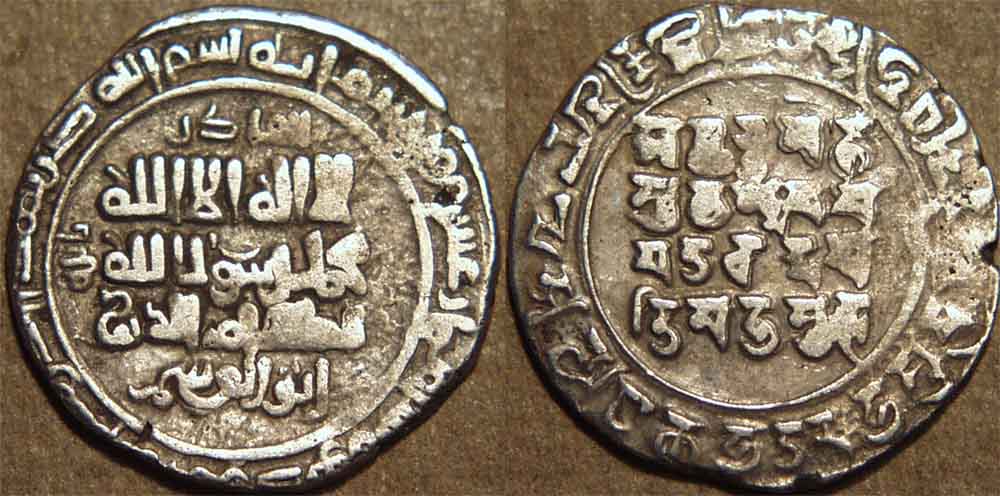
In 418-419 AH Sultan Mahmud Ghaznavi issued a silver dirham at Lahore, at that time named as MAHMUDPUR. It had both languages on it. Islamic represented by Arabic and Hinduism represented by Sanskrit. We hear of Raja Jaipal ruling Lahore who was of BHATTI origin. Even today a gate of Lahore is named after Bhattis, namely Bhatti Gate, Lahore. Here we are told of a Raja by the name of NAGA BHATTA, a missing link in the history of Lahore.

The story of antique dealer Bahadur Shah is well known to us. He was the only person in Lahore dealing in antiques at that time. He had no penchant for getting things from elsewhere. His sources were Lahore itself. When General Cunningham bought this SEAL from him, and did not record its source, it is established that the source of the Seal was Lahore itself. A Bhatti Maharajah of Lahore is no coincidence. It is very well possible. In 1888 it was not possible to gather other evidence, but in the present times, more reliable dating can be given to the Seal. For us it is the earliest record of a Maharajah from Lahore itself., To confuse his use of the name NAGA as with the semi divine race of Nagas, who lived according to legend under the earth, is a mere speculation. Naga is a symbol of respect for Hindus and named after a snake is no confusion for divinity. The name of this Raja appears nowhere else. For us it is a rare break through of knowledge about Lahore.

THE SEARCH FOR IDENTITY IS OF MANY LAYERS: WITHOUT NEED TO EXPLORE ALL, RELY ON ONE, THAT DEFINES YOUR NATION AND SUPERSEDES, YES, CHUGHTAI ART IS DEFINITELY ONLY PAKISTAN. 

THE SEARCH FOR IDENTITY IS OF MANY LAYERS:
WITHOUT NEED TO EXPLORE ALL, RELY ON ONE,
THAT DEFINES YOUR NATION AND SUPERSEDES,
YES, CHUGHTAI ART IS DEFINITELY ONLY PAKISTAN. 

After the grand founding and inauguration of Alhamra Arts Council in Lahore, the world cultural event of the Chughtai Show in 1949, when all the Ambassadors in Karachi flew to Lahore to see the same. Governor General Khawaja Nazimuddin was the Chief Guest. An event took place where Chughtai Art became a subject of discussion. Extended by his friend Dr Muhammd Din Taseer, the intellectuals of the city gathered around a gathering to discuss the same. A great event in pictorial art was led by a great event of discussion. Nobody could question the Identity of the Event. But all spoke on positive scale. No one doubted the Identity of Pakistan. 

The direction of the Ideology of Pakistan was as clear as crystal. International lobbies understood this well. There was a need to displace everything that had ideological mooring. Art was under direct scrutiny. A group of young artists were engendered, imported and forced onto the audience. Their claim was very wide. Western art was to be forced onto Pakistan by imitating it in one way or the other. Even their costumes reflected same in shape of jeans, french beards and smoking pipes. National preferences unaccounted. Modern artists wished to give modern images of themselves. Another great change was the shift of water colour painting to oil based works in Pakistan. Various artists handled it in their way, but certainly they were being patronized to upset the existing reality. The 1949 grand show of Chughtai artist upset-ed Shemza. Anwar Jalal Shemza boldly said at Alhamra that he was there to uproot Chughtai artist, and he was heard not by few, but even by my cousin, who tells me the same all the time. Although Chughtai does not take the name, an attendant (guess whom?) of a lecture, he gave at Alhamra, heckled him about his art being Indian and not Pakistani. The reply of the artist was simple, “It was Chughtai Art then, it is Chughtai Art now!”. Did they achieve their goal? They tried their best, now lobbies are trying their best for them.

One big difference between Chughtai Art and others was the fact that M.A. Rahman Chughtai was well known particularly in Muslim world of India as an exceptionally great artist.  He had a big following not only in artistic circles but was groomed famous in the public too. It can be ascertained from the fact that his news was carried by magazines, newspapers as well as films. The bizarre thing was that when the hero used to address the heroine, in praise of her he would refer to her as Chughtai Art. The most extraordinary thing was that in the Urdu lexicon the term Chughtai Art was itself synonymous with beautiful. So not only the term but the artist was well known. In fact he was so much a legend that it was often confused as to which age he was a part off. This identity naturally transformed itself as a NATIONAL IDENTITY of Muslim India. On other hand as Chughtai Art was an evolution of other arts well familiar with the masses like the Sultanate and Mughal Art. Chughtai Art was even before the birth of Pakistan termed the Identity of Pakistan. And Lahore was always the Art and Cultural Center of India. The artist always attached Lahore with his name, even in his signature. 

The idea of an Arts and Cultural centre was formed in Lahore at the house of Begum Shahnawaz. In all cases Abdur Rahman Chughtai was there. And not to miss all Arts Councils in Pakistan were a result of his thinking as well as inaugurated with Chughtai Shows. These included Lahore Arts Council, Peshawar Arts Council, Karachi Arts Council and even Dacca Arts Council. His great friend General Azam Khan was Governor of East Pakistan and Dacca Arts Council was opened with two artists Zainul Abedeen and Abdur Rahman Chughtai. In his speech General Azam Khan narrated the importance of Chughtai in the field of art in Pakistan. Today Chughtai Art is well respected in Bangladesh and geographical separation did not separate the Ideological togetherness of both wings.

Today Chughtai Art is represented all over the world. For instance there are four Chughtai works at the Pakistani desk in the US State Department. A painting at International Court of Justice Peace Palace Hague. A painting in Kennedy memorial in Boston. Museums all over the world. And they speak of the Pakistani Identity in a big way. The same way the first postal stamp of Pakistan paved the way for many others. 

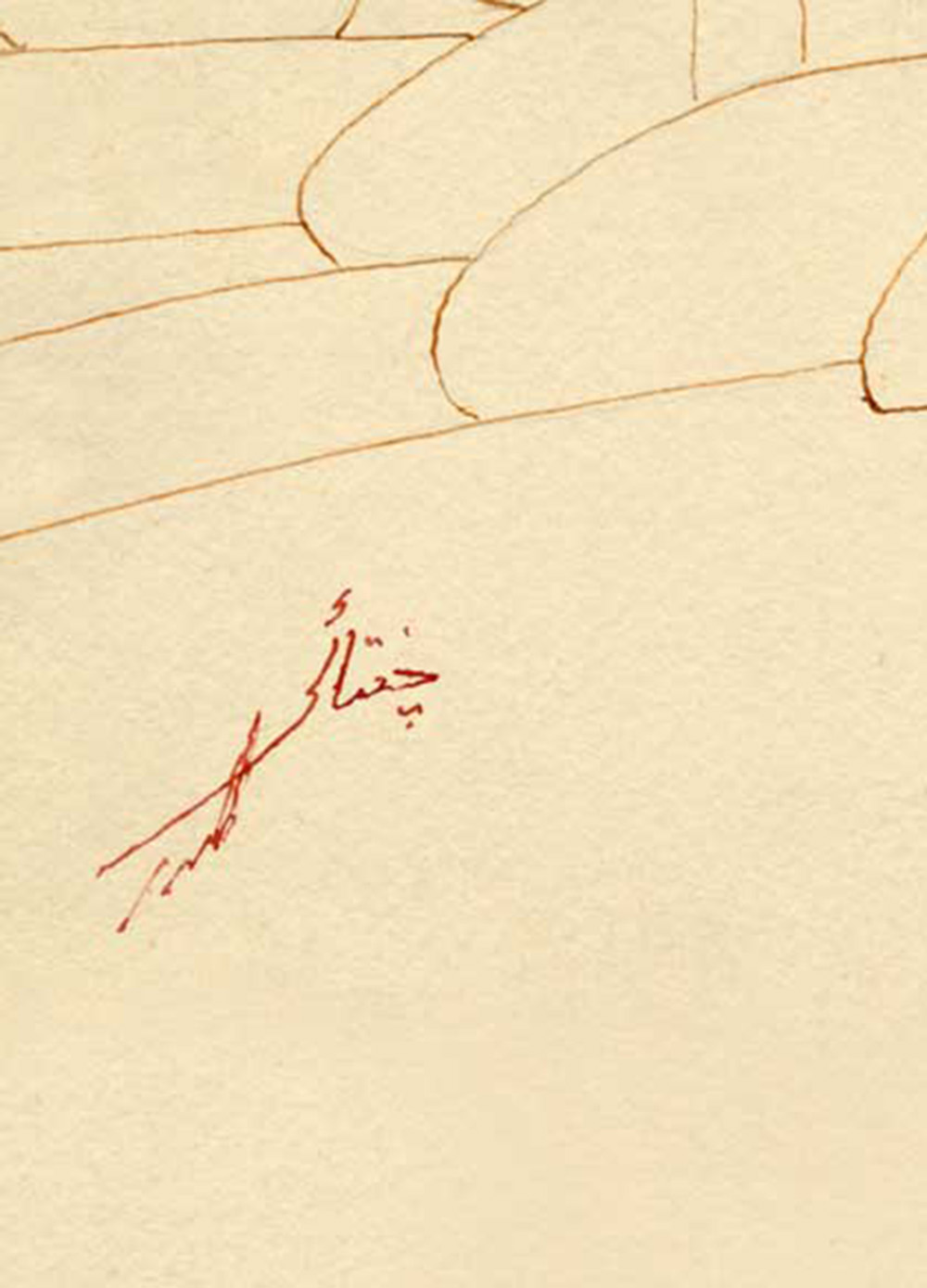
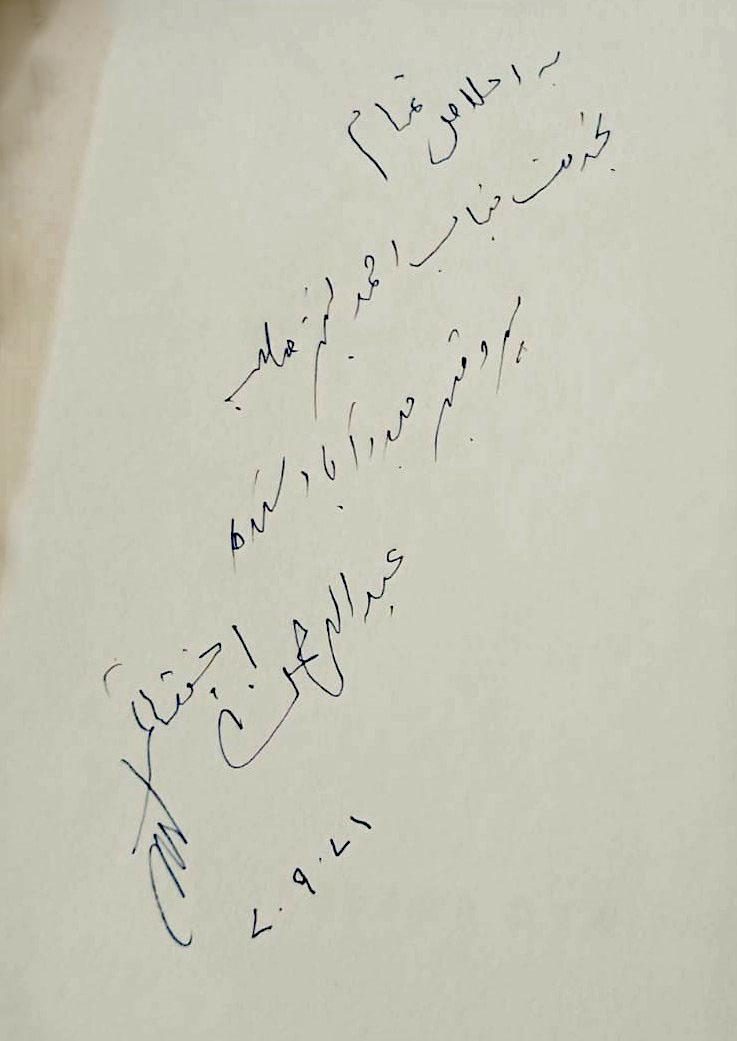
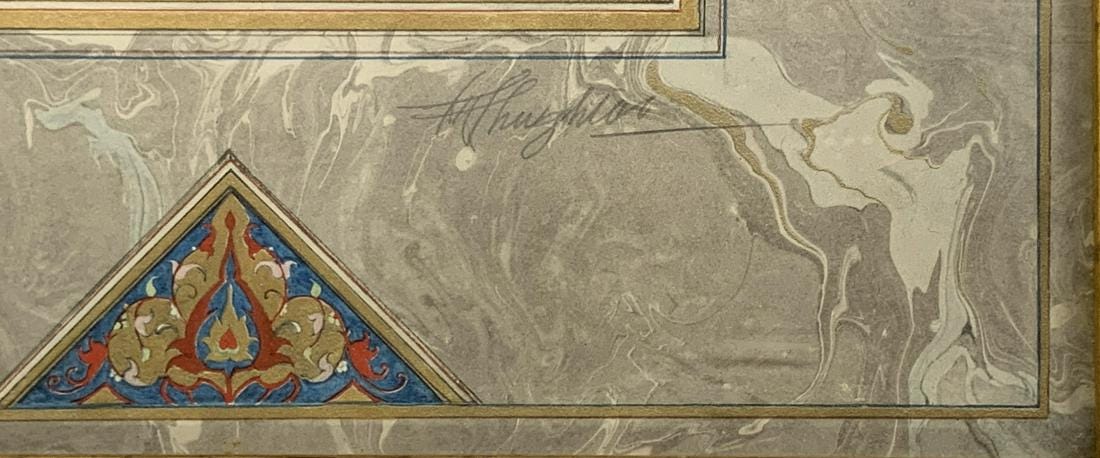
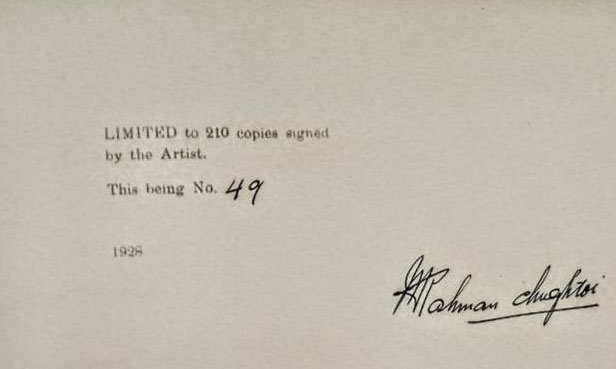
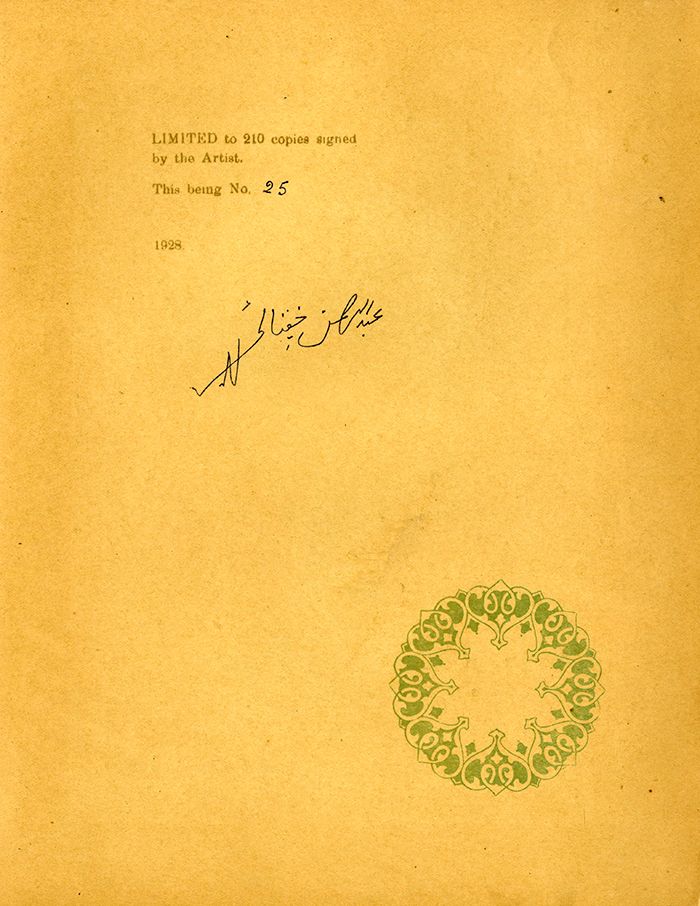
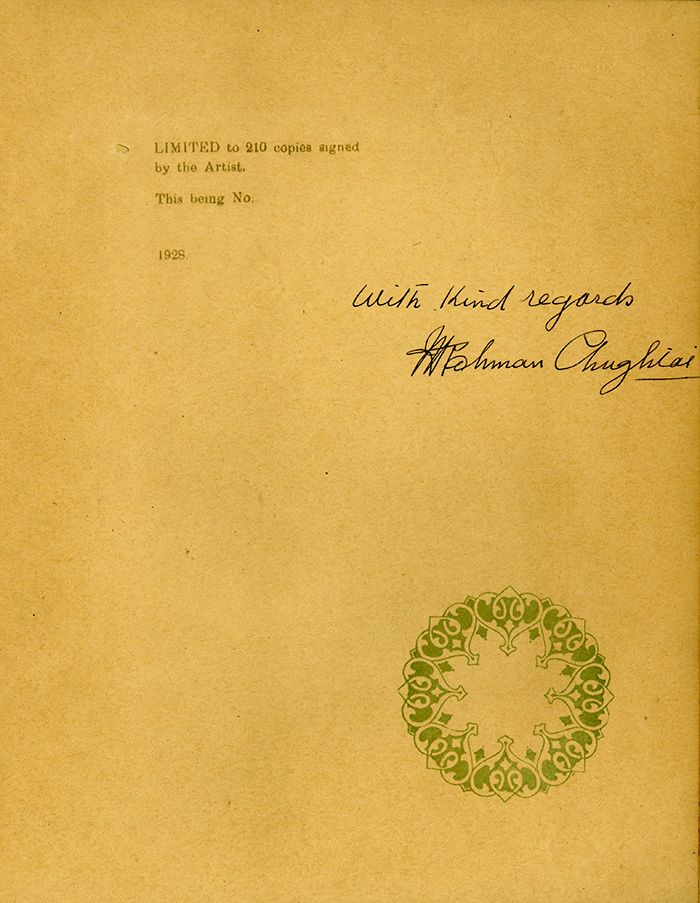
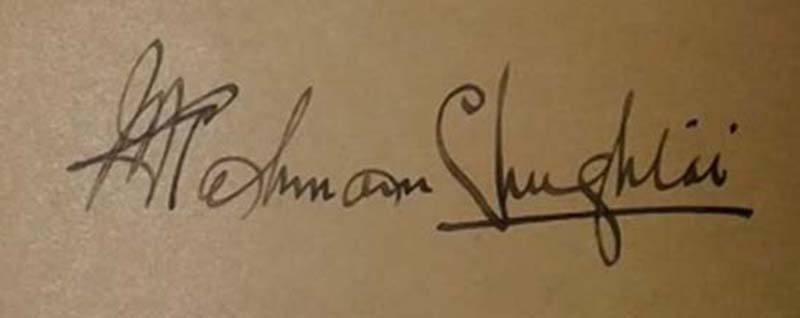
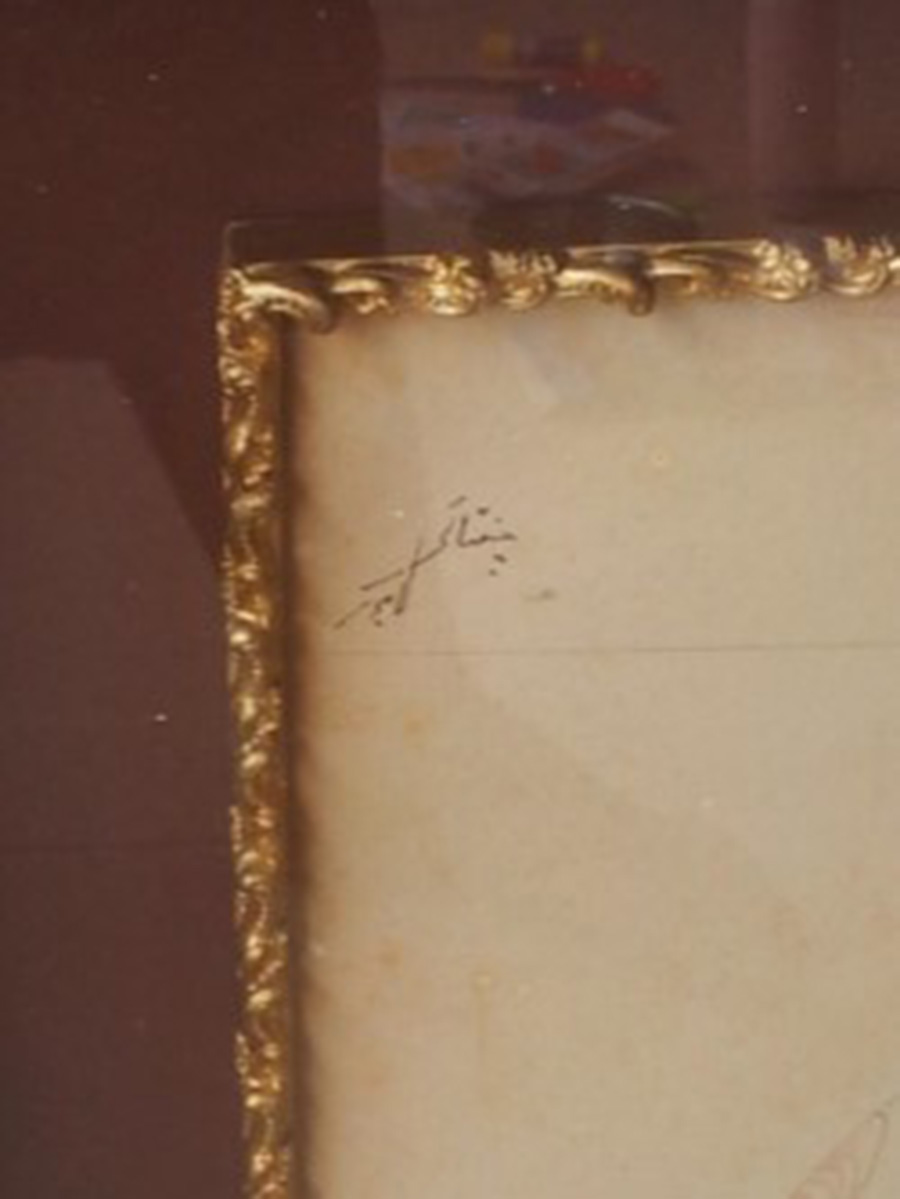
Most artists require signatures and seals of authenticity. Not so for Chughtai Art. Stack a Chughtai design in a pavement of books and magazines. Display a Chughtai insignia anywhere. Stamps or on media. Hang a Chughtai art work with hundreds of others. And you can pick a Chughtai even with a blind dye. He was hesitant in putting a signature to his art. He claimed my art in itself is a signature. It is enough to be recognized. Call it Islamic Abstraction, or Pakistani Identity, or anything else. It is Chughtai and it can be recognized. And a lot of pseudo artists and critics are paved in hell with that recognition. Masters do not come after some days. As Dr Allama Iqbal said, “The flower Narcissus cries for a thousand years without light of insight; With great difficulty is born an insightful one in the garden.”

PSEUDO CRITICS WITH NO CAPACITY FOR AESTHETICS; SOCIETY UNTRAINED SYMBOLISM OF PICTORIAL ART. OBSESSIVE FOREIGN WRITERS UNDOING FOUNDATIONS; CHALLENGING ICONIC ARTIST M.A. RAHMAN CHUGHTAI.

PSEUDO CRITICS WITH NO CAPACITY FOR AESTHETICS; 
SOCIETY UNTRAINED SYMBOLISM OF PICTORIAL ART.
OBSESSIVE FOREIGN WRITERS UNDOING FOUNDATIONS;
CHALLENGING ICONIC ARTIST M.A. RAHMAN CHUGHTAI.

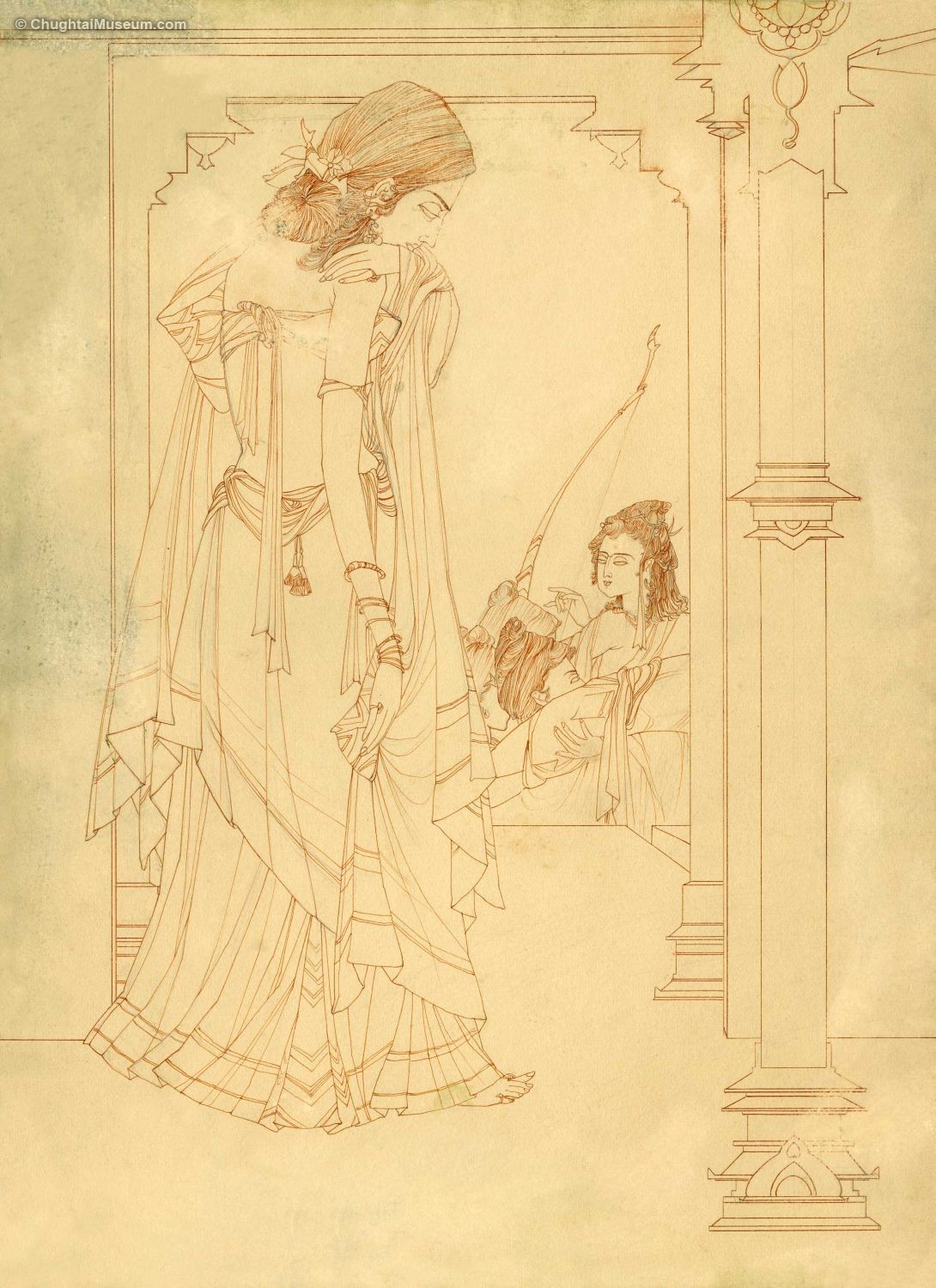
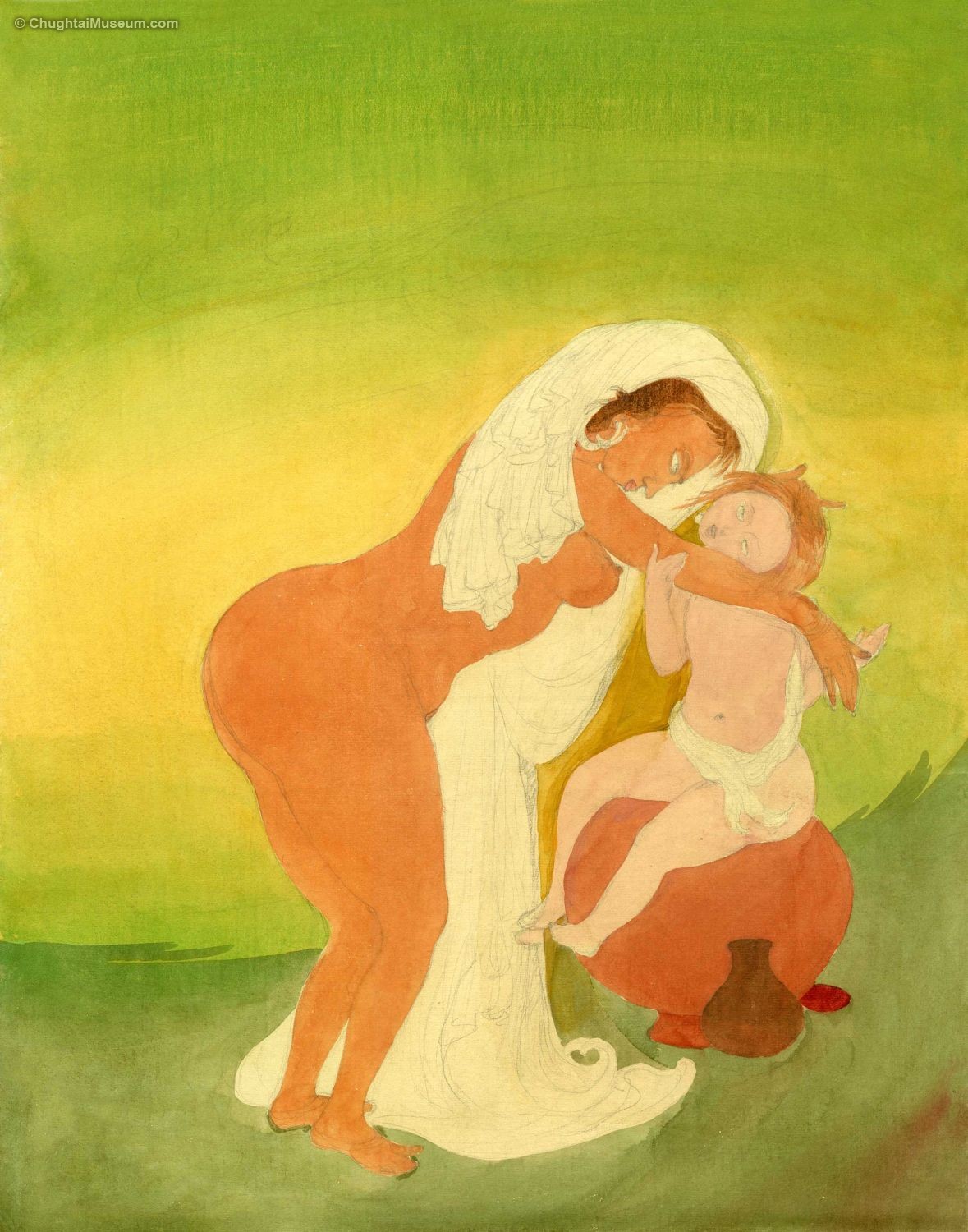
Mother-and-Daughter

My father the artist M.A. Rahman Chughtai was the gift of Allah to this society. After a visit to Europe in 1932 and 1937, he came firmly to believe that he would create Art Revolution in Pakistan. Malik Shamas the Curator of Lahore Museum used to say this society can dissect a poetic verse in a hundred and one ways, but they have no capacity to do the same for pictorial art. I see that here in my fifty years of exhibition shows and innumerable  people visiting us. Our people dress in most fashionable ways possible and stand in the center of gallery to attract attention to themselves, and in one sweep can look at all the paintings, and literally get nothing from them. The word can be “Beautiful” and things like that and this was the complaint of my father. You need to look at a painting for a period of time to understand it. Leonardo da Vinci created the Mona Lisa and to this day people talk about its intricacies and unsaid messages. A layer of meanings in works of all Masters, and certainly the same applies to Chughtai Art. I have myself seen a British artist and critic, Heather Bolton spending hours on five of Chughtai’s unfinished works, relishing the pleasure of same, and even thanking me with a note after flying home.

The most amazing thing about people with low aesthetic levels  and no capacity for art appreciation, is that they jump on the conspiratorial wagon. Certainly a Pakistani lobby is working for a British agency. How can anyone jump to opinion without even looking at a handful of works? Throughout I invited people posing as critics and art appreciators to come and view Chughtai Art in original. About eighty percent of his creation is with us. People form an opinion by looking superficially at some of his published works. They see nothing, for their perceptions are not cultivated by culture and history. Influx of Western world and ideas have already dulled their own cultural spirit. The world of Chughtai Art is a world on its own. No relation to any other world. The figures are unique and belong to all categories of life, rich and poor, kings and faqeers, young and old, men and women, individuals and groups, dressed and undressed, and expected and totally unexpected.  Endless parade of a vision. He had to create a platform for his work. Of Course the works are all related to the East, more particularly Islamic East. But the visuals are all designed by him, based on particulars of no actual period. It is a Chughtai’s world. It remains so, untouched by time itself.

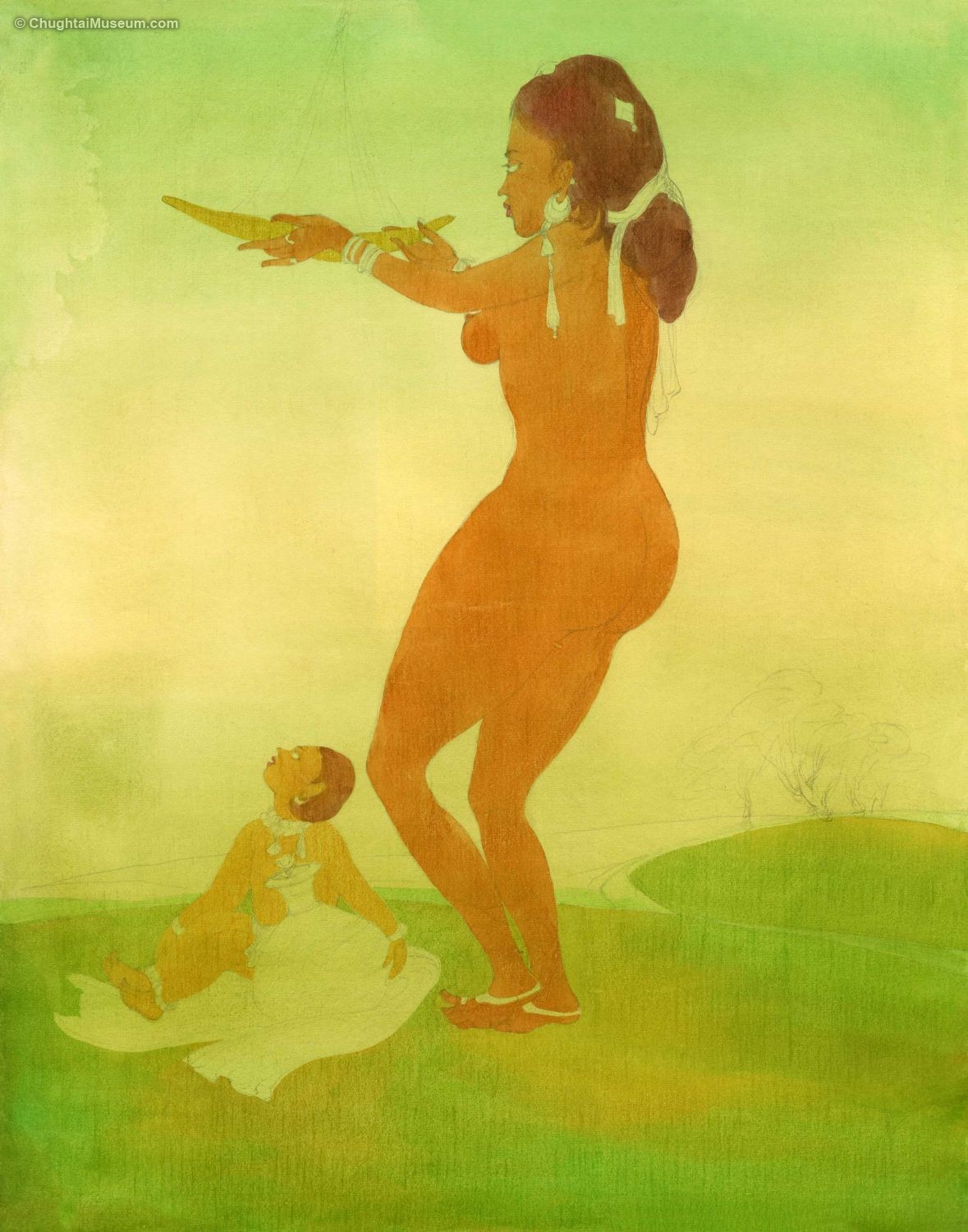
As Chughtai has said himself, all his works start from a story, which comes to his mind. A story of interaction of people both in family home settings as well as pastoral surroundings. Or any other imagined situation. But the same is not representational as a photographic record. It has two unique features unknown to Islamic art. It has a behavioural element to the interaction of people. And this psychological impact is best expressed by him through a millionth variation of mouth and eyes. Gentle twists of mouth, as well as eyes, from closed ones to open ones, and various in-between. Expressions which belie a great or ordinary painting. No one can copy these even if they decide to trace the original. The difference is so minute. The second impact is the composition of the body. A body which is not truly representational of human body with elongated fingers, hands, legs, and postures. The Chughtai world is a world where he fashions the body to his own perfection.

The Artist of the East was in a position to mock Aristotle’s Golden Mean, with a body fashioned in his art ranging from both extremes, the most or the least. We note that:

“The golden ratio, also known as the golden mean or divine proportion, is a mathematical ratio (approximately 1:1.618) found in nature and art, believed to create visually pleasing and harmonious compositions. It can be used to determine the proportions of elements within a piece, creating a sense of balance and aesthetic appeal.”

The proportions in Chughtai art capture its most harmony. On this back note, the artist spins his story.

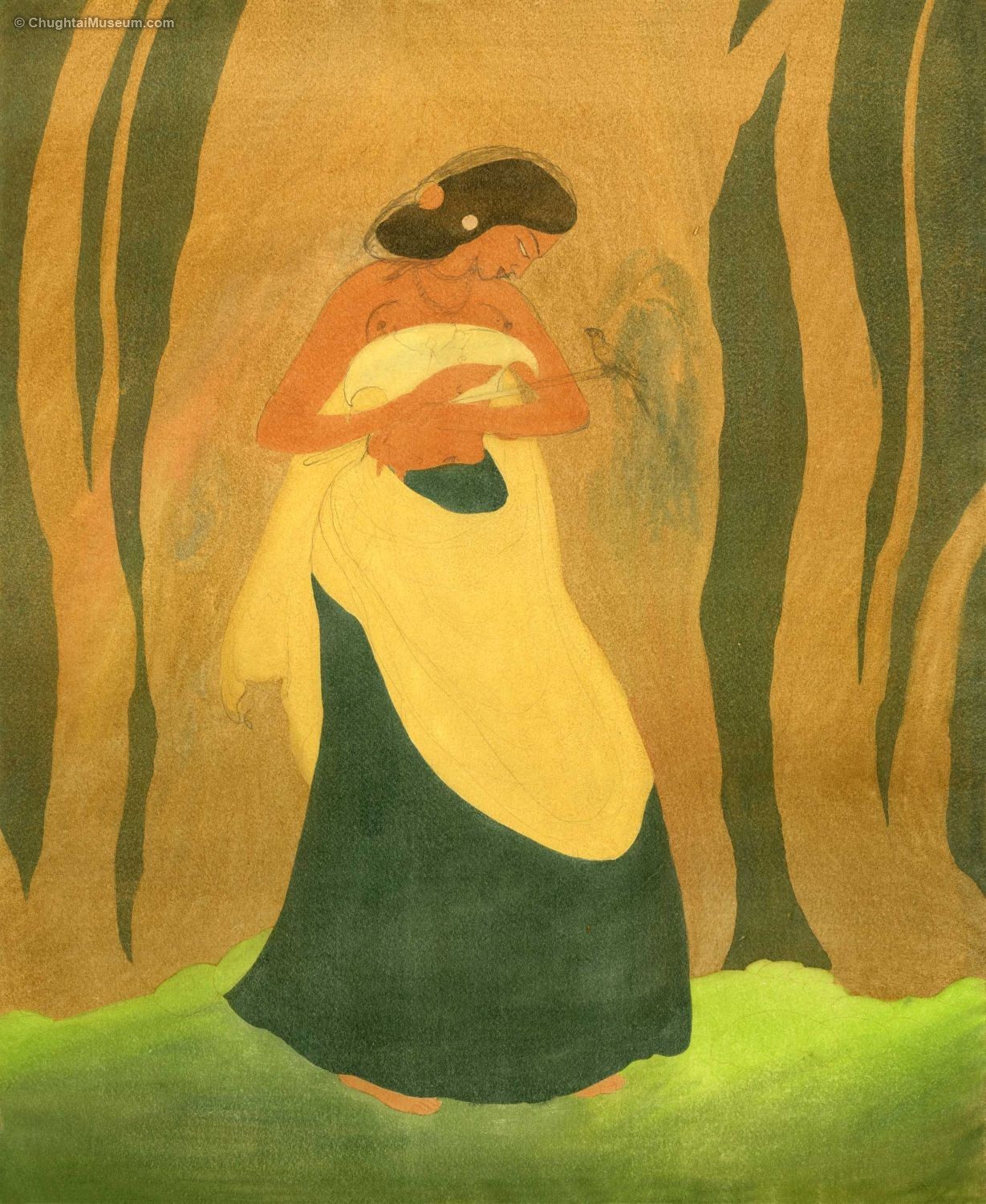
So after the story what happens, on a small scrap of paper the work is roughly conceived in perception. Chughtai never sits idle. He has a number of these scraps to play with in time. Eventually he decides to dive in one and enlarges it to his regular version of cut position of Imperial size paper. The form is there, the details missing. An archive of 3000 pencil sketches tells us how busy he was, as he himself stated that if his life is limited by eighty years of age, he cannot complete even his already drawn works if he lives to another eighty years. And the subjects are overwhelming. At times they look unbelievable. His photographic eyes move in positions unimaginable by most artists, and least of all pseudo critics, who have no aesthetics to understand them.

Once upon a time the world viewed artist Chughtai in different light. The newer world view is different. Stressing on some vague concepts as Global art, the point of view is to ridicule anything that brings identity to a nation. In Pakistan the National Identity is the first step towards a Modern Islamic Identity. This was a small note in the ideas of critic Ms Simone Willie in 2015 and 2017. She wrote in her book “Modern Art in Pakistan”:

“Despite his contact with Calcutta and the Bengal School, Chughtai emphasized his connection to Lahore and promoted the idea of a Punjab School, or Lahore School, consisting of Muslim artists. With decolonization, the growing consciousness of a Muslim cultural position as opposed to a nascent Hindu nationalist construction came to define an important element of modernism  for South Asian artists.”

This new “sense of place” was certainly resented by modern critics pining to undo all identity feeling from the new country Pakistan by placing it as a mere step of a 5000 years old heritage. Ms Simone Willie did call here to discuss same with me, but could not undo my firm belief in the Identity crisis being deliberately created, by resuscitating the forlorn world of Shakir Ali and others as champion of Pakistani forward movement. Most of these artists came to Pakistan much later 1947 with their brand of mission, sponsored by agencies to undo the spirit of Pakistan. Copyists copying the West, aping things which had no relevance for them or for Pakistan. These artists engendered despair in the country. Their own record is open to research. Less said here!

A lot of world critics concentrate on me as well. Ifftikhar Dadi has written to me often and sought help in matters. Partha Mittar called here and went very happy. And some have mixed reactions. Perhaps the agenda is different. A very nice lady, Gemma Sharpe is an English woman, teaching art in an American University. A strange dilemma she is working on with a message of Global arts. She visited us and would not agree on concepts of National Art. It is best to let her reproduce her views in her own words:

My ongoing book project, Modernist Agencies: Art and Cold War Culture in Pakistan is forthcoming and has been supported by the Modernist Studies Association, American Institute of Pakistan Studies, among others.  

“My scholarship is invested in global exhibition and museum histories, legacies of Cold War internationalism, and modern art’s relationship to institutions, especially of the state. My specific area of focus is modern and contemporary art from Pakistan and its diasporas.

My in-progress first book, Modernist Agencies: Art and Cold War Politics in Pakistan, shows how artists in Pakistan and by extension pre-1971 Bangladesh navigated the shifting, overlapping, and often contradictory concepts of the “nation” and the “state” during the late-colonial and postcolonial decades. The book offers a deeply archival study of modernist art in Pakistan and pre-1971 Bangladesh that uses exhibition and institutional case studies to provide a synthetic view of modernism in this context. It shows how artists moved knowingly and strategically through forces of institutional and state co-option in the postcolonial decades. Gemma Sharpe. “

A series of discourses on Chughtai Art follows and must be read one by one. Obviously the written agenda is bigger than a blog can capture in few words. I will try my best to pick up all the necessary narrations. There is Art in Pakistan and there is Pakistani Art. It is time to take the Art Gimmickry at its roots of destroying the foundations of a growing nation. Modern definition of Pakistan. Blessings of Allah be upon us!

THE STRANGE HISTORY OF AN INSCRIPTION IN MARGALLA; REPRESENTING LOST BUILDING REST HOUSE ON HIGHWAY, WORK OF MUHABBAT KHAN BY LUTUFULLAH AHMAD MUHANDIS

THE STRANGE HISTORY OF AN INSCRIPTION IN MARGALLA;
REPRESENTING LOST BUILDING REST HOUSE ON HIGHWAY,
WORK OF MUHABBAT KHAN BY LUTUFULLAH AHMAD MUHANDIS.

“A very dangerous area, recognized by authorities, including Emperor Jahangeer as an area of “MAR GALLA”, means that dacoits used to cut the necks of travellers and were in the attention of authorities. Some translate it as “Mar” plundered and “galla” as goods caravan. It was decided by Governor Muhabbat Khan to make this place safe by building a palace type of rest house on this important highway. The Chief architect Ustad Ahmad Mimar was dead by 1649, but his son Lutufullah Muhandis was there, and given the job of construction of same. In time all the construction vanished but high above the mountain, the inscription remained for all to see.

It was noticed by passersby and most importantly by many scholars.The list includes Delmerik in 1871, Rehatsek in 1874, and then Shams ul Ulama Jivanji Jamshidji Modi in 1918. Being a person of some distinction, he had it copied and he printed his version of same. With time various scholars mentioned it and wrote their version of its transliteration. People like Dr Abdullah Chaghatai, Colonel Rasheed, and even Ahmad Nabi Khan. The problem was that various important words were chipped off and led to confusion in its translation. But Ahmad Nabi Khan took the bold step of removing it and placing it in the corridors of Lahore Fort. It was seen there for some years, and then disappeared again. Not traceable at present moment.  

The only issue was the architect. Governor Muhabbat Khan’s name was obvious. The Margalla pass was obvious. The poet who wrote it was named “Mughal” and that was obvious, but not known at present. The architect was challenging, as the named Ustad Ahmad Mimar was not alive in 1083 AH. He had died in 1059 AH. Colonel Rasheed came up with the solution PUR AHMAD MIMAR. It was ascertained that at times the person who wrote his name as that SON OF AHMAD MIMAR was no one else then Lutufullah Ahmad Muhandis, his beloved son. He was in the habit of writing his name like that, particularly where it would be on public display.

Life changes. Time passes. Written things outlive other things. Inscriptions and manuscripts beat the test of time. Who could have understood that the whole monument would disappear and the inscription would remain. It too travelled with time. I  always search for it. Perhaps it will be discovered again. But few care. Most people do  not care about anything. But history remains!  

BIZARRE HISTORY OF CHABUK SAWARS IN REGION; SPREAD OVER IN LAHORE AND SHAHJAHANABAD; AND EVEN HAVING MAZARS IN PLACES LIKE BIJAPUR.

BIZARRE HISTORY OF CHABUK SAWARS IN REGION;
SPREAD OVER IN LAHORE AND SHAHJAHANABAD;
AND EVEN HAVING MAZARS IN PLACES LIKE BIJAPUR.

There is a traditional Mohalla Chabuk Sawaran in Lahore. I presumed that it exists only here. A little research unravelled the Chabuk Sawars spread all over Mughal kingdom. Images crept up from far away places. Even families of Chabuk sawars got in touch with me. It was exciting to know so much more about them.

Lahore is a strange city. It has everything historical attached to it. Take the Mohalla Chabuk Sawaran inside the city. Maulvi Ahmad Baksh Yaqdil (18th-19th century), explains the area as:

“Diwan khana Faqeer Khana waqia Darul Sultanat Lahore; Mohalla Qazi Saderuddin Marhoom; Haveli Adina Beg Khan; Guzar Chabuk Sawaran, Kakey Zai; Mutasil Kocha Allama Hazrat Muhammd Sharyar Maskoor Lahori; Mutasil Masjid Chinay Wali, mubia Bahadur Shah Alamgeer Badashah; Feil Khana Shahnawaz Khan; Takia Sadoan; Katra Haji Amanullah; Chotta Mufti Baqir, etc.”

What exactly is KOCHA CHABUK SAWARAN? The dictionary defines Kocha as a Galli, guzargah, or piece of land as “Bara” or exhibition centre. We know that the word Chabuk Sawaran is obviously HORSE RIDERS and what had the horse riders in common with this Bara of land. We know there was a market place for horses outside Taxalli Darwaza Lahore, as well a market of horses outside Delhi Darwaza,. But this is inside the city itself. It means an exhibition ground or a stable, enclosure of horses. And with the Mohalla are the few house attached to its exhibition place of horses there. They must be even giving performances of some kind. But the other names are all historical.

Qazi Saderuddin was the Qazi at the time of Emperor Akbar, who rebelled against the religious policies of the Emperor. He was very popular with the people and could not be handled in a drastic way. So Emperor Akbar had him expelled from the city forever. A rebel scholar in all cases.

Allama Shahryar was Imam of the Wazeer Khan Mosque, and he too rebelled against Ahmad Shah Abdalli, and openly insulted the King for his actions. Abdalli said his prayers behind him and could say nothing to him.

Adina Baig Khan was of course for some time Governor of Lahore and part of the conspiracy in the Abdali and the Mughal period of Lahore. A very interesting figure who got married in Lahore to a Syedzadi of this Mohalla and later divorced her for fear of marriage to a Syed family.

There are a few Shahnawaz Khans in the Mughal period. Mufti Baqir was of course a Mufti of Lahore in the times of Emperor Shah Jahan and there is a Chotta Mufti Baqir still named after him in Lahore. Haji Amanullah may be many persons.

Masjid Chinay wali is the famous mosque in the Mohalla, now totally destroyed and rebuilt. But very strangely Yaqdil associates it to Bahadur Shah, Shah Alam, son of Aurangzeb Alamgeer. Sadoos were famous for residence in the city area and were responsible for publication houses, publishing old manuscripts in book forms.

In Mughal time the FEIL KHANA meant there was a stable for elephants in this very area. Elephants traversing the Mohalla would be a unique sight under any circumstances.

Yaqdil associates Chabuk Sawaran with ethnic Kakay Zais, but there is much more to it. Documents prove the transfer of some horse dealers from Kanpur in India to this Mohalla in 1855 extra.The names of them are known, and some of them were highly educated and could even write in English. These horse dealers had bought portions of Mian Khan Havelli. Afzal Khan had two wives Noor Jan and Mahbub Jan., He died and these two ladies sold the property.

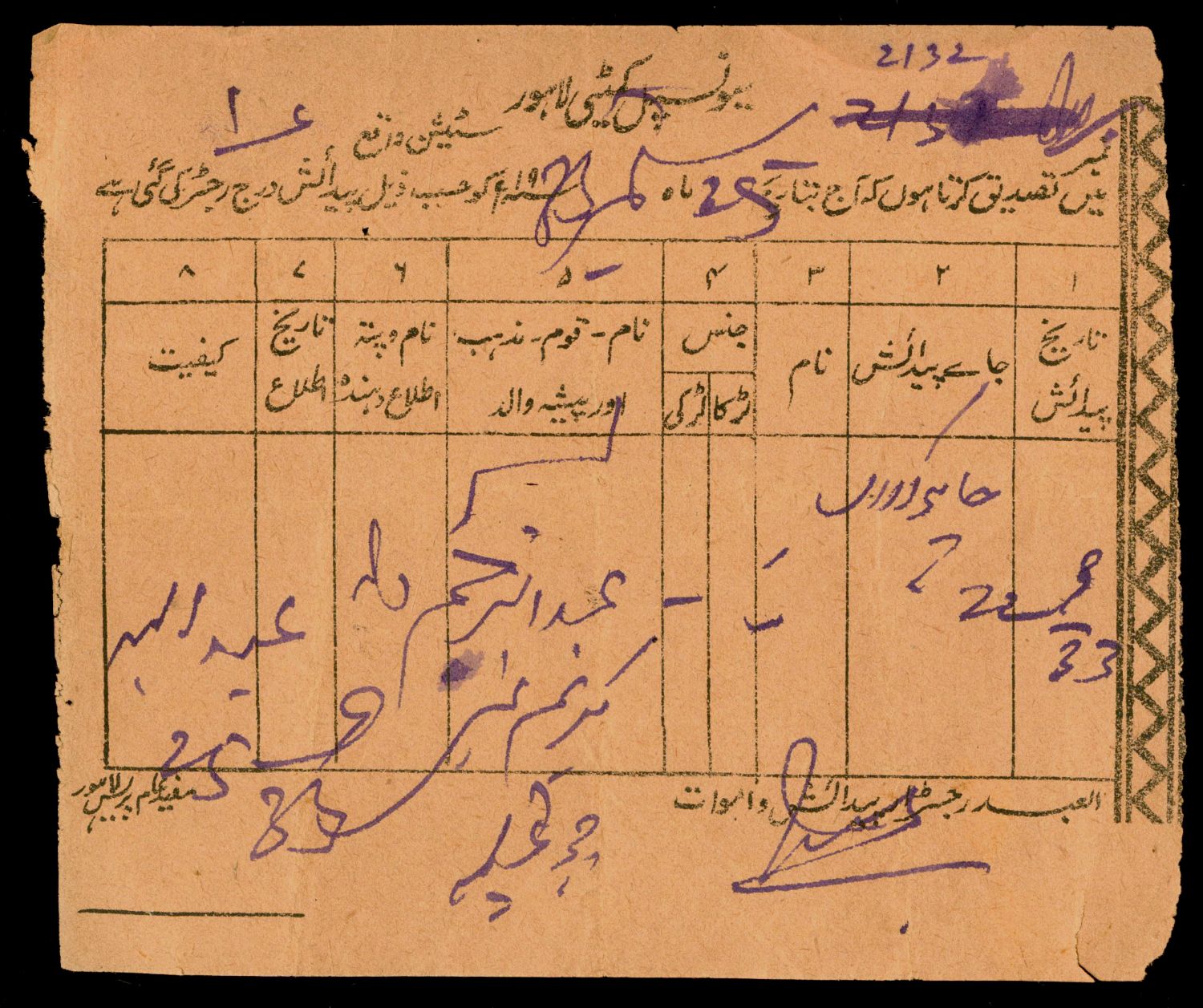
Recently a group of documents have been discovered which shows us more details of the horse riders. We have a Bakatarabu Begum along with a registrar Abdur Rahman Khan Afghan settled in the city of Kanpur (now in India) in 1855. Then we have references of Qasim Khan son of Munawar Khan Afghan again in Kanpur in 1870. Then we find them shifting to Havelli of Mian Khan and we hear of Afzal Khan and Wazeer Khan Pathans. We hear of Bobo Begum wife of Afzal Khan as well as two other ladies later, Noor Jan and Mahbub Jan, widows of Afzal Khan. Then we hear of Akbar Khan, son of Afzal Khan, who signs himself as a horse dealer in English. Then the haveli is bought by a certain J Rustam, who signs an affidavit of two pages, handwritten completely in English language. That means the horse dealers were educated people. The final transfer is dated around 1915. That is one family of Chabuk Sawars in the Mohalla, and they had a stable and a ground to show off their horse stock and it was called Kocha Chabuk Sawaran. That’s history in full!

Haveli Mian Khan of course is RANG MAHAL or the haveli of Nawab Lutufullah Khan son of Nawab Saad ullah Khan, Prime Minister of Emperor Shah Jahan.

It boggles the mind as to the kind of historical personages surrounding this area. And to top it all the area belonged to a mimar family of Lahore. We have record of Karam uddin Mimar buying this house, and successive generations living here.The last of this was Khan Bahadur Abdur Rahman Chughtai, Mussawar e Mashriq, Artist of the East. who again put this Mohalla on the historical map of Lahore.

The year is 1909, and it is the Mohalla of Chabuk Sawaran. It is probably the house of Mian Kareem Baksh (perhaps portion not bought at that time), but his name is missing, as well as names of other persons of family. The year 1909 means that all the Chughtai brothers were mere children and had nothing to do with this agreement. Some of the names on it are Karam Din, son of Munshi Dil Muhammed (but the year means that it is not Mian Salah’s father), and strangely Karam Din signs his name in English. The other lady Roti maker PEEPO WIDOW OF KALA JEWOR has a thumb impression, as well as Nizam ud din son of Ghulam Rasool. The terms include tenancy of the tandoor, as well as conditions of eviction, when necessary. There are certain points that need to be clarified after study of same. It is an agreement between Peepo, widow of Kala Jewor, and Haji Allah Din, son of Nizamuddin Kake Zai.

THE SECOND VISIT OF M. A. RAHMAN CHUGHTAI TO EUROPE; ACCOMPANIED BY SISTER-IN- LAW, MRS MAHMOODA CHUGHTAI.

THE SECOND VISIT OF M. A. RAHMAN CHUGHTAI TO EUROPE;
ACCOMPANIED BY SISTER-IN- LAW, MRS MAHMOODA CHUGHTAI.

The best way to trace the travel of a person is the passport. Although a passport was issued to him on 14th April, 1924, for the Wembley exhibition, but he was  not able to avail it for lack of funds. A new passport was issued by Home Secretary Punjab on 10th February 1932, for a period of 5 years. It was renewed on 10th February 1937. The date of his first visit is easily recorded by even the ticket of the Ship he travelled on. As far as Germany is concerned we have a visa stamp on 24th June 1937. A poem in his praise by a German poetess on 27th June 1937. Another date is 3rd July 1937 departure from Germany. He landed back in Bombay on 15th July, 1937. We are able to access his second visit.

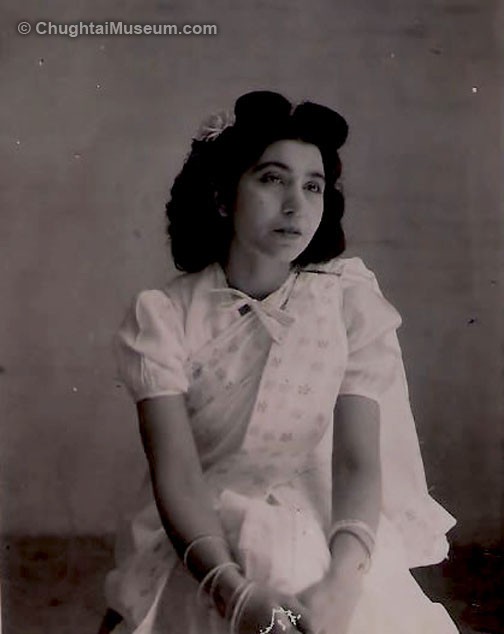
In 1932 in his first visit to Europe, he had befriended a German girl, by name of Elza Huiffner. They remained in touch even after he came back to Indo Pakistani region. His second visit apparently boiled down to February/March 1937 to July 1937. He landed back on 15th July, 1937, in Bombay. But this time he was not travelling alone. His brother in law Gulzar Chughtai had requested that he accost his wife Ms Mahmooda, to London. So on ship they were travelling together. The Huiffner sisters knew of his travel plans, and were there at Marseilles port to receive him. They did not know that his sister in law Ms Mahmooda was with him. He introduced her to them as Mrs Chughtai. The Huifner sisters were shocked at the idea that he was now married and disappeared from port. This interesting episode was narrated to me by Mamee Mooda herself in a sitting in Lahore. This event was not in my record, so I thought it best to put it in historical perspective. Why this happened? No one really knows.

Elza Huiffner was contemplating a very serious relation with the artist. Chughtai Sahib was not in a position to make that commitment. He thought it best to evolve this situation in the best interest of all. In short he was not ready to desert Lahore for an easy life in London, or in Berlin. The commitment to National resurgence was ever strong in him. There are people who are averse to Nationalism, but this was not parochial nationalism. This was in the belief that Pakistan was the first step towards the Islamic resurgence of the Iqballian dream. In fact the next year 1938, we see the loss of his guide and friend Dr Allama Iqbal’s death. Serious financial problems were mounting with him, and he was ready to print the first edition of  “Chughtai Paintings”. The rest is history. In 1936 at the house of Begum Shahnawaz a small show had been organized, and Razia Sirajuddin wrote its introduction. Now revised, it led to the first edition of his famous book. As she said:
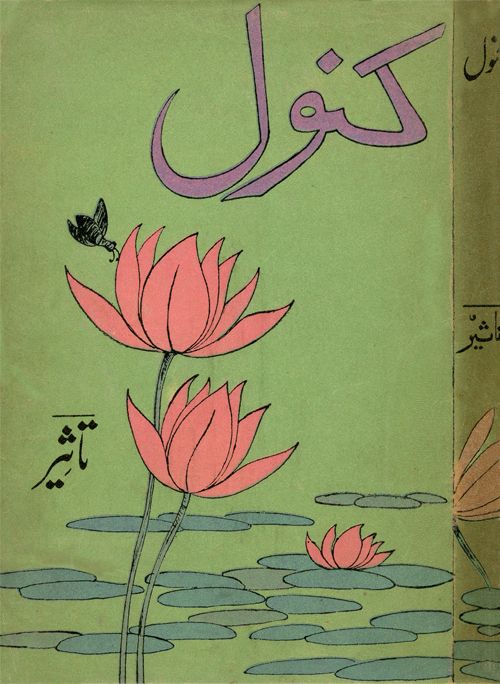
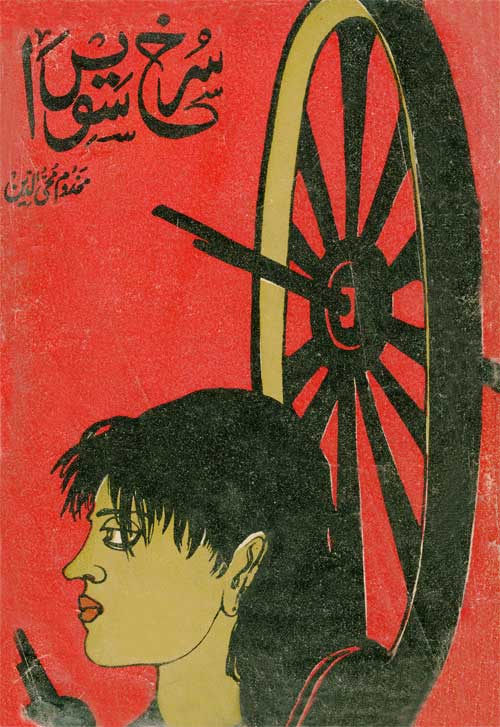
His paintings are in truth the geometry of beauty. He knows art begins at the point where the thousandth of an inch makes all the difference.”