IT WAS OBVIOUS MUGHAL LADIES WOULD INDULGE IN PAINTING, BUT FEW SIGNED WORKS PRESERVED OF THEIR CREATIVE EFFORTS.
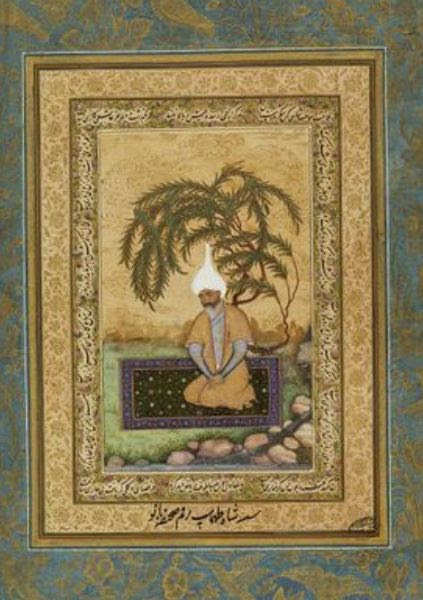
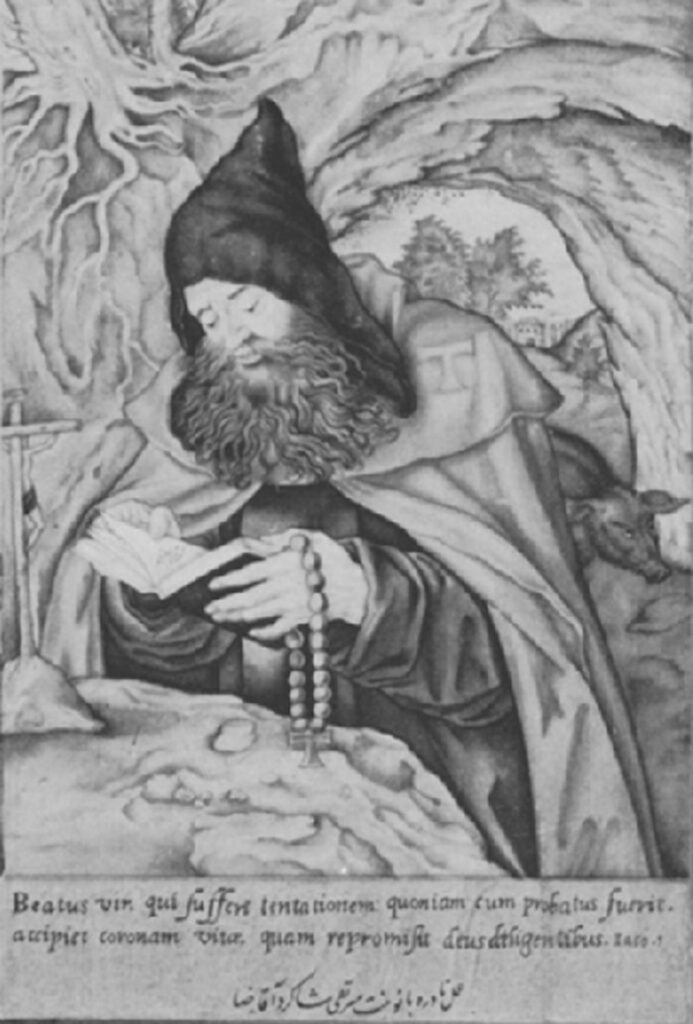
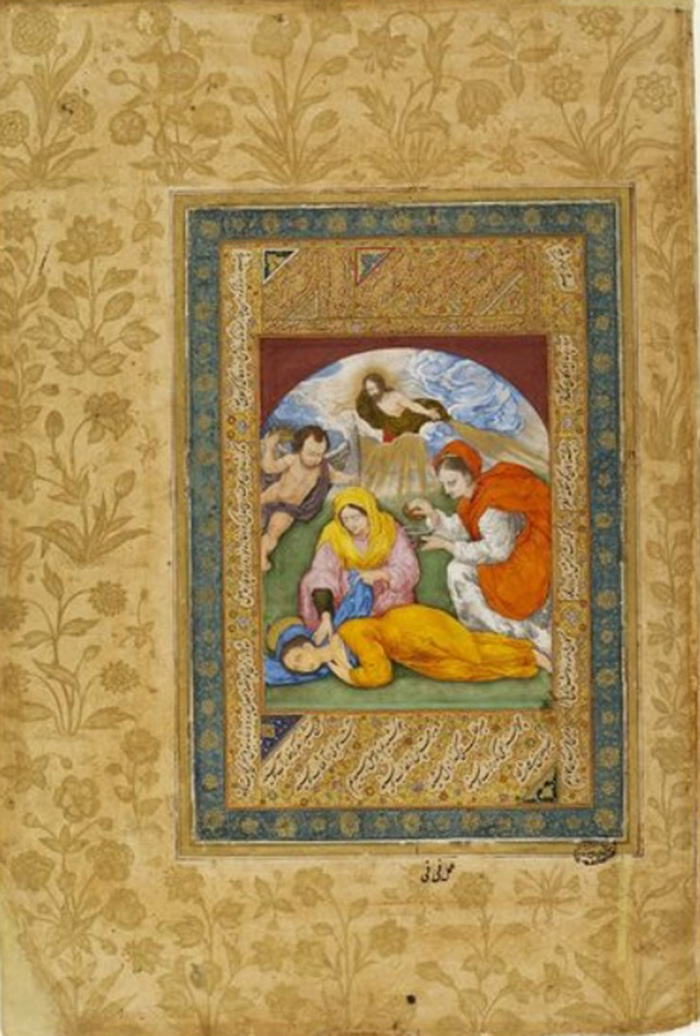
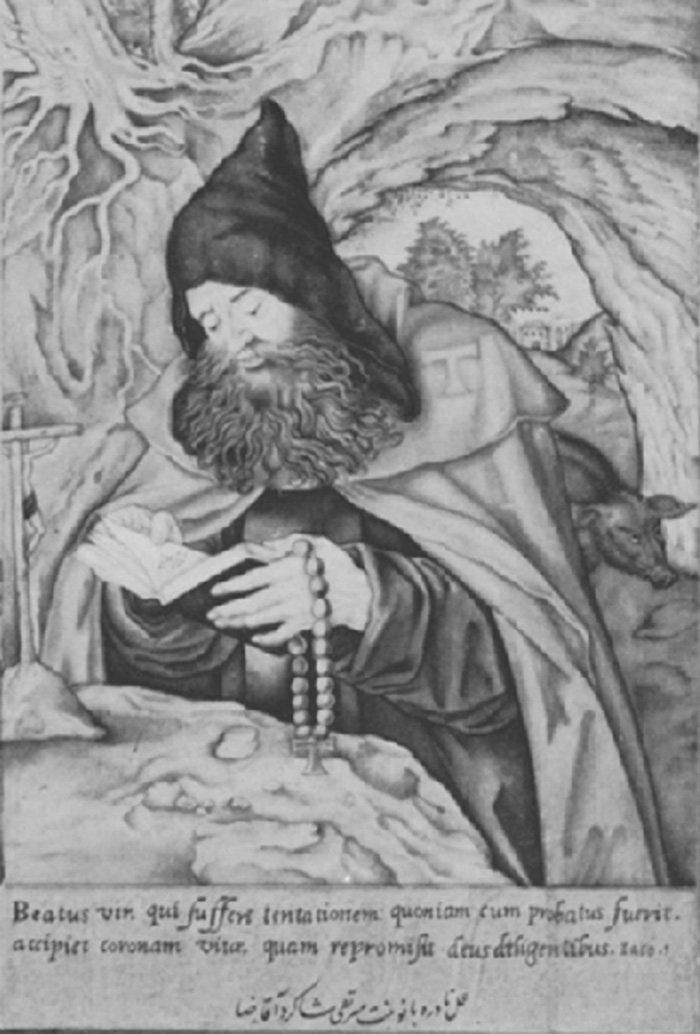
There must be many works done by Mughal lady artists, but protocol demanded that names be not given openly in the public. Even then we come across references, as well as signed names of Mughal miniatures. Some are copies of divergent Western art, as a stimulation for these ladies. But the greatest artist of Mughal household looks like Sahifah Bano, artist supreme. Not only there is a study of Shah Tahmasp by her, but also a work, in which she shows herself drawing and painting a miniature. Look at the standard of work of this artist. Wonderful!
Shah Tahmasp by Sahifah Bano
Self portrairt by Sahifah Bano
Saint Cecilia by Fifi Bano
St Hieronymus by Nadira Bano
Painting is associated with the name of Nur Jahan herself. But nothing signed of her has been discovered. This is not a complete list of those artists, but an indication of the work behind them. We will work on it more as time goes by. Till then enjoy the well-known works by them.
AN UNKNOWN EUNUCH OF MASJID WAZEER KHAN LAHORE
THE ENIGMA OF FAMILY OF MULLAH YUSUF KASHMEERI
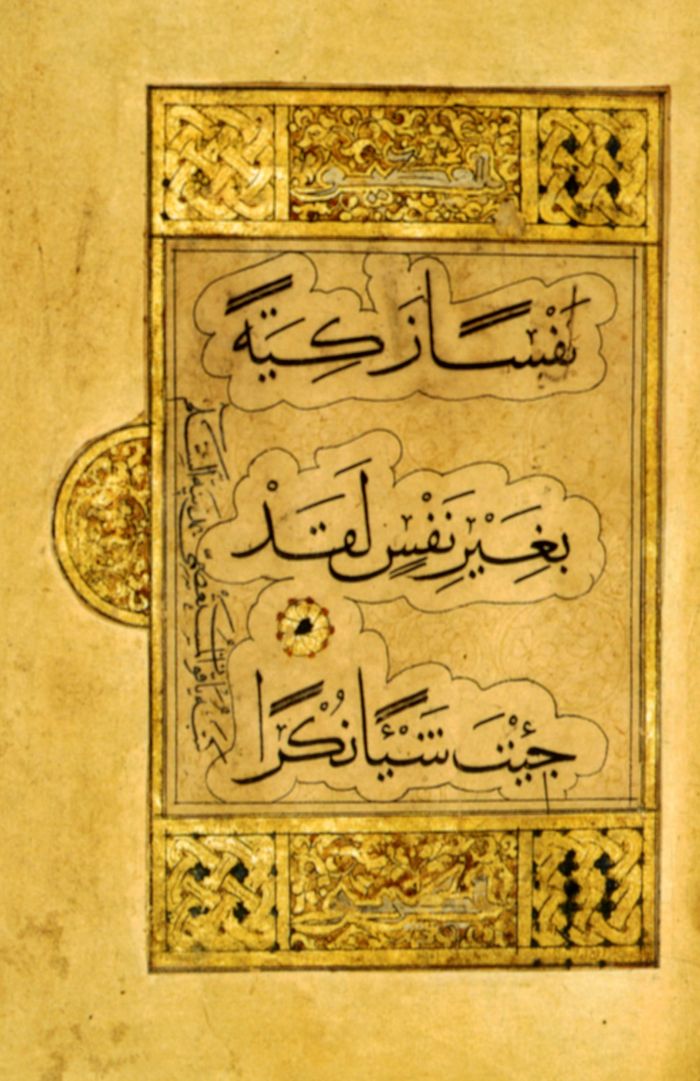
NAZAK YUSUF KASHMEERI IN TRADITION OF YAQUT MUSTASIMI
Yaqut Musatasimi
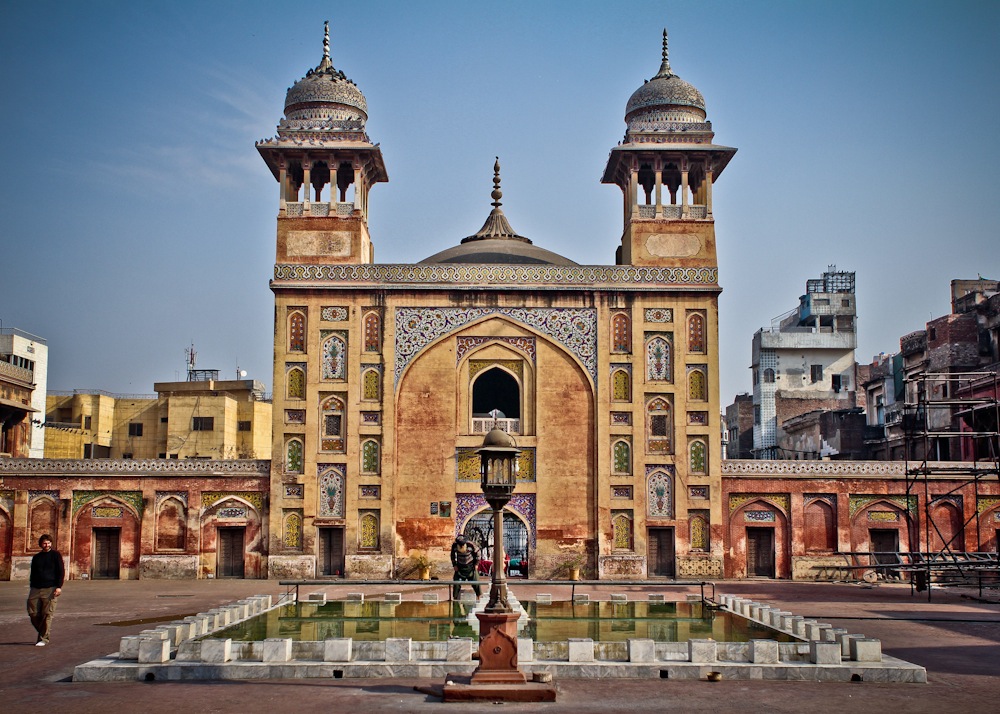
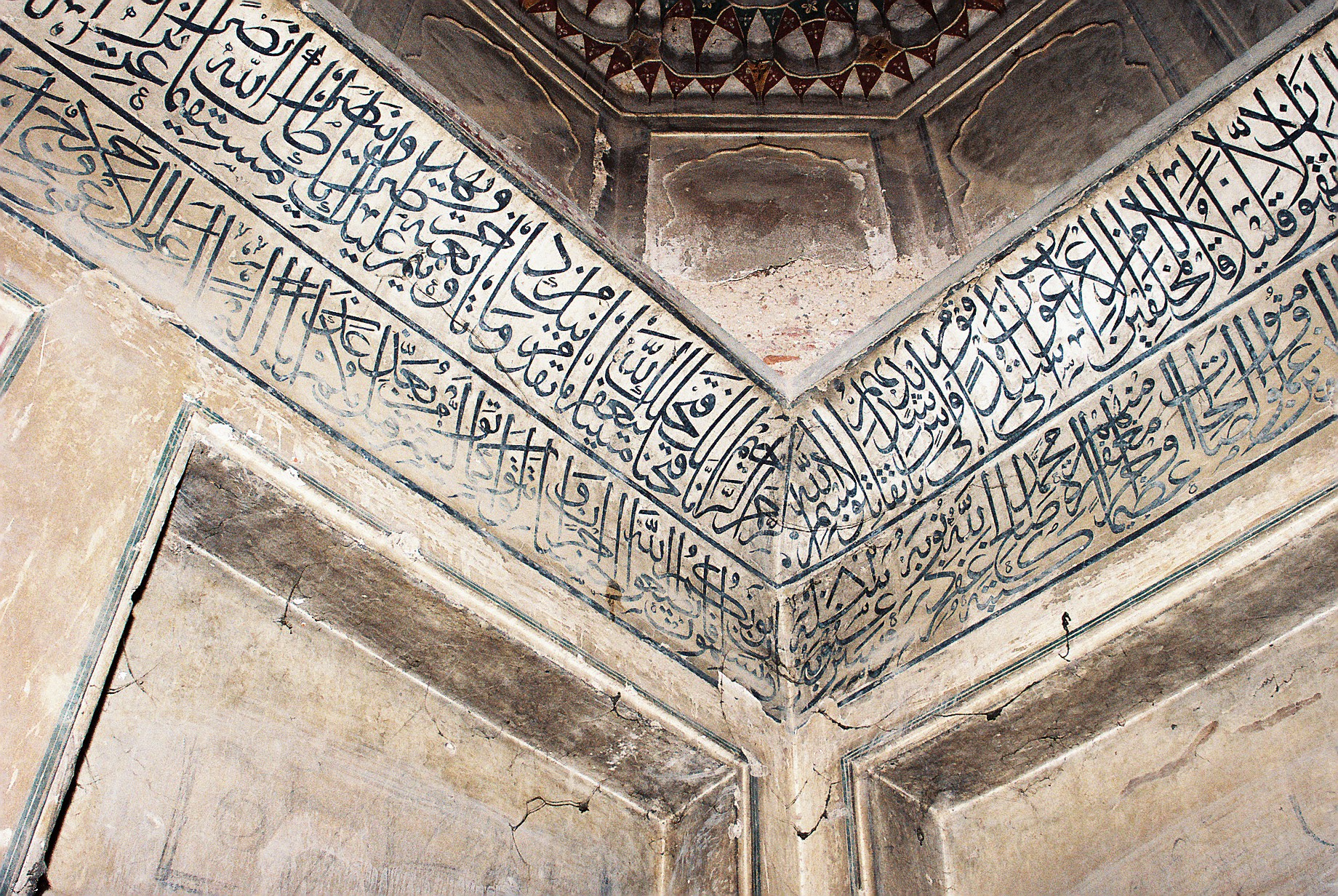
A walk inside the Wazeer Khan Mosque Lahore reveals many names. A number of calligraphers are there. One is Mullah Yusuf Kashmeeri, who was also probably the first muezzin of the mosque and the same is mentioned in the letters of Imam Rabbani. Yusuf Kashmeeri was son of Ustad Haider Mimar, who had constructed a famous garden in Kashmeer for Empress Nur Jahan. The name is in an inscription on the garden itself. The family seem to have moved to Lahore. Yusuf had three sons, all famous calligraphers of their time. One was Muhammed Zaman, another Abdul Kareem and the third was Muhamed Saleh. Their names are on many manuscripts as well as inscriptions on Mughal Monuments. The name of Muhammed Saleh is inside the dome of the Gulabi Bagh mausoleum, attributed to Dai Anga. No problem there.
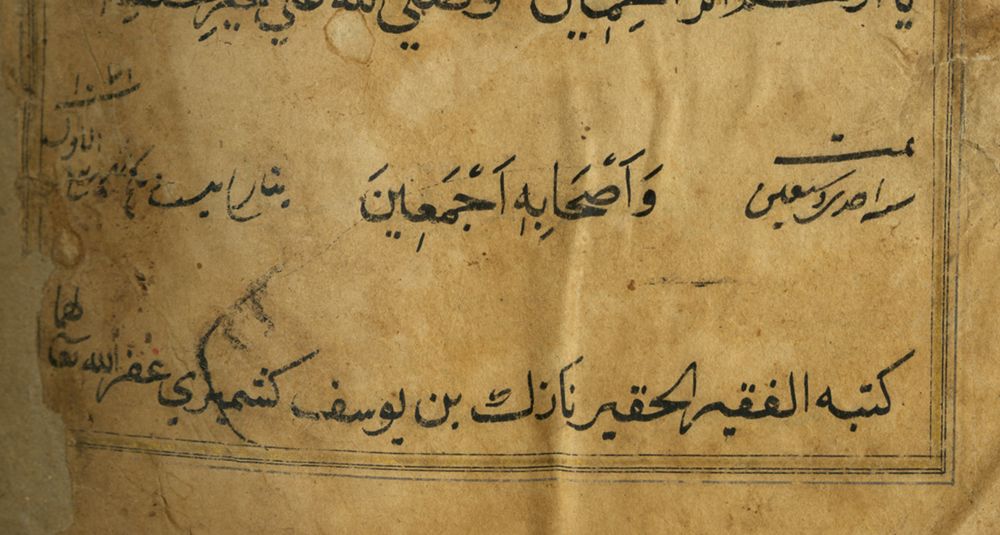
Katba Nazak child of Yusuf Kashmeeri 1071 AH
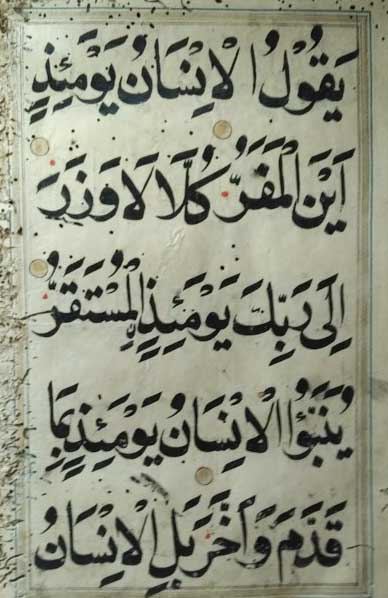
A hand written Quran dated 1071 AH , precarious condition due to water soiling, but the name of the calligrapher is intact. It cannot be read clearly in the way that the calligrapher has tried to hide his gender in same. It looks like it says that it is Faqeer Haqeer Nazak bin Yusuf Kashmeeri. But careful reading tells us something else. It can read as:
Muhammed Saleh son of Yusuf Kashmeeri
Al Faqeera Haqeer Nakzal bin Yusuf Kashmeeri
Al Faqeer Al Haqeer Nazak bin Yusuf Kashmeeri
Al Faqeera Haqeer Nazli bin Yusuf Kashmeeri.
But the simplest reading is that of NAZAK KASHMEERI. Nazak is not a proper name for a man, it can be a proper name for a woman, like Nazakat. But then it should say BINT YUSUF KASHMEERI. The solution lies in only one thing. This fifth child of Yusuf Kashmeeri was an eunuch and in the tradition of Yaqut Mustasimi, one of the greatest calligraphers in our Islamic history, doing his best within his gender. It is said that Yaqut used to write his Qurans siting on top of the minaret of a mosque in Baghdad. Perhaps our Nazak used to write Qurans on top of the minaret of the Wazeer Khan mosque Lahore. Allah bless his/her soul!
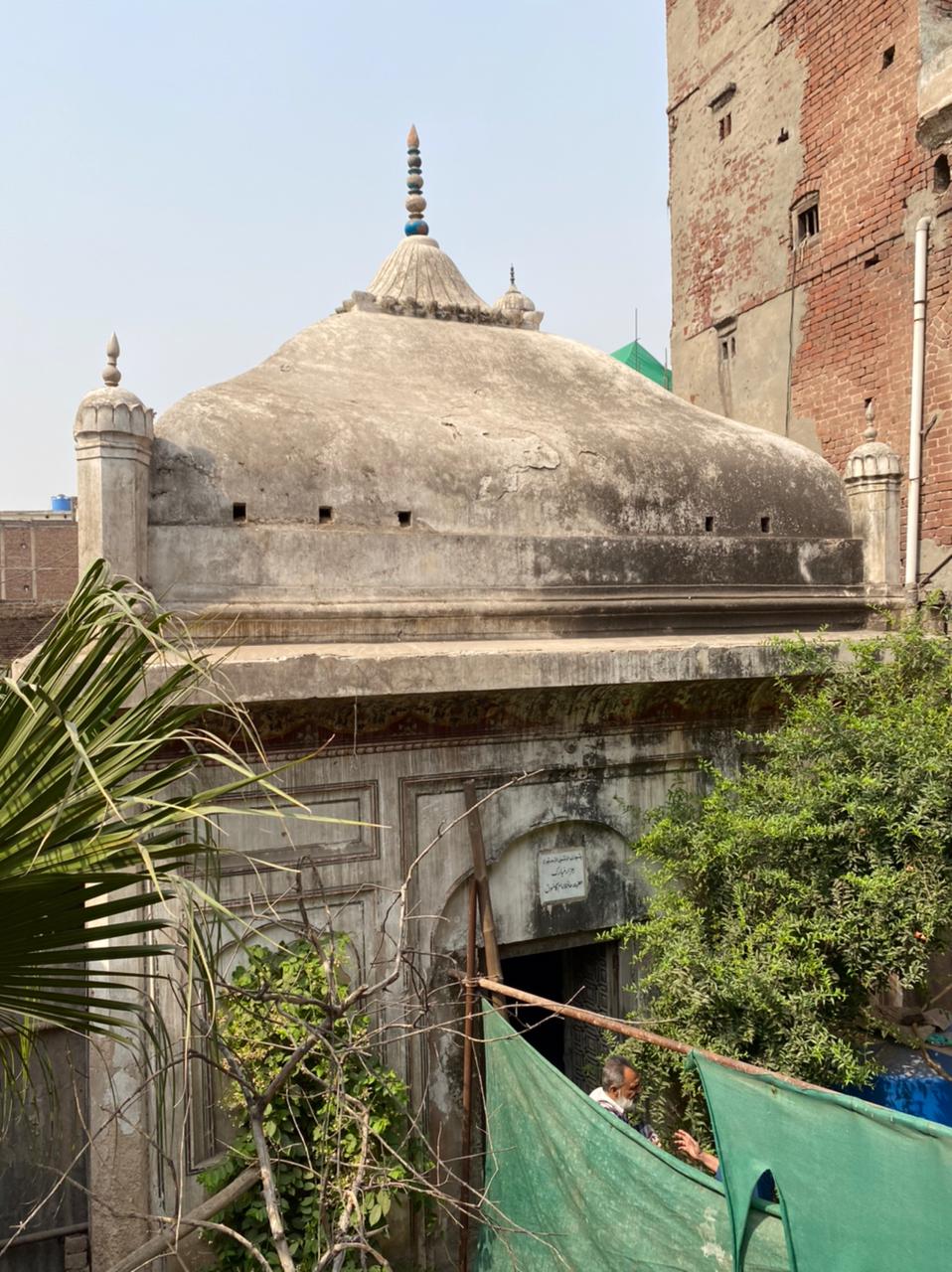
MUGHAL ARCHITECTURAL GEM NEXT MASJID WAZEER KHAN: THE MAUSOLEUM OF IMAM GHULAM MUHAMMED IMAM GAMU; STILL STANDING ALTHOUGH MANY OTHER GRAVES ARE NOW GONE.
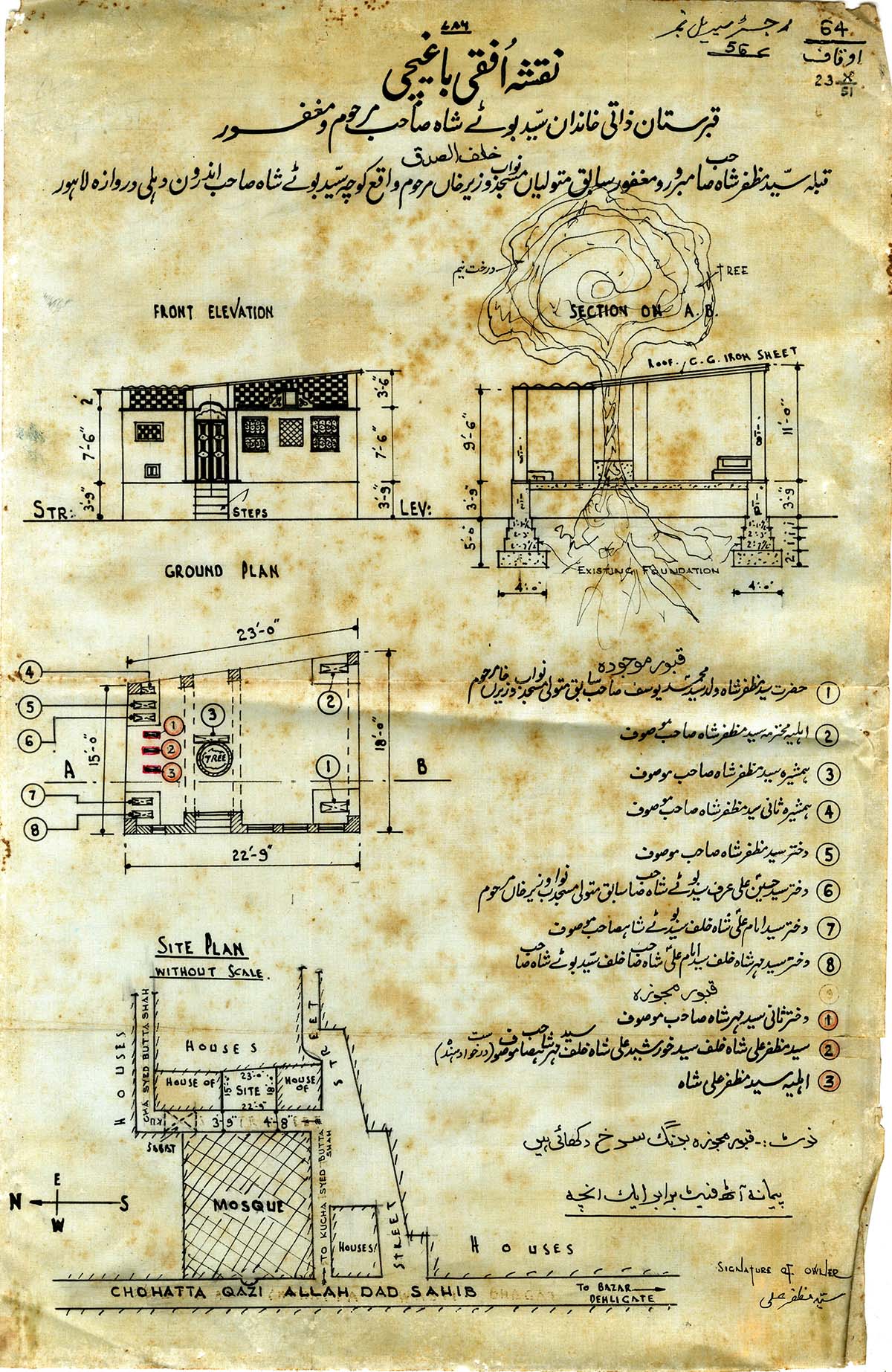
From the year 1044 AH to this day, various people were associated with the Masjid Wazeer Khan Lahore. Obviously the most important is Nawab Wazeer Khan himself. But the more we study contemporary documents, the more of an enigma this man becomes in historical survey. The first surprising fact is revealed by the farman of the Wazeer Khan itself, when it says that Wazeer Khan was asking Asif Khan for donations for building the mosque. And other contemporary source of that very time, tells us that he was a thoroughly corrupt person and there was no transaction in Lahore, in which a percentage was not given to him. All this is documented. We are shown the house of Wazeer Khan through a documented photograph at Cambridge University, which was there till 1904 or something. In any case we are told that Nawab Wazeer Khan used to sit in the Bageechi of Wazeer Khan mosque. There were many graves of Mutavallis of the mosque on it, and we are told that they are now gone for mehfil of qawallis.
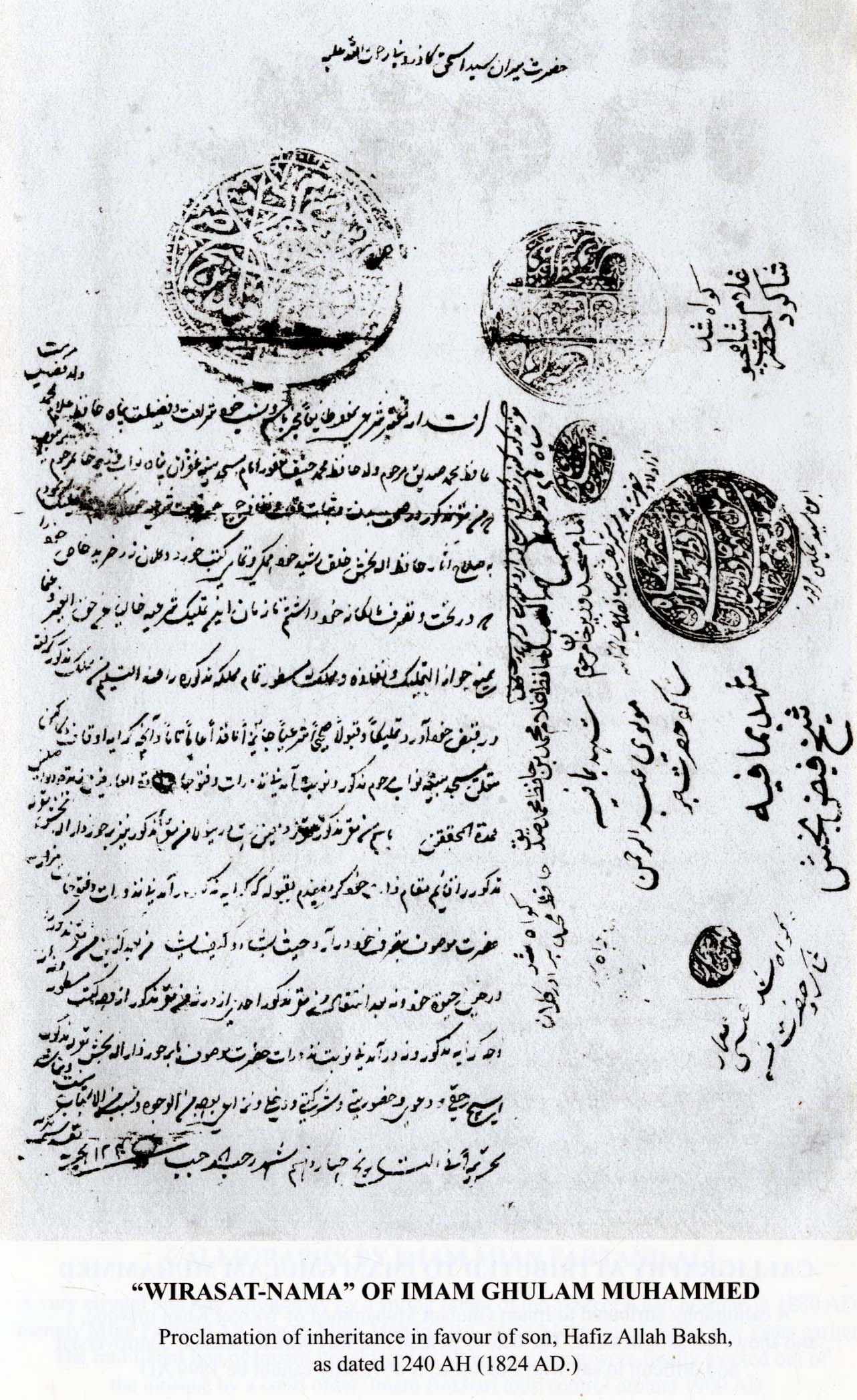
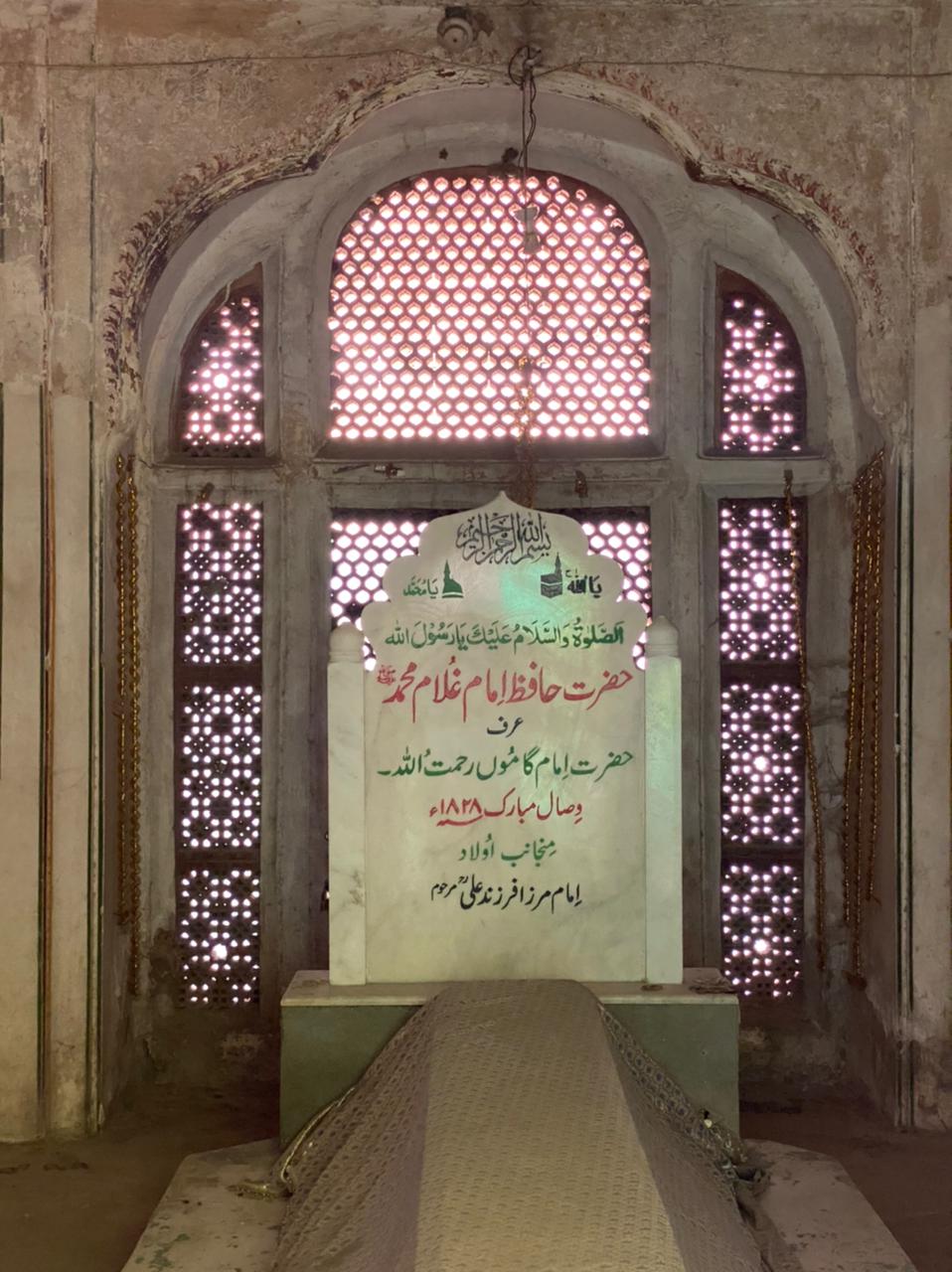
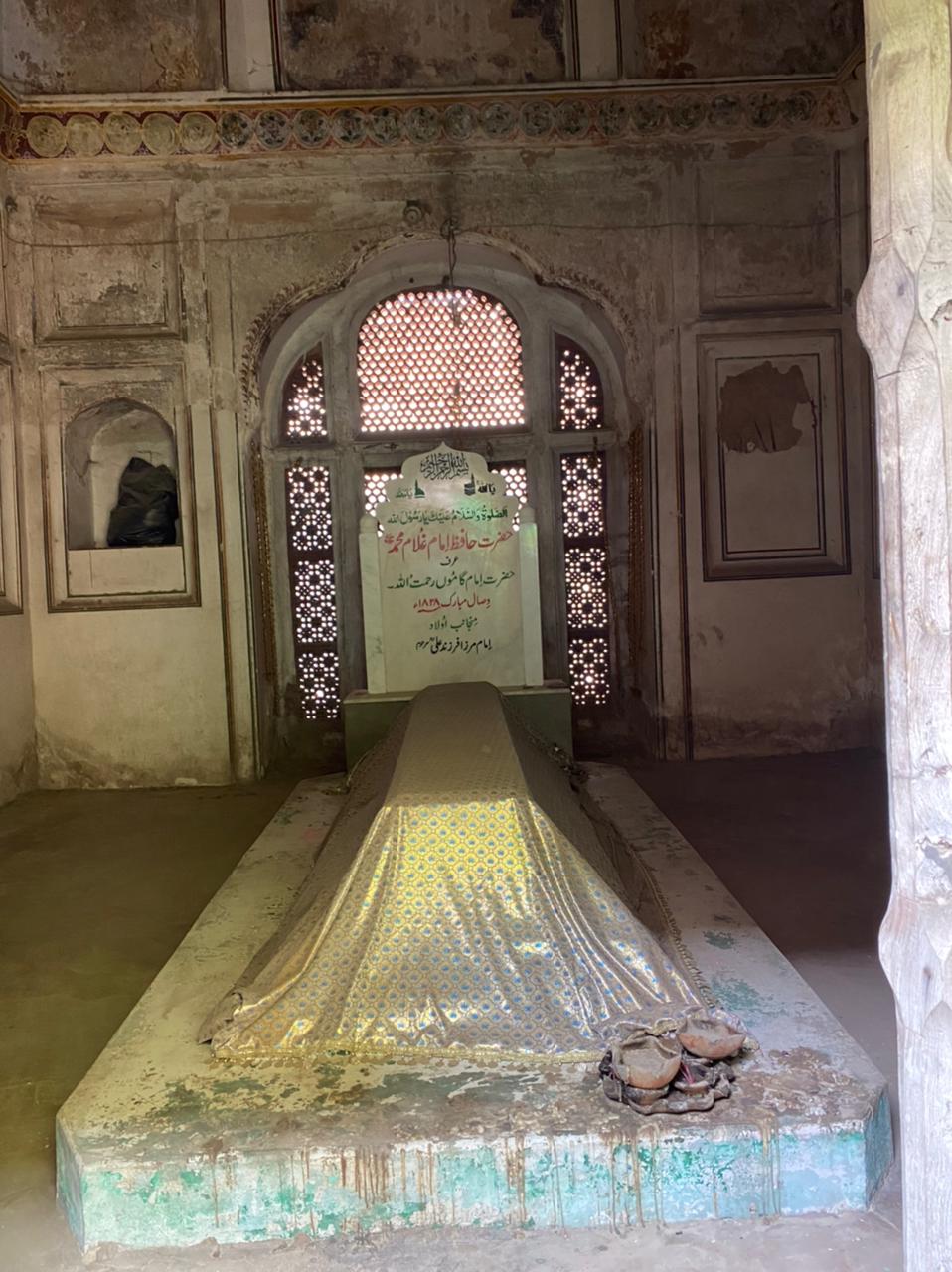
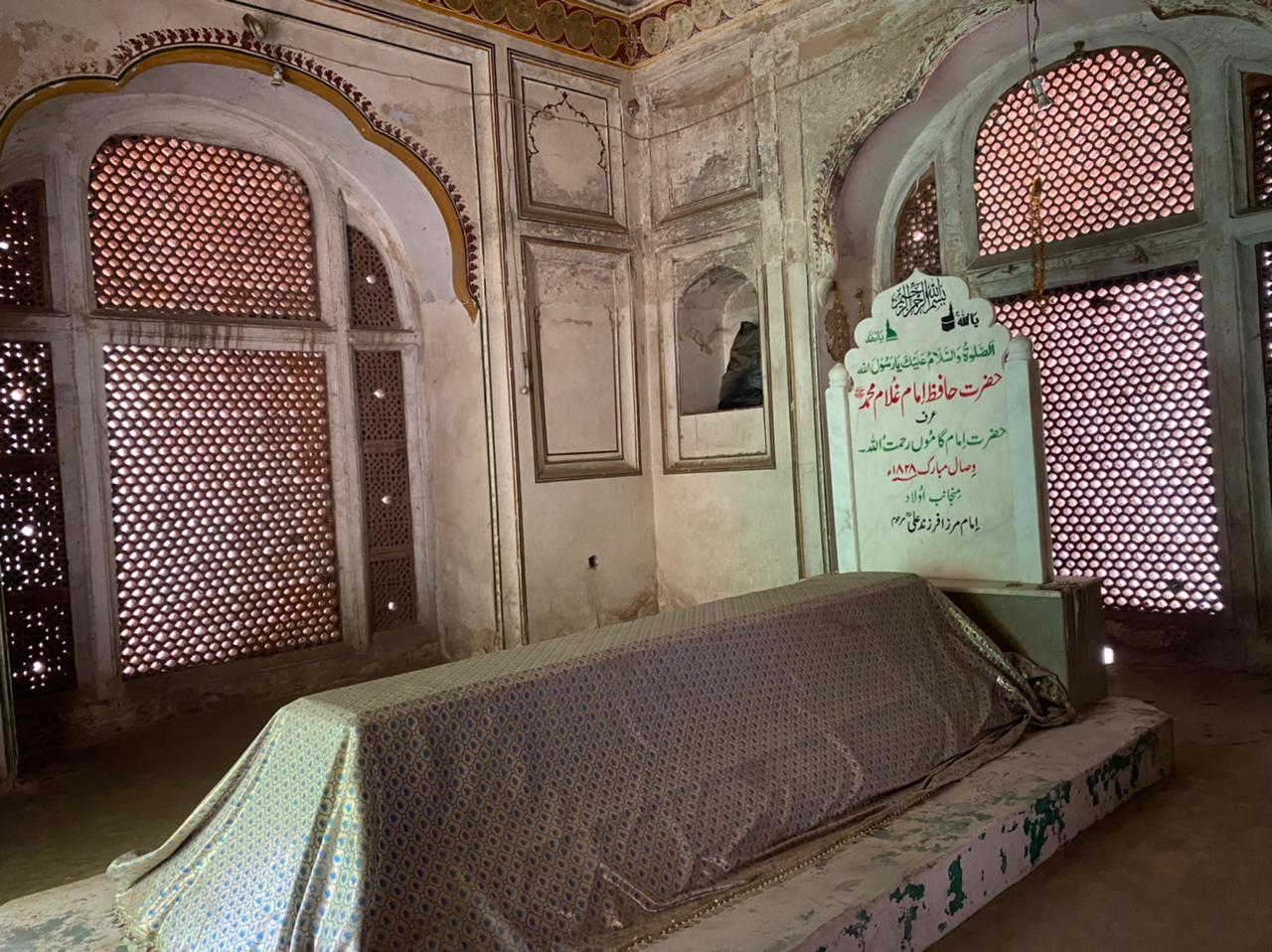
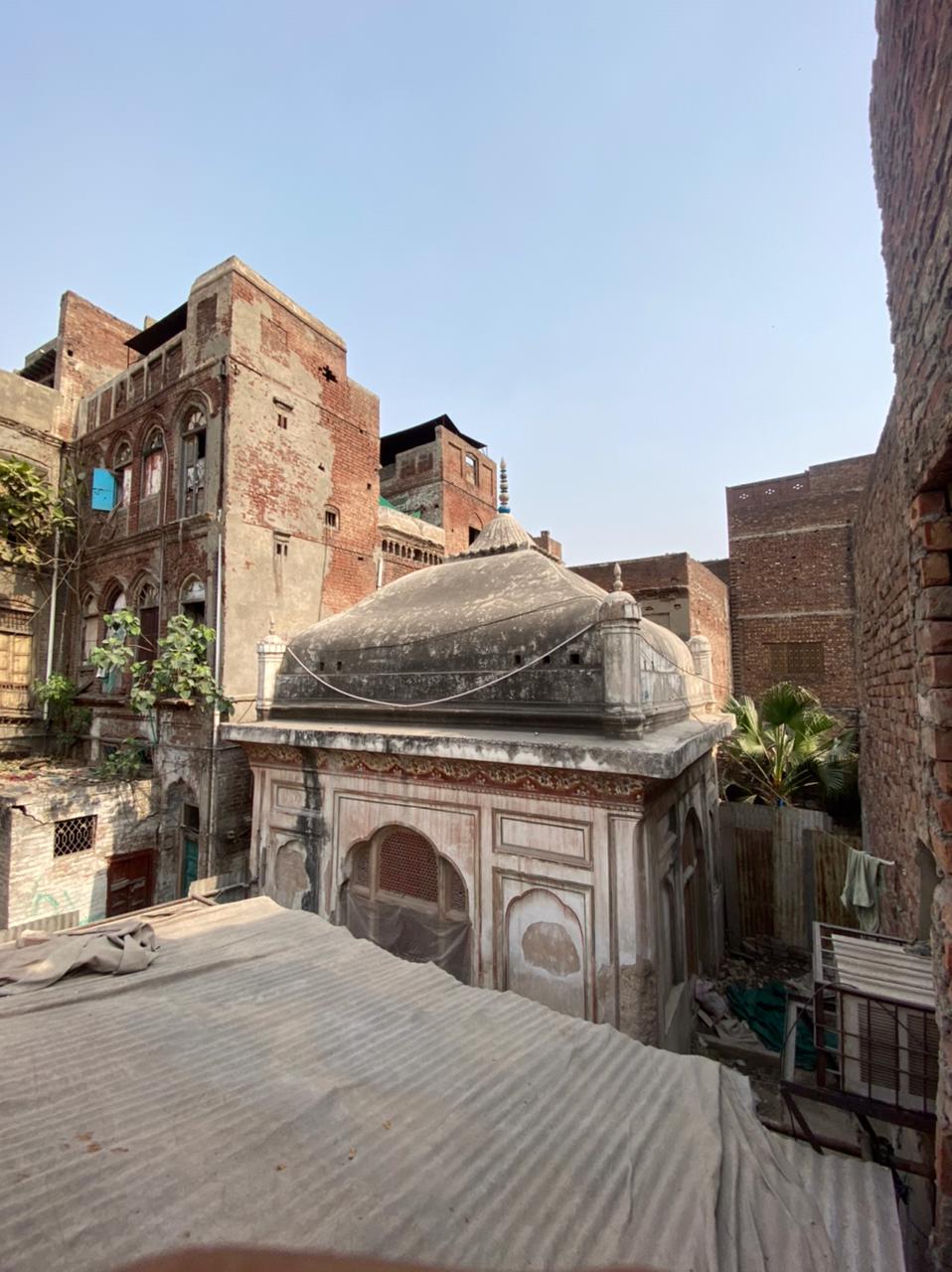
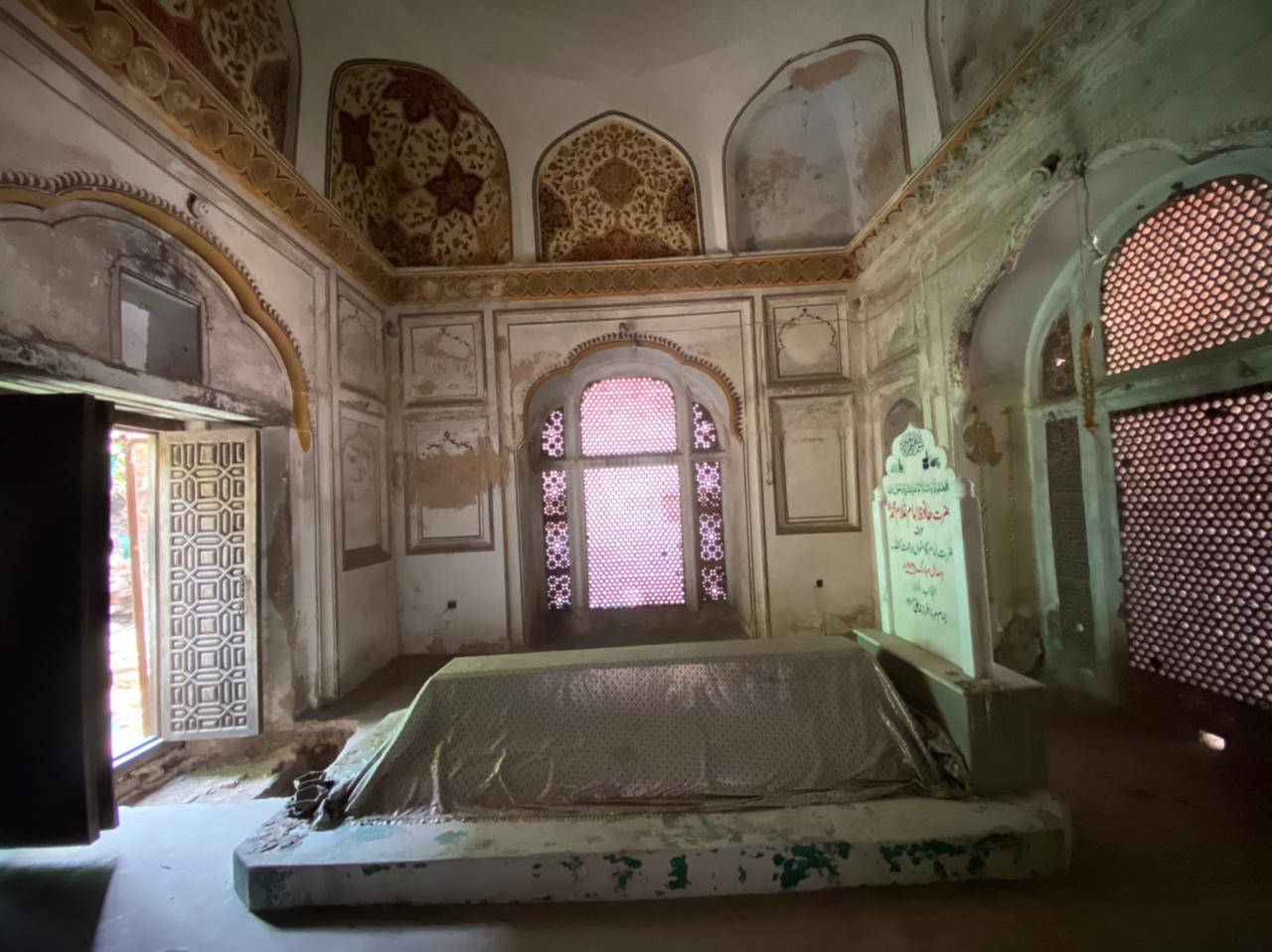
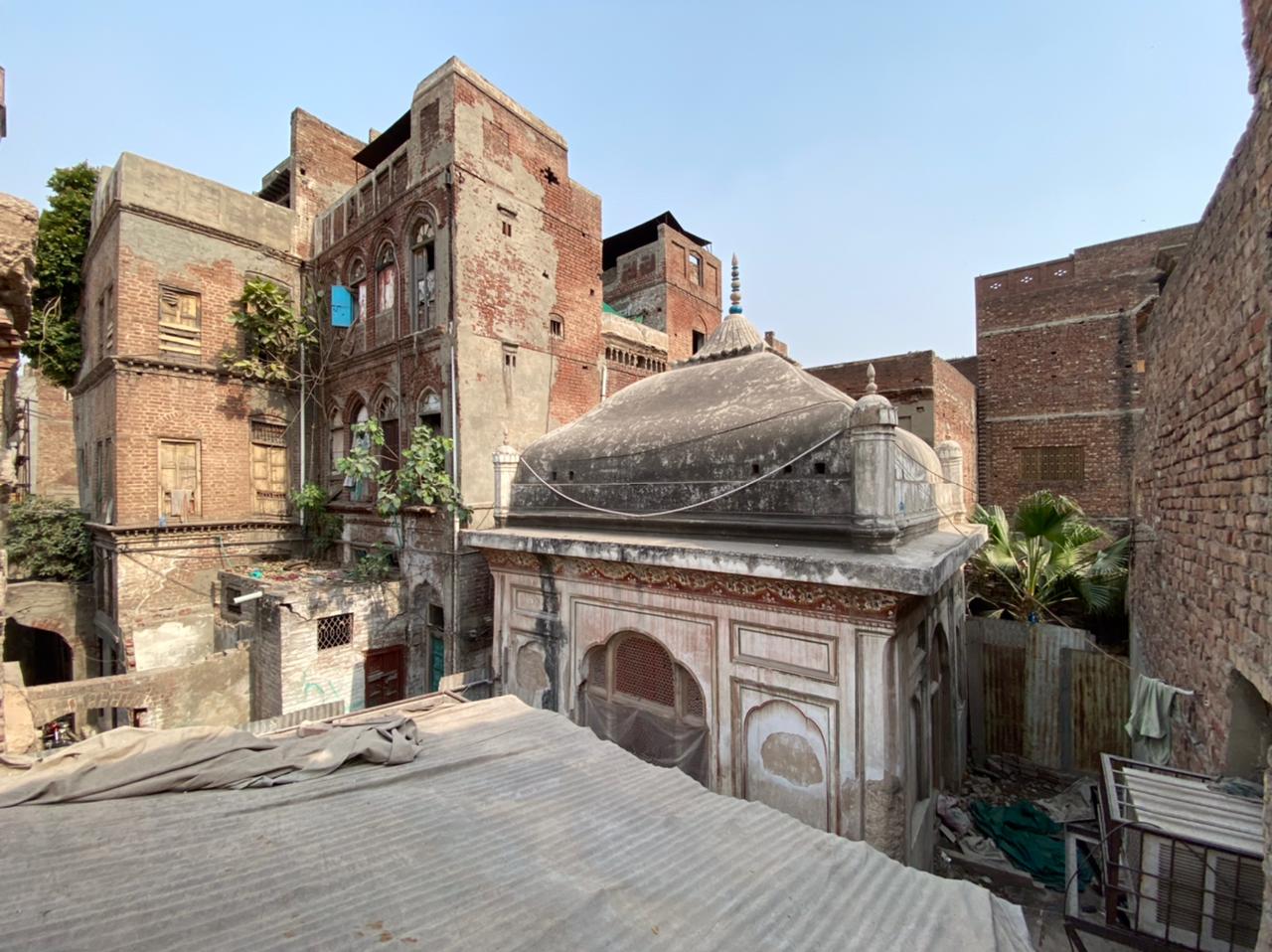
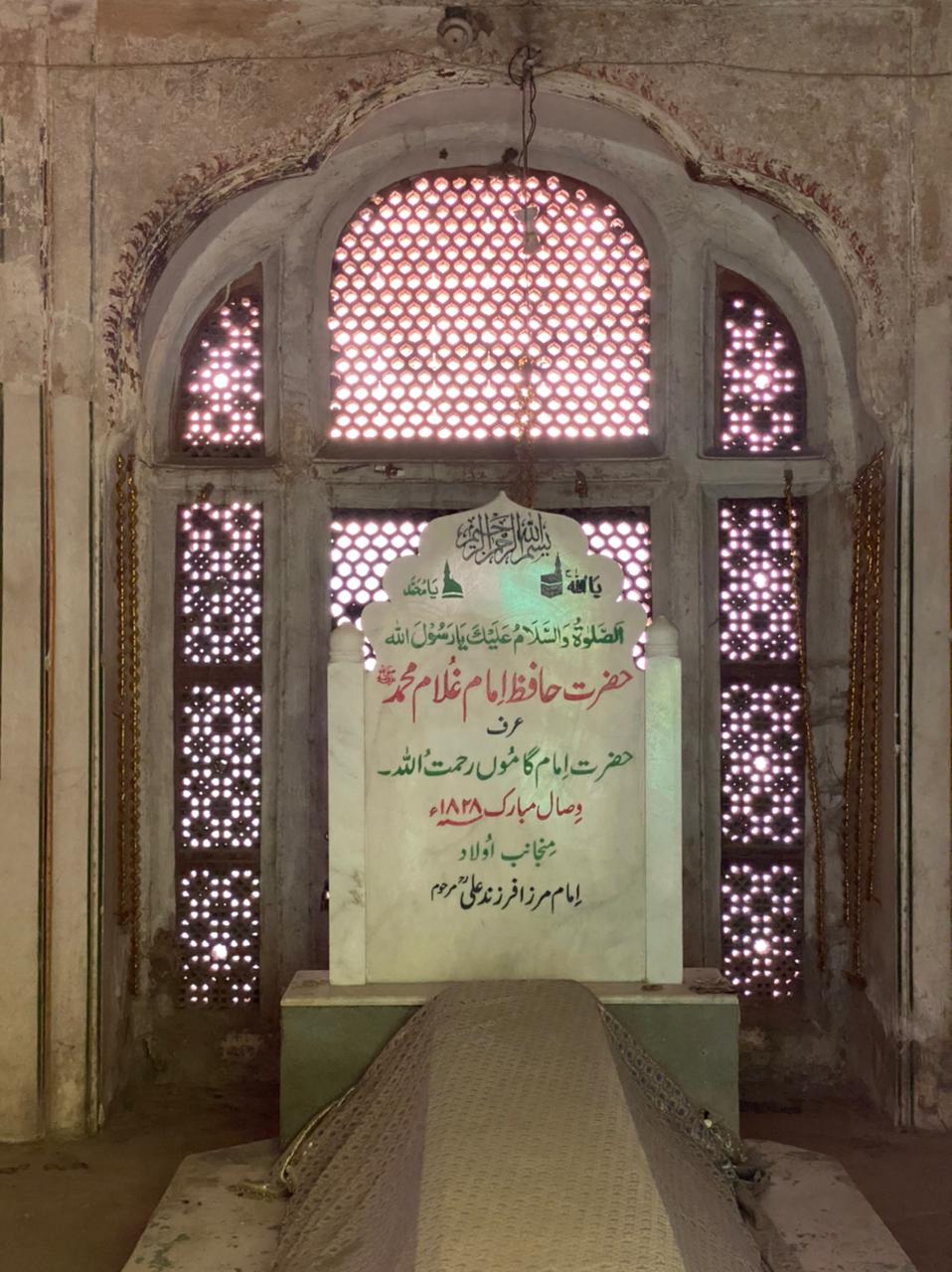
The one grave still standing is the mausoleum of Imam Ghulam Muhammed son of Imam Siddique. Although one source gives his date of death as 1237 AH, the year 1244 AH is given in more places. The date of death comes to 1828 AD. It can be presumed that the building on it was constructed at the same date, but the historian Kanaya Lall informs us that the building was constructed by a well-wisher of the Imam at the start of British rule. That would mean anything from 1846 AD to 1849 AD. But the building is not constructed just like that. It is perfect example of a miniature Mughal mausoleum. In fact, it has more affinity with the Mausoleum of Dr Allama Iqbal in the Hazuri Bagh area. An analysis of same is required.
It is not a haphazard construction. It has Euclid principles in its construction. Even the wooden door is based on older models of geometric carving. The balancing act of small pillars on the corners is based on the Taj Mahal itself. The dome is basically recalling the dome of the Nawan Kot mausoleum, presumed by many as Mausoleum of Zeb un nisa, which it is not.
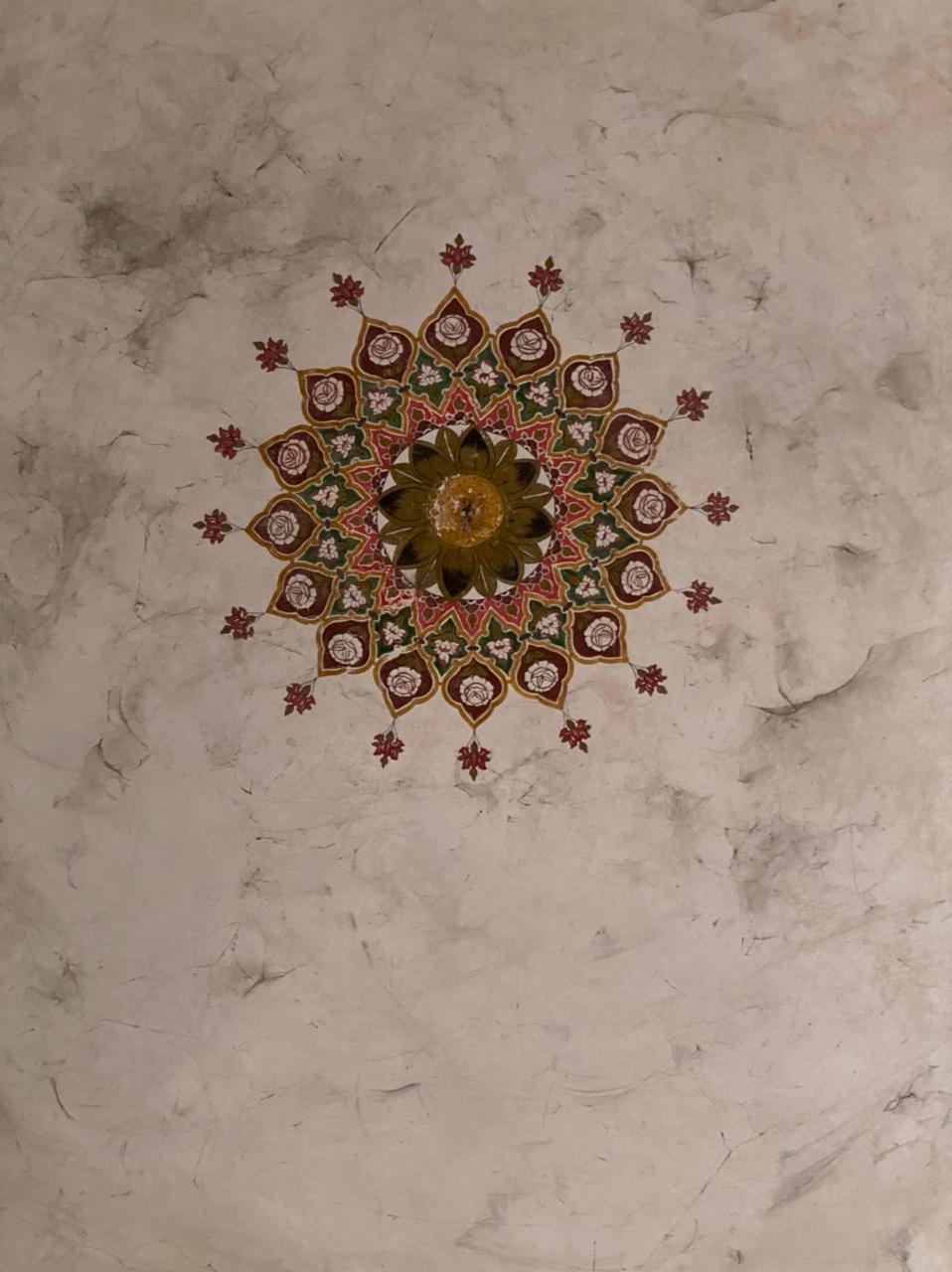
Certainly, the Mimar knew all about Mughal construction. The naqashi on the inner side of the shades itself is very interesting, and recalls that of the mosque itself. But the grave is surrounded by exquisite naqashis on the four walls. The sarcophagus recalls those of older Mughal ones.
The dome of Imam Gamu is outstanding in its shape. To my knowledge only two mausoleums carry this shape. One is the mausoleum at Nawan Kot often confused as the Mausoleum of Princess Zeb un nisa (which it is not). The second is the mausoleum of Hazrat Mian Meer sahib. Both are outstanding developments of Euclidian principles from the double dome of the Shah Jahan era. It is a mixture of Bangla roof with double dome principles. The curve in it is unbelievable charming in all ways. Surely a creation of Lahore architects. The naqashi inside the dome itself placed in perfect harmony. The muqarnas naqashis well formed. All remind us of decorative works done in manuscripts of that period.
Bageechi-Syed-Bute-Shah-Mutawalli
Wirasat nama Imam Gamu 1824 AD
New Gravestone Imam Gamu
Imam Gamu 1
Imam Gamu 2
Imam Gamu 3
Imam Gamu 4
Imam Gamu 5
Imam Gamu 6
Imam Gamu 7
Imam Gamu 8
Imam Gamu 9
Imam Gamu 10
Forgotten grave Zulfiqar Shah
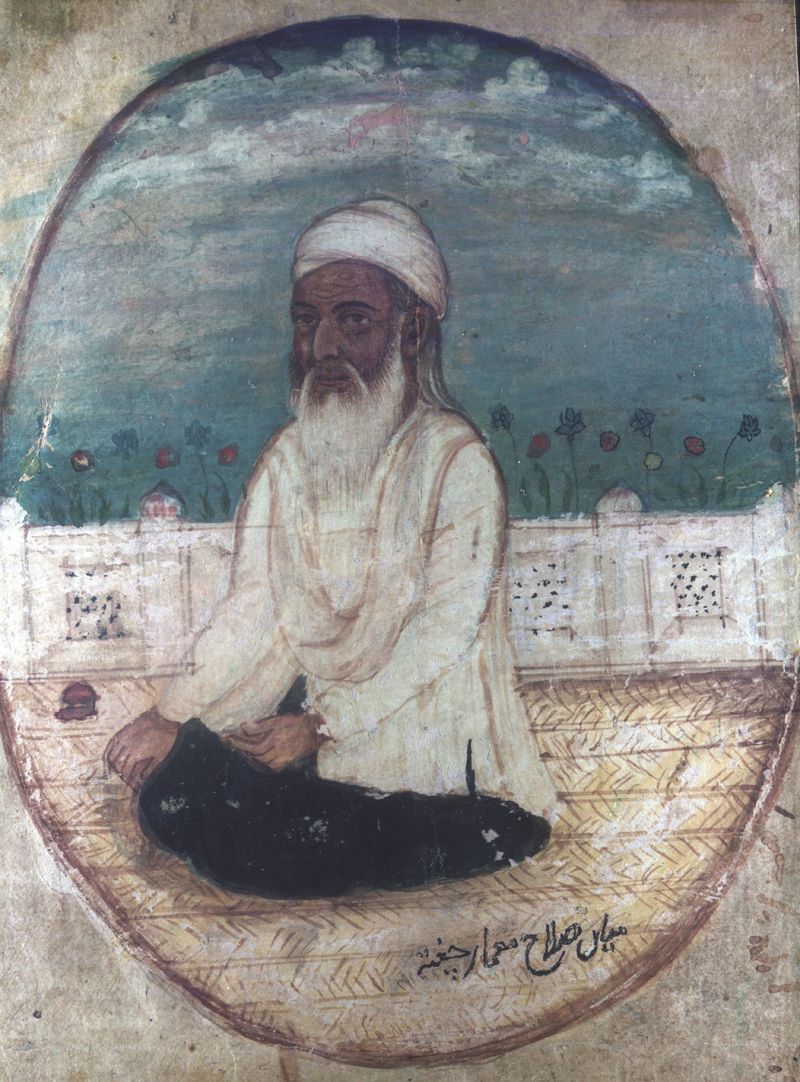
Salah Mimar Chaughata died 11th May 1858
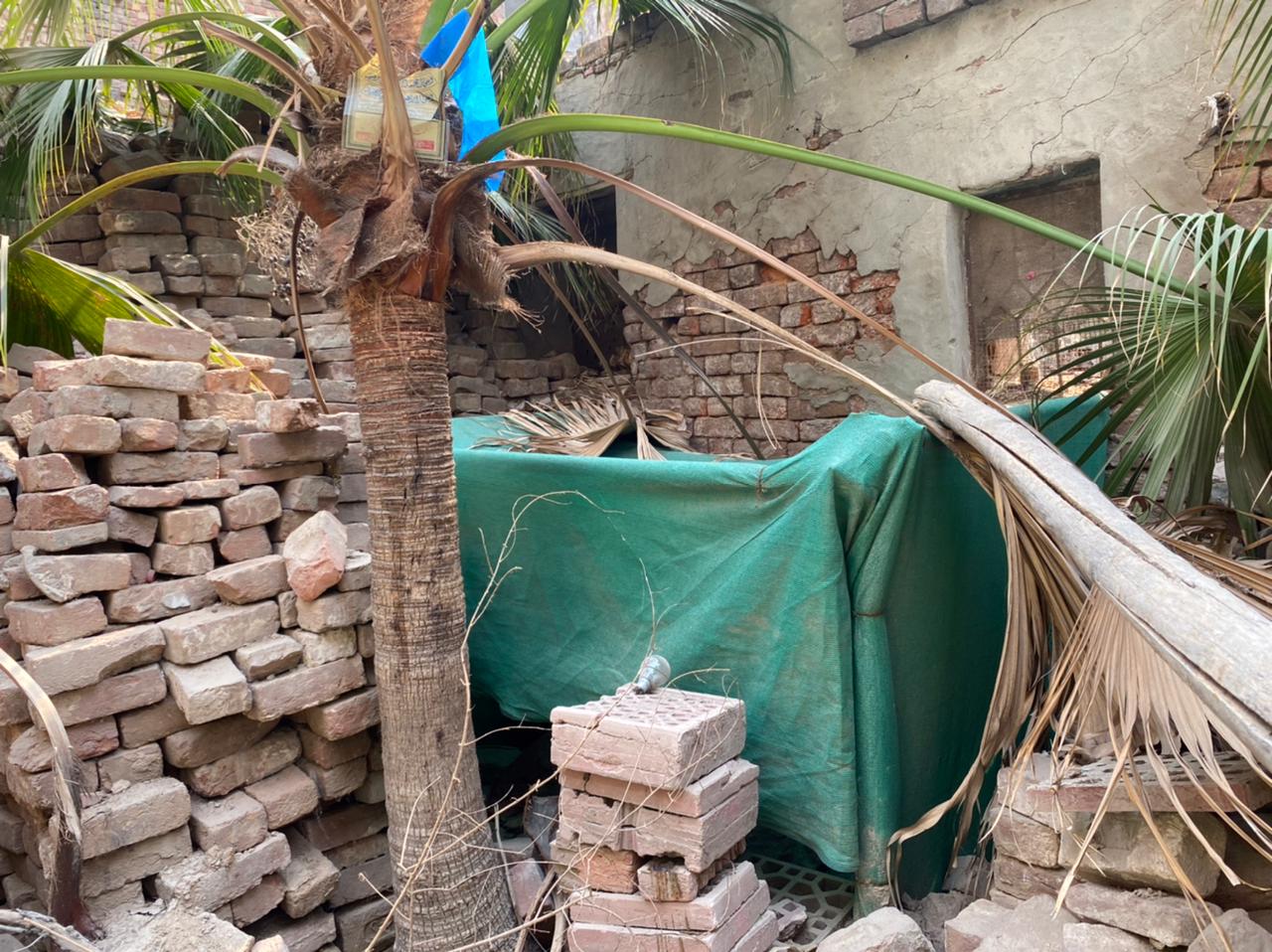
It is in total neglect as most things like these come to the end. But a few new inscriptions, both outside and inside show care. One inscription gives the name of many descendants long with their phone numbers. But these people attribute the mausoleum to Imam Farzand Ali, who was the Imam of Wazeer Khan Masjid, around 1900 AD. That is not so. The mausoleum was built by admirer of the Imam at the start of the British rule, that is 1846 AD to 1849 AD. Imam Allah Baksh was the Imam at that time. Who thought about it? One does not know, but it is naturally built out of love and reverence. Umar Din Naqash was the famous Naqash of the time, sitting in his hujra in the mosque itself. He was grandson of Mian Salah Mimar. All this looks like love of a family. Remember that Imam Gamu wrote verses in Punjabi and the greatest Punjabi poet at that time was Baba Hiyadatullah also of Mohalla Chabuk Sawaran. All things are interconnected, but we do know that Mian Salah Mimar was the only architect in Lahore at that time who knew the advanced principles of Mughal architecture. Ghulam Ali Mimar of Mausoleum of Maharani Gul Begum in Miani did not have the credentials to do this job.
Who was the architect at that time? Someone who was also associated with the Mosque as well as the Bageechi. Father and son of highest old talent lived nearby in the Mohalla Chabuk Sawaran. That is Muhammed Salah Mimar and his son Mian Raheem Baksh Mimar. The cousins had a hujra in the main mosque itself, practicing Naqashi from older times. The hujra of Umar Din Naqash is known to all. His son Baba Miran Baksh followed his profession.
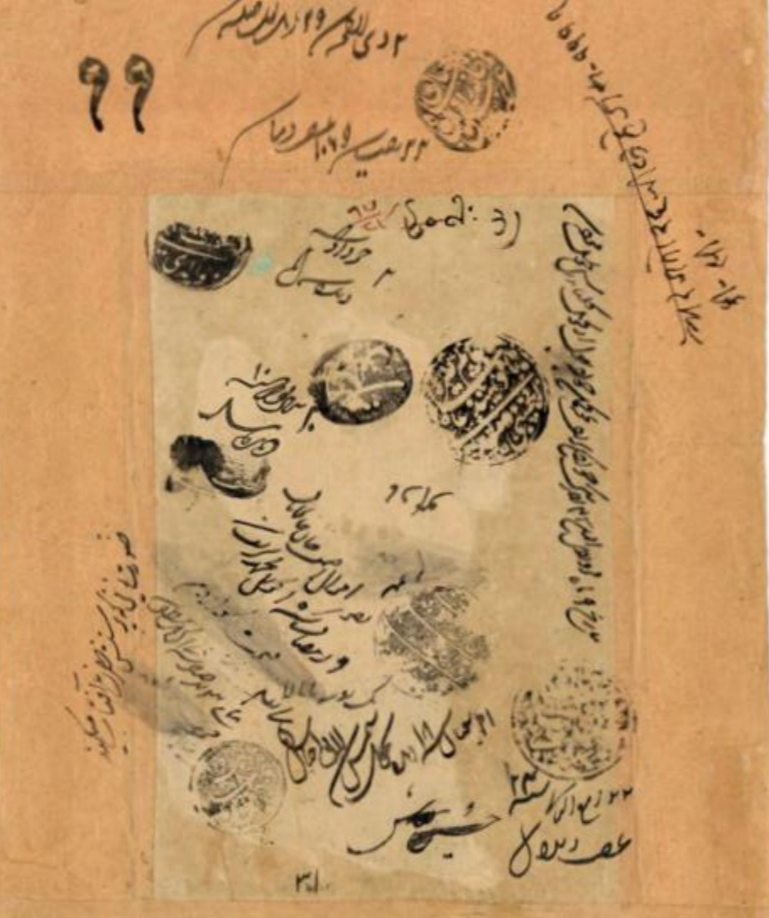
It was here that the family of Mirza Izzad Baksh (last descendant of Wazeer khan), was seduced by Mirza Chajju Baig, who masterminded the theft of the Documents of Wazeer Khan, from the house of the Syed Hussain Ali (Bute Shah), the last official Mutavalli of Wazeer Khan Mosque. It was in connivance with Charles Aitchison, DC Lahore. The mosque passed on to Faheem un nisa and her husband Kareem Baksh, and endless litigation. But that is another story, for another time.
IN THIS HYBRID WAR THE VALUE OF TRUTH IS BEING DOWNGRADED; SOCIETY IN ITS QUEST OF ACCUMULATION THROUGH GREED HAS LOST, THE ESSENTIAL VALUES OF LIFE AS TOLD TO US BY ALL RELIGIONS.
We were taught many things at home. We were taught things at school too, but the home values out did them all. Our mothers told us the value of truth. Now social media teaches us to be street smart and not indulge ourselves in outdated norms of life. Are we better with them? Are we improving?
Truth
In fact, the society is crumbling into dust. We are told a tale of the Prophet (PBUH). A habitual sinner went to the Prophet and told him that he cannot leave all the sins he is donig but promised that he can leave one. The Prophet (PBUH) said that hold on to the truth, do not indulge yourself otherwise. The sinner promised to do that. The result with little time all the sins went away just be forming as habit of telling the truth. So truth is important essential of our life and the Quran starts our quest by assertig the value of truth. Hold on to the truth. It is our promise to our readers on this blog, that to the best of our knowledge, everything said here is the Truth and we are proud that we disseminate knowledge with truth.
What Quran says about the reward of Truth?
“‘This is the Day when the truthful will benefit from their truthfulness.’ For them are gardens [in Paradise] beneath which rivers flow, wherein they will abide forever, Allah being pleased with them, and they with Him. That is the great attainment,” (Al-Ma’idah: 119).
THE TRADITION OF MUSHAIRAS IN OUR CULTURE; POETIC GATHERING IN LAHORE IN YEAR 1044 A H. INAUGURATION OF MASJID WAZEER KHAN LAHORE.
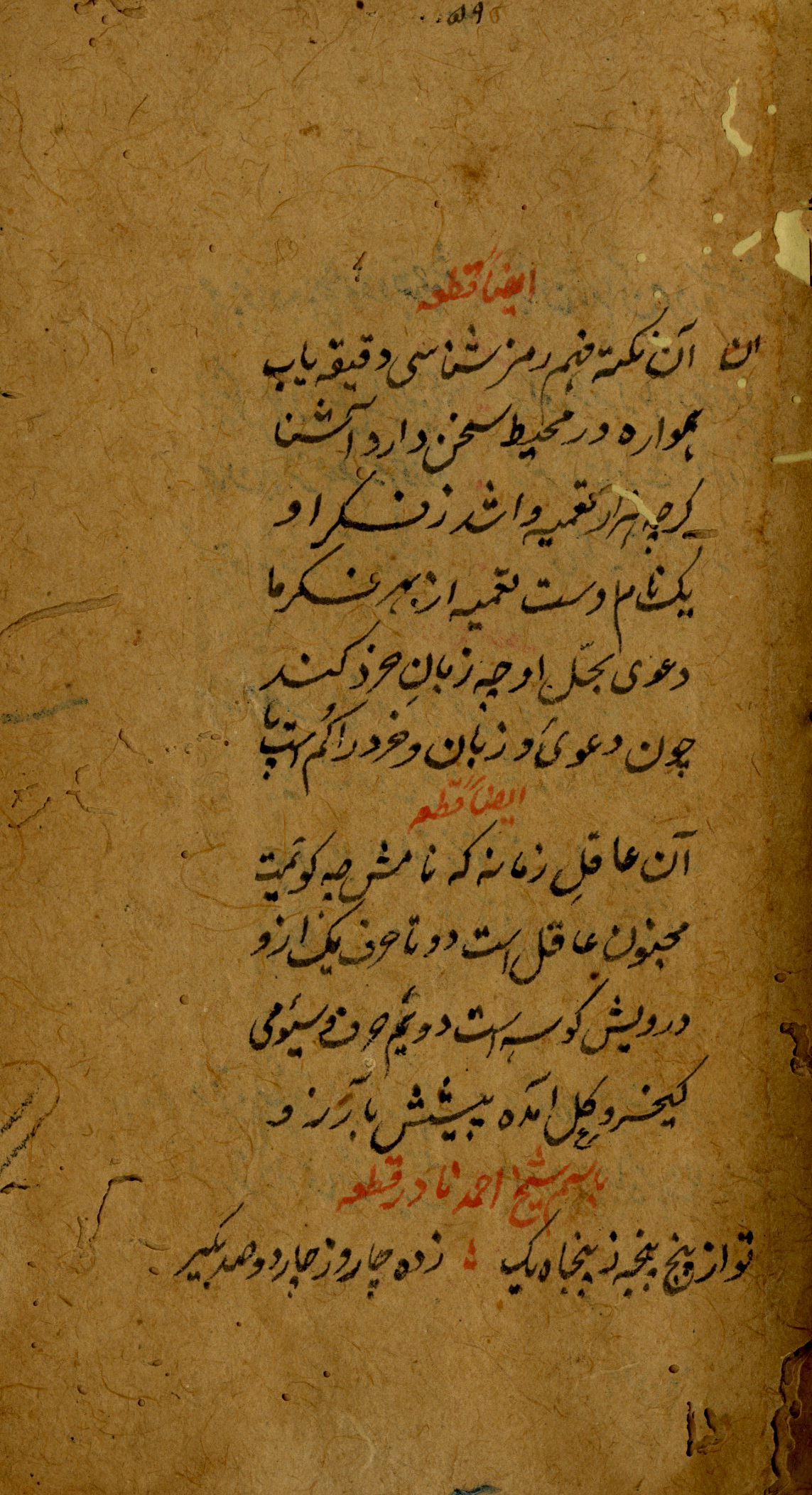
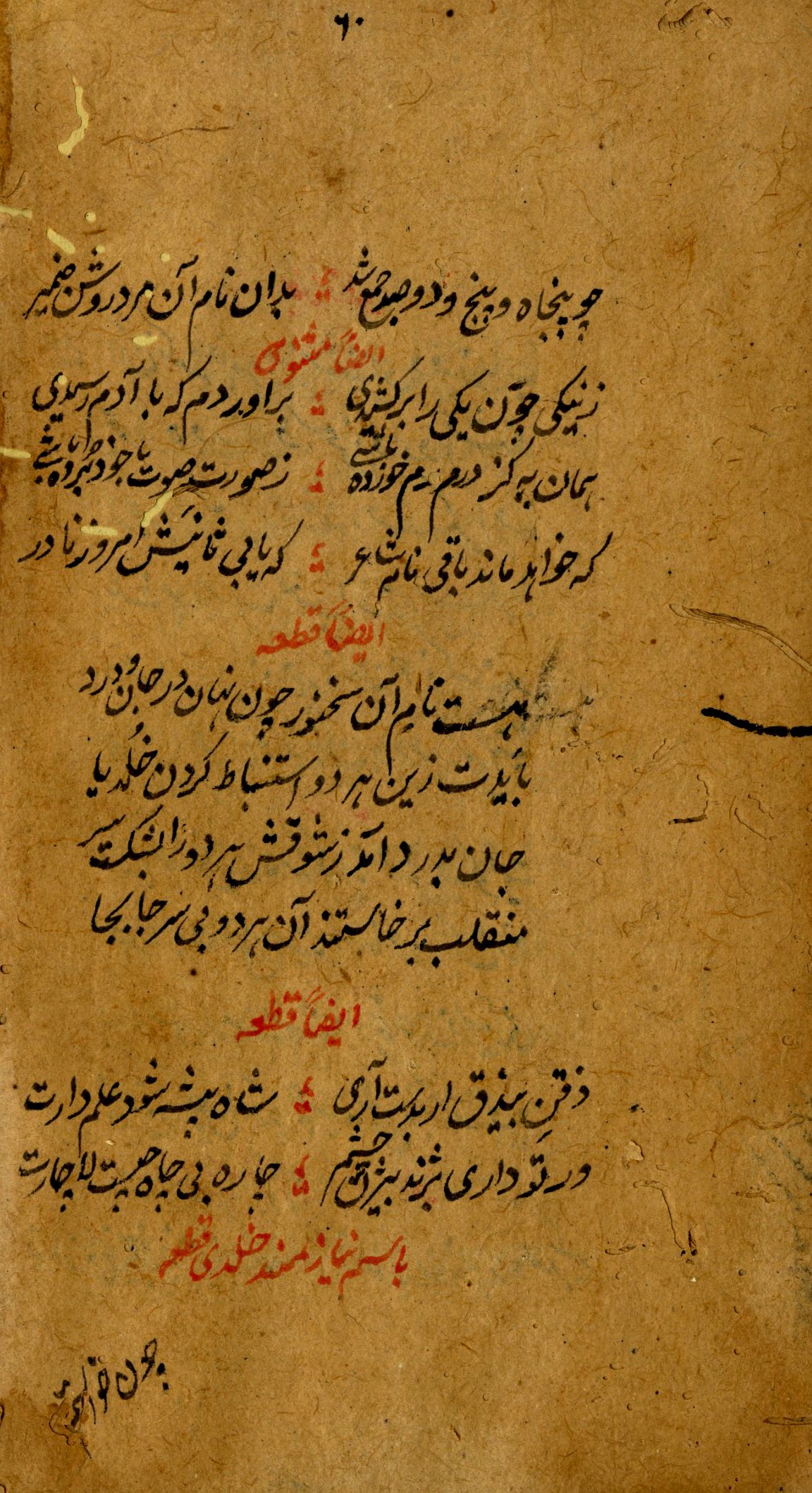
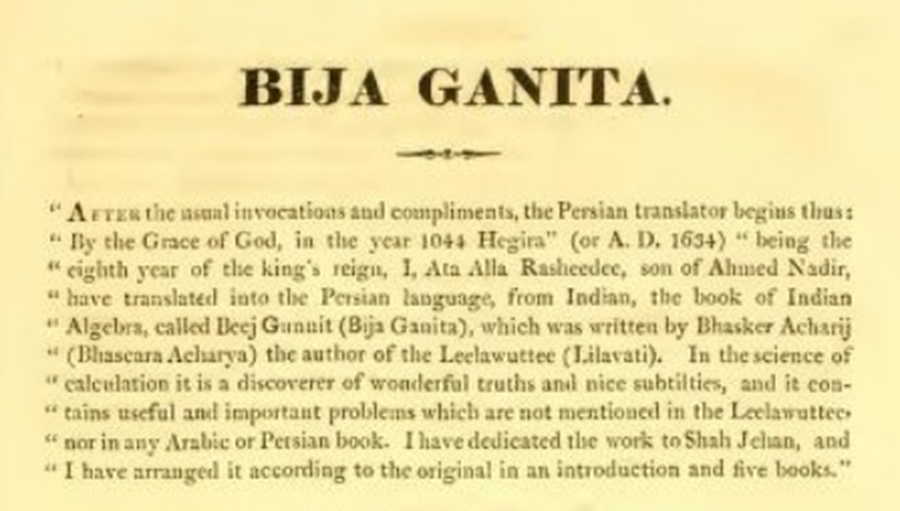
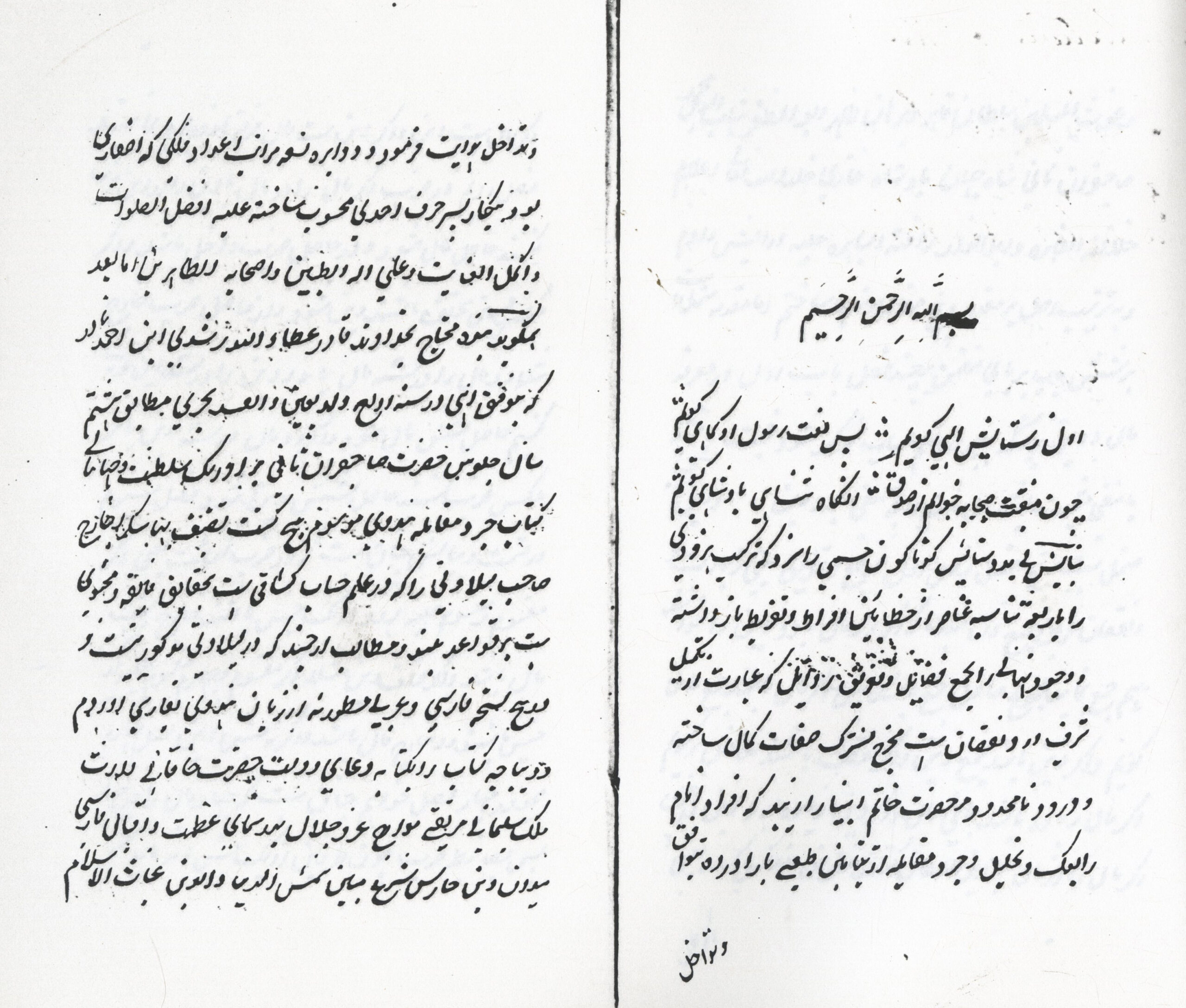
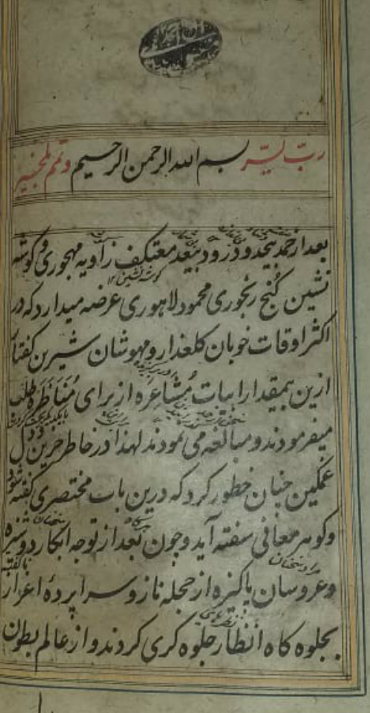
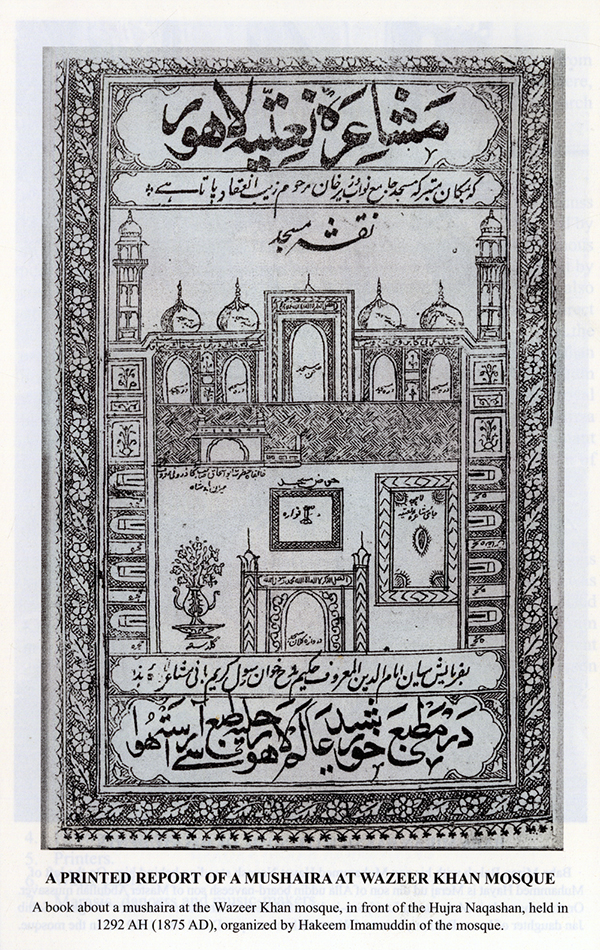
The Wazir Khan mosque in Lahore was completed in 1044 AH. All this is on record. Also on record is that efforts were made from day one to make it a total cultural center. With the mosque a madrassa was generated and opportunities for literary gatherings. In an indirect way in a copy of Diwan Mahmood Lahori, the year of 1044 AH is given as a day of mushaira in Lahore. It seems that Mahmood Lahori who had come to the region in those times, presented a Masnavi of Mahmood and Ayaz, that is Sultan Mahmood Ghaznavi and the Governor of Lahore Ayaz,. This collection is there in many copies of same. We have seen copies dated in 18th and 19th century. But the initial reference is about a poetic gathering in 1044 AH. With this Diwan of Mahmood Lahori is attached another Diwan of Ahmad Nadir. And just who is this, Ahmad Nadir? It is a diwan of Ustad Ahmad Lahori, who had the takhallus of Nadir, after Shah Jahan had decorated him with the title of Nadir ul Asar or Wonder of the Age. This title of Nadir is confirmed in other books, including the statement by his son Attaullah Rushdi. The writing of poetry was there with many members of the family, and the famous Diwan of Muhandis, that is Lutufullah Ahmad. The Diwan of Khairullah Muhandis was discovered too recently. Poetry was in the blood of the family, as expressed in their architectural creations.
An actual clue to these gatherings come from an inscription written by a poet Mirak Dost Muhammed in 1053 AH which is there on the wall facing the south bazaar of the mosque. The complete inscription could not be deciphered but the date and name are very clear. The name Mirak appears in the Tazhkiras of that time, but also finds reference in architects of that period.
Ahmad Nadir one
Ahmad Nadir two
Attaullah reference of Ahmad Nadir
Attaullah reference Ahmad Nadir actual Ms
Diwan Mahmood Lahori
Mushaira 1044 A H Lahore
Mahmood Lahori
Naatia Mushaira 1875 AD
Munazra 1044 AH
Munazara Mulla Baqi 1044 AH
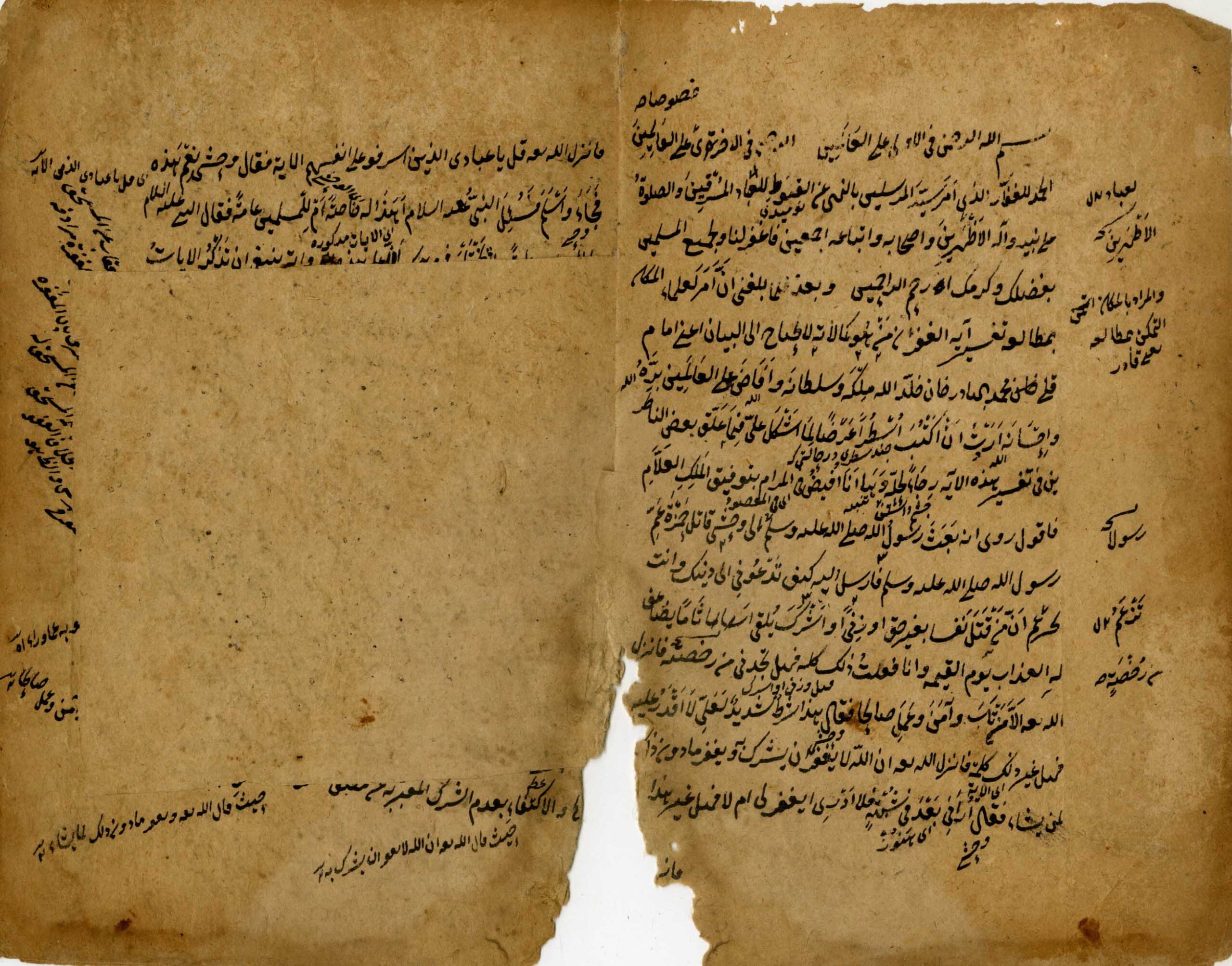
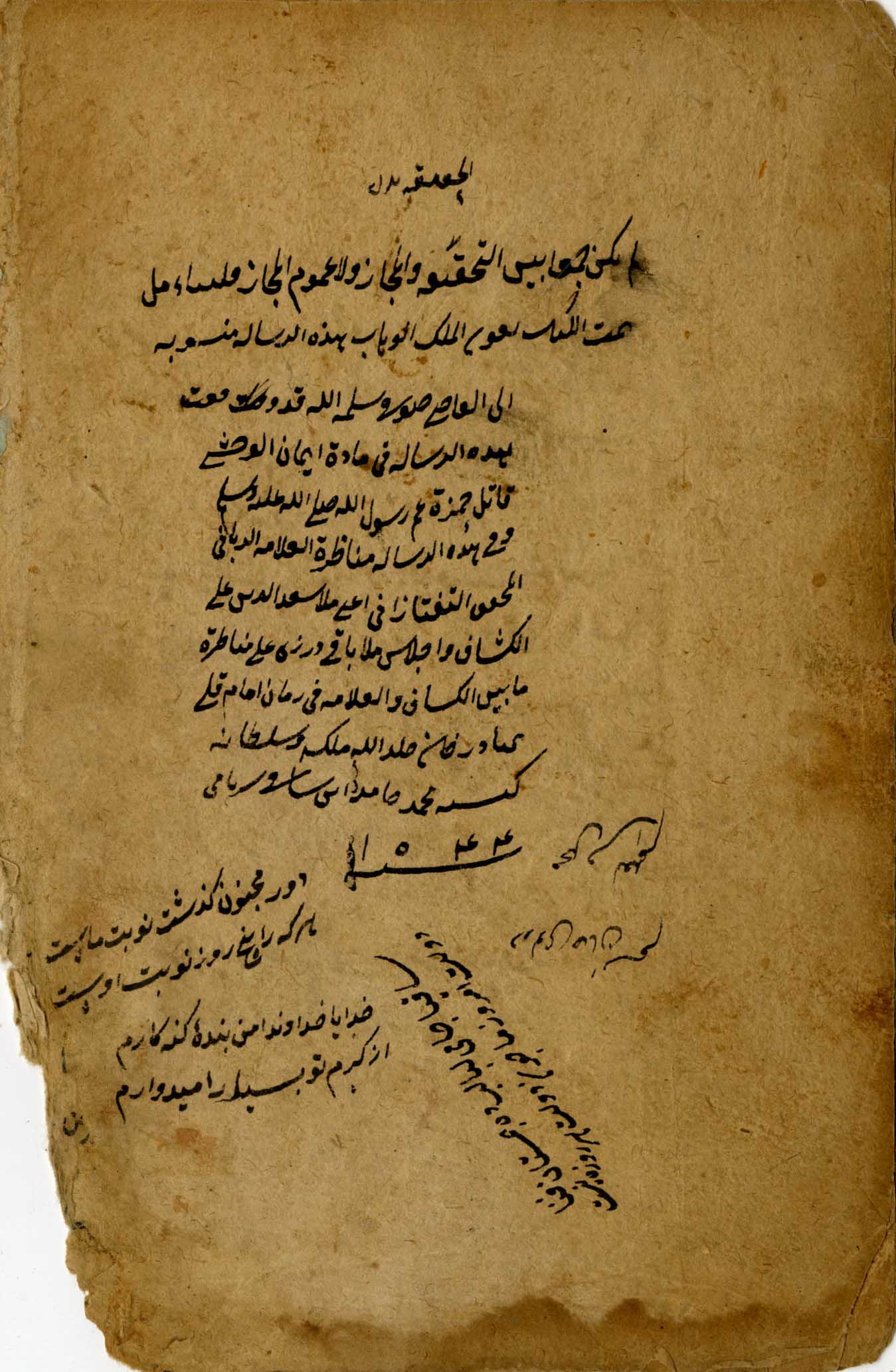
And the inauguration of the mosque was not merely Mushairas. But philosophical and religious discussions as well. By Grace of Allah, we have a small religious discussion done in the same event, and the writer is one Muhammed Hamid, and the date is again 1044 A H. Picking up clues from past is a lot of hard work as well as sheer luck at moments. This Hamid may be Hamid Mimar, partner, friend, cousin or even brother of Ustad Ahmad Mimar. Obviously, speculations! But there is more to discover. It talks of a session of discussion over QATIL HAMZA or the murderer of Hazrat Hamza, and the people involved are all living legends. The name is of Qazi Sufi, Allama Rabbani, Mulla Saad ud din Ali Kashfi, and Imam Quli Bakhtawar. The session was chaired by Mulla Baqi. And here is another clue. Abdul Baqi was a leading calligrapher of those times and came from Iran and later went back to Iran. All these people were alive and inter related to each other through various means.
The meetings in Wazeer Khan Mosque continue to be mentioned in various times. Dara Shikoh’s Munshi Brahman mentions same. Mufti Ali uddin in his Ibrat Nama of Punjab mentions same too. A book can be written on those sessions alone. A rich cultural legacy set in motion, and stopped by the British. But that is another story!
THE HINDU CALLIGRAPHERS OF LAHORE; A FAMOUS “LAHORE MAL” FAMILY OF KATIBS
Lahore was always a culture center, where in all nationalities mixed with each other. It was here that Hindu students were trained by Muslim Masters in the art of miniatures. Many famous mussawars are on record. But we have Hindu students excelling in Muslim calligraphy, both in the Arabic and Persian script. These “Katibs” made a name for themselves. Our blog is on the subject and a link is provided for the same. Here we refer to the Mal family of calligraphers of Lahore.
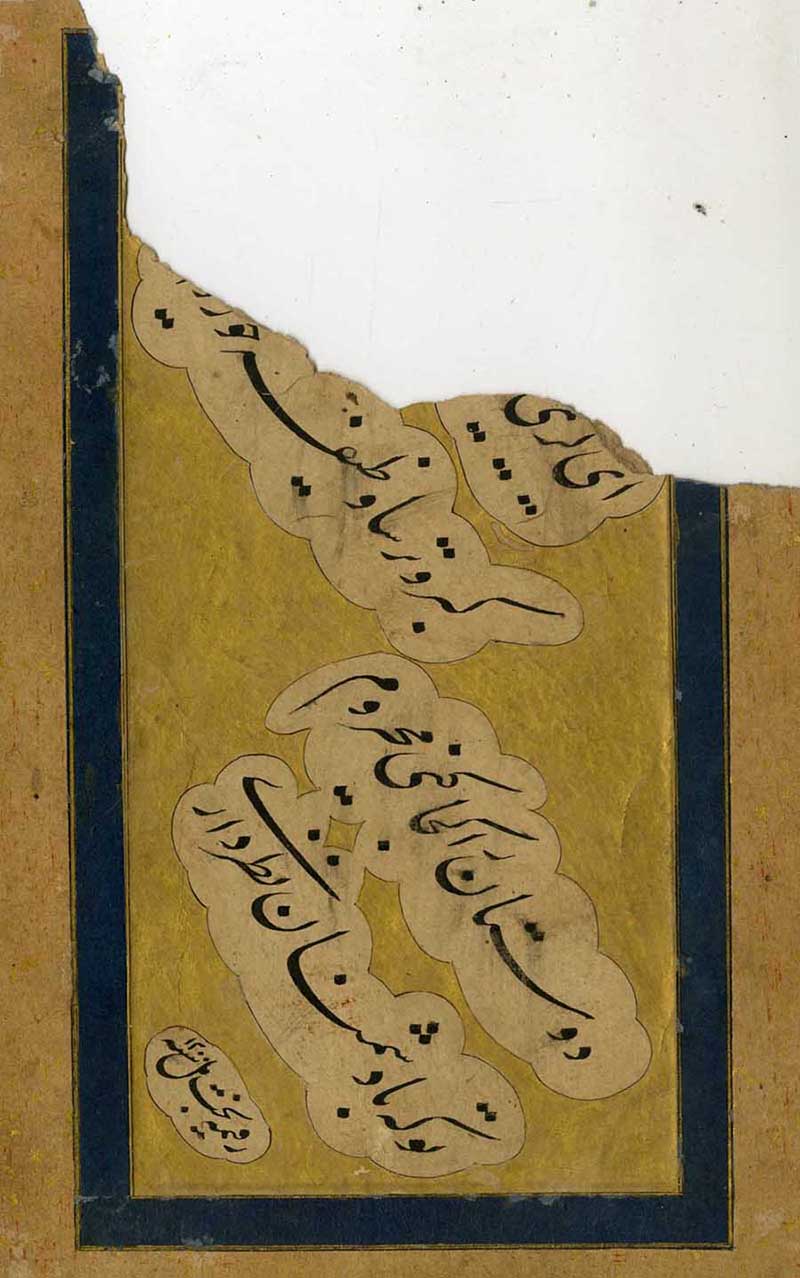
We have seen and heard of many manuscripts written by Hindu calligraphers, on many subjects. Mostly we come across Inshas composed by Hindu Munshis and written as well by Hindu Calligraphers. But the subject does not end here. Astronomical tracts are there too but mostly we find them in Sanskrit script and language. But these calligraphers were at many subjects, including Ilm Najoom. The most interesting is religious subjects related to Islam. We find manuscripts like Masnavi Maulana Rum, written by them. I have myself seen a two-volume huge Masnavi written by Hindu calligraphers in Lahore in times of Aurangzeb. A Quran written by a Hindu calligrapher was offered to us once. Obviously, we come across many Qitas written by Hindu calligraphers. We have in our collection a Punj Sura written by a Hindu Calligrapher in times of Emperor Jahandar Shah, who was Emperor for one year only in 1039 AH or 1713 AD.
Lahore Mall Jahandar Shahi
Fidwi Jahandar Badashah
Huge Panj Sura 1
Huge Panj Sura 2
Katib Bakht Mal 1200 AH
Tracing the Hindu caste “Mal” implies relation to Bengal and Jharkhand, and although they come in terms of “Shudra”, the profession associated with them mainly is that of wrestlers and snake charmers. But attaching themselves to Mughal Courts is revealing in their development. In any case the name Lahore Mal means that this calligrapher was associated with the city of Lahore, and follower of Emperor Jahandar Shah. Jahandar Shah was imprisoned by Farrukh Siyar, and spent prison with wife Lal Kunwar. That he wrote the Punj Sura in a most unique way possible. Large and few lines to make it easy to read and easy to write.
RAJA JAI SINGH’S INTEREST IN ASTRONOMY AND MUHAMMED SHAH; INVOLVEMENT OF KHAIRULLAH, ABID, AKBAR AND USHOOR BAIG IN ZIJ: ALL MUHANDISEN BELONGING TO FAMOUS MIMAR FAMILY OF LAHORE.
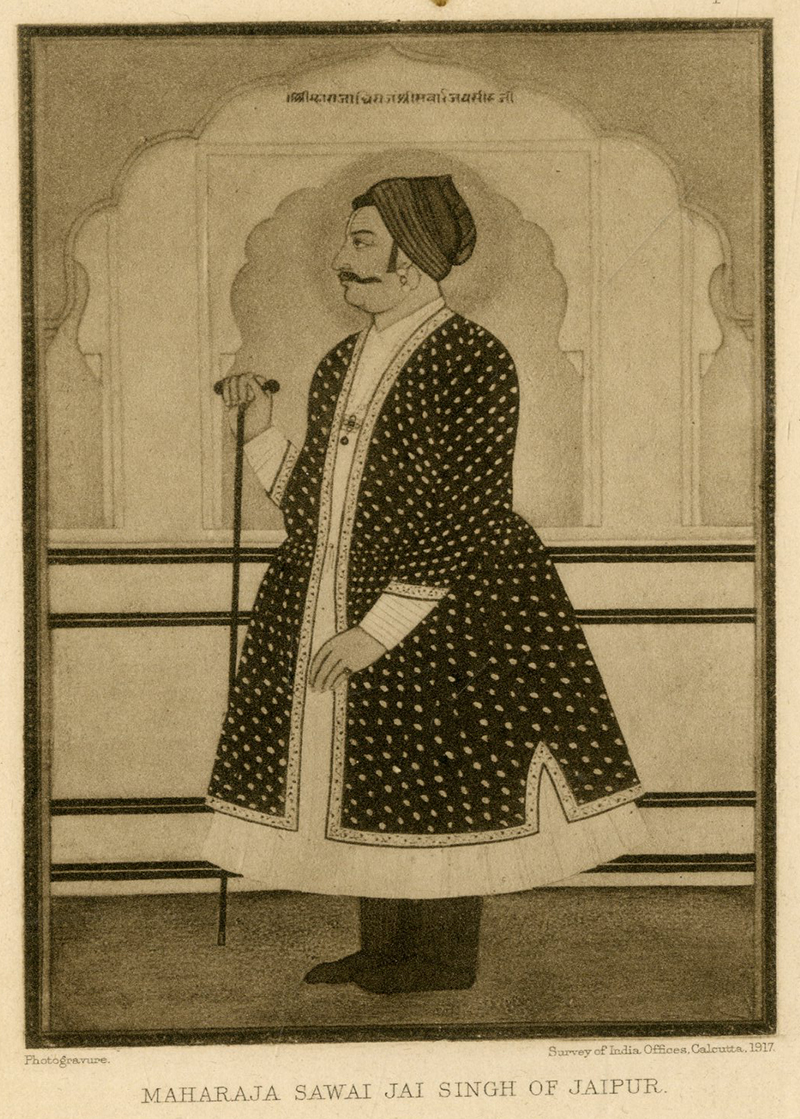
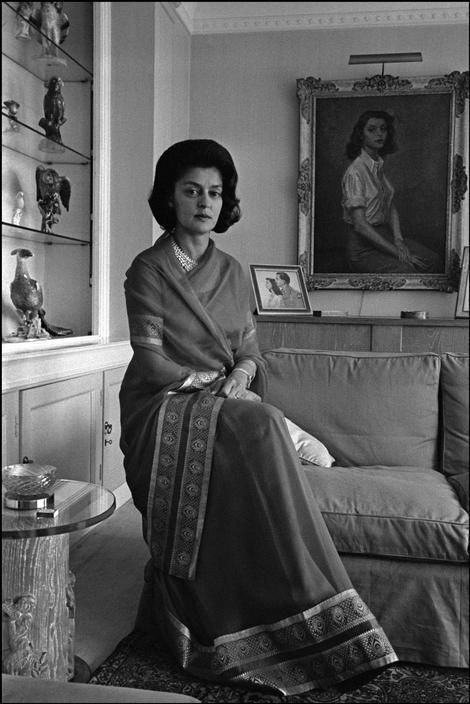
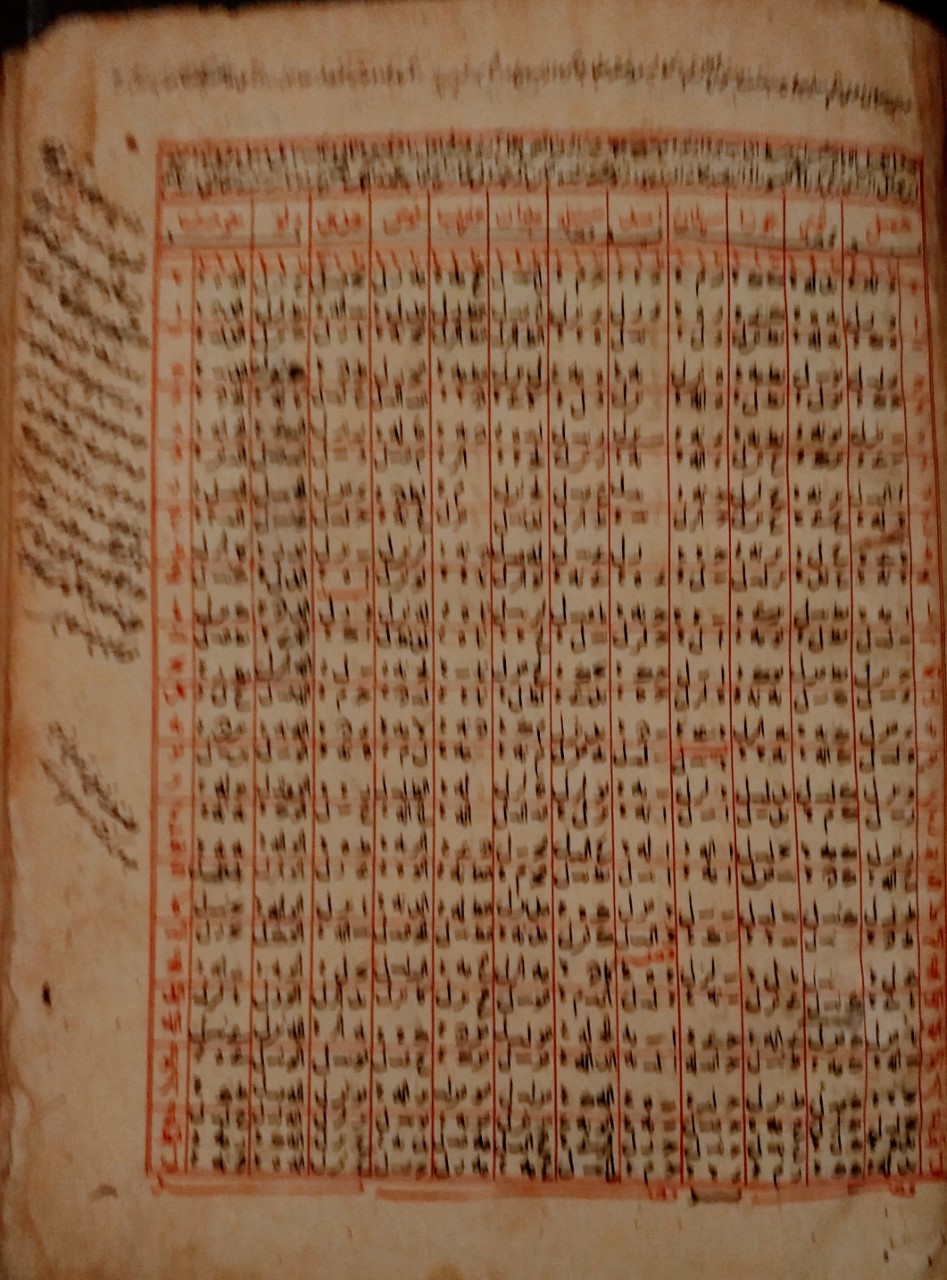
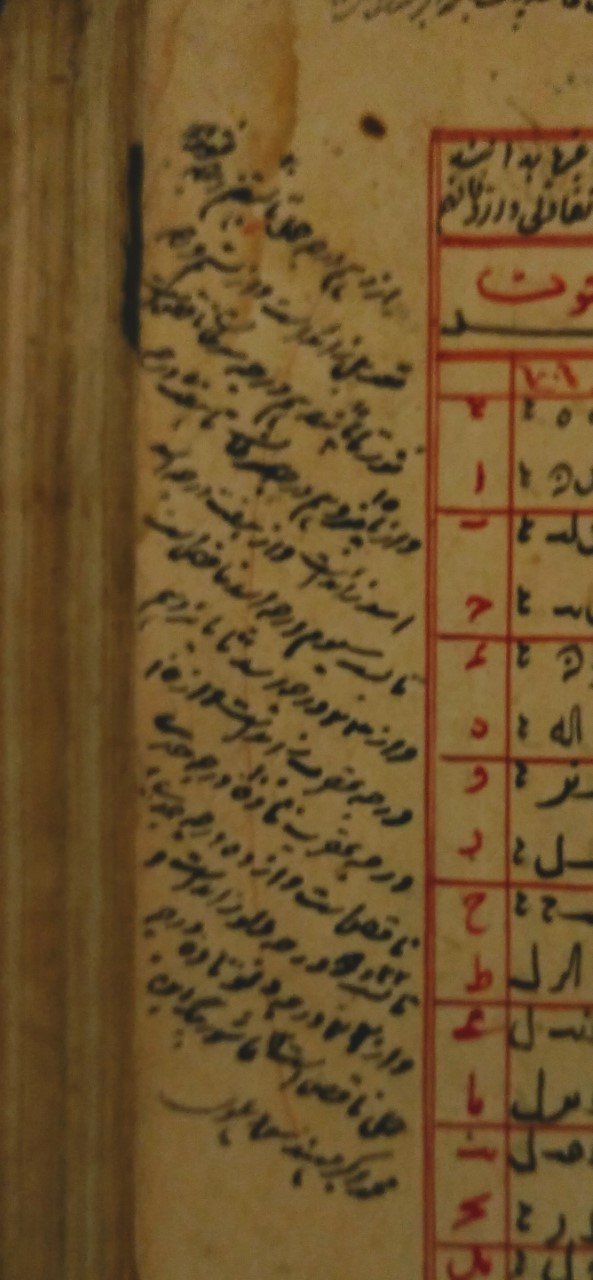
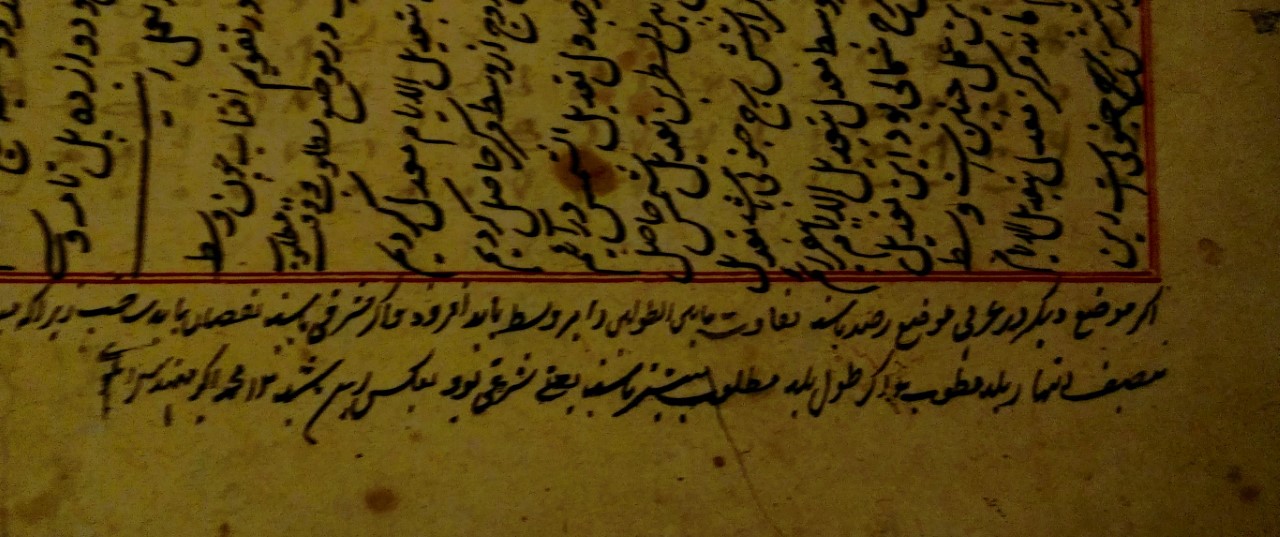
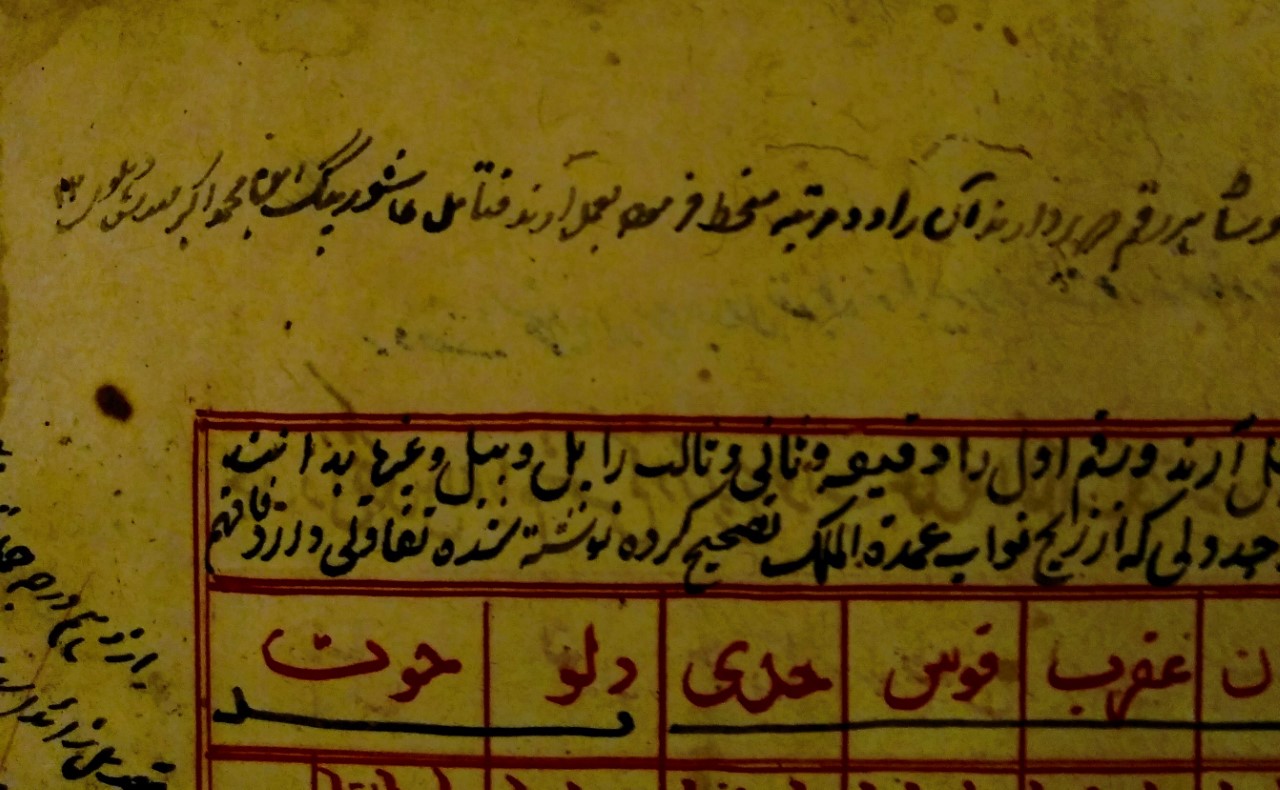
Maharani Jaipur Gayatri Devi was visiting Lahore and Chughtai Museum. We had invited her to inaugurate one of our shows but she was not allowed to come at that time. She was at odds with Indira Gandhi, Prime Minister of India. I told her about our ancestor Khairullah Muhandis, who was In charge of the many observatories of Raja Jai Singh for many years. He had already written his notes on Zij Muhammed Shahi. Our own manuscript of same includes his name, but also that of Abid Muhandis, Akbar Muhandis and Ushoor Baig. All dated around 1130 AH, the year of the Zij Muhammed Shahi itself.
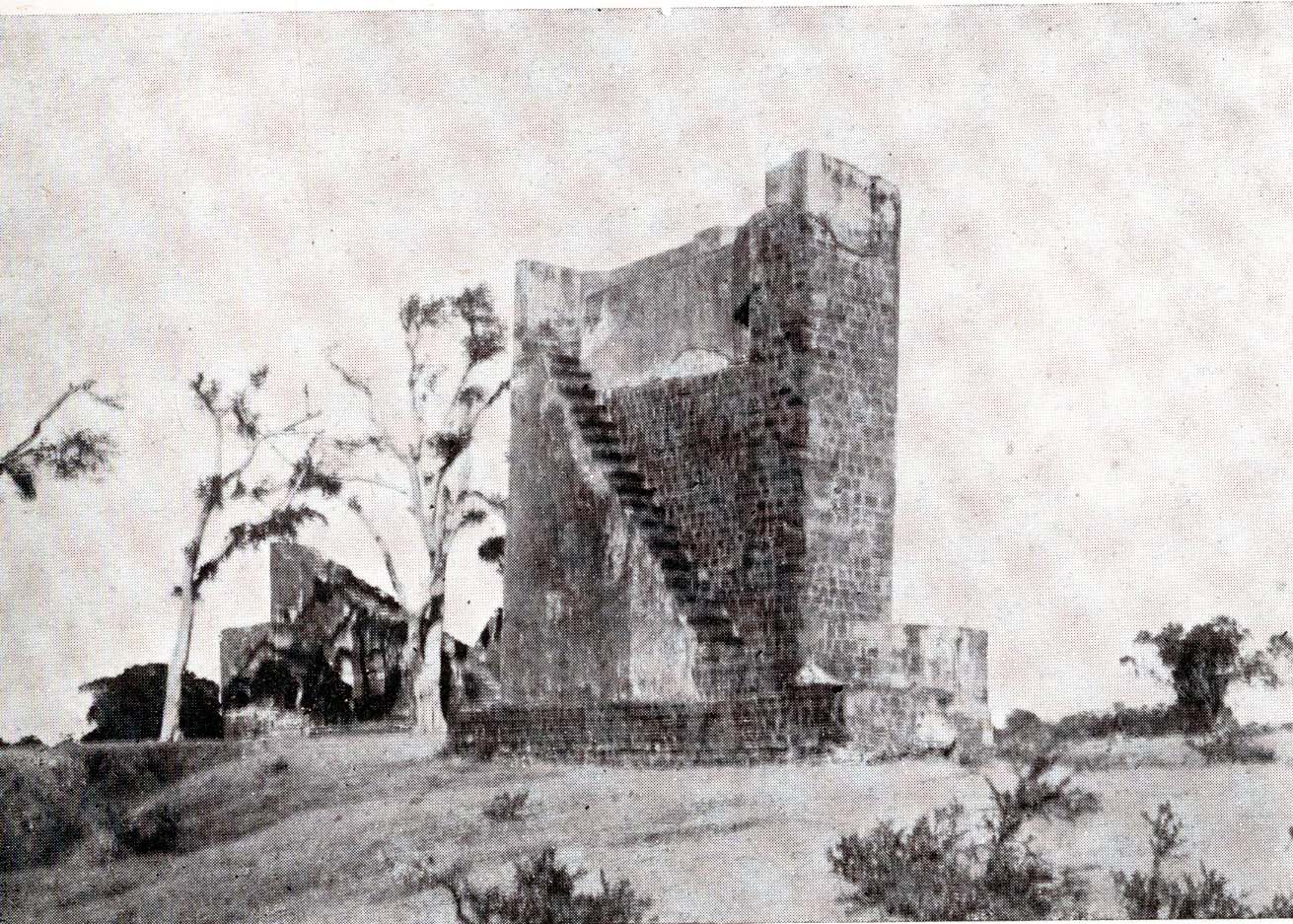
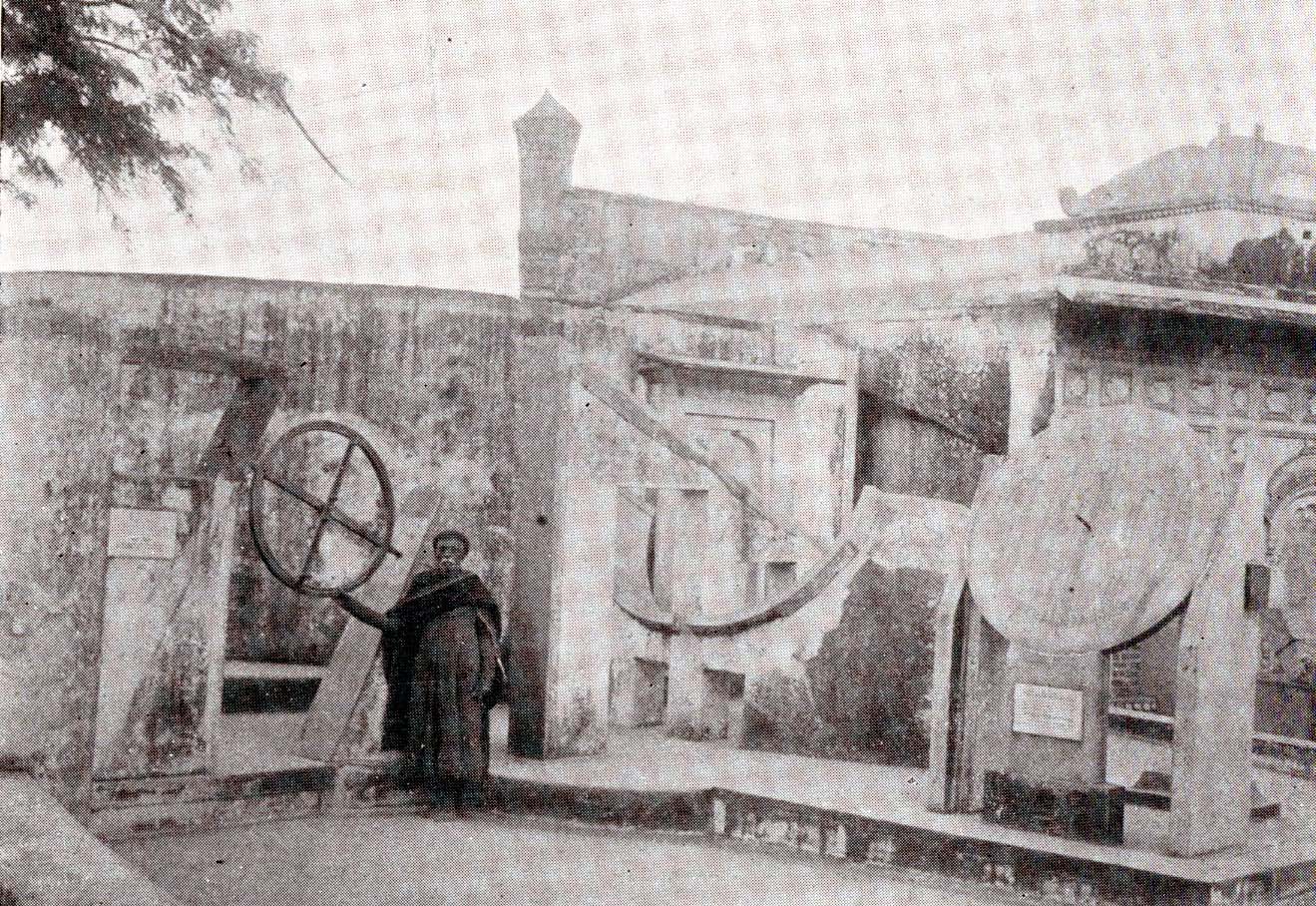
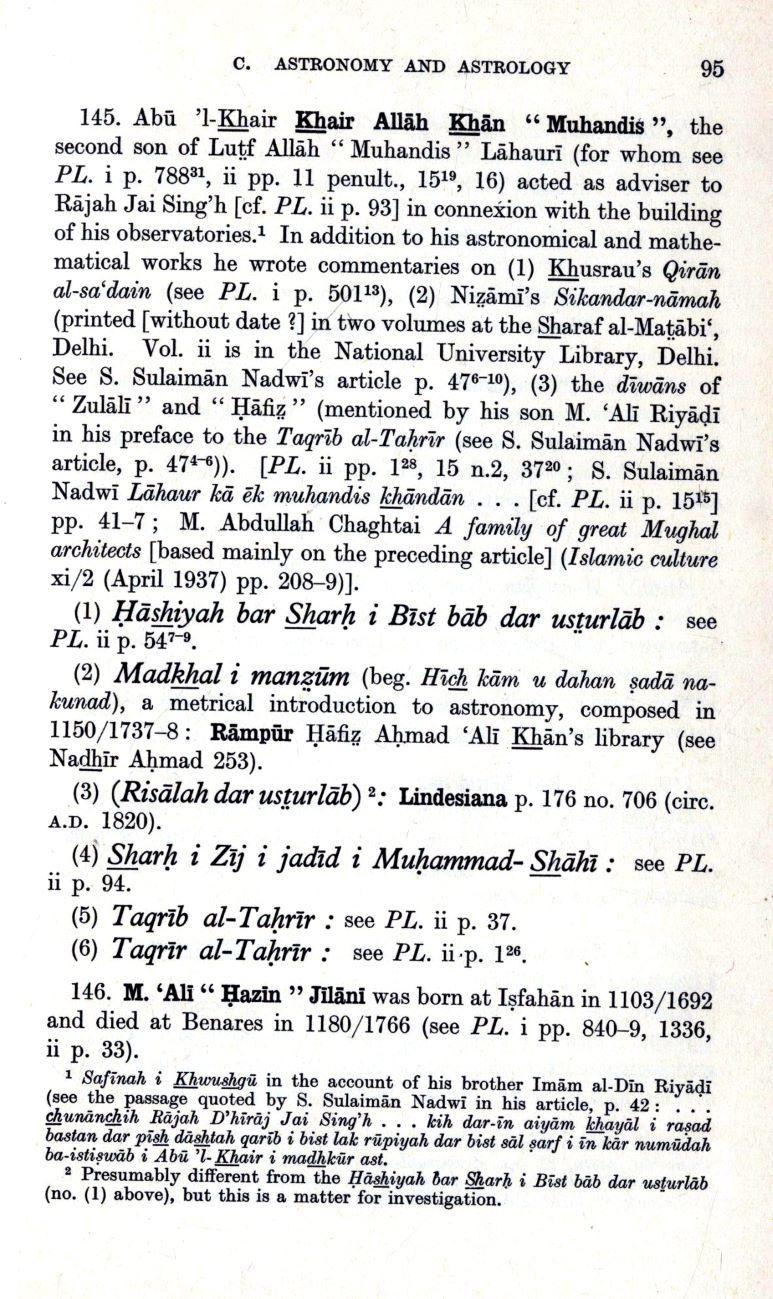
What exactly is this ZIJ? Simply astronomical tables compiled with use of instruments at the various observatories of Raja Jai Singh, mainly the Jantar Mantar at Delhi. Although credit is given to Raja Jai Singh for all this, the confirmation obviously was required of the Emperor for same, and that is why the Zij is called after Emperor Muhammed Shah. Keep in mind that the Emperor is painted as a pleasure-loving nincompoop by the Western media, and reviled as such a depraved person cannot be responsible for giant steps in astronomical research. Khairullah Muhandis was in fact working for the Emperor himself. According to compiler STOREY he was the designer of these astronomical instruments, and InCharge of all these observatories for a long period of time. The amazing thing is that many of these astronomers were sent abroad to Europe in those times to harness themselves with latest knowledge on the subject. We have a treatise written by Khairullah at the port of Surat in those days, suggesting visit abroad. Various copies of his Sharh Zij Muhammed Shahi is available in various libraries. Various generations of Khairullah worked on Sharh Zij Muhammed Shahi, and the last one recorded is Mirza Gul Baig, and he writes his name as Mirza Gul Baig, son of Mirza Zainul Abedeen, son of Mirza Muhammed Ali, son of Khairullah Muhandis, son of Lutufullah Muhandis Lahori.
Jaipur Observatory
Delhi Observatory
Ujjain Observatory
Benaras Observatory
Descriptive Catalogue Jai Singh
Raja Jai Singh
Observatories Jai Singh
Gayatri Devi Maharani Jaipur
Zij Muhammed Shahi
Akbar Muhandis note
Akbar Muhandis Sharh
Ushoor Baig son of Akbar Muhandis
Storey reference Khairullah
Lahore was the center of Astrolabe makers, famous all over the world. It was Khairullah’s genius which transferred precise small instruments into huge concrete structures. Research went miles ahead with such advances in observation. There was Mulla Chand with Emperor Akbar, Fareed Dehlavi with Shah Jahan, Khairullah with Muhammed Shah, and others. Emperor Humayoun died when he fell from the stairs in his observatory. And lest we forget there was an observatory tower in Lahore Fort too, which is no more, but record of same exists in various writings. The Mughals were very fond of astronomy, and had scholars to back their research. Well done!
VISUAL IMAGERY OF SIR THOMAS ROE IS IN CONFLICTFALSE ATTRIBUTION BY ENTHUSIASTS VERSUS REALITY
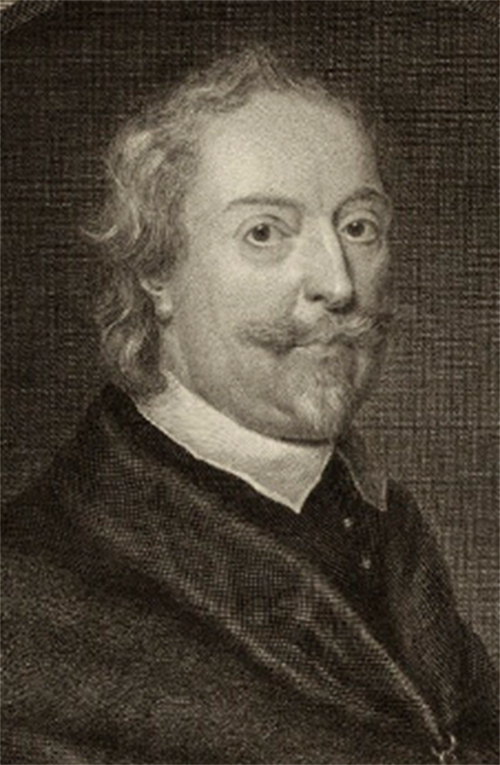
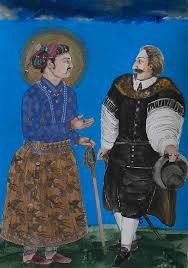
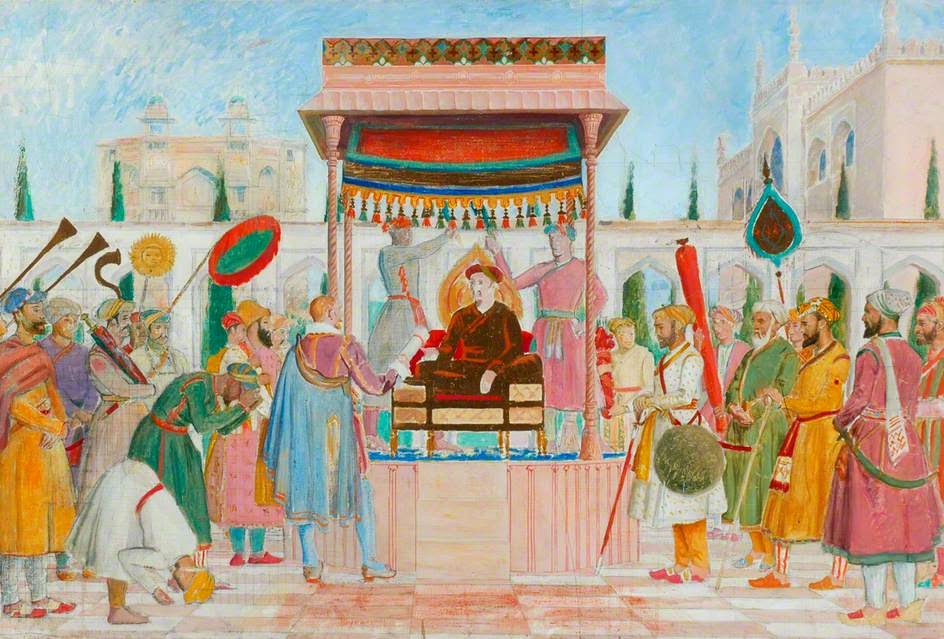
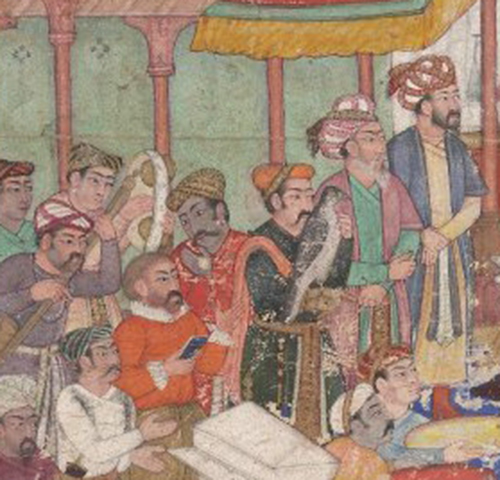
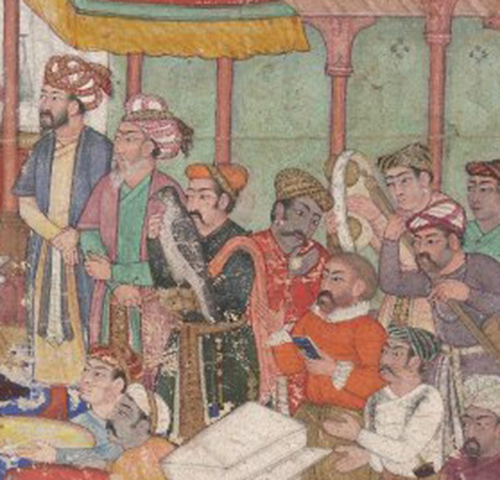
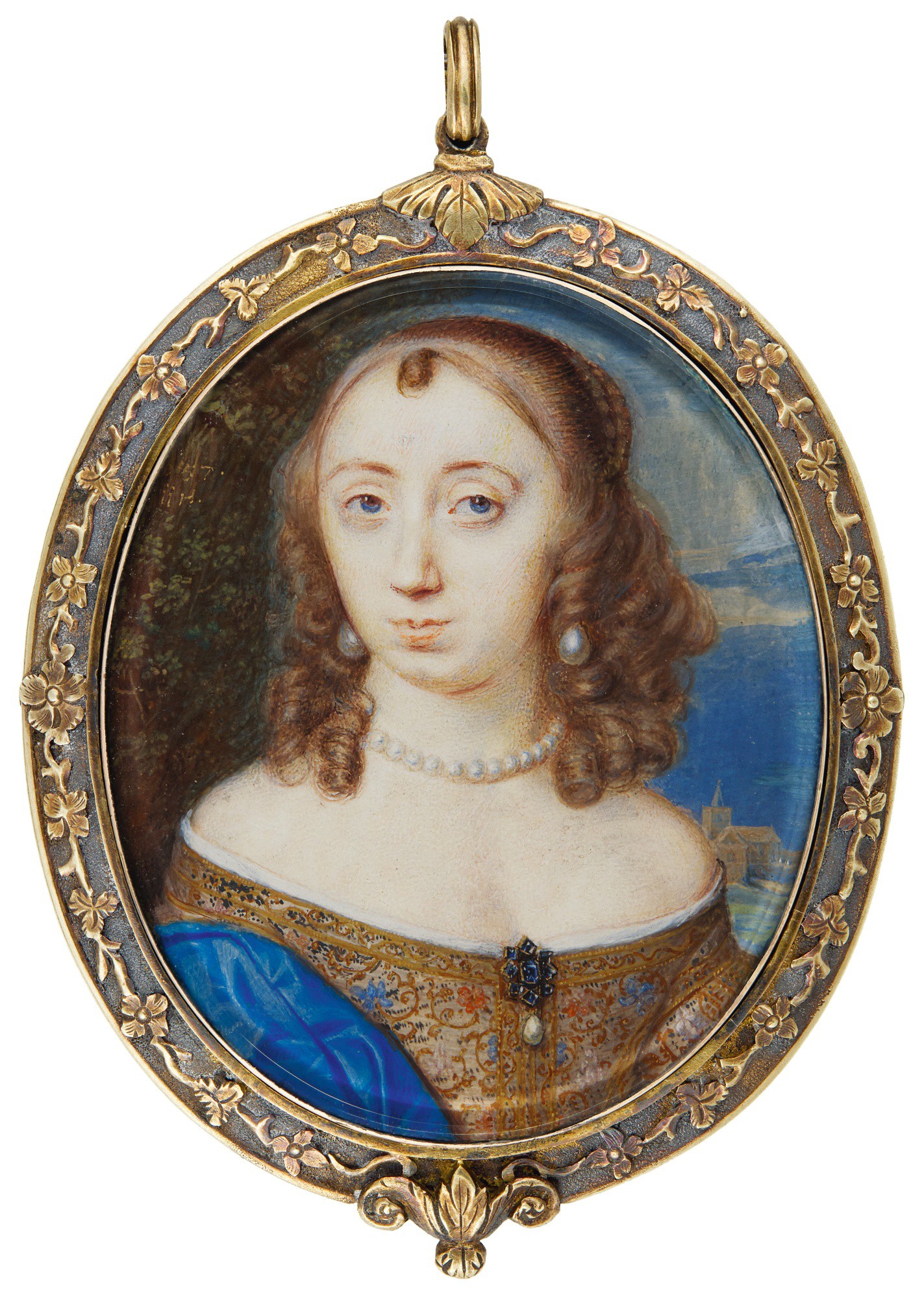
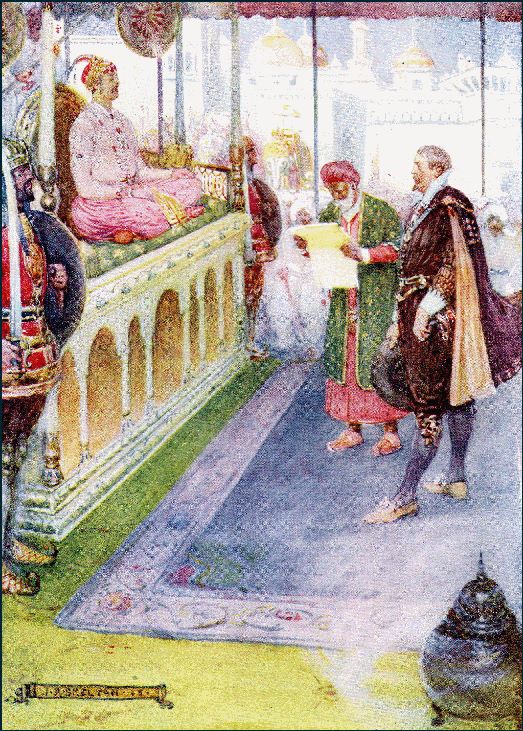
So much desire to prove Sir Thomas Roe that internet bombarded with imaginary and assumed images of Thomas Roe. Of course the real Thomas Roe can be seen in official portraiture but nothing to do with the reality. The only old one is an attributed imaginary miniature of Thomas Roe and it is deliberately faded and with so much wrong in it. Thomas Roe raises his left hand to salute Emperor Jahangeer. In right he holds something like a book. Maybe a bible. Or the image has been made from a khaka (sketch) in reverse. Actually it looks like a flipped tracing. The noble is kissing left hand of Jahangeer, but when flipped it becomes the proper right hand. His level of importance can be judged by no respect being afforded to him even by the courtiers. But look at his face and dress. He does not have an upper covering on his so called trousers. But his face shows hair growing after a possible TEEND (head with no hair) and shaved beard. Drooping mustaches against upright ones in official picture. No beard at all, no hair on head, just a few days stubble. Fresh from a prison may be, or a sick bed. Look at the eye brows, certainly it is not Roe in any way. But it is a possible 18th or 19th century work and fading may have been done to hide the age or some wrong imagery under the erased part. The European could be an addition on a destroyed work.
Sir Thomas Roe
Amusing fake Thomas Roe
False imagery Sir Thomas Roe
A questionable Thomas Roe
Flip imagery reveals tracing
A miniature by John Hoskins
Imaginary meeting Thomas Roe
It is not Sir Thomas Roe but perhaps a missionary priest assumed to be the diplomat. Edward Terry writes about the meetings of the diplomat with Emperor Jahangeer in his travelogue, in a very elusive way, as:
“The Mogul looked to be presented with some things or other, when my Lord Ambassador came to him, and if he saw him empty handed, HE WAS NOT WELCOME; and therefore the East-India company were wont very year to send many particular things, unto him, in the name of the King of England, that were given to him at several times, especially then when the Ambassador had any request unto him, which made a very fair way unto it.”
And the most funny statement (they hardly knew anything) from Edward Terry is:
He is called the Great Mogul, as the chief of the circumcised , or Chief of the Circumcision.
Great knowledge they had, when they thought Mogul meant one who is circumcised.
The lack of details in the journal says many things unsaid. Making baywaqoof of us in all ways. Chittay angrez day agay seer newan (in front of white Englishman, the head bows down). Tell us documentation, not varied stories. Whereas Edward Terry tell us the various things presented to Emperor Jahangeer, internet story tells he rejected most but a portrait by John Hoskins of Thomas Roe’s wife which saved the day. From where does all this comes from. Proof or probabilities.
The so called journal of Sir Thomas Roe found and printed around 1899 AD. Where was it all those years? Re-written in 1926 and then even further casting in 2016. Hiding the truth is the main aim of this sporadic doings of a journal which is about 1615 to 1618 AD. The truth is an illusion. In fact it is said:
“The reader should be grateful for the omission of parts of Roe’s MS, often so provokingly obscure in meaning and so full of repetition”.
Even the white man is not happy with the contents of the MS. Can we believe same? Particularly when they are not ready to believe pages after pages of historical research by our own historians. Truth does not come on its own. It is sought!
UNKNOWN CONSTRUCTION OF LUTUFULLAH AHMAD; BAGH MAUSOLEUM OF PRINCESS ROSHAN ARA BEGUM.
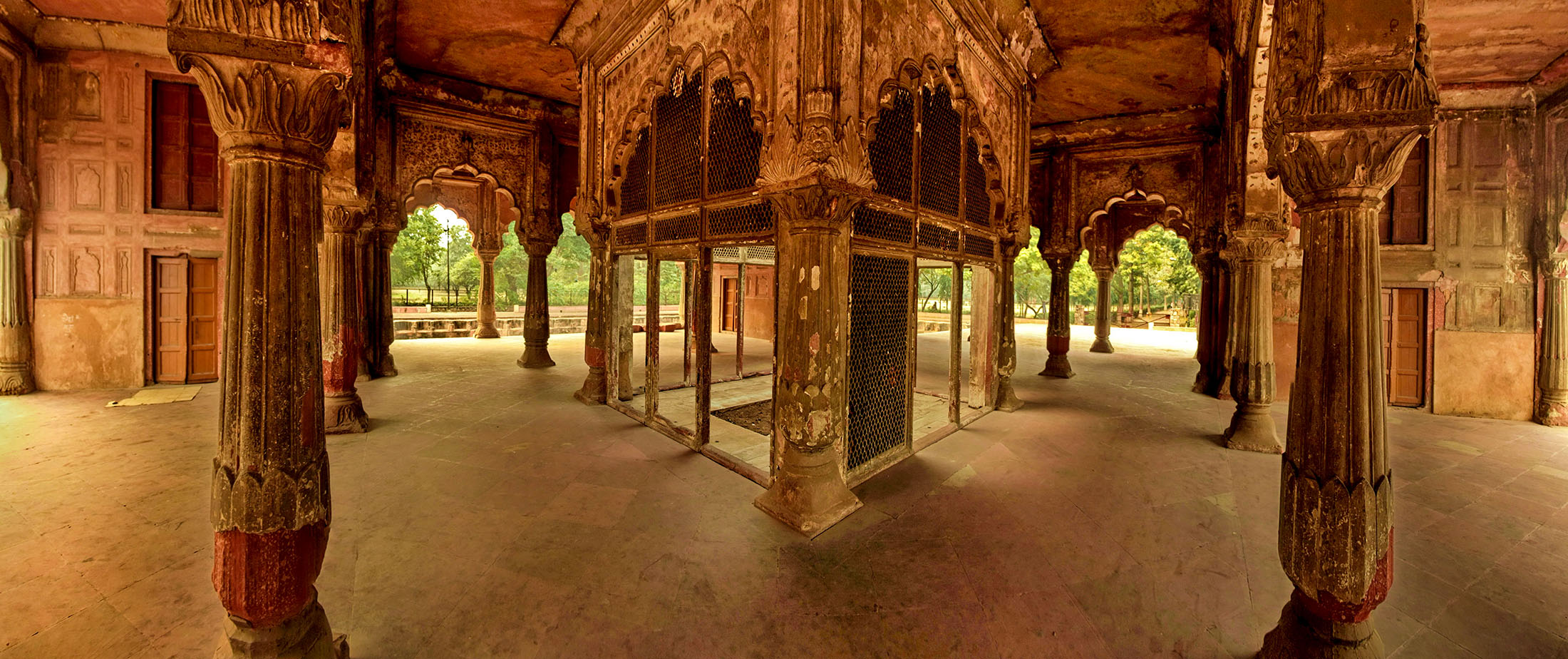
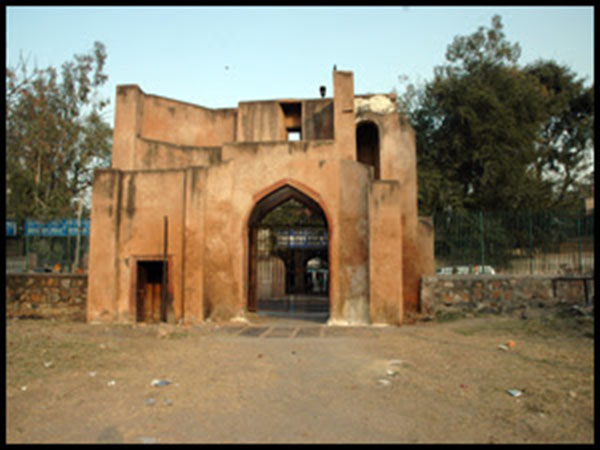
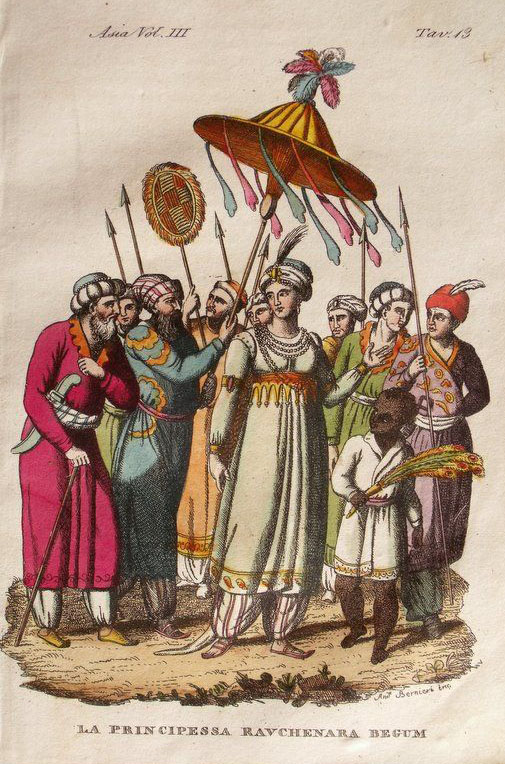
Roshan Ara Begum had her Bagh constructed in Delhi in 1075 A H, or 1664 AD. She died in 1082 A H, that is 1671 AD. The present structure is just a small remnant of one of the biggest Mughal Garden in Delhi. No contemporary source has seemed to mention it, but with the discovery of the poetic Diwan of Khairullah Muhandis, son of Lutufullah Muhandis (dated 1089 AH or 1678 AD), the secret oozed out of history books. A background study is essential for same. After all Roshan Ara, herself was daughter of Arjumand Bano Mumtaz Mahall and Emperor Shah Jahan. Sister of the immortal Jahan Ara. However she is only mentioned twice in Shahjahan nama, at time of her birth, and some allowance made to her, along with her brothers and sisters, out of a total sum of two lakh rupees. Nothing more is known, except from accounts of foreigners who write about her. The most ridiculous and scandalous things about her are written by Bernier, Mannuci and Tavernier. Without any proof, these gossip makers had the harsh eye of weaving falsehood. It is strange that nobody has the guts to tell these gossip mongers to bring proof of their statements. Instead of any verbal truths, they lie as affront to history. Under Islamic law without proof of four witnesses they deserved to be beheaded all of them. And yet Western writers as well as Indians revel in their statements. These kind of people do not tell the truth even today, how is it possible that they spoke the truth then? I detest to repeat their calumny even, but to put it on record, one says that Roshan Ara had nine young men in her harem to satisfy her sexual instincts. Beheading and flogging was required for them.
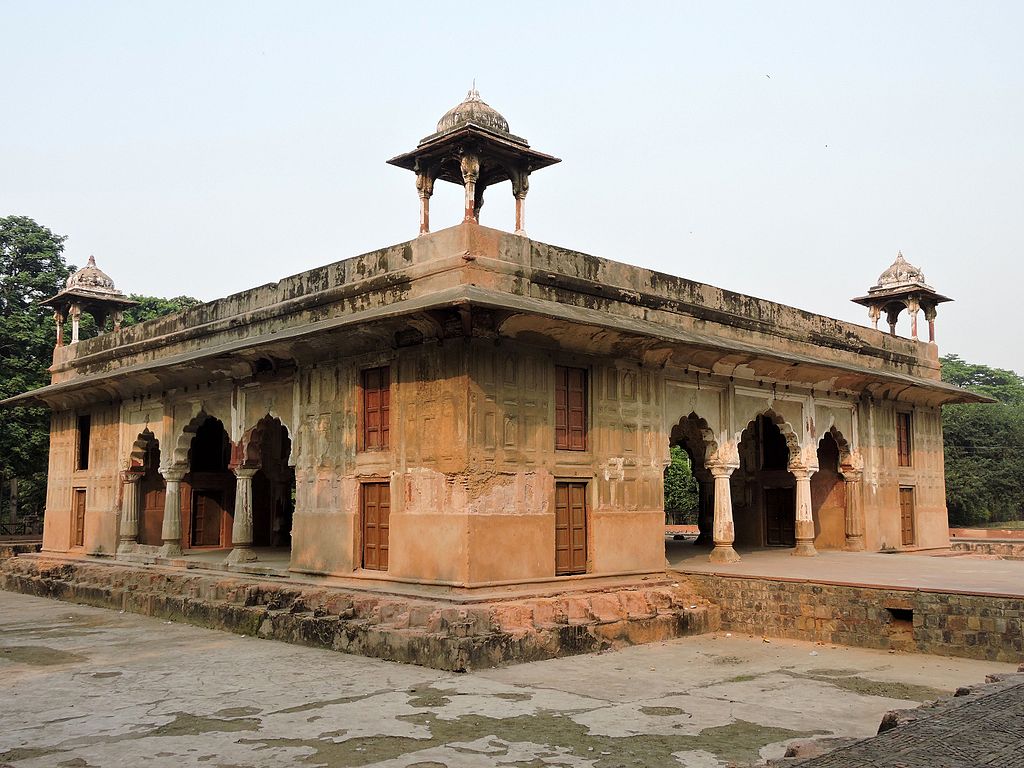
Roshan Ara Begum Mausoleum
All that remains Roshan Ara pavilion
Remnants of Roshan Ara Bagh
Exquisite naqashi
Roshan Ara Bagh
Open tomb
Imagined picture of Roshan Ara Begum
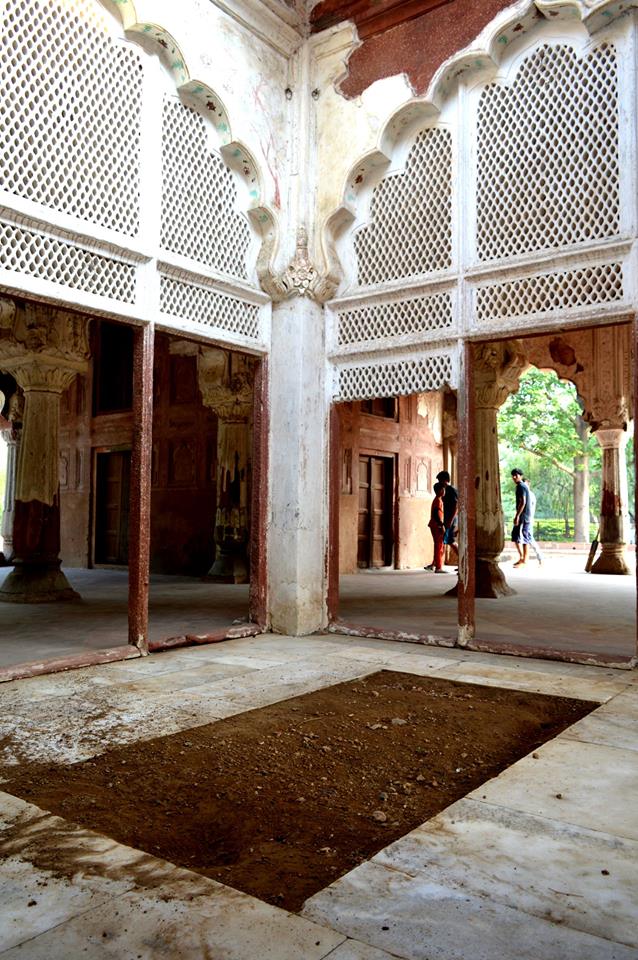
There was a plan by Shah Jahan to assassinate Aurangzeb. Aurangzeb was invited by the Emperor to facilitate him but in reality, a murder was being planned. Shah Jahan was hopelessly in love with the arrogant Dara Shikoh and knew that his elder son was no match for the fighting skill of Aurangzeb. The plan came to the knowledge of Roshan Ara Begum and she intimated her brother Aurangzeb of this dreadful plan. Aurangzeb stayed away from his father and as a result his life was saved. Shah Jahan was even using Jahan Ara to lure his son into the said trap. As Roshan Ara Begum had saved the future King, she became the favourite of Aurangzeb. She had her garden and pavilion constructed outside the consigns of Delhi. Who did that? Nobody knew. But a poetic collection of Khairullah Muhandis revealed a few pages of the details of the Garden, which included things like a pool, and even an Aaina Khana of its own. Many of its features were a source of marvel, and Khairullah has written about them in detail. The burial itself was one of a kind. Catherine B. Asher writes:
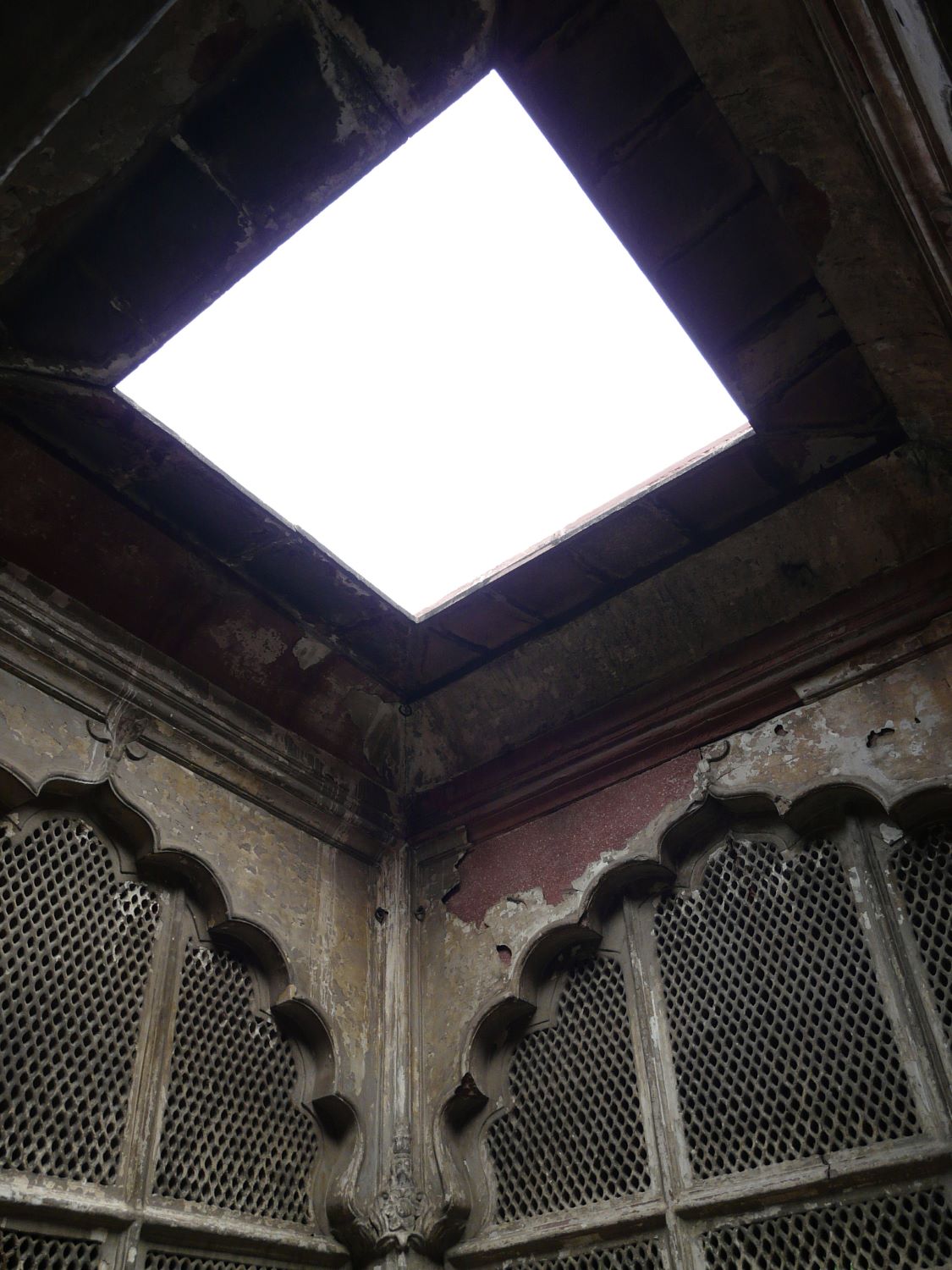
“The garden maintains none of its original appearance, and only the tomb among the several structures once there remains. Approached by causeways, the pavilion containing her grave is in the midst of a small tank. The uncovered central portion of the pavilion contains Raushan Ara’s grave; the surrounding flat-roofed galleries have cusped arches supporting bulbous baluster columns, generally an imperial perquisite during Shah Jahan’s reign. Paradoxically however, her simple cenotaph remains open to the air, indicative of her role as God’s mere slave.”
Catherine B. Asher presumes the construction date to be around 1650 AD, when it is actually 1664 AD. She borrows information from Carr Stephen, who wrote about the Gardens of Delhi. Roshan Ara was not financially solvent to do so in 1650 AD.
He has also mentioned many personal details that nobody else put down. It seems that even Khairullah had taken refuge in Gul bahar area near Kabul as a refuge when the family was under the animosity of Qazi Abdul Wahab Gujarati, the Chief Qazi of Aurangzeb. Suffice that it is not our concern here of those details. Till another relevant blog on same.
MANY MUGHAL MANUSCRIPTS THROUGH SEALS AND NOTATIONS; REVEAL HISTORY. ARCHITECTS LIKE LUTUFULLAH WERE LIBRARIANS.
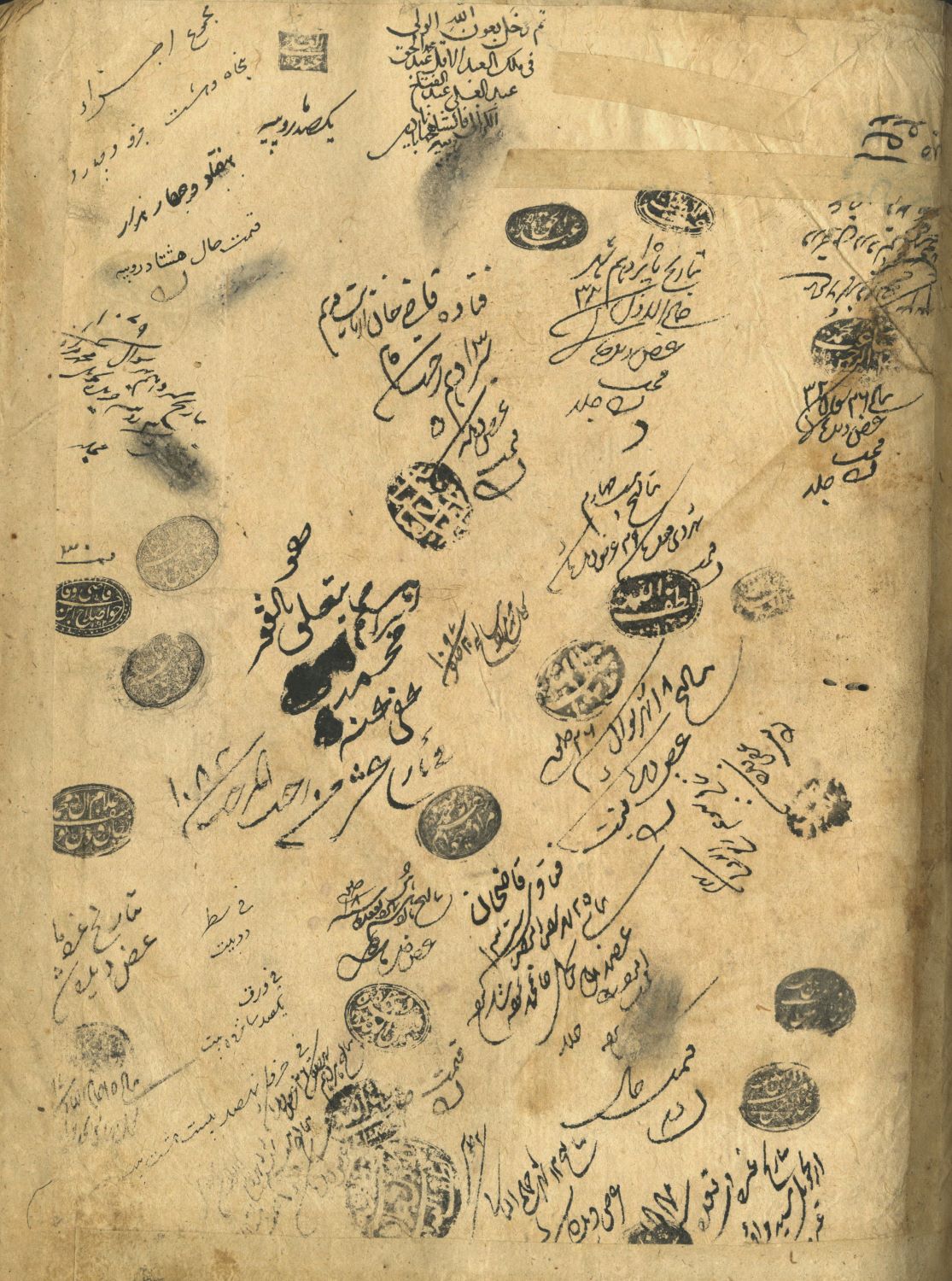
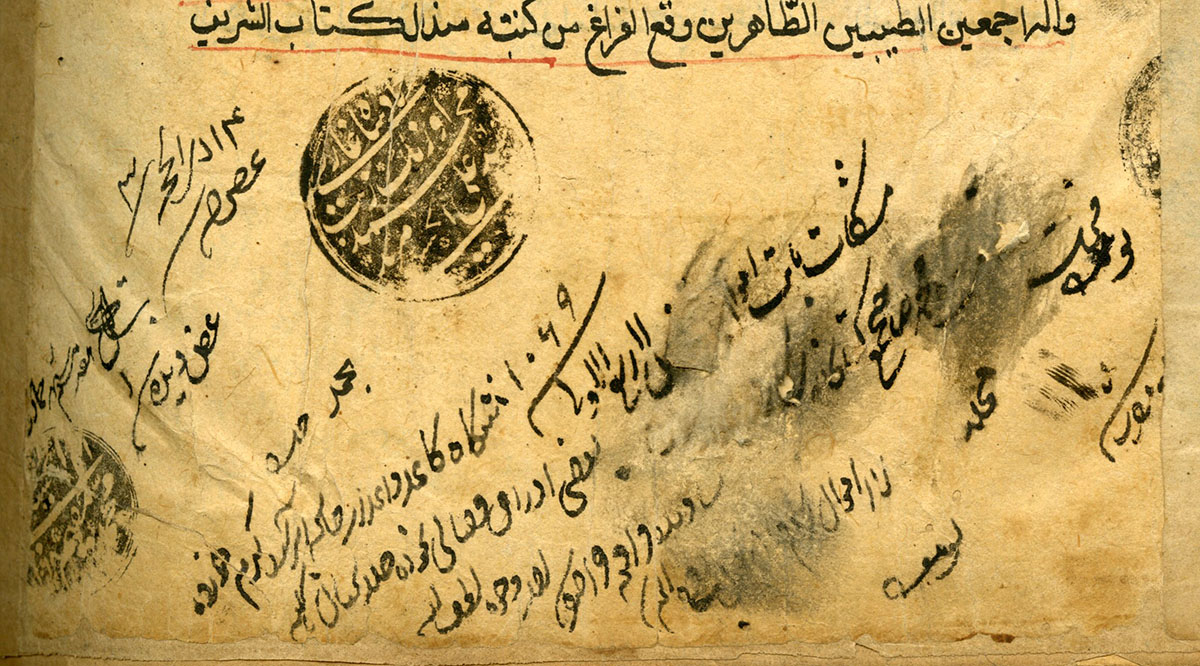
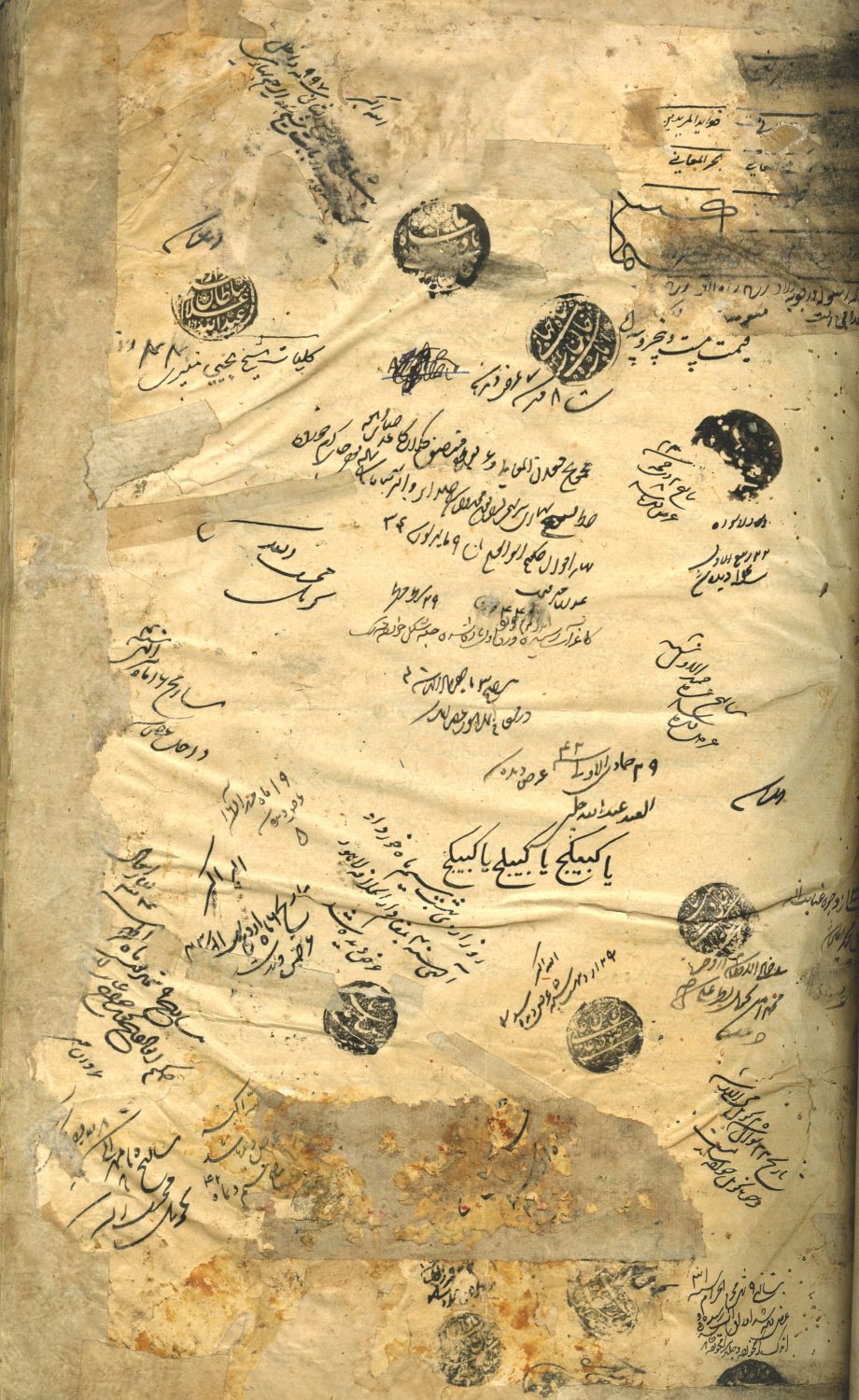
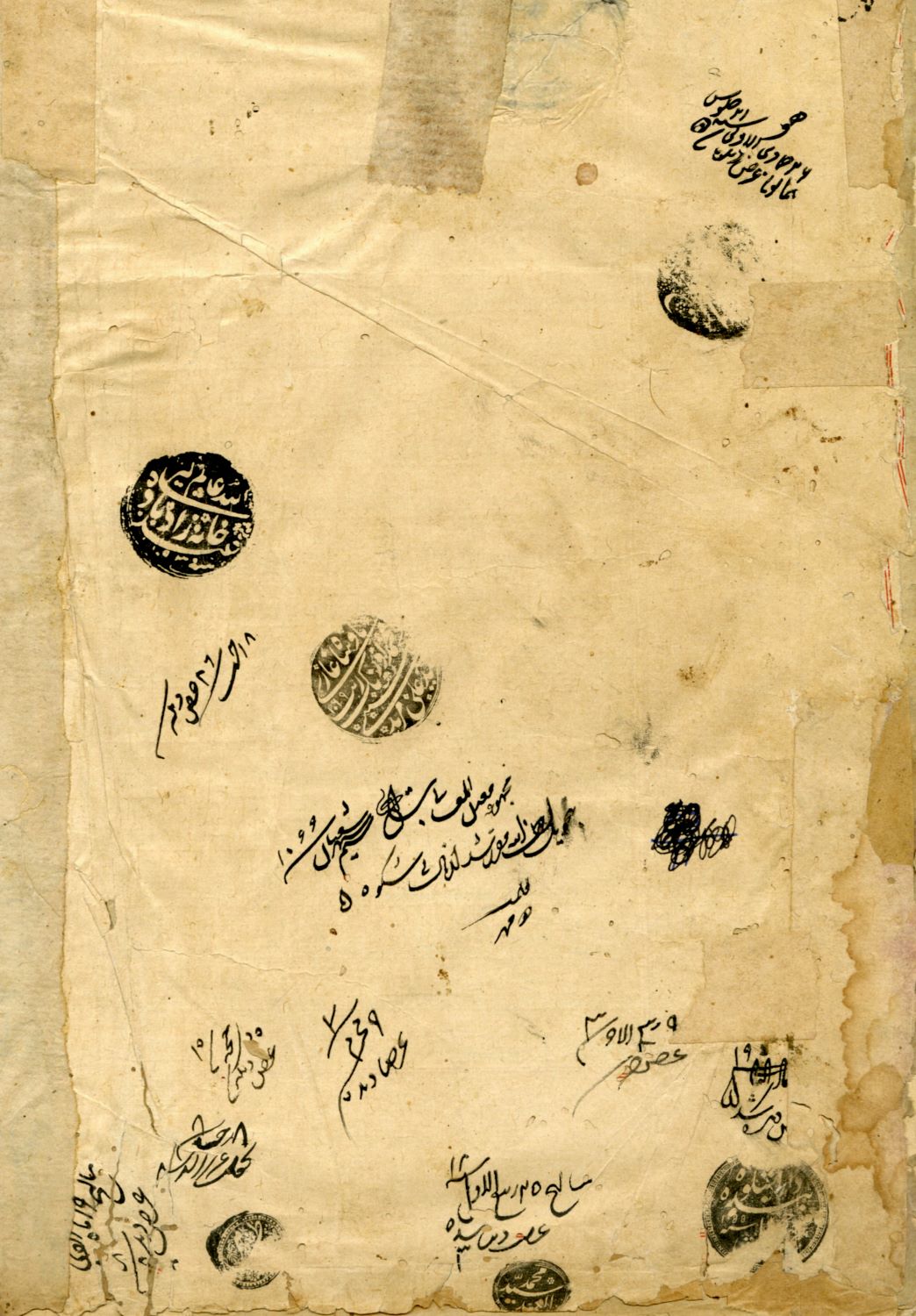
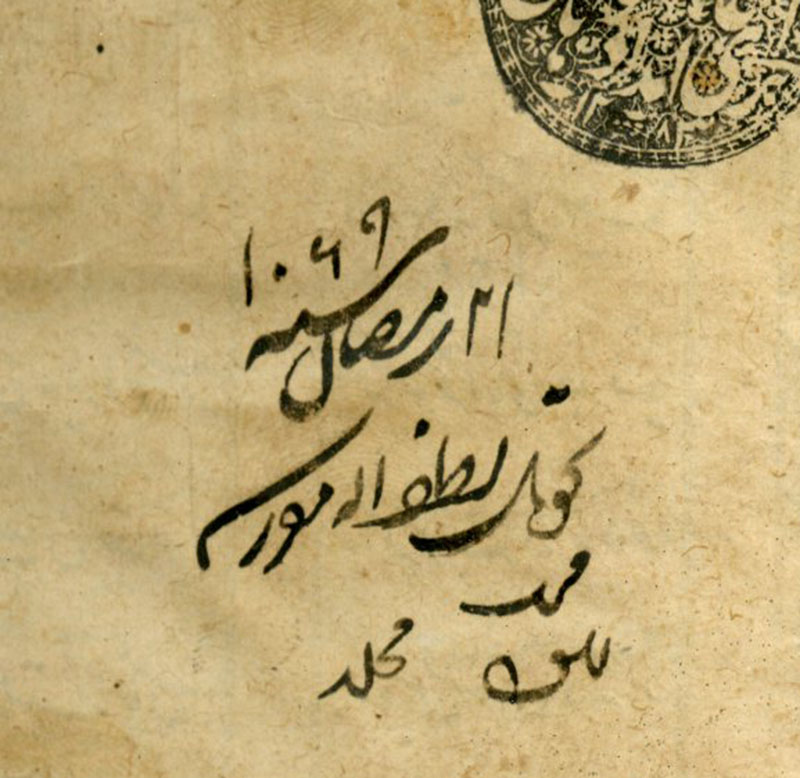
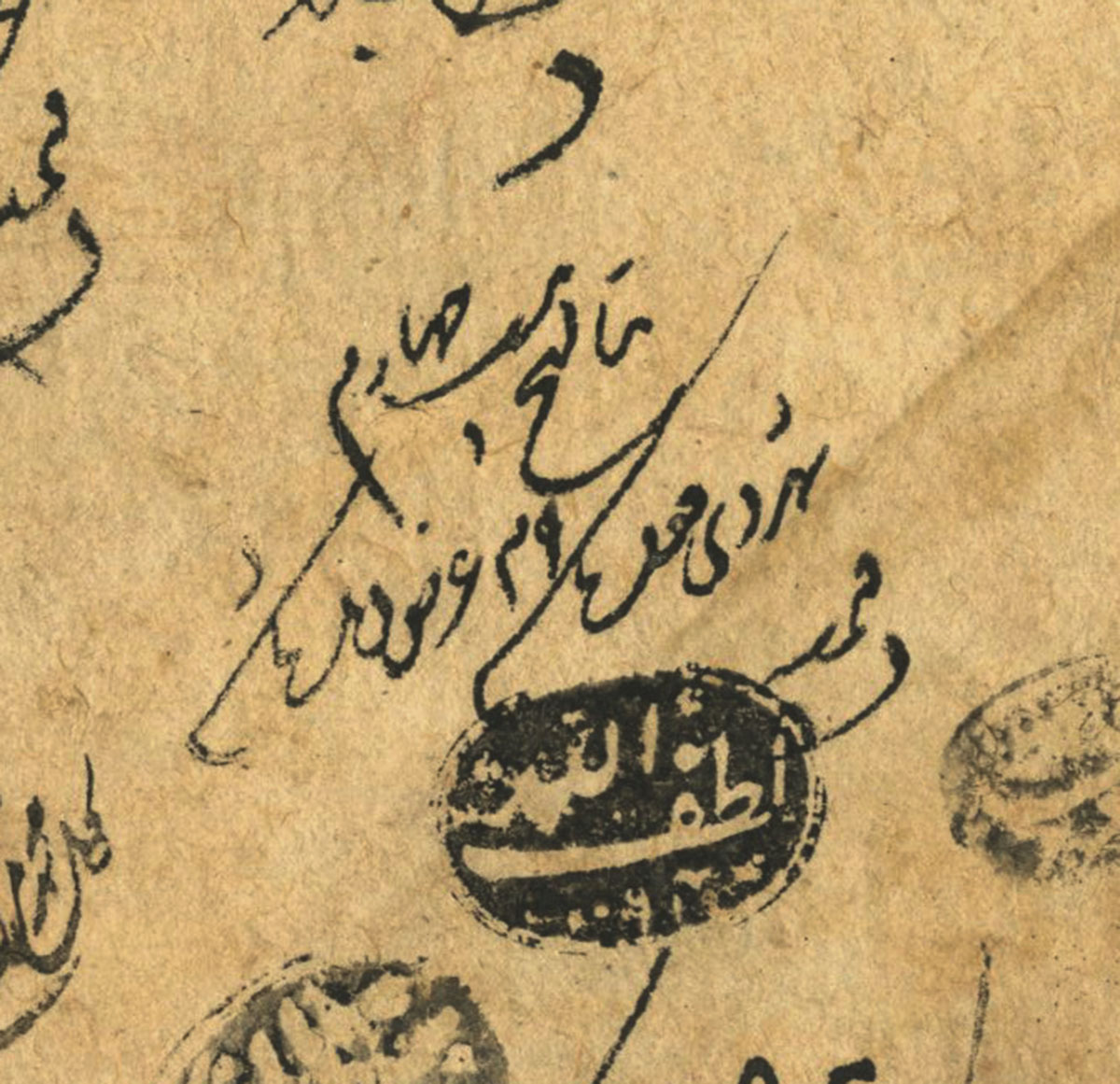
The calligrapher of the Taj Mahal Amanat Khan Shirazi after his work on monuments, ended up as the Royal Librarian for the Mughals. His seal is on various manuscripts. Similarly the architect engineer Lutufullah Muhandis ended up as Librarian Incharge of the Manuscripts of Prince Dara Shikoh. Although his notations and seals are here and there, but mostly the same are related to the year 1069 A H. And the most important notation in one of the Royal Manuscripts of Prince Dara Shikoh is dated 21st Ramazan, 1069 A.H, which is a very important date in Mughal history. It corresponds to 12th June, 1658 A.D. What was happening at that time?
Manuscript 998 AH earliest taweel
11th Rabi Awal 1069 AH Lutufullah endorsement
Taweel Ms Lutufullah one
Taweel Ms Lutufullah two
Taweel Lutufullah three
Taweel Lutufullah last phase
Changed custody Azizullah 1069 AH
Seal Lutufullah 1069 changing
Seal Lutufullah
Prince Dara Shikoh
Dara Shikoh Library Signature
The official chronicle of “Maaseray Alamgeeri” records that the fight of Dara Shikoh and Aurangzeb was in full swing. Dara Shikoh entered his palace in Agra , with his son and a few servants on 1st June, 1658 A.D, that is 10th Ramazan, 1069 A.H. Then he took a flight to Delhi. Aurangzeb on Friday, the 11th June 1658 A.D, that is 20th Ramazan 1069 A.H, entered the city sand took possession of Dara Shikoh’s palace, which means library too. Learning that Dara Shikoh had left for Delhi, Aurangzeb on 13th June, 22nd Ramazan started for Delhi. The Lutufullah seal is dated 21st Ramazan 1069 A H that is 12th June, 1658. What does that mean? That means Lutufullah was loyal to Prince Dara Shikoh even at the last moment when his own life would be in danger of being executed. What happened later is later? Eventually Lutufullah was forgiven by Aurangzeb and served Aurangeb as well as his sister Roshan Ara Begum as records of remain of same. After 21st Ramazan, 1069 or 12th June, 1658 A D, he was replaced by Azizullah Shahjahani as taweeldar of the manuscript.
The same manuscript carries a notation from Dara Shikoh himself as the same being put in his library. That is amazing history!