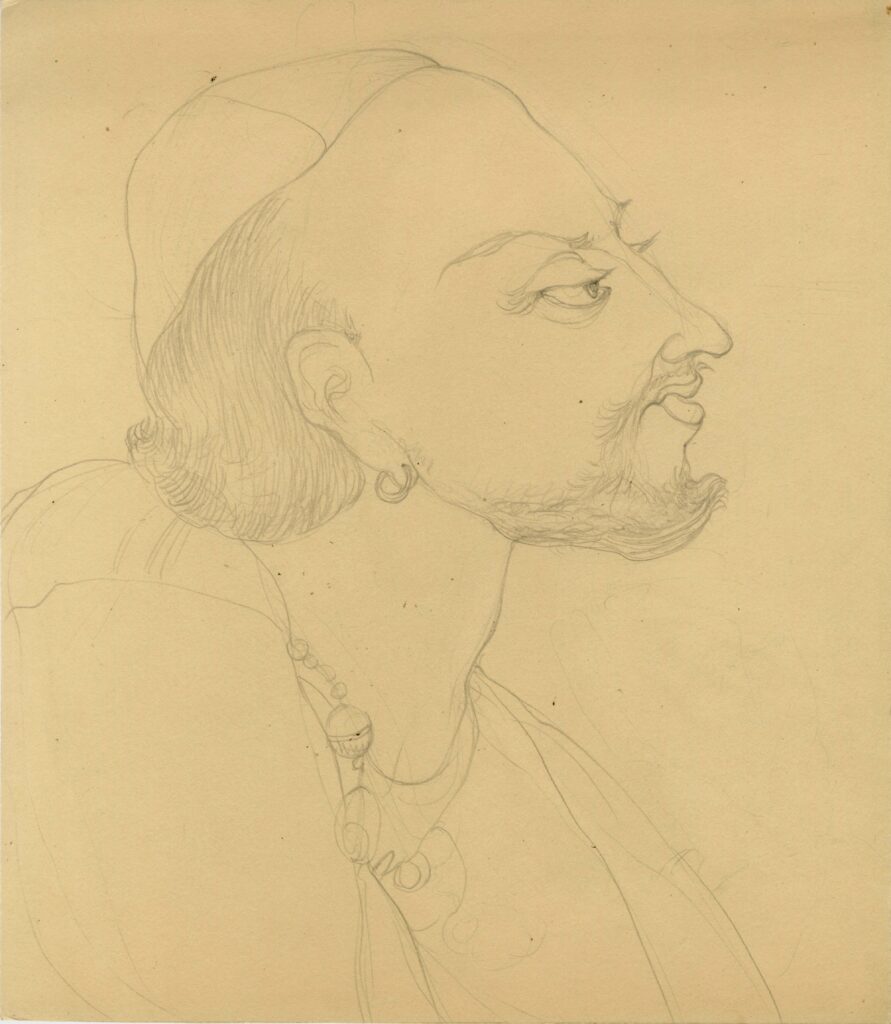
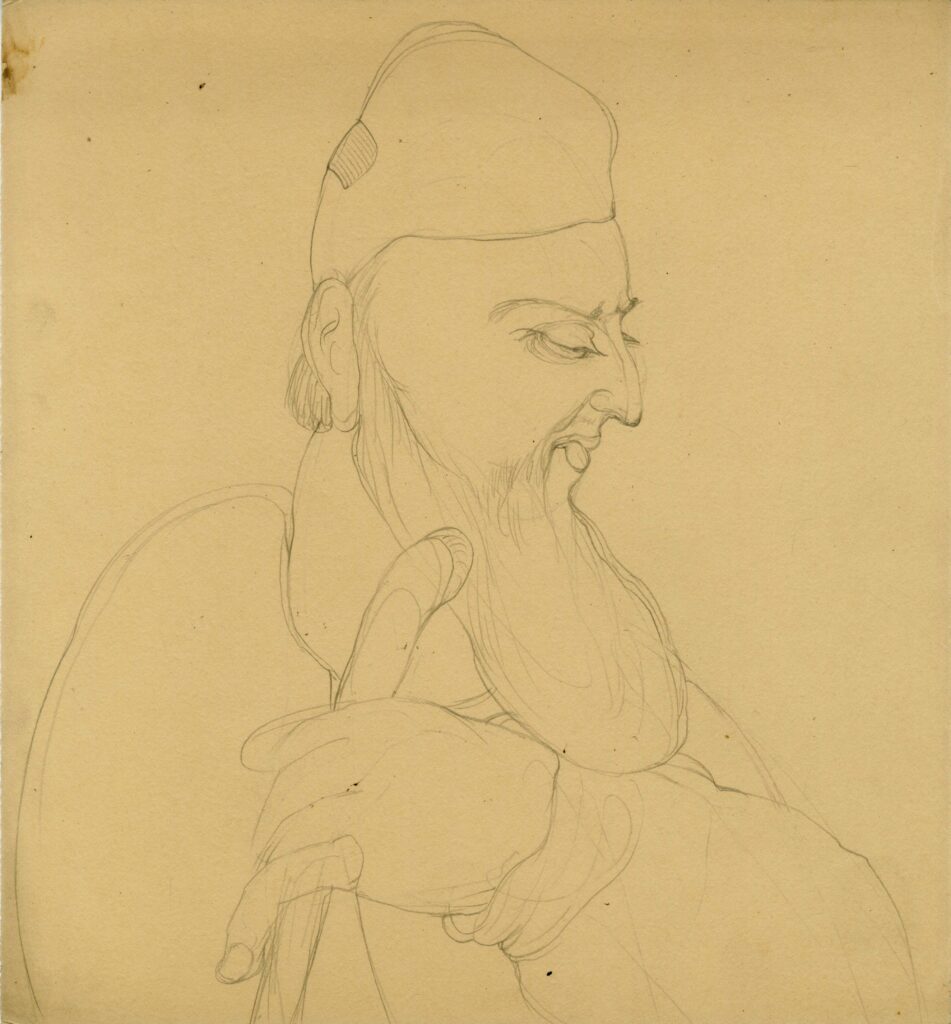
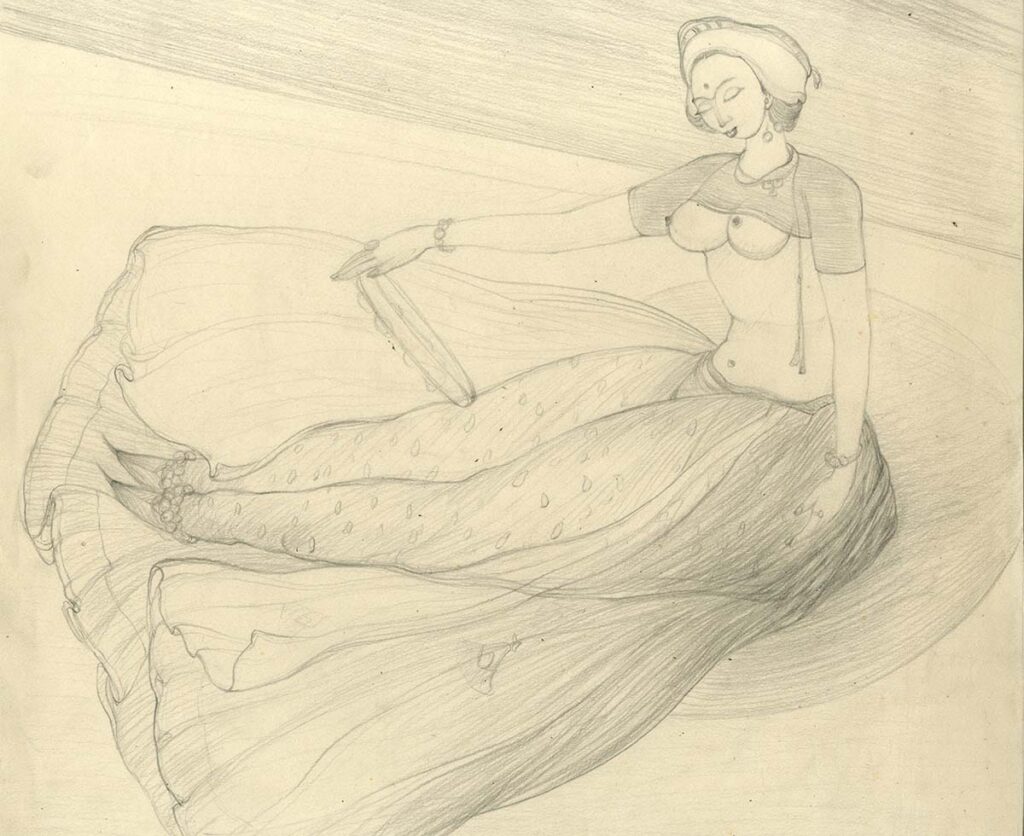
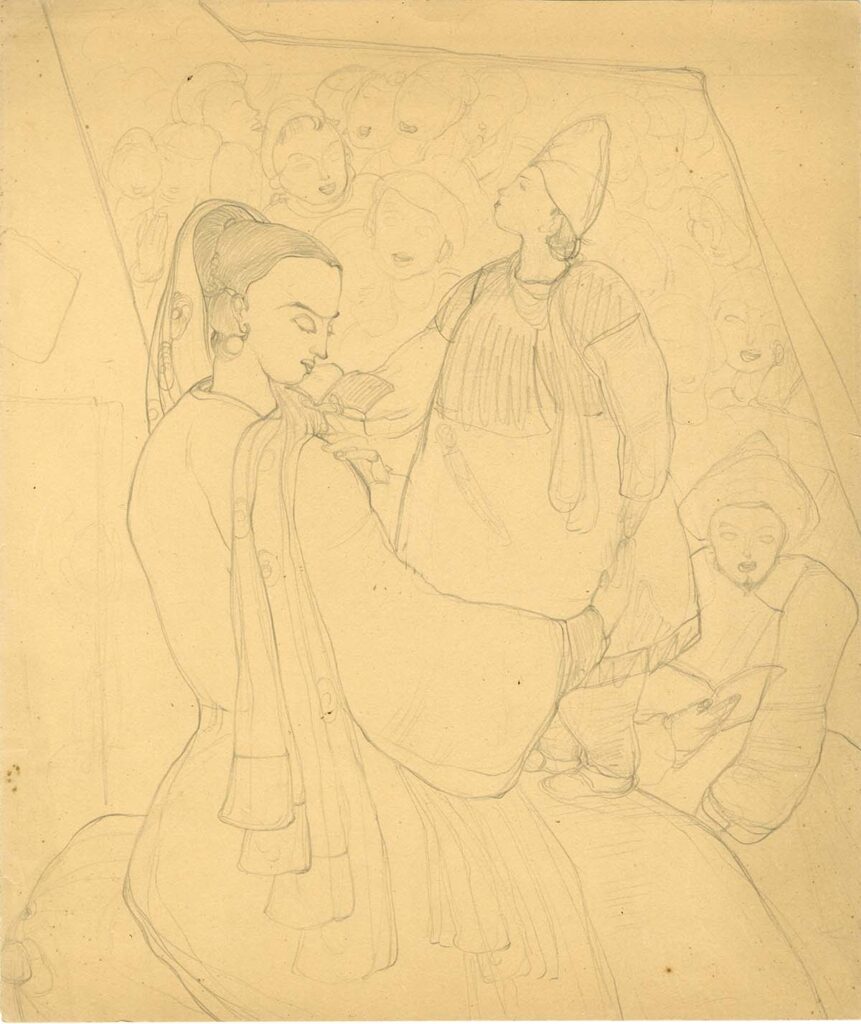
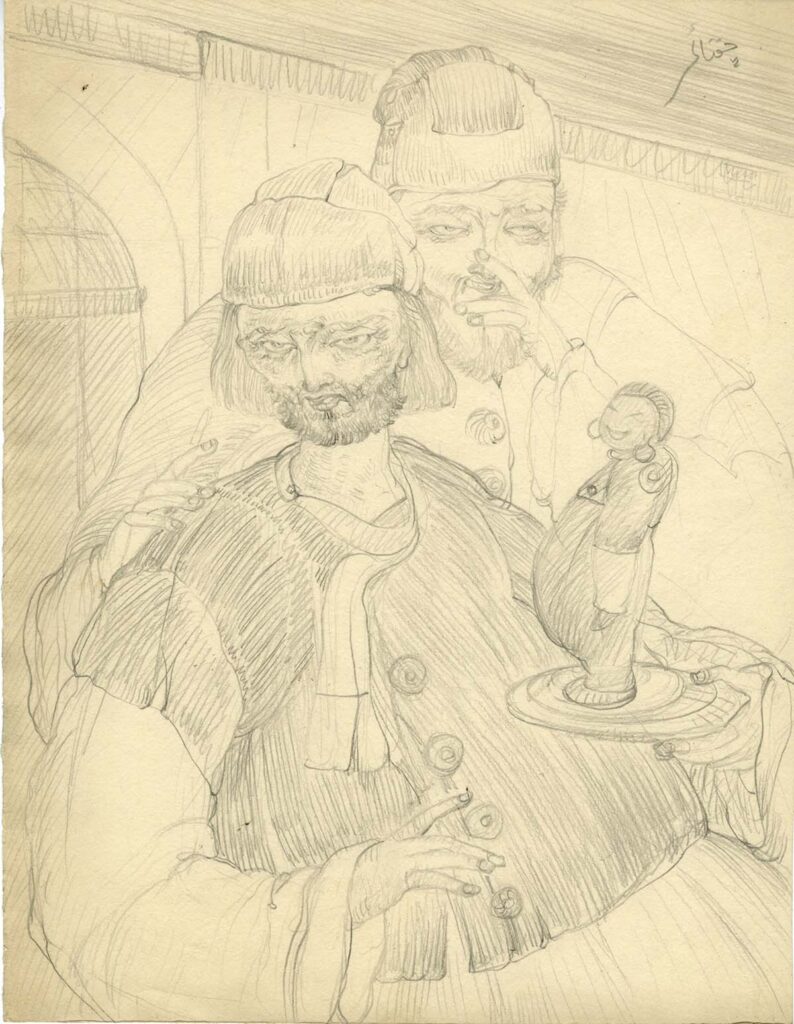
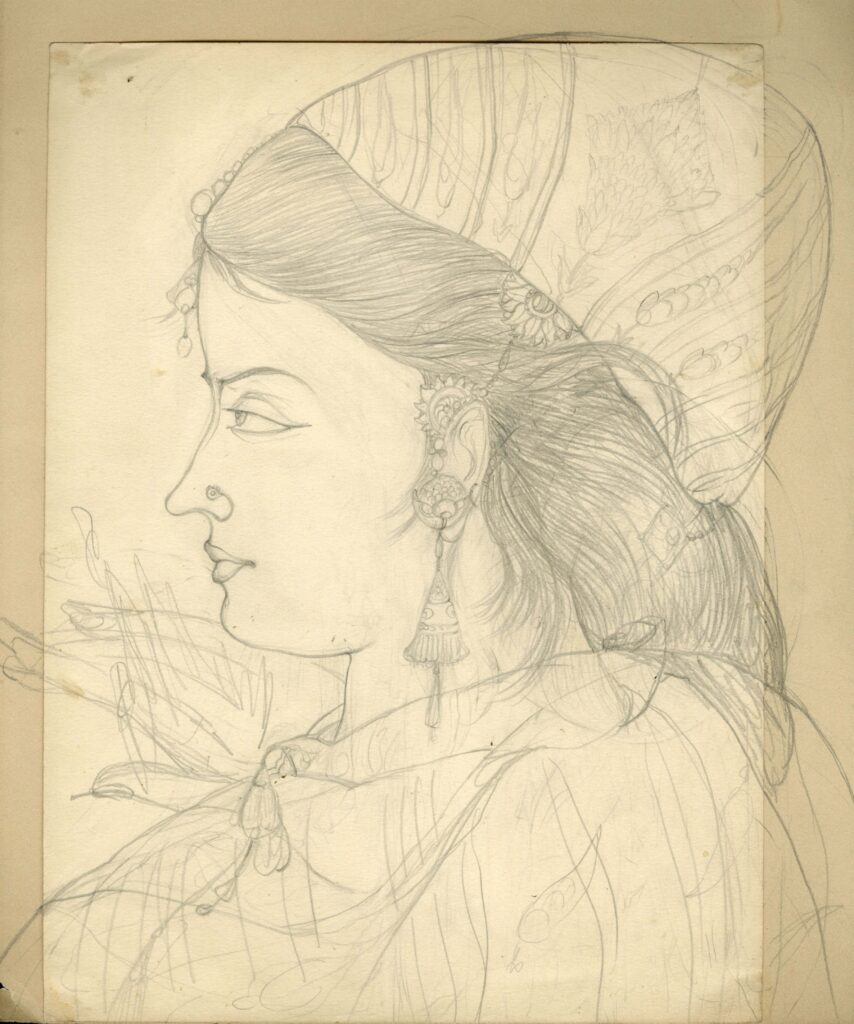
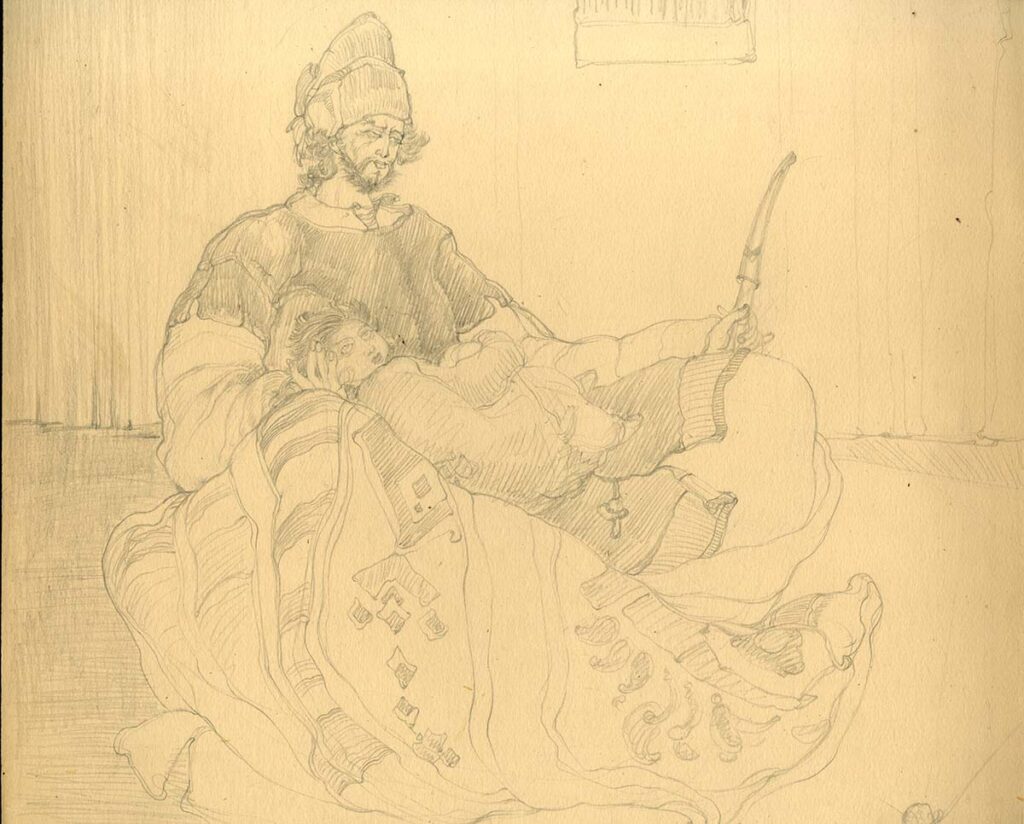
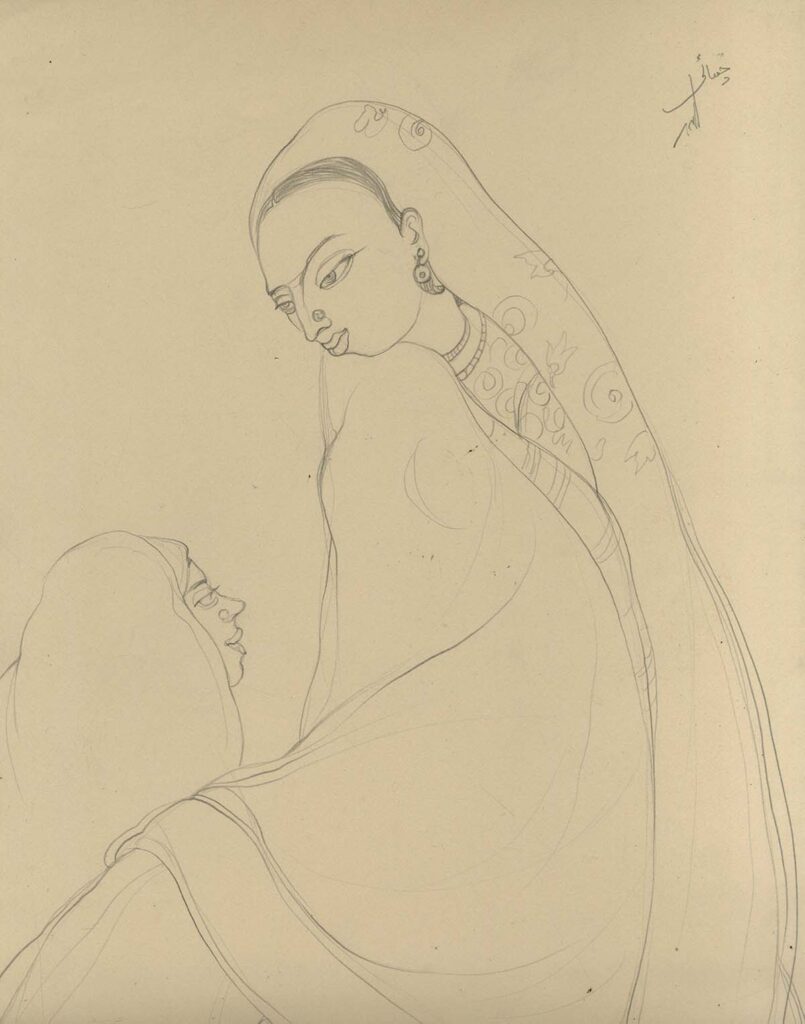
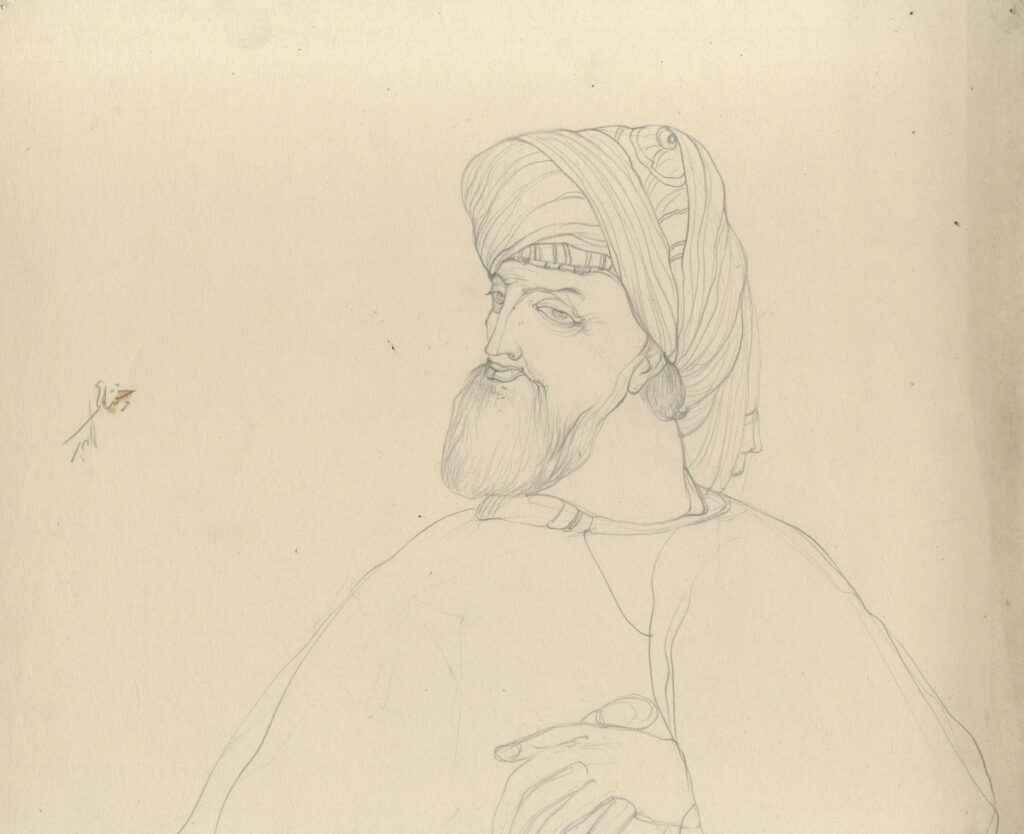
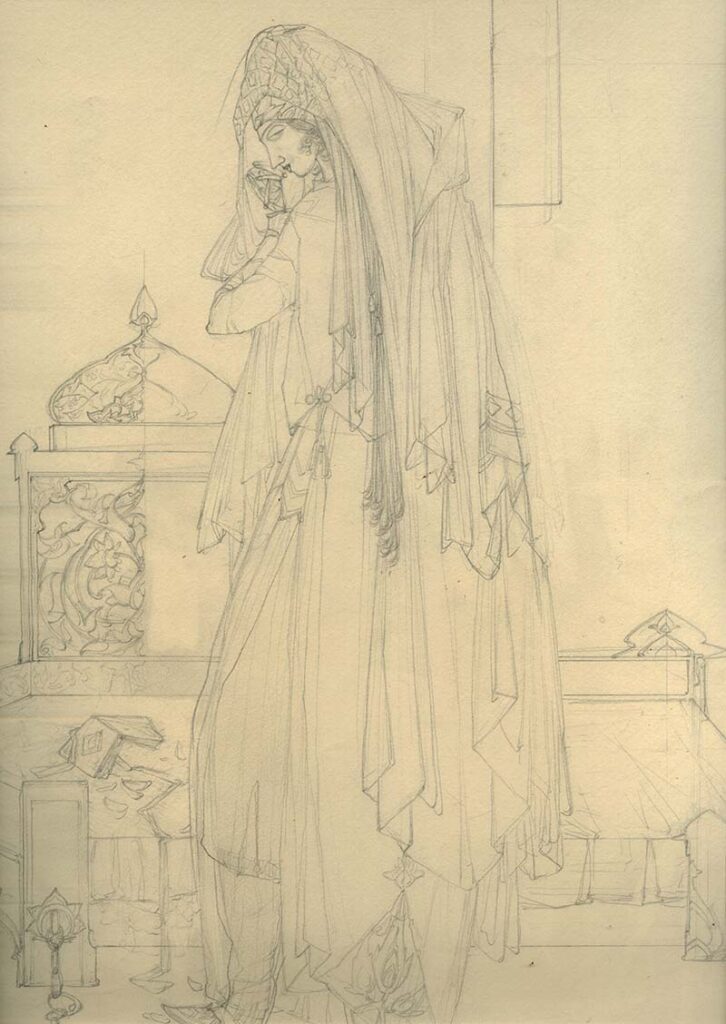
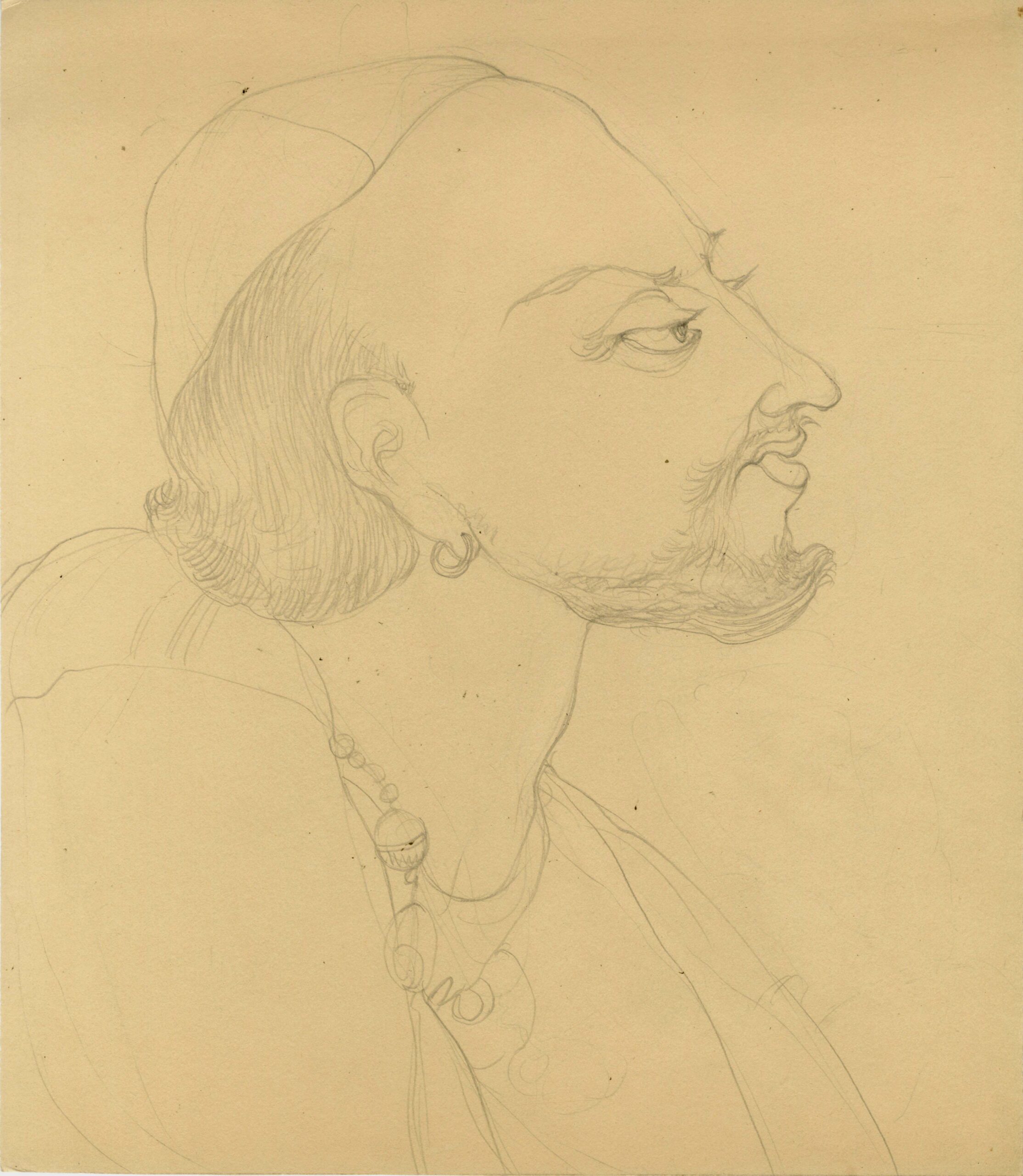
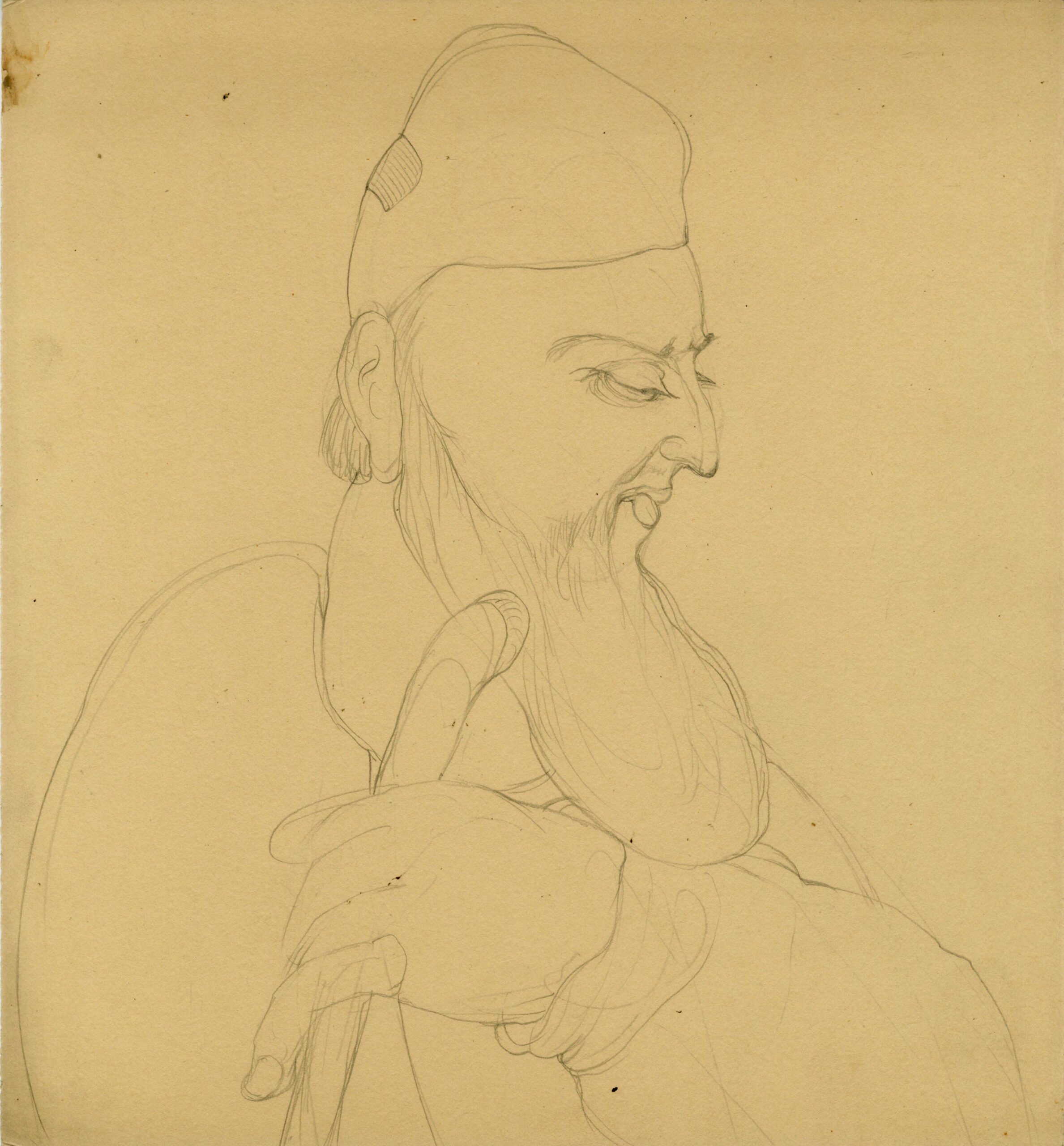
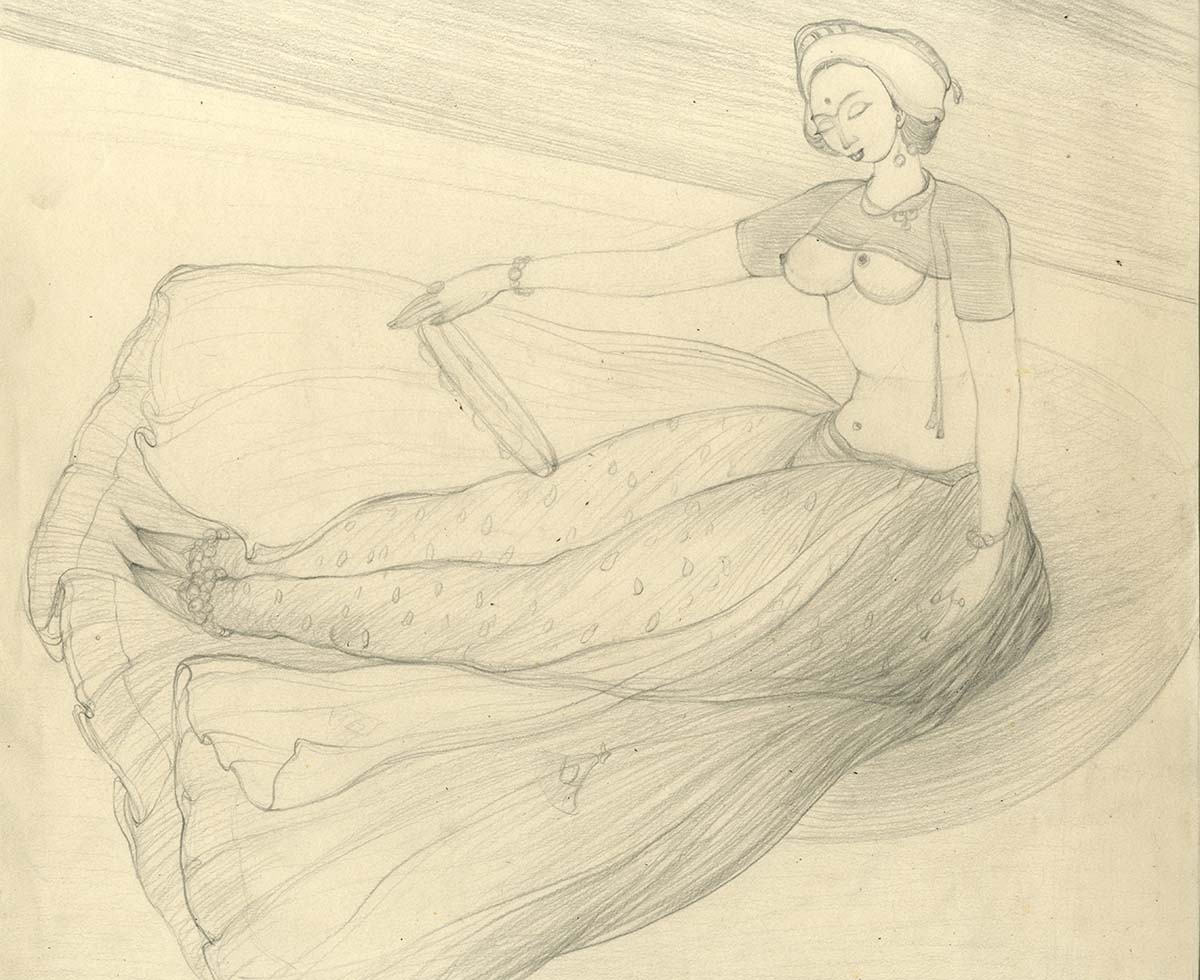
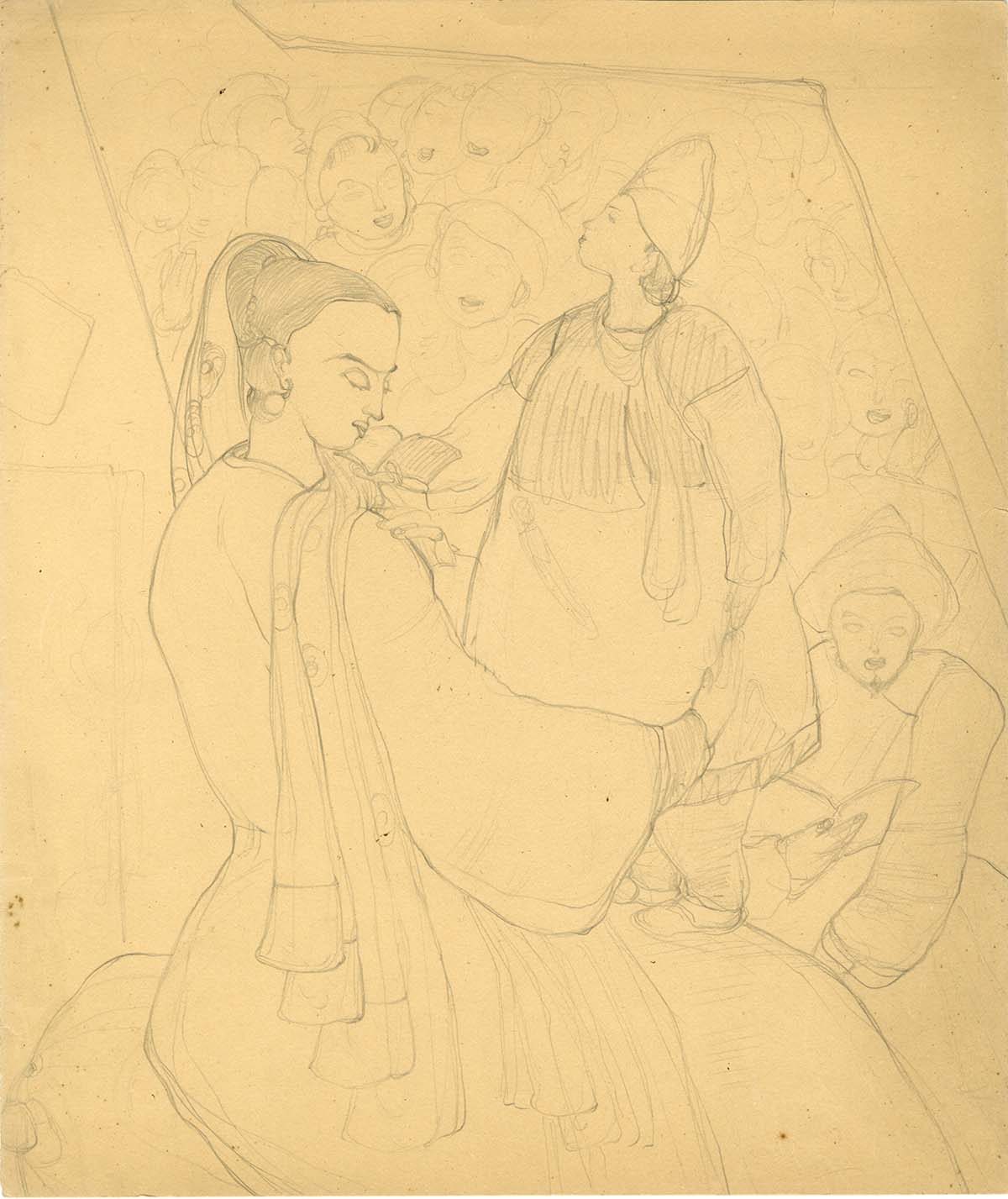
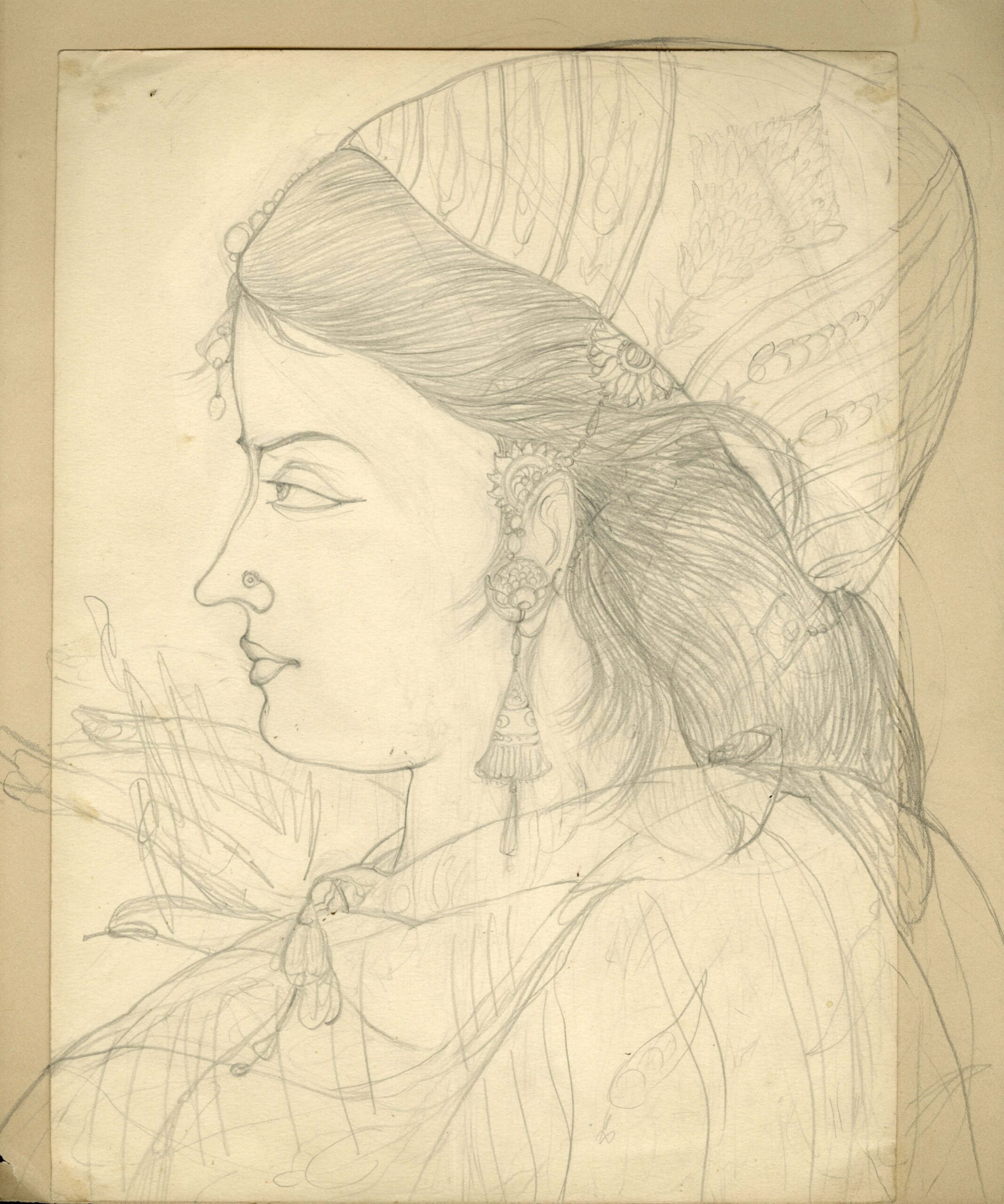
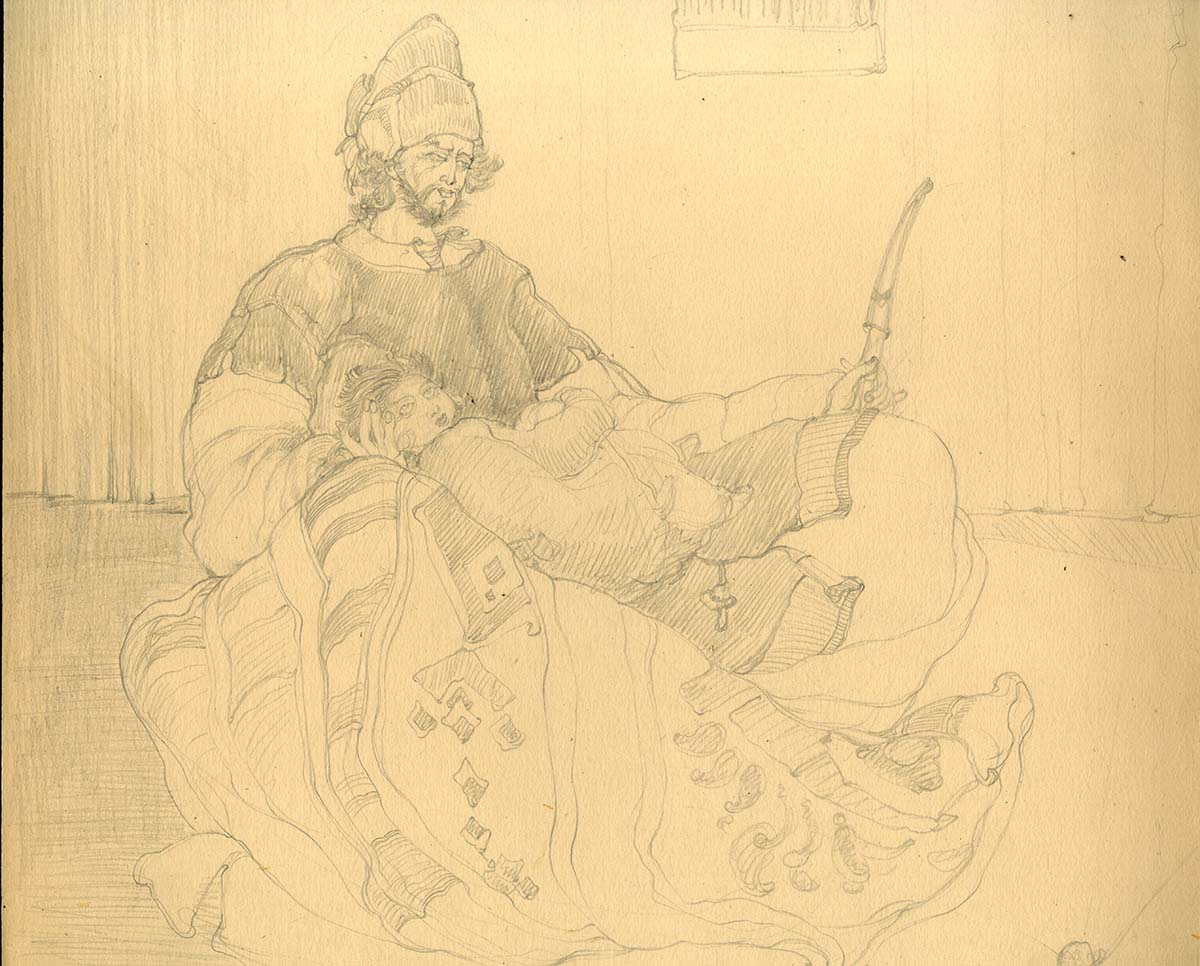
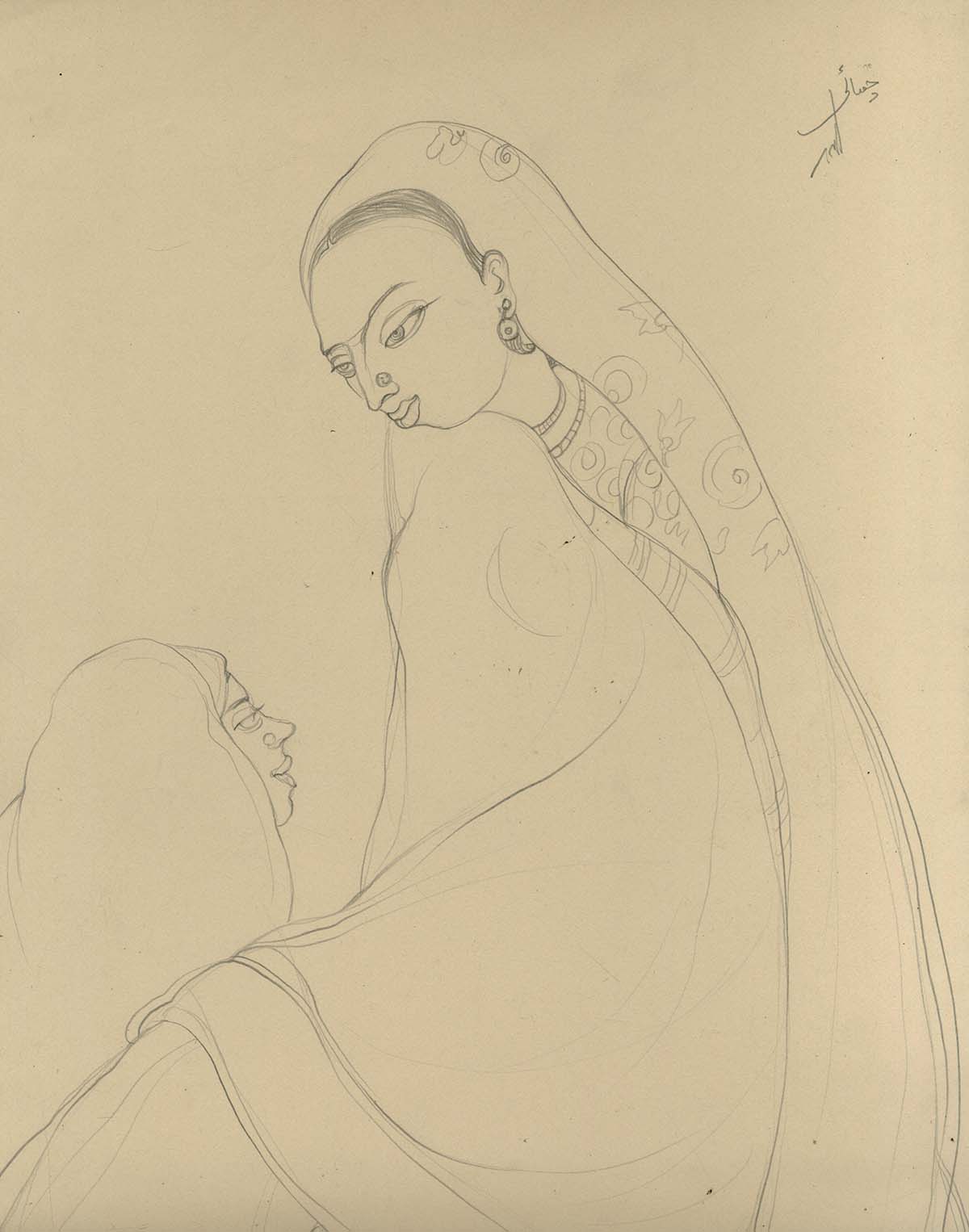
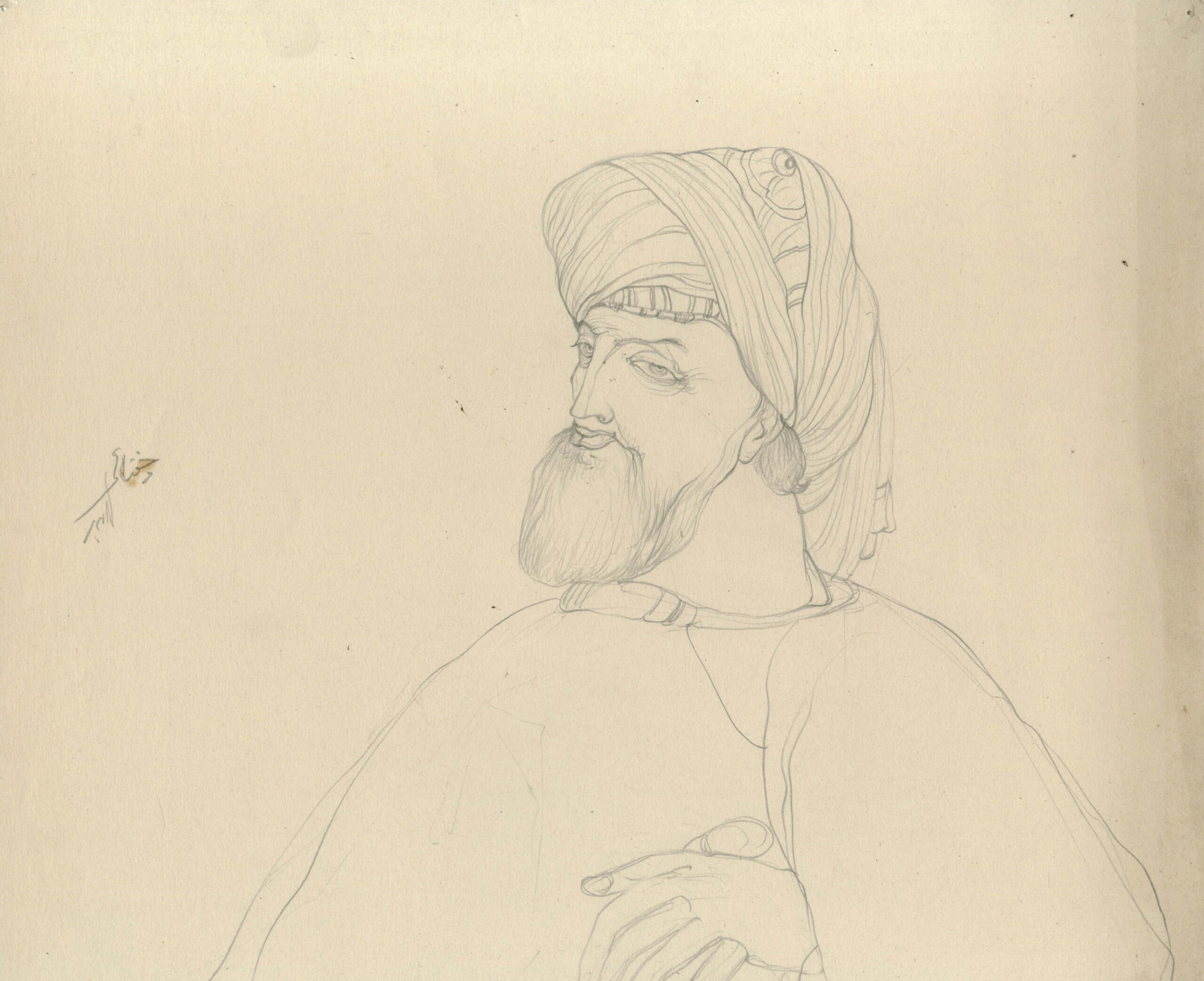
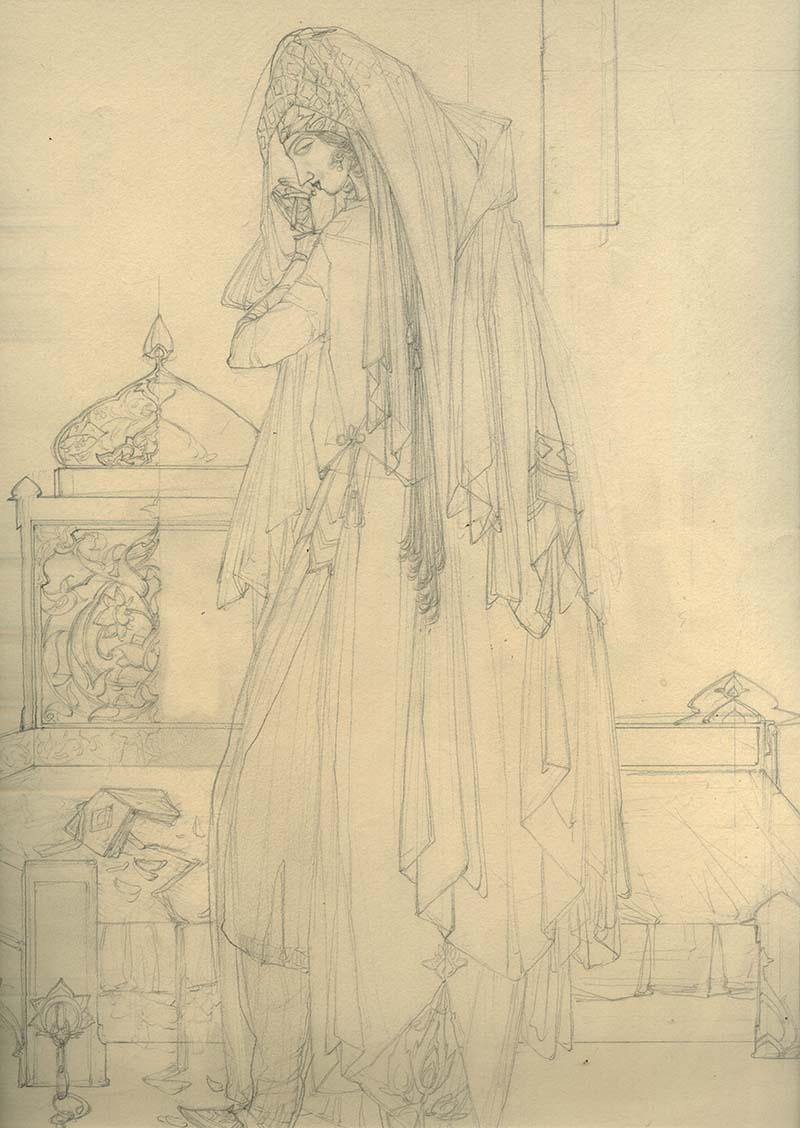
ART EXPLORATION OF CHUGHTAI ART SERIES THREE: INTRODUCING PENCIL SKETCHES OF ABDUR RAHMAN CHUGHTAI; NOT ONE PERSON IN THE WORLD WHO CAN MAKE THEM, FREE DRAWING WITH LIVING EXPRESSIONS, THE ESSENTIAL SKELETON OF ALL WATER COLOUR WORKS.
We have jumped to exploration of actual art of M.A. Rahman Chughtai. From the last 46 years I have invited people to look at Chughtai art in original. All the local writers or critics lacked the acumen to heed to my offer. The real professionals long dead and gone who knew all this about art. But we held shows every year. We showed everything in our collection to people and our visitors are well trained in recognition of Chughtai art. We even held a show on Pencil Sketches. Our motto unless you see originals, you get nowhere.
Pencil Sketch 1
Pencil Sketch 2
Pencil Sketch 3
Pencil Sketch 4
Pencil Sketch 5
Pencil Sketch 6 Enlarged composition
Pencil Sketch 7
Pencil Sketch 8
Pencil Sketch 9
Pencil Sketch 10
A pencil sketch is a skeleton on which the body of the work is built piece by piece. Even the fake Masters give up here. They cannot draw these lines and use light offset machine prints on drawing paper to fill colours. Photo colours actually, not even a remote Wash method attempt. If you hold a fake in your hand, you will notice many things. We will come to that. But mostly no outline is there at all. But in the end the work either LIVES or is dead flat with no life. By the end of this series, we will silence the unknown dissent forever. See some of the pencil sketches, and observe the eyes and the lips. Living persons. Exceptional Master. Two-bit analysts do not have the skills to look at work of Masters, nor the knowledge. And malice runs through their blood.
M.A. Rahman Chughtai is an exceptional gift to Planet Earth by the Grace of Allah. Love and admire him. Calumny is a sin for a person who is not there to defend himself!
BONHAMS, DR CHRISTA PAULA AND RETURN TO COMMON SENSE – ARROGANCE RUBBED TO THE GROUND WITHOUT REAL KNOWLEDGE – ART EXPLORATION AT AUCTION HOUSES, RESEARCH CONFIRMATION.
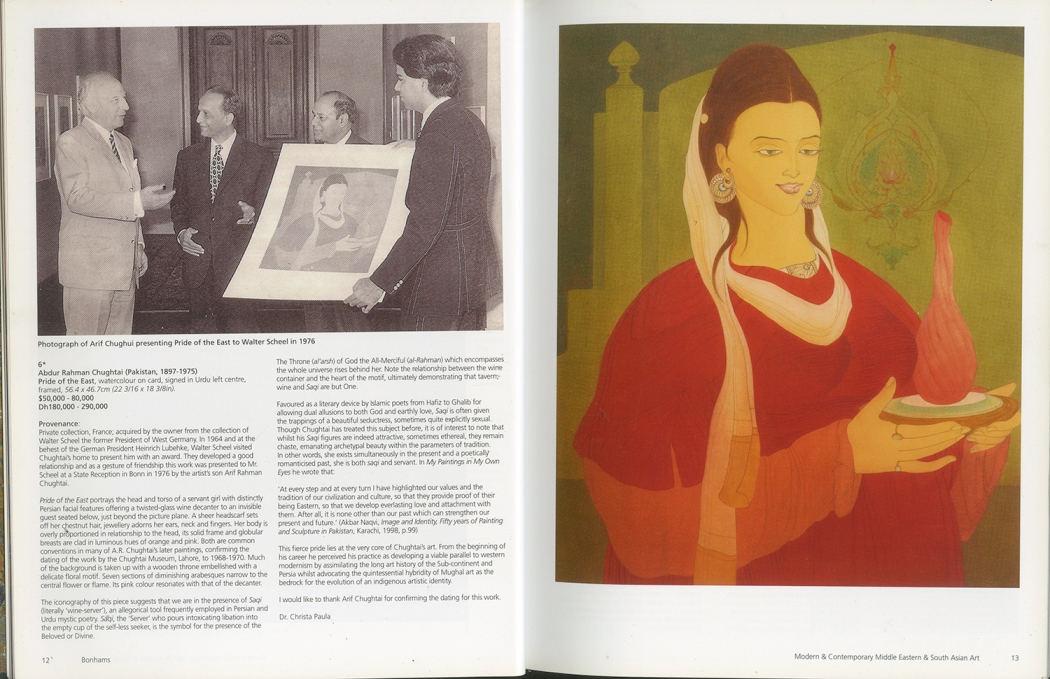
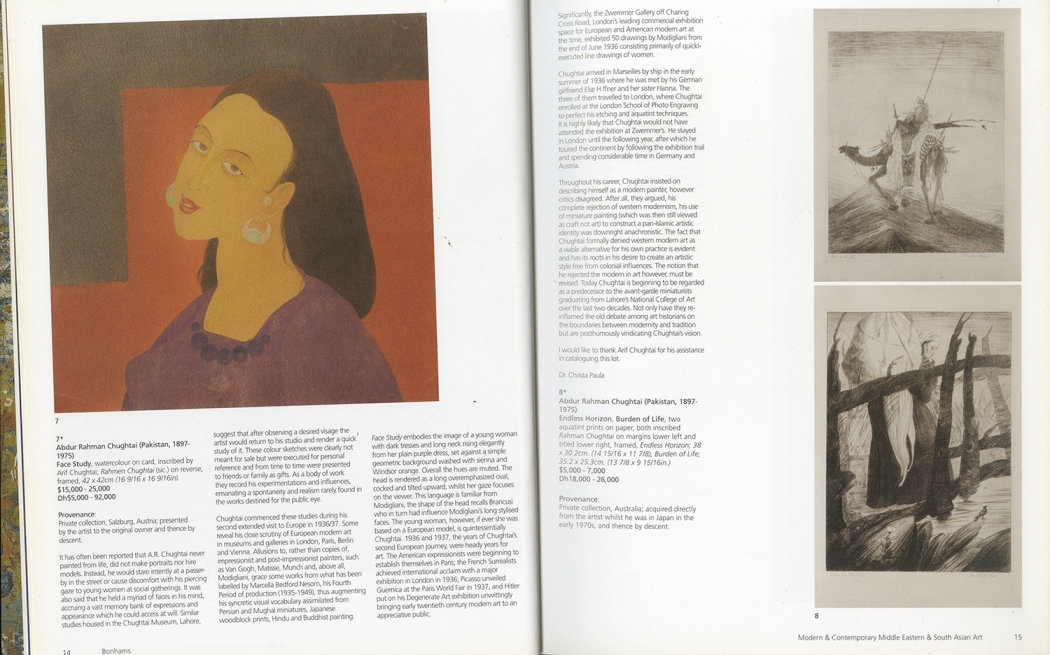
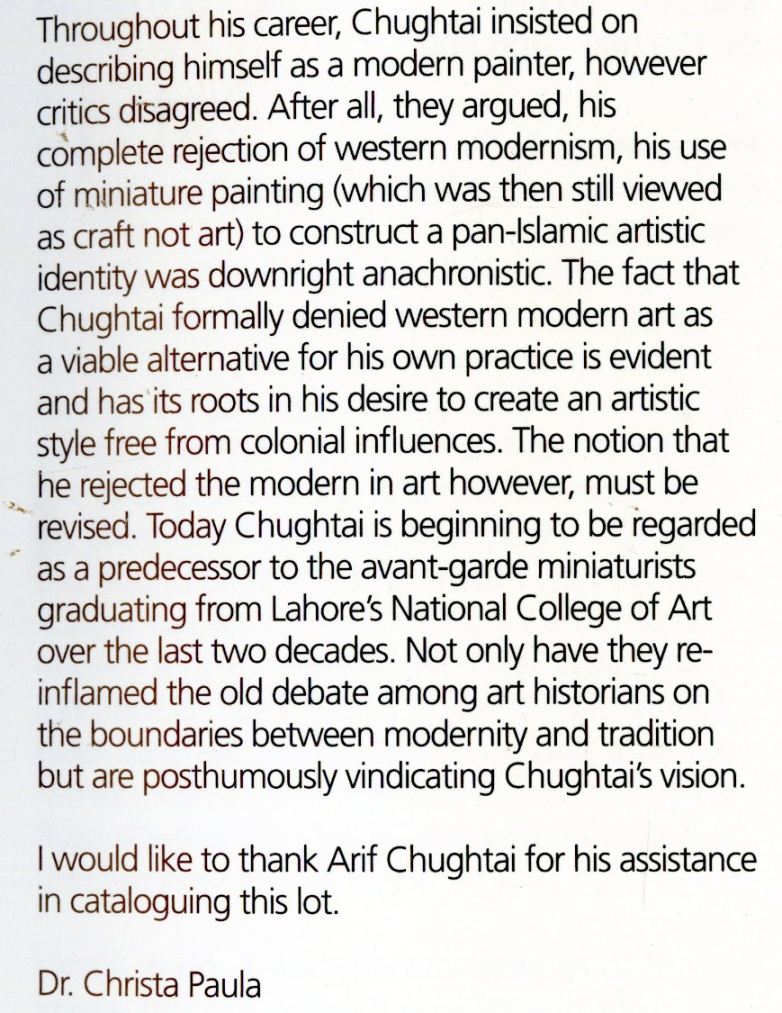
Bonhams 2009
The knowledge of Auction houses is meager, when their arrogance comes in. Real homage is to be paid to Western civilization, trying to get to the bottom of things. That is the objective solution. The host of Indians floating in auction houses really lack knowledge, but are too proud to even ask others. Not so true for a Bavarian German, who became an adviser to Bonhams, London. I received a letter from her requesting my cooperation in authentication. I did so, and i was acknowledged in a Bonhams catalogue itself. Christa is still a friend, although she is no longer associated with Bonhams. She had wisdom and common sense. She saw aesthetics and not feel threatened by lack of knowledge about a subject. In 2009, she wrote to me:
“Dear Sir, My name is Christa Paula, I am an art historian (PhD SOAS) and have only recently begun looking at the work of Abdur Rehman Chughtai. I hope this e-mail finds you well.
I have come across a particular beautiful work attributed to the artist – gorgeous line work, deep washes and luminous colours (I hope you can open the image) and have been pondering the iconography of the painting.
The seated beauty delicately holds a flower and a book (of poetry?) whilst two male figures loom in the background. One assumes that the painting relates to a particular personage or narrative. Can you help?
I also plan to visit Lahore in the future and very much hope to gain access to your collection and expand my meagre knowledge of this important artist.
With kind regards
Yours sincerely,”
What more can be said? Christa used her art instincts well. Her work is well and remarkable. A journey from 1976 to 2009, required Bavarian German expertise. I have jumped the happenings of 1990s, which require more detail. Will come to that soon. Enjoy the exposition series on Auction houses!
Authentication by A R C
Authentication confirmed by A R C
Dr Christa Paula thanks A R C
Dr Christa Paula
P.S.
Thanks due to Edward Wilkinson too, for seeking my advice from Bonhams in Los Angeles in 2013.
Edward WilkinsonConsultant – Southeast Asian, Indian and Himalayan ArtBonhams
AN ART EXPLORATION TRIP TO USA AND EUROPE 1976 – FIRST ENCOUNTER WITH AN AUCTION HOUSE SOTHEBYS.
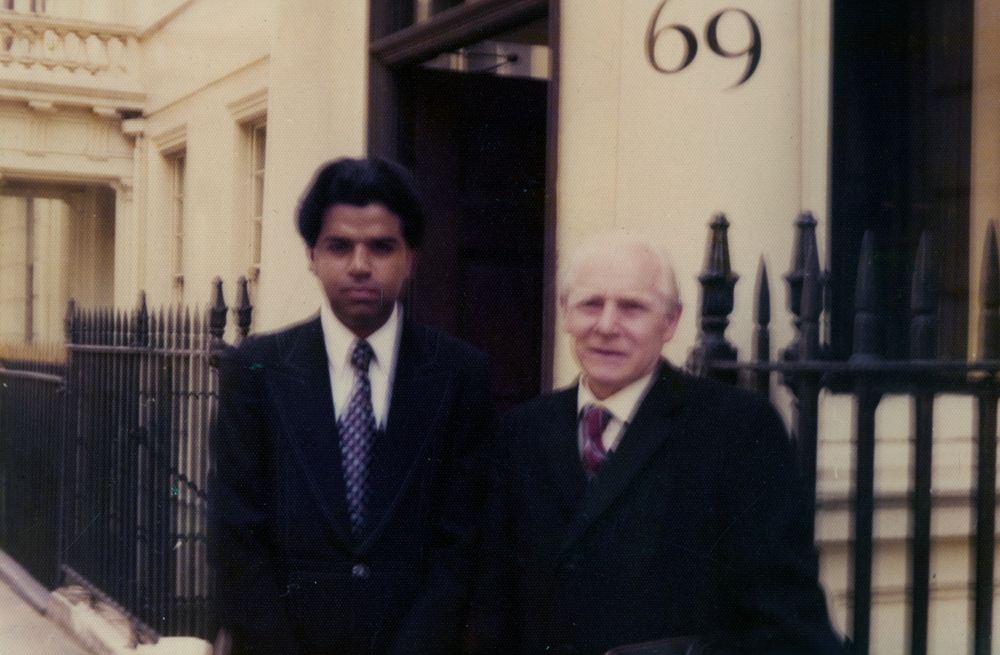
A R C London 1976
1976 was an important year. The death of M.A. Rahman Chughtai on 17th January, 1975, required newer insights and encounters all over the world. A number of international condolences had flown in and it was my job to go and personally thank them for their concern. So, it was a very important breakthrough but it was a voyage of discovery too. My job was to check the art market of the world too. So, my first encounter was at Sothebys London, with Michael Jones. Mr. Jones was not there when we visited and we were told that he would be coming soon. Later on, we see a tall man, dressed in a brown pin stripe three-piece suit (looked Saville Row), sitting in a Rolls Royce and with a smoke in his mouth, perhaps a cigar or a cigarette on a special ebony nozzle. We talked to him about the Art of M.A. Rahman Chughtai. Not only that he had not heard of any Chughtai artist, he did not even know of any contemporary Indian artist. The only artist he talked about was some Tagore (Abindaranath Tagore or Rabindarnath Tagore), and he said Sotheby’s had sold a work of his somewhere in the 1920s for an amount like 20 UK pounds. It was astounding to hear this from me, and my cousin did not like it, but I had picked a quarrel with Mr. Jones on the art subject. We walked out in dismay, then headed for Colnaghis, which had sold an edition of Aquatints “Indian Maiden” of Chughtai in 1936. We met Michael Goedhuis there, a most hospitable gentleman. Well versed in the arts. But again, nothing about Chughtai. Our conclusion the generation that knew Chughtai was no more.
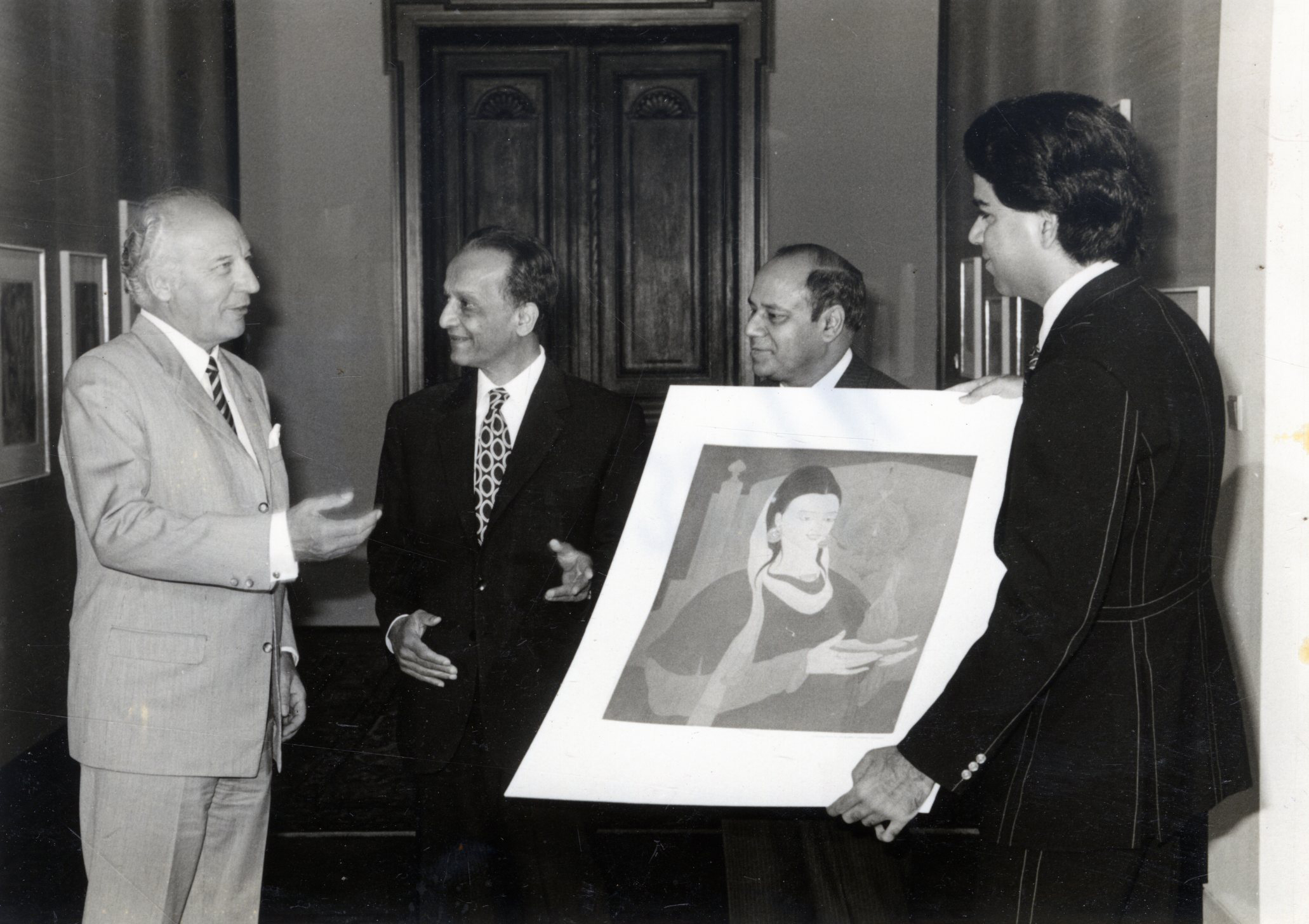
A R C and German President Bonn 1976
Our task was to bring Chughtai back into the attention of Western scholars. We sent invitations all over the world. In course of next few years, we had invited Basil Gray, Stuart Cary Welch, Tamara Talbot Rice. Ralph Pinder-Wilson, Dr Richard Ettingshausen, Paul Drury, Harry Norman Eccleston, Dr Karl Khandawalla, Herman Goetz, Dr Srivasthava, and many others to our shows. We encouraged research on Chughtai Art and the first PHD student Ms Marcella Bedford (later Nesom Sirhindi), also came here to our premises and got information and analysis about Chughtai art. We did our job exceptionally well.
1976-Basil-Gray-and-ARC-outside-London-Club
Later on, Michael Jones became a good friend and safter leaving Sotheby’s, even paid us a visit here in Lahore. He had a Masters from Cairo University, I think. He was tall, handsome and very affable. And he spoke the truth. The suit was not mine; the car was not mine, even the cigar was not mine. It was the company way of dealing with guests and all things belonged to the company. And he told us plainly, we were to discourage all enquiries about art. That was good business sense. Before his death, I had a calligraphic piece written in Persian for Michael Jones family and they must be having it to this day. I think his sisters name was Elizabeth. I carry fond memories of him. These were enriched by his partner Terence McInerney, who I met in New York later. Terry is still a friend.
Chughtai-Museum-new
In 1976 no auction house even knew the name of Chughtai art. Today there is a bombardment of same. But the two-nation theory war is not on the borders of Pakistan and India. It is also being fought in some of the auction houses of the world. A few of the Auction houses are full of Indian scholars and assistants, WHO KNOW NOTHING ABOUT CHUGHTAI ART. They have no access to books, publications, or Chughtai art resources. Not even seen Chughtai Art in original. And some of them are full of malice. Without doubt I am the world’s greatest authority on Chughtai art, in more ways than one. Not only have I lived with the artist Chughtai, I live in his house and I am building his museum, for future generations. And most of all I have full access to ten thousand works of his legacy, which include water colour paintings, pencil sketches, preparatory face studies, European engravings, Japanese woodcuts, art books and a lot more. I have started this series on auction houses. This is the first, many will follow. I will show the world Chughtai Art at its fullest best. Allah is with me!
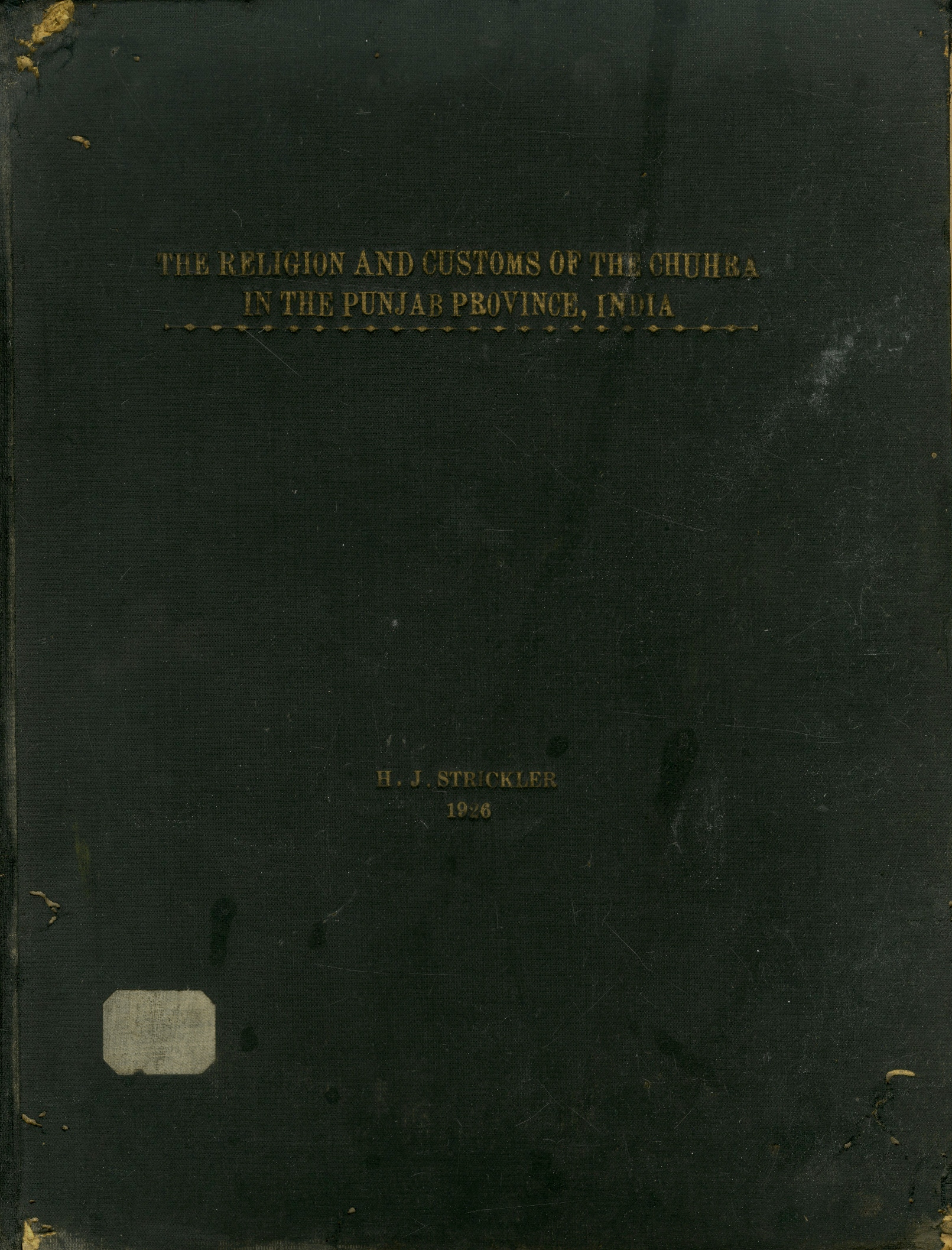
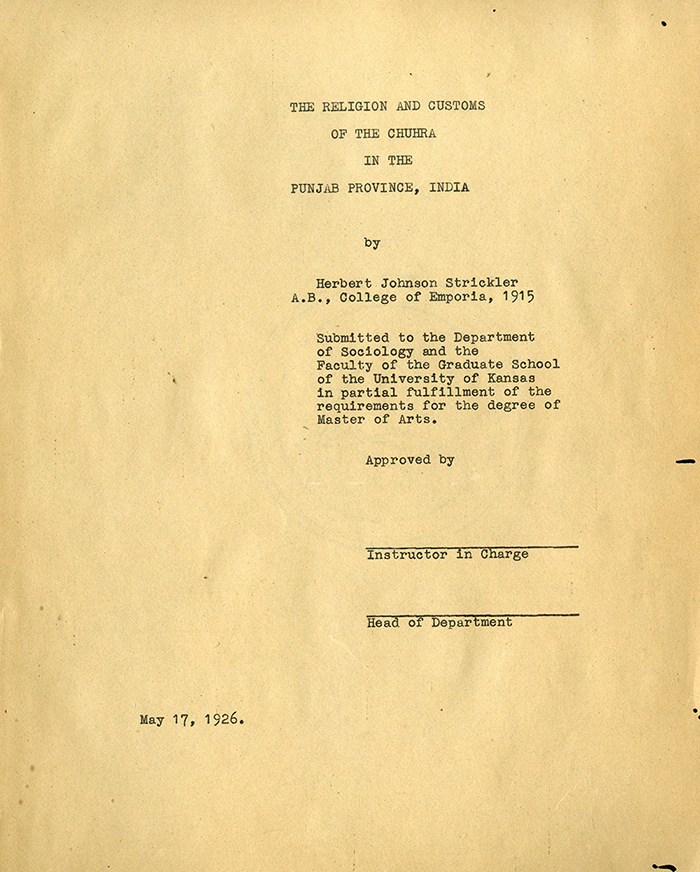
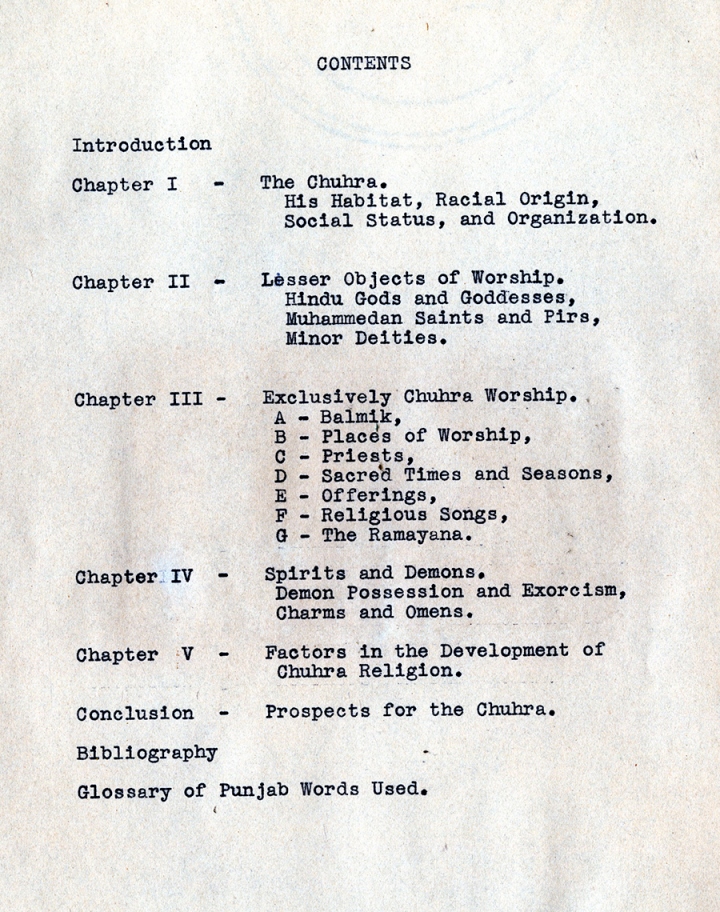
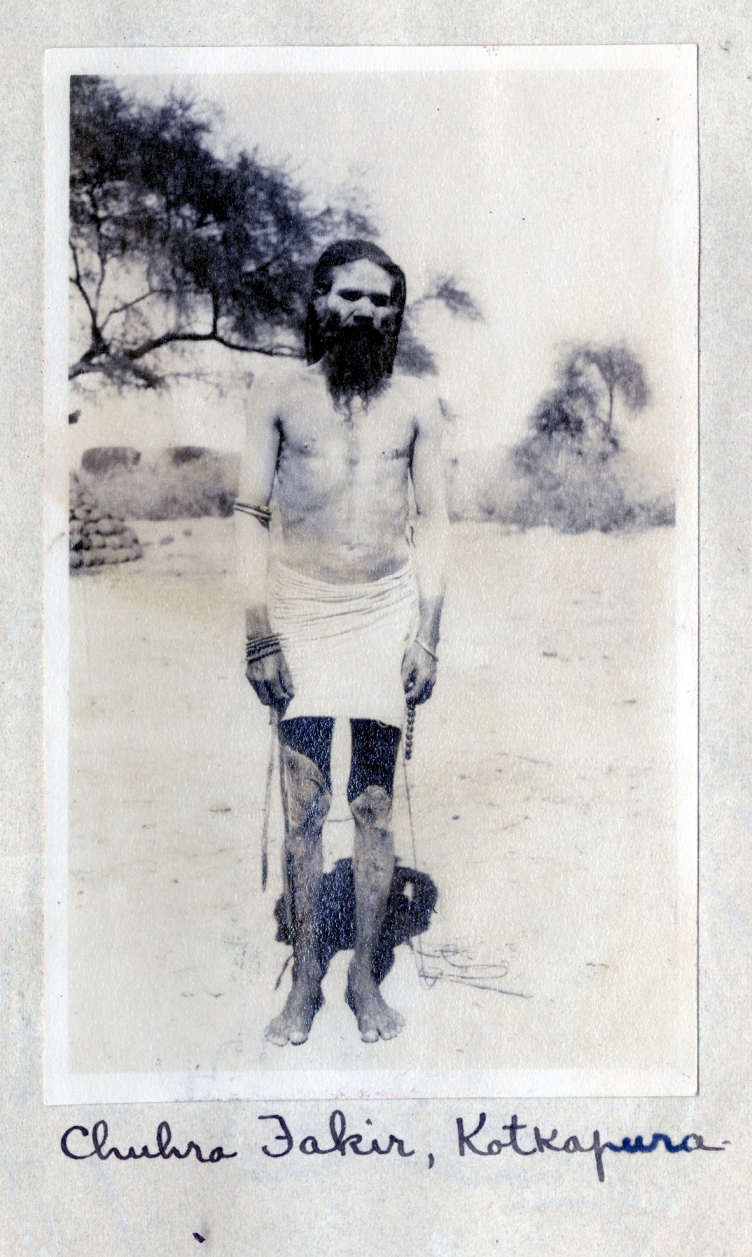
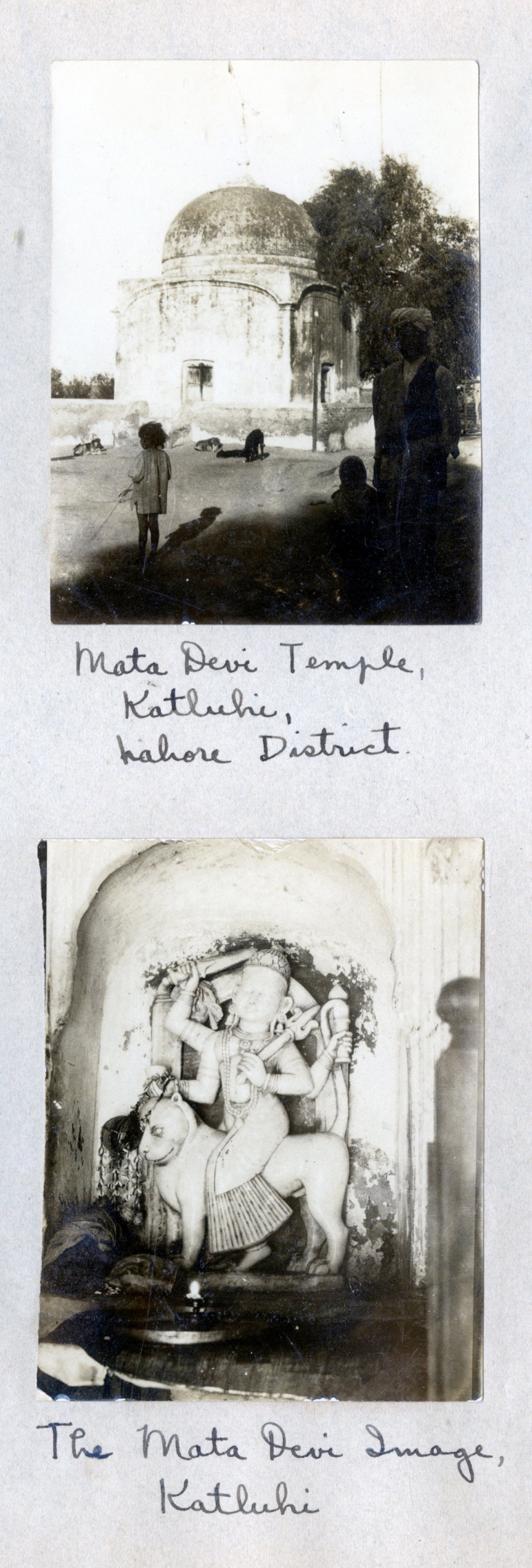
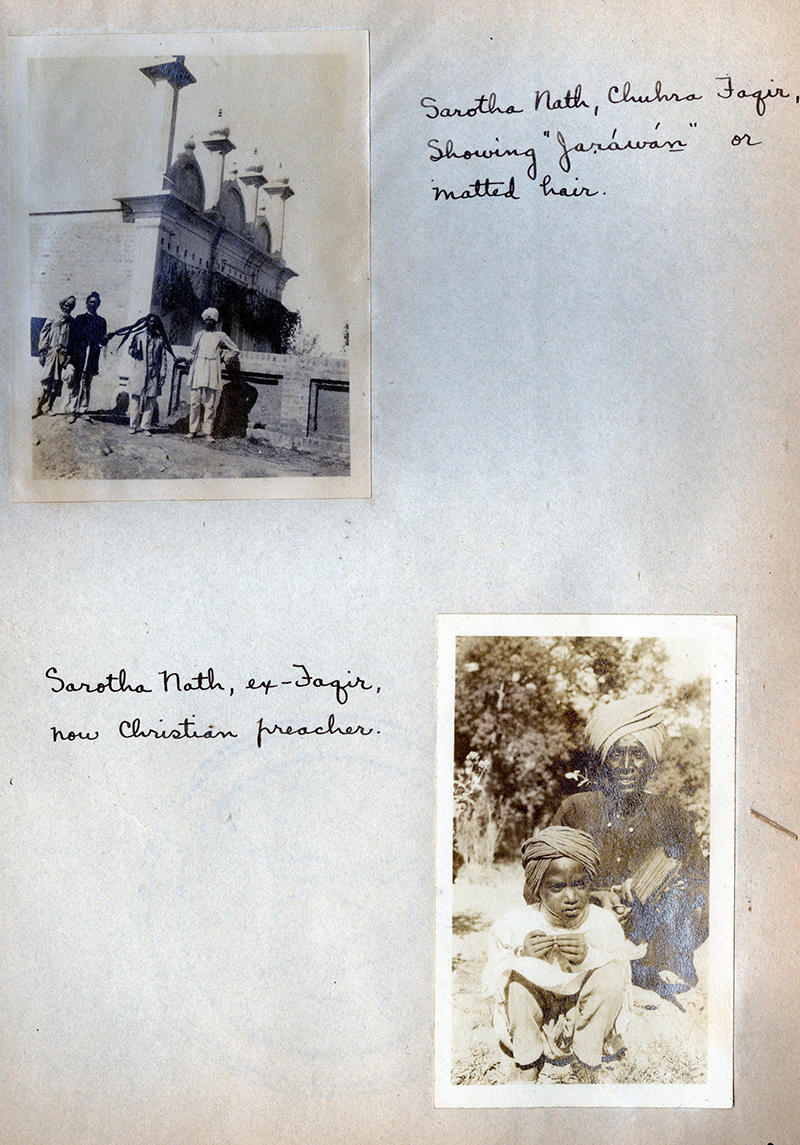
AN AMERICAN THESIS FOR UNIVERSITY OF KANSAS 1926 – ON THE RACE “CHUHRAS” OF THE PUNJAB BY STRICKLER.
Race is not discussed these days and racial references are a slur on human thinking. An American in 1915 submitted a research on the race of the Chuhras of the Punjab. His name was Herbert Johnson Strickler and he did first class research on a race dominant in the Punjab. He traced its religious background, temples, beliefs, and their conversion. It is an interesting read nowadays. Sharing some of its photographs without any slur of any kind to anybody. Anyone interested in the subject can refer to us for sharing of the thesis.
WHEN SULTANA RAZIA BEGUM CAME TO LAHORE TO SEE SAID MITHA – AND PERHAPS ENDED UP BEING BURIED IN KASUR ON SOME ACCOUNTS.
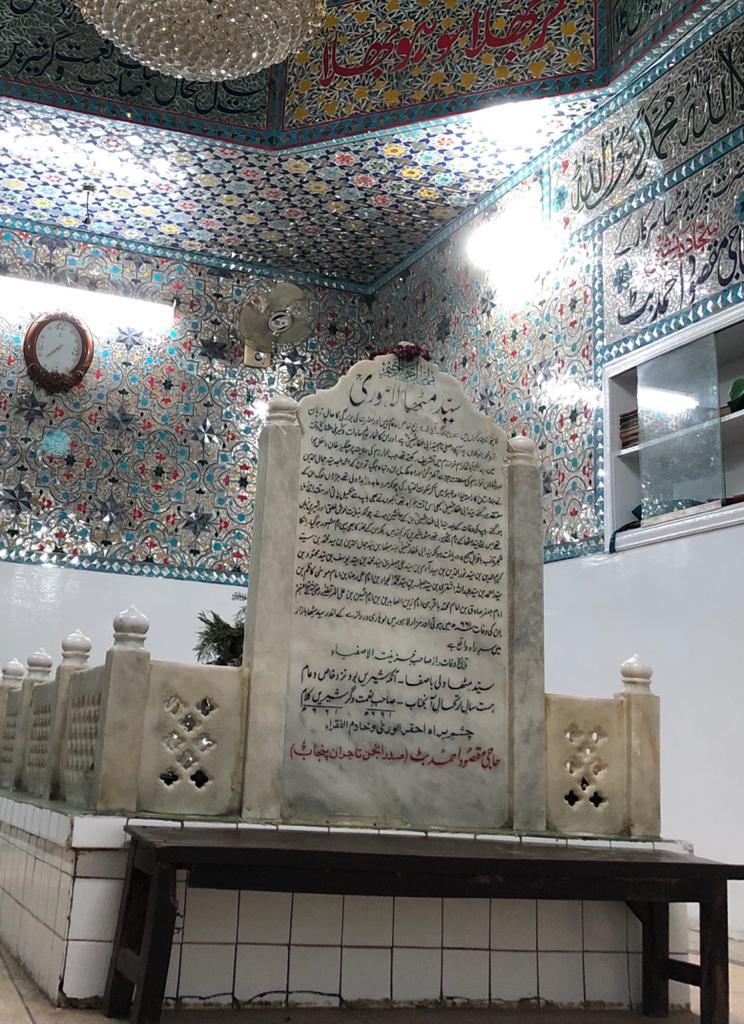
The years of reign of Sultana Razia Begum are 1236-1239 AD or 634-637 AH. The Viceroy of Lahore at that time was Malik Aziz Uddin Kabir Khani. A rebellion was taking place and Hazrat Said Mitha was with his sweet and eloquence talk trying to calm things between the two-opposing forces. Sultana Razia Begum was much loved in Lahore, because she was the granddaughter of Qutubuddin Aibak, the Sultan hero of Lahore. In war of succession between Sultan Iltutmish and Sultan Iram Shah; one a son in law and the other a son of Qutbuddin Aibak. Obviously Iltutmish one. But Razia carried the valour of her grandfather.
Sultana Razia Begum
Description grave Said Mitha
Sultan Iltutmish tomb
Kabir Khani was not willing to accept Razia Begum as Sultan and was ready to rebel against her. Said Mitha calmed him, as well as Razia on the subject.There are at least three places in India which are shown to be the burial place of Razia Sultana. There is even as fourth one in the qabarastan of Kasur. And we will talk of it in some other blog.
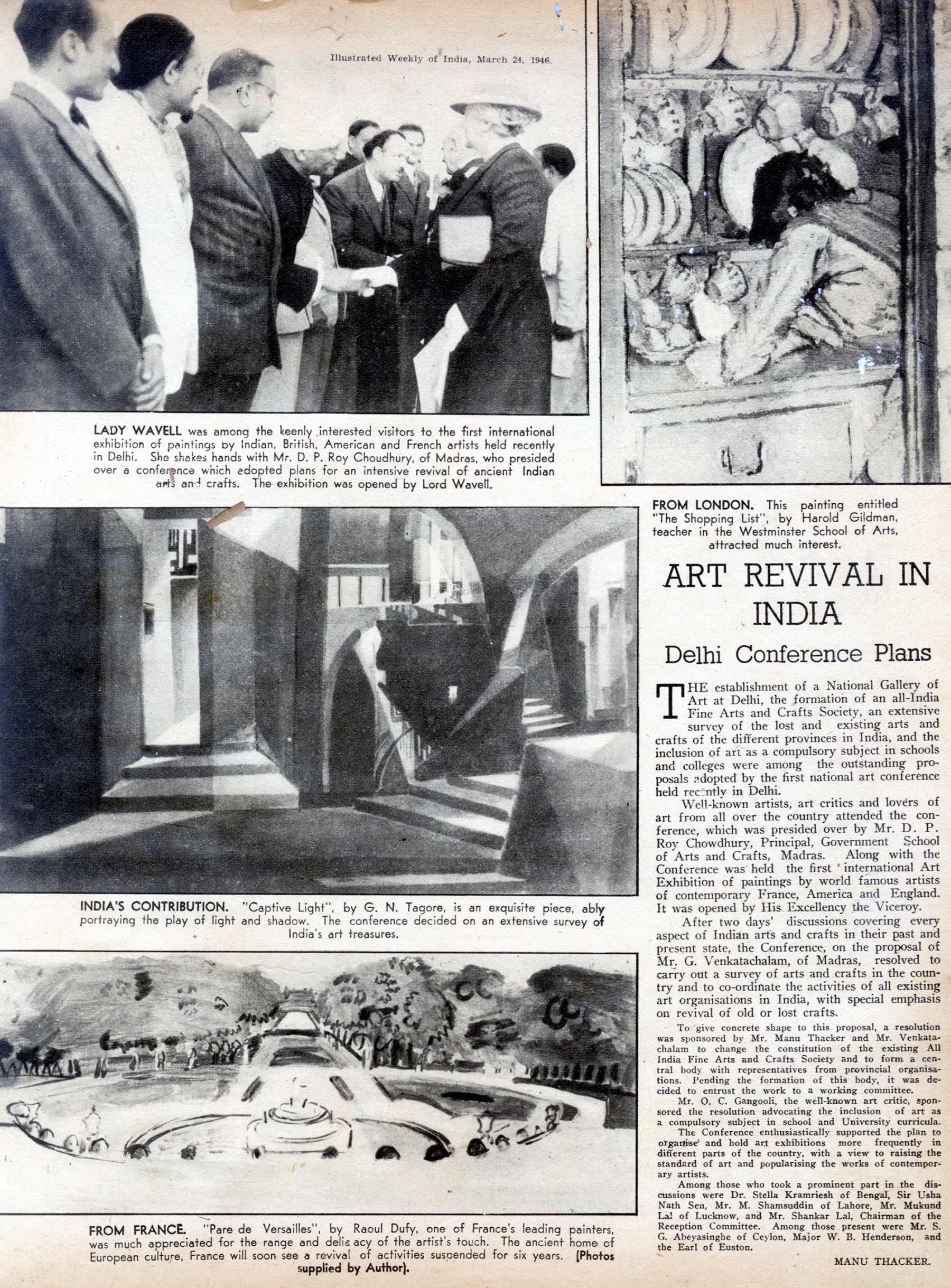
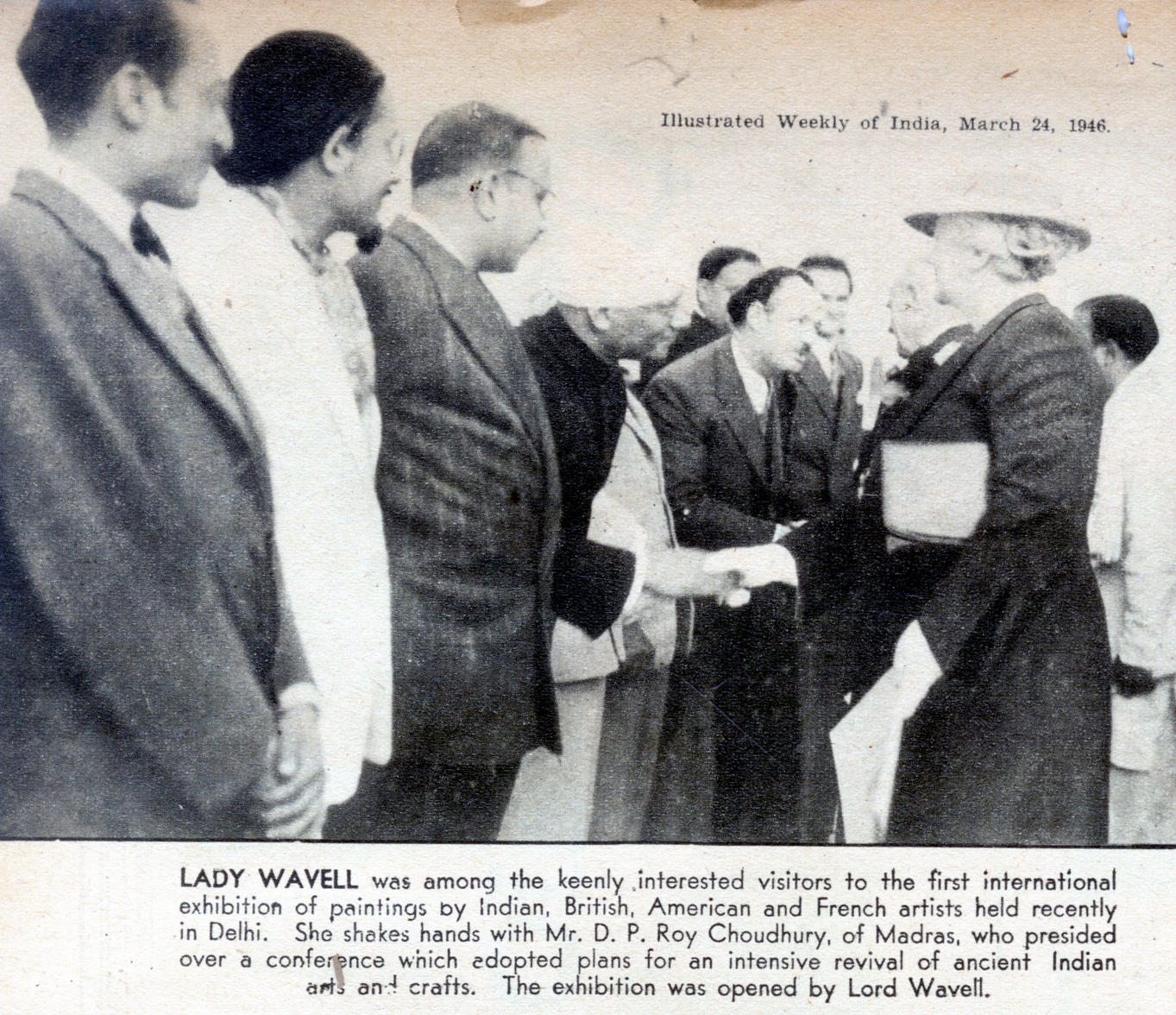
A RAREST ART PROMOTION WAVE IN INDIA IN 1946 – LORD WAVELL AND LADY WAVELL INVOLVED IN SHOW.
Even in those bleak times (Riots in Amritsar), promotion of Art was still in the minds of the British government. Indian artists were involved. So were art critics. One was G. Venkatachalam (Hindu friend of M.A. Rahman Chughtai), and the other O.C. Gangoly (Hindu enemy of M.A. Rahman Chughtai). Lady Wavell and her husband both there. We indeed had a letter from Wavell’s office in our Chughtai archives. We still have one from Sir Stafford Cripps, as well as others from Viceroy’s office. There was a show in London before partition and two paintings of Chughtai were there. Perhaps the same two paintings were here too. In any case it is an interesting record. I do not think even Art historians remember this episode.
Art Show Delhi 1946
Wavells Delhi Show 1946
Lord Wavell Viceroy of India
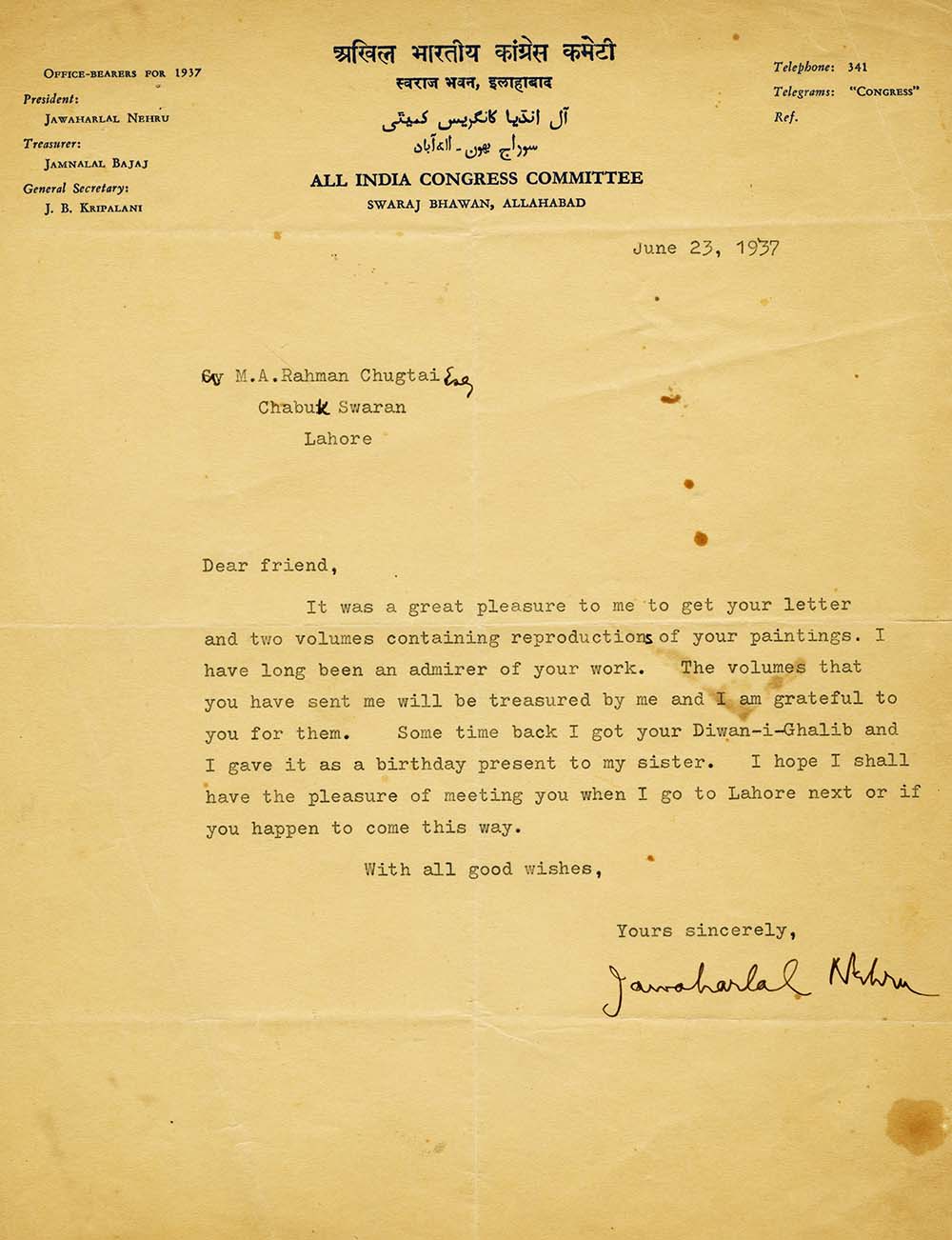
Nehrus letter and reference sister
This led to the opening of a Chughtai’s room in the National Museum of Modern arts in Delhi, at Jaipur house. Later it was renamed, and about 13 paintings of Chughtai were there. Some still there, others have disappeared with time. It was the effort of Jawaharlal Nehru on the subject. Nehru remained committed to artists and writers left in Pakistan. But Chughtai the patriot in the Iqballian spirit never saw eye to eye with Nehru on this subject. Pakistan first, and last!
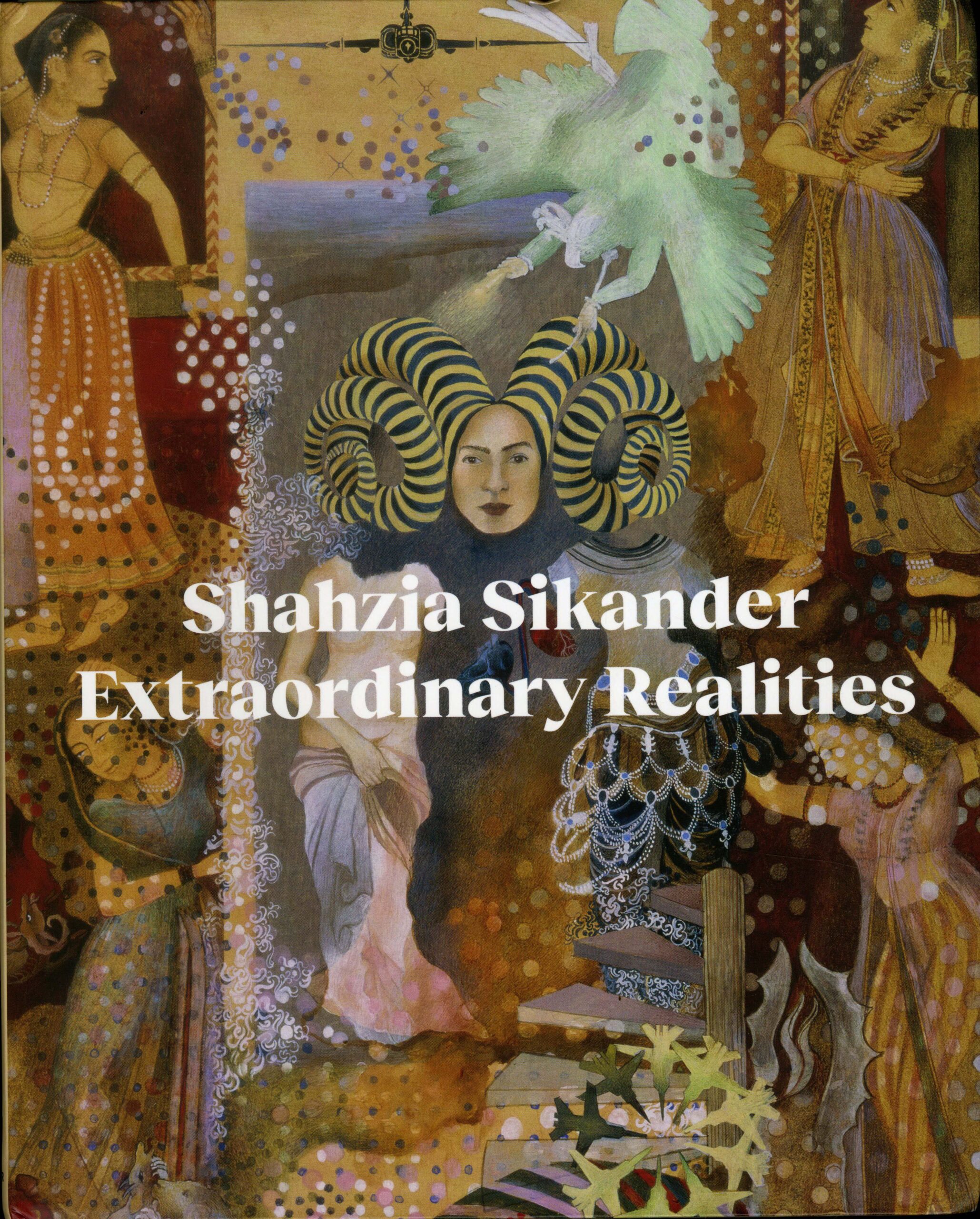
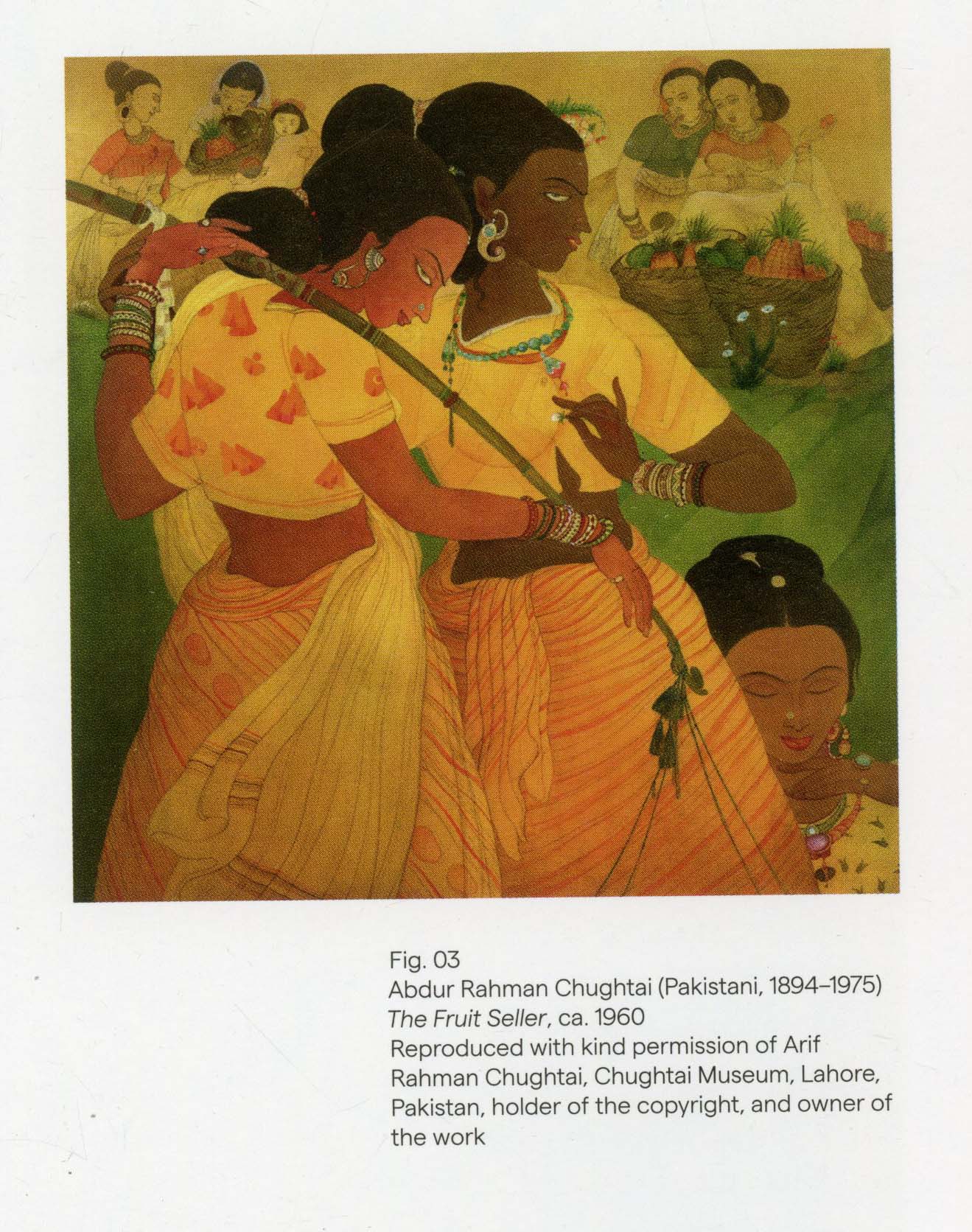
AN INTERNATIONAL SHOW OF SHAZIA SIKANDER IN USA – USE OF PAINTING FRUIT SELLER BY M.A. RAHMAN CHUGHTAI
RISD Museum in USA hosted a show of Shazia Sikander. Unfortunately, due to pandemic Covid issues, it was not physically accessible as it was meant to be, and literally went virtual as all museums are now facing the crisis in this way. The writers wanted to use a particular painting of M.A. Rahman Chughtai in it and when we were contacted, we provided same to them. All of it came in print and we were provided the catalogue of same, courtesy of Ms Sionan Guenther. We also cooperated with the museum fully and without any charges of any kind.
Shazia Sikander show in USA
The Fruit Seller work Shazia Sikander
Sharing this important information with all those interested in same. Thank you!
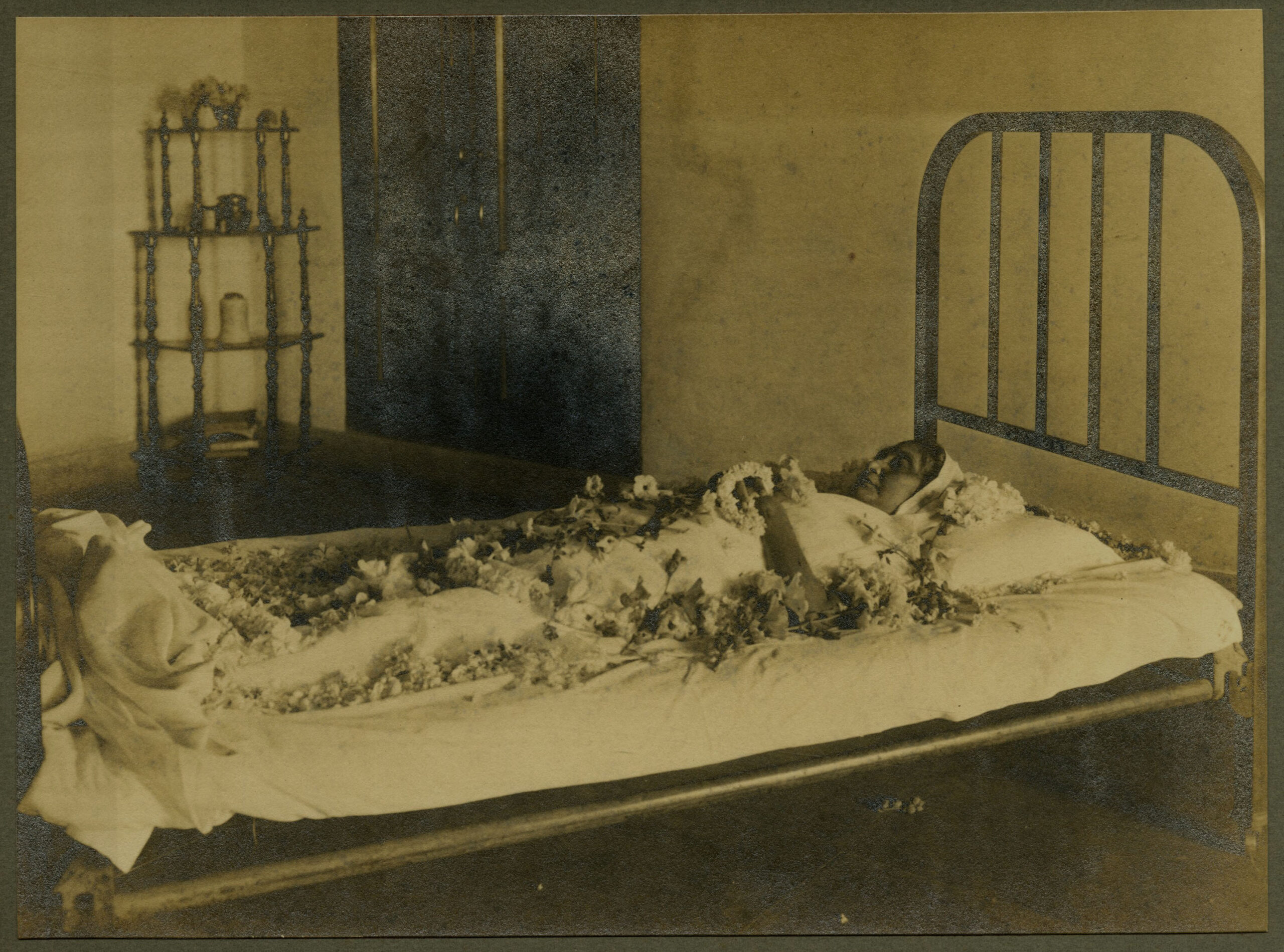
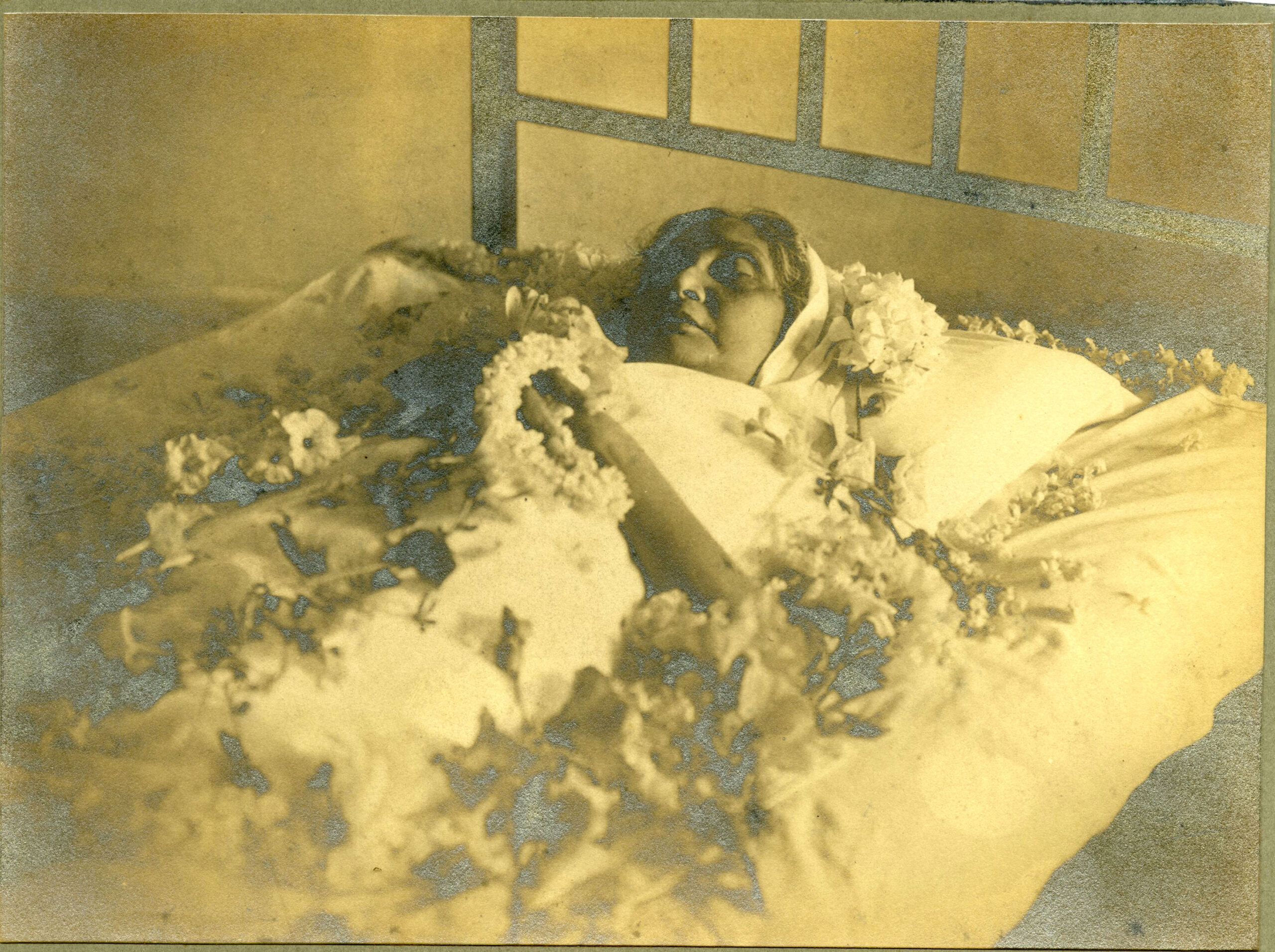
IS THIS DEAD BODY OF A HINDU LADY OF LAHORE? – WIFE OF DEV SAMAJ FOUNDER PANDIT AGNIHOTRI.
DEV SAMAJ, a religious and social reform society, was founded on 16 February 1887 in Lahore by Pandit Shiv Narayan Agnihotri (1850-1929). The story of the Dev Samaj is in essence the story of its founder. Pandit Agnihotri was born in the village of Akbarpur, in Uttar Pradesh, on 20 December 1850. At sixteen he went to Thomson College of Engineering at Roorkee. In November 1873, he moved to Lahore taking a position as drawing master at the Government College.
Dead Educationist Lahore 1
Dead Educationist Lahore 2
His first wife died in Lahore. Two photographs of that lady, dead and surrounded by flowers are with us. There are no captions to them but they were with a book on Dev Samaj in our archives. Anybody knowing more can tell us about them. These two are also an important legacy of Lahore. Perhaps not existing anywhere else.
JACQUELINE KENNEDY, EDITH WELCH AND CHUGHTAI MUSEUM – NEW NARRATIVE TRACES THE RELATION BETWEEN ALL OF THEM.
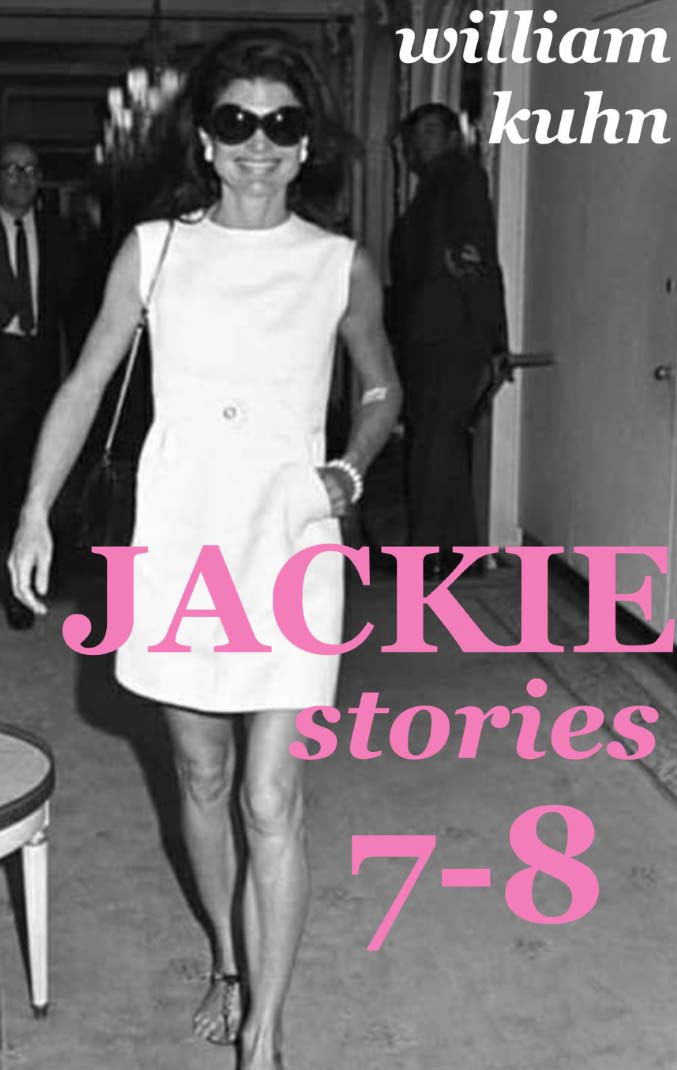
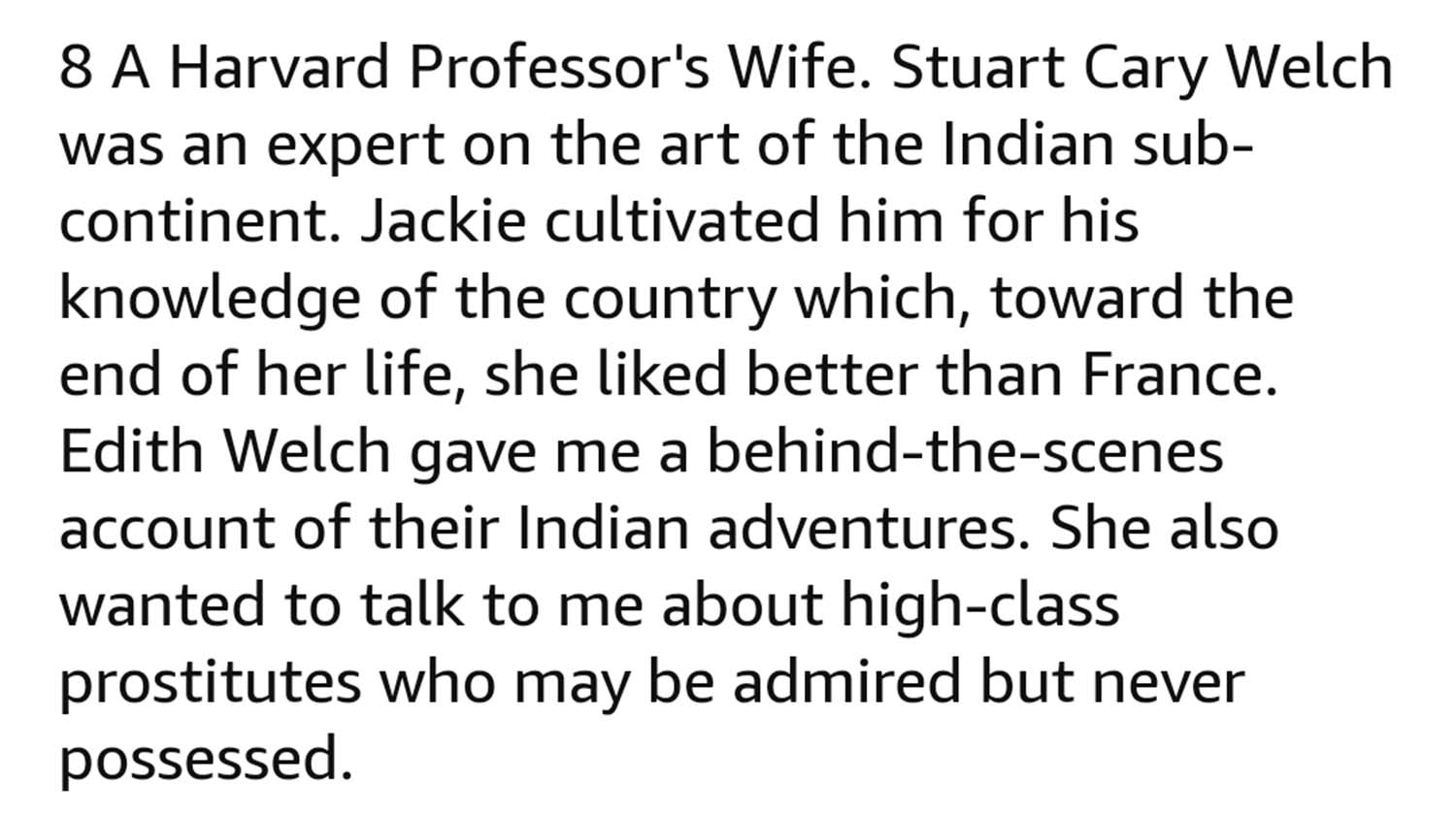
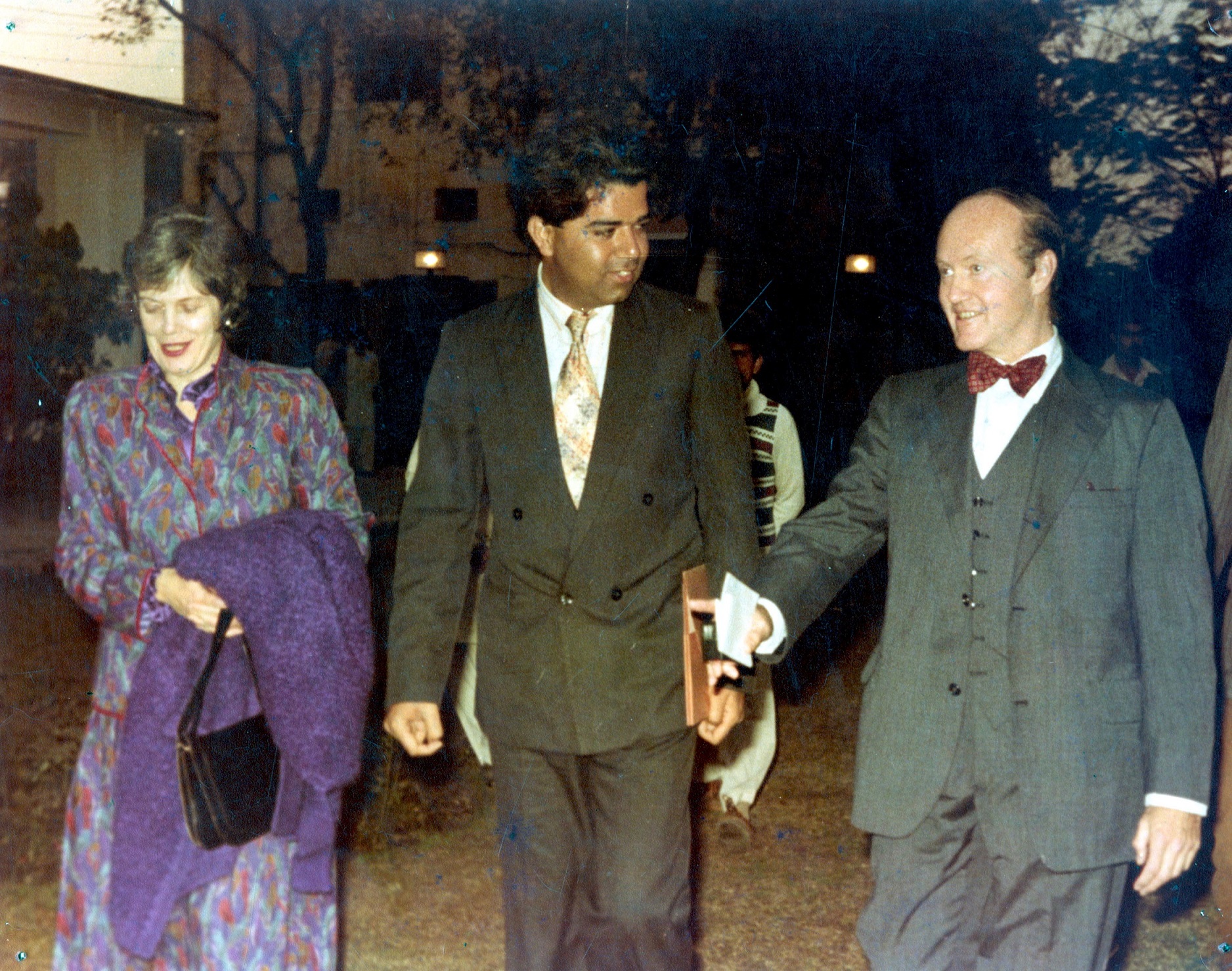
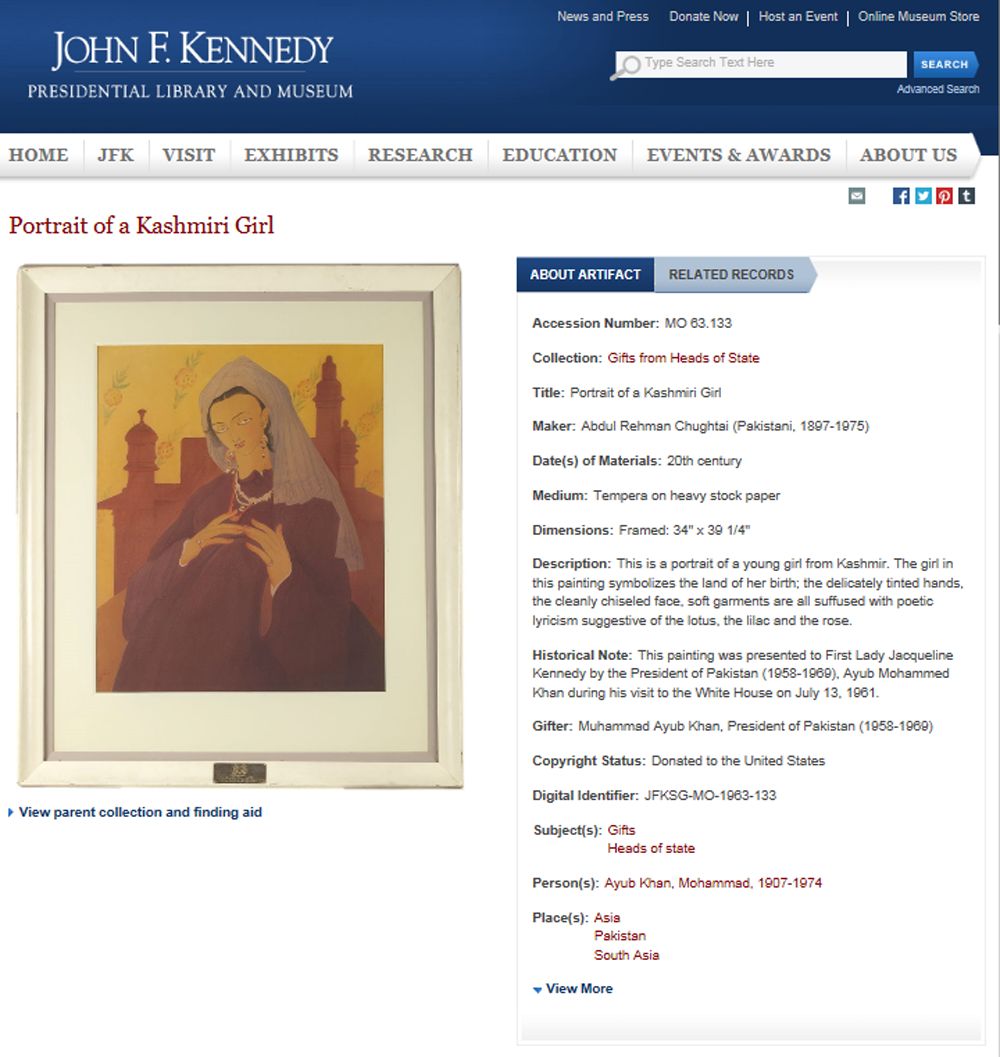
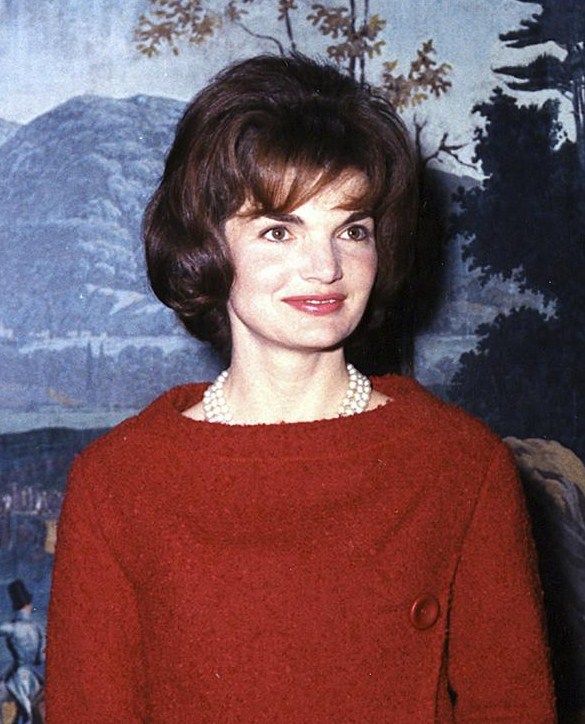
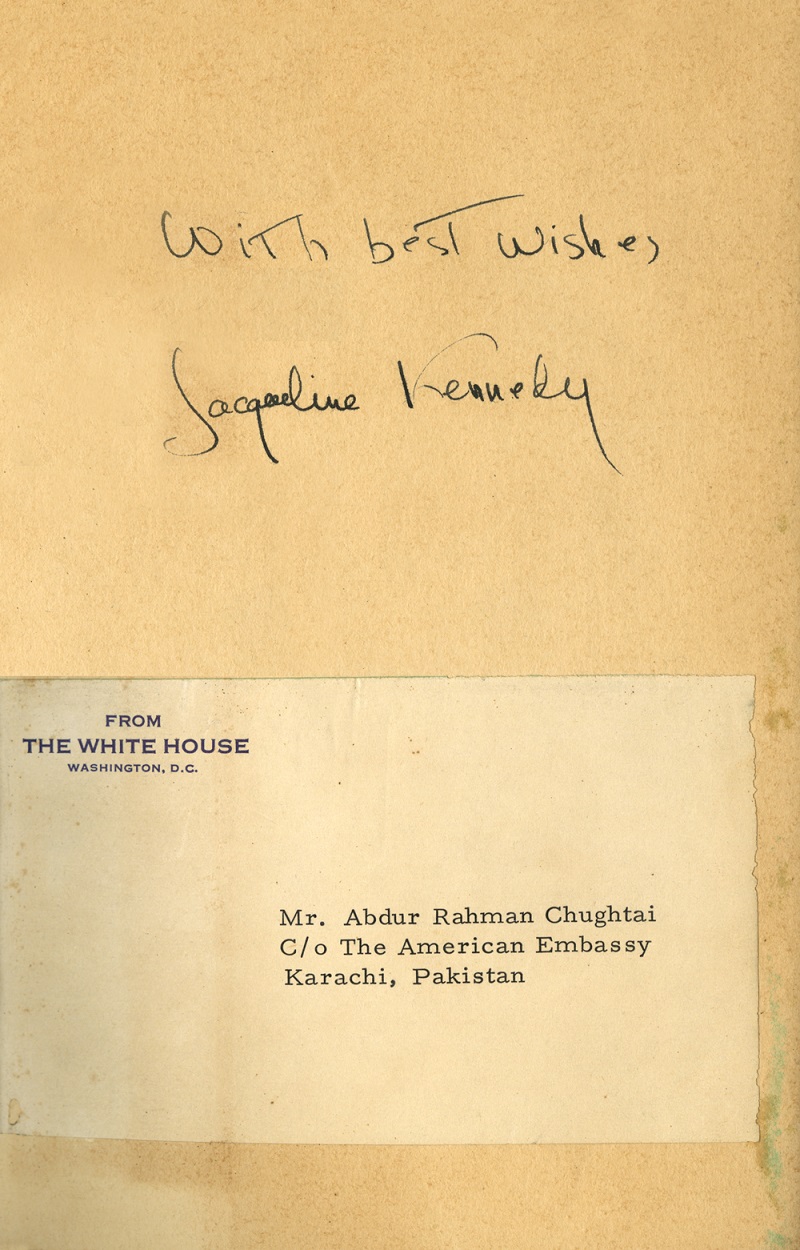
President Ayub Khan had excellent relations with the Kennedys. Chughtai paintings were presented to them at least twice, if not more. One of them is still in the Kennedy Memorial in Boston. Chughtai artist designed the dustcover of the Urdu version of the biography of Jacqueline Kennedy. An autographed book was sent to Chughtai artist through US Ambassador David Bane. On other hand Harvard Professor, Stuart Cary Welch was guest of Chughtai Museum in 1981. We have record of same with us.
Jackie stories 8
William Kuhn
Edith Welch account
Stuart Cary Welch Edith and ARC
Jacqueline-Kennedy
Kennedy library
Jacqueline Kennedy
Jacqueline-Kennedys-Autograph
Willian Kuhn also from Boston is an avid research scholar and published a number of books as Jackie Stories. Number 8 is about Stuart Cary Welch and it includes a photograph of the Welchs at Chughtai Museum in 1981. This is to keep our readers in touch with developments in the Western world. International recognition of our efforts in preserving and promoting Chughtai is ever there.
STEREOTYPES AND CLICHES MARK REFERENCES ABOUT LAHORE – YES, TWISTING THE CITY’S HISTORY IN MORE WAYS THAN ONE: – NO SOURCE BEING LEFT FOR TRUTH BY SPREADING MISTRUTHS.
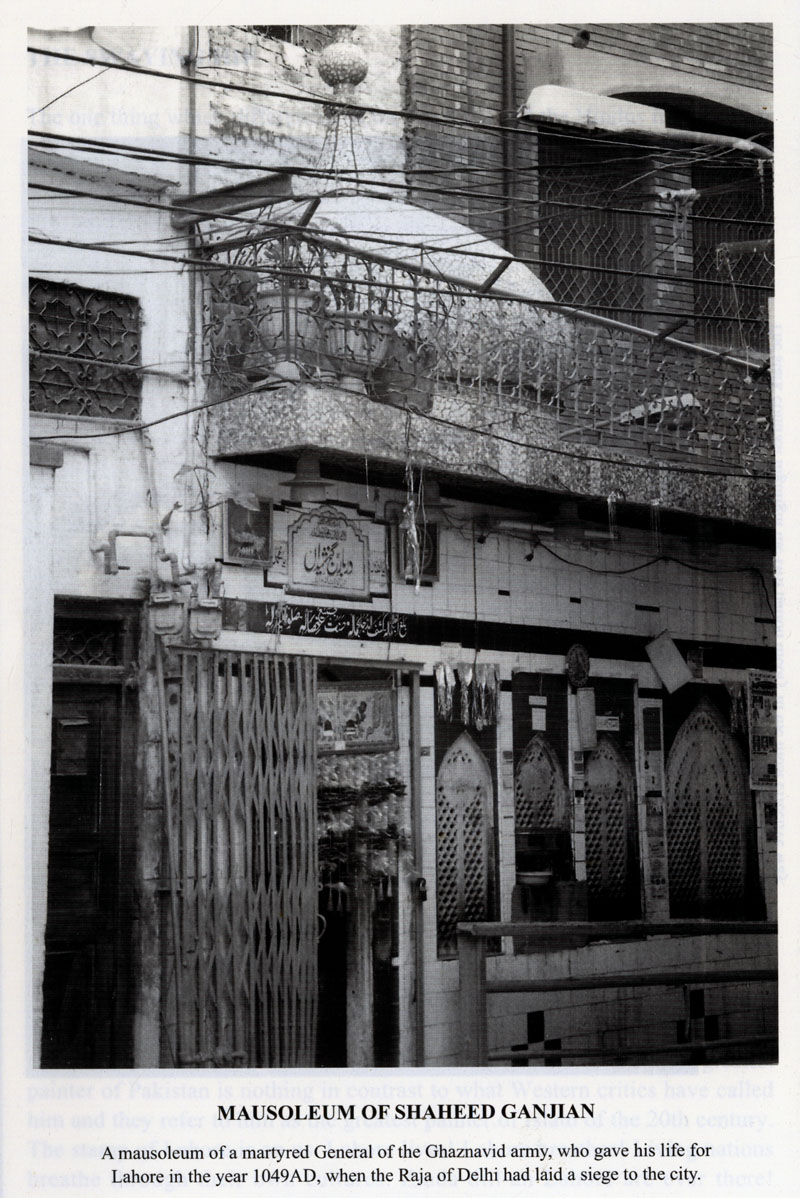
GANJ SHAHEEDAIN OF LAHORE
Foreign money flows in our historical narratives and it flow distorts all that is known about this city. It is our city. Our family has lived in it for more than four centuries, perhaps even more. Flow of Sikh money makes it a Sikh city, flow of Hindu money makes it a Hindu city, and flow of Western money, responsible for confusion all around. All the vendor things sold in the city is touted as unusual, a request should be made to those who project same to try same on their own. Probably full of bacteria and viruses, all those silly things can cause many loose stomachs. In addition, blood pressure as well as gastritis all around. Painting old wooden structures with layers of cheap paint, and hanging plants in lanes has nothing to do with the history of Lahore. May we even know the history of the persons to whom the lanes are credited with, nobody really knows. We do not want to be specific but a number of questions do come in mind.
Tania Qureshi writes:
Gali of Surjan Singh and the Gali Gubarchian, located in Lahore Pakistan, are interlinked and the complex is known as Koocha Charakh Garan. These are typical of the remaining historical fabric of the walled city. Gali of Surjan Singh and Gali Gubarchian have almost 23 buildings which represent the transformations in technology and architectural expressions that were affecting Lahore during the colonial period.
It is sweet and honest of Tania Qureshi that she asserts the area as of colonial period. Does it clearly show something? Not a single house of historical or aesthetic importance. A period of decadence. And hardly anyone knows the Hakeem Surjan Singh? Not even his house is there. Kanaya Lall the historian of Lahore mentions a number of Hakeems of the city, both Hindu and Muslims, but Surjan Singh does not appear in his historical account. Hype is for what? Lack luster plain houses, and unknown hakeem? I recall the chowk near the Pani wala talab, and Rang Mahal, is known as Chowk of Surjan Singh. I do not know why? But I was born in a house in the chowk of Surjan Singh and I know that well. There were beautiful houses nearby with exquisite wood carving (Swans and peacocks), as having belonged to famous prostitutes of Mughal period. Kanjri Mor-wali was not Mai Moran of Ranjit Singh’s fame, famous for her peacock dance. My negotiation did not work out and the exquisite wood carving was used as fire-wood.
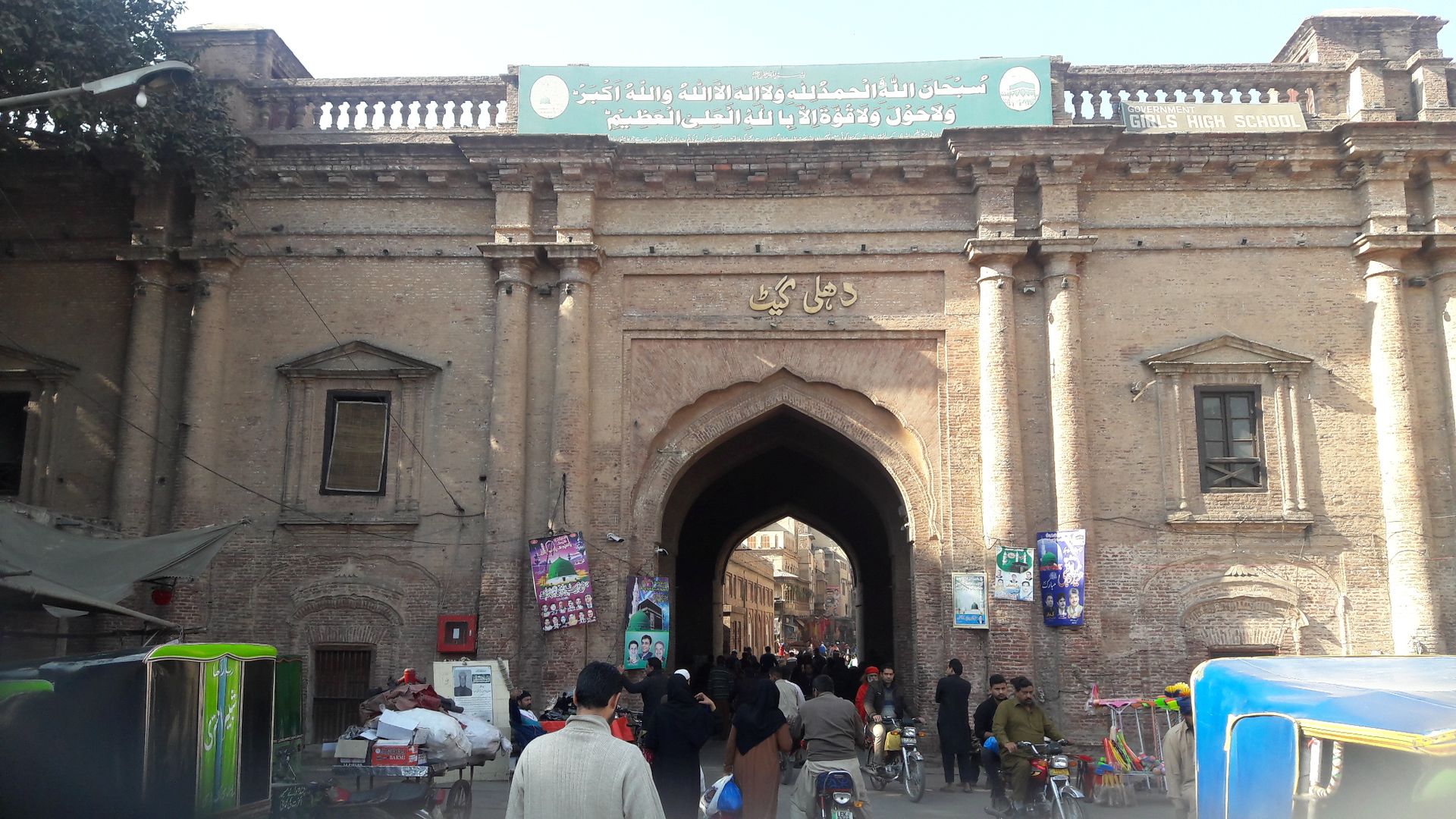
Delhi Gate British building
Actual location Delhi Gate
Security of the city over times. A number of questions come to mind about the security apparatus of the city. The first misadventure happened around 1049 AH, when under threat, the Hindu Rajas, came together and invaded Lahore. We have detailed it in one of our research books. Various areas of Lahore faced massacre under the onslaught of the Hindu armies. Only few signs are left. One is the Ganj Shaheedain area near Kocha Chabuk Sawaran. Then there is the Mongol invasion in which Hassan Balki died defending Lahore. He is buried in Kashmeeri Bazaar. Said Mitha and his father escaped the wrath of the Mongols in Lahore. So much ruin that in era of Mubarak Shahi, there was not even one resident in Lahore. We hear of various tussles in Sultanate era, as well as Mughal period. The invasion of Nadir Shah and Ahmad Shah Abdali had the greatest effect, and the security of Lahore was at stake. But Lahoris were quick in adjustment. They always negotiated the safety of the city by offering endowments. The anarchy brought by the three Sikh rulers who captured Lahore and played havoc with people. Gujar Singh (son Sahib Singh), Lehna Singh (later son Chet Singh) and Sobha Singh were the curse on Lahore. Tired of their misadventures, a group of Lahore citizens invited the dacoit of Gujranwala, Ranjit Singh to get control over Lahore. As promised the Lawari gate was opened at night for his entrance of army stationed at the Baradari of Wazeer Khan. The second attempt succeeded in capture of Lahore, but not the Lahore Fort. Cannons were mounted on the top of the minarets of Badshahi masjid by removing the cupolas and cannon fire inside Lahore fort. Finally, the three Sikhs Sardars gave up and ran away, never to appear again. Although their remanent like Qilla Gujar Singh is still there. This was a brief survey and what was the security apparatus of the times.
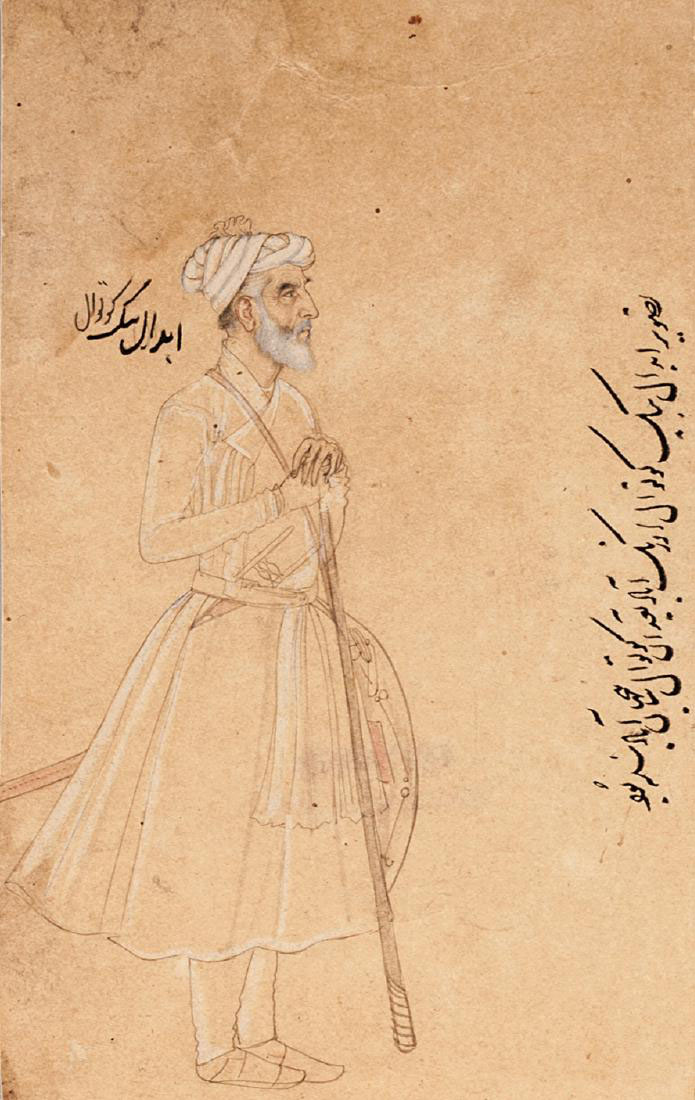
Kotwal Ibdal Baig Lahori
People wonder why the lanes are so narrow in Lahore. Simply so that no group of armed riders could get inside the city and ruin the life of the people. A second precaution was that the roofs of the houses were joined together so that if residents got surrounded in one house, they could jump to other houses and escape the capture of the invaders. And most of all hidden rooms at water level in the water wells of the house, where women and children were lodged, with supply of basic flour and water to last the onslaught as well as daggers, not to fight the enemy but to kill themselves if caught for fear of being tortured and raped by hostile group of people. How many can explain this to you? A well in most houses was the security need of those times.
Lahore egalitarianism can be proven by the fact that upper class or lower-class people all lived in same area. The rich and powerful had no qualms over having poor people in their area. Racial distinction was brought in by the British when on documentations people were forced to write their castes instead of professions. Different areas were made for different classes of people. This continues to this day everywhere.
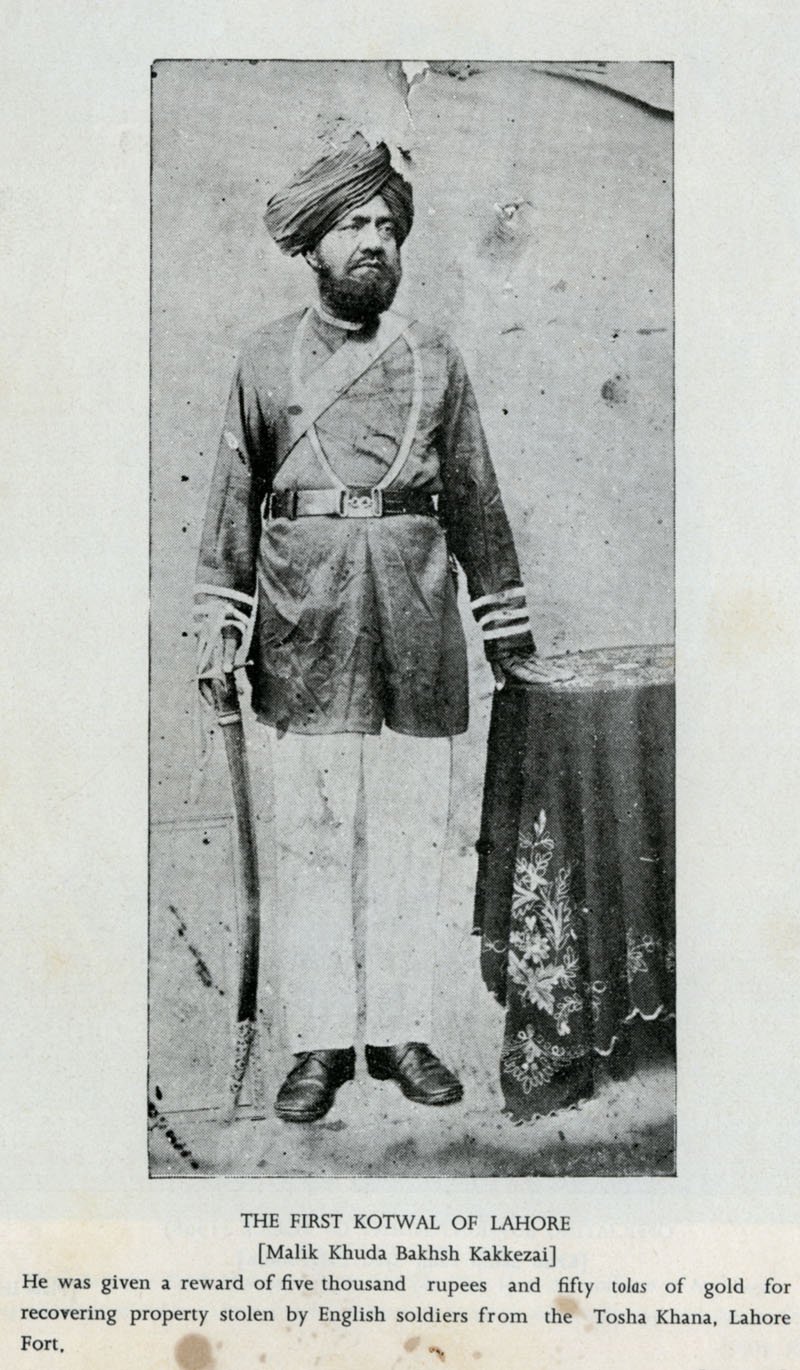
Malik Khuda Baksh Kakayzai kotwal
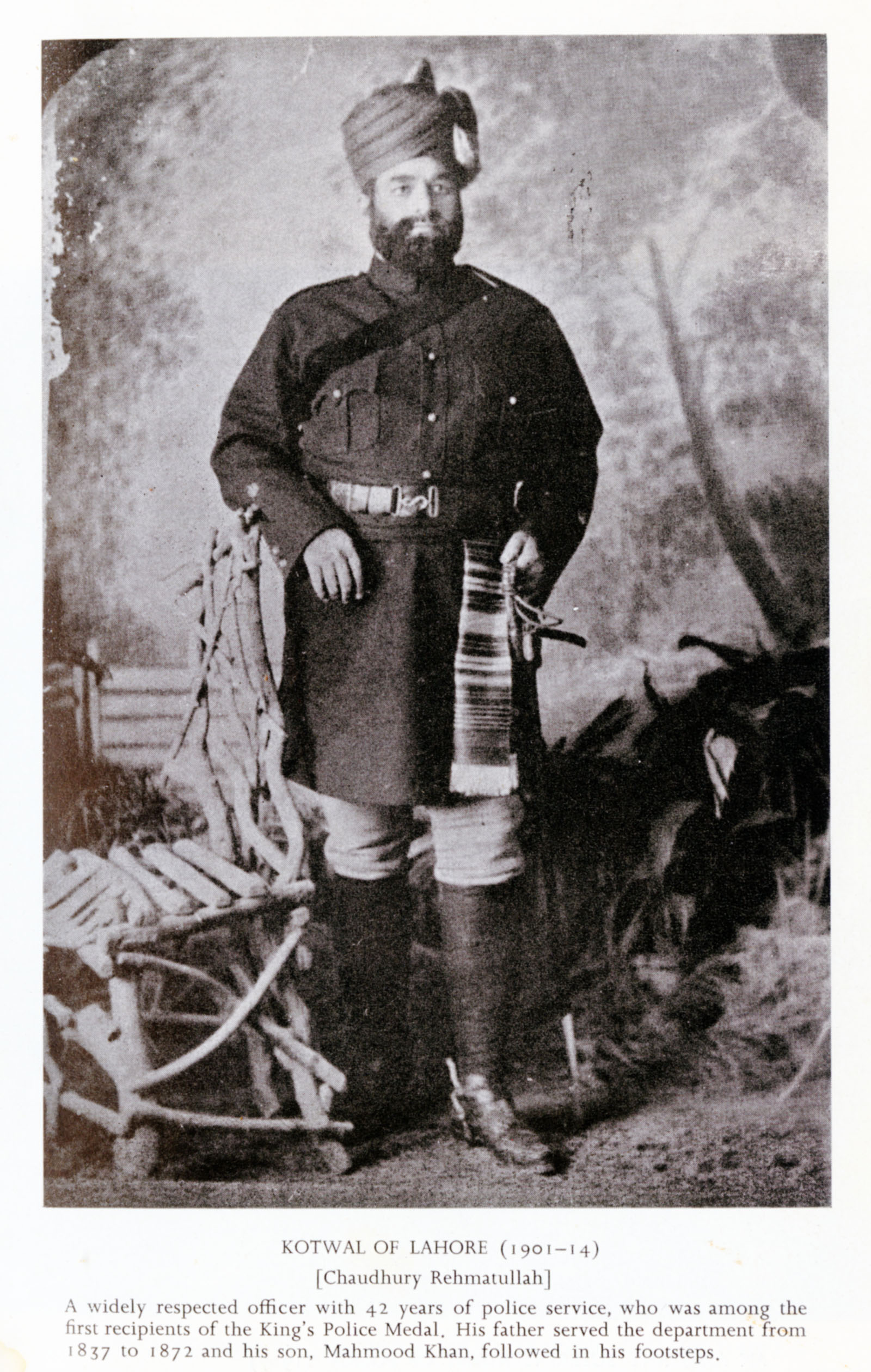
Kotwal of Lahore 1901
The story behind all stories is fund raising and use of funds. And the pay master is always right. He funds to get his version of truth across the board. Simple equation. May we say more?
British adjust the security of Lahore. First most of the gates were demolished in Lahore. Lanes were carved and broadened out, so that horses as well as elephants could easily enter Lahore. The Kotwali inside the city was demolished and same shifted outside in form of a new building, with newer kotwals for the city. The history of these British period Kotwals is basically boot licking and nothing more. And yet Muslim officers were preferred over other ones. There was a famous Kotwal of Lahore when Ranjit Singh entered Lahore, and he used to roam the street, with an ever-famous actual donkey as an escort. Our mission is to present the truth as we know it. It should not surprise people addicted to lobbies spready disinformation about Lahore.
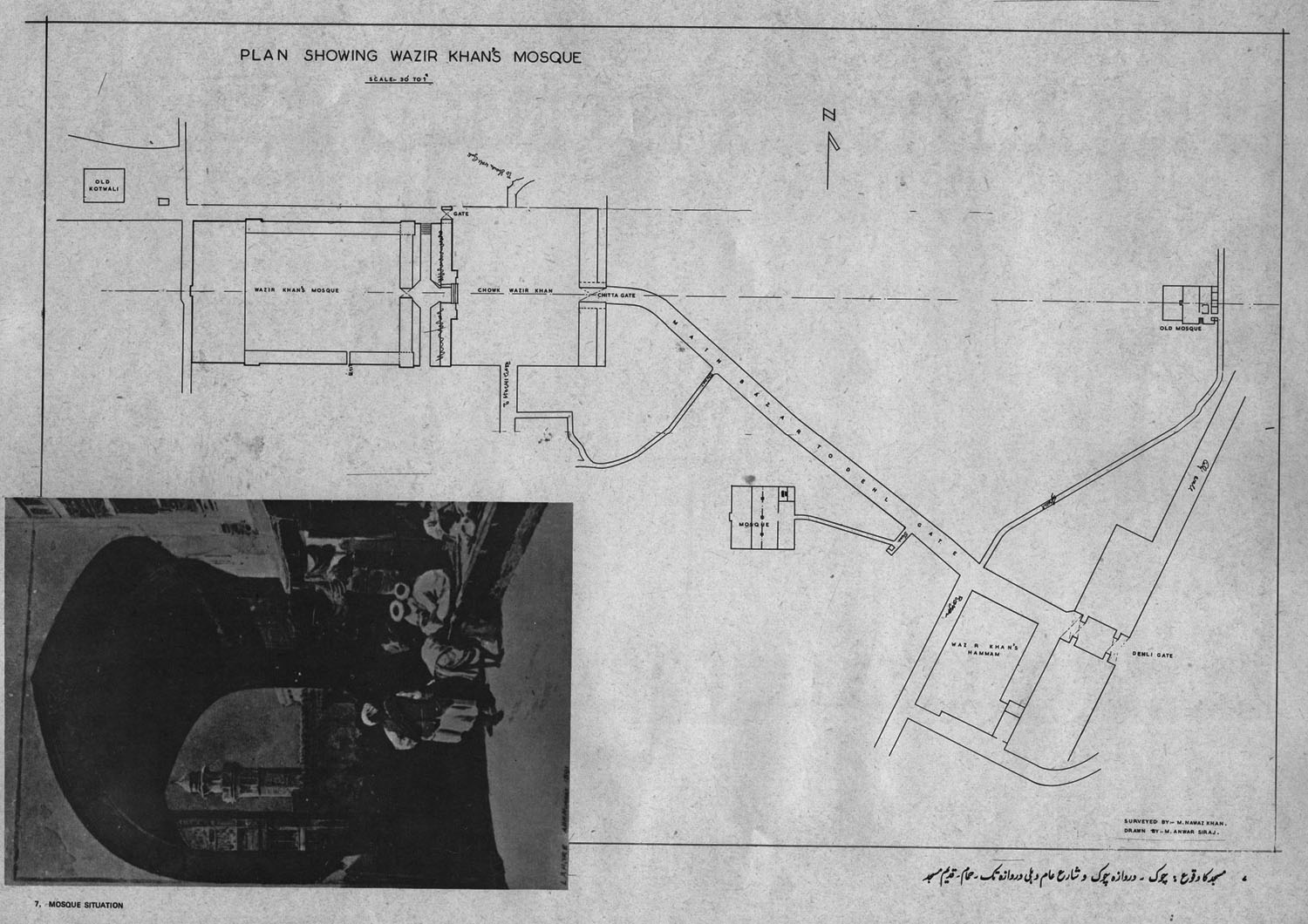
Purani Kotwalli area
New Kotwalli
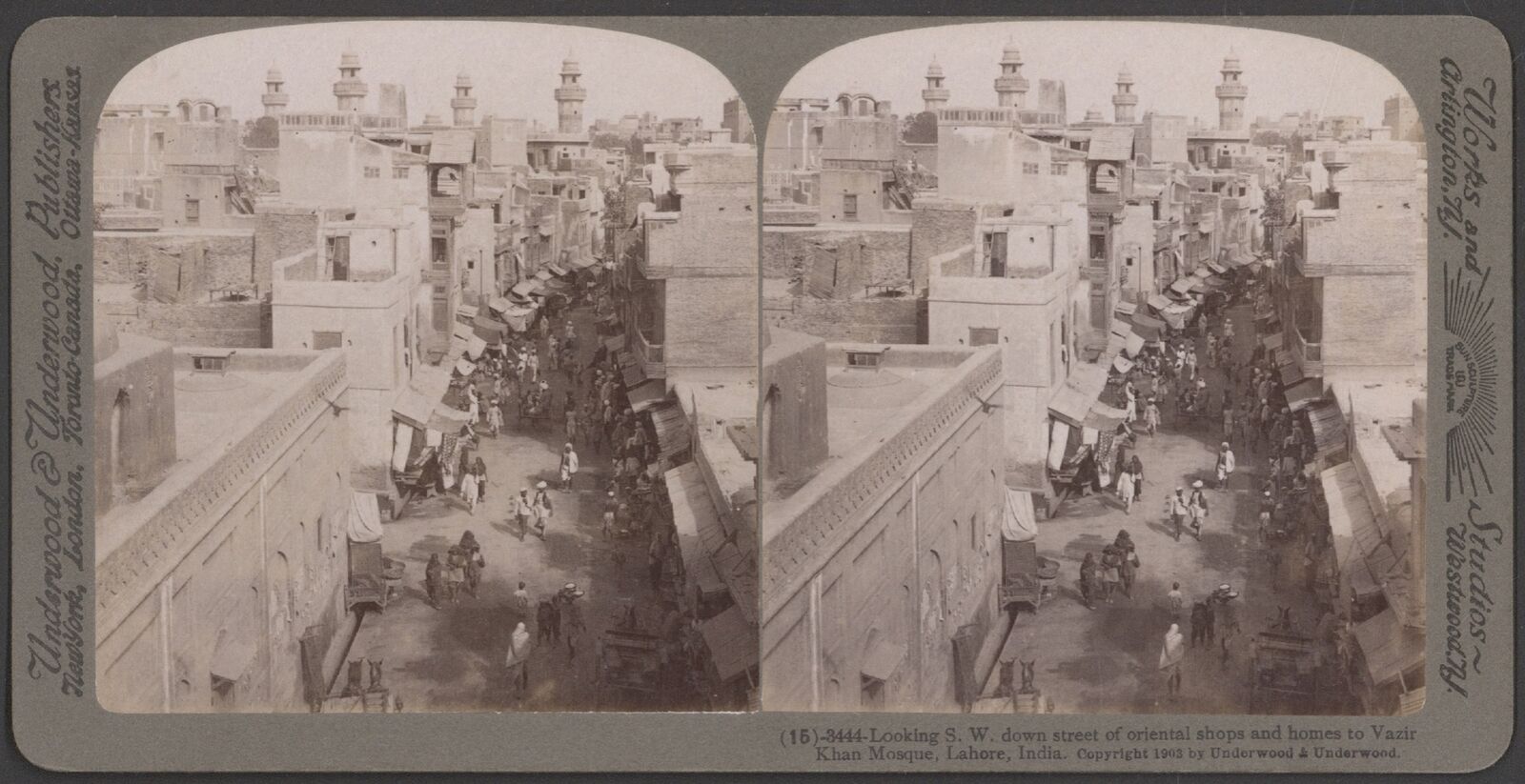
P.S. A katra of famous Hakeem Buzurg Shah near the Wazeer Khan mosque would have been an ideal place to restore, with even the mausoleum of Hakeem Inayat Shah (writer of books) there. A family which consolidated the return of the Badshahi mosque Lahore to the citizens of Lahore.