A STARTLING DIMENSION IN INSPIRATION IN SULTANATE PAINTING OF REGION – HAJI MAHMUD HERATI, PAINTER OF SULTAN NASIR SHAH KHALJI 1500-1510 AD

A STARTLING DIMENSION IN INSPIRATION IN SULTANATE PAINTING OF REGION,
HAJI MAHMUD HERATI, PAINTER OF SULTAN NASIR SHAH KHALJI 1500-1510 AD
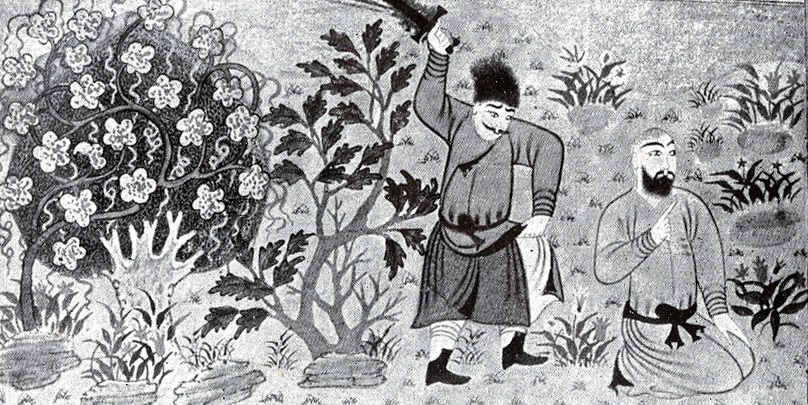
Sultanate miniature

Every one who is a student of regional painting knows that Emperor Babur and Emperor Humayoun brought painters here from the Iranian territory. Every one knows that the Persian Masters intermixed here and formed a new School of Art, that is known as the Mughal School of Art. We also do know the School of Art in Herat before those times, being spearheaded by Ustad Kamal ud din Behzad, the greatest painter of them all. But little do we know that the Herat School even before the Mughals touched the painting of this region and inspired Schools of Art here. One such painter was Haji Mahmud who also came from Herat and did work for Sultan Nasir Shah Khalji at MANDU. The period covered is even earlier of the father, that is Sultan Ghias Khalji. A Sultanate volume of the BUSTAN is preserved in the National Museum in New Delhi which testifies to this, with the title page listing all these details.
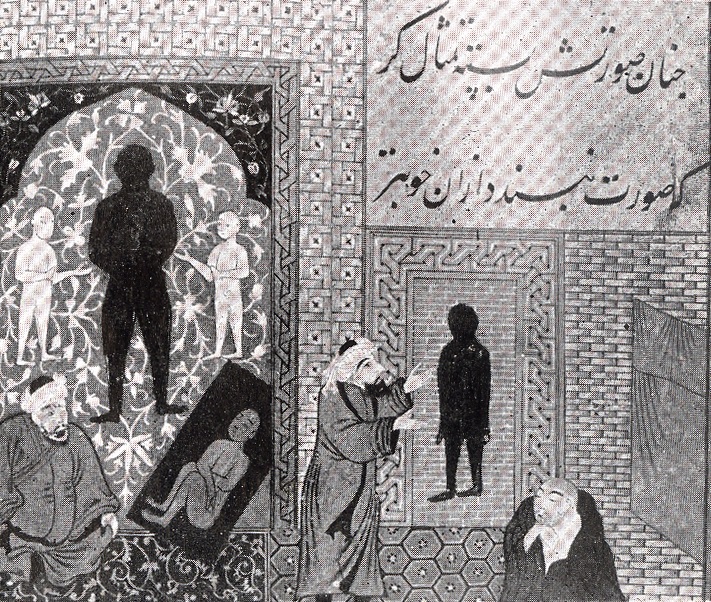
Imaginary Ivory statue in Somnath temple

The painting era in the region has always been an enigma, for the lapse of centuries between Master pieces of Ajanta and other schools of art in the region. Stone was the basic unit of art work here and there was no respect for paper. It was the Muslims who brought paper in the region and gave spur to the creative upsurge of the miniatures. More is recorded and we will share such exclusive information. Suffice to talk of the Persian influence on painting in the Sultanate period here. Dr Abdullah Chaghatai has written a special book on the subject.

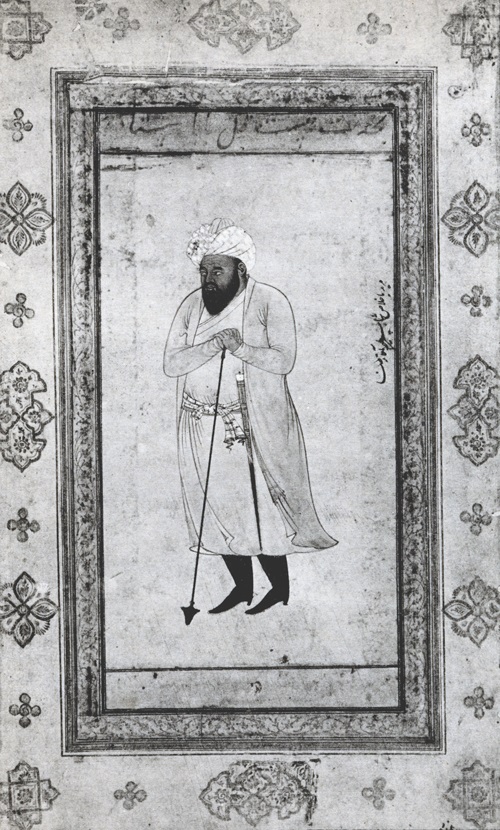
A PORTRAIT OF THE ARCHITECT GARDENER OF KHUSRAU BAGH – BY THE MUREED BA IKHLAS SALEEM SHAH, AGA REZA PAINTER

A PORTRAIT OF THE ARCHITECT GARDENER OF KHUSRAU BAGH
BY THE MUREED BA IKHLAS SALEEM SHAH, AGA REZA PAINTER

Inscriptions by Agha Reza

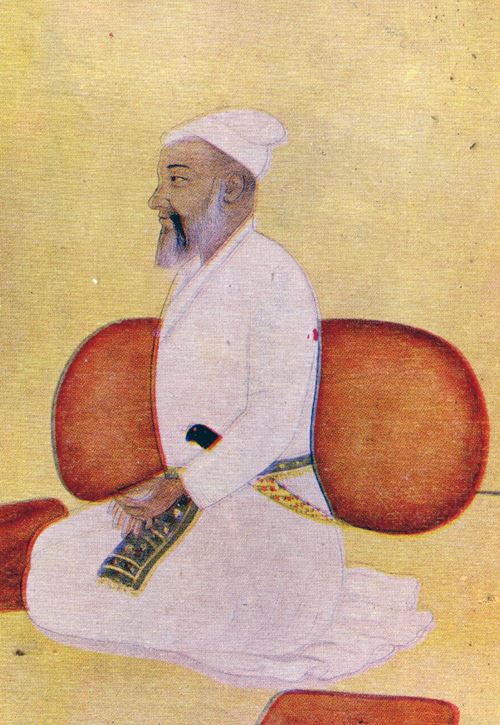
A portrait designated as the Chief Gardener of Prince Saleem, and obviously by some one concerned with the project of Khusrau Bagh. It is noted that Aga Reza is designated as mureed of Saleem Shah, which means that the person is there as a mureed of a Prince and not an Emperor. It was later that Prince Saleem became the Emperor Jahangeer. He was the painter who was given the commission to build the Khusrau Bagh complex for Prince Saleem. The calligrapher was Abdullah Maskeen Qalam. The portrait is designated as that of BAHISTH QUL USTAD BABA. Although the name written here is by different hand and a presentation signature only.

It is rare that we get portraits of every day personalities. It may be a commission from the Prince or merely satisfying a Gardener colleague by the Architect involved in the construction of same. In any case, enjoy a rare work!

MUREED BAIKHLAS SHAH SALEEM AGHA REZA ARCHITECT

THE VARIED TREATMENT OF EMPEROR JAHANGEER IN PORTRAITURE – THREE MASTERS, BICHITER, REMBRANDT AND M.A. RAHMAN CHUGHTAI

THE VARIED TREATMENT OF EMPEROR JAHANGEER IN PORTRAITURE
THREE MASTERS, BICHITER, REMBRANDT AND M.A. RAHMAN CHUGHTAI

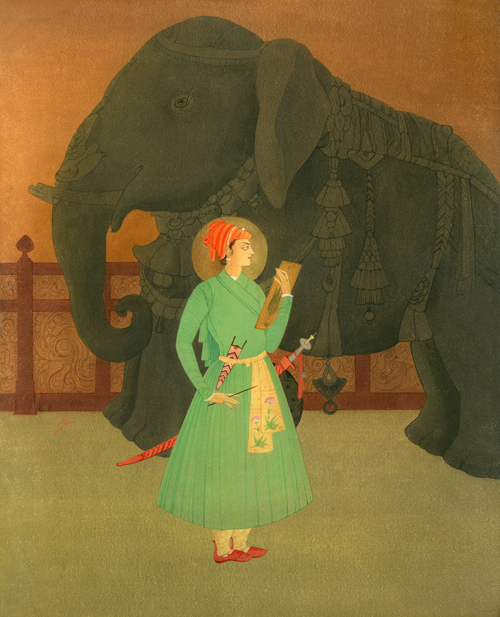
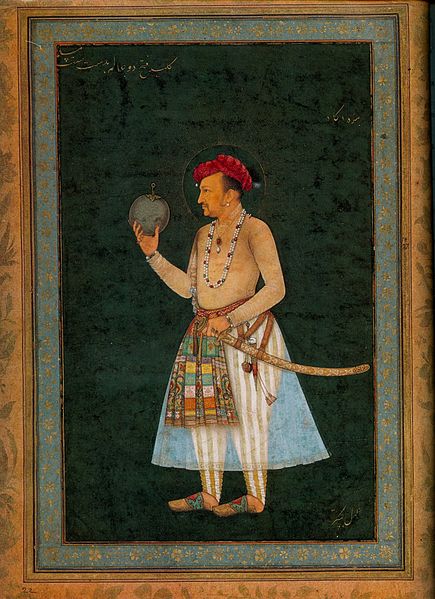
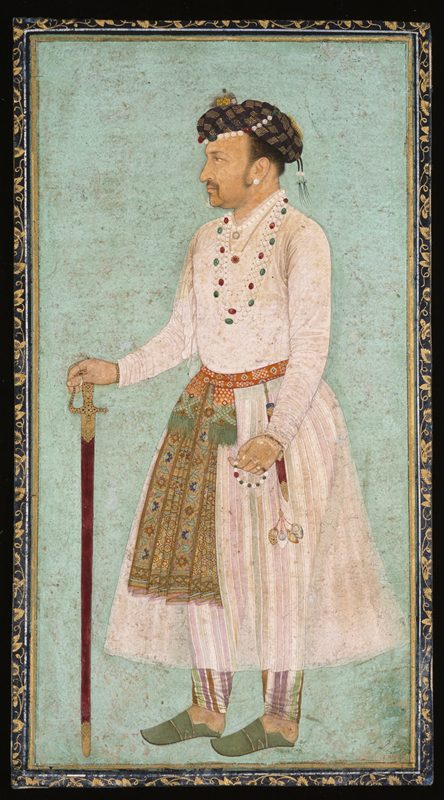
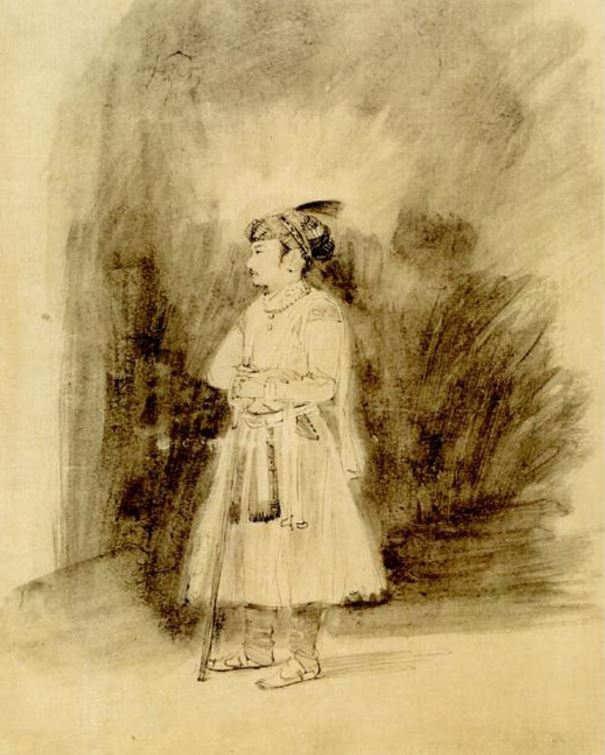
Every artist is of his own times. He also represents figures of other times. Emperor Jahangeer, the Mughal, was an aspiration in many times. Obviously he was drawn by many court painters in his own reign as well as afterwards. The Dutch Master Rembrandt saw a miniature and painted his own version of Jahangeer, which in all ways is a mixture of best of the East and the West. M.A. Rahman Chughtai in the 20th century did his own job, and presented Jahangeer as the painter. Holding a brush in his hands, the young Prince stands before a voluminous statute of an elephant. According to Stuart Cary Welch ii well represents his father Emperor Akbar, cold and on a grandiose scale. In any case compare and enjoy the work of three Masters of different times.

Young Jahangeer
Emperor Jahangeer
Jahangeer by Court Painter
Jahangeer by Rembrandt

THE RISE OF ADINA BEG KHAN FROM PATAWARI TO GOVERNOR – PROPERTY OF ADINA BEG KHAN IN MOHALLA CHABUK SAWARAN

THE RISE OF ADINA BEG KHAN FROM PATAWARI TO GOVERNOR
PROPERTY OF ADINA BEG KHAN IN MOHALLA CHABUK SAWARAN

Direct neighbor of the Mimar family of Lahore

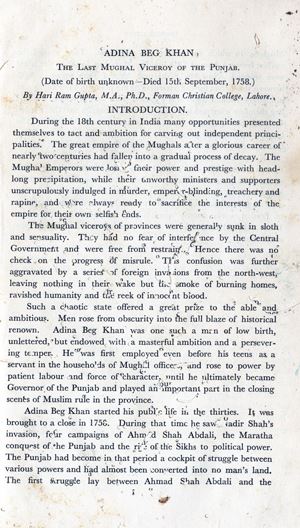
Little is known about Adina Beg Khan. A small 12 page manuscript supplies us with most of information about him. Very few have written abut him. The article by Dr Muhammed Baqir is very illuminating, but the most information is collected by Dr Hari Ram Gupta Of F.C. College, Lahore. Interestingly it is literally impossible to even find this printed source on Adina Beg Khan. A very rare book. Some books in Urdu are romantic fictions. Sikh story telling is contrived history at most, for gullible consumption.

Adina Beg Khan

Adina Beg Khan was by caste an Arain, and born in Sharakpur in Tehsil Lahore, in the house of a common person by name of Channu. However due to reasons, he was brought up by a Mughal family and identified himself as a Mughal. His skills were extraordinary in every way and he knew how to manipulate people as well a situations. And his rise is very much due to his knack for manipulating things. It is reported that he married a Syed girl, but finding out that she was a Syed, he divorced her but gave her maintenance all his life. The truth looks different. It is said that he married a street girl and had a son and a daughter by her. The daughter was married to Khawaja Mirza Khan and the son tried to take his position after his death but failed, for he lacked the abilities of his father.

From the position of a Patawari, he ended up as the Governor of the province, by doing one thing or the other, and black mailing people into serving him. But he did enjoy the highest position in the Punjab and that for one year too. There were three strong parties. The Mughals, the Sikhs and the Maharattas, and he played all three against each other, getting the best out of situations. The present governmental trait of buying land cheap and then selling same at high prices was his forte. It seems people today are direct spiritual descendants of Adina Beg Khan.

Rare book Adina Beg Khan

We noticed in a deed to our house in Mohalla Chabuk Sawaran dated 1757 AD, as reference to land and property owned by Adina Beg Khan as a neighbor to the Mimar family of Lahore. We were truly surprised. Here was an information not recorded anywhere else of his holdings in Lahore. We decided to add the information to the history of Adina Beg Khan. We will research that document in a separate blog.

THE OBSESSION OF ISLAMIC RINGS – KING’S ROYALTY AS WELL AS COMMON PEOPLE

THE OBSESSION OF ISLAMIC RINGS
KING’S ROYALTY AS WELL AS COMMON PEOPLE

Fascination with metal and stone on fingers

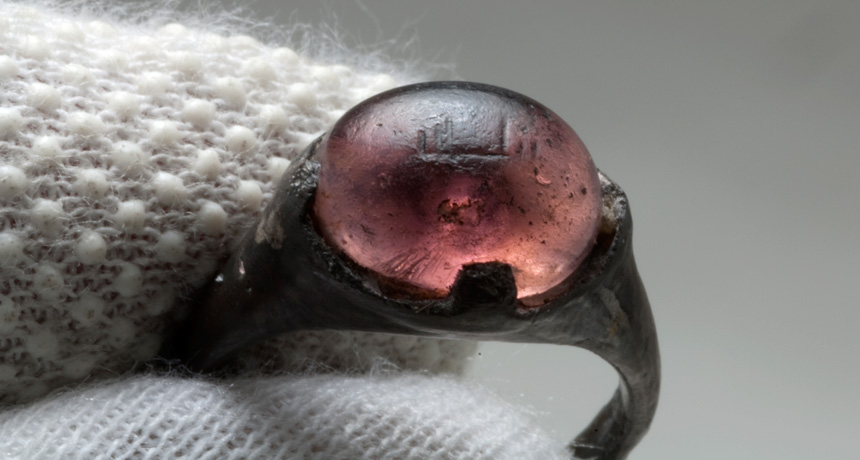
Found in Viking graves
Gold ring
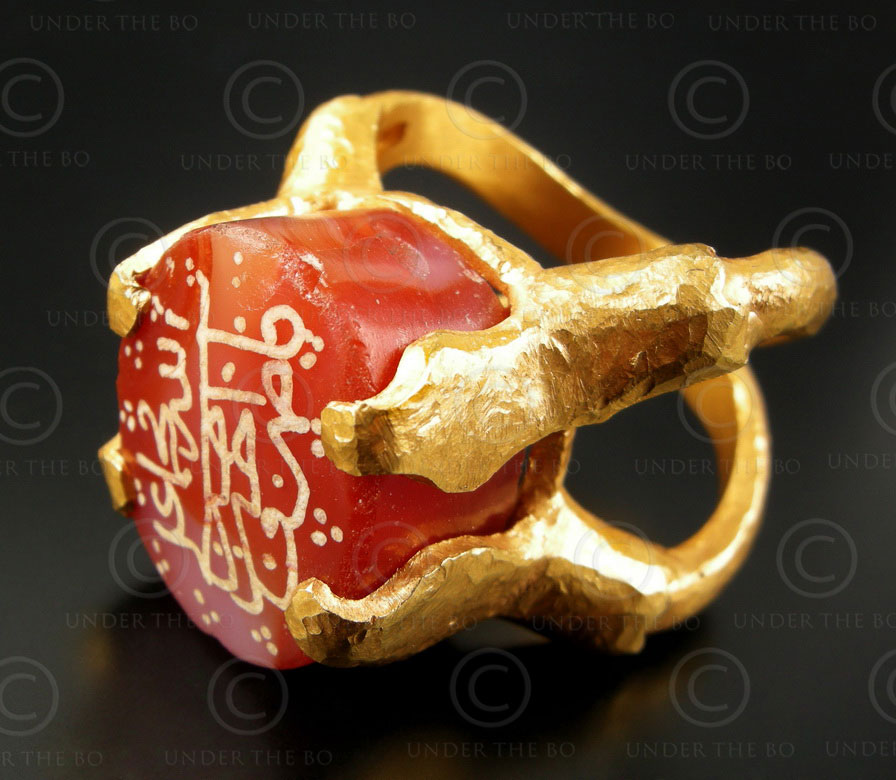
Islamic gold ring
Jericho ring

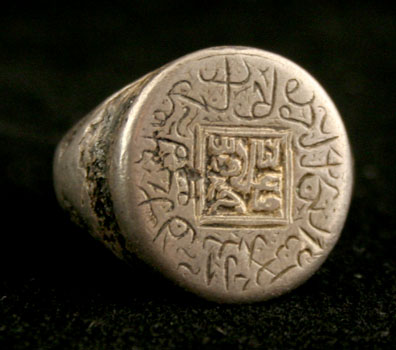
Every representation of people of the past comes with rings around their fingers. Not one or two, but many. Exquisite stones, exclusive metals, as well as fantastic calligraphic inscriptions. All lie in the fascination of rings. It is a wonder that many specimens are saved in the world to present a fascinating imagery of Muslim Culture.

Persian Ring
Allah’s name on rings

ABANINDARANATH TAGORE AND M. A. RAHMAN CHUGHTAI – THE VERY FIRST COMPARISON OF BOTH PAINTERS

ABANINDARANATH TAGORE AND M. A. RAHMAN CHUGHTAI
THE VERY FIRST COMPARISON OF BOTH PAINTERS

Individual expression of identity

Spring Breeze
Abanindranath Tagore 1911

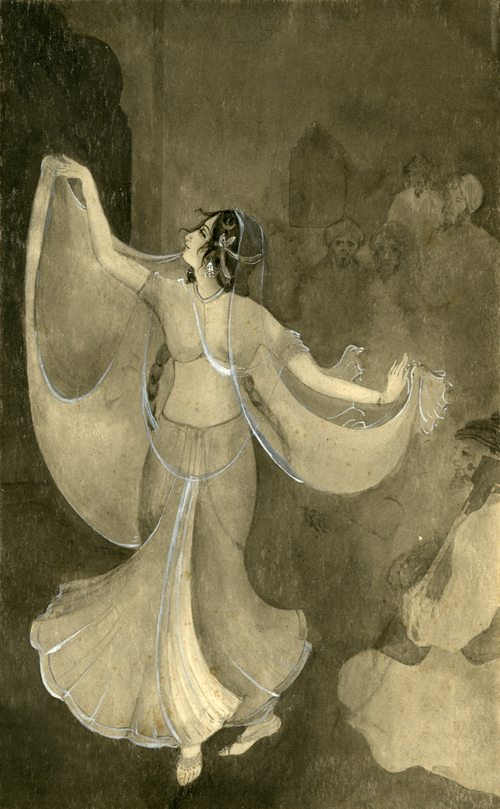
In 1911 Abanindaranath Tagore was the acknowledged Master Painter of India of the Bengal School. His fame was international and his stature in India extra-ordinary. No one even came close to them. Then emerged M.A. Rahman Chughtai from Punjab, India to challenge the position of the Master Painter of India, as a young teenager of Lahore. We can compare works done on the same theme set as a challenge of the times.

There are more works, which can be compared at the start of the career of the artist. Eventually we will post more.

THE MURDER OF FIFTEEN YEAR OLD SHAMSHAD BAI LAHORI – NAWAB NAWAZ KHAN OF DAB KALAN GOT AWAY WITH MURDER

THE MURDER OF FIFTEEN YEAR OLD SHAMSHAD BAI LAHORI
NAWAB NAWAZ KHAN OF DAB KALAN GOT AWAY WITH MURDER

Shamshad Bai Lahori

Nawaz Khan came to Lahore on 28th October, 1941 for medical treatment, and during his stay at Faletti’s hotel, he became acquainted with a 15 year old Lahori call girl, Shamshad Bai. On 6th November, he made her stay in his room all night and gave Rs 1700 extraordinary for her rampant services. He became so infatuated with her, that he took her back to Multan district. In their family mansion, she was accompanied by her pimp brother, Talib Hussain.

Nawaz Khan was drunk to the core and wanted to be amorous to the girl. But his condition was pathetic and the girl made fun of his lack of masculinity. He got so irritated that he took out a pistol from underneath his pillow and shot her dead. It was a case which was started 6 months afterwards. Money poured in from the Nawab to save himself and his influence all over did save him from hanging. A doubt was deliberately created that he did not do it and planned to marry her. Why did he kill her? She laughed at him for his lack of manhood and he could not tolerate that. But he loved her so much that he stayed besides her dead body for ten hours. An incident which rocked Lahore in those days.

THE BIZARRE CREDOS OF MODERN ARTISTS – DOES NUDITY LEADS TO SPIRITUALITY?

THE BIZARRE CREDOS OF MODERN ARTISTS
DOES NUDITY LEADS TO SPIRITUALITY?

Picasso 1937 Berhoopia

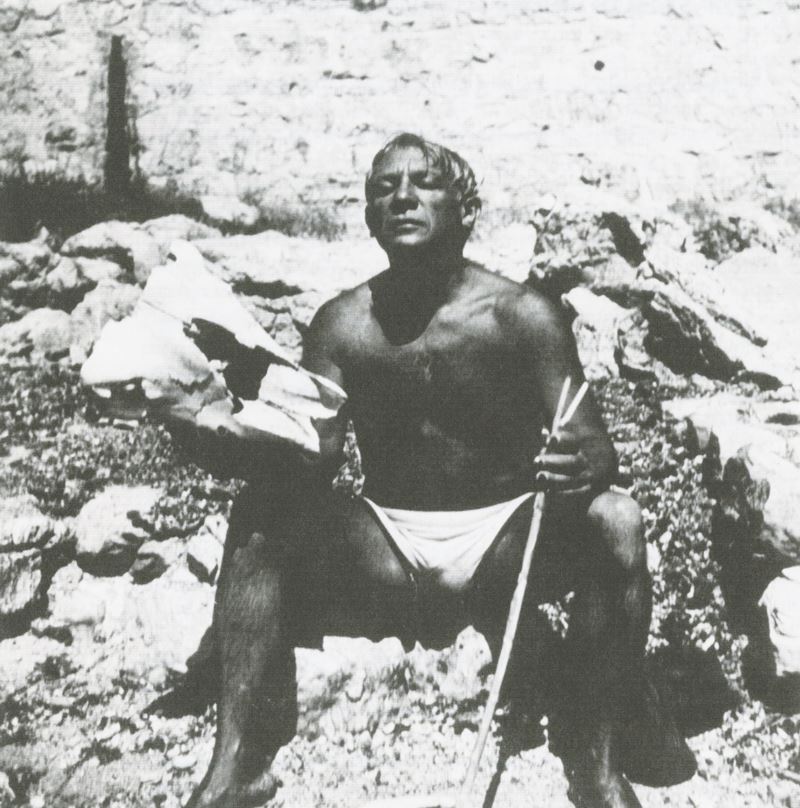
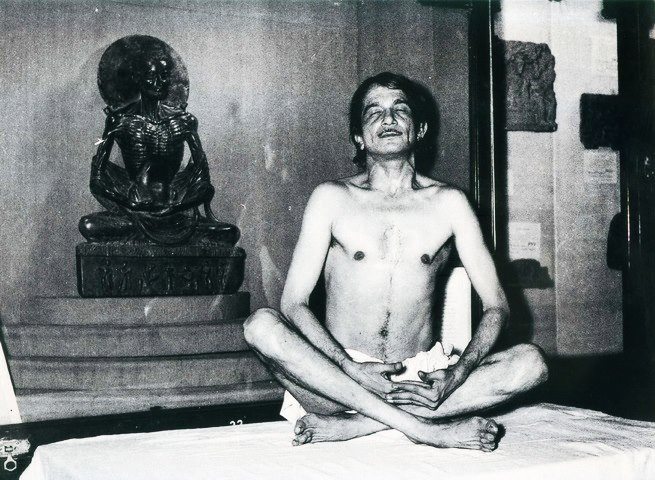
Pablo Picasso posed in the nude in 1937 with a bull head and a forked stick. Sadequain did something like that in the Lahore Museum, in idealizing the starving Buddha at the back in the show case. I think Hinduism believes in eight ways to reach the Al-Mighty. For us normal Muslims, the last communication of Allah was through the Quran and the Quran is now the only way to reach Allah. Rest keep on trying! Self deception is not the answer to anything.

Sadequain following Picasso

THE ASSASSINATION OF PRIME MINISTER LIAQUAT ALI KHAN – THE START OF A SEQUENCE TO DESTABILIZE THE COUNTRY

THE ASSASSINATION OF PRIME MINISTER LIAQUAT ALI KHAN
THE START OF A SEQUENCE TO DESTABILIZE THE COUNTRY

A message ever fresh for today

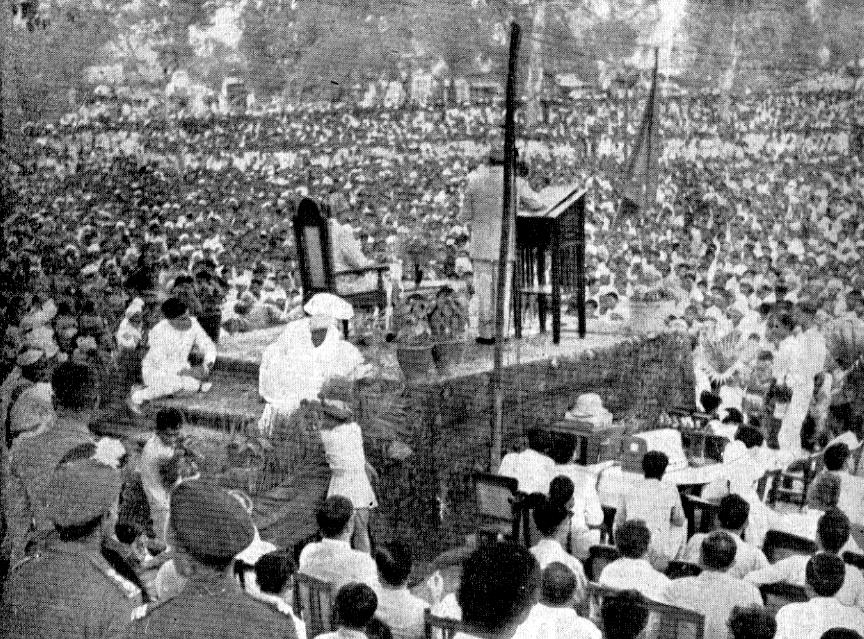
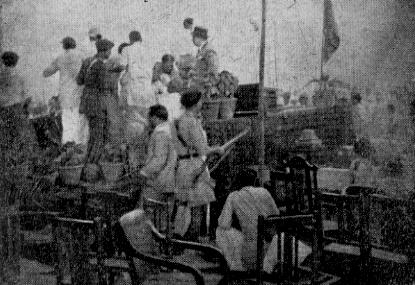
On 16th October, 1951 Pakistan lost its Prime Minister Liaquat Ali Khan, known as the Shaheed-e-Millat. Various point of views. No pictures on Google of the incident. Sharing some from old reports. Reflect!

https://www.youtube.com/watch?v=wupnD4nhUH0

Last walk of Liaquat Ali Khan
Last standing moments of Liaquat Ali Khan
Last breaths of Liaquat Ali Khan

LALA HARKISHEN LAL GAUBA AND M.A. RAHMAN CHUGHTAI – PATRONAGE OF A RICH HINDU FOR A RISING MUSLIM ARTIST

LALA HARKISHEN LAL GAUBA AND M.A. RAHMAN CHUGHTAI

PATRONAGE OF A RICH HINDU FOR A RISING MUSLIM ARTIST

Strange anecdotes about the millionaire

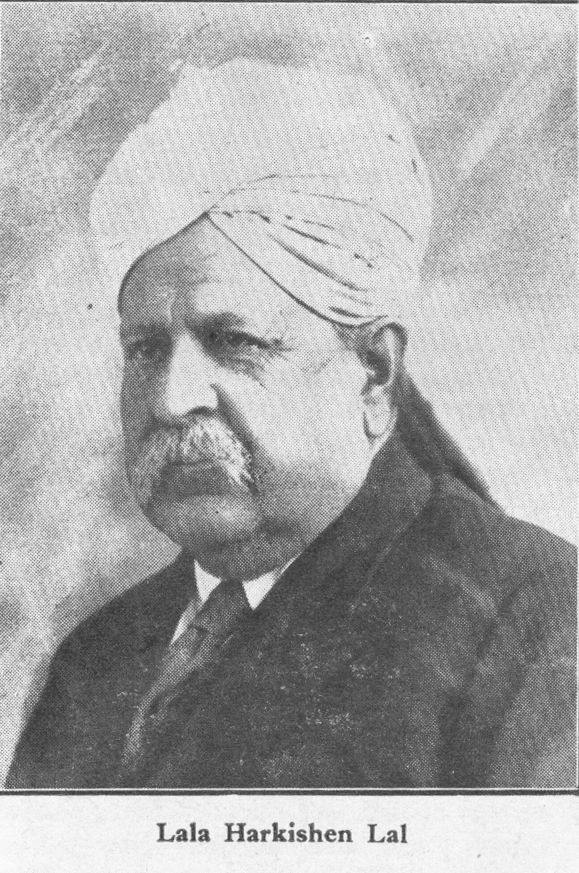
Harkihen Lal Gauba

The project of Murraqqa-e-Chughtai was on the anvil. Thee were not enough finances. It was decided to get the prints printed from Germany and the rest of the book here in Lahore. As money was limited, a small press was bought and the two brothers, M.A. Rahman Chughtai and Abdur Raheem Chughtai decided to do the printing themselves. The press was placed in the Chabuk Sawaran house, but there was no electricity. A power connection was not available. A request was sent to Lala Harkishen Lal Gauba, and his Shahdara Power station. A special concession was made for the artist and a power connection given at the house of the artist. A rare event. The book got printed there, and the LIMITED EDITION coveted in the world, was all done there. Certainly Gauba had a regard for artists.

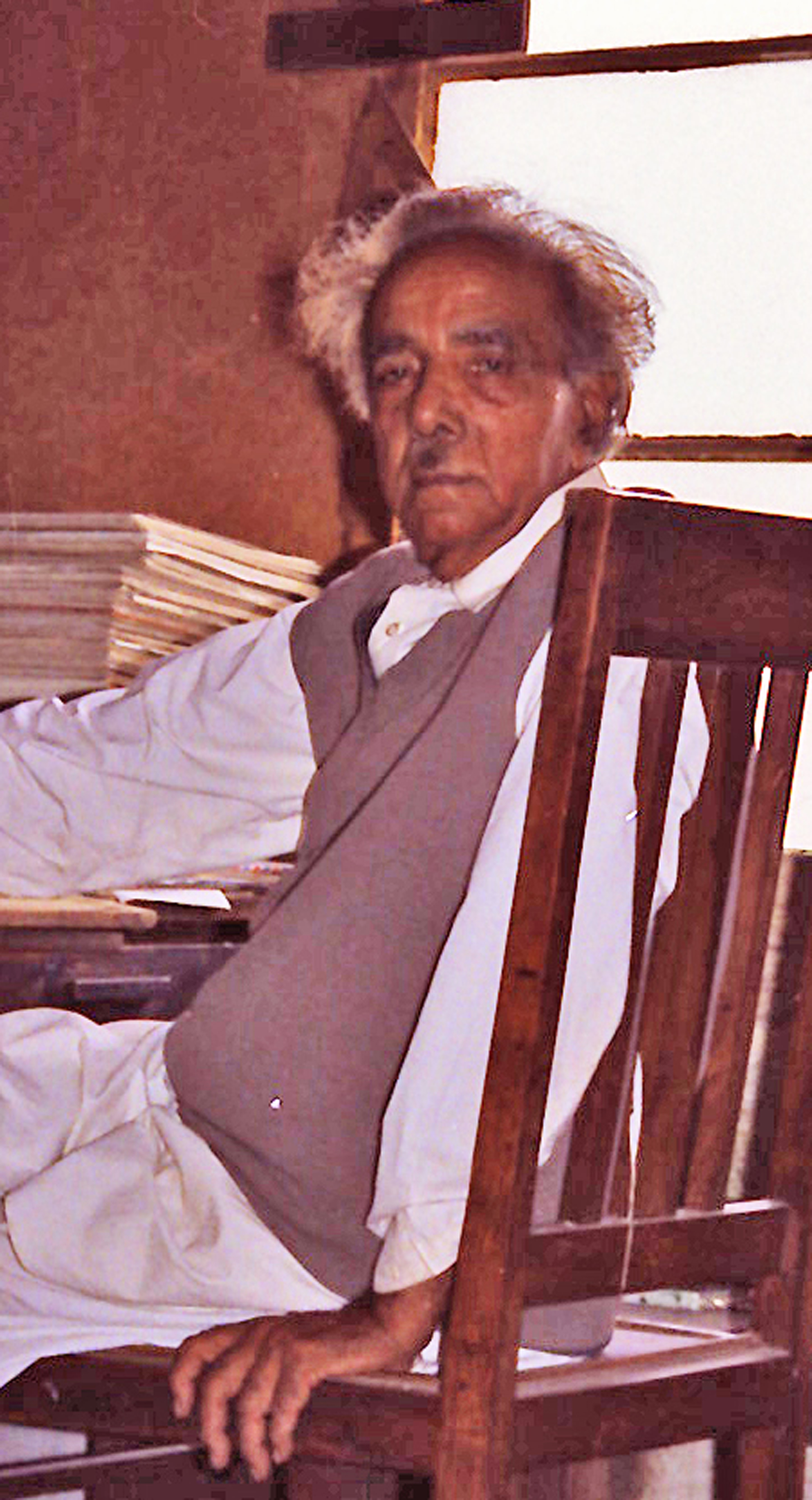
Khalid Latif (Kanaya Lal) Gauba writes about his father:

MARC cut

“Although Lala Harkishen Lal built a palace, he preferred himself to live simply in a very small room in the top storey, which was a combined bedroom, dressing-room, and semi-office. For the decoration of this room he commissioned an artist to travel through Punjab and paint all the most interesting beggars he could find. Nearly a hundred types were painted and amidst these, he lived and did the best part of his work. Asked to explain what all this meant, he would say that there are two reasons for this:- Firstly, every man shorn of his trappings, is no better than a beggar, secondly, he personally started life in comparative poverty and having these portraits around him, he would never forget from where he began.”

It would be interesting to know the name of that artist of Lahore who made all these beggar studies for him.

Lala Harkishen died in 1937. M.A. Rahman Chughtai got a set of Murraqqa’s work printed in Austria by Max Jaffe of Vienna. The two works were DESERT IN BOOM and SERENADE (FOR A SONG). It was in 1938 that M.A. Rahman Chughtai was back in Lahore. Some how these two works got into the house of Gauba. As Lal Harkishen died in 1937, it is apparent that these two works were bought by Khalid Lateef Gauba. The proof lies in a letter we received from Bombay, from Khalid Lateef Gauba, after the death of M.A. Rahman Chughtai on 17th January, 1975. The letter said:

“I am very sorry to hear about the death of your father (MARC), who in the East had a position and esteem akin to Picasso in the West.”
Thank you Gauba family!