
THE MATERIALS USED IN CHUGHTAI ART WORKS;
ENDLESS EXPERIMENT WITH THE BEST OF BEST.
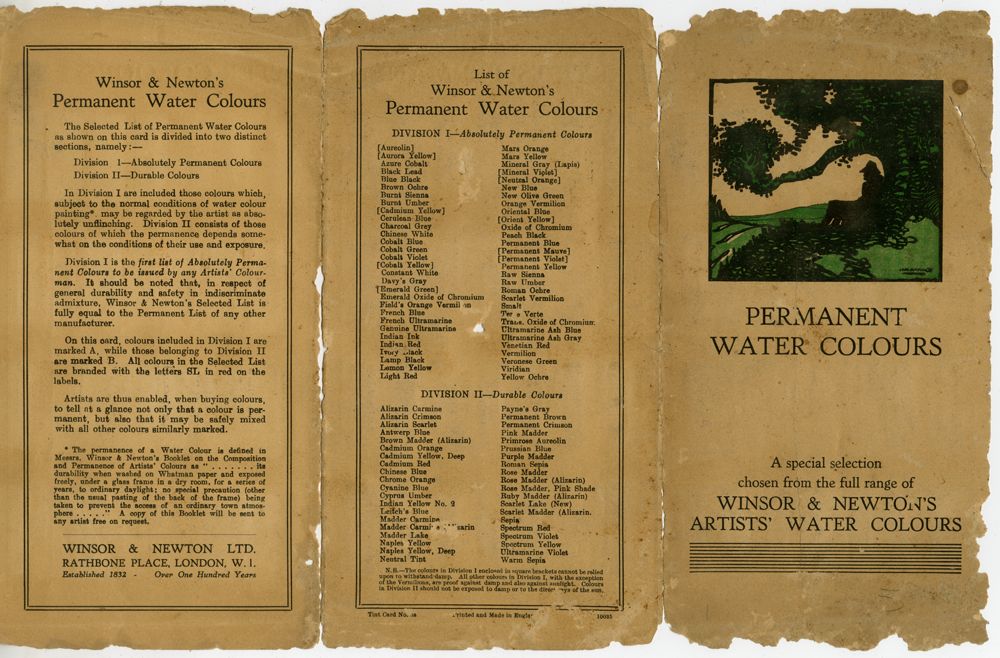
Surely this is a vast and rarely written topic. We held a full exhibition on same. In this age of hurried things, experimentation with brushes, drawing paper and pigment colours is a rare thing. Even in museums there are no matching data to update with materials used by M.A, Rahman Chughtai. National Museum Karachi could not do it and falsified results, and embarrassed themselves forever. A moronic analyzer who literally knew nothing about pigments. I asked the British Museum and they said they had no pigment data for same. I referred to a book by a specialist on colours. Tried other sources too. Even Winsor and Newton. A booklet of 1932 explains the colours of Winsor and Newton. Rare print out. I did my best. I can just relate, to understand it needs research and time.
The earliest advice given to Chughtai Sahib was by his mother Chiragh Bibi. A home bound woman told her son to use only clean water for his work. A strange advice for its time indeed. The quest for permanence was in the minds of the artist. Not only the best came under his scrutiny but the need to make it more and more perfect. Take colours for instance. He used Winsor and Newton artists colours (meaning actual stone colours) but never directly single from source. He was in the habit of mixing many colours to attain the colour that was in his imagination. It means that the mixture was so subtle, that maybe he would not be able to repeat it. Then on small pieces of paper, he would put strokes and wait days to see the result for permanency. His colours were so bright and luminous, so his works shine with brightness of life. Keeping in mind that these colours are direct from nature and are not commercial chemical colours. No fading away ever. In fact even if thrown in water, and taken out, the colours remain intact, and once mounted again on board, looks like ironed again.
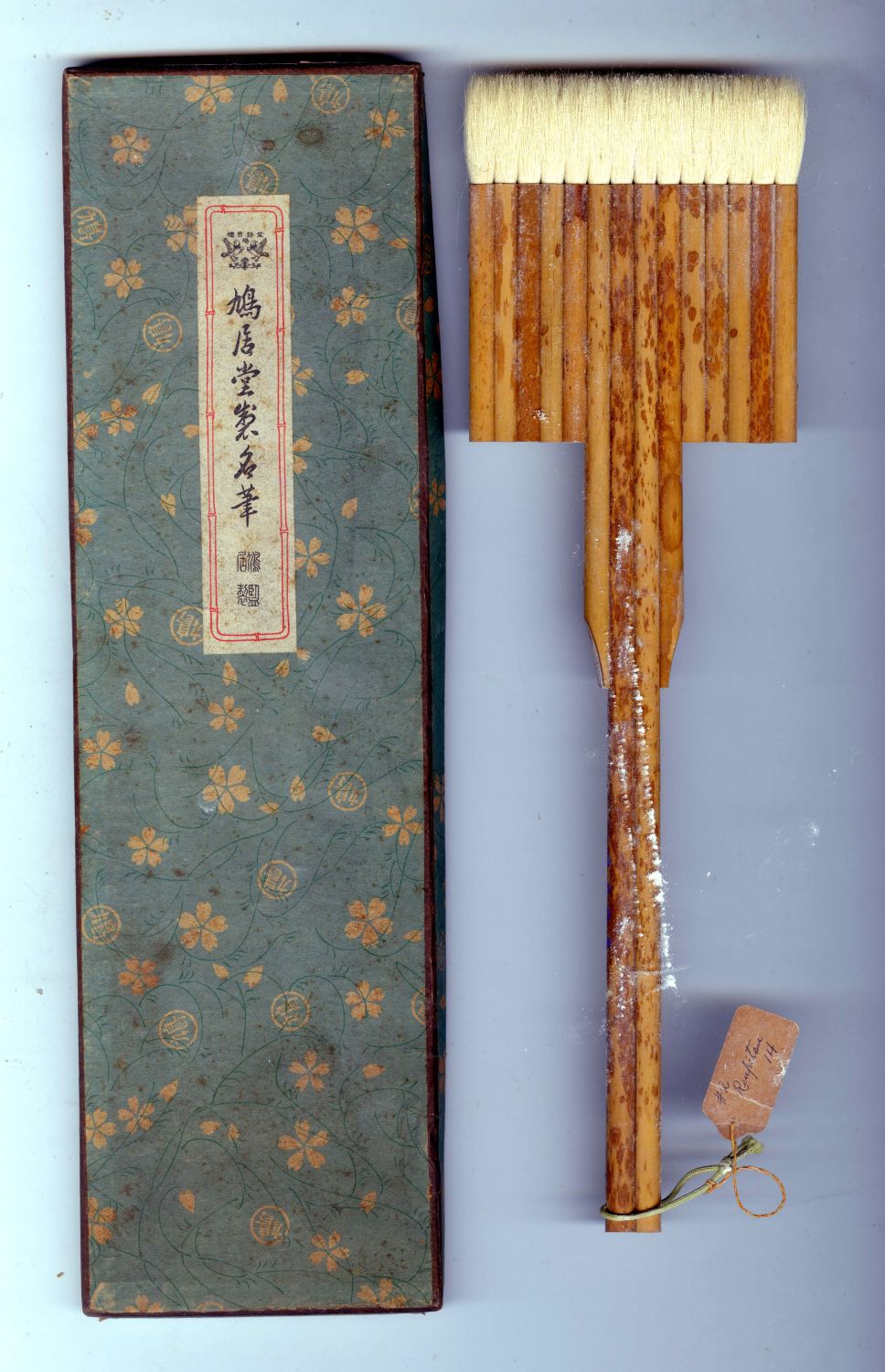
Chughtai Sahib was working in the Photo litho department at Mayo School of Arts when a pair of Japanese artists came to Lahore. They were selling artists materials. Chughtai Sahib had himself seen Abindaranath Tagore working in his studio in 1919 and saw that the Hindu Master used cloth rags to wash his works. This had no appeal for the artist as with a rag, nothing could be made on a larger scale. And no smoothness could be achieved. The Japanese Wash rushes fascinated the artist and he spent two rupees in buying them. We still have the very old ones. Later he ordered same from the Master Shop in Kyoto Japan. The box which brought them is still with us. I visited their Tokyo Branch in Japan in 1988 and discussed same with them. They were utterly surprised. I asked them about their brushes. Under Royal banner and command, they told me the brushes used to be made for Master artists working for the Emperor and their shop was more than 400 years old. Made from selected sable hair, under a manual thumb selection of hair, the last professional who used to make them, died 15 years before that. The brushes were now antique material and cost thousands of dollars of the few which were left with them. I bought a small one for comparison with ones we had. All that is in museum record for posterity. So sad no one knows, no one wants to find out. This was floating above the petty values of our pseudo writers.

The pencils used were both German based Staedtler,and USA based Venus, and ranged from 2H to 9H. Usually about 4 H.His works were not of the type that HB pencils could be used. No sharpeners used but actual pocket knives. He would take out a long length of lead by knifing the wooden part and used the pencil in a calligraphic swing. A long line of unbroken drawing. Only hard lead could survive the drawing. If he picks up the pencil before the stretch is complete, it becomes a broken line; under magnification one can see that the line never gets broken. He used the pencil, sharp and long, like a sword in a duel contest.
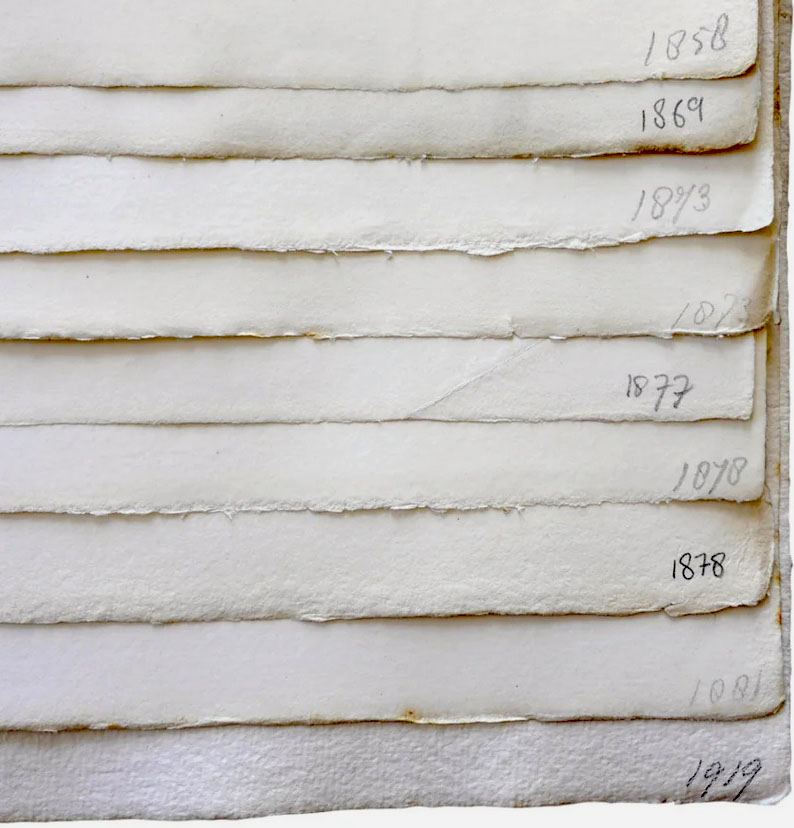
Yes, Chughtai Sahib experimented with drawing papers, but his choice mainly remained J. WHATMAN, a firm which came to England, in guise of TURKEY OLD MILL, in the 18th century. Even the Queen of England used Turkey Old Mill for all her paper needs, even stationery. Many papers carry the watermark and one can see the same in many of Chughtai’s works. The paper used for printmaking was different, like WhitChurch (Laverstoke Mill near Hampshire) mark, paper used for currency notes of the Bank of England (from 1719 to 1963). A research project of its own. The printmaking process is even a more complicated one and will be dealt separate from these writings.
Nowadays a lot of people pose as specialists of Lahore and yet they know hardly little. Same applies to Art. People writing about art do not even know the ABC of its background. A saying goes in our culture, Andoon mein kana raja. It means in group of blind people, one eyed reigns supreme. All they can think are ways to demolish the rivalry of Chughtai Art, long after the death of the artist. In Pakistan few survive the harsh realities of endless competition. Here is an artist who does not go away. No one has been able to undo Kamaluddin Behzad, no one can undo M.A. Rahman Chughtai. All those puerile objections have gone down the drain, along with their writers. Learn about Art. Learn about Chughtai Art. Learn about Abdur Rahman Chughtai. Do not fall into the blind alley of knowing nothing. Rise to a level in which you can view Chughtai Art without remorse of your own failings. Pakistan Forever! Chughtai Art Forever!
What a remarkable article on a topic rarely touched by any art journal. Thank you for sharing Sir.
Yes this topic beyond the scope of most because of being ill informed. But essential in understanding Chughtai Art.
A Dutch critic once asked me a strange question. Is Chughtai criticized? I said yes there are people who say wrong things. He asked me again, Is the criticism for what is in the painting, or outside the work itself? I said always the outside unrelated. No one can criticize the painting itself.
YES OUR CRITICS ARE TOTALLY MORONIC ABOUT ART and many are on the payroll of foreign lobbies. Seeking favours, scholarships, journalistic position etc. They came mostly from abroad long after Pakistan came into being. Probably sent on missions. Died unrecognized, obliterated with time. Not even memory left. Abdur Rahman Chughtai becomes fresher as ever.
Amazing info no one knows.
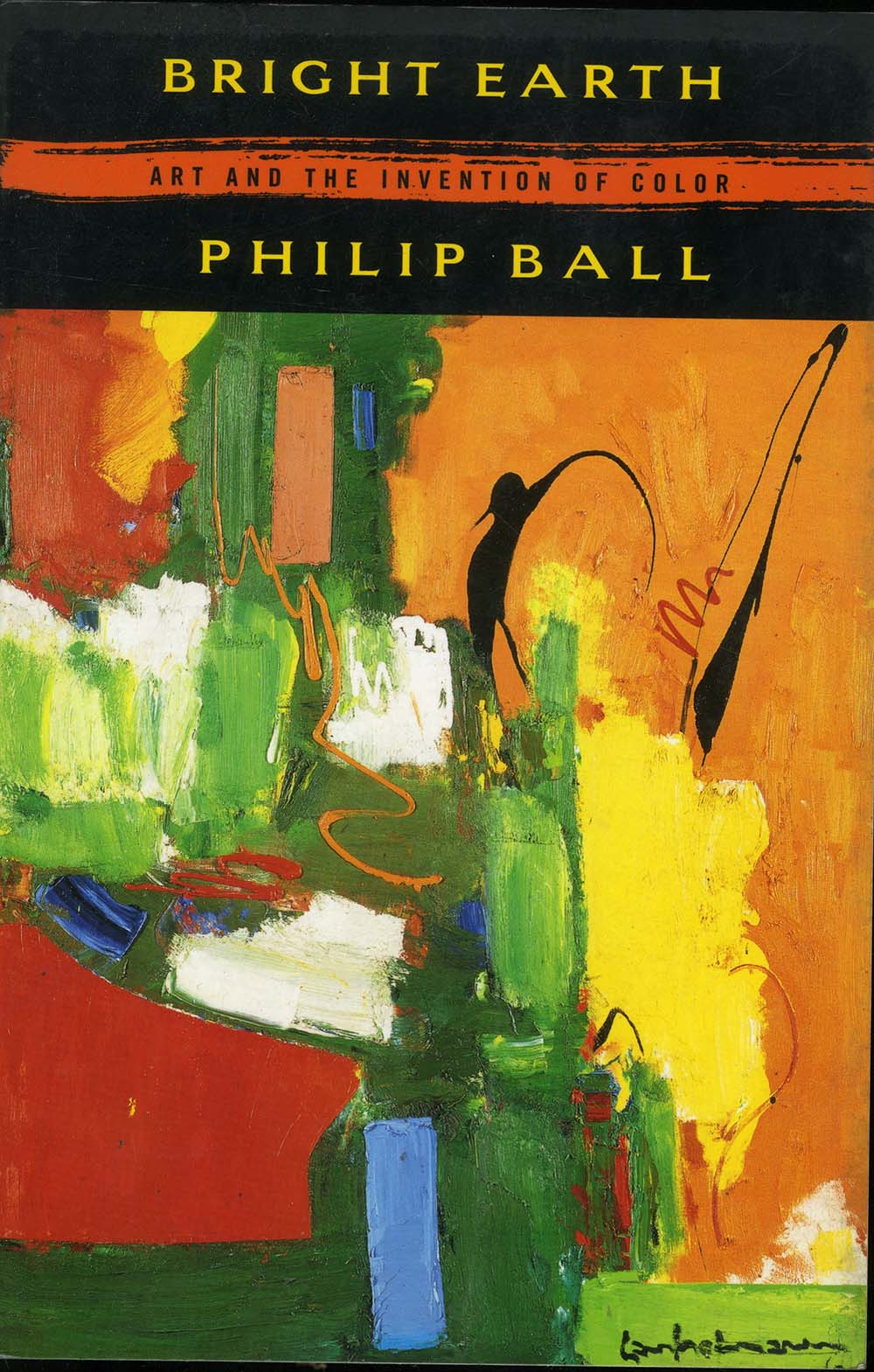
Bright colours bright Earth.
Critics are politicians in disguise.
You choose safe route by not taking names. At times dissect writings of such morons with references. So that even the left overs are afraid to commit themselves.
Incredible history, especially about the clean water advice and the Japanese brushes. And the pencils wielded in a one-stroke motion – what a wonderful description of this artist’s genius, yet to be fully recognised by his own. Thanks for writing this series, which I for one am thoroughly enjoying. Your sharing is a service to your country.
Very informative
Should be printed too for future.
I am amazed at the details about the art tools, their origin and the reason for their purchase. Were the details left in Chughtai sahib papers ( correspondence, diaries etc) or were you fortunate to share these info aurally from him? Either way we are the ones who have benefitted with this information.