
THE MYTH OF THE WATERCOLOUR WASH TECHNIQUE OF CHUGHTAI ART;
ENIGMA OF IMAGINED SECRETS VERSUS SIMPLICITY OF PURE HARD WORK.
Whenever anyone talks about Abdur Rahman Chughtai, the myth kicks in the narrative, of his secret technique, of him not allowing anyone inside his studio, and about taking his secrets to the grave. Well I can give a simple reaction. Laugh your heart out. Chughtai Sahib worked in front of all. If there ever could be a secret, would he have worked with others watching him do so. People make myths out of facts and like a hidden fairy story, indulge in it with full relish. Imagination drives us nuts! Such nonsense is spread by failures.
A number of people called on me too, asking for me to divulge the secrets. The first one to ask me was Ms Marcella Bedford, later Marcella Nesom Sirhindi. She was an artist herself, and felt prone to make Chughtai Art on her own. She asked my cousin Abdul Waheed Chughtai too, who has been in London for the last 65 years. He went there in 1960. He is going to be 92 next month on 11th September, 2025. Others asked too. Like the artist Nagi of Packages Limited Lahore. All were under the impression that the materials used were responsible for Chughtai Art, so I would not only show them the materials, but even volunteered and gave them some materials. Nothing worked. The myth of Wash Technique became stronger with time.
Moronic analyzers both here and abroad did not know the difference between a finished Chughtai original and an unfinished work of the artist. This is the home of the artist. All kinds of works are preserved in original. A study of unfinished works reveals the story of the Wash Technique. Let us first go through that difficult process step by step.
First Step
The creative part of the work is put on a scrap of paper and then enlarged to a full size painting. The same size is never used again and again. Depending on the subject the paper is cut to suit the composition. All copy makers fall into the mistake of using the same size paper for all works.Also due to fact that their limited printers cannot handle larger sizes. Even choice of size is unique, and we never share sizes.
Second Step
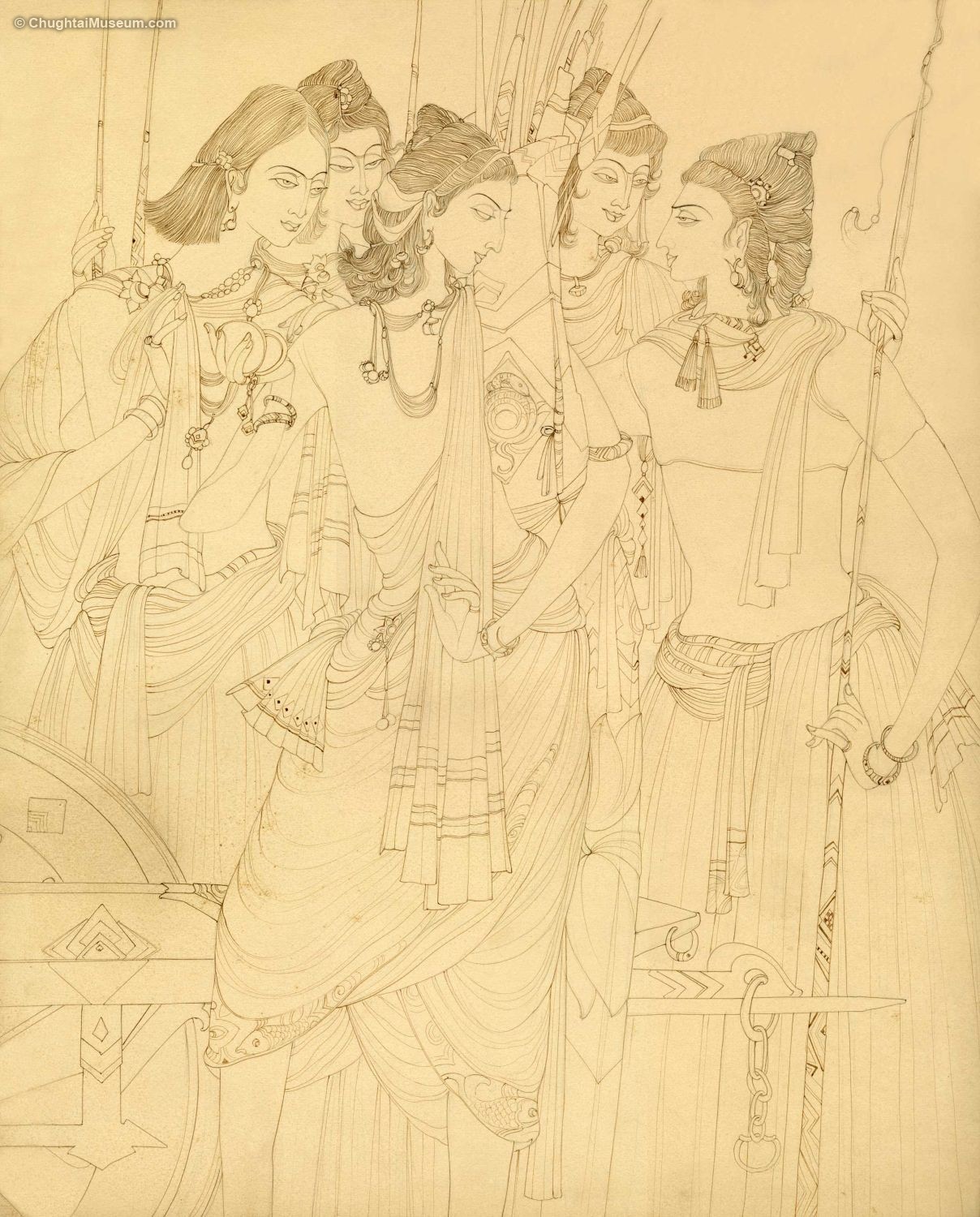
From a vague pencil sketch, the sketch is refined in a sharp pencil outline. The symbolic additions come later. Once the pencil is done, the outline is finished in single colour of watercolour with a BRUSH, not one hair brush as legend says, but a brush made of a few hairs. This is a very difficult process. Not possible for most artists. Pencil aside, the brush outline becomes abstruse to do. After this the pencil is erased, for signs of pencil marks would not be compatible with a watercolour painting.
Third Step
This paper is drenched with water again and again. And then pasted on a wooden board of different sizes. And then a mixture of water and a colour such as a cream one are mixed, and the pores of the paper are drenched again and again. This process makes this one color enter the pores of the paper and turn it into a smooth one. The pasting is done on board with in-paper glue tape (fita), usually brown in color and about three inches wide. A lot of wooden boards were made specially for this work, but were of light weight and of seasoned wood. So many of them are still with us. When he died there were a number of paintings on boards, and the reason was simple. He never worked on a single painting. He worked at the same time on a number of them. And the works may not be the latest, but a mixture of various periods. I kept many intact for a long time. But plus fifty years is a long time.
Fourth Step
Depending on the nature of the painting, a painting may require a process of even twenty five washes or more. But the largest areas are given a colour first. But never the end colour. A colour is built in stages. All colours being used are diluted to the most as they all go through the wash process. And the journey starts. The board is taken into sunlight and allowed to dry. But it cannot be dry into being completely dried. The work is always on wet paper, almost dried. This is the biggest secret of the technique of Chughtai Art. You cannot spread paint evenly on dry paper. Handmade paper like Whatman facilitates various levels of being dried or not. It is not an easy process, it requires a bunch load of patience for this work.
Fifth Step
Once this base, which is the most important part of the wash process, is finalized, and the choice of the end colours of the painting is made, the process is ready to start. Remember end colour is built after various stages of the state of the work. If the subject is dear to the artist it receives full treatment. Otherwise at times he cuts it short. There remains so many unfinished works. Moronic analyzers find fault with the unfinished ones as perhaps not being Chughtai Art. They hardly know anything. First state or last one, the work shouts its maker with a shout of affirmation.
Sixth Step
A nearly complete painting actually looks out of focus. No highlighting in it. The next stage comes in. Here the lips, jewelry, rings and necklaces, or brooches in hair, or outline of flasks come into play. But even these last minute touches are also subject to wash, to even the results of the end painting. All areas are smooth, even to look, but highlighted in a subtle way for priority of looking the same.
SPECIAL NOTE:
One thing is to remember. The colour has gone inside the painting. Outside but also inside the paper of the work. The colour is never opaque, it is translucent. The paper surface is always visible. Mistakes cannot be corrected. It is a singular mission of perfection.
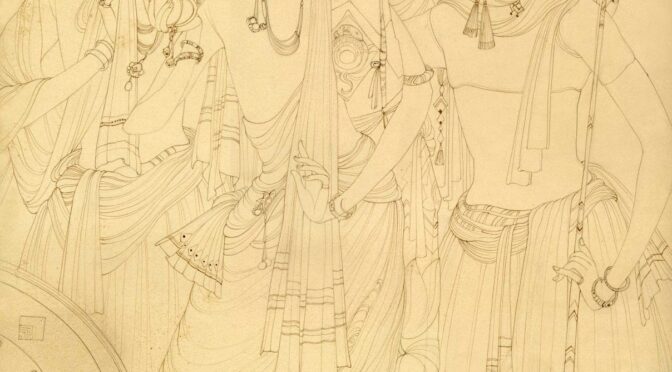
EXAMPLES OF VARIOUS STATES OF WORK FROM OUTLINE TO UNFINISHED TO FINISHED ONES ARE ACCOMPANIED WITH THIS BLOG. Enjoy! And those who never bothered to understand the phenomena.
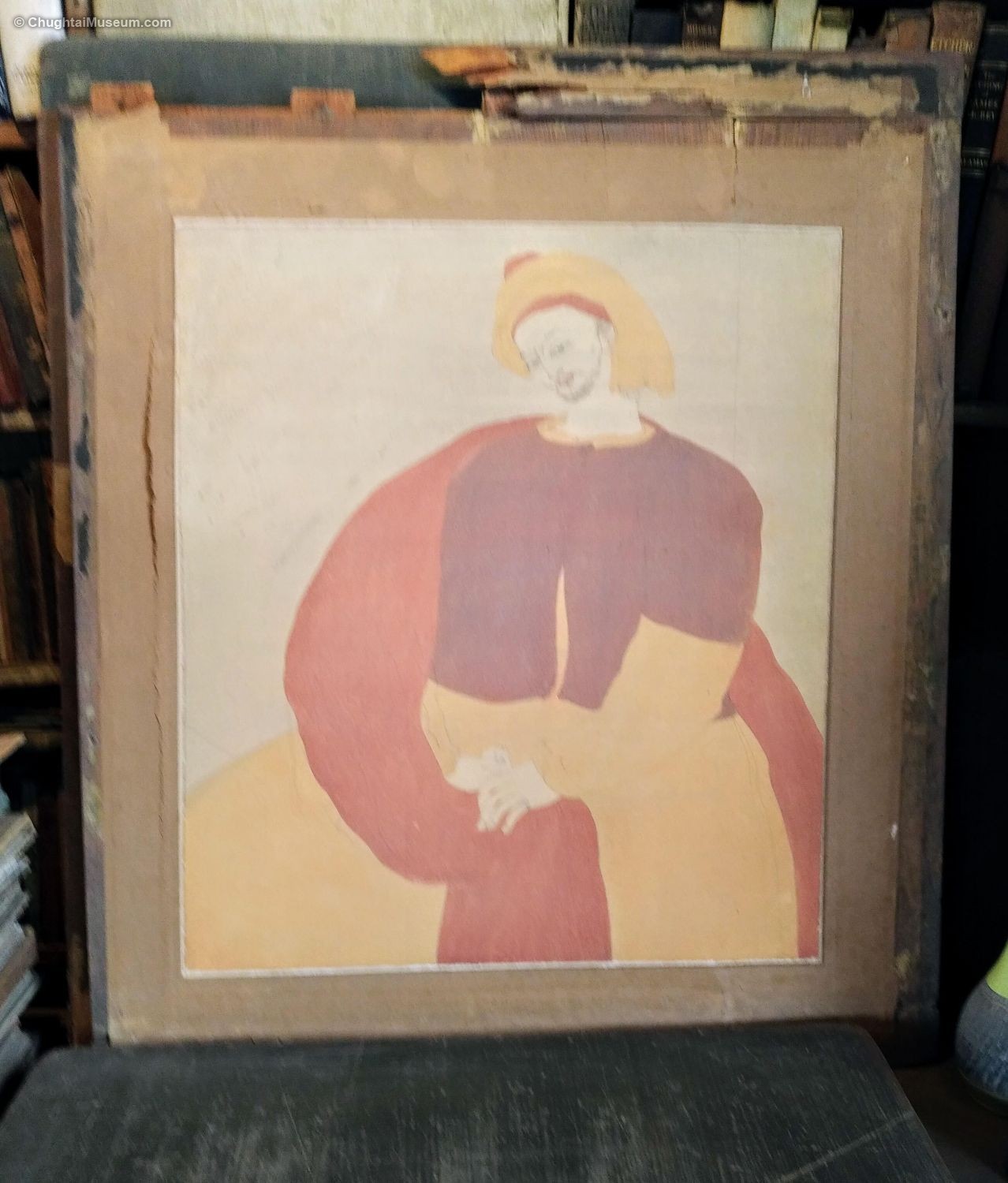
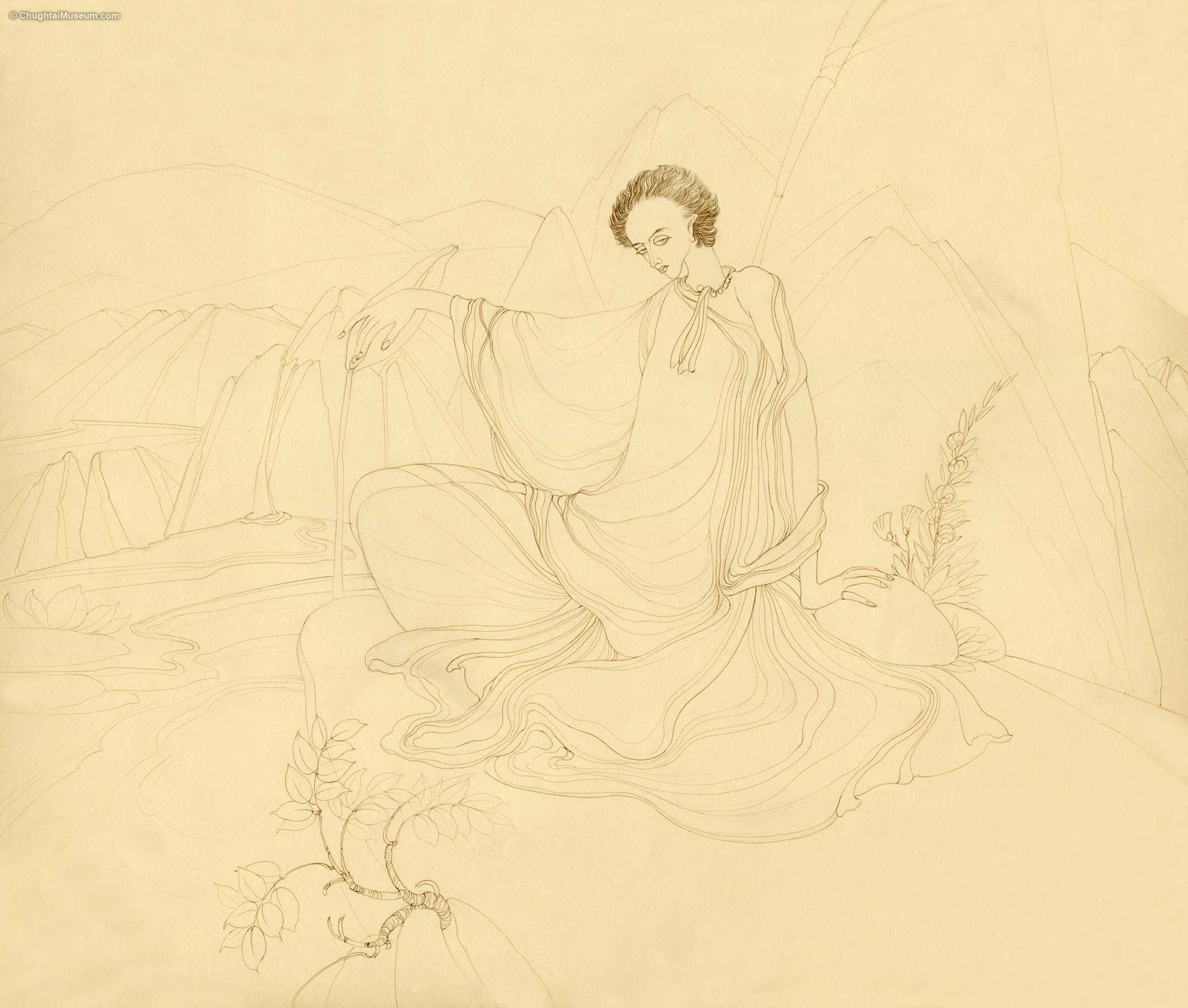
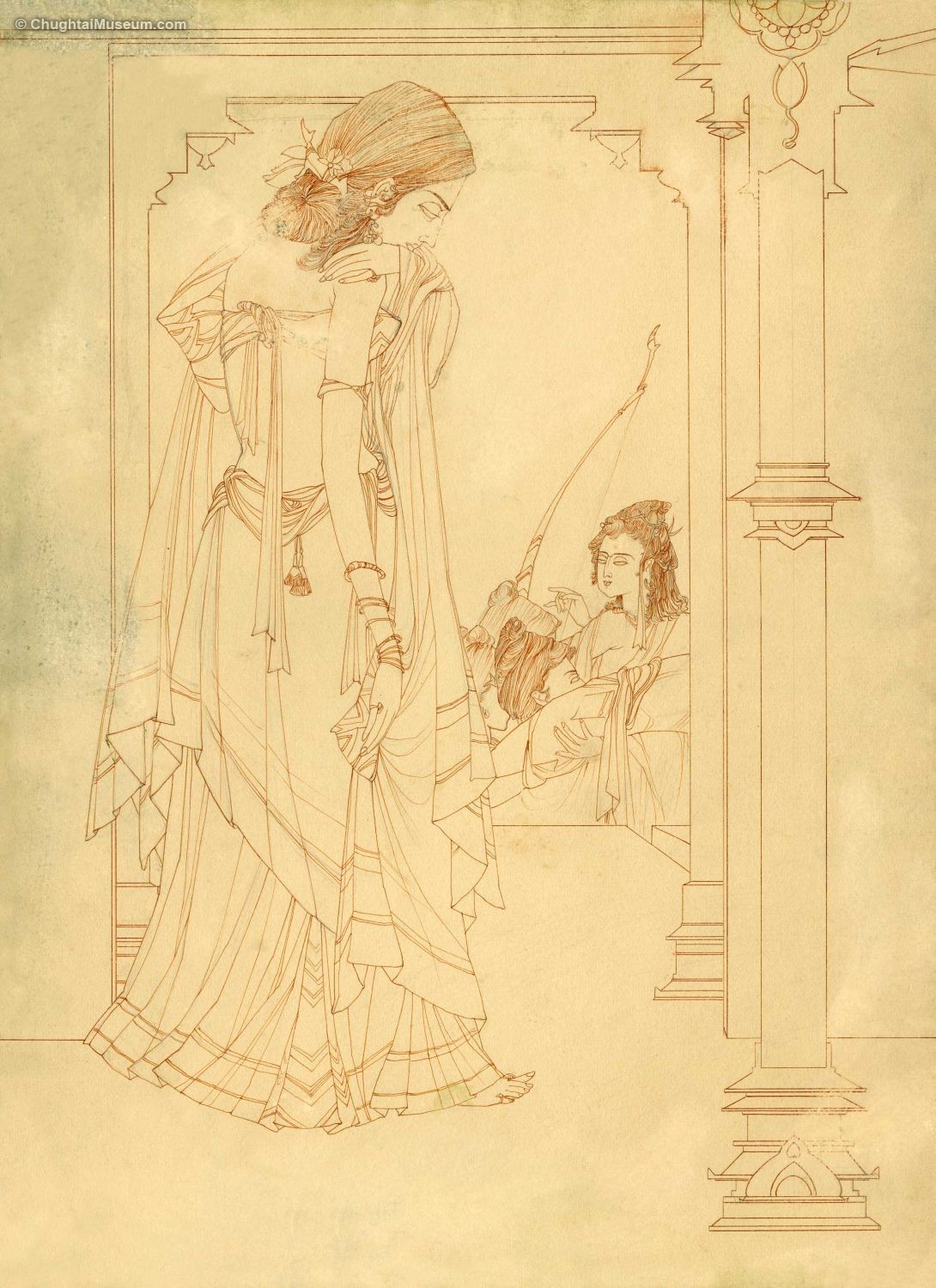
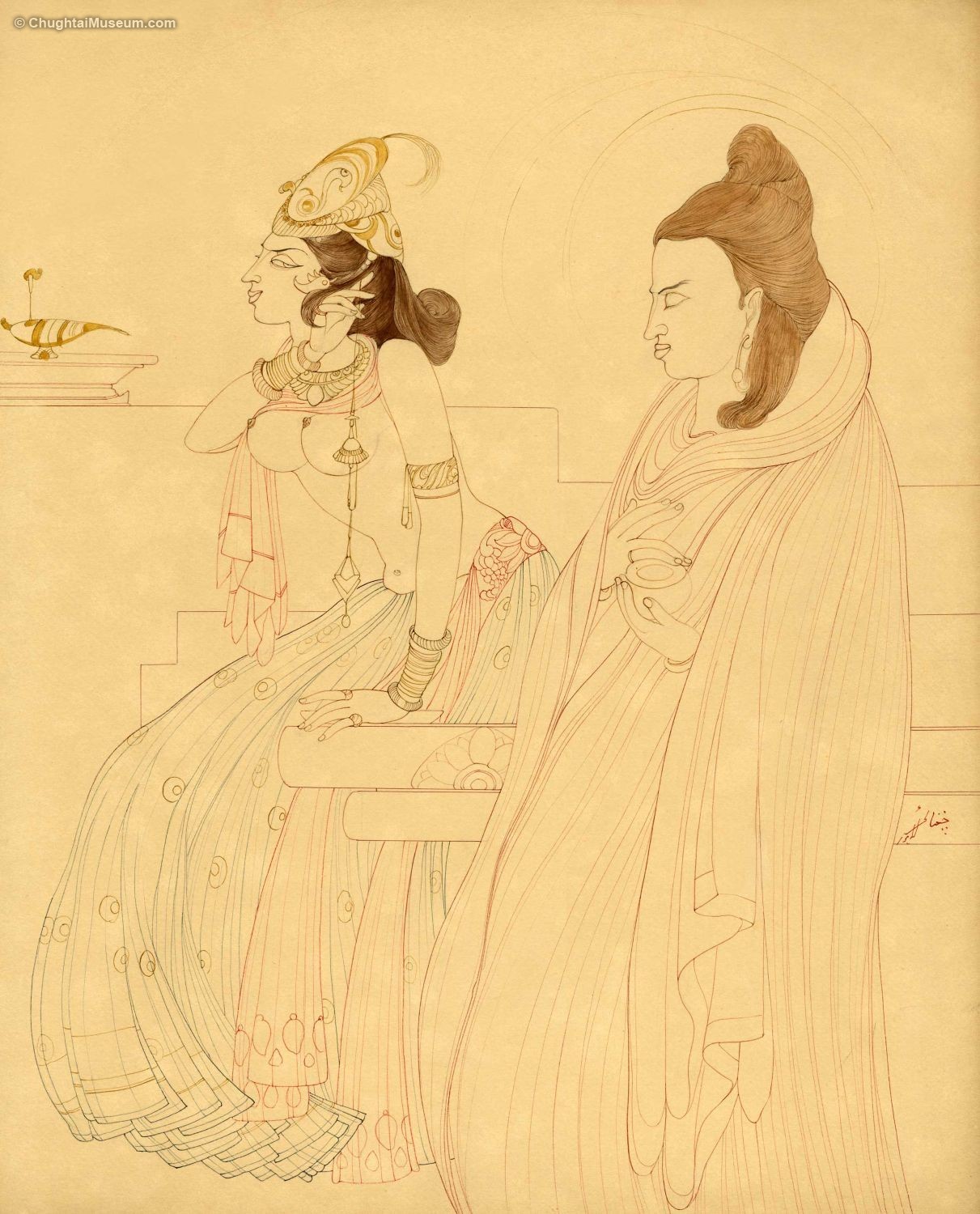
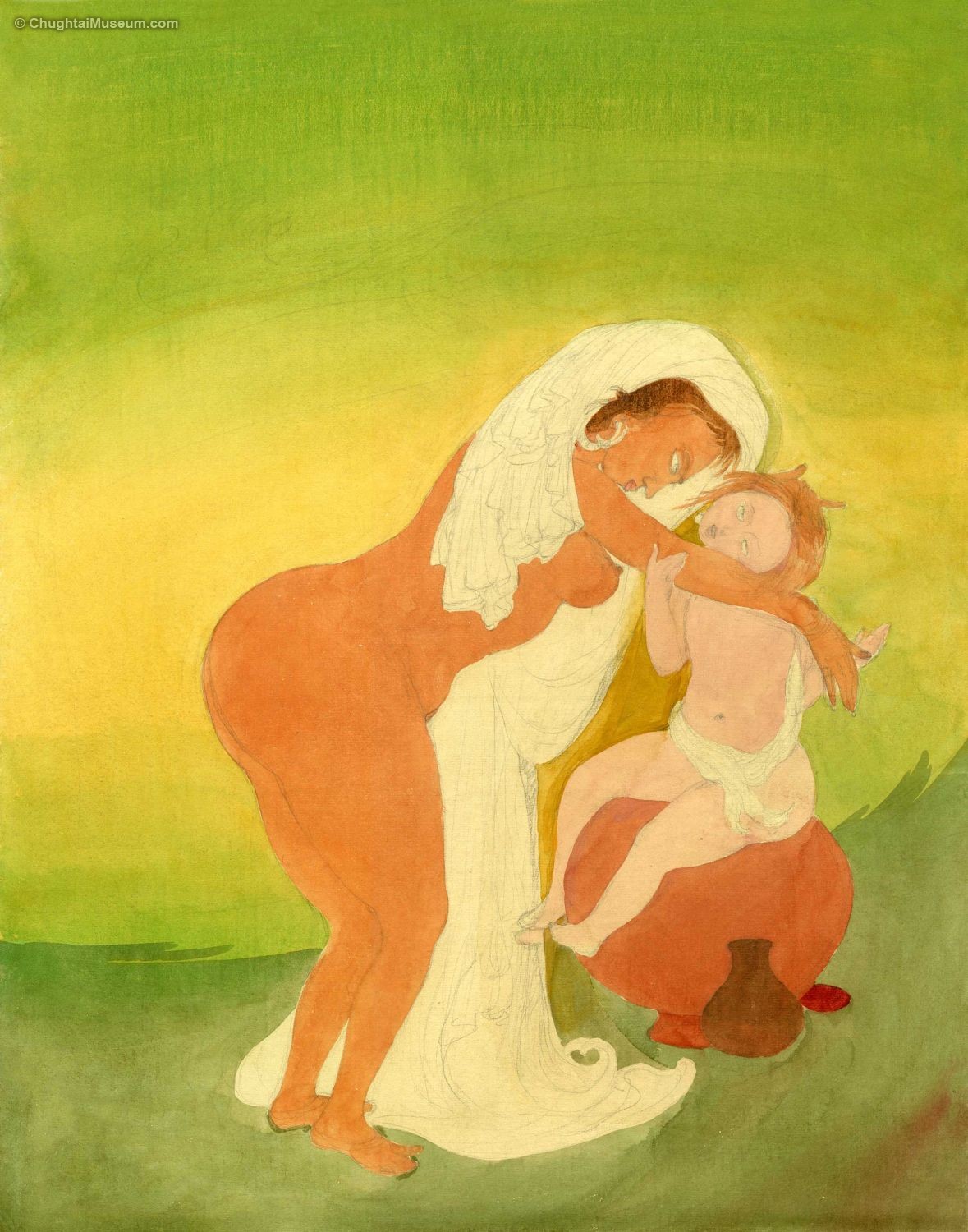

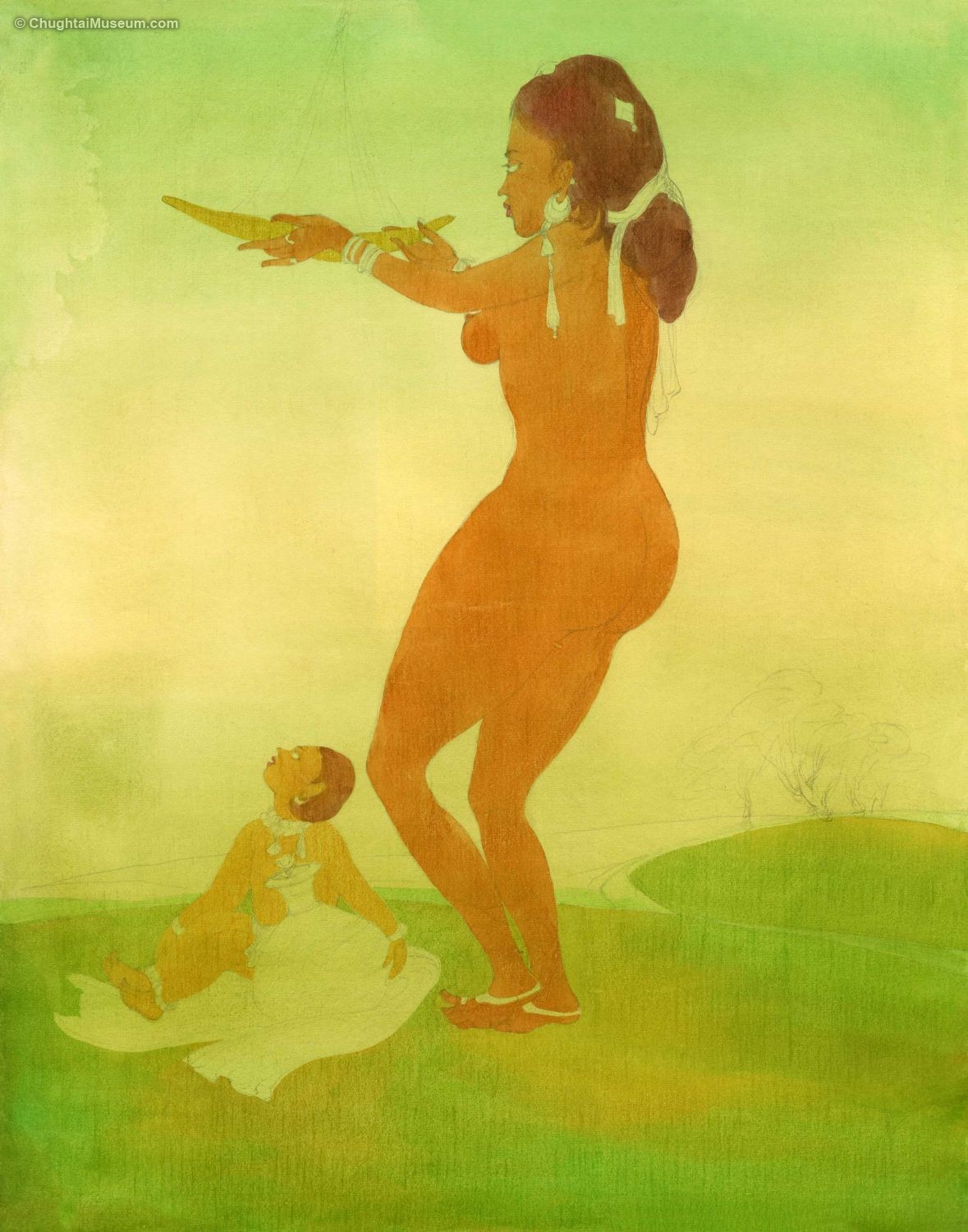
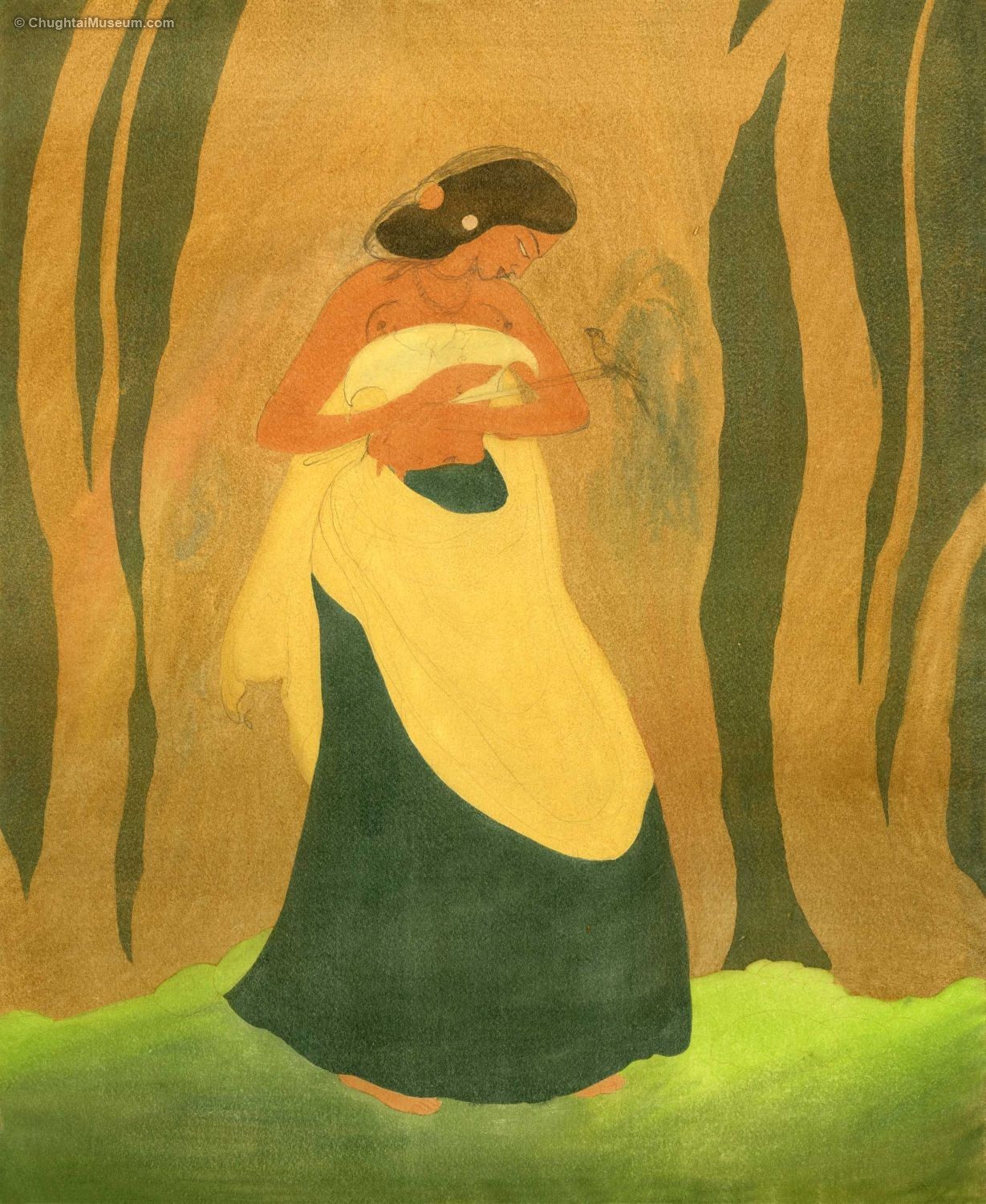
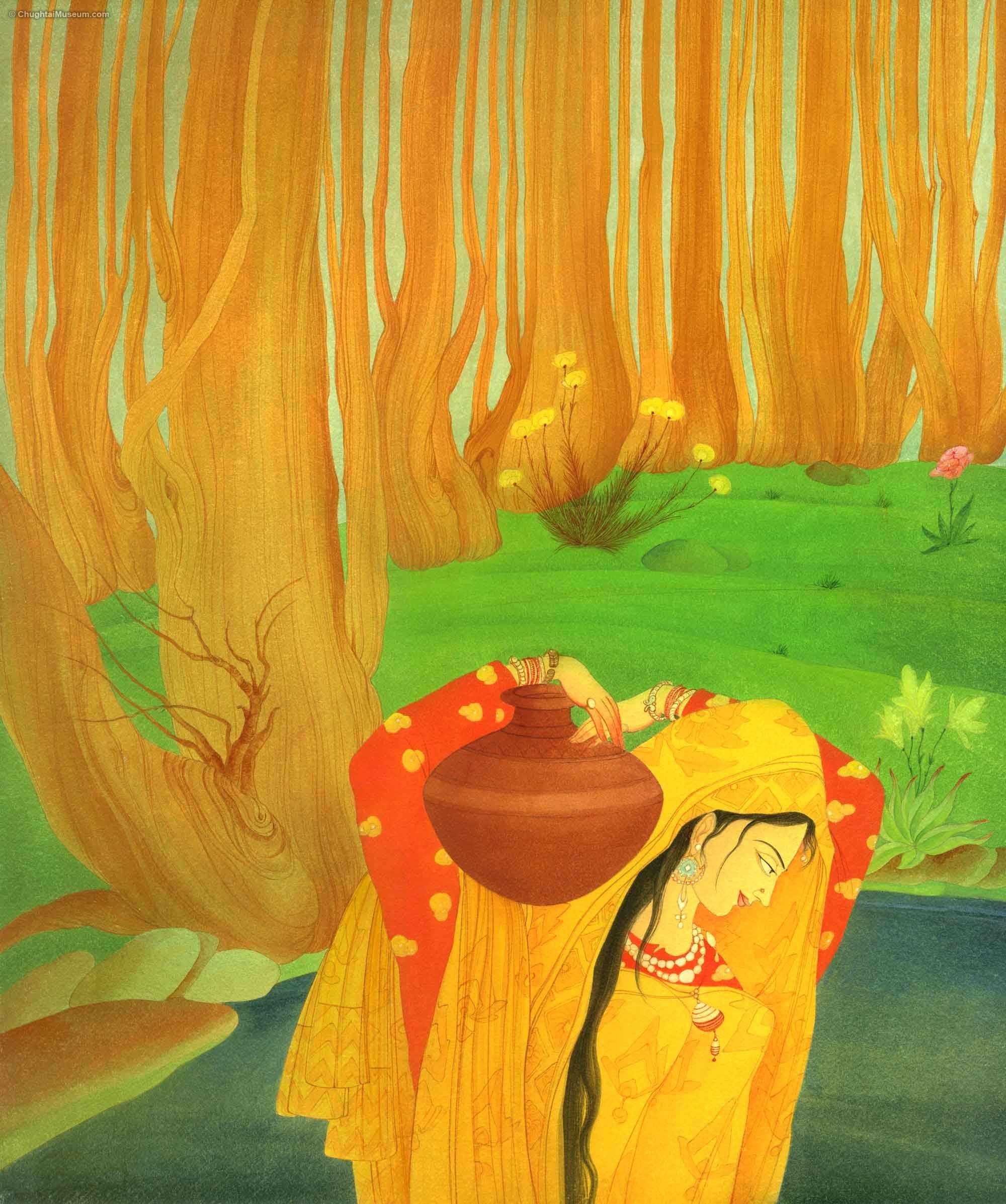

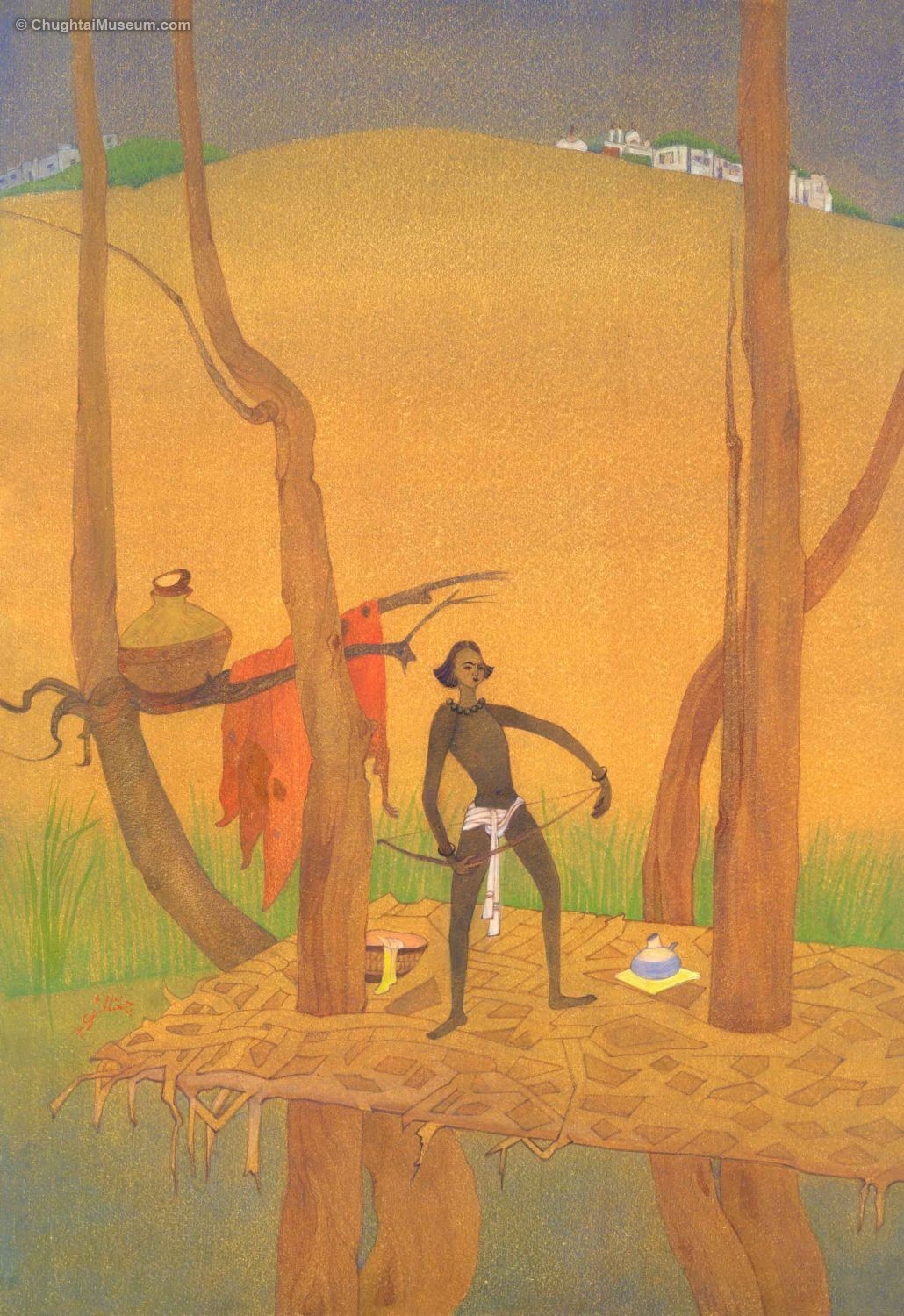
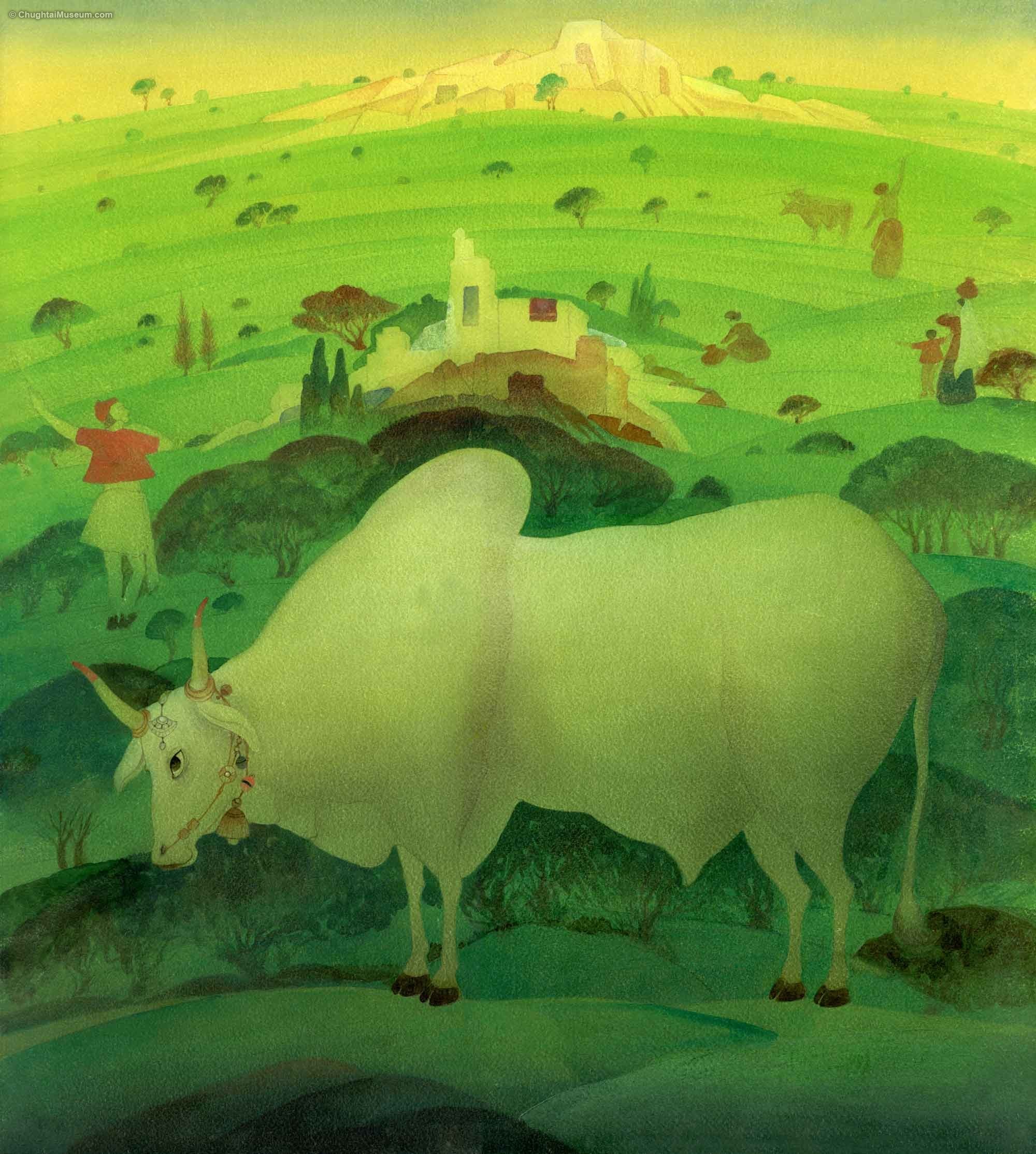
First time record ever so notice.
People do not know today that he had a number of students and they practised his technique like Abdul Waheed Chughtai, Yahya Chughtai, Master Ashiq, Majeed Al Makky as well some Sikh friends .
Ishwar Singh friend and artist same style and similar technique.
This should be part of art curriculum. Chughtai school should be taught as a separate subject. Why do we keep running after west. This is far far superior
Absolutely well said
How many can even make an attempt? Knowledge versus experience.
Not taught to us anywhere.
From start version to finish various stages various states well done.
I believe M.A. Rahman Chughtai is an outstanding gift of God to our society and we must honour him fully.