THE MONGOLS, KHILJIS AND THE LAL MAHARA MONUMENTS – CAN THERE BY A REASONABLE ANALYSIS BASED ON HISTORY?
THE MONGOLS, KHILJIS AND THE LAL MAHARA MONUMENTS – CAN THERE BY A REASONABLE ANALYSIS BASED ON HISTORY?

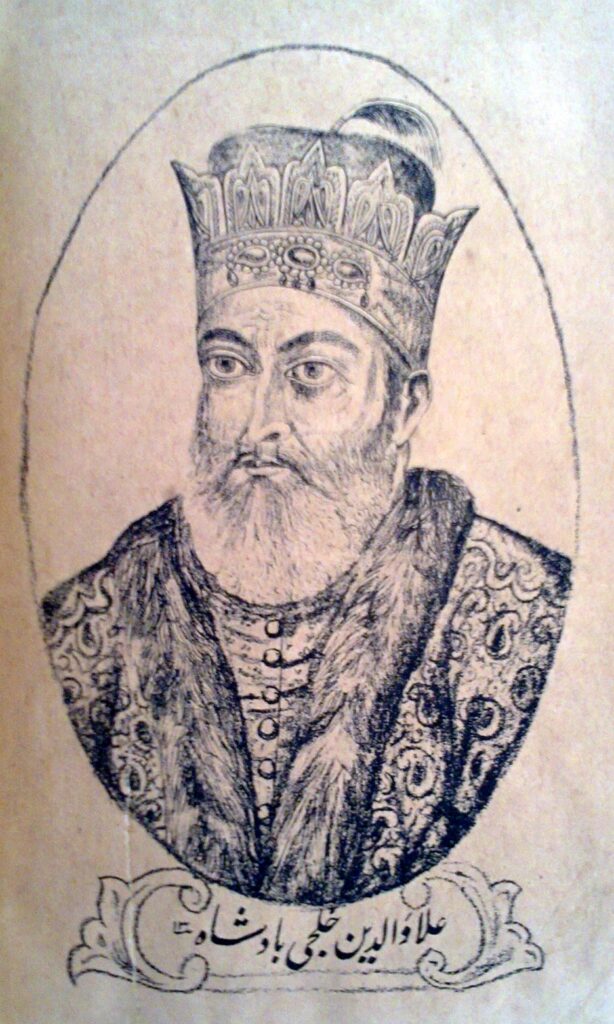
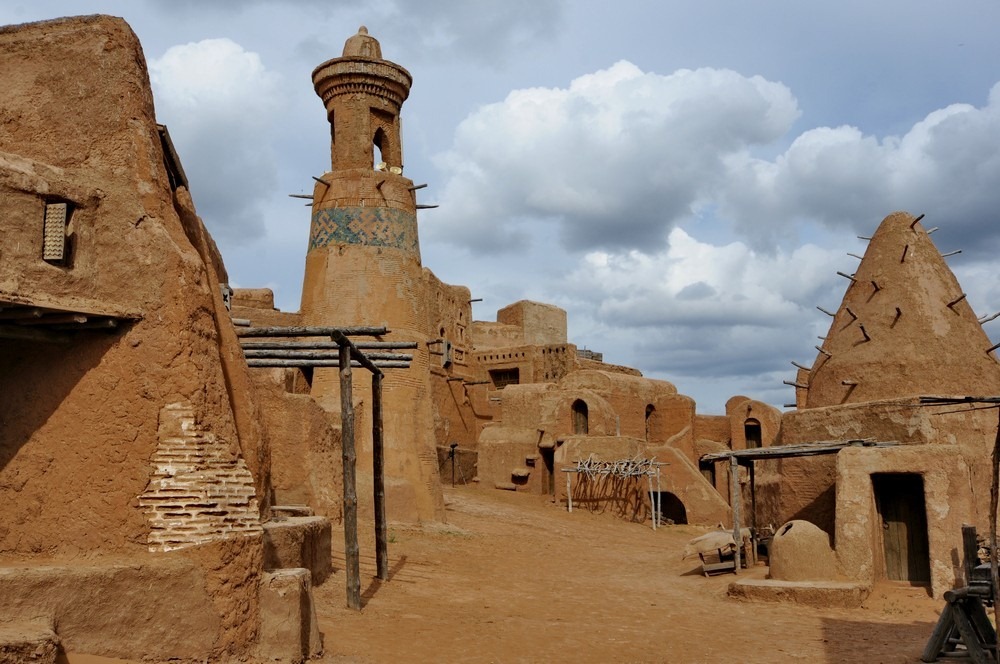
So much is there in Pakistan, but the passion of the scholars is missing now. Once upon a time Pakistan boasted of exceptional scholars and their analysis was always full of insight. But the two-nation theory daunts objective research. Historical distortion is inevitable because truth is not sought. And that is why truth does not set us free. It entangles in continued petty rivalries. We have an extensive library and excess to knowledge, and with back ground of scholars like Dr Ahmad Dani, Dr Muhammed Baqir, Maulvi Shafi, Dr Waheed Qureshi, Dr Abdullah Chaghatai and many others. And we are not afraid of giving our version for fear of ridicule from already ridiculed scholars. So, we start from an exceptional book on Sultan Allaudin Khilji by Dr Ghulam Sarwar Khan Niazi Sahib. And references to three contemporary scholars like Isami, Barani and Amir Khusro. And the close relation woven with the newly converted Muslim Mongols, and the new laws governing these relations.  The narrative is quite different from the stereotype description of Mongols and Khiljis. But the findings are so new to be unbelievable.
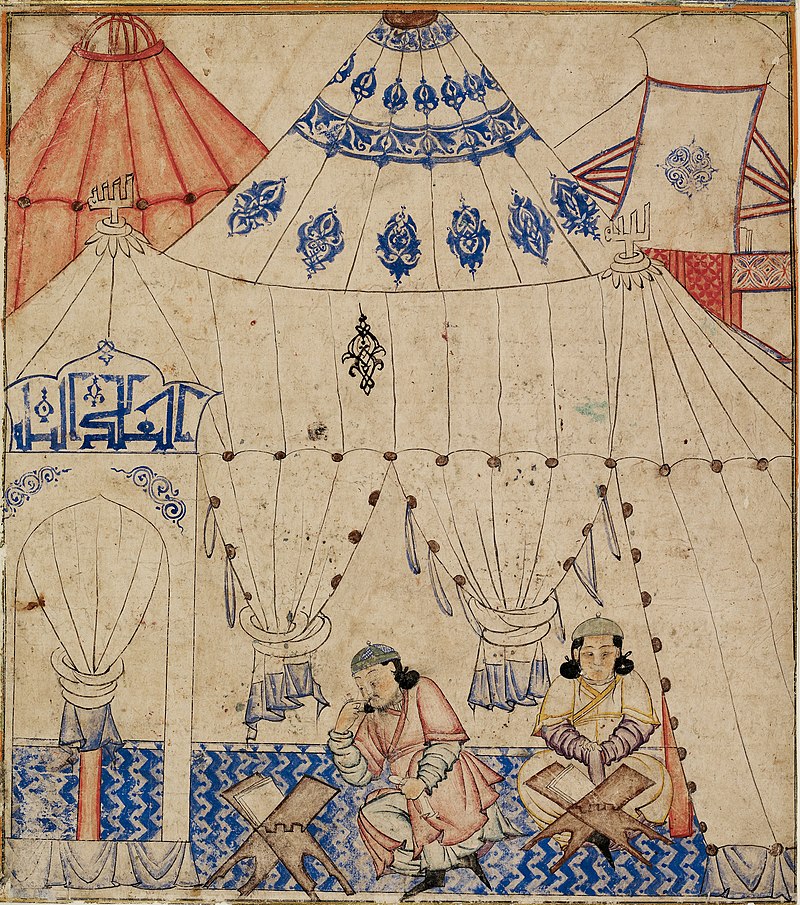
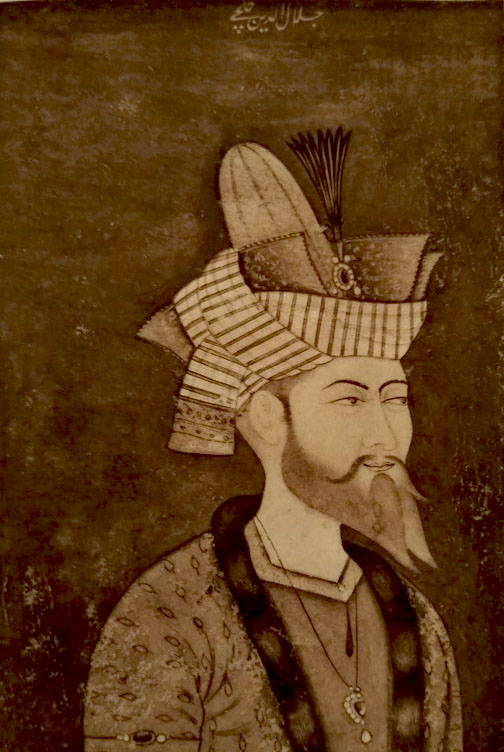
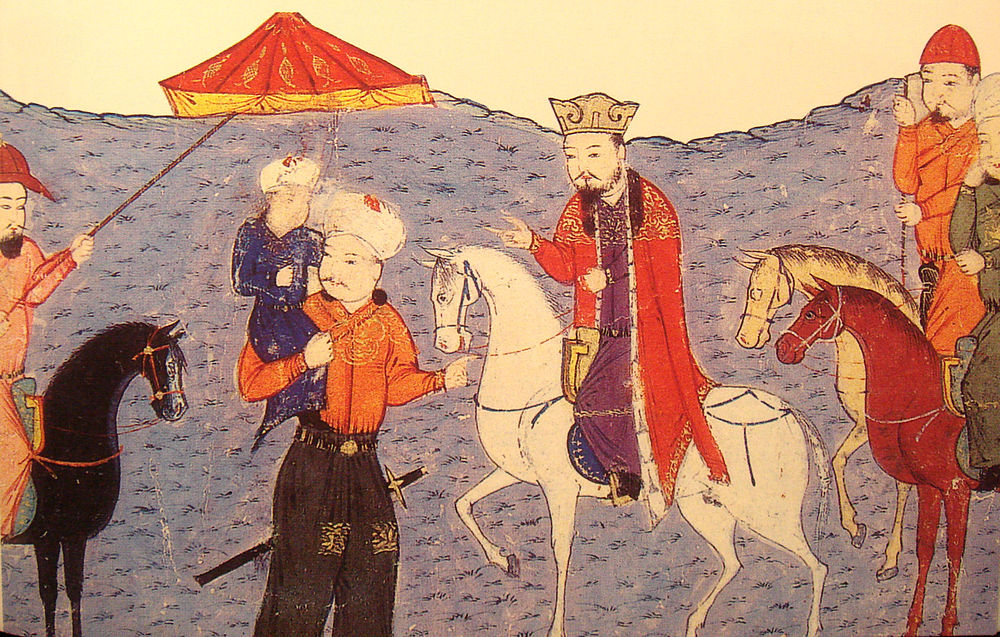
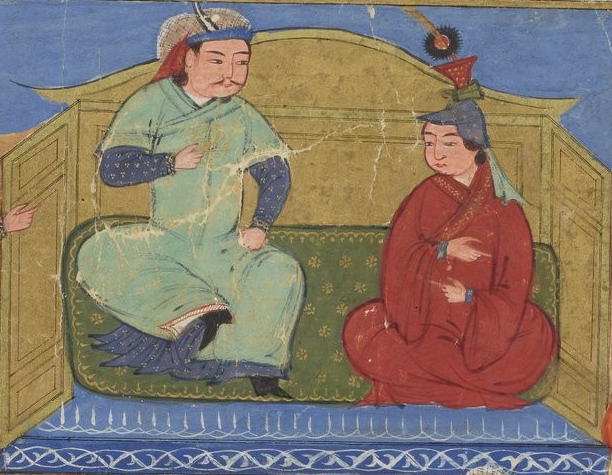
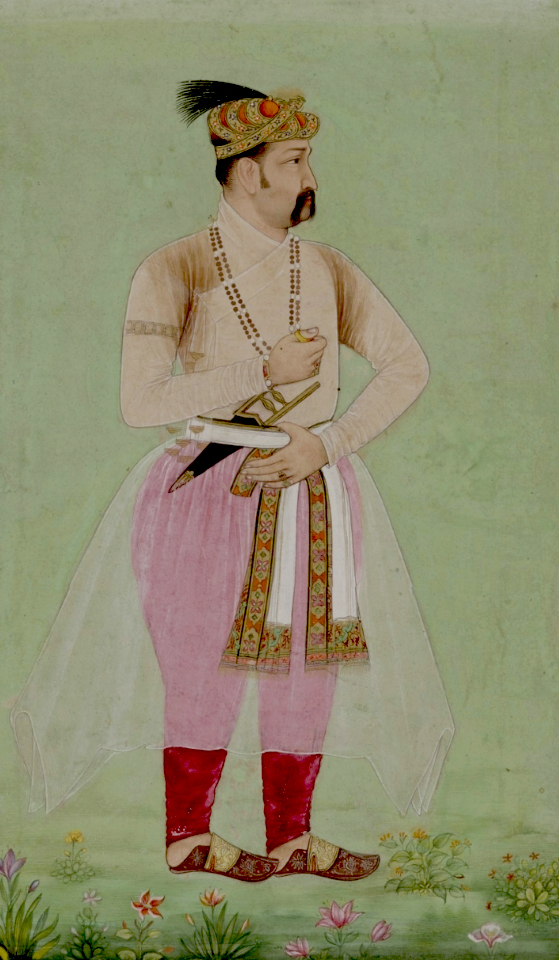
It seems Sultan Jalaludin Khilji was a kind hearted King and when he received a delegation from the Alikhani’d Mongols in Tabrez, he welcomed them whole heartedly. He gave the Mongol leader Arghun Khan, the hand of his daughter, and living space in Mughalpura, Delhi. He also gave the ownership of four villages in North Western frontier to carve trade relations with them, and allowed them to remit profits back to Tabriz on their own. Such a deal cannot even be imagined today, for Mongols were not trusted in any way, and even though their conversion to Islam was there, they were considered dirty people. Changiz Khans four sons and eight daughters and an old mother (Hoelun) was full of problems. The women were even more strong than the sons and had vast armies of their own. In the course of a few generations, conversion to Islam was in their favour and they won the respect of Delhi Sultans. But when Jalaluddin Khilji was assassinated by mistake, everything turned upside down. Arghun Khan, grandson of Halaku Khan was heartbroken and long with his thousands of troops, lost faith in the New Sultan. Although defeated at times and given special favours, they were not trusted, and finally about ten thousand of these Muslim Mongols were blinded and assassinated in a massive way. Isami and Barani both commented on this injustice in their own way.
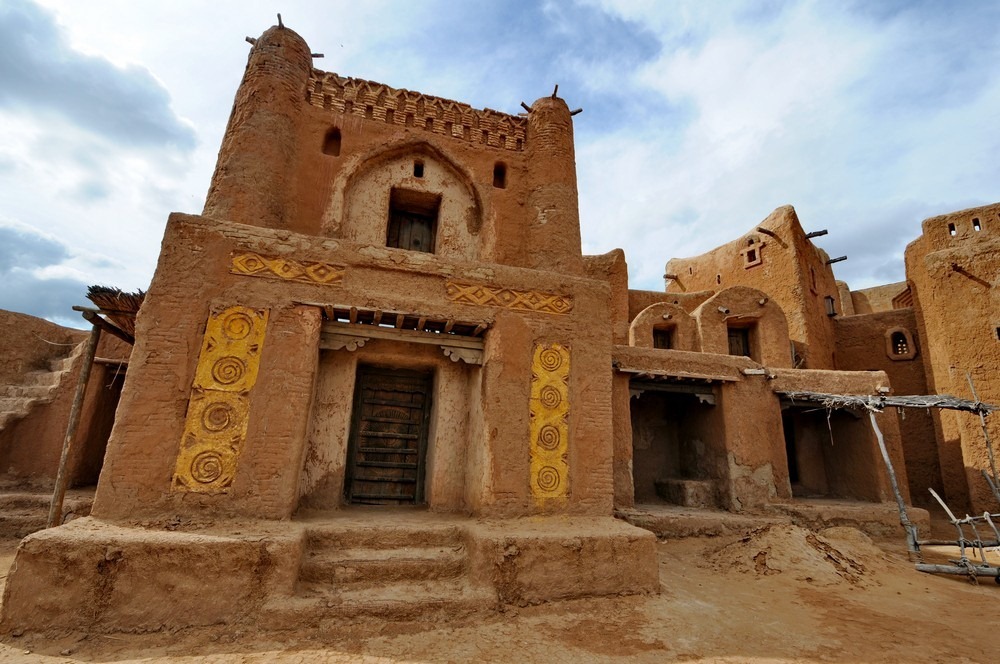
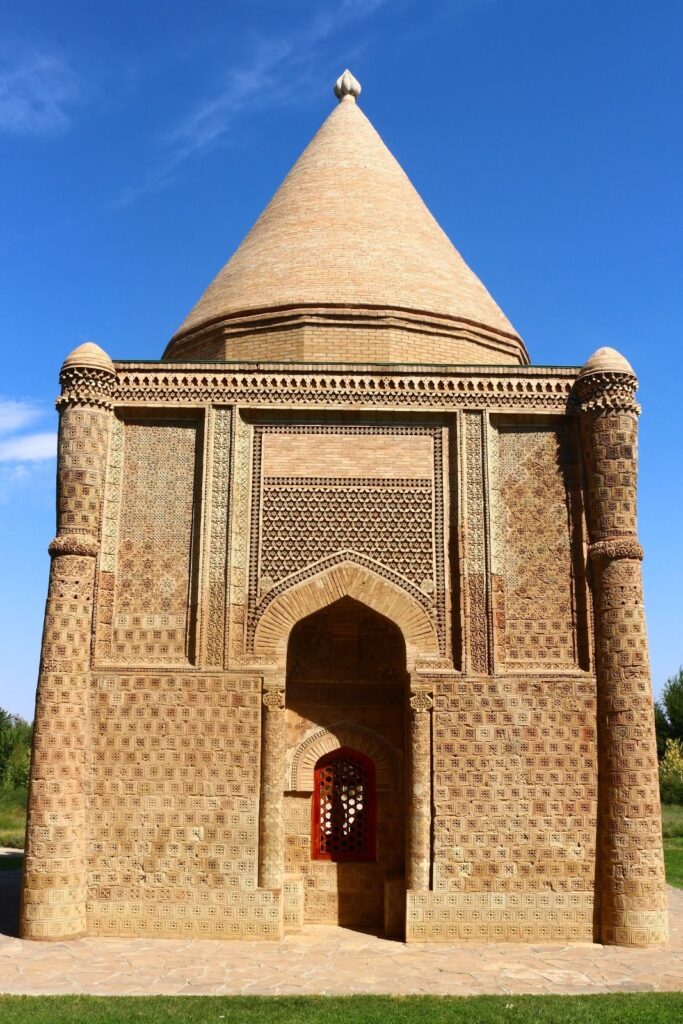
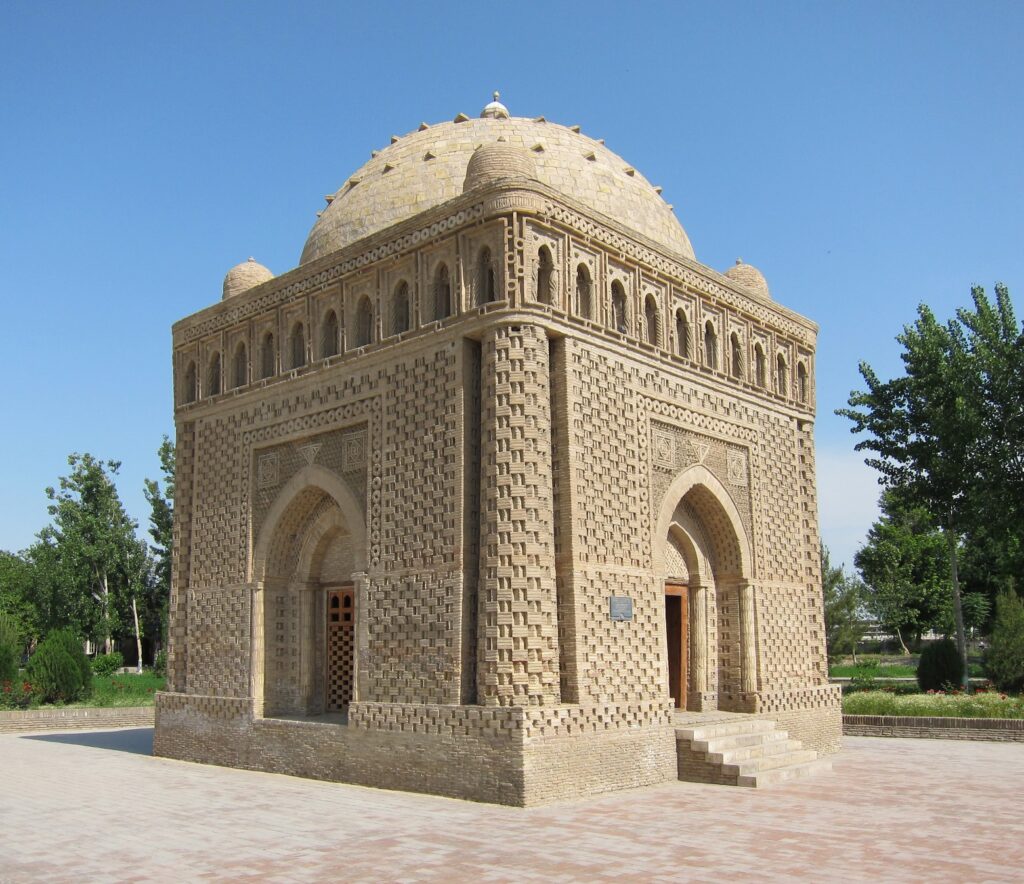
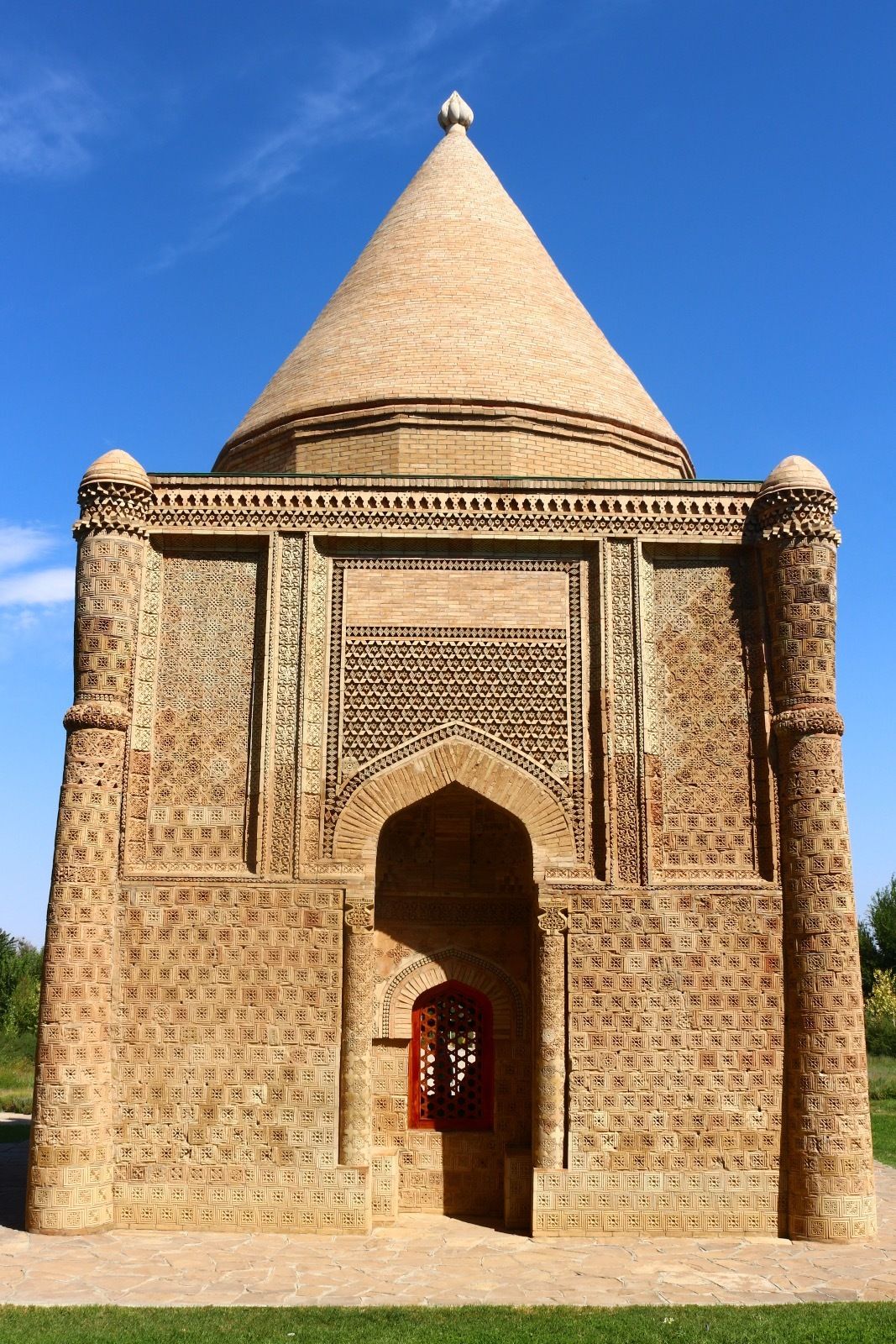
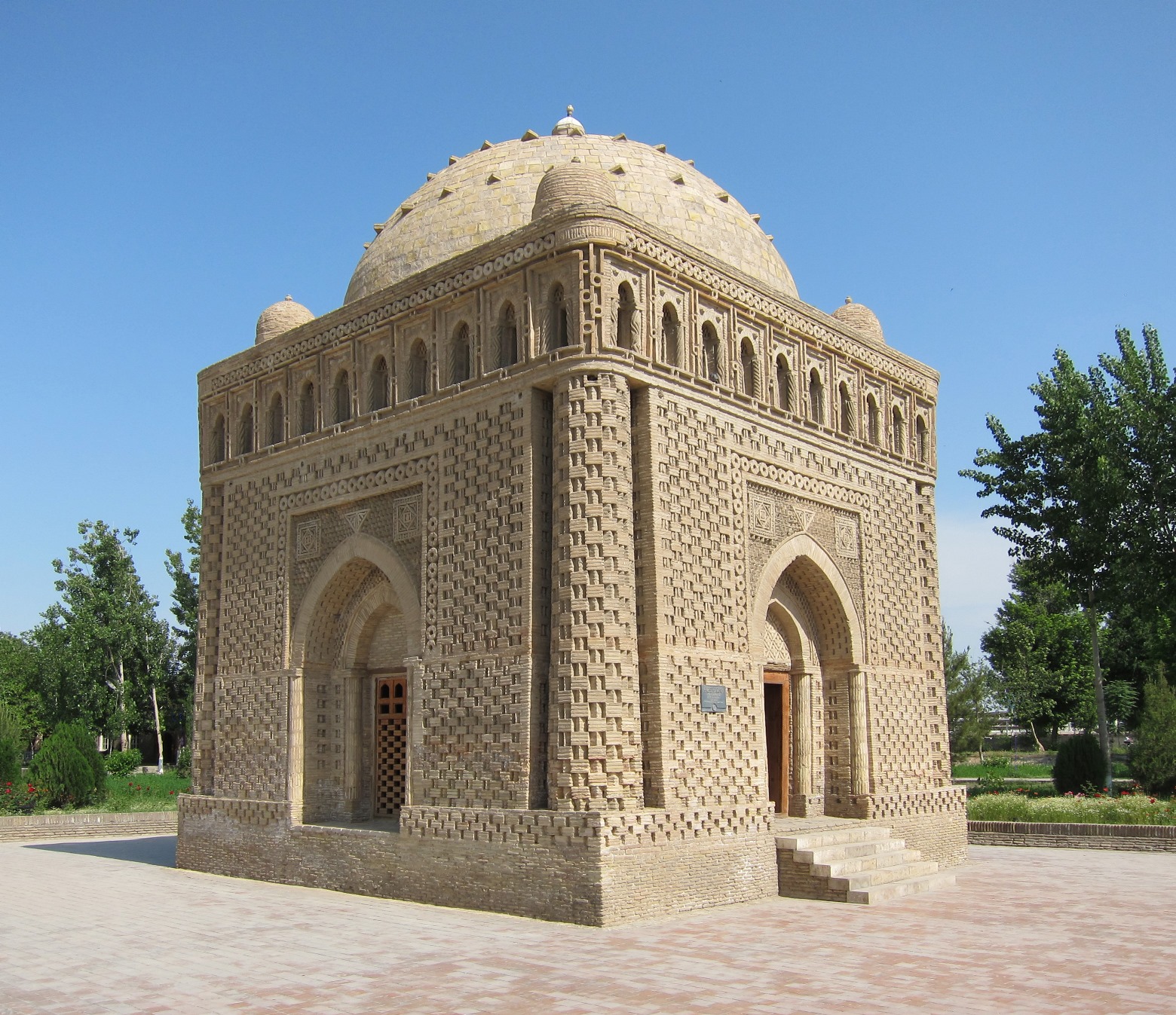
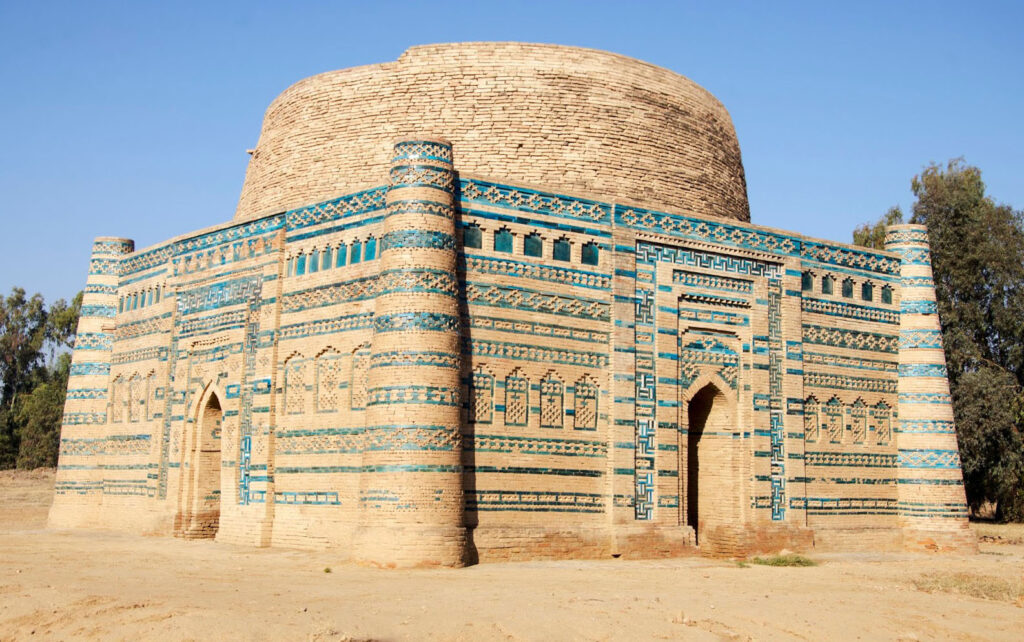
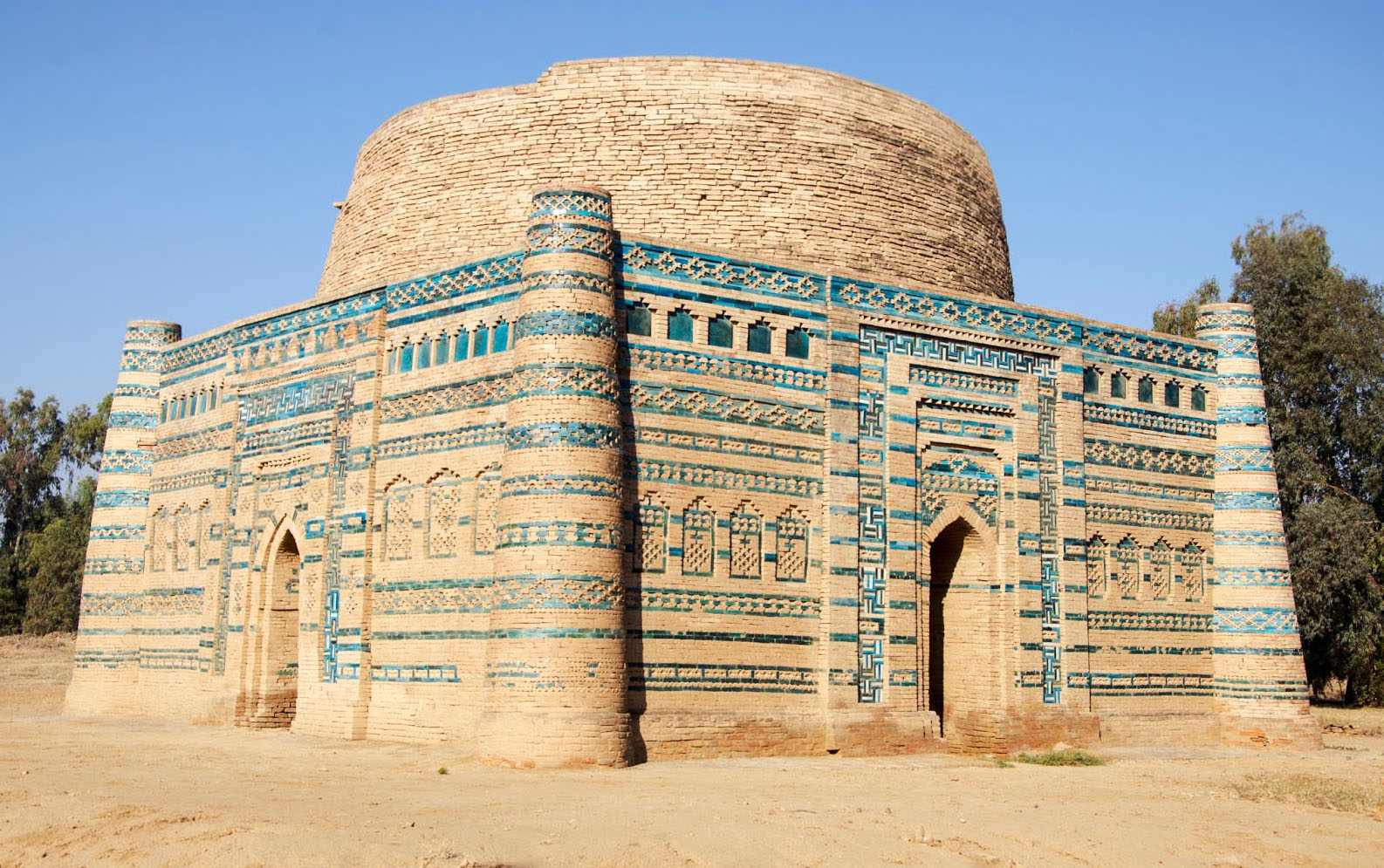
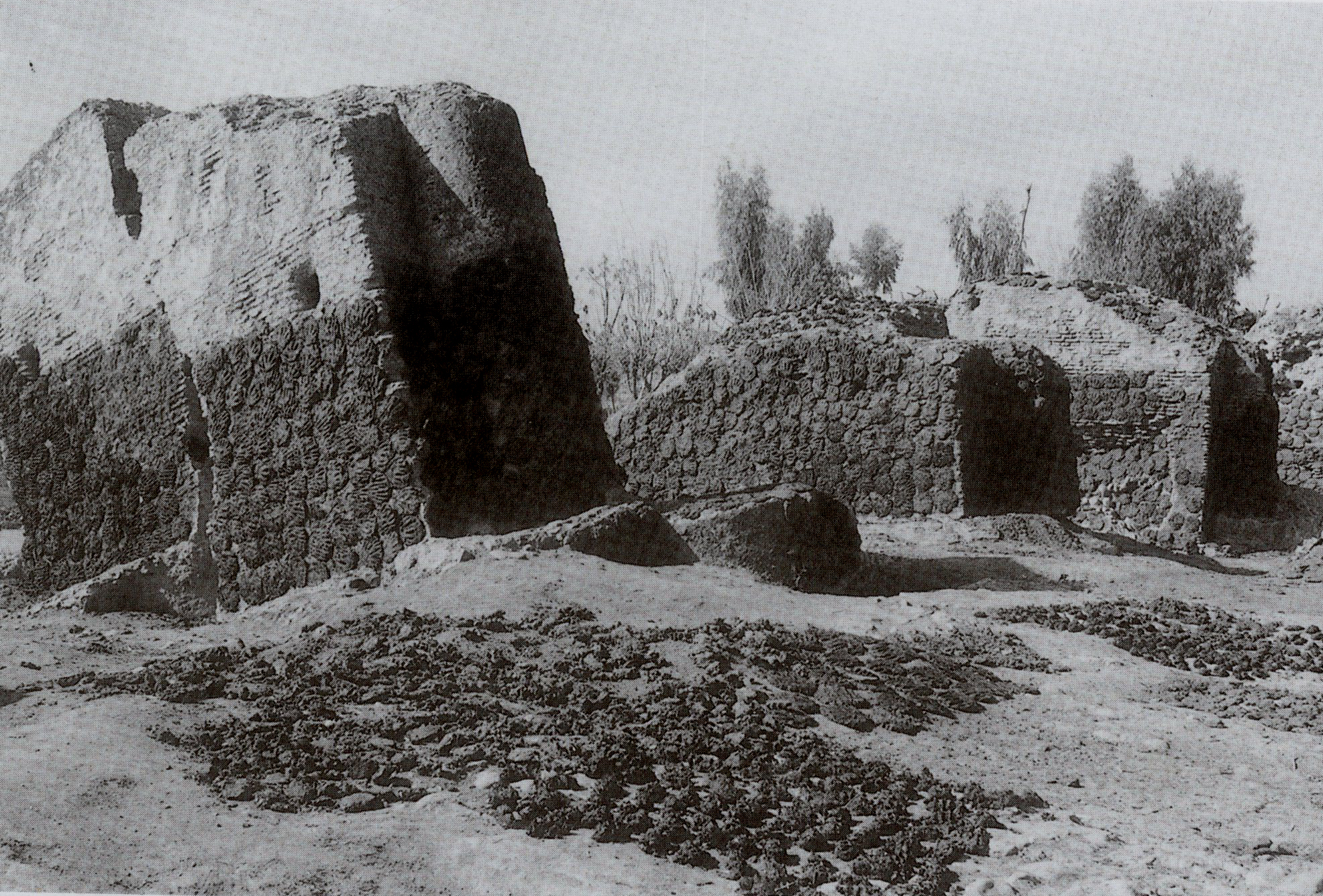
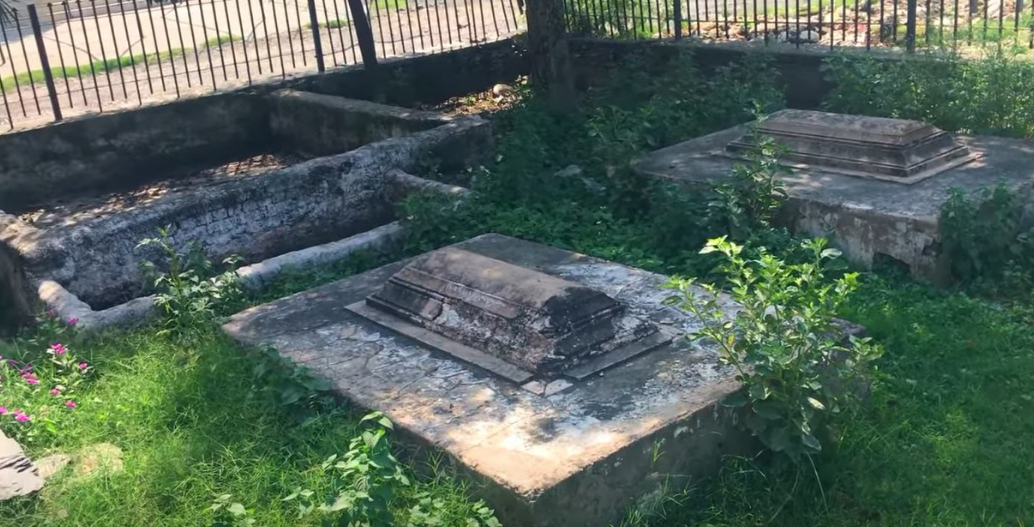
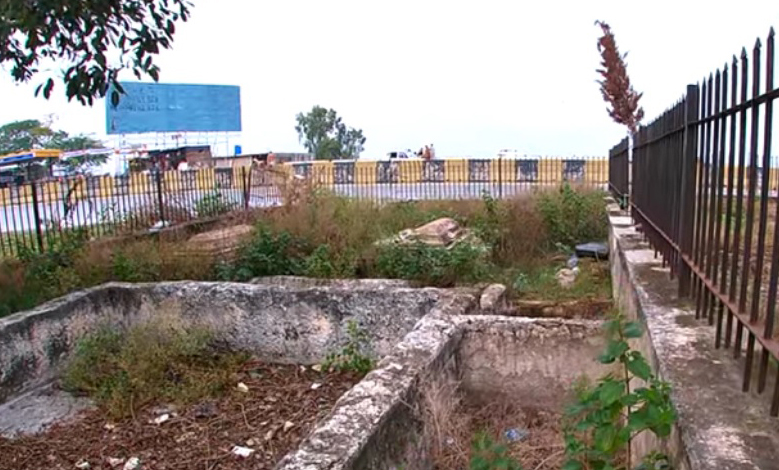
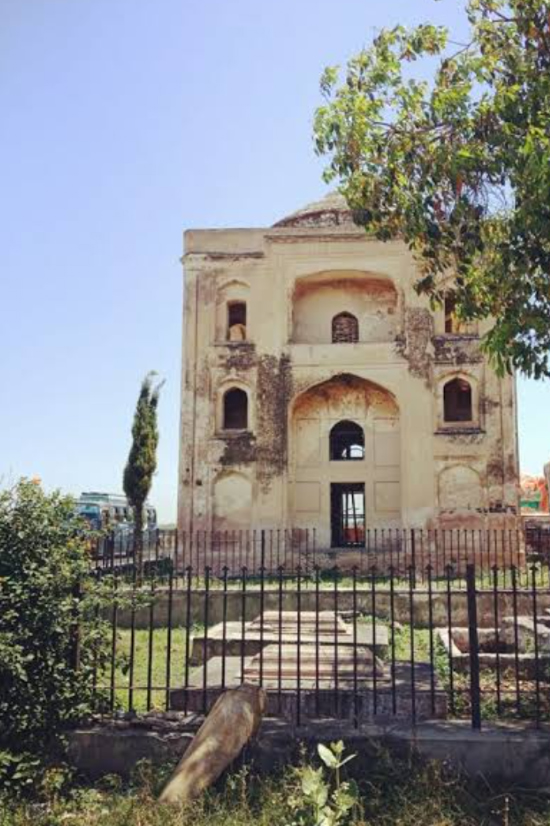
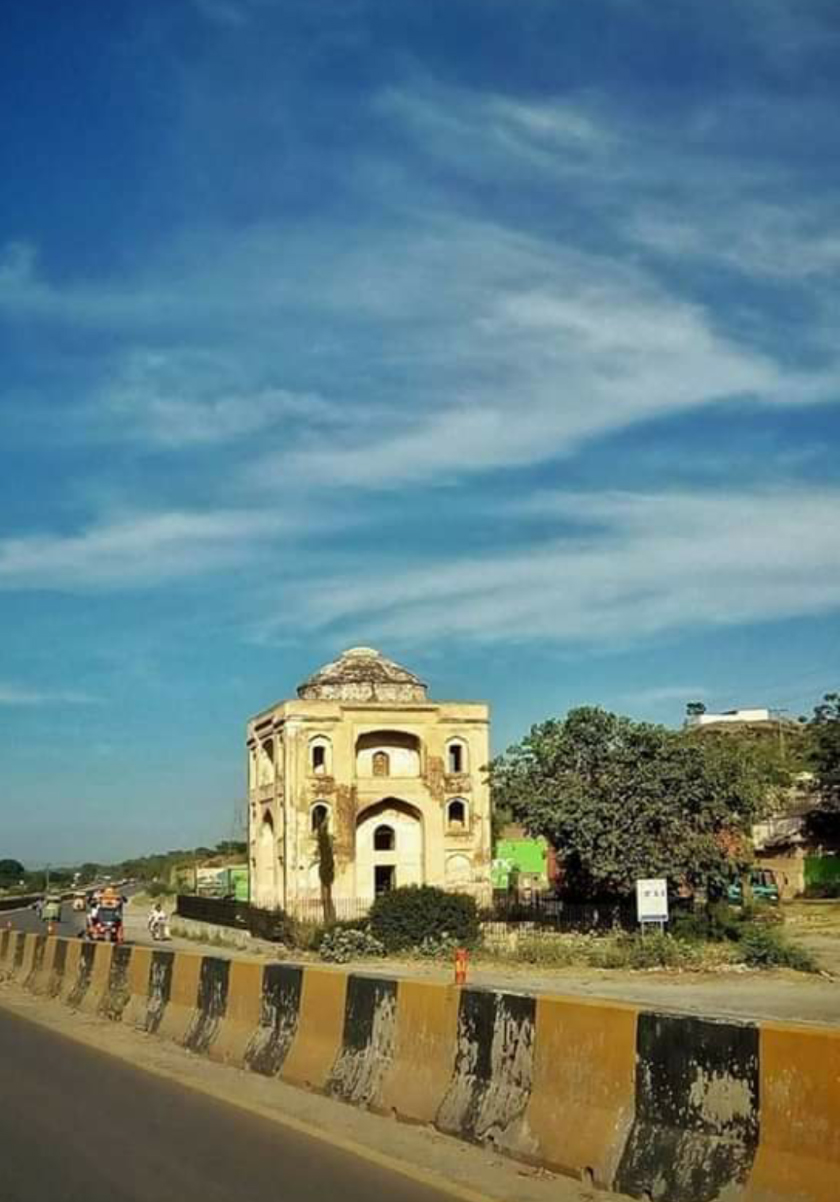
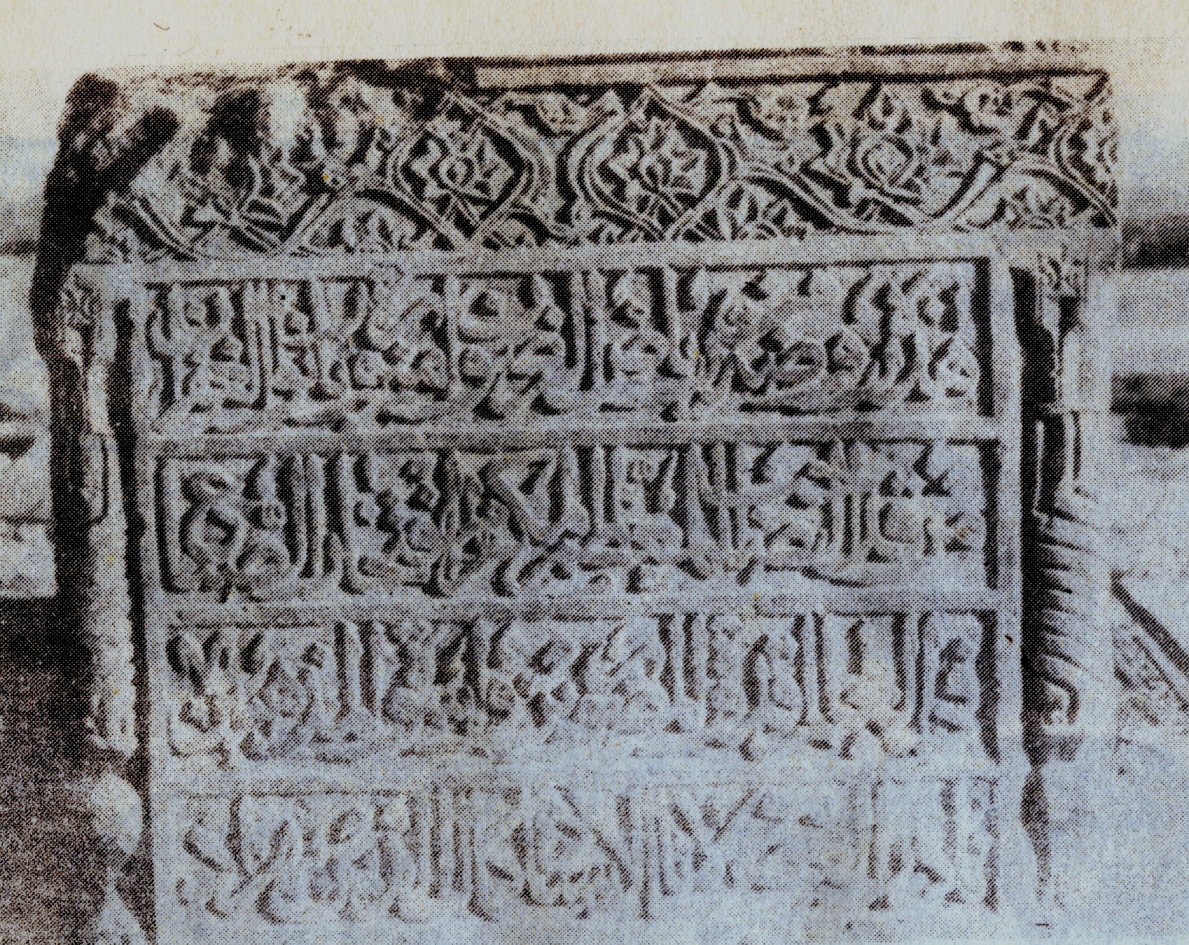
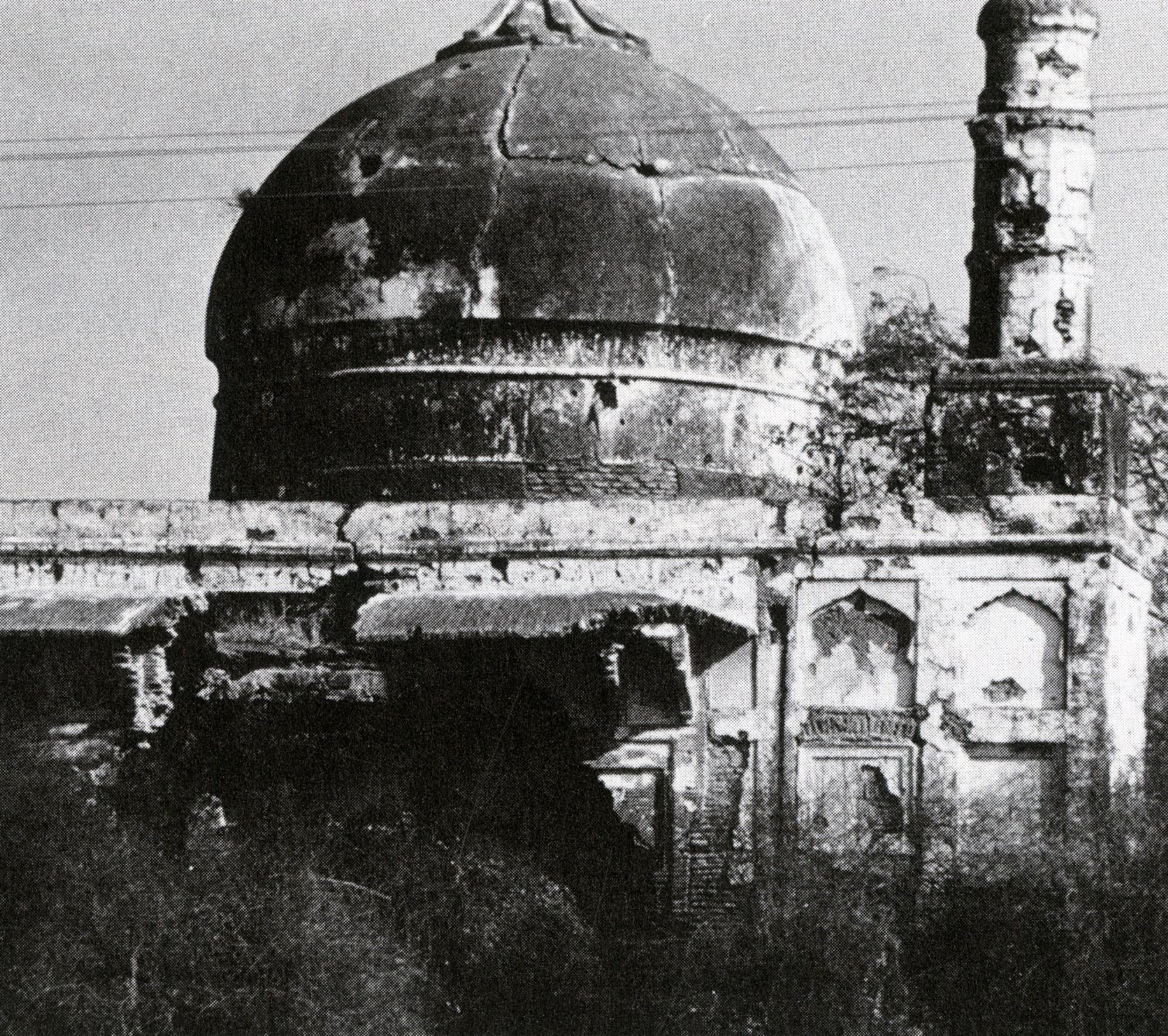
So, whose graves are there in Lal Mahara monuments in North West Frontier. If we look at the tradition of buildings at that time, we see the Mongol look in them. These villages were given to Alikhani’d by Sultan Jalaluddin Khilji. And when assassinated, probably they were commemorated with graves in their own traditions. If we look at the monuments built before and at that period, we see the Mongol look in them. And we also note the sad end to these Muslim Mongols as witnessed by many historians at that time. Today it reminds us of a period unknown to us and open to guess work only.
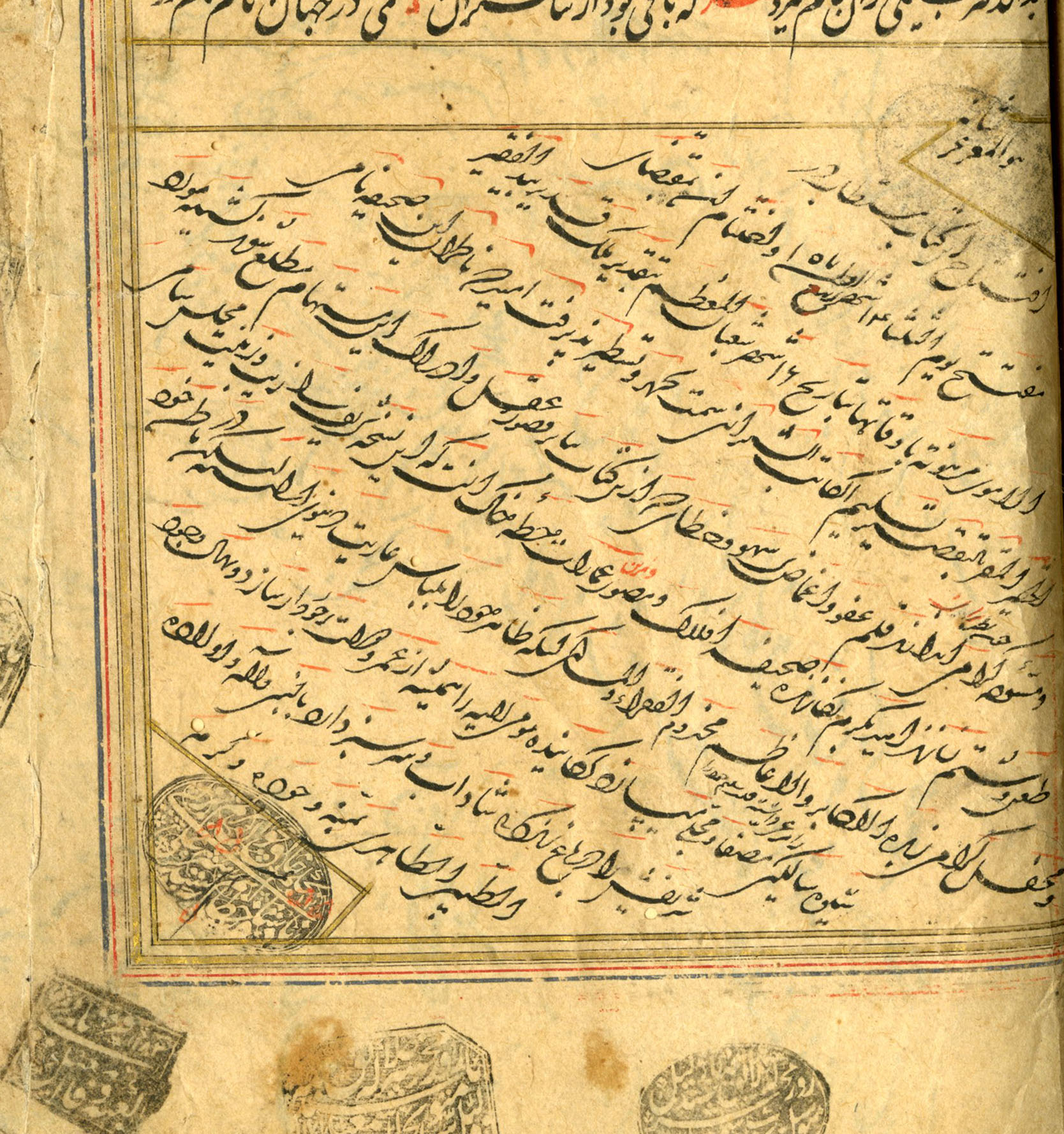
THE ACTUAL DATE OF DEATH OF AMANAT KHAN SHERAZI – ALIVE ON 14TH RABI UL AWWAL 1057 WITH NOTATION.

THE ACTUAL DATE OF DEATH OF AMANAT KHAN SHERAZI – ALIVE ON 14TH RABI UL AWWAL 1057 WITH NOTATION.

Mausoleum Amanat Khan old view

History does not record the date of death of Amanat Khan Sherazi. It is generally taken to be 1055 or 1056 AH, but in reality, it is not known. A newly discovered manuscript has the date 14th Rabi ul Awal 1057 on the colophon, that means he was alive by that date. Also, on the Eastern gateway of the Taj Mahal, his inscription records date year of 1057.

Wayne Begley, an authority on Amanat Khan Sherazi writes:
“The exact date of Amanat Khas death is unknown, although the official history of Shah Jahan’s reign, the Badshah nama, states that he died in the Emperor’s eighteenth year, that is sometime between August 1644 (1055) and July 1645 (1056).”

Inscription Amanat Khan 1057 still alive

Wayne Begley also asserts that:
“I believe that the calligraphy on the Taj gateway, dates to 1057/1647, was completed by another unnamed calligrapher, after Amanat Khan’s death.”
It seems that is not so, for a colophon on a manuscript clearly states 14th Rabi ul Awwal, 1057. Certainly, alive by that date.

AN UNKNOWN MARKET PLACE IN LAHORE, KATRA ABDUL GHAFUR, IN SIKH TIMES – INSCRIPTION SAYS BUILT BY MIAN RAHEEM BAKSH MIMAR IN 1820 A D, (1236 AH).

AN UNKNOWN MARKET PLACE IN LAHORE, KATRA ABDUL GHAFUR, IN SIKH TIMES;
INSCRIPTION SAYS BUILT BY MIAN RAHEEM BAKSH MIMAR IN 1820 A D, (1236 AH).

Katra Abdul Ghafur Lahore

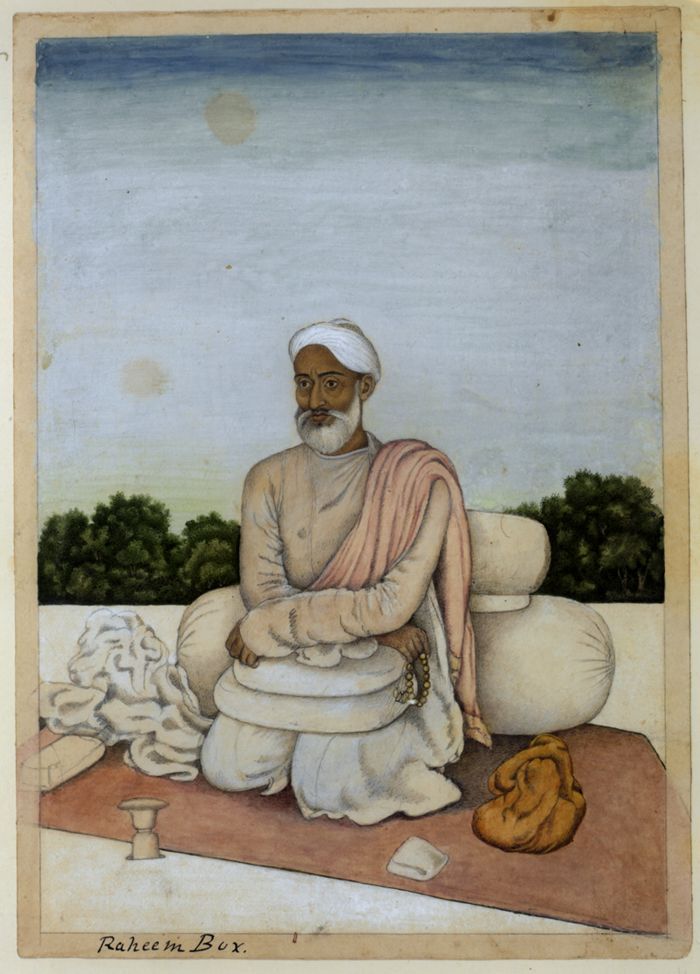
Market places and bazaars are common in Islamic civilization, and extensively designed such places exist in Iran, Afghanistan, as well as Hindustan. Some of them so unique that they merit attention and discussion even today. The bazaar in Herat is one example of same, as well as Bazaar Jahan Ara, known as Chandini Chowk in Delhi. The bazaar of Dara Shikoh in Lahore was another example. What standard Katra Abdul Ghafoor had is unknown. Suffice that great attention has been paid in designing its inscription in clay work. The period 1820 A D is a time of rising power of Maharajah Ranjit Singh in Lahore. There was a Katra in possession of Mian Kareem Baksh, son of Mian Raheem Baksh, near Moti Bazaar in Lahore. but at that time the many rooms in it were given on rent to the Christian cleaner community of Lahore. I have seen the place myself a few decades back.

Mian Raheem Baksh Mimar

So, we do not know anything about the Katra, nor do we know anything about Abdul Ghafur. We only know about Mian Raheem Baksh. But things do turn up with time. Abdul Ghafur must be of some wealth to have a market place designed for him in Lahore that early in Sikh times.

THE CONTROVERSY OF A MUGHAL BRIDGE AT BARA – MUGHAL INSCRIPTION PESHAWAR MUSEUM 1039 AH.

THE CONTROVERSY OF A MUGHAL BRIDGE AT BARA – MUGHAL INSCRIPTION PESHAWAR MUSEUM 1039 AH.

Mughal Inscription 1039 AH

In 1908 archaeologist discovered an inscription on the facade of a mosque in Qissa Khawani Bazaar, Peshawar. The Pesh Imam told the scholar that it was an inscription his grandfather discovered on the edge of the Bara river, of a bridge which had fallen with time. It was removed to the museum and it is there still now. Very simply the inscription points to a bridge over the Bara river, ordered to be built by Mulla Abdul Latif for Governor Lashkar Khan and built by the architect engineer Lutufullah Ahmad Muhandis Lahori in the year 1039 AH. It was neglected as important news, till it caught the attention of scholars.

It was taken for granted that it belonged to the Mughal bridge on the river Bara, three miles from Peshawar. And written as such by some scholars. Then in 2002 scholar Ibrahim Shah came up with the idea that it was not the existing bridge on the river Bara, but a fallen bridge near to that place, on Zindai stream. He spoke of the presence of four bridges at same vicinity, but at least two fulfilled the requirements of the description of the statement. The other two due to time element were not possible as options. The scholar made the premise on his observations. But in truth, there is no proof as to which bridge is there as provenance for the inscription. It could be either of both. Dr Abdullah Chaghatai, Dr Abdur Rahman and others, took it as the existing bridge. Ibraheem Shah volunteered his views. Nobody else has taken the issue.

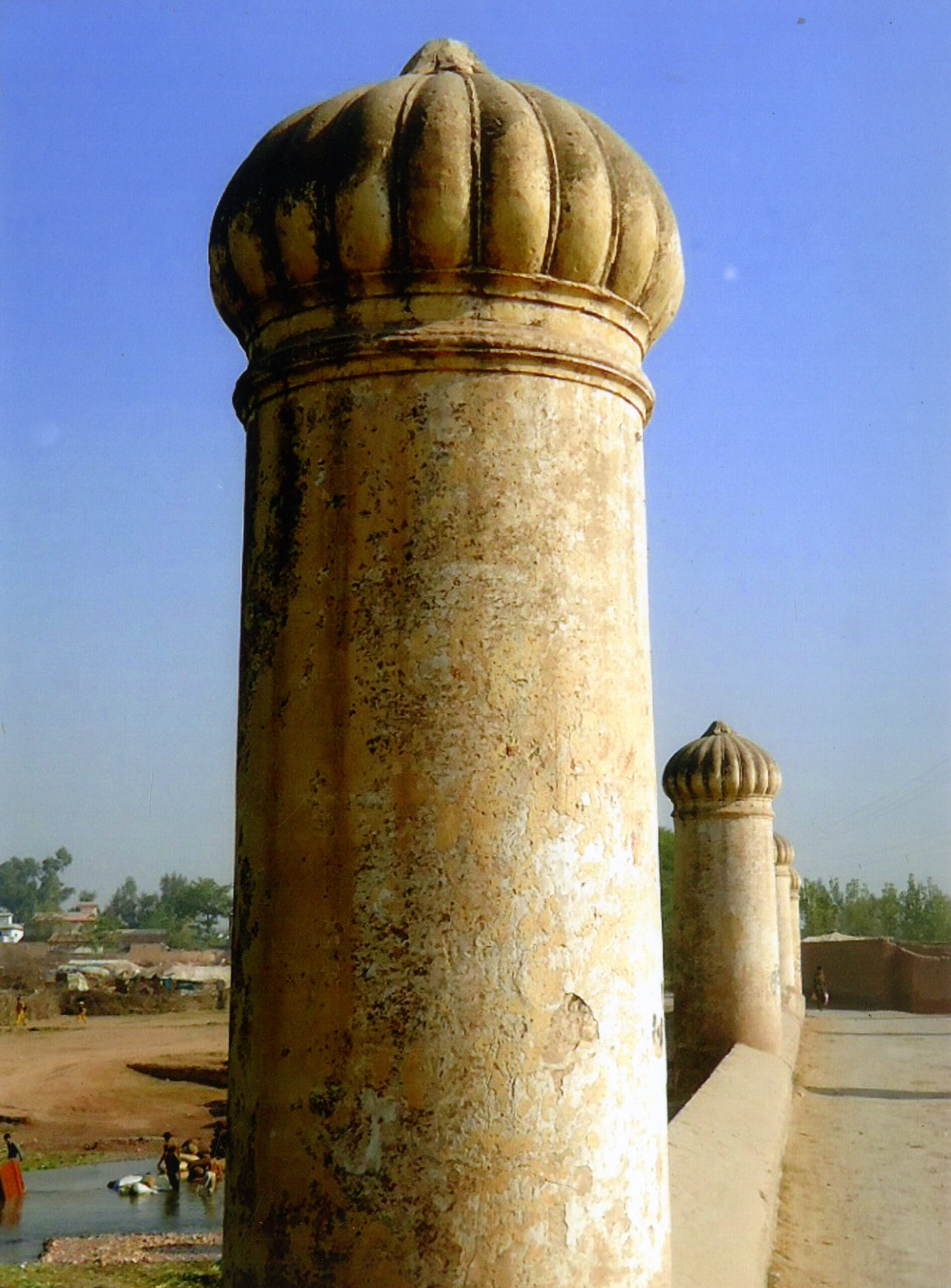
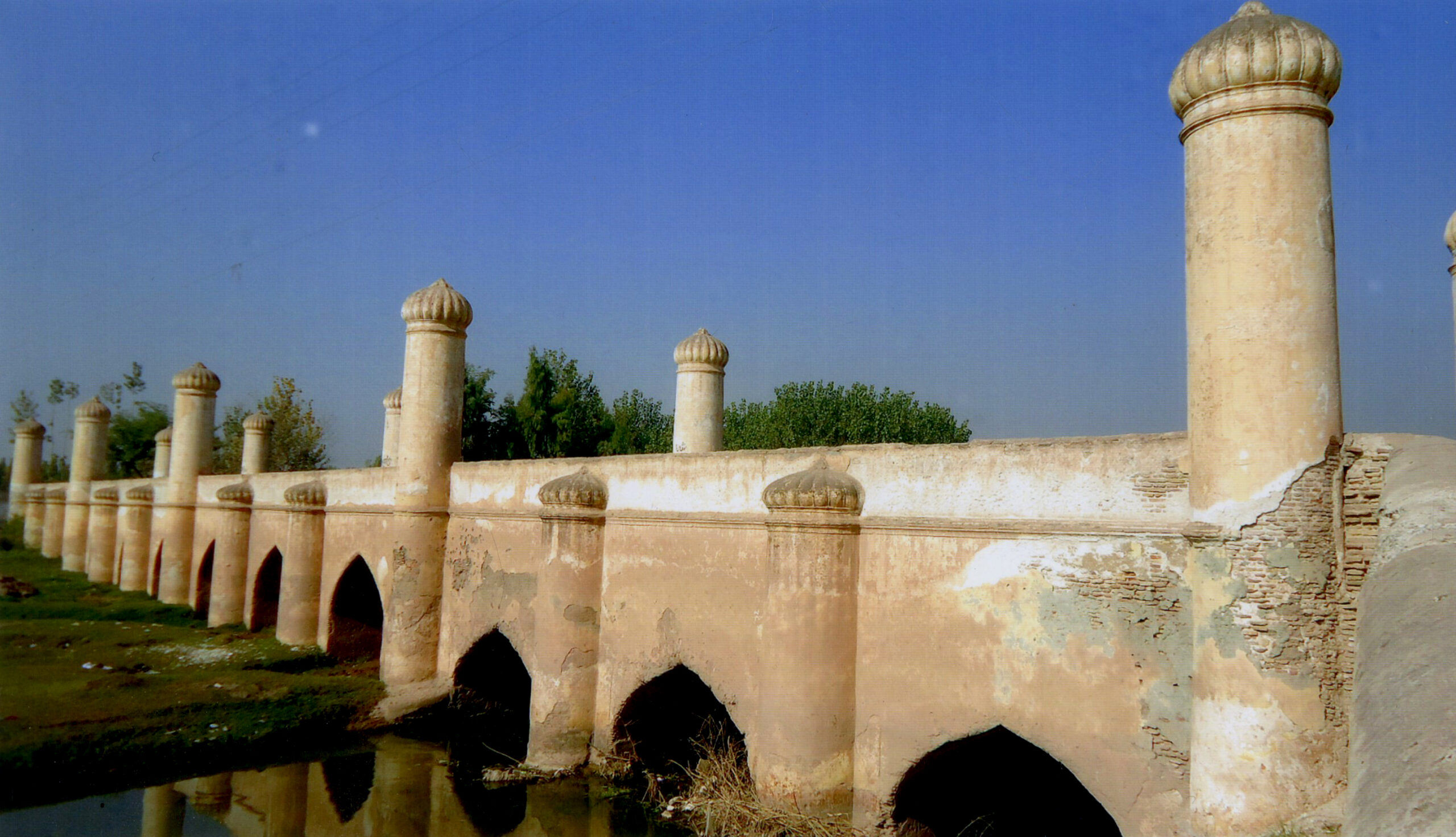
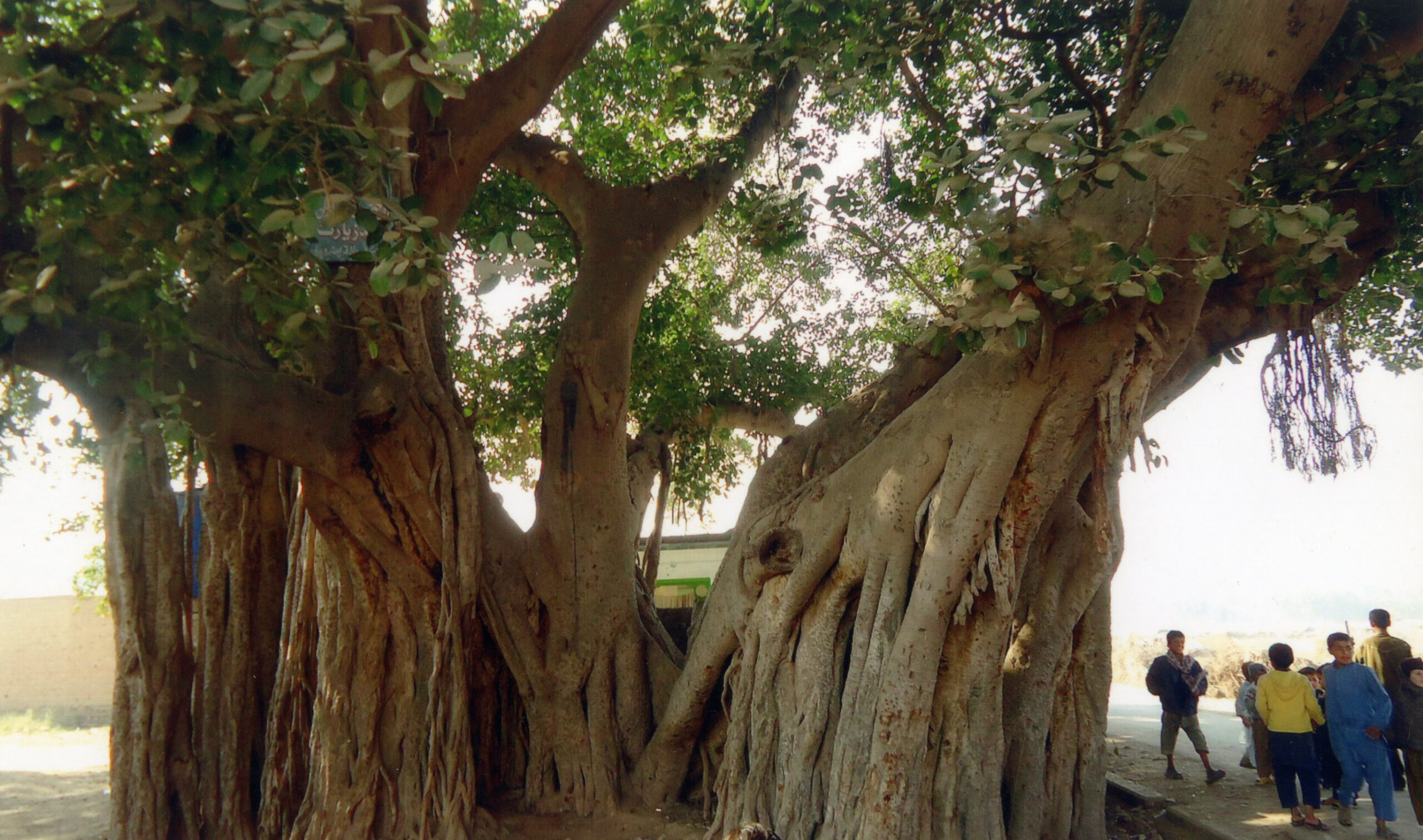
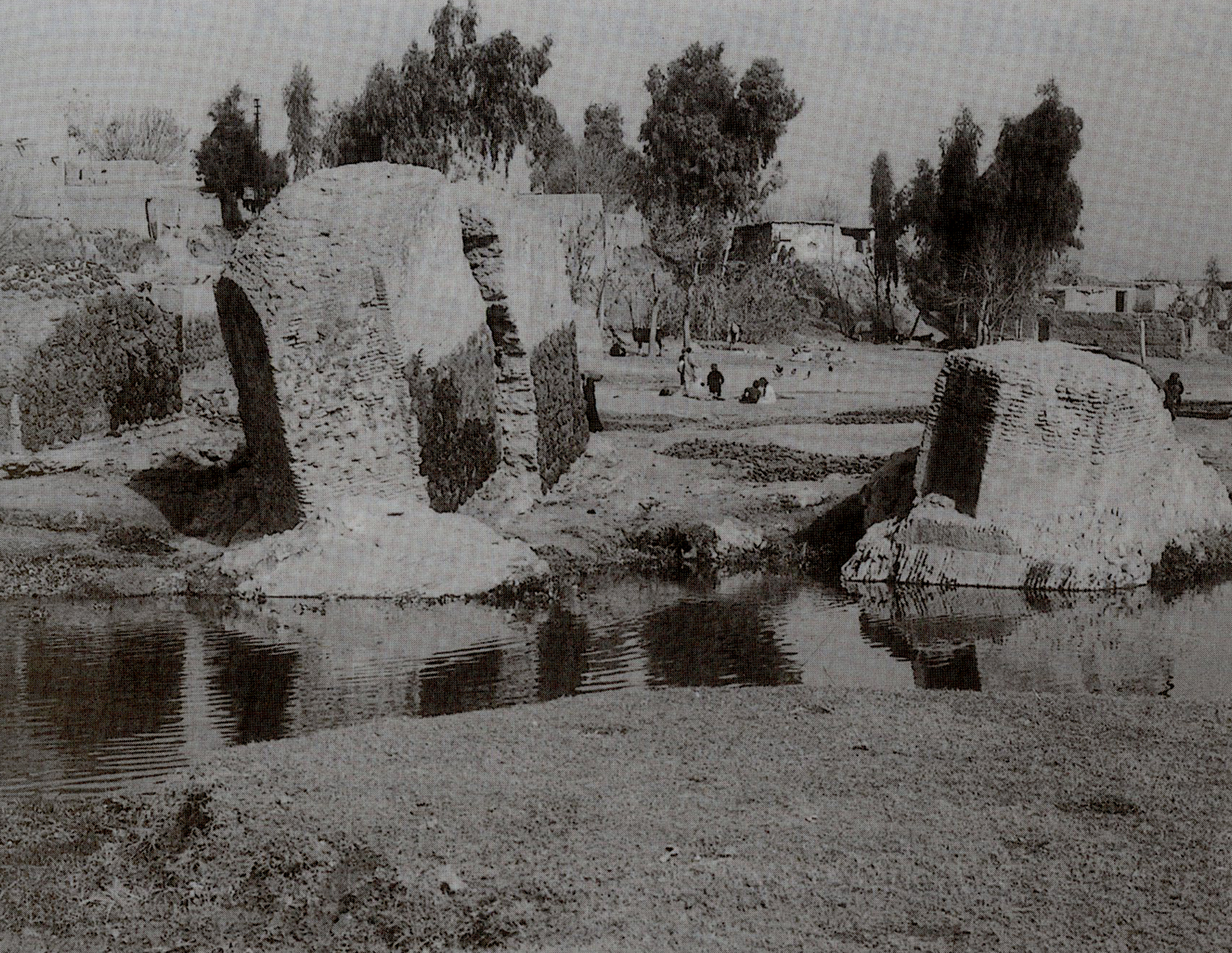
We sent messengers to check the place and take photographs. There is a defaced inscription on the existing bridge, and it is famous as the Sethi bridge on the Zindai stream, on the discarded flow of river Bara. Although broken at places, it is still intact, and perhaps restored at some period of time. Large trees accompany the bridge and there are hermits involved in living there. The fallen bridge is now a washing place for dhobis of the area. A regular working area, with cow dung  (gobar) plastered on the broken parts which are normally used for cooking in the rural areas. A village using the broken parts for average use. Which is which?

We will try to do more research eventually. A detailed photograph of the inscription on the existing bridge could point out things.But it is the architectural reconstruction at least in drafting which can point out the period of Mughal construction. There are real differences in the Akbari construction and Shahjahani models. Even bricks are different. The existing bridge is petite in its own way, with a singular design element, not elsewhere. The fallen bridge is massive in its construction and to me speak of the might of Emperor Akbar himself. Ustad Ahmad Mimar Lahori is reputed to be crossing the river on Attock on regular basis, as there is a rawadari mention in Insha Harkiran of the same. It may be possible that the fallen bridge was constructed by Ustad Ahmad Lahori, and when river changed its course, it fell down. And here was a need for a new bridge, and Mulla Abdul Latif invited the son of Ustad Ahmad Mimar to construct a new bridge on the same river. Otherwise there seems to be no need for a new bridge when one was already existing there. When the older bridge fell, a new one was constructed. An additional point is that in 1039 AH, Lutufullah was a very young man, and a call to him to go to Bara for the construction, was way out in perspective. Unless there was a link to the older bridge of this young engineer. Extensive research can or may throw a light. But would anyone bother? It is indeed a difficult place to access easily.  And till then the options are open to the reality of same.
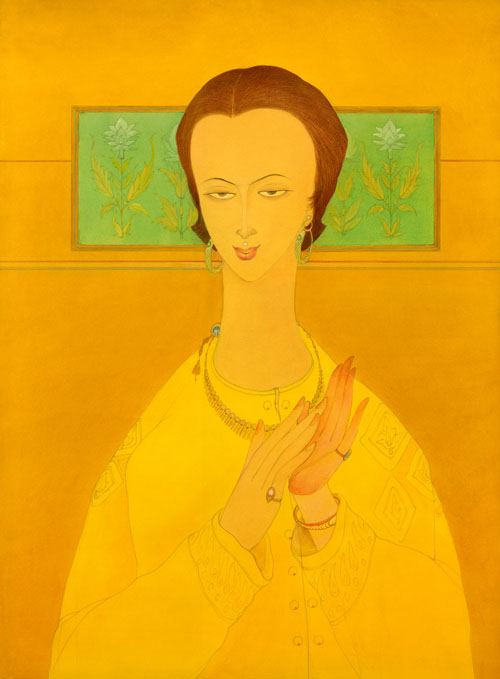
THE ENIGMA OF THE ATTOCK MAQBARA IN ATTOCK KHURD – IS IT MAUSOLEUM OF FAVOURITE CONCUBINE BIBI MARIAM, WIFE OF EMPEROR AKBAR AND MOTHER OF PRINCE DANIYAL.

THE ENIGMA OF THE ATTOCK MAQBARA IN ATTOCK KHURD – IS IT MAUSOLEUM OF FAVOURITE CONCUBINE BIBI MARIAM, WIFE OF EMPEROR AKBAR AND MOTHER OF PRINCE DANIYAL.

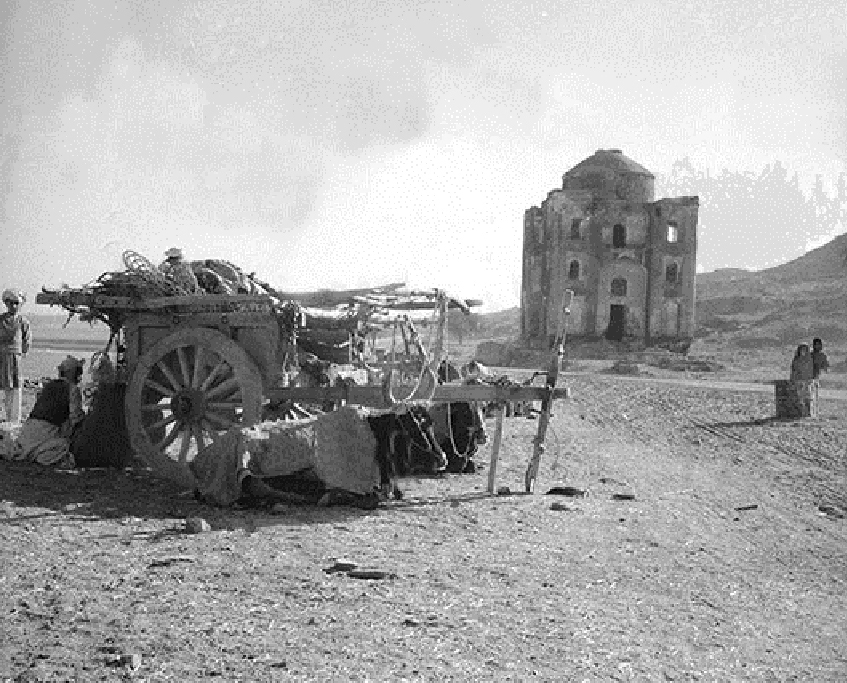
Attock maqbara 1940

In the autobiography of Emperor Jahangeer, the Emperor writes:After this he had a son by Beeby Mereiom who was placed under the care of Rajah Baharmul.”  That is Shahzada Danial! The Prince died around the age of thirty only, because of his over indulgence in alcohol. His mother Bibi Mariam died in 1596. Shireen Moosvi thinks of the royal concubine as Daulat Shad. Both were royal concubines. But Bibi Mariam was related to the wife of Raja Baharmul, and the reason Daniyal was given into her care.

There are a number of ways in which we can study it:

Architectural analysis: The area has been touched by many civilizations. But prominent amongst the same are the Mughals, and in that respect Emperor Akbar, who built the Attock Fort in 1593. Bibi Mariam died in 1596. The timing matches our analysis.

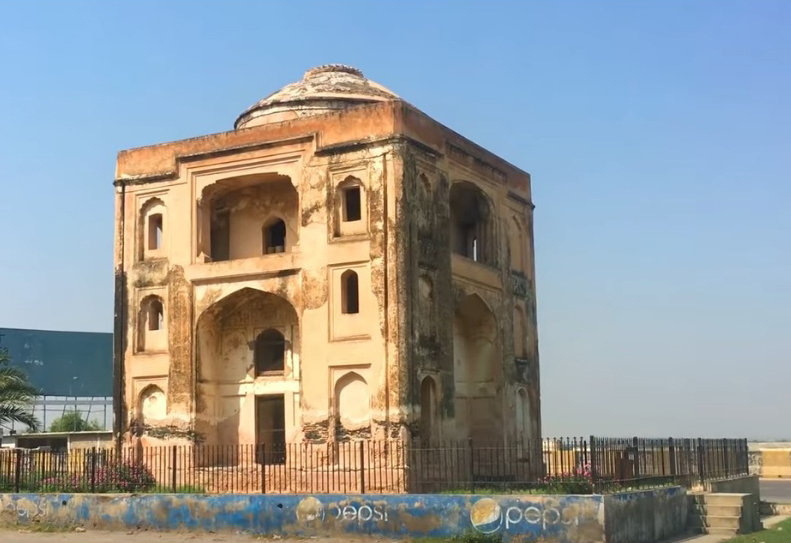
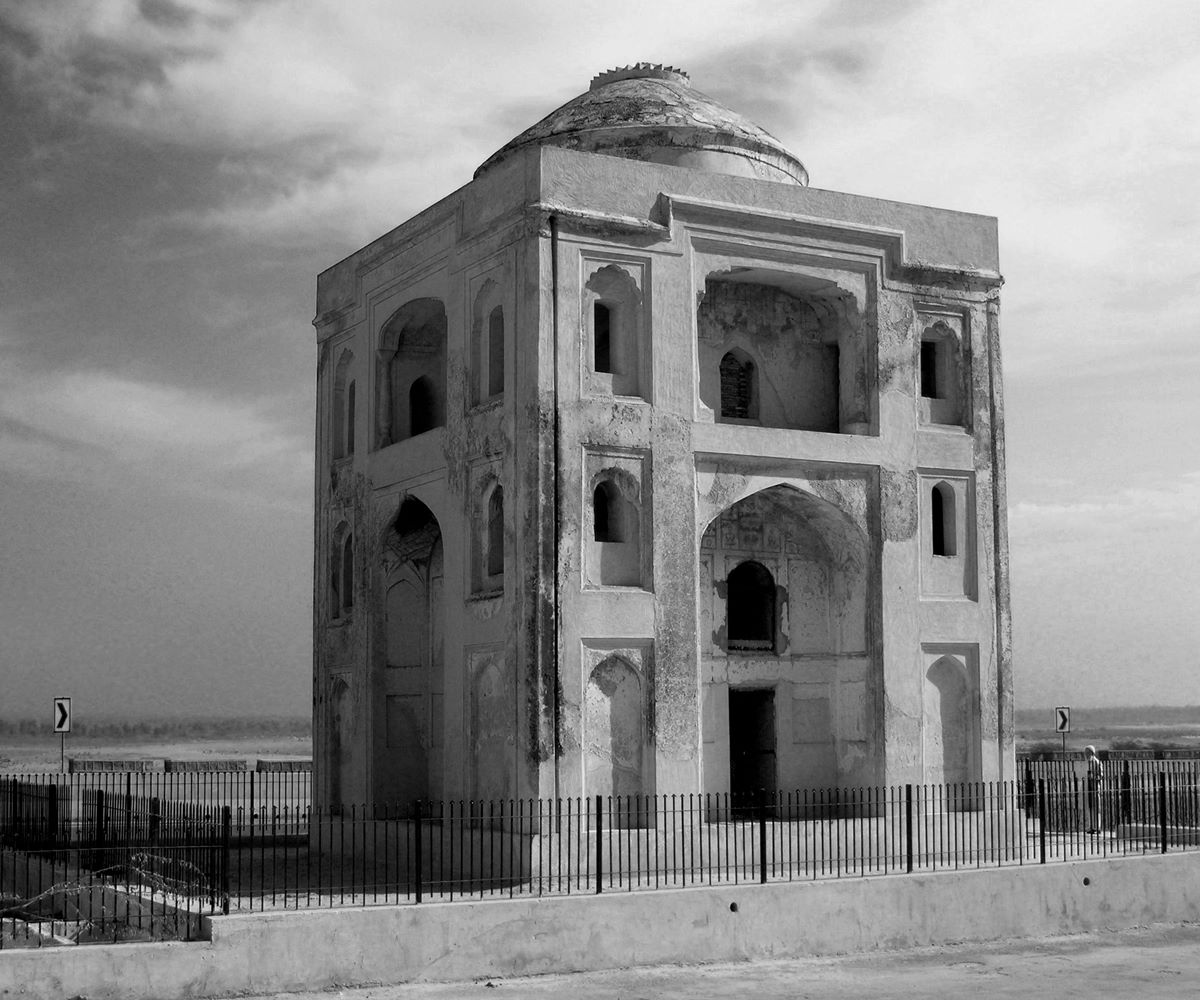
Historical analysis: The architecture of this strange out of the way monument is unique in many ways. It is based on a square plinth, compared to octagonal base on most Mughal monuments. It has concept of some storeys in its construction, and there is a balcony at the top. Why? Obviously that the monument was under caretakers (the many graves around the monument prove same) and this place was open to Afghan aggression. So, the Mughals had to keep the construction of same like a check post or small fort able to defend itself. It was probably made in a hurry, for possibly in a visit by Emperor Akbar, the concubine died a natural death. And no chance of transporting her body back to her usual domain. The dome is totally different from the usual domes. It is a double dome but the upper part is not like a dome. The reason was timing, available expertise, and the lack of top-of-the-line architects, like Qasim Khan.

Identity analysis: It is famous as Maqbara Kanjri, or monument of the prostitute. In no way a prostitute could make Akbar have this built for her. And not all concubines. Only a Royal concubine is possible. And who befits most, but the mother of Prince Daniyal. The interesting part is that this is the same concubine, which bastard William Finch, narrates as the beloved of Akbar’s son Jahangeer, or in other words Anarkalli. That Anarkalli, Akbar’s reputed to have buried alive, and the actual Anarkalli  (according to Finch), Akbar had a Mughal monument built on her remains. What hypocrisy of the bigoted Britishers here? Turning street gossip into historical narrations. It is worth remembering to take western assertions with a pinch of salt.

Mirza Daniyal son of Akbar

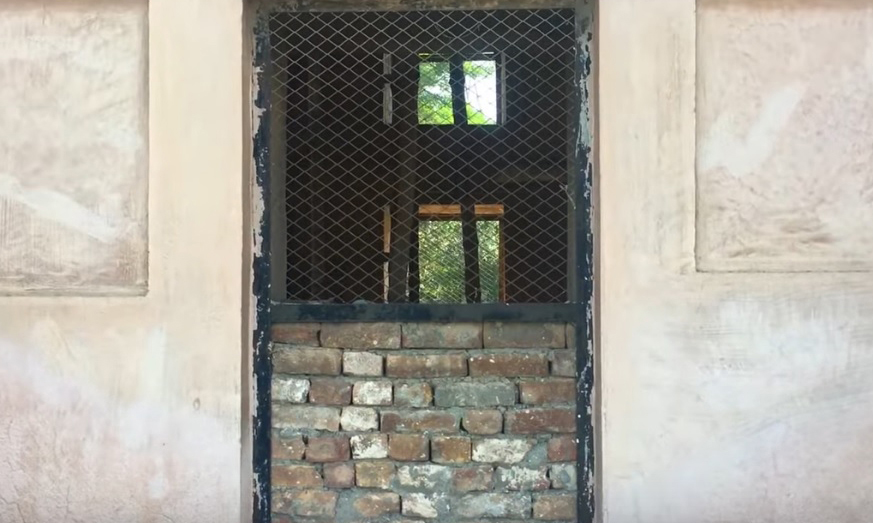
Can there be any conclusions? To such narrations, one can never come to fool proof endings. Match empty speculations with logic is the only way. The end nobody knows. Pages of history always hide things in time. This we can understand the place was fortified with time as suggested by closed vents to the mausoleum. And the work of archaeological department to hide their dirt under wall of bricks.

THE ENIGMA OF THE GRAVE OF USTAD KAMALUDDIN BEHZAD – TABRIZ OR HERAT:- DEFINITE PROOFS OF RESEARCH IN HERAT.

THE ENIGMA OF THE GRAVE OF USTAD KAMALUDDIN BEHZAD

TABRIZ OR HERAT:- DEFINITE PROOFS OF RESEARCH IN HERAT.

Ustad Kamaluddin Behzad

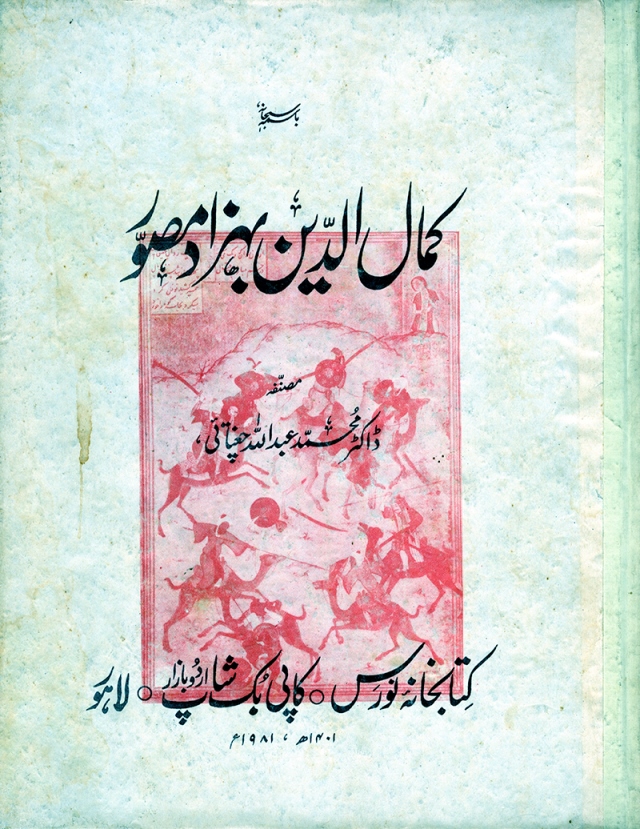
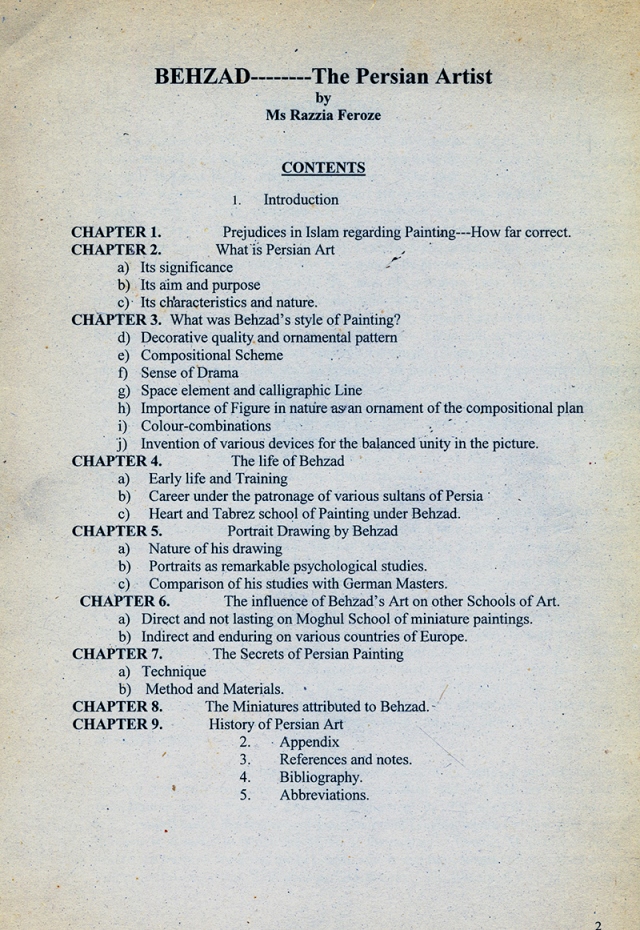
There is no doubt that Kamaluddin Behzad remains the iconic greatest Master of Islamic painting. Not many but still a number of books have been written on him. But one cannot say that the ultimate book is there. Locally scholars like Dr Abdullah Chaghatai, Abdur Rahman Chughtai and Razia Feroze have written on him with acute analysis on their part, for both were artists. The only published book is by Dr Abdullah Chaghatai. Chughtais’ book is there in manuscript form, in unedited form. Razia Feroze’s thesis is there, ready for print, but never printed because of her death. Western and Iranian scholars have done their debts in research.

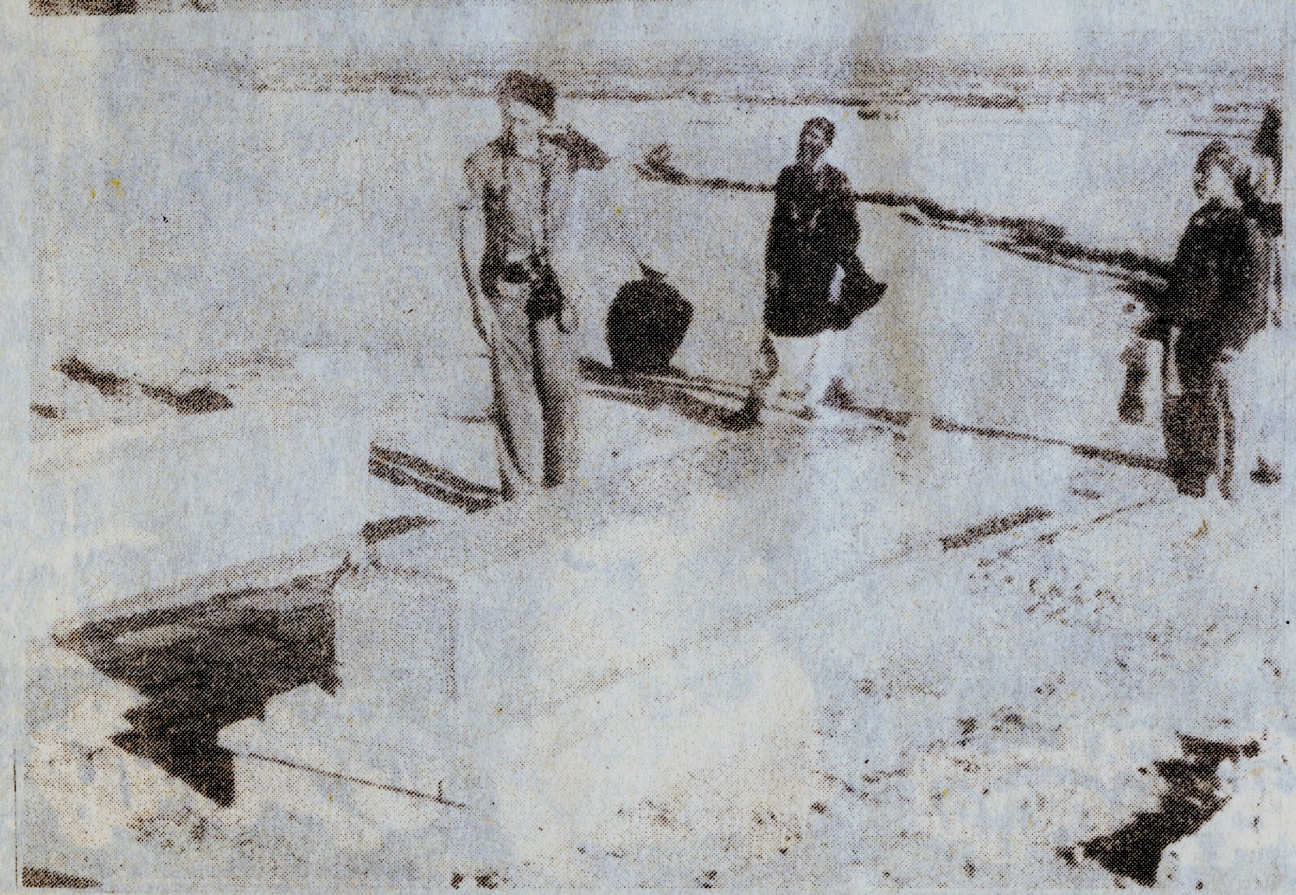
Certain aspects are still open. For instance, we are told that Behzad died in Tabriz, and was buried there. Others have written that he died in Herat and was buried there. Usually, it is agreed that he died in 942 A H (1535 AD). Even in old writings this conflict is there. Then in the magazine “Kabul” Sardar Goya Ittemadi talked about his burial in Herat. Then Munshi Qazi Ahmad uddin Munir asserted same in his book. A photograph of the grave was published in Afghan journals. In 1976 Dr James Dickie (Dr Yaqub Zaki) visited Herat in search for the grave and found it on his own. But others seem to have evaded this rediscovery for reasons unknown. Dr Abdullah Chaghatai was given this information and photographs but did not use it fully for reasons of his own. It is our pleasure to give the published pictures of the grave. Behzad’s soul can rest in peace now!

THE LAHORE FORT BEFORE THE FORT BUILT BY EMPEROR AKBAR – SOME RANDOM DESCRIPTIONS, BUT WITH HARDLY ANY IMAGES

THE LAHORE FORT BEFORE THE FORT BUILT BY EMPEROR AKBAR – SOME RANDOM DESCRIPTIONS, BUT WITH HARDLY ANY IMAGES

Humayoun in Lahore 1555

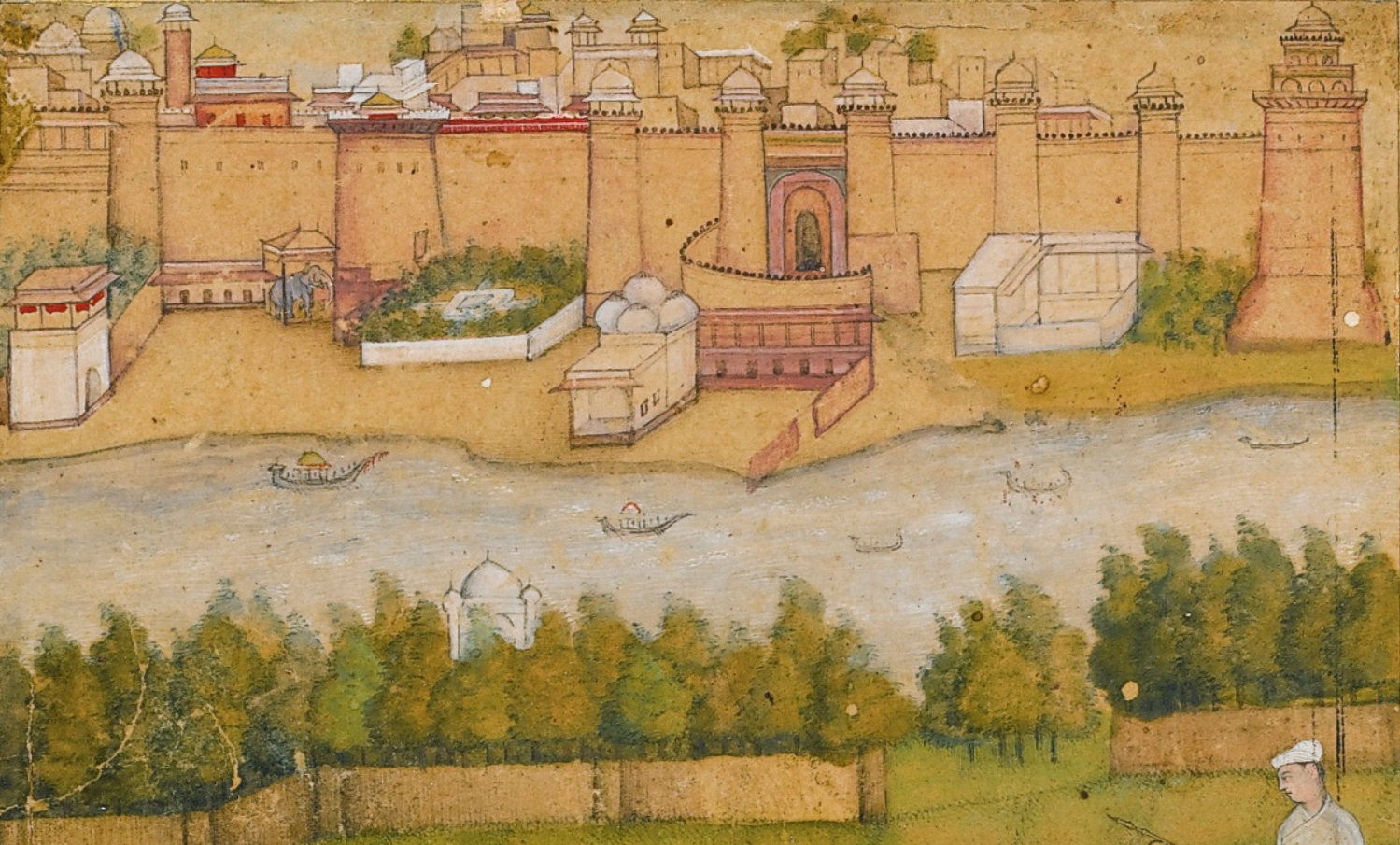
A city as important as Lahore, needed for its defense a solid fort. We hear of an inner fort, probably a mud fort, in and around Chuna Mandi. The present gates belong to the Mughal period and later, so that they cannot define Lahore well. Certainly, it was a walled city, and with its surroundings, we can only imagine today. We do hear of a fort in the Sultanate period, and if we imagine the Mazar of Qutb uddin Aibak on one hand, and the area of Chah Miran (Miran de khoi) on the other. Obviously, the Old River Ravi (Buddah Darya) is another clue to the outskirts of Lahore. Kashmeeri Bazaar is another clue, with the Mazar of the warrior saint still there. He was the one who was killed in battle with the Mongols. Then there is the Mazar Shaheedan of the Ghaznavi period, near Mohalla Chabuk Sawaran. And then we know that Masjid Wazeer Khan was built on the site of an ancient mazar (still there underground). The grave of the Nau-guzza in Lahore is another clue. And then there is the area Mahmood Booti which is taken as a dam built on the river by Mahmood Ghaznavi. The ancient Miani qabarastan is another clue to same. The Sultanate mosque in the Serai of Jahangeer’s mausoleum points to ancient times. Diggings in Lahore do confirm existence of ancient mud walls, as well as ancient tunnels and structures.

View of city 1605

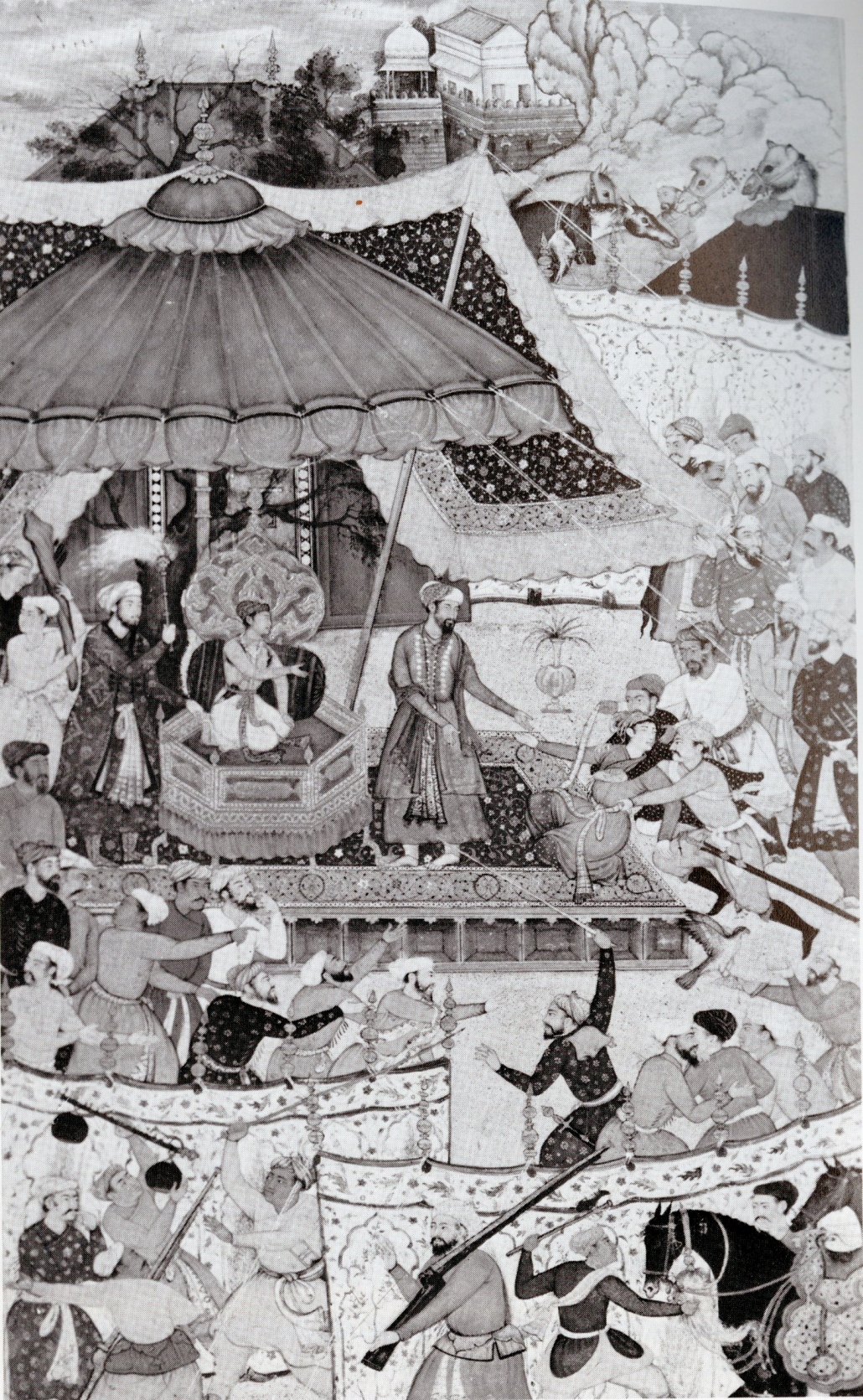
The most ancient Mughal structure in Lahore, still existing, is considered the Baradari of Prince Kamran Mirza, who also occupied Lahore, and even took out a coin in his name as the Emperor of Hindustan. In the same river Ravi are seen at times ancient Mughal structures fallen into the river in oblivion. A basic design principle can be seen. Emperor Babur had burnt the main shopping center in Lahore twice. No mention of any Fort. The miniatures done during the tenure of Akbar, shows him sitting in a tent or under an awning. No pictures of the mud fort are available. This is fort with central point of Chuna Mandi in Lahore. But coins of Ghaznavid period were found in Lahore Fort, including a very famous gold one. But then who knows what the structure was then?

Tent and Awning 1590

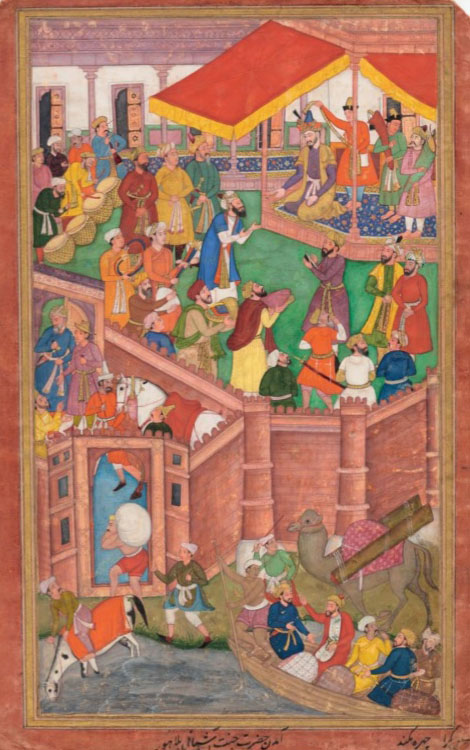
Some of the images we were able to locate show the Fort in different light. Got instance the visit on 24th February 1555 of Humayun to Lahore, shows a very different Fort, with unclear entrance gate. The drowning of riders, when Akbar got through shows somewhat the same scene. We do know that Lahore was a ghost town without any inhabitants in 1420-21 AD, and the Sayyid brothers gave the go ahead to repopulate Lahore. We hear before that Sarang Khan defeated Sheikha Khokhar, around 1394 AD, and the next day conquered the Fortress of Lahore, and put his brother Kandhu, with the title of Adil Khan, as the Chief of Lahore. In 1420-21 Royal attention was paid to the deserted city of Lahore, and the restoration of the city was undertaken. Engaged in repairing the Fort and other buildings. Malik Hassan was put in charge of Lahore, and fought against Jasarath Sheikha and the fight is referred to be in the Lahore Mud Fort. So only a Mud Fort existed in Lahore at that time. Boundaries unknown but must be outside the flow of the river Ravi. The Mahmood Booti bund is one line, the Aurangzebi bund is another. In any case more and more will be discovered with time. Our view will go on enlarging with time.

Lahore Fort Akbar crossing Ravi

THE FUTURE OF CHUGHTAI MUSEUM IN ABLE HANDS – FOUR CUSTODIANS PAR EXCELLENCE TRAINED IN FULL

THE FUTURE OF CHUGHTAI MUSEUM IN ABLE HANDS
FOUR CUSTODIANS PAR EXCELLENCE TRAINED IN FULL

Many people ask me about the future of Chughtai Museum. On 17th January, 1975, the Chughtai Museum project was in doldrums. Nothing was certain as to what will happen then. Forty-six years later it is much more than it was in 1975. These four girls have seen the mess we are put in by lobbies allergic to us. Why allergic to us? For we are not obsessed with nincompoop Mullahs nor are we impressed with phoney Seculars. Both two sides of the same coin hating progress of the Islamic humane spirit. We are all in the Iqballian Spirit, and our heroes start with our beloved Quaid e Azam. And the splendid leadership that followed him. Today we see lack of leadership from above. The whole world is in a mess with third class leadership, and the countries we eulogized as ideals are no more that. After Pakistan we see emergence of Turkey and Malaysia on the same lines. The first steps towards an Islamic civilization.

For an Islamic civilization we needed a geographical location and our Quaid e Azam gave it to us. Similarly, for development of our national aesthetics we needed a place to work on same. And the idea of Chughtai Museum was formed by Abdur Rahman Chughtai. An artist who gave us designs and insignias in that light, to centers like Alhamra Lahore as well as the various Arts Councils of Pakistan; the Art departments like the University of the Punjab, and the vision generated by works presented to foreign Heads of State, visiting Pakistan, or by Pakistani Heads visiting outside world. But this kind of information is abundant on our blog and can be seen and read all the time.
These four girls are determined by birth and by upbringing, about the importance of the LEGACY OF CHUGHTAI ART, and will do whatever in their capacity to keep the flag of aesthetics flying over Pakistan. The four girls are the Custodians of Chughtai Museum:

  1. Mah Afroze Chughtai. Doing her PHD from Virginia, USA. 
  2. Jahan Ara Chughtai. Doing her MSc in Psychology from New York, USA.
  3. Zebun nisa Chughtai. Doing her Degree in Conservation from Europe.
  4. Arjumand Bano Chughtai. Mastering the Art of the language and the Internet.

And special thanks to Aliya Zia Chughtai, for rearing up the four girls in the Pakistani spirit, despite all the difficulties involved in the process. Sooner or later, it is realized that all the talk of modernism in the world is just talk and nothing else. That Right and Wrong springs from the Dictates of Allah as presented in the Quran, and through the process of Ijtihad, everything can be updated according to the requirements of the time. Our inspirations of the Quran come from elucidations of Sir Syed Ahmad Khan, Dr Allama Iqbal, Ghulam Ahmed Parvez, Muhammed Asad, Dr Syed Abdul Wadud, and others in the same spirit. Pakistani Spirit will last, yes Pakistan Forever!

DOOMSDAY SCENARIOS, MORBID OBSESSION WITH PHONES, INTERNET – YES, SUBLIMINAL CUTS, BRAIN MANIPULATIONS, UNDERMINING ALL LIFE: HAPPY NEW YEAR!

DOOMSDAY SCENARIOS, MORBID OBSESSION WITH PHONES, INTERNET; YES, SUBLIMINAL CUTS, BRAIN MANIPULATIONS, UNDERMINING ALL LIFE: HAPPY NEW YEAR!

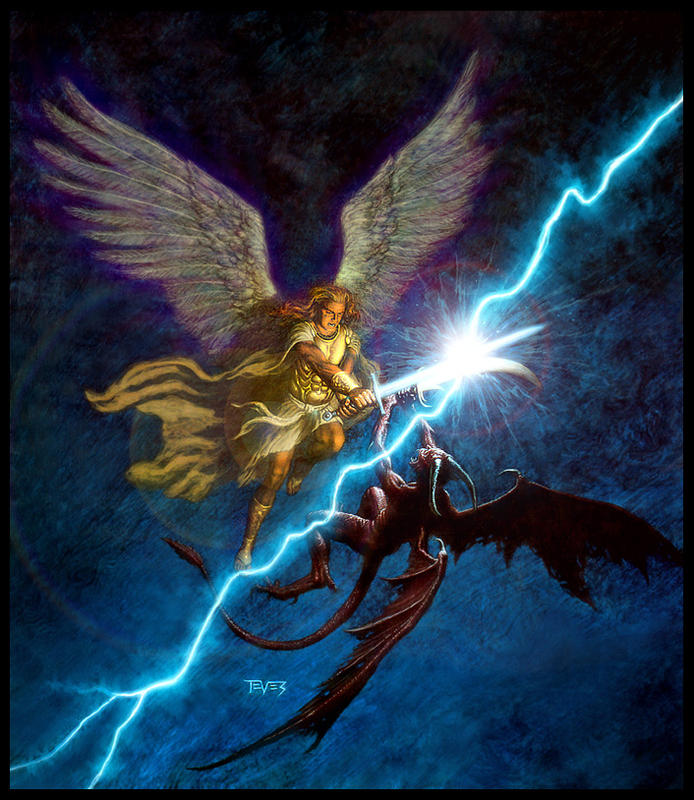
Angel fight with Devil

We hear that these are the time of hybrid wars. Okay, understood! But what agenda these hybrid wars are on?  Territorial invasions. Ideological bashings. You name it, it must be there. But the actuality of hybrid war is climactic fight of Truth versus Falsehood, or simply engendering Satanic rule over not only Planet Earth, but the cosmos itself. Can there be a concept of Evil Genius? Does intellectualism obliterate sense of right and wrong. Allah tells us to think and ponder but also tells us the code of values deciding right and wrong. Animal kingdom has this concept built in them; human beings have this charter outside in form of the message of the Quran itself. The key to life is COMPASSION. The final revelation! Who will win?

Clap the new year

Hundred percent Truth will prevail and will set us free. So, worry not. Indeed, think of it as another year, and indeed a Happy year. If it is not a happy year, through endeavour itself, we will make it a happy year. Happy New Year to all!

ON RAVI ROAD A CREMATION PLACE IN LAHORE FOR HINDU LADIES – WAS MS AMRITA SHER GIL CREMATED HERE? RESEARCH REQUIRED!

ON RAVI ROAD A CREMATION PLACE IN LAHORE FOR HINDU LADIES – WAS MS AMRITA SHER GIL CREMATED HERE? RESEARCH REQUIRED!

Show of Amrita Sher Gil

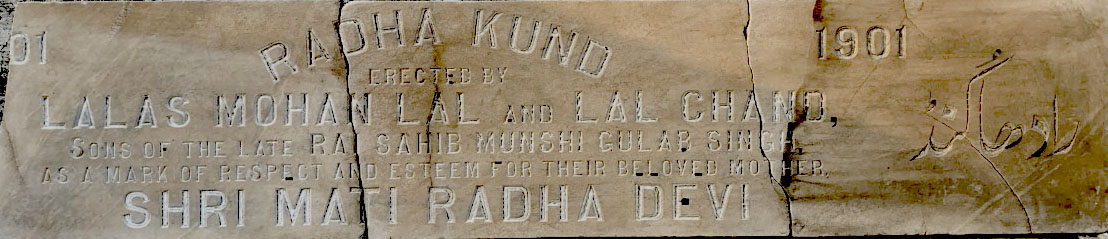
The ladies of the area recall the acute burning smell of human flesh in the area. It was a place made in 1901, for the cremation of Hindu ladies of Lahore. Opposite is the European Cemetery of Lahore, made after 1849, and having graves even today dating to 1852. On the other side in Minto Park, was the Towers of Silence of the Parsees in Lahore. The Zoroastrians graveyard. Then it was shifted to Gulberg, Lahore. Once upon a time the river Ravi ran right there and then it became stagnant, and was named as Buddha Darya. In the vicinity many years back a boat was discovered. On this bank was the area (takia) of the Patrangahs the dyers of clothes in Lahore. This was their work place on the banks of river Ravi. Their Mohalla was inside Bhatti Gate, Lahore. Once upon a time Emperor Akbar’s ships traversed the river Ravi. It was intact some years back, although inhabited by immigrants from India. A chabara of red stone in the front. There was an inscription on the main gateway. It specified its history as Radha Kund. The inscription is interesting reading.

Radha Kund

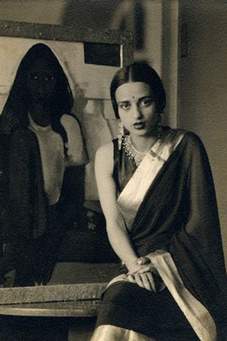
It says that this cremation site was erected by Mohan Lal and Lal Chand, sons of late Rai Munshi Gulab Singh, in memory of their beloved mother Shri Mati Radha Devi, in the year 1901.  Rai Munshi Gulab Singh was a famous publisher of Lahore, who published many books in different languages. In fact, there is even a medal named after him in the University of the Punjab, given even today. In a city with a recorded history of more than 1000 years, this is plainly a modern era. But can one imagine the thousands of Hindu ladies who were cremated here. For us there is a clear possibility that Amrita Sher Gil was also cremated here. After all this is Ravi road, and these are the banks of old river Ravi, and it was the main cremation place of Hindu ladies of Lahore. In fact, outside the city walls, one still comes across pots, filed with the ashes of the Hindus of Lahore. Amrita died on Saturday, 6th December, 1941, at 1.30 am. That means 12 pm had passed, and the new day had begun.

Amrita Sher Gil

That very day there was an appointment Amrita had made with M.A. Rahman Chughtai, to see him in his studios. Chughtai Sahib waiting for her to appear, heard the news of her death. His condolences were published many places, basically in short it was:

         “I did not believe that she had died. And I still do not believe it. She is living and will ever live.”

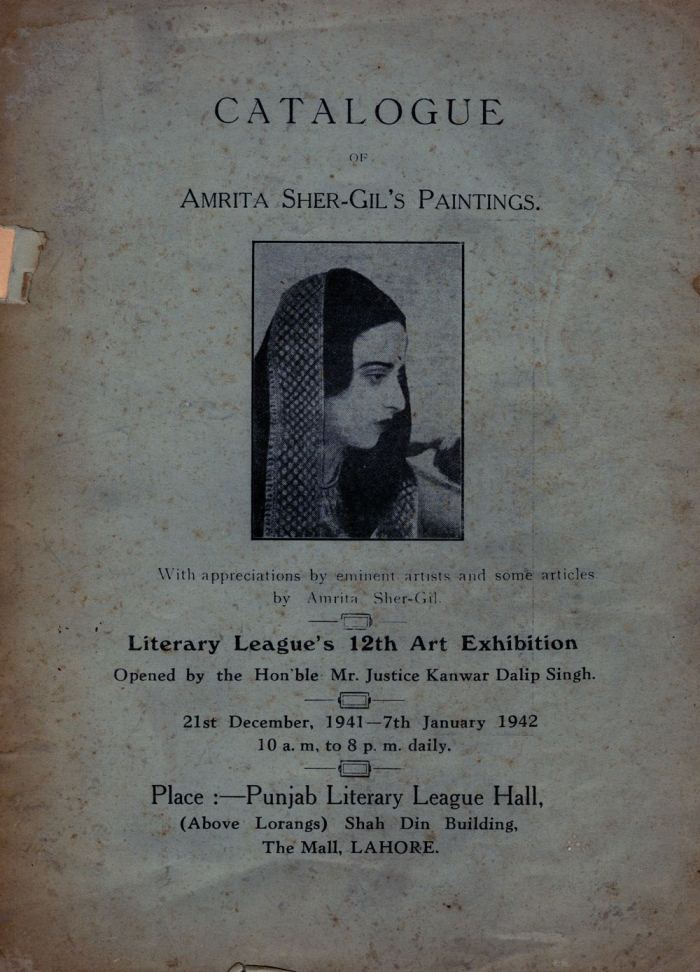
M.A. Rahman Chughtai was introduced to Amrita by her father Umrao Singh Sher-Gil. Umrao Singh was a valued and respected friend of the artist. In the meeting Dr Allama Iqbal was also there and he too, was introduced to Amrita. The father, Umrao Singh expressed high hopes for her. The father was a specialist on Omar Khayyam as well as on Sufi poetry and Chughtai had many discussions with him. When Amrita Sher-Gil came to settle in Lahore, and wanted to hold an exhibition here, people co-operated with her. And the show was held after her death. The death was on 6th December, the exhibition was held on 21st December, 1941. A rare exhibition show in Lahore. It is a strange anomaly that her dead body must have passed right in front of the house of the artist. In fact, a journey she could not make while alive, but her dead body traversed the same route. Indeed, a spiritual journey.

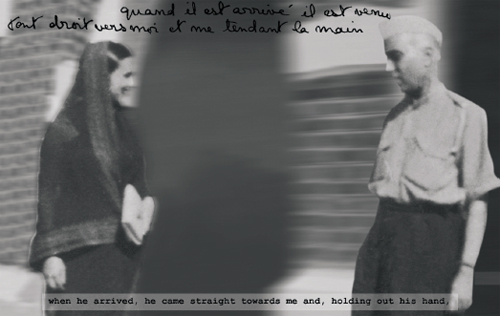
Amrita and Nehru