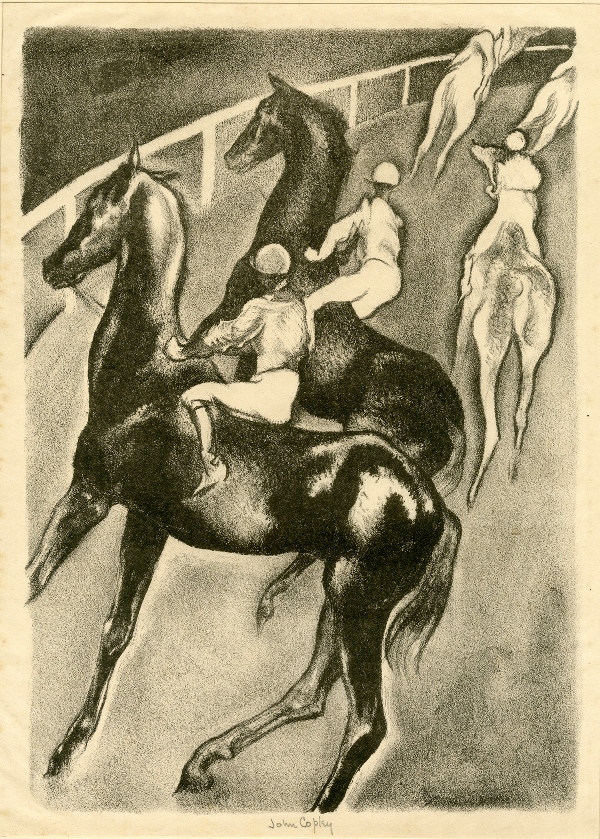
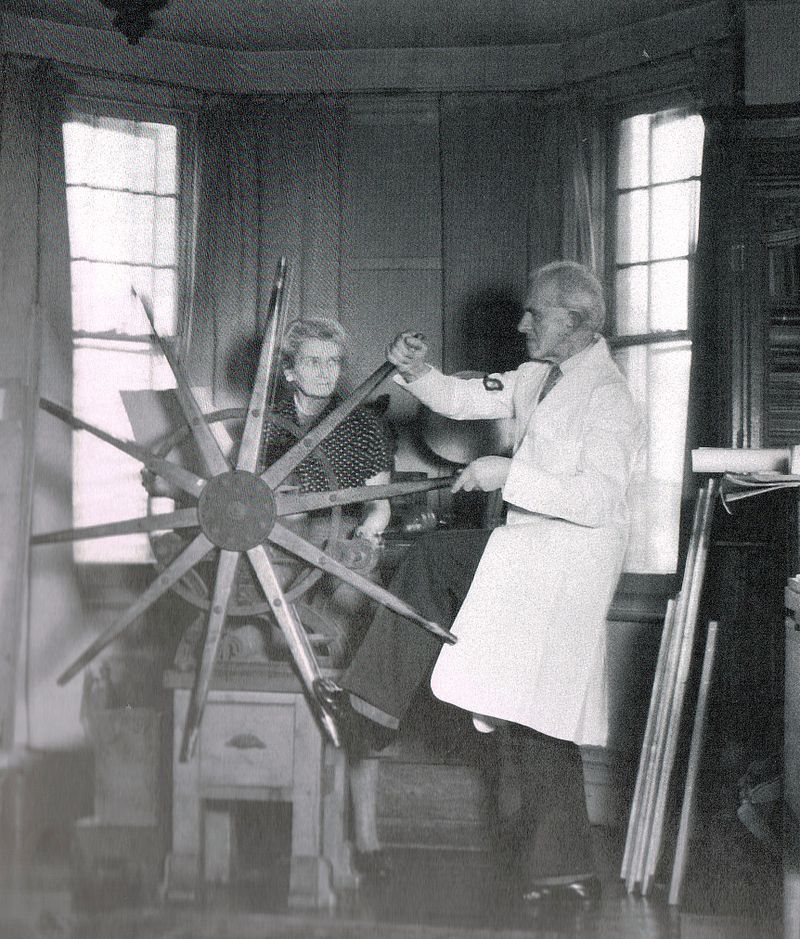
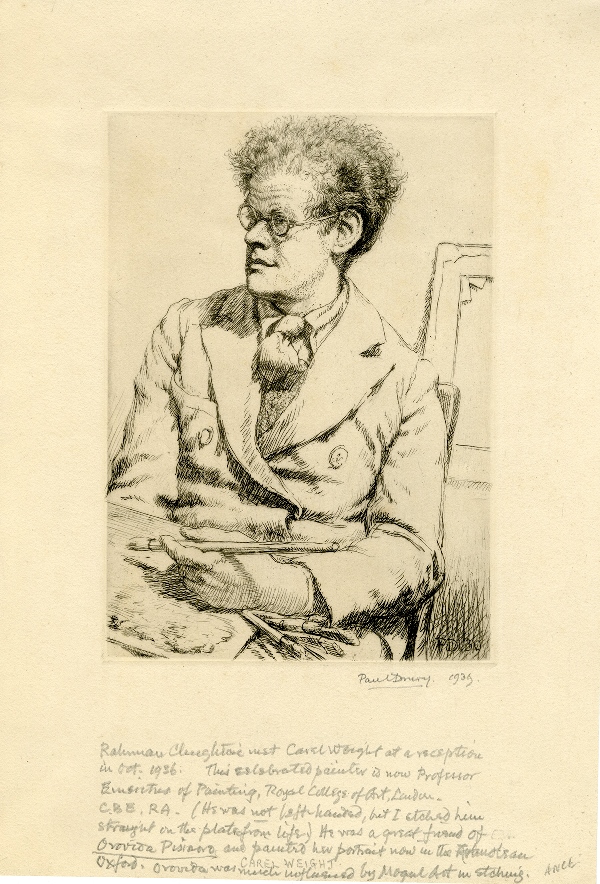
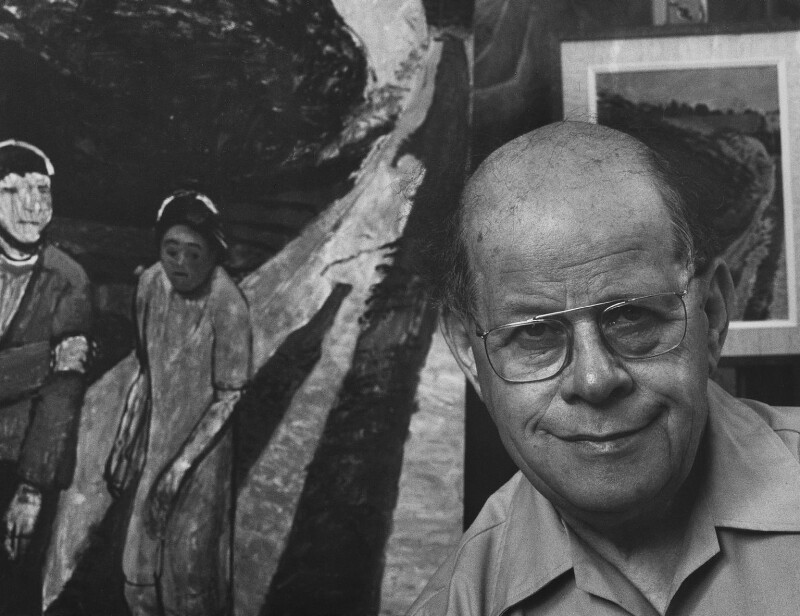
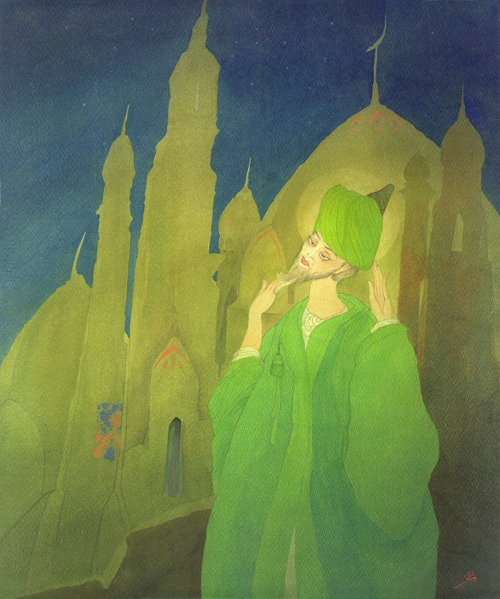
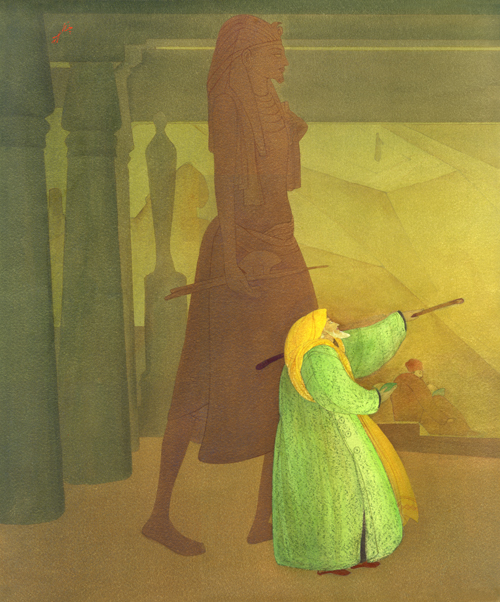
There are a number of art works of English artists and etchers of 1930s who were companions of Chughtai Sahib in the class of Sir Frank Short in London, and presented their own works to him. Preserved by us as part of his museum in the future. Obviously further research as well as cataloguing is required for the purpose but we do try our best. These are the artists who saw Chughtai work in London and eulogized his works by offering their own works to him. We pay homage to them in this small way.
Race track lithograph by John CopleyThe picnic etching by Martin HardieJohn Copley with wife Eithel
Famous artists like Graham Sutherland and Carol Weight were also introduced to M.A. Rahman Chughtai and we have written a lot about them in our book “East met West”. We will add more in the future. Our local morons forget that M.A. Rahman Chughtai made his name in the Arts in Western circles and he had proved his mettle to the best at that time. We will add Roger Fry and Eric Gill to the list too.
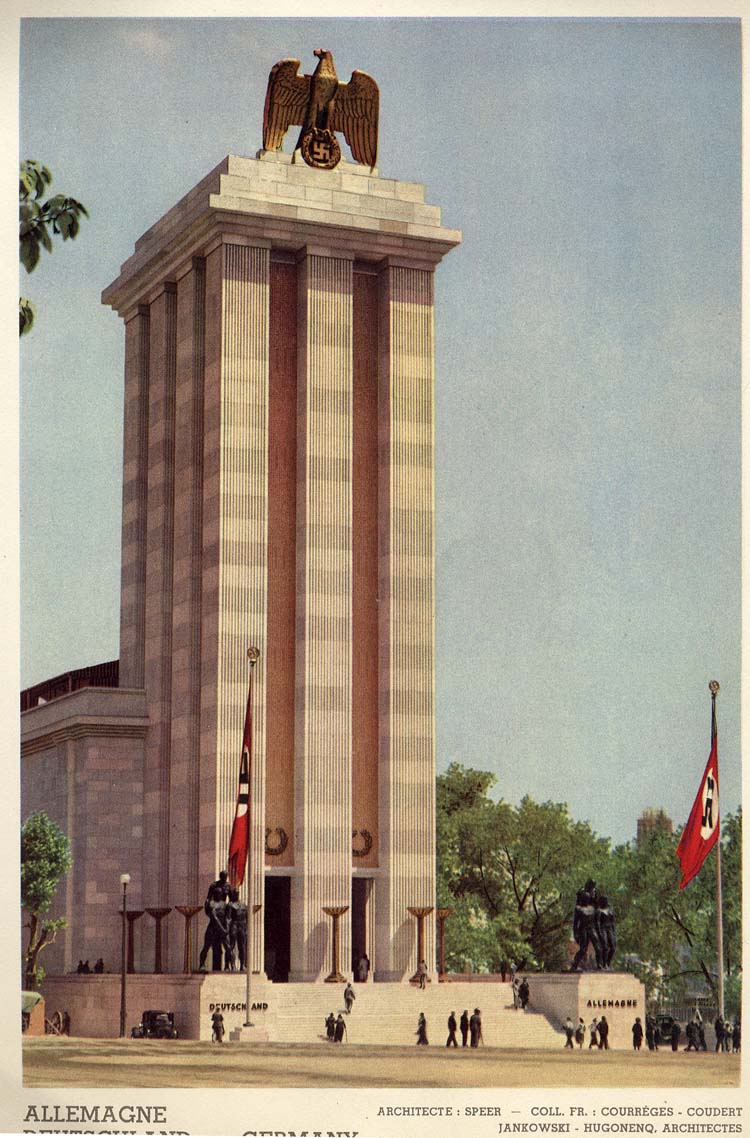
A GERMAN ARTIST LADY AT THE GERMAN PAVILION IN PARIS IN 1937
FEW DAYS WITH ART GROUP IN BERLIN LED BY MANUELLA HARTUNG
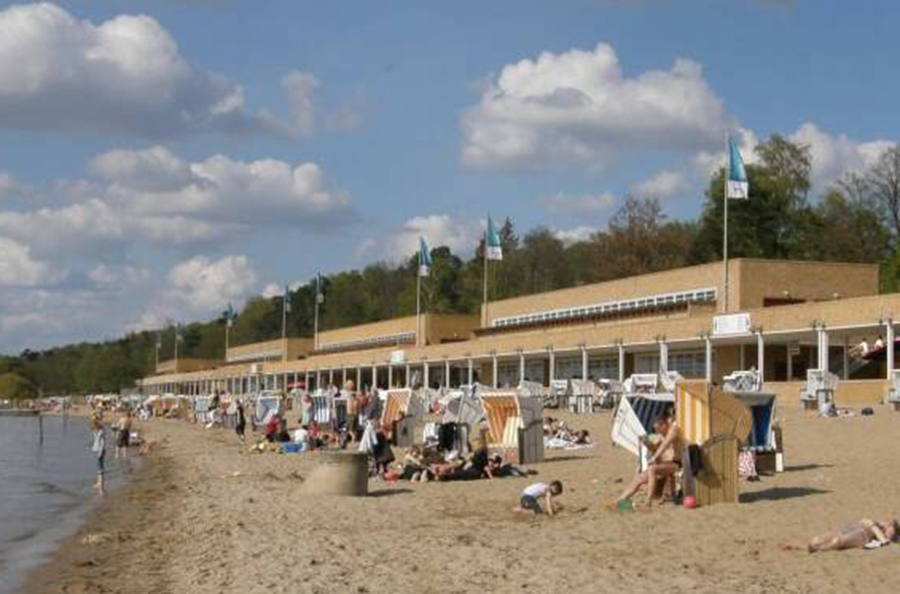
Strandbad Wannsee Beach Berlin 1907
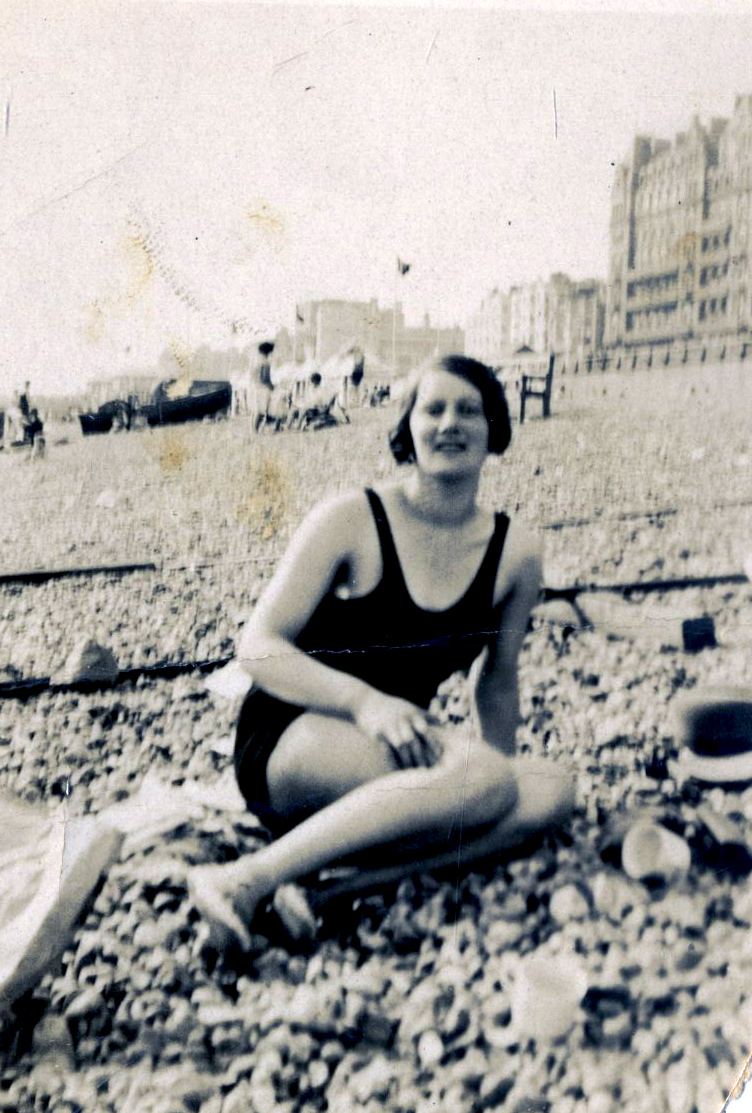
Berlin is far away from the sea, but the Germans made up this loss by making artificial beaches in the city. Perhaps the oldest one is the Strandbad-Wannsee beach in Berlin made in 1907. Some are very near the Berlin wall itself. We find a photograph of a German lady in one such beach, possibly this very one. The number of pebbles declare the beach to be artificial and man made for particular requirements. The lady on the beach is unknown but could very well be Ms Manuela C Didier Hartung, companion of M.A. Rahman Chughtai in Berlin on 27th June, 1937.
Possibly Ms Manuela Hartung Berlin
We know that Hartung is an important German name. We find the well known Fritz Hartung, the historian in that time period. Also we know of the famous artist Hans Hartung also in Berlin at that time. Manuela could be related to any of them or even more. But we hear of so many artists in Berlin at that period. Two sons of Paul Gaugain, Emil and Jean Gaugain were in the city as well as a Jewish artist who was scribbling political messages on panes of show cases during the night. One thing Chughtai does tells us is that a group of German artists, poets and intellectuals had assembled in Berlin to welcome him and some of them wrote poems on him (probably lost). June was also an important month for William Lyon Mackenzie, Prime Minster of Canada was also visiting at Adlon Hotel. The famous American journalist Ms Ruth Hamilton was also there with her own questions. Berlin was center of attraction for many. The passport of Chughtai tells us that he entered Germany on 24th June, 1937, a police report on 25th June, and it ends with 3rd July, 1937, when he exits Germany. The dates may be deceptive but the same are documented in the passport.
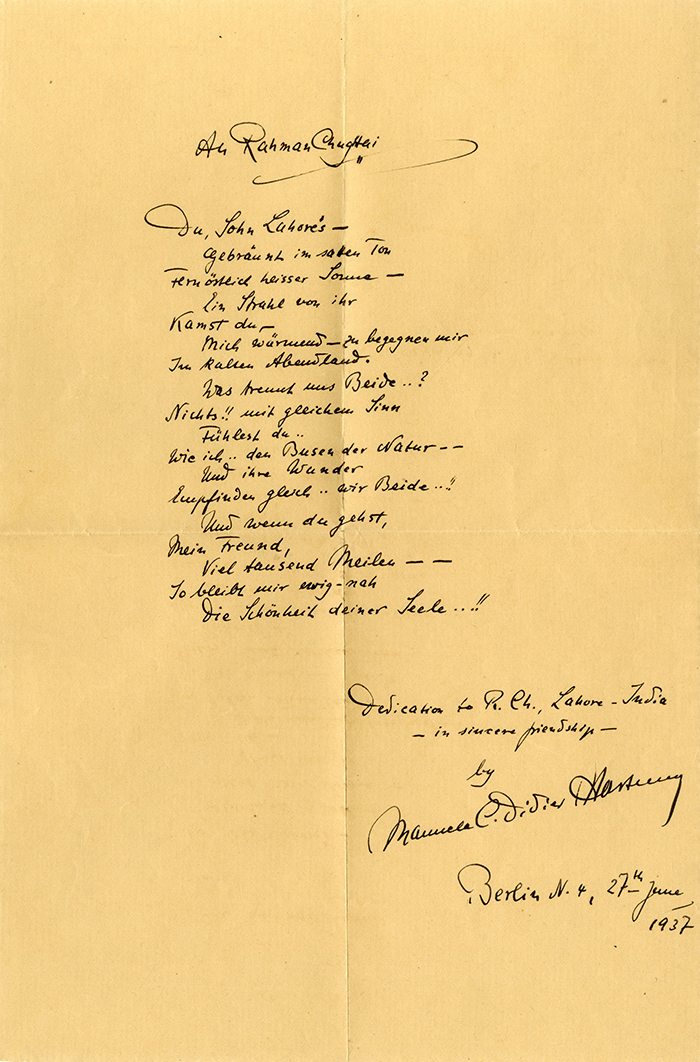
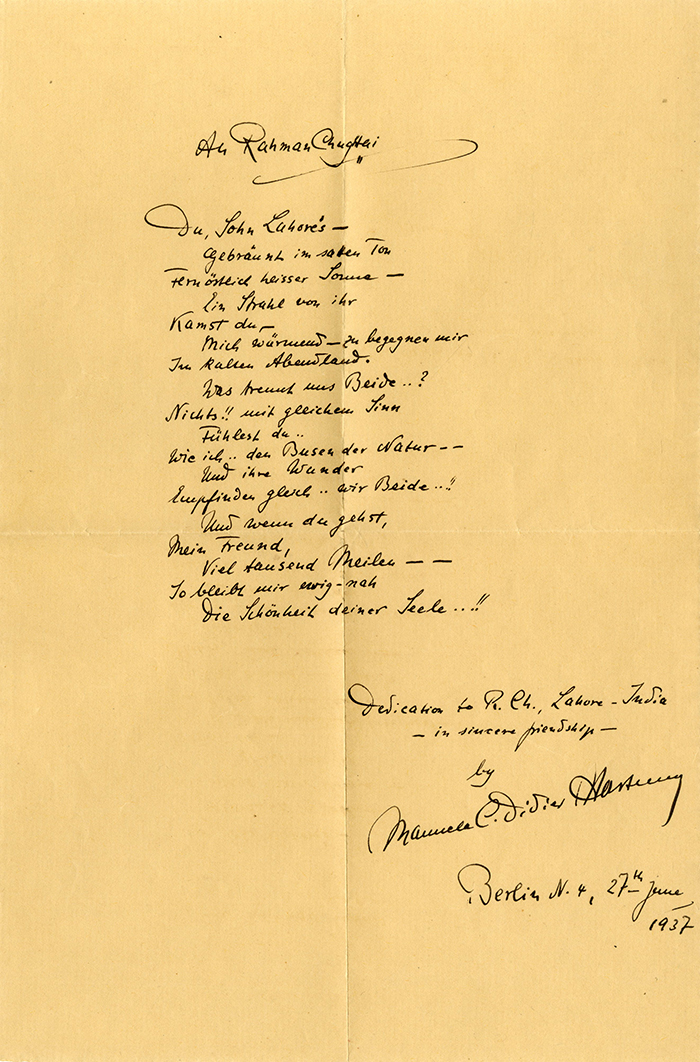
27th JUNE 1937 tribute to CHUGHTAI ARTIST in Berlin
We know of number of Germans befriending M.A. Rahman Chughtai. Foremost Elza Huiffner, Hannah Huiffner, Agnes Werner, but we have no first hand account of Manuela, for reasons unknown. The autobiography of Chughtai is full of many details, and there could be a reason for same. The name may be sensitive in nature to those times as Chughtai was a British subject. And by this time he was titled too with the title of Khan Bahadur. So there may be political reasons for same. Our job is to record history and we do it well.
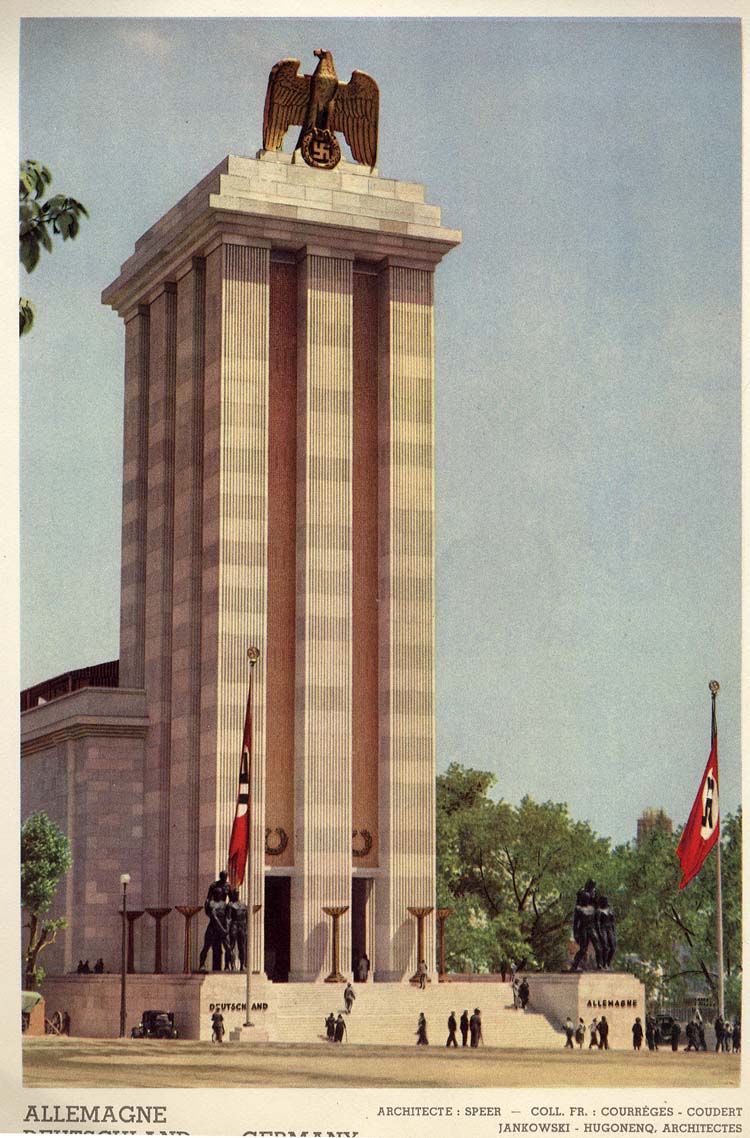
German Pavillion Paris show 1937
P.S.
With due thanks to Elizbeth Chughtai for this valuable translation:
An Rahman Chughtai
You son of Lahore
Tanned in saturated colour
With the far eastern sun –
With the beam of the sun
You came
Warming me – to meet me
In the cold occident.
What separates both of us…?
Nothing!! With the same thinking
You are feeling…
Like I do.., the bosom of nature—
And its wonders.
We feel the same… both of us…!
And when you leave,
My friend,
Many thousand miles—
Till eternity will stay with me
The beauty of your soul…!
Dedication to R. Ch. Lahore – India
– In sincere friendship –
by
Manuela C. Didier Hartung
Berlin N.4, 27. Juni 1937
N 4 is the Post Office address in Berlin and that Post Office is still there, and it started in those times.
SELF INDICTMENT HAS BECOME A HABIT OF CERTAIN KIND OF PAKISTANIS
DEMONIZING OURSELVES NEEDLESSLY AS PART OF MASSIVE PROPAGANDA
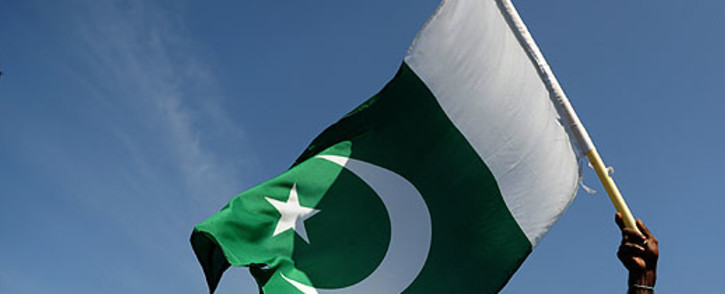
Pakistani flag
Follow the trail of many out spoken people in Pakistan, and it makes you wonder as to the reasons of indicting the nation on every issue. Well one may ask simple question: Which nation is perfect at the moment? There are slavish followers of demoralizing foreign lobbies. Has India progressed in any way with passing decades? Is the present people in power there have any minute sense of idealism. Western lobbies are going up the ladder or following barren to the ground. Zionist lobbies are talking of the return of epitome evil and erasing at least three fourth population of the world, to indulge in sin and riot. Do we not believe that the Judeo-Christian-Muslim moral values are essentially the same, and we can co-exist in peace? War mongering everywhere, when Islam even in its definition talks of PEACE. Know thyself is a Socratic ideal and surely we too believe in it. But what can habitual alcoholics tell us! Nothing. Disparaging all our efforts and not talking about the massive campaigns in last 72 years to undo us. And the strength of our national resolve, that those who predicted our down fall within months and years, see us getting stronger and stronger every year. If we were not strong, we would have been obliterated long ago. Our strength comes from Divine. It cannot be undone by mischievous elements.
Media can only brainwash a segment of our society. The main population is under attack from Mullah indoctrination. The Secular from fairy tales of Sin cities. The Quranic revolution stands to be retarded, for as long as the people hold on to the Quran, no one can undo them in any way. So next time someone questions our morality and sense of right and wrong and intellectualism, ask the person his or her ideal nation. It is not even there in the books. Idealism is a pursuit and in Allah’s path, we find it, sooner or later. And it is the promise of Allah to all of us, that every action will be rewarded or punished accordingly. We pursue Idealism here, we pursue Idealism in the next dimension.
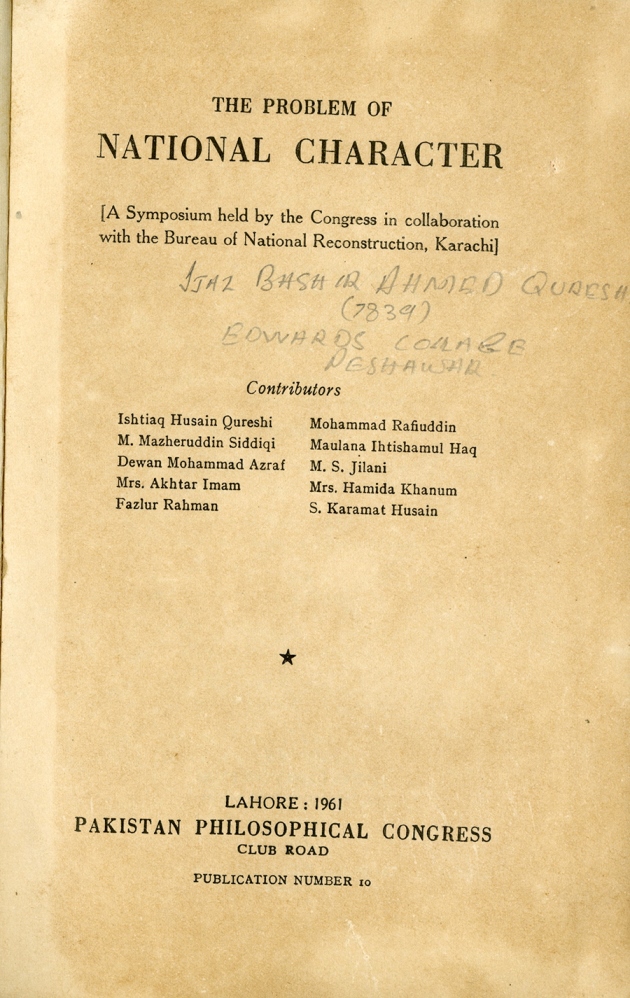
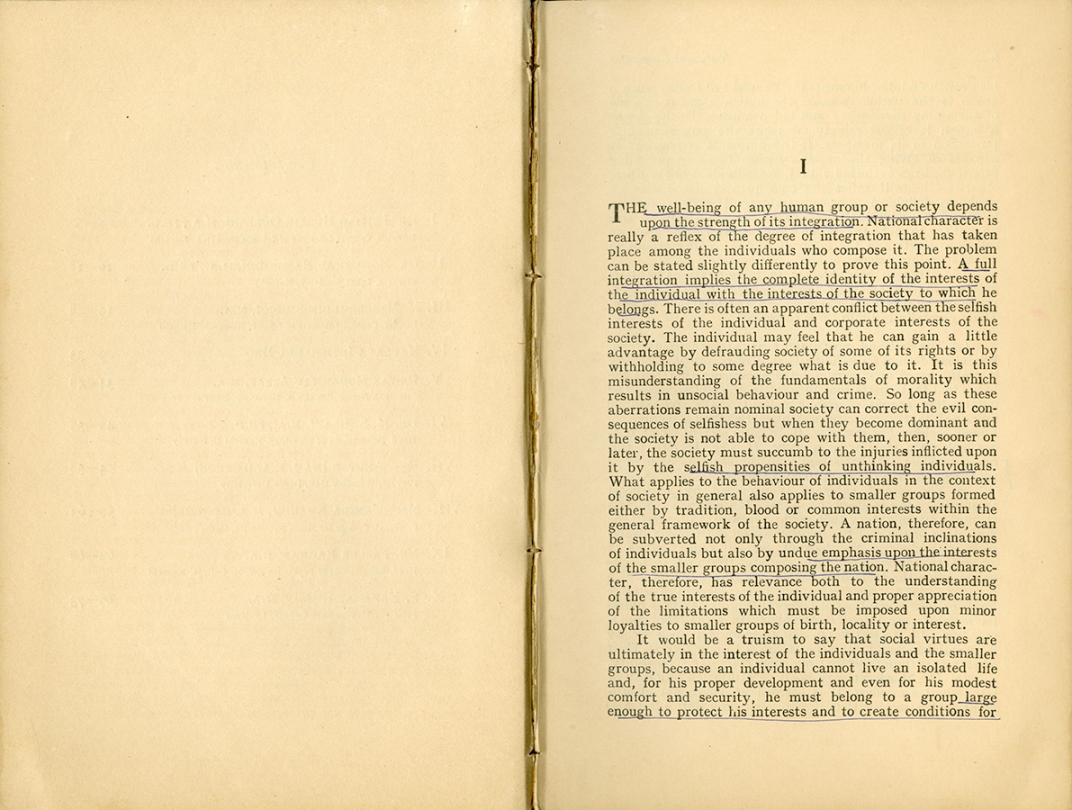
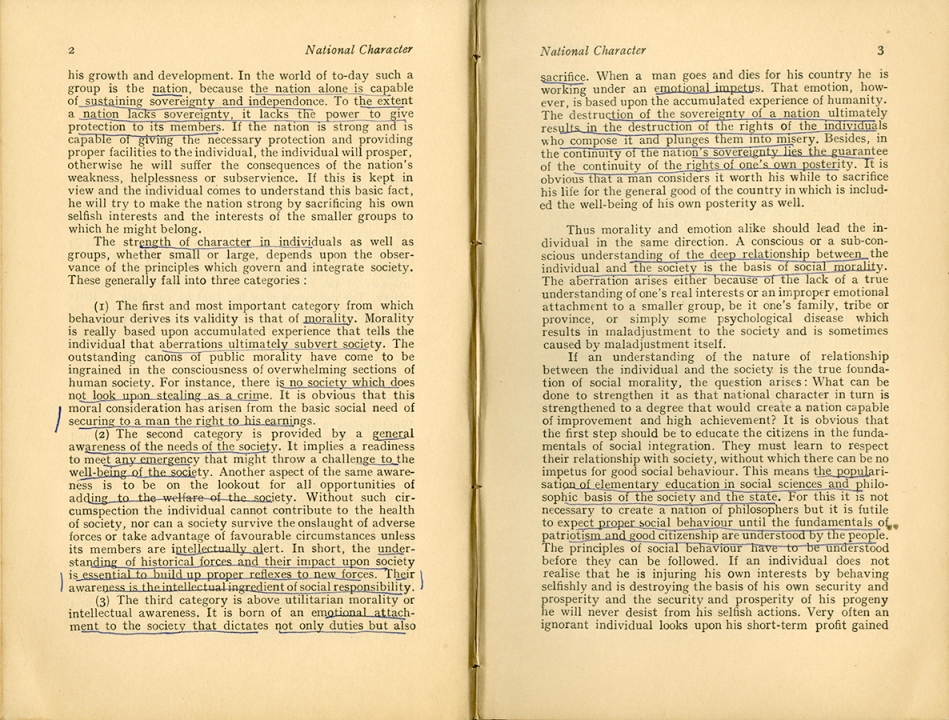
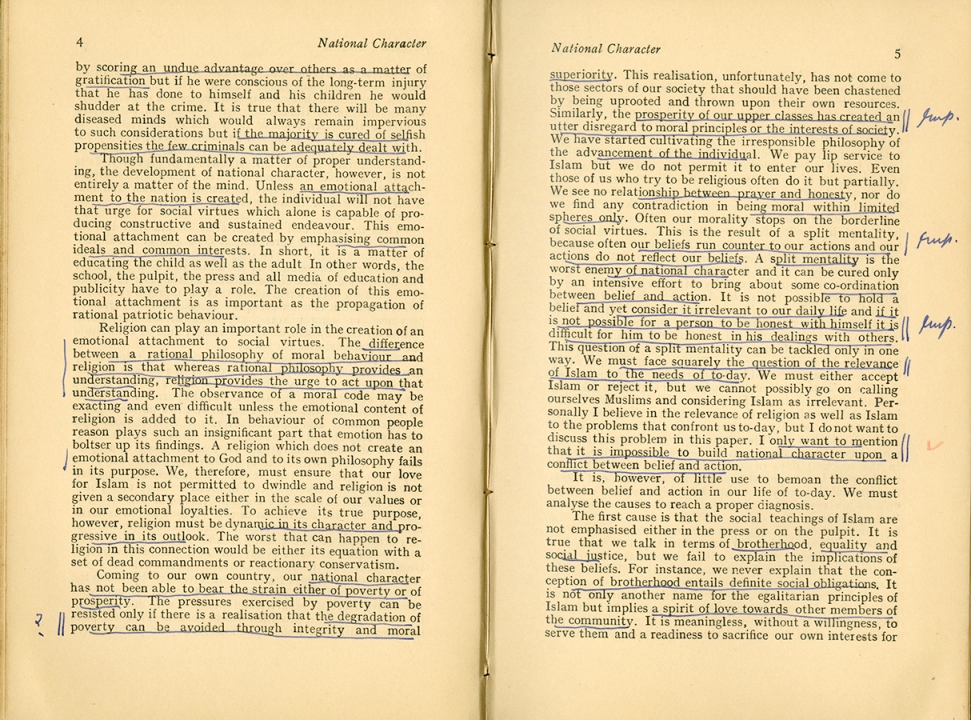
A SYMPOSIUM OF NATIONAL RECONSTRUCTION BUREAU 1961
INTELLECTUALS OF PAKISTAN GUIDING NATION ON CHARACTER
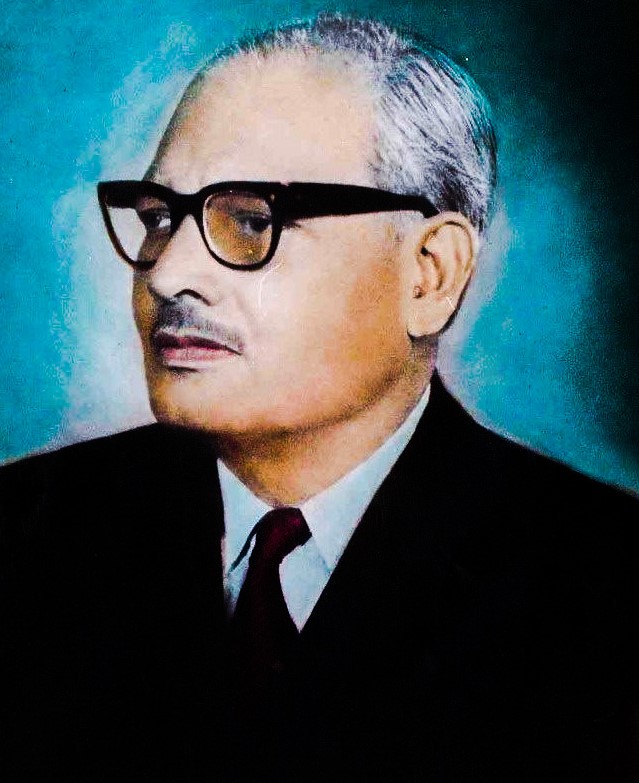
Dr Ishtiaq Hussain Qureshi
A simple comparison between intellectuals of the early period of Pakistan shows us the vulgar characteristics of so called know everything people of today. Those were dedicated people, dedicated to Islam and dedicated to Pakistan. And carried brains within framework of Islamic morality. And they were not few, they were many. Today people of those standards are very rare indeed. East Pakistan was represented by the kind Dewan Mohammed Azhraf and gracious Mrs Akhtar Imam, both from Dacca. Enlightening us about building up the National Character of Pakistan. Well done you people! We will keep your message alive.
INTELLECTUALS MADE PAKISTAN FOR RENAISSANCE OF ISLAM,
STREET SMART MORONS CAPTURED PAKISTAN AS A HOSTAGE
Call to prayer
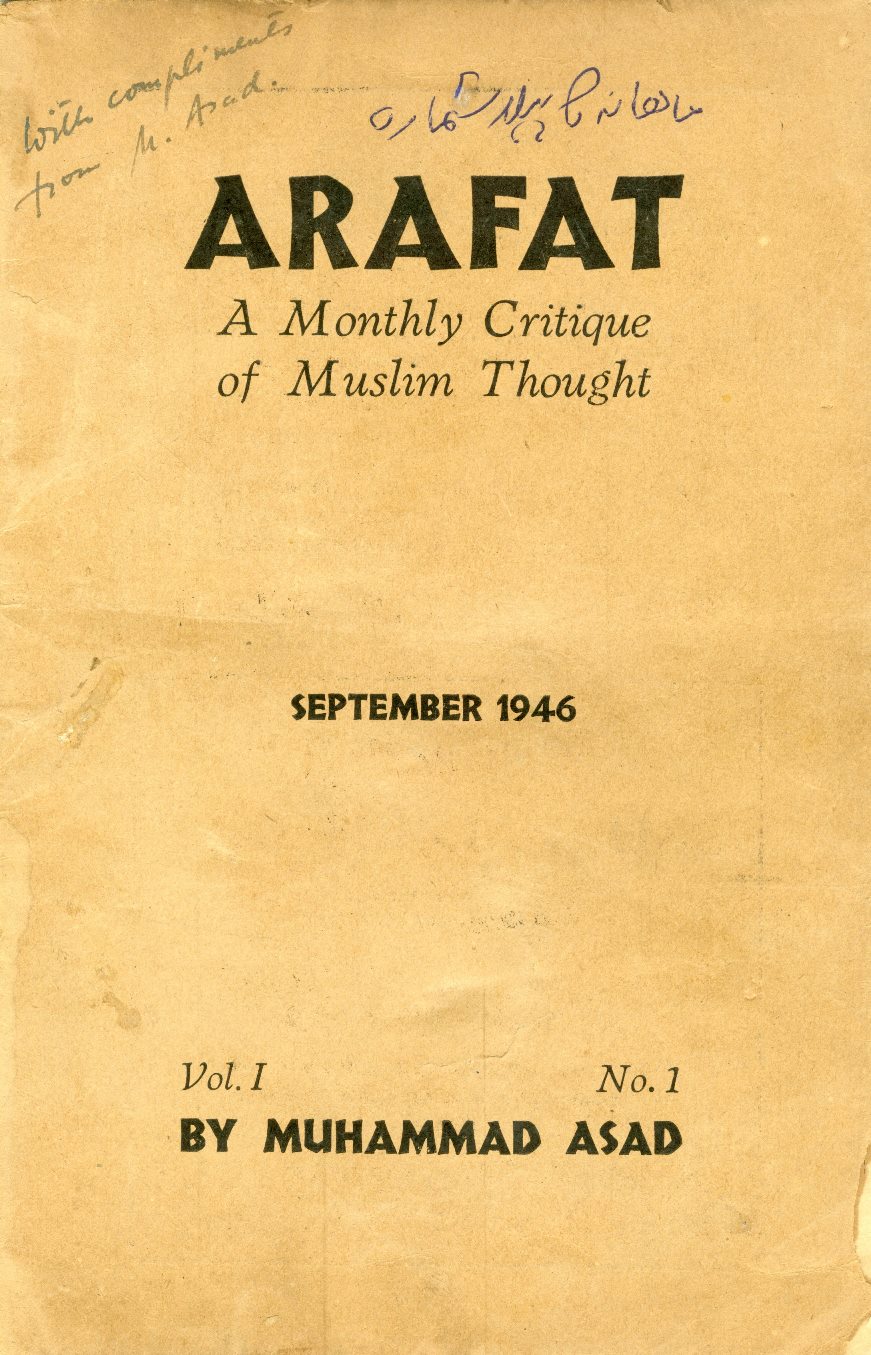
From the time of the Prophet (PBUH) to the present times, the most visible aspect to be noted is a gradual shift from the Quran itself to two bit fairy tales of concocted illusions, prophesies, happenings, which were far from the permanent values given by Allah. Thousands of Hadees many conflicting with each other, and each Mullah has his favourite lot. Deen became a religion and fight between one set of Mullahs with another. The Quran itself is the judge of right and wrong. Our finality was in adoring the Quran from far, putting it at a high place in the house, or running ones fingers through its lines, without understanding anything. Instead of intellectual interpretations, we referred to translations which in the other languages could not do justice to the Quran itself, and actual led to misunderstandings. The extent was endless, even putting the finality of Prophet hood in question. Then came the charlatans who claimed they could communicate with Allah and get fresh instructions and could abrogate sections of the Quran at their will. Taking Allah as a whimsical Feudal lord, siting and doing things in their terms. Sir Syed Ahmad Khan was possibly the pioneer of the new renaissance, and Dr Allama Iqbal bold venture into stagnating minds. Jamal uddin Afghani continued talking about the Uma in the Quranic spirit. We had number of exceptional thinkers who took this challenge, which includes Muhammed Asad, Ghulam Ahmad Pervez, Hafiz Muhammed Aslam Jairapuri, Rafi ullah Shahab, Dr Abdul Wadud, Maulana Muslim, Maulana Ghulam Murshid, and many others. Some of them were personal favourites of Quaid e Azam and some sponsored by Dr Allama Iqbal himself. Maulana Ghulam Murshid was appointed Imam of the Badshahi mosque by Dr Allama Iqbal himself. These stalwarts were pitted against Mullahs who called Quaid e Azam as Kafir Azam and the making of Pakistan itself a cardinal sin. Once regular columns were written by Rafi ullah Shahab for both Dawn as well as Nation. Now no more. Safdar Mir alias Zeno wrote exceptional articles in the “Pakistan Times”. Ms Mariam Habib did exceptional work for women. Major General Ehsan ul Haque started working on the Quran itself but probably left it at some point. A few brilliant articles are still there. Ms Saleena Karim working on same project. In short intellectuals tried their best, but as political power was in the hands of morons, those people actually patronized the anti ideology people of the country, some forced on us by our neighbouring country (actual payroll of foreign lobbies). The desire of disrupting us in persuading us to stay away from the Quran and its teachings.
Progress of lifeIqbal-and-RumiFruits-of-ExperienceMoon-of-HeavenTowards-PakistanThrones are not games
Mian Ifftikhar uddin left Congress and joined Muslim League. And of all the persons, he was the single authority who opposed the Objectives Resolution of 1949, culminating to the belief by many, that he was sponsored by Congress to infiltrate the Muslim League and its objectives. The legends of Faiz Ahmad Faiz and Saadat Hassan Manto were spun in that period too. Certainly Faiz himself wrote that it was not the Pakistan they saw in their dreams. The Pakistan of Quaid e Azam was there. Manto said things in disguise as well as in the open, which conflicted with the very idea of Pakistan. Of course everybody has a right to disagree, and they were welcome to their ideas, and as John Kennedy coined the statement to “disagree without bring disagreeable”. Ms Saleena Kareem has exposed the way in which the statements of Quaid e Azam were twisted by Justice Munir to serve different interests. The Ideology of Pakistan was under attack from both so called liberals and so called religious figures. You cannot take the love of Pakistan from the hearts of the people.
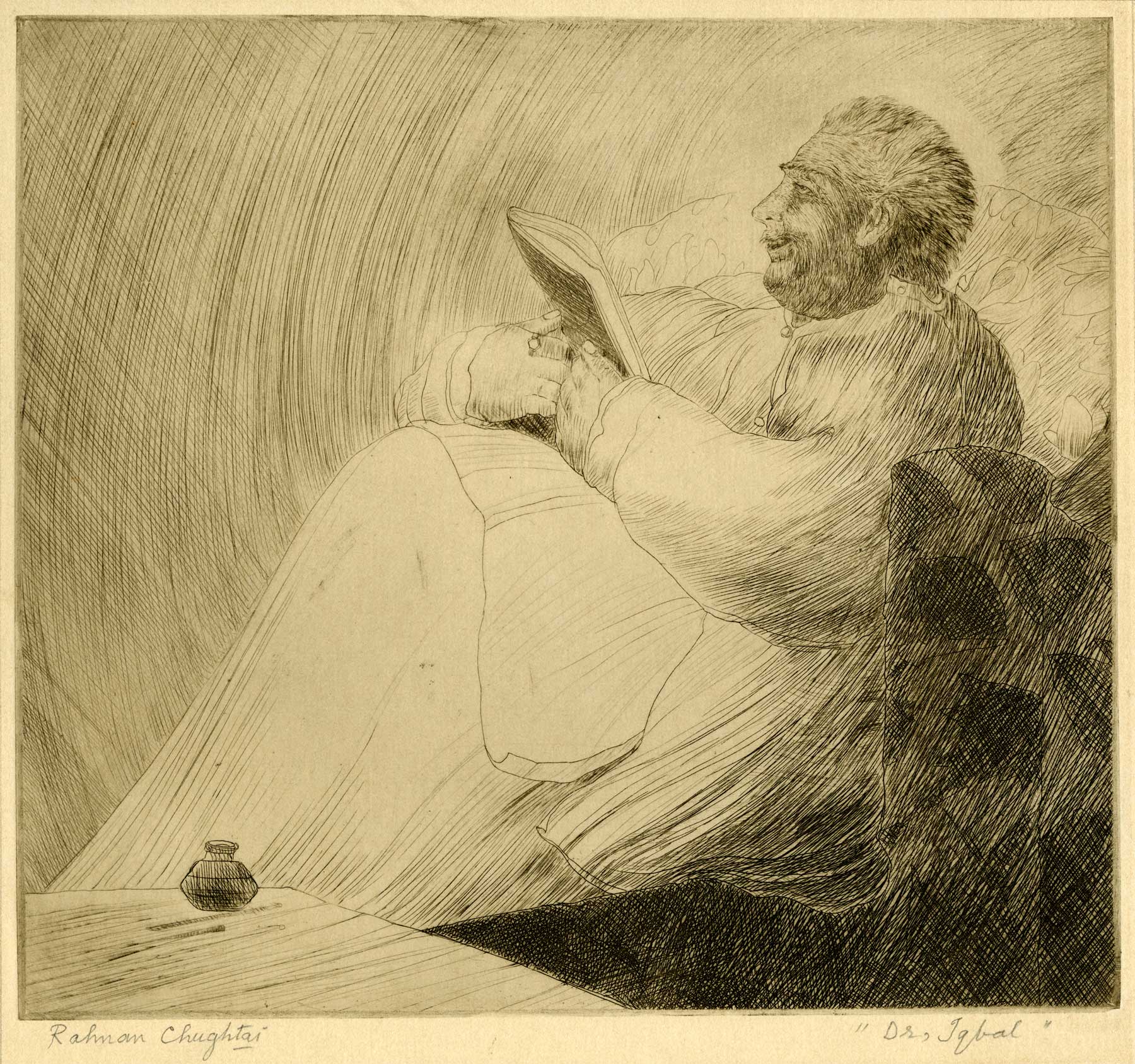
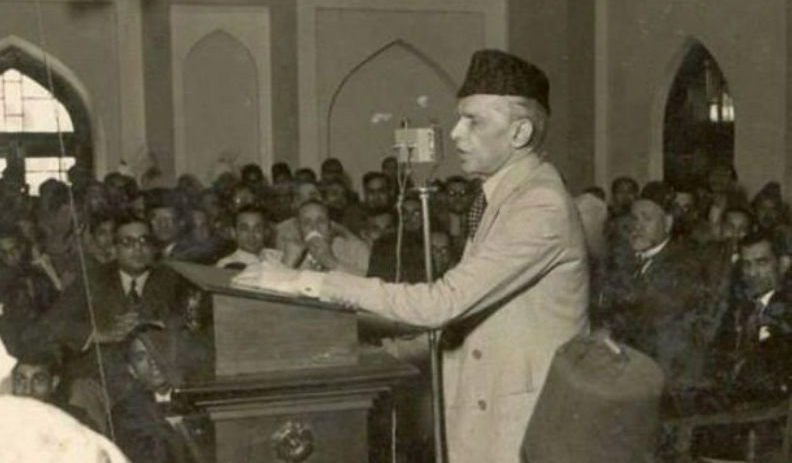
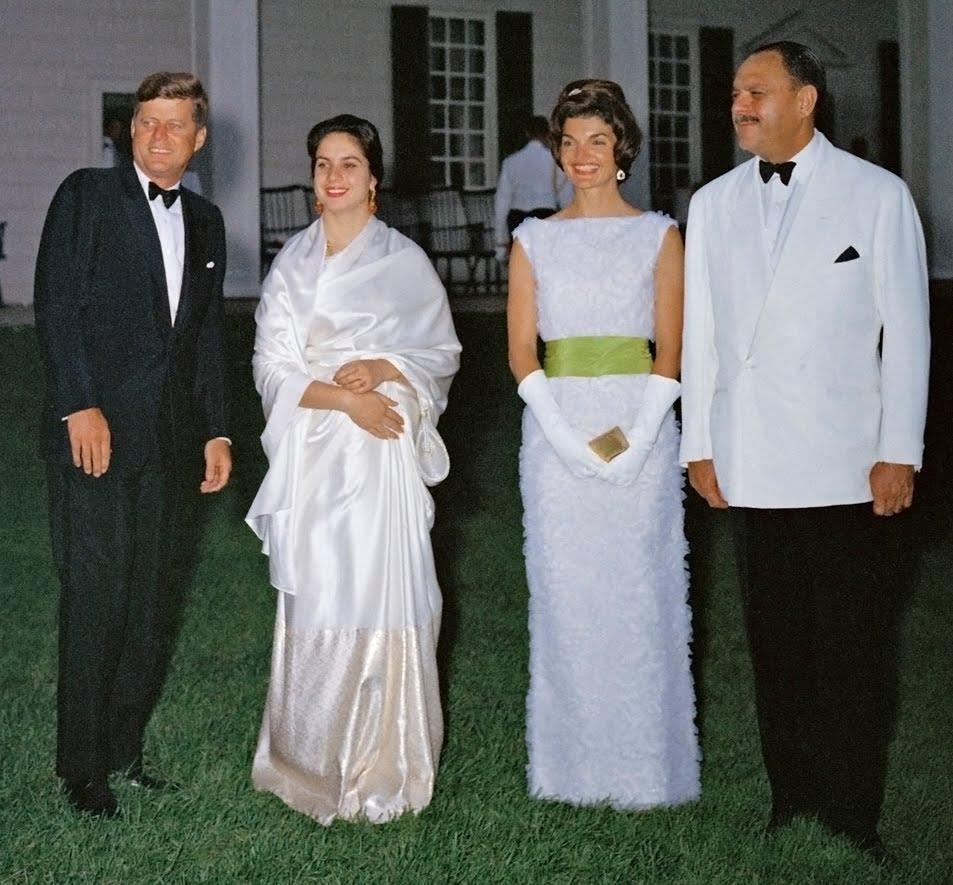
Dr.-Allama-IqbalQuaid e Azam in LahorePresident Ayub Khan
Intellectuals under attack from both right and left wing fanatics was the order of the day. It goes to the credit of the Pakistani Army that it failed to get attracted to anti Pakistani imagery and remained committed to the Pakistani dream. In fact instead of protecting the Pakistani geography, the Pakistani Army is also protecting the Ideology of Pakistan. It should be understood that India remains our enemy and now at the hands of low IQ leaders it has every reasons to make blunders which will culminate in elimination of the world itself. With so many unexpected wars in the past, expected wars are there in the future. We need no prophesies to know that. It is well understood. And perhaps the time would come to use our depleted uranium bombs to stop them from their cold start doctrine. Two-bit journalists acting like intellectuals bombarding our sanity with meaningless banter. Everyone talking of end times when Allah says in the Quran itself, this information Allah has not shared with humankind in any way. It is a brand new world, with good fighting evil. Inshallah Pakistan will defeat the Indians at their games, as also the lobbies hiding behind them to bring us down. When Quaid e Azam embraced the cause of Palestine and rejected Israel, we reject Israel too. We hear of the torture Adolf Hitler committed on the poor Jews. Does it give a right to Zionists to do the same to people of Palestine and Kashmeer. The gallantry of the Mussulman is well known. There is a joy in even embracing shahadat. But we need to come alive out of this. We need to be pioneers to carve a brand new world in the direction required by Allah. Pakistan is indeed the first step towards a brighter tomorrow! We want to see our children frolic, play and think for betterment of humankind. We want a balanced way of Saratul Mustaqeem. We are chivalrous. We do not want to harm others, we want to protect ourselves. BRING BACK THE TEACHINGS OF THE QURAN IN OUR LIVES! Do not mix them with fairy tales gathered over a thousand years. Thinking and pondering is our way of life.
P.S. If some names missed, sorry for that!
Aslam JairapuriIslamic-Brotherhood-January-1938Islamic Reconstruction startAllama Muhammed Asad Department of Islamic Reconstruction
ABDAL MALEK NAQASH AND MUHANDIS ARCHITECT OF MASUDI PALACE
GEM OF GHAZNI CITY AT THE HANDS OF A GRAND ARCHITECT OF HIS TIME
History of palace from 1121 to 2019 AD
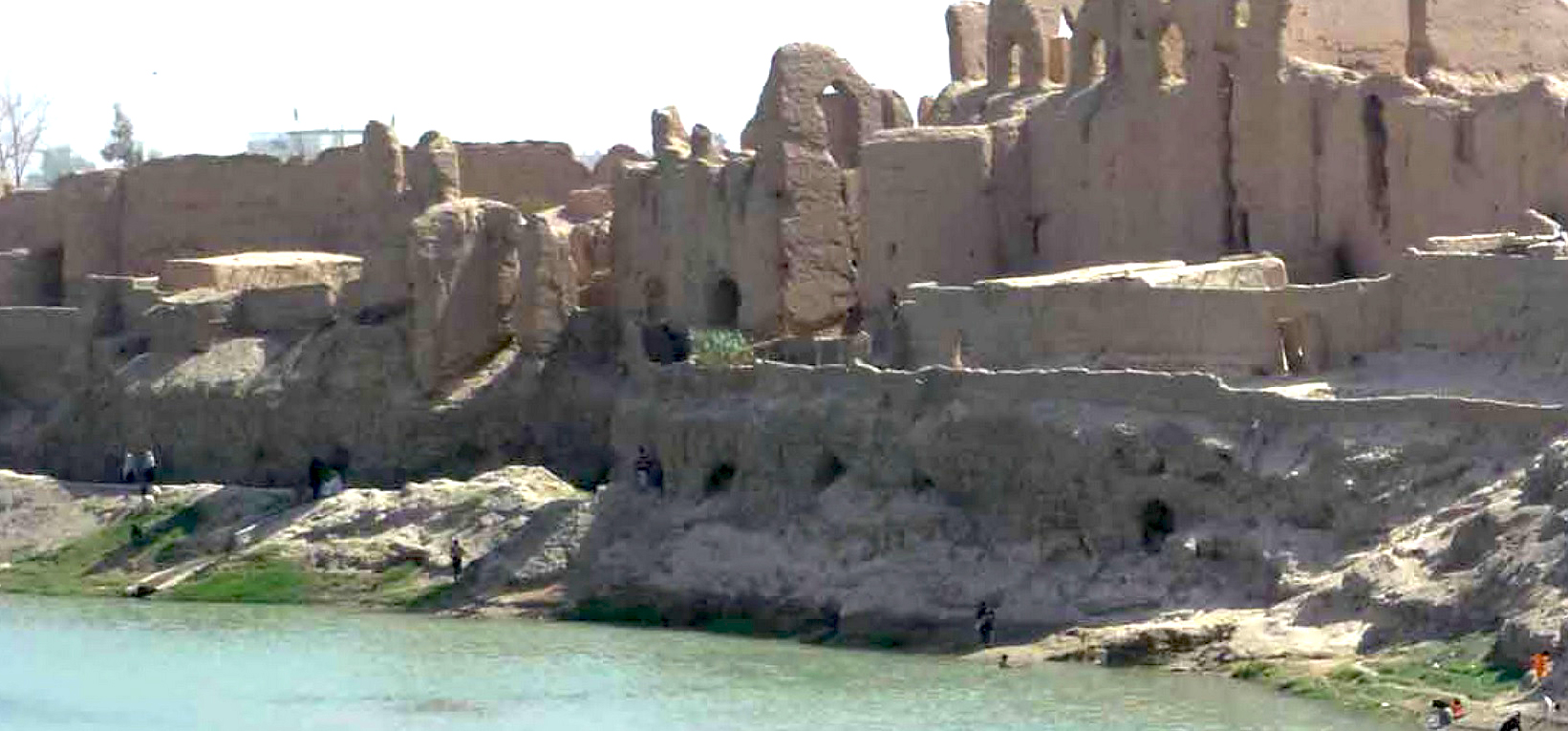
Masudi Palace Ghazni
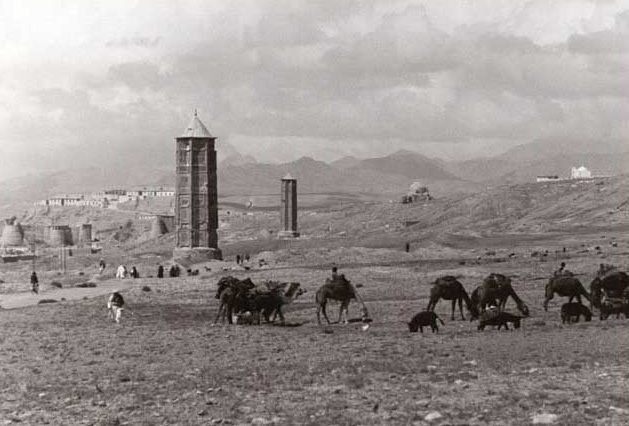
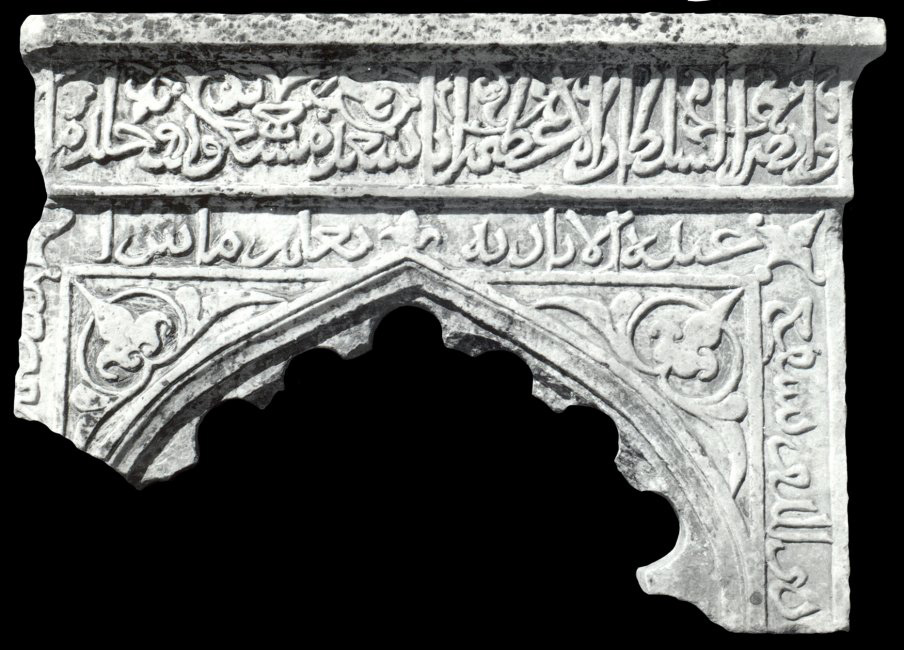
The palace was built in 1121 by Mas’ud III (reigned 1099-1114), son of Sultan Mahmud of Ghazna, on a site to the southeast of the walled Ghaznavid capital. It suffered many calamities, from being burnt down to actual demolition by the Mongols of Genghis Khan. Incredibly the ruins were excavated by an Italian team, but to no avail, as the Afghan war inflicted further damages to the site.
Mehrab-of-Sultan-Masud-1112-ADGhazanavid palace 4
“The excavated foundations show a palace with a roughly rectangular outline, its corners placed roughly on the cardinal axes. Fortified walls of 120 to 150 meters in length enclose the palace and a bazaar street located to the its northwest. The bazaar, which spans the entire length of the palace, is entered from gates located at either end (northeast and southwest), and contains the palace portal. The portal opens into the northwest iwan of the palace courtyard. Thirty-two meters wide by fifty meters long, the courtyard is enveloped by four central iwans and thirty-two arched niches. The grand iwan to the southeast leads into the throne room, which has an oblique rear wall abutting the exterior wall of the palace. An inner courtyard, entered via a passageway from south corner of the courtyard, adjoins the throne room to the southwest. The hypo style palace mosque was excavated at the western corner of the main courtyard. It is three bays wide and five bays deep and is entered from four niches along the southwest courtyard wall. Its interior walls were built at a slight angle with the rest of the palace in order to align with qibla.”
Ghazanavid palace 2Ghazanavid palace 5
And its description is further told to us as:
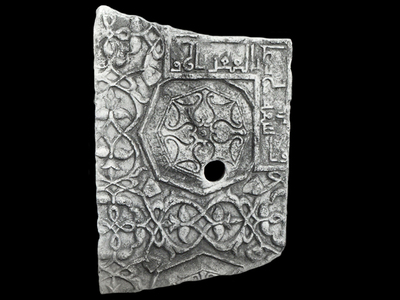
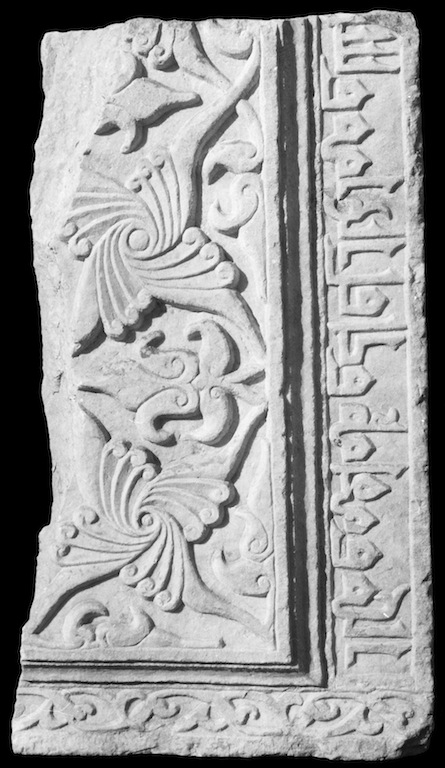
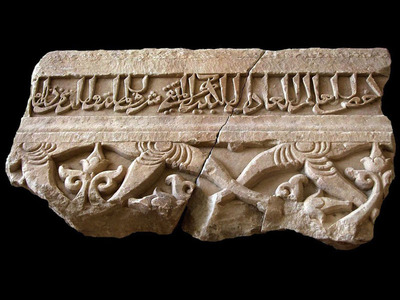
“The walls of the palace courtyard were adorned with an exceptional marble dado, consisting of an estimated number of 510 panels around the courtyard, each about 70cm high. The panels formed three distinct bands. The wide central band contains carved arabesques on a floral entrelac and sits above a narrow band of interwoven scrolls. A narrow band of floriated Kufic script tops the dado. About a tenth of the panels were found in situ during the excavations, allowing a reading of the Persian inscription. Composed in the mutaqarib meter, the verses offer praise to Masud III’s predecessors and in particular, to Mahmud of Ghazna. The letters were originally painted in lapis lazuli blue, with a red or gilt background. A marble footpath, about five meters wide, encircles the courtyard below the dado.”
Ghazanavid tile 1100 AD
Many of the items recoverd were later stolen during the Afghan crisis and it is unknown where they exist now. The Afghans are really famous for this kind of plunder and could have sold them anywhere in the world. Western collectors offer much higher prices than third world countries, otherwise many could have landed in Pakistan itself. I remember a complete graveyard tombs with stone inscriptions were offered for sale here. No takers of graves however.
Ghaznavid tomb
The Architect is known as well as the Prince’s own design interests in same
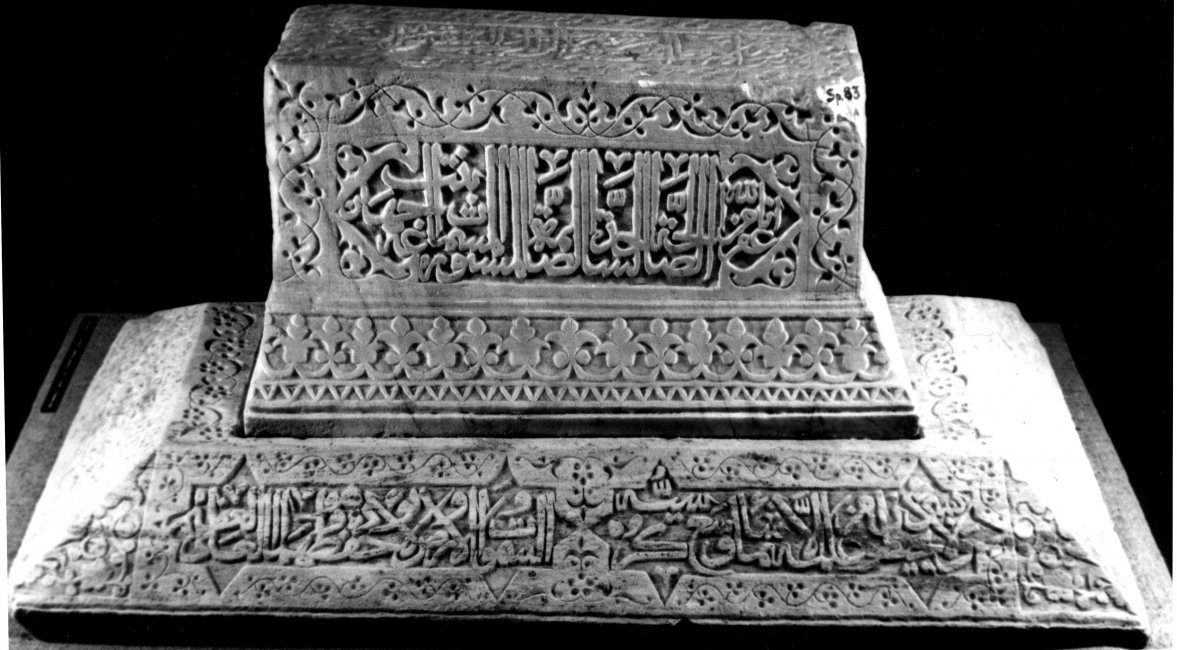
Masood Palace
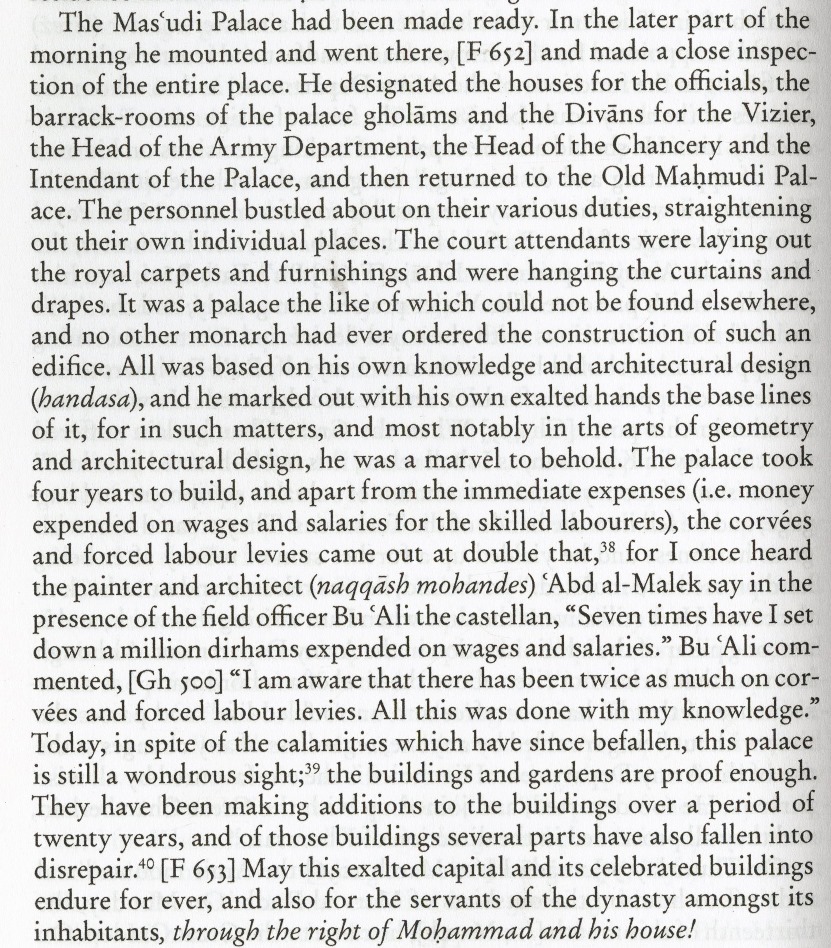
There is a detailed account of the Prince and the Architect in the History of Bayheki, and we reproduce the whole page of same. The personal interest shown by Prince as well as his mathematical calculations are told to us and the enormous amount of money spent on it. The interesting part is the designation as Muhandis and Naqash. It seems instead of the term Mimar, this was the term in vogue at that time. In fact this term is also used for Lutufullah Ahmad Muhandis of Lahore in the 17th century. Also descendant of Ustad Yusuf Burkurwdar Herawi of same place. Read:
WE HAVE GOETHE, SAID HITLER. WE HAVE IQBAL, SAID CHUGHTAI.
MEETING OF M.A. RAHMAN CHUGHTAI WITH ADOLF HITLER 1937.
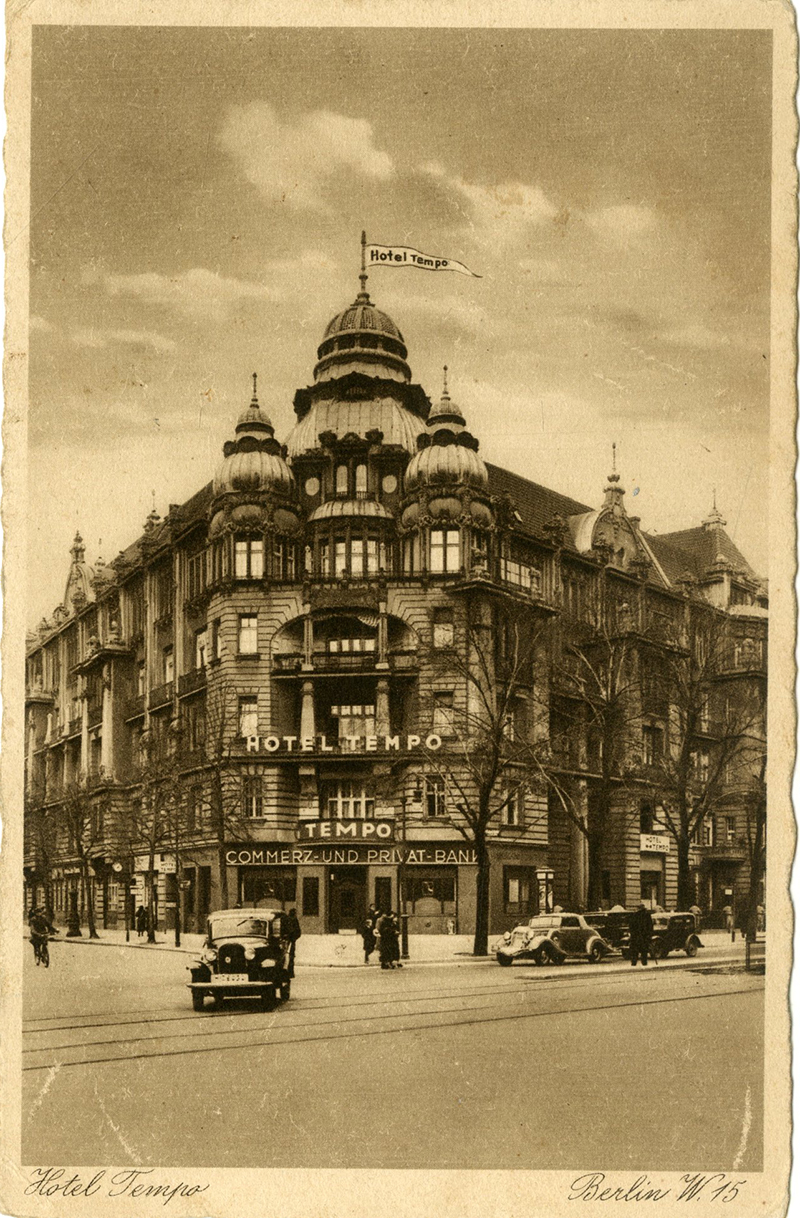
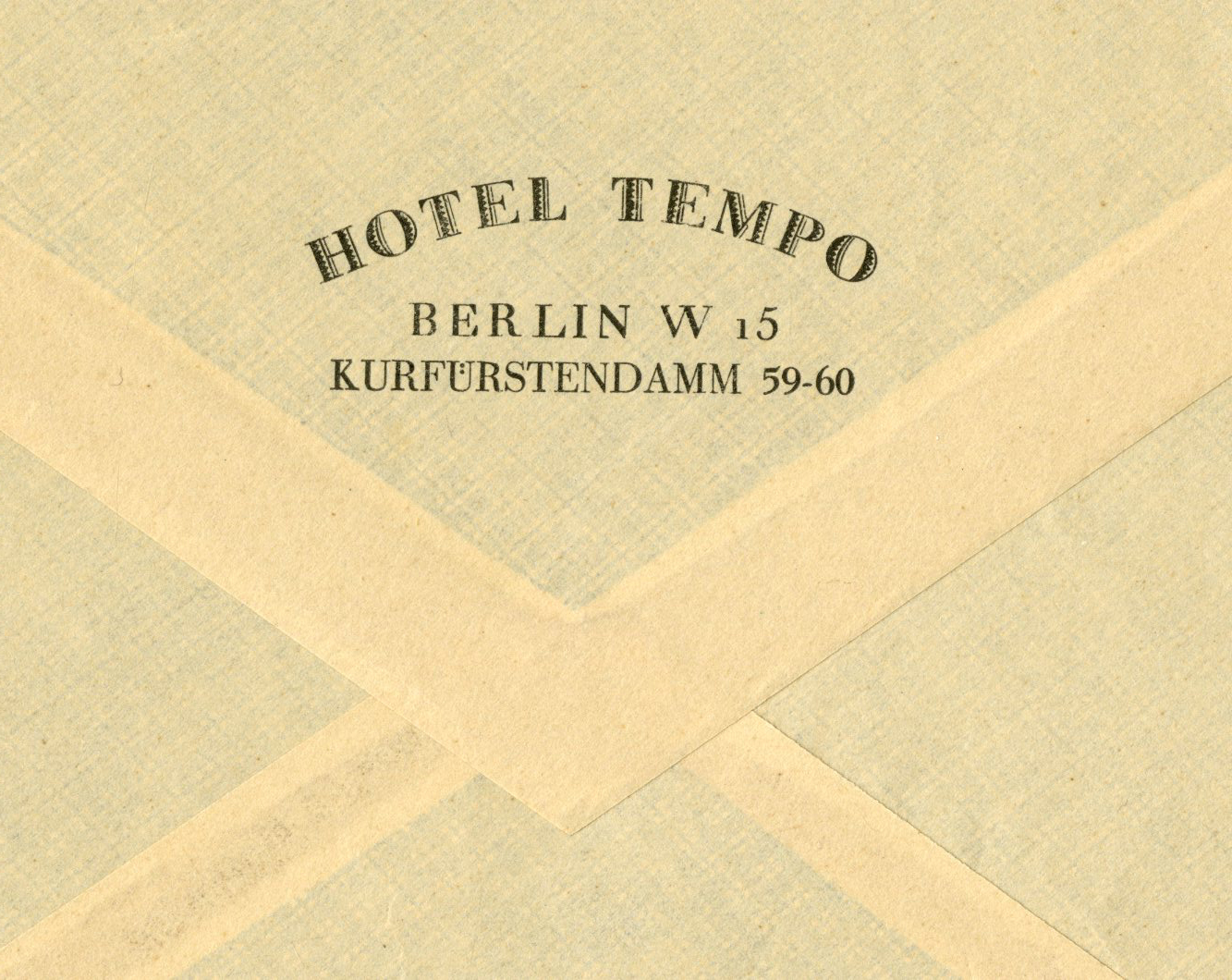
MARC stayed at Hotel Tempo Berlin 1937
The European tours of M.A. Rahman Chughtai in 1936-1937 were phenomenal in many ways. We wrote a book on it that is entitled EAST MET WEST and it is available as a download on our blog. We researched from our documents and tried to give a true picture of the two European tours for the first time. A Swiss friend of mine resented the mention about Adolf Hitler in it. This is not a political statement from us, it is history, and history we do not hide or confuse with narratives of our own. What happened we know and as a historical truth, we recalled it in the best way possible. It was an extra ordinary event and there is every reason to give the correct version of same.
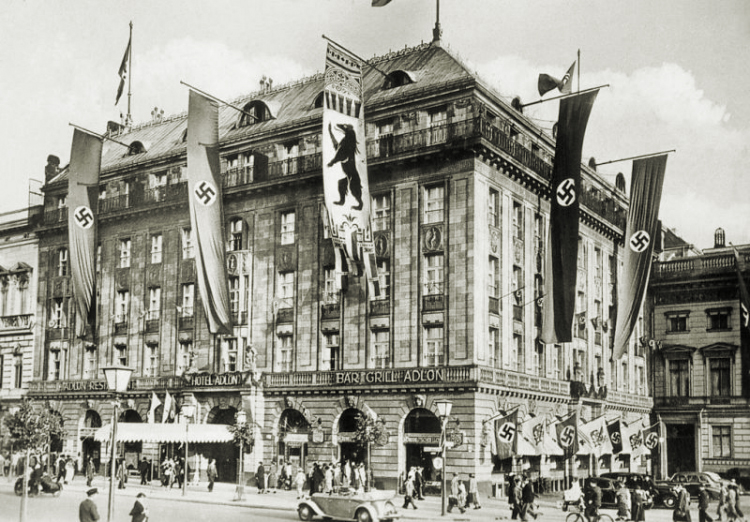
Address of Hotel TempoAdlon Hitler banners
The Paris show of 1937 was an international event and all countries had their stall and show cases. Germany too had a very big presence there. The artist was visiting the Paris show, where he met a German lady, who was most interested in knowing more about him. She invited him to Berlin, and that was the artists next stop. The artist was stating at Hotel Tempo in Berlin and we have old visuals of same. Adolf Hitler had his residence in those days at the famous Hotel Adlon, and granted audience to visitors. A special five minute meeting was authorized for M.A. Rahman Chughtai with Adolf Hitler.
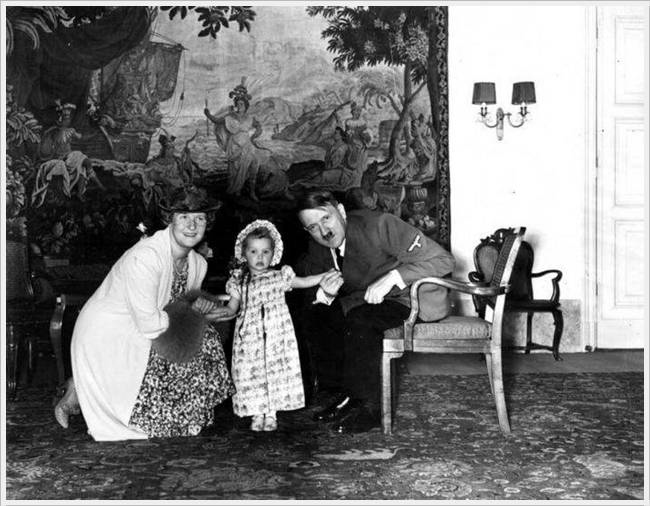
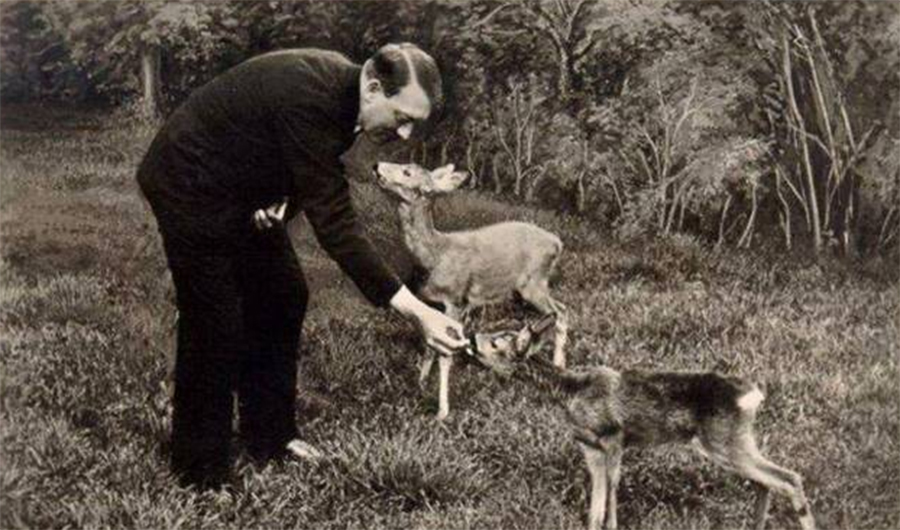
Adolf Hitler the soft sideMany aspects of Adolf Hitler
M.A. Rahman Chughtai records his first impressions of Adolf Hitler. He said that there was some mesmerizing effect in the eyes of Hitler, that one could not accost him with the radiance of his eyes. The eyes were like balls of fire. Luminous and full of strength. The German lady was there with them. The artist recalled that Hitler talked about their national poet Goethe with great fervour. Chughtai talked about Dr Allama Iqbal with equal fervour. The talk centered about India and Indian art, and Chughtai talked about the Muslim renaissance in the Indian region. Of course Dr Allama Iqbal represented all that, and Hitler understood the Muslim content of same. It is a fact that Muslims of Indian region always had a soft corner for the German leader.
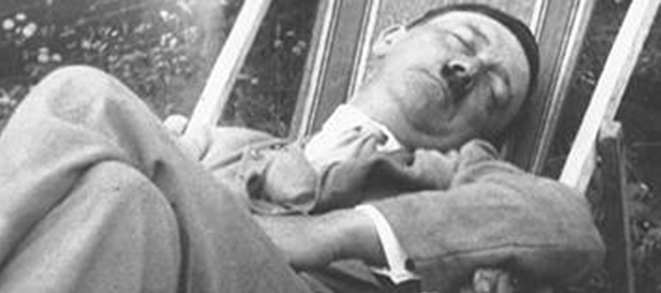
Hitler relaxing on chair27th JUNE 1937 tribute to CHUGHTAI ARTIST in Berlin
Not much is known about the detailed contents of the talk but it talked of cultural matters. Hitler was fascinated with Goethe, and Chughtai was equally radiant about his close relationship with Dr Allama Iqbal. In fact in the 1932 meeting in London of Dr Iqbal with others, the talk centered on Muslim state in India, and Chughtai had witnessed all that in the hotel room. The resultant World war obliterated all records but on 14th August, 1947 Pakistan came into being as an Islamic State, heading towards Iqballian concept of a Progressive Islamic country made in the name of Allah. People tried to persuade Chughtai to permanently stay in England as he was included and accepted in the artist’s group there. A memorable sentence uttered then and is written in his memoirs too. My country is awaiting me and calling me back. It is to be understood we are not talking of India here, but Pakistan, and Pakistan had not come into being at that time. It was to be the first step towards introducing Islamic way of life to the world. And the dream of Dr Allama Iqbal and M.A. Rahman Chughtai is still throbbing with newer life.
NUR ULLAH AHMAD ARCHITECT AND CALLIGRAPHER ROYAL SHAHJAHANI
TWO IMPORTANT MANUSCRIPTS IN COLLECTION OF CHUGHTAI MUSEUM
Dalal ul Khiarat By Nur ullah Ahmad Lahori
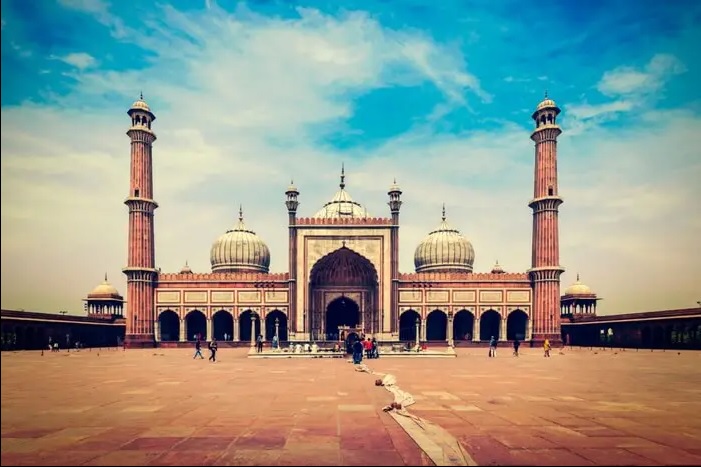
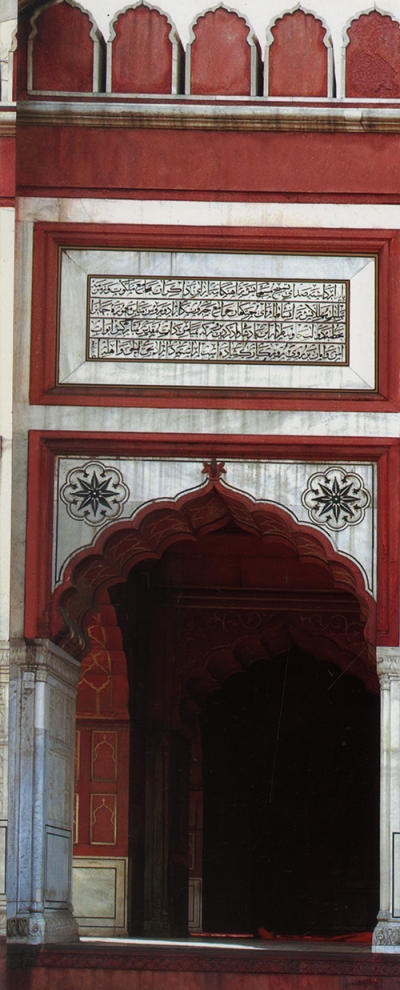
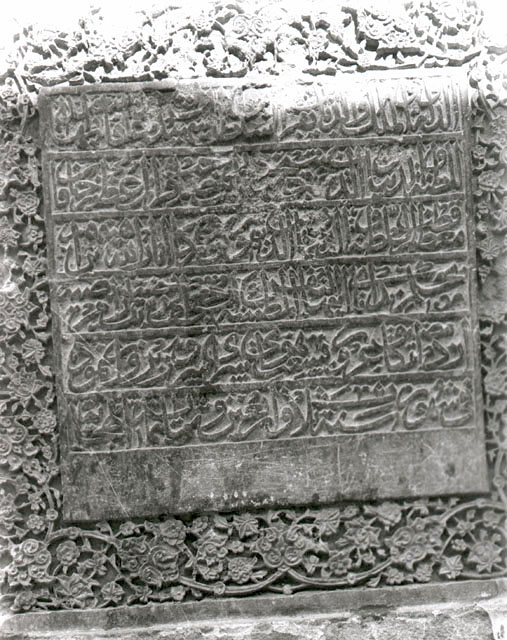
Lahore shines! Nur ullah Ahmad was youngest son of Ustad Ahmad Mimar Lahore. The Jamia Masjid Delhi carries his name on the inscribed couplets in praise of Emperor Shah Jahan. He was a master of the SATH QALAMS or the seven pens, but also a working architect, and many Mughal buildings are attributed to him. He carries with him the title of Mimar as does his father, architect of the Taj Mahal of Agra and Red Fort, Delhi. He is also the father of the much acclaimed Holy man, Qaleem ullah of Delhi, whose mazar is visited buy thousands every day in that city. Various references are found in various manuscripts, including an abridged Masnavi Maulana Rum edited for him by his elder brother Lutuf ullah Ahmad Muhandis. The mausoleum of Muhammed Salih Kanbo as well as his petite mosque inside Mochi Gate, Lahore, is attributed to him. A lost inscription on that portal too carried his name like the Jamia Masjid Delhi.
Exclusive calligraphy by Nur ullah Ahmad LahoriMs Khazana by Nur ullah Ahmad LahoriMs Khazana by Nur ullah Ahmad colophon 1056 AH
Unlike his other family, who specialized in mathmatics and astronomy, this fellow was Master of architecture and calligraphy alone. Of course like others in his family, he concentrated on poetry too.
Jamia Masjid DelhiNurullah Ahmad Katba Jamia MasjidSeven pen stone on grave of Prince Baiqara
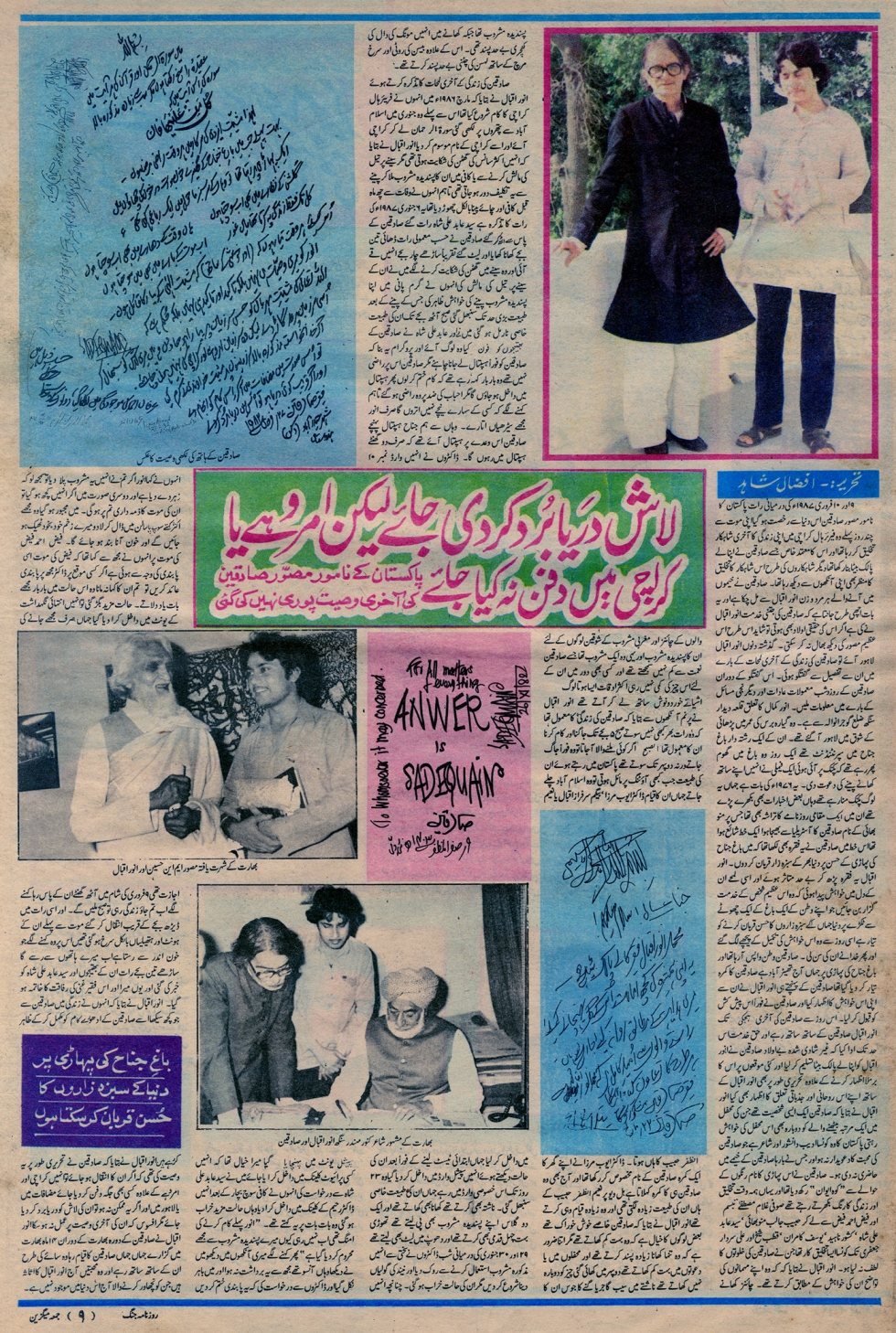
AS RECORDED BY HIS DISCIPLE ANWAR IQBAL IN “JHANG”
Roz nama Jhang Juma edition
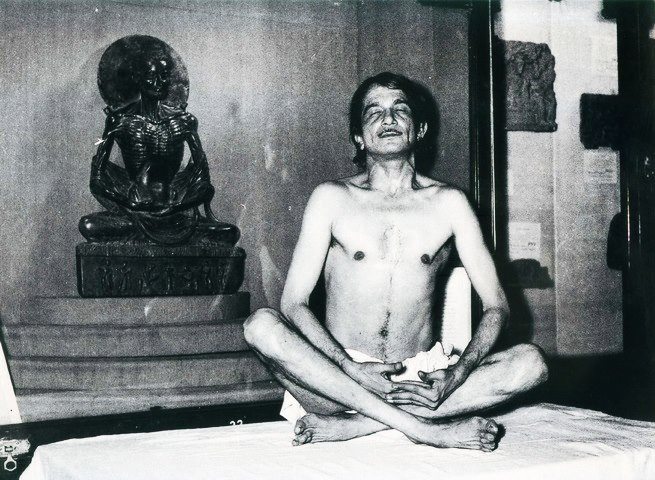
Somebody coined the term “Holy Sinner” for Sadequain artist. It was coined to reconcile the two different aspects in the character of the artist. In a very objective way it can be understood from the fact that in the times of Prime Minister Zulfiqar Ali Bhutto, Sadequain was making so called erotic art, and there was much resentment when these works were exhibited in Lahore. Even anti riot police had to be called to quell the demonstrations. When President Zia ul Haque came into power the same Sadequain was writing Islamic calligraphy. It was the ingenuity of the artist to change complexions all the time. In the foot steps of M.A. Rahman Chughtai, Sadequain worked on Ghalib, Iqbal as well as Omar Khayyam. No problem with any of that. But the Holy Sinner made strange comment both on PTV as well at other places. Calling his art the art of the gutter which takes out the dirt of the society, he proclaimed that he was not a drawing room artist. No issue there too. All these statements are documented facts.
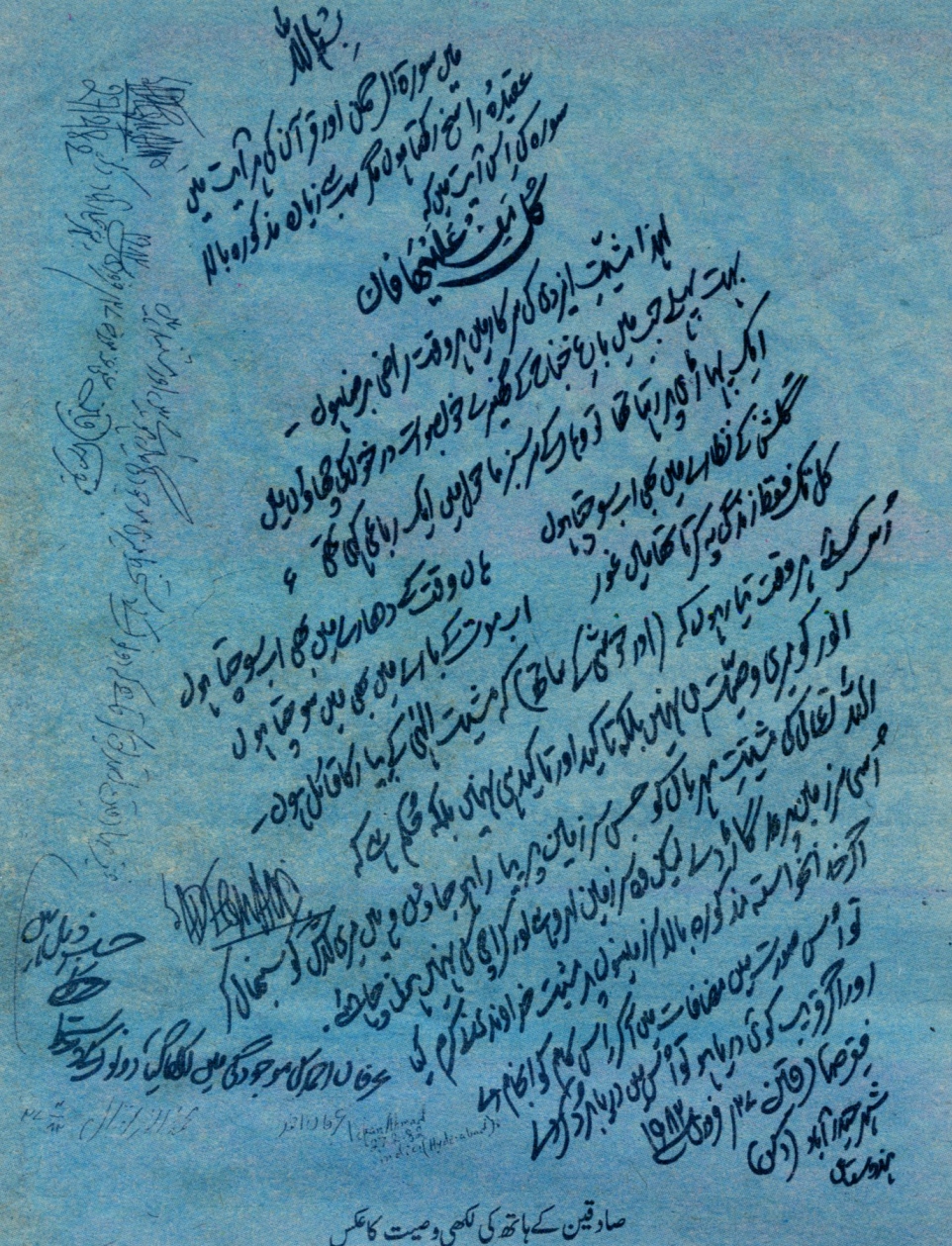
Last moments SadequainWritten will of Sadequain
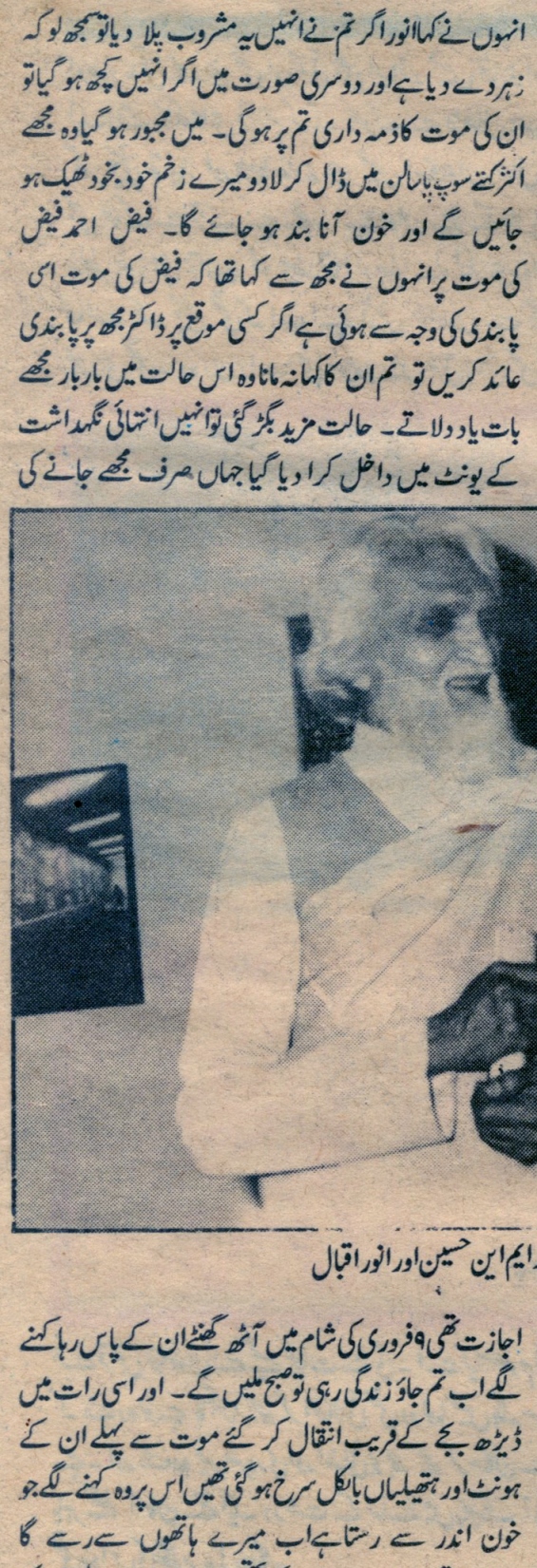
The last moments of Sadequain are recorded by his fan and disciple Anwar Iqbal, and in detail he lists the same. Sadequain had written his will and his desire not to be buried in Karachi or Amroha. No one heeded to that. Also not heeded was his last moment desire for the liquid of his choice and said to Anwar you will be responsible for my death, if you do not bring it in hiding to me. All this is recorded in Daily Jhang Juma Magazine and we print it for the reference to our viewers. Nothing from us, everything from him. But it is sad that addictions destroy creativity of life. At a very early age of 63, Sadequain died between the night of 9th and 10th, January, 1987. Ina lillah hai wa ina illa hai rajoon!
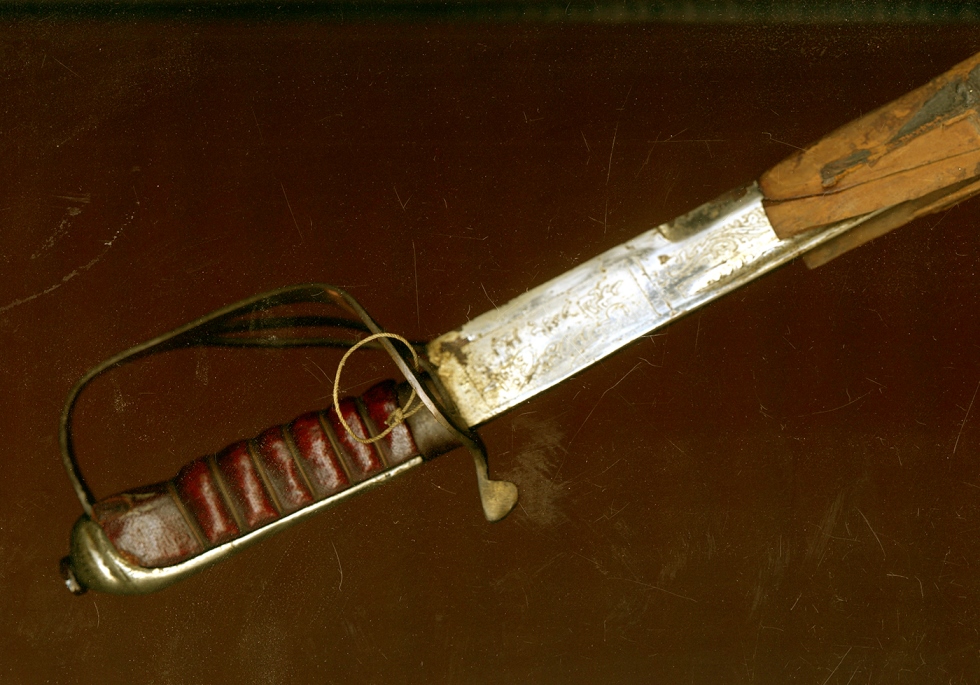
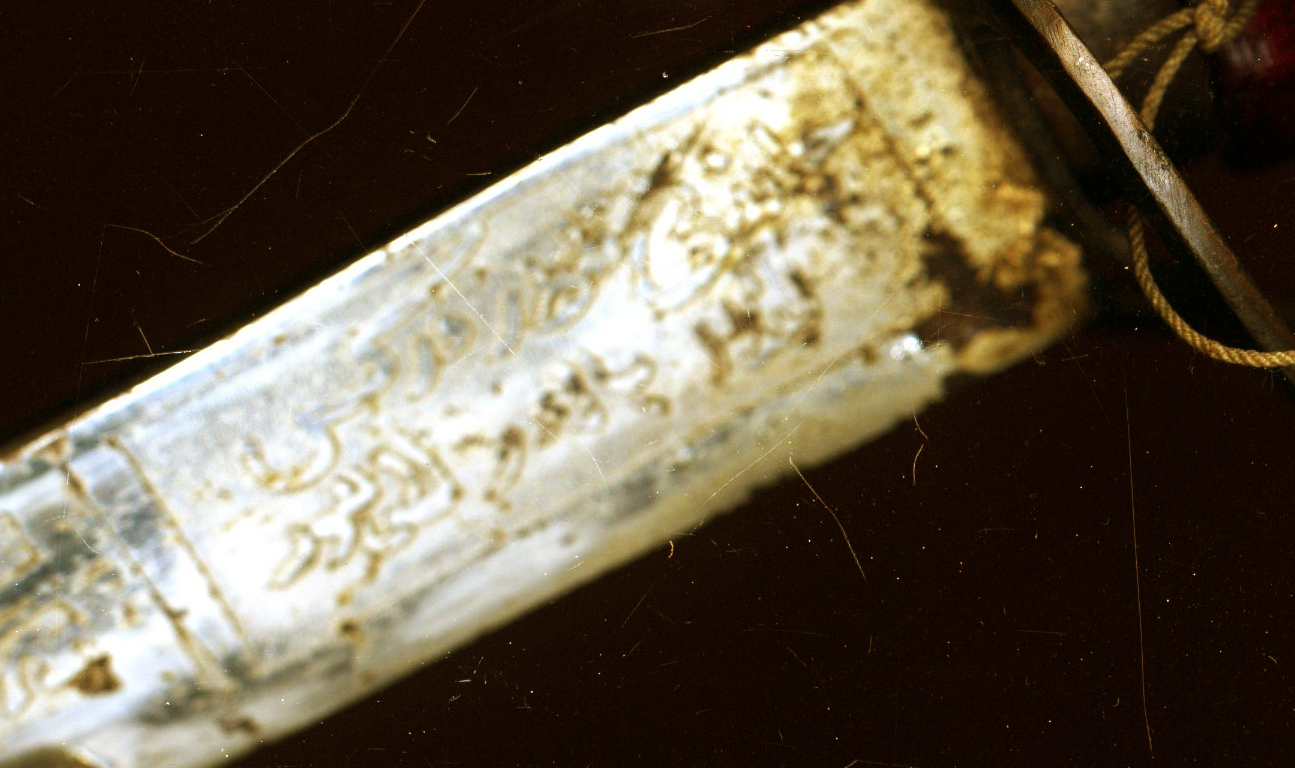
Today we think of Landa Bazaar in certain terms of second hand things from abroad. But there were manufacturing units here of different kinds. One was the CHANDNI SWORD WORKS which manufactured swords for civilians as well as Army battalions. We have two swords, one for civilians and one for Army regiments stationed in Lahore. Interesting history.
Chandni Works Landa Bazaar Lahore
Rudyard Kipling enfolds another role of the Serai of Mian Sultan. In his novel Kim, he points to the Serai as being meeting place of Spies. A certain Afghan spy met here in those times. And killings used to take place here. The interesting part is that the Serai was once the Market place of Prince Dara Shikoh and later as well the Serai of Nawab Wazeer Khan. Demolished by Maclagen in 1904 in Lahore. We have prints as well as photographs of same, which we will eventually share with others. The richness of the history of Lahore cannot be denied in any way.