FASCINATION OF MUSLIM ARTISTS WITH HINDU MYTHOLOGY
DID THE MOST TO RENDER PEACE AMONGST TWO NATIONS
Arjun by Abu Fazl 1616 AD
PEACE IS POSSIBLE WHILE RETAINING OWN VALUES
03-Arjun-The-Victor
Emperor Zainul Abedeen was one of the first to realize that only in the translation of Hindu epics, that Muslims can try to understand the Hindu point of view. This was followed by other Emperors in Hindustan. A number of illustrated Hindu epics were rendered in Persian. Artists devoted their energies to illustrate the same according to their vision. This was much resented by Hindu priests as under the caste system, they were not willing to share knowledge with the common folks of India. In any case this illustration gained momentum with time.
13-Arjuna
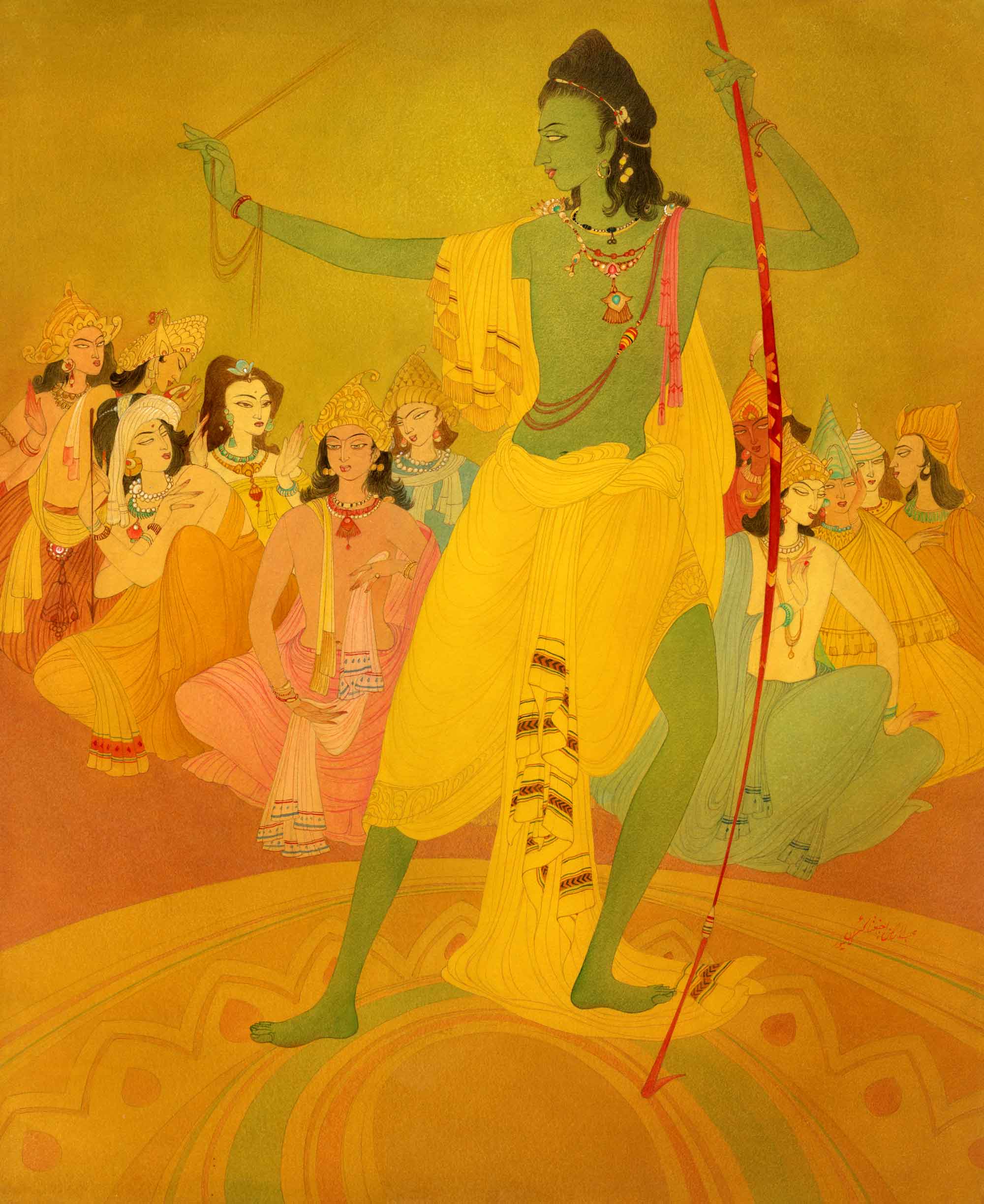
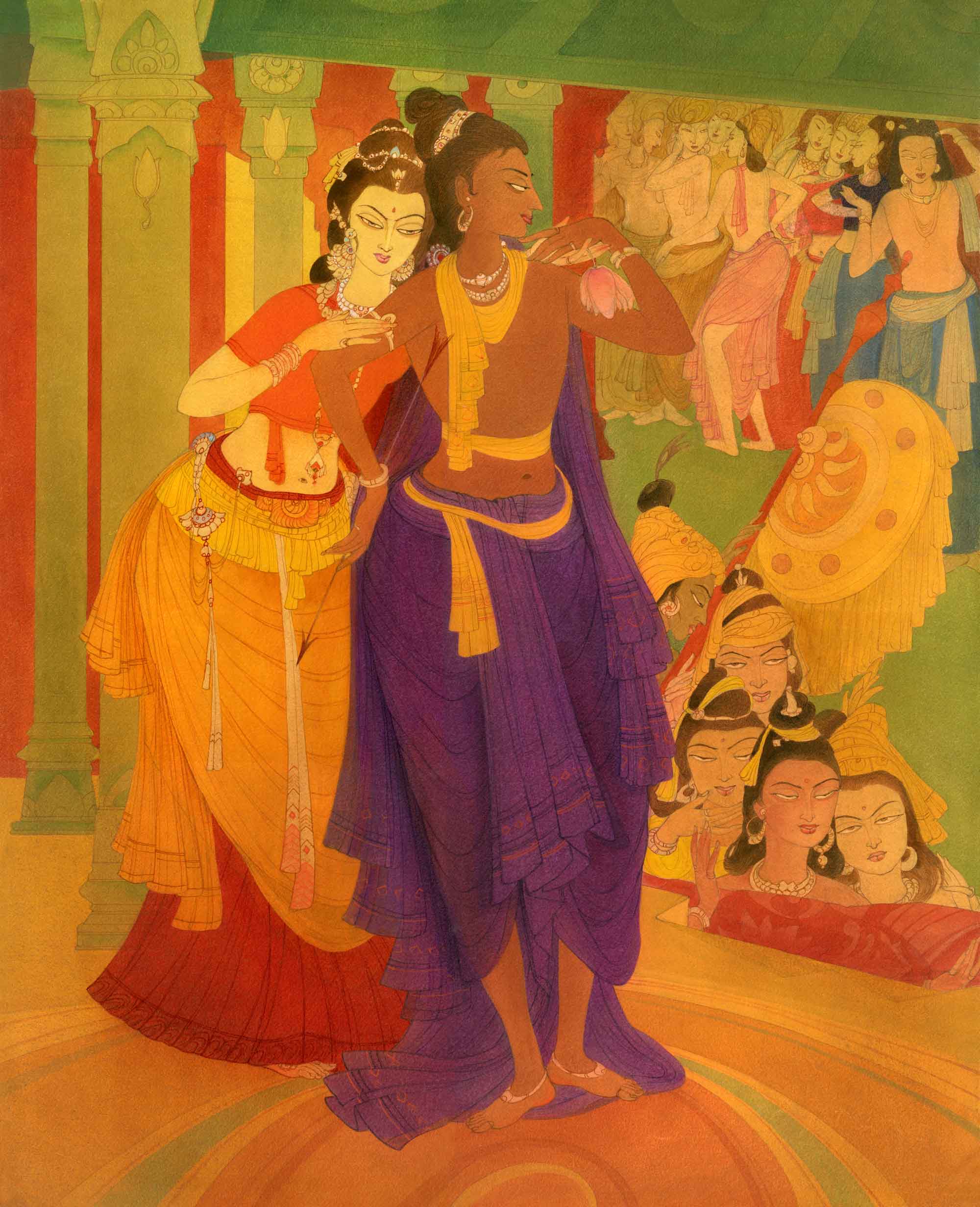
Muslim artists of Lahore were always busy in attempting Hindu themes. Ustad Allah Baksh rendered them all the time and most Hindu houses in Lahore were full of works done by him. M.A. Rahman Chughtai also did indulge in such themes, right from the start of his career to the last days of his life. A work on Krishna was exhibited in Mussorie in 1920. Even in his last years, he did a number of Hindu themes.
Arjun Inagawa version
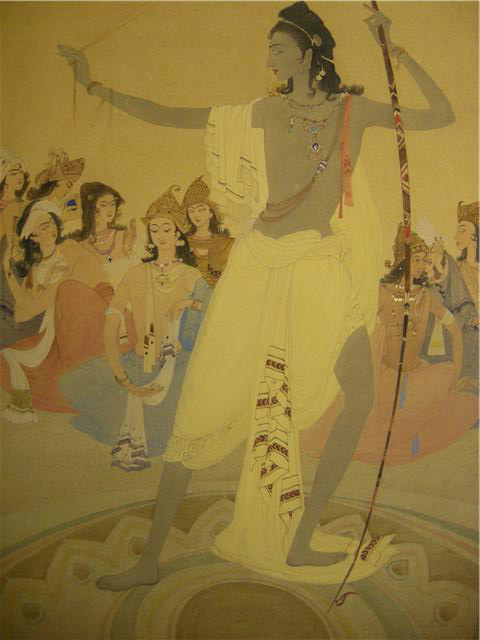
In 1951-52 his phenomenal work CHUGHTAI INDIAN PAINTINGS was published in Delhi, with a foreword by Dr Tara Chand and Preface by Sardar Kashmeera Singh. Some works were selected by Prime Minister Jawaharlal Nehru for the National Museum of Modern Arts Jaipur House and a separate room was made for them there. In 1960s M.A. Rahman Chughtai made the famous Arjun work, which was bought by the Japanese Ambassador to Pakistan. Later he made another version of the same work, which is in our archives. Rest assured that we Pakistanis do not carry any malice towards India. It is the Indian media who carries malice against Pakistan all the time. We do not mistreat our Hindu and Sikh visitors any time and the Hindu community of Pakistan enjoys all their rights in accordance wit the Laws of Allah as well as our State. Minorities are protected by the constitution of Pakistan. Accepting other ways of life is our priniple in life.
PERCY BROWN, FYZEE RAHAMEEN AND OTHERS IN DELHI
WAS M.A. RAHMAN CHUGHTAI PRESENT AT VICEROYS HOUSE?
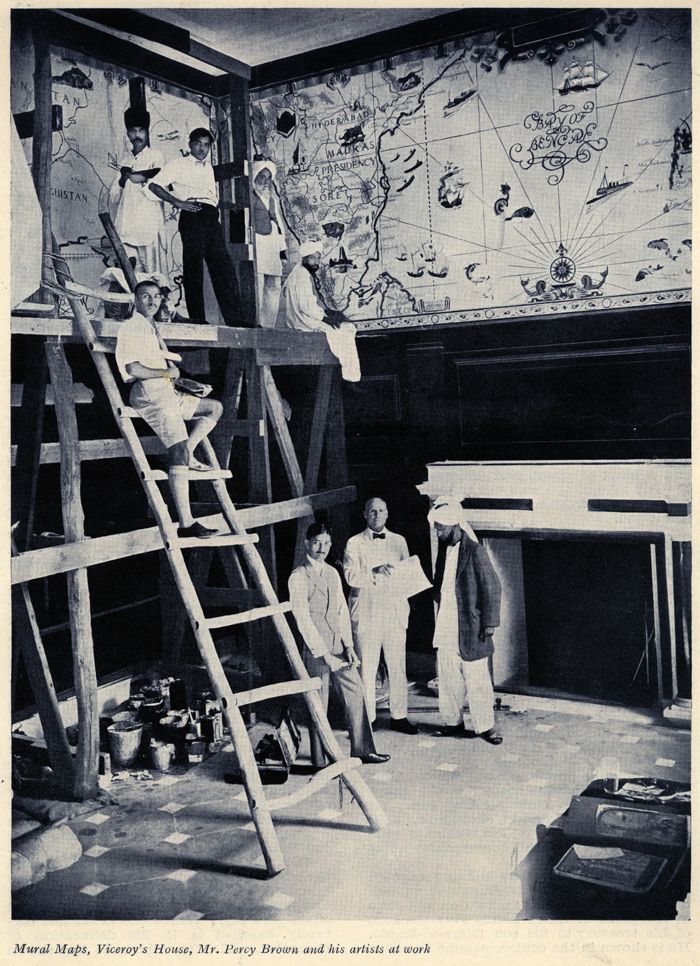
Percy Brown and his artists
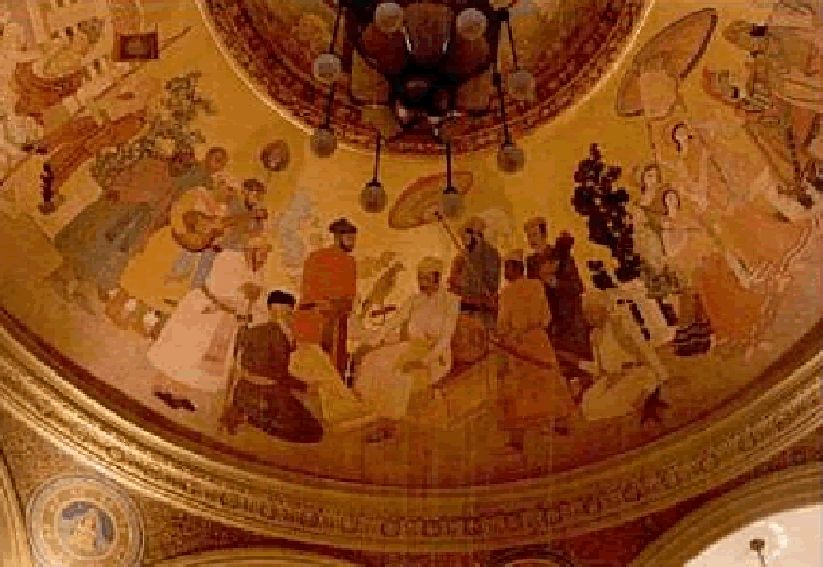
Mural Painting in Delhi by Percy Brown.
Dr Percy Brown
The idea of New Delhi was given by the King Emperor at at Durbar in Delhi in 1911. It was designed by Sir Herbert Baker and Sir Edwin Lutyens. On 6th of April, 1929, the last stone of the dome was laid by Lord Irwin and awaited a Michaelangelo to put life into it. Two engineers Sir Hugh Keeling and Sir Alexander Rouse were involved, but the mural part was given to Percy Brown, former Principal of Mayo School of Arts, Lahore.
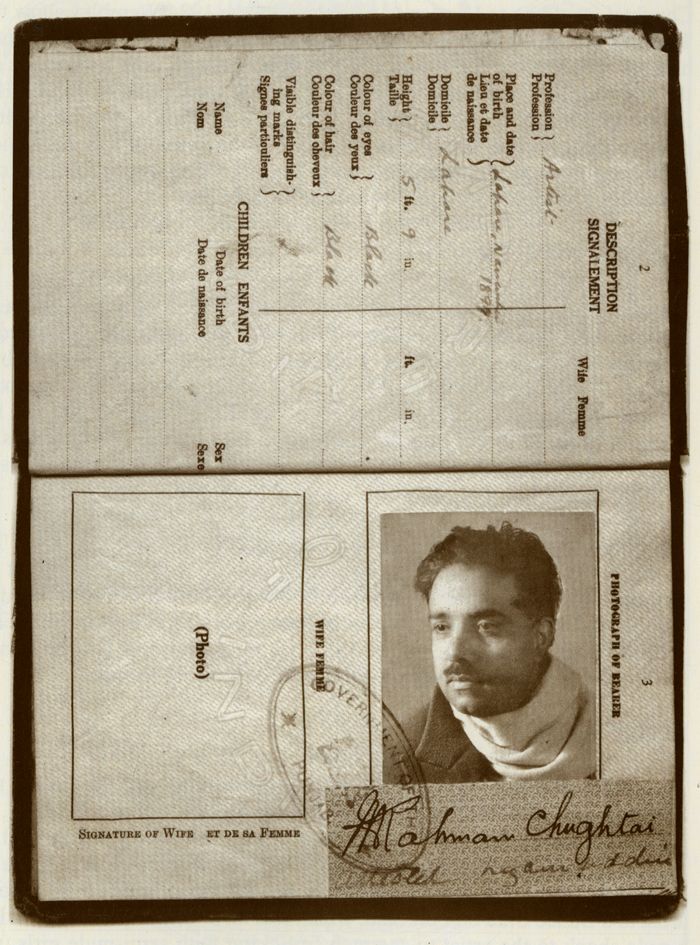
Passport 1932 Photo around 1928
The Viceroys House in Delhi was being made. A requirement was felt that it should be represented artistically by Regional Art, in which all religions should be represented. The man called to supervise all this was Artist and Art administrator Percy Brown. Percy Brown was Principal of Mayo School of Arts once and was in Calcutta then. Percy Brown started the project with his team of Indo-Pakistani Artists. The main persons responsible for these murals were both Percy Brown as well as Fyzee Rahameen . Besides these two, there was a team of other artists, mostly from Mayo School of Arts Lahore, as well as better known names. Even the Qajar King in Iran sent a figurative ceiling for the House.
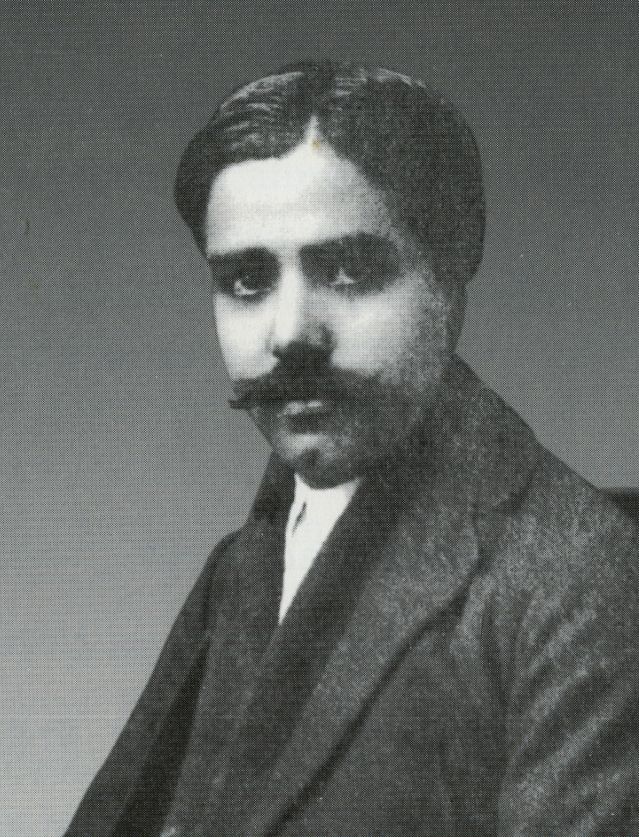
MARC around 1920
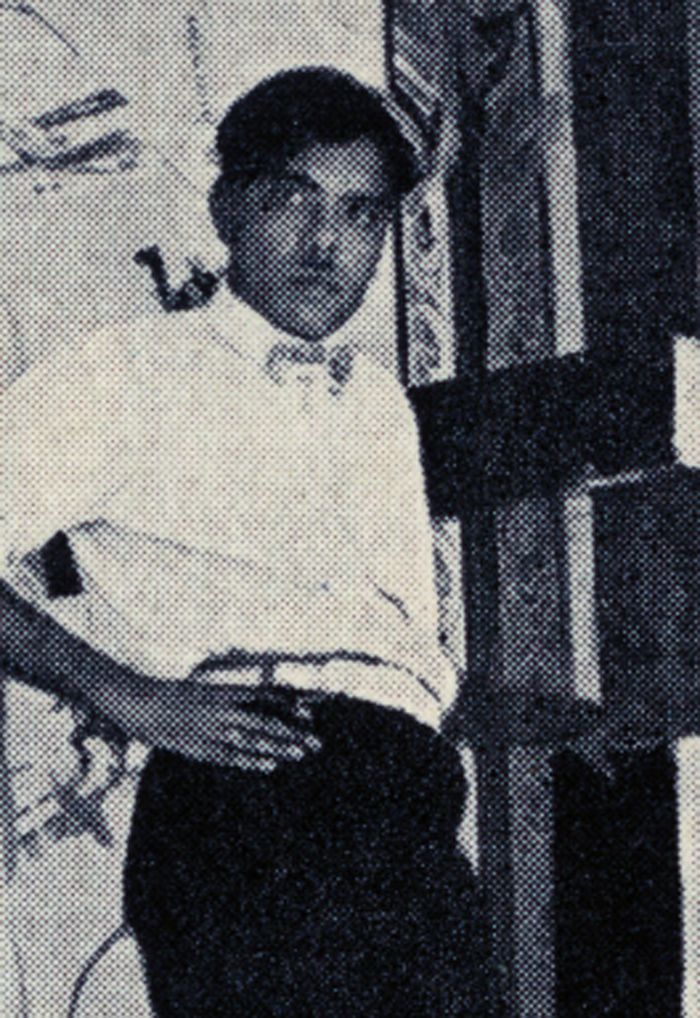
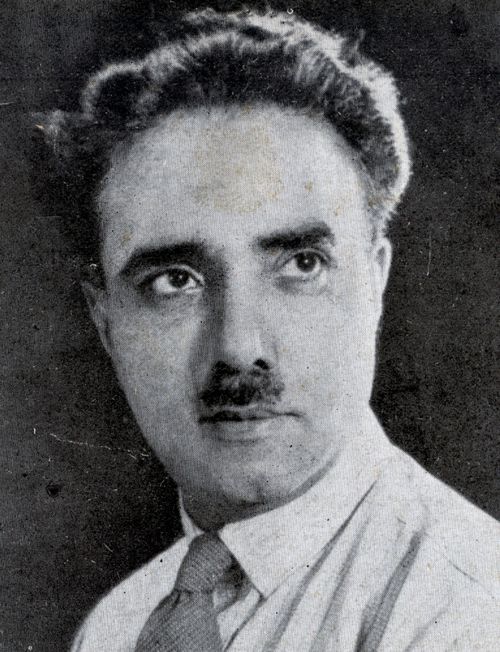
We all know that Fyzee Rahamen, a Jew converted to Islam, due to his love for Atiya Fyzee, was responsible for these murals and it is a well known fact. But there were portions of work. Figurative painting of scenes and before that maps of India and regional areas. The map part was probably done earlier in time. A photograph is known. But in the team of artists, many faces can be recognized as being from Lahore. Fyzee Rahameen was born in 1880 and in 1929, should be 49 years old. It looks like that the man on the ladder could be Fyzee Rahameen himself for he had lack of hair on his head, even at that time. In a typical English attire, he could be our person. Master Sher Muhammed, Master Miran Baksh, Master Ferozeuddin, and others can be recognized in the picture. But who is the relatively young man standing in the scaffolding, holding a design book in his hands. If we compare it to other photographs of M.A. Rahman Chughtai of that period, it could very well be Chughtai Artist. Born in 1897, he would be in his twenties there. The slit full black hair as well as the moustaches as well as the build. Most particularly the hairy hands. In no way it could be Fyzee Rahameen for he was an older man by that time.
Is it MARC
We have never heard that M.A. Rahman Chughtai even visited the Viceroys House. But then who knows? There are unrecorded things we really do not know. In any case it is a question of research. Perhaps it was not work, but a friendly visit to see what was going on there? In our view it looks like the artist Chughtai in all ways.
East Wall Murals by Percy Brown and Fyzee Rahameen
The murals no longer exists as they were washed by the Government of India after partition. But the work of mostly Lahori artists as well as the Bombay artist Fyzee Rahameen exist to this day. Fyzee Rahameen opted for Pakistan after partition and died in Karachi of old age. What the Government of Pakistan did (malignant) for his museum in Karachi is well known, but so should be known what the Government of India did to him. The artist place his works, others destroy them. Nothing else matters. Governments mistreat artists all the time. It is for us to clarify history.
India House London
Another interesting feature is the Murals inside the Indian House in London, also started by Sir Herbert Baker with cooperation of Sir William Rothenstein. Strangely William Rothenstein rejected Fyzee Rahameen for this London project and chose lesser known artists. But that is another story. It was at this India House that Feroze Khan Noon was High Commissioner of India, when M.A. Rahman Chughtai went to see him in 1932. The relation of the artist with Sir William Rothenstein and his son John Rothenstein is a separate story in itself.
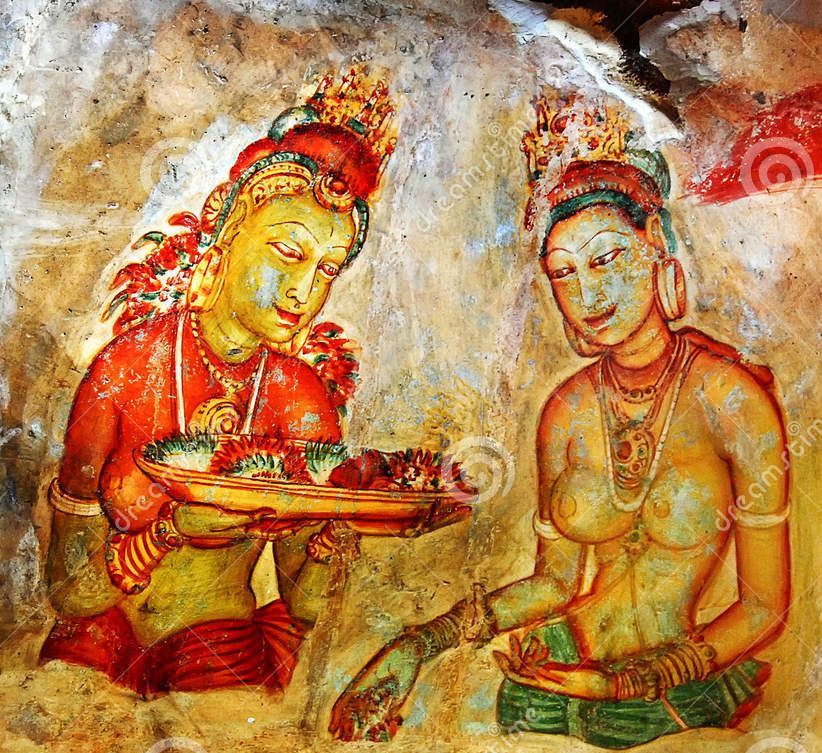
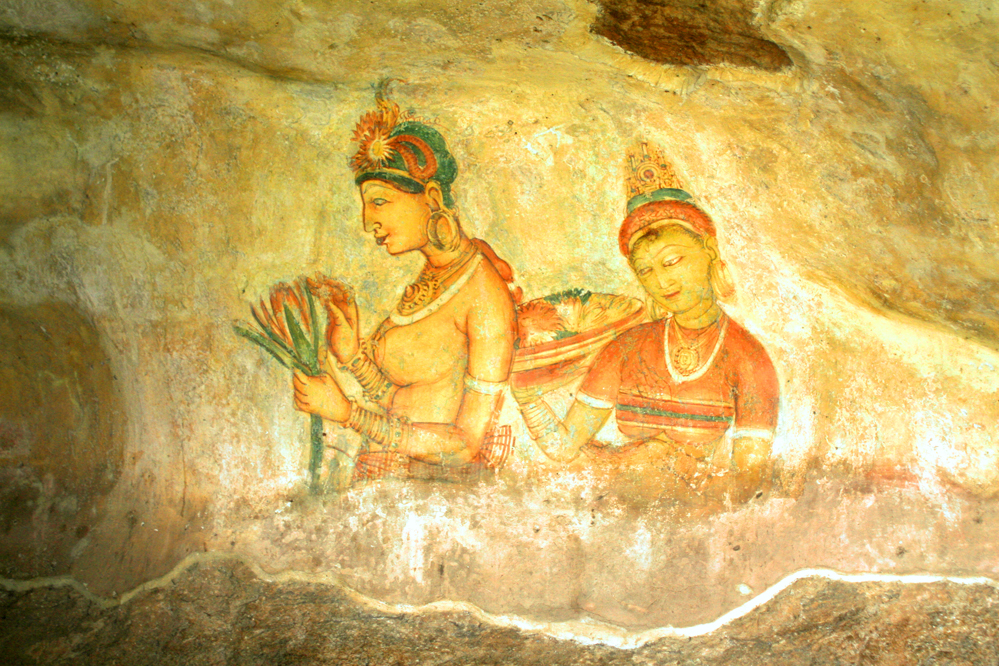
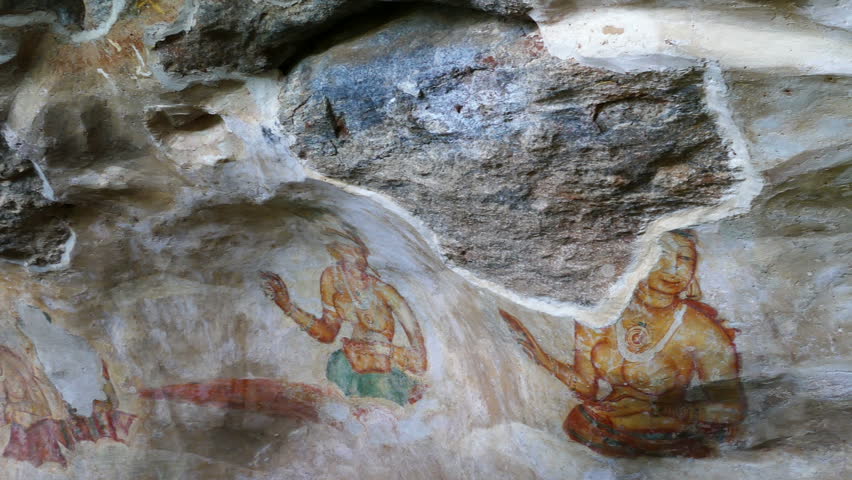
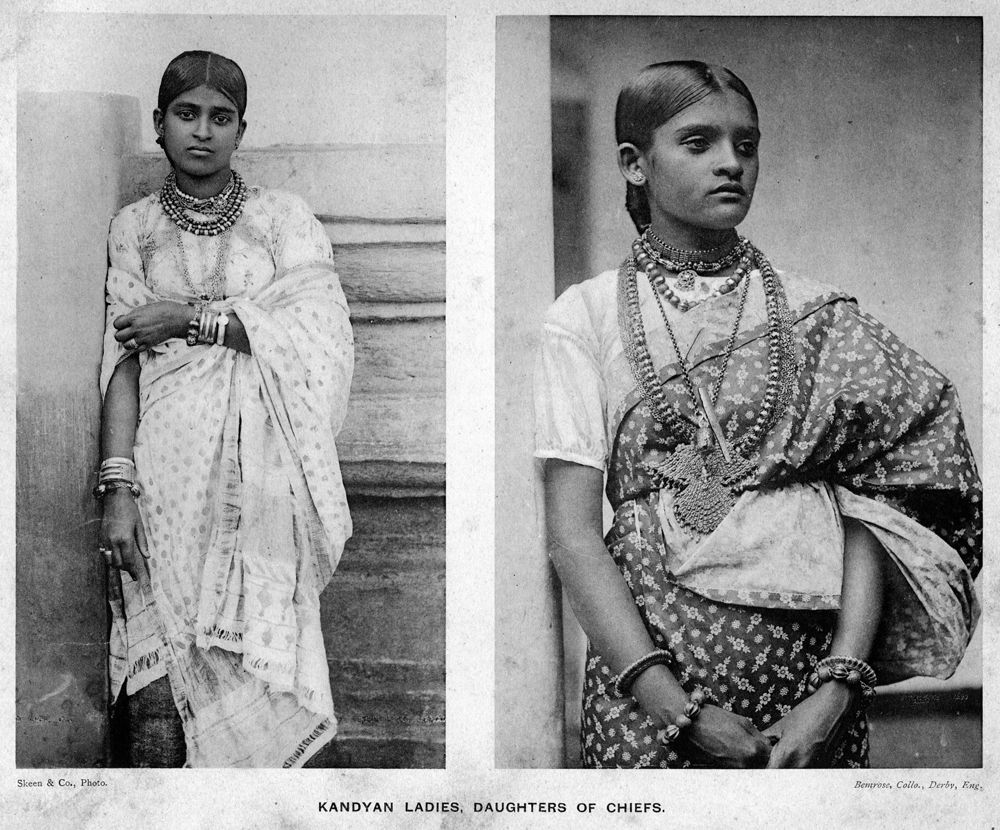
About 1600 years ago, there was a King in Ceylon by name of Kasyapa who rule from 477 to 495 AD. He had a fight with his usual clergy priests and shifted his capital to Sigriya. Here on the mountain rock, he had about 500 paintings painted of probably the ladies of his harem. Only 19 survived to this day, even those defiled with time. The creation is the most unusual creation of its kind and a wonder of the world in all ways. Sensuous to the extreme, they look like goddesses from the sky, floating above the painted clouds, as only half of the body is portrayed of the ladies. But does the ladies look like that from Ceylon? One can only guess their ethnicity. But on thing is sure, the works are a continuation of the AJANTA school, or Central Asian in origin. The chiseled faces, the long limbs, particular type of bosoms, all reflect Central Asian themes, in the newer settings. That not only Sigriya, or Ajanta or even Bagh, the antecedent of all these cave paintings are link to the Central Asian route, and ultimately to Sassanian Iran.
Sigriya ladies
Dr Ananda K. Coomaraswamy, who left Hinduism for Christianity, is still considered a pioneer authority on Hindu Art. In his book on Sinhalese Art, he says about Sigriya painting as:
Actual view of paintings on rock
“The Sigiri paintings show that Ceylon was in close touch with the art growth of the time. But (Sigiri) they stand isolated from the historical development of later art, which possess far less capacity for drawing the human form.The Sigiri paintings are somewhat sensuous and though apparently representing goddesses and attendants, are not markedly religious in feeling. They appear to have left no trace on later Sinhalese art. Were they not thus an isolated landmark, it would be easier to fit them into the historical evolution of Sinhalese art as we know it.”
18th century Ceylonese Painting
Dr Coomaraswamy admits that Sigriya is “partly affected by Chinese influence”, which obviously means Central Asian here. Most scholars agree to the Central Asian origin, but are unsure, whether the artists were from the region, or came from outside. The School is certainly Central Asian Art, the artists unknown. Probably some Masters came and trained local artists too in the same way. This is a routine which continues to the Mughal times when artists came with Emperor Babur as well as Emperor Humayoun to this region, and trained hundreds of local artists in the school of painting. That is how enrichment occurs, when cultures instead of clashing, amalgamate themselves in the new environment. Three cheers for Art!
KASHMEER AN INTERNATIONAL CONSPIRACY 1952
SARDAR IBRAHEEM’S BOLD STATEMENT AT THAT TIME
Kashmeer Conspiracy 1952
HAS ANYTHING CHANGED IN ALL THOSE YEARS?
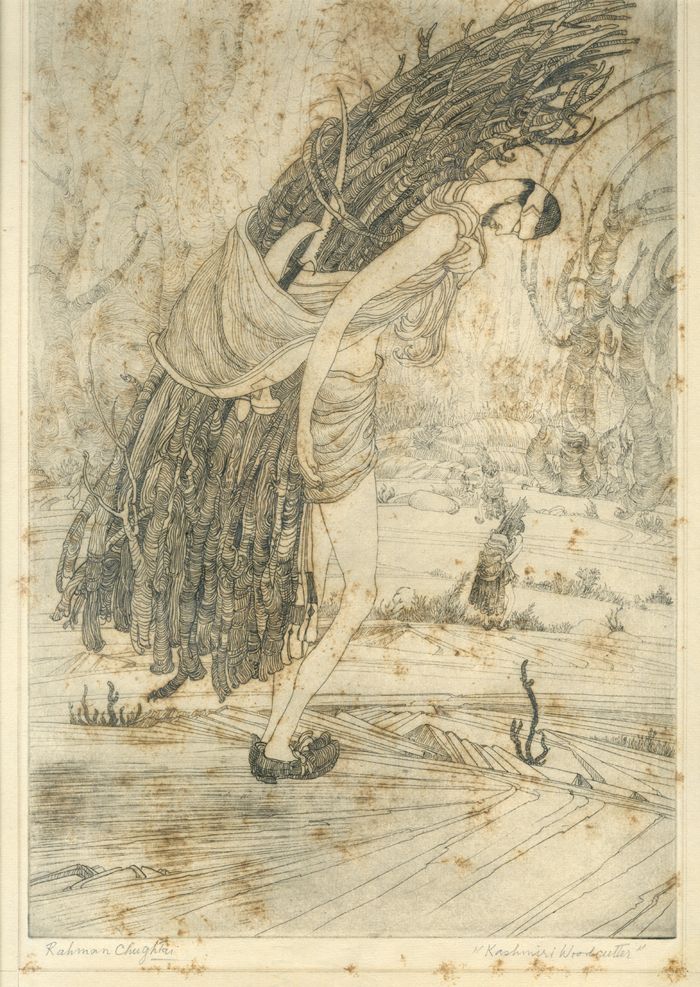
Woodcutter Kashmeeri
We grow up in media hypes all the time. Everything looks unfair at home, fair and idealized abroad. Al those who have seen the world at close quarters know different. In fact there is more fairness in your own society than any others. A study of the Kashmeer cause shows ruthlessness of all those God fearing people, who do not even believe in God any more. Millions of Muslims have died all over the world, subject of ruthless terrorism as well as undeclared wars and aerial bombings. In Kashmeer the case is no different. In S.M. Abdullah’s time there may have been a little semblance of truth, even that is gone. a Paradise on Earth made hell all the time., Who cares?
03-Kashmeeri-Apples
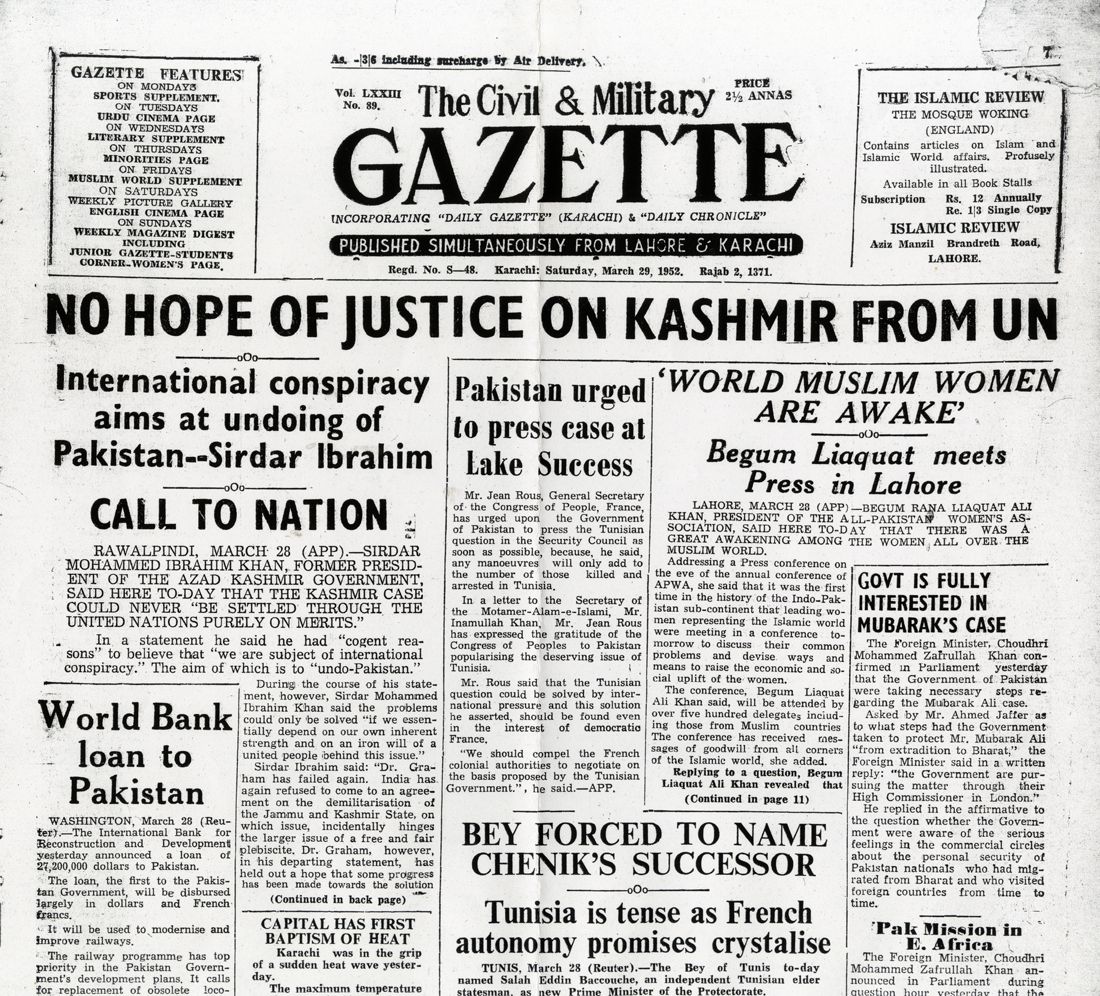
The Pakistani Nation cares but not the leaders, for their vested interest is in making more and more money. Read the statement of a Kashmeeri leader Sardar Ibraheem made in 1952 and published in Civil and Military Gazette. It worthy of being read again and again. Is it all over! Is there no hope! Is the hope in the embers extinguished? In the game plans of the world, even the fighters are just plain agents to defame our sacred way of life, in which even one unnecessary death holds you accountable in the eyes of the society as well as that of Allah. Whether we hold peace in our heart or shout peace, no one willing to listen to our side of the story. A renassaince is coming. The Muslims are not hibernating any more. They are fully alive. Our resilience is that we submit to the Laws of Allah. The Quran promises us that our day will come.
FOUNDING FATHERS OF PAINTING IN INDIA AND PAKISTAN
CENTRAL ASIAN ARTISTS PART EXCELLENCE WITH BUDDHIST INSPIRATION
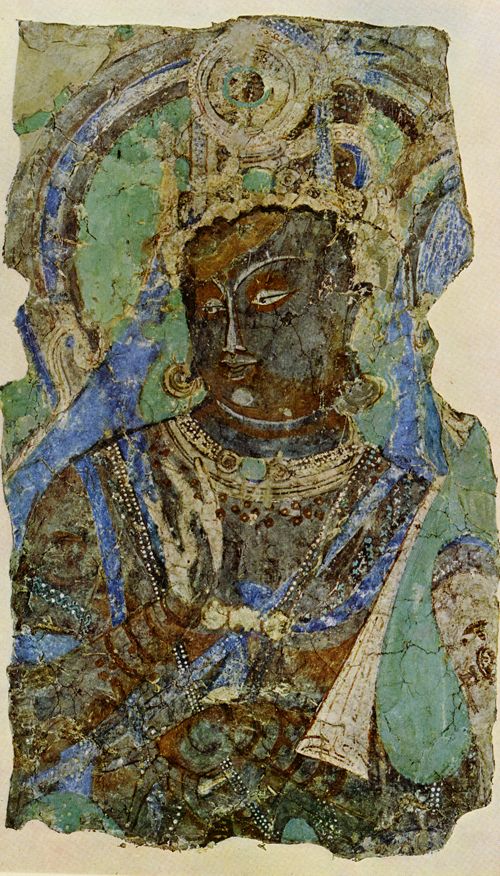
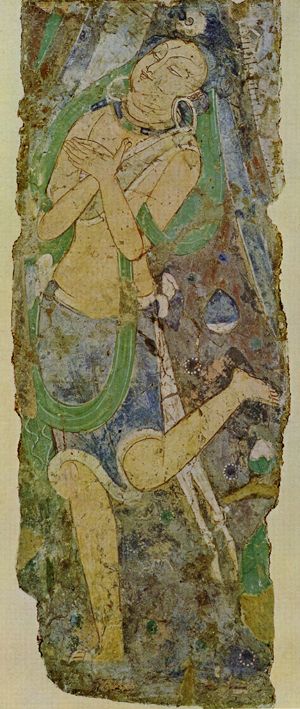
Central Asian Fresco Kizil
BUT SUBJECTS OF LITERALLY EVERY KIND
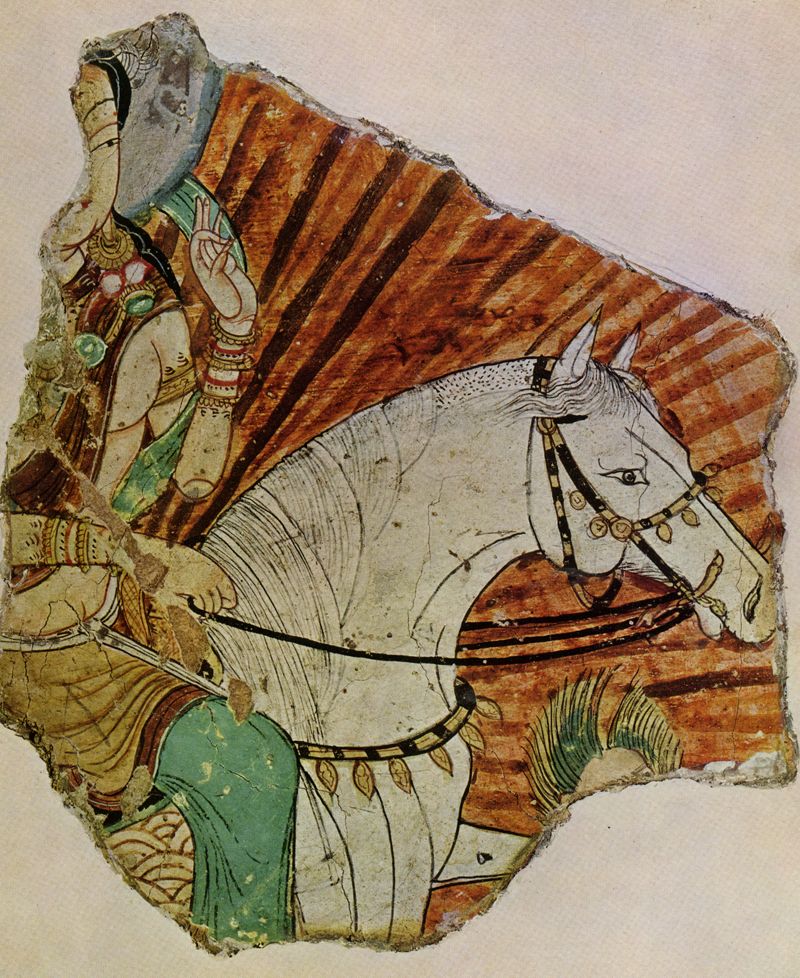
Central Asian Fresco Miran 2
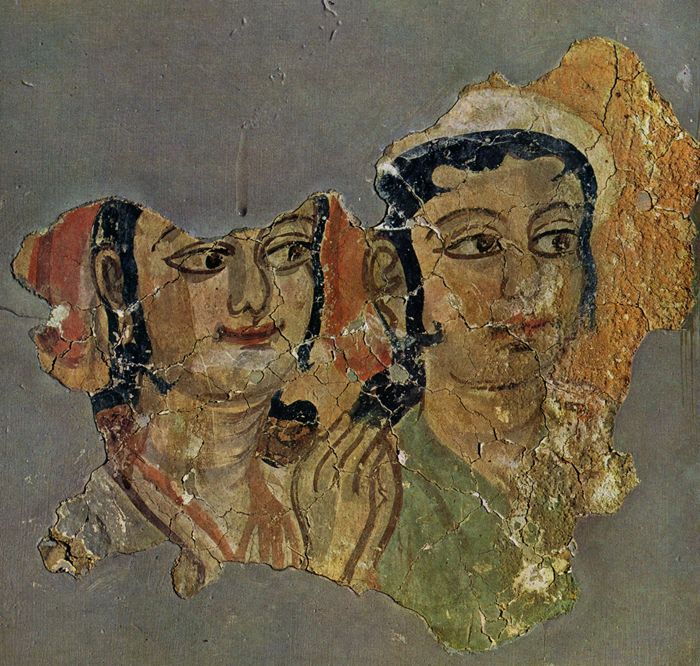
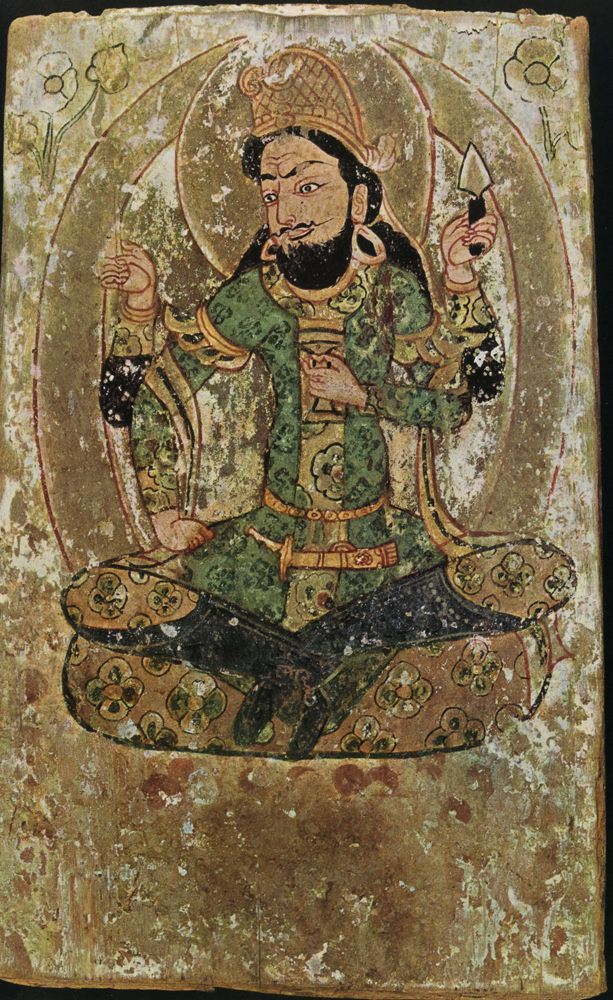
A second century painting from Miran has an elephant as well a a signature on it. The artist name is TITA. That is all that is known about Central Asian Artists. With the opening of the Silk route, whereas activity of every kind flooded the various cities on route, groups and groups of artists invaded the route, and started painting frescoes in caves everywhere. Although there is difference in various schools, yet they have all something in common, their inspiration is Sassanian Iran. It ia amazing that some of these frescoes survived the ages, and the world owes a debt to various English Scholars and Researchers, who saved this heritage of the world for the future., Special thanks should be given to Sir Aurel Stein for embarking upon an adventure of a lifetime and he started his journey from Lahore. Obviously a mere blog cannot do justice to the versatile painters of Central Asia but these artists painted not only Buddhist subjects but dilly dallied across every creative venture. Homage must be paid to these sons of different soils who brought the Art of Painting to India and Pakistan.
Central Asian Fresco MiranCentral Asian Fresco Worshipper
A thousand years of creativity can be attributed to these Masters of all times. Gradually with time they shifted to local subjects, and that is why we have in due course Islamic as well as Hindu subjects done by these Masters. Some of these frescoes exist in Kabul but also existed in some sites of Taxila, but weather has obliterated their marks in time. We will talk more about Ajanta, Bagh, and Sigriya caves in other blogs.
LEGAL REQUEST TO DECLARE TAJ MAHAL A MANDIR
A HINDU SEGMENT MAKING INDIA LAUGHING STOCK OF THE WORLD
Taj Mahal
HOW SILLY CAN A NATION GET?
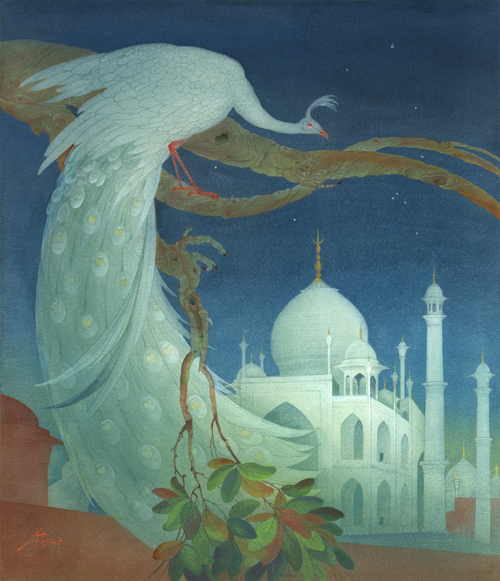
The Israelis started it by exploring the foundations of the Masjid Al Aqsa for the lost Temple of Solomon. As if the original builders would have opted to do this in the first place. Underground work and debris has not revealed anything except a couple of mutilated coins, etc. The Babari Masjid was brought down for a Hidden mandir underneath it. Years of exploration has revealed nothing there. But at both places they tried to plant superfluous evidence. Now from some years, a certain Hindu segment burns their self by envy of a Love Monument which has become Symbol of the world. That is the Rauzah Mumtaz Mahall. Each stage of the acquisition of the land for the mausoleum as well as the building is known. The full of malice Hindu segment thinks of Taj Mahal as a Hindu temple and spun stories about its underground chambers. Even a blind person just by touch and the fresh wisp of the air can tell you that it is no mandir in any way, underground or overground. Can you imagine a group of lawyers taking to Court to have it declared as a mandir and handing the monument to them! Obviously the Court could not oblige as it would have made India a laughing stock of the world. The appeal was rejected, but look at the minds of those who spun the tales. Bigotry reaching a point of no return. That is the reason a few thousand Muslims came to this region and there was conversion of millions. One has to know ones feelings and keep abreast of changing times.
Taj Mahal in fading light
Islam means PEACE and the rant of terrorism is politically motivated to spin stories about Muslims and Islamic values. For God’s sake, learn to live in peace. Co exist and be happy. A thousand years of inferiority complex gets you nowhere. We can co exist. We have to open our hearts to accept other ways of life. Finding Mandirs under Islamic monuments is no way towards peace. Mind you another Pakistan may be in the making soon!
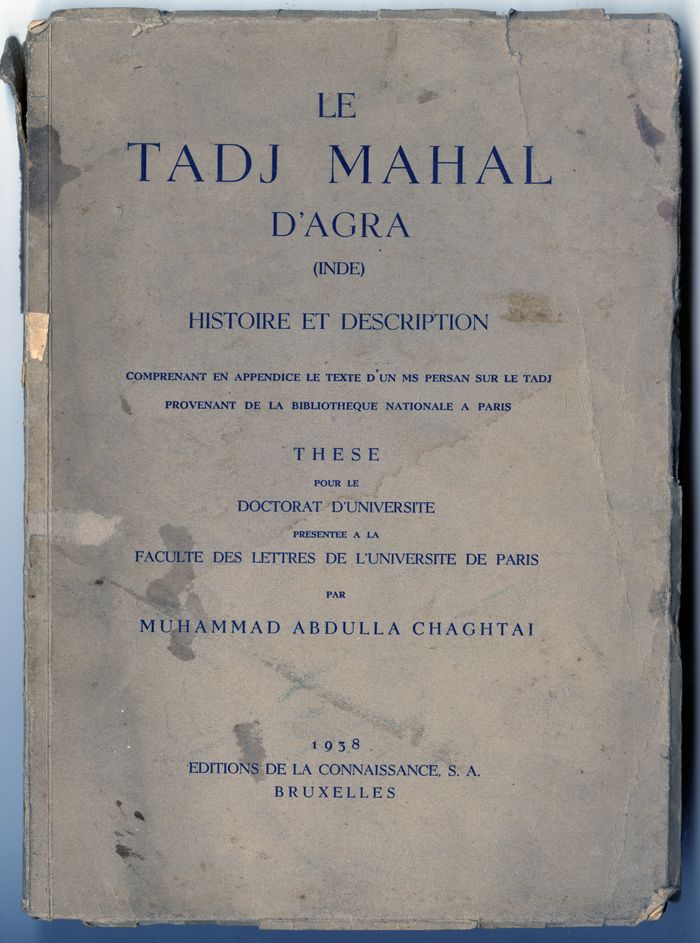
64-The-Story-Teller—Ver-2First documented research Paris 1937
THE SACRED WRITINGS OF THE MUGHAL PRINCESSES
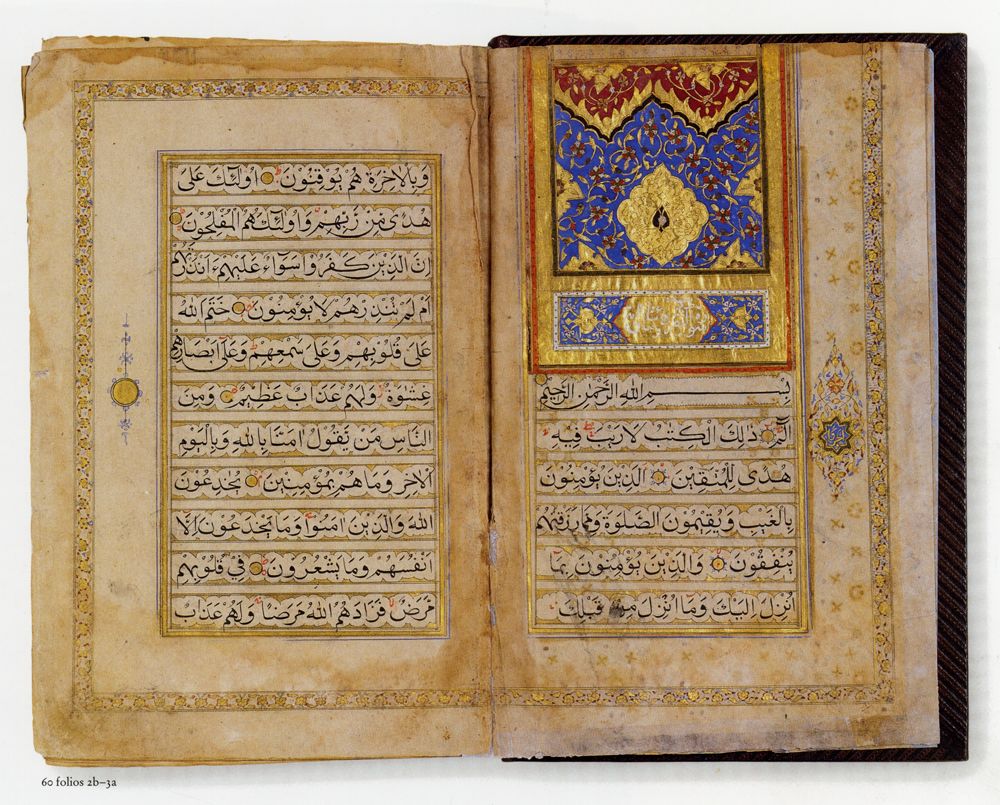
QURAN WRITTEN BY ZINAT UN NISA DAUGHTER AURANGZEB ALAMGEER
Quran of Zinat ul Nisa
Various legacies of the spiritual oriented ladies
Emperor Aurangzeb Alamgeer had ten children, of which five were boys and five were girls. . Some of them more talented than others. The daughters were real talented in many ways. Obsessed with knowledge, they had tremendous resources spent in acquiring books and building up libraries. Poets and scholars most of them. Fostering and encouraging talent in other persons. They were well versed in study of the Quran, could recite same elegantly and even write same. We hear of many Qurans written by Mughal Princesses.
Bint Mohyuddin
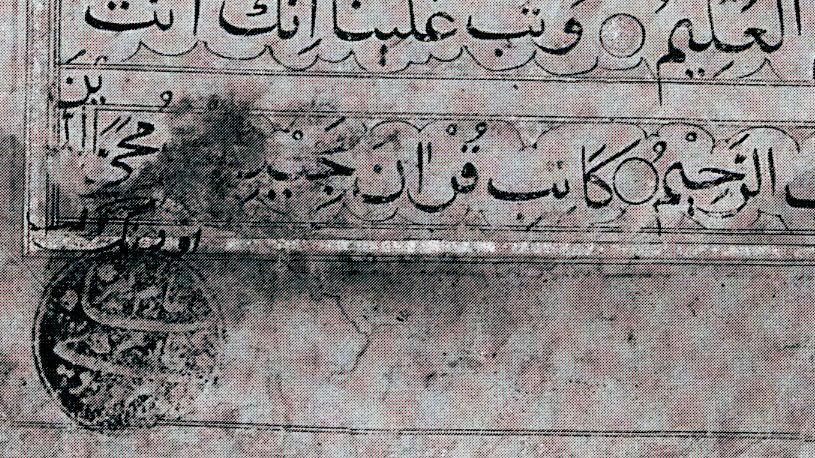
One such Princess was Zinat un Nisa. She was born on 5th October, 1643 at Aurangabad. She died in the year 1700 AD. In her life she never got married and spent her time in spiritual pursuits. She built a reasonable mosque in Delhi (like the Jamia Masjid), which has survived the times and is known as Zinat ul Masjid. A Quran came up in a collection and is attributed to her in a later writing. No one can be sure of same but for the present it is taken as the Quran of Zinat un Nisa.
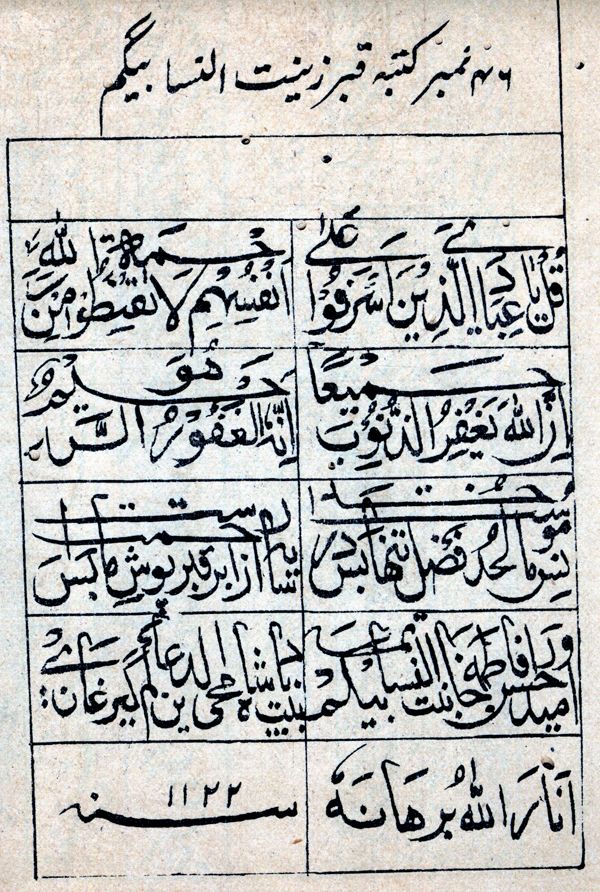
Zinat un nisa died in 1700 AD (1122 AH) and was buried in the enclosure of her mosque and the grave existed for a long time. During the mutiny it was destroyed and leveled to the ground. Sir Syed Ahmad Khan has given the inscription on the grave in his book on Delhi, namely Asrar ul Sanadeed. That is on record. Carr Stephens has translated it in his book on Delhi:
Zeenat ul Masjid Delhi
“For a friend in my grave, God’s forgiveness is alone sufficient;
The canopy of my grave, is the shadow of the cloud of God’s mercy,
In the hope of a righteous end. Fathmah Zinat ul Nisa Begam,
daughter of Badshah Mohiuddin Muhammed Alamgeer Ghazi.
May God illuminate his works: 1122 Hijri.”
Inscription grave Zinat un nisa
This was the spirit of those grand ladies. Hindu writers have poured dirt on these Princesses with concocted stories of their own which border on utter shamelessness. Hate blinds people. The character of all these ladies is brought to question with stories of murders of their secret lovers. How much malice is in the heart of people to throw mud at figures who cannot defend themselves at all? The Law of Retribution catches up with all of us, particularly those who cast aspersions on other people, without evidence of any kind. This becomes all the more bizarre when history records Zinat un nisa saving of some influential Hindu families, including the Maharratta Shambaji’s widow and son Yesubai. Both mother and son were in her personal care and safety. Strange! What cheap minds can think of degrading pious women. That is why the curse of Allah is upon writers like Magan Lal.
A SOUTH AFRICAN VISITS PAKISTAN IN 1948
COMMENTS ON THE TWO NATION THEORY
Pakistan Utopia
Living in peace does not mean acquiescence
Cassim Gulam Essop
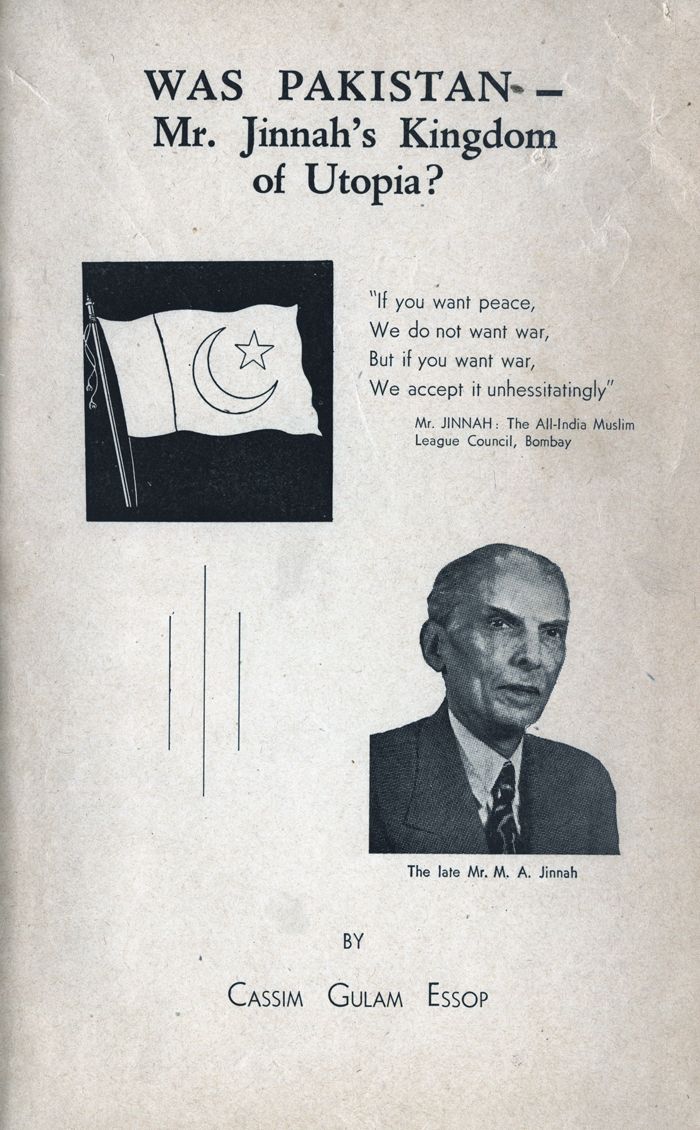
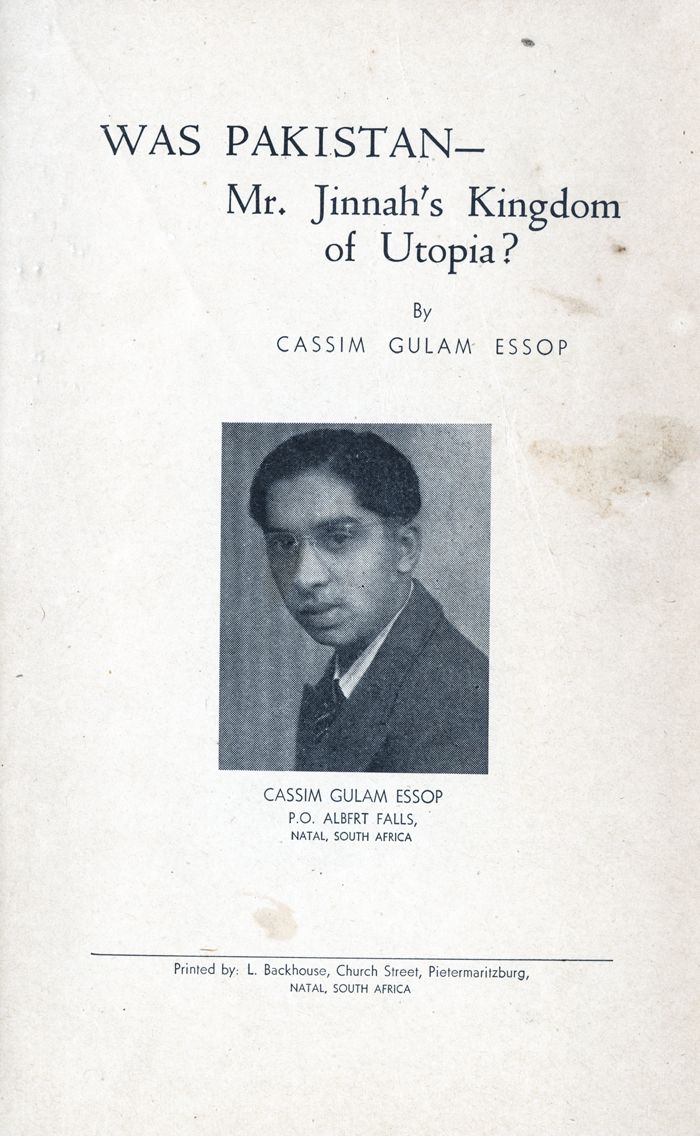
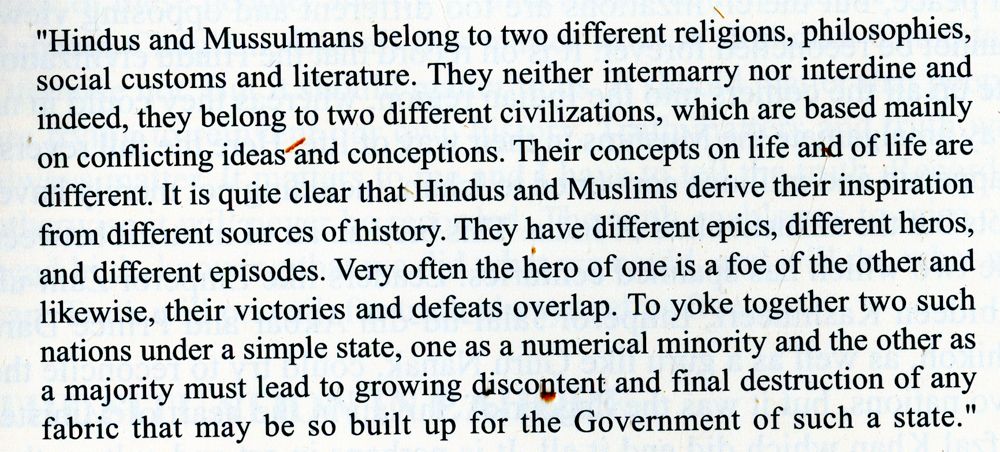
We came across a book printed and published in South Africa. The author a young boy by the name of Cassim Gulam Essop, and very dedicated to the ideas of Quaid Azam and calls his Pakistan, the upcoming Utopia of Muslims. He says he has many Hindu friends and wants to apologize to them, but the simple truth is that there are two nations in the region and nothing can change that reality. He writes about his impressions of the visit to his region.
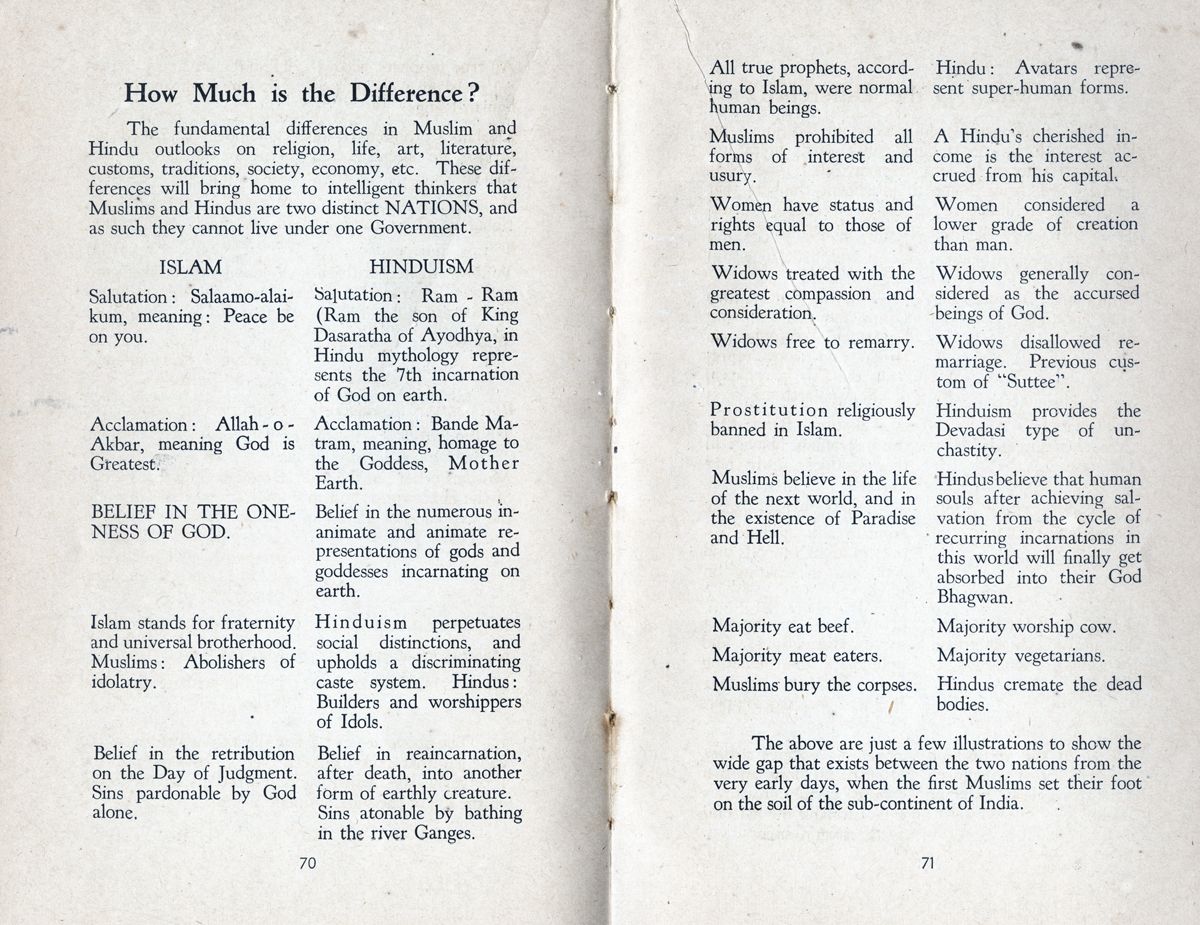
Two Nation theory
Obviously we cannot put the whole book on the web but the main idea, we have put and that is the difference between two nations. This is not to pick flaws anywhere. It is to point the differences and the Quaid has eloquently already described the differences in his own words. Yes,
the Quaid said, and we attach that statement too.
Nations
No wants to fight with each other. We can all live in peace. Respecting others way of life is a must, but with all the differences, the two Nations can never become one. That is the eternal truth!
THE INSPIRATION OF MUSLIM PAINTERS IN HISTORY,
MANI THE GREATEST PAINTER OF ALL TIMES.
Mani founder Miniature School
Islam owes its debt in aesthetics to China and Central Asia.
Mani
Prophet Mani was founder of the Manichean School. To teach his vision of life, which was multi cultural, he innovated the picture book. In his texts of teaching, he would illustrate the same through pictures. The Mani School developed from that and picture books became the visual method of teaching in those time. Not only religion, Mani is considered the Founder of the Miniature School of Painting.
Mani School picture book
Mani was of Royal blood. He was the son of Fattak Babak, and grandson of Abu Barzam. He was born across Kutha Canal , south of Baghdad. On 12th April, 240 AD, he proclaimed himself as the Prophet. To spreads his teachings, he resorted to illustrating his texts with pictures. The picture book was born. The hatred for Mani and his sect was so great, that most of these picture books were destroyed and few fragments survive to this day. The Prophet himself was tortured in his lifetime. His religion is no concern of ours, but his skills as a painter are with us. The fame of the brush of Mani is there in every day use.
Mughals vision of Mani
The interesting part is that Mani traveled all through the region. Some years he spent in Sind too. Later on with the Persian King Shahpur. Some accepted him, most rejected him, but his way of life was there for more than a 1000 years. His skills as a painter even more. We hear in our Islamic history Kings and Queens talking of the Brush of Mani, and it was not only true for patrons. It was more true for artists themselves who found themselves competing against the legend of Mani. After all Mani was the founder of Miniature painting. Persian history is full of talk of Mani. Even Nizami tells us tales of the competition between Greek and Chinese painters, as started by Alexander the Great. Of course Mani won the competition because he innovated things, which nobody thought of. In Pakistan today the legend of M.A. Rahman Chughtaiis there. If Mani had seen his works, he would have been delighted too. Of course M.A. Rahman Chughtai thought of Mani too, but as the Iranian Ambassador Manoucher Zelli said, we see in Chughtais works the direct inspiration of Kamal uddin Behzad. And Behzad is another story we must take in its stride. The region even today reverberates with the name and work of Behzad.
Actual fragment Mani School
A British scholar Dr James Dickie in 1976 at the World of Islam Festival in London, wrote an article for the Times London. Dr Dickie was of the view that in certain respects M.A. Rahman Chughtai excels Behzad the Rembrandt of Islamic Art. More of that later.
Reconstructed Mani SchoolKing watches Greek and Chinese painters
LAHORIS TRYING TO SAVE THE DOORWAY OF THE BAGH OF JAHAN ARA,
WITHOUT EVEN KNOWING WHAT IT IS, A LITTLE RESEARCH REQUIRED.
16-Jahan-Ara-at-the-Taj-(Version-2)
The myth of Princess Zebun nisa attached to Chauburghi.
Princess Zebun nisa was an exceptional woman of her times. Whatever is known about her, points to her excellence in many directions. The most amazing thing was that she became a HAFIZUL QURAN at the mere age of seven years old and Aurangzeb was very pleased with her. The Diwan Makfi is touted as being her DIWAN, or collection of poetry but there is no proof of the same. In fact scholars have pointed out the Persian lady who came to Shah Jahan’s Court and had the nomenclature MAKFI attached to it. The attribution of Diwan of Makfi to Zebunnisa is only in 19th century. In fact history records the destruction of her own Diwan by a maid servant, when it fell into the well of the palace. These are known facts. Few portions of her poems survive in collections of that period.
Grave of Jahan Ara
Another amazing thing is that the touted MAUSOLEUM OF ZEBUN NISA in Nawan Kot is not hers at all. It is the mausoleum of an unknown courtier, for according to Mughal Architecture, it is a MALE BURIAL SITE and not that of a female at all. Dr Abdullah Chaghatai has researched it as being the Mausoleum of Haji Abdul Kareem (see his book Imkan Lahore). In fact the Mausoleum of Zebun nisa was in Delhi and when the Delhi Railway came into being, it was demolished by the British. Its inscription is in the Red Fort Museum and published by Sir Syed Ahmad Khan in his monumental book ASAR SANADEED. In the same way the mention of a ZEBINDA BEGUM in the inscription of Chauburghi confuses people that it was the Bagh of Zebun nisa. It was not so.
Zebun nisa was born in 1047 AH (1638 AD), and the Bagh of Chauburghi was built in 1056 AH (1646 AD). That means Zebun nisa was only about seven to eight years old when the Bagh was built. That was certainly not possible. But we have clear evidence that the Bagh was that of Princess Jahan Ara and we have the testimony of people like Dara Shikoh, Chandar Brahman, and even Emperor Aurangzeb himself. The nomenclature of Jahan Ara was BEGUM SAHIBA and when she is referred as ZEBINDA BEGUM, it means that Begum Sahiba was responsible for giving ZEB and ZEENAT to the building.
Chauburghi Gateway 1870
The woman MIYAN BAI remains unidentified but she must have been a very important woman attached to Mughal Court. In fact MIYAN BAI built a small mosque in Ajmer in 1053 AH. But the story goes even further. When the Bagh was built, Jahan Ara asked the opinion of her Court lady on the Bagh itself. Miyan Bai replied that she could not conceive of it for it was beyond her capacity to have anything like that in real life. Jahan Ara was a woman of exceptional charity, and as an act of royalty, she BESTOWED THE BAGH OF JAHAN ARA TO THE LADY MAID. It means on the completion the Bagh, it was gifted to a maid servant by an exceptional lady and it says so on the gateway itself BESTOWED ON MIYAN BAI BY BEGUM SAHIBA (referred as Zebinda).
The British treated Mughal monuments as ruthlessly as the Sikhs. The Chauburghi gateway was a Post Office for a long time. It is a miracle that it survived, while the rest of the garden was razed to the ground by land grabbers of those days. Nothing has changed. Today’s bureaucracy is as ruthless as that of the past. The British went away, their arrogance stayed behind. Under this system protests does not matter. The system has to change by revolution itself. The civil society in Pakistan is too weak in its conception and can do nothing at all on its own.They would need man power and that man power is in one place only. That is the reality!