VISUAL IMAGERY OF SIR THOMAS ROE IS IN CONFLICTFALSE – ATTRIBUTION BY ENTHUSIASTS VERSUS REALITY

VISUAL IMAGERY OF SIR THOMAS ROE IS IN CONFLICTFALSE ATTRIBUTION BY ENTHUSIASTS VERSUS REALITY

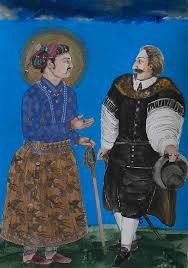
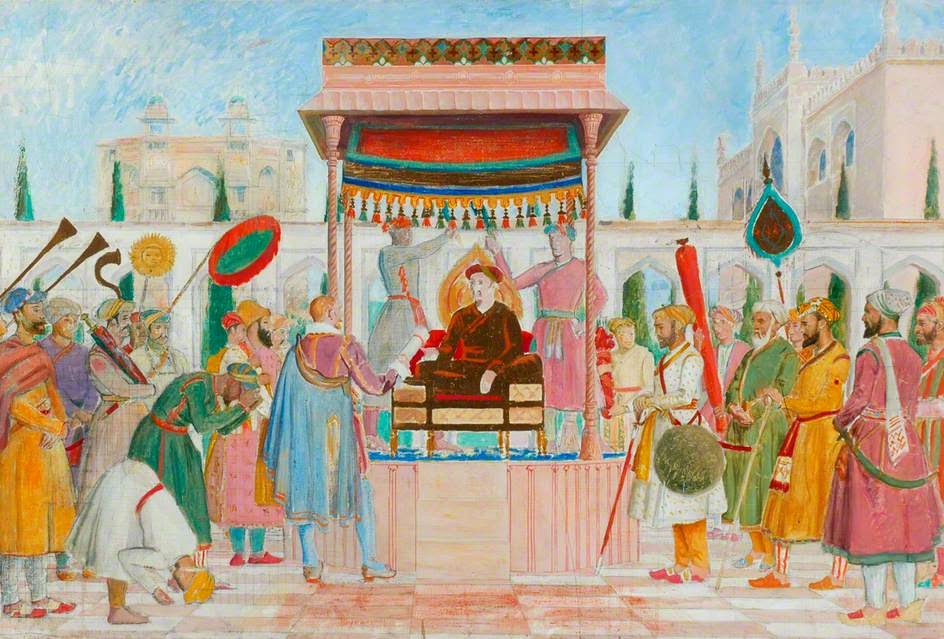
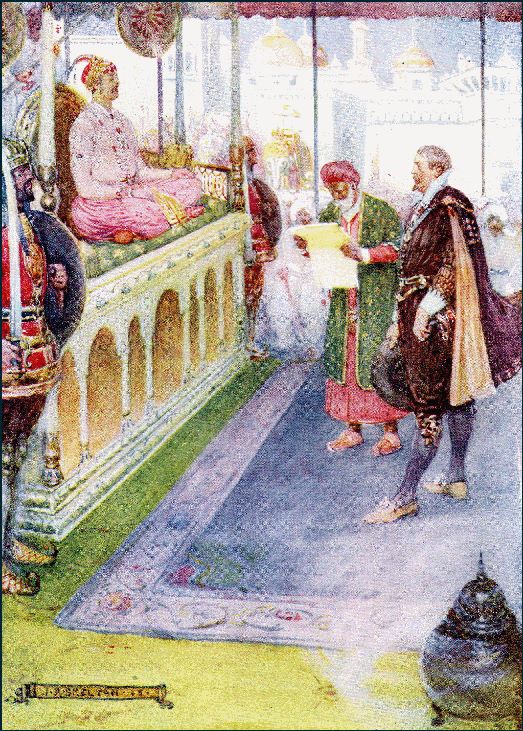
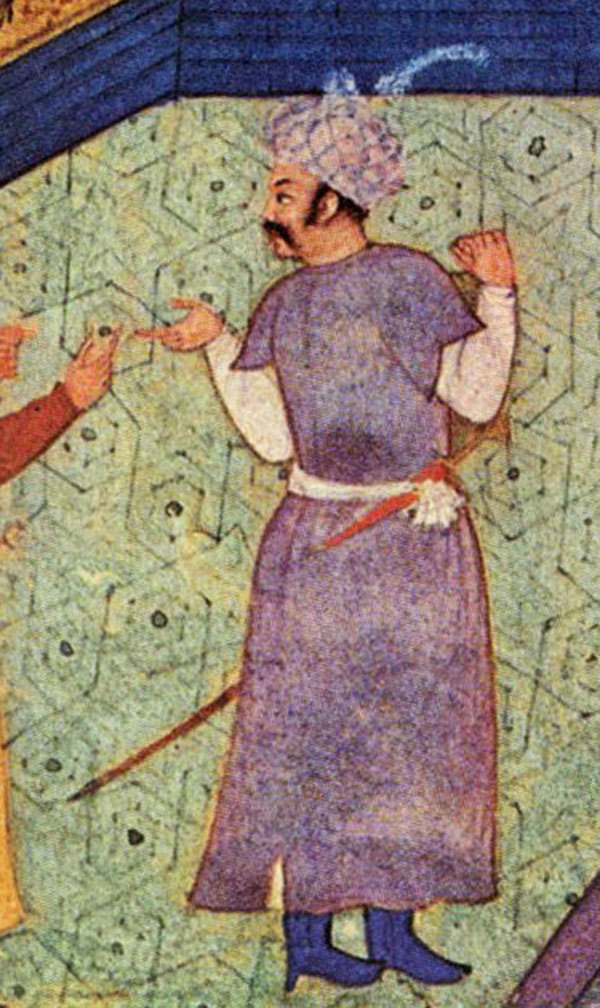
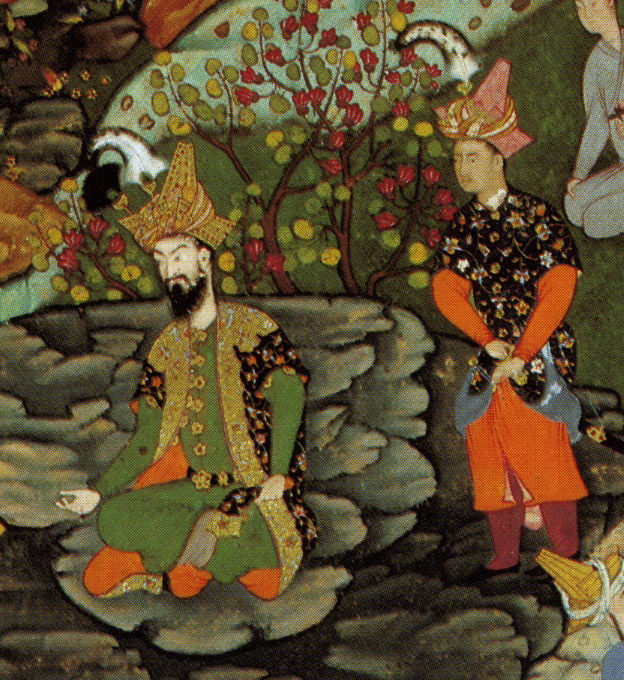
So much desire to prove Sir Thomas Roe that internet bombarded with imaginary and assumed images of Thomas Roe. Of course the real Thomas Roe can be seen in official portraiture but nothing to do with the reality. The only old one is an attributed imaginary miniature of Thomas Roe and it is deliberately faded and with so much wrong in it. Thomas Roe raises his left hand to salute Emperor Jahangeer. In right he holds something like a book. Maybe a bible. Or the image has been made from a khaka (sketch) in reverse. Actually it looks like a flipped tracing. The noble is kissing left hand of Jahangeer, but when flipped it becomes the proper right hand. His level of importance can be judged by no respect being afforded to him even by the courtiers. But look at his face and dress. He does not have an upper covering on his so called trousers.  But his face shows hair growing after a possible TEEND (head with no hair) and shaved beard. Drooping mustaches against upright ones in official picture. No beard at all, no hair on head, just a few days stubble. Fresh from a prison may be, or a sick bed. Look at the eye brows, certainly it is not Roe in any way. But it is a possible 18th or 19th century work and fading may have been done to hide the age or some wrong imagery under the erased part. The European could be an addition on a destroyed work. 
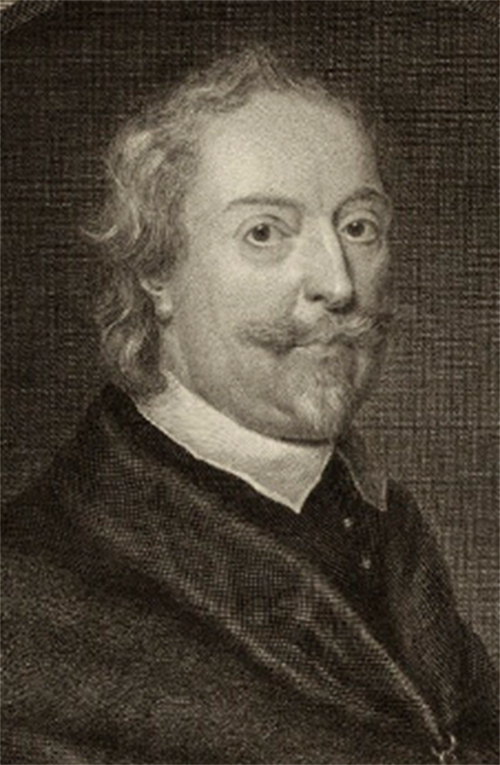
It is not Sir Thomas Roe but perhaps a missionary priest assumed to be the diplomat. Edward Terry writes about the meetings of the diplomat with Emperor Jahangeer in his travelogue, in a very elusive way, as:

“The Mogul looked to be presented with some things or other, when my Lord Ambassador came to him, and if he saw him empty handed, HE WAS NOT WELCOME; and therefore the East-India company were wont very year to send many particular things, unto him, in the name of the King of England, that were given to him at several times, especially then when the Ambassador had any request unto him, which made a very fair way unto it.”

And the most funny statement (they hardly knew anything) from Edward Terry is:

He is called the Great Mogul, as the chief of the circumcised , or Chief of the Circumcision.

Great knowledge they had, when they thought Mogul meant one who is circumcised.

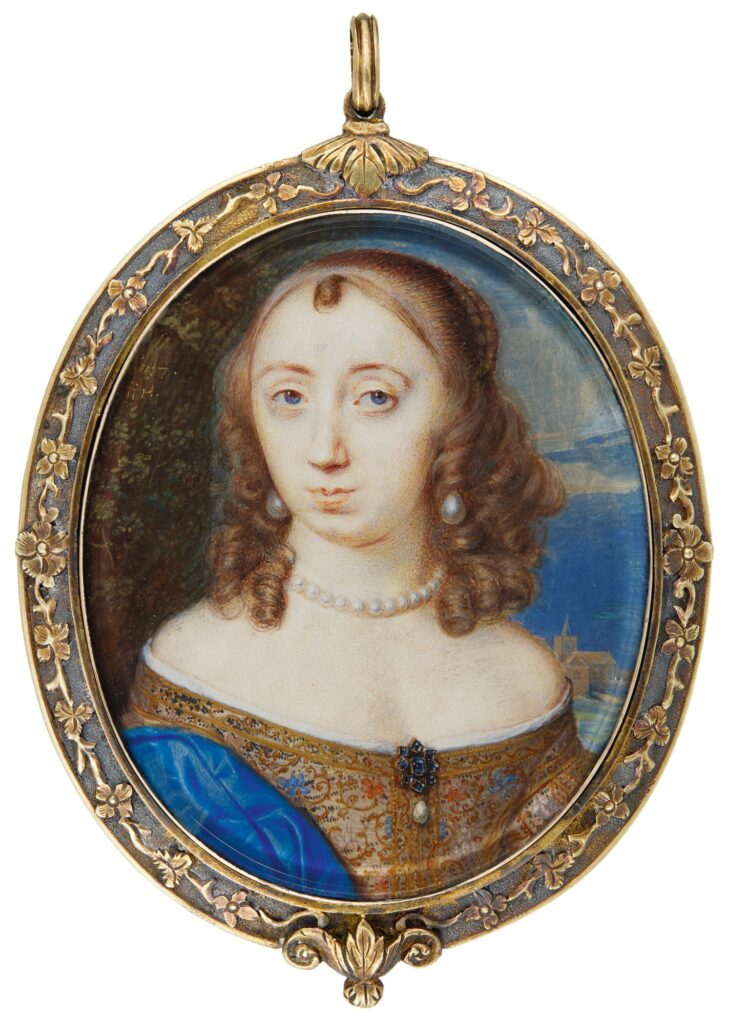
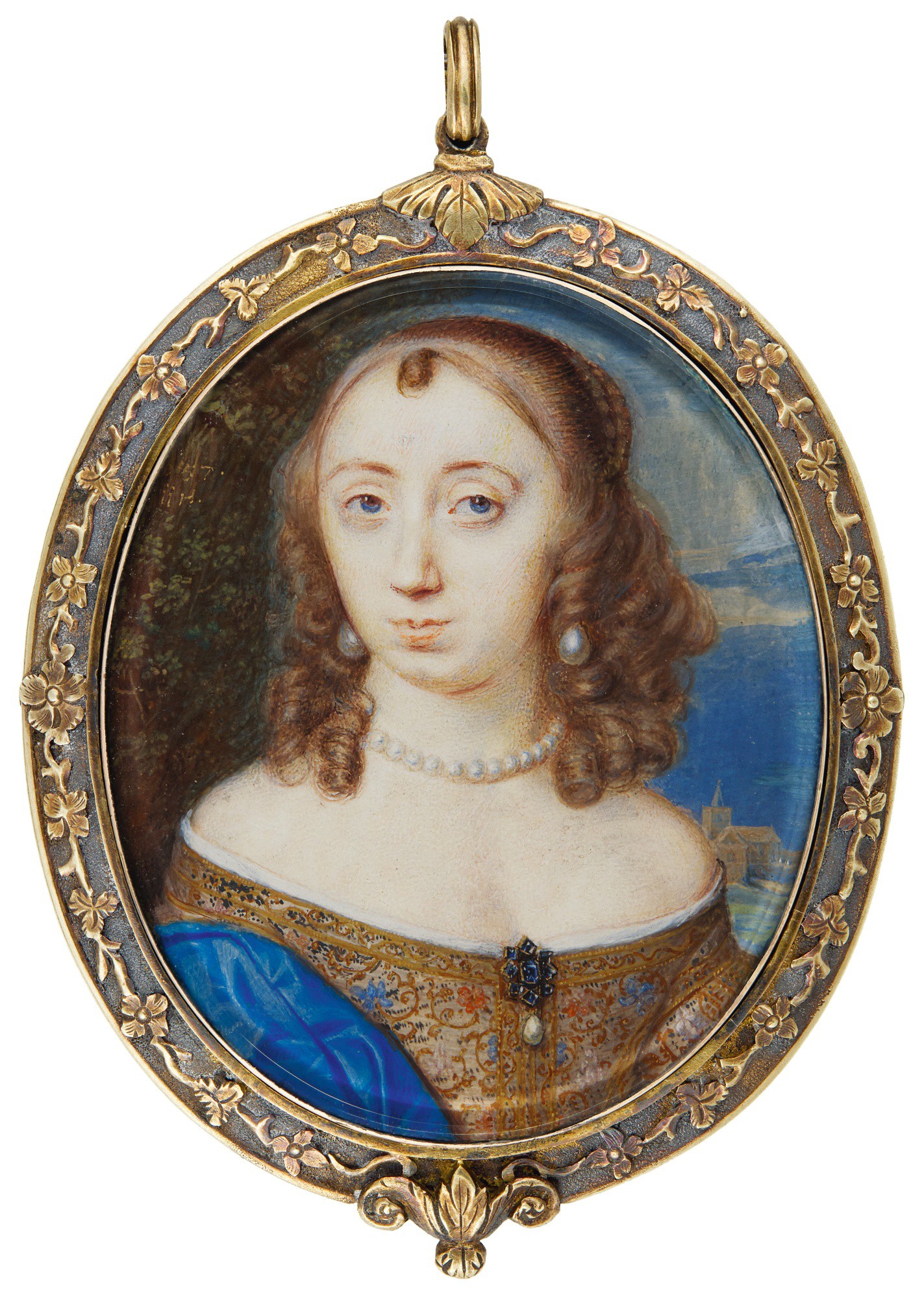
The lack of details in the journal says many things unsaid. Making baywaqoof of us in all ways. Chittay angrez day agay seer newan (in front of white Englishman, the head bows down). Tell us documentation, not varied stories. Whereas Edward Terry tell us the various things presented to Emperor Jahangeer, internet story tells he rejected most but a portrait by John Hoskins of Thomas Roe’s wife which saved the day. From where does all this comes from. Proof or probabilities.

The so called journal of Sir Thomas Roe found and printed around 1899 AD. Where was it all those years? Re-written in 1926 and then even further casting in 2016. Hiding the truth is the main aim of this sporadic doings of a journal which is about 1615 to 1618 AD. The truth is an illusion. In fact it is said:

“The reader should be grateful for the omission of parts of Roe’s MS, often so provokingly obscure in meaning and so full of repetition”.

Even the white man is not happy with the contents of the MS. Can we believe same? Particularly when they are not ready to believe pages after pages of historical research by our own historians. Truth does not come on its own. It is sought!
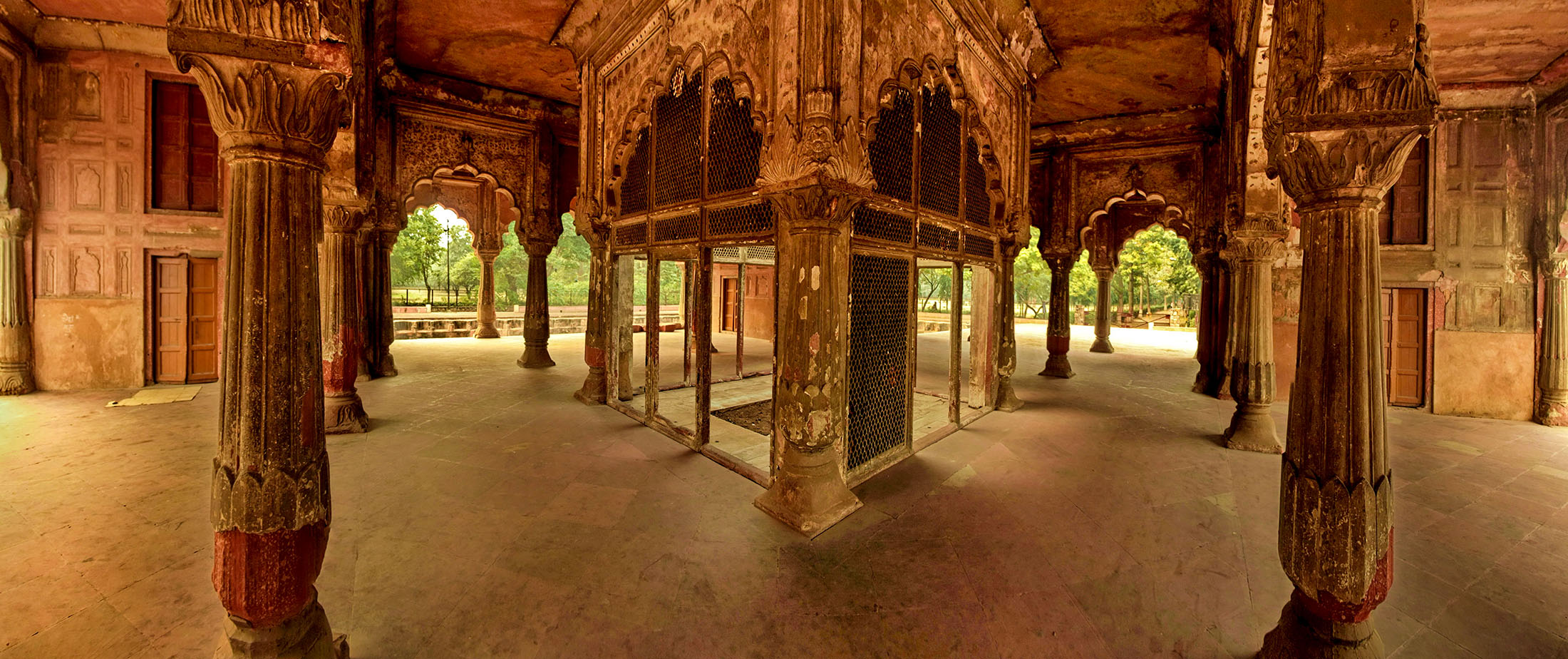
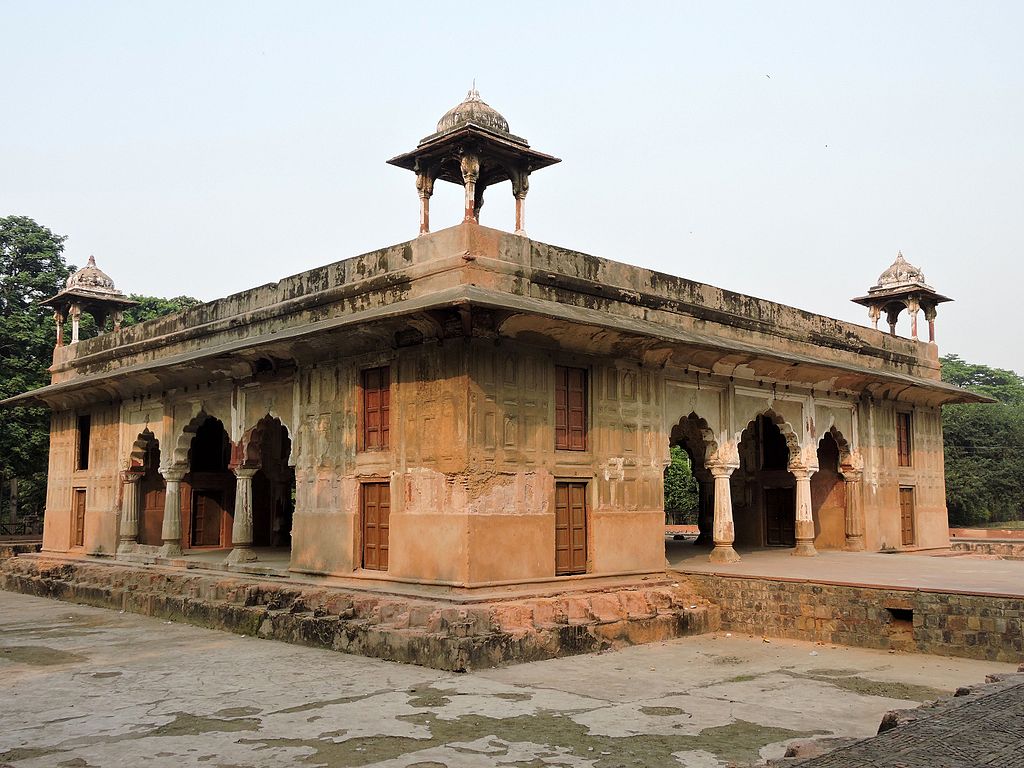
UNKNOWN CONSTRUCTION OF LUTUFULLAH AHMAD; BAGH MAUSOLEUM OF PRINCESS ROSHAN ARA BEGUM.

UNKNOWN CONSTRUCTION OF LUTUFULLAH AHMAD;
BAGH MAUSOLEUM OF PRINCESS ROSHAN ARA BEGUM.

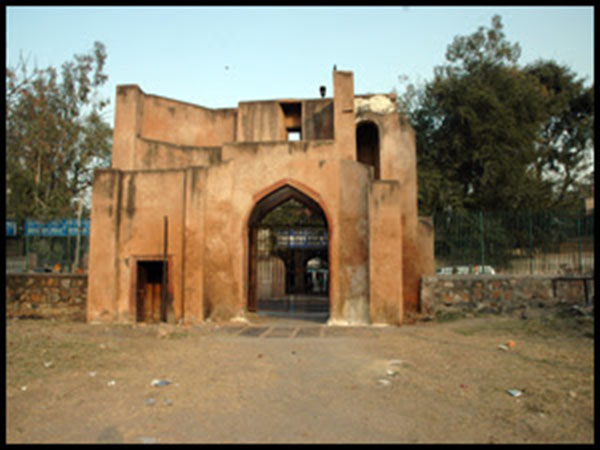
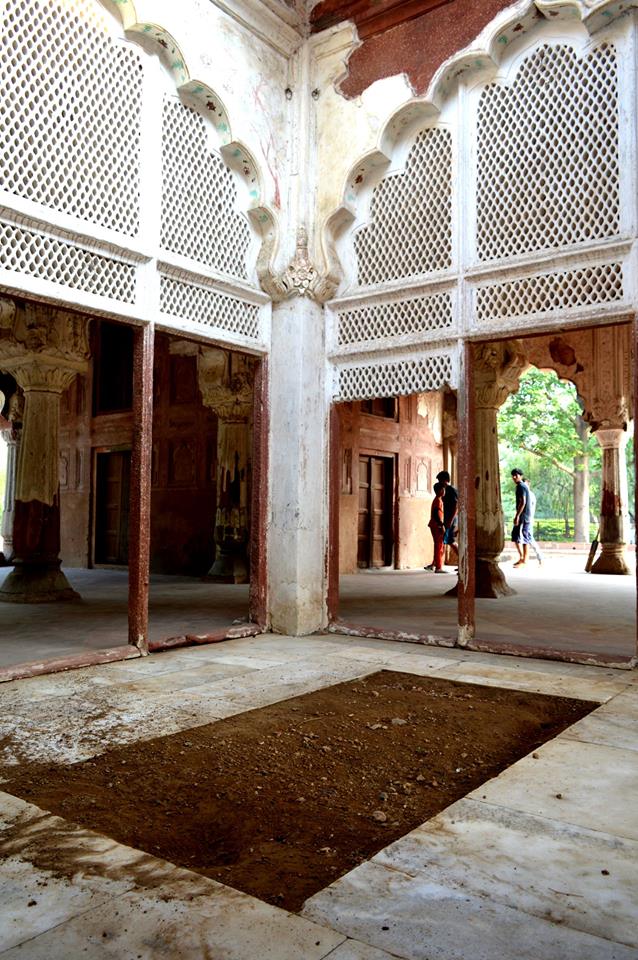
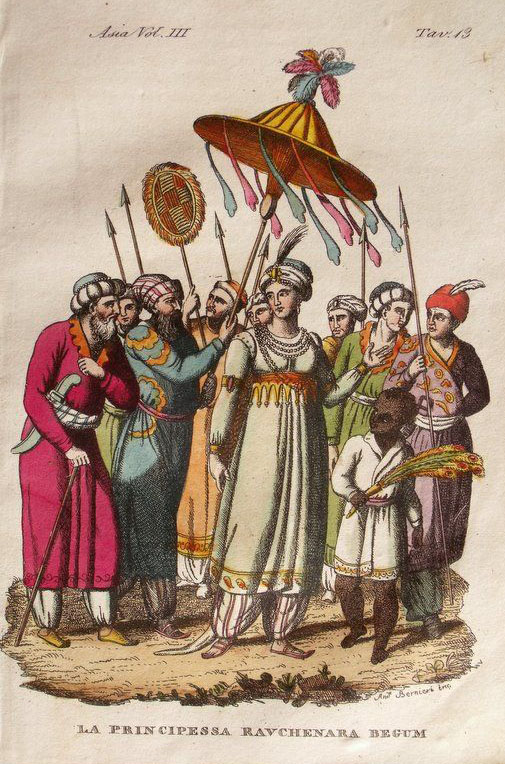
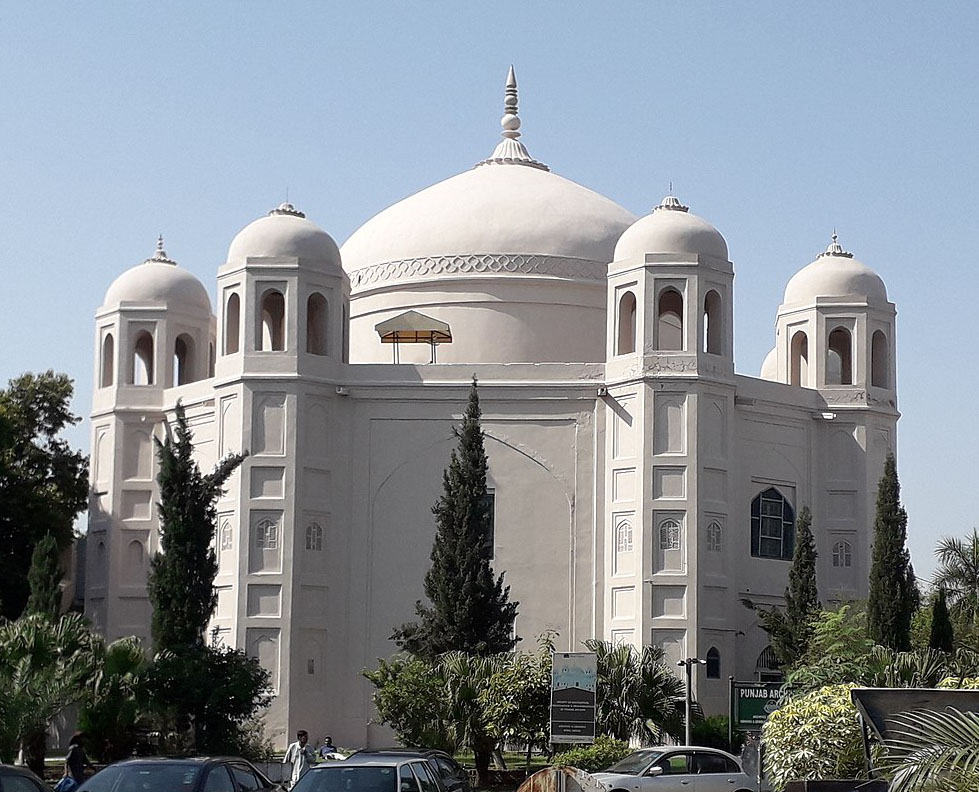
Roshan Ara Begum had her Bagh constructed in Delhi in 1075 A H, or 1664 AD. She died in 1082 A H, that is 1671 AD. The present structure is just a small remnant of one of the biggest Mughal Garden in Delhi. No contemporary source has seemed to mention it, but with the discovery of the poetic Diwan of Khairullah Muhandis, son of Lutufullah Muhandis (dated 1089 AH or 1678 AD), the secret oozed out of history books. A background study is essential for same. After all Roshan Ara, herself was daughter of Arjumand Bano Mumtaz Mahall and Emperor Shah Jahan. Sister of the immortal Jahan Ara. However she is only mentioned twice in Shahjahan nama, at time of her birth, and some allowance made to her, along with her brothers and sisters, out of a total sum of two lakh rupees. Nothing more is known, except from accounts of foreigners who write about her. The most ridiculous and scandalous things about her are written by Bernier, Mannuci and Tavernier. Without any proof, these gossip makers had the harsh eye of weaving falsehood. It is strange that nobody has the guts to tell these gossip mongers to bring proof of their statements. Instead of any verbal truths, they lie as affront to history. Under Islamic law without proof of four witnesses they deserved to be beheaded all of them. And yet Western writers as well as Indians revel in their statements. These kind of people do not tell the truth even today, how is it possible that they spoke the truth then? I detest to repeat their calumny even, but to put it on record, one says that Roshan Ara had nine young men in her harem to satisfy her sexual instincts. Beheading and flogging was required for them.

There was a plan by Shah Jahan to assassinate Aurangzeb. Aurangzeb was invited by the Emperor to facilitate him but in reality, a murder was being planned. Shah Jahan was hopelessly in love with the arrogant Dara Shikoh and knew that his elder son was no match for the fighting skill of Aurangzeb. The plan came to the knowledge of Roshan Ara Begum and she intimated her brother Aurangzeb of this dreadful plan. Aurangzeb stayed away from his father and as a result his life was saved. Shah Jahan was even using Jahan Ara to lure his son into the said trap. As Roshan Ara Begum had saved the future King, she became the favourite of Aurangzeb. She had her garden and pavilion constructed outside the consigns of Delhi. Who did that? Nobody knew. But a poetic collection of Khairullah Muhandis revealed a few pages of the details of the Garden, which included things like a pool, and even an Aaina Khana of its own. Many of its features were a source of marvel, and Khairullah has written about them in detail. The burial itself was one of a kind. Catherine B. Asher writes:

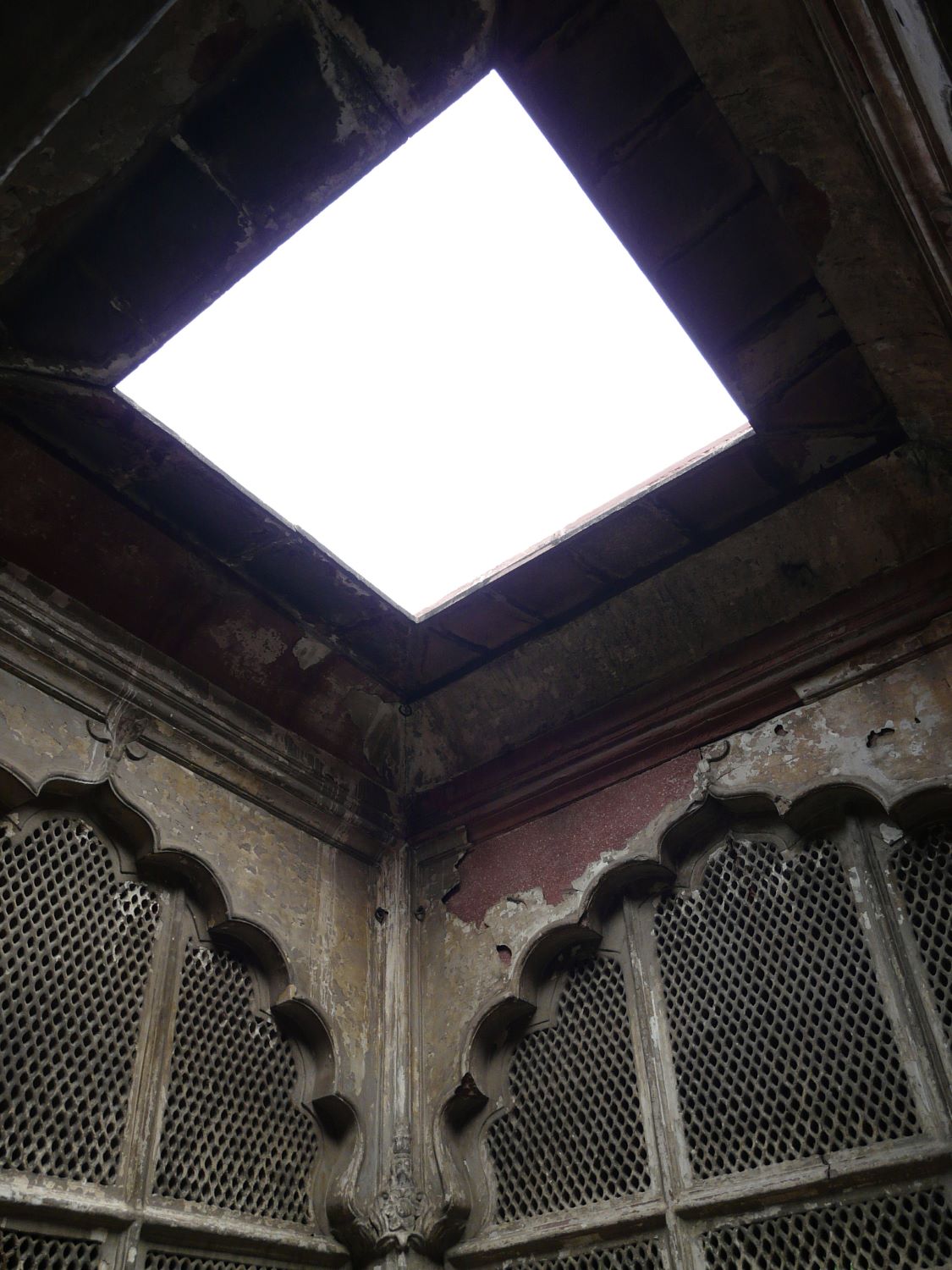
“The garden maintains none of its original appearance,  and only the tomb among the several structures once there remains. Approached by causeways, the pavilion containing her grave is in the midst of a small tank. The uncovered central portion of the pavilion contains Raushan Ara’s grave; the surrounding flat-roofed galleries have cusped arches supporting bulbous baluster columns, generally an imperial perquisite during Shah Jahan’s reign. Paradoxically however, her simple cenotaph remains open to the air, indicative of her role as God’s mere slave.”

Catherine B. Asher presumes the construction date to be around 1650 AD, when it is actually 1664 AD. She borrows information from Carr Stephen, who wrote about the Gardens of Delhi. Roshan Ara was not financially solvent to do so in 1650 AD.

 He has also mentioned many personal details that nobody else put down. It seems that even Khairullah had taken refuge in Gul bahar area near Kabul as a refuge when the family was under the animosity of Qazi Abdul Wahab Gujarati, the Chief Qazi of Aurangzeb. Suffice that it is not our concern here of those details. Till another relevant blog on same.

MANY MUGHAL MANUSCRIPTS THROUGH SEALS AND NOTATIONS; REVEAL HISTORY. ARCHITECTS LIKE LUTUFULLAH WERE LIBRARIANS.

MANY MUGHAL MANUSCRIPTS THROUGH SEALS AND NOTATIONS;
REVEAL HISTORY. ARCHITECTS LIKE LUTUFULLAH WERE LIBRARIANS.

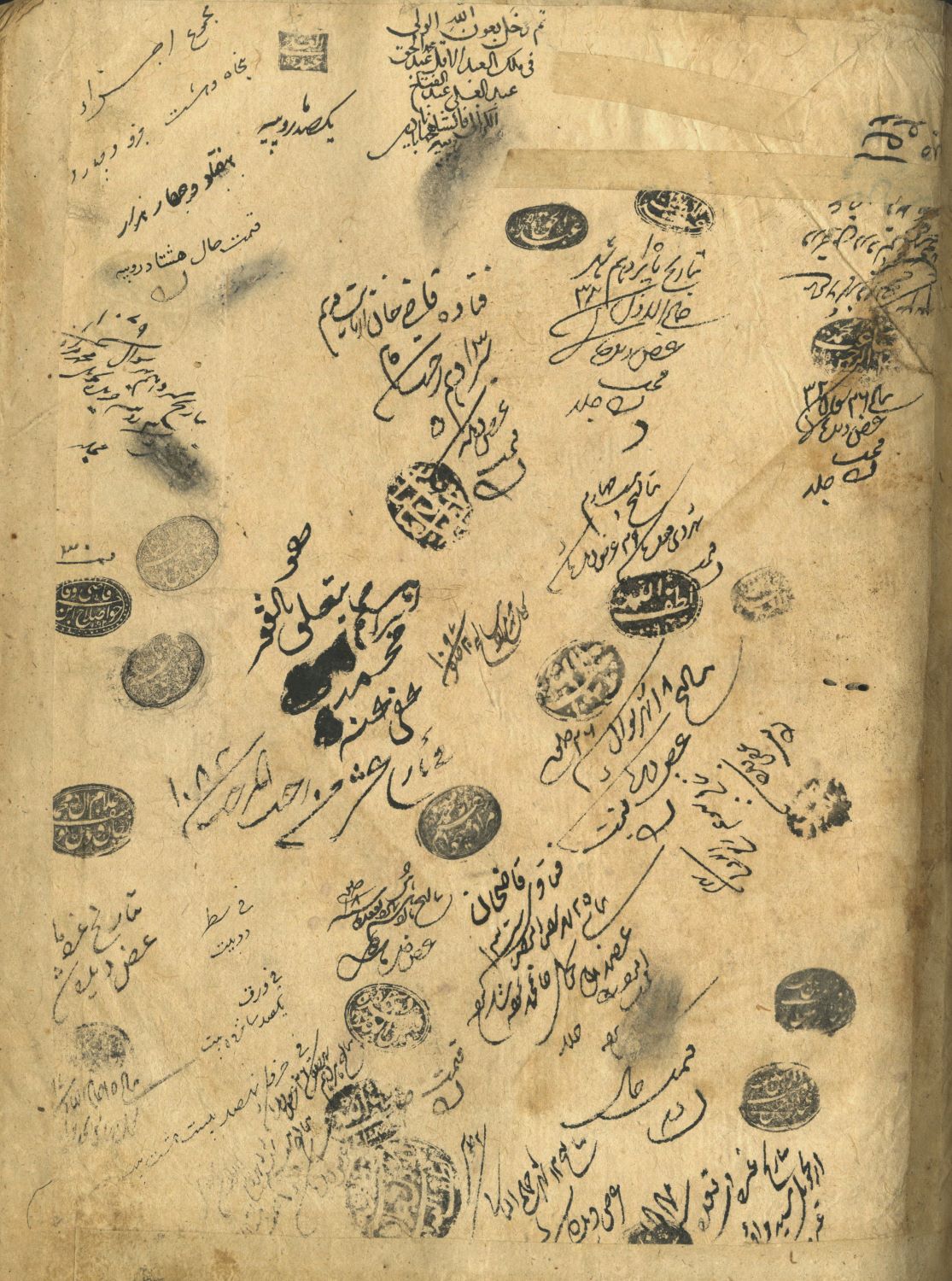
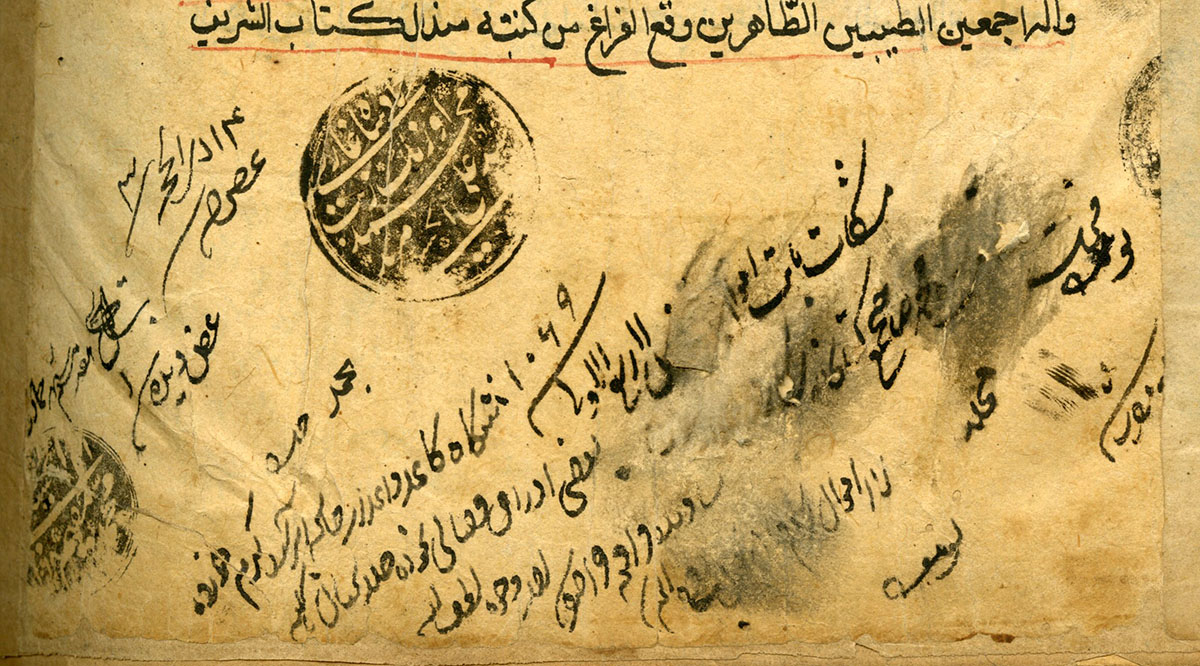
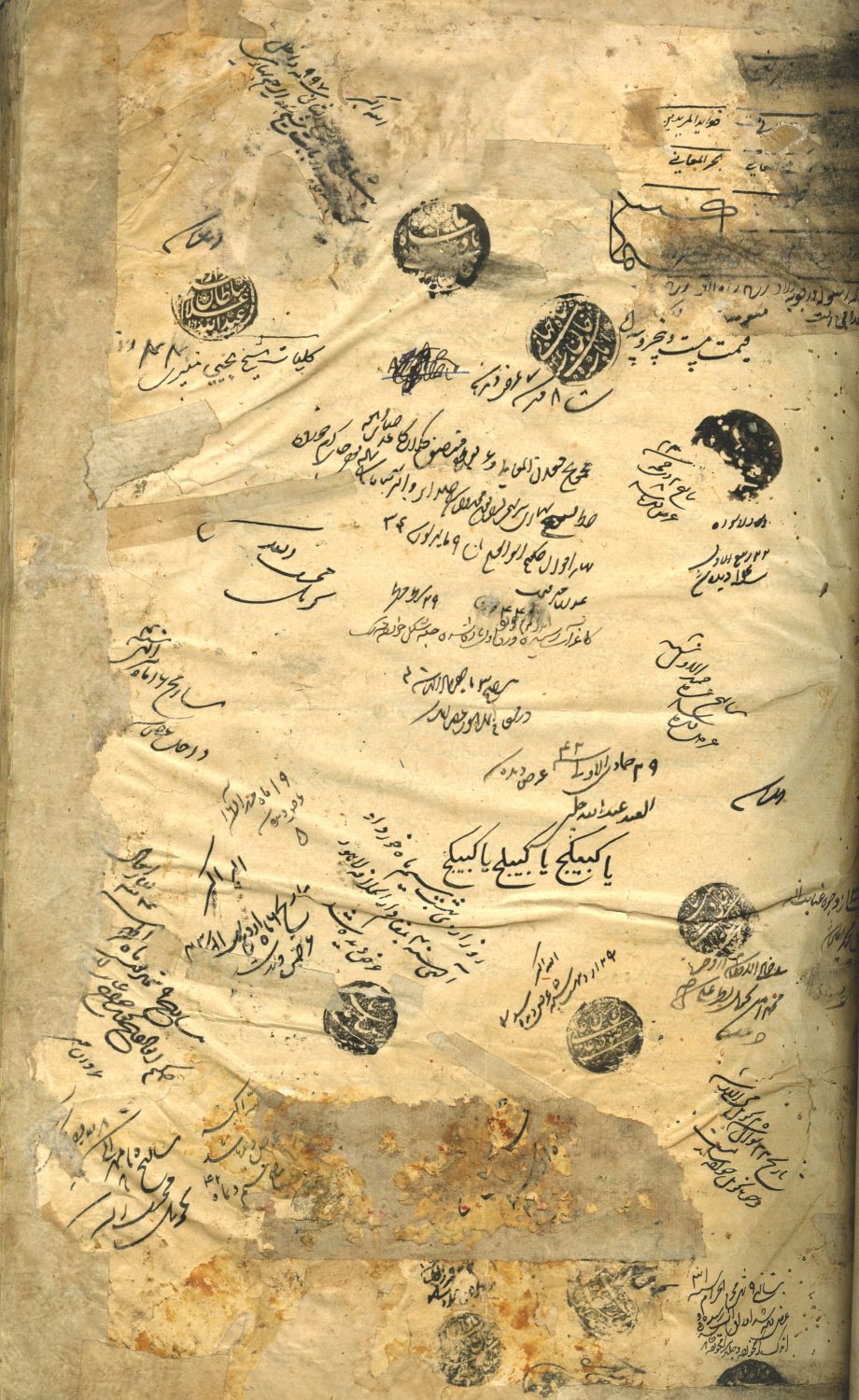
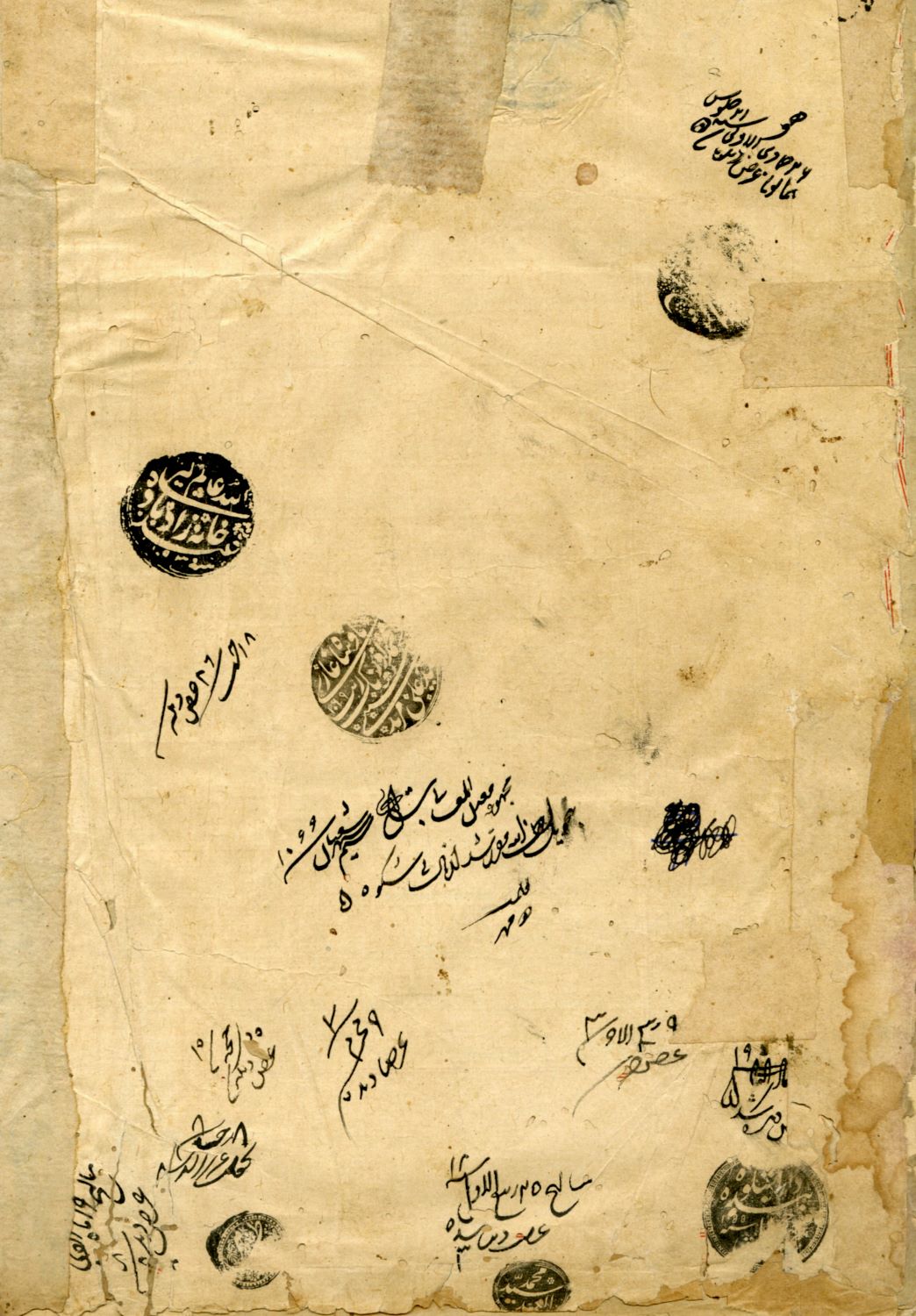
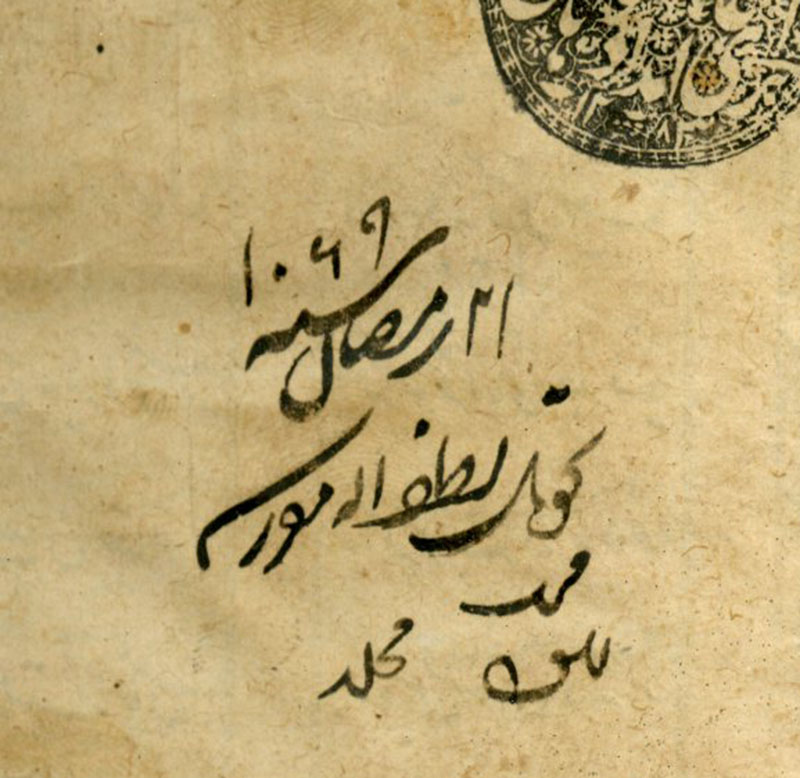
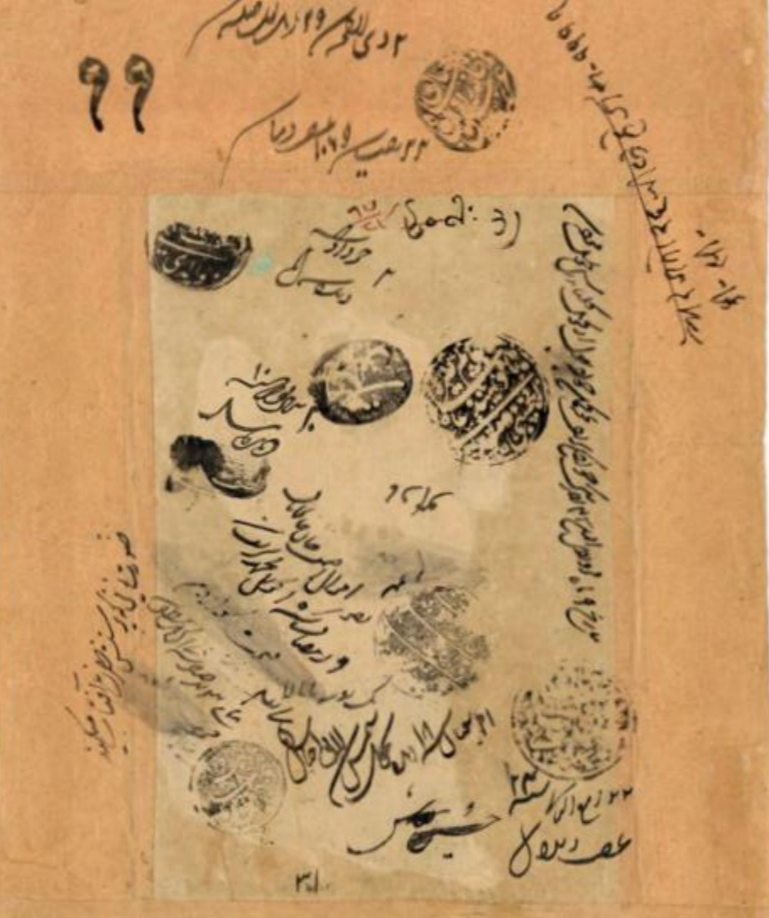
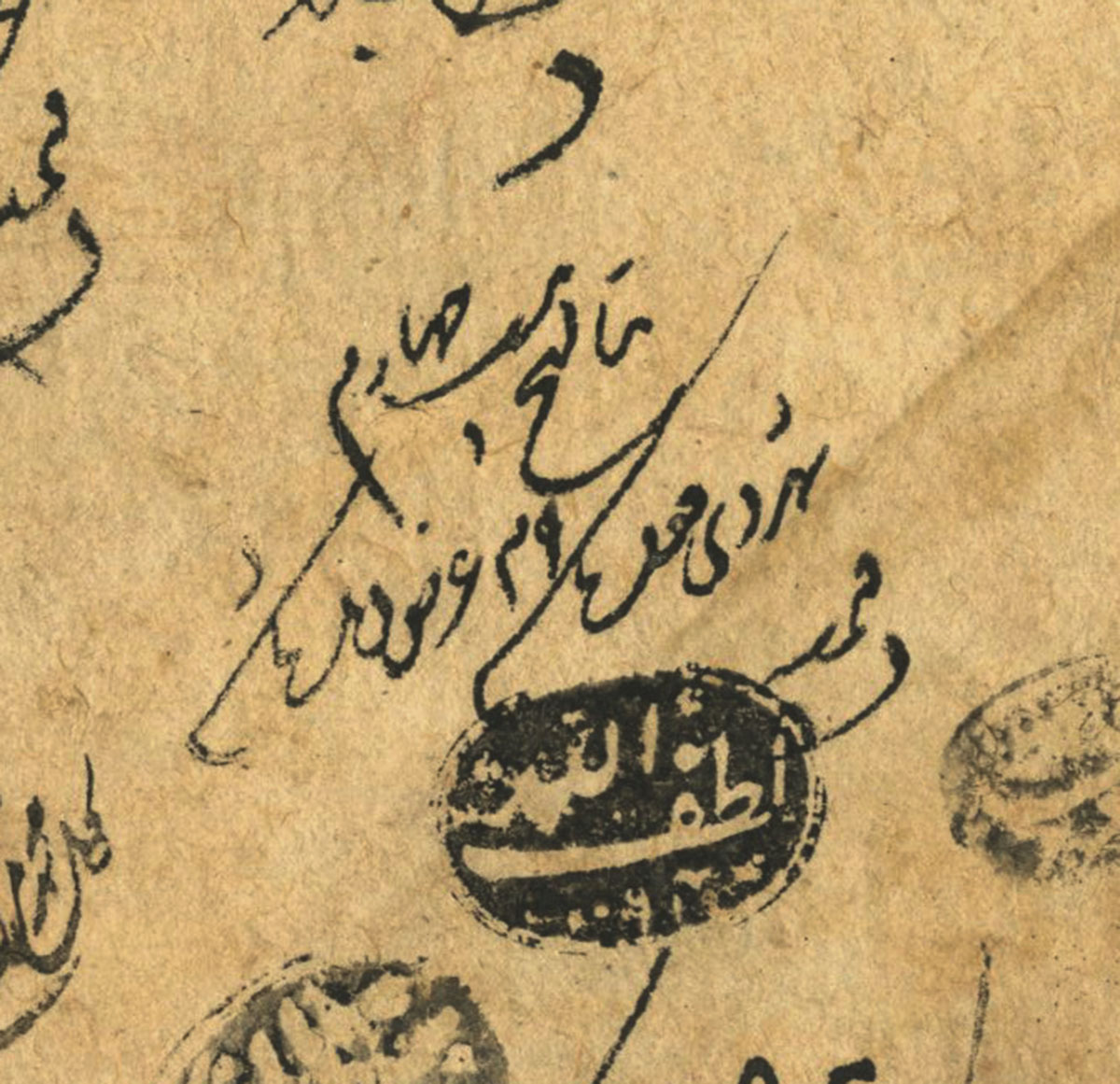
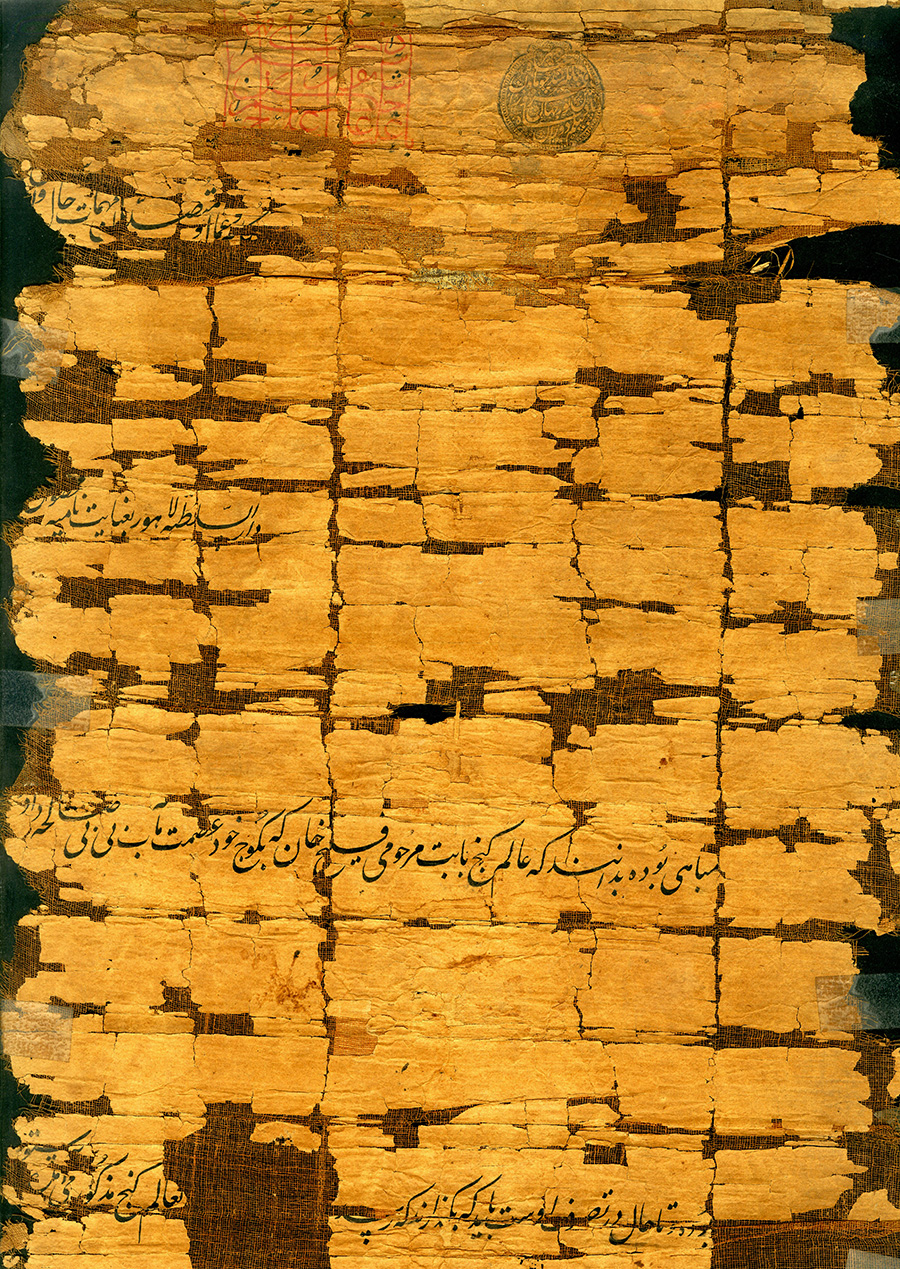
The calligrapher of the Taj Mahal Amanat Khan Shirazi after his work on monuments, ended up as the Royal Librarian for the Mughals. His seal is on various manuscripts. Similarly the architect engineer Lutufullah Muhandis ended up as Librarian Incharge of the Manuscripts of Prince Dara Shikoh. Although his notations and seals are here and there, but mostly the same are related to the year 1069 A H. And the most important notation in one of the Royal Manuscripts of Prince Dara Shikoh is dated 21st Ramazan, 1069 A.H, which is a very important date in  Mughal history. It corresponds to 12th June, 1658 A.D. What was happening at that time?

The official chronicle of “Maaseray Alamgeeri” records that the fight of Dara Shikoh and Aurangzeb was in full swing. Dara Shikoh entered his palace in Agra , with his son and a few servants on 1st June, 1658 A.D, that is 10th Ramazan, 1069 A.H. Then he took a flight to Delhi. Aurangzeb on Friday, the 11th June 1658 A.D, that is 20th Ramazan 1069 A.H, entered the city sand took possession of Dara Shikoh’s palace, which means library too. Learning that Dara Shikoh had left for Delhi, Aurangzeb on 13th June, 22nd Ramazan  started for Delhi. The Lutufullah seal is dated 21st Ramazan 1069 A H that is 12th June, 1658. What does that mean? That means Lutufullah was loyal to Prince Dara Shikoh even at the last moment when his own life would be in danger of being executed. What happened later is later? Eventually Lutufullah was forgiven by Aurangzeb and served Aurangeb as well as his sister Roshan Ara Begum as records of remain of same. After 21st Ramazan, 1069 or 12th June, 1658 A D, he was replaced by Azizullah Shahjahani as taweeldar of the manuscript.

The same manuscript carries a notation from Dara Shikoh himself as the same being put in his library. That is amazing history!
RARE WORK, RARE SUBJECT AND RARE ARTIST; NADEEM LAHORI AT AKBAR’S STUDIO LAHORE.

RARE WORK, RARE SUBJECT AND RARE ARTIST;
NADEEM LAHORI AT AKBAR’S STUDIO LAHORE.

Scholarship has become extremely poor in Pakistan. Journalists write about historical incidents and figures without any research work. Things already proven long ago are not used at all and we repeat mistakes made by others, even decades before our times. Smug anchors and writers pick up a couple of books possibly centuries old and weave their stories around outdated knowledge. This enables better research work at other countries, to manipulate our cultural background at will. And they are good at it.

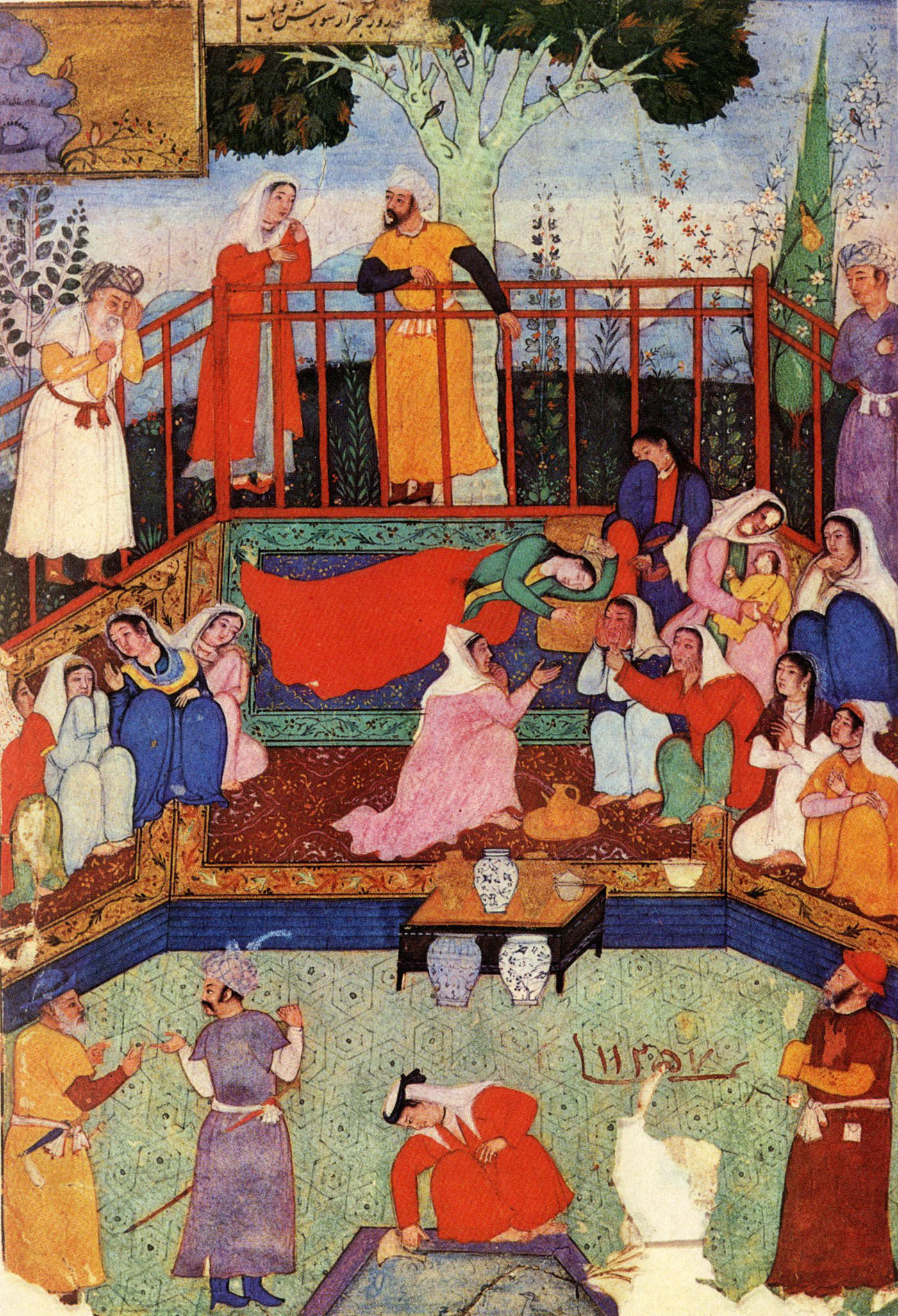
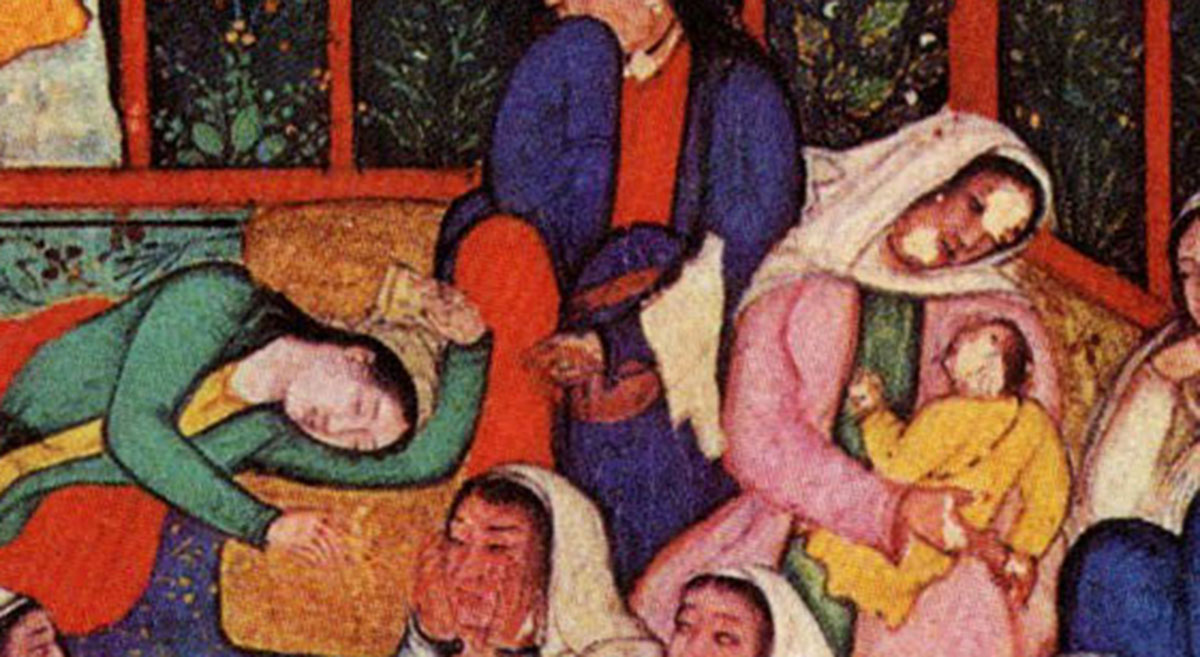
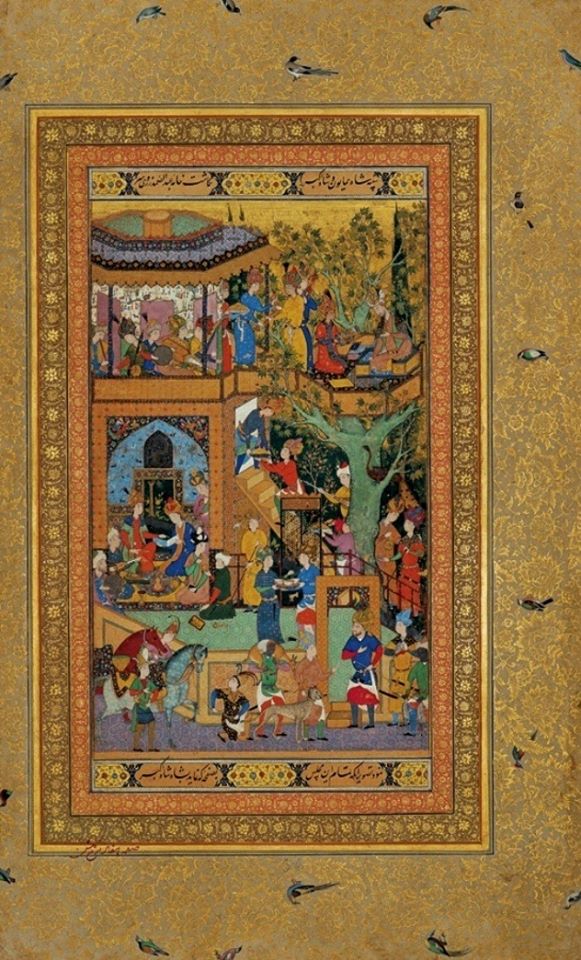
A miniature made at Lahore and dated end of 16th century shows a subject extremely rare in Mughal art works. A sick Princess, surrounded by family and grieving women. Fifteen women, one child and six men. Who can this be person? Was she important enough to deserve a painting on her own? Obviously, she was very important. Certainly, it is a Royal subject. It is not an imaginative work. There is a sick Princess, surrounded by a lot of grieving ladies. There is a child being nursed by one elderly lady. There are dignified people looking at the incident. And a plumed Prince is watching all this. I think we can fit the incident that actually happened to all these characters well. The date is 25th June, 1599. Princess Sahib Jamal who had come from Kabul died in Lahore, beloved of Prince Saleem (later Emperor Jahangeer). Everything fits in place. And the most amazing thing in it is the tree of Pomegranate at the back, or the garden of Anaran in Lahore.

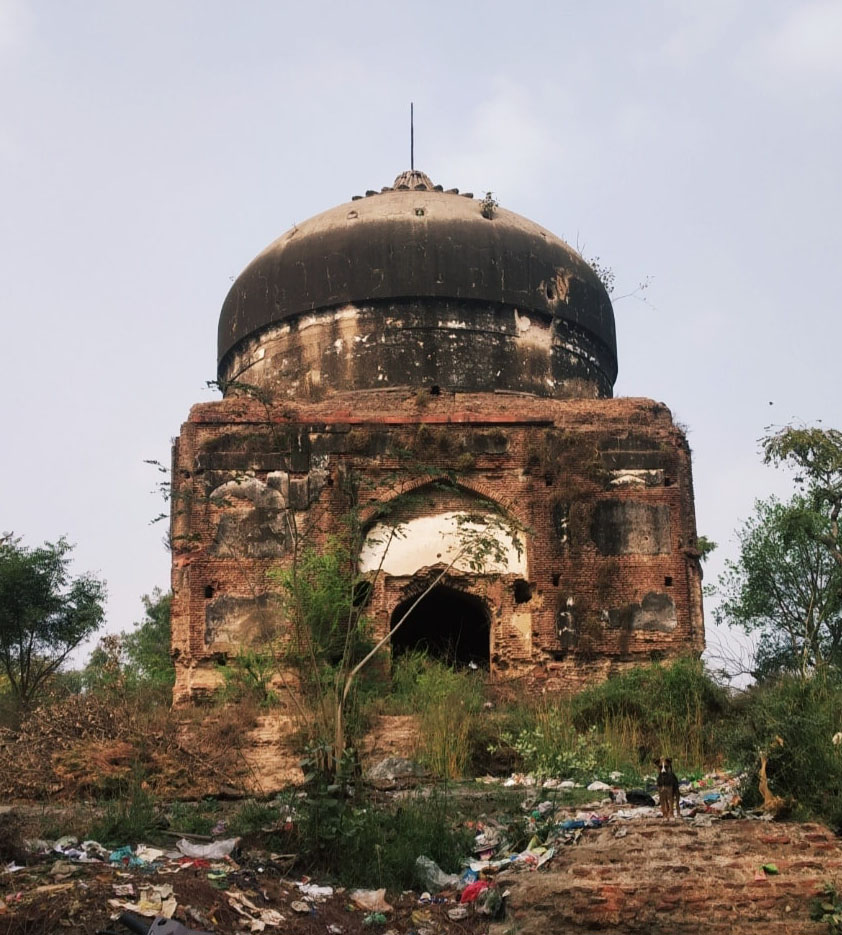
Writers cannot even solve simple dilemmas. How can they unravel the story of Anarkalli.  Total blasphemy of an English visitor, William Finch, who concocted the story of Saleem having an affair with his step mother, Maryiam Bibi. Cannot even got through his mischievous head that society would not have even allowed a Prince to build a mausoleum for an illicit love affair. Mothers are most sacred institutions in Pakistan, as well as the Muslim world. The lady was obviously Sahib Jamal beloved wife of Prince Saleem and the mausoleum was built in two phases. First as a Prince and then as an Emperor.

THE DESCENDANTS OF JAHANGEER AND NUR JAHAN RUNNING FARRIER’S SHOP, IN A WALL IN WAZEER KHAN MOSQUE LAHORE. ROYAL FAMILY AS COMMONERS.

THE DESCENDANTS OF JAHANGEER AND NUR JAHAN RUNNING FARRIER’S SHOP,
IN A WALL IN WAZEER KHAN MOSQUE LAHORE. ROYAL FAMILY AS COMMONERS.

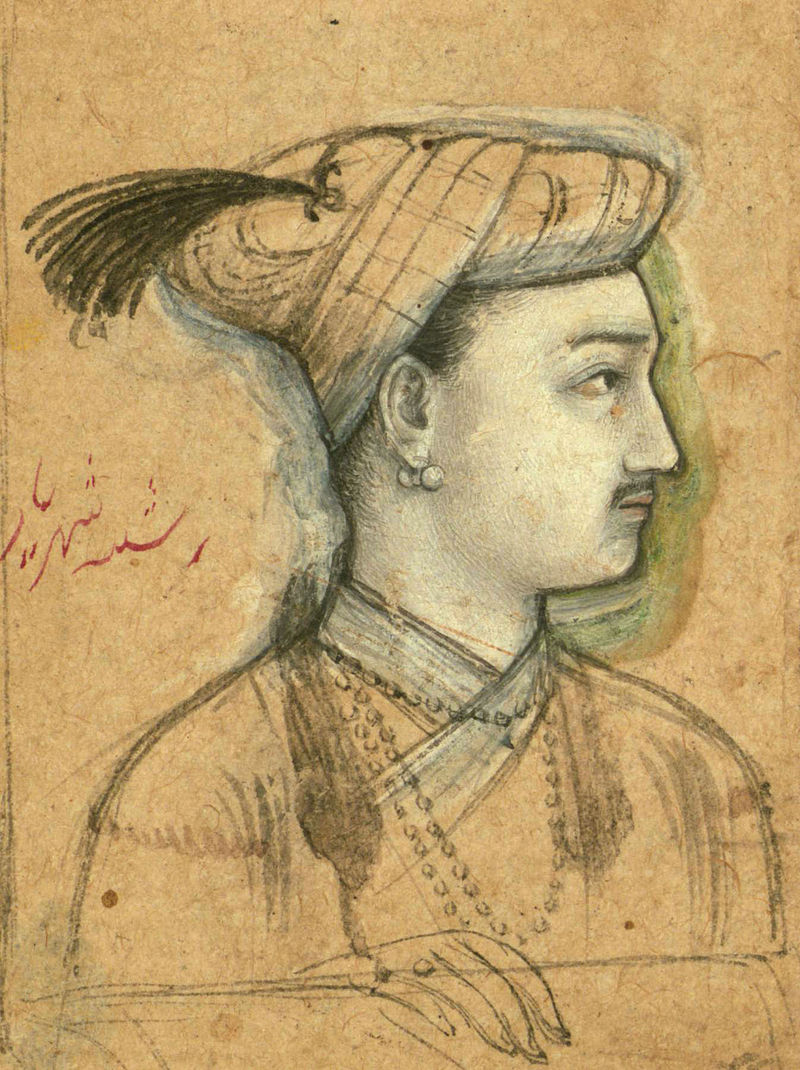
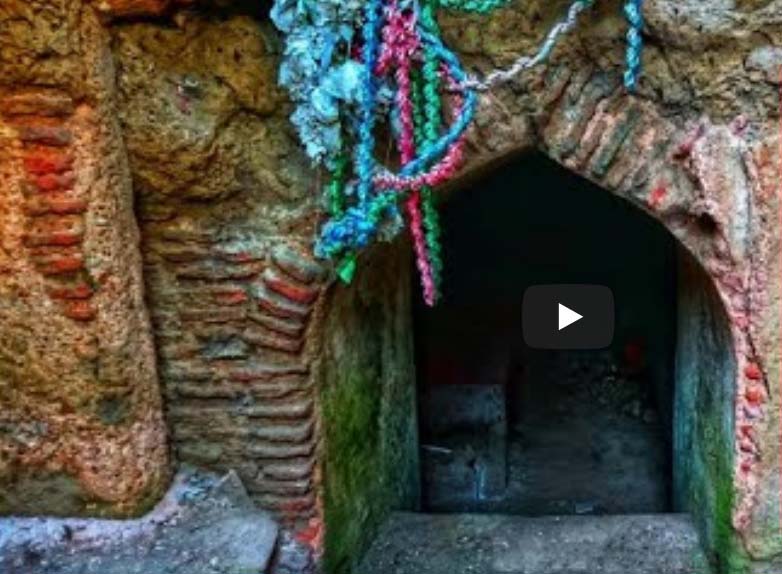
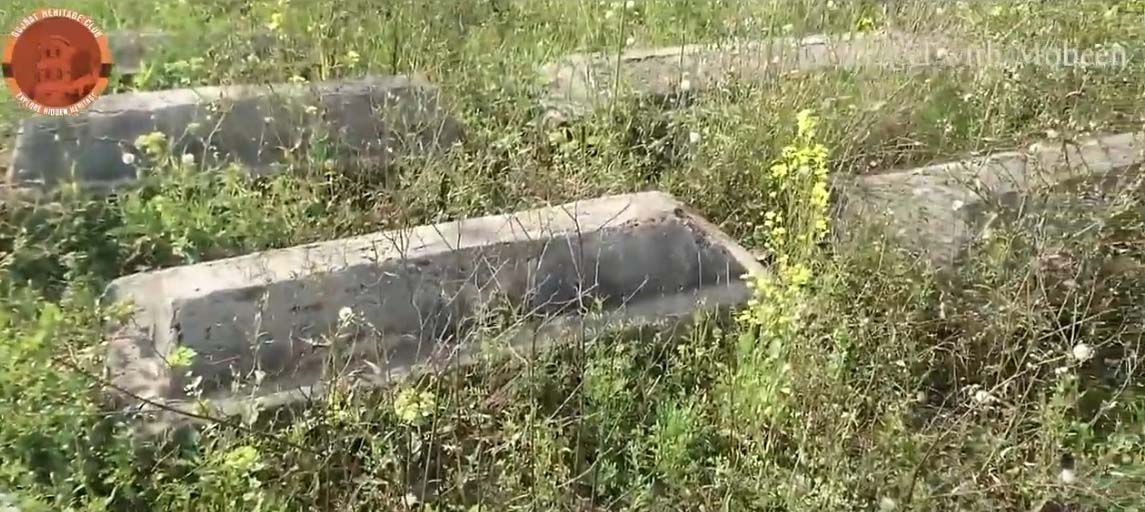
It was an insignificant news on the internet. The discovery of the five graves of Mughal Princes in Gujarat. Yes, Mirza Shahryar, son of Jahangeer, and the others. Mirza Shahryar was married to Ladli Begum, daughter of Empress Nur Jahan. They had a daughter at times known as Arzani Begum but present research points her as Meher Afroze. After the death of Emperor Jahangeer, the five Mughal Princes with Mirza Shahryar appointed Emperor and within days, 70 lakh rupees were distributed to the people to win their loyalty. Asif Khan knew all this and asked Prince Khurram (later Shah Jahan) to hurry to Lahore. Till then, all five were put to death and nothing was known about them. Then a reference in a book, led researchers to the five graves, still there in Gujarat. Time has brought perhaps demolition of the structure, but the graves exist on outside level, as well as actual graves in a basement. The construction is all of Shahjahani period. There are no inscriptions but a book reference is very clear about the identity of same. The rumours of them escaping to Persian territory turns out to be wrong.

‘On the 2nd Jumada-l awwal, 1037 A.H., (1628), Shah Jahan ascended to the throne at Lahore, and on the 26th Jumada-l awwal, January 23, 1628, upon his orders, Dawar, his brother Garshasp, Shahryar, and Tahmuras and Hoshang, sons of the deceased Prince Daniyal, were all put to death by Asaf Khan.’

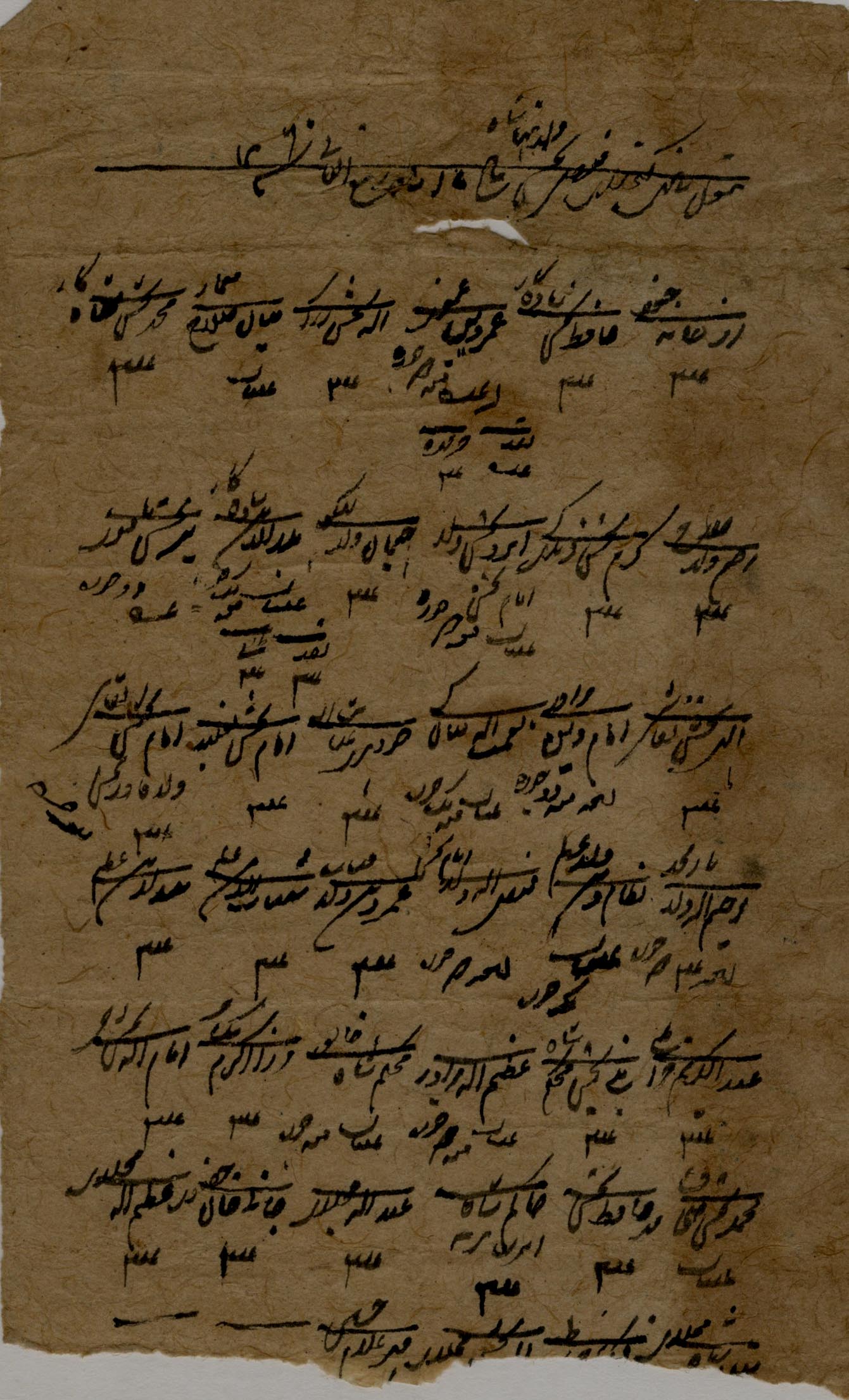
We hear of Mirza Akram Baig from many sources. First various documents of that period carry his name, both as witness and as participant of activities related to his importance and relation. Diwan Amarnath son of Raja Dinanath  mentions this family as being ‘Janat Makani’ and he was a student of this scholar. The historian Nur Ahmad Chisti refers to a learned scholar of that age, being Mira Kareem Baig, as being of Royal descent.  Before that his father Yak-Dil mentions in his famous diaries (Bayz no 5 page 22), related to the year 1848 the presence of Mirza AKRAM BAIG son Mirza Azeem Baig  of Lahore. Mirza Azeem Baig was son of Mirza Kareem Baig. Mirza Akram Baig had two sons, Mirza Aslam Baig and Mirza Mehr Baig (Jhandoo). Mirza Ferozeuddin was a painter of the newspaper Paisa Akhbar was the son of Mirza Mehr Baig. The family had even possession of the Mausoleum of Emperor Jahangeer and used to celebrate the annual Urs of the Emperor as PAR DA MELA. And untraced book on Mausoleum of Jahangeer existed written by Mirza Aslam Baig, Assistant Commissioner. It seems that the British had great respect for the family and used to consult with them. This is confirmed by Mirza Akram Baig himself.

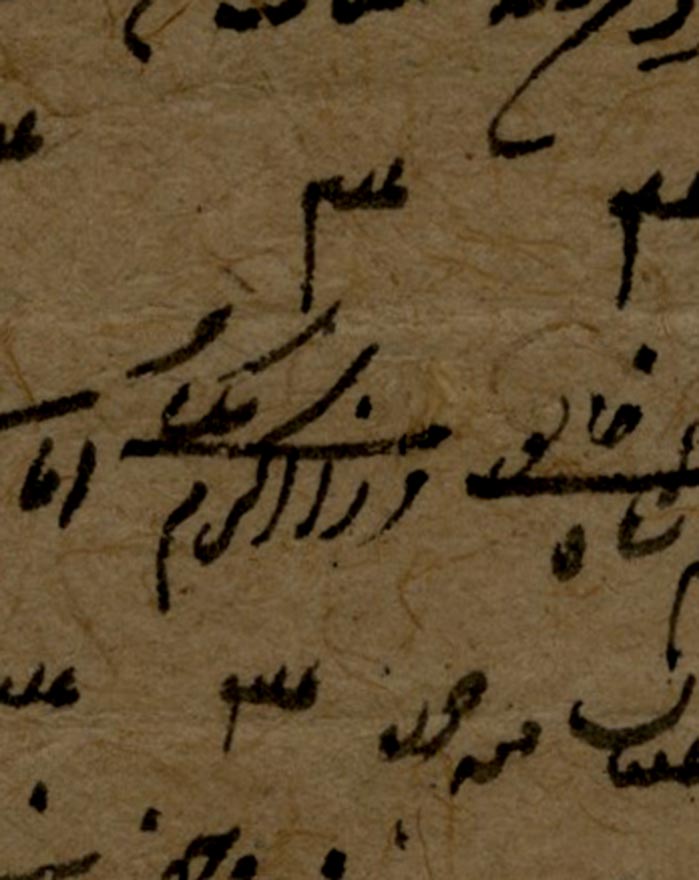
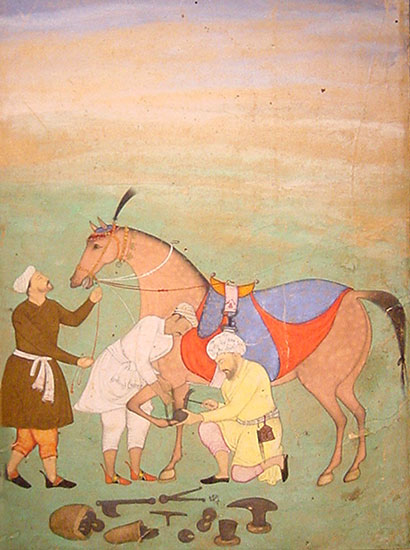
The discovery of a manuscript named ELAHI BAKSH NAMA. A copy existed with an Islamic College Professor and now given to a University as a donation. There is a copy in our archives too. How different or how same both are not known? This Elahi Baksh is probably a short term Imam of Masjid Wazeer Khan Lahore. There is an Elahi Baksh in our family too, but nothing is known about same. In the Masnavi Mirza Akram Baig talks about himself too. He says he is a scholar and consulted by many people including the English administration. The composition is in 1230 AH. He talks of some other people, including BELI RAM. He says he does not get any earnings from his scholarship but earns from his professional career as a NALBAND, or a Farrier. Amazing from Royalty, one moves on to specialization in Horses, their health as well as nailing horse shoes. It is even funny as an outcome. But he was a respectable figure of Lahore and people honoured him, both for himself and his background. This is story of fate. Fate makes you rise, fate makes you fall. But if dignity remains, the respect does not go away, salute to the last remnants of Nur Jahan in Lahore!

THE MANY STAMPS DESIGNED BY M.A. RAHMAN CHUGHTAI; NO COMPLETE RECORD WITH US BUT STILL SOME REMNANTS.

THE MANY STAMPS DESIGNED BY M.A. RAHMAN CHUGHTAI;
NO COMPLETE RECORD WITH US BUT STILL SOME REMNANTS.

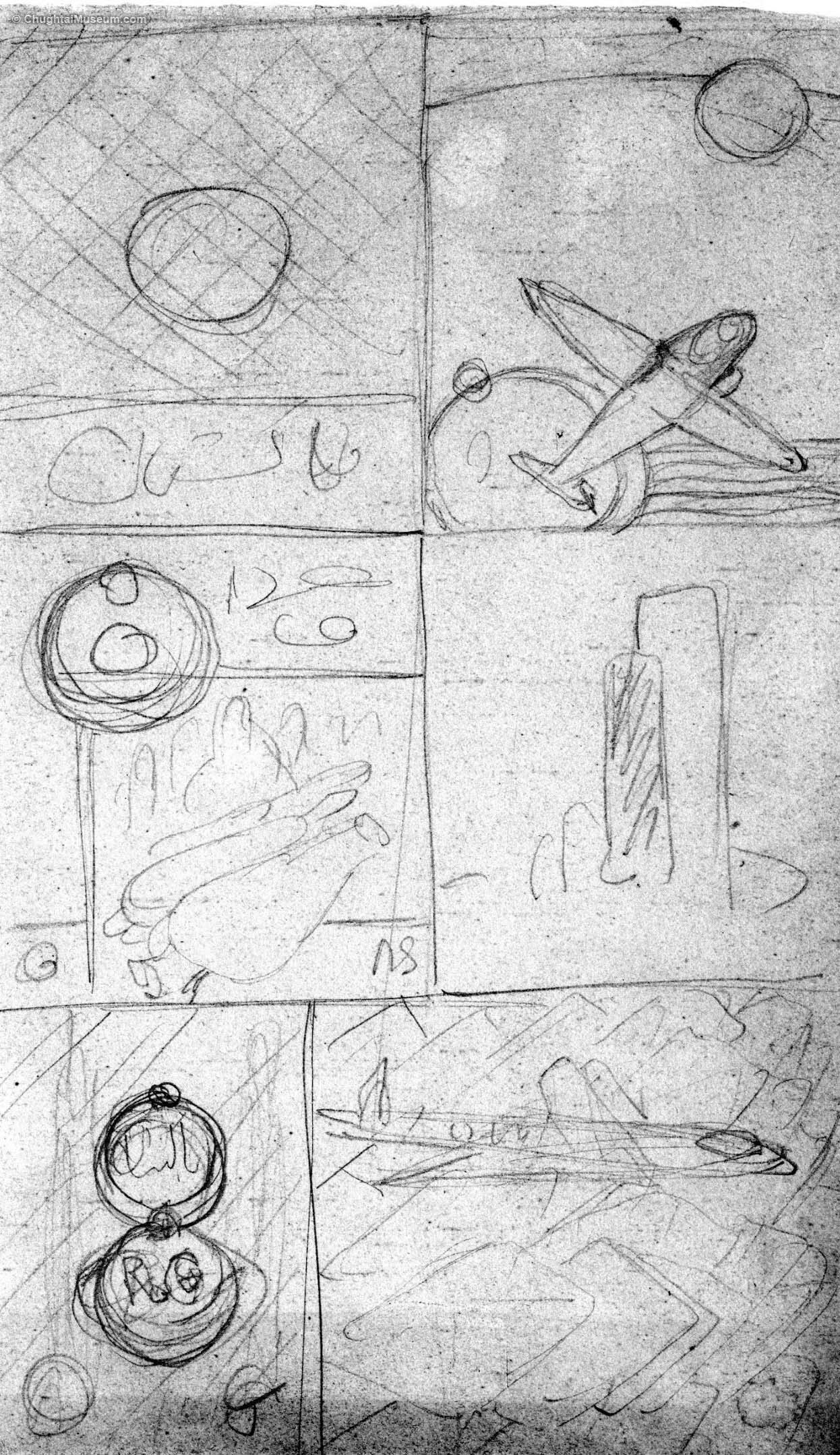
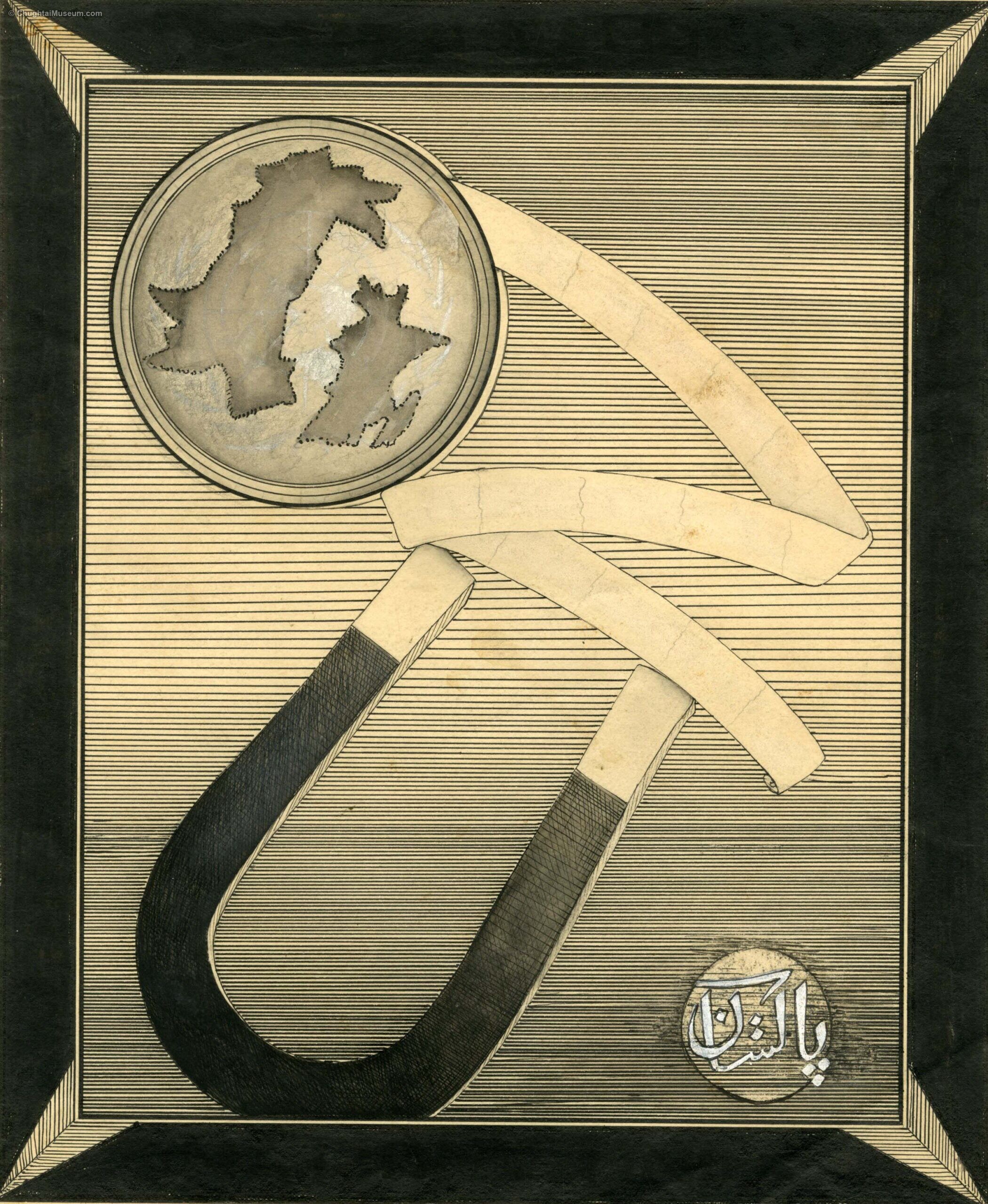
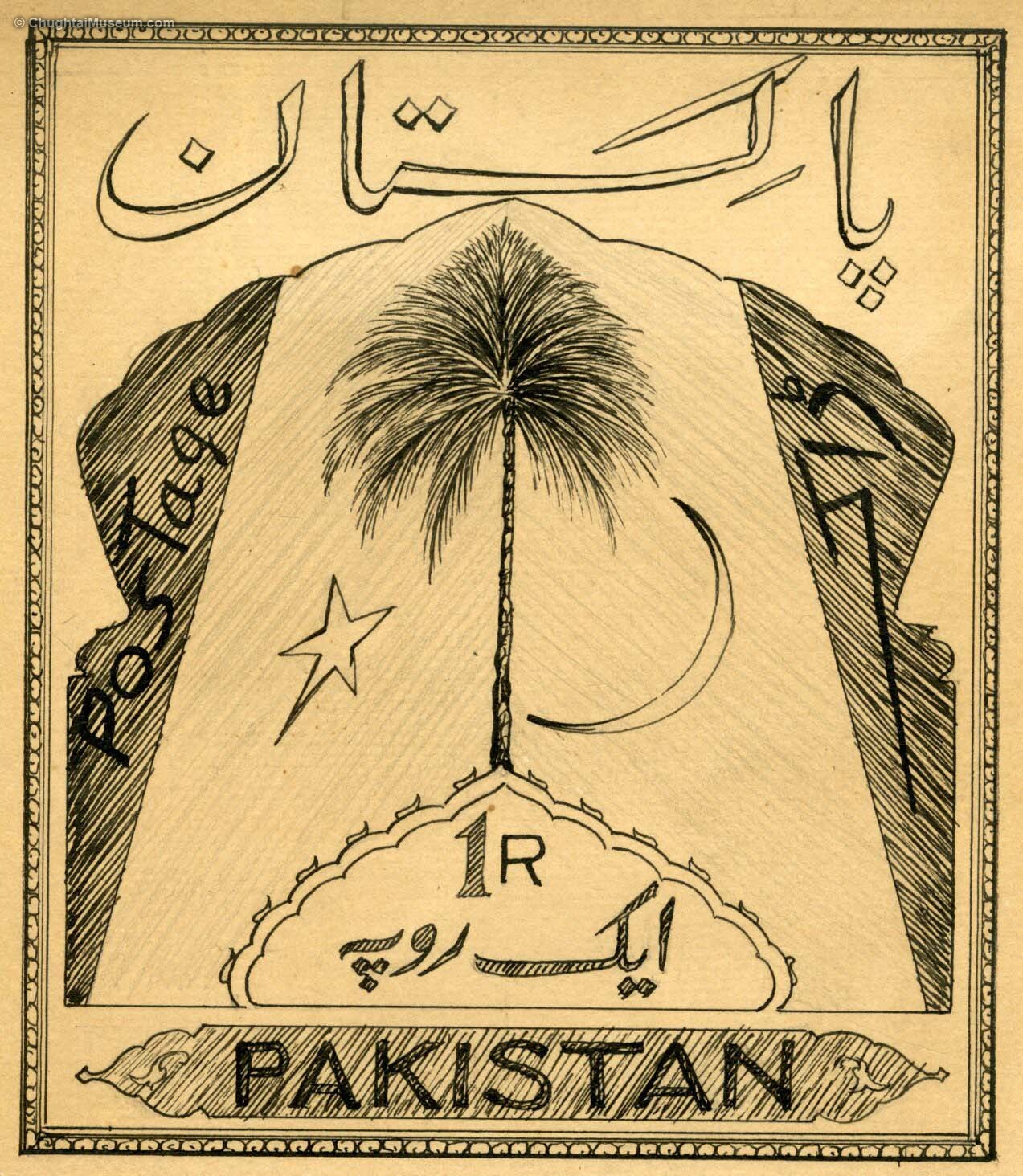
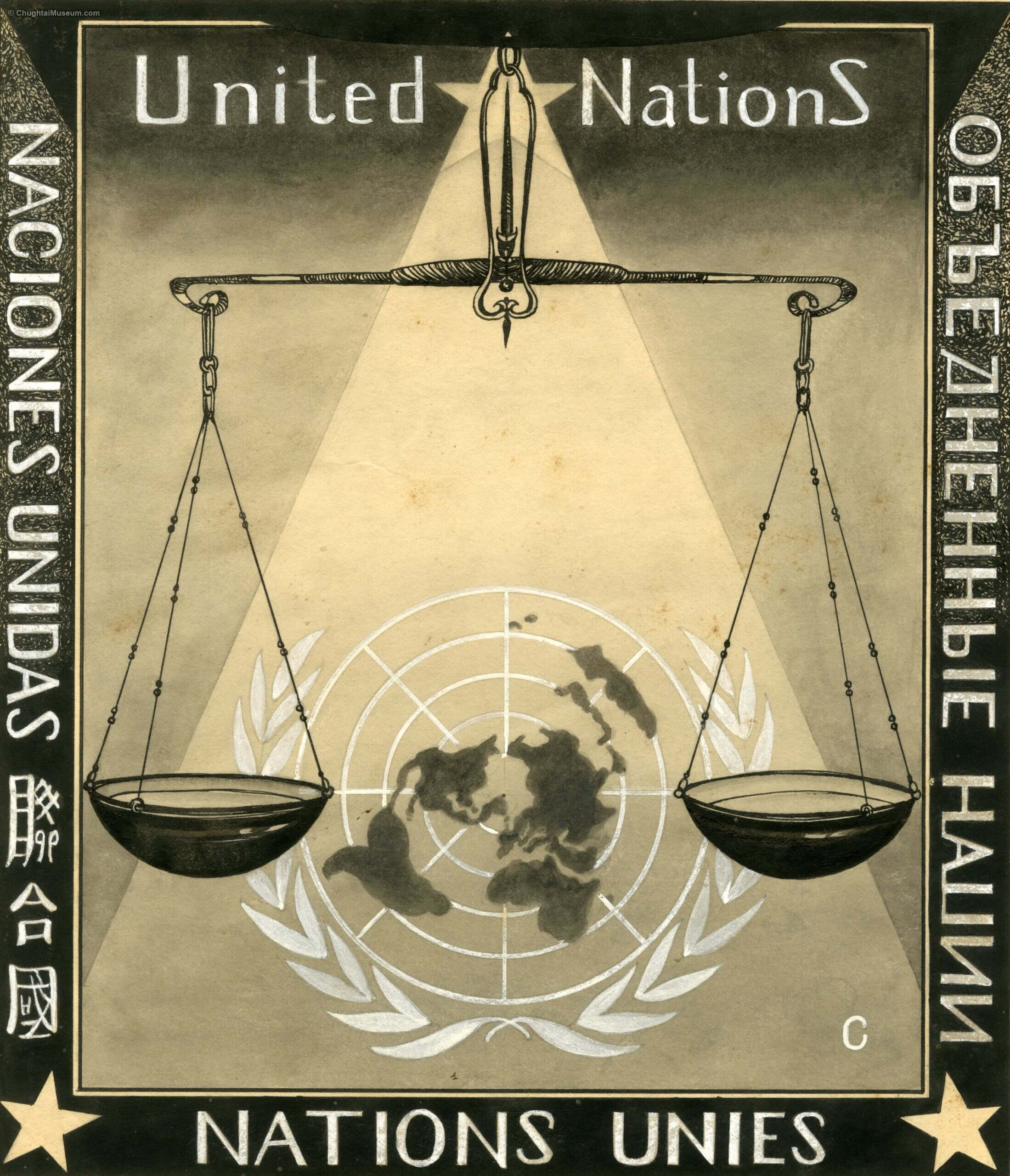
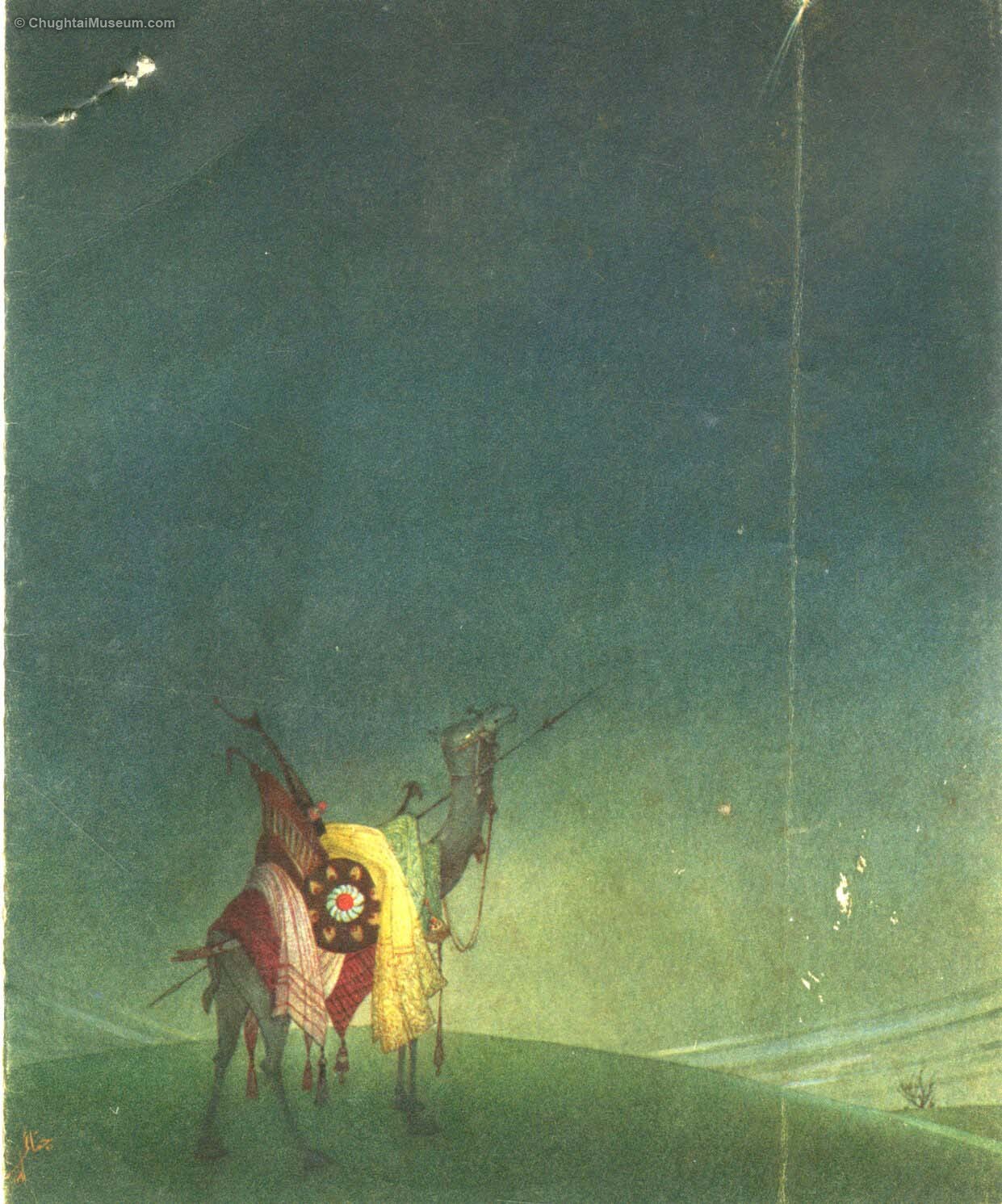
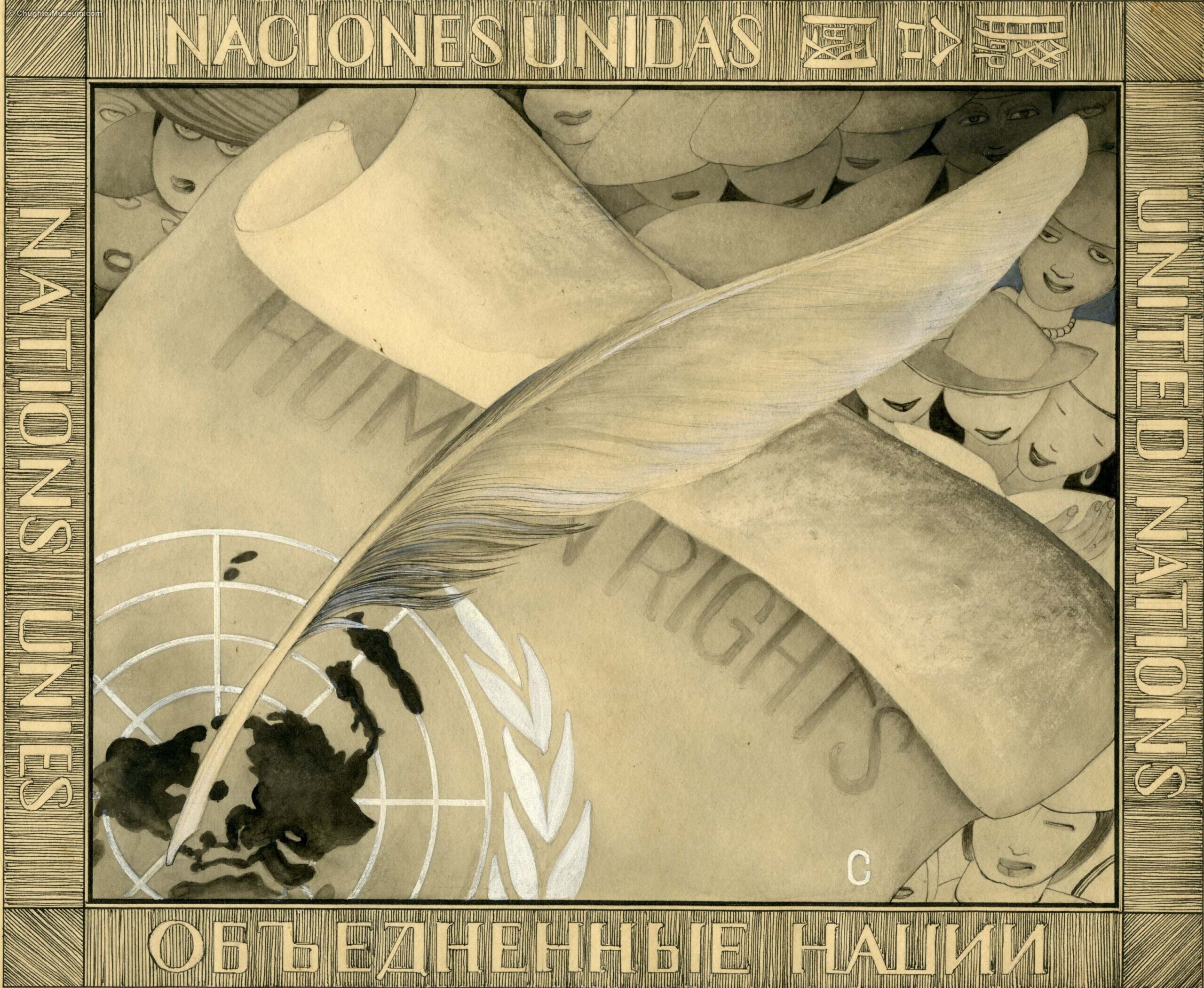
We present designs never seen by anybody. We do know that on the instruction of Quaid e Azam and Liaquat Ali Khan, there were at least twenty designs, after 1947. We have a sketch of some of them visualized at first time. Some with complete record. Some of them were sold by Gibbons in London and bought by a collector, who took them to Dubai. The stamps designed for U.N.O were about eight/nine, the rest were sent to the United Nations. It was with them. But due to country by country line up, perhaps those were not printed at all. At least two/three still with us. U.N.O issues stamps which can be used for posting but only at U.N.O headquarters in New York. This happened after the publication of the UNICEF card “Morning Star” of M.A. RAHMAN CHUGHTAI BY U.N.O. (We will talk about that in a separate blog).

Master artist who could do anything where designing was concerned. He did designs of a hundred and one things, including mausoleums, tombstones, houses, dresses, jewelry, gold bangles, flying kites patangs, curtains, textiles, and what not?  Records of some are maintained with us, some lost with time. An intricate bangle design for his wife is still with us. All this came from a robust mind and an extensive study of world designs, through collection of books on all subjects in his personal library. His aesthetic aura worked in form of design studies. All his works are full of objects used as symbolism in life.  Well done, Chughtai Sahib! 

M.A. RAHMAN CHUGHTAI AVID DESIGNER OF POSTAL STAMPS; MANY USED, MANY UNUSED, AND MANY LYING IN COLLECTIONS.

M.A. RAHMAN CHUGHTAI AVID DESIGNER OF POSTAL STAMPS;
MANY USED, MANY UNUSED, AND MANY LYING IN COLLECTIONS.

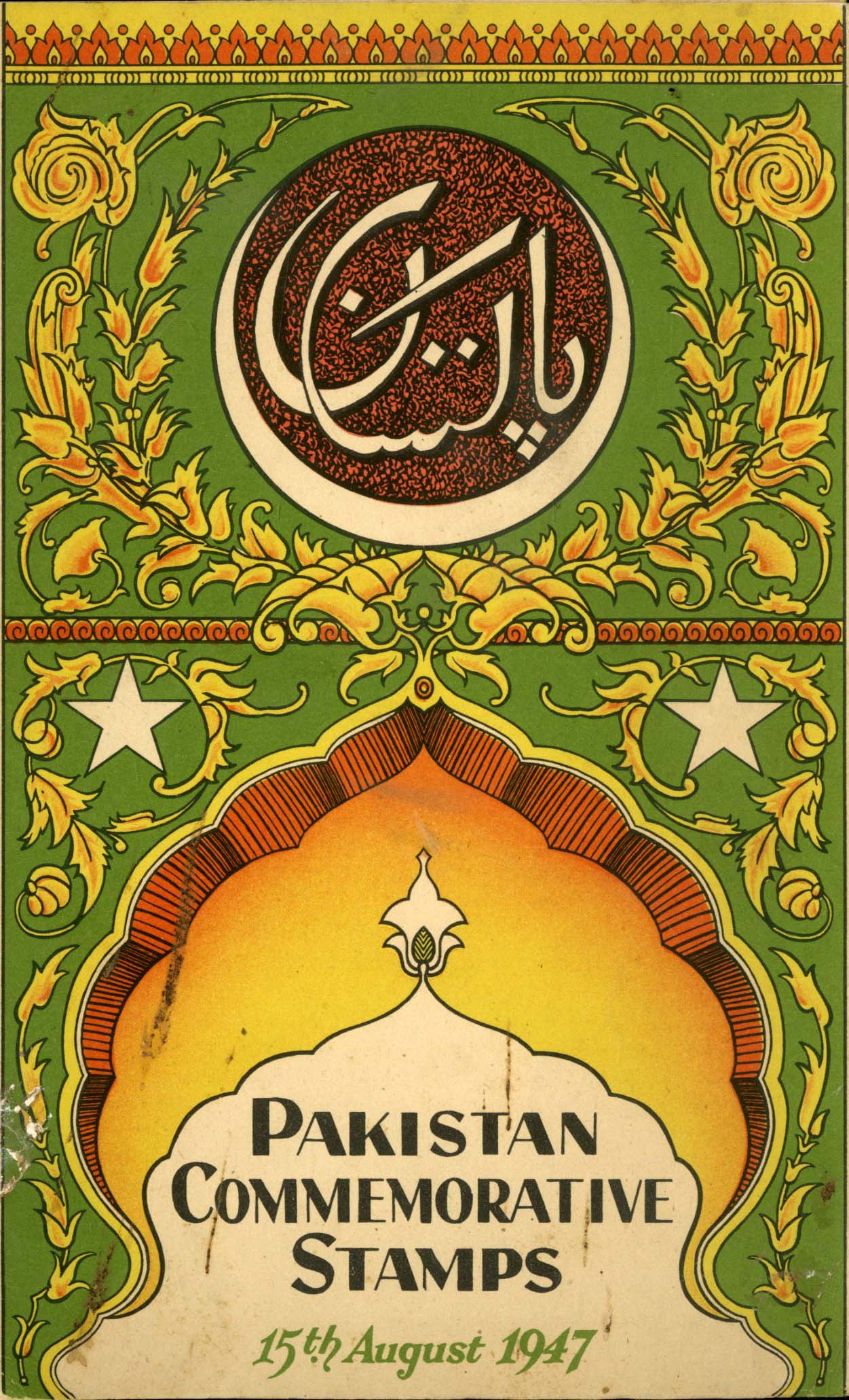
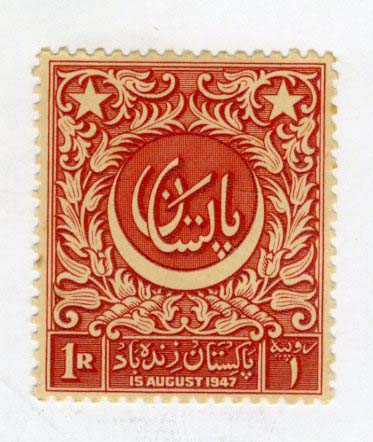
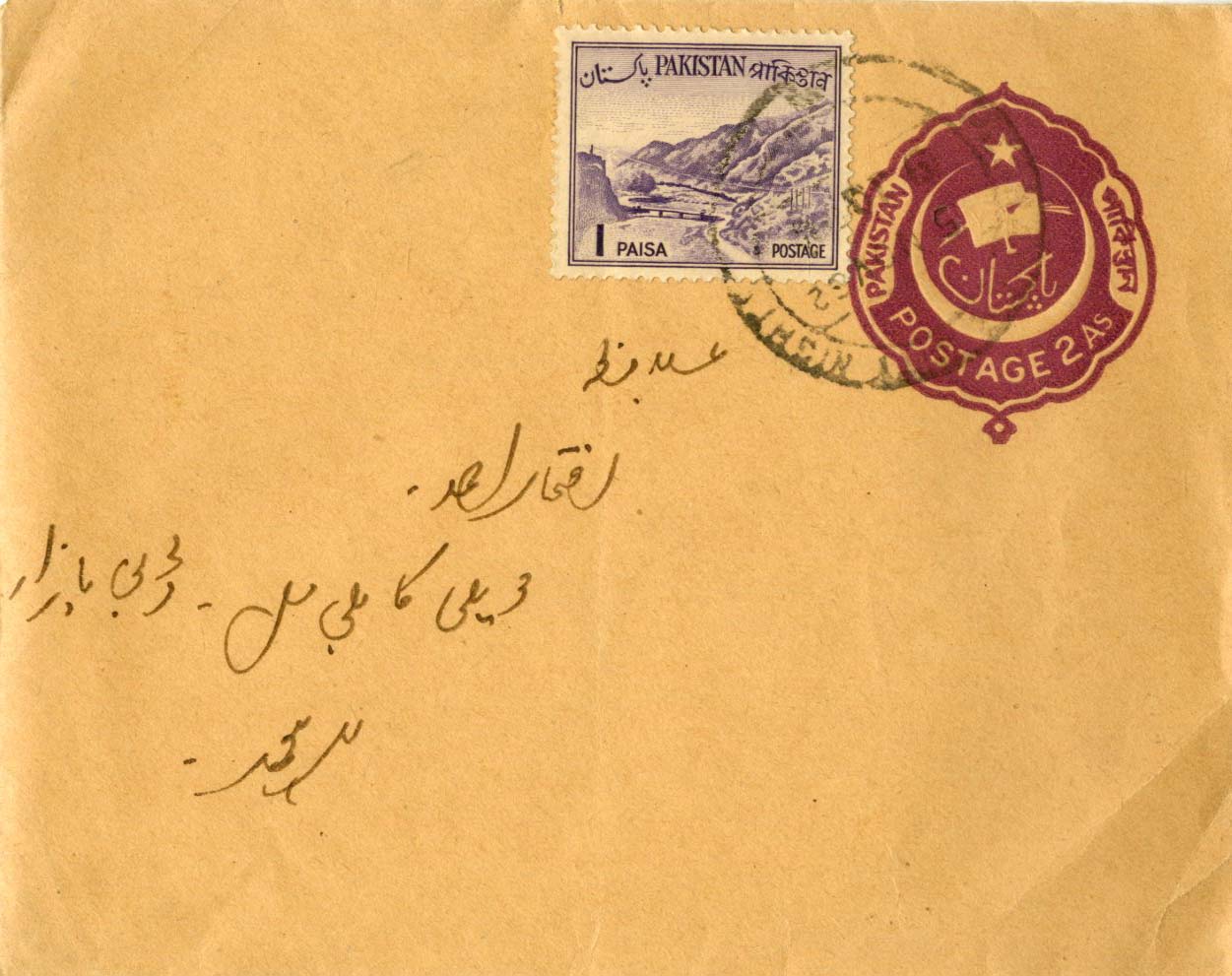
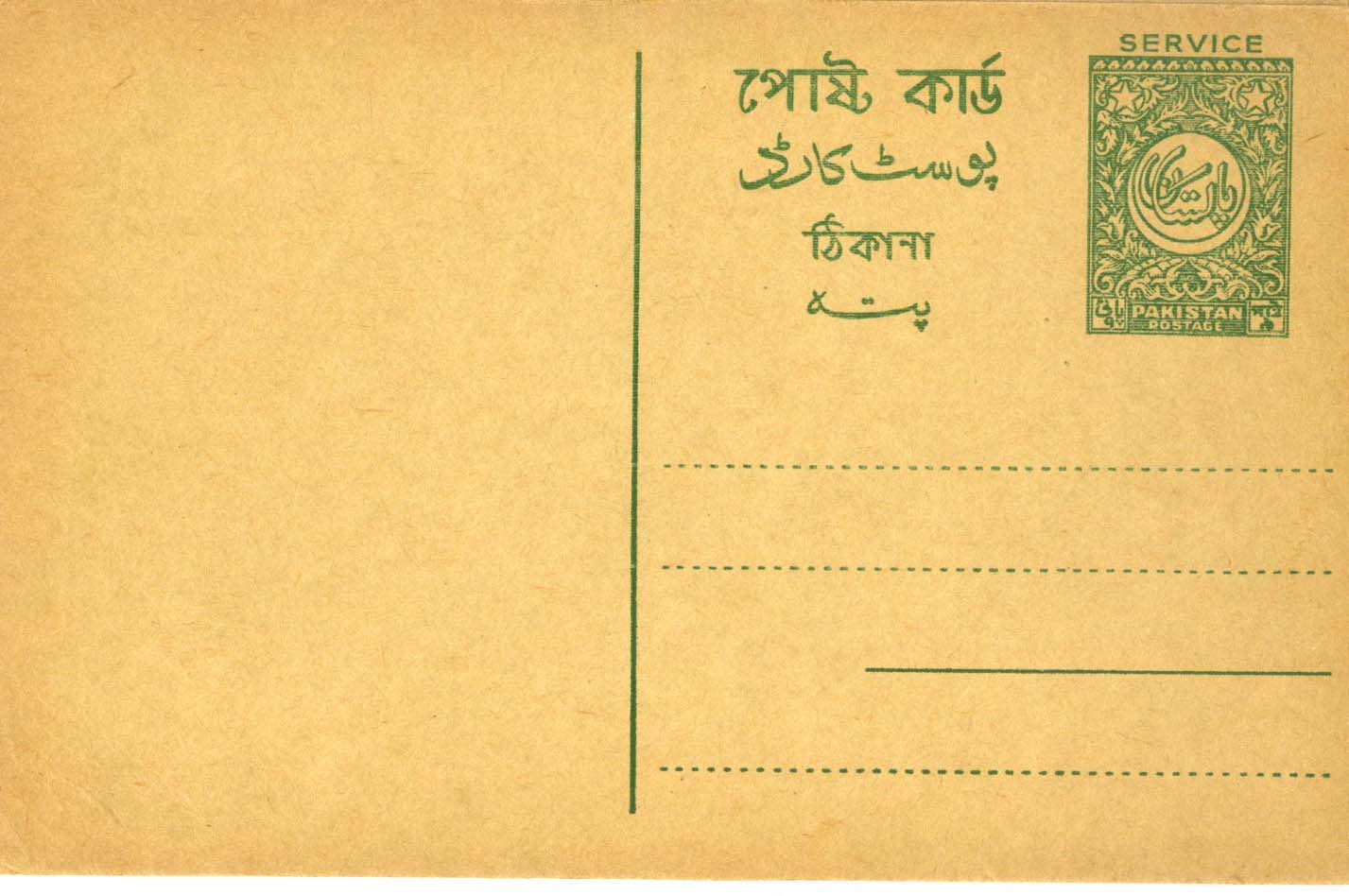
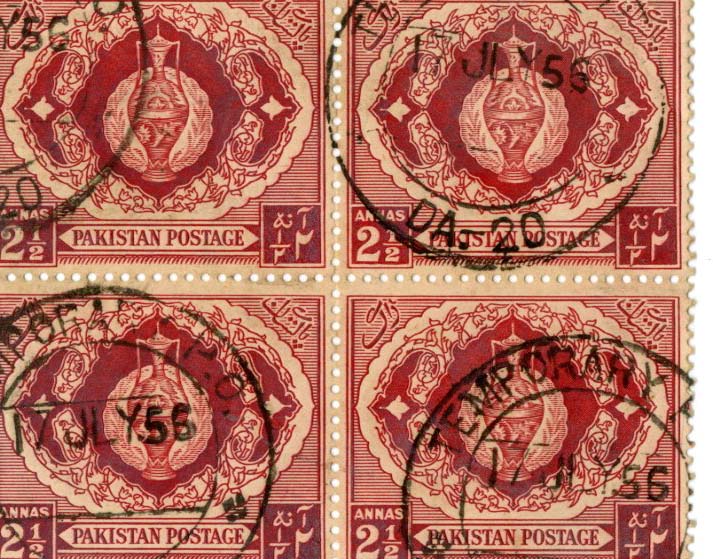
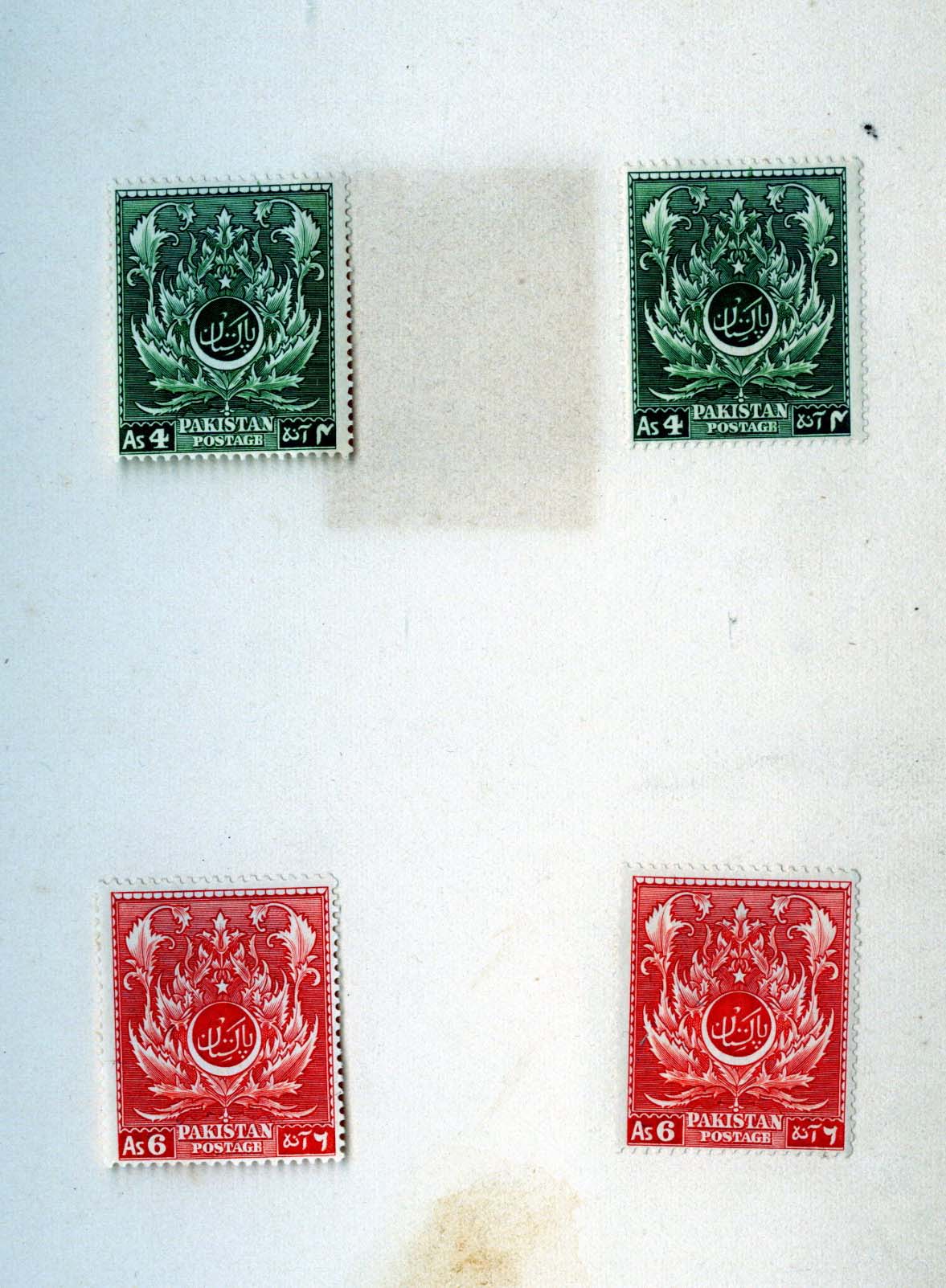
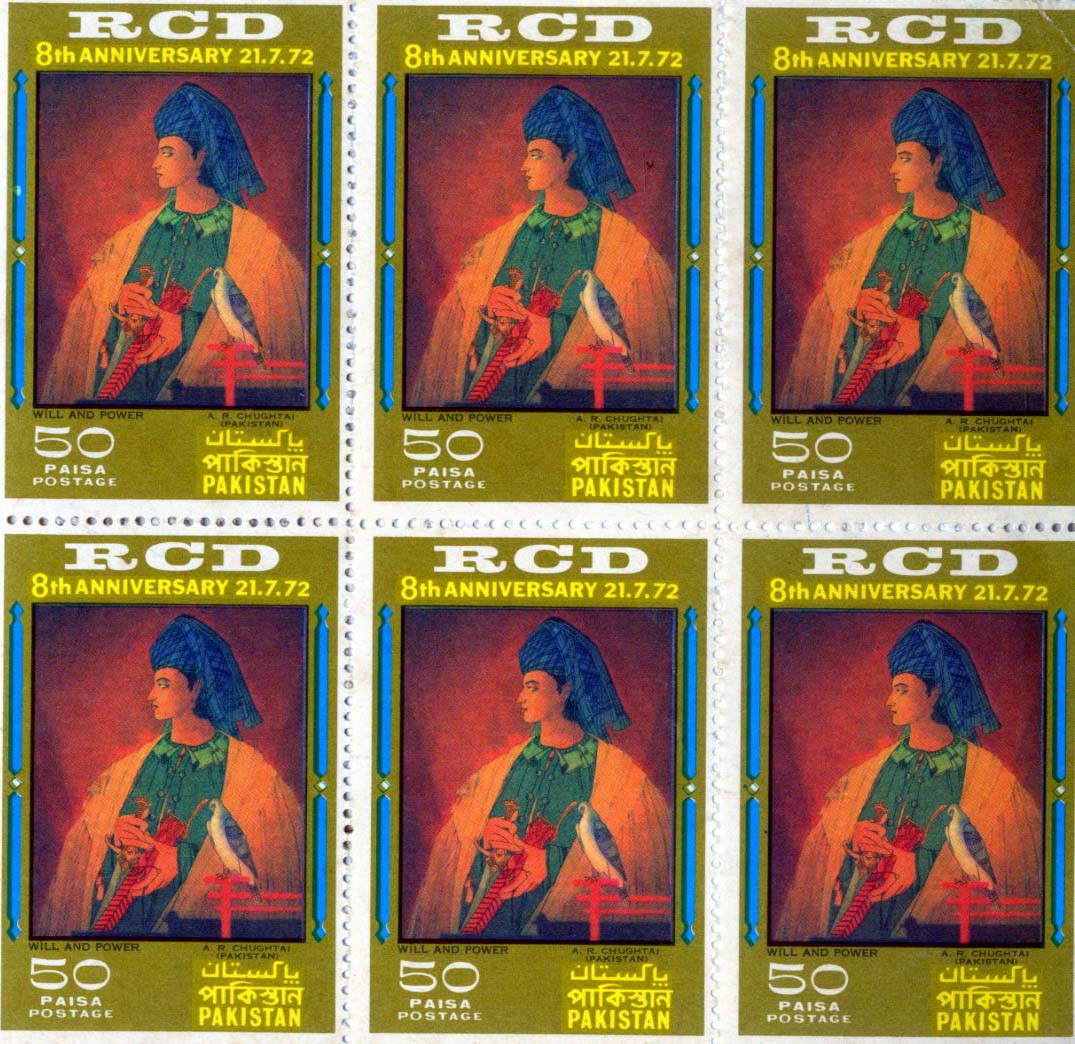
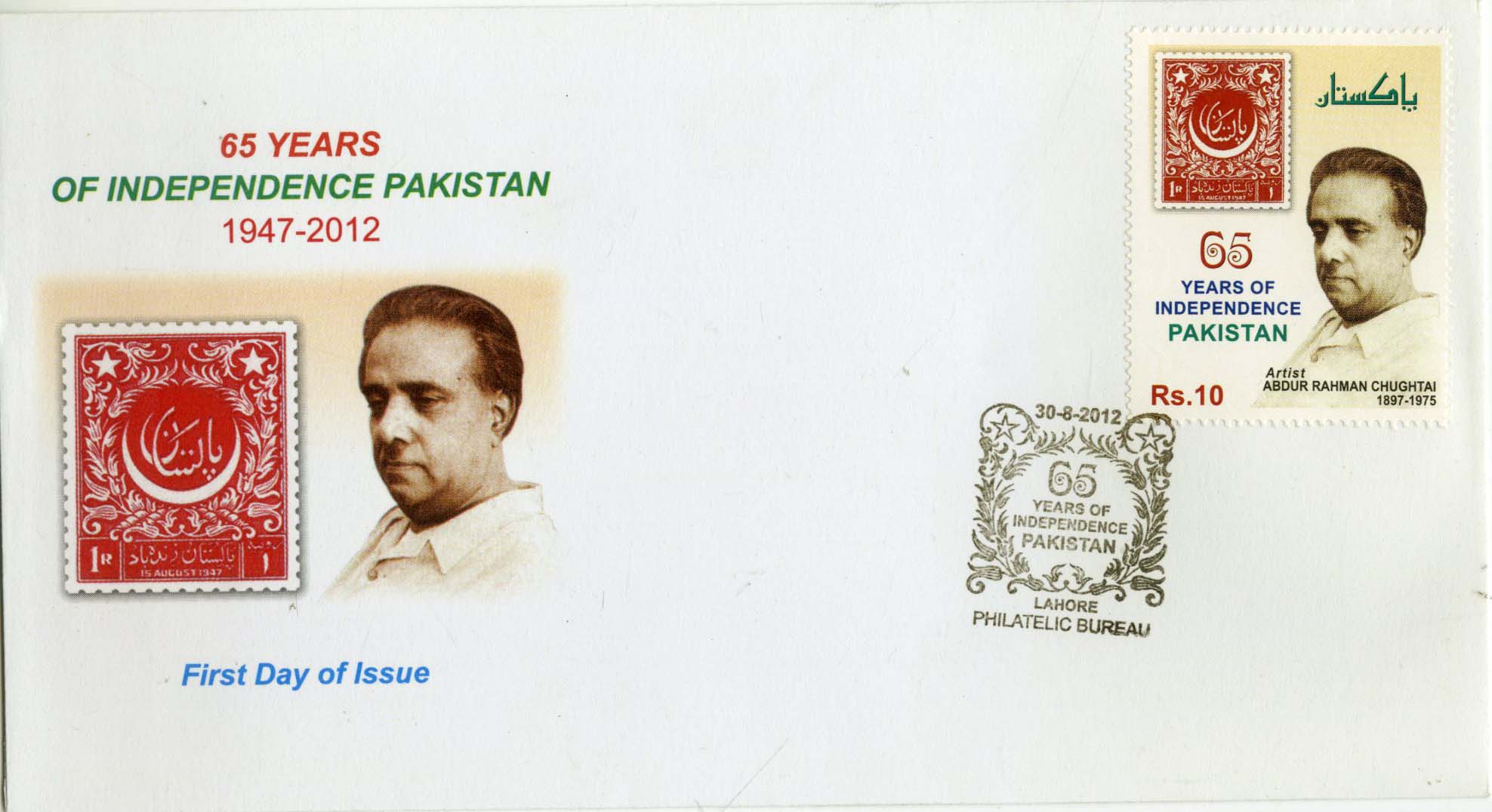
In 1946 before the birth of Pakistan, the fame of M.A. Rahman Chughtai had spread in the Muslim world and leaders. When Quaid e Azam came to Lahore, the Doctor who had invited the father of the nation, at a reception introduced the artist to Quaid e Azam himself. Liaquat Ali Khan was well familiar with him and was responsible for initiating a financial grant to the artist after that time. Designs were requested from the artist, including design of the Pakistani flag. That for later. Here we talk of the Postal stamps requested designs from the artist. A number of designs were made and given to the Government of Pakistan. Only one was used in the first anniversary on 15th August 1948. It became the first actual Postal Stamp of Pakistan and was judged as one of the four prettiest stamps of the world. With it came the first printed envelope as well as the first printed Post Card of the Governmental Post Office.

Later on various other stamps were designed and printed. Many of them could not be printed for the Government had no money to print same. Some of them were auctioned in London by the Stamp Printer Gibbons? and are now lying in Dubai with a collector. He was asking Twenty thousand pounds for one of them, and not in our position to buy them. In any case we too have some unused designs with us. Wait for that in our next blog. We print a small page where Chughtai Sahib used to start the concept of designs and used to perfect the drawing, with ink later.

M.A. Rahman Chughtai was a designer of many things. His passion  surrounded whatever he touched and witnessed in life. We will try to record some of his designs on various levels. Till then enjoy the printed stamps!

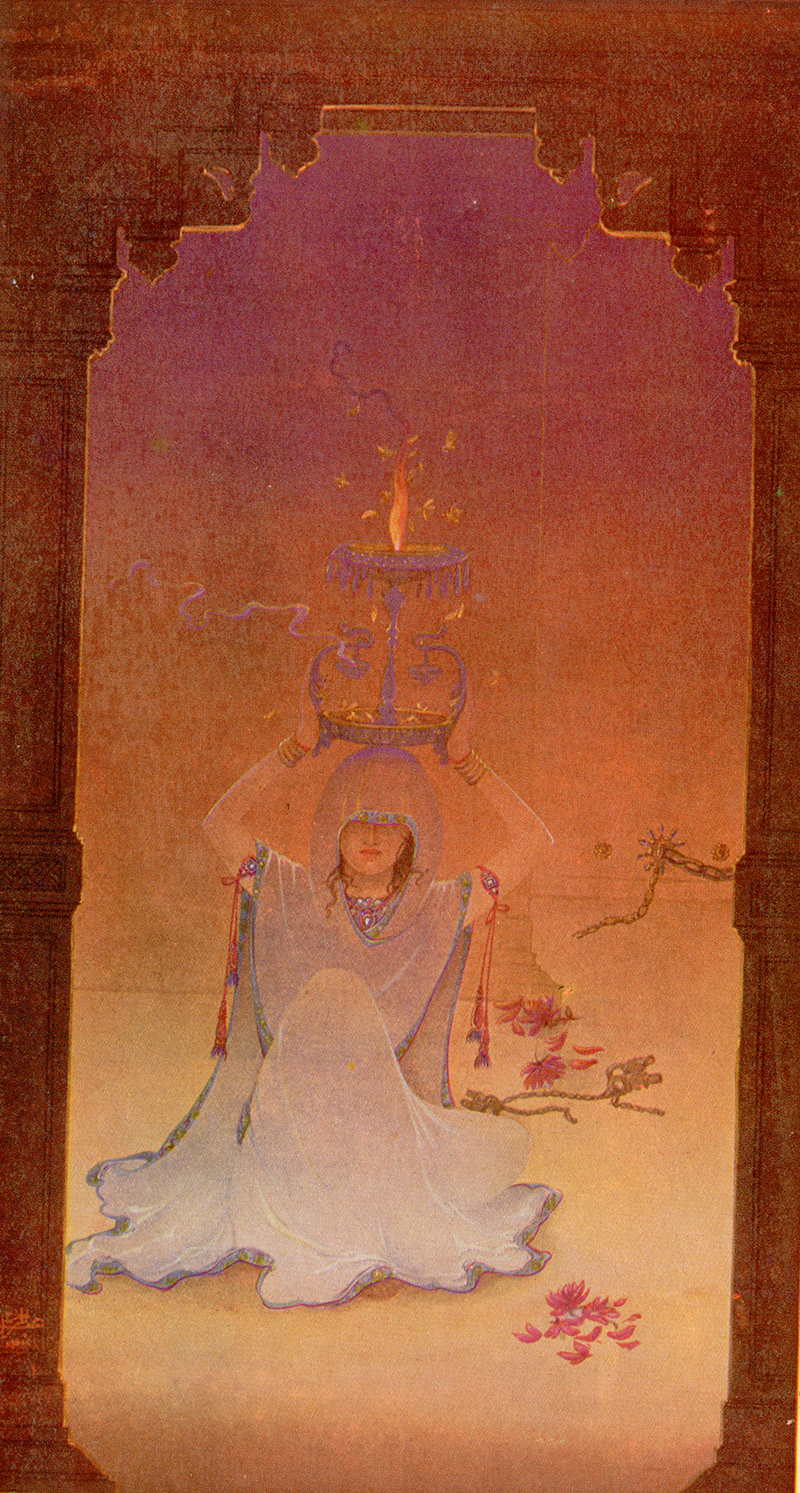
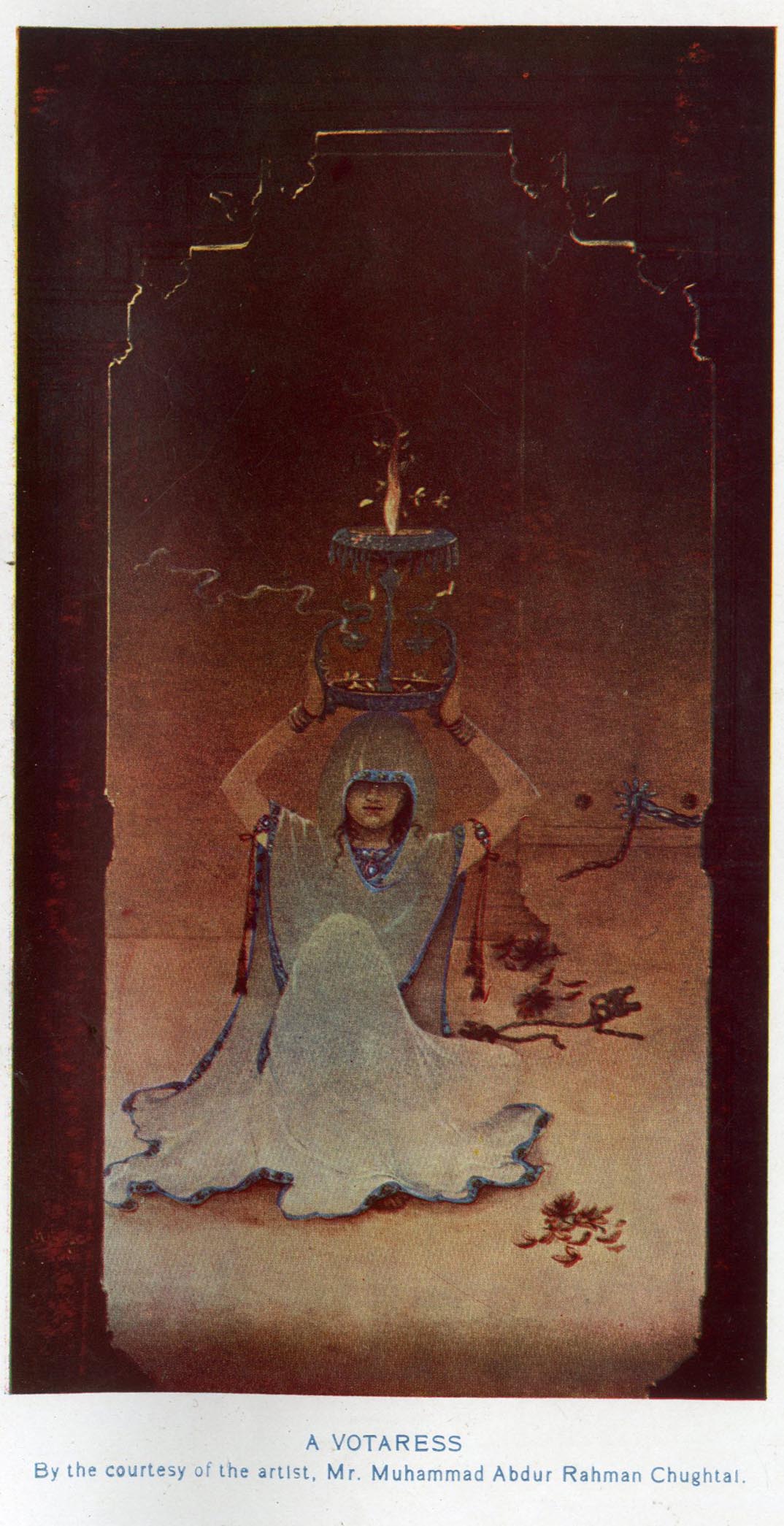
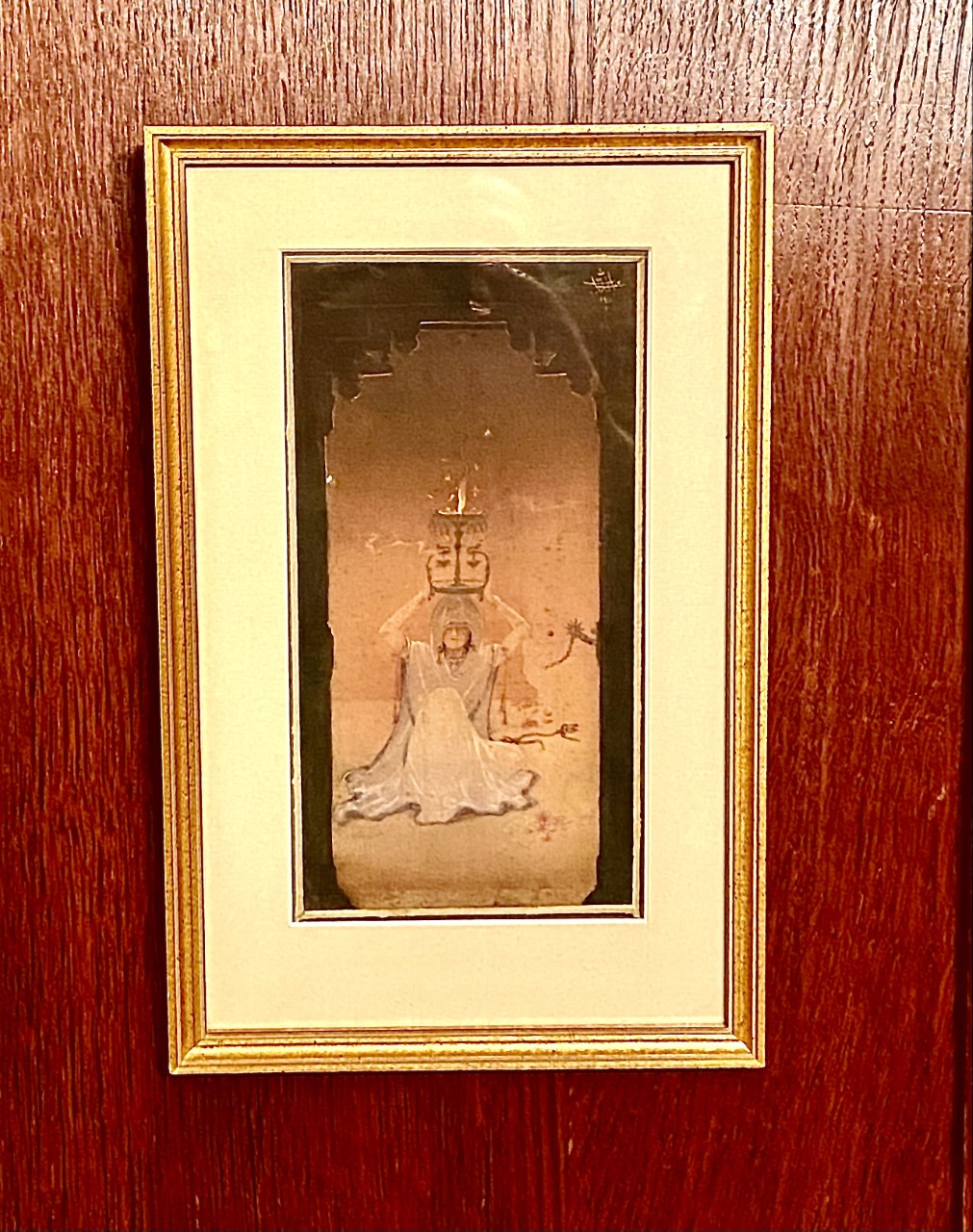
CONVERSION OF BROTHERHOOD INTO ANIMOSITY OF TWO ARTISTS; A. R. EJAZ COMPARES CHUGHTAI TO A SWEEPRESS MISTAKING LIGHT, IN THE CLOUDS TO BE A WINKING JIBE FROM GOD AND JUBILATING.

CONVERSION OF BROTHERHOOD INTO ANIMOSITY OF TWO ARTISTS;
A. R. EJAZ COMPARES CHUGHTAI TO A SWEEPRESS MISTAKING LIGHT,
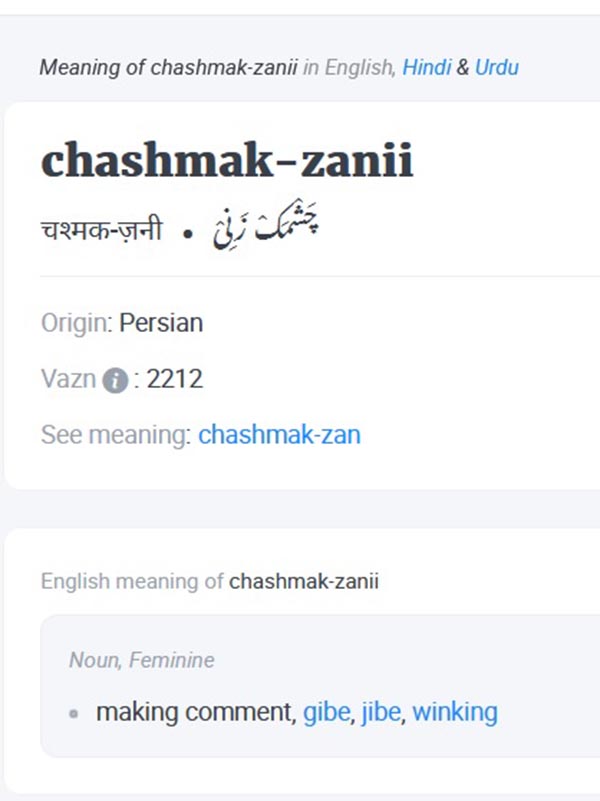
IN THE CLOUDS TO BE A WINKING JIBE FROM GOD AND JUBILATING.

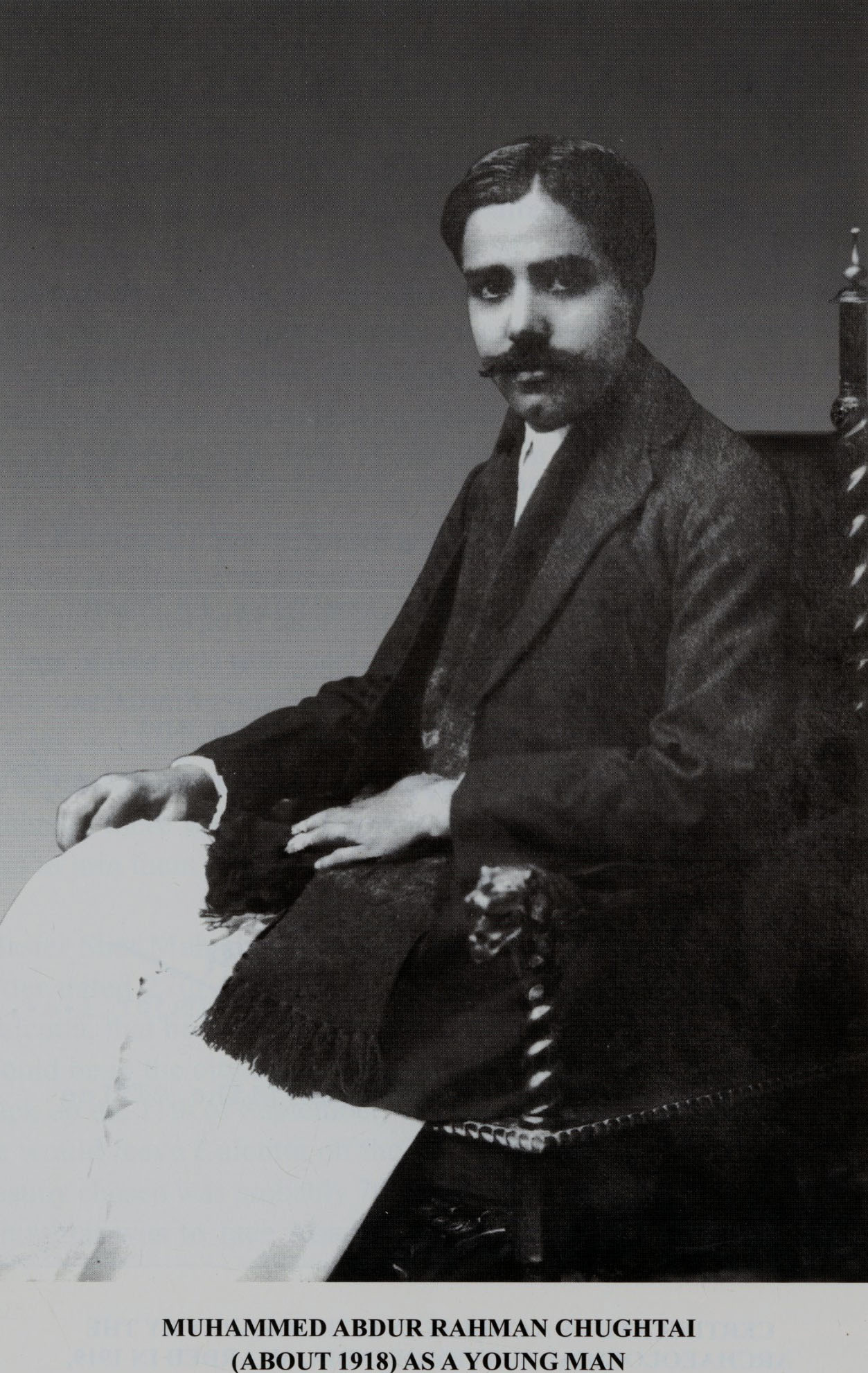
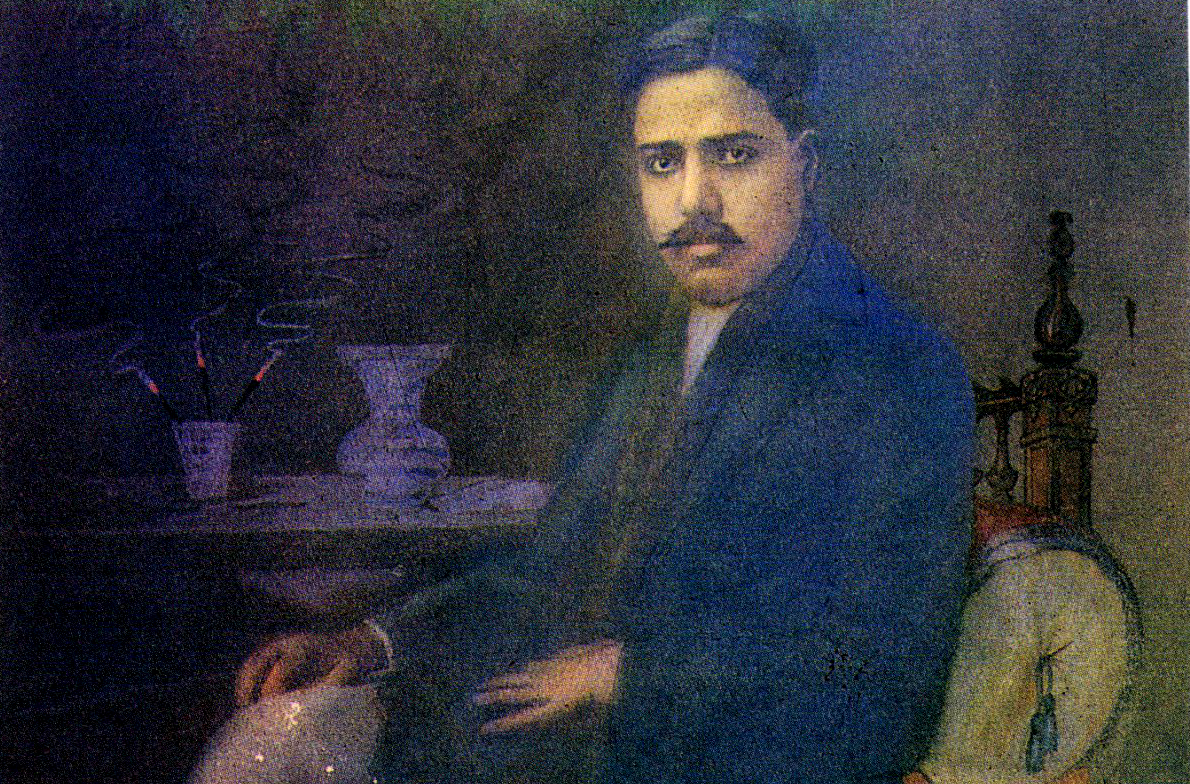
Once upon a time friendship occurred between the Baghbanpura family of Abdur Rahman Ejaz and brother Mian Inayatullah. It included regular meetings, eat overs, fishing, hunting, kite flying and what not?  Chughtai welcomed them to his home in Chabuk Sawaran for partying and they used to partake food together. They also used to paint together at Chughtai’s house.  Chughtai lent them his materials as well as sketches required at moments. Everything was well in that relation. Letters prove that Abdur Rahman Ejaz styled himself as the brother of Abdur Rahman Chughtai. In that frenzy Abdur Rahman Ejaz even made an oil portrait of Chughtai sahib, which is still preserved today. It can be easily compared to a photograph taken at that time about the age of twenty years. So, what went wrong?

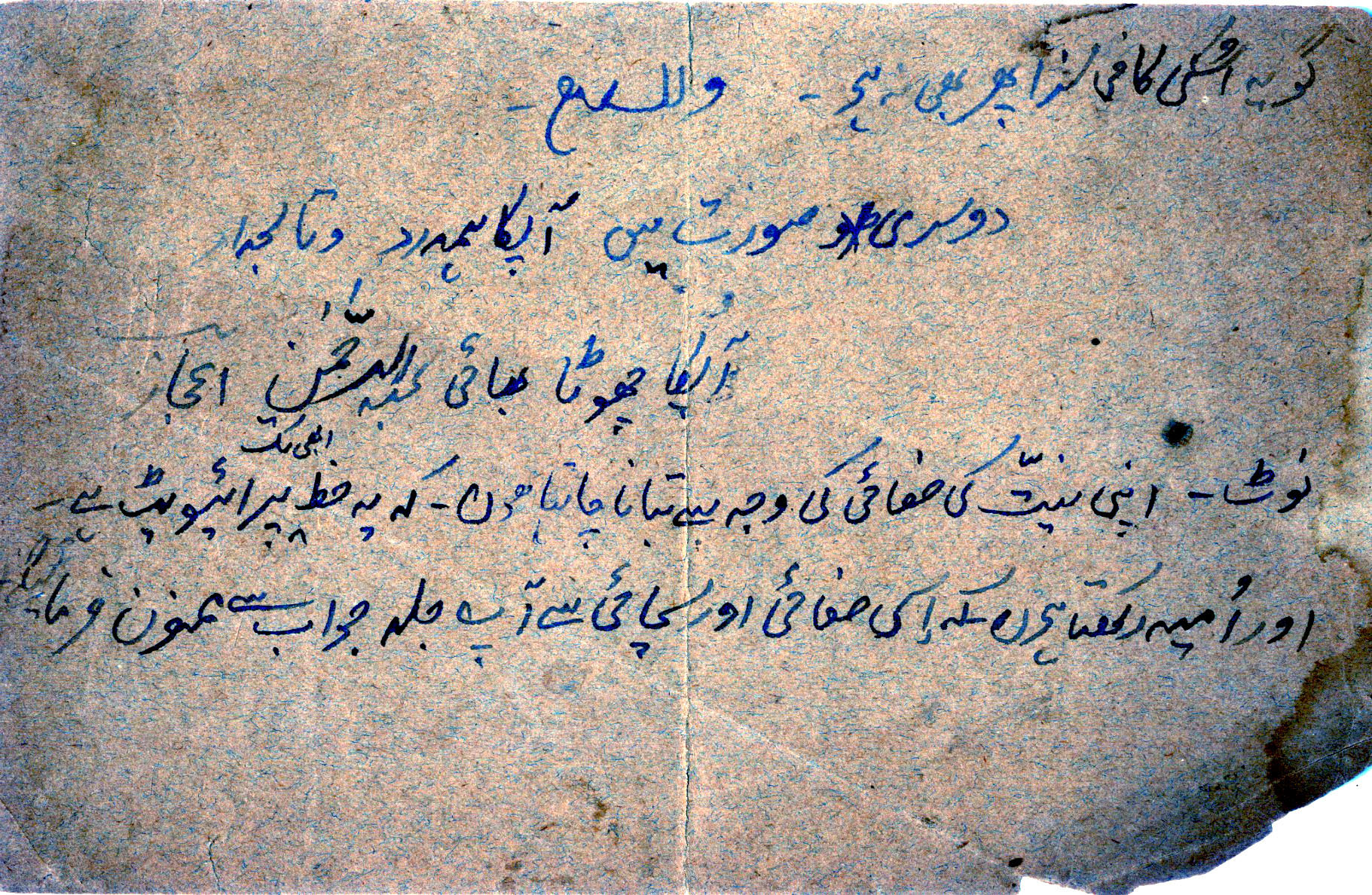
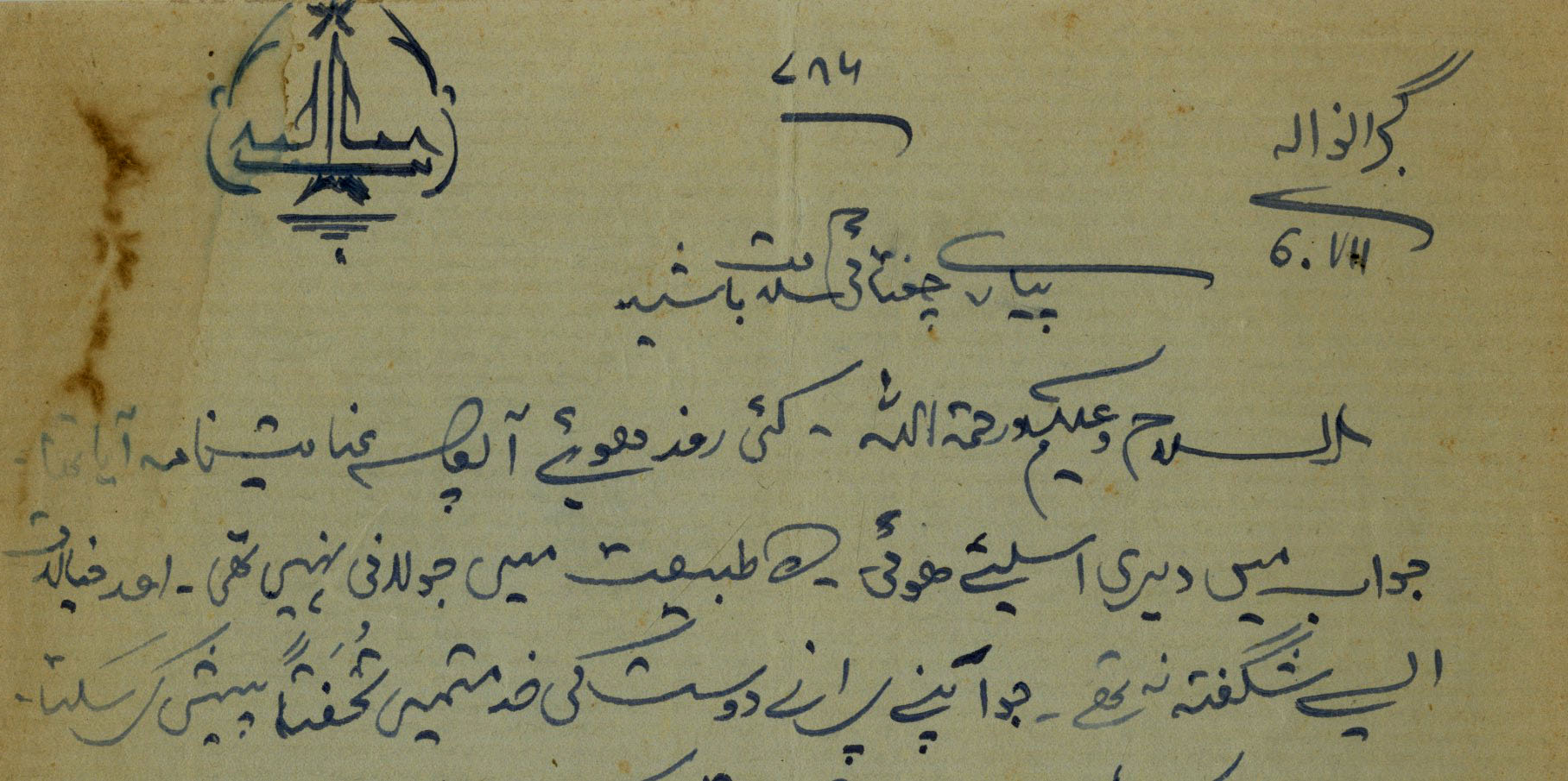
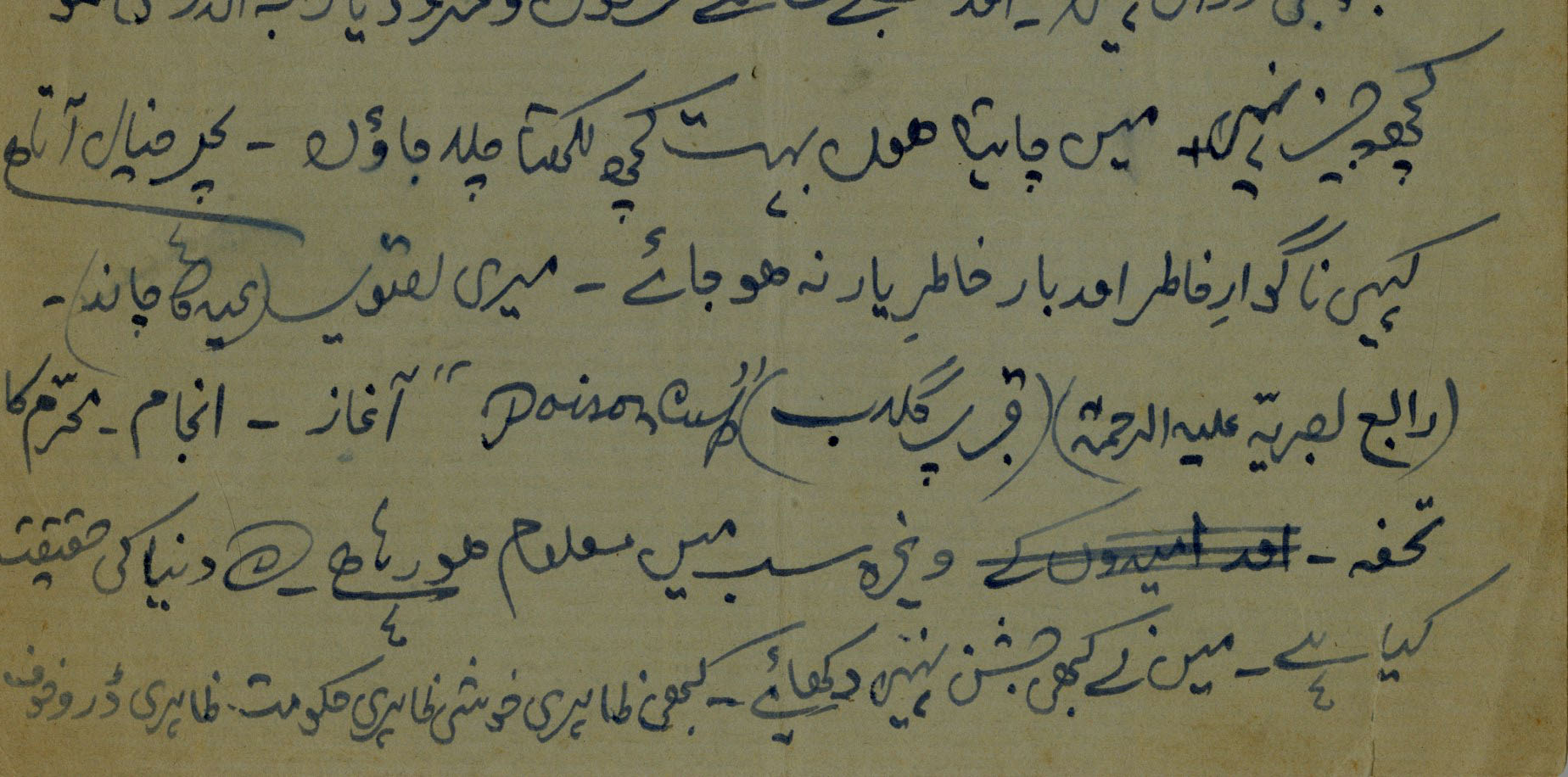
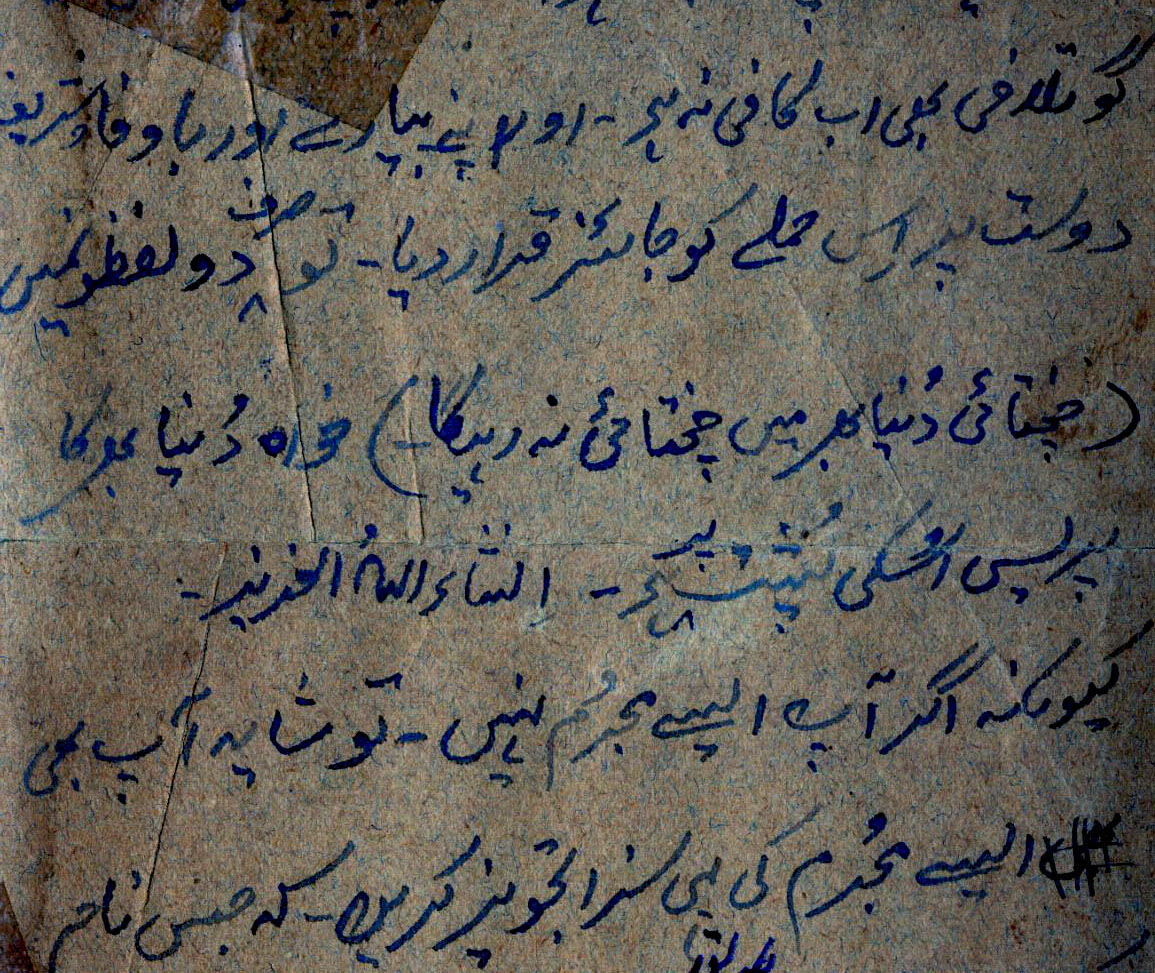
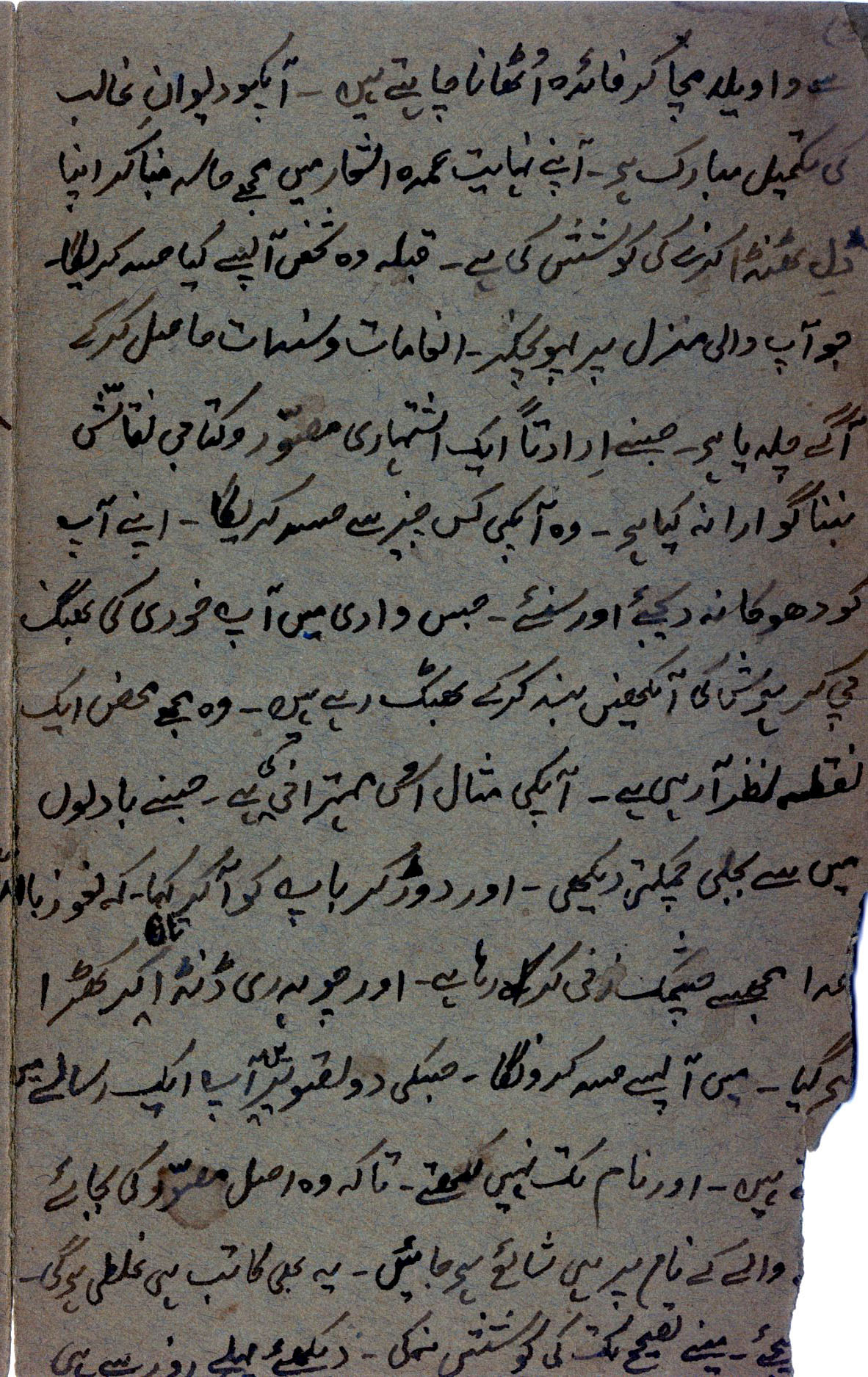
M.A. Rahman Chughtai sketched a work namely ‘POISON CUP’ and finished it. Inayatullah requested to borrow it. He not only borrowed it, he wrote his name on it, and got it published in an English magazine, probably ‘Studio”.  He had done this before with other workls and Chughtai had not done anything about it. But this time Chughtai did not like the idea of his work being published abroad in a different name, and being the only one of Mian Inayatullah, displayed at the Wembley Exhibition. Although two of his works were selected but, in the end, only one was exhibited. The children out of ignorance proclaimed that ten works of Inayatullah were selected and only two of Chughtai Sahib. I showed them documented evidence of the catalogue itself which can even be checked today on internet. Chughtai Sahib made a complaint to Principal Lionel Heath. Samarendranath Gupta was asked by Lionel Heath to research on the subject, and he being full of venom for Chughtai, gave his verdict in favour of Inayatullah (the verdict is published by us). The funny part is that in a letter to Chughtai Sahib, Inayatullah himself admits that ‘Poison Cup’ start to finish is work of Chughtai sahib (from aghaz to anjam mohtram ka tufa). But this exposure to authorities infuriated Abdur Rahman Ejaz and he threatened Chughtai with all efforts to finish him forever, and (to spite Chughtai sahib) he actually changed his name first to A. R. Sandaavi and then to A R Ejaz, as he himself says in his letter. By exposing my brother you have incurred my animosity, he affirms.

This is not merely enough to qualify for a full article but a booklet in itself. We have tried to shorten it so that it can be understood that the brotherhood turned into animosity by exposure of Inayatullah to a fraudulent activity. We print two art works, and listed in two places. At one place it has a signature of Abdur Rahman Chughtai and the same work at another place has the signature of Mian Inayatullah. For those so-called analysts and critics who try to shame our research, the shame goes to them for not being able to see the true picture. The venom for Chughtai is skin deep for people who are jealous of his iconic stature. However truth remains and shines in the end. Less said the better.

Chasmak zani means

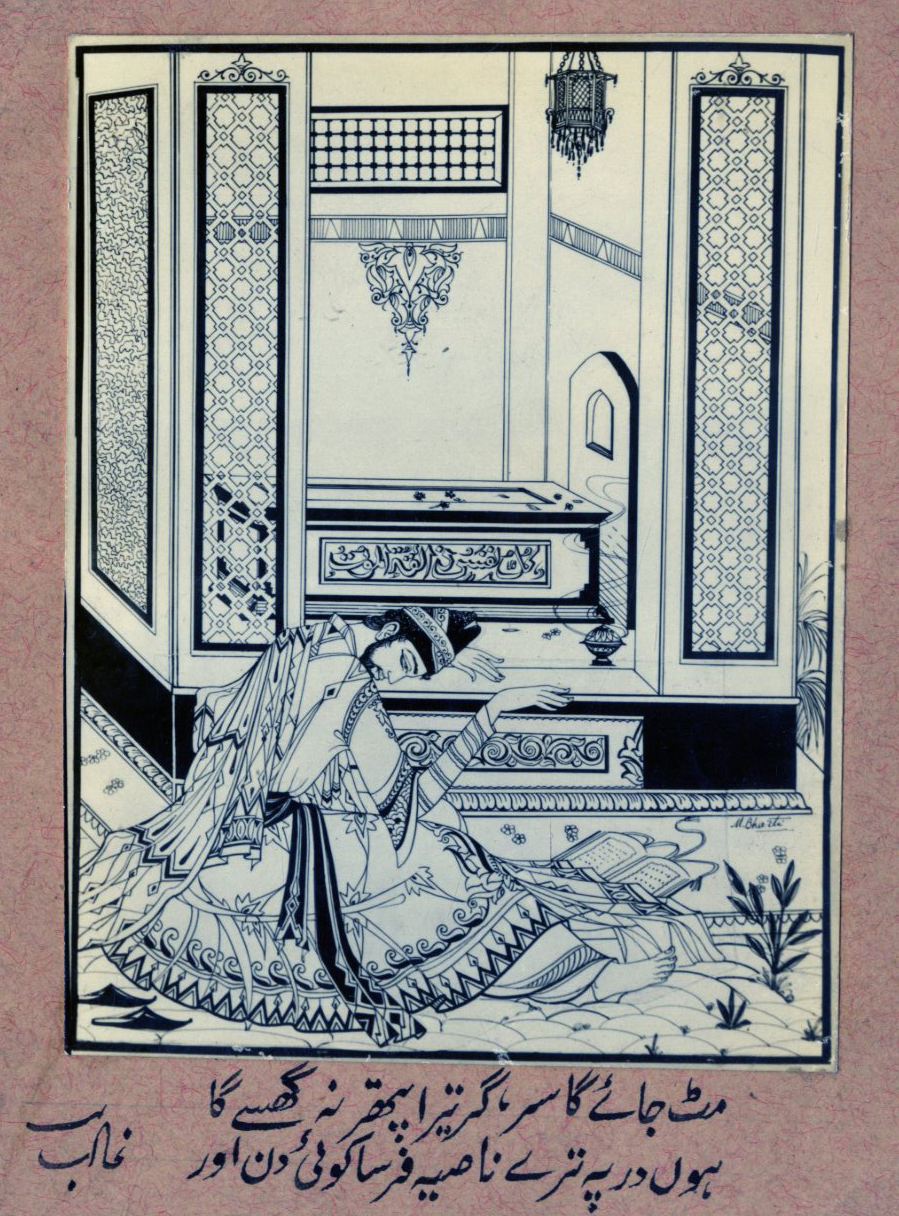
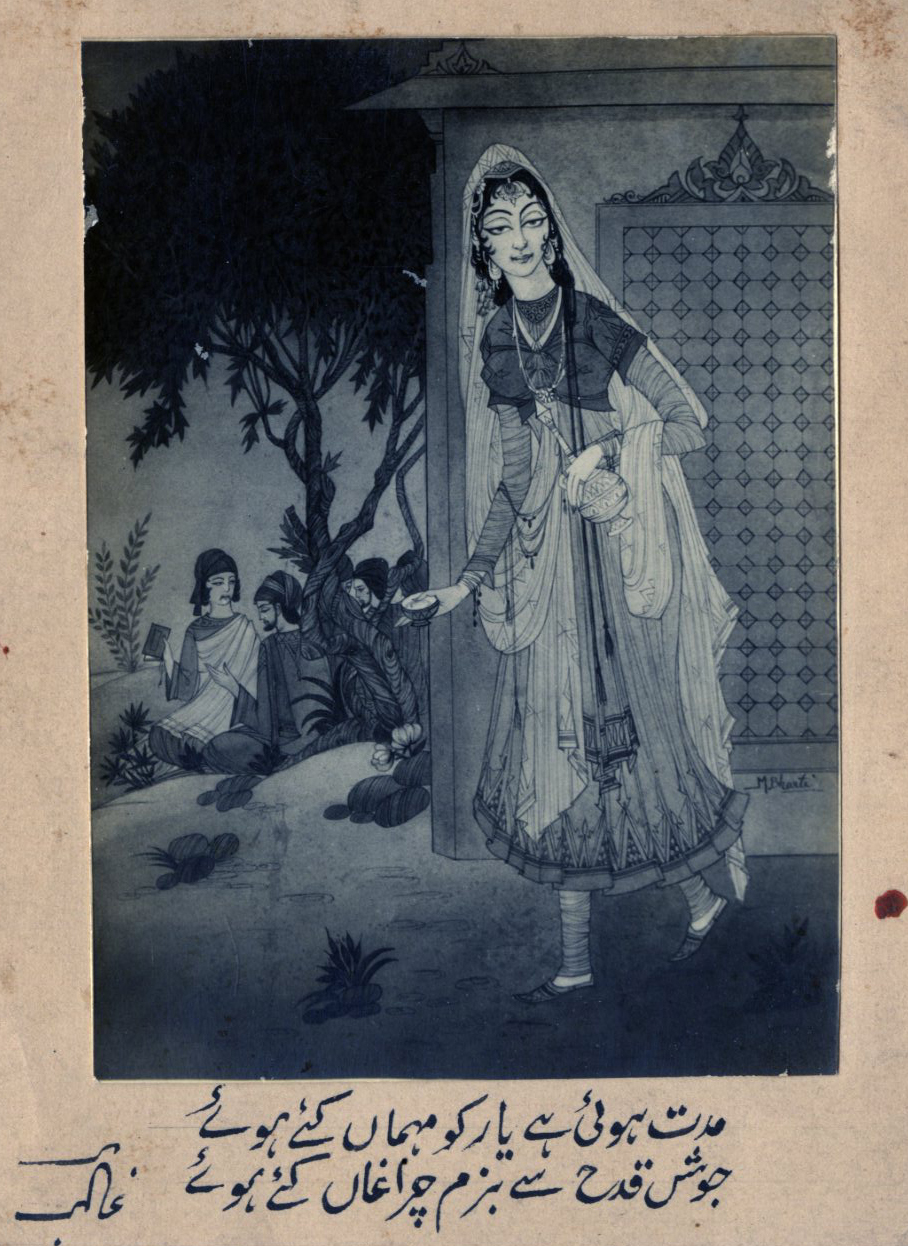
NOT WELL KNOWN THE FACT THAT MANY FOLLOWED CHUGHTAI ART; THE YOUNG MUHAMMED IBRAHEEM FROM BANARAS WITH GHALIB.

NOT WELL KNOWN THE FACT THAT MANY FOLLOWED CHUGHTAI ART;
THE YOUNG MUHAMMED IBRAHEEM FROM BANARAS WITH GHALIB.

As the fame of M.A. Rahman Chughtai spread over the region, there were people who followed his art in style as well as making. There is a long list of them, and hardly people know about same. Often you hear ignorant say that he left no pupils, but actually he did. He even tried to teach students his style and technique, but the list is numerous and we will catch it from time to time. Many will be surprised to know how many followed his art and were enamoured by his style.

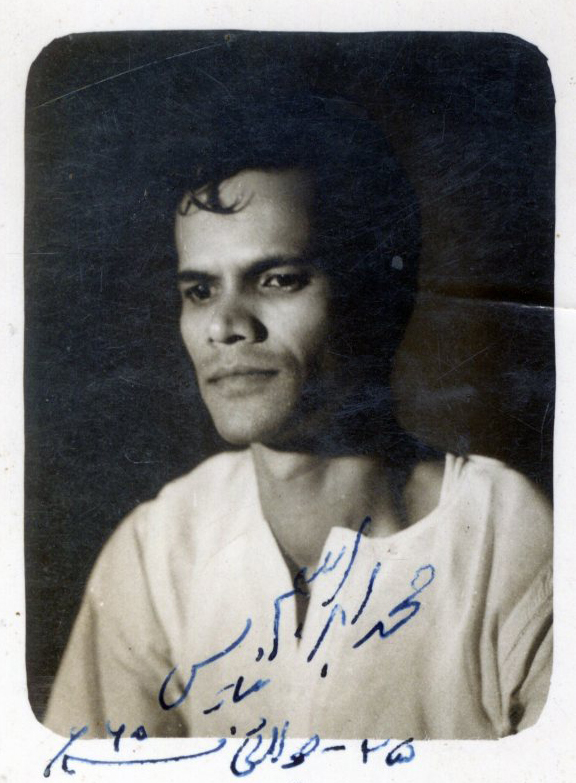
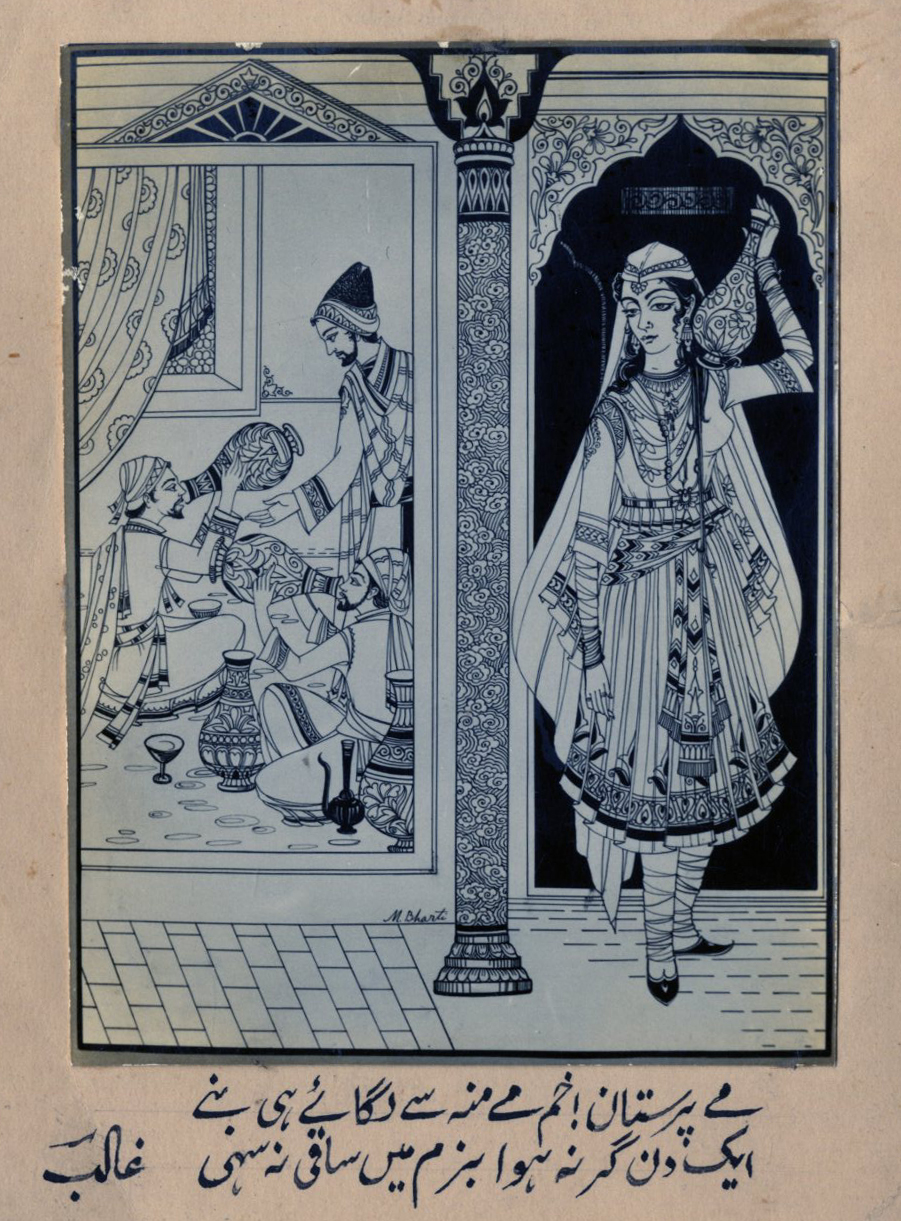
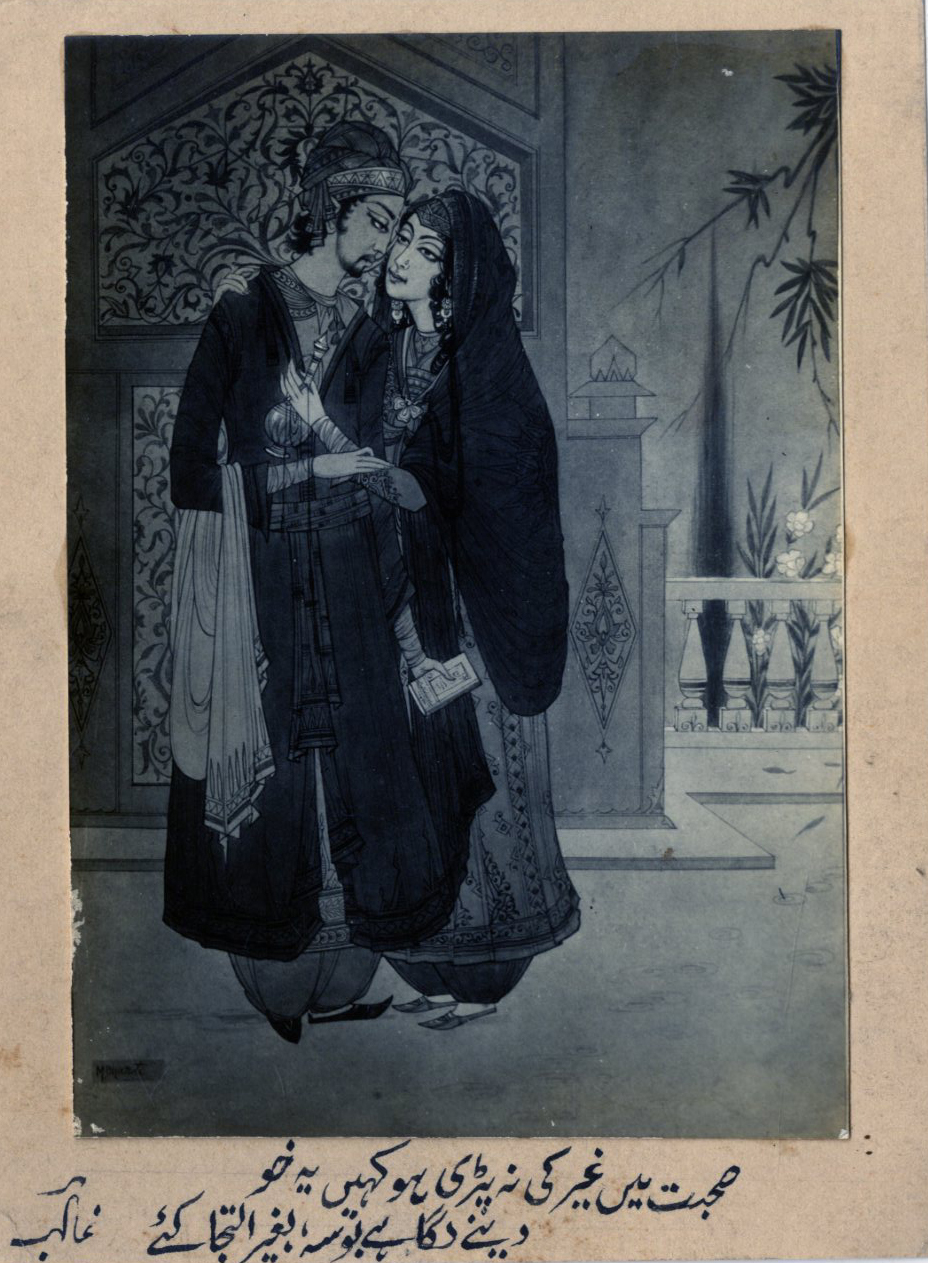
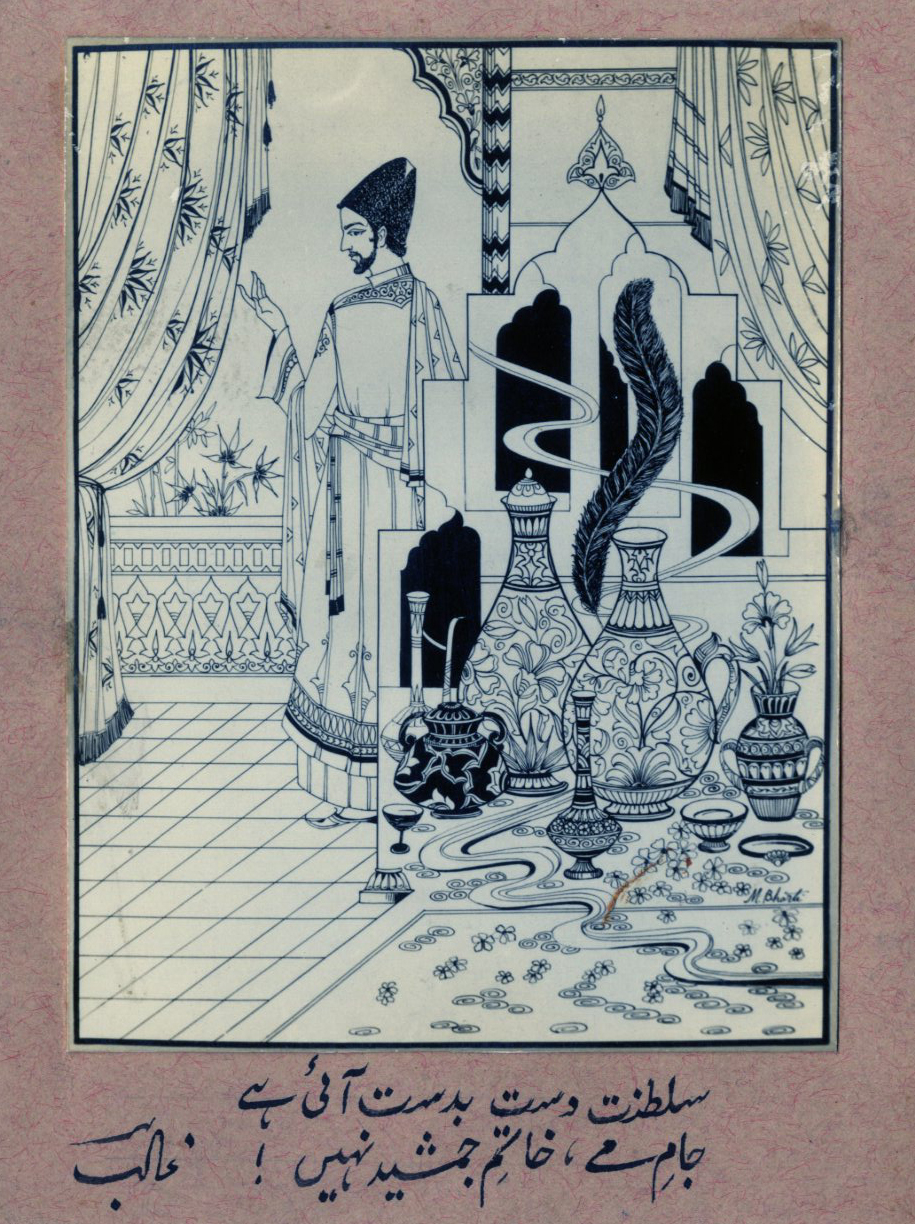
We will try not to list only names but find examples of their art. But it is difficult as they expired long ago and difficult to search out specimens of their work. Here is one example in our archives. Muhammed Ibraheem from Banaras and we think these images were sent to him around 1960. Chughtai Sahib must have responded to him in letter and spirit, for he never discouraged people and he had a big heart for all artists and their art doings. But he used to ask them to start from basics and not all understood the basics of Chughtai. Sketch eyes, lips, even simple objects. Some seniors used to get infuriated by this response, but Chughtai Sahib knew well what were his intentions. The students could not understand. Anyway enjoy one follower of Chughtai Sahib. Wonder if he is still alive and working! Maybe even now in Pakistan. He follows detailed lines but loses in expression. Many works owe direct inspiration from Chughtai Art.

FROM PERSIA TO KABUL TO LAHORE THE EVOLUTION OF MUGHAL PAINTING; FASCINATING FIRST MUGHAL WORK OF 1555 DONE BY MASTERS UNKNOWN.

FROM PERSIA TO KABUL TO LAHORE THE EVOLUTION OF MUGHAL PAINTING;
FASCINATING FIRST MUGHAL WORK OF 1555 DONE BY MASTERS UNKNOWN.

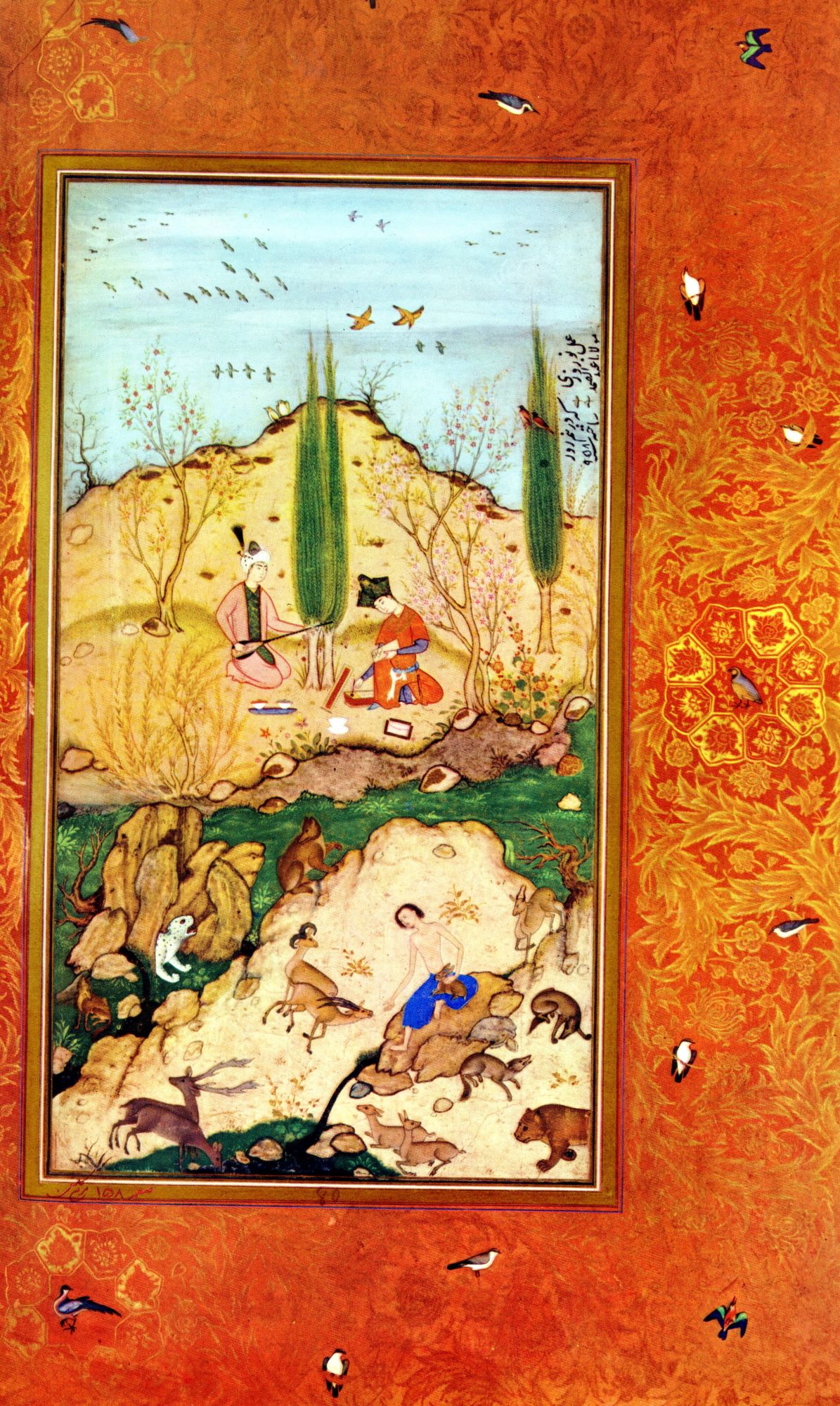
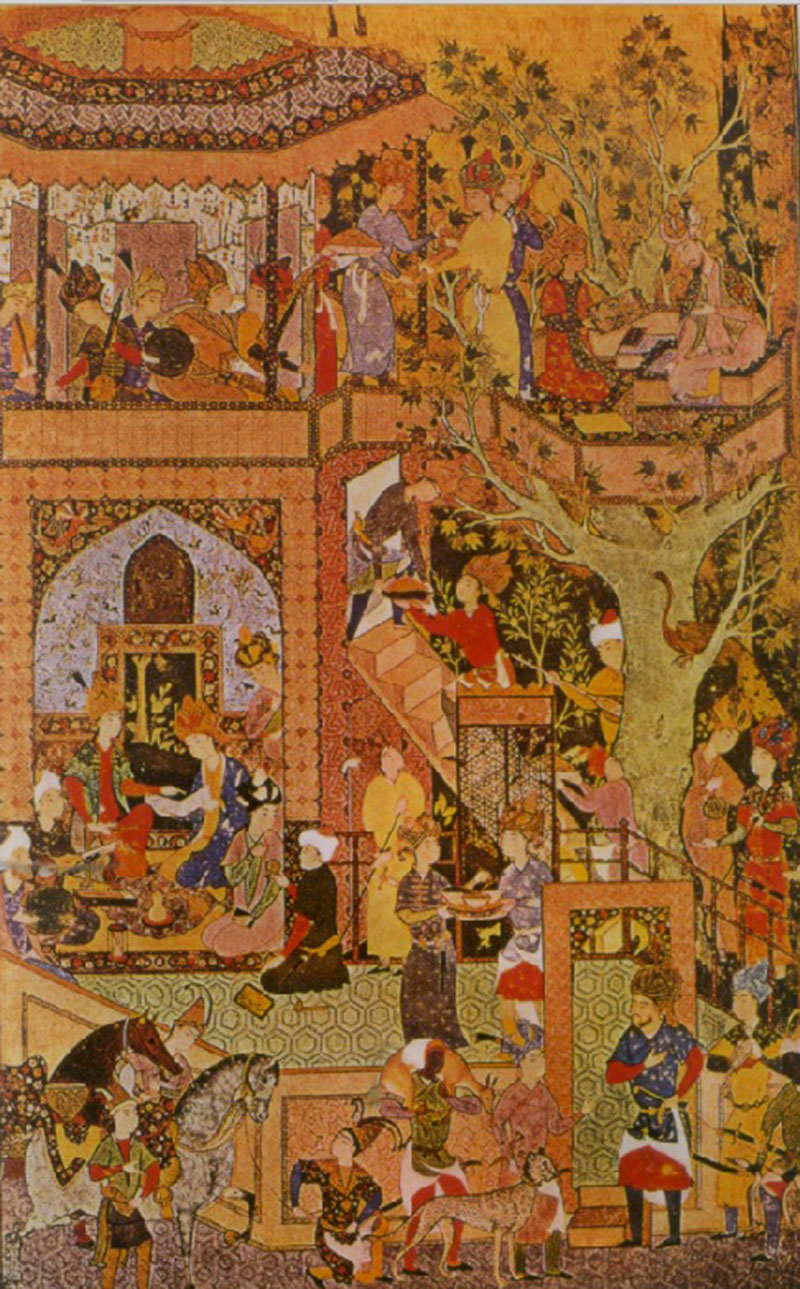
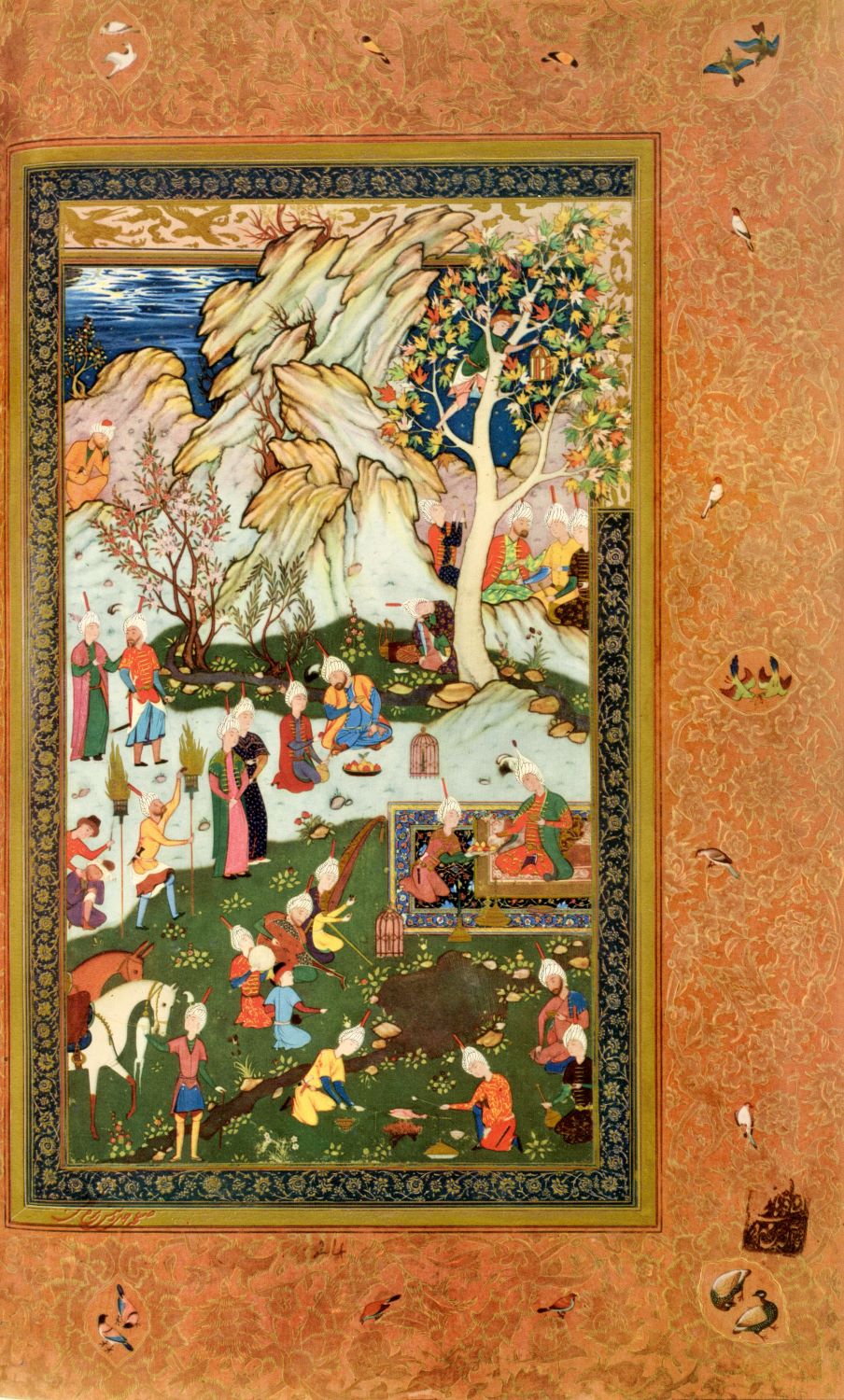
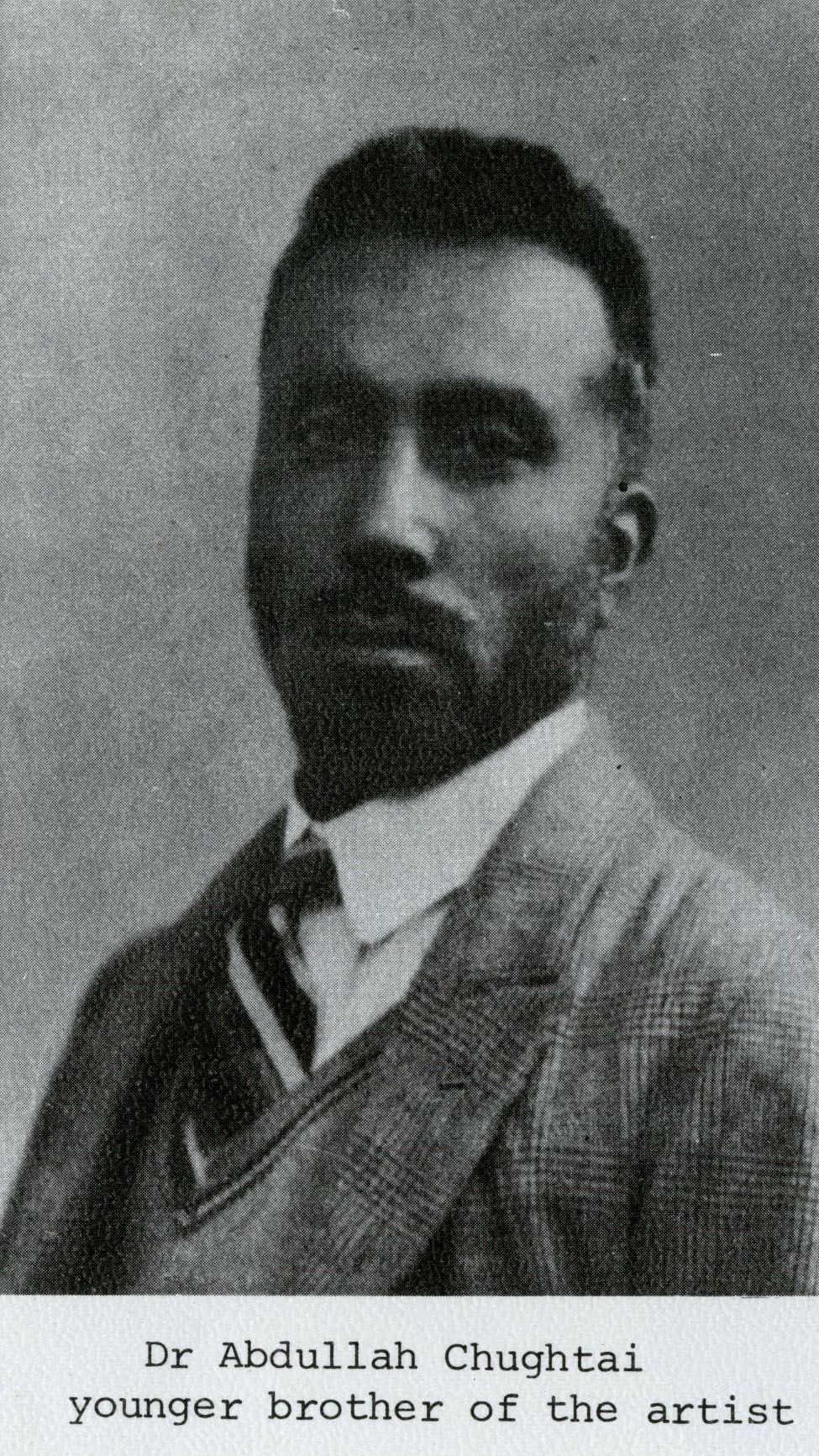
M.A. Rahman Chughtai was not merely an artist and etcher. He was also a collector and scholar, and had deep insight on World painting, Islamic painting, as well as painting in our region. The exceptional art works of Central Asia done in Ajanta and Ellora are well known, but then there is silence of nearly 800 years. Certainly, some works were done under the Sultanates, and scholars like Dr Abdullah Chaghatai and Dr Richard Ettinghausen have written about same. But the real swing started with Emperor Humayoun convincing a group of exceptional Paint Masters to come back with him to India. And most of them did. The main two were Mir Sayyed Ali and Khawaja Abdus Samad. And the very initial miniatures were probably made in Kabul and then moved on to the city of Lahore. Lahore became the center of Cultural revolution. In real terms Emperor Akbar set the school of art in motion (he himself got training in same), and about 55 Masters were put on the task of Dastan Amir Hamza, Not only that Akbar send batches of Indian students to Kabul and other places for training in the arts, and created many Hindu Artists of those times. Lahore even today has lanes named after major artists of  those times.

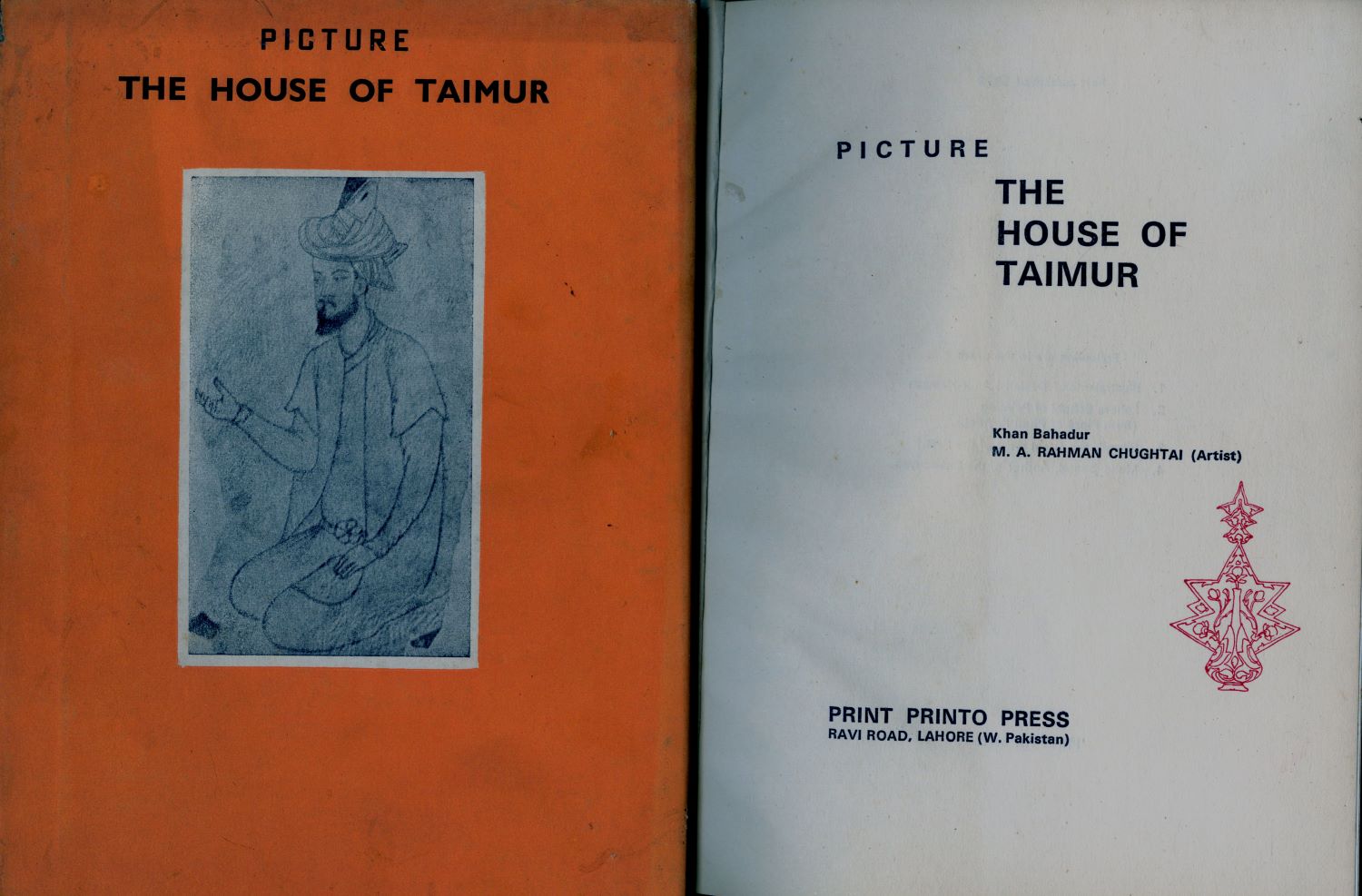
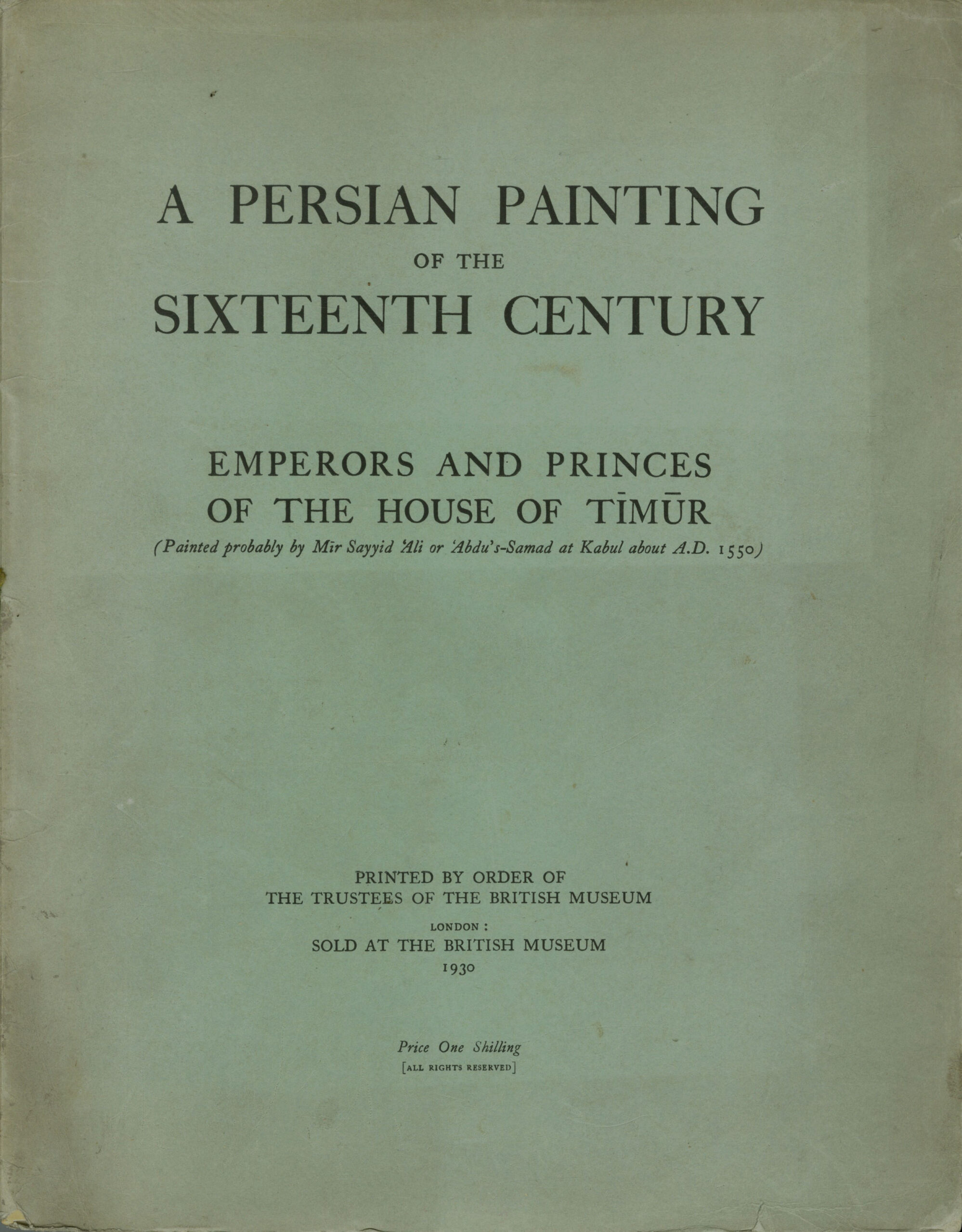
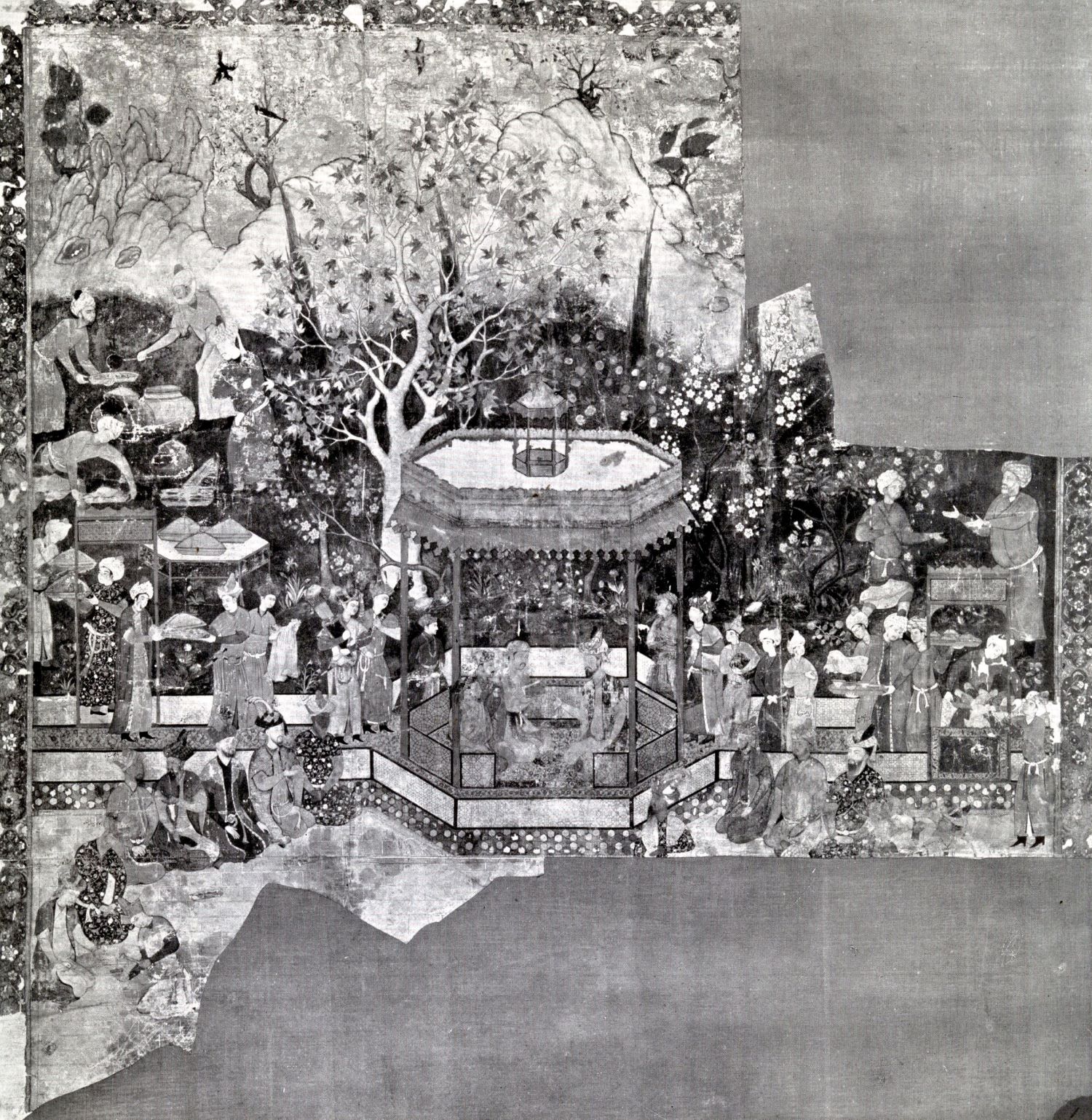
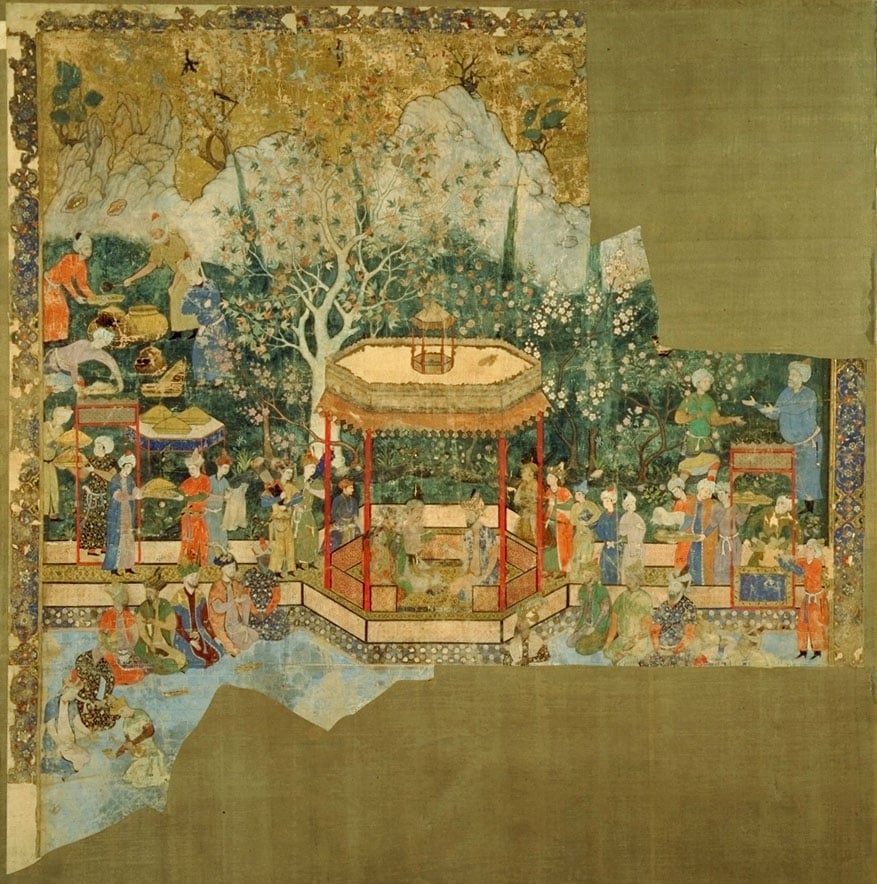
A torn painting on cloth and in huge size was discovered at the turn of 19th century. It had set people talking and scholars have poured in their opinion about the work. Initially Stanley Clark, Laurence Binyon, Basil Gray and others gave their opinion. Chughtai Sahib also contributed in that dialogue by publishing a book the HOUSE OF TAIMUR and adding the name of the painter Mirza Farrukh Baig to the list of  contenders for this painting. Obviously it is a specialized subject but our blog is meant to highlight such things. The numerous details are not possible in a short write up on the subject. Read about Prince Kamran too: