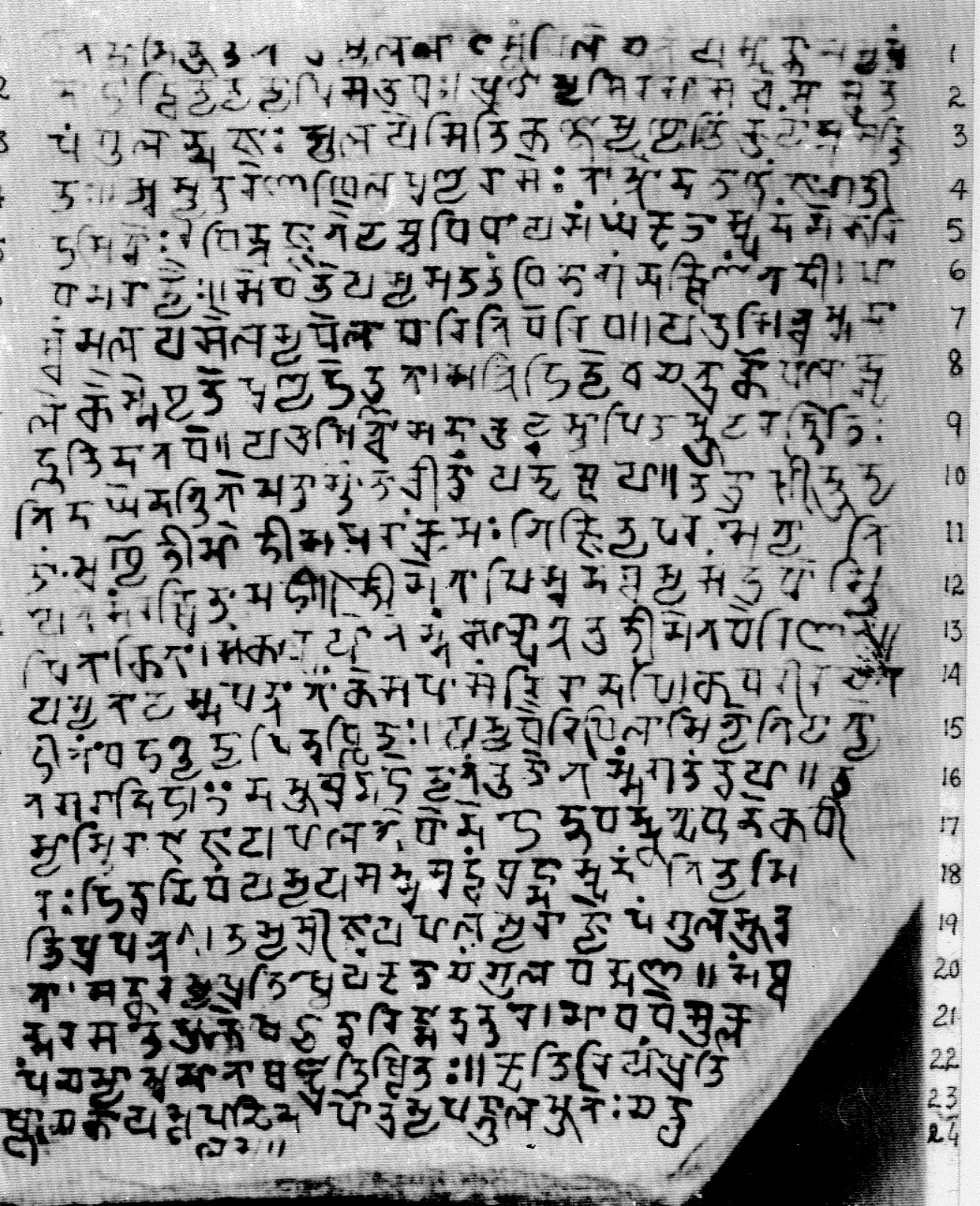
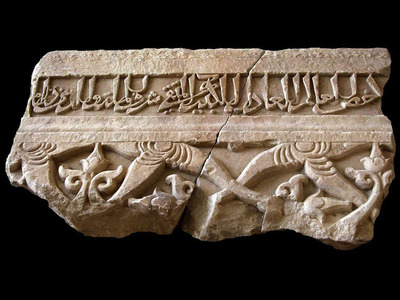
AN INSCRIPTION OF PERIOD OF RAJA JAYAPALA OF UDABHANDAPURA (HUND) PERHAPS THIS LAHORE WAS NEVER EVEN THEIR DOMAIN AS ONE EXISTS THERE
The suicide Raja Jayapala is supposedly attached to Lahore. We have read local writers spin their tales about Jayapala, and his escape from the gutter of Mori Gate, Lahore. We could die laughing at this nincompoops, who do not know that Lahore as it is now never existed in the time of the Ghazanavids. This is Akbar’s Lahore. And these are Gates of Akbari period. Mori Gate is a Mughal period thing. The Ghaznavid Lahore was inside the city related to the Old Fort of Lahore (not this one), and that center is actually the area which includes Machi Hatta, Shah-almi (Mughal name), Kashmeeri Bazaar, Chabuk Sawaran, Chowk Wazeer Khan, Buzurg Shah de galli, etc. All these areas include old remains of Pre-Mughal period. The relic of Ganj-Shaheedan, the Generals and warriors who died defending the city is in Mohalla Sadhuan. Also at other places.
Inscription of Raja Jayapala DevaGhazanavid palace 5
Dr Abdur Rahman is indeed a great scholar and dedicated to the task of Lahore. Perhaps only three inscriptions of 1000 years old are known of Jayapala period. And all of them are not known to exist, or to be in existence where? Even this one was discovered by Dr Abdur Rahman in photograph only. Its whereabouts are unknown. But it tells a tale. The writer is CANGULA, grandson of Secretary PADHIDA, son of PANGULA. Cangula talks of the kingdom of Jayapala, and the period is from 964 AD to 1002 AD. The greatest valour of Lahore is around 1050 AD and we will talk about it in another blog. Compare the aesthetics of this inscription with one of the period of Sultan Mahmood, and the difference is crystal clear. Till then, enjoy!
SEARCHING FOR AN INTELLECTUAL AND AESTHETIC COMPATIBILITY;
INTELLECTUAL WOMEN OF REGION AND RABIA SULTANI BABUPURI.
There is a unique background of extraordinary women of this region, with no access to persons of their picked-up standards, searching for compatible relations with other extraordinary men. A beautiful example is of Lady Hijab of Hyderabad Deccan, who admired the intellectualness of Imtiaz Ali Taj and used to write to him, letters of appreciation. It naturally ended in a meeting and marriage. But this problem dates centuries back. Even the daughter of Iltutmish, Princess Razia passed through same issues and found consideration with a slave. Same applied to the Princesses of Mughal household. The chance meeting of Princess Zebunnisa with the poet, and like a scion of Royalty, she rewarded him for his recited poem, but had him expelled from India. Our is not to list such historical facts, ours is to explore the Princess of Oudh, Rabia Sultana Babupuri, of Lucknow, with residence in the Jahangirabad Palace, Lucknow.
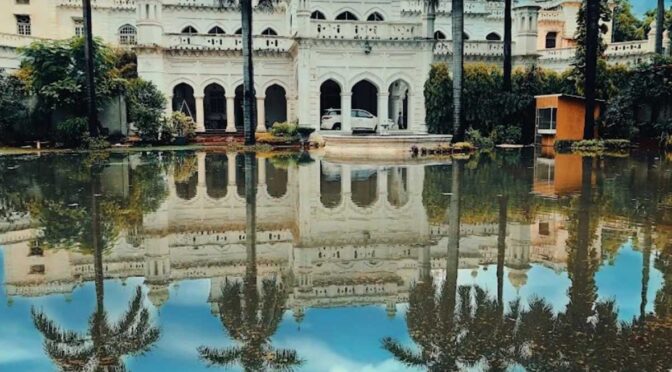
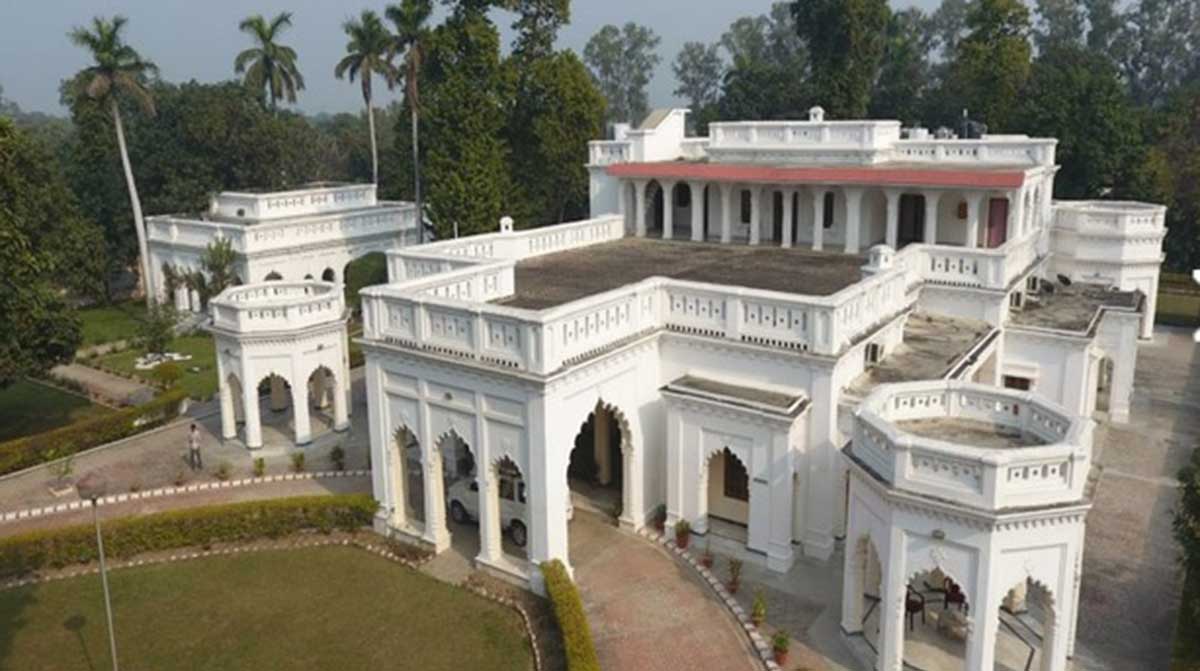
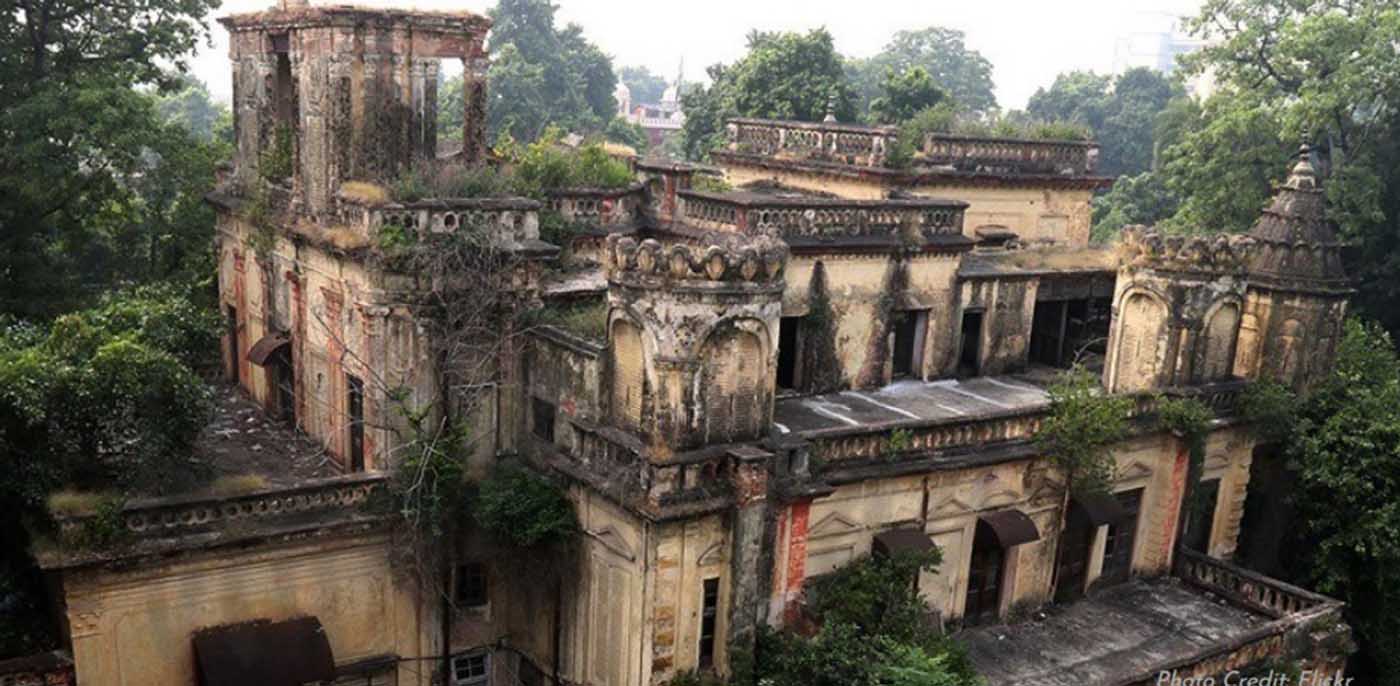
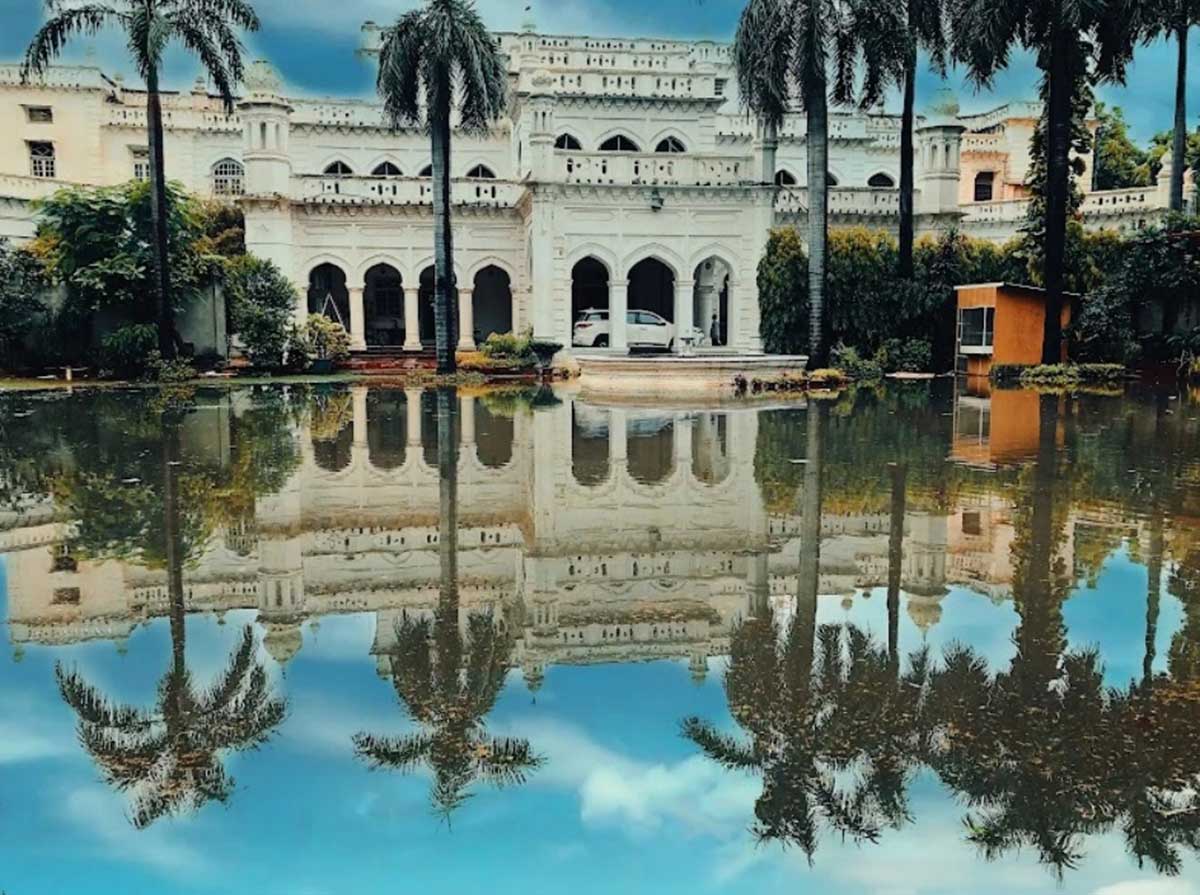
Jahangirabad Palace is reputed to be a place, once visited by Emperor Jahangeer , and the last Nawab of Oudh, Wajid Ali Shah, had a desire to create the ultimate palace of Hindustan, and he was himself responsible for the design of same. Built between 1848 and 1850, elements of rebellion were found here, and the Nawab exiled to Calcutta. The Princesses were offering resistance too, so the palace was systematically destroyed by the British. The estate at present was owned by Raja Muhammed Jamal Rasul Khan, who has now converted it into as first-class hotel.
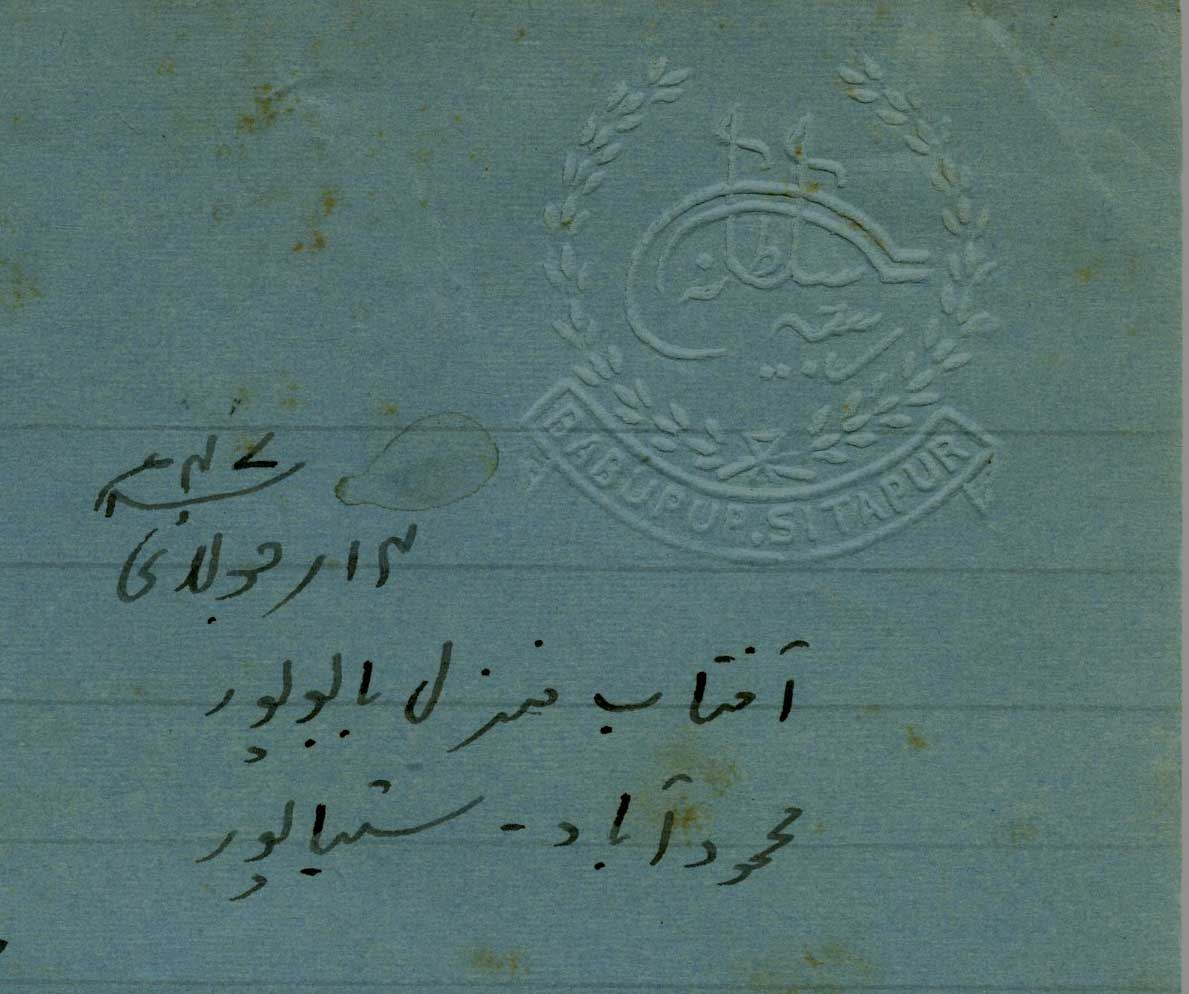
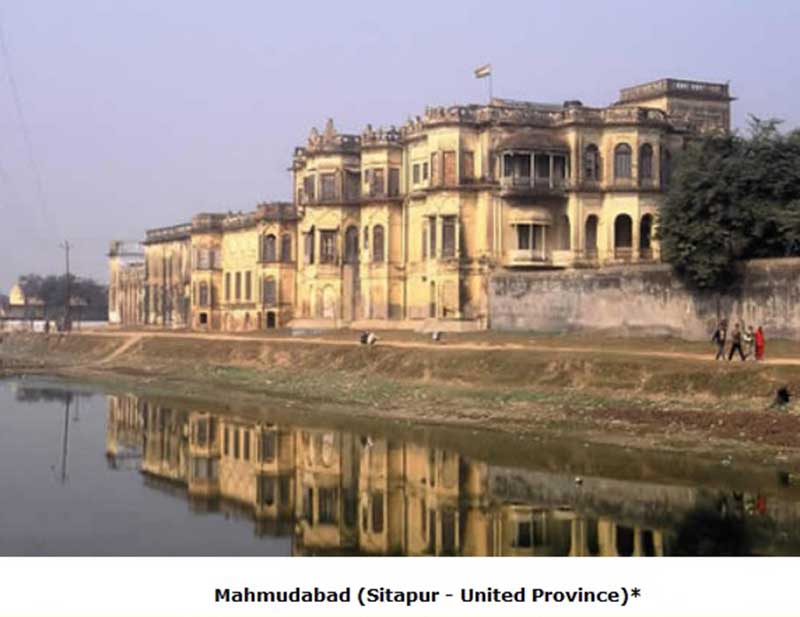
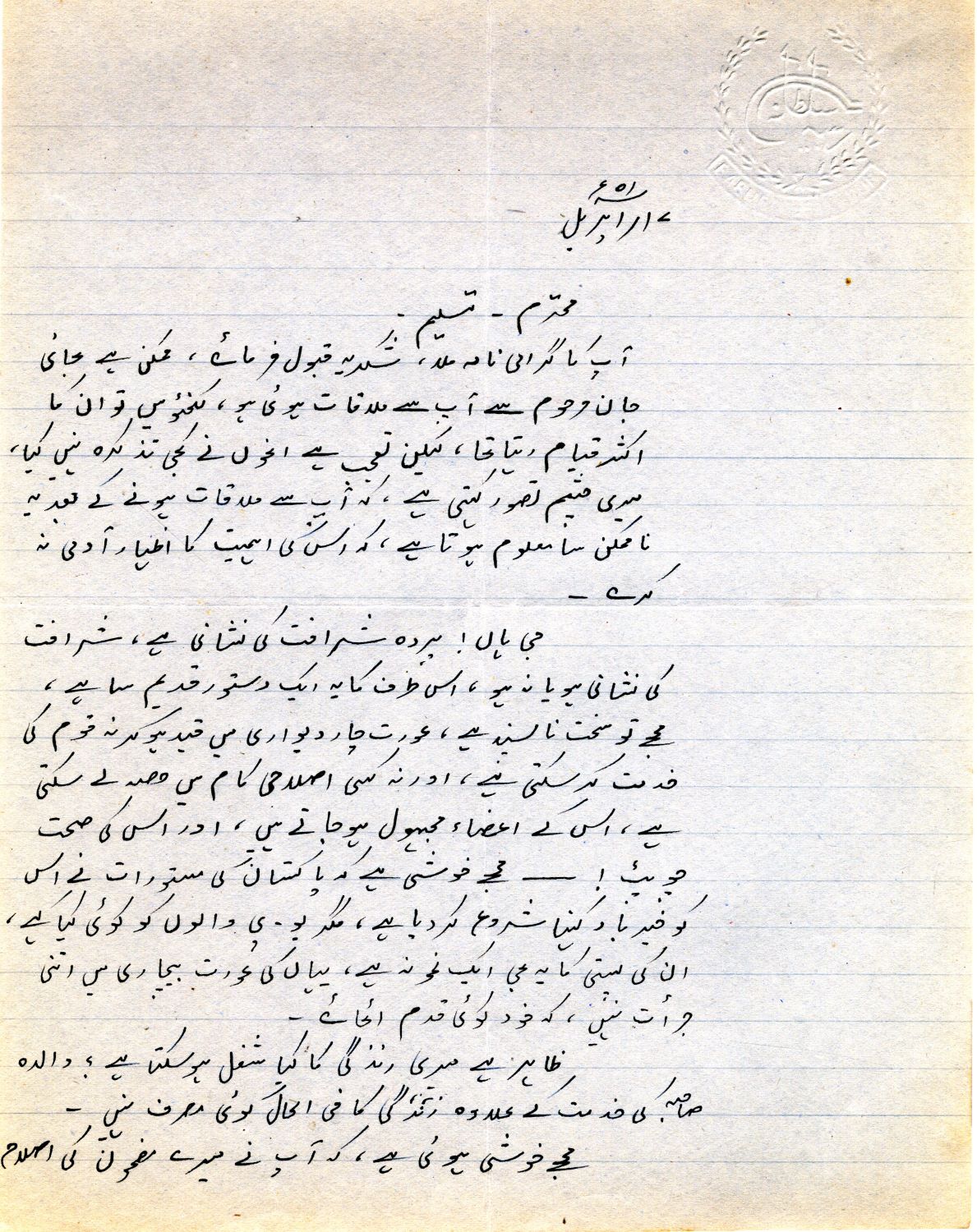
In our archives are a number of letters in Urdu written to the artist Abdur Rahman Chughtai, and roughly the letters start from 1947, and move on to at least 1960. There are a number of them. The first one is a request to the artist to dedicate some book or article of his to the lady. The lady in question has a watermark special seal on her letter pad, and she addresses herself as Miss Rabia Sultani Babupuri, Lucknow. Babupur is a district in Sitapur, also known as Mahmudabad, and the Raja of Mahmudabad was at one time a great supporter of Quaid e Azam and the idea of Pakistan, and that is a separate history. The address also states that Jahangirabad Palace is situated on Laxmi Bai Marg, which is a road, on which it is situated. There is also mention of an Asmat Manzil in it.
Rabia Sultana monogramJahangirabad PalaceJahangirabad Palace 2Jahangirabad Palace HotelRaja Mahmudbad or SitapurSitapur or MahmudabadPurdah in region
The letters contain many things. Regrets over illness of family members. Shock over death of brother and sister. Condolence on death of aunt (Khala) Maharani of Jahangirabad. Appreciation for receipt of copy of Murraqqa e Chughtai. Decoration of her room with prints of Chughtai Sahib. An ardent request for an original painting of the artist. Regrets about not extending an invitation to the artist to visit Babupur because of lack of proper facility for same. Enquiry about the artists proposed visit to Delhi in the 1950s. In short, she shares everything, personal and nonpersonal. She echoes her emotional state of life, but there is not word of any romantic overture. On some letters Chughtai Sahib has written replied to letter. But letters received are many more than letters sent. She seems to find an emotional rapport by exchanging things about her personal life. But in one letter. She talks about the position of women in the Indian region. And that is really something to remember her by. We print that letter in original for others to read. A Rani speaking about the things never said from the harem. Sharing after seven decades or more. Perhaps by reading this people will point out who she was and is remembered for her articles in books and magazines, and in that respect found the company of Chughtai sahib interesting for her development, intellectual and emotional. An episode in the life of Chughtai artist.
THE SIX INSCRIPTIONS ON THE AKBARI BRIDGE JAUNPUR OF MUNIM KHAN A FORGOTTEN NADIR UL ASAR USTAD AFZAL ALI KABULI ARCHITECT OF SAME
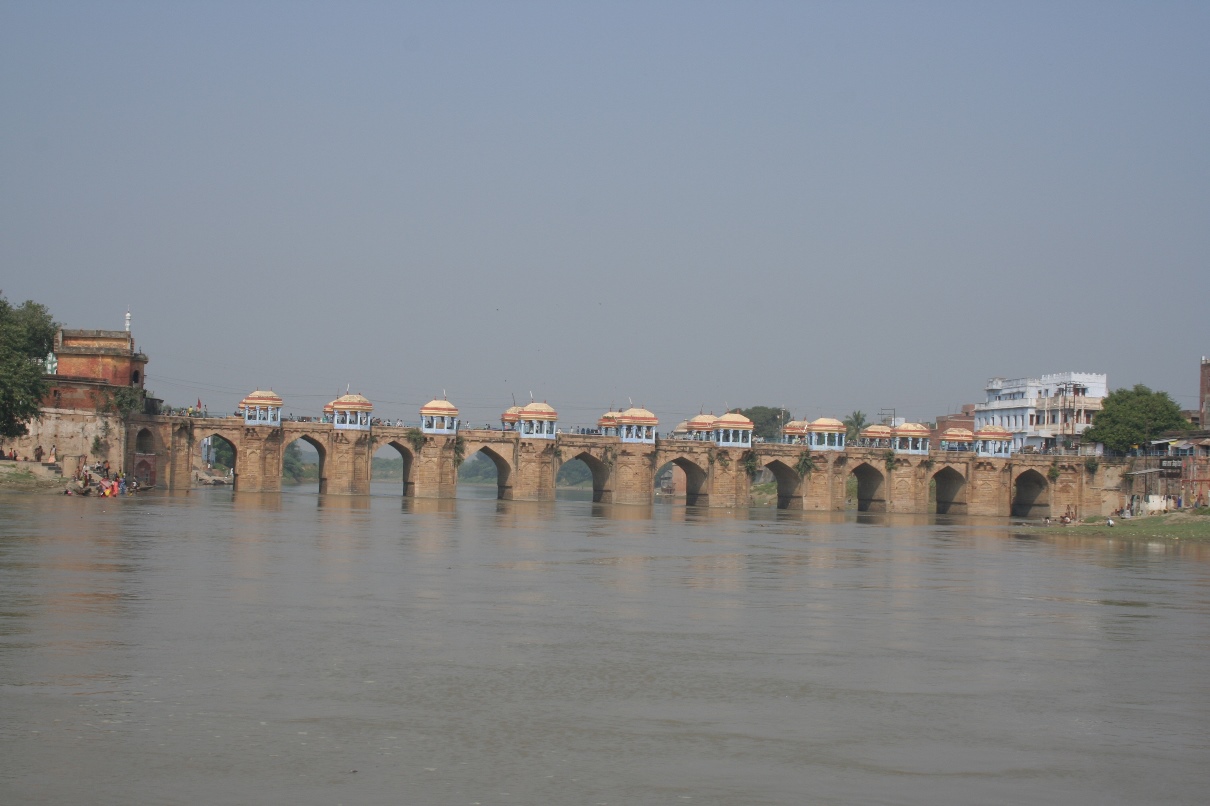
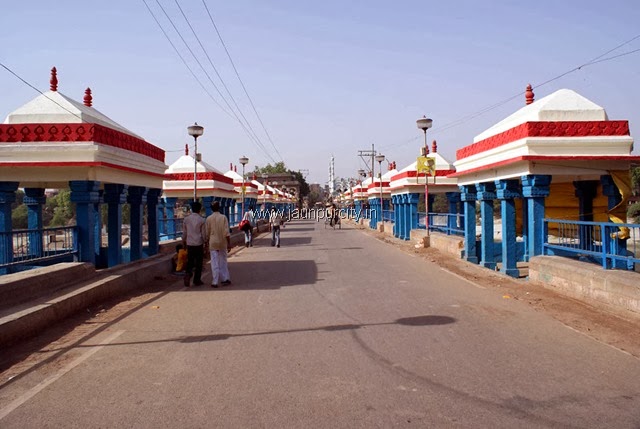
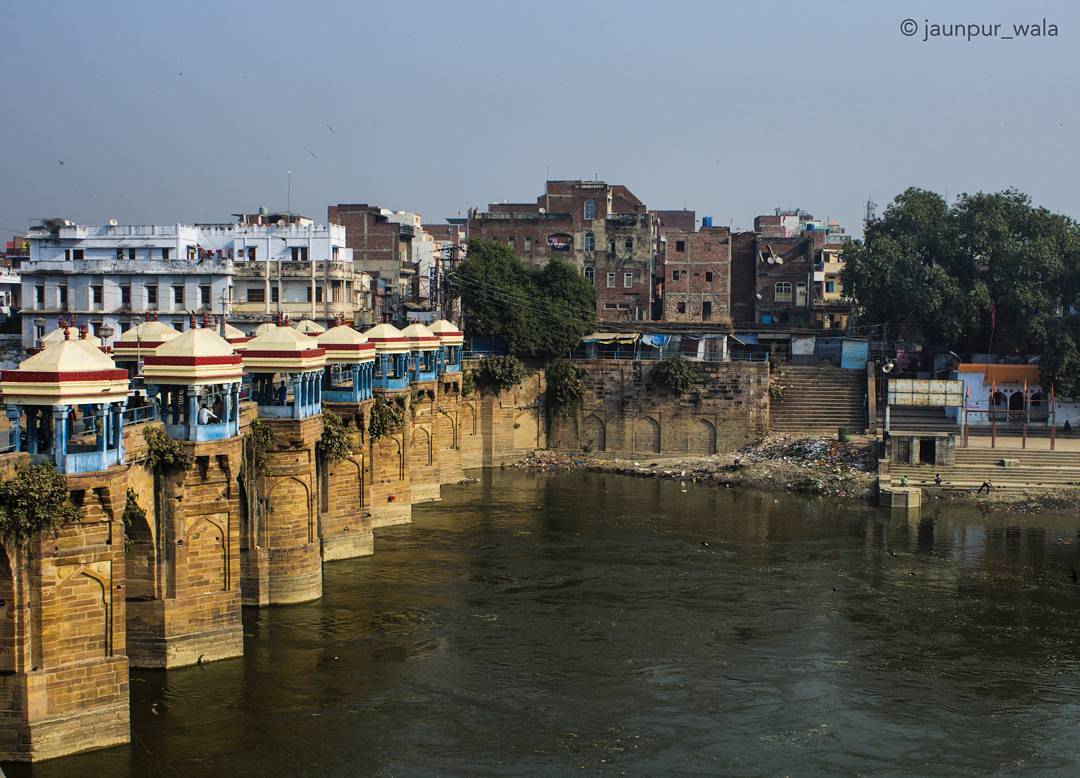
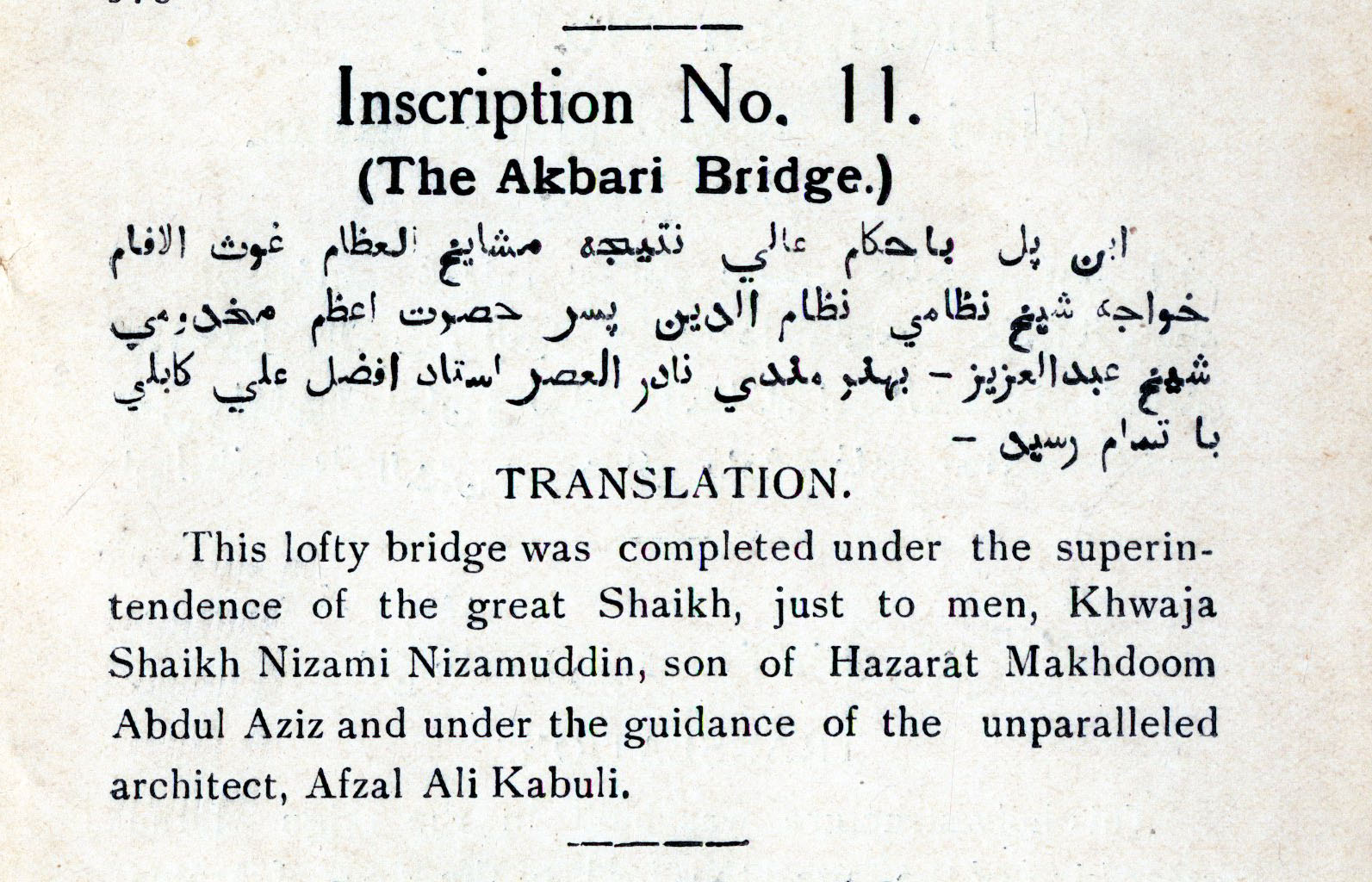
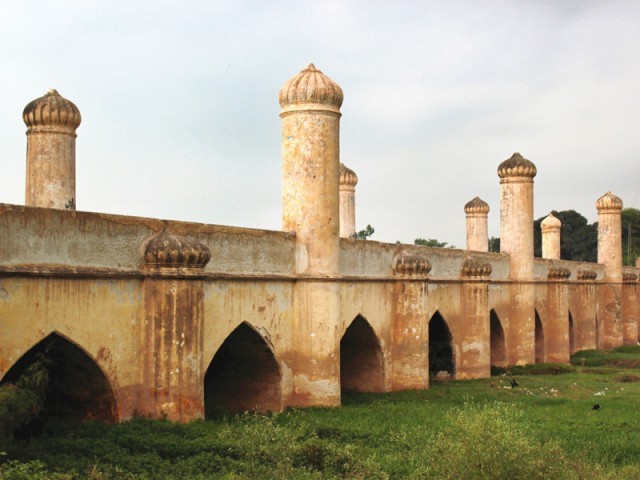
The year was 972 AH (1564 AD) and Emperor Akbar was crossing the river in Jaunpur. A wailing old woman whose son was left across the raging river caught the attention of Emperor Akbar and he immediately ordered Governor Munim Khan to build a bridge on the same river. The bridge took four years to build and there are six inscriptions on the same. Recorded by people in the past, one has no access to same today. Our pleasure to attach the one with the name of the Master Architect from Kabul, who made the same.
Shahi bridge
Akbari Bridge Jaunpur
Jaunpur bridge Akbari
Inscription Akbari bridge Jaunpur
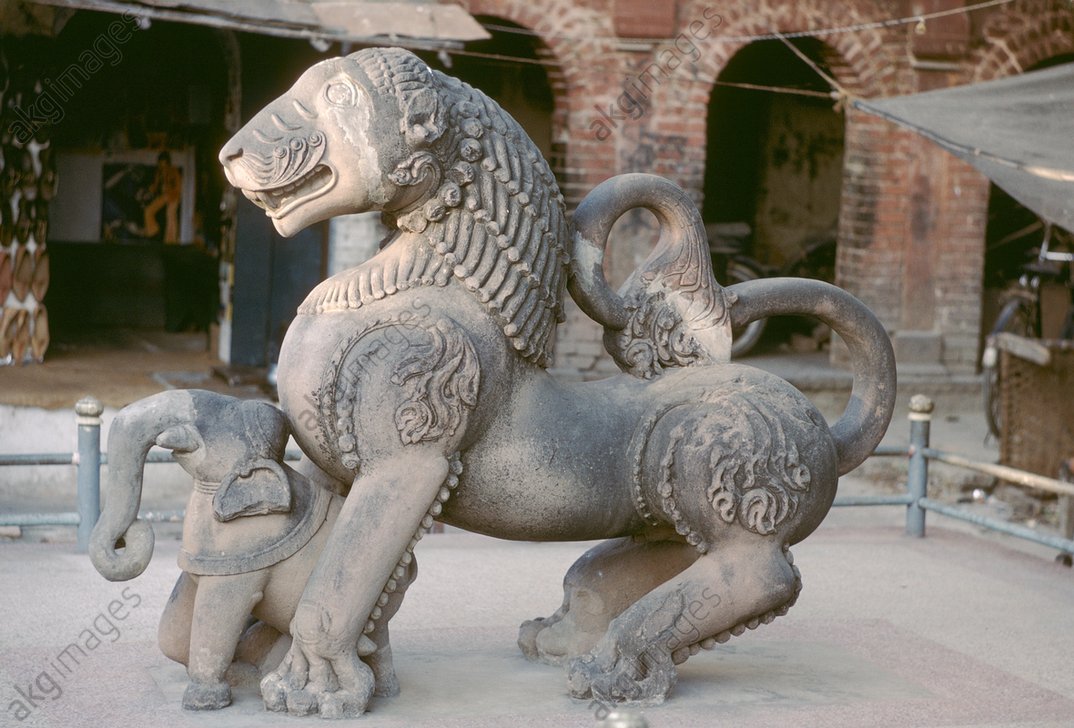
Statue at one end of Akbari bridge
Bara bridge Peshawar
Mughal bridges are an interesting study in itself. And the different forms call for versatility of the builders. It is worthy of comparison with the Bara Bridge built by Lutuf ullah Ahmad Muhandis in Peshawar. Kiosks difference mainly as design element. A study is over due.
IN SEARCH FOR REFERENCES ABOUT HAMID MIMAR; AND THE LINK WITH USTAD AHMAD MIMAR LAHORI.
The official histories of Emperor Shah Jahan record the construction of the Red Fort in Shahjahanabad as being done by two architects, namely Ustad Ahmad Mimar Lahori, and Ustad Hamid Mimar. Whereas a lot is known about Ustad Ahmad, literally only a few references keep the identity of Ustad Hamid alive.
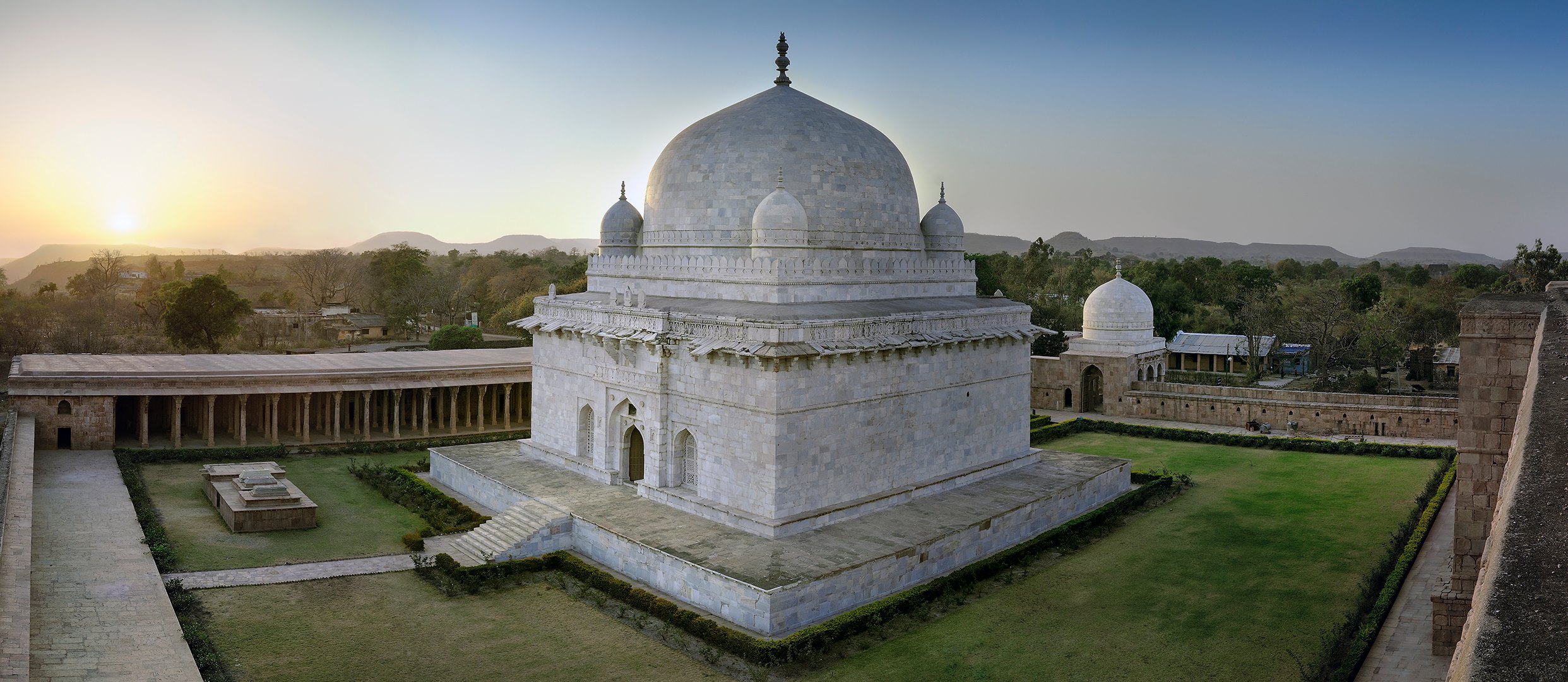
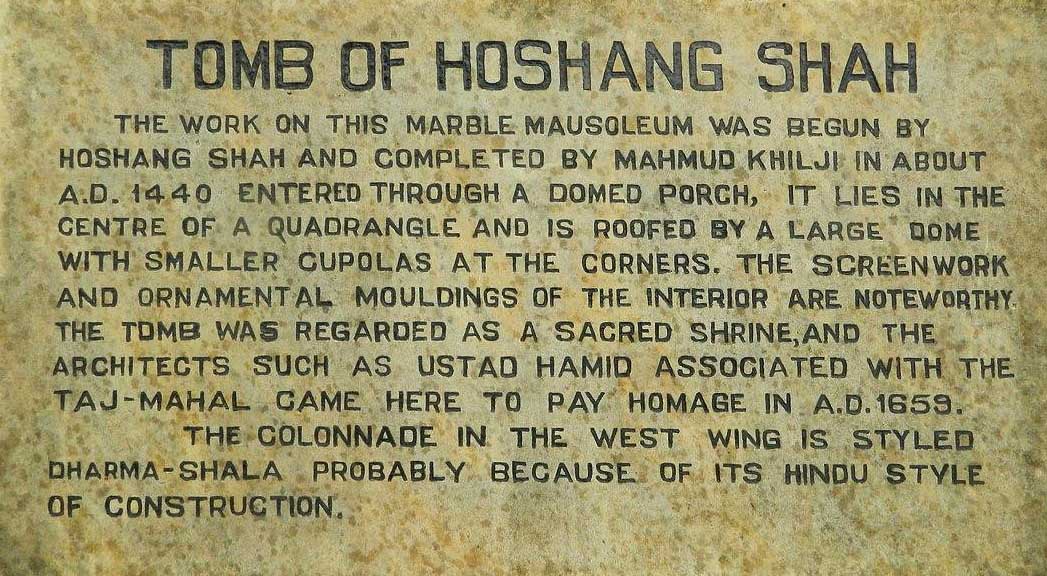
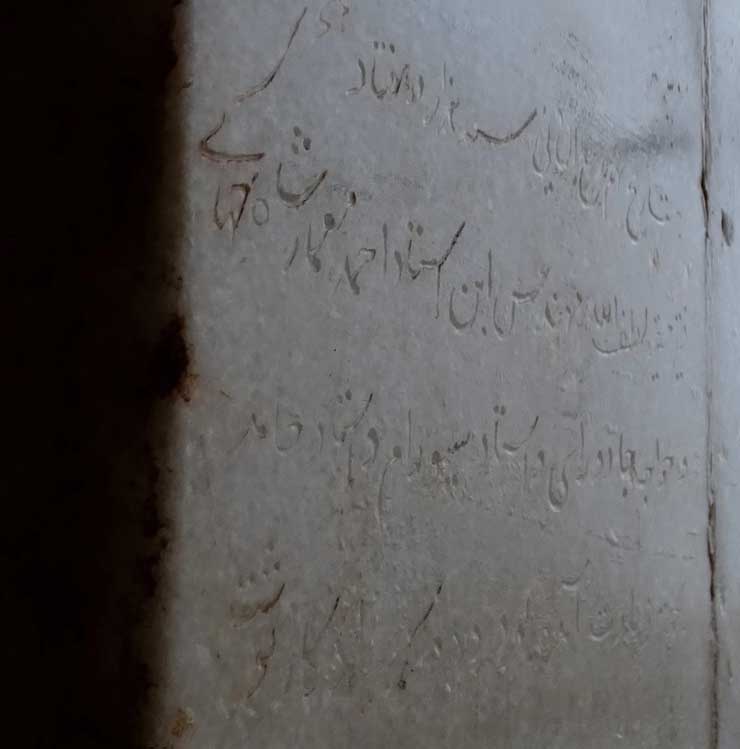
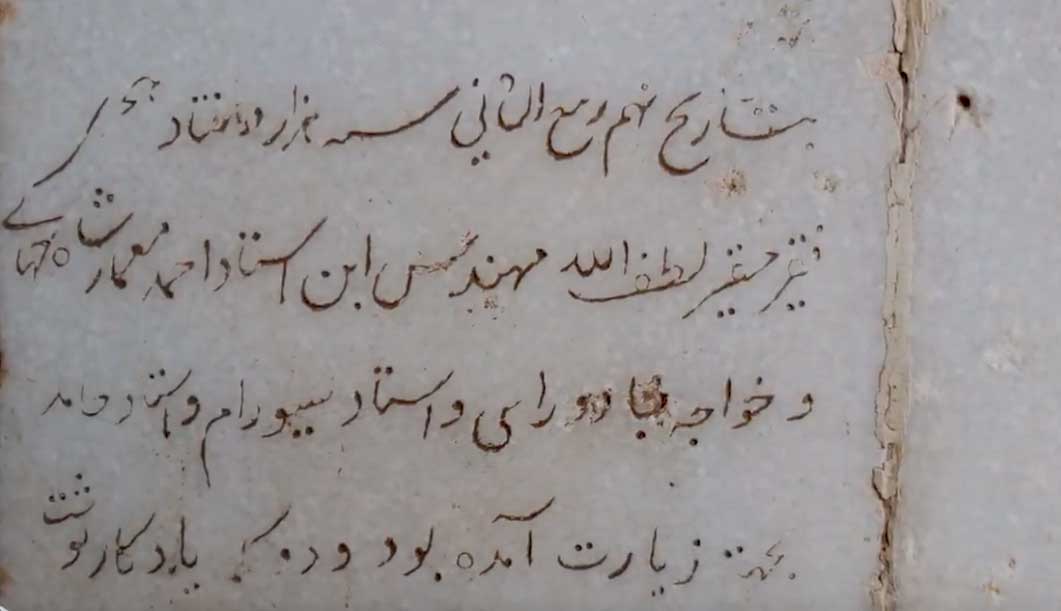
One is a havelli in Delhi, known as Mohalla Hamid khan, having belonged to Ustad Hamid. It is at present known as Krishna galli, as photographed for us by the esteemed Ms Naheed Anwar Malik. Residents there refer to the enquiry of Sulaiman Nadwi, that Hamid was the brother of Ustad Ahmad. A number of jewelers in Lahore and Delhi refer to Hamid as their ancestor and call themselves even in Delhi as Lahore Walas. They have written their own history books on same but carry mostly memories, not documented evidence of their roots. And they even refer to Mansoor Musawwir as their ancestor. Okay indeed. Then there is an inscription in the tomb of Hoshaing Shah in Mandu. It is fixed on the right jamb of the door and is in white marble. Although eroded with time, it has been recorded by many visitors, including the Archeological Survey of India. But still there and not taken care by the department. The engraving needs to be filled with stone or ink to make it legible. But the name of Lutufullah Ahmad Muhandis is on it, as well as the name of Ustad Hamid Mimar. Fixed in 1659 A D, it is exactly ten years after the death of the other architect.
Mohalla Hamid Mimar Delhi
Hoshaing Shah Tomb
Ustad Hamid reference
Inscription right door jam
Ustad Hamid inscription
Beautiful Ms by Hamid Mimar
Hamid Mimar Manuscript 2
Seal of Hamid Mimar 1106
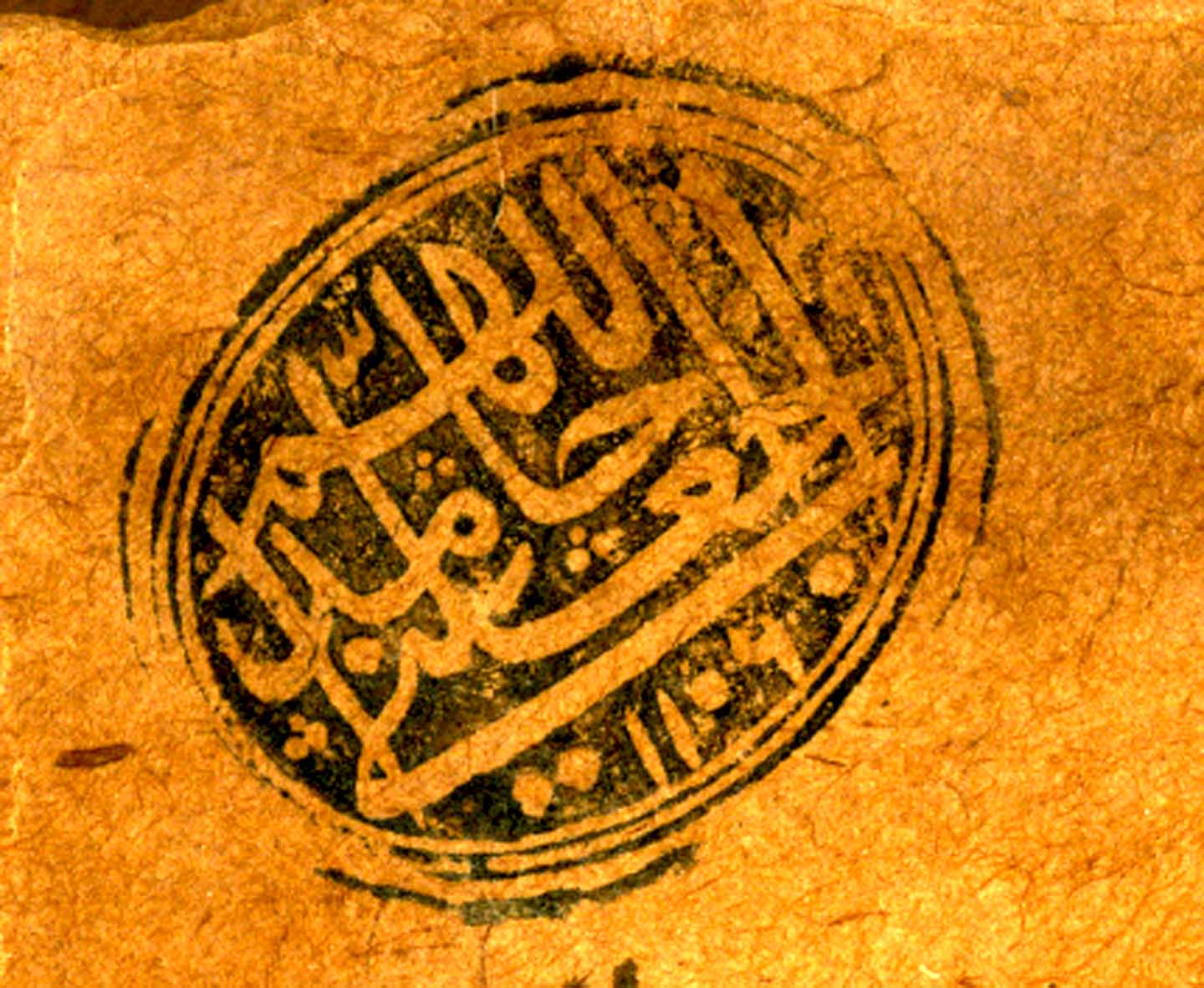
As said before Hamid Mimar has been called the brother of Ahmad Mimar by an old resident of Mohalla Hamid Mimar, but that too was a vague assertion. We have come about a beautiful manuscript dated around 1106 A H, and it has a seal on it, as well as a beautiful written end like an architectural diagram, telling us that Hamid is the son of Abdul Kareem. Now Abdul Kareem is the famous architect of Emperor Jahangeer, associated with the Emperor on many projects, including his mausoleum in Lahore, the Lahore Fort, the monuments in Mandu, even the Taj Mahal, as well as the Red Fort Delhi. Abdul Kareem has been rewarded by the Emperor many times. His period can be calculated between 570 A. D to 1646 A. D, and that is in fact the period of Ustad Ahmad Mimar too, as the architect died in 1649 A.D. Fellow workers yes, but both from Lahore.
The manuscript owes its authenticity the way the end is handled, less of an end, more of an architectural design in writing. It establishes the writer of the manuscript as an architect itself. It also establishes that Hamid was much younger than Ahmad in all cases and more a partner of Lutufullah Ahmad Muhandis. Writers of the biography of Imam uddin Riazi also state that Lutufullah was also himself involved in the construction of the Red Fort Delhi too. We continue to seek more evidence.
WAS QUAID E AZAM A FILM FAN? THE LEADER KNEW POTENTIALS OF FILM INDUSTRY
Aspects of nation building
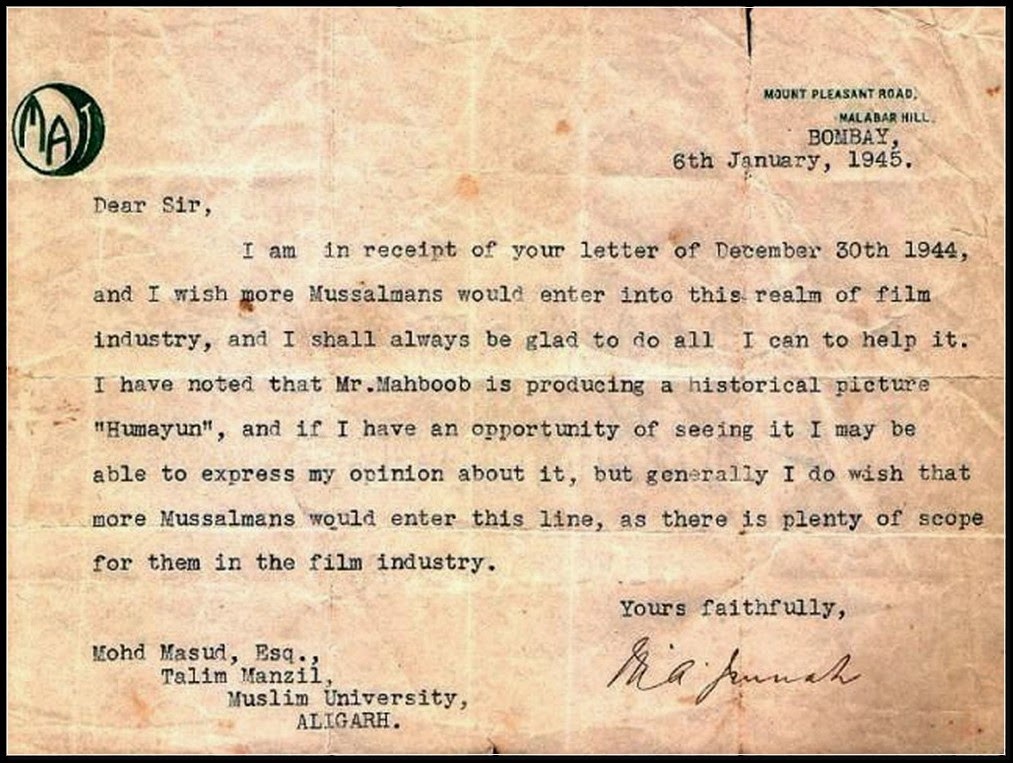
Films are not our line. But we enjoy films all the time. The films made before partition were of a different kind in all ways. Muslims contribution to film making in many ways was spectacular. But the most amazing thing is that the Quaid e Azam had eyes on this subject too. He wished Mussulmans to indulge in productive film making.
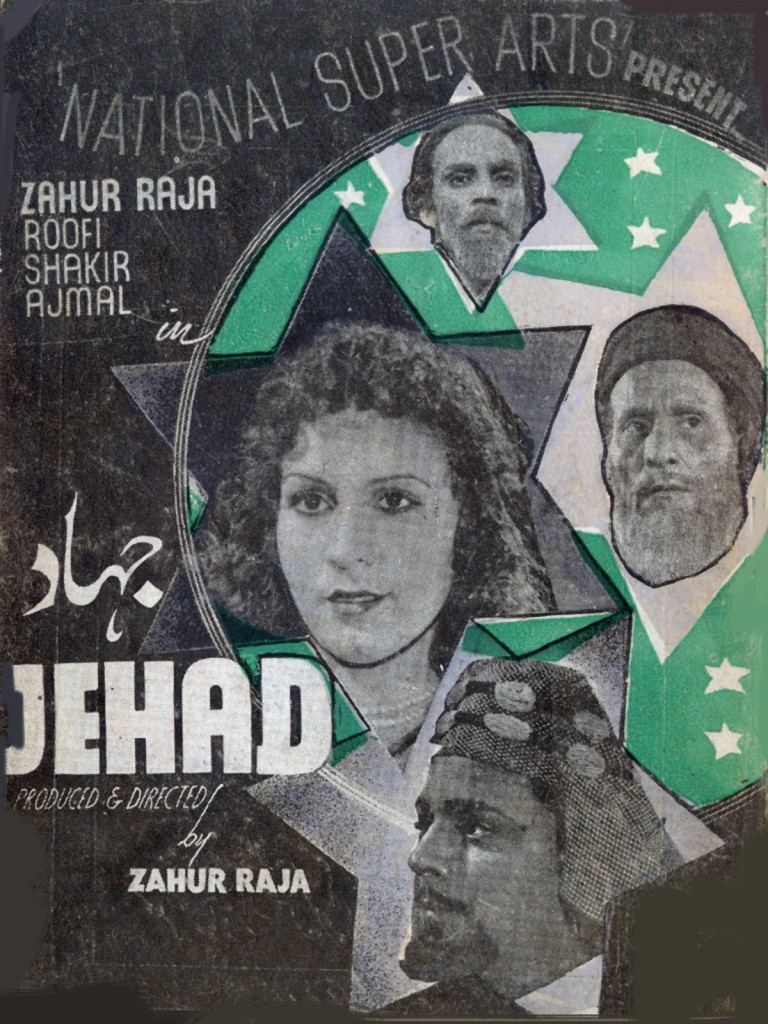
The name of the first Pakistani films tell us a lot about the minds of those people. The very first film envisaged in Pakistan was named JEHAD. What lovely inspiration those people had? Poignant settings, truly Pakistani stories. The rubbish and trash of these days was not there.
M A Jinnahs letter
JEHAD the initial Pakistan movie
Start of an era
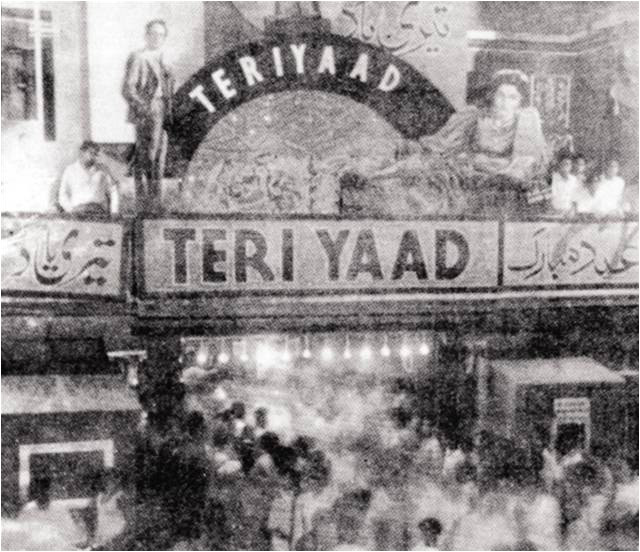
TerYaad_poster
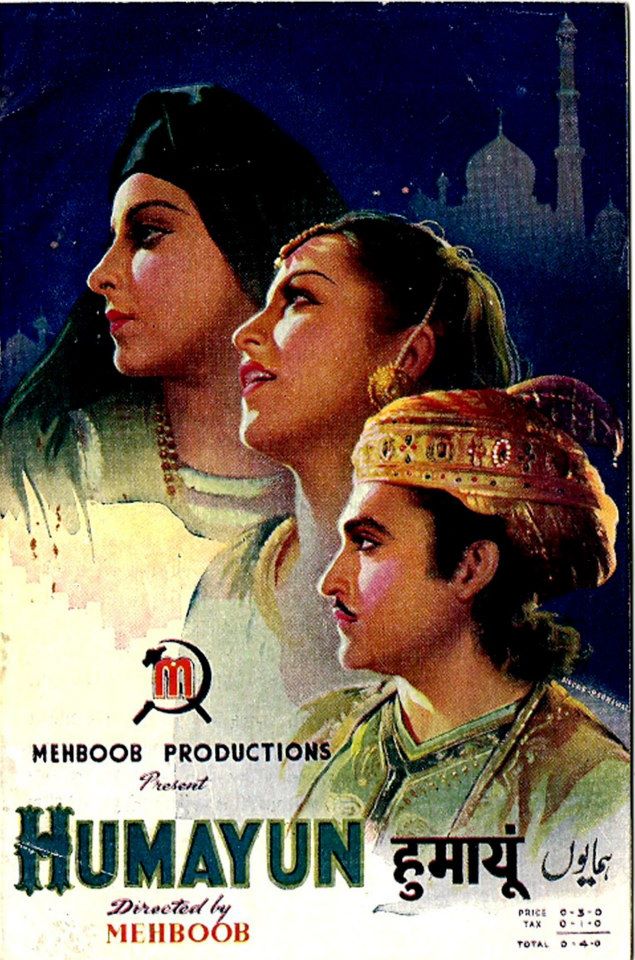
Humayoun 1945
Inaugurating a film show in Karachi
Foreign lobbies are rescuing our film industry for their own ends. No more views of the kind that were made in the past. Trash of another kind. Hit at the Ideology of Pakistan. Make heros of the zeros of our history.
An English writer was writing a script of a film on M.A. Rahman Chughtai. I do not know what happened to it but they were ready to make it. Again they wanted to give it their own twists and turns and I did not agree to same. A number of documentaries were made in the past. It included ones made by Russian and Japanese teams. Even a number of them made by Pakistani Films and Publication department and shown in cinema houses. Even Burmah Shell made a documentary in the 1960 s. More in the future.
Films can be used for uplift of nations or to degrade them. We know that all the more now.
RARELY KNOWN UNFNISHED ALL STONE MOSQUE OF HINDAL MIRZA; BELOVED SON OF EMPEROR BABAR; SUPPORTER PRINCE HUMAYOUN.
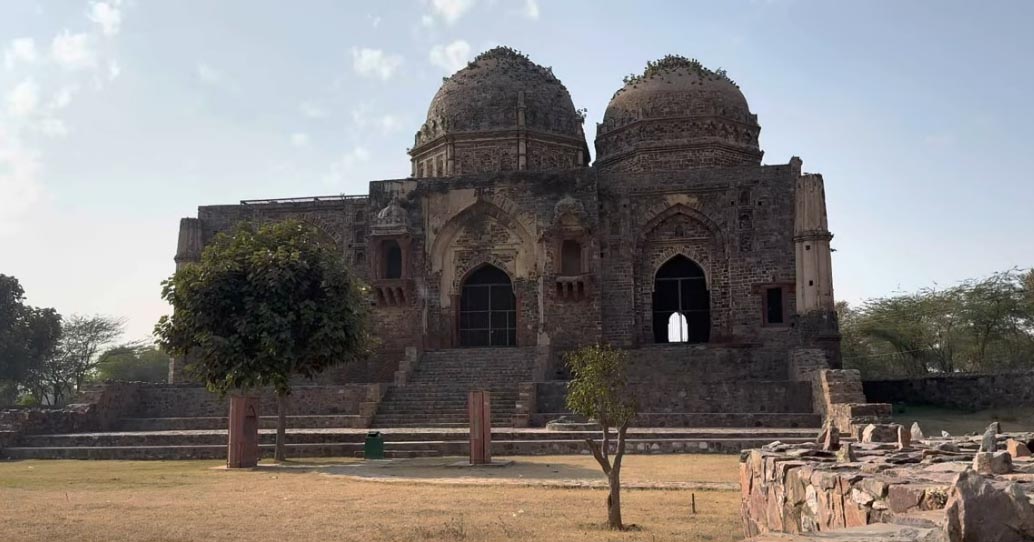
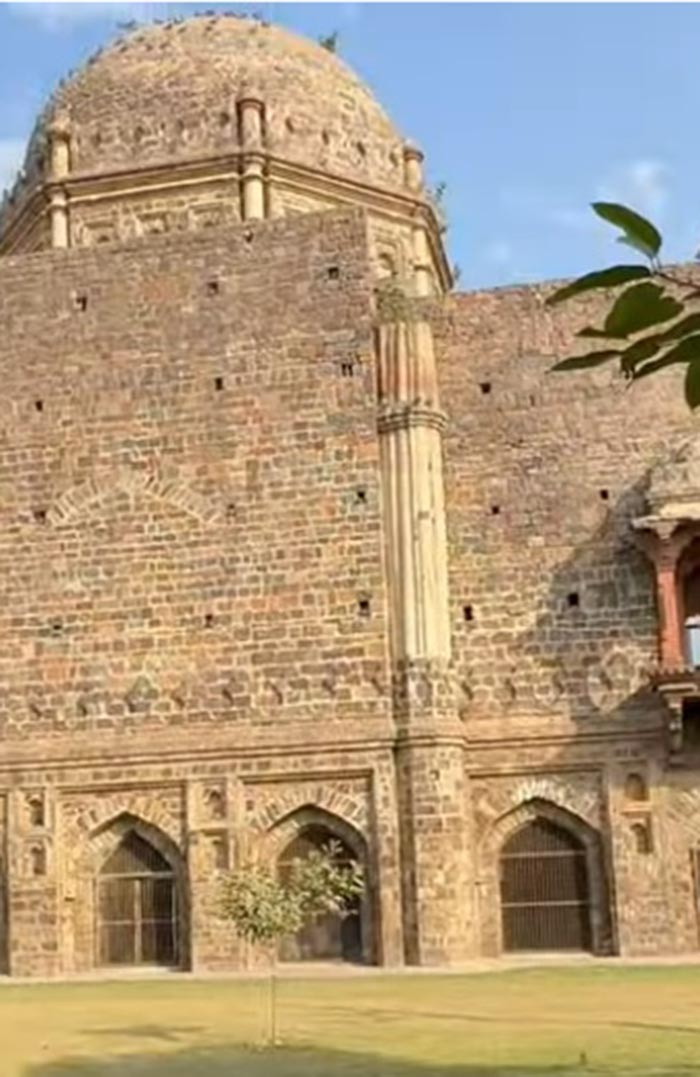
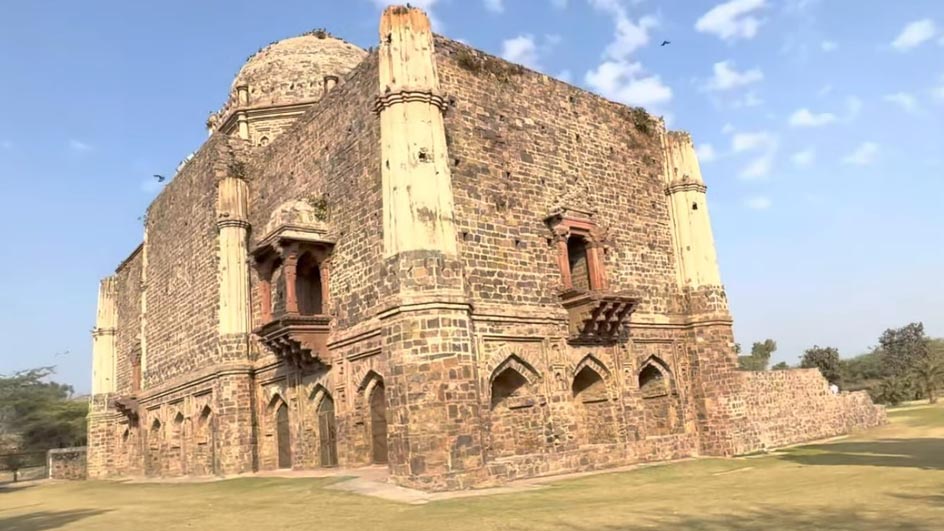
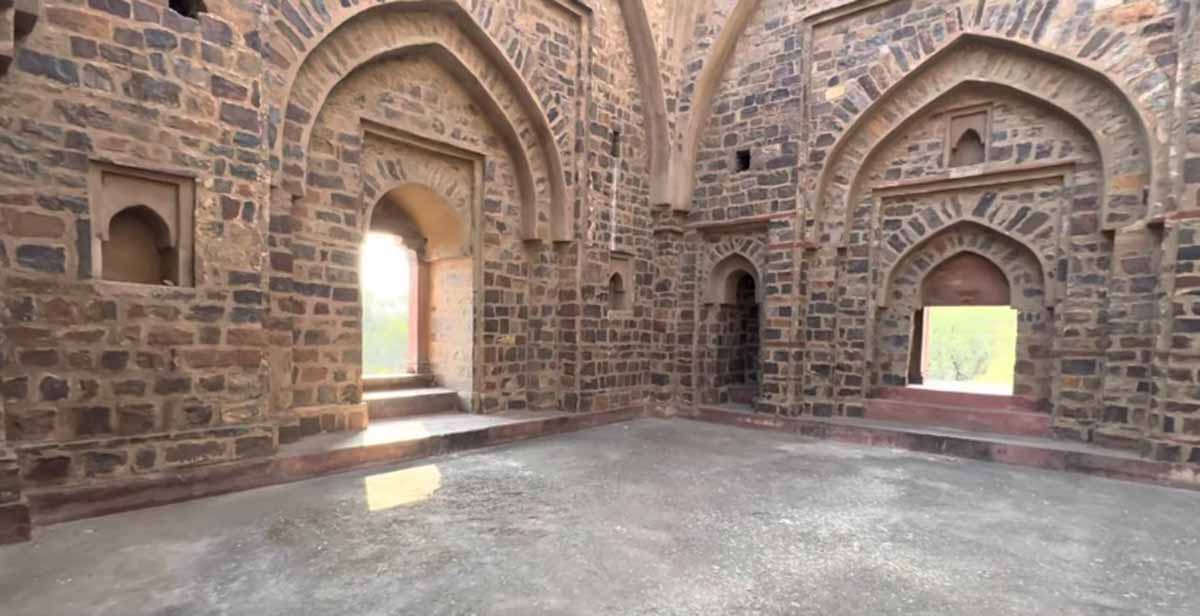
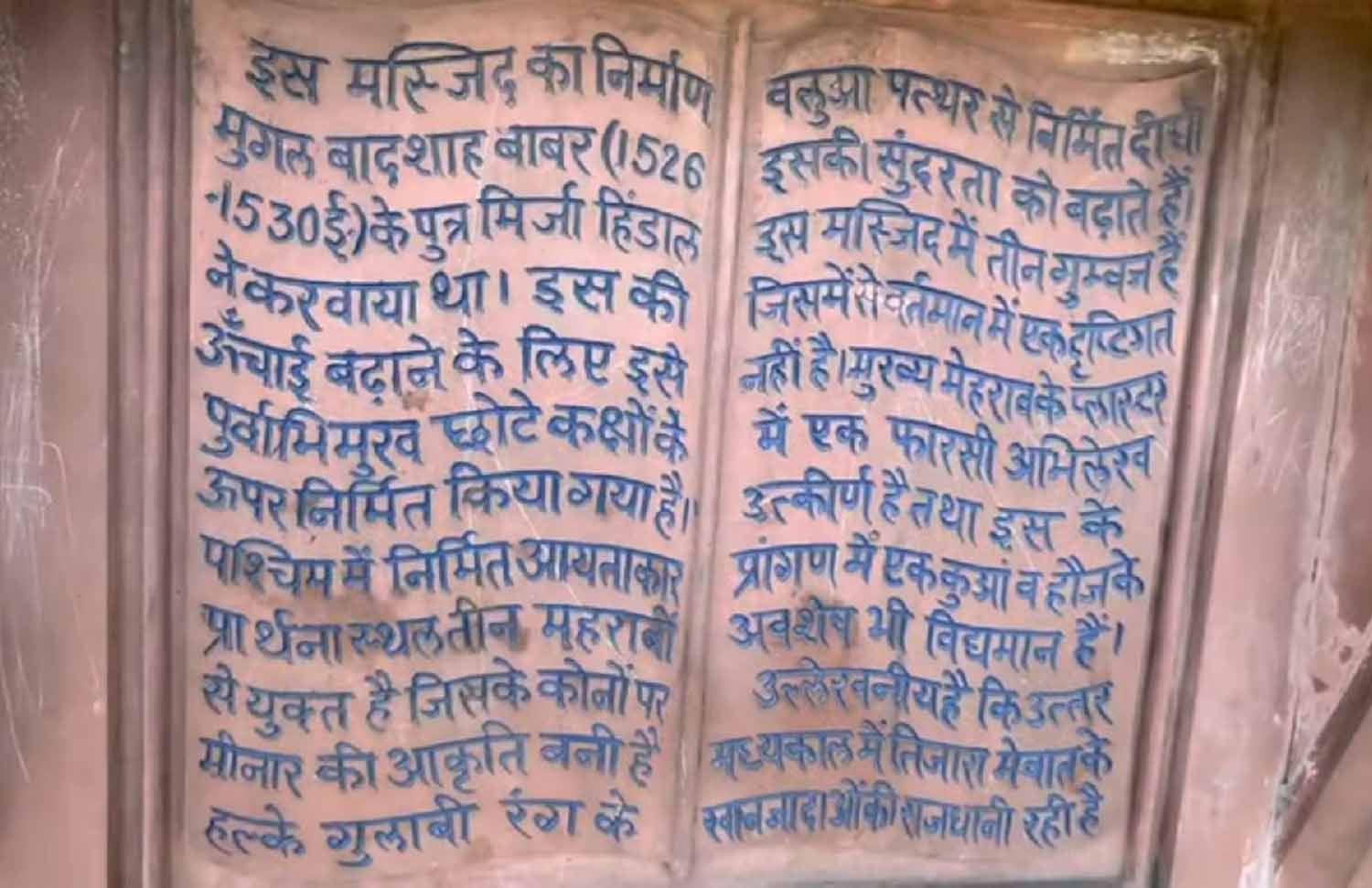
It was the custom of victorious armies to conslidate their presence, by activation of building activities. Mughals were no exceptions. Wherever they went building activities started in full swing. Very few of buildings of Emperor Babar were built and very few left intact after lapse of many centuries. In our region we have some things qualified as being built by Emperor Babar himself. This is particularly true of the Jamia mosque in Haryana which is visited by people all the time, but even that is not often spotlighted at all. But there is another unfinished mosque in stone built by his son, Hindal Mirza. A favourite son of Emperor Babar and father-in-law of Emperor Akbar. It was built between 1526 to 1530 A D.
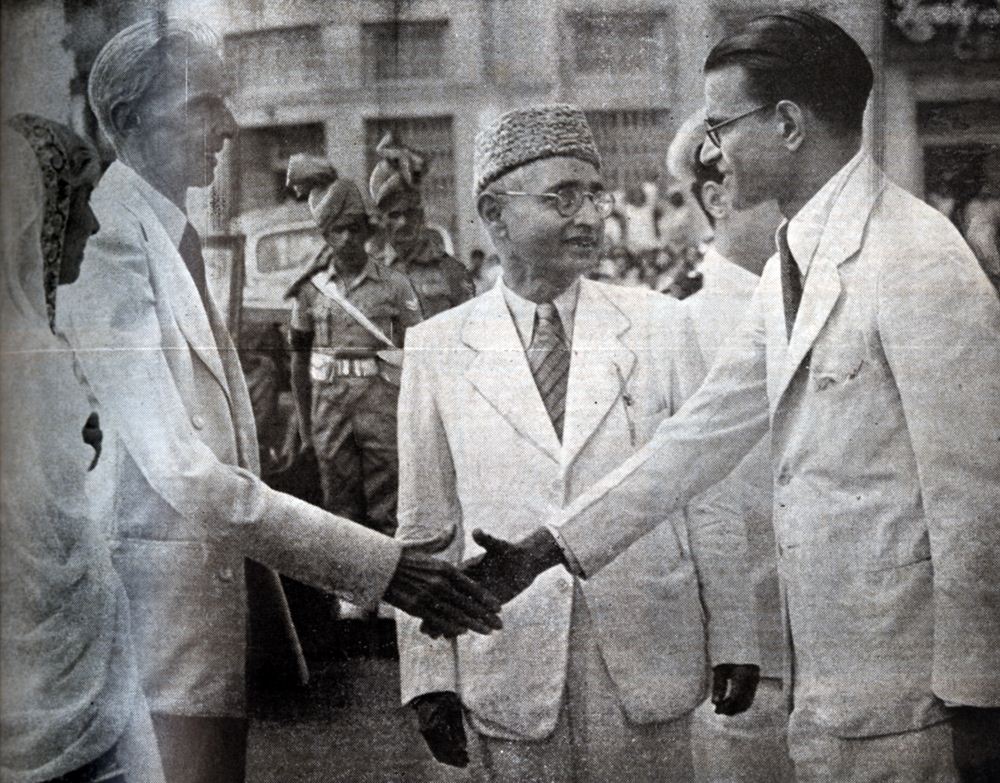
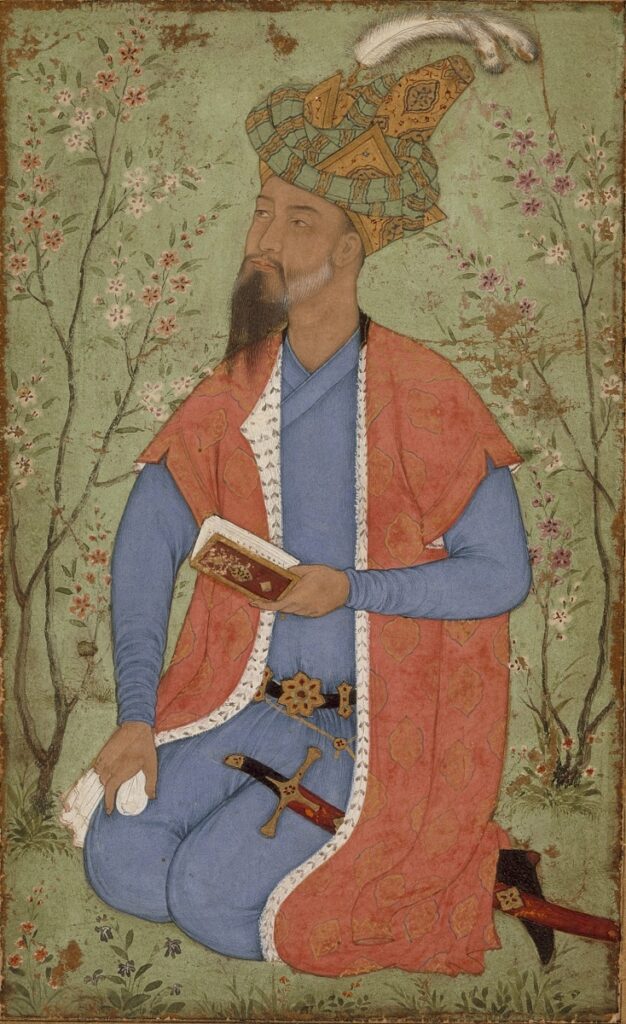
Hindal Mirza
Mosque Hindal Mirza
Unfinished mosque Hindal Mirza
Unfinished glory Hindal Mirza
Hindal legacy
Inside mosque
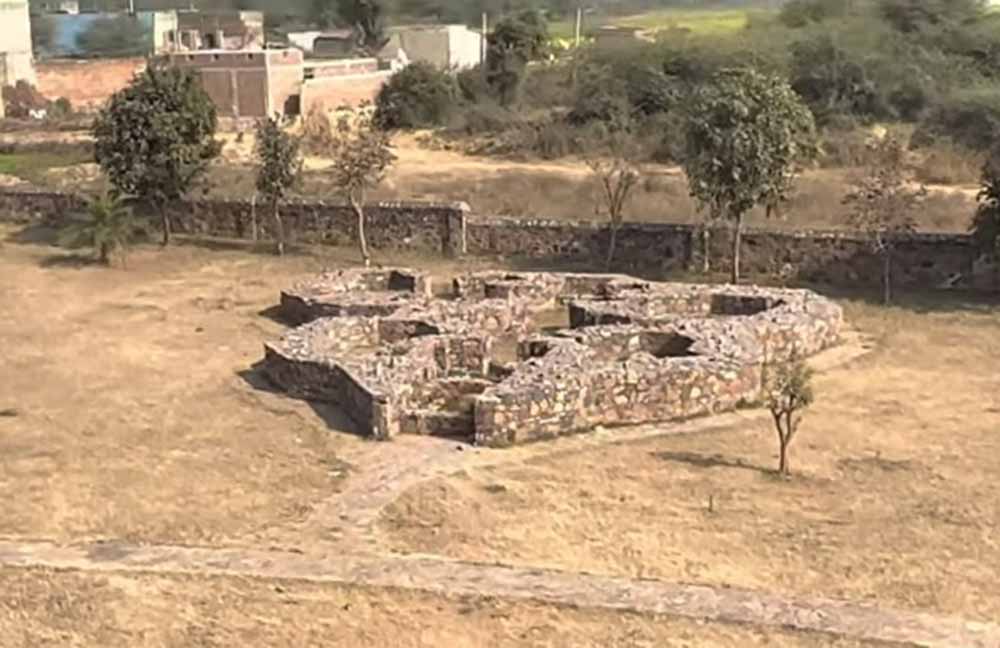
Proposed Wuzoo pond
Archaeological notice mosque
Hindal Mirza sided with his brother Prince Humayoun in struggle for supermacy and also fought against Prince Kamran. He died a tragic death and both brothers were very sorry to the loss of his life. The mosque started by him is called Lall masjid, and rremains under lock and key all the time. Unfinished minarets and even domes. It is tragic reminder of a lost Prince of the Mughal Empire. In any case Hindal Mirza thought big and the Jamia Masjid is a silent reminder of his grandeur. The funny part is that he was named Hindal by his father as omen of his conquest of India. Indeed well done!
SHAH QALEEM ULLAH GRANDSON OF USTAD AHMAD MIMAR LAHORIA MANUSCRIPT FROM HIS LIBRARY ENTITLED SHARH QASIDA BURDA
The family of Ustad Ahmad Mimar Lahori were professional people, with expertise in architecture, calligraphy, mathematics and astronomy. But they were also Islamic loving people and did things related to Islamic civilization. A number of them were writing Qurans, and dealing with iconic Islamic literature. Literature on Qirat is found in their writings. Qasida Burda fascinated them too. But the wonderful thing is that one of them became a famous Sufi himself, and homage paid to him in his grave in Delhi.
Sharh Qasida Burda Qaleemullah
Sharh Qasida Burda
Qaleemullah autograph
Mazar Qaleem ullah Delhi
A number of religious books written by him survive both in printed form as well as manuscript form. Listing all of them is not required here. But we find an original manuscript of Sharh Qasida Burda, perhaps written by him, perhaps merely copied by him, for he was a calligrapher himself, as well as son of a famous calligrapher Nurullah Ahmad. We are talking here of the Sufi Qaleem ullah, who went on a journey to Holy Kaaba too, and it is well recorded of same.
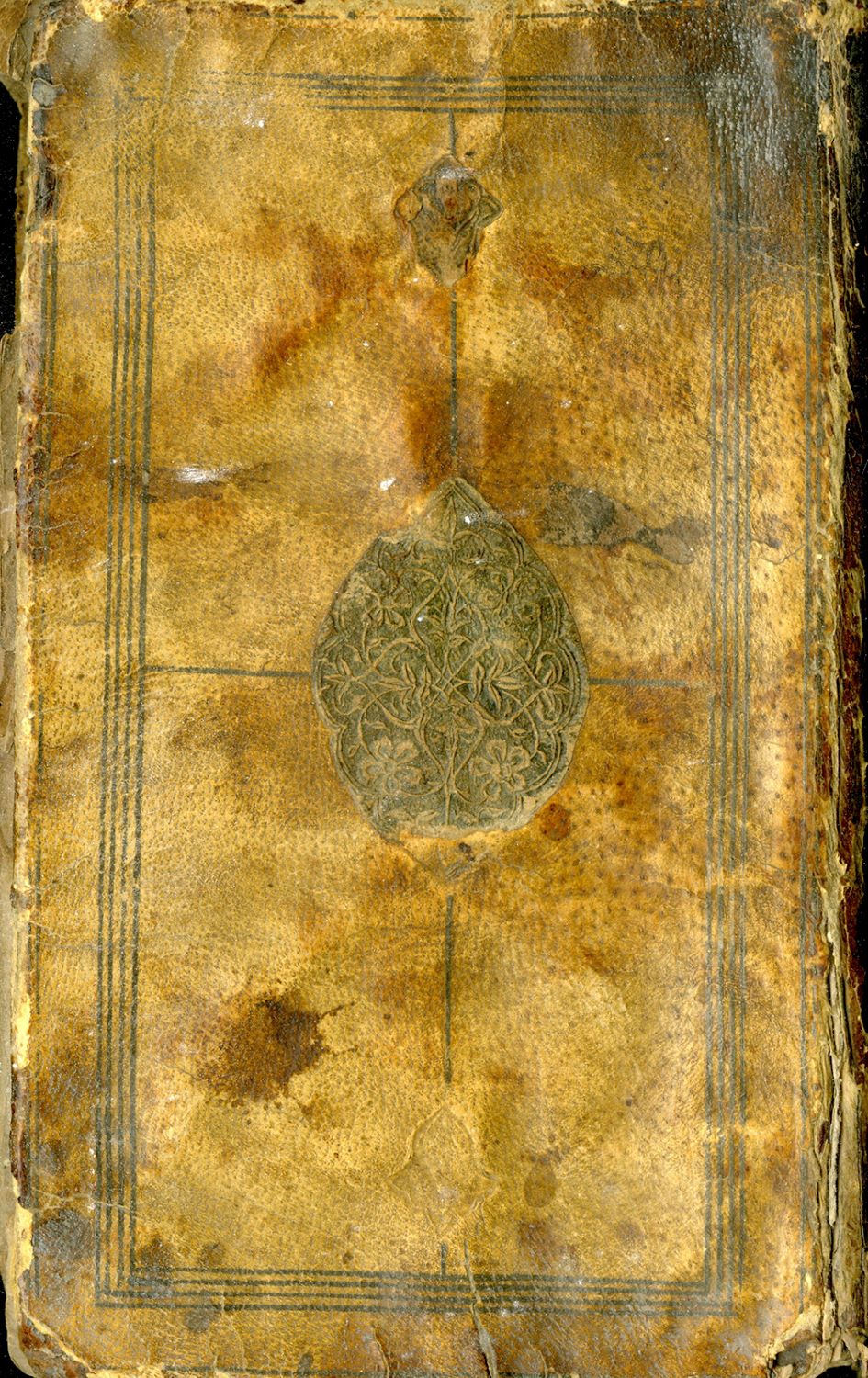
The manuscript is in original binding and has his seal and notation on it. Enjoy!
MEMORABLE FAREWELL GET TOGETHER AT CHAMBERLAIN ROAD; ON DEPARTURE OF HAFIZ YUSUF FOR HIS WORK IN SAUDI ARABIA.
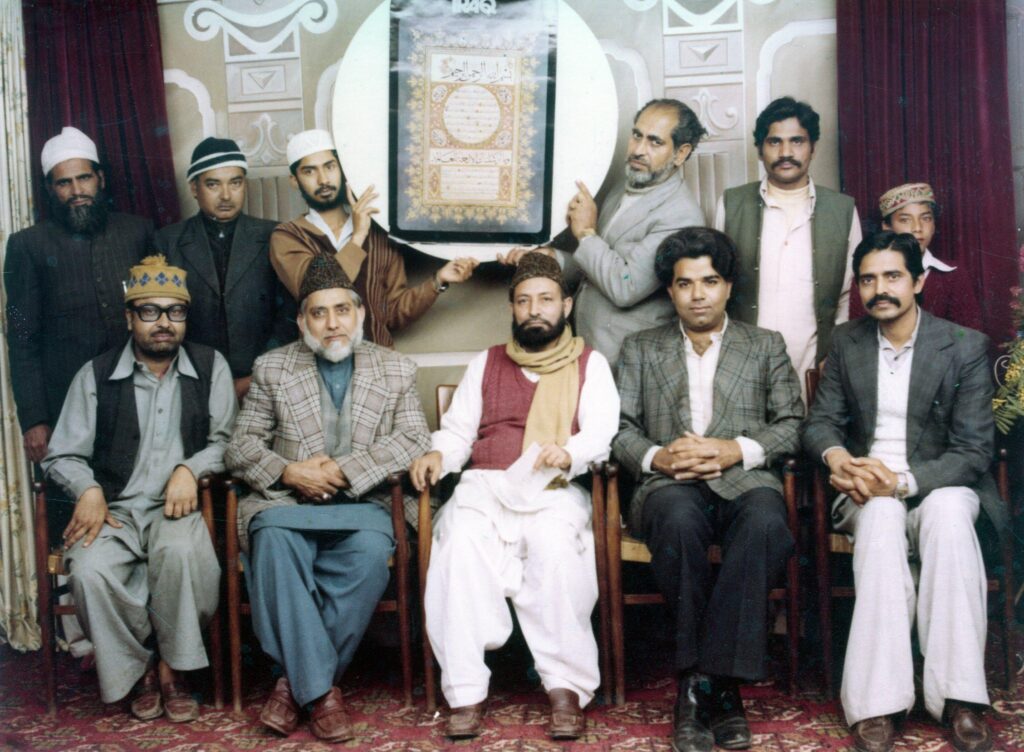
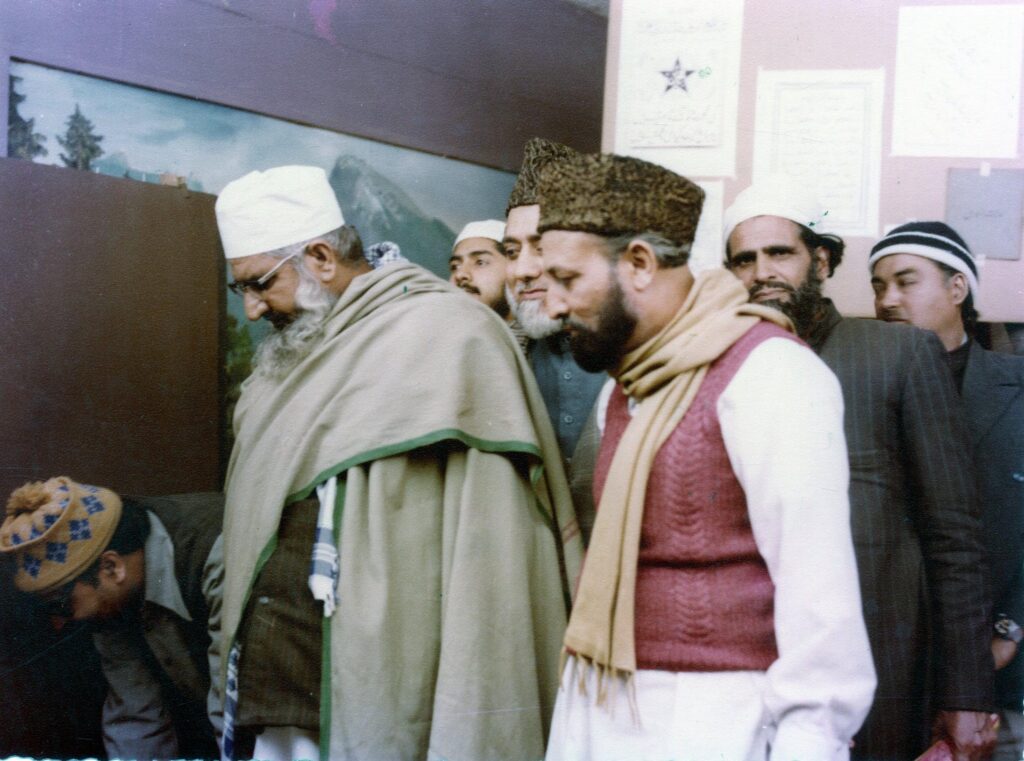
Two top calligraphers of our times were Hafiz Muhammed Yusuf for Nastaliq writing and Nafees Raqam for Arabic script. A number of calligraphers got together in a press building to say good bye to Hafiz Yusuf on his planned trip to Saudi Arabia, with desire to express his homage to the Prophet of Islam (PBUH). The invitation was extended to me too. In real terms an odd man out, but it was the love of the calligrapher which pulled me and he did write a manuscript for me, which I still have.
Farewell tea Hafiz Yusuf
Hafiz Yusuf with others
There was an accident in Saudi Arabia and the calligrapher really suffered. Without any money or support, he came back, and had lost his calligraphy job at newspaper IMROZE too. B.A. Qureshi Sahib, Chairman Lahore Museum, gave a job to his son in the Lahore Museum as compensation for his great work. A job he still has there, up to the best of my knowledge. I salute not only a great calligrapher but with a non business attitude, he obliged everyone without even taking any renumeration. Allah may bless him in heaven!!
A FUTILE ATTEMPT TO BELITTLE DR ALLAMA IQBAL; FLOCK OF NEGATIVE PEOPLE WASTING THEIR TIME.
A long standing friend revealed his low IQ after a long time. He simply said ‘What was Iqbal?’ in a demeaning way. ‘Certainly not a philosopher, perhaps, yes merely a children poet’. It was a stunning revelation, and he went out blurting his father’s statement, that Iqbal used to write obnoxious verses on his favorite prostitutes of Lahore. Most Mullahs generate an alcoholic impression of Iqbal, and a relative came back from the USA with the knowledge that Iqbal was a murderer too. The Hindu lobby was projecting on their blogs that he was even a murderer of a prostitute of Hira Mandi Lahore. A so called ‘hamdard’ of Iqbal was projecting that when Iqbal said salam to a citizen of Lahore, the man to spite him, uncovered himself by throwing down his dhoti. A famous Pakistani lesbian termed both Quaid-e-Azam and Allama Iqbal as homosexuals and then retracted her statement after she lit anxiety in many quarters, and she could not handle the fall out, for in certain quarters abroad, it was a positive thing. Add more and more juicy things. Belittle the message of Dr Allama Iqbal, the founder of the idea of Pakistan. The Iqballian thinking dangerous for the enemies of Pakistan.
The Chughtai Artist house was a meeting place of the best and worst of Pakistan. The writers, the poets, the artists, the bureaucrats, you could see most of the bigger names at home all the time. Hafeez Jullundri would come with his British wife , laughing loud with the artist Chughtai. ‘Abhi to main jawan hoon’, surely. Faiz could emit cigar smoke from his mouth like a chimney gone awry. One could even see Hanif Ramay on his bicycle, coming to get some designs made for his magazine. Qudratullah Shahab spun his magic. Sufi Ghulam Tabbassum much loved. The list is endless and no time to list all of them. Dr Nazeer Ahmad and Dr Muhammed Din Taseer were particularly close. Colonel Majeed Malik could take the nomenclature of being Chughtai’s best friend. Pitras Bokhari also lived nearby, and was a close associate. Of course Agha Babar had his own episodes to trace. Ikram Sahib, federal secretary could talk of the book he wrote on Pakistan and took advantage of Chughtai all the time. Justice S. A Rahman was there too. When the Chief Justice got slapped by the daughter of a famous politician, at a function at Alhamra, it was not an ordinary affair, and S.A Rahman proved that he was a gentle lamb. You name it, we saw them at home. These were the people who promoted URDU as the language of Pakistan, and all of them were fanatics about the modern language of Islam.
Dr Allama Iqbal
Vigilance
Islamic Brotherhood January 1938
A longer time back, after work was done, there was a habit in the house. The three Chughtai brothers, Abdur Rahman, Abdullah and Abdur Raheem would move with Dr M D Taseer and they would all go to the house of Dr Muhammed Iqbal and till late at night, chat their hearts out. The laughter of them would reverberate long distance away. Dr Iqbal would not mutter English, or Urdu, or Persian, but share jokes and pleasures in plain Punjabi. It went on for nearly twenty years. Even at the Round Table Conference in London in 1932, Abdur Rahman Chughtai was there with Dr Iqbal. That is why tears would come to the eyes of Chughtai when he would recount Iqbal. And again and again he could say ‘hazar sal nargis apni bay noori pay roti hai bari mushkal say hota hai chaman may deeda war paida.’
IQBAL WAS NOT A GREEK ARM CHAIR THINKER. He reached the people direct in Badshahi mosque, Sheranawala gate School or Islamia College or elsewhere. He addressed people and people wept at the plight of Muslims all over the world. Iqbal has channeled the NATIONHOOD of people, indeed he had reconstructed Islam as a religion in his sayings to people itself. People wept with him. And the environment of Lahore was anti-Mullah in all way. The Quranic revolution was going on here in the Chinay-wali masjid Lahore. It ended in Lahore hosting Ghulam Ahmad Pervaiz, the Adviser on Islamic Affairs to the Quaid-e-Azam himself.
To paint such a philosopher in lower light is the mind of wicked foxes and senile crows all over the world. Dr Iqbal was a man par excellence A true Mard-e-momin. His message was simple Islam had got Persianized with time and the Persian version was in vogue here. Iqbal stressed a back to original Islam position, back to the Arab foundation, back to the Quran itself. The people who had distorted Islam through the centuries fumed at the gall of the man trying to bring in renaissance, to undo centuries of Mullah’s mischievous conceptions.
The hypocrisy of promoting Iqbal in Pakistan is evident too. Lip service alone, not a reconsideration of ijjtehad in Islam. Except for permanent values given by Allah, everything else can be changed by common consent. Democracy very relevant here. Pakistan was the first step in telling the world the beauty of the Islamic system to live peacefully in co-existence with the world, without sacrificing an iota of self respect and equality of the nation as a whole. In the end we have to prevail, if not for ourselves, for our salat to Allah Al-Mighty.