DIGGING UP THE PAST OF MUGHALS AND GETTING READY FOR SURPRISES – SUPRIYA GANDHI QUEST TO OPEN FESTERING WOUNDS OF DARA SHUKOH
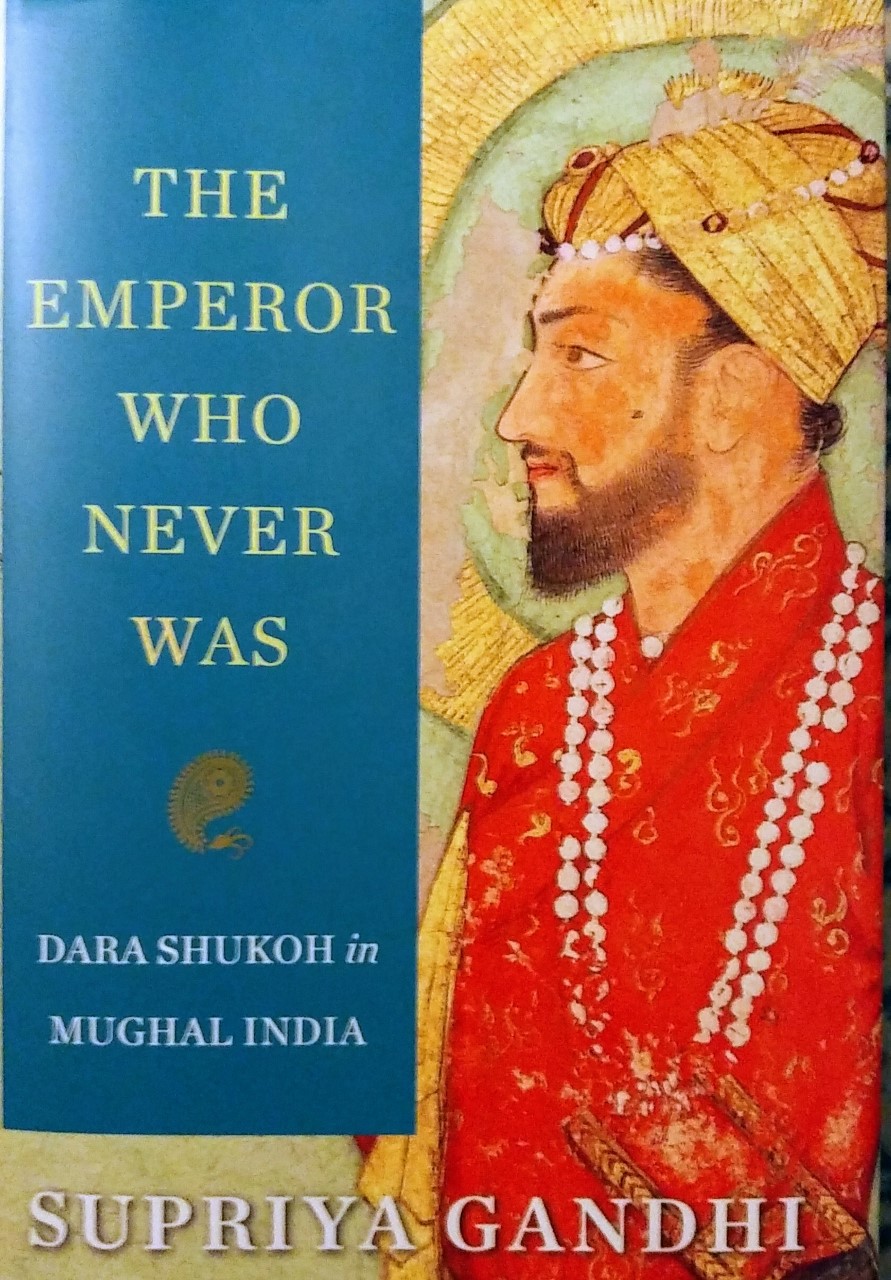
DIGGING UP THE PAST OF MUGHALS AND GETTING READY FOR SURPRISES – SUPRIYA GANDHI QUEST TO OPEN FESTERING WOUNDS OF DARA SHUKOH

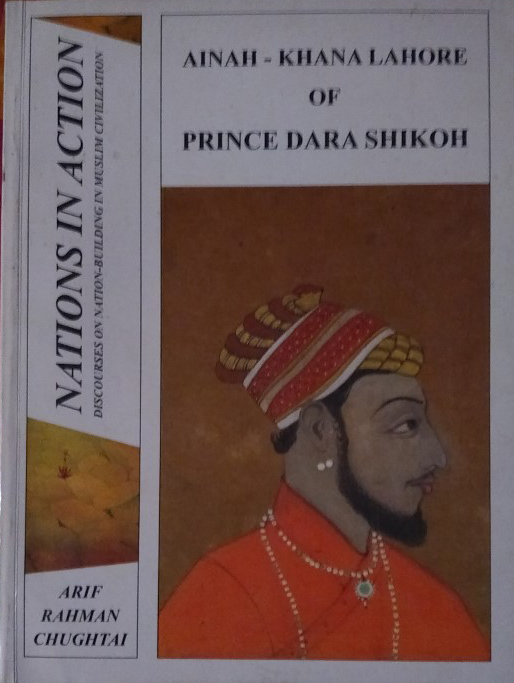
The new book on Dara Shukoh

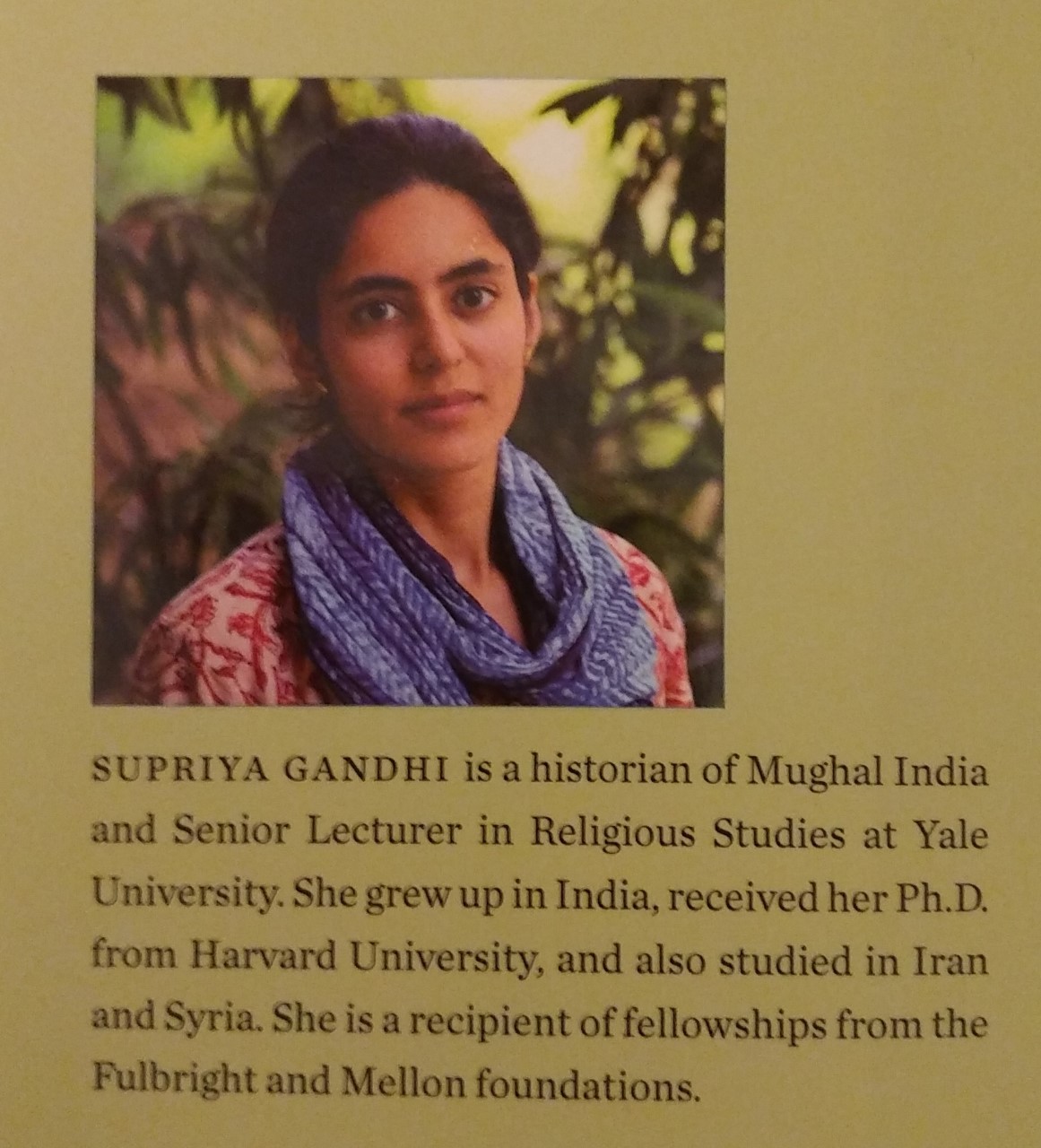
My contact with Dara Shukoh goes back generations (my ancestors worked for him), and there is no doubt that as literally King of Lahore, he was responsible for much aesthetic developments. Being son of extremely conscious aesthetic parents, it was to be expected and he proves that with his choices. But research falls into favoured trap. Inevitably sitting outside in a world which dictates choices, you end up with one kind of view. We collected lots of resource materials on Dara Shukoh. And of course researchers like Supriya Gandhi have access to materials, we cannot even fathom with our meager resources. The money comes out of our own pocket. No institution waves off charges which researchers here cannot even afford. There are two famous published books on Dara Shukoh, but there have been publications in Pakistan too. Caravan Book House took out a book on Dara Shukoh in English. United Publishers took out an Urdu book on the fight between two ideologies. And then of course the Diwan was discovered here, published and made famous. But the most relevant book was the printing of the Jaipur newsletters, which were  so important and published in Karachi in 1951 by Yusuf Ali Khan, former librarian of Jaipur Sate Records. We have a copy of the rare book and although it is supposed to be Aurangzeb’s life, it is full of references to Dara Shukoh. A blog is not meant to accommodate all information and we give two links below for anyone to read same from our own blog. The links are:

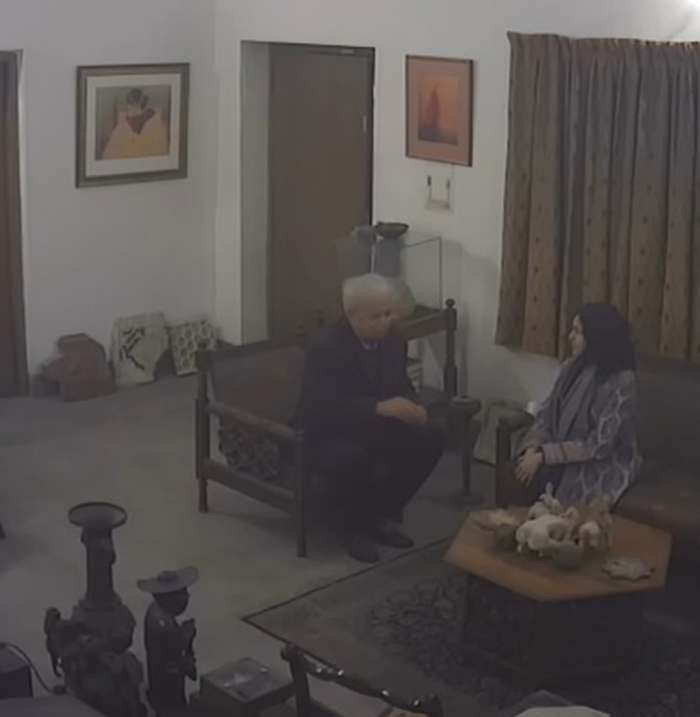
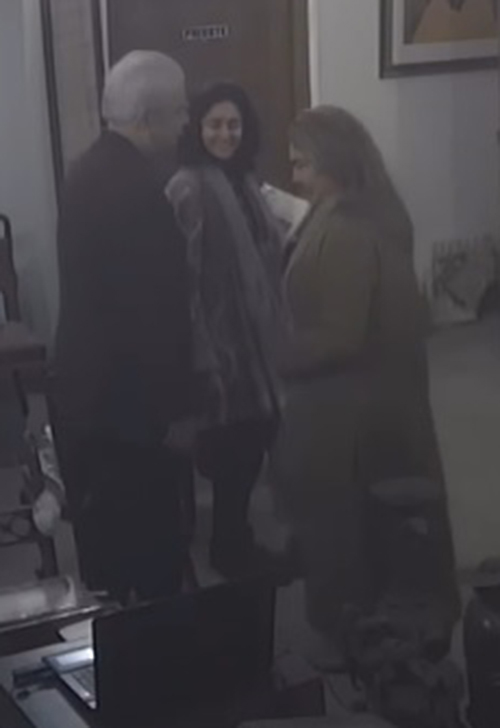
We took out a book on Dara Shukoh and we sent a copy to Supriya Gandhi by courier, well before her own publication. And when she called here with some friends, we gave them all additional copies of same. It has materials which are nowhere else. It was Supriya’s desire to see some of the research material in real terms. There is a Western disdain for independent research, and the easy ability to cast doubts on resource material they do not have with them. She was at first suspicious of our holdings. I received a reply from her from Delhi and it says:

“It does indeed look like Jahanara’s own handwriting at the end, compared with MSS I have seen in London of her Munis al-arwah and some of her writing held in Aligarh. It would be fascinating to compare this text of the Munis with the published version or the British Library copy to see if there are any differences. For a study, of course one would need a full set of images, and then I could do an article. A wonderful find! Thanks for passing this along. “


Obviously we are not milk suckling babies in this harsh world. Our blood and tears are there in our passion for research. My uncle Dr Abdullah Chaghatai did his PHD on Taj Mahal from Paris in 1938. Very few references are there for researchers for this epic work. Mika Natif has pointed out the difference between the Mughals and Occidental. We knew that all the time. Our own book on Dara Shukoh is worthy of being read, with so many things of original research. And yet western scholarship disregards it. A world famous art library refused to possess it, when a number of my books were already there in their holdings. .

Why Dara Shukoh never became an Emperor? Because he did not have the ability to do so. Constant failure of administrative perception, unbridled arrogance with others, and a brain incapable of planning and dealing with situations. He was not mixing Islam with Hinduism, he was mixing anti-Quranic thoughts with other codes of life. In fact he said that the Quran cannot be understood without reading the Hindu texts. To deal with such heresy, a person like Aurangzeb was not required, the people alone sufficed. Shah Jahan’s patronage was keeping Dara alive. Once removed he was not capable of anything. A so called emperor prospective, goes on a mission to capture Kandahar for his father, with a group of narcotic magicians. Casting spells was not the job of Muslim or Mughal Generals. Their job was valour and their job was harmony with their soldiers. In his typical arrogance Dara Shukoh put distances between himself and his army. The results were obvious. What kind of strategy and what kind of IQ sees cities fall through spells? One magician regularly required boys for intercourse to caste his spell. The magician wanted that ‘if this master could be provided with a homosexual boy, three year old wine and certain other requirements, he would summon genies for help by writing secret formulas with the blood of the boy mixed with wine’, how pathetic you can get? Good riddance, otherwise today’s world would be in even greater despair.

Suggested records

Lobbies promote heretics as we see all around the world. For monetary benefits, two timing so called scholars often sell their souls. We have seen how actually truth gets trampled. Dara Shukoh and Aurangzeb were not merely blood brothers but representative of two different ideologies. It demonstrates that the two nation theory is not based on blood relations but refers to matters related to belief actually. Supriya Gandhi has worked very hard to write this book on Dara Shukoh. We appreciate her work, and knows that she understands all this well. We wish her well too! There is even a world of difference between her direct ancestor and the moronic tea seller of India. 
CAUGHT BETWEEN THE RACE FOR CULTURAL PROPAGATION OF PAKISTAN – USA AND USSR VYING FOR REAL ATTENTION OF PRESIDENT ZIA UL HAQUE

CAUGHT BETWEEN THE RACE FOR CULTURAL PROPAGATION OF PAKISTAN – USA AND USSR VYING FOR REAL ATTENTION OF PRESIDENT ZIA UL HAQUE

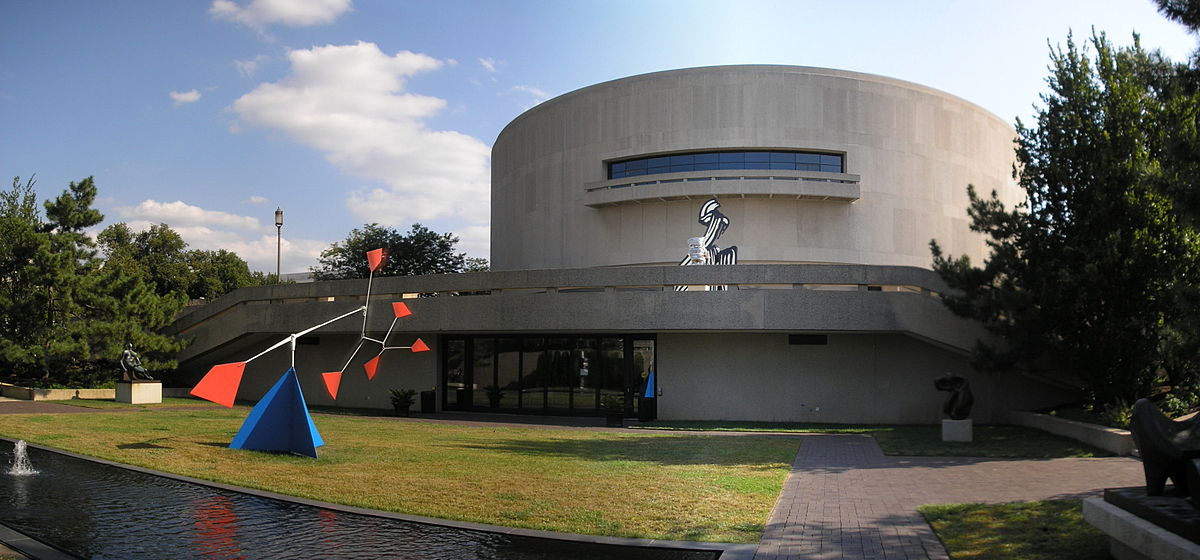
Hirshhorn Museum Washington DC

It is not often that phone calls from the President house are received, and the Military Secretary bent upon the idea of the President inaugurating a Chughtai’s anniversary show at Chughtai Museum and taking an exhibition of Chughtai to USA. The eagerness of President Zia ul Haque was so unsettling. He had visited the USA and made an offer to the Metropolitan Museum in New York for a room devoted to Pakistani Art. Stuart Cary Welch was in charge there (and our guest here the same year in 1981 at my personal invitation), and had his own plans. He plainly said that the museum is not a hotel where you can hire rooms, even when the offer of a million dollars was made by the Pakistani President. Amongst things he wanted was not new things. He had eyes for an inscription from the Maryiam Zamani mosque in Lahore, a pavilion from Shalimar Gardens and other exotic things. There was a meeting in Lahore at Hilton hotel, attended by B.A. Qureshi, and architect Ms Yasmeen Lari amongst others. I waited outside in the parking lot, and Stuart Cary Welch wasted no time with these committees. In moments he was outside and we went to the mausoleum of Emperor Jahangeer. In Islamabad President Zia ul Haque presented an expensive carpet to the American scholar, and his wife.

The Russian Ambassador V. Smirnov wanted a Chughtai’s show in Moscow. The Cultural Secretary Masood Nabi Noor asked me to say NO to him. USSR was not being favoured at that time. But I was in mood to take blame for something that was not even my idea. V. Smirnov was very persistent and was making offer of ‘wine and girls’ to all involved. I was stunned with his non-diplomatic moves. The Pakistani bureaucracy planned a show of Chughtai Art at Hirshhorn Museum in USA. I was asked for cooperation. But I gave my own terms. I did not trust the bureaucratic management and said that I will take the paintings myself to Washington (in biting snow cold city), and when the show was over, will bring them back myself. I was refused as no one was willing to guarantee me the safety of the works. Already a PNCA official had disappeared with probably 5000 US $ as well as collection of paintings of PNCA. So some works were collected for that show, the Pakistani Art show at Hirshhorn Museum. It had two very average Chughtais in it.

The show was held and seen, and the art critic of Washington Times, with great artistic background, and love for art (she would get involved with art works), wrote on that exhibition. That is Ms Jane Addams. She wrote the following:

“All contemporary painters of Pakistan owe a debt to A.R. Chughtai and his two watercolours are the masterpieces of the exhibition. He is the Matisse of Pakistani art, an artist who stoutly maintained his links with the style and themes of Mughal Art, inspite of the British Imperial presence, but who used his knowledge of Degas and Manet to give a western compositional solidarity to his paintings. Unfortunately most of the other figurative artists of the show fall short of Chughtai’s genius.” (Washington Times report of the show at Hirshhorn, 1982)

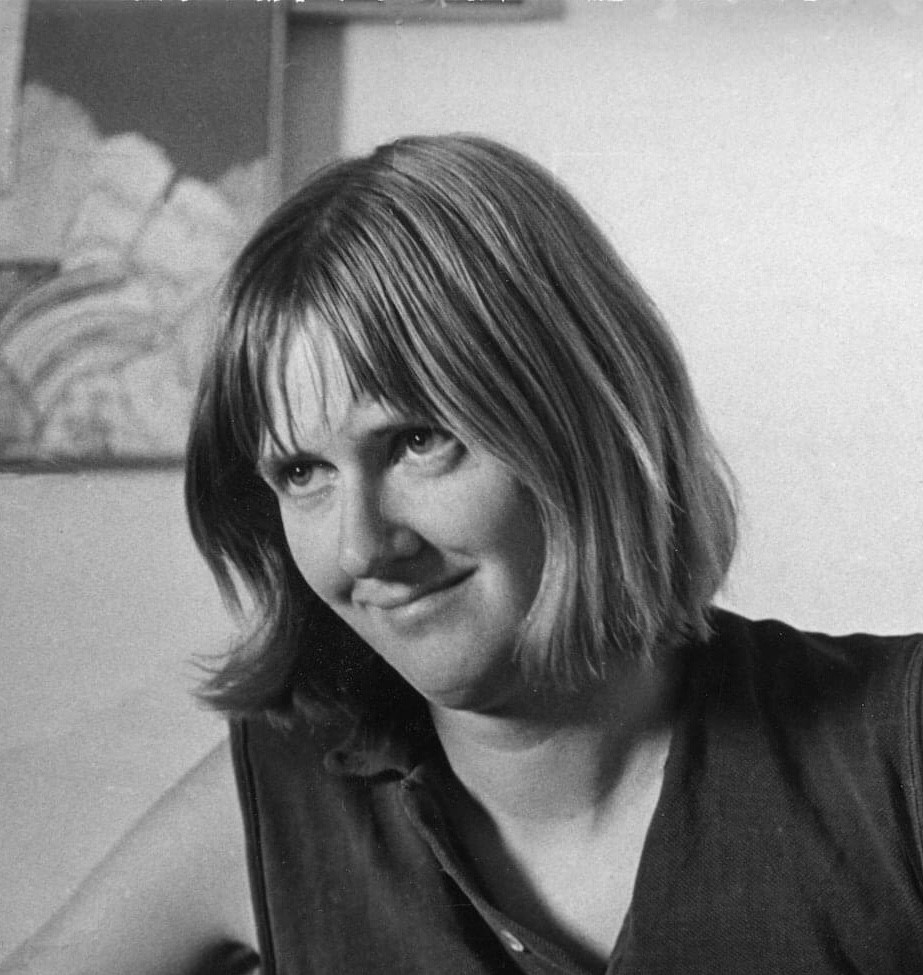
Jane Addams Allen art critic

It was not a feather in their cap, it was assertion of our identity. Ms Jane Addams Allen was famous for her Chicago art scene, having engendered the magazine “The New Art Examiner” with her later husband Derek Guthrie, another important artist himself. The Washington Times wrote her obituary in this way:”Known for her graceful writing style, encyclopedic knowledge of art history and a gentle but firm approach to criticism, Miss Allen won numerous national journalism awards during her career. ““In the presence of art, Jane Addams Allen grows luminous,” wrote Sophy Burnham in a 1987 Museum & Arts Washington profile. “Her writing has a sweetness and clarity. She is in love with art.”
Ms Jane Addams Allen had even lectured at some universities on art criticism. Her death on 31st January, 2004, left a void on the American art scene of able pioneers of art criticism.
P.S.We are grateful to Ms Sarah McQuaid folk singer for providing us with a photograph of her mother. Thank you Sarah for your cooperation! You made this over due blog happen.

PROPOSAL FROM AMERICAN FEDERATION OF ARTS WASHINGTON DC – POST MARKED 31ST JANUARY, 1947, EIGHT MONTHS BEFORE PAKISTAN

PROPOSAL FROM AMERICAN FEDERATION OF ARTS WASHINGTON DC – POST MARKED 31ST JANUARY, 1947, EIGHT MONTHS BEFORE PAKISTAN

Entrance Barr Building

Archives record things long forgotten. American Federation of Arts was a society made in 1909 to first promote American art and then later to invite exhibitions from various other countries. They have been doing it from more than 100 years. In 1947 before the inception of Pakistan, a proposal was received by Chughtai artist for some sort of art cooperation. This was received at his traditional house in Chabuk Sawaran, at that time referral as in India. Sending by Air Mail, meant it was a time sensitive delivery. This is a rare envelope for the society left  Barr building long time ago.

Barr Building Washington DC

What was the proposal? Not found yet. But certainly the artist was important enough in USA to receive a letter from this society. M.A. Rahman Chughtai had been displayed at various American institutions in 1931, due to activity of his promoter, Dr James Cousins. We have already taken out a blog on same. The tit bit here is an official American contact, as this society was patronized by President Theodore Roosevelt himself. It was in 1951 that Prime Minister Liaquat Ali Khan had gifted a painting of Chughtai artist to President Truman at a state ceremony. Records lead us to the truth of history.

A proposal from American Federation 17th Jan 1947

SHARING A WONDERFUL ARTICLE ON CORONA AND THE QURAN – WITH DUE THANKS DR EJAZ RASOOL OF GLASGOW. MUST READ!

SHARING A WONDERFUL ARTICLE ON CORONA AND THE QURAN

WITH DUE THANKS DR EJAZ RASOOL OF GLASGOW. MUST READ!

Facing death

No one has touched the Corona pandemic with the dictates of the Holy Quran itself. Dr Ejaz Rasool has written an excellent article on same, which is an objective analysis but still misses no point. We usually do not share articles of others, but this is worth reading by all. We hope it opens discussion and makes us think and ponder as instructed by the Quran itself. Thank you Dr Ejaz Rasool!

Is there a grand plan behind this all? Our job is to remain positive, and face the consequences with true grit. Things pass, nothing remains the same. Bad times will go and hopefully will be replaced by better ones. Keep yourself with your chin high!

A new day will come

IN MEMORY OF HASSAN YAR JANG, LOVER OF ALLAMA IQBAL AND QUAID E AZAM – AND LOVER OF ARTIST M.A. RAHMAN CHUGHTAI TILL THE VERY LAST (BOOK 1978)

IN MEMORY OF HASSAN YAR JANG, LOVER OF ALLAMA IQBAL AND QUAID E AZAM – AND LOVER OF ARTIST M.A. RAHMAN CHUGHTAI TILL THE VERY LAST (BOOK 1978)

Nawab Hassan Yar Jang and artist 1948

We received a comment from Hyderabad and the comment says:
MuneebFebruary 24, 2020 at 9:05 pm

Nawab hassań yar jung is my grand father.I’m Muneeb uddin khan son of Aahmad uddin khan.

We found out a book published in Karachi in 1978, thirty years after the exhibition in Hyderabad in 1948. Hassan Yar Jang gave all his documents to a friend Abdur Rauf Arooj, and he compiled the book of memories. A chapter is devoted o M.A. Rahman Chughtai too. We have already written about Hyderabad in a previous blog. Suffice to say that not only are there physical links between the two states, but more than ever Ideological links. East Pakistan was crushed under a conspiracy and today everything is openly said how through planned conspiracy the malignancy was done. Similarly Hyderabad’s link with Pakistan was forcibly snatched and in such places, it is evident how they remember the golden rules of yesterday, as compared to the hotch potch rulings of today.

Illiterate and uncivilized leadership anywhere cannot do much for anyone, public or the general run of the country. The start of Nawab Hassan Yar Jang comes from the PAIGAH family, a family only second to the family of Nizam of Hyderabad himself. A lot of Hyderabadi brethren migrated to Pakistan, and we encountered many families, mostly in Karachi. Others migrated abroad, no longer content to be in their country. Even today many Hyderabadis visits us. Our advice be strong and preserve your culture well. Do not forget your past. Perhaps a time will come for Hyderabad to be Hyderabad again!

Preface Nawab Hassan Yar Jang

GREAT ESCAPE OF MIRZA JAHAN KHUSRO SON OF AKBAR SANI – HAJI MUHAMMED ISHAQUE DESCENDANT OF GREAT MUGHALS

GREAT ESCAPE OF MIRZA JAHAN KHUSRO SON OF AKBAR SANI

HAJI MUHAMMED ISHAQUE DESCENDANT OF GREAT MUGHALS

Haji Muhammed Ishaque Mughal

The War of Independence of 1857 rattled the English. They could never expect what happened to them. Some flukes saved their empire, including help from Lahore, as well as disarmament of Lahore garrison.  The object was simple. To kill all Mughal Princes who could be contender to the throne. So massive assassinations were carried out. In fact many Mughal Princes were not only killed in cold blood, but tortured to death. An evil Englishman has been reputed to have drunk the blood of some of them. Hodson is still remembered with the “Khooni darwaza” as killer of Princes in cold blood.

Professor Aslam Pervez, an historian of Bahadur Shah II’s reign says:

“There are so many people who claim to be descended. The Mughals were scattered, many ran away from Delhi, to Hyderabad, after the mutiny and no-one knows who went where,”

he said.

But of all the persons who claim descent, not one has a face like that of the Mughals or that of progeny of Bahadur Shah Zafar. Yes, it is known that Bahadur Shah Zafar is reputed to have been poisoned to death. And his family erased from the face of the earth. One brother of Bahadur Shah Zafar, and son of Akbar Sani escaped the clutches of the British administration and along with one person and one horse, landed in Chakwal, the area now part of Pakistan. We hear of many descendants of Bahadur Shah Zafar both in India and Pakistan, but the descent is not direct. It is waylaided by different factors. Here is the first claim of direct descent, and even judging from the face studies, the person looks exactly as his fore fathers.  Muhammed Ishaque of Chakwal narrates the various names of his legacy and ancestors, and they are not far fetched at all. His face besides, his attitude is also royal.

Mirza Jahan Khusro, was son of Emperor Akbar Sani, and he was also brother of Bahadur Shah Zafar. He had a son Alam Khusro Bahadur, and both father and son came to the area known as Chakwal. The present person traces his family tree as Muhammed Ishaque, son of Atta Muhammed, son of Saadullah Khan, son of Hayat Khan, and is linked to Alam Khusro Bahadur, and Mirza Jahan Khusro. There seems to be no doubt to this, for this man is not claiming the throne or anything. He is plainly speaking about pride in his ancestry. The many so called descendants in India, mostly do not even look like the Mughals. Here the face speaks for itself. Welcome to additions in Mughal history!

Pakeeza Sultan Begum children of Bahadur Shah Zafar

THE YEAR 1923 IS A VERY HISTORICAL YEAR IN THE HISTORY OF LAHORE FORT – PRESENCE OF ENGLISH GARRISON CAME TO AN END AND START OF THOROUGH RESEARCH FROM THE ARCHAEOLOGICAL SURVEY OF INDIA MR R. HARGREAVES

THE YEAR 1923 IS A VERY HISTORICAL YEAR IN THE HISTORY OF LAHORE FORT – PRESENCE OF ENGLISH GARRISON CAME TO AN END AND START OF THOROUGH RESEARCH FROM THE ARCHAEOLOGICAL SURVEY OF INDIA  MR R. HARGREAVES

Lahore Fort 1923

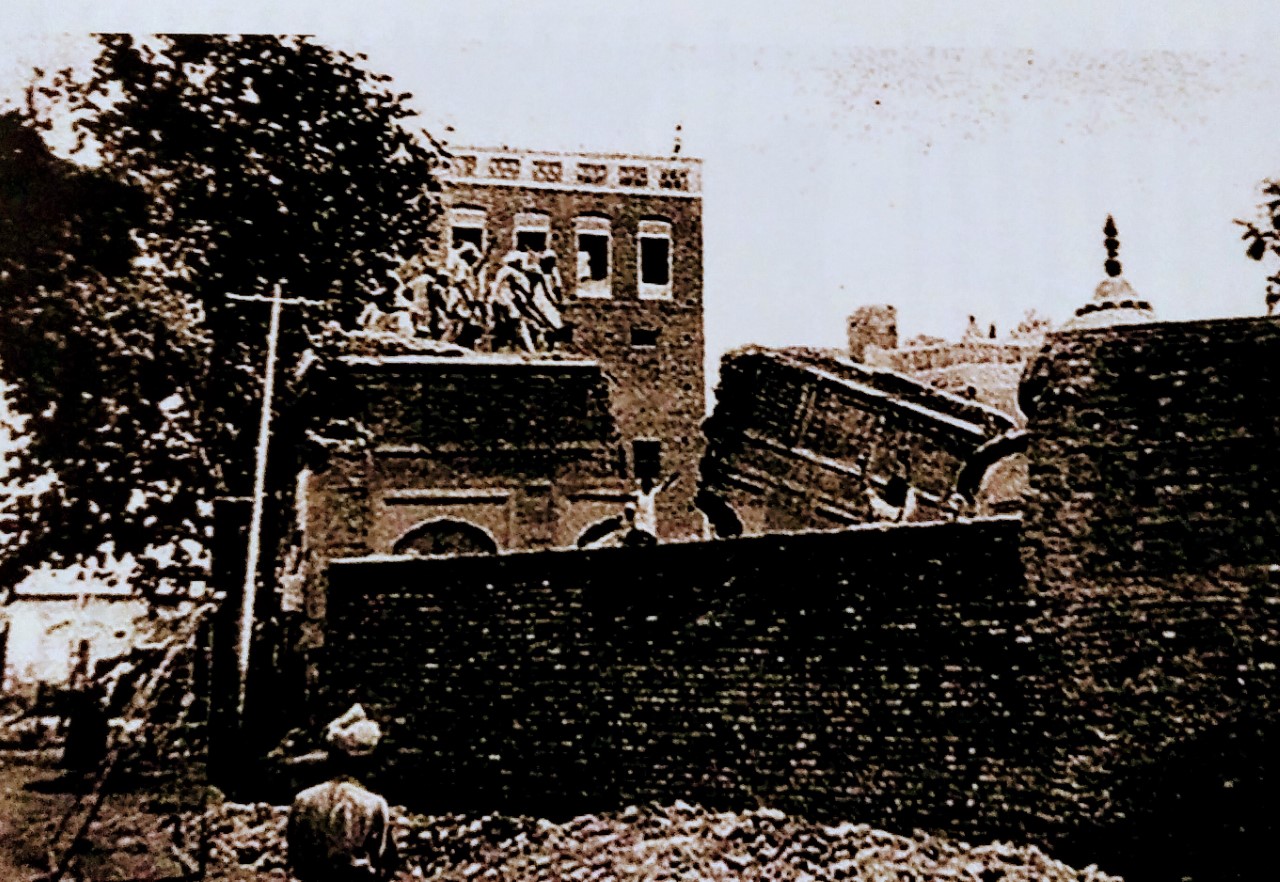
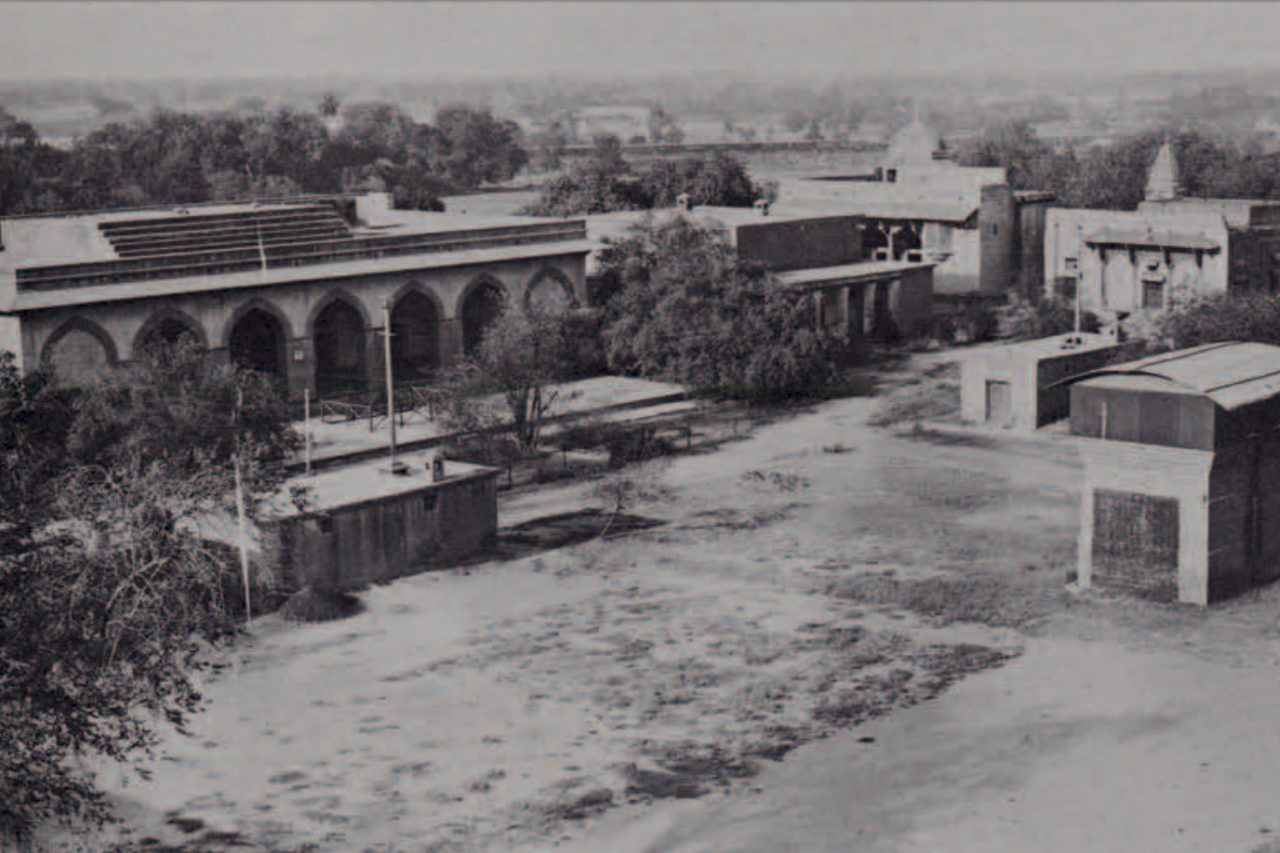
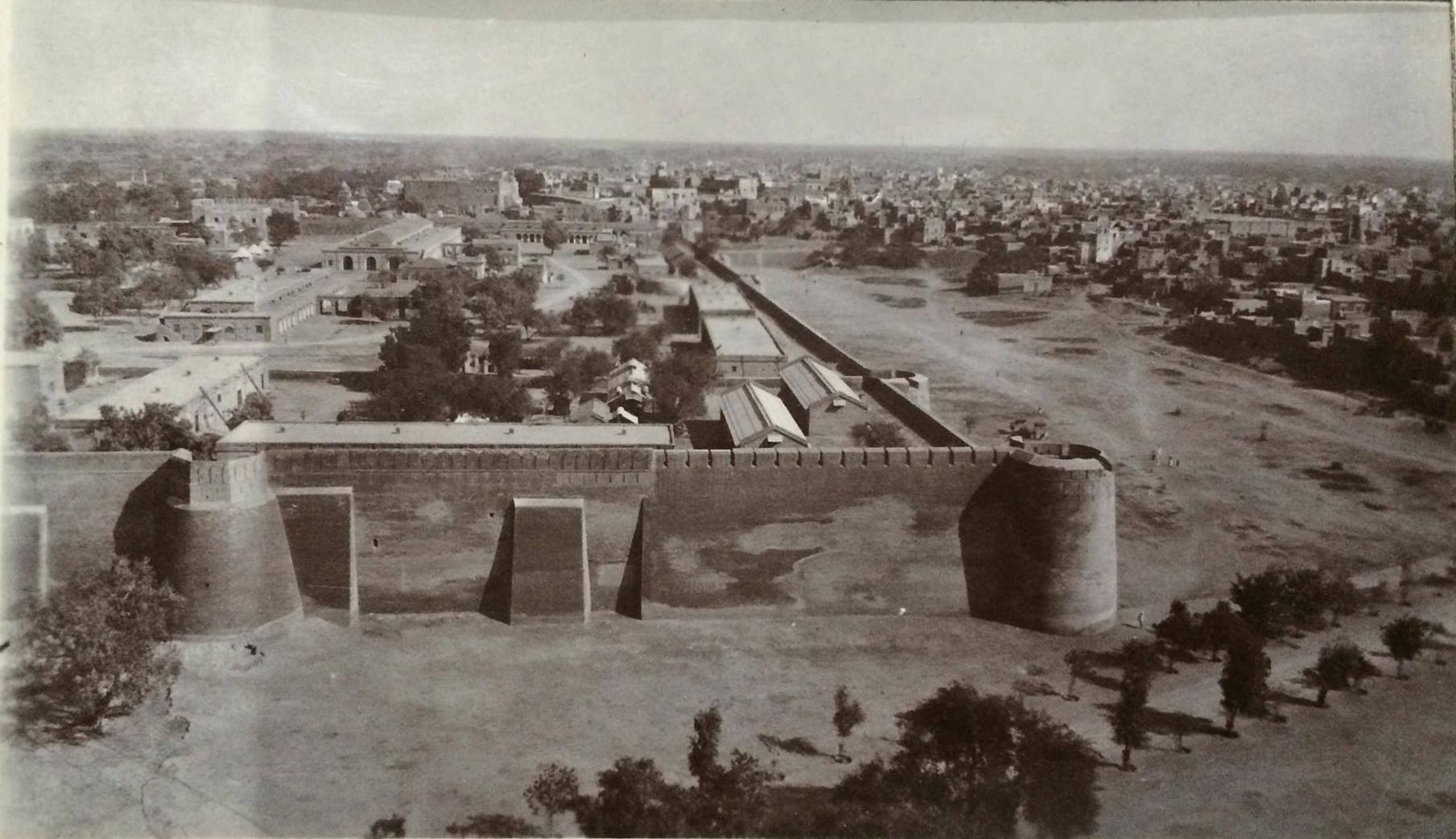
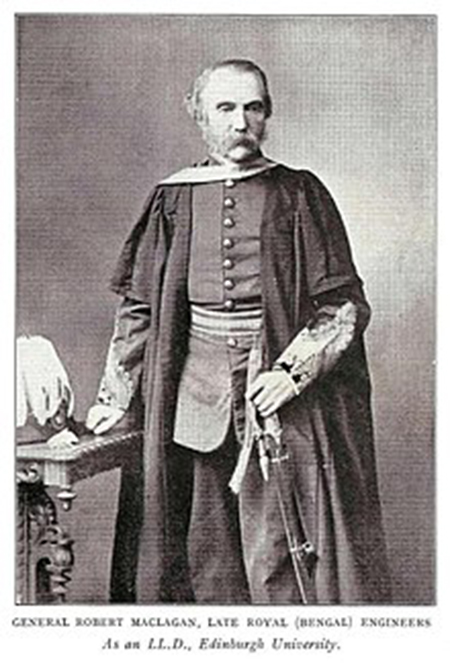
The Hazuri Bagh was full of occupied British Garrison. In fact the father of E.D. Maclagan, the famous English diplomat, was an Army Engineering Officer, sitting in the structure above the Aurangzebi gate, and occupied the floor there in 1846. Captain Maclagan was doing things, sitting at a place a stone throw away from the Mandir of Loh. But imagine the rest. They had master minded the destruction of the Wall surrounding Lahore. And like the Sikhs before them, ruthlessly tore one monument after the other. The Army was stationed outside Lohari Gate, before being shifted to Mian Meer colony. Now imagine the Lahore Fort, full of British Army, with barracks everywhere. Caring no hoot for anything of historical interest. Breaking things whenever required. In fact in 1923 they said no to R. Hargreaves, Superintendent Lahore, of the Archaeological Survey of India. But then orders came and except for a small corner the whole place was given to the department. Which corner is open to research? All this is in the report of 1924, and we studied it properly. The fort was rescued by Lord Curzon and for him, the entrance was diverted from the main gate, and a new entrance made for his inspection. History is studied with such details.
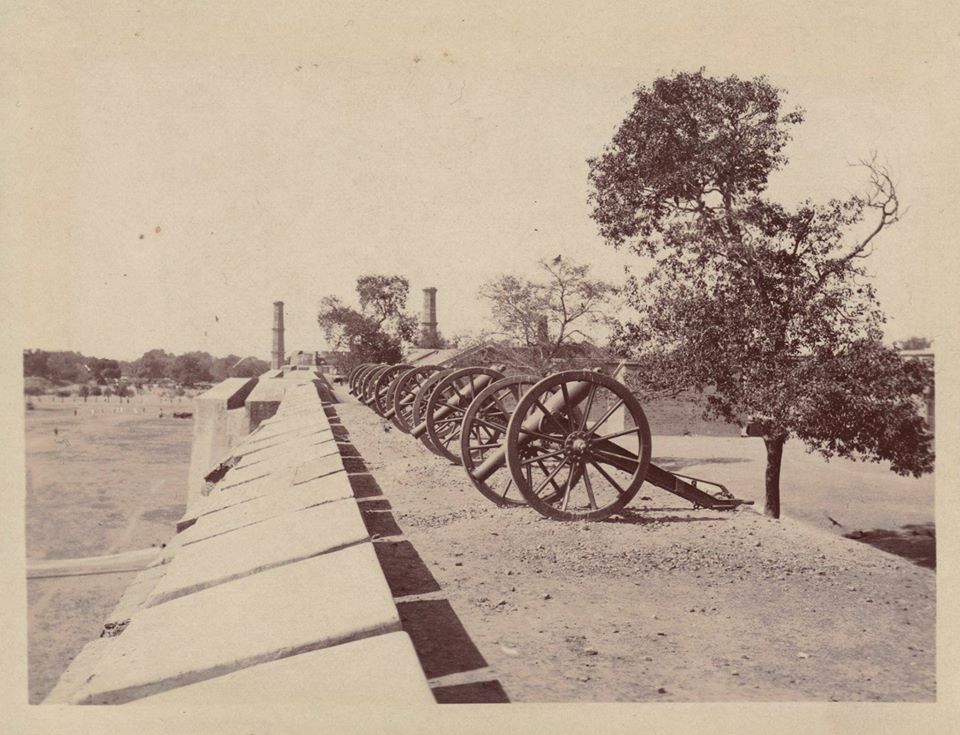
“In 1923, with the abandonment of the fortress by the British garrison, the Archaeological Service of India, began the work of restoring, repairing, and preserving what remained of the ancient structures.”

Archaeological report of 1924 says the following:

“Before any decision could be reached as to the layout of the archaeological area, it was necessary to ascertain by trial trenches what ancient remains of the Mughal and Sikh period still existed underground. The operations go down and have revealed the existence of a large tank of unsuspected form, some of the fountains of the Sikh period, ruined hammams and other structures of which drawing have been made, the dismantling of the numerous modern additions to the historical buildings have yet to be undertaken. Th chief item of expenditure has been the six-foot iron railing to be erected around the historical area.”

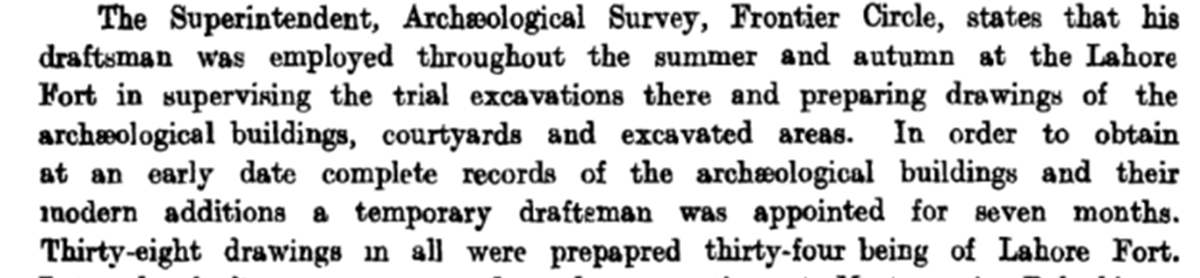
A draftsman copied these excavations in a large number of drawings and these must be in some record office, perhaps the British library itself. Why is 1923 important to us?

The Hindu society Sanatan Dharma Yud Sabha was after the Superintendent Archaeological Survey of India, mainly R. Hargreaves, to excavate the so called Mandir of Loh (only they knew about it), and on 11th December, 1923, the Superintendent with a team of workers went with members of the Sanatan Dharma group to explore this site. It was filled with debris in a deep hollow and for two days, cleaning and digging the area, revelation on 13th December, 1923. And what was discovered were the bones of a GIANT of a person in it. Known as Nau-Guzza in Lahore. And that is a different story, and we will take it up next time. Enjoy solid information, instead of conjectures!

A TECHNICAL WIZARD OF LAHORE NAMELY ‘MASTER KEY’ HASSAN DIN – COUSIN OF M.A. RAHMAN CHUGHTAI AND OF FAMOUS RAILWAY FAMILY

A TECHNICAL WIZARD OF LAHORE NAMELY ‘MASTER KEY’ HASSAN DIN,COUSIN OF M.A. RAHMAN CHUGHTAI AND OF FAMOUS RAILWAY FAMILY

Hassan Din Technical School

Hassan Din was a technical wizard of Lahore. He was reputed to tackle any technical problem and come up with a solution. He was associated with Mayo School of Arts Lahore as an instructor, but also had ideas of forming a Technical School all his own. A rare pamphlet describes his ideas in 1939. He came from a renowned technical family. His maternal uncle Master Elahi Baksh was associated with the 1911 celebrations of Emperor George V in Delhi. His grandfather was Ustad Chiragh ud din, master designer of wooden works. An old tazia in Karbala Gamey Shah (there even today) was designed by him and his name is mentioned  by Chughtai artist in the preface to the book Amal e Chughtai.

Hassan Din

Obviously Hassan Din’s technical solutions depended on his indoctrination and training under exceptional hands. Another cousin Meraj ud din (Paa Maja) was also cousin and best friend of M.A. Rahman Chughtai. The artist spent many hours with these two cousins all the time in exceptional bonding of its time. The relation was basically an emotional one, in which getting together, going to picnics and other places, fishing, flying kites, eating at odd places, viewing dramas and film shows, and mehfils full of jokes and laughter. It was all fun relations at that time. The same are pleasant memories today. Remembering him with love and affection from us! His son worked at Mayo School of Arts for a very long time. Would love to hear from him.

A TILE MOSAIC OF LAHORE FORT HINTING EMPEROR JAHANGEER – PERHAPS, PERHAPS NOT, BUT EXCITING TO DISCOVER SUBJECTS

A TILE MOSAIC OF LAHORE FORT HINTING EMPEROR JAHANGEER – PERHAPS, PERHAPS NOT, BUT EXCITING TO DISCOVER SUBJECTS

Jahangeer with wine cup

The personality of Emperor Jahangeer is stupendous. The various manuscripts of his memoirs Tuzuk Jahangeeri reveal a full bloodied man, famous to this day for his sense of justice. A man of war and a man of peace. A conservator par excellence. Love of plants and animals his passion of life. Unfortunately Western and Hindu scholars pick and choose, rejecting what they do not like as false and other things as the truth. Even the account published by Major Price they do not like, for in it Emperor Akbar died reciting the Kalma, proving his political tactics in confusing the other religious priests and pundits. And the assassination of Abu Fazl proving the detest held by Jahangeer in confusing his father, with reputation of him being a  freemason. In all ways Jahangeer fascinates us even today.

The tile mosaics on the Lahore Fort were never properly studied. One reason was the absence of historical narrative on it. The other they were high up, and out of observable sight of scholars. Also much damage was done to them with passage of time. Now subject of conservation, things are coming out. As usual some writers are at the confusing game again. Wrong attributions are still being given. First hand observations can not be substituted by versions of others. We will talk about that too. Here we are looking at three tile mosaics in pattern of portraits of Jahangeer.  Probably not the Emperor, but who can say? Here the figure not only holds the matchlock musket (?) but also three ball shots (looks like a peeled banana, or even a flower bunch but that has no correlation with figure) in his hand. Another point to note is that courtiers and army chaps carry matchlocks on right side, but Jahangeer carries them on his left side, as seen in the two portraits. Analysis will take more time, but worthy of being looked at again and again. Scholars will dissect each and everything.

The second image the figure holds a cup of wine in a very peculiar position. It reminds us of the coin of Jahangeer in which he holds a cup of wine. And thirdly a figure holding a sword in a royal manner. Obviously the puzzle game is not rewarded at the end with answers. Knowledge reinforced with instinct calls it the day. Mostly today’s analyst lacks feeling and misses the rapport of long ago. Our job is to look at things with not merely insight but love and compassion. Analysis delights us.
P.S.
Two kind of guns. One with a gun horn for loading powder; the other a ball shot, loaded from the front of barrel with a loading stick.

A MENTION OF COFFINS OF M.A. RAHMAN CHUGHTAI AND SHAKIR ALI – VERY STRANGE DISCUSSION IN A LECTURE AT LITERARY FESTIVAL LAHORE

A MENTION OF COFFINS OF M.A. RAHMAN CHUGHTAI AND SHAKIR ALI – VERY STRANGE DISCUSSION IN A LECTURE AT LITERARY FESTIVAL LAHORE
A programme mentions a discussion on three artists; M.A. Rahman Chughtai, Shakir Ali and Sadequain. As usual with our commentators a reference to tradition and modernism. The whole world of art calls M.A. Rahman Chughtai, Modern Master of Muslim Civilization. In fact Jacob Baal-Teshuva, UNO Art correspondent, refers to the confusion generated in Pakistan, by reference to Chughtai as a traditional painter, when he is a completely Modern Contemporary painter. This discussion is not the scope of this write up. It is a reference to a strange discourse there, about the size of coffins of Chughtai and Shakir Ali. This was related to me  by Ms Mussarat Chughtai, who was sitting in the audience.

I never attended the funeral of Shakir Ali. I know about his death. On the death of M.A. Rahman Chughtai on 17th January, 1975, a memorial meeting on Chughtai was held at YMCA on 18th January, 1975. There Shakir Ali got emotional when he said, “If they have done this to Chughtai, what will they do with me?” Unfortunately he had a heart attack and was rushed to hospital. He never recovered and died a few days later. Some issues concerning his funeral were there but I do not  know the details.

The Chughtai family requested a national place for the burial of M.A. Rahman Chughtai. He was lowered in the streets, through small stairs, by his family and friends. He was placed in a cot on the pavement. From there a van carried him to Miani qabarastan, for an AMANATAN BURIAL, in the enclosure section of Railway Chughtais . For that purpose a wooden casket was bought from the market, and he was buried in that casket. It was not an unusual big casket, just a normal sized ready made one. I do not think there are many people alive who were at the funeral. Most of the well known ones are dead,including many of his relatives and friends. Who would remember the size of his coffin, not even those who said funeral prayers? But I was there through out. A reference was spoken that if Chughtais coffin was a big one, why could not Shakir Ali coffin be a big one too! Absolutely childish and worthless comment on two big artists of the country. Who said it, I do not know. Was the size of the coffins issue of any one actually? Not at all. There is a reference about the grave of Shakir Ali being designed by Kishwar Naheed, who had her verses written on same. More than that we do not know.
A world of differences exist between the two artists. Shakir Ali in his own words refute artists with nationalistic concepts. Some how or the other the allergy to Pakistan remains with such people. M.A. Rahman Chughtai on the contrary was obsessed with the nationhood of Islam. A large difference between the two, but certainly the size of coffins was not one of them. Utter confusion here!