M.A. RAHMAN CHUGHTAI AVID DESIGNER OF POSTAL STAMPS; MANY USED, MANY UNUSED, AND MANY LYING IN COLLECTIONS.
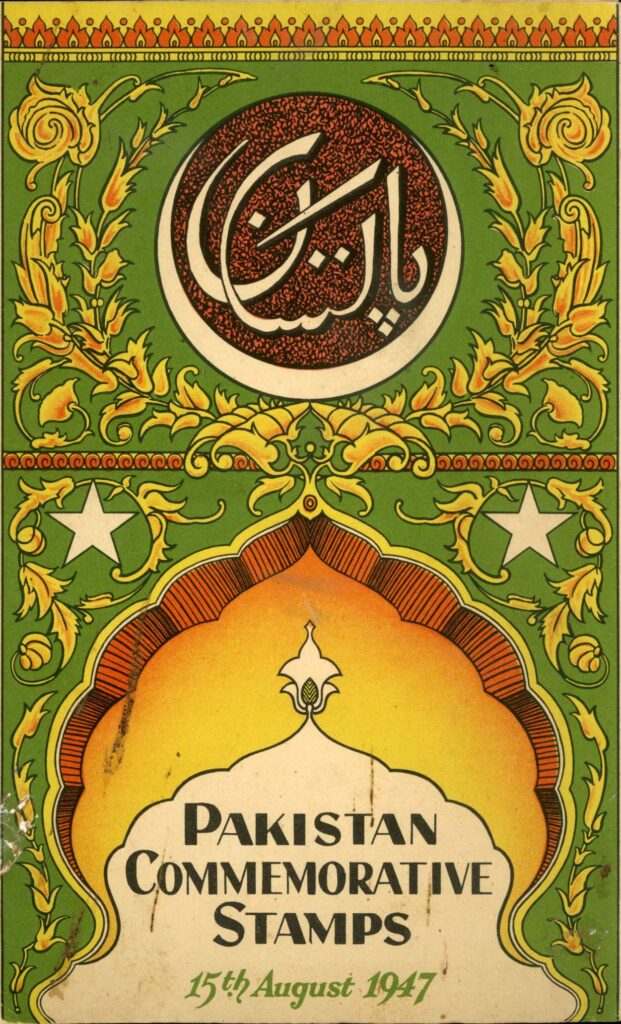
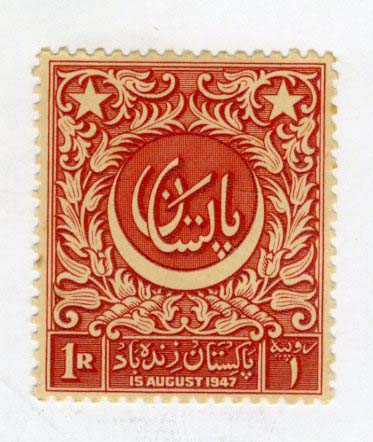
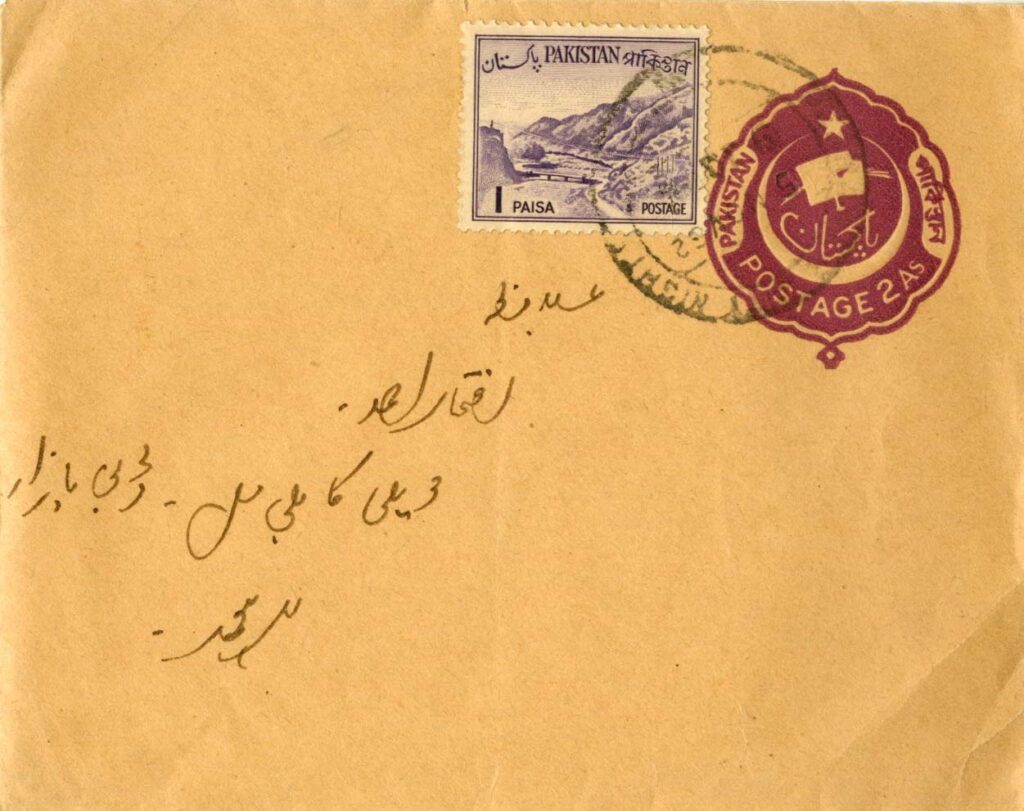
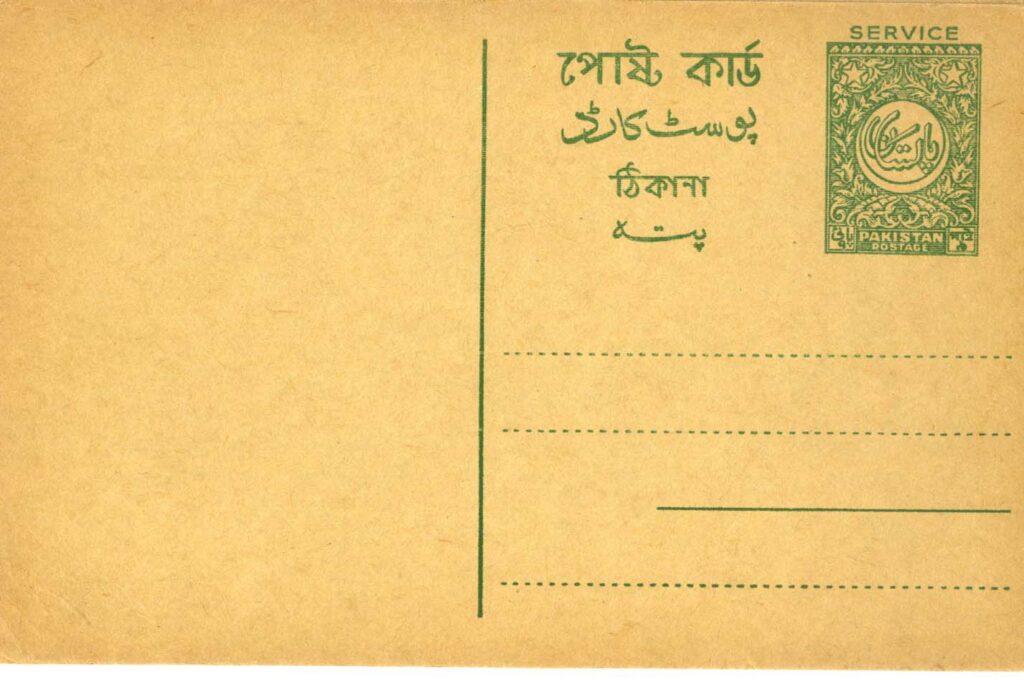
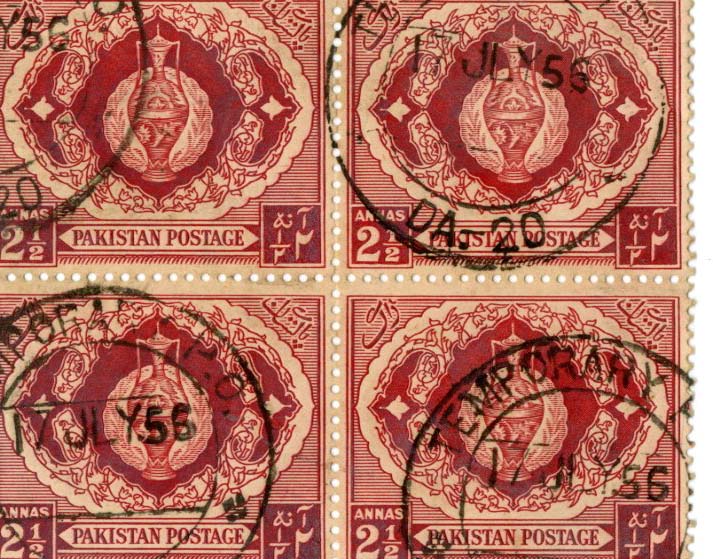
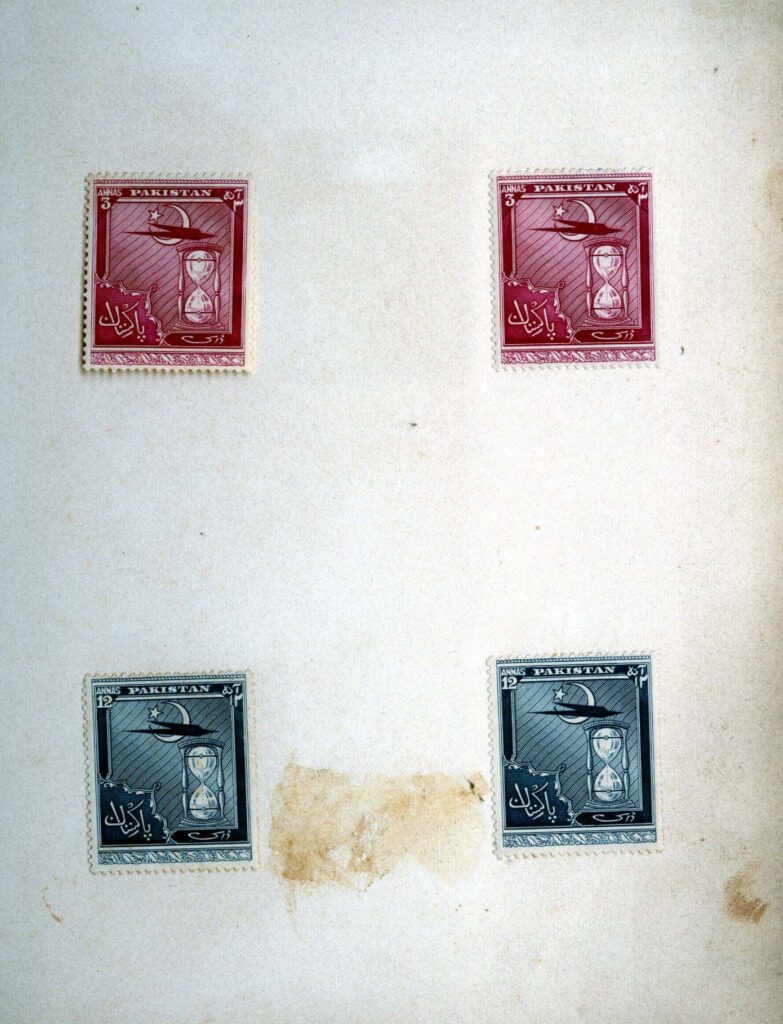
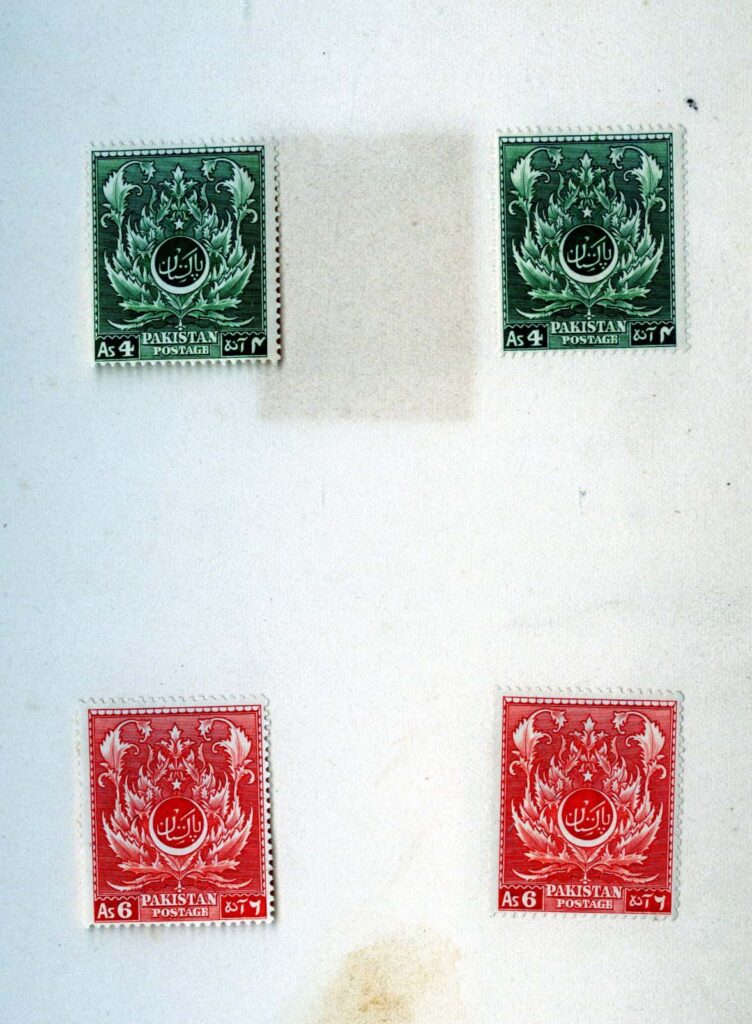
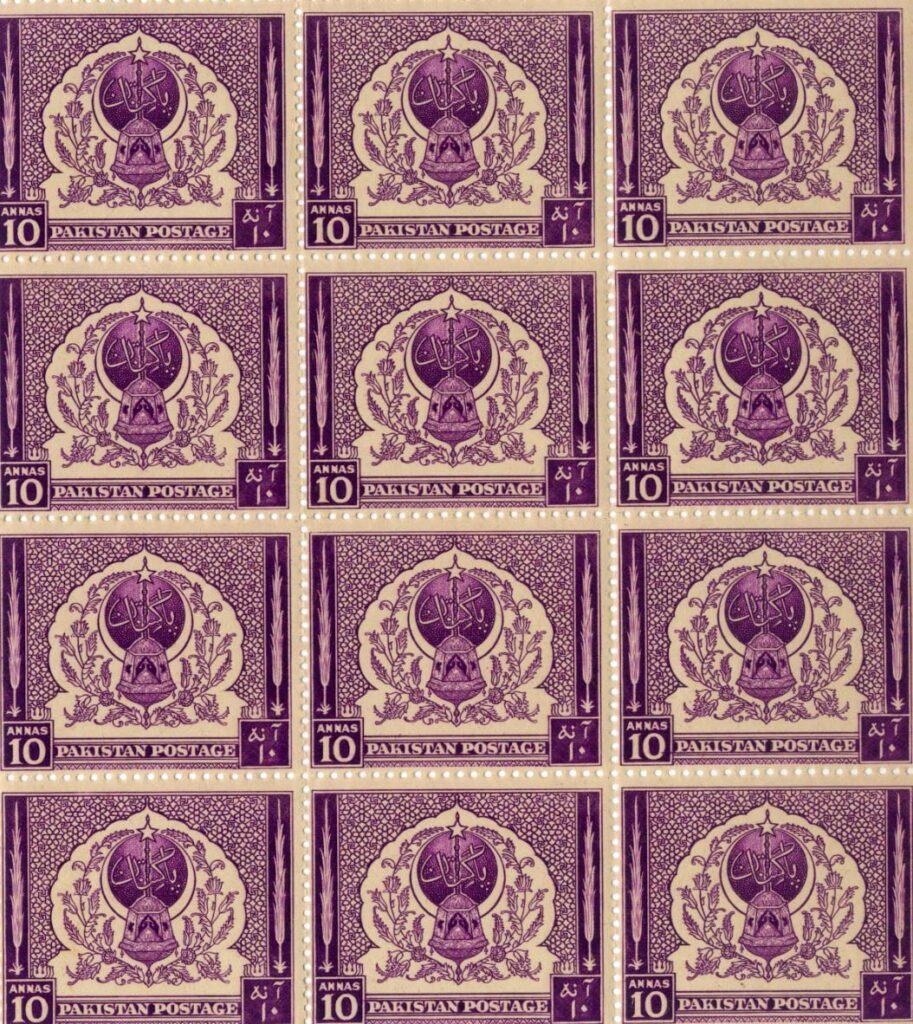
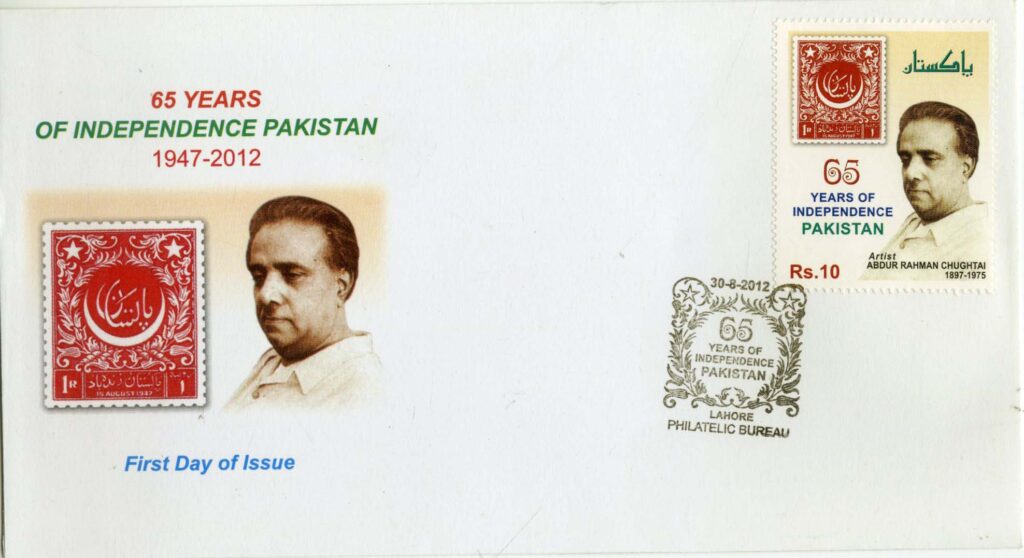
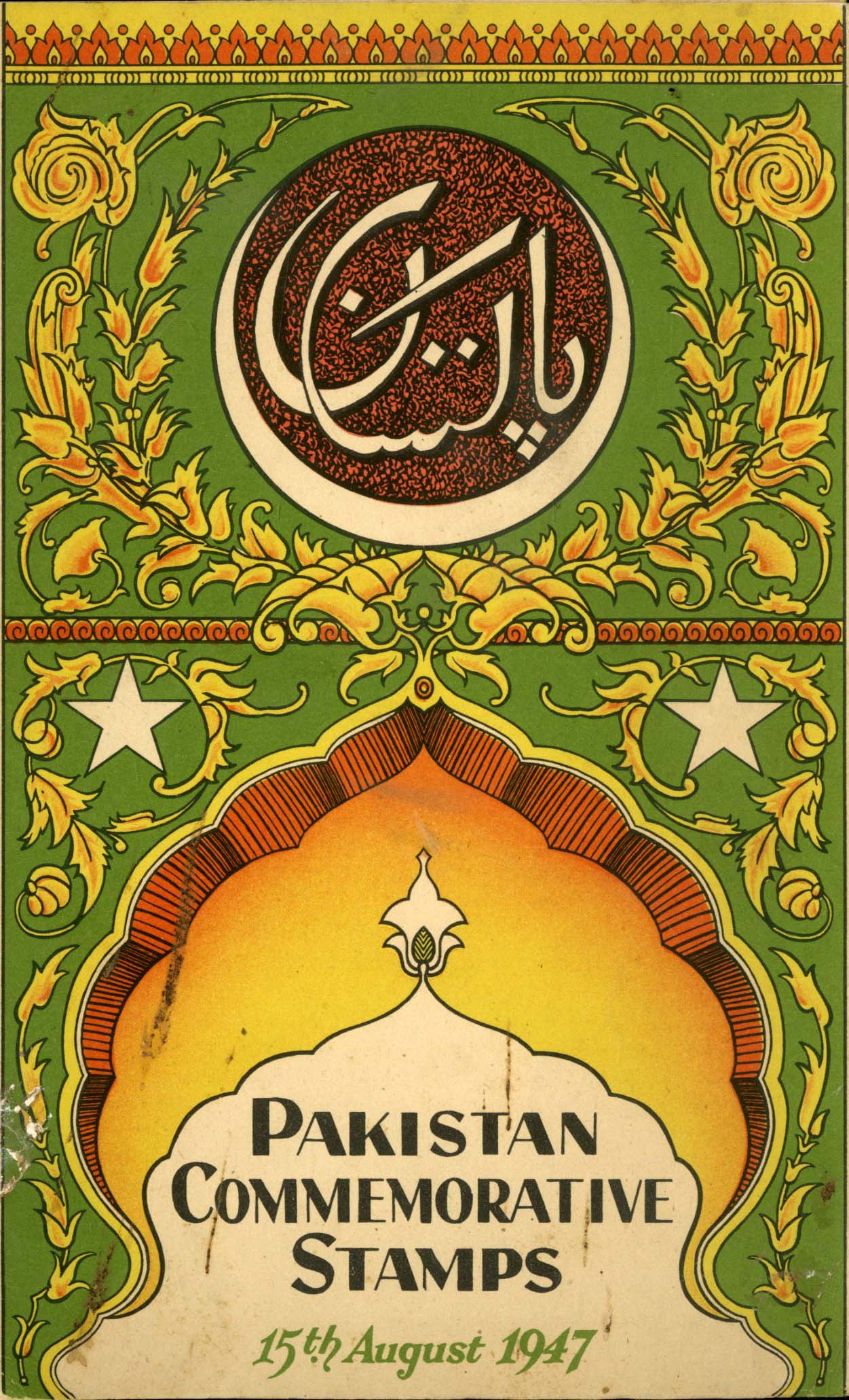
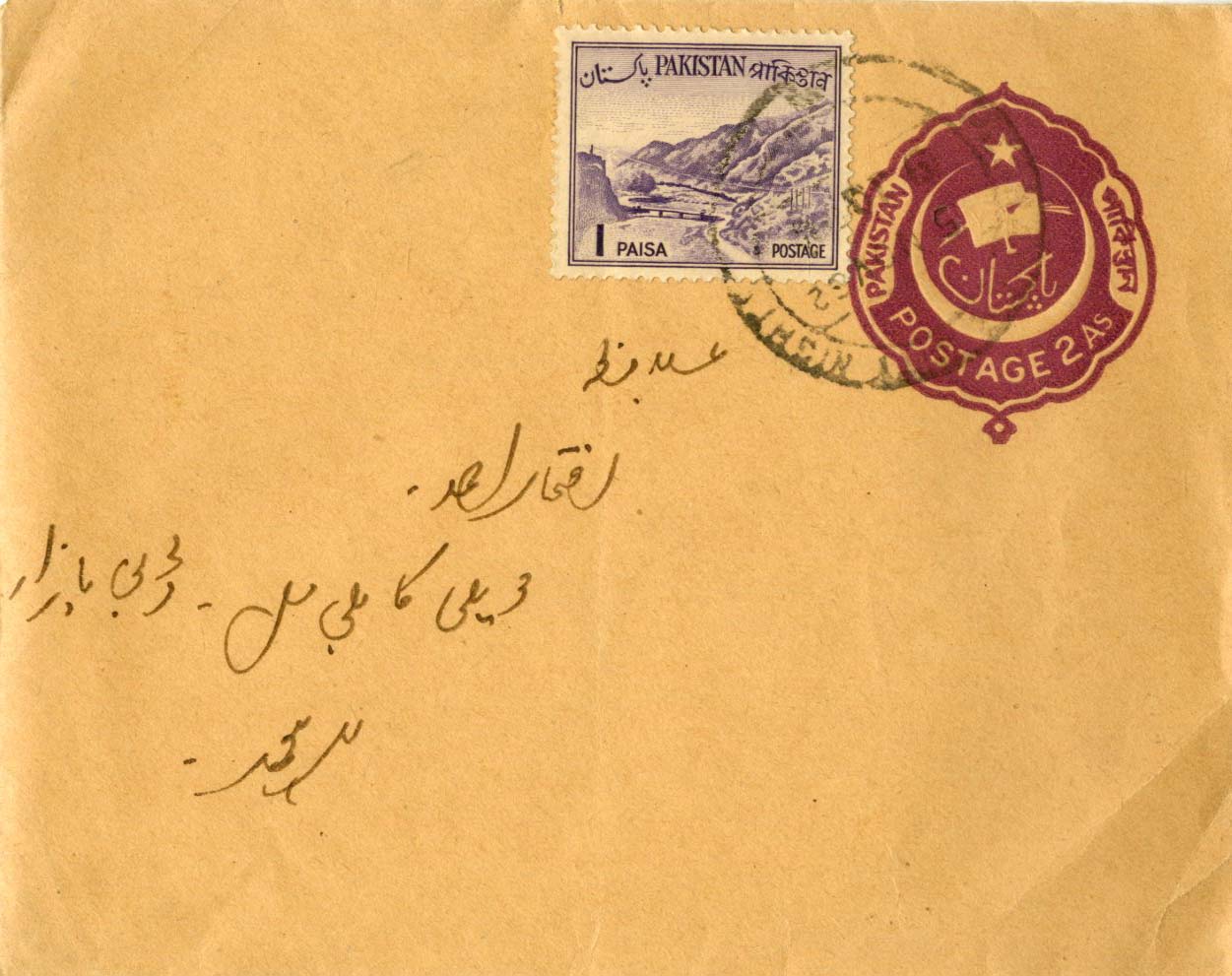
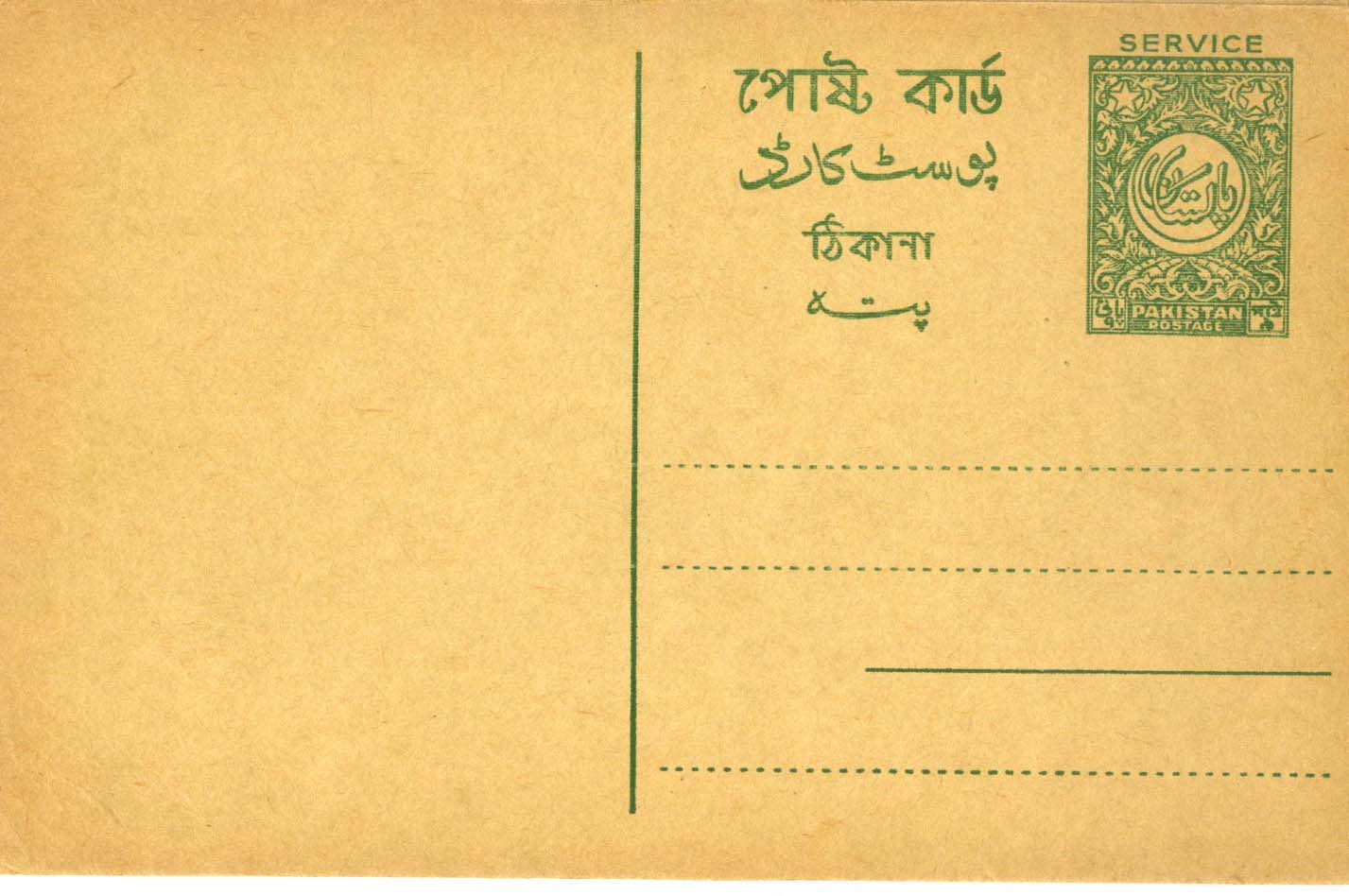
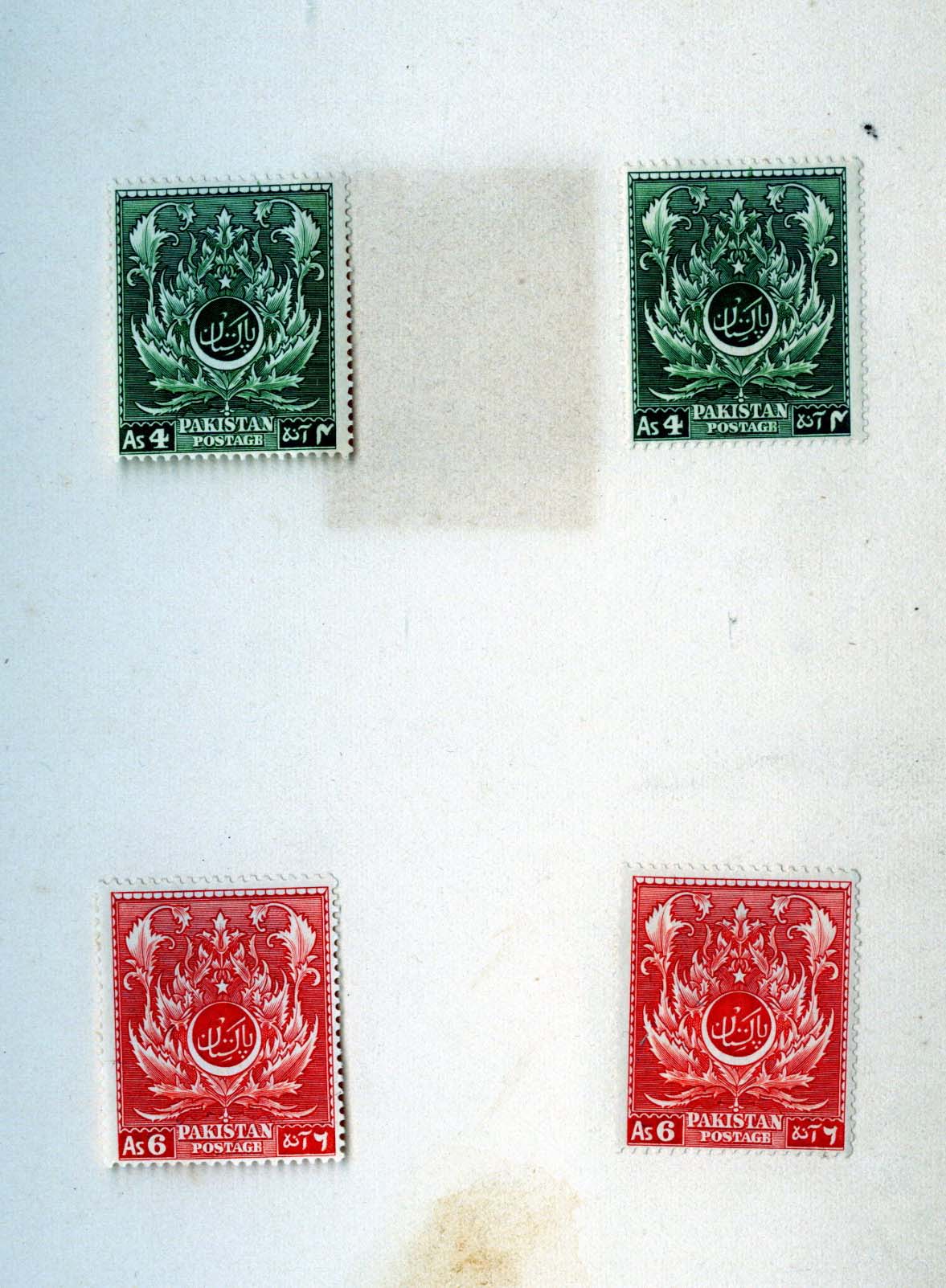
In 1946 before the birth of Pakistan, the fame of M.A. Rahman Chughtai had spread in the Muslim world and leaders. When Quaid e Azam came to Lahore, the Doctor who had invited the father of the nation, at a reception introduced the artist to Quaid e Azam himself. Liaquat Ali Khan was well familiar with him and was responsible for initiating a financial grant to the artist after that time. Designs were requested from the artist, including design of the Pakistani flag. That for later. Here we talk of the Postal stamps requested designs from the artist. A number of designs were made and given to the Government of Pakistan. Only one was used in the first anniversary on 15th August 1948. It became the first actual Postal Stamp of Pakistan and was judged as one of the four prettiest stamps of the world. With it came the first printed envelope as well as the first printed Post Card of the Governmental Post Office.
Pamphlet First Postal Stamp Design
First Postal Stamp
First Envelope Design
First Post Card Design
Designs MARC
Modern design MARC
Postal Designs MARC
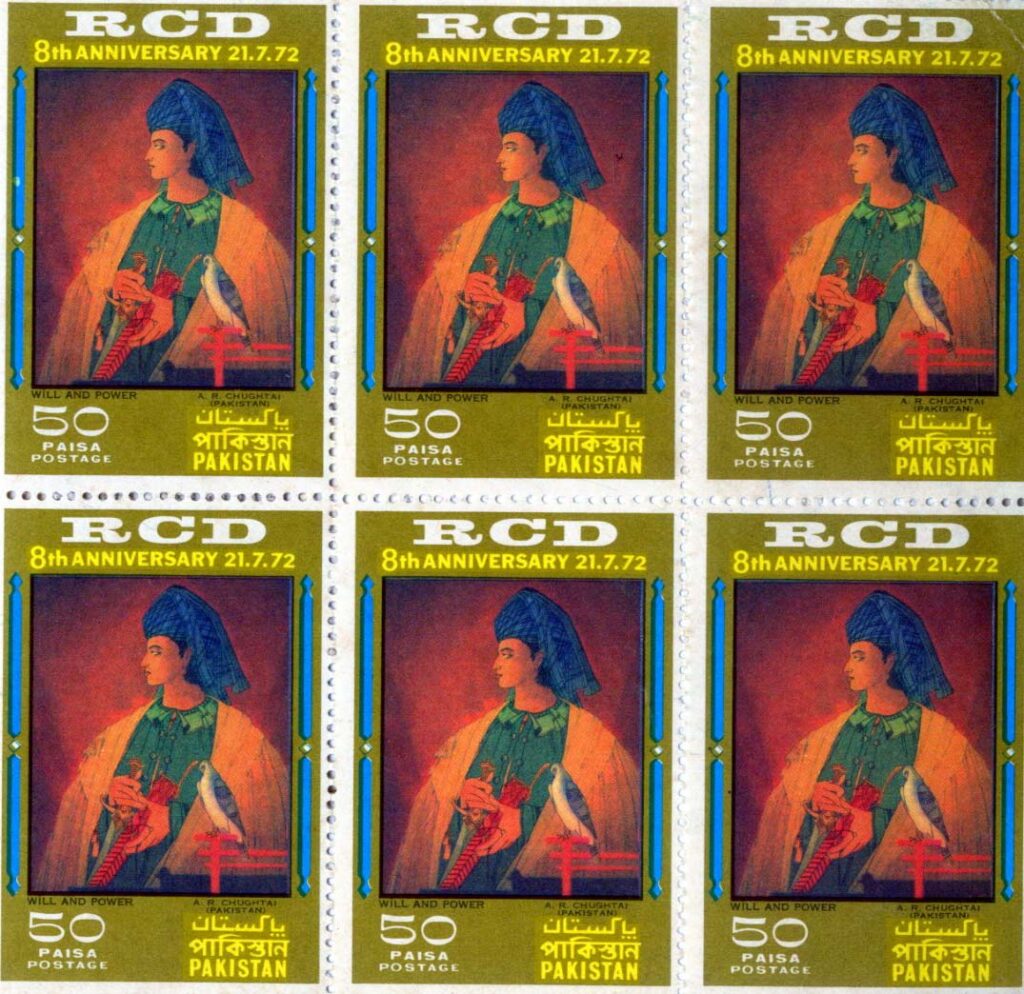
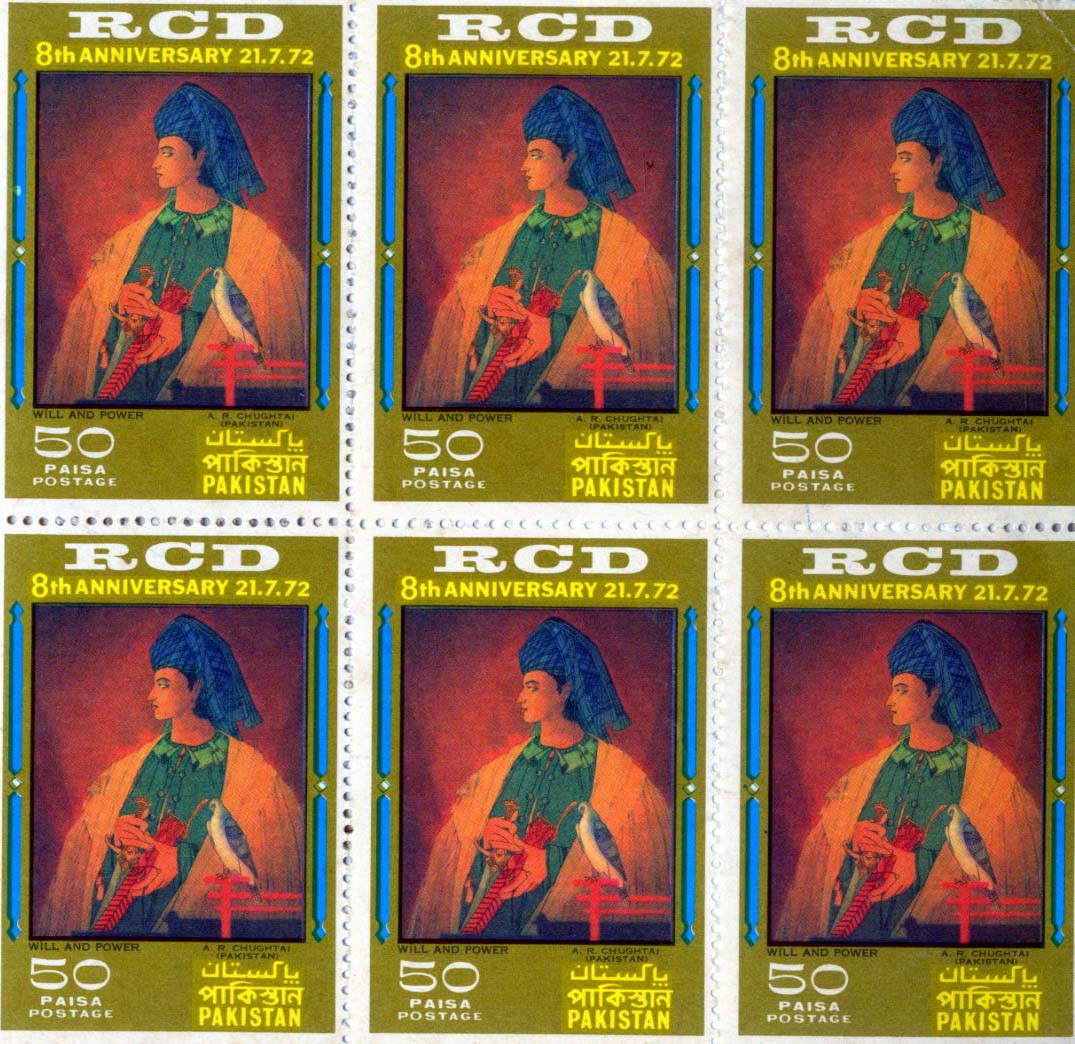
RCD Design 1972
Design Stamps MARC
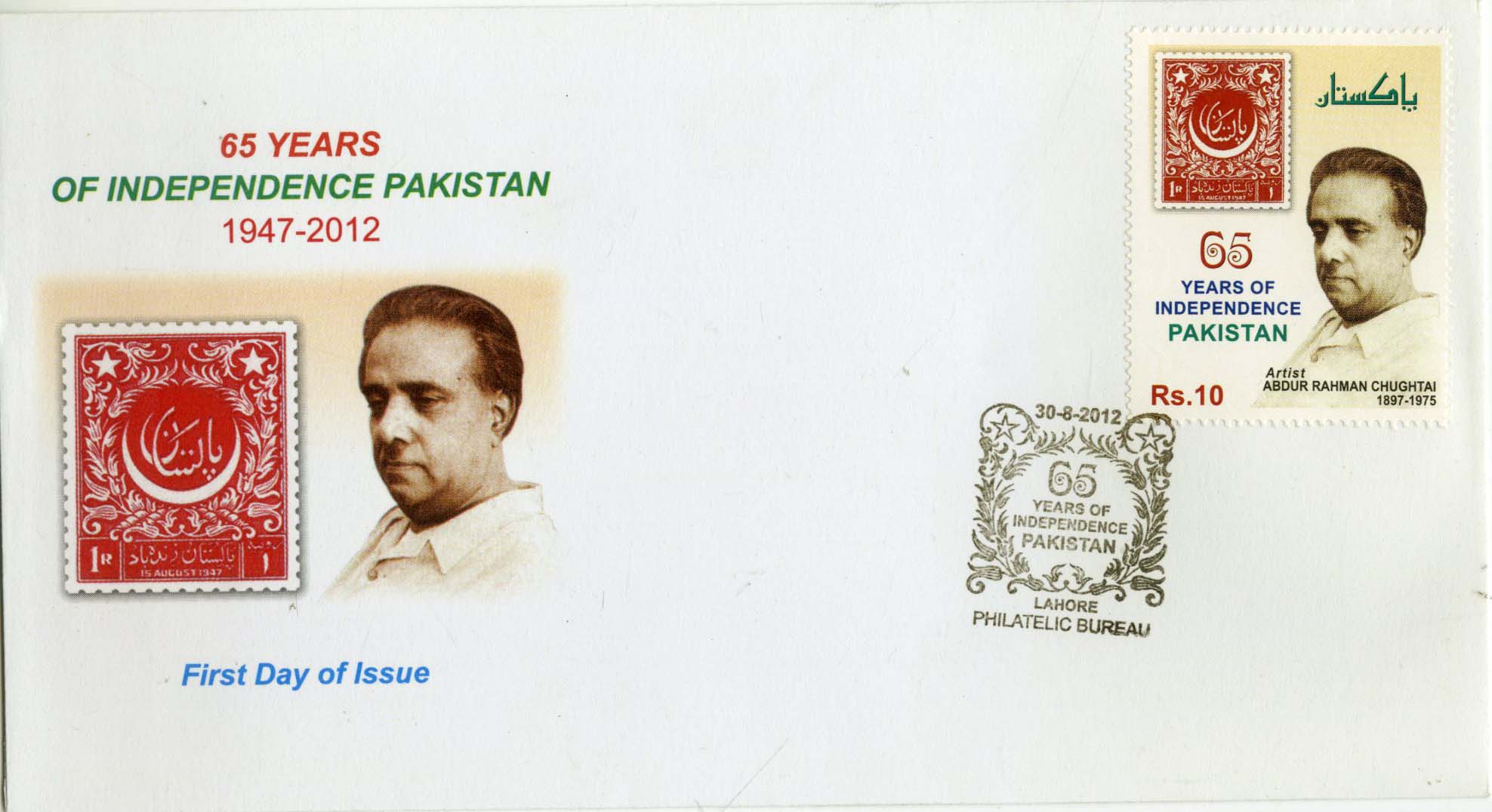
First Day Cover MARC 2012
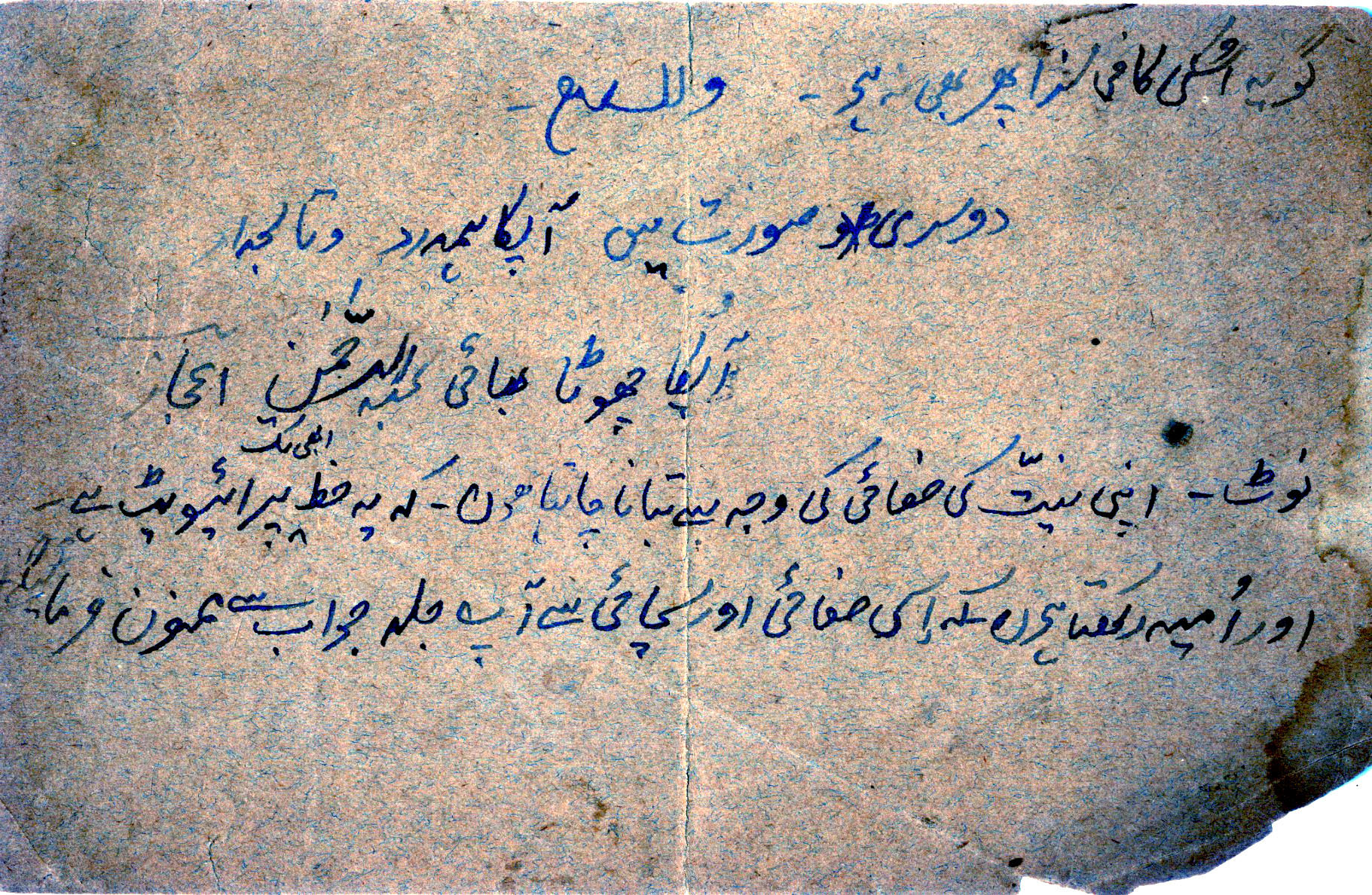
Later on various other stamps were designed and printed. Many of them could not be printed for the Government had no money to print same. Some of them were auctioned in London by the Stamp Printer Gibbons? and are now lying in Dubai with a collector. He was asking Twenty thousand pounds for one of them, and not in our position to buy them. In any case we too have some unused designs with us. Wait for that in our next blog. We print a small page where Chughtai Sahib used to start the concept of designs and used to perfect the drawing, with ink later.
M.A. Rahman Chughtai was a designer of many things. His passion surrounded whatever he touched and witnessed in life. We will try to record some of his designs on various levels. Till then enjoy the printed stamps!
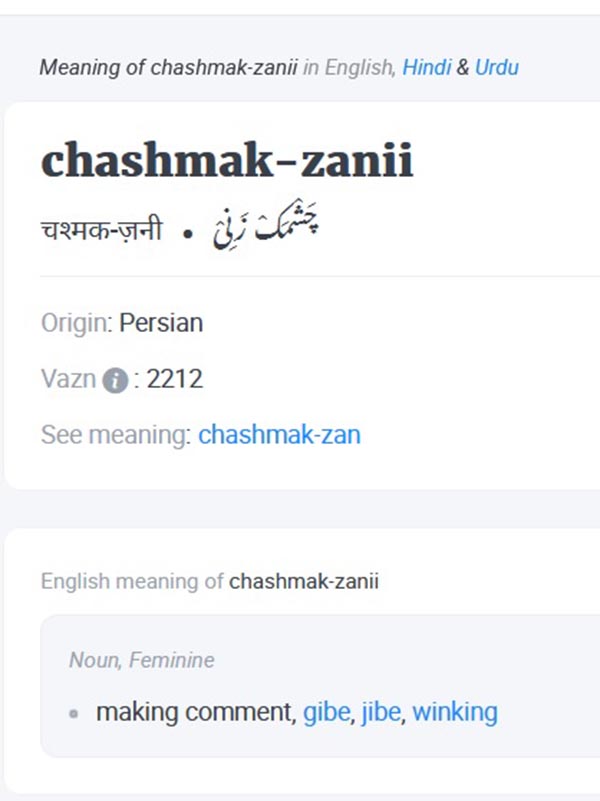
CONVERSION OF BROTHERHOOD INTO ANIMOSITY OF TWO ARTISTS; A. R. EJAZ COMPARES CHUGHTAI TO A SWEEPRESS MISTAKING LIGHT, IN THE CLOUDS TO BE A WINKING JIBE FROM GOD AND JUBILATING.
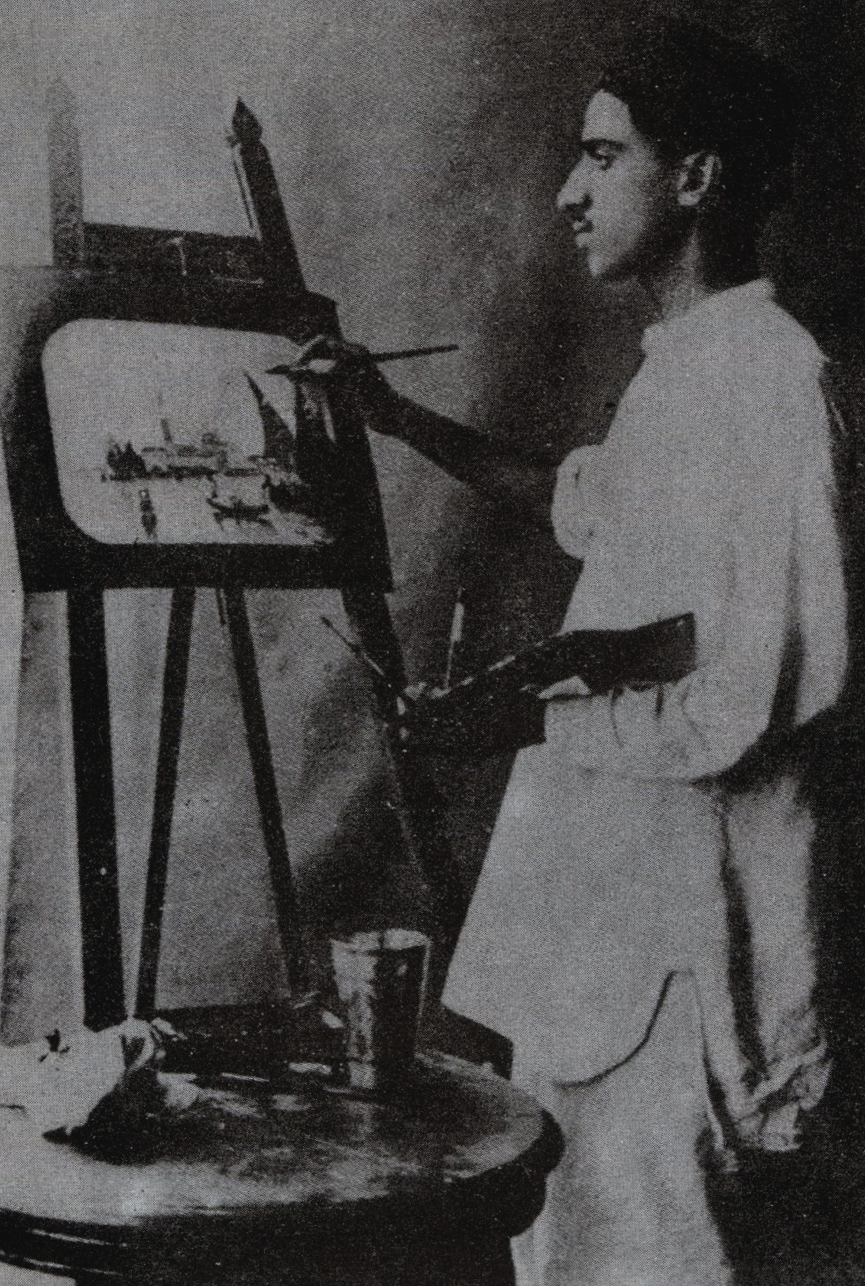
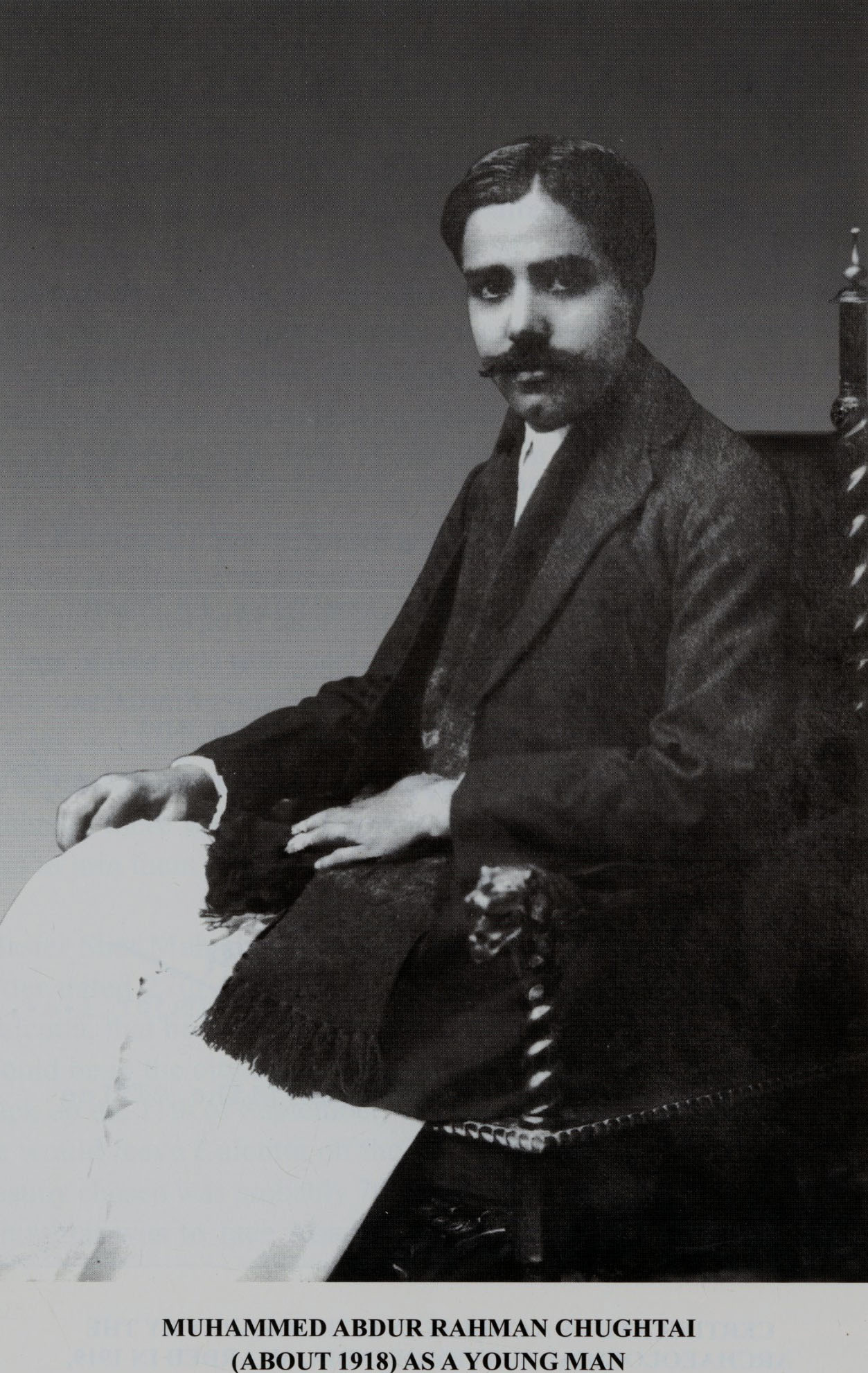
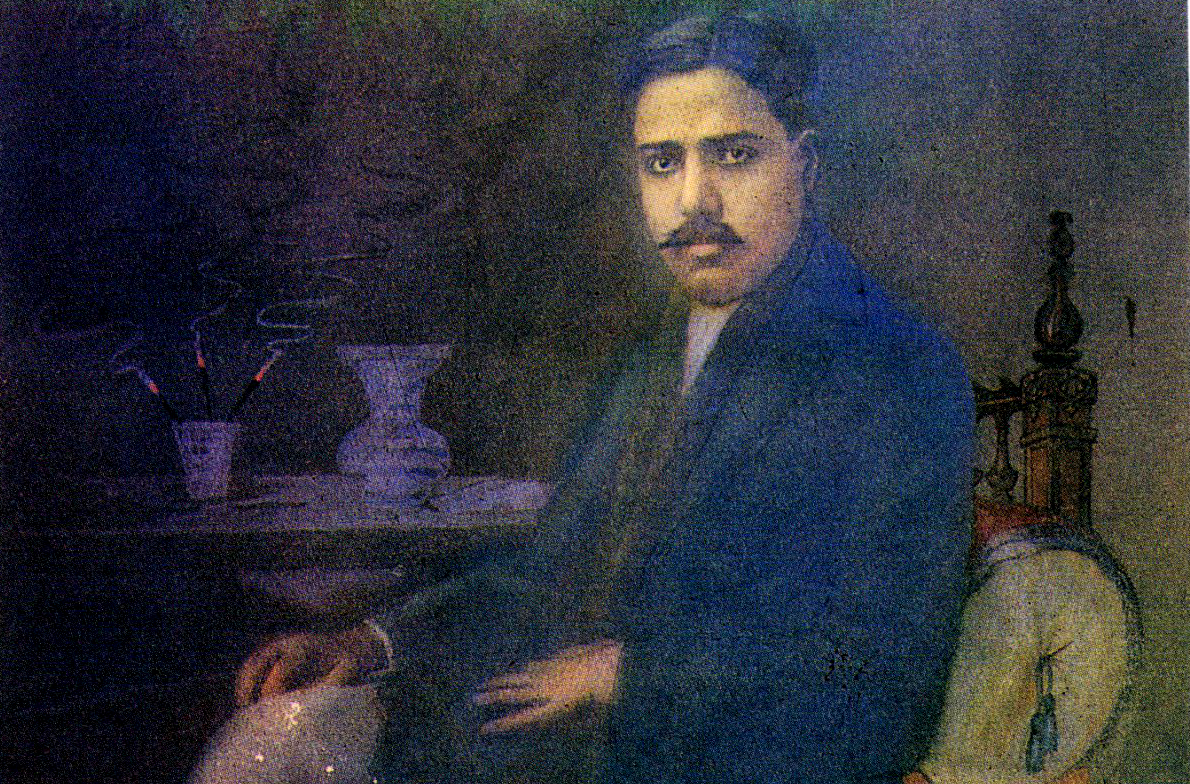
Once upon a time friendship occurred between the Baghbanpura family of Abdur Rahman Ejaz and brother Mian Inayatullah. It included regular meetings, eat overs, fishing, hunting, kite flying and what not? Chughtai welcomed them to his home in Chabuk Sawaran for partying and they used to partake food together. They also used to paint together at Chughtai’s house. Chughtai lent them his materials as well as sketches required at moments. Everything was well in that relation. Letters prove that Abdur Rahman Ejaz styled himself as the brother of Abdur Rahman Chughtai. In that frenzy Abdur Rahman Ejaz even made an oil portrait of Chughtai sahib, which is still preserved today. It can be easily compared to a photograph taken at that time about the age of twenty years. So, what went wrong?
Young Abdur Rahman Ejaz
Young Abdur Rahman Chughtai
Young M A Rahman Chughtai by A R Ejaz
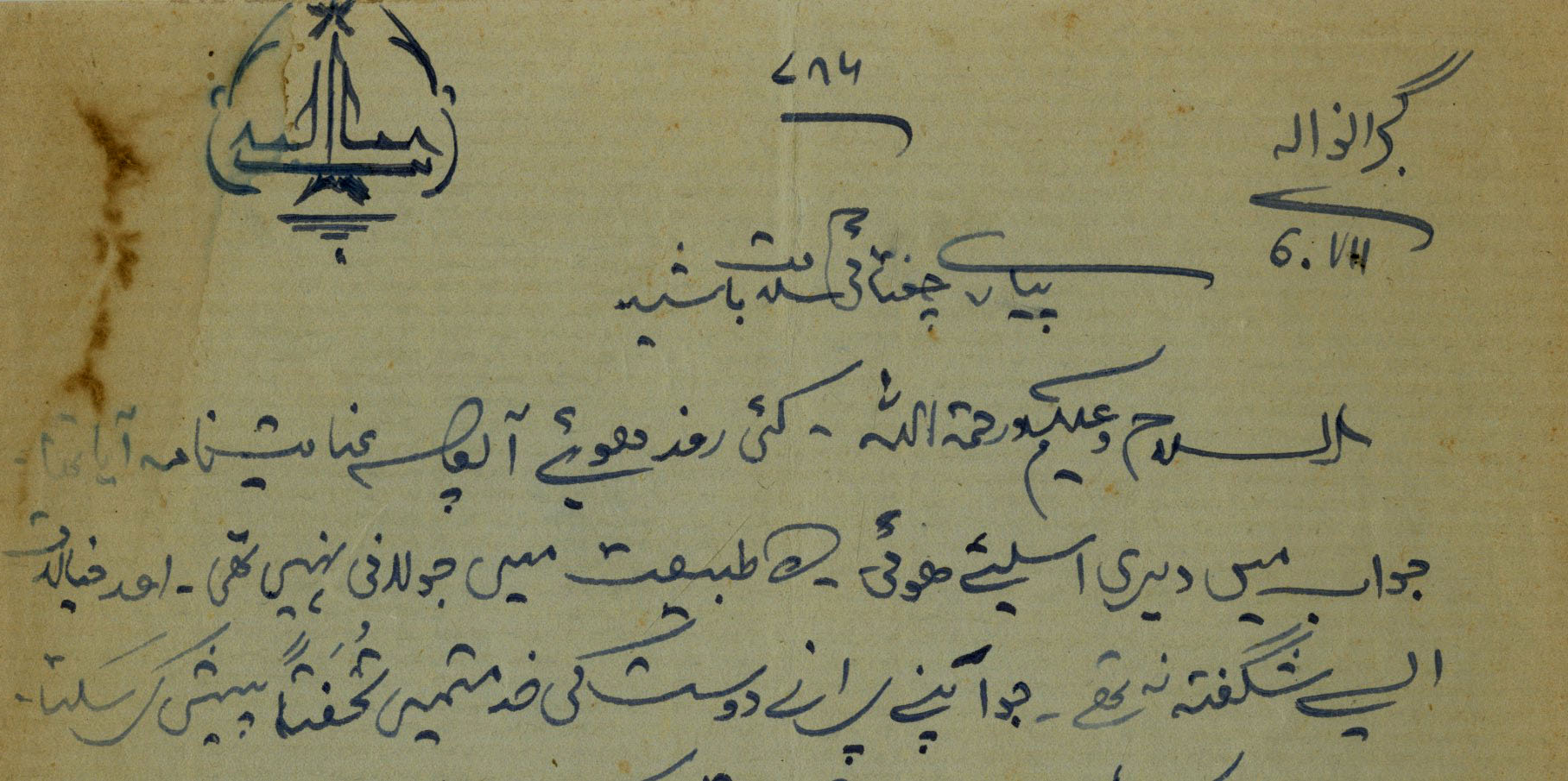
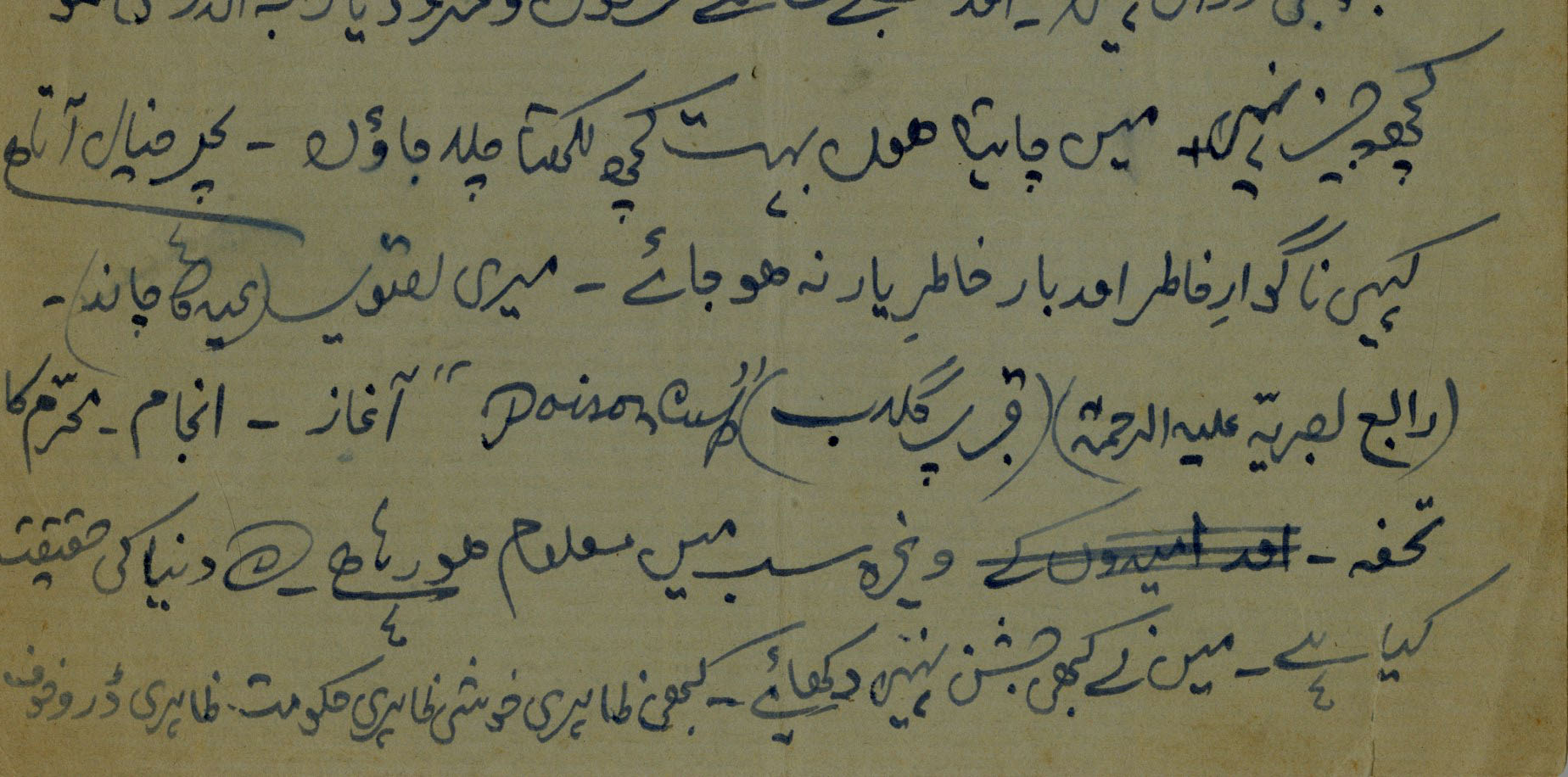
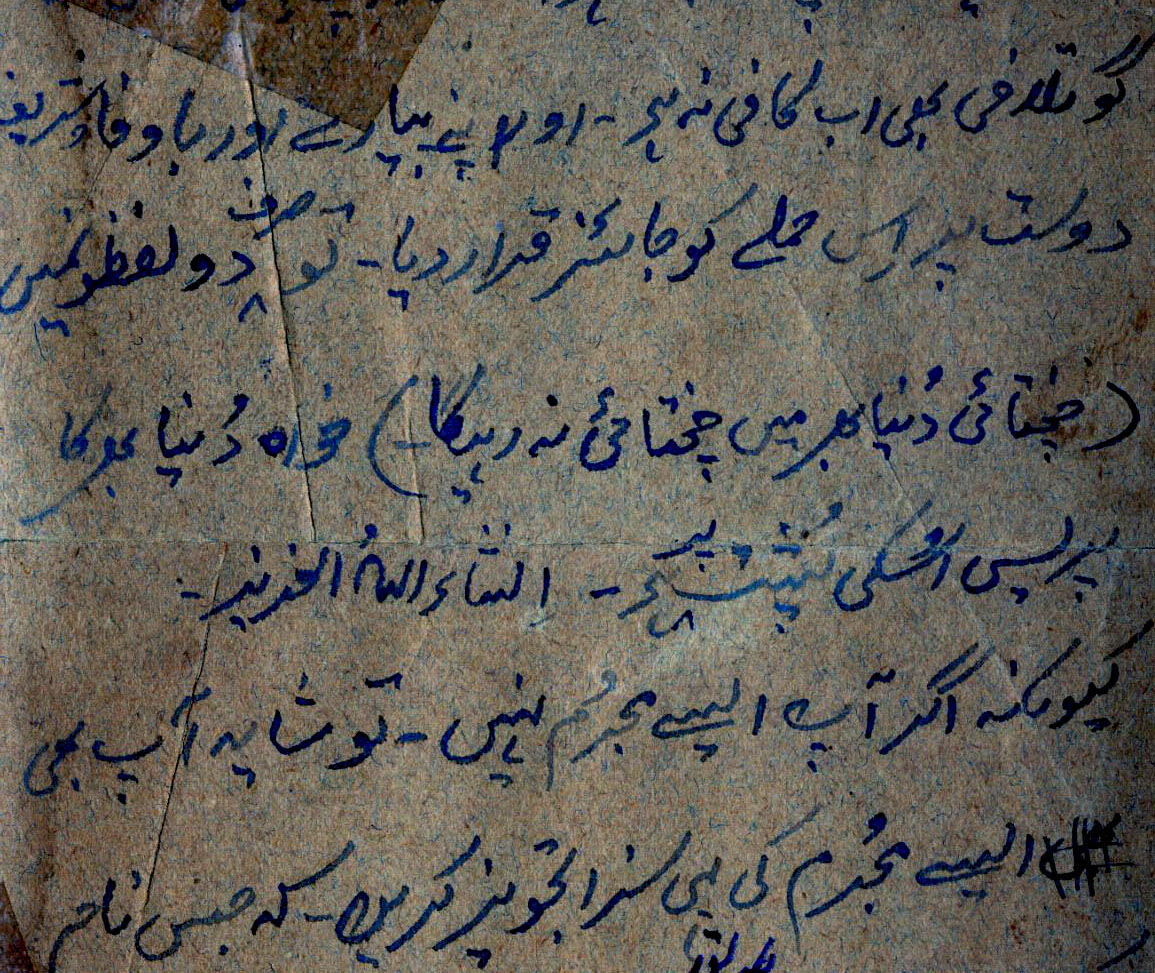
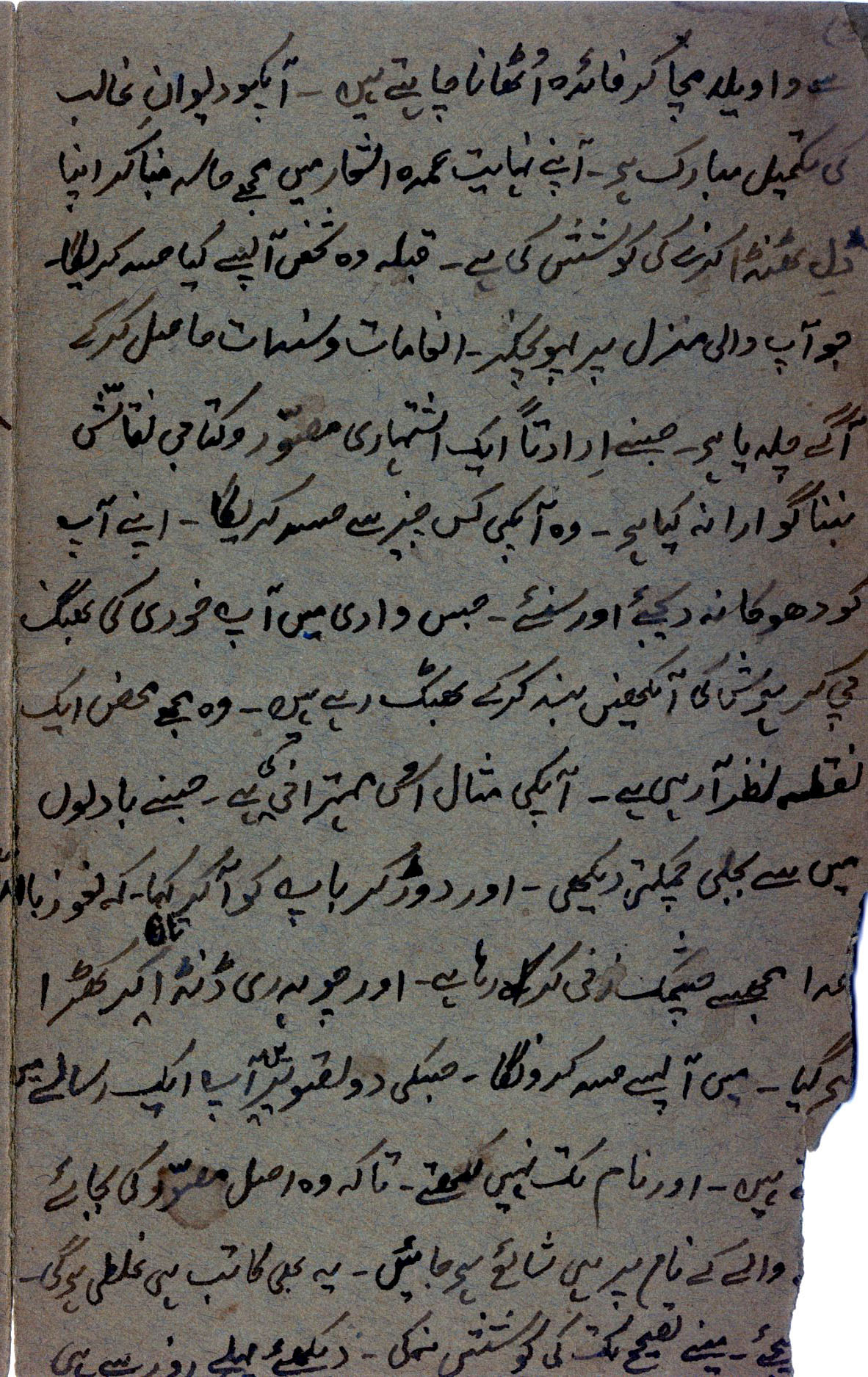
M.A. Rahman Chughtai sketched a work namely ‘POISON CUP’ and finished it. Inayatullah requested to borrow it. He not only borrowed it, he wrote his name on it, and got it published in an English magazine, probably ‘Studio”. He had done this before with other workls and Chughtai had not done anything about it. But this time Chughtai did not like the idea of his work being published abroad in a different name, and being the only one of Mian Inayatullah, displayed at the Wembley Exhibition. Although two of his works were selected but, in the end, only one was exhibited. The children out of ignorance proclaimed that ten works of Inayatullah were selected and only two of Chughtai Sahib. I showed them documented evidence of the catalogue itself which can even be checked today on internet. Chughtai Sahib made a complaint to Principal Lionel Heath. Samarendranath Gupta was asked by Lionel Heath to research on the subject, and he being full of venom for Chughtai, gave his verdict in favour of Inayatullah (the verdict is published by us). The funny part is that in a letter to Chughtai Sahib, Inayatullah himself admits that ‘Poison Cup’ start to finish is work of Chughtai sahib (from aghaz to anjam mohtram ka tufa). But this exposure to authorities infuriated Abdur Rahman Ejaz and he threatened Chughtai with all efforts to finish him forever, and (to spite Chughtai sahib) he actually changed his name first to A. R. Sandaavi and then to A R Ejaz, as he himself says in his letter. By exposing my brother you have incurred my animosity, he affirms.
Younger brother Abdur Rahman Ejaz
Poison Cup
Inayatullahs love letter
Poison Cup Agaz Anjam Mohataram tufha
Changing names to A R Ejaz
A R EJaz threat Chughtai nahi rahe ga
Comparing Chughtai to Sweepress
Sweepress mistakes light for Gods wink
Fame
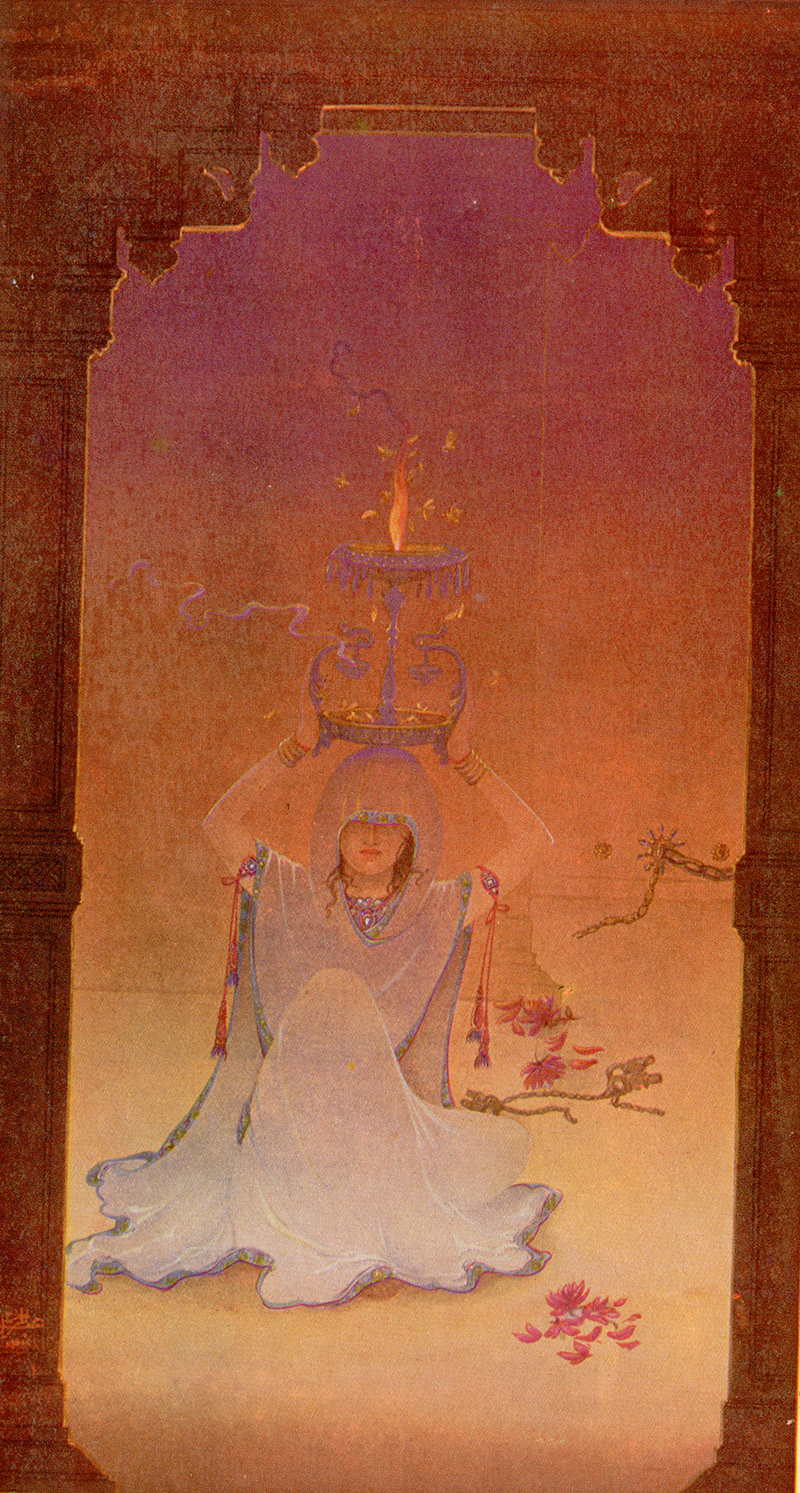
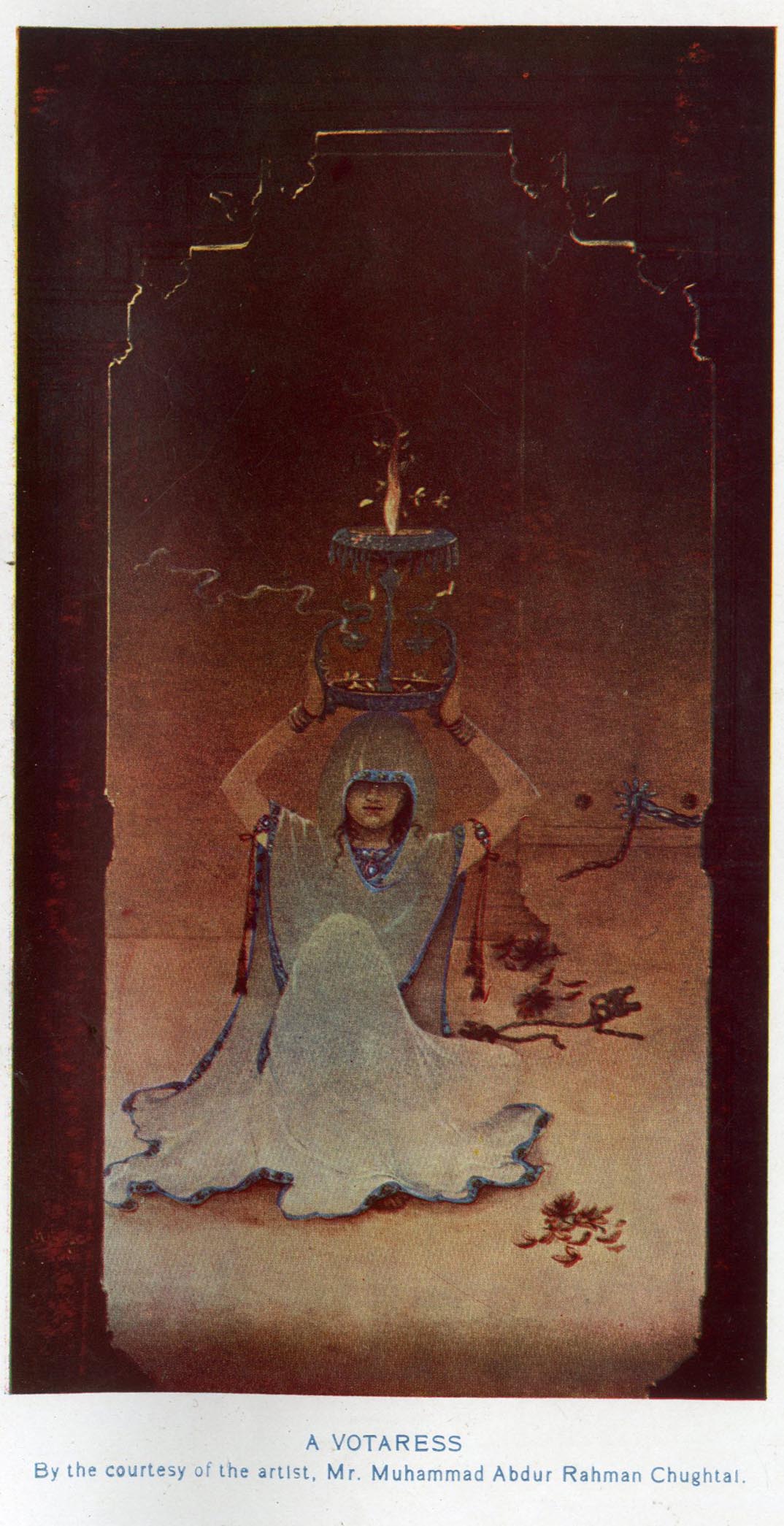
The Votaress
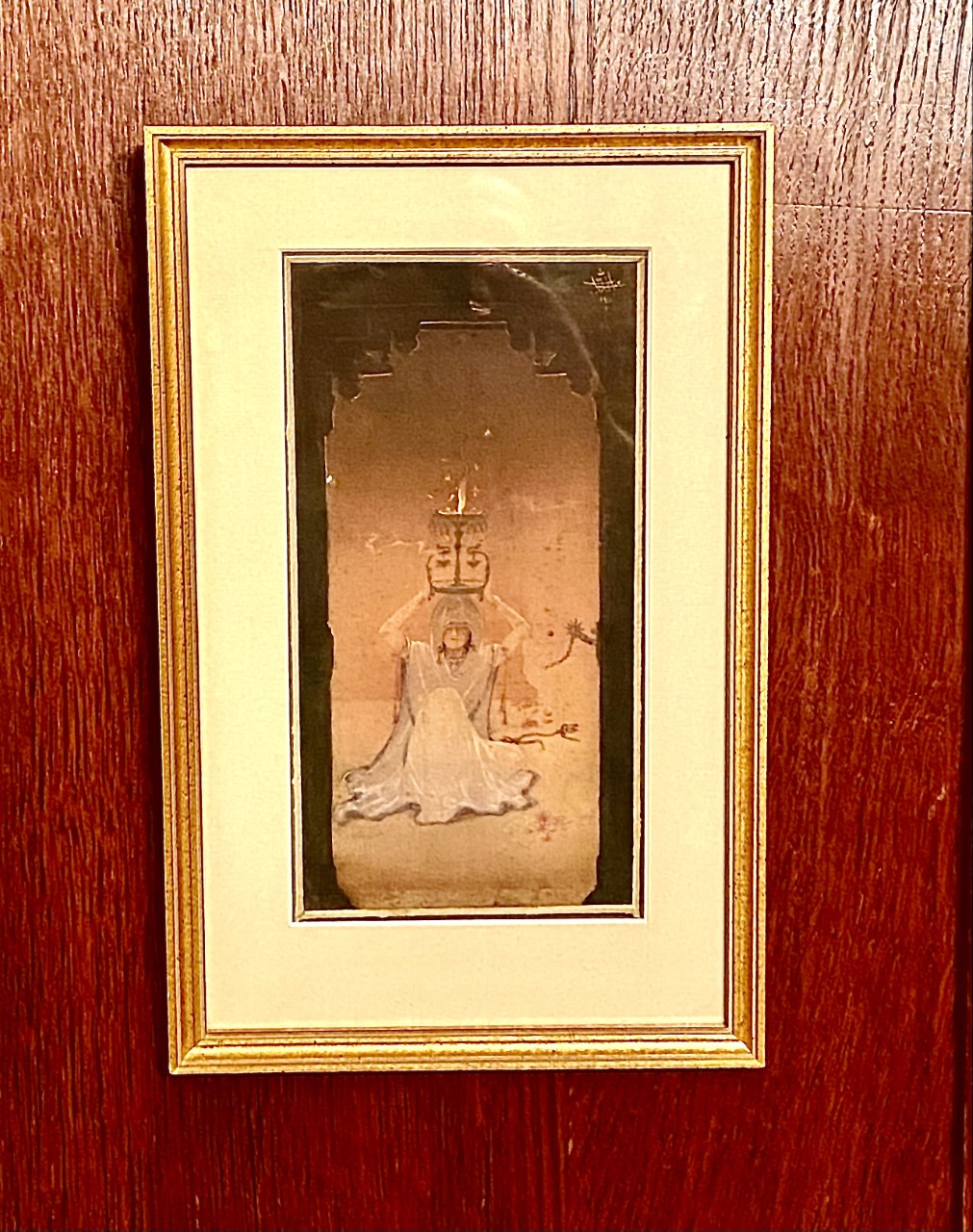
Votaress with Inayatullahs signature
In private collection
This is not merely enough to qualify for a full article but a booklet in itself. We have tried to shorten it so that it can be understood that the brotherhood turned into animosity by exposure of Inayatullah to a fraudulent activity. We print two art works, and listed in two places. At one place it has a signature of Abdur Rahman Chughtai and the same work at another place has the signature of Mian Inayatullah. For those so-called analysts and critics who try to shame our research, the shame goes to them for not being able to see the true picture. The venom for Chughtai is skin deep for people who are jealous of his iconic stature. However truth remains and shines in the end. Less said the better.
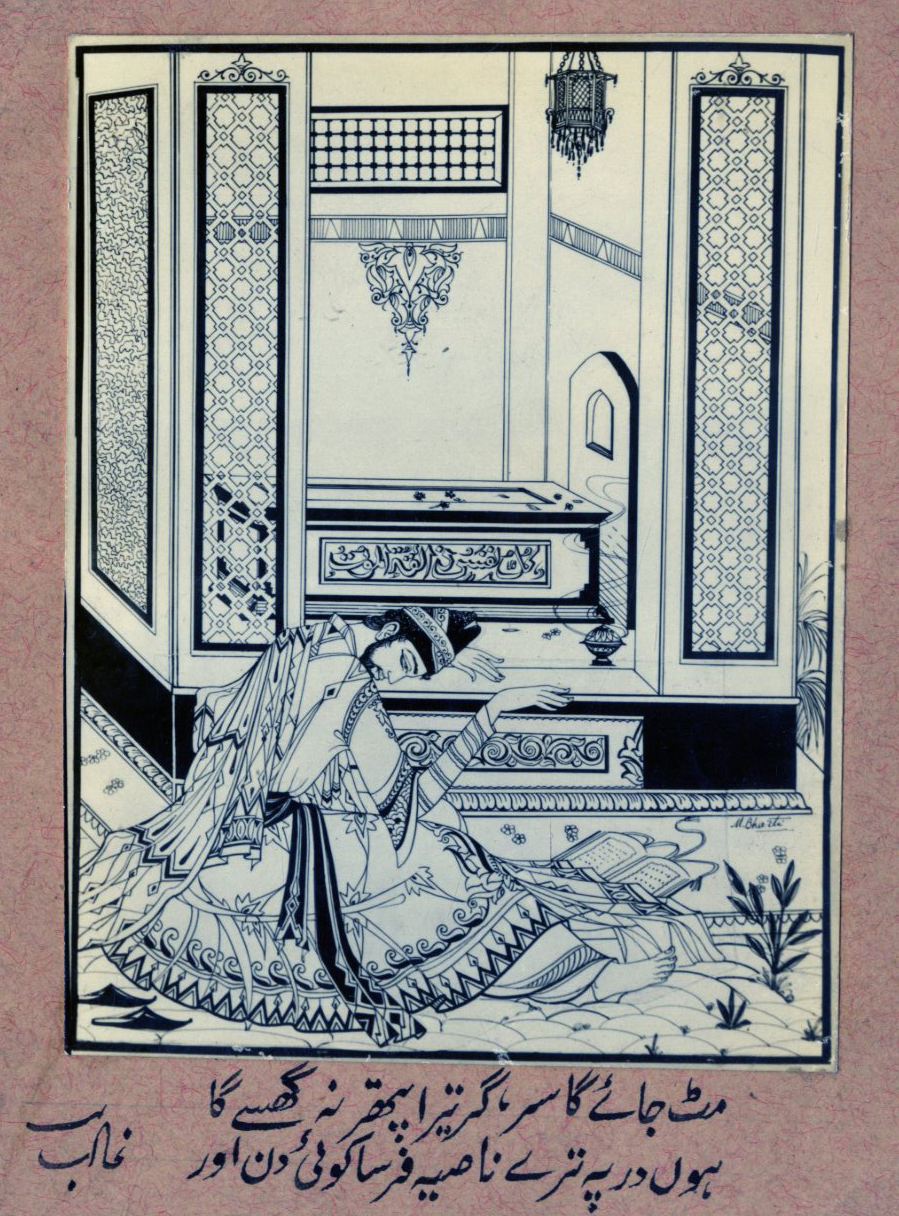
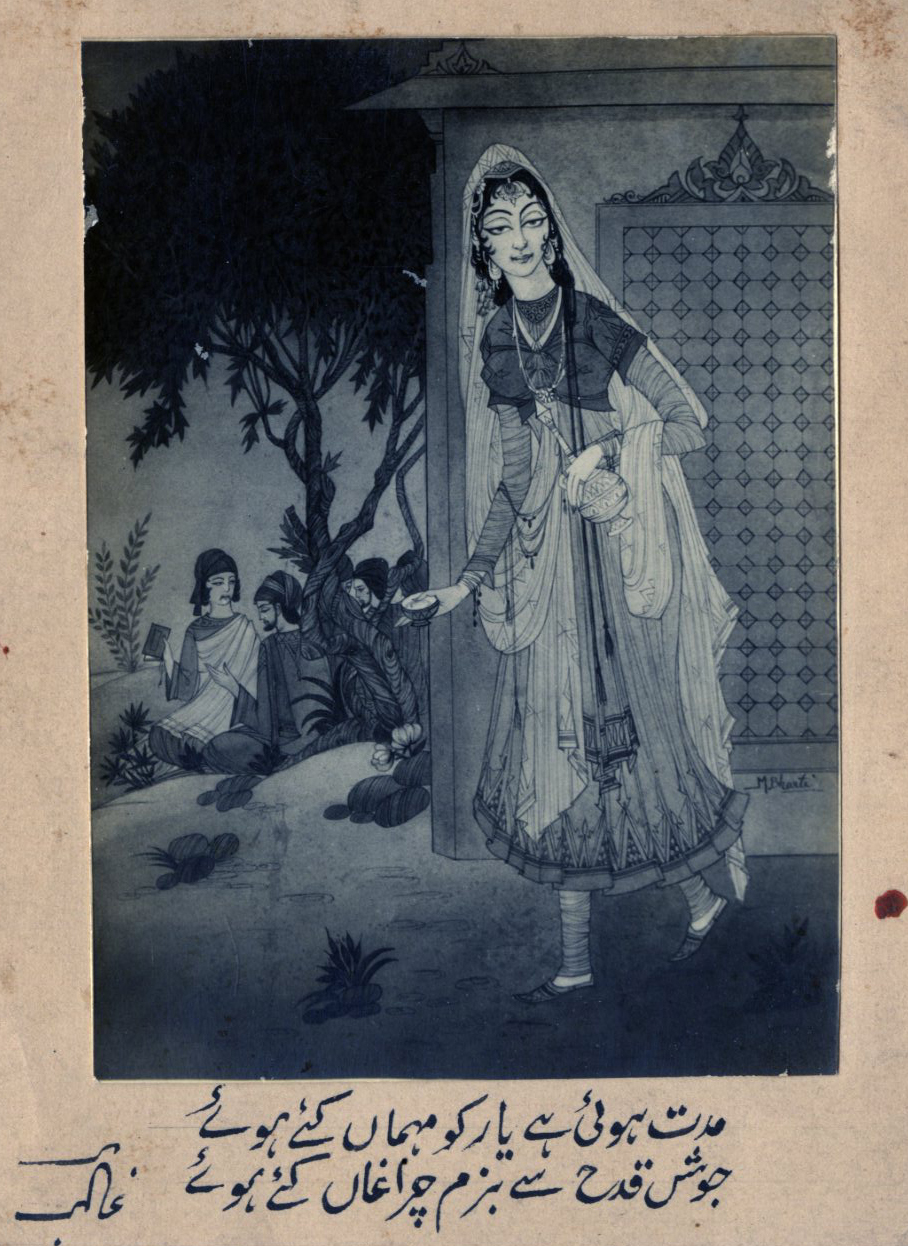
NOT WELL KNOWN THE FACT THAT MANY FOLLOWED CHUGHTAI ART; THE YOUNG MUHAMMED IBRAHEEM FROM BANARAS WITH GHALIB.
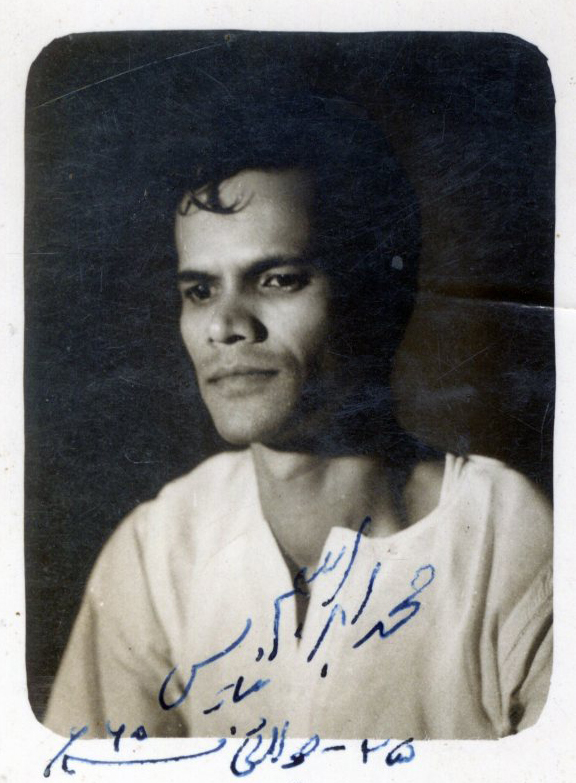
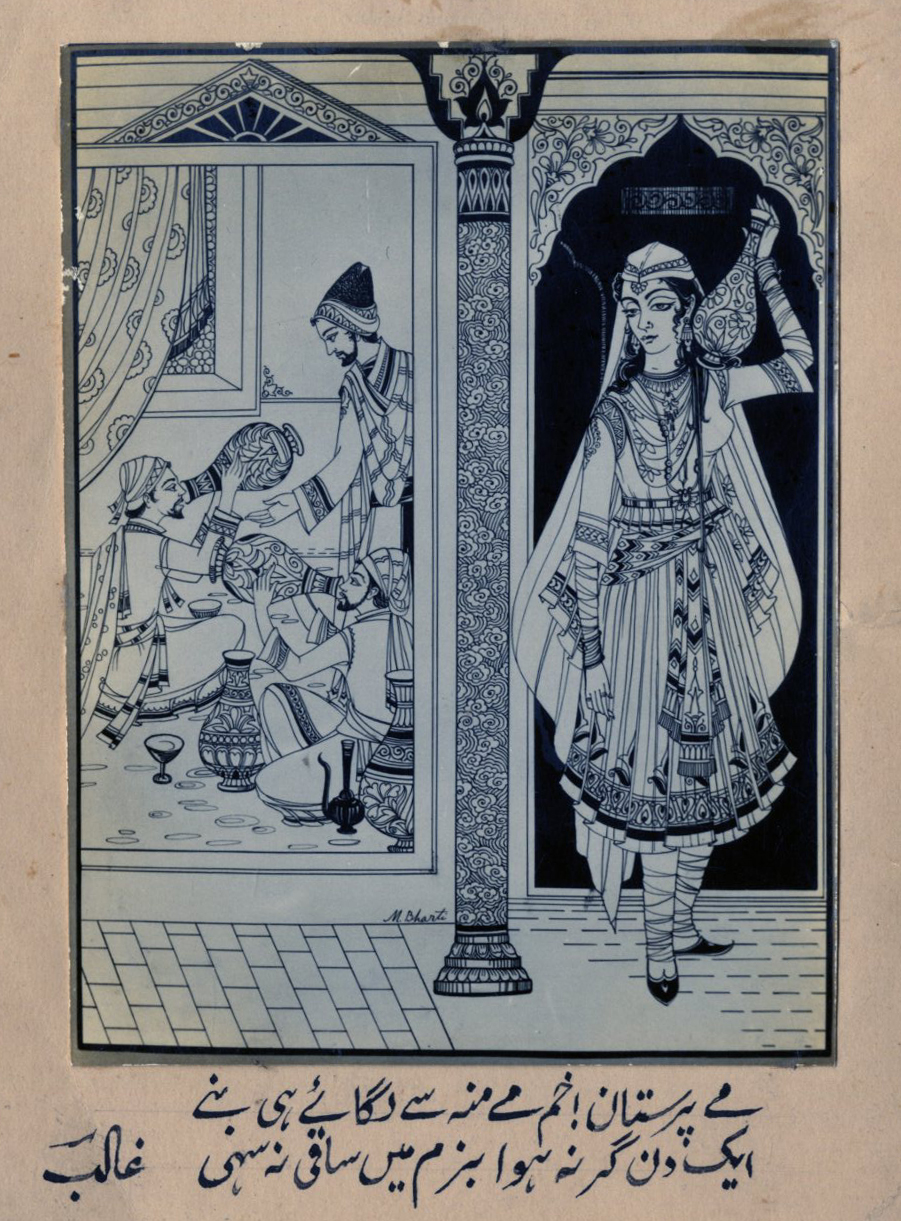
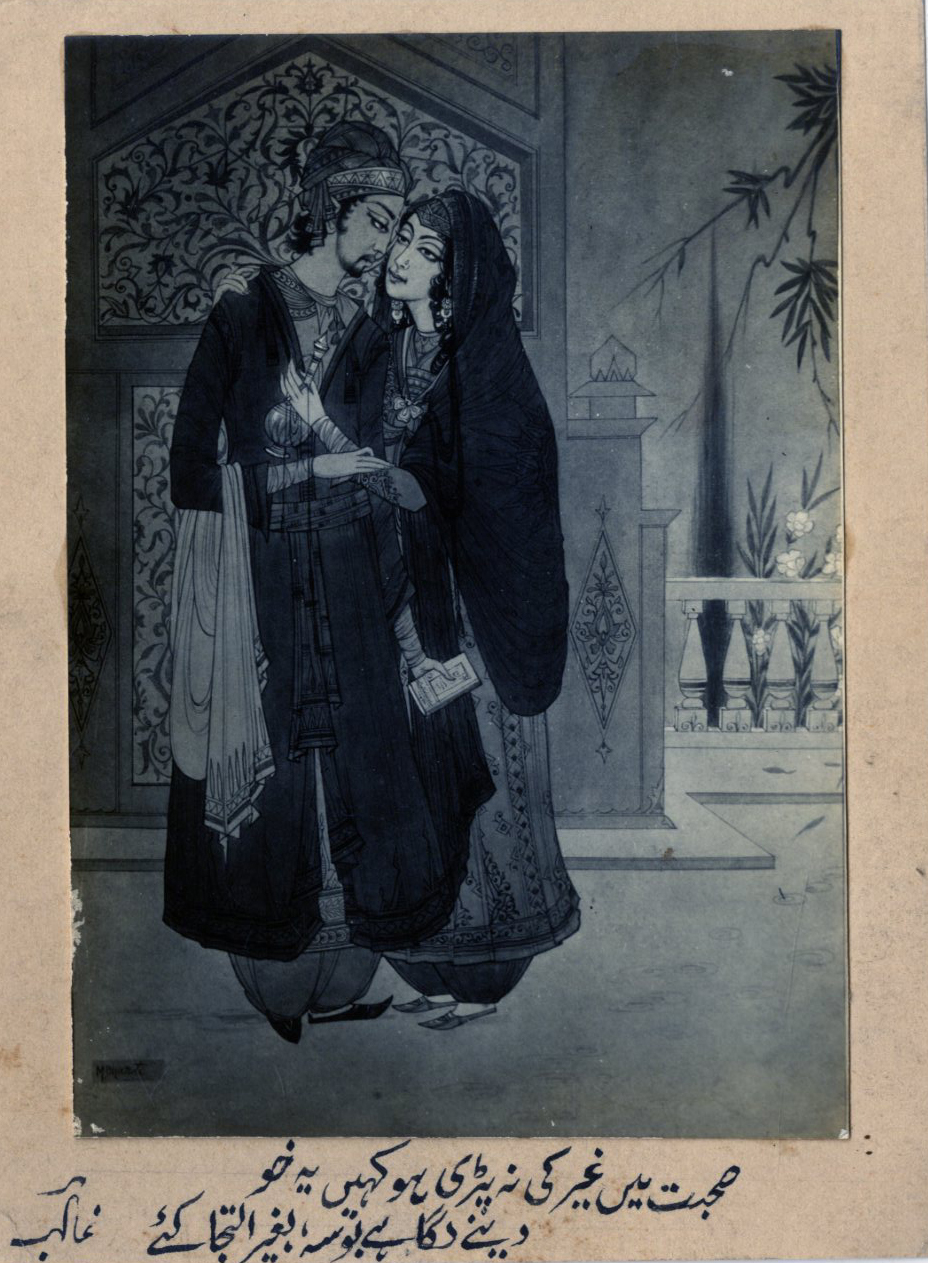
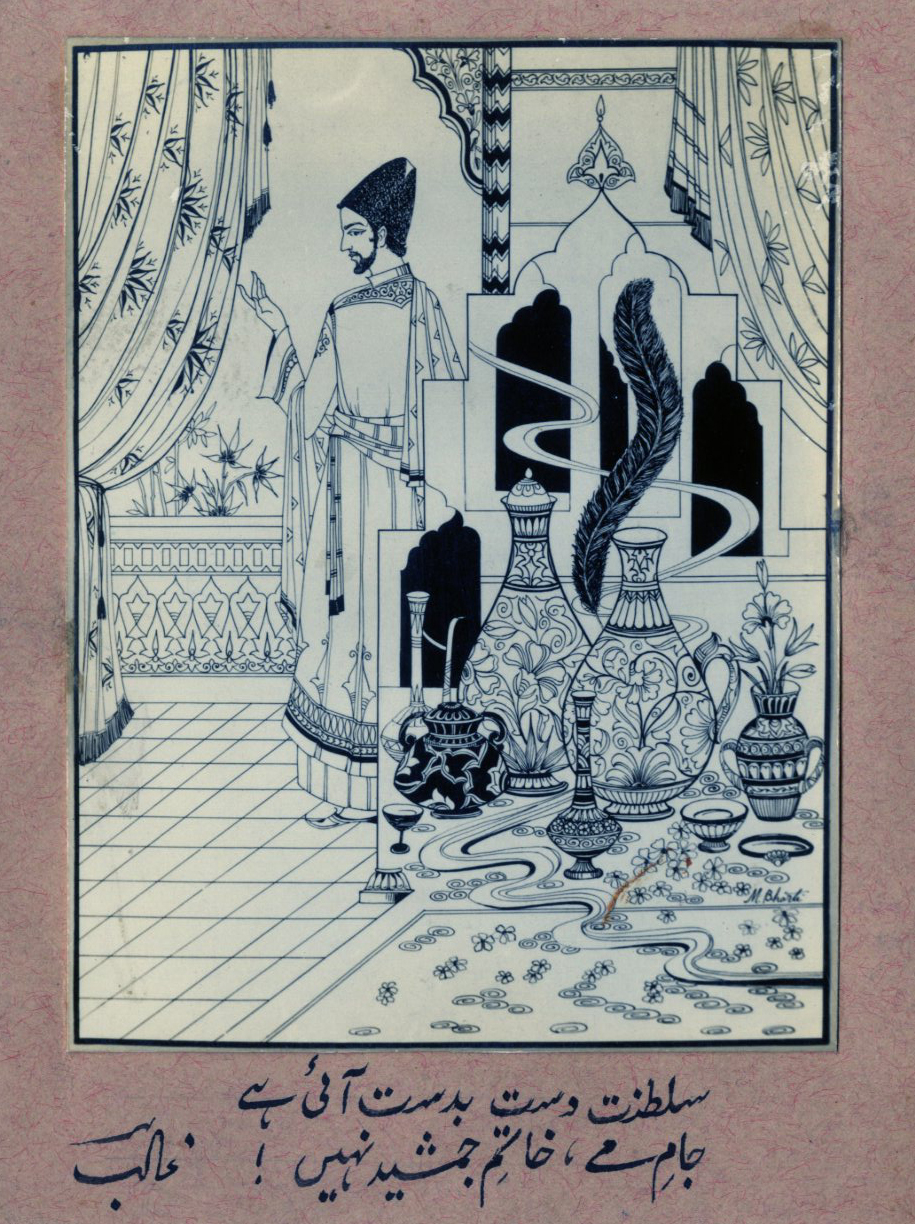
As the fame of M.A. Rahman Chughtai spread over the region, there were people who followed his art in style as well as making. There is a long list of them, and hardly people know about same. Often you hear ignorant say that he left no pupils, but actually he did. He even tried to teach students his style and technique, but the list is numerous and we will catch it from time to time. Many will be surprised to know how many followed his art and were enamoured by his style.
Ibraheem Musawar Banarasi
Mirza Ghalib by Ibraheem
Ibraheem 1
Ibraheem 2
Ibraheem 3
Ibraheem 4
Ibraheem 5
Ibraheem 6
Ibraheem 7
We will try not to list only names but find examples of their art. But it is difficult as they expired long ago and difficult to search out specimens of their work. Here is one example in our archives. Muhammed Ibraheem from Banaras and we think these images were sent to him around 1960. Chughtai Sahib must have responded to him in letter and spirit, for he never discouraged people and he had a big heart for all artists and their art doings. But he used to ask them to start from basics and not all understood the basics of Chughtai. Sketch eyes, lips, even simple objects. Some seniors used to get infuriated by this response, but Chughtai Sahib knew well what were his intentions. The students could not understand. Anyway enjoy one follower of Chughtai Sahib. Wonder if he is still alive and working! Maybe even now in Pakistan. He follows detailed lines but loses in expression. Many works owe direct inspiration from Chughtai Art.
FROM PERSIA TO KABUL TO LAHORE THE EVOLUTION OF MUGHAL PAINTING; FASCINATING FIRST MUGHAL WORK OF 1555 DONE BY MASTERS UNKNOWN.
M.A. Rahman Chughtai was not merely an artist and etcher. He was also a collector and scholar, and had deep insight on World painting, Islamic painting, as well as painting in our region. The exceptional art works of Central Asia done in Ajanta and Ellora are well known, but then there is silence of nearly 800 years. Certainly, some works were done under the Sultanates, and scholars like Dr Abdullah Chaghatai and Dr Richard Ettinghausen have written about same. But the real swing started with Emperor Humayoun convincing a group of exceptional Paint Masters to come back with him to India. And most of them did. The main two were Mir Sayyed Ali and Khawaja Abdus Samad. And the very initial miniatures were probably made in Kabul and then moved on to the city of Lahore. Lahore became the center of Cultural revolution. In real terms Emperor Akbar set the school of art in motion (he himself got training in same), and about 55 Masters were put on the task of Dastan Amir Hamza, Not only that Akbar send batches of Indian students to Kabul and other places for training in the arts, and created many Hindu Artists of those times. Lahore even today has lanes named after major artists of those times.
House of Taimur by Chughtai
Laurence Binyon opinion
House of Taimur torn
House of Taimur
Young painter Akbar student Abdus Samad
Akbar presents work Humayoun
Akbar
Humayoun-and-Akbar
Young-Akbar
Abdus Samad in Persia
Akbar and Humayoun
M A Rahman Chughtai scholar
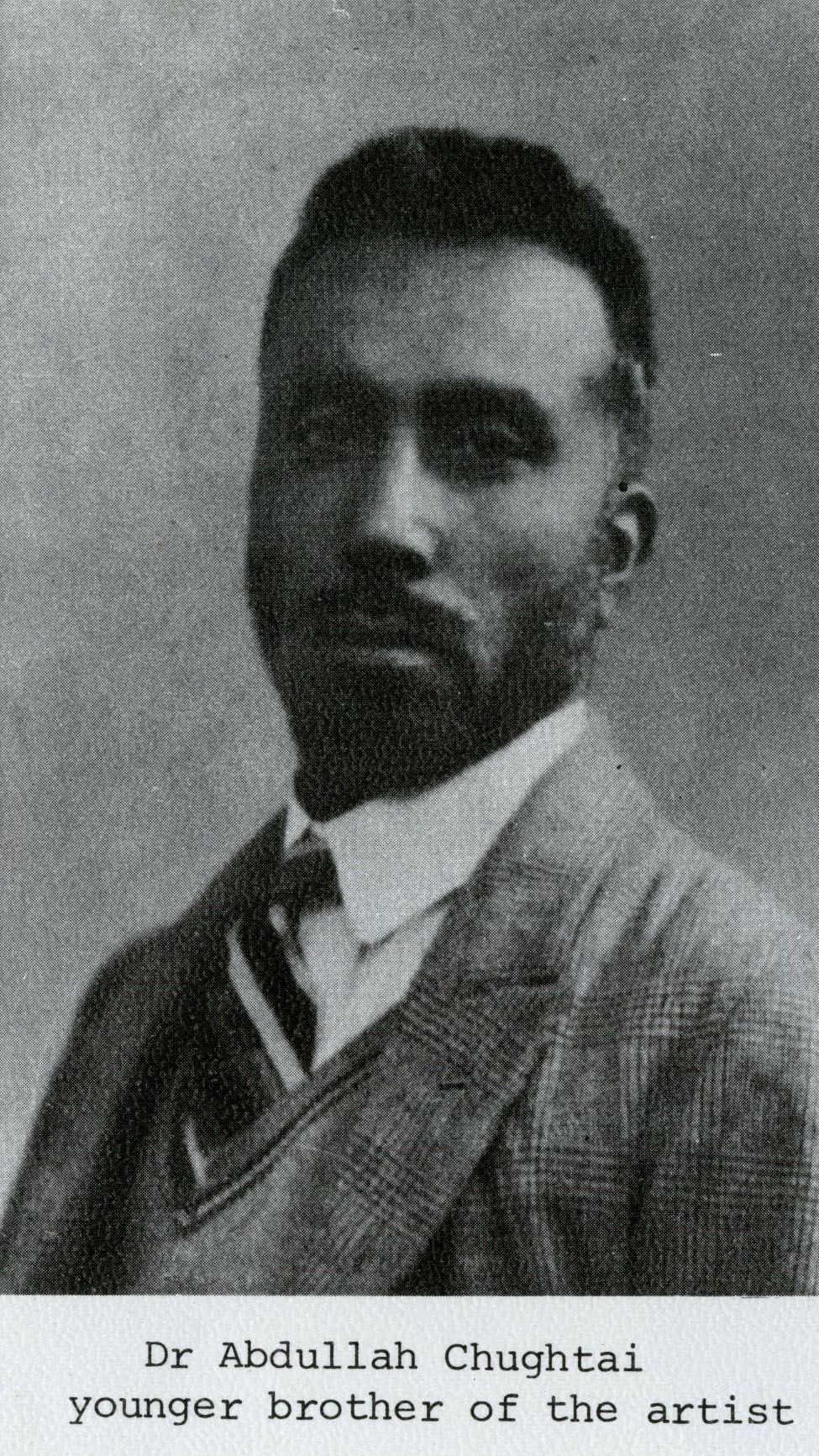
Dr Abdullah Chaghatai
Painted by Farrukh Baig
Dr Richard Ettinghausen
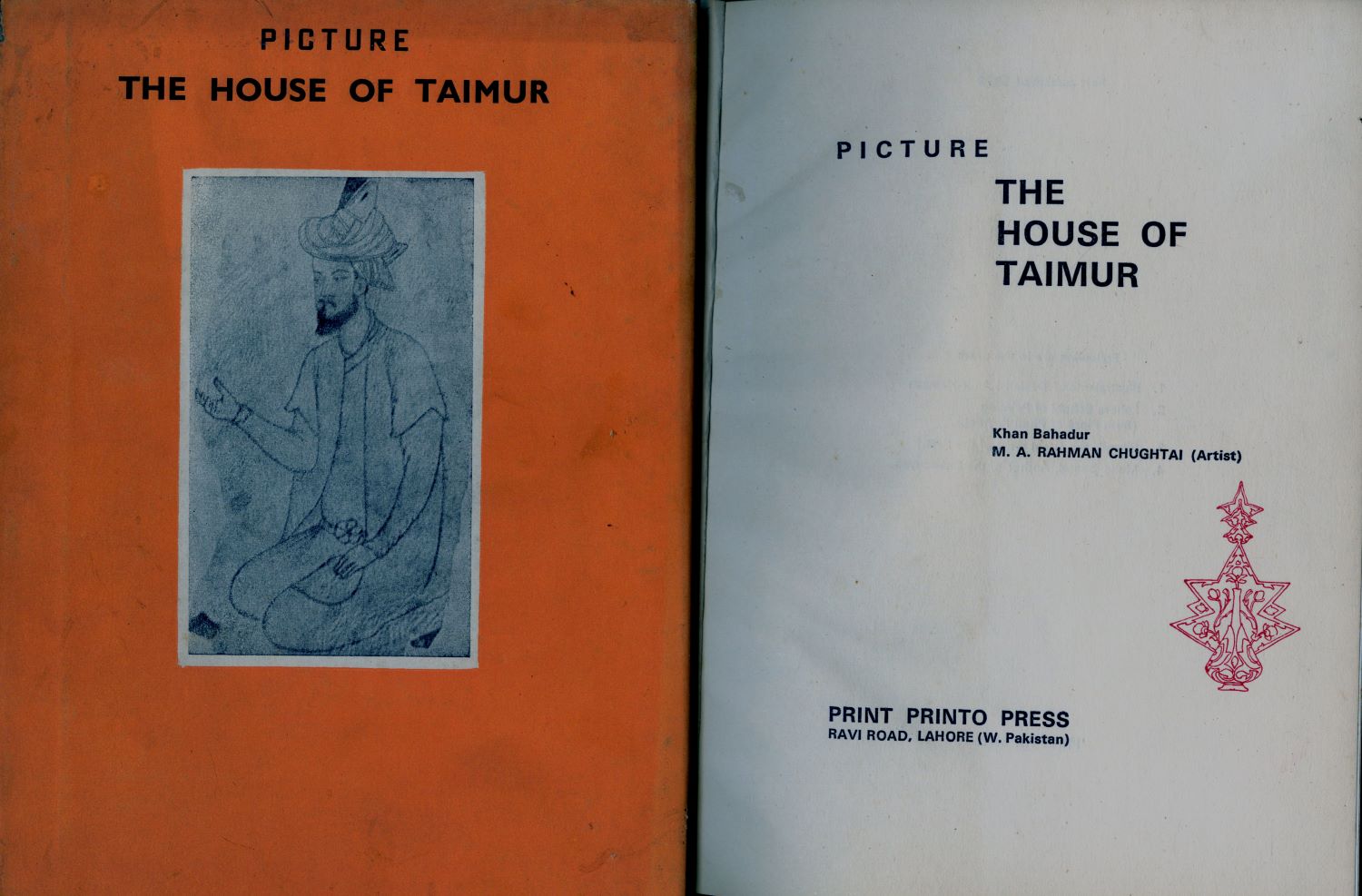
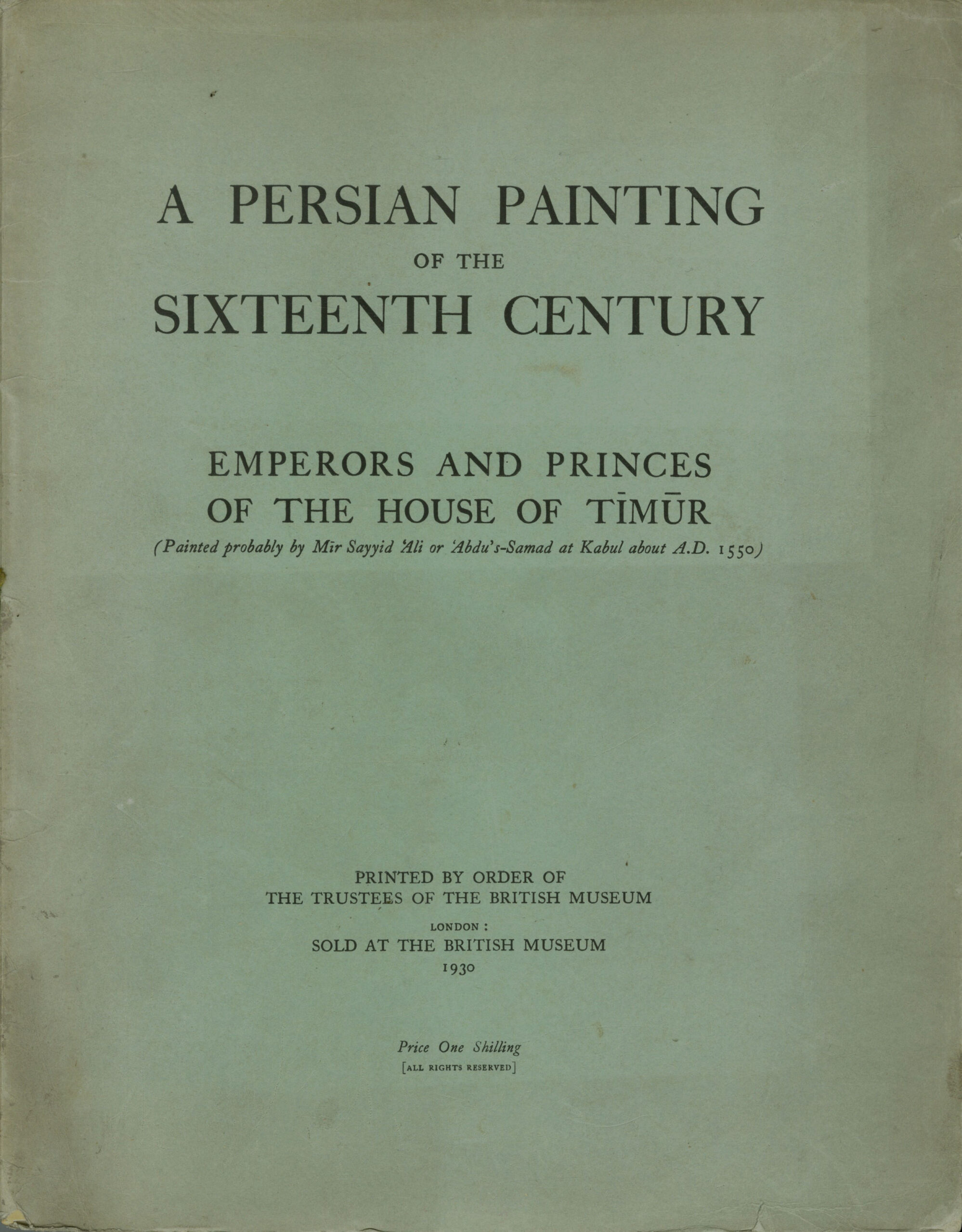
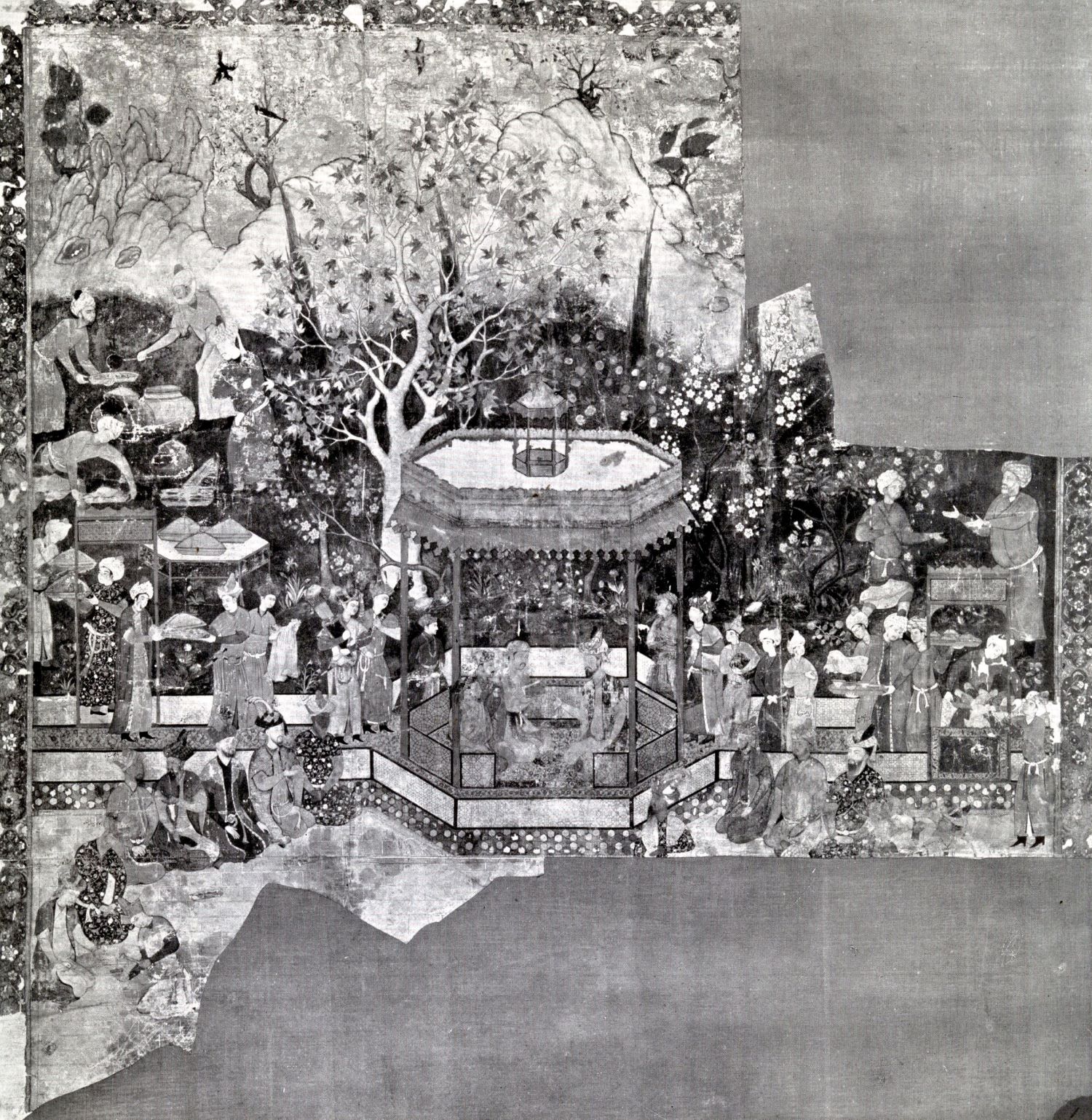
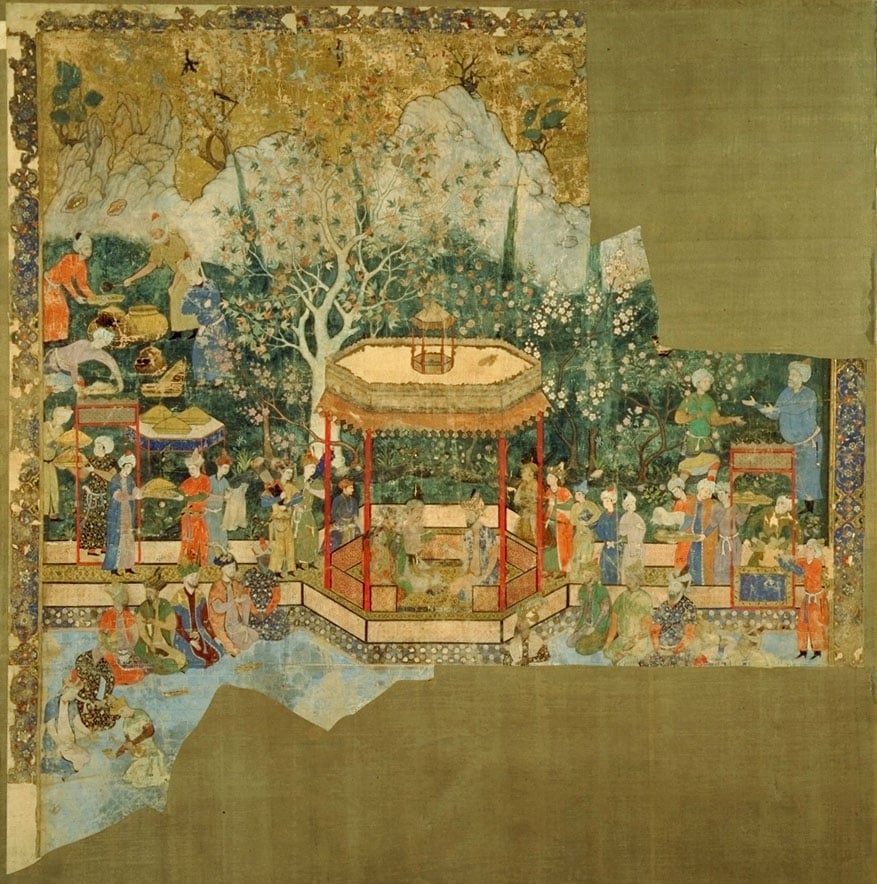
A torn painting on cloth and in huge size was discovered at the turn of 19th century. It had set people talking and scholars have poured in their opinion about the work. Initially Stanley Clark, Laurence Binyon, Basil Gray and others gave their opinion. Chughtai Sahib also contributed in that dialogue by publishing a book the HOUSE OF TAIMUR and adding the name of the painter Mirza Farrukh Baig to the list of contenders for this painting. Obviously it is a specialized subject but our blog is meant to highlight such things. The numerous details are not possible in a short write up on the subject. Read about Prince Kamran too:
THE VISIT OF ENGRAVER ARTIST HARRY NORMAN ECCLESTON IN 1980; REALLY MEMORABLE LECTURE ON ETCHINGS AT CHUGHTAI MUSEUM.
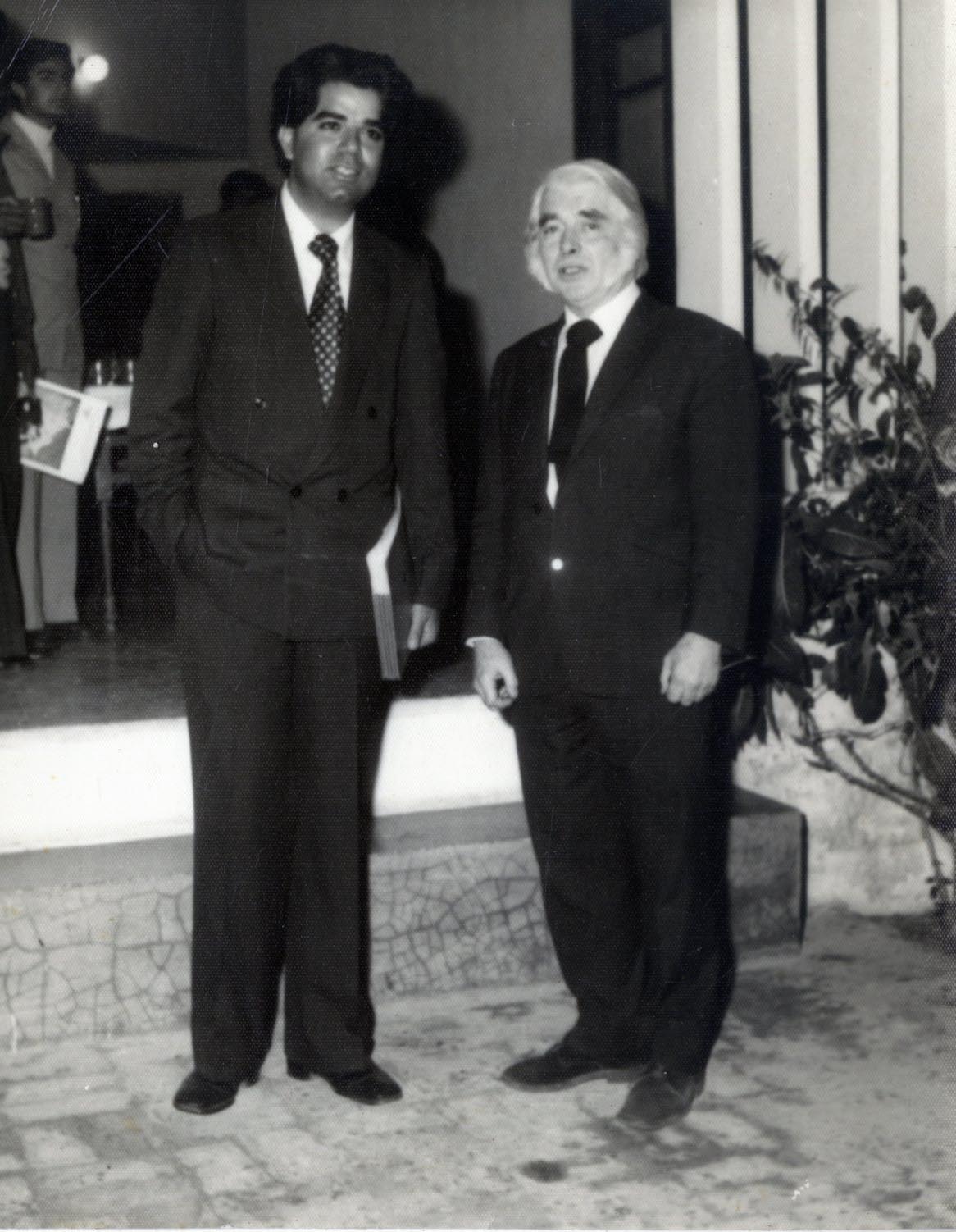
Etcher Paul Drury was a friend of artist M.A. Rahman Chughtai. We invited him to Pakistan. Due to health conditions, he was not able to make it. Instead of himself, he sent Harry Norman Eccleston to represent him here. This person himself was a famous etcher and artist, and President of the Royal Society of Painter, Etchers and Engravers. He was designer of Bank notes and worked for Bank of England itself. A very jovial and full of life person, he was a joy to behold here, giving a professional lecture to a first-time audience here. Surely some must be remembering same, as we ourselves do now. But he left a copy of his lecture to us, and we will upload the same on our blog soon. He also presented us with an etching of his own for our museum, as we presented some to him too. The same ended in the Victoria and Albert Museum as a gift from Paul Drury. Paul Drury died in 1987.
Harry Norman Eccleston 1980
Lecture Eccleston 1980
Paul Drury
Harry Norman Eccleston 1923-2010, also recorded an interview here with us on Chughtai art. At end of his lecture, he says:
“One thing is certain, to know Chughtai art to appreciate him fully one must know both the paintings and the prints. Each in its own right unite to a remarkable body of work for an artist to have fully left; together they are truly astonishing achievement by a great artist.”
THE DESCENDANT OF USTAD AHMAD MIMAR AT LUCKNOW COURT; FOUND SERVING NAWAB YASMEEN MAHAL WIFE OF WAJID ALI SHAH.
The fore fathers of Ustad Ahmad Mimar are famous as having come from Herat, but trained in Turkey under Ustad Sinan, known as Ustad Yusuf Burkurdar, son of Muhammed Hussain. Ustad Yusuf is traced through his works at the city of Hisar, in Haryana. But Ahmad was born in Lahore, and is referred as Lahori all the time. Their children spread themselves to various Courts at Delhi, Shahjahanabad, Jaipur, Peshawer, Kabul and Lahore. It is also known to have extended themselves to Lucknow, mainly at the Court of Wajid Ali Shah.
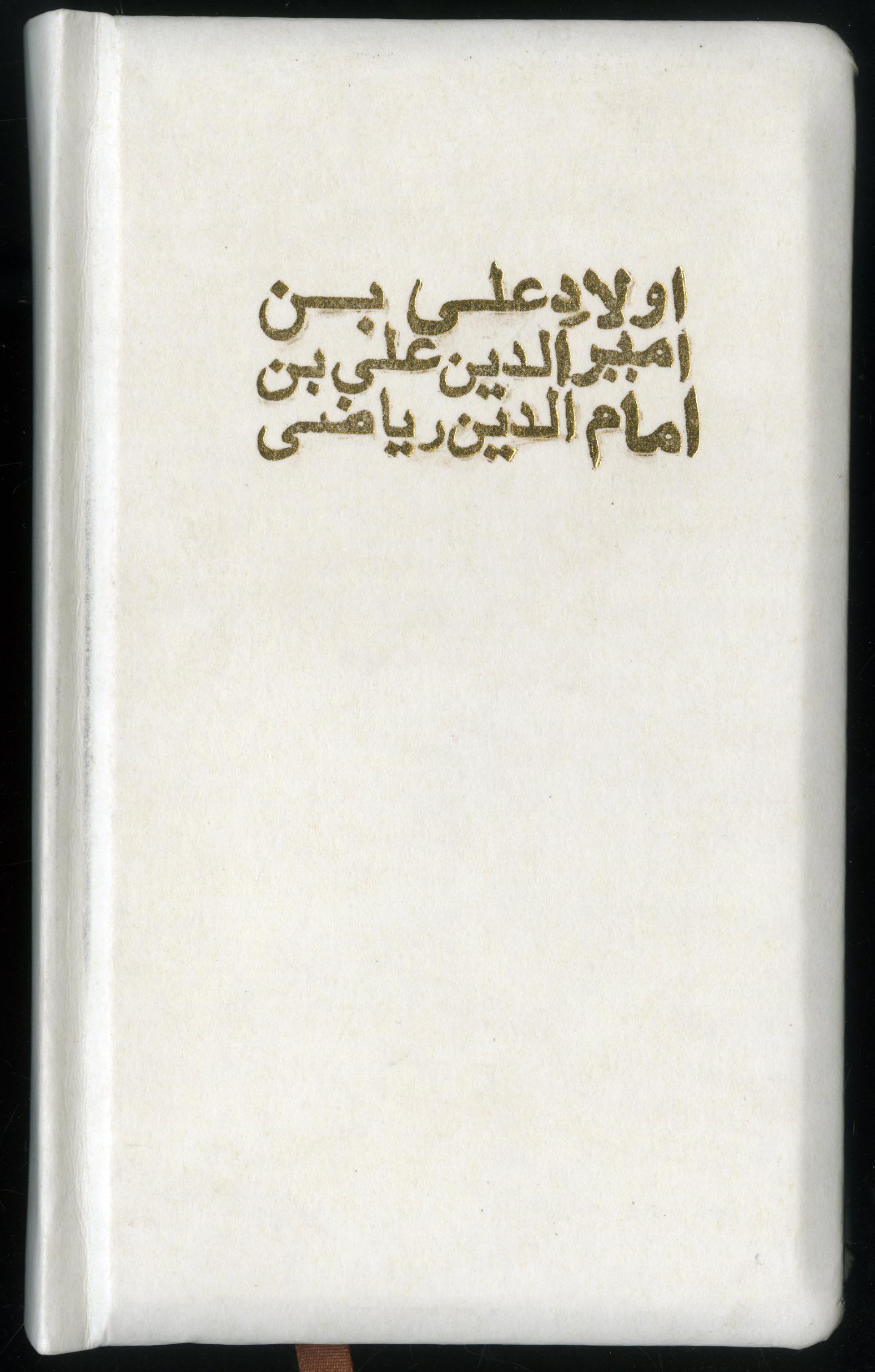
The Manuscript
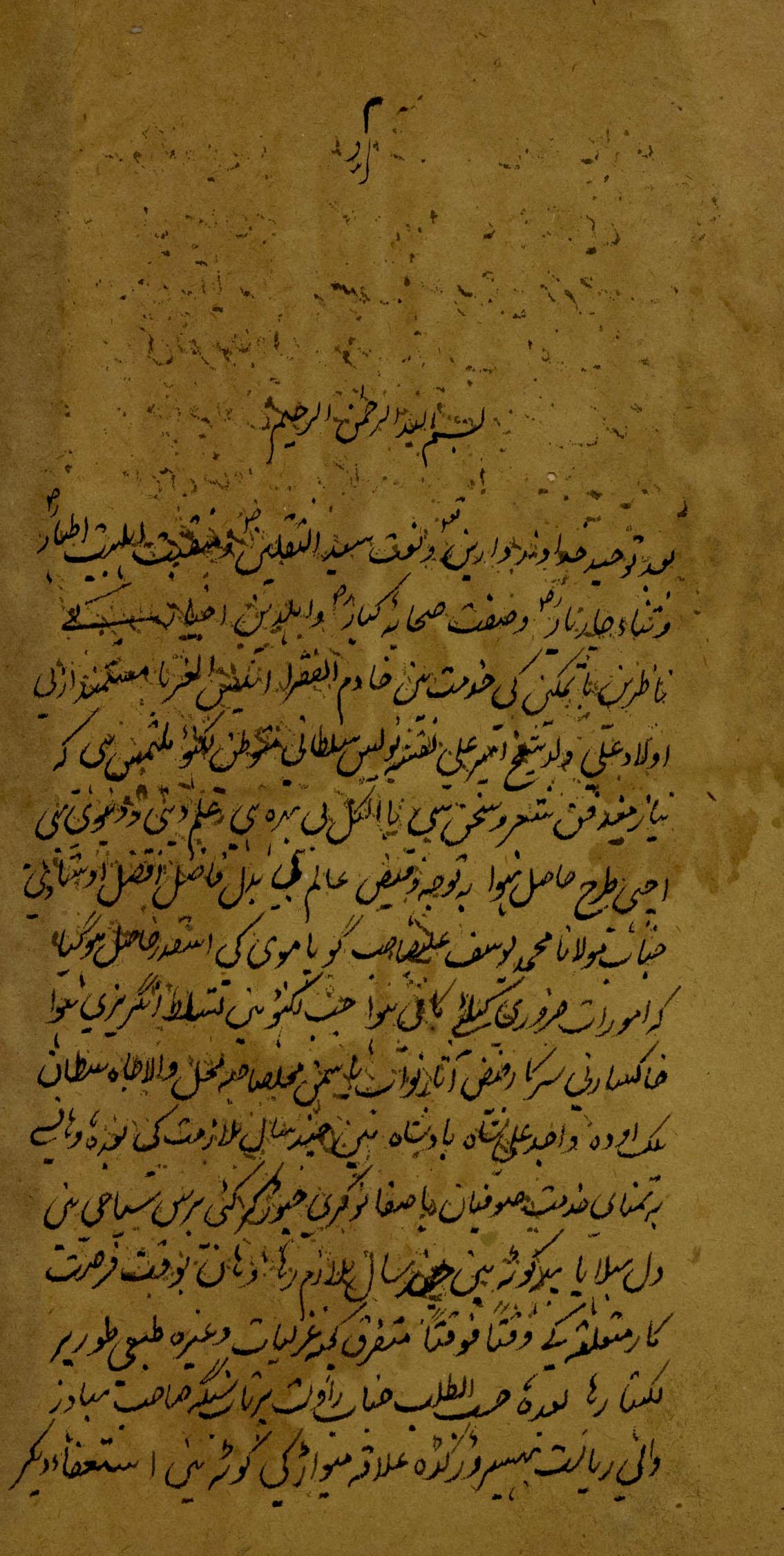
Risalah Naats
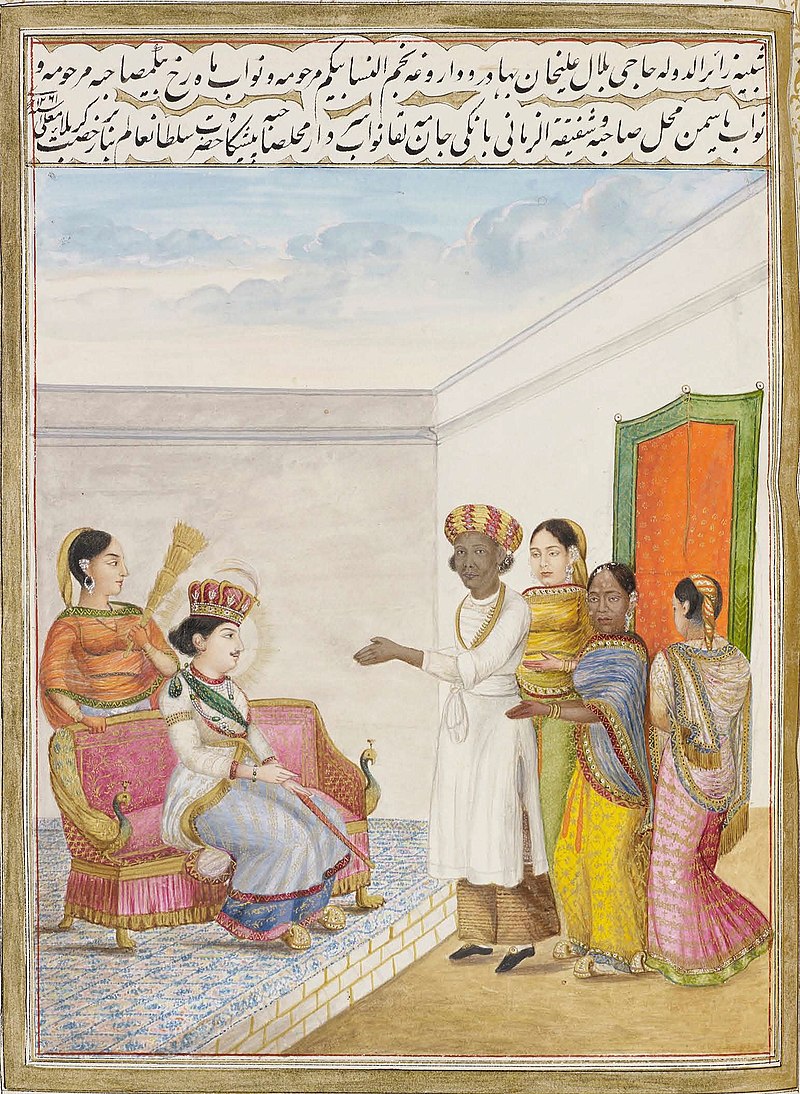
Yasmeen Mahal
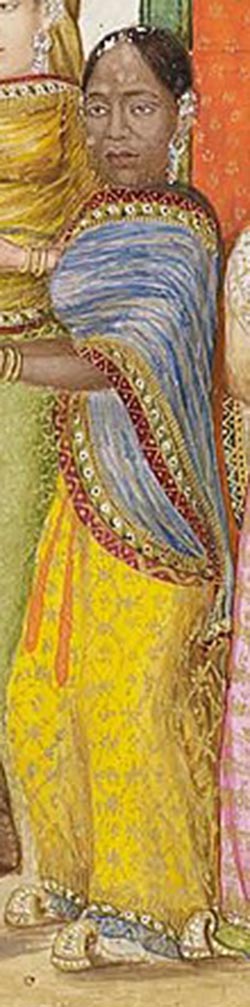
African Yasmeen Mahal
A manuscript of recited Naats at the Court of Wajid Ali Shah, by Aulad Ali, son of Amir Ali, Naqsha Nawis Sultani. This is Amiruddin Ali, beloved son of Imamuddin Riazi of Shahjahanabad. Aulad Ali mentions being on the payroll of Nawab Yasmeen Mahal, African queen of Wajid Ali Shah.At same time he refers to his father as being a Naqsha Nawis Sultani, that is Royal draughtsman or architect to the Court. We do hear of an architect in Oudh namely Kifayatullah of an Imambara there, as being from the same family. There is an inscription in the building itself of his service to Royal architecture.
Aulad Ali also mentions working under English rule, as well as Bahadur Pratap Singh Rawat. He also served both of same in his capacity. In any case the missing link in Lucknow is put on record.
A STUDY OF LETTERS OF LEONARDO DA VINCI BIZARRE REVELATIONS, CONTACTS WITH TURKISH SULTANS AND OFFER OF HELP IN PROJECTS.
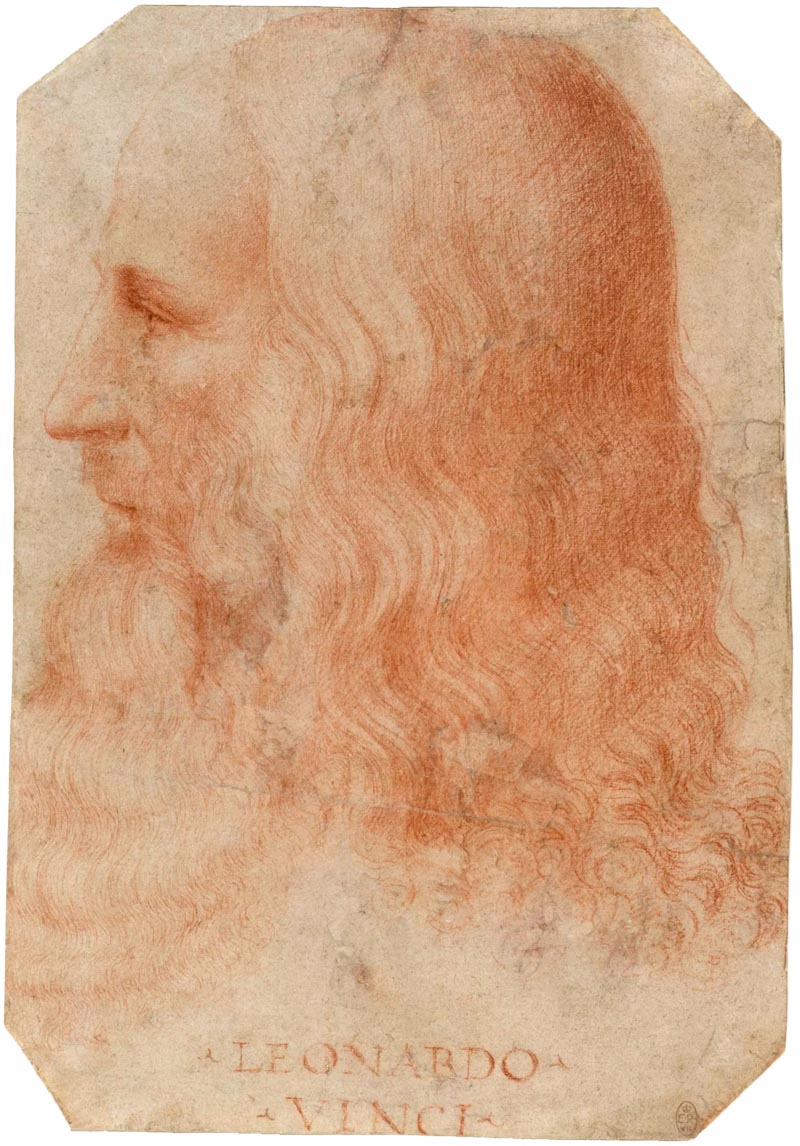
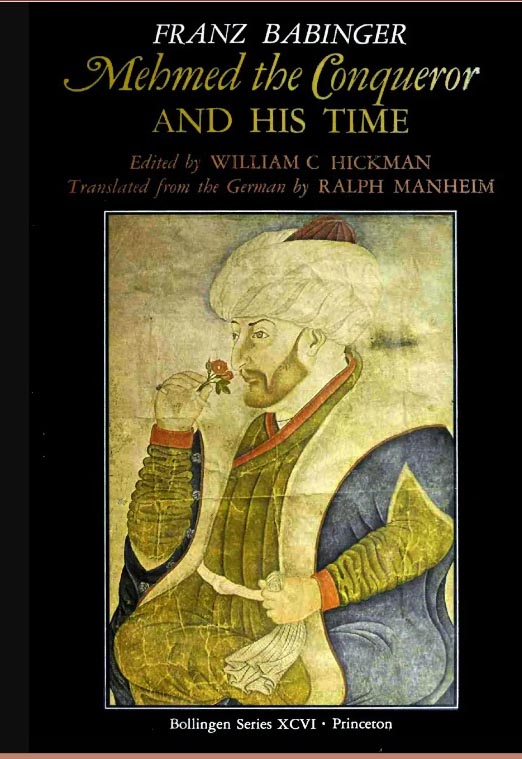
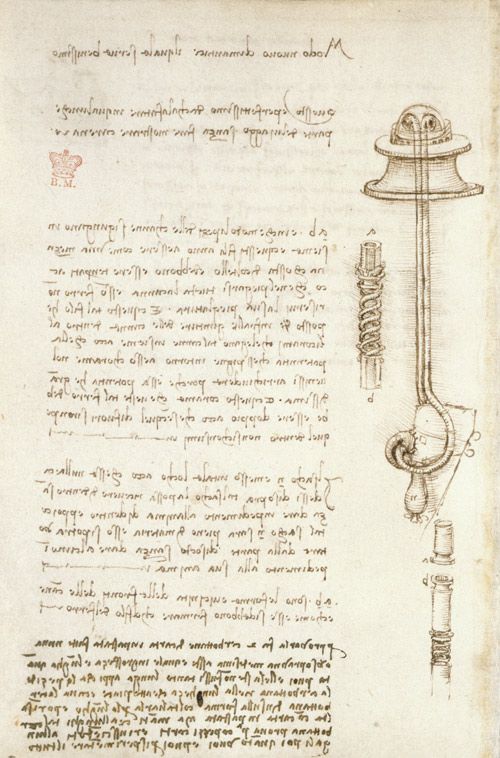
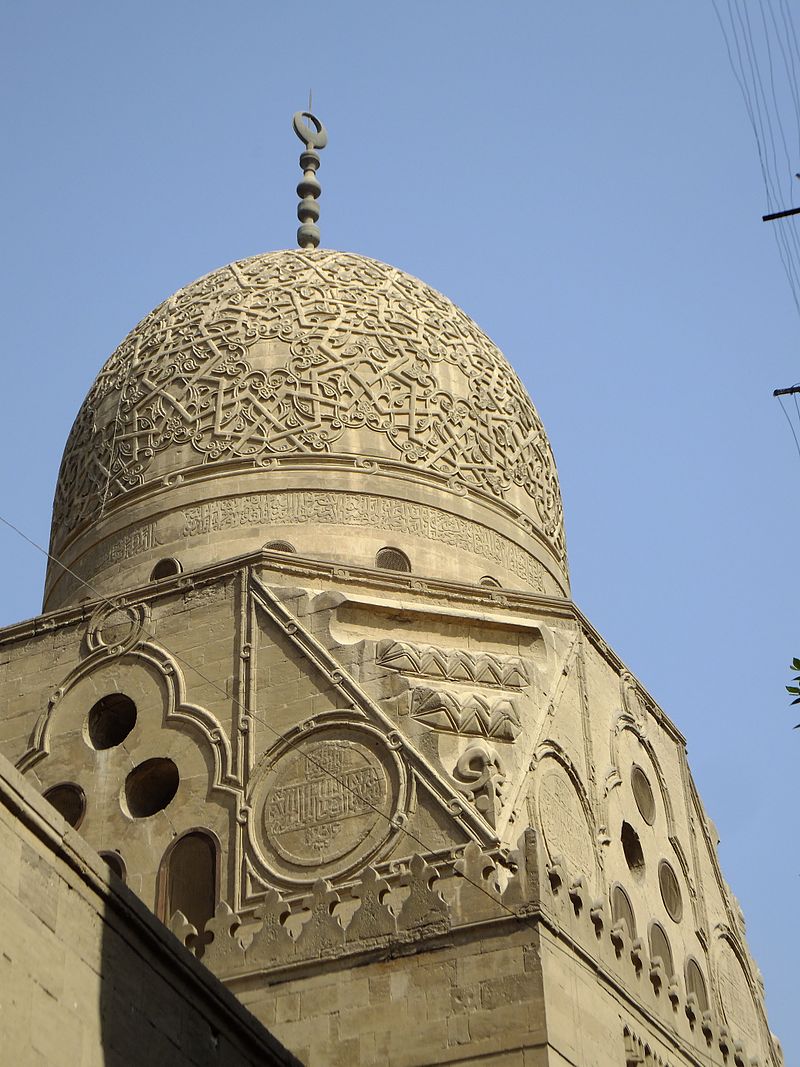
Lisa Jardine, the late scholar from the University of London, writes: “In a series of letters written around 1484 and preserved in one of his many notebooks, Leonardo reports to someone he calls Devatdar Kait-Bai, on the findings of a lengthy scientific mission conducted along the politically contested Turkish coast. (Was Leonardo there in Turkey?) But Sultan Qaitbay was in fact the cultivated and culturally ambitious Mamluk Sultan at this date.” It is understood that East and West were on the road to cross fertilization of aesthetics.
Leonardo da Vinci
Franz Babinger research
Leonardo_Bridge
leonardo-da-vinci-arundel-codex-1
Lisa Jardine
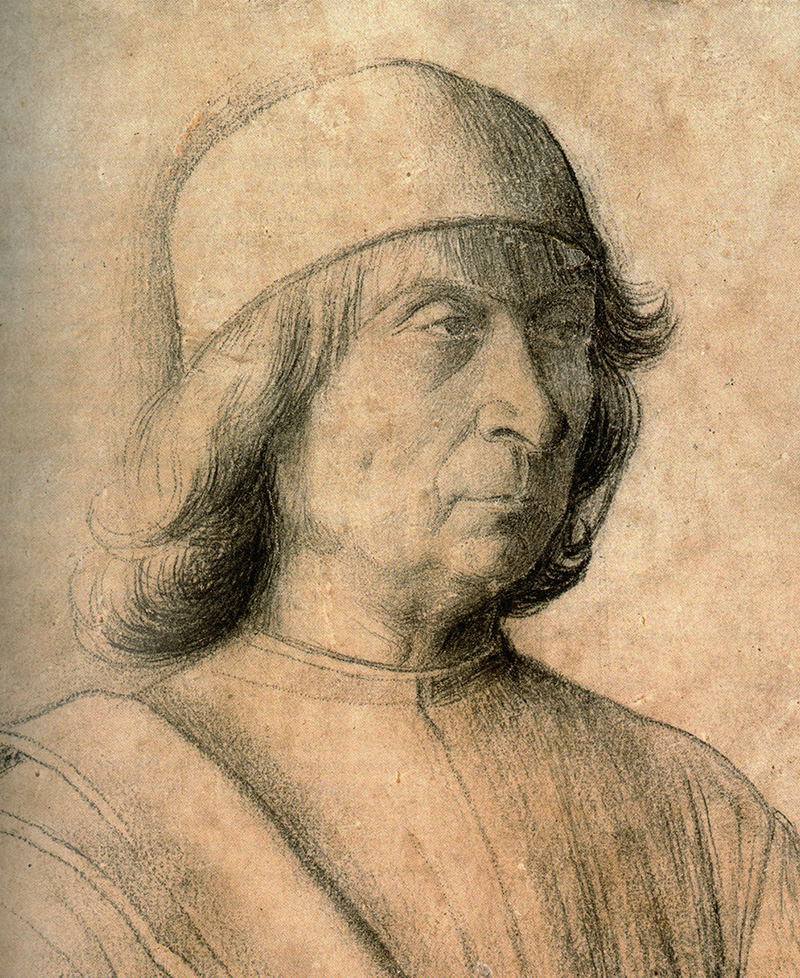
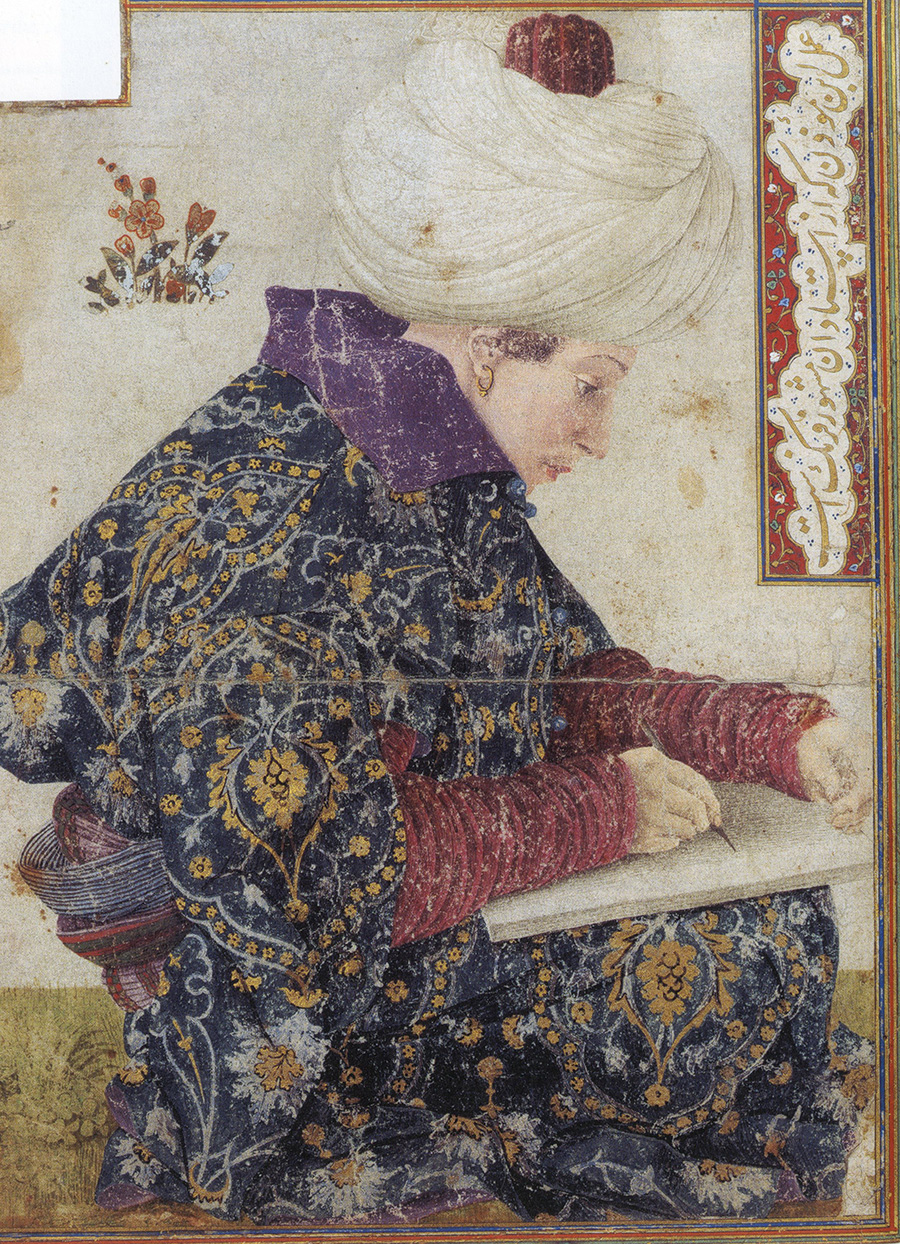
Venetian artist Gentile Bellini 15th century
Turk painter by Gentile Bellini
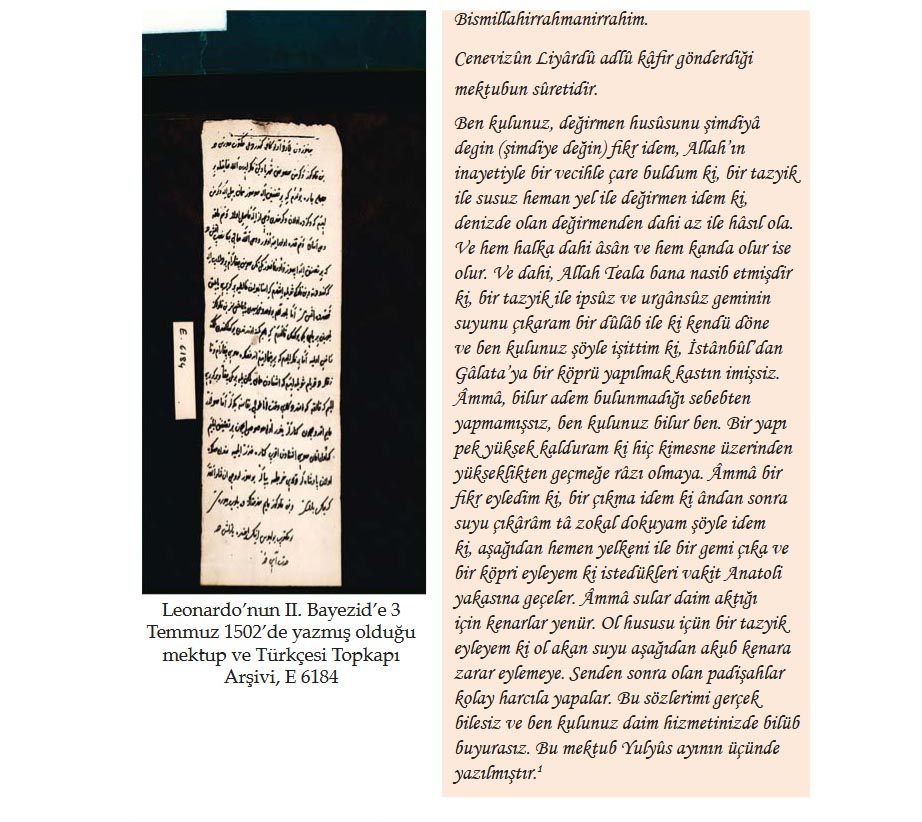
Sultan letter to Leonardo Vinci
Leonardo-3-1024×683
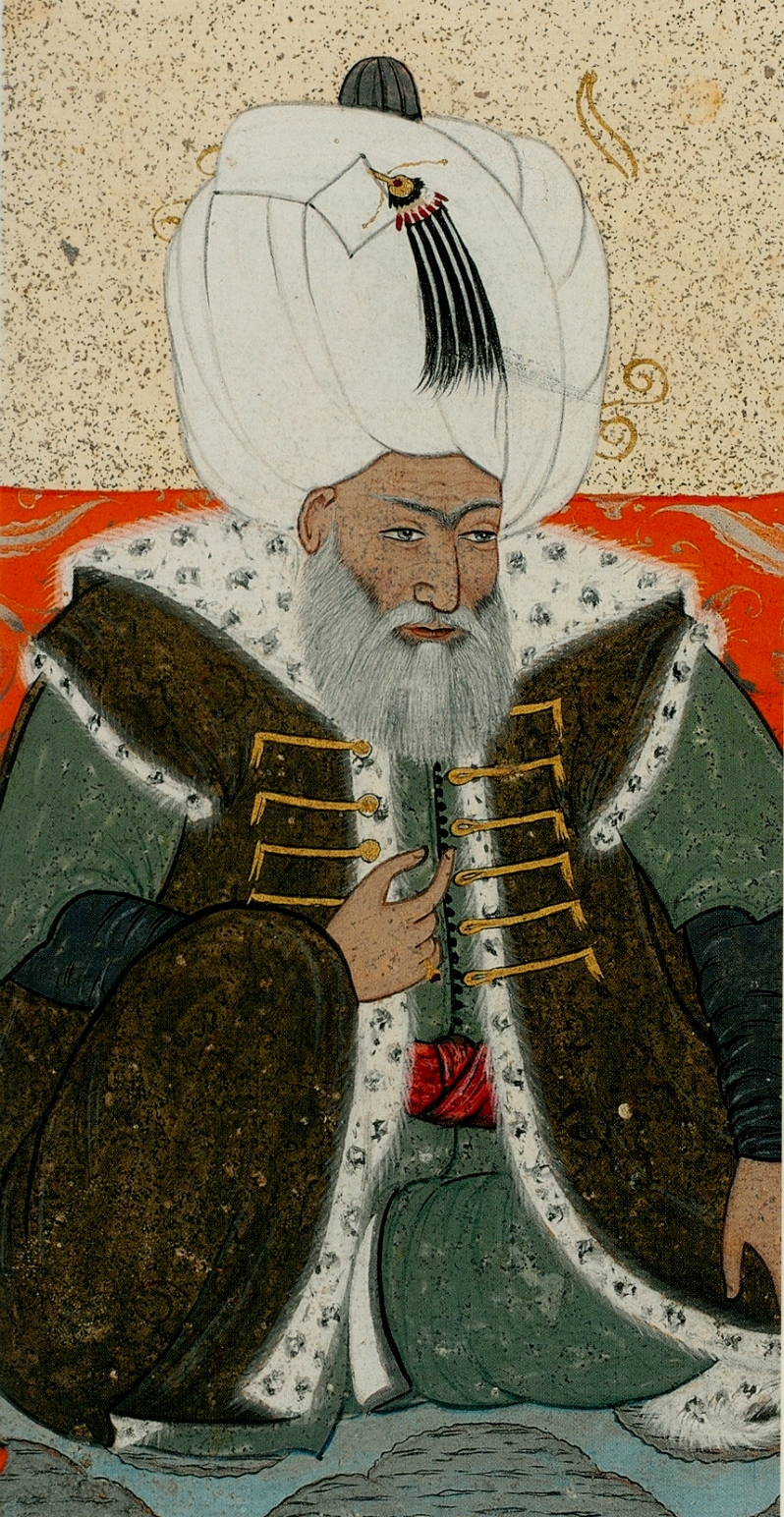
Sultan Bayezid and Leonardo da Vinci
Mausoleum of Sultan Qaitbay
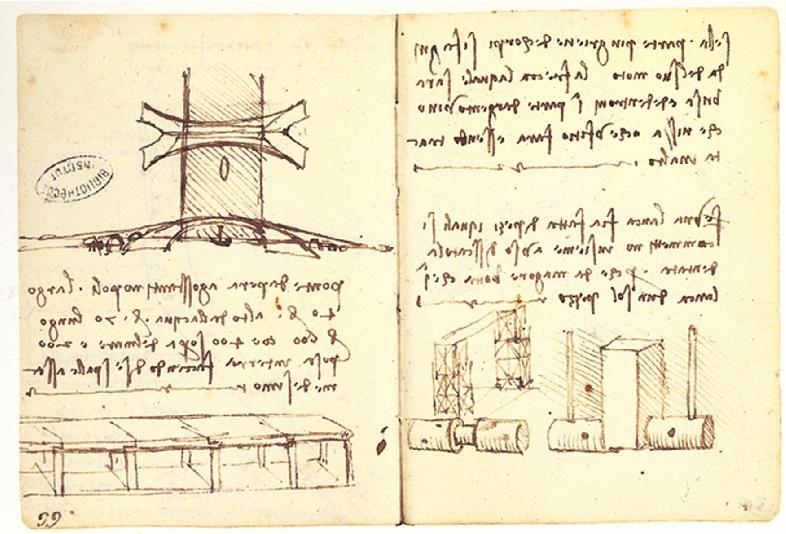
The Renaissance art between East and West is being thoroughly documented and exposes the bigotry of some scholars, for some such exchanges put their arrogance to shame. One such brilliant artist was Gentile Bellini, who worked at the Sultan’s court itself. But the most amazing is exchange of letters between Turkish Sultan Bayezid and Leonardo da Vinci in 1502. The reply to Leonardo da Vinci is kept in the Topkapi museum in Turkey. It has been published too, and we reproduce same. A bridge is being proposed by Leonardo to bridge the Bay in Turkey. Modern scholars have worked on the design of the bridge and found it utterly feasible. In fact, the same design was actually used elsewhere, and worked well. It is strange that this did not work out at that time, otherwise it would have been another wonder of the world. The Sultan was apprehensive of the engineering, and did not think much of this “Kafir” as stated in the letter. But Leonardo had assured him that it would work. And it would have. History did not accept that.
It was a letter asking for employment. In which Leonardo also claims to know how to build windmills and pumps to extract water from ships. Then he talks about the bridge over the Golden Horn.
“I, your servant, have heard of your intention to build a bridge from Istanbul to Galata. And that you have not yet built it because it is impossible to find one who can build it. I, your servant, know how to do it. One would raise it to the height of a building so that no one can cross it because it is too high. I will do it so that a ship can pass under it even with the sails raised. I would make a drawbridge so that when one wants, one can pass to the Anatolian coast. May God make you believe these words, and consider that this servant of yours will always be at your service”.
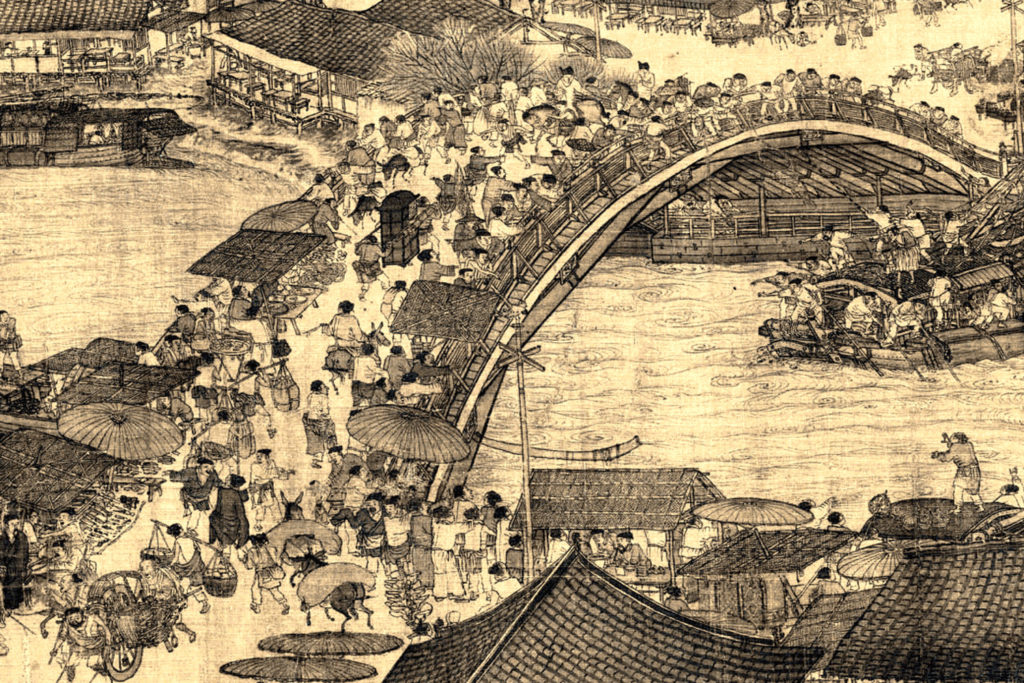
Up to now, we always though that The bridge for the Sultan that he designed was too far ahead of its times to work on those openings. Due to the limitations of the building materials. It resembles the Calatrava bridge in Venice. And, even more, it resembles (in a small way) an existing bridge in China, in Zhaozhou. Built between 589 and 618 with a single arch of 37 meters and with a rise of 7 meter. Or several other Chinese bridges built during the Song Dynasty.
THE FIRST VISIT OF PRIME MINISTER LIAQUAT ALI KHAN TO USA; A CHUGHTAI’S PAINTING PRESENTED TO TRUMAN AT BLAIR HOUSE.
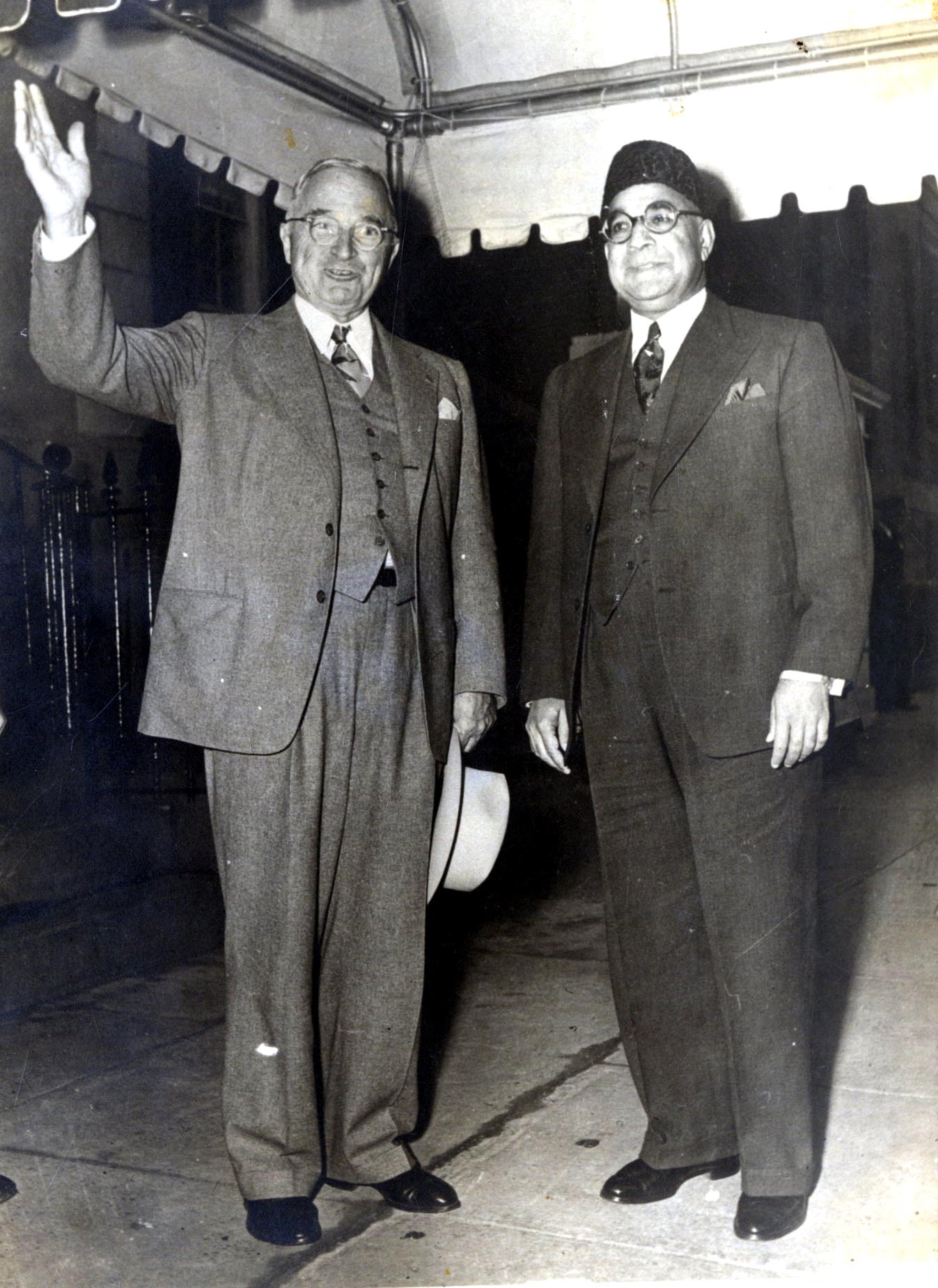
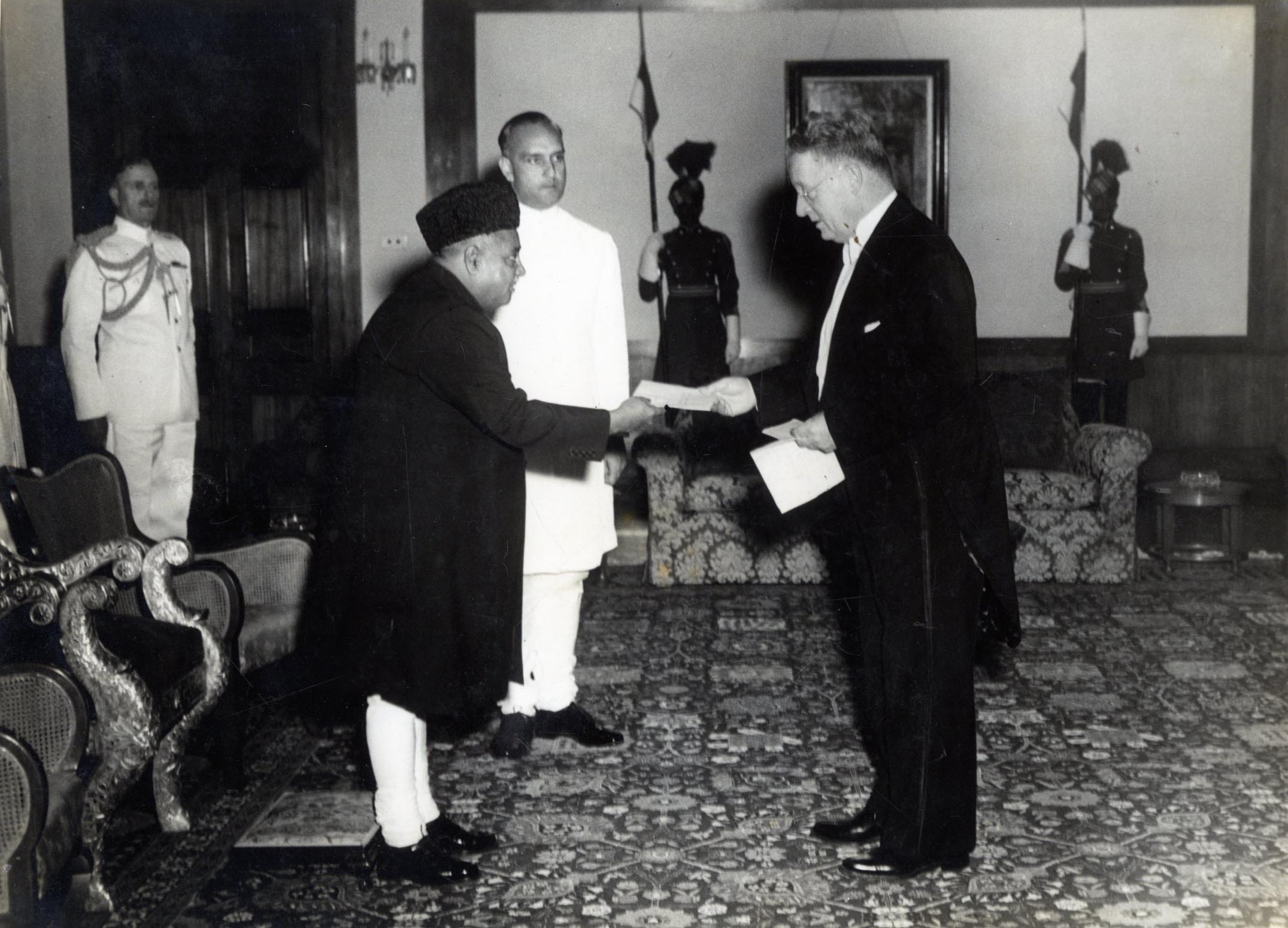
History was in the making. So much fanfare was created by the first visit of a Pakistani Prime Minister to USA. A lot of photo snaps are on record, of both Prime Minister and his wife. It was reported at that time and it came in the newspapers later too, that a painting of M.A. Rahman Chughtai had been presented to the US President Truman. It set a tradition of presentations of Chughtai Art Works to foreign Heads of State. It was diplomacy at its height on that evening on 3rd May, 1950. On 25th, February, 1950, US Ambassador Avra M. Warren presented his credentials to Governor General of Pakistan, Khawaja Nazimuddin.
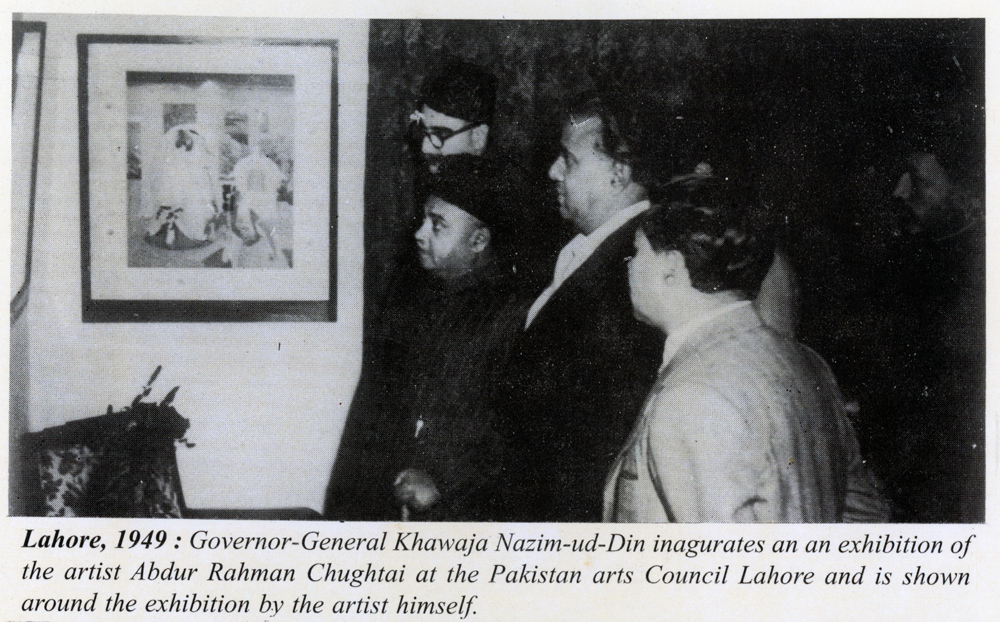
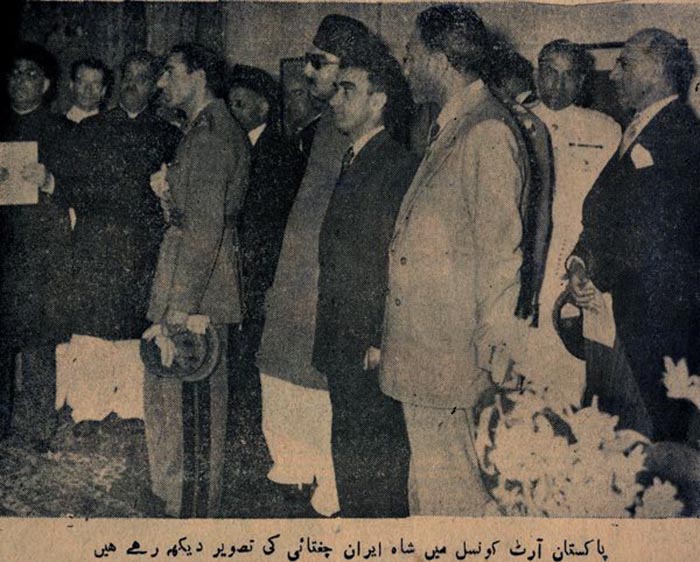
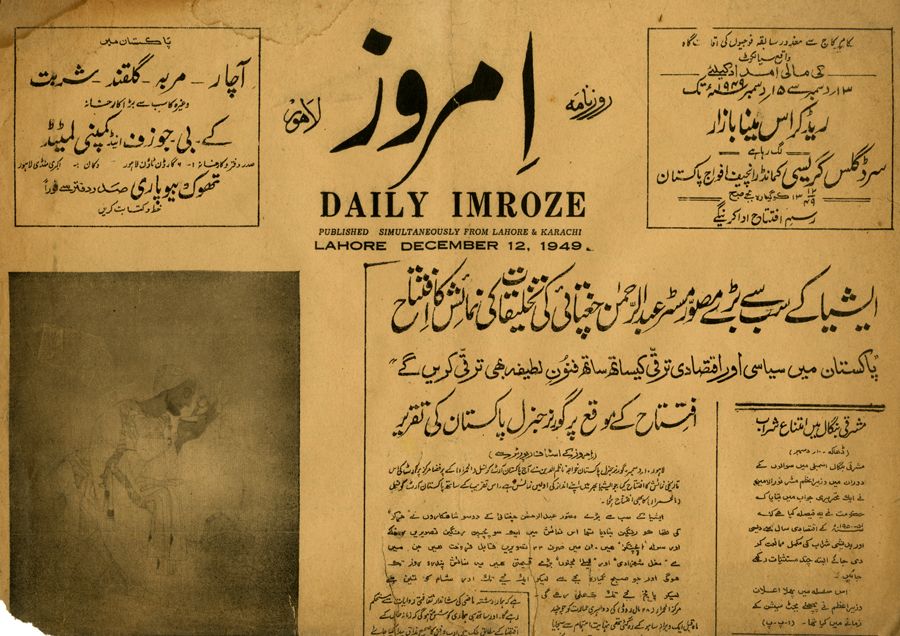
The interesting part is that very recently then Khawaja Nazimuddin had inaugurated an exhibition of M.A. Rahman Chughtai at Alhamra Lahore, which was also the inauguration of the Lahore Arts Council. And sometime later in 1950, on the visit of the Shahinshah of Iran, Prime Minister Liaquat Ali Khan had also visited the exhibition. Prime Minister was well familiar with Chughtai Art and had expressed an interest in acquiring Chughtai Art works for presentation to Heads of State. So, it was done by the Foreign Office.
President Truman and PM L A Khan
GG Nazimuddin and Avra Warren Ambassador
Khawaja Nazimuddin and MARC
Shahinshah-Iran-with-MARC-1950
Alhamra-Inauguration-day-1
DAILY-IMROZE-LAHORE-12TH-DECEMBER-1949
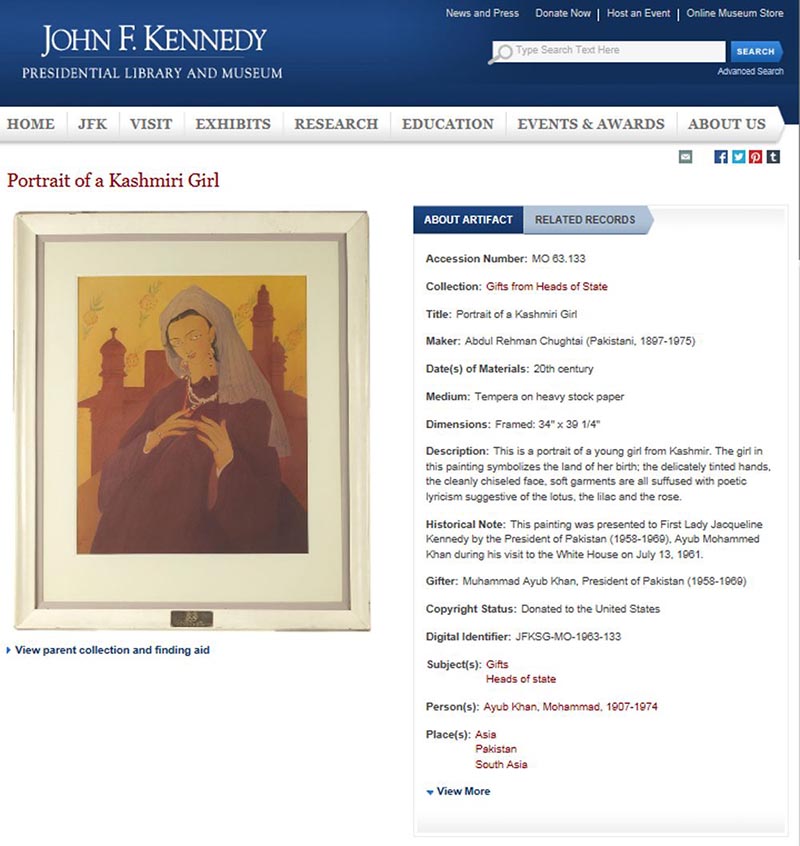
Kennedy library
It was a great mission of peace but it did not go well. In fact, Avra M. Warren reported that:
“After hearing this from the U.S. Ambassador Avra Warren, Khan’s mood was much more aggressive, and he reportedly said: “Pakistan has annexed half of Kashmir without American support and would be able to take the other half too”.
לאחר ששמע את הדברים הללו משגריר ארצות הברית, אברה וורן, הפך מצב רוחו לתוקפני יותר ועל פי המדווח הוא אמר: “פקיסטן סיפחה את מחצית שטחה של קשמיר ללא תמיכת האמריקאים והיא מסוגלת להשיג את השליטה על החצי השני
The result we all know. A sad day for Pakistan, with the assassination of the Prime Minister of Pakistan.
Where is this painting now? We did contact the US State Department and they talk of four Chughtai Art works in the State Department itself, but could not provide images. We then contacted the Truman library too. No progress made. Although some other works are in account. Like the one presented by President Ayub Khan, is in the Kennedy Memorial in Boston, USA. Our job to keep track, and enrich our archives for the future. Yes, our job is well done!
TWO AMERICAN AMBASSADORS AT CHUGHTAI MUSEUM AT SAME TIME; YES, INDIA AND PAKISTAN AND LITERALLY FREE ATMOSPHERE IN 1987-88
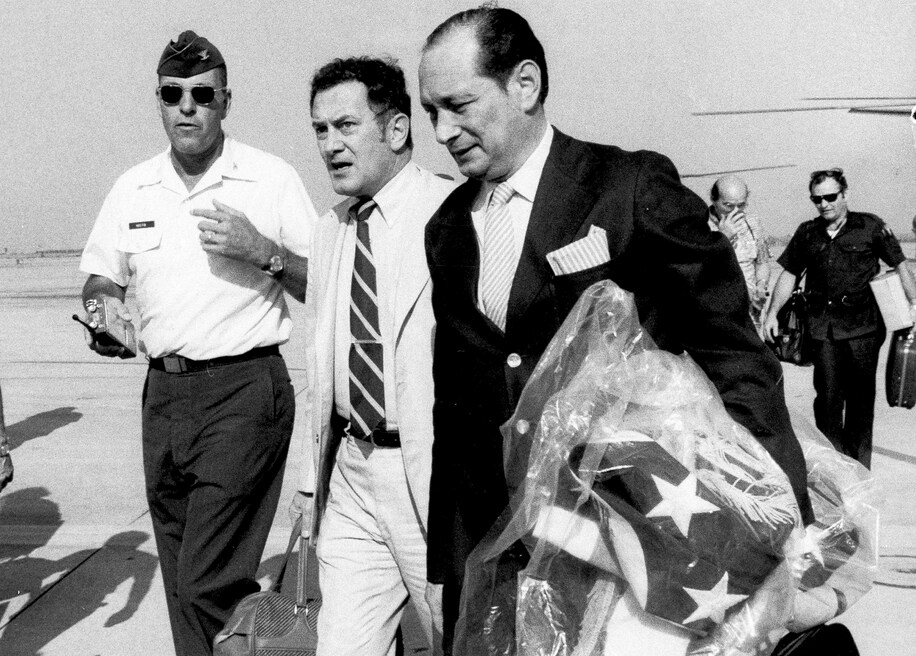
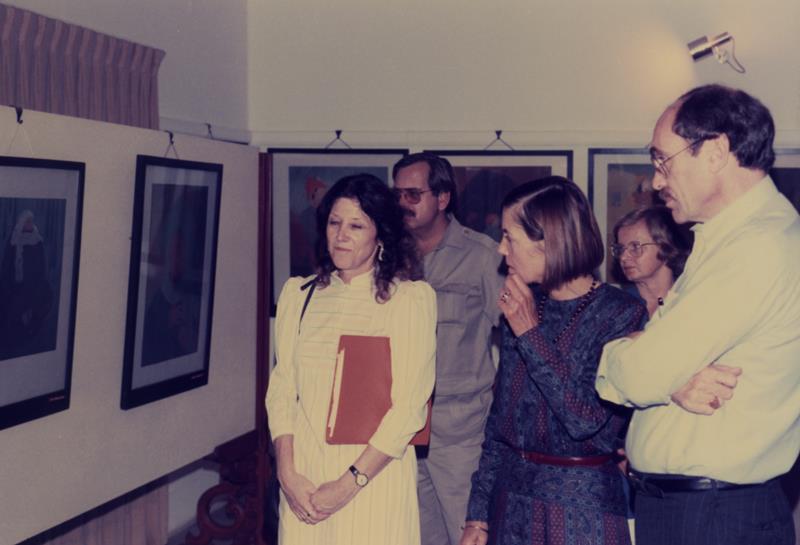
Ambassador Arnold Raphael came to Pakistan at the end of 1987. Amongst the languages he knew, both Urdu and Persian were there. He was very interested in Art and called with a small group here. Wife Robin Raphael was there too. I presented him and Robin with a copy of Amal-e-Chughtai on themes of Dr Allama Iqbal. He was very happy with his visit and kept in touch. Indeed, he was an exceptional man.
Later John Gunther Dean, the American Ambassador to India was the guest of Arnold Raphael, and Raphael decided to bring Ambassador Dean to Chughtai Museum. It was a strange coincidence. Two American Ambassadors, to India and Pakistan, sitting with me in my office and freely talking about both countries. Ambassador Dean was very surprised when I presented a copy of Amal-e-Chughtai to him too. He never forgot and back in Delhi, he sent me a letter of thanks, which is in our archives. Another exceptional diplomat.
John Gunther Dean US Ambassador
Arnold Raphael US Ambassador at Chughtai Museum
4th July Arnold Raphael and Zia
John G Dean
Gallery visit American Ambassador
One could never know what would happen to them that year in 1988. Arnold Raphael died in a plane crash with President Zia-ul-Haque. Ambassador Gunther Dean revolted against the official policy of his country and was declared psychologically insane by the State Department. Later status restored. Both Ambassadors were of Jewish background and both blamed Israel for their troubles. The death of Arnold Raphael so much unsettled John Gunter Dean, that he left his job and went back. Strange indeed! The legend was that:
“Dean’s suspicions that Israeli agents may have also been involved in the mysterious plane crash in 1988 that killed President of Pakistan, General Muhammad Zia-ul-Haq, led finally to a decision in Washington to declare him mentally unfit, which forced his resignation from the foreign service after a thirty-year career. Later he was rehabilitated by the State Department, given a distinguished service medal and the insanity charge was confirmed to be phony by a former head of the department’s medical service.“
We love Pakistan and we sowed our love in both Ambassadors. And they in a sense sided with our view and both suffered in all way. God bless them! Both are dead by now. One buried in Islamabad, the other died in 2019 at age of 93. The memory is still strong!
THE GOLDEN PERIOD OF MUSLIM RULE IN HINDUSTAN, THE TUGHLAQ KINGS AND THEIR LEGACY OF THE QURAN: IRRITATING RELIGIOUS PRIESTS AND BEFRIENDING HINDUS.
Anybody’s quest for knowledge gets easily frustrated when seeking facts and figures, you get historical manipulation on most subjects. Searching for Muslim history even in the area of Hindustan drives you crazy. Most of the research say on Muslim Sultans is there with access to hundreds of Hindu writers. One can only wonder the obsession of Hindu writers to Muslim Sultans. When you try to look for Muslim writers, you hardly find any, or even if it is famous research, no copy of the book is available anywhere. Not even a free download. Not even in libraries. ACCESS to famous libraries costs a lot of money. This is fact, not speculation. But then it becomes an adventure. Unraveling facts from fiction.
Ghiyasuddin Tughluq
Not much has been done on the Tughlaqs but there are important research books. Agha Mahdi Husain has an excellent book on Muhammed Tughlaq, “The Rise and Fall of Sultan Muhammed Tuqhluq”, and years after written, is still standard reading on subject. Habibullah of Allahabad University, as well as even Ameer Khusrow himself done a good version with the Tughlaq nama of olden times. Contemporary Muslim writers carry different views. The details are too many and there is no need to go through them. Our approach is to get the attitude of those people, and why the Muslims ruled in this region for a 1000 years and survived, and an extremist Prime Minister in India, with his extreme prejudices, is all set to break his country into pieces. The best reason is the dictates of Islam to have the patience and tolerance to co-exist with different ways of life.
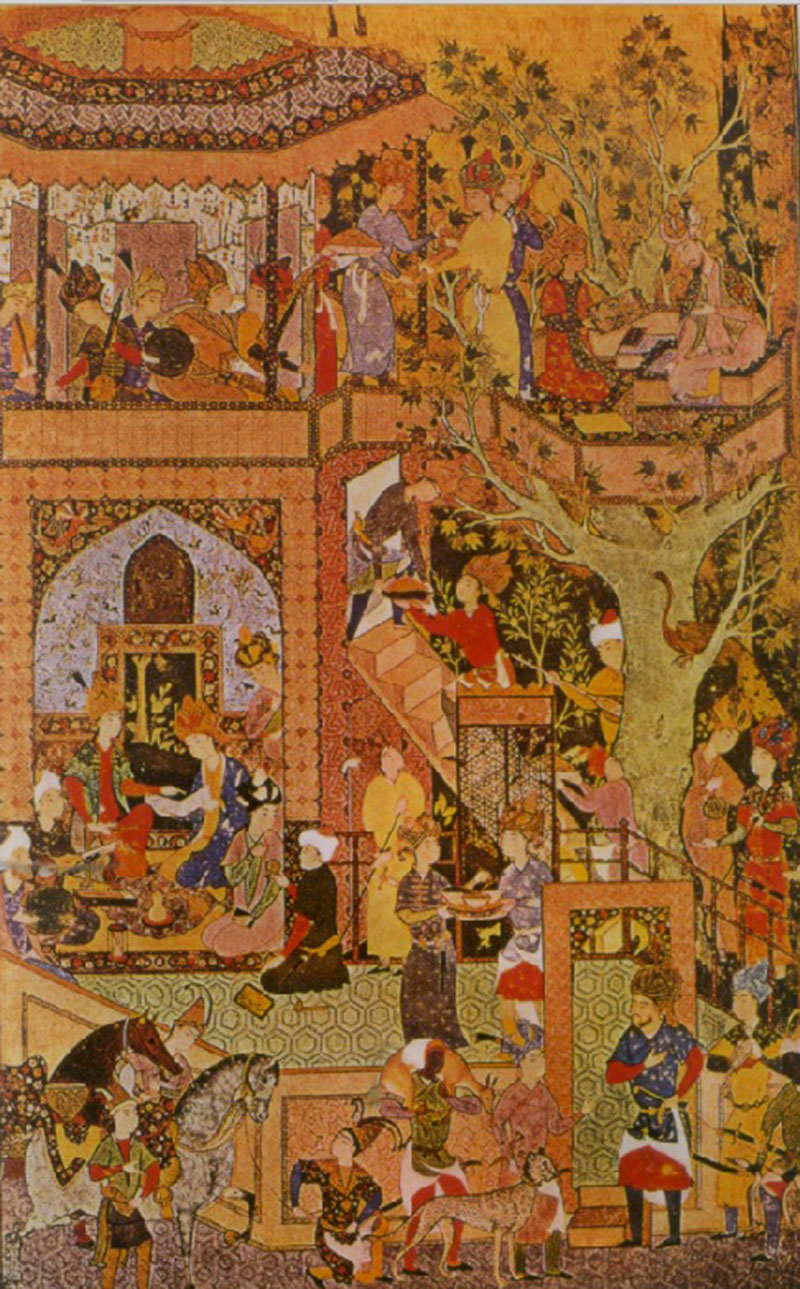
It all starts with Malik Tughluq, who with his brothers came from Khurasan to this region. His son Ghiyasuddin Tughluq was one of the Turkish slaves of King Ghiyasuddin Balban, and was conceived through a local Jat family. In an inscription on a mosque he built in Multan, he himself says that he fought the Tartars 29 times, and after defeating them, came to be known as Malik Ghazi for his bravery. An old man himself, Sultan Ghiyasuddin Tuqhlaq was obviously a good warrior but had to become a good administrator too. He himself was tolerant to the Hindus, unless directly implicated in some plot. However the religious lobby were not happy with the Sultan. But he had fell foul of Nizamuddin Auliya himself. Nizamuddin Auliya was ordered to refund what he had received as gift from previous usurper. Nizamuddin Auliya was not in a position, or in a mood to do so. The next bold step was the Sultan’s order to Nizamuddin Auliya to vacate Delhi before his arrival there from Bengal. The famous quote DELHI HANUZ DUR AST (Delhi is yet distant) has become historically famous. And something unusual happened on the Sultan’s return from Bengal. A wooden canopy was constructed and in welcoming the Sultan through a parade of elephants, the canopy broke and the Sultan and one of his son died underneath the rubble. The incident is quoted as a conspiracy by all and it is attributed that the Sultan’s son Jauna Khan Ulugh Beg (later Muhammed bin Tughluq) as responsible for the parricide. Agha Mahdi Husain researches on the subject and tells us:
“All that is known about the character of Ulugh Khan, both as prince and Sultan, militates against the charges brought against him. He was much too strong a man to succumb to the temptation of murdering his father in order to win the throne. He would not have acted against his conscience even if his life had been at stake. But here neither his life was in danger nor his crown. He was decidedly the best of all the sons of Sultan Ghiyasuddin, and had been an heir apparent. There was no rival claimant to the throne. The case of Ulugh Khan was entirely different, for he was the acknowledged heir.”
Court of Ghiyasuddin Tughluq
The suspicions cast on the Prince simply was the reason of the quarrel with the Ulama. The highly coloured reports were no doubt generated by the disciples of Nizamuddin Auliya, who had taken offense at the popularity of the Sultan with the people. Few people were bold enough to speak on this aspect. Husam Khan, Sujan Rai and W.H. Sleeman took the bold step of saying that the Sultan came to grief because of his quarrel with the Saint. But even common sense dictates the fight between the Sultan and the Saint was an obvious link to the per-planned murder. It is past but it shows an important aspect, the Quranic rule versus the religious aspect and connotation. Let us first quote an incident mentioned by Ibn Battutta to prove the stature of the son himself.
The historian Peter Jackson writes the grand character of Muhammed Bin Tuqhlaq:
“An anecdote related by Ibn Battuta may carry greater weight. He tells how a Hindu chief brought a charge against Muhammad b. Tughlaq himself that he had killed his (the chief’s) brother without cause, and cited him to appear before the qadi. The sultan duly went, unarmed and on foot, having an advance forbidden the qadi to show him any of the deference due to his rank, and remained standing while the qadi gave judgement against him and ordered him to make reparation to his accuser. This is an isolated instance and the purpose of the story is to highlight the sultan’s humility and sense of equity, but it harmonizes with the general picture of Muhammad as a ruler who in the first half of his reign, took care to cultivate the Hindu, and if it embodies authentic fact, it demonstrates that one Hindu of some standing, recognized the authority of the Muslim qadi.” (page 281)
Even today the Quran battles against religious orthodoxy . It is not for us to pass judgement, but to analyze the facts available to us. Everybody can base analysis on factual information.
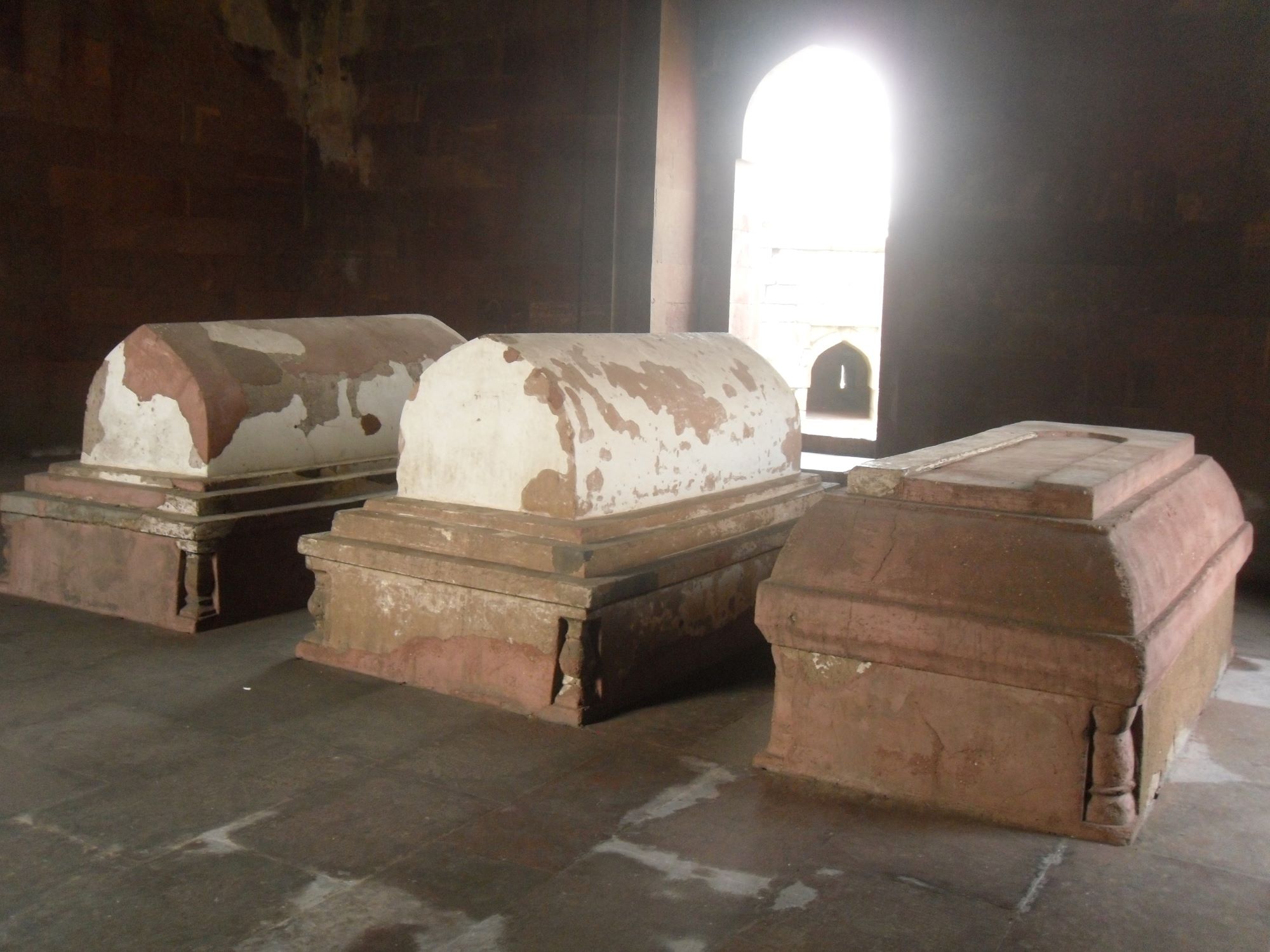
Graves of Ghiyasuddin Tughluq and wife and Muhammed Tughluq